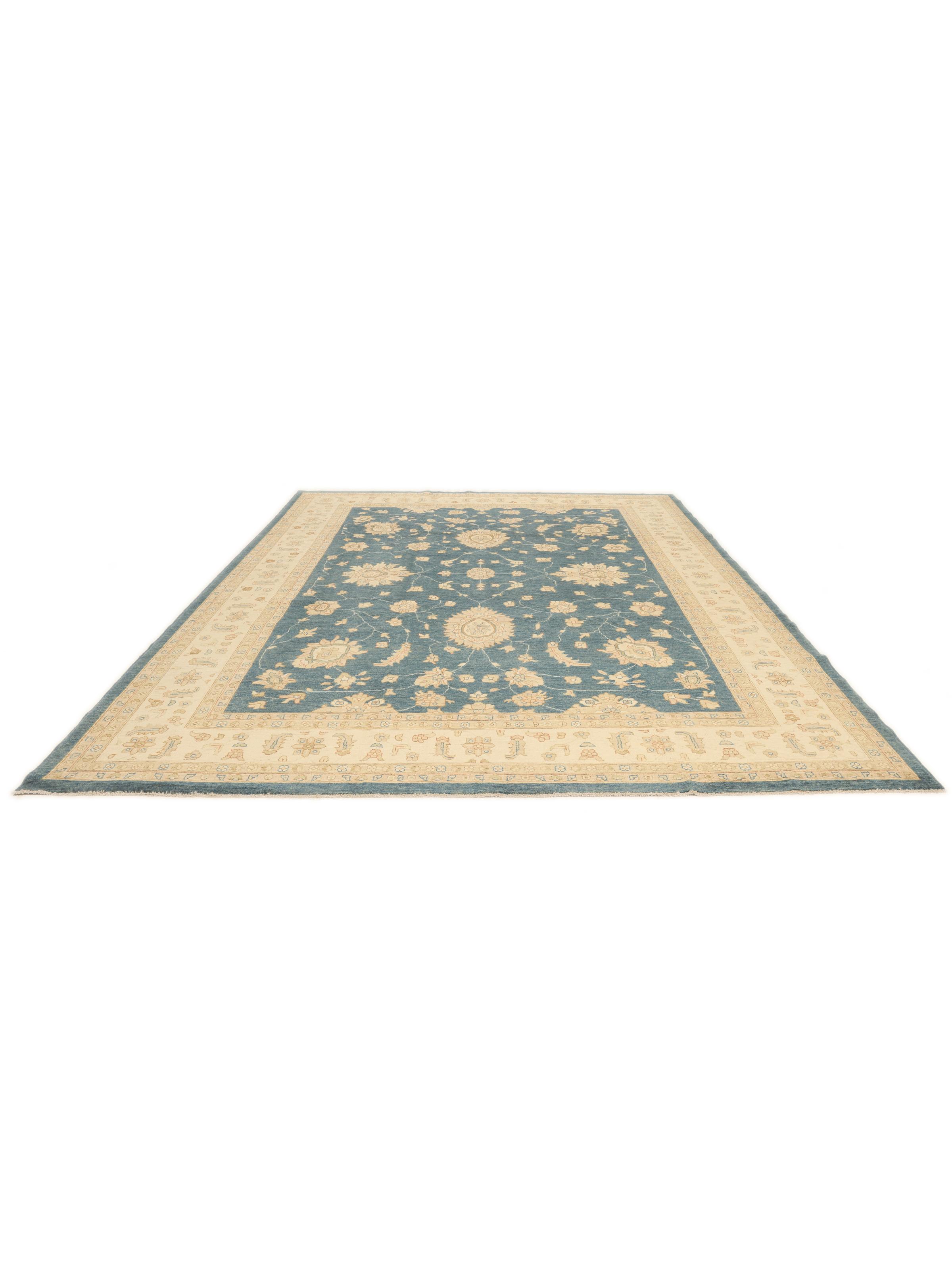
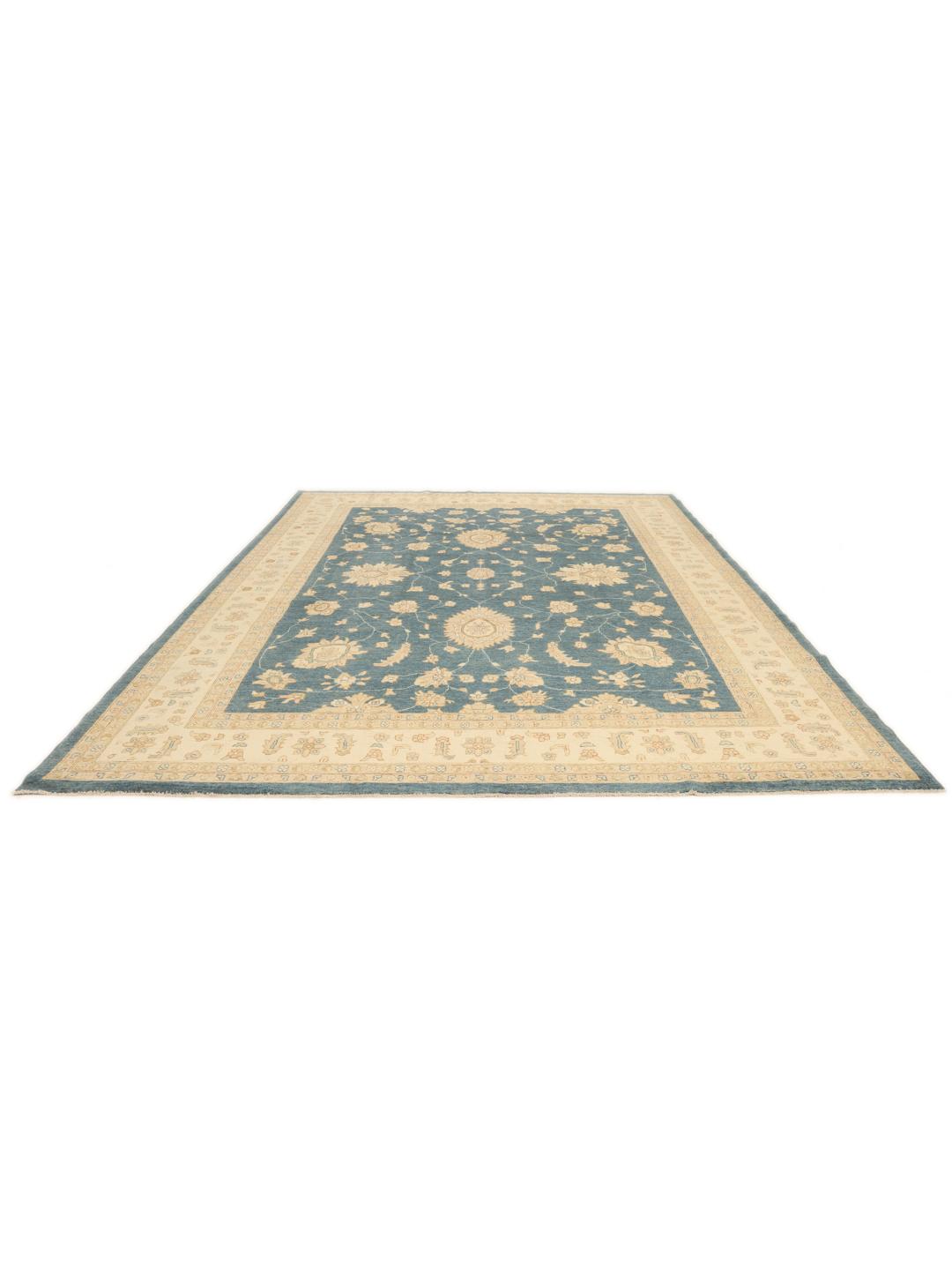
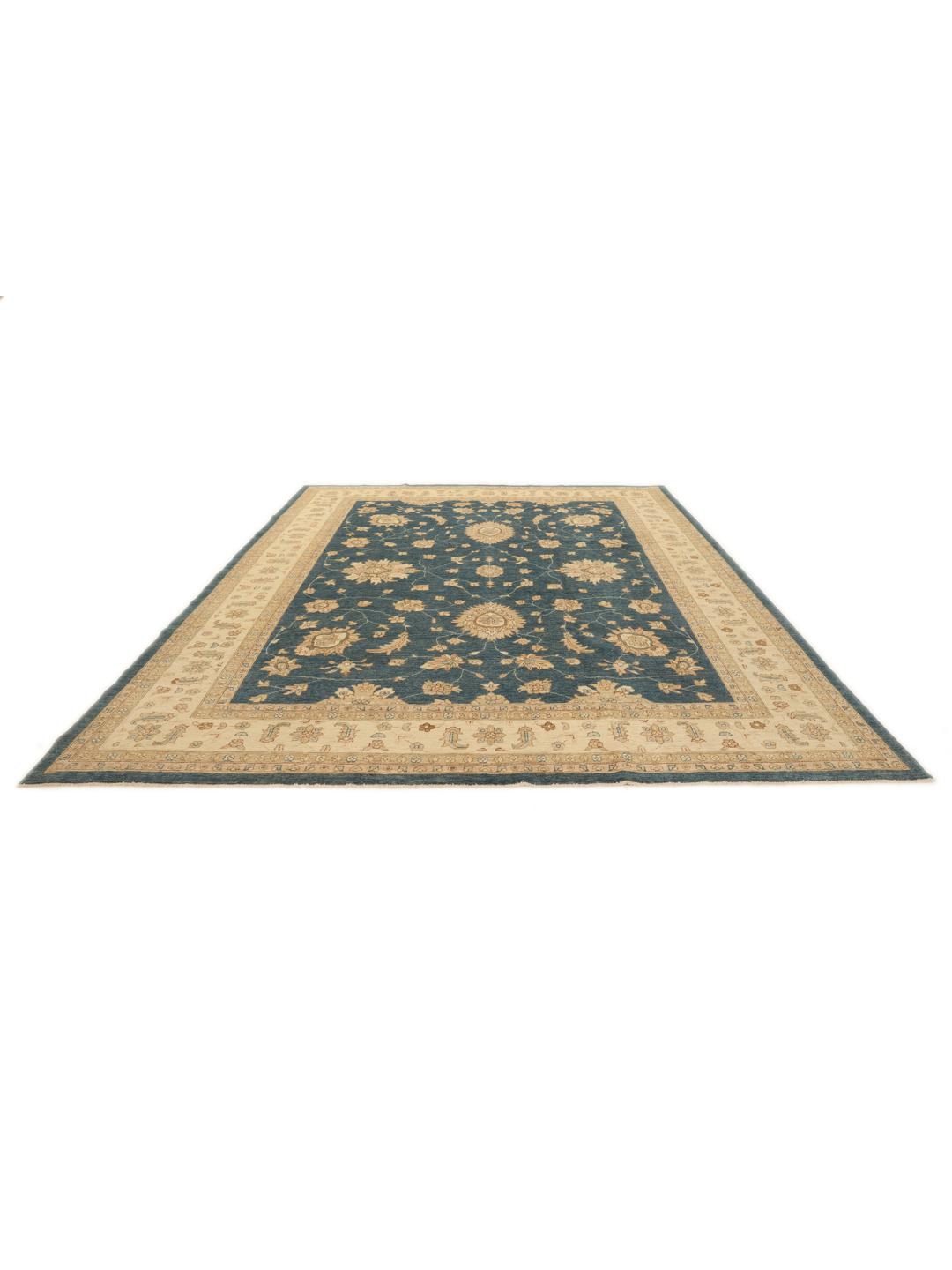
The Ziegler tradition originated in the late 19th century as a collaborative endeavour between Western design sensibilities and Eastern weaving techniques. Originally commissioned by a Swiss firm, these rugs were created to suit the tastes of European homes while maintaining the integrity of traditional Afghan craftsmanship. This historical evolution allowed for a unique bridge between cultures, resulting in a style that is both familiar to Western eyes and deeply connected to the artistic heritage of the Middle East.
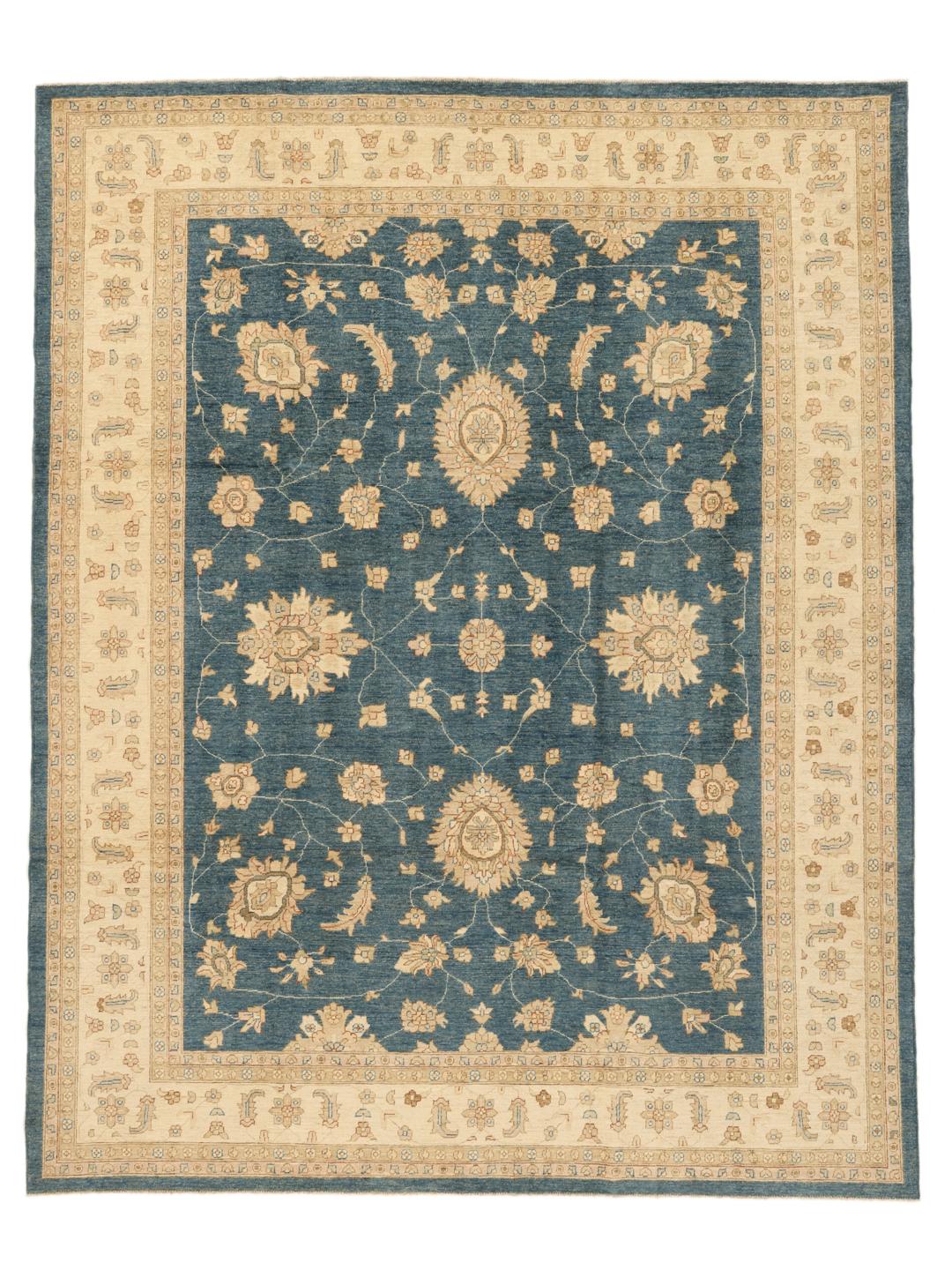
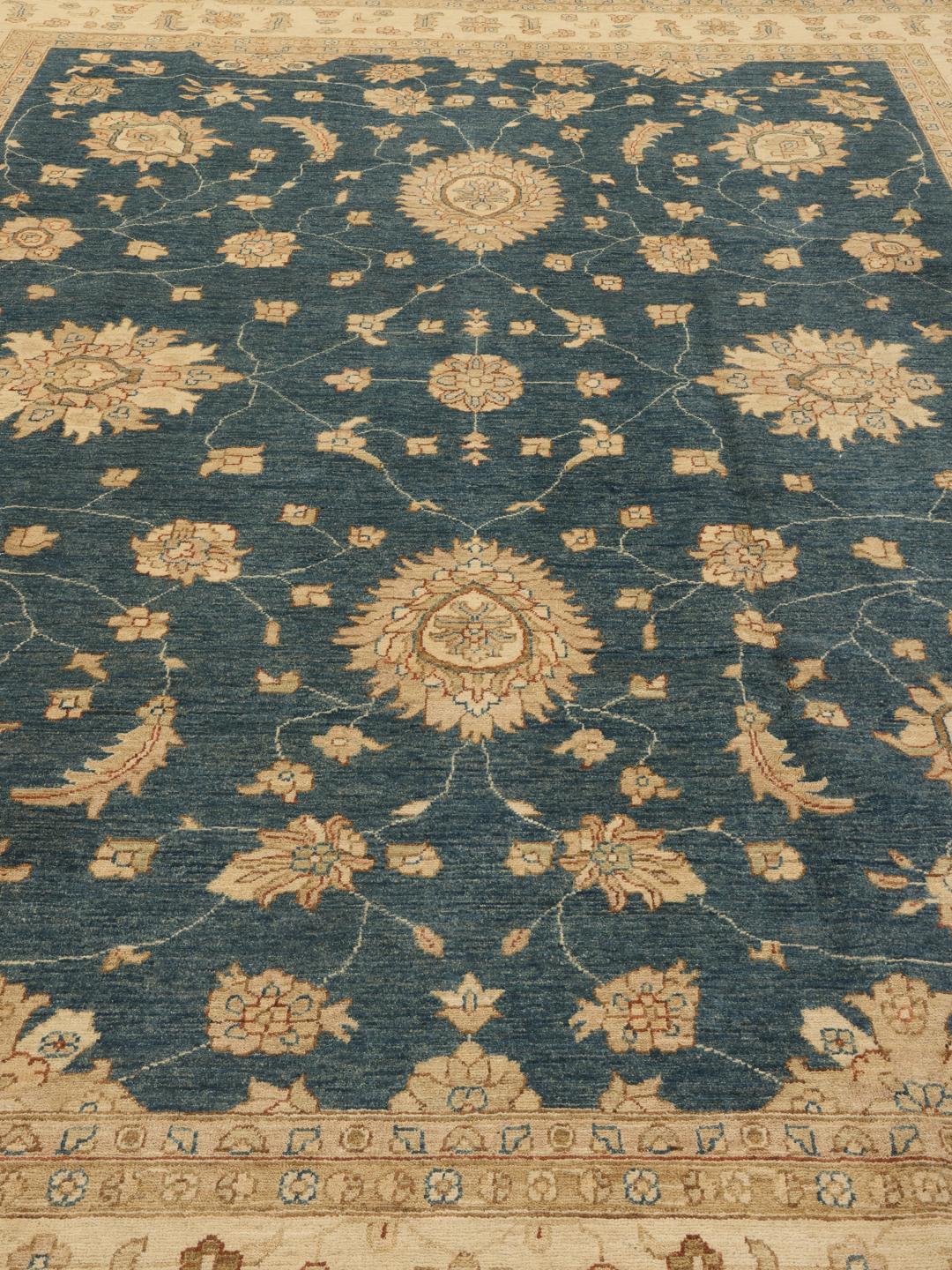
The term Ziegler often refers to a specific approach to design that emphasises an open field and oversized, simplified floral motifs. Unlike more crowded, traditional patterns, the Ziegler aesthetic prioritises balance and negative space. This design philosophy creates a sense of calm and visual clarity, making these rugs highly sought after for their ability to anchor a room without overwhelming the surrounding decor.
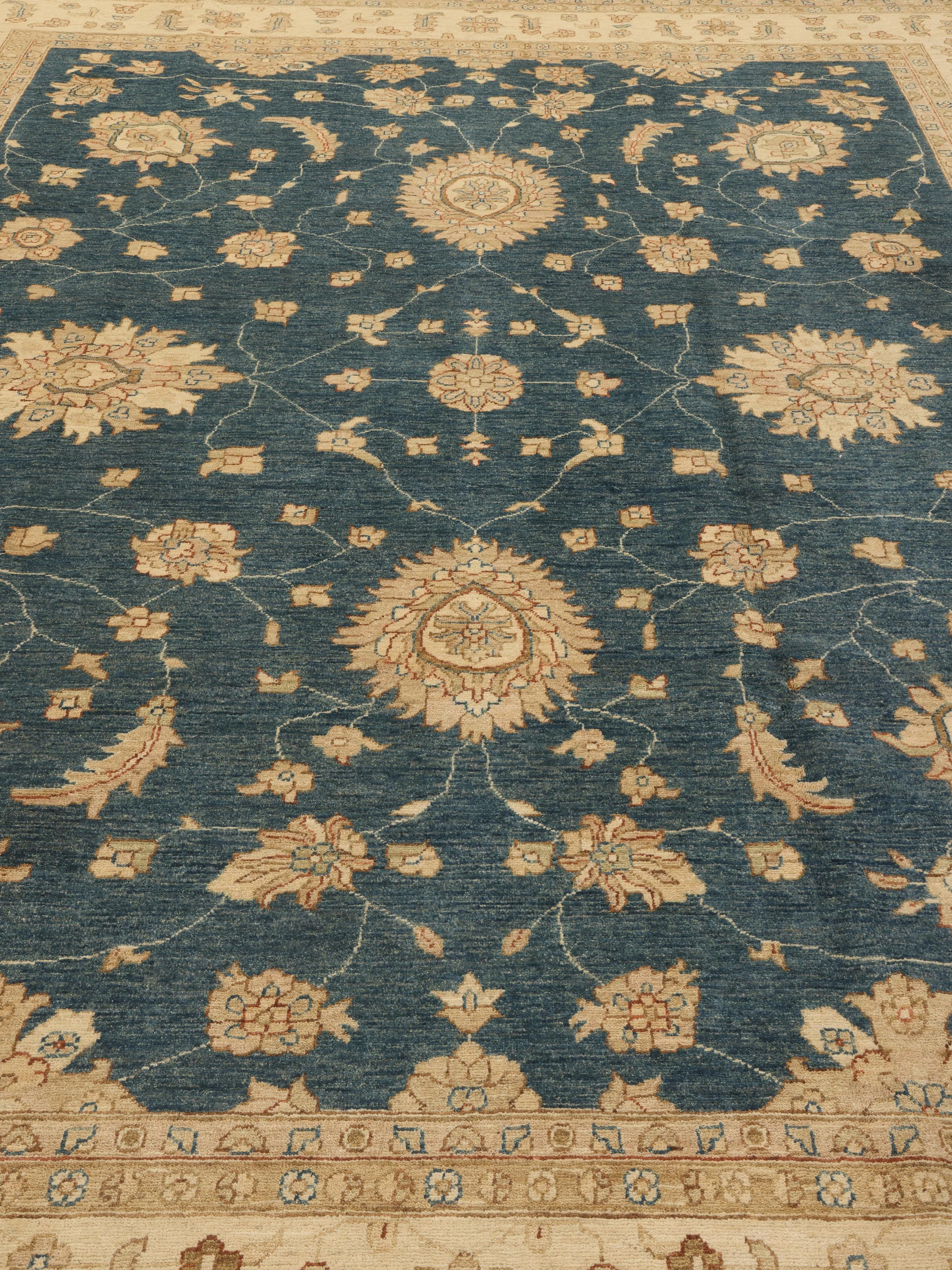
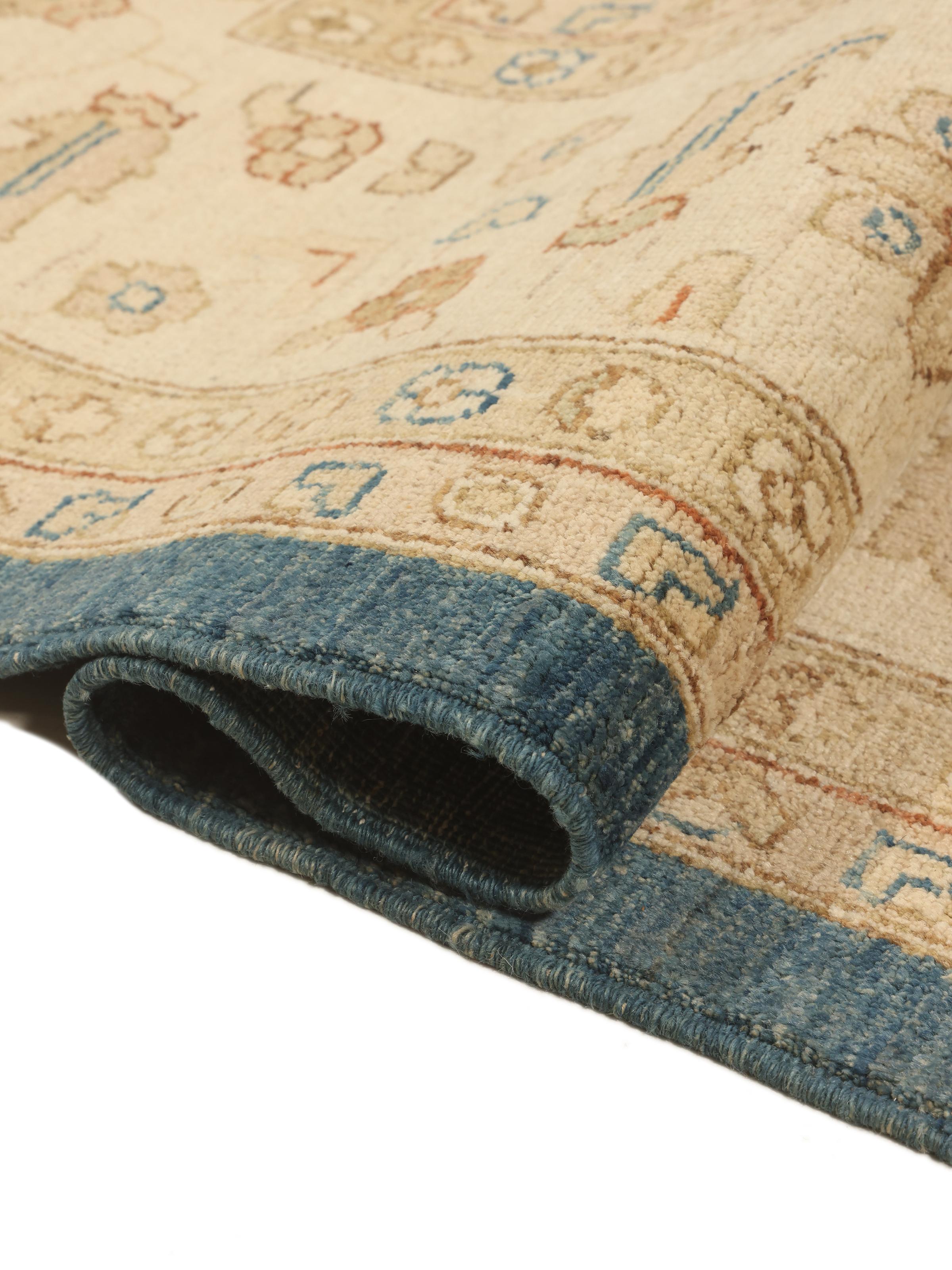
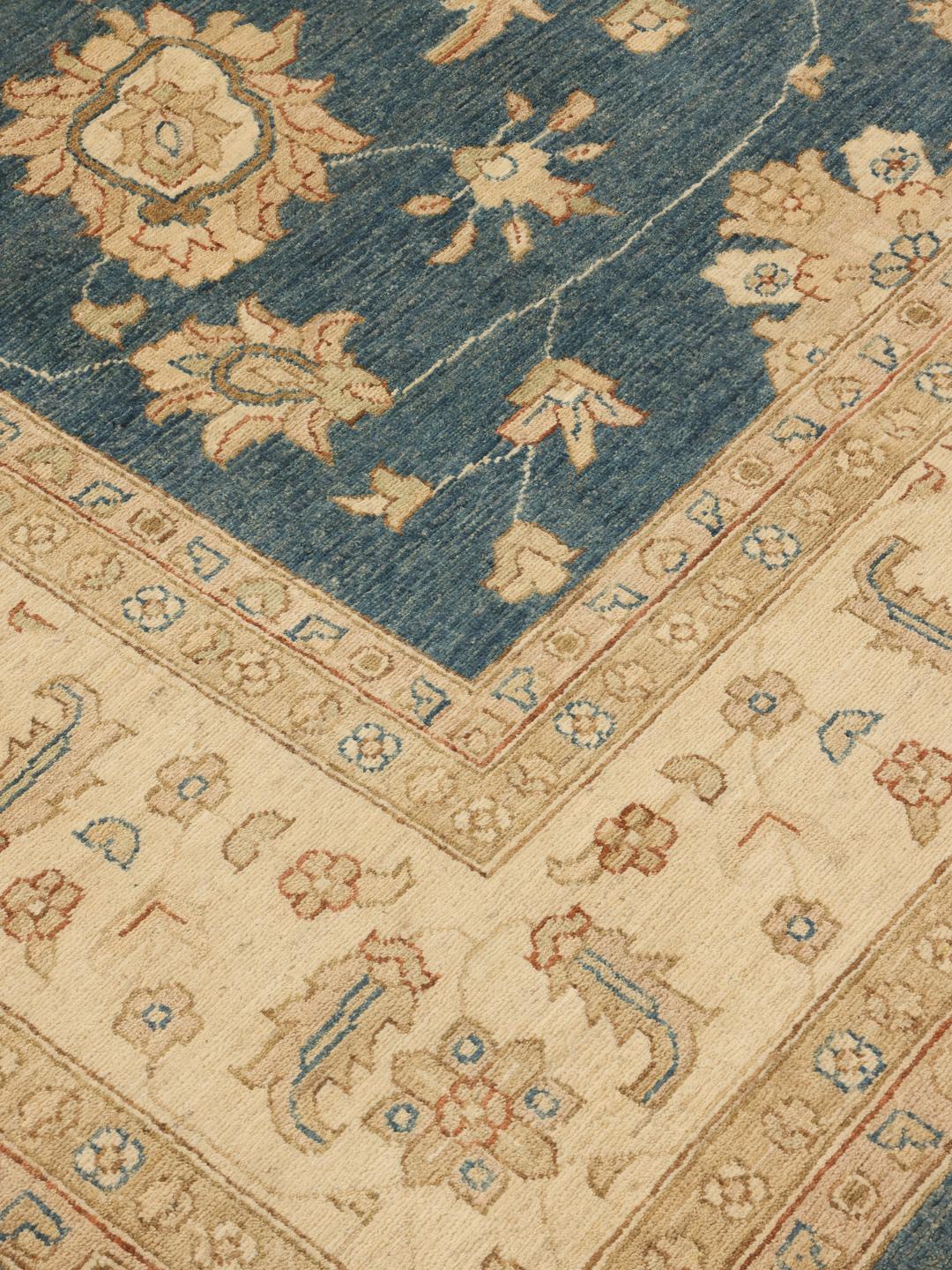
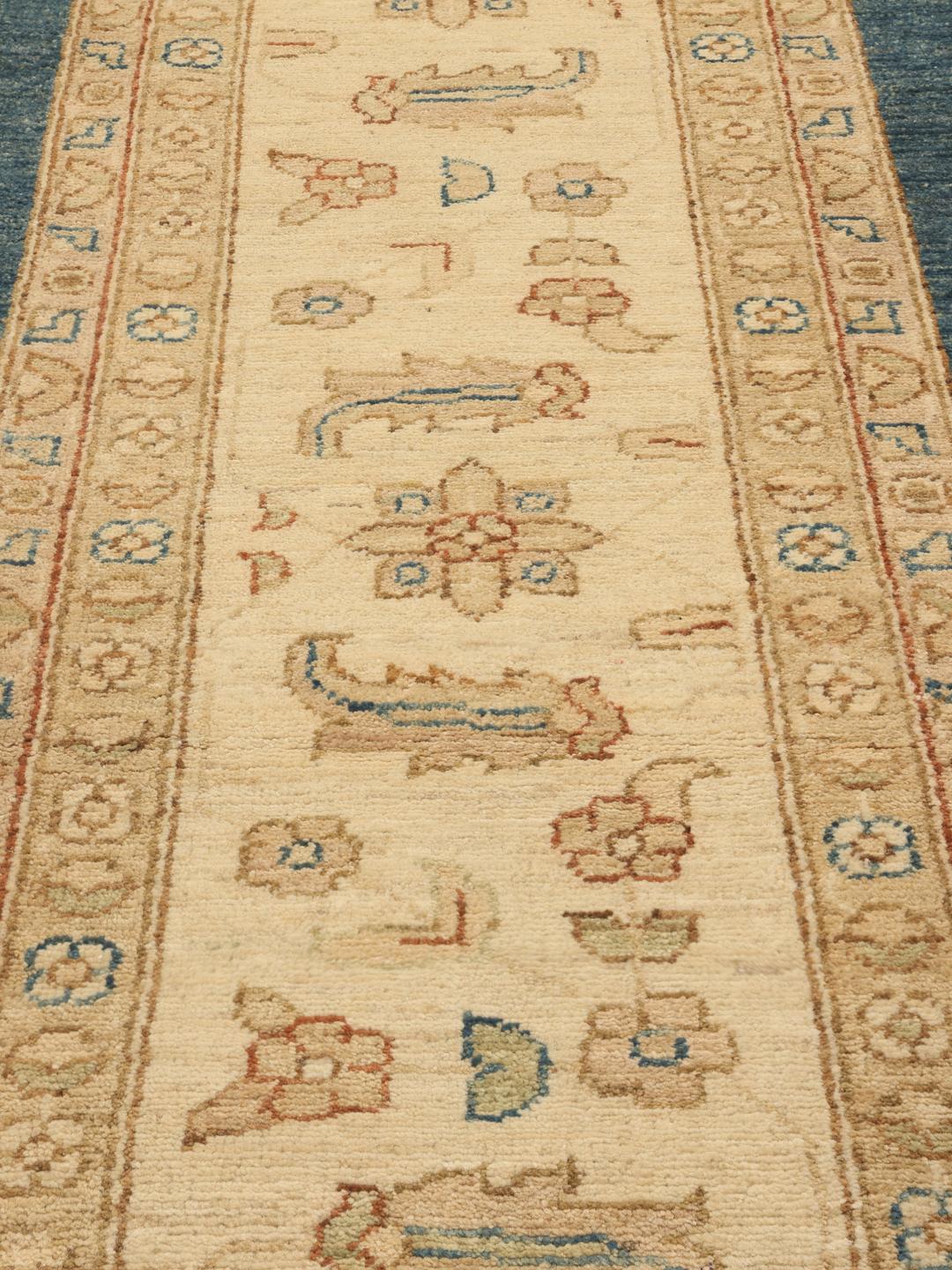
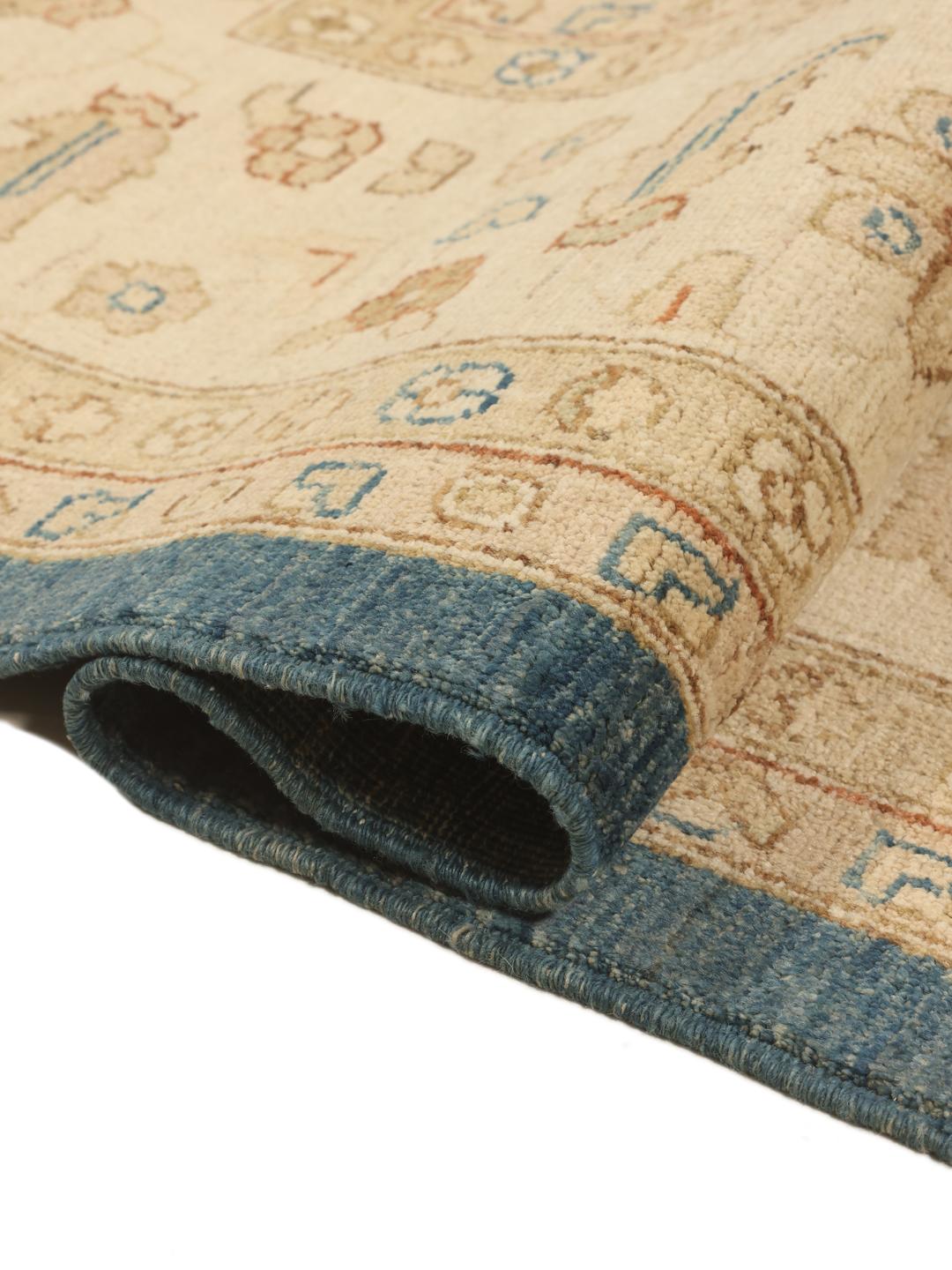
Signature design elements in this tradition include large, sweeping palmettes, vines, and rosettes that flow organically across the rug. The borders are typically formal yet generous, framing the central field with repeating geometric or floral elements. While traditional rugs often feature vibrant, saturated tones, this piece utilises a more refined palette that highlights the elegance of the patterns, showcasing a sophisticated evolution of the craft.
Owning a piece from this tradition is an act of preserving a legacy of skill and cultural exchange. These rugs are highly valued by collectors and homeowners alike for their enduring quality and the human story behind every knot. They represent a commitment to slow, deliberate creation, offering a sense of heritage that modern, mass-produced items simply cannot replicate.