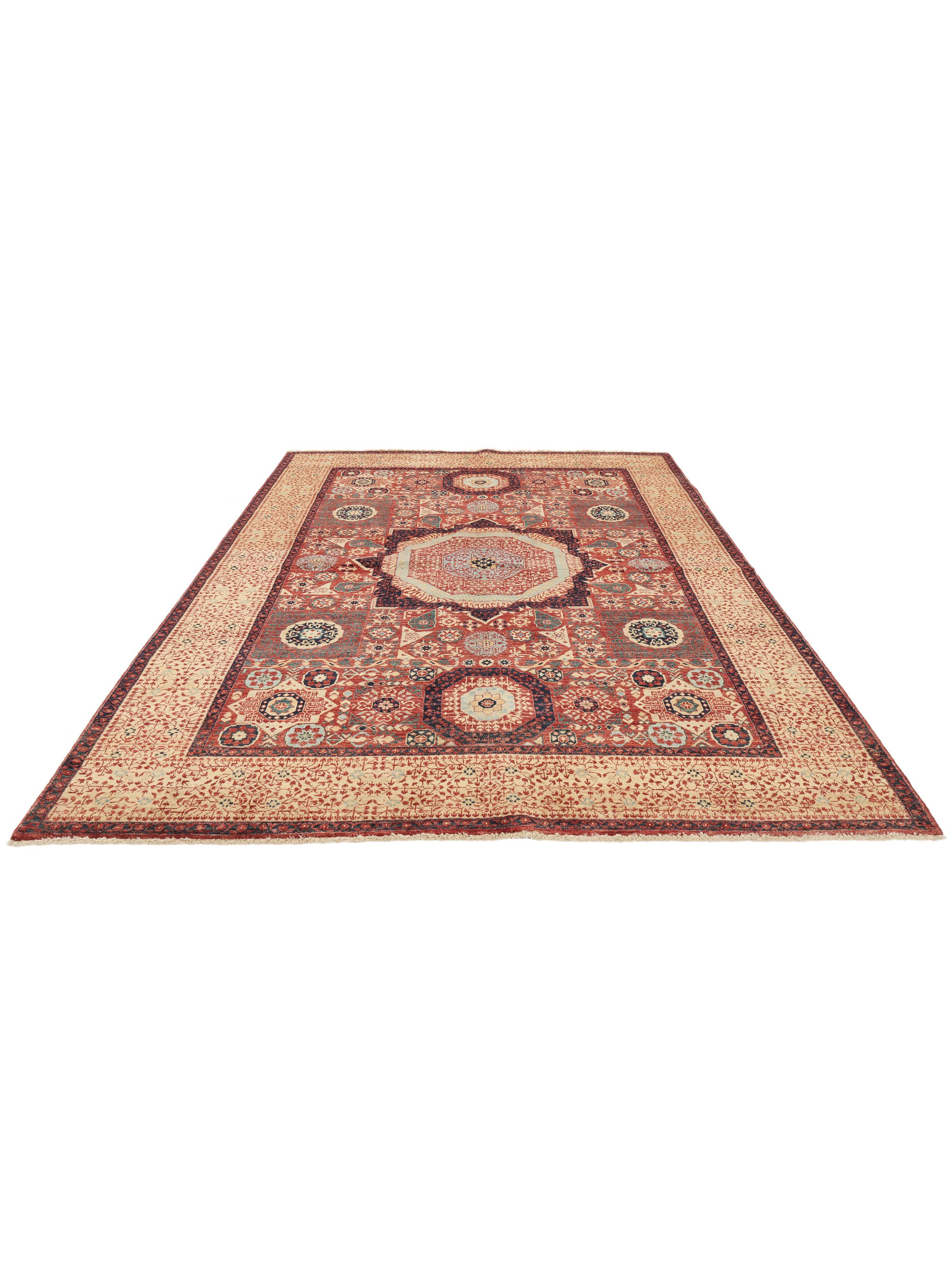
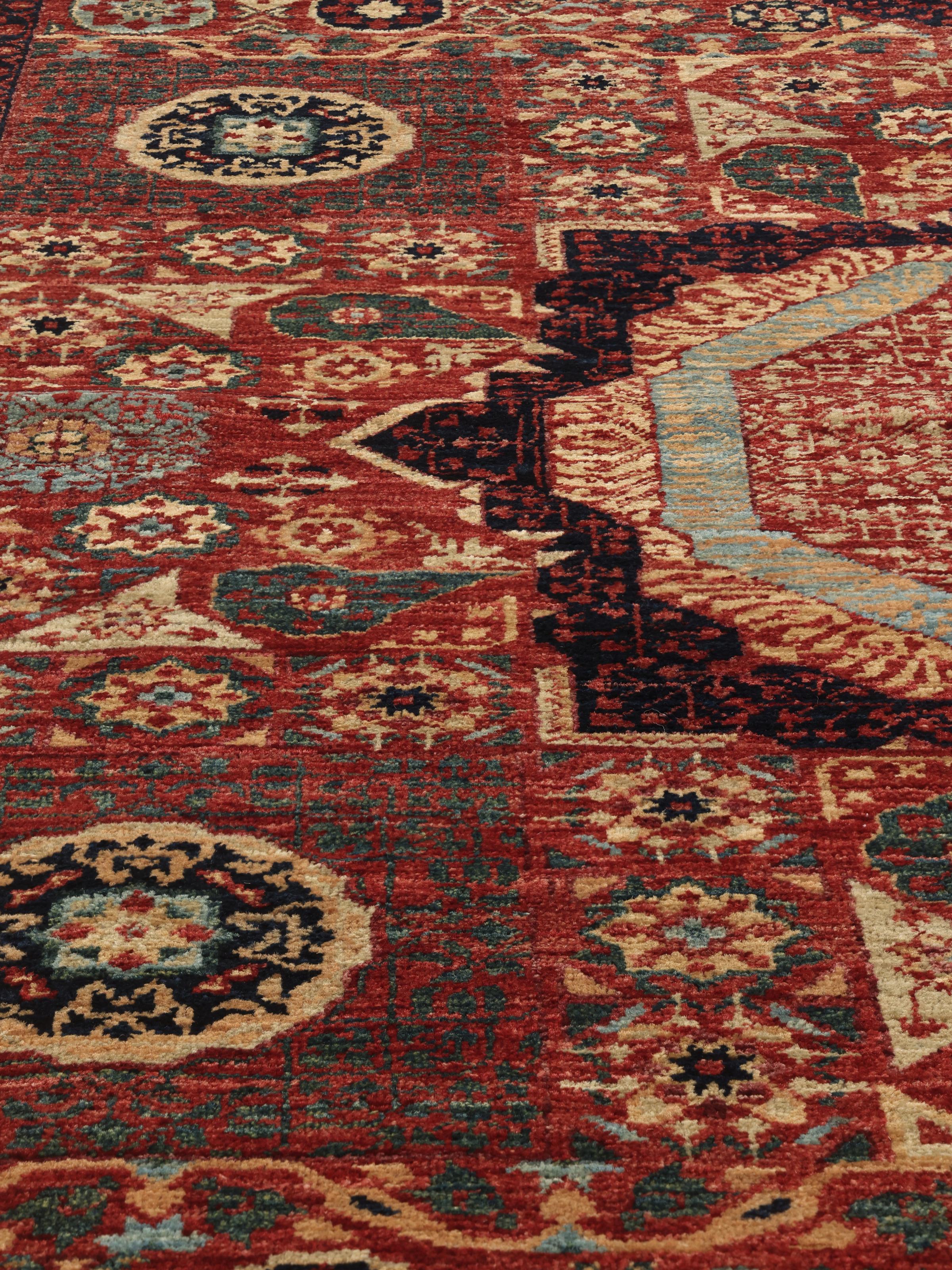
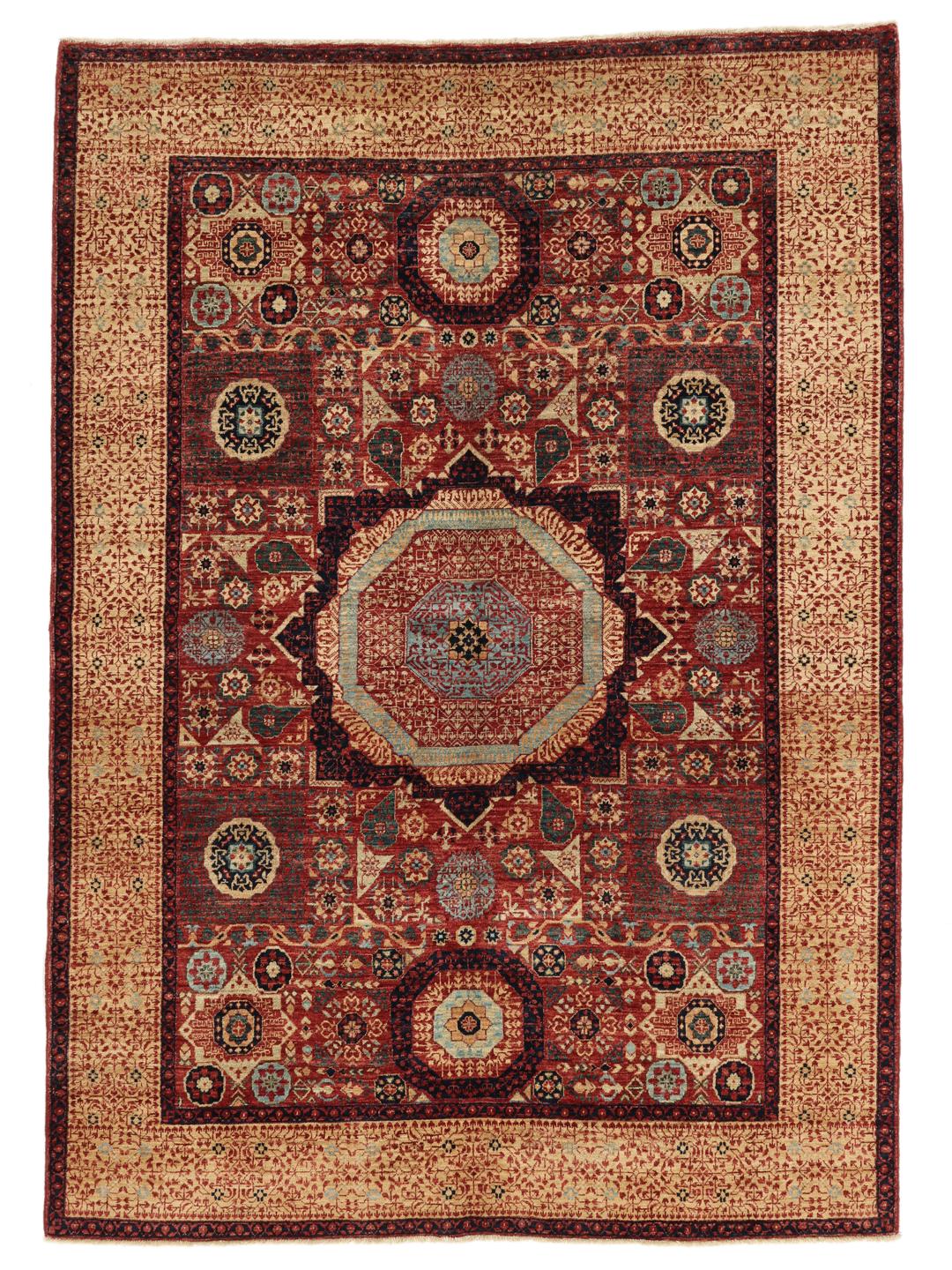
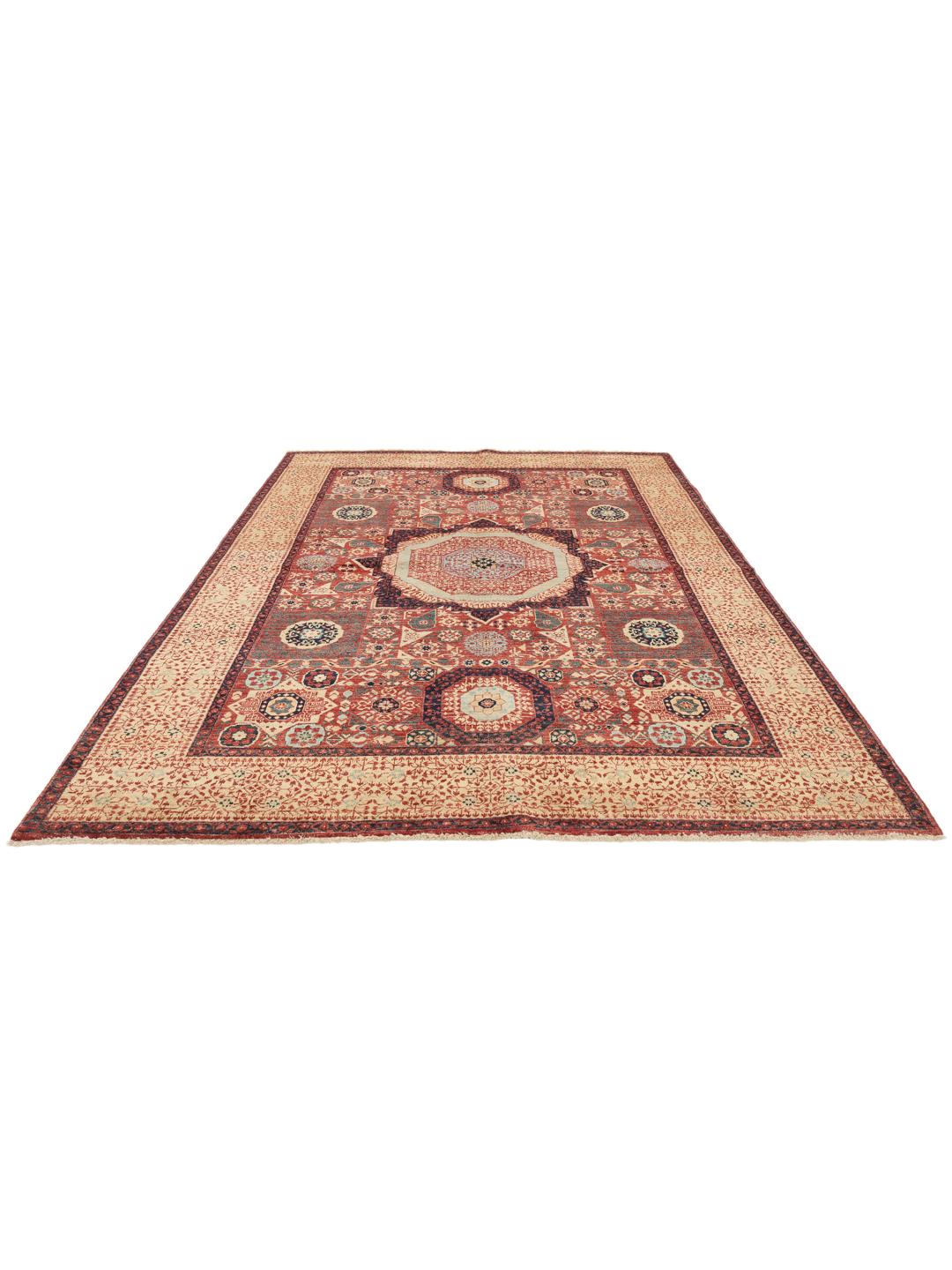
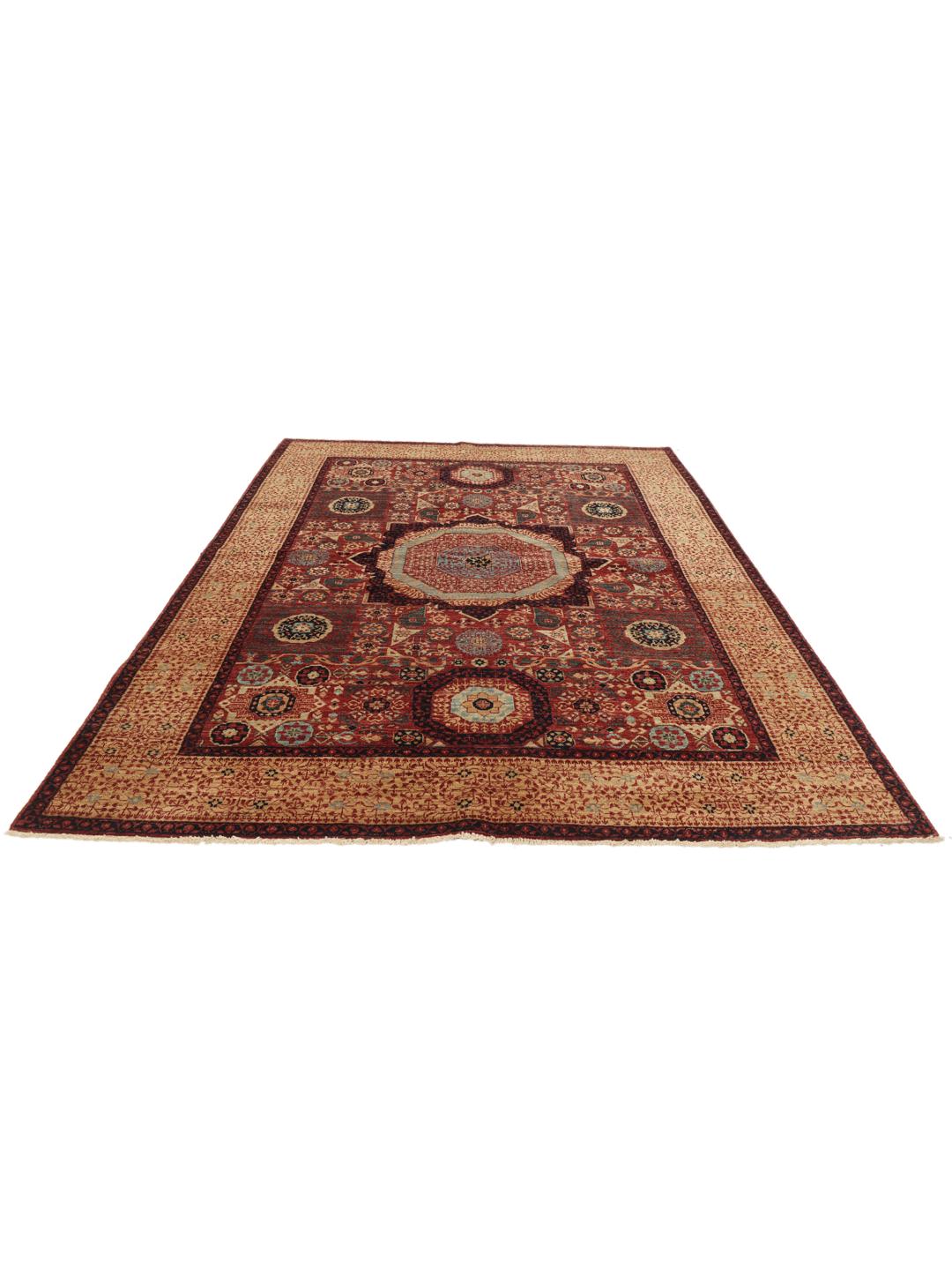
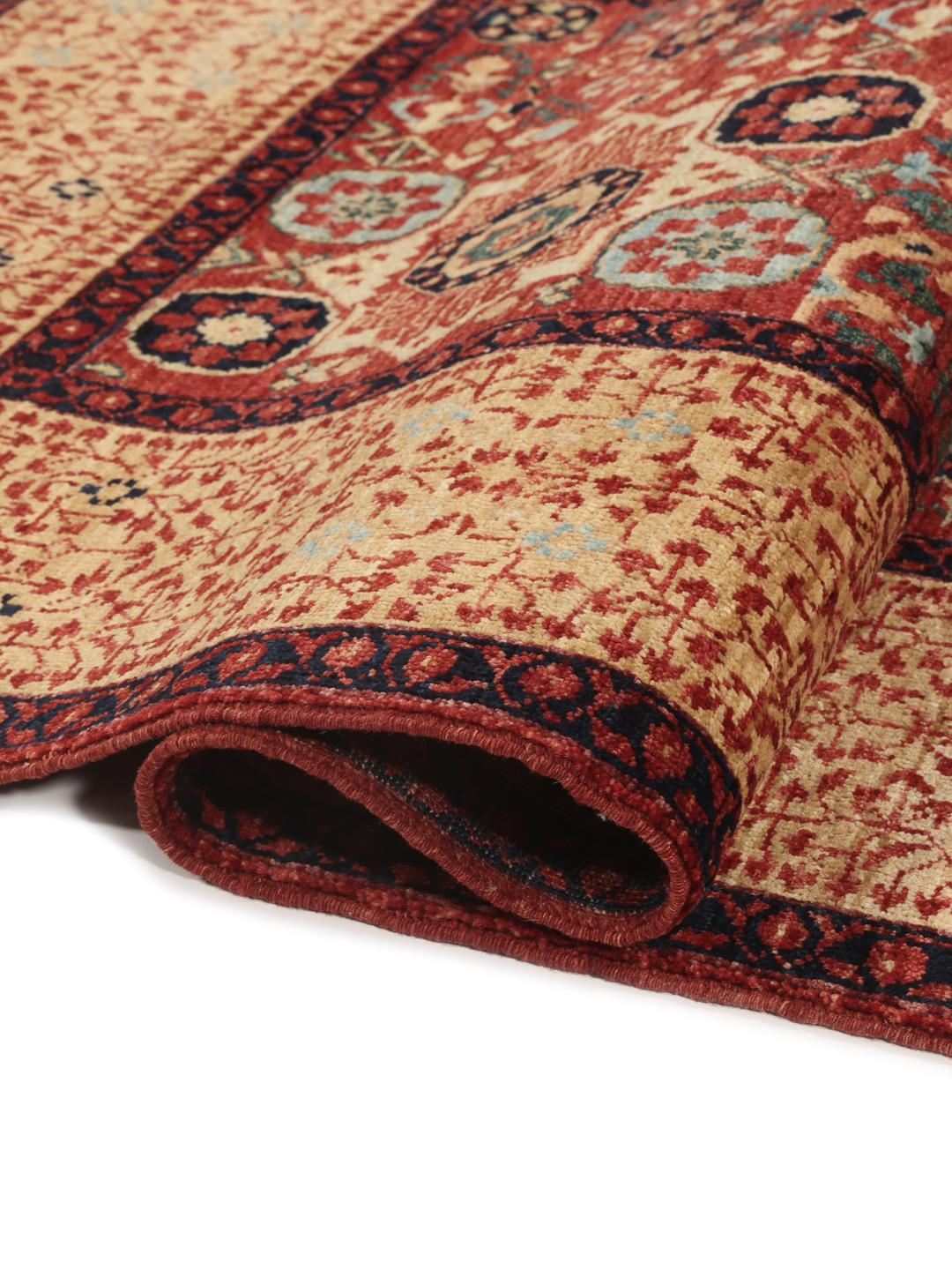
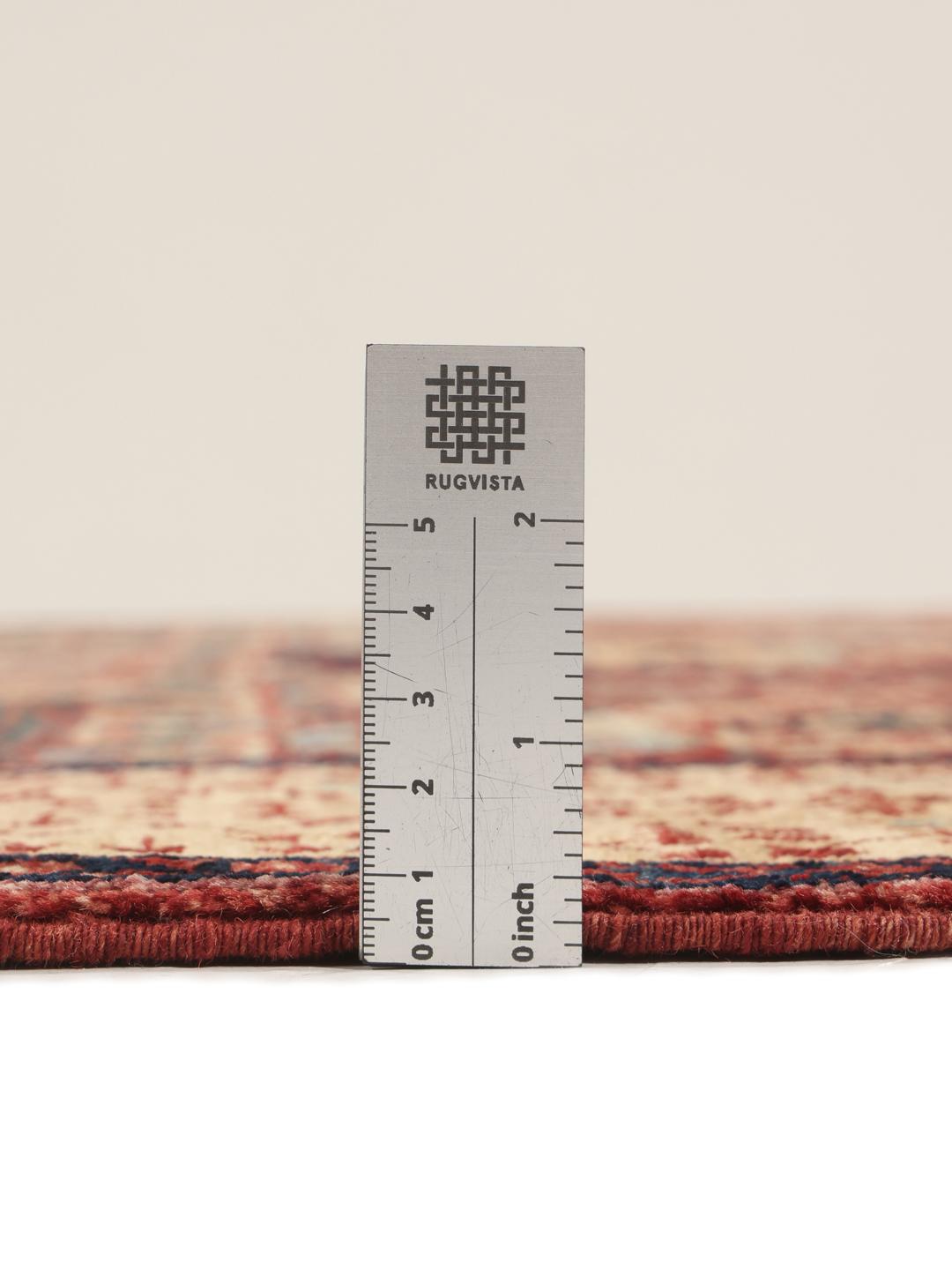
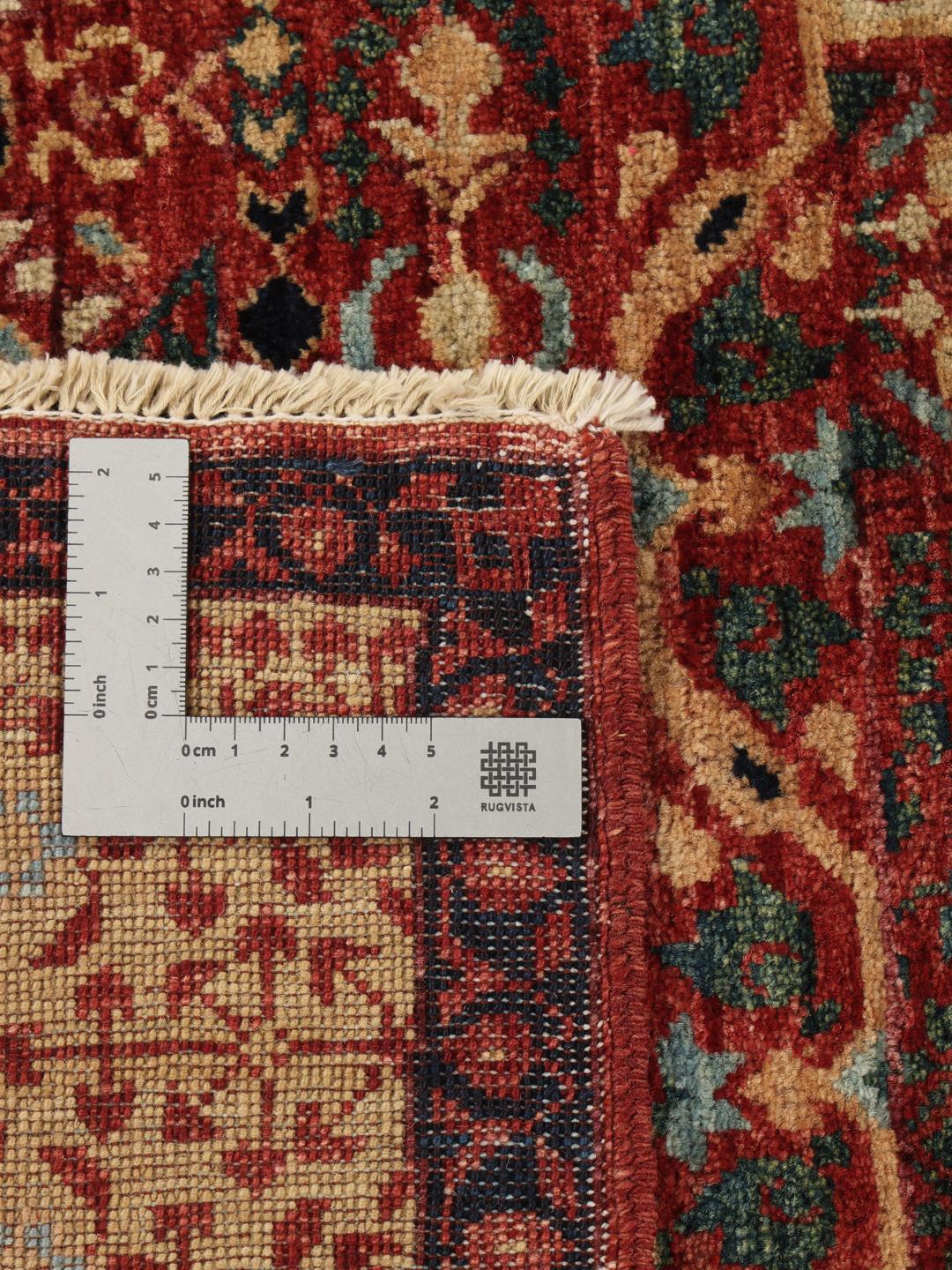
The Mamluk style traces its origins to the 15th and 16th centuries, during the reign of the Mamluk Sultanate in Egypt. These rugs are famously known for their sophisticated, kaleidoscopic geometric designs and a unique palette that often features deep reds, blues, and soft golds, which have been masterfully reinterpreted by Afghan artisans in recent decades.
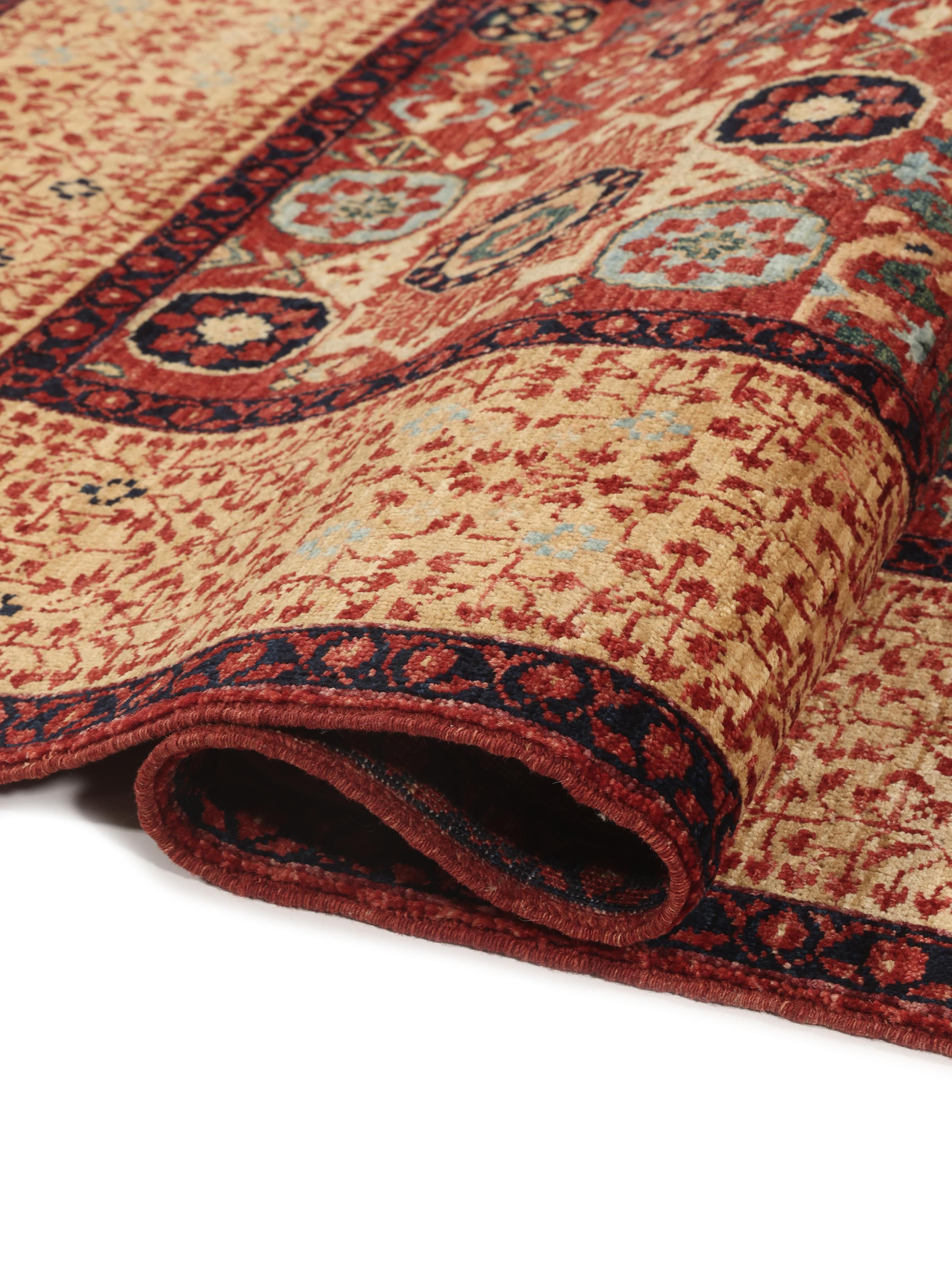
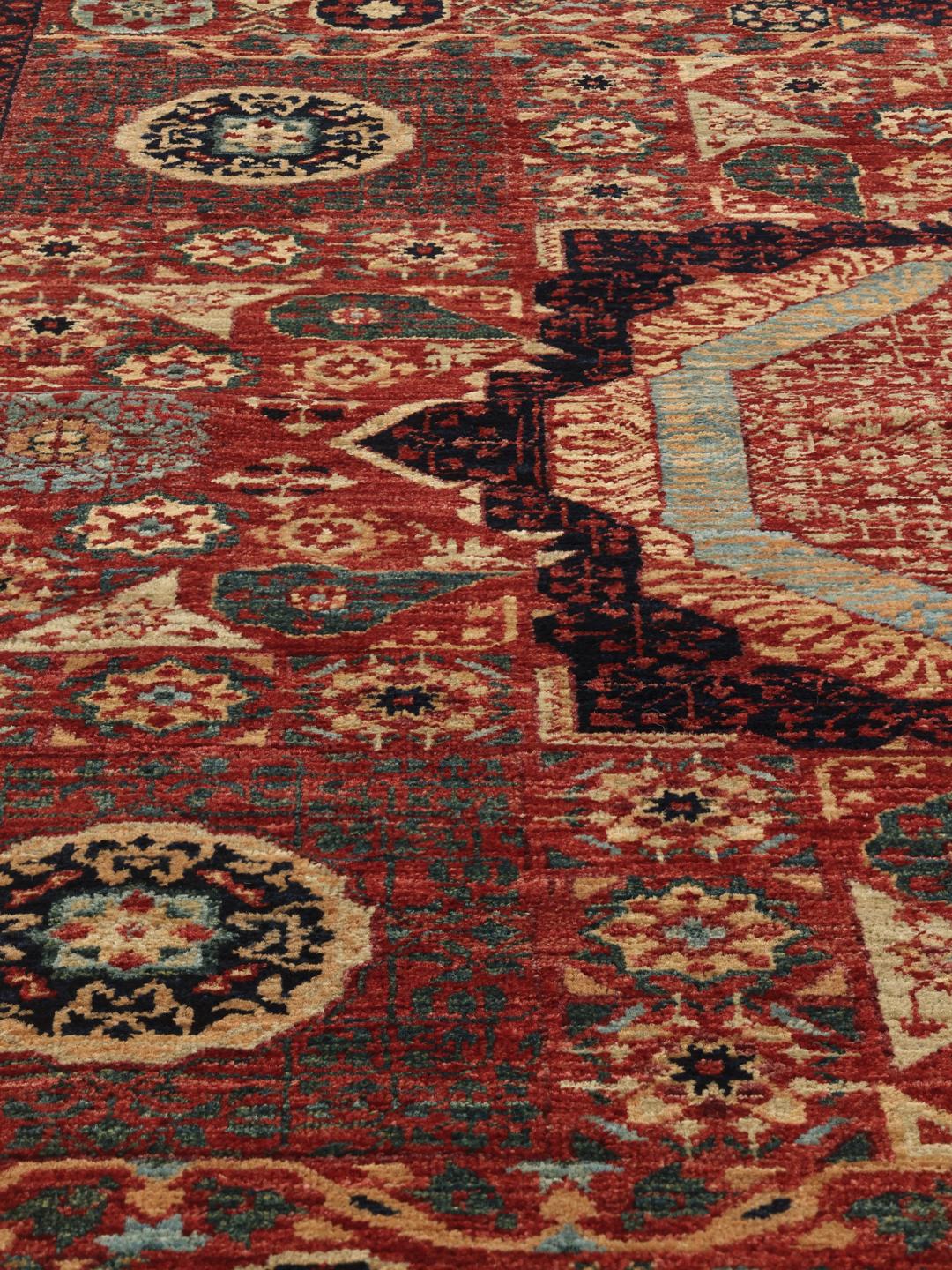
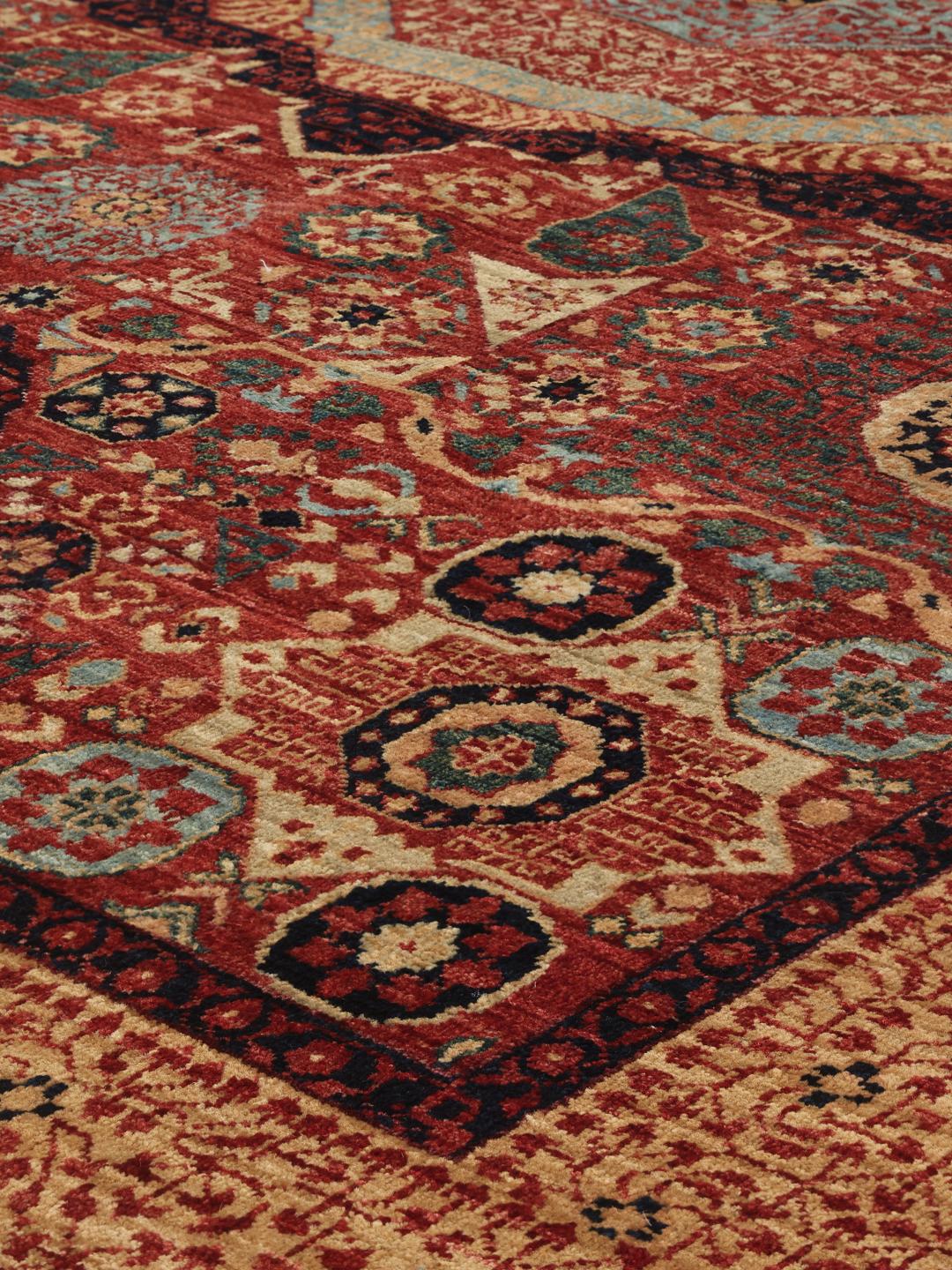
A defining technical characteristic of the Mamluk tradition is the use of a refined weave that allows for complex, interlocking patterns. The precision required to execute these designs is significant, as the motifs must align perfectly to create the characteristic infinite feel of the field. This technical complexity ensures that the rug is not just a floor covering but a display of mathematical and artistic harmony.
Signature elements of the Mamluk style include large, multi-faceted central medallions surrounded by smaller, intricate geometric shapes and stylised floral motifs. Unlike many other regional traditions, the Mamluk design avoids large, open spaces, instead opting for a dense, rhythmic arrangement that draws the eye across the entire surface of the rug.
Collecting a Mamluk rug is an investment in a storied design language that has captivated connoisseurs for centuries. These pieces are valued for their ability to bridge the gap between historical grandeur and contemporary interior design, offering a sense of cultural depth and sophisticated craftsmanship that remains relevant in modern homes.