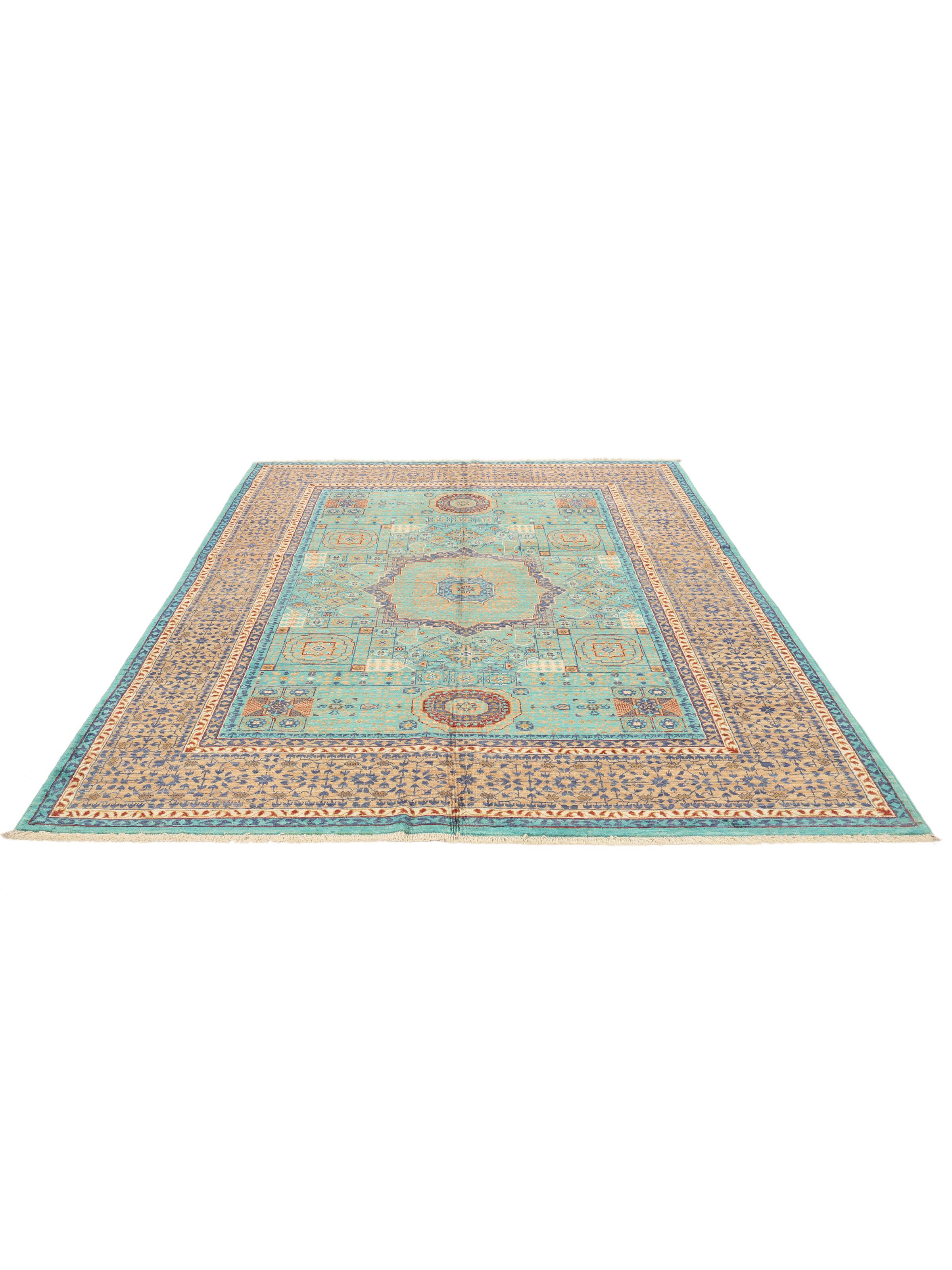
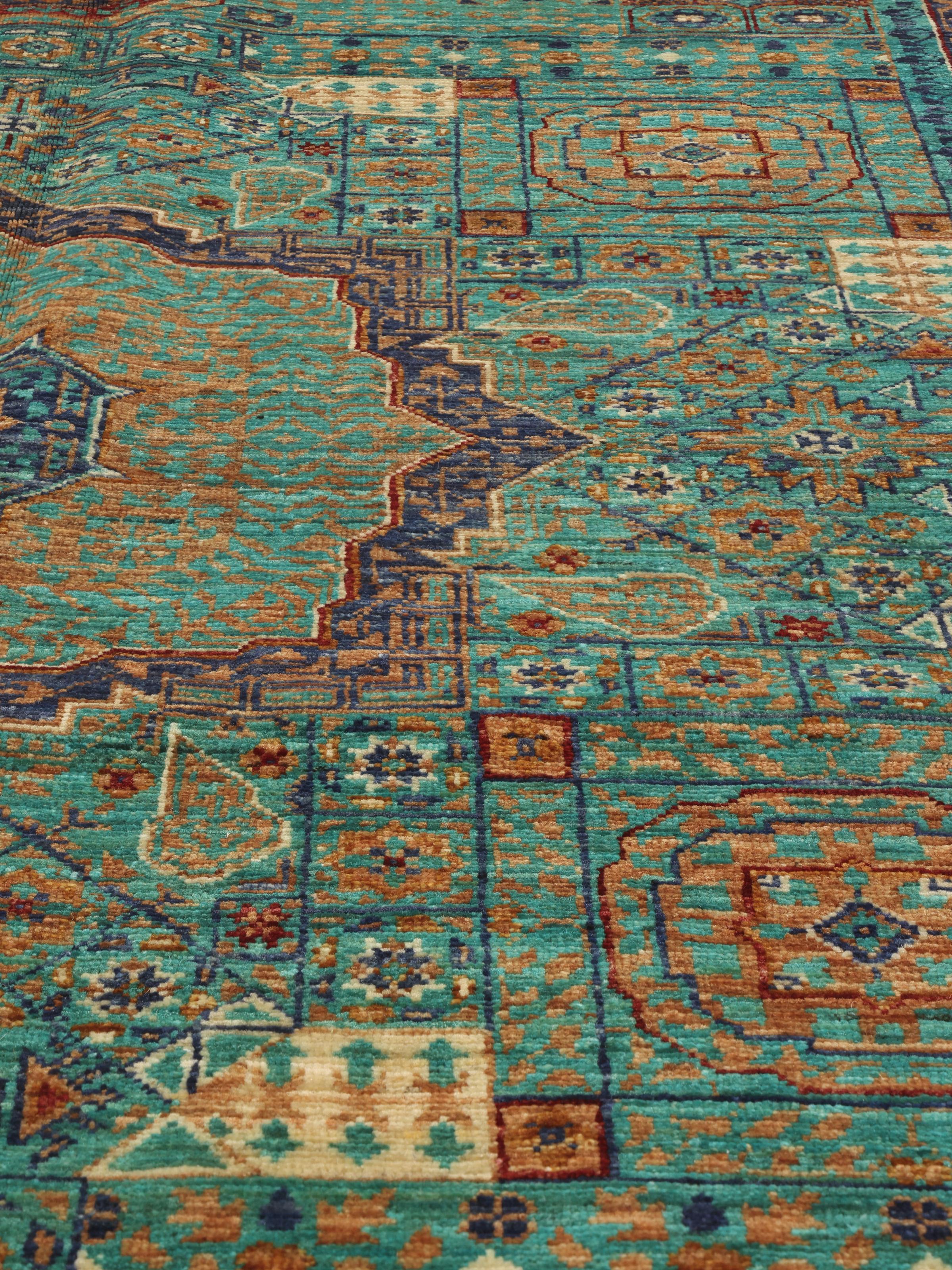
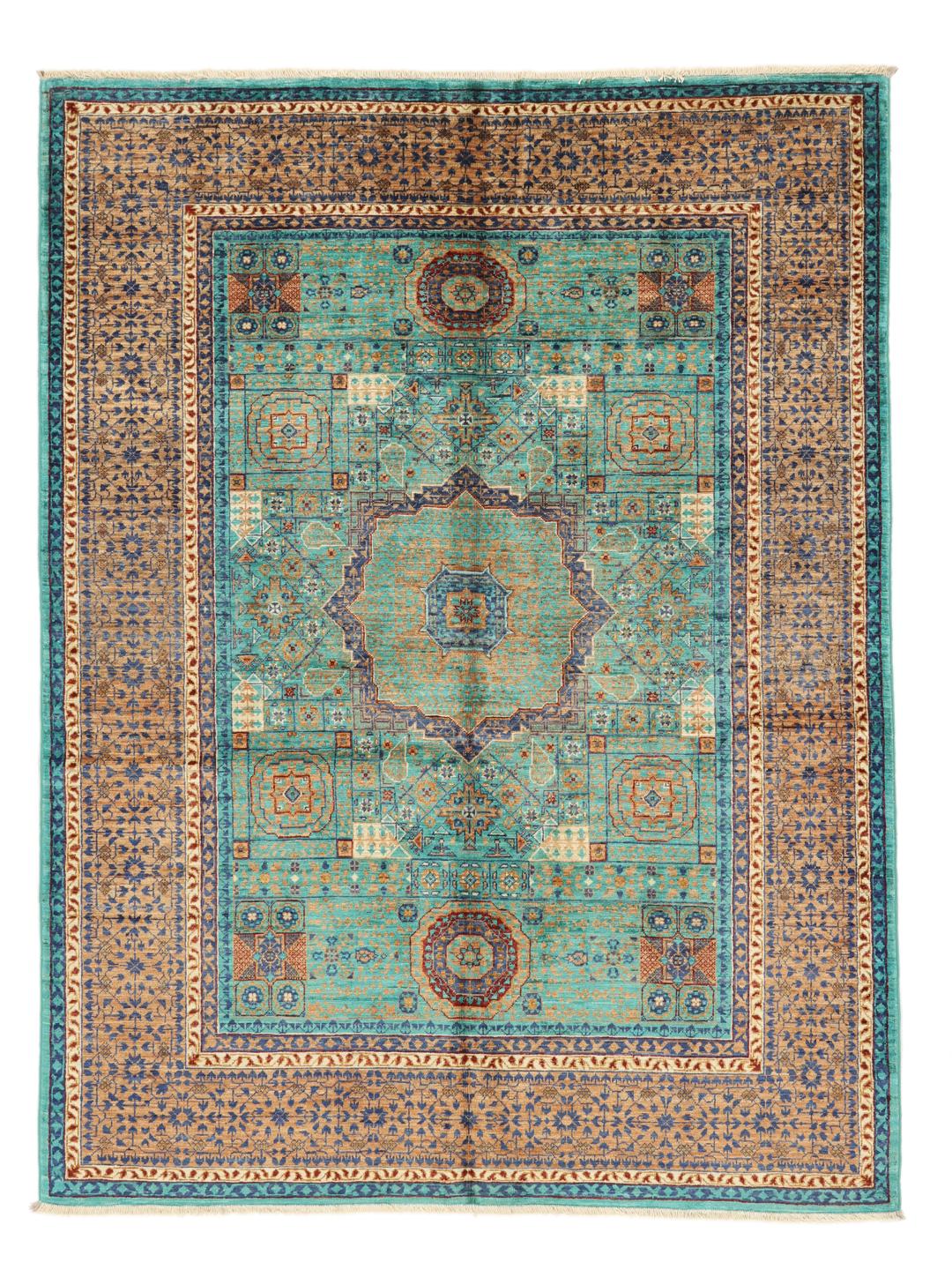
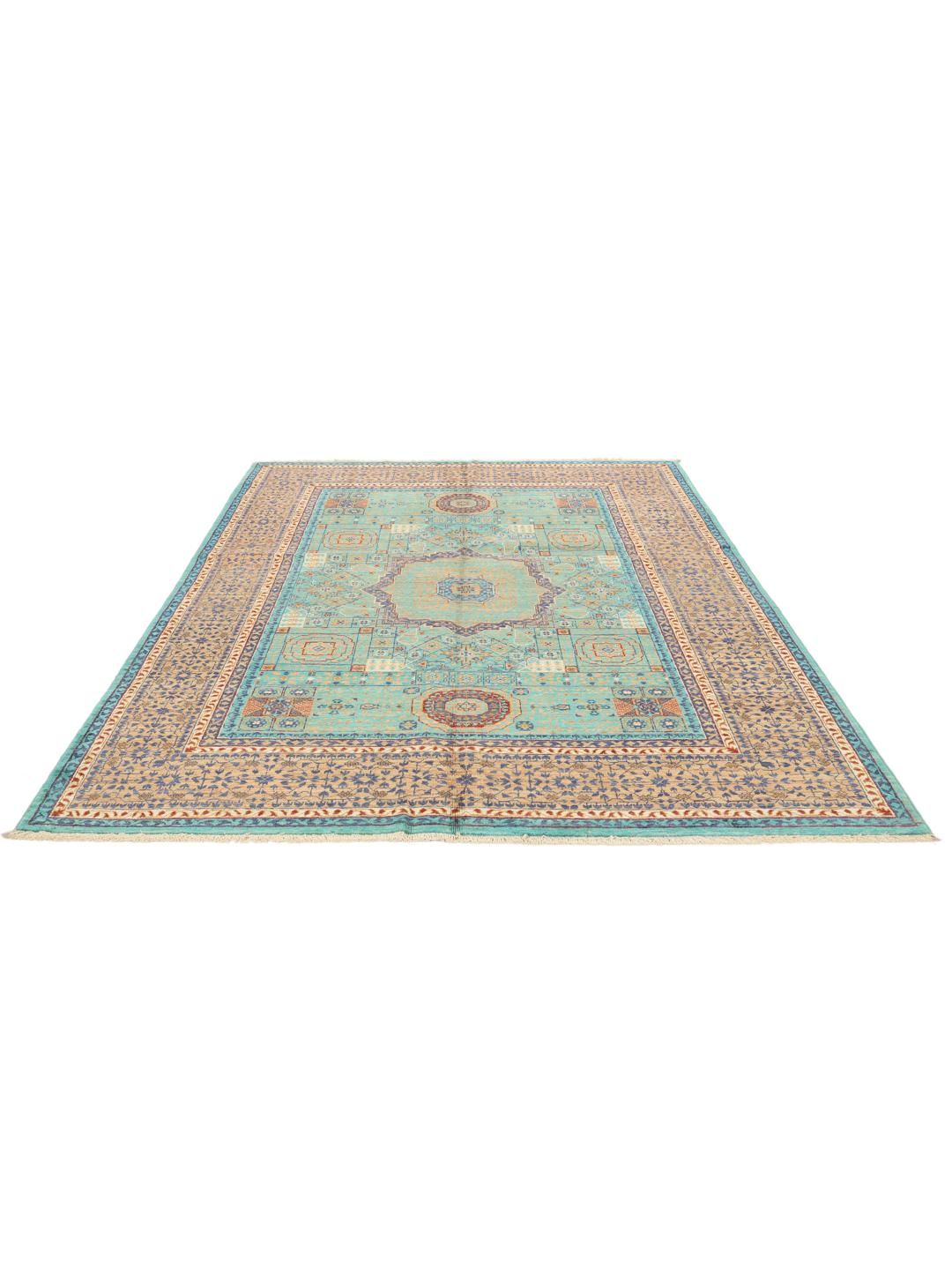
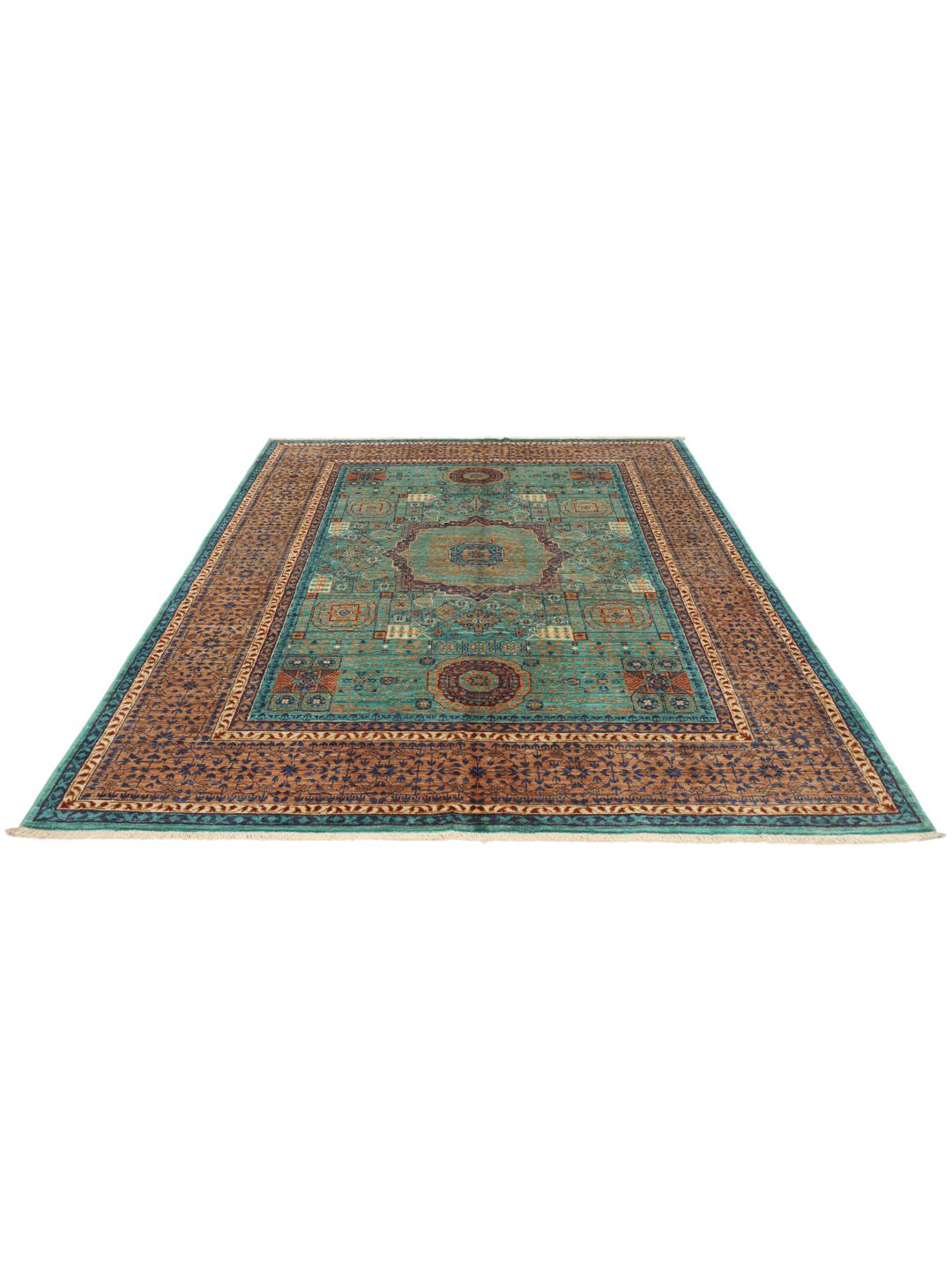
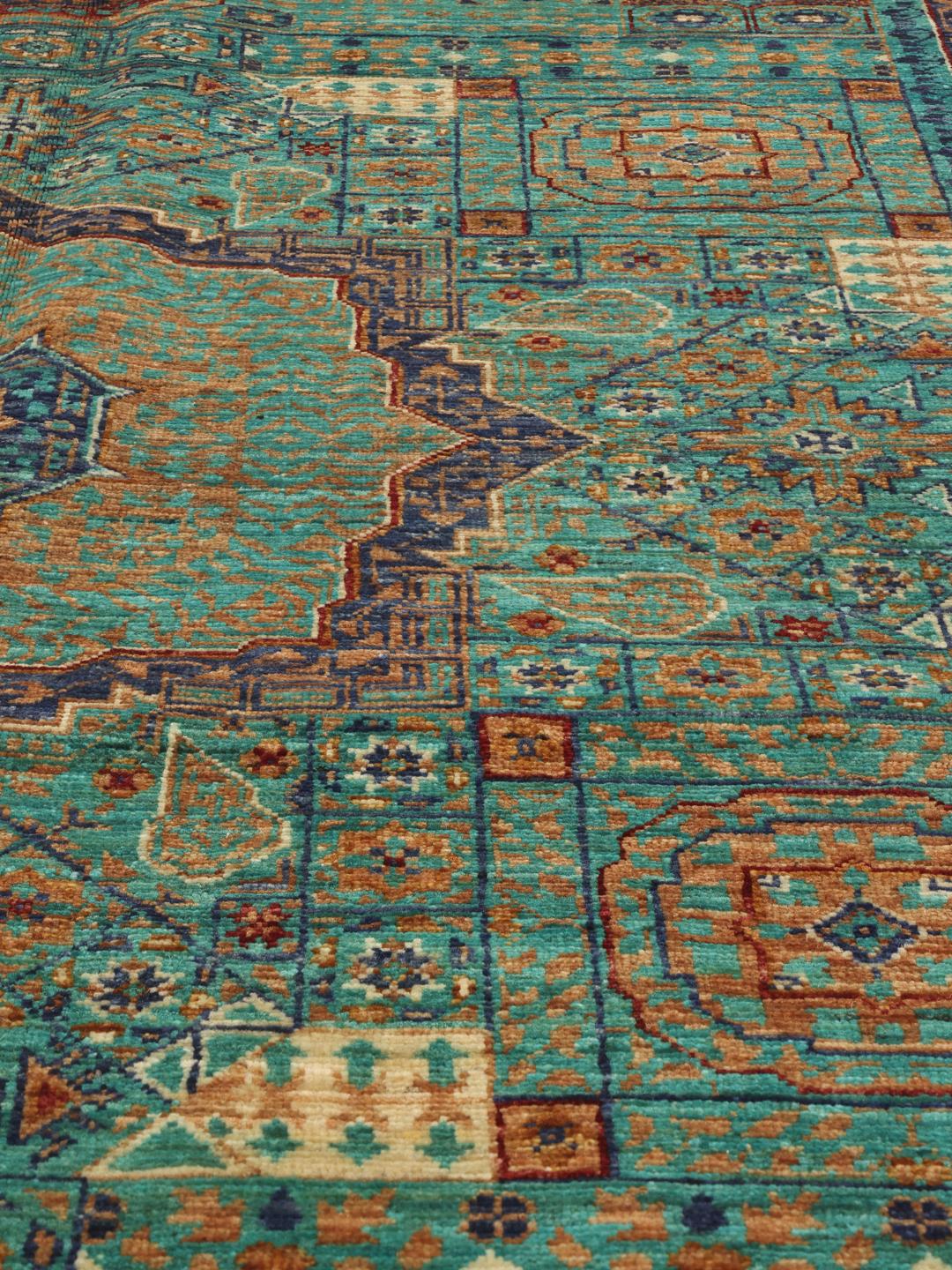
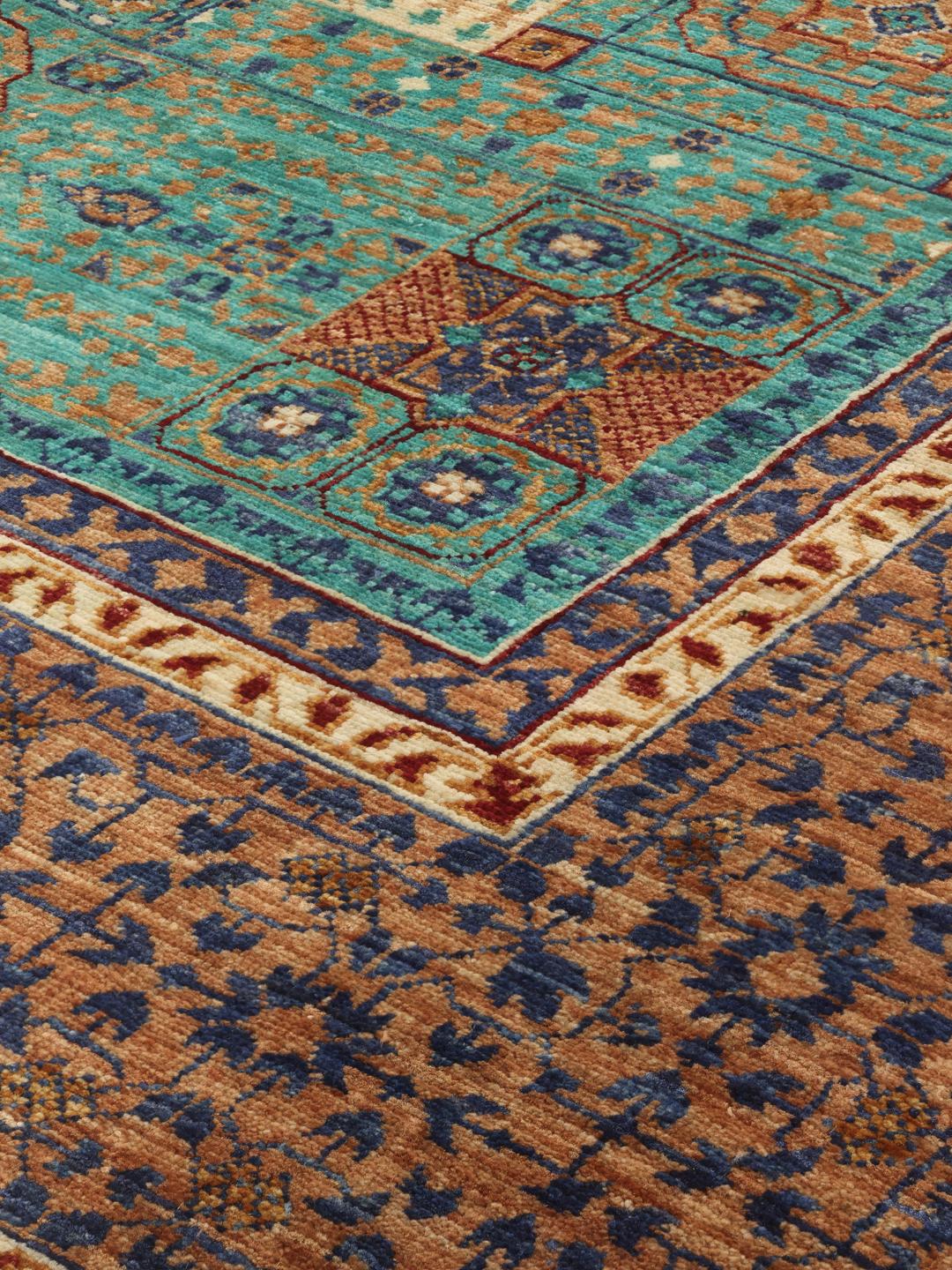
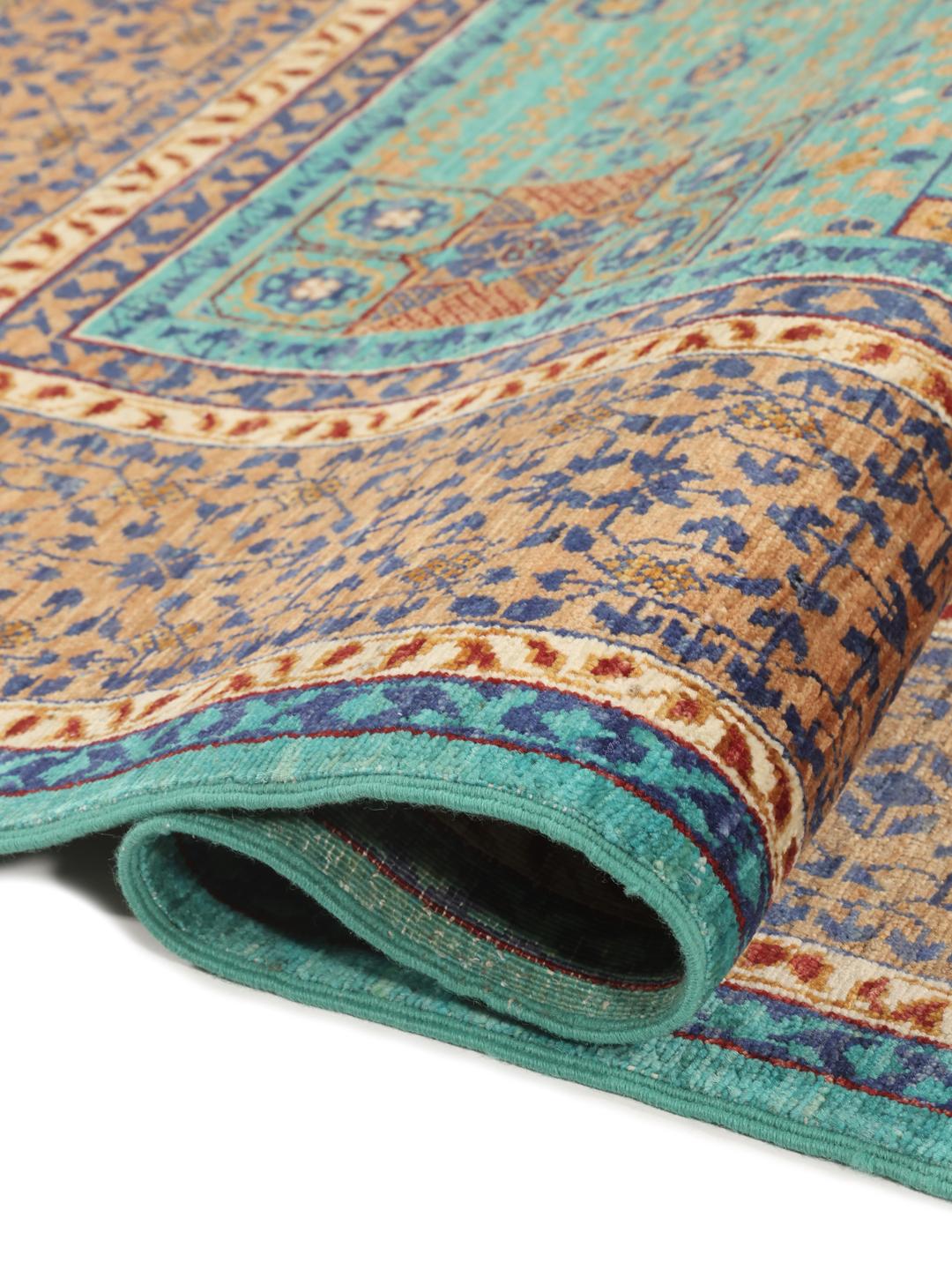
Mamluk rugs originate from a design tradition that flourished during the Mamluk Sultanate in Egypt between the 13th and 16th centuries. These rugs are celebrated for their sophisticated geometric language, which often features a central medallion surrounded by a complex arrangement of smaller motifs, stars, and triangles, creating a balanced and harmonious aesthetic.
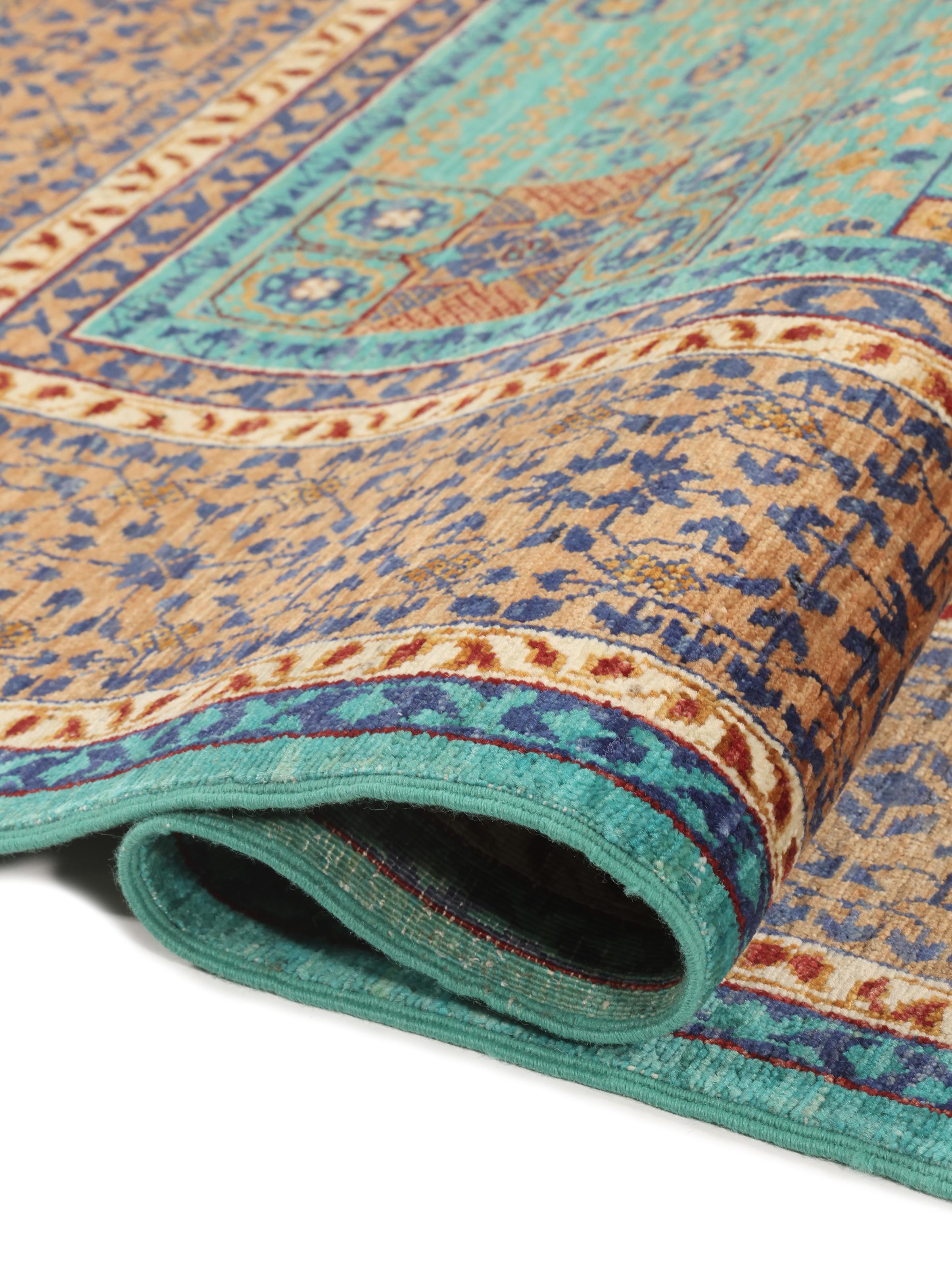
The term Mamluk refers not only to the historical period but also to this distinct style of high-quality weaving. Characterised by their use of specific Wool types and a unique approach to colour, these rugs are known for their lustrous, soft pile and their ability to maintain intricate pattern detail over centuries of appreciation.
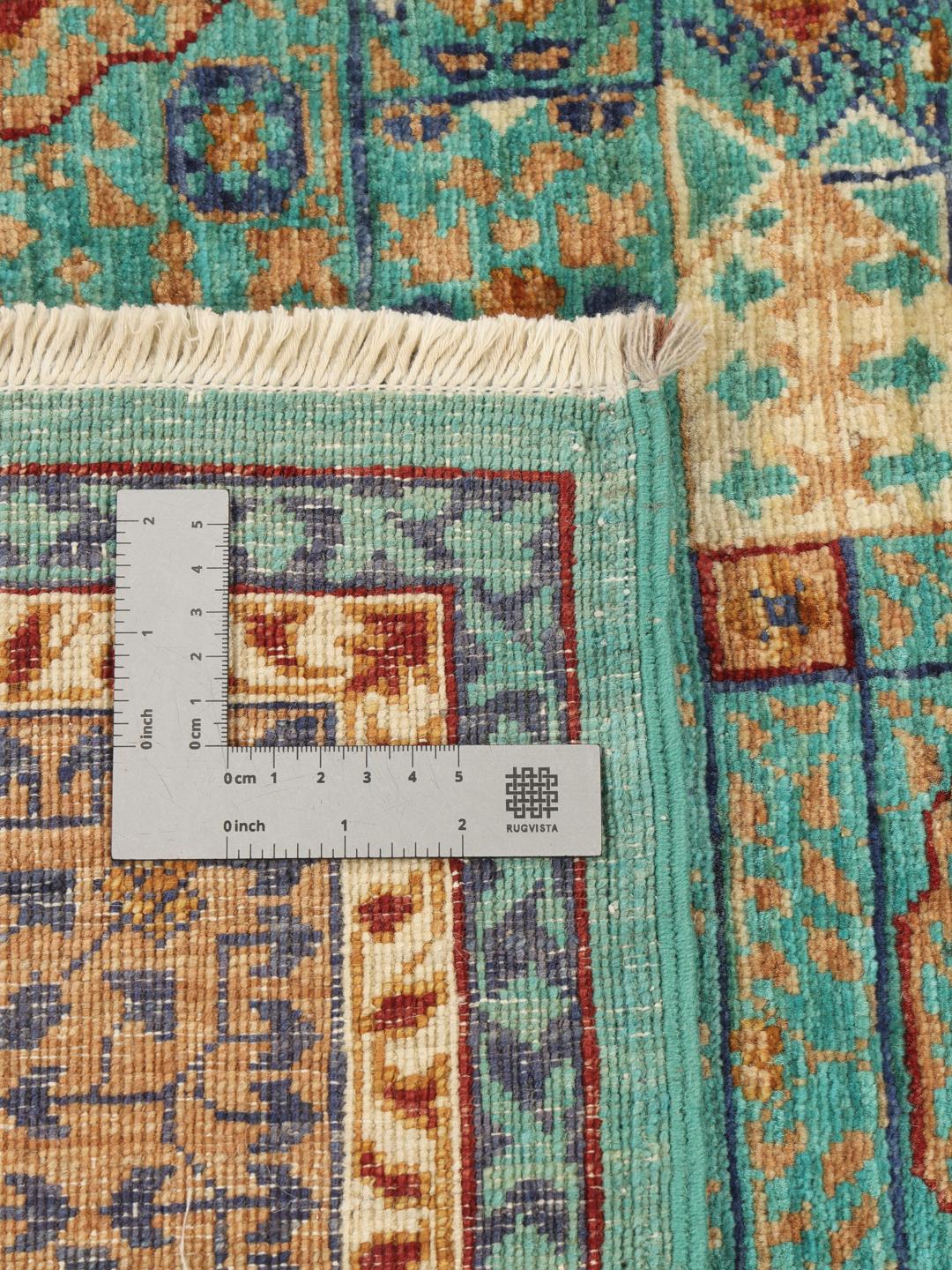
The visual language of the Mamluk tradition is defined by its deep, resonant colours and formal, symmetrical borders. While traditional examples often relied on a palette of red, blue, and yellow, modern interpretations from regions like Afghanistan have introduced vibrant teal and varied earth tones, breathing fresh life into the ancient design while respecting its original, structured geometry.
Today, Mamluk rugs are highly sought after by collectors for their cultural significance and the exceptional skill required to produce them. Owning a piece from this tradition is an investment in artistry, reflecting a deep respect for a historical craft that has survived through the centuries, bridging the gap between ancient elegance and contemporary home design.