The tradition of hand-knotted rugs in India traces its roots back to the 16th century, when Mughal emperors invited master weavers from the Middle East to establish workshops. Over the centuries, these techniques were adapted and refined, blending foreign influence with local aesthetic sensibilities to create a distinct Indian style that is celebrated globally today.
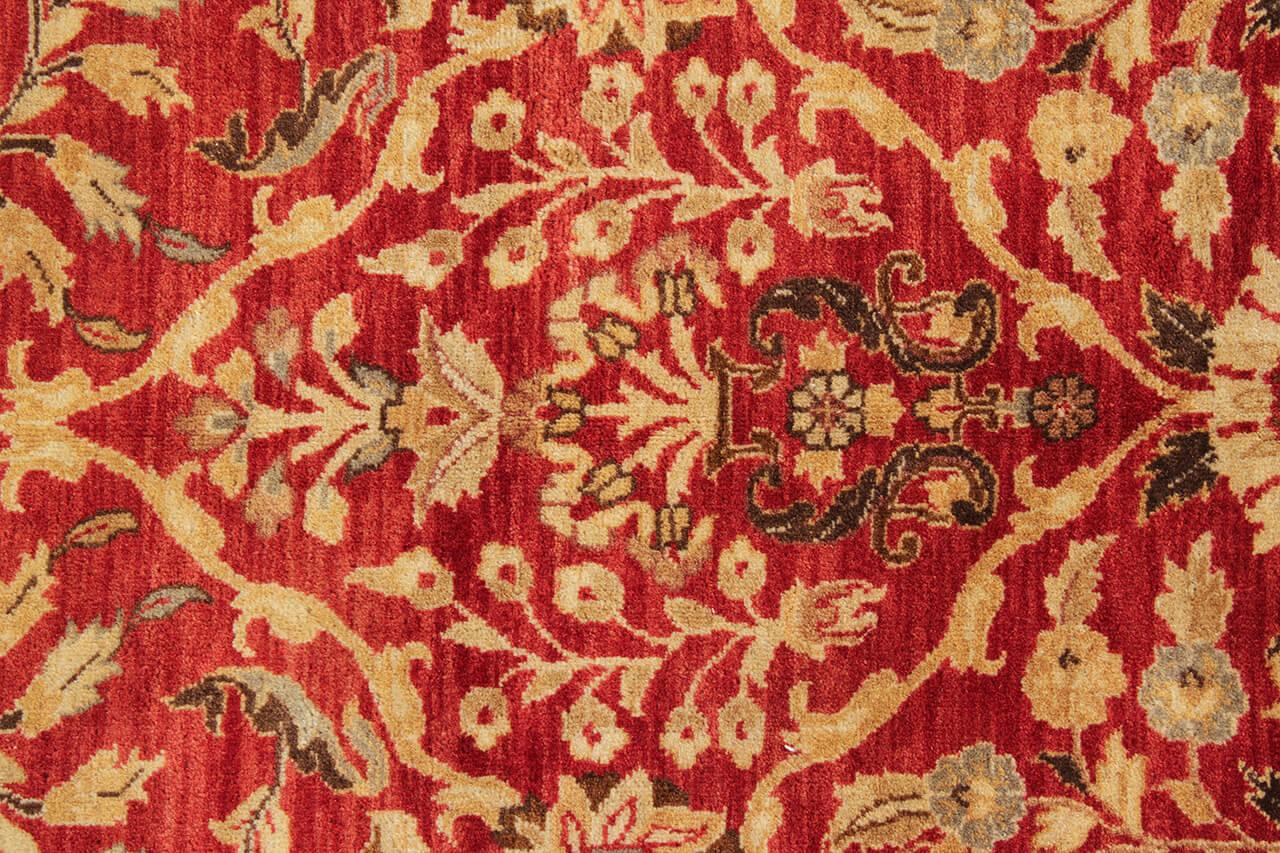
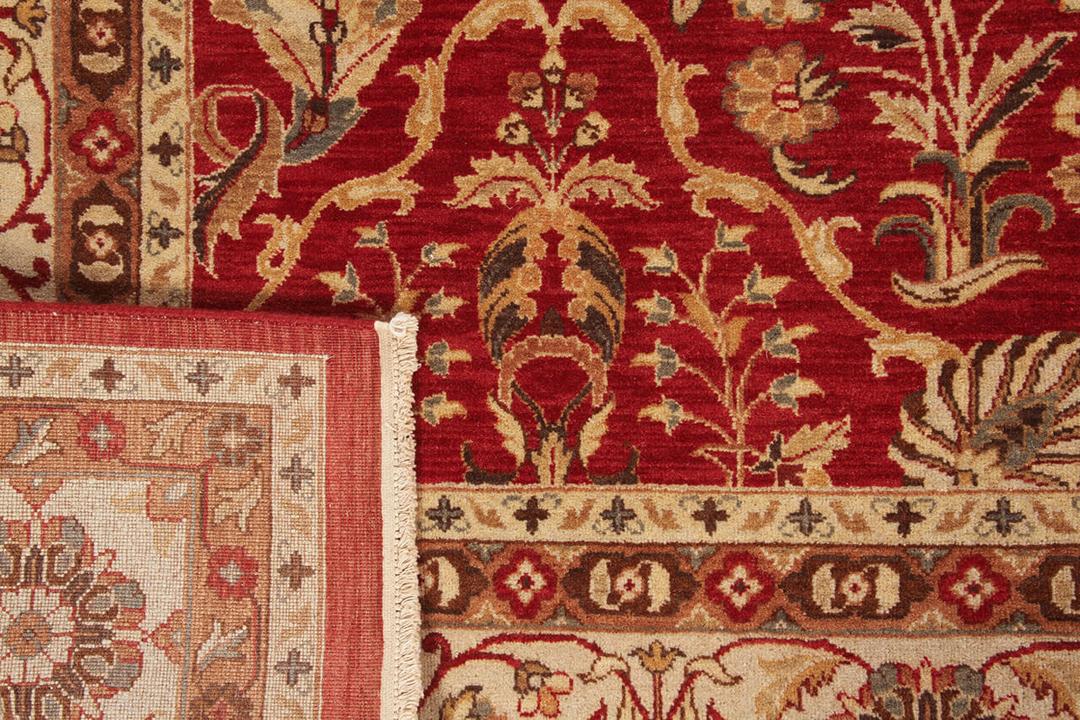
The term hand-knotted refers to the laborious process of looping thread around the foundation yarns to create the pile. This construction method is considered the gold standard in rug making because it creates a robust, long-lasting structure that is far superior to machine-made alternatives. It is this specific craft that gives the rug its weight, texture, and lasting structural integrity.
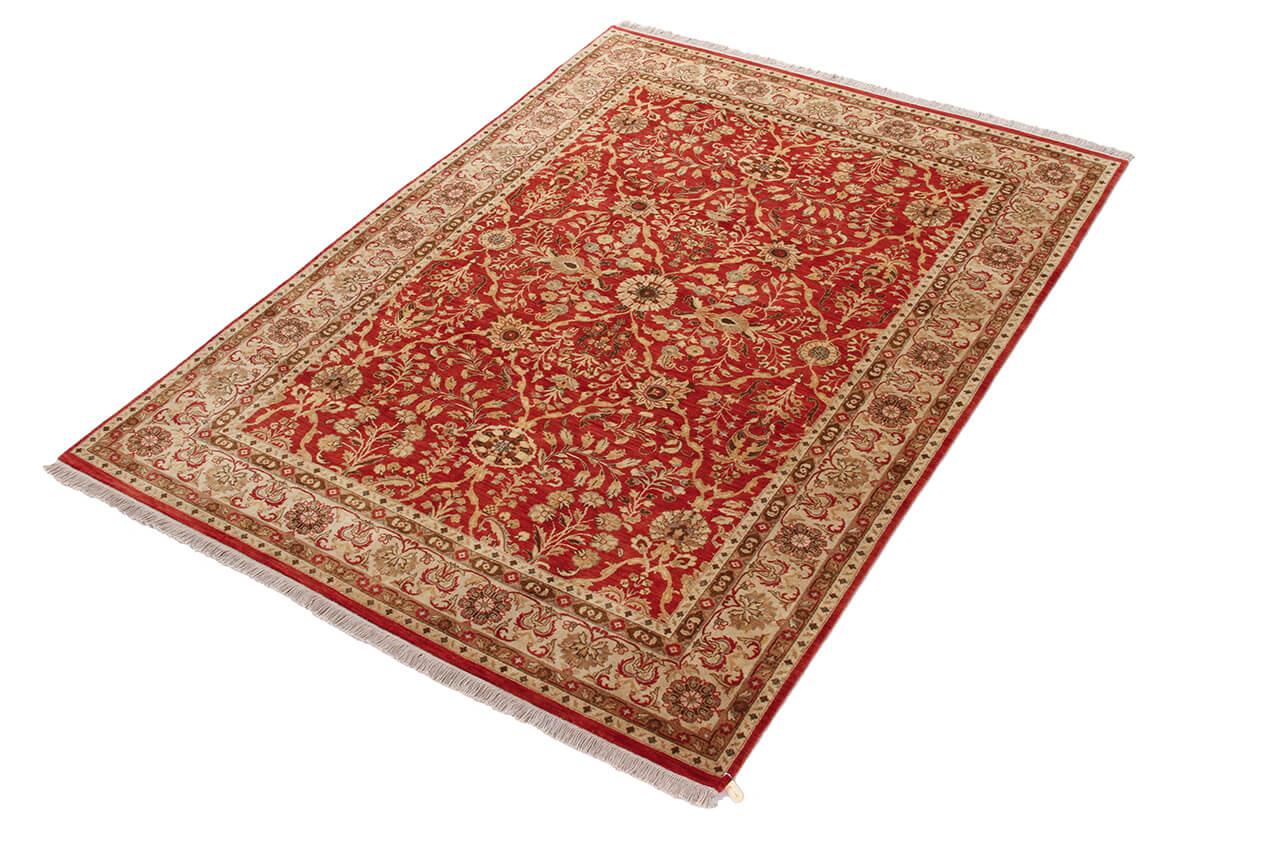
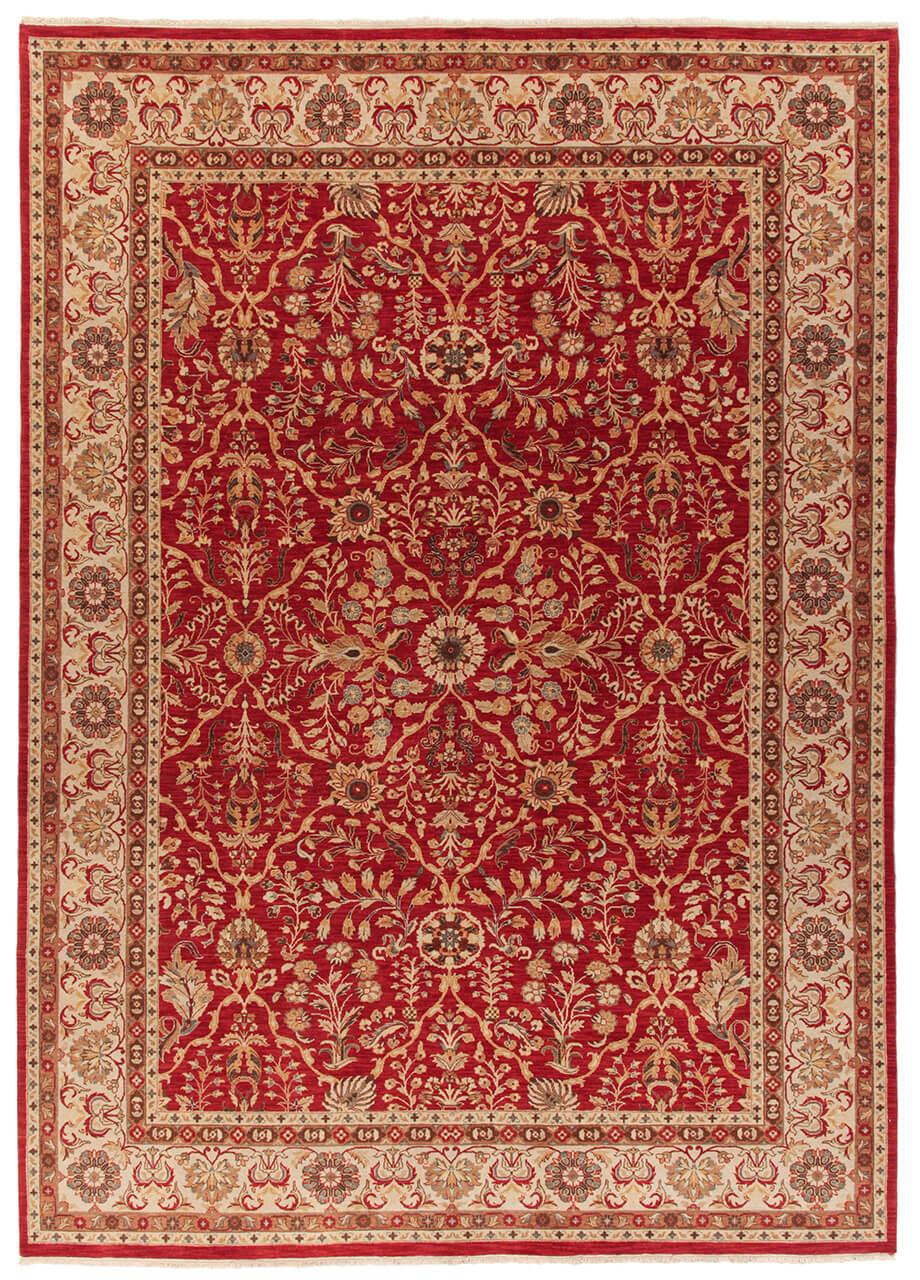
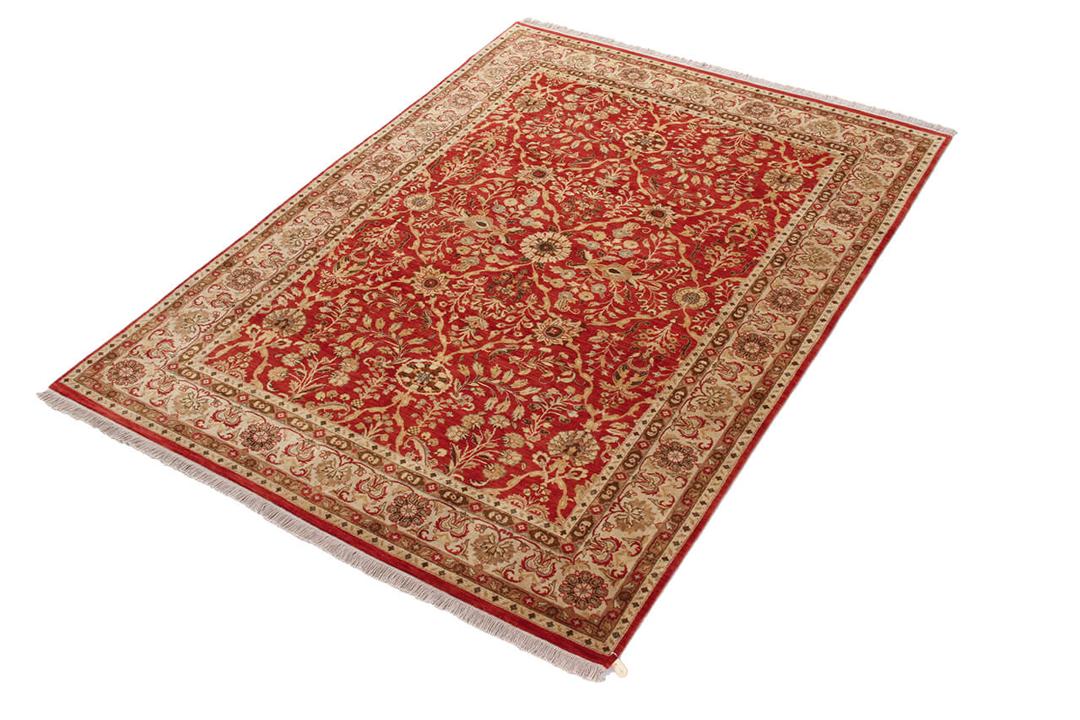
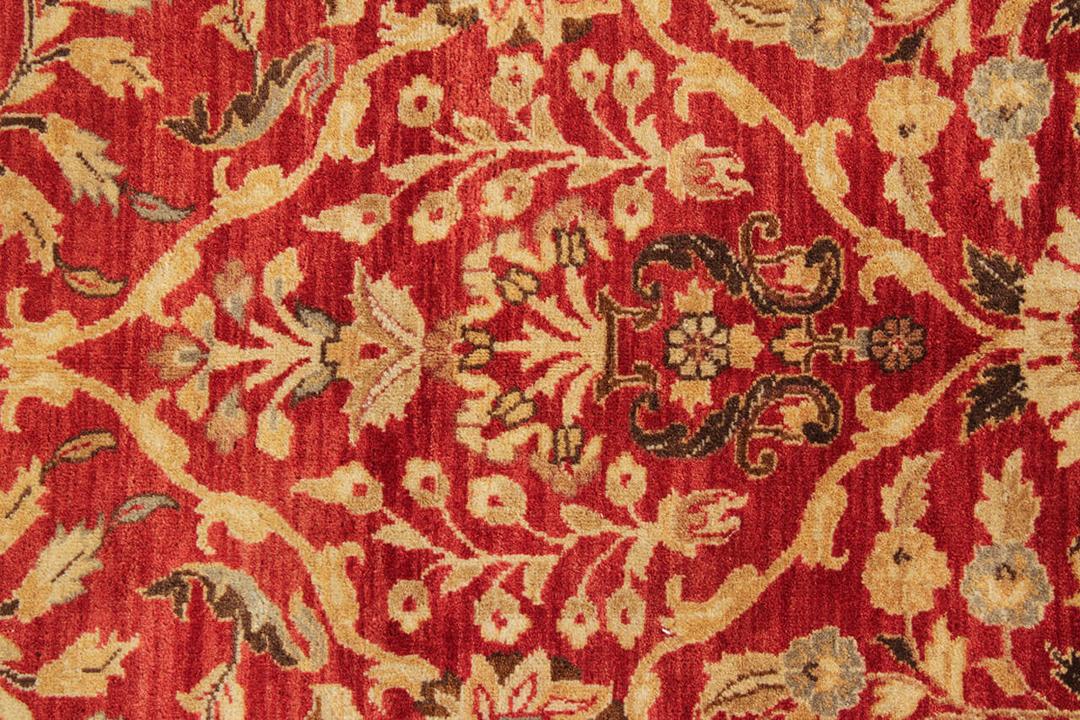
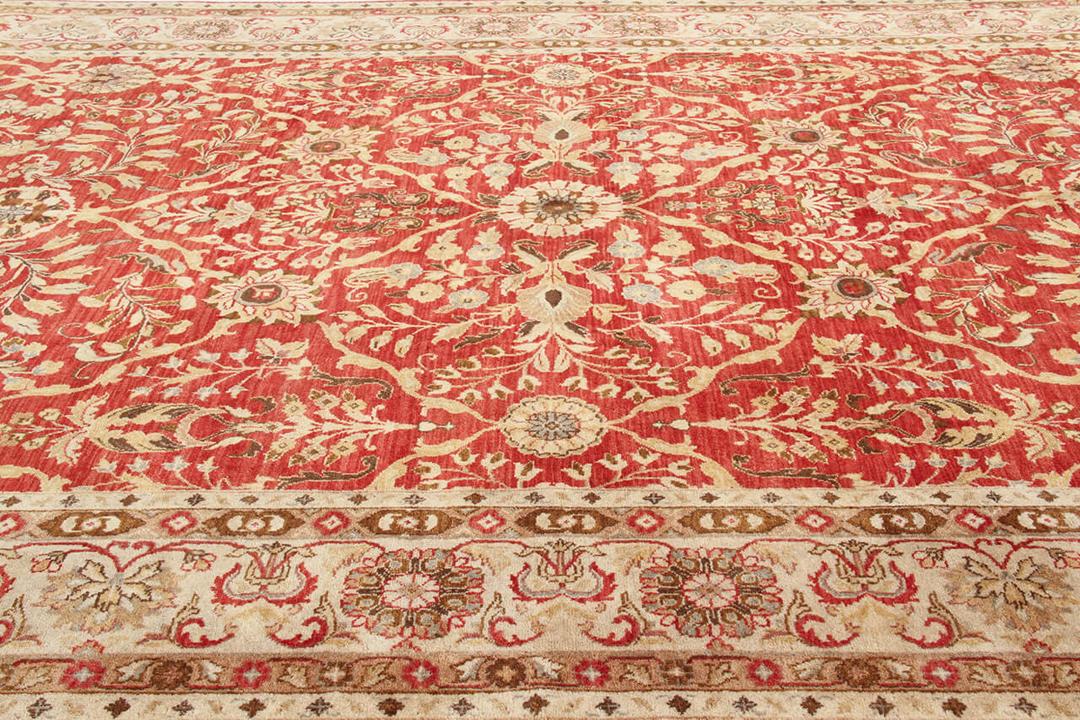
The floral motifs seen here are inspired by classical garden designs, often referred to as 'Shah Abbas' patterns. These designs typically feature a central medallion surrounded by flowing vines, palmettes, and blossoms. The use of a bold red field is a hallmark of this tradition, designed to bring life and energy into a room while providing a warm backdrop for the more intricate beige and neutral detailing.
Owning a hand-knotted rug from this tradition is about more than just decoration. It is an investment in human skill and cultural heritage. Collectors value these pieces for the way they unify a space, acting as both a functional floor covering and a work of art that retains its value and beauty through generations of use.