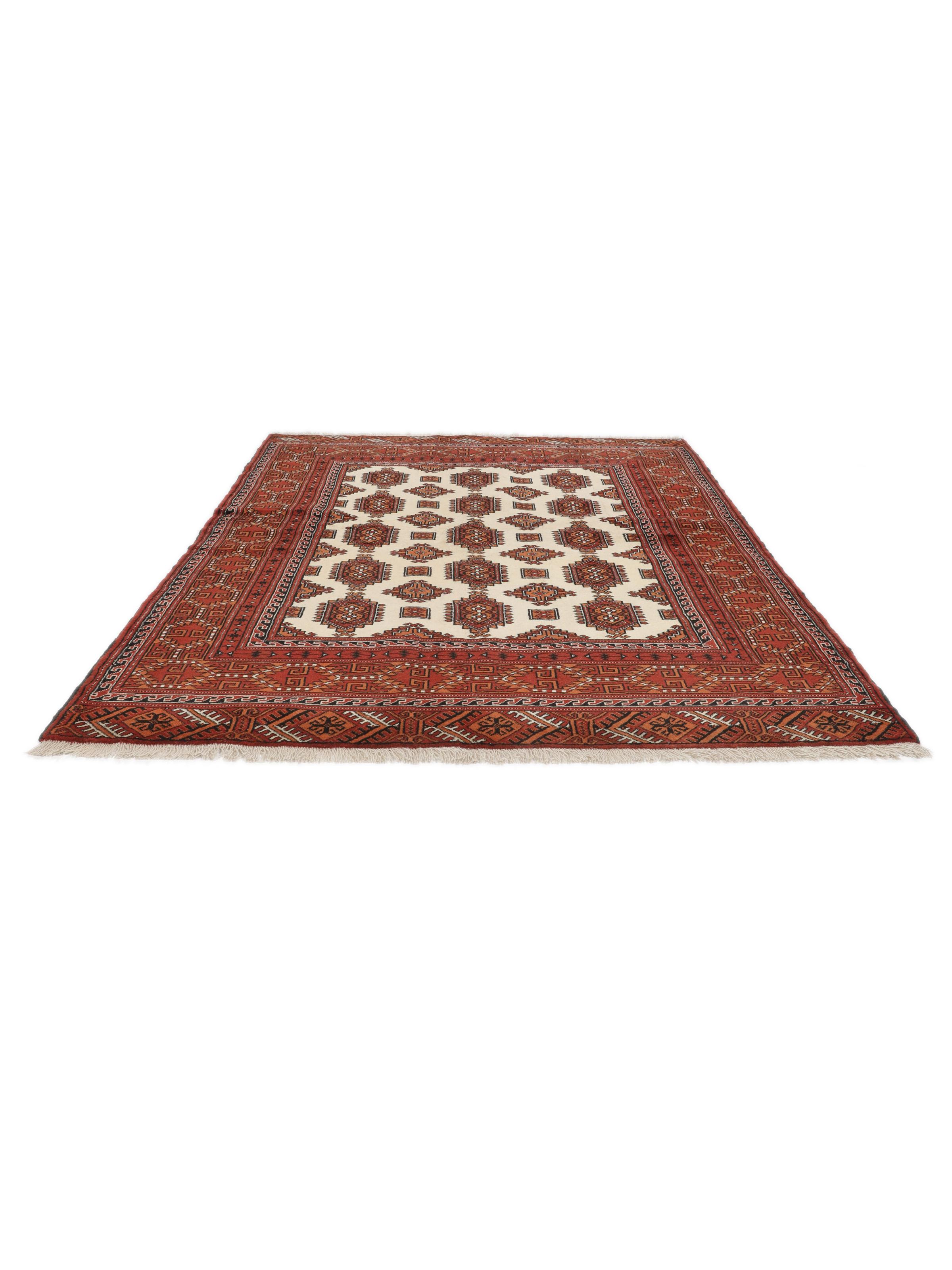
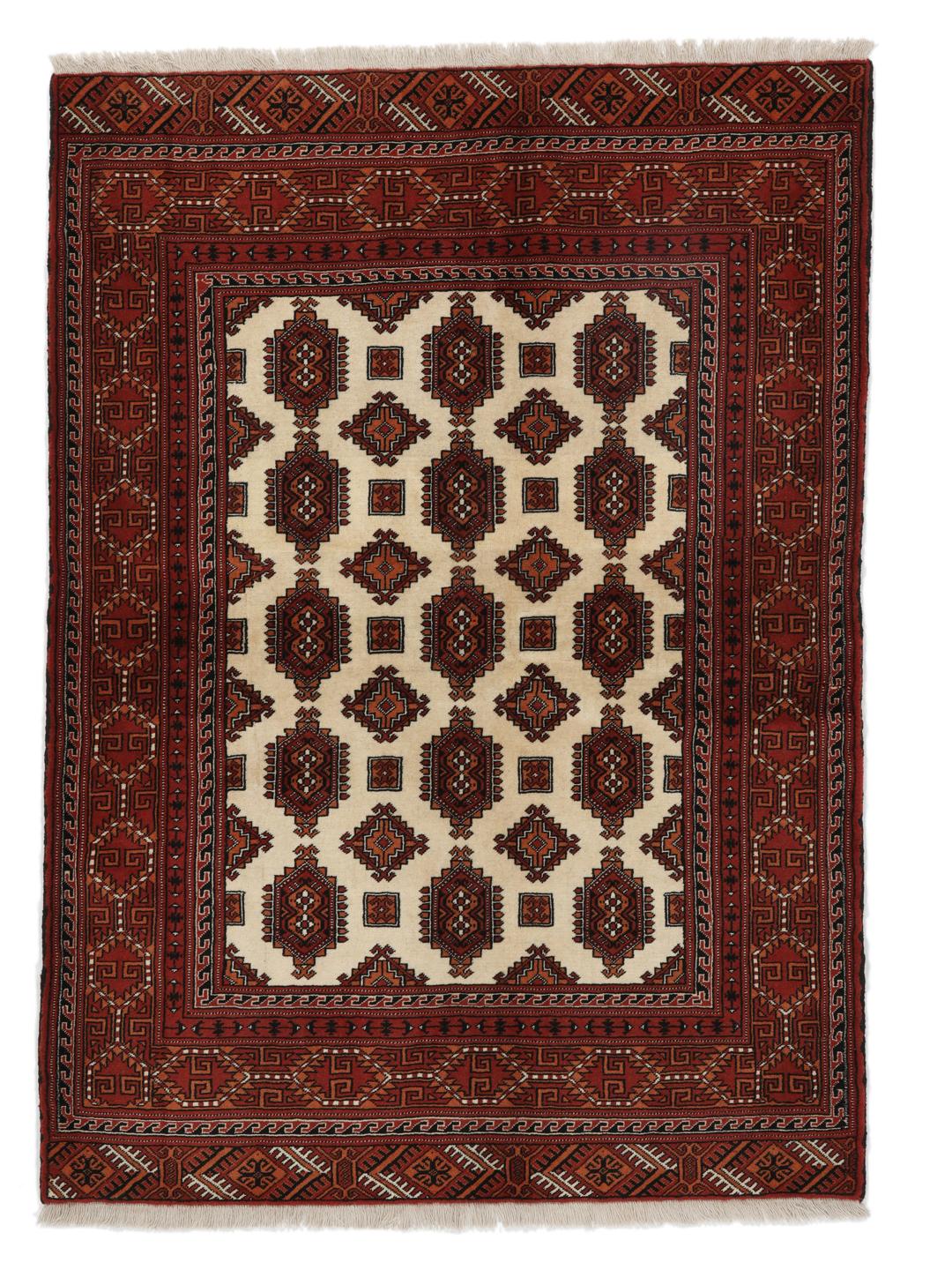
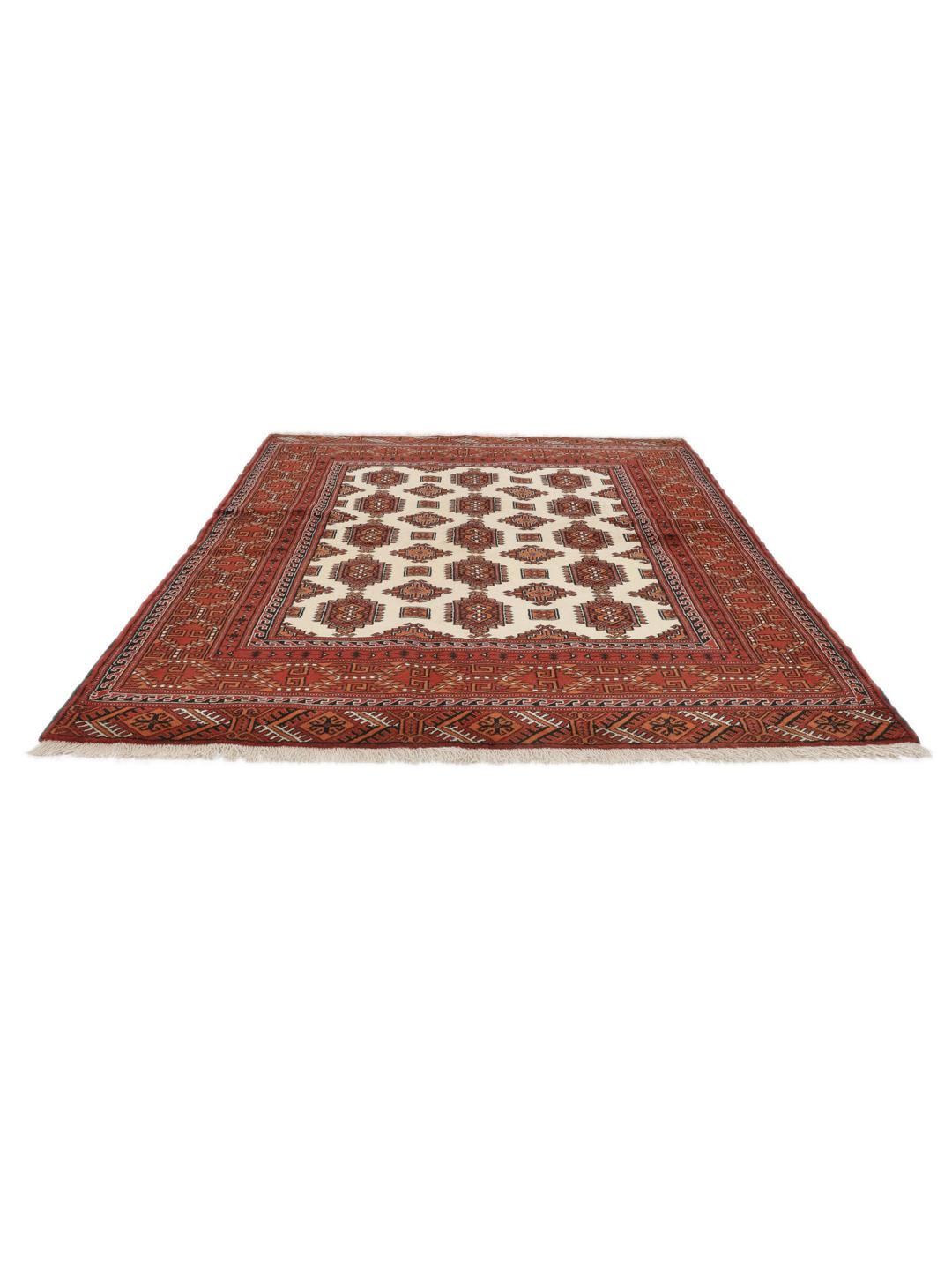
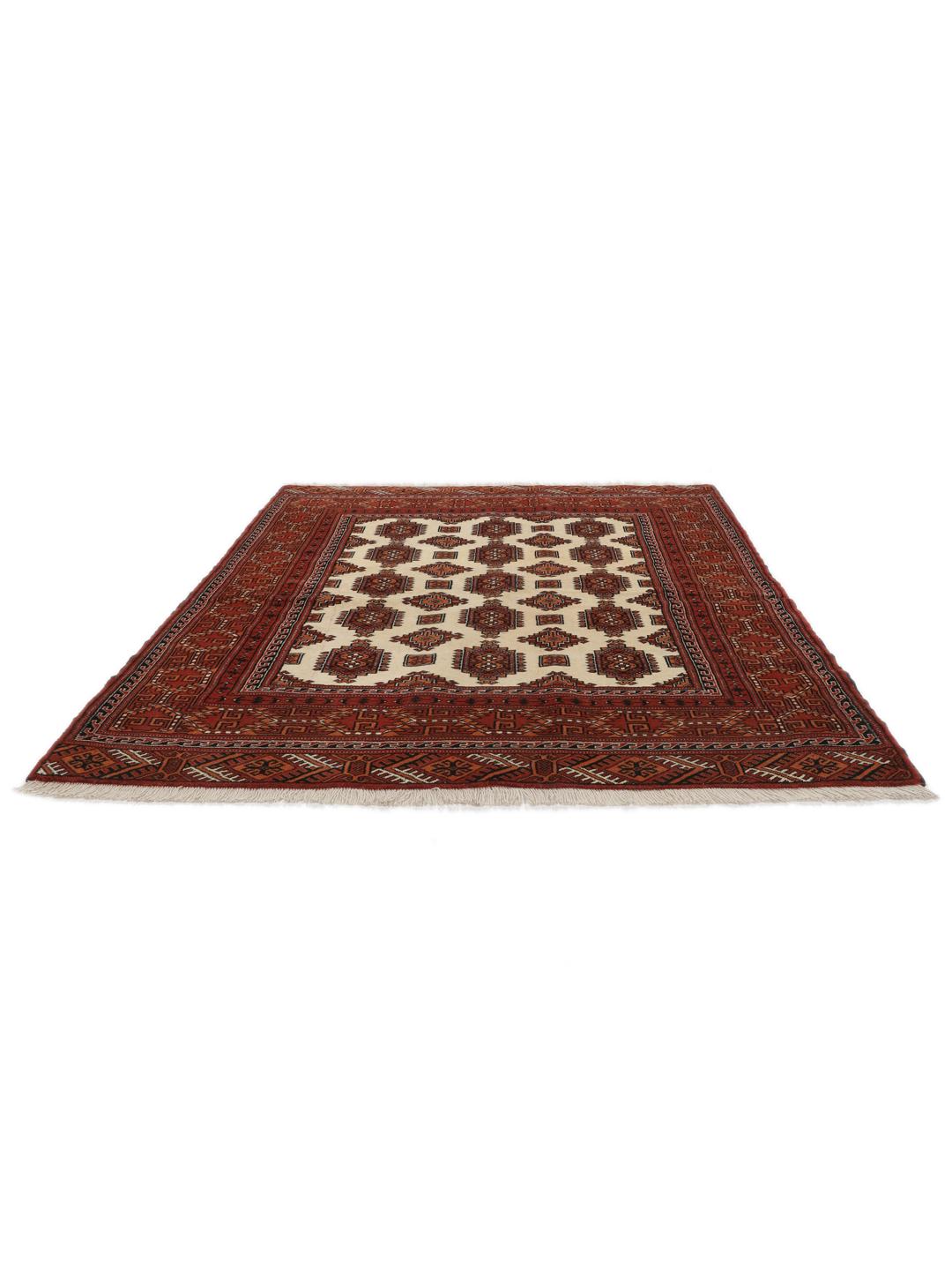
The Turkaman rug tradition finds its roots in the nomadic tribes of Central Asia, where weaving was a fundamental part of daily life and cultural expression. Over centuries, these designs migrated through trade and migration, eventually becoming a hallmark of Middle Eastern rug-making. Today, they are celebrated for their ability to blend ancient tribal aesthetics with a sophisticated, formal appeal that fits beautifully into modern homes.
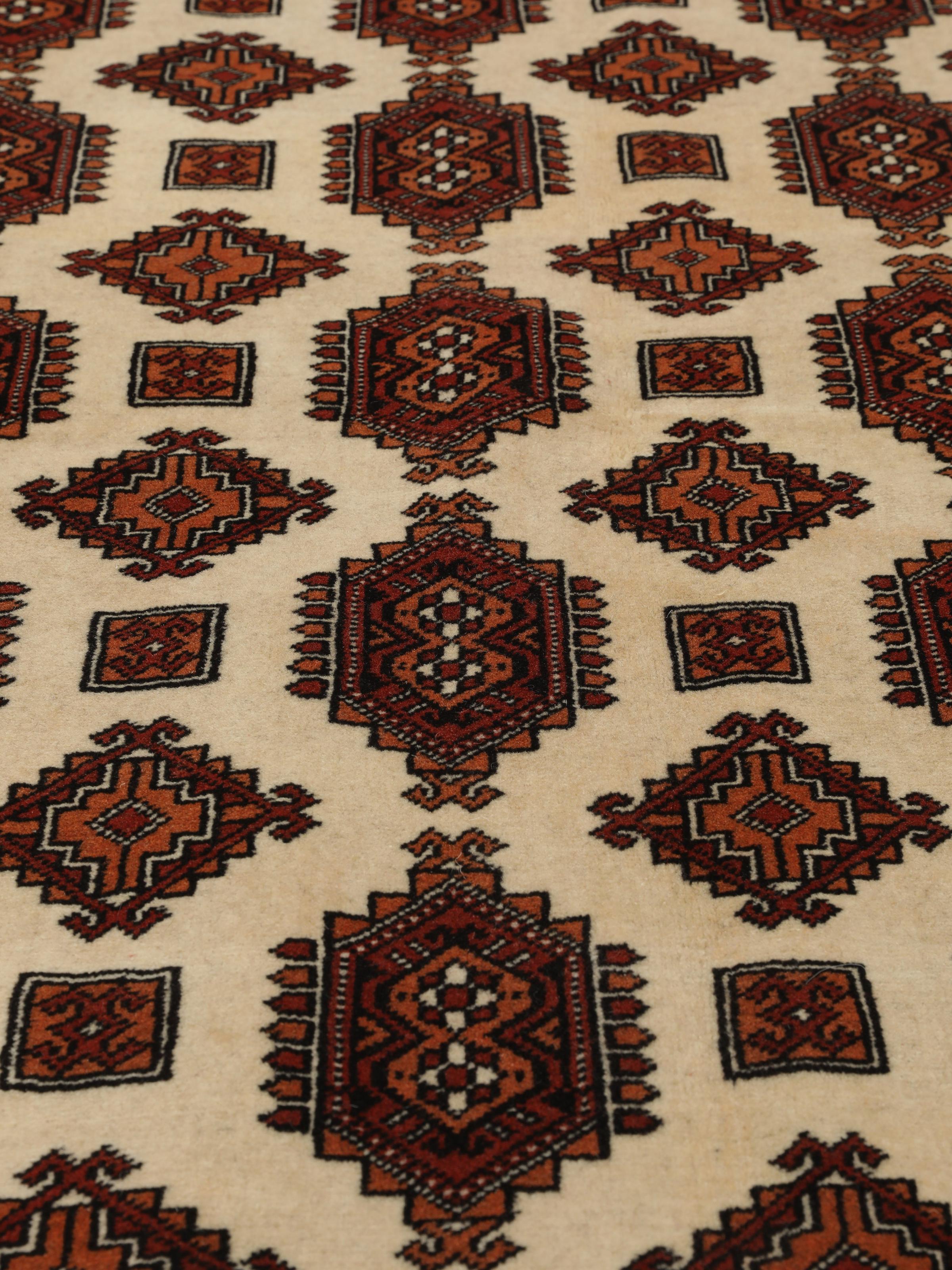
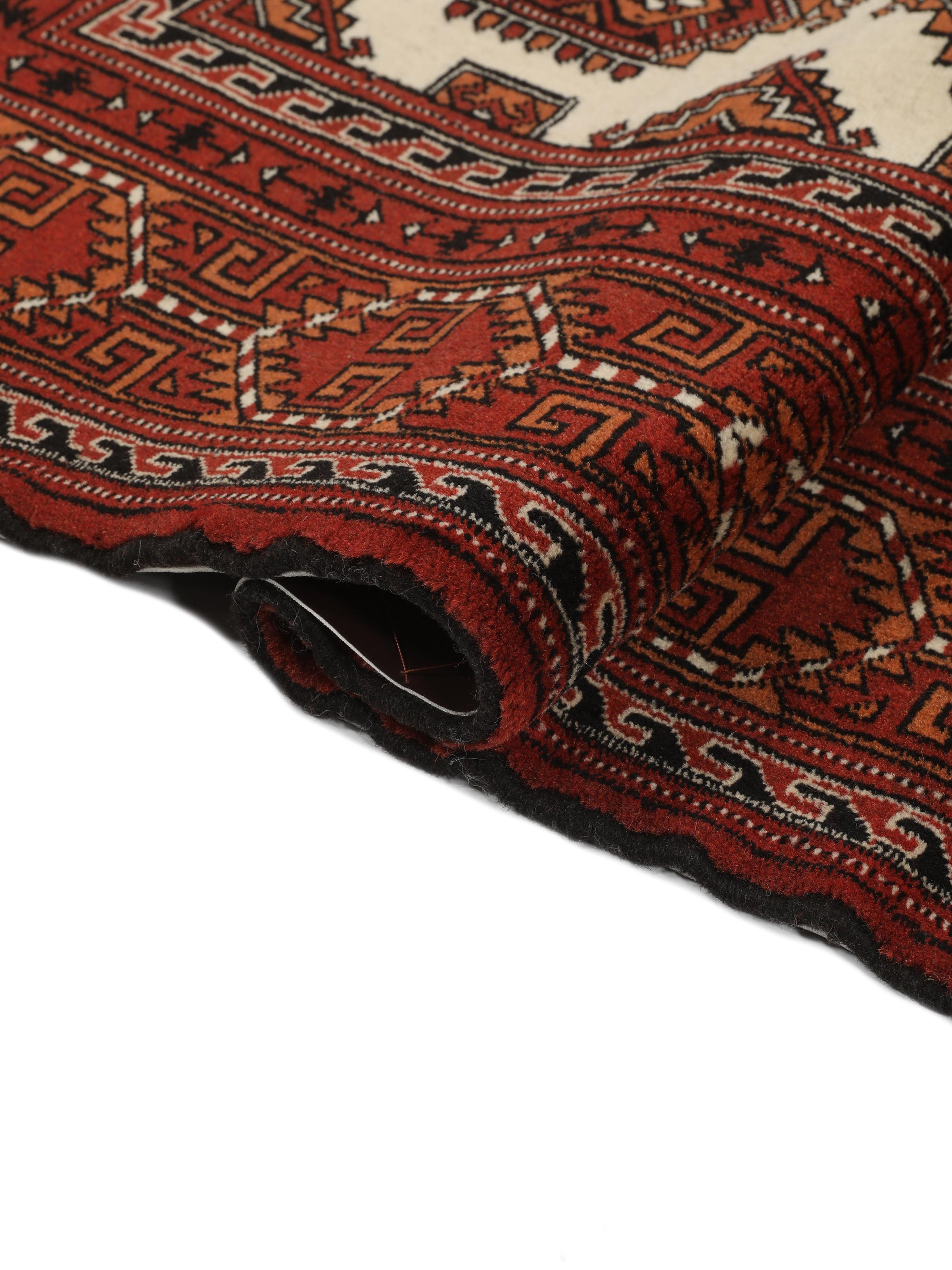
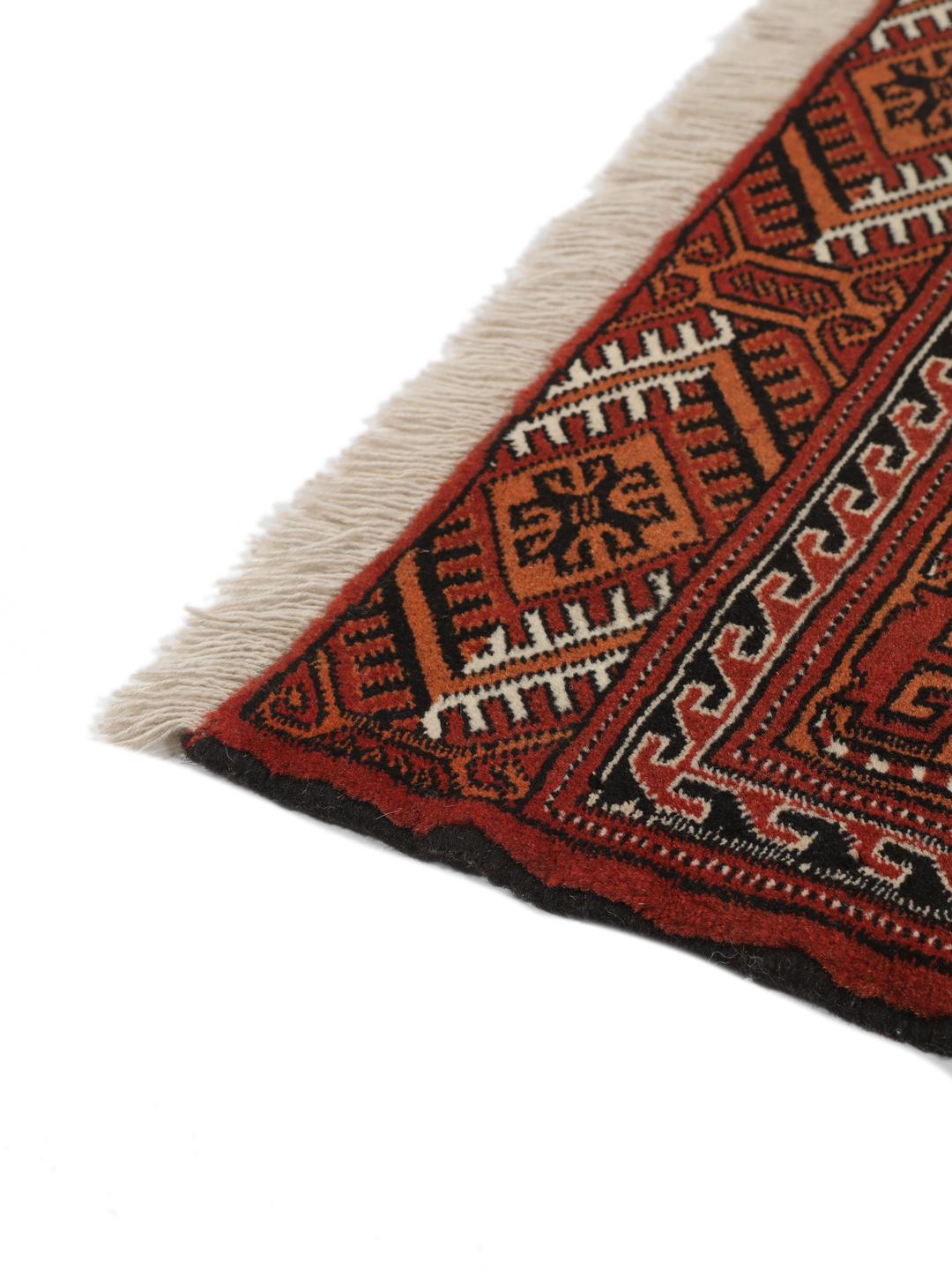
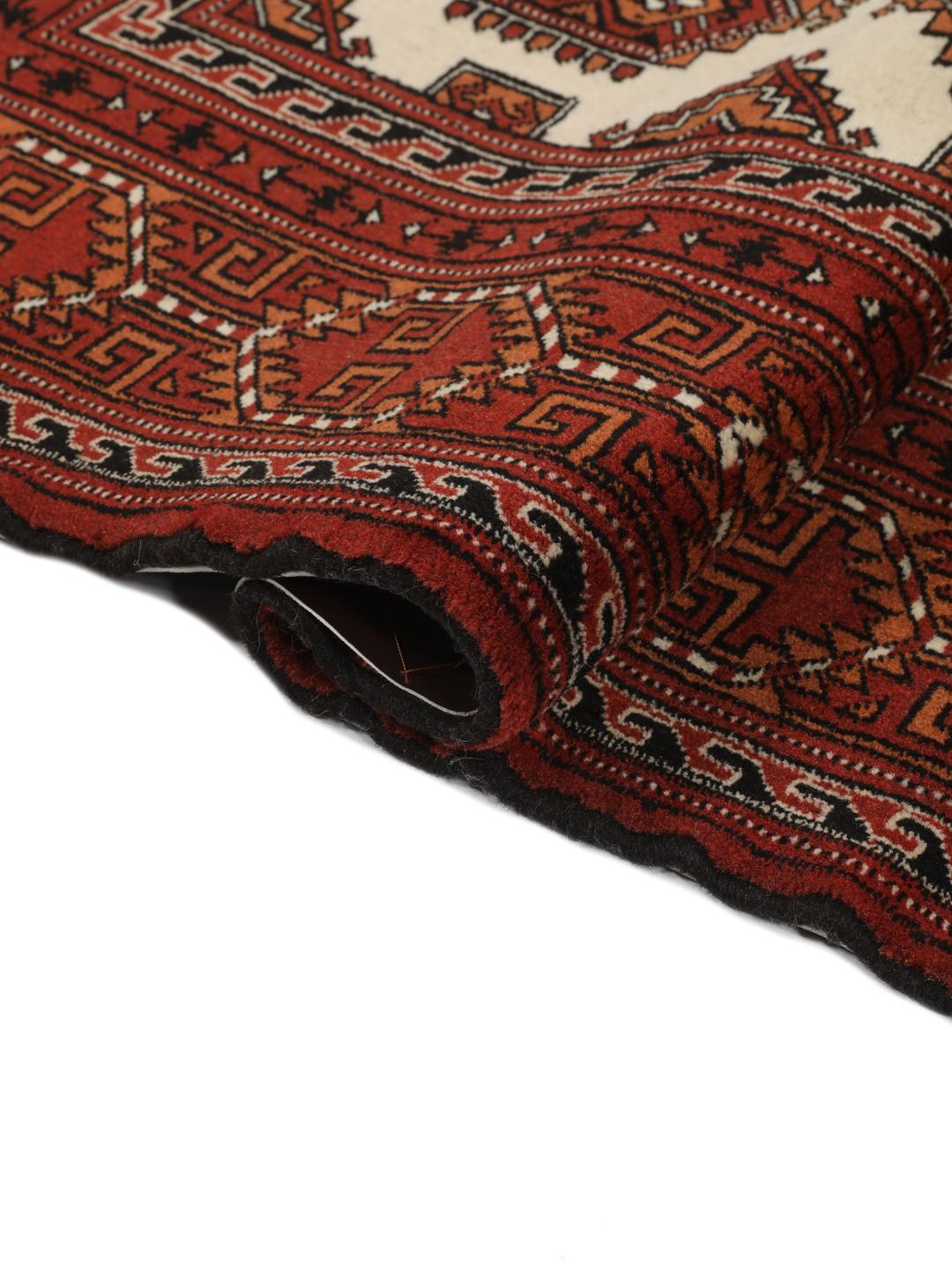
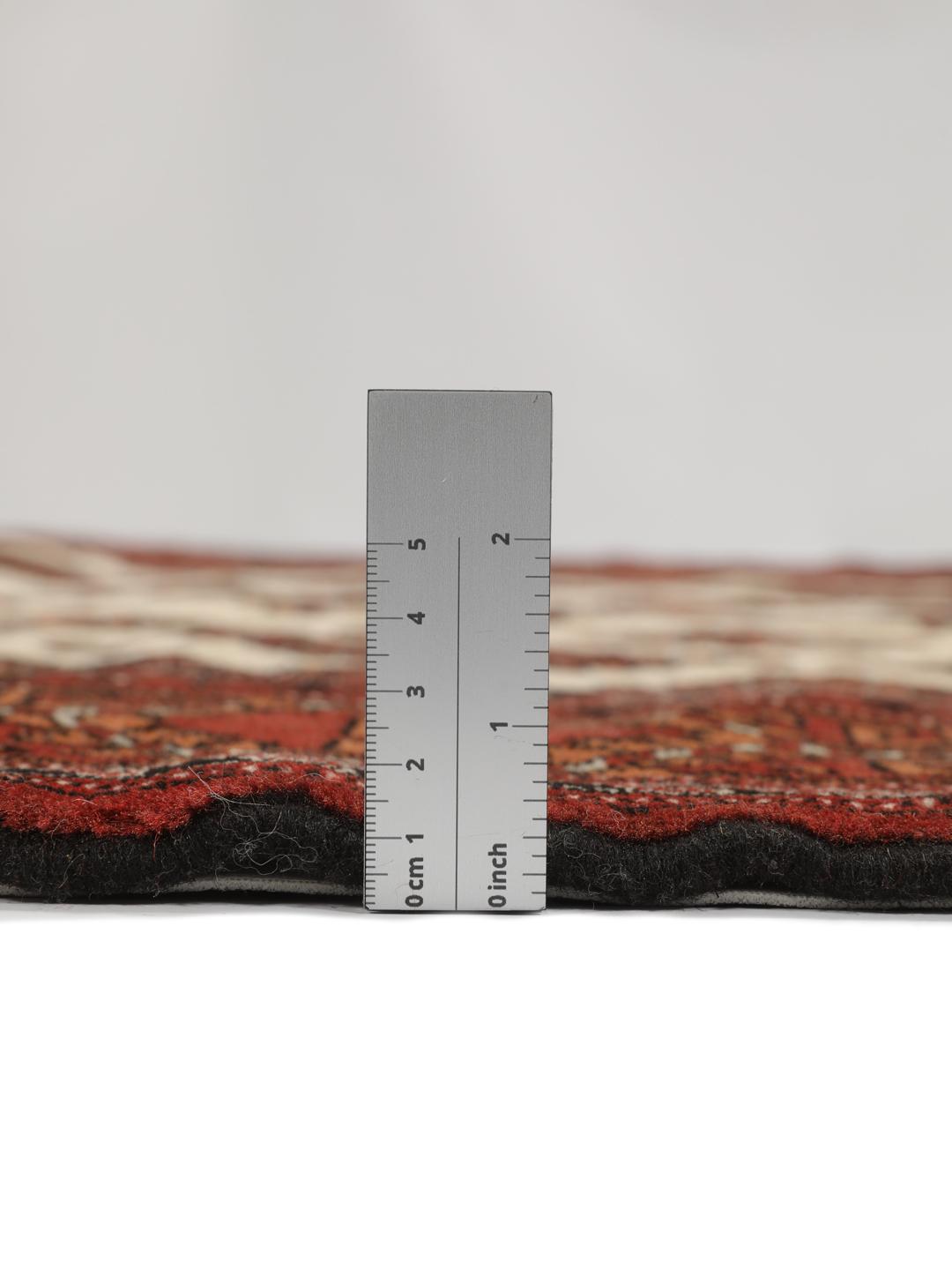
The term Turkaman refers to both the tribal origin and the specific design language of these rugs. A key technical aspect is the use of wool, which is often prepared to create a dense, lustrous pile. This material choice is essential to the tradition, as it provides the durability required for nomadic life while allowing the intricate patterns to age with grace and a developing patina that only enhances the rug's character over time.
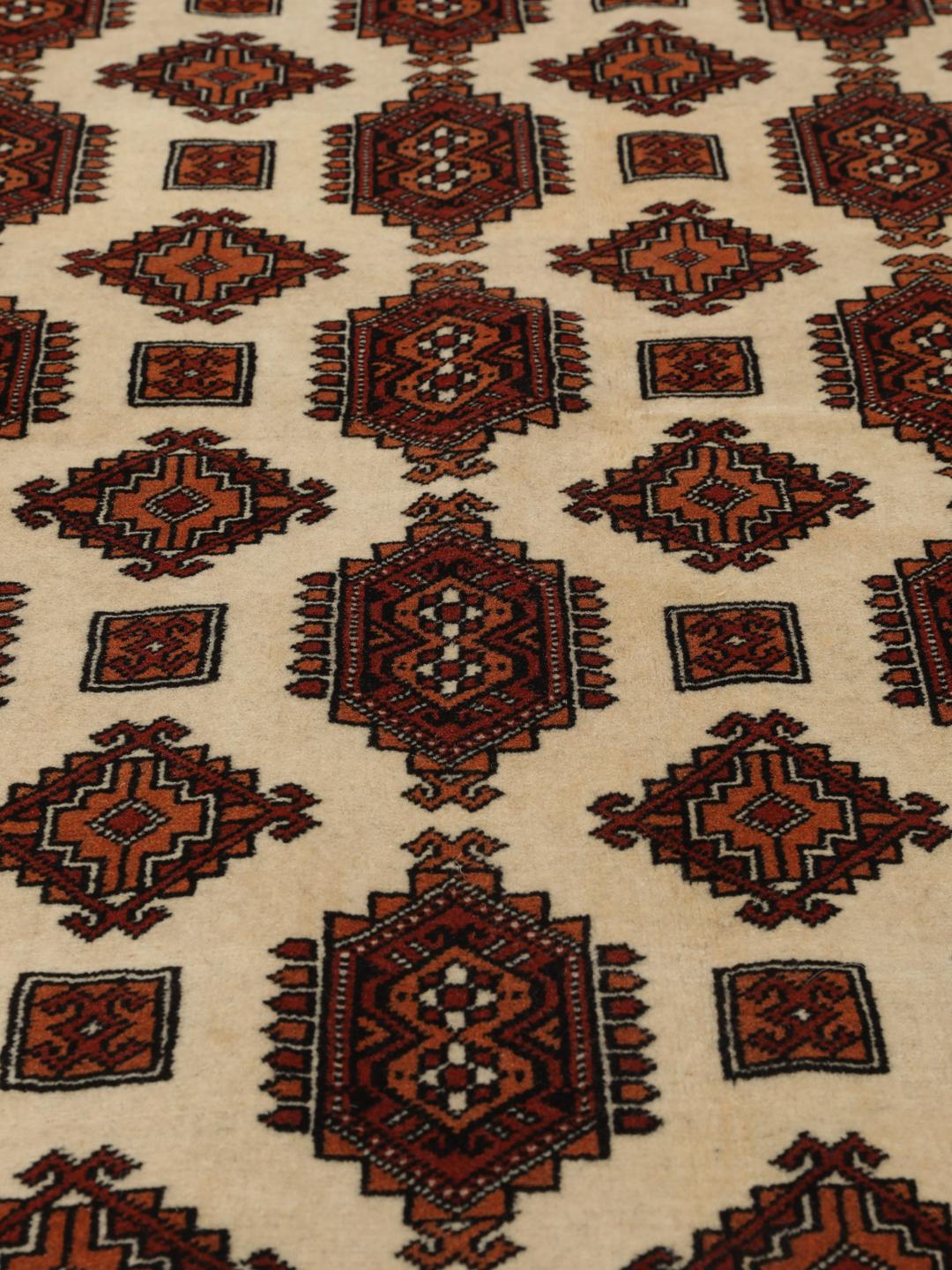
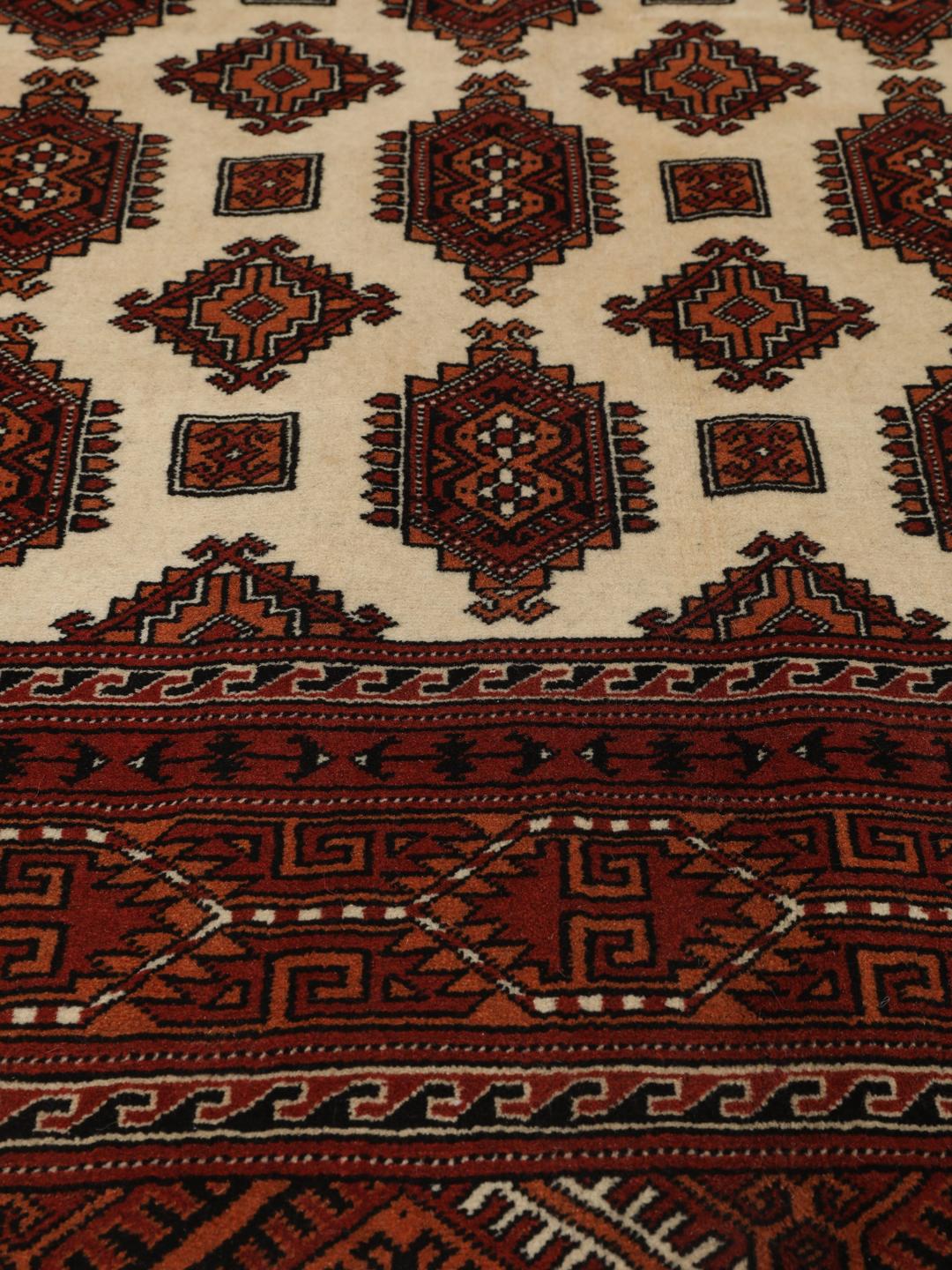
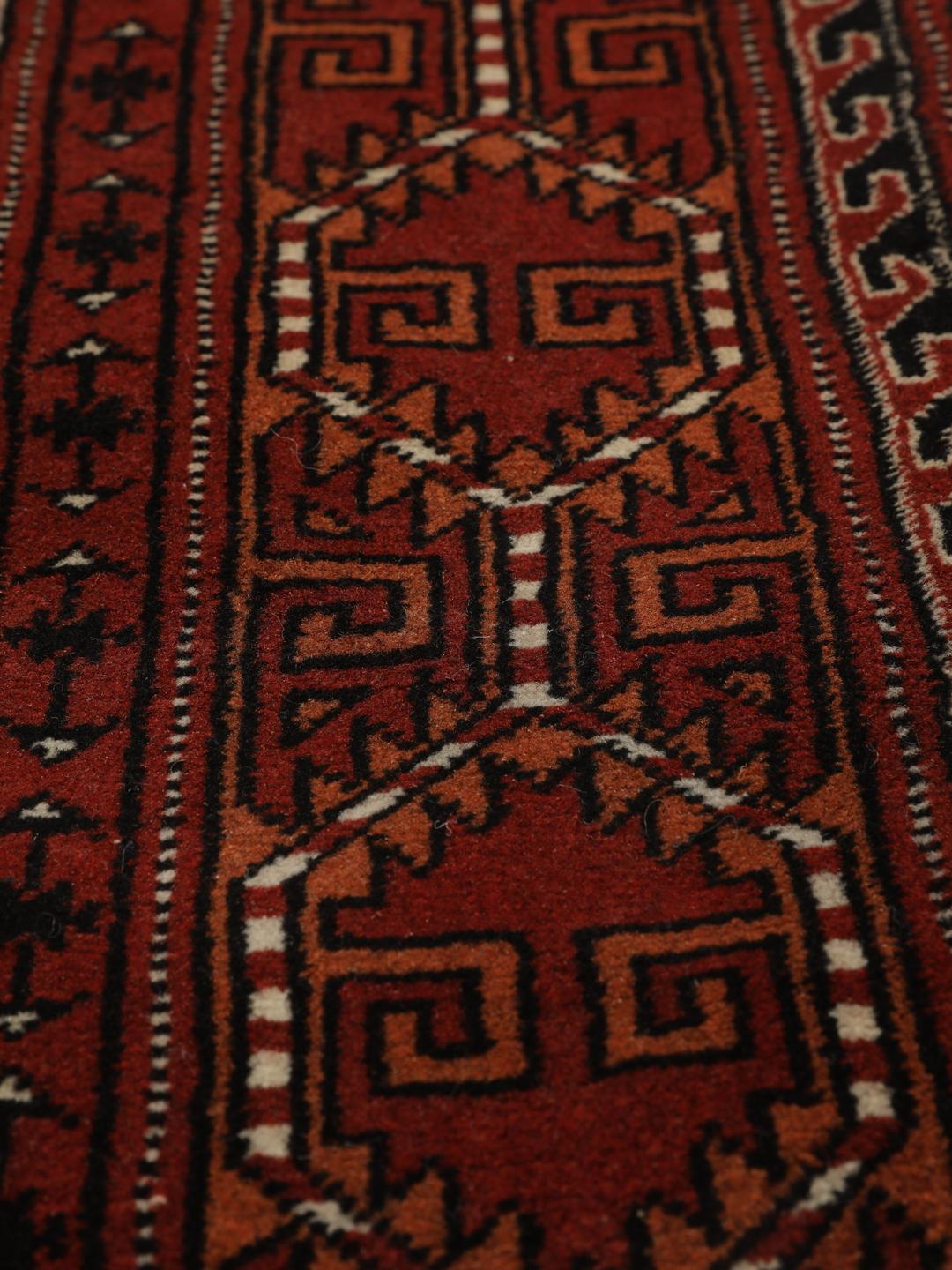
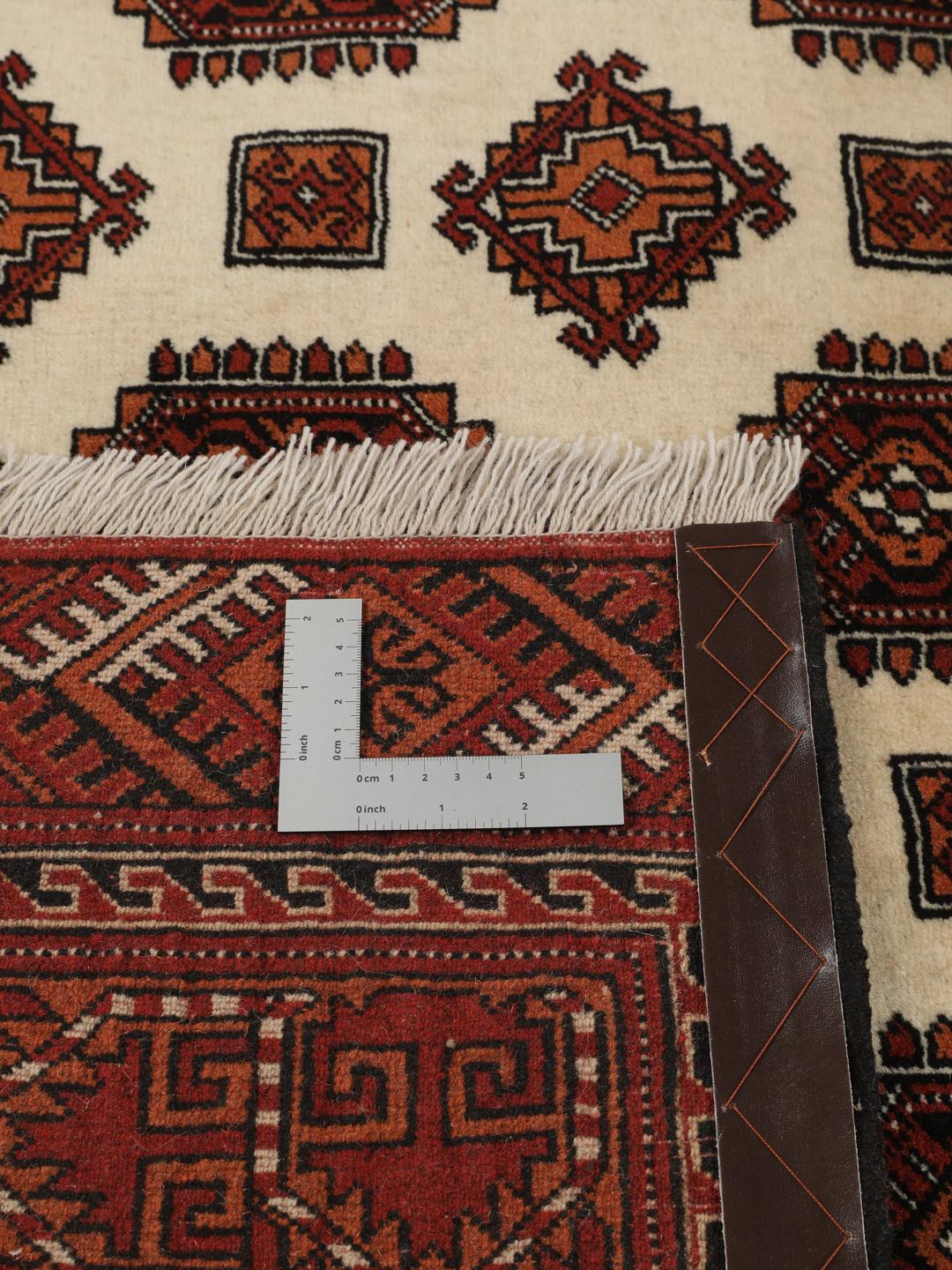
Signature design elements include the repeating gul, a stylized medallion that often represents tribal identity or historical symbols. In this piece, the guls are arranged in a precise, geometric grid, a layout that highlights the weaver's mastery of symmetry. The borders are equally significant, often featuring complex geometric patterns that frame the field and provide a sense of enclosure and completion to the overall design.
Owning a Turkaman rug is an invitation to connect with a long lineage of craft and storytelling. These pieces are highly valued by collectors not just for their beauty, but for what they represent in terms of heritage and skill. Each rug is a repository of traditional knowledge, passed down through generations, and to bring one into your home is to participate in the preservation of a craft that values human touch over mass production.