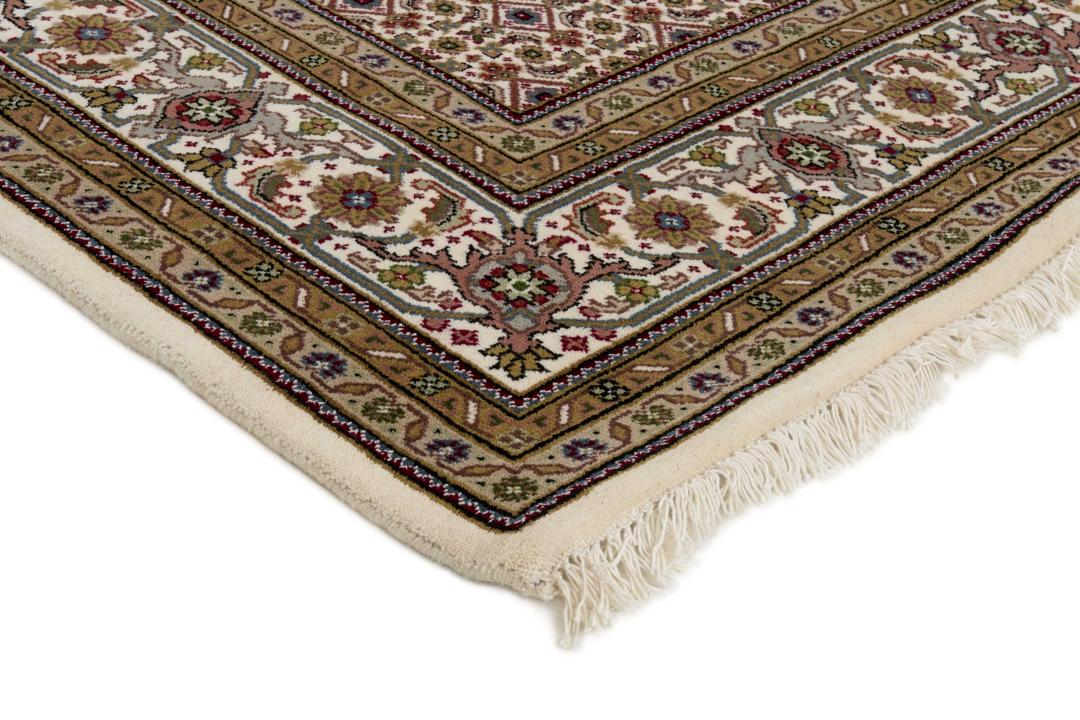
The Tabriz rug tradition takes its name from the historic city of Tabriz in the Middle East, a centre of art and trade that has influenced rug-making for centuries. While the style originated in this ancient hub, the tradition has travelled and evolved, finding a vibrant home among skilled artisans in India who have mastered the delicate balance of complex floral and geometric motifs.
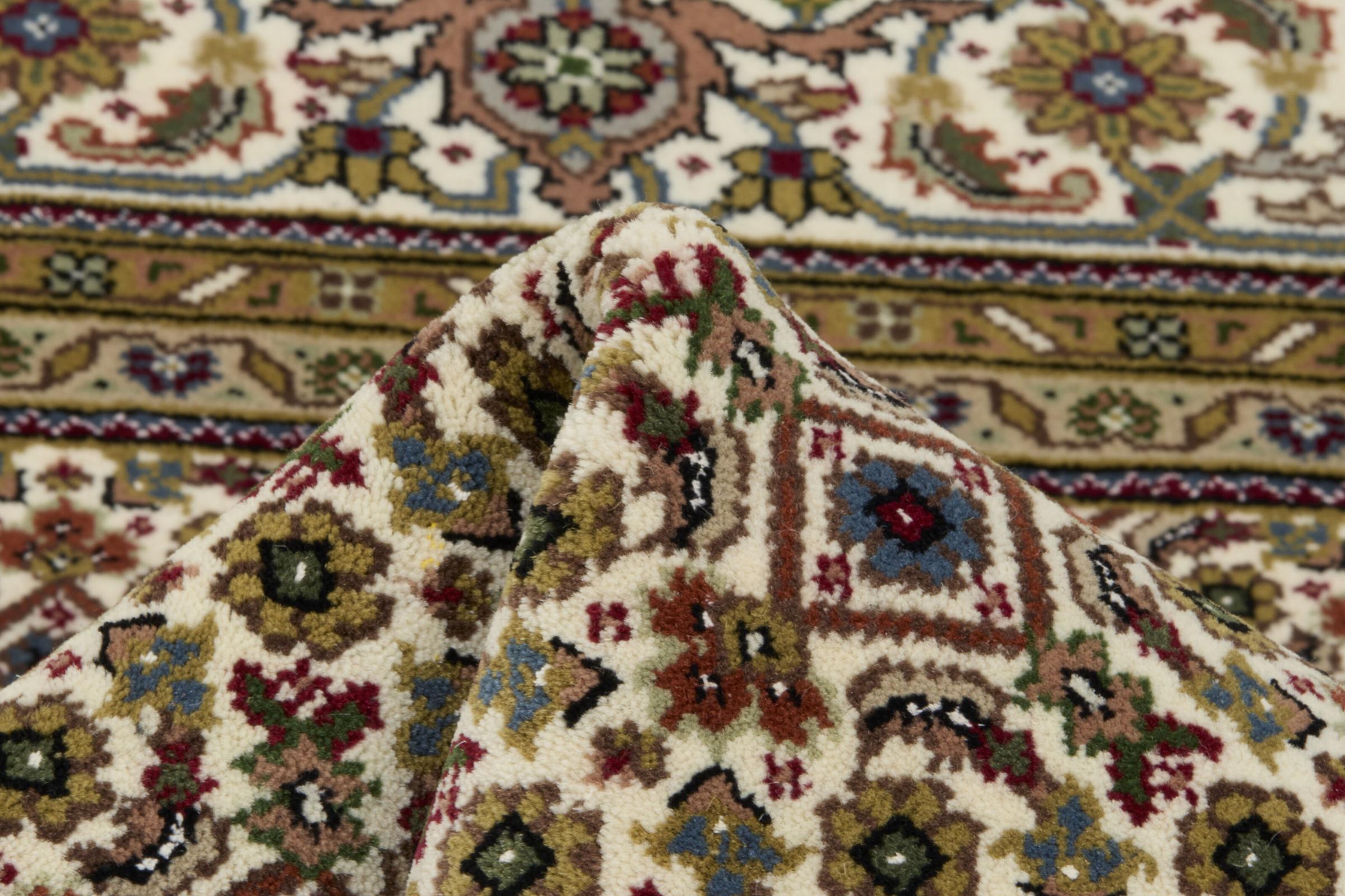
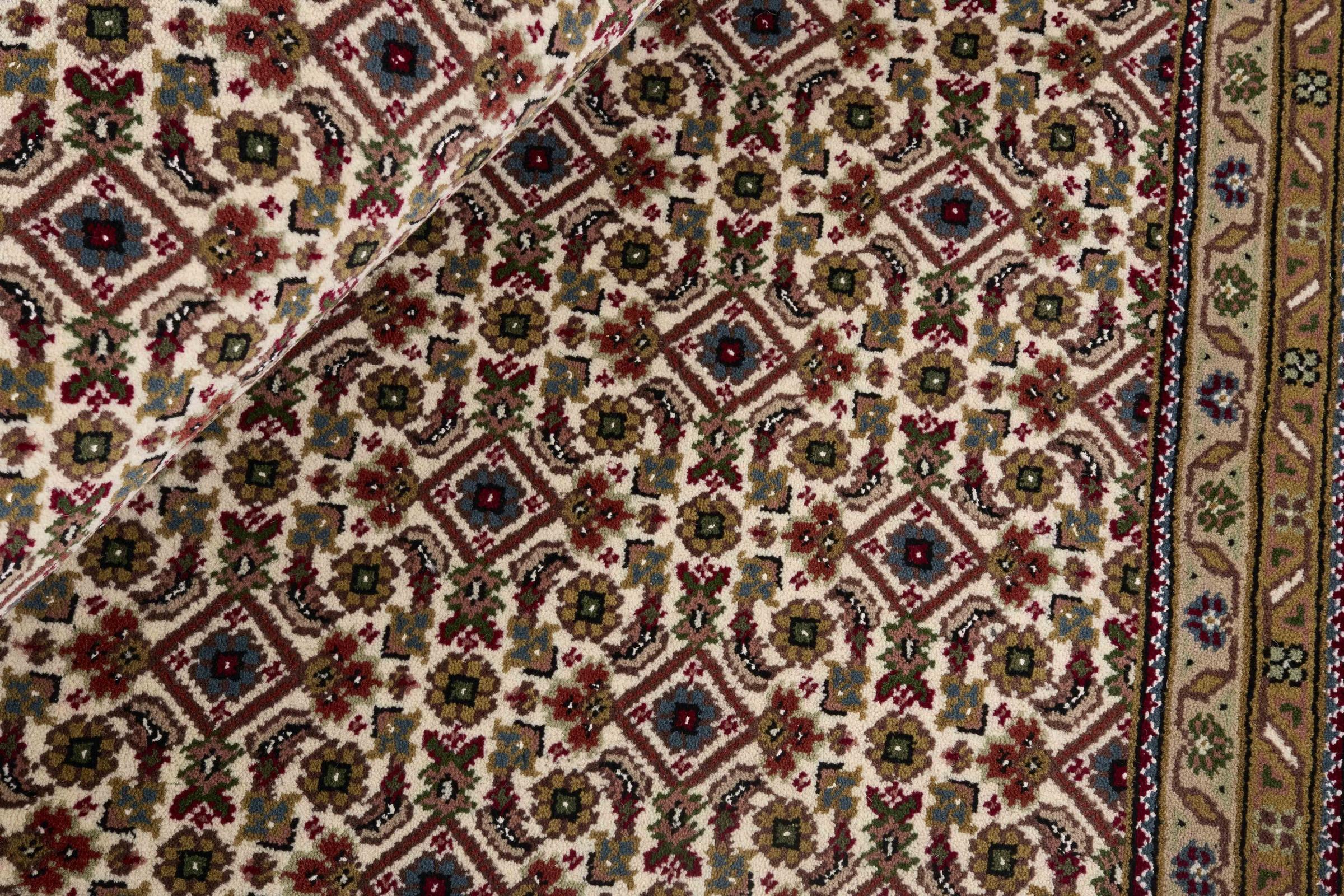
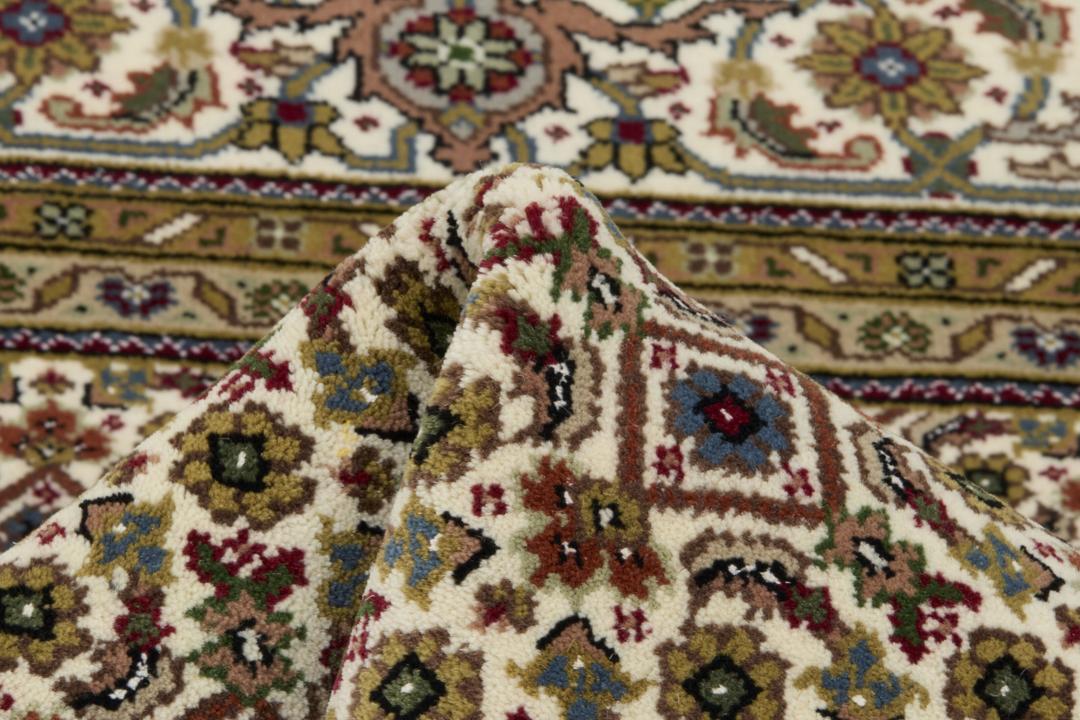
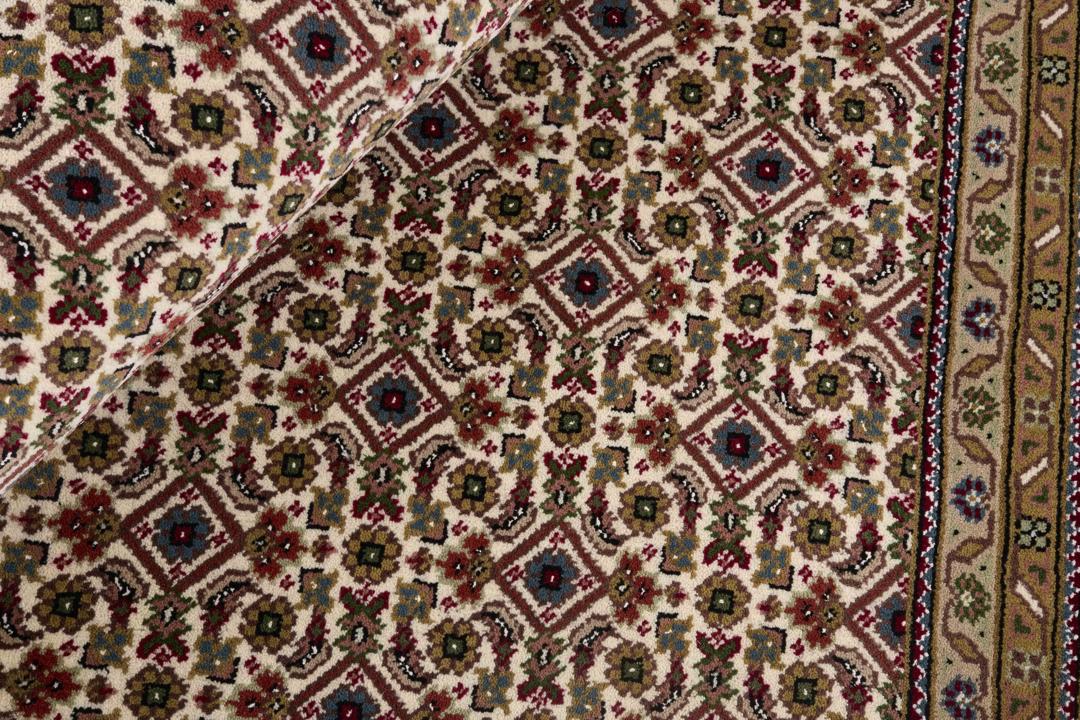
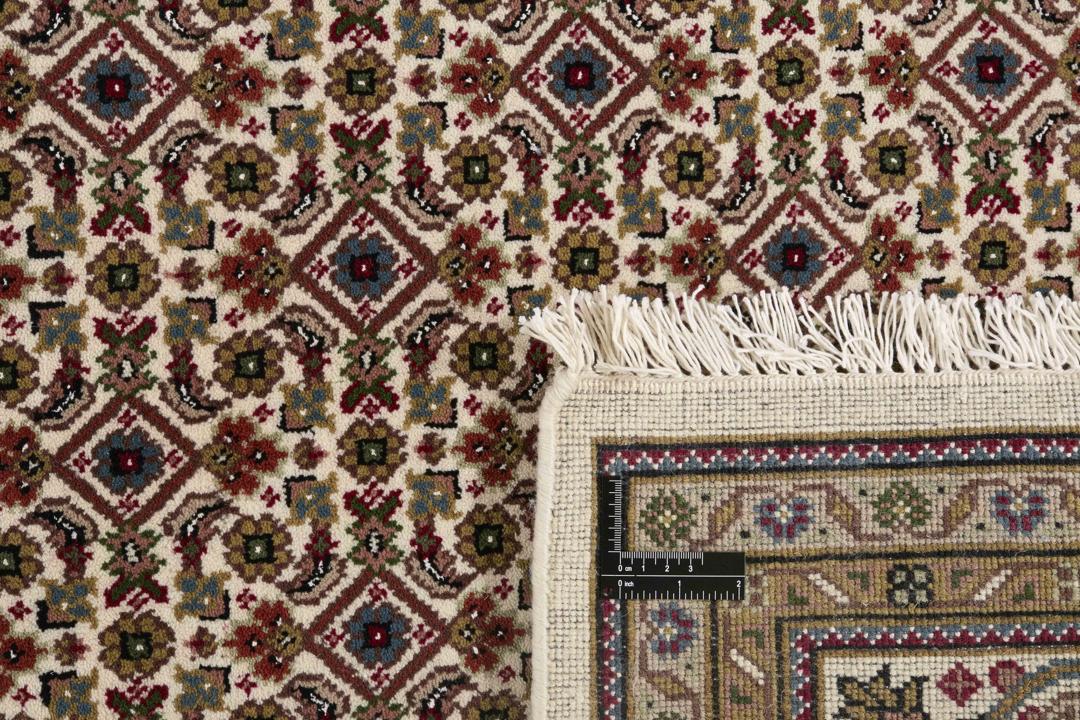
The term Tabriz often refers to a specific approach to design that emphasises meticulous detail and balanced symmetry. In this tradition, the pile is typically crafted to be dense and uniform, which allows the intricate patterns to remain sharp and clear even after years of use. This technical precision is what gives the rug its lasting value and sophisticated appearance.
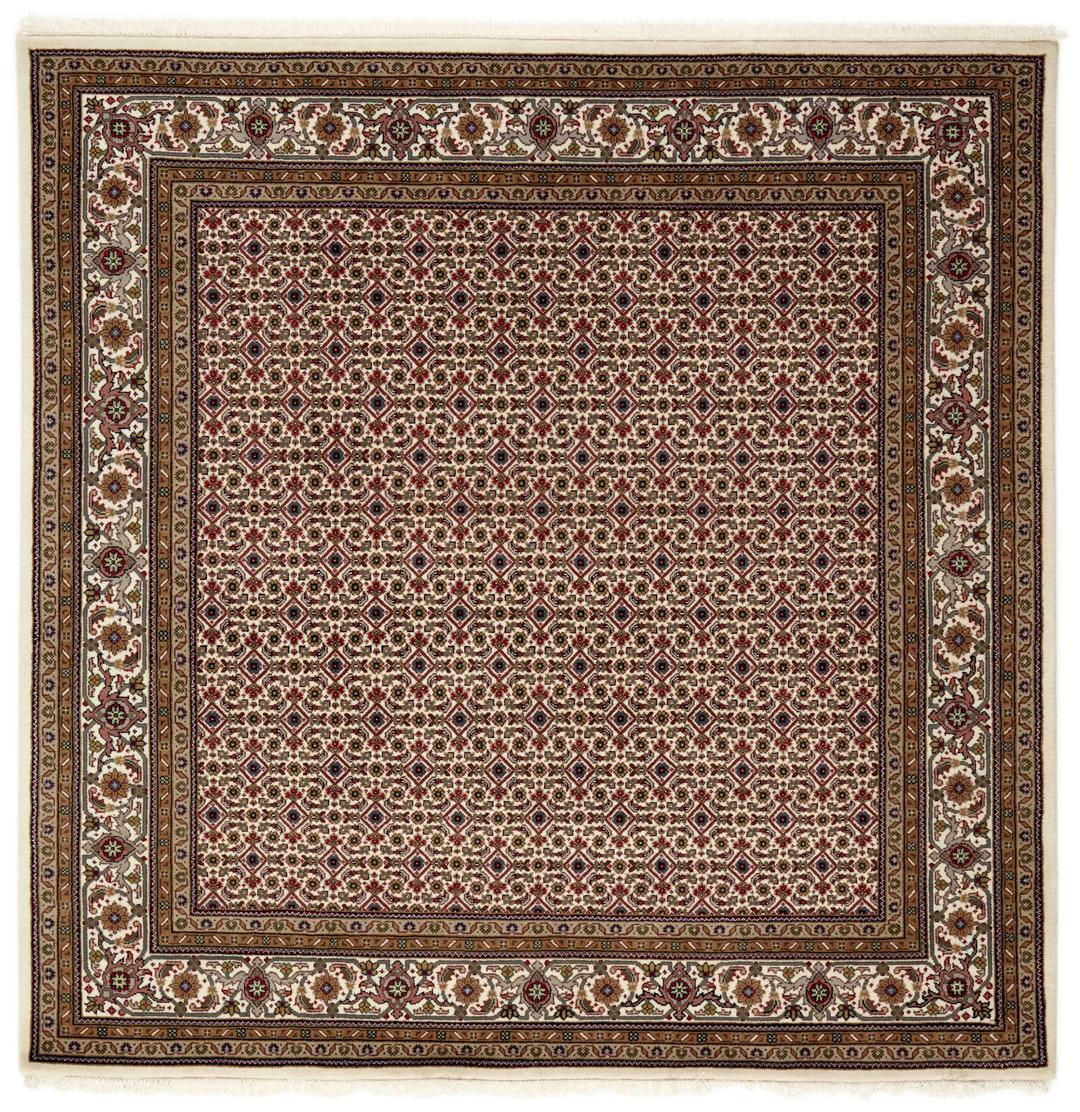
Visually, this tradition is defined by its ornate, balanced compositions. You will often find a central medallion surrounded by a field of delicate, repeating floral motifs, all framed by a complex, multi-layered border. These elements work together to create a sense of harmony and structure, with colours chosen to complement the depth of the design.
Owning a piece from this tradition is an opportunity to connect with a long-standing heritage of craftsmanship. These rugs are highly valued by collectors and homeowners alike, not just for their beauty, but for the human skill and cultural history they represent. They are functional art, designed to anchor a room while providing a lasting sense of quality.