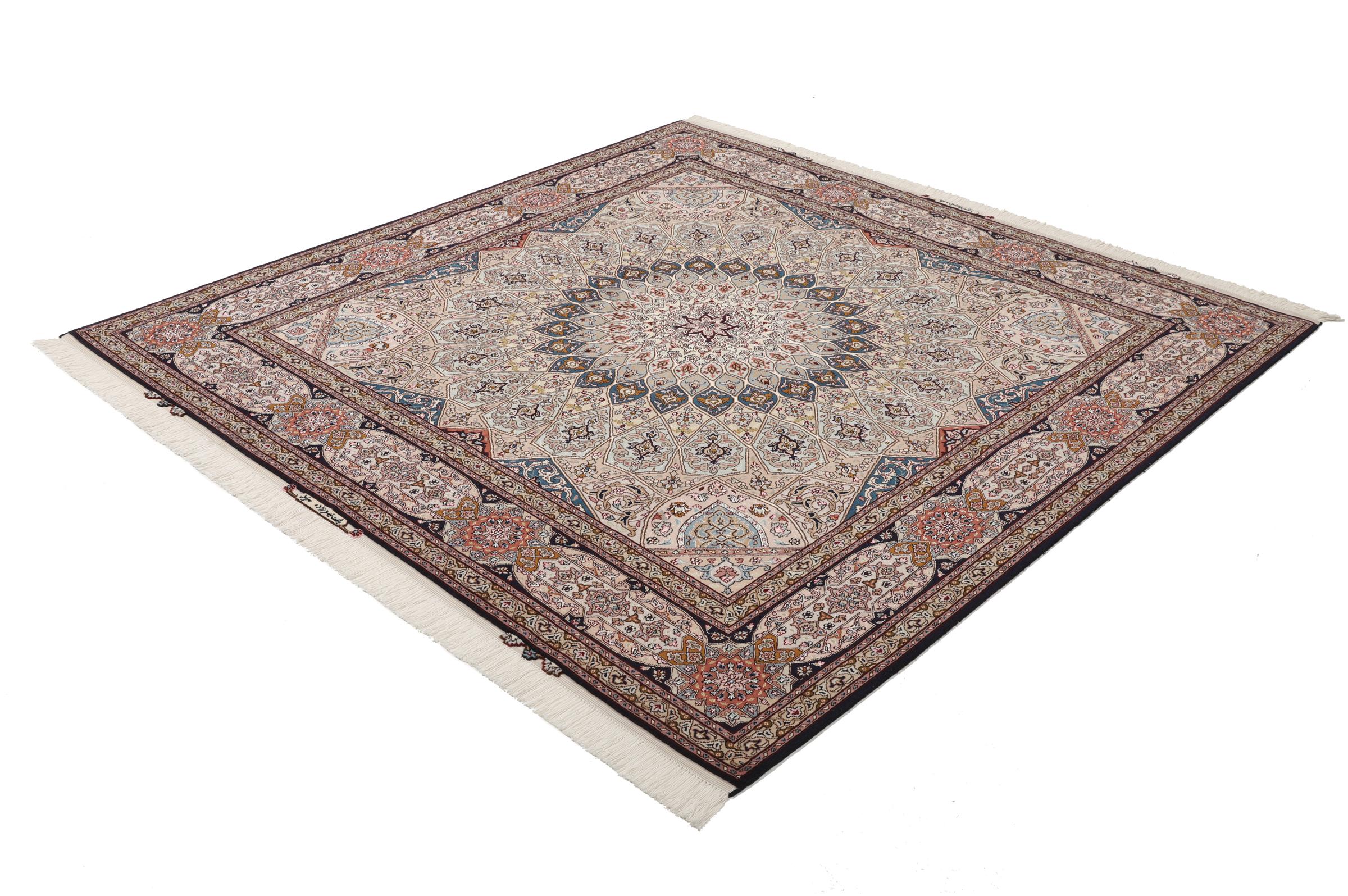
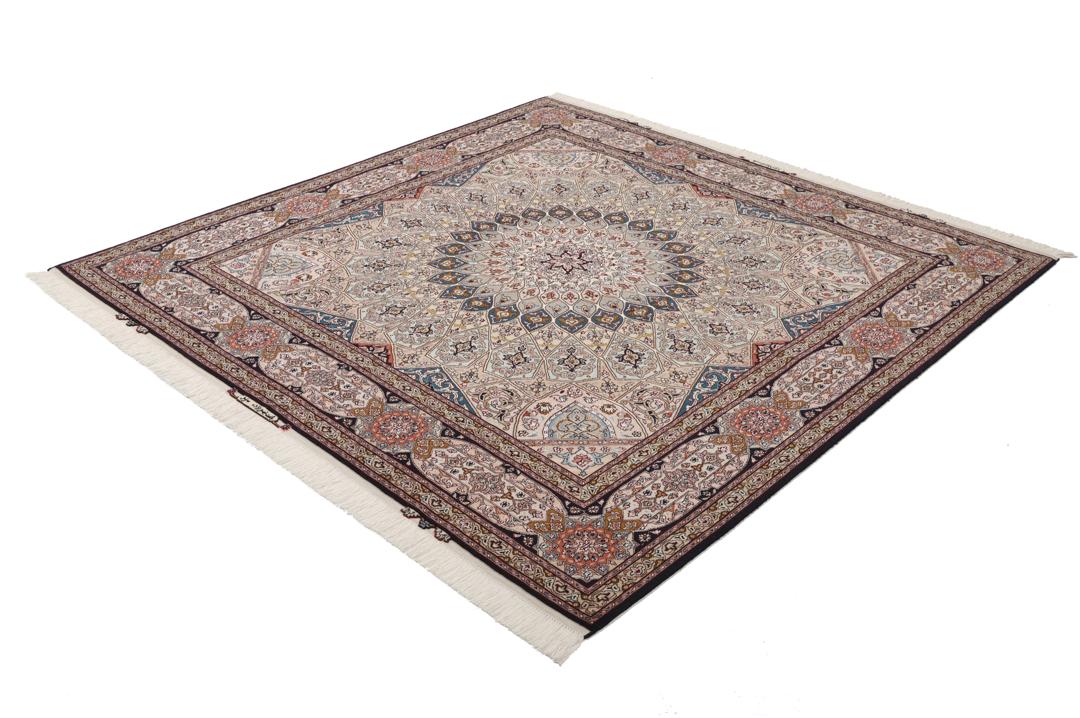
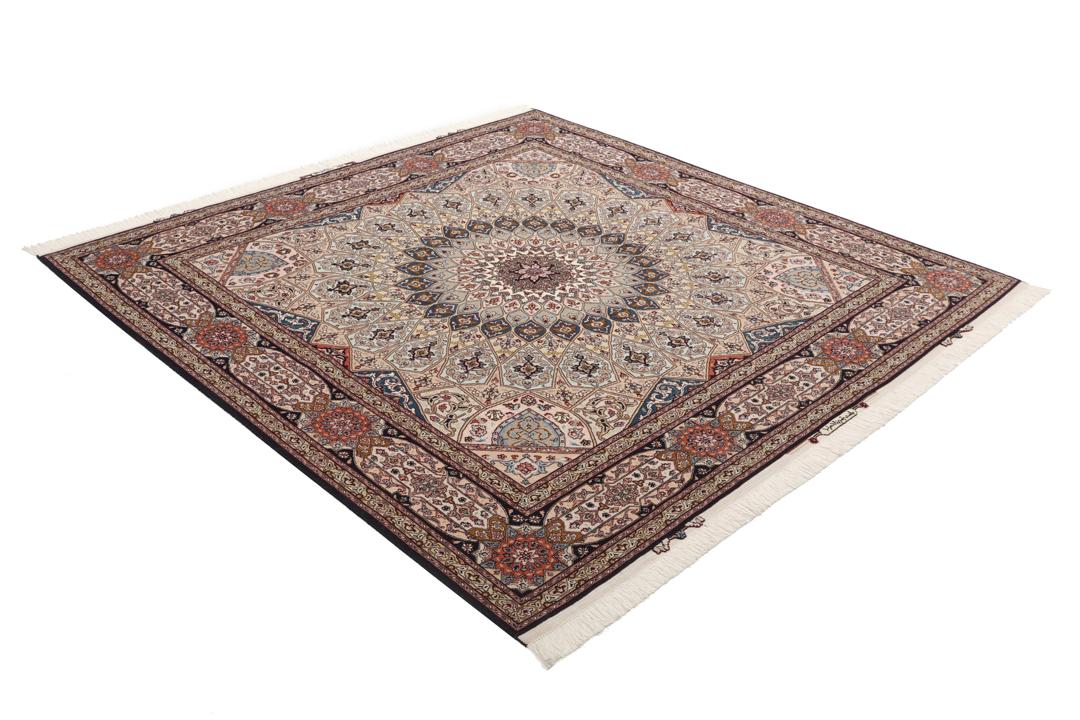
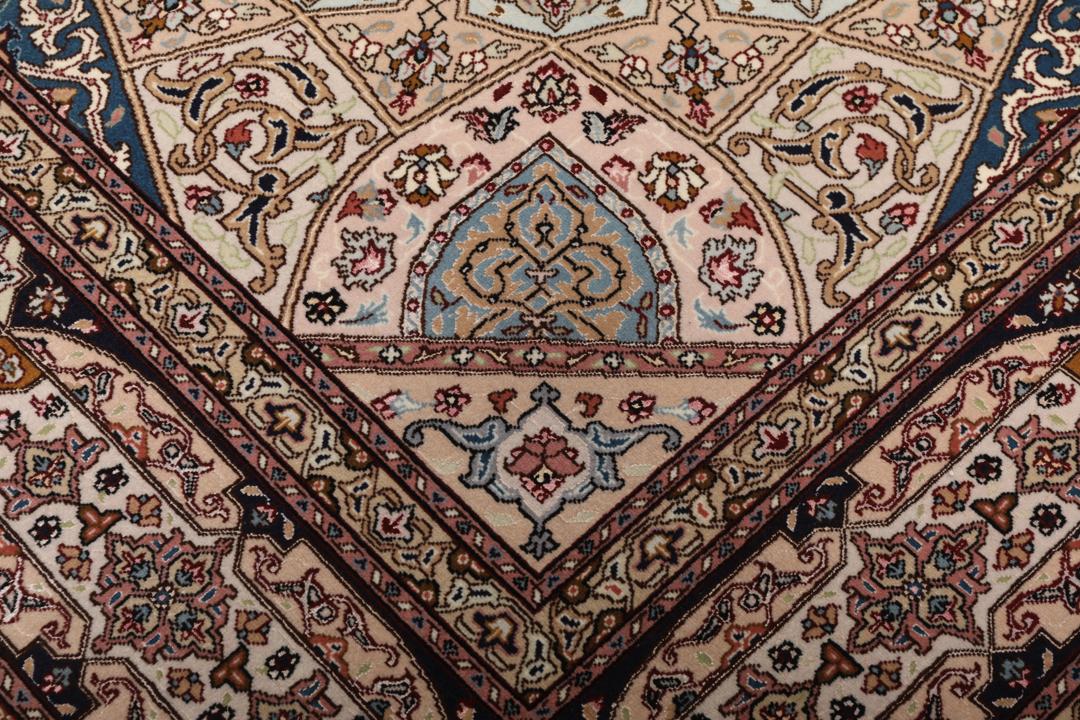
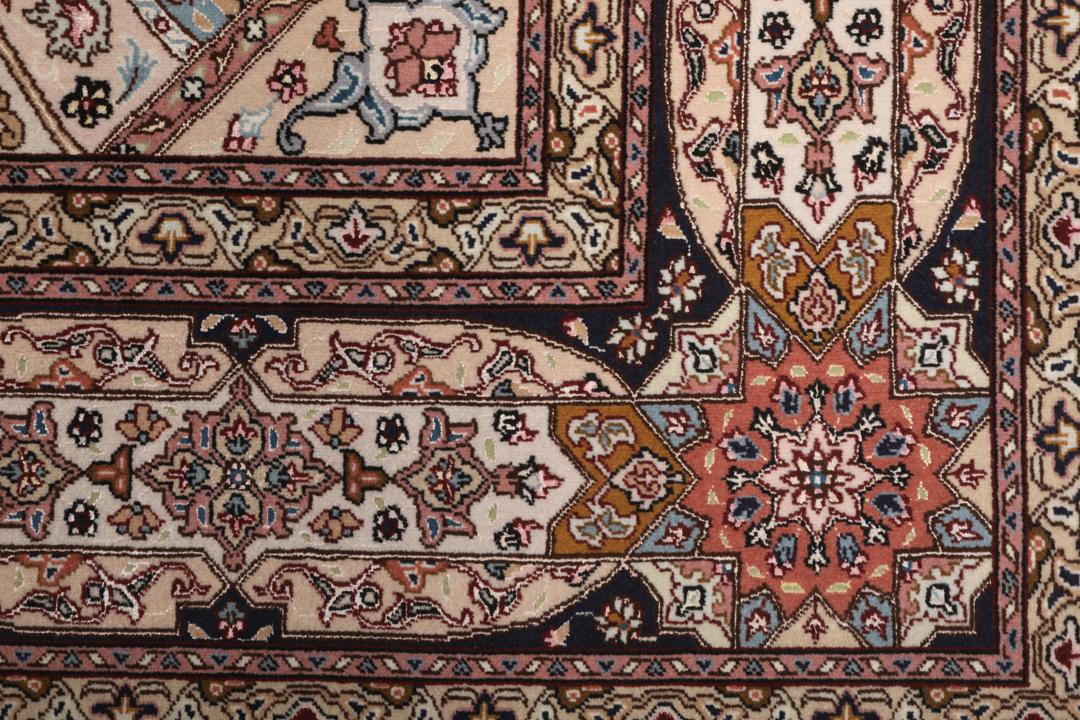
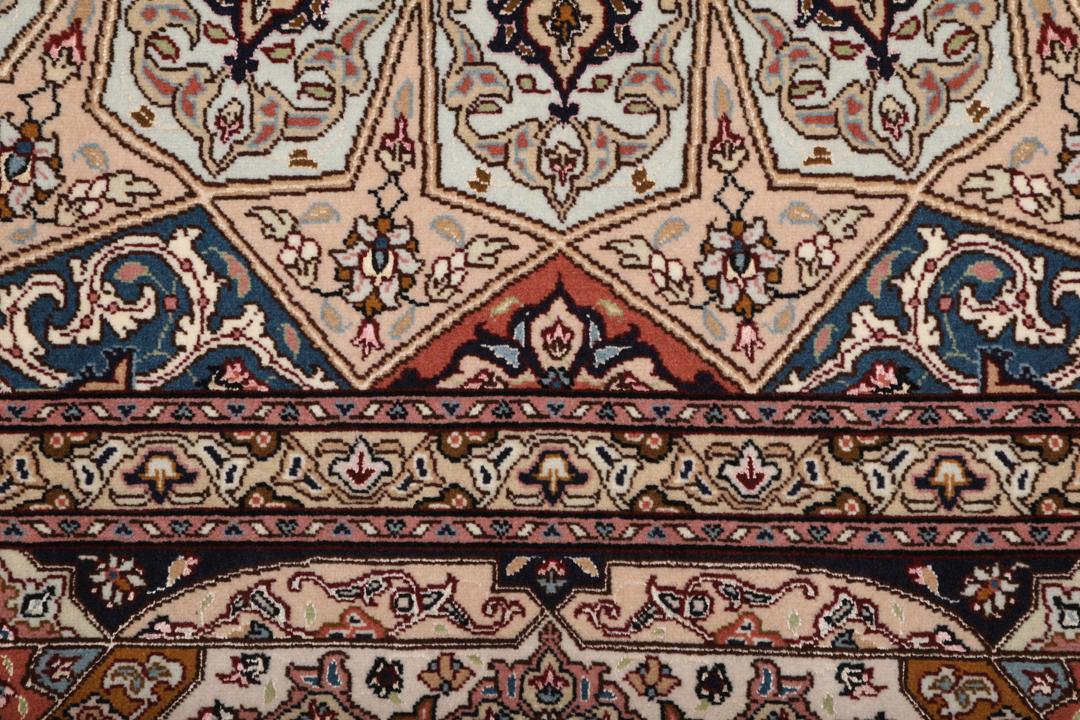
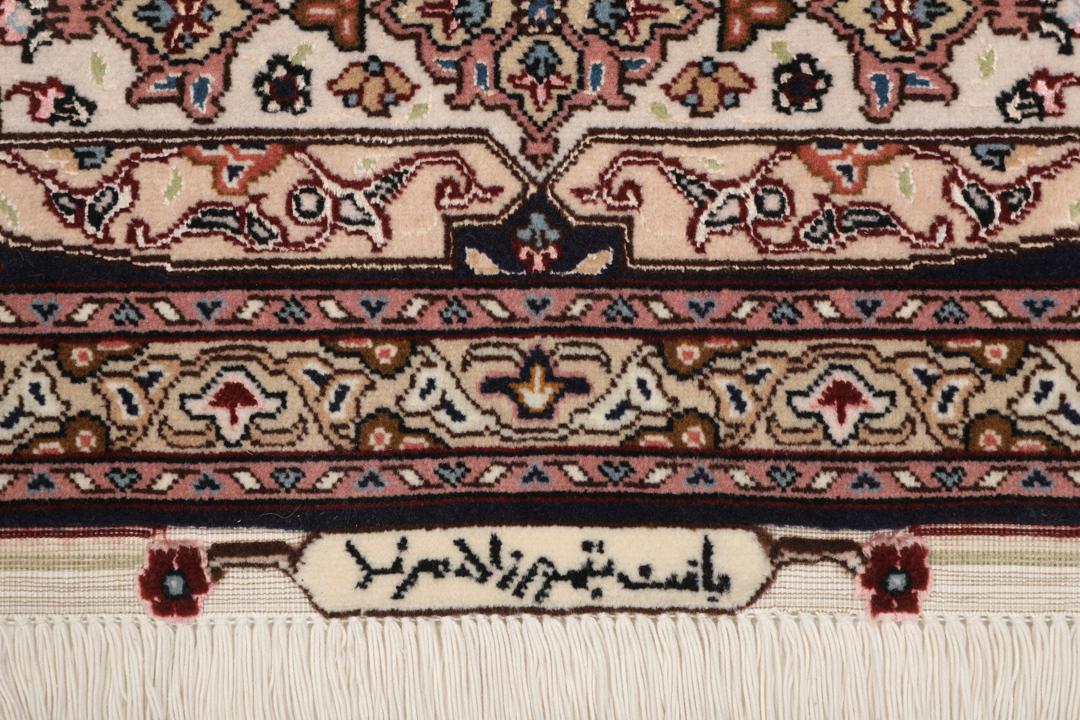
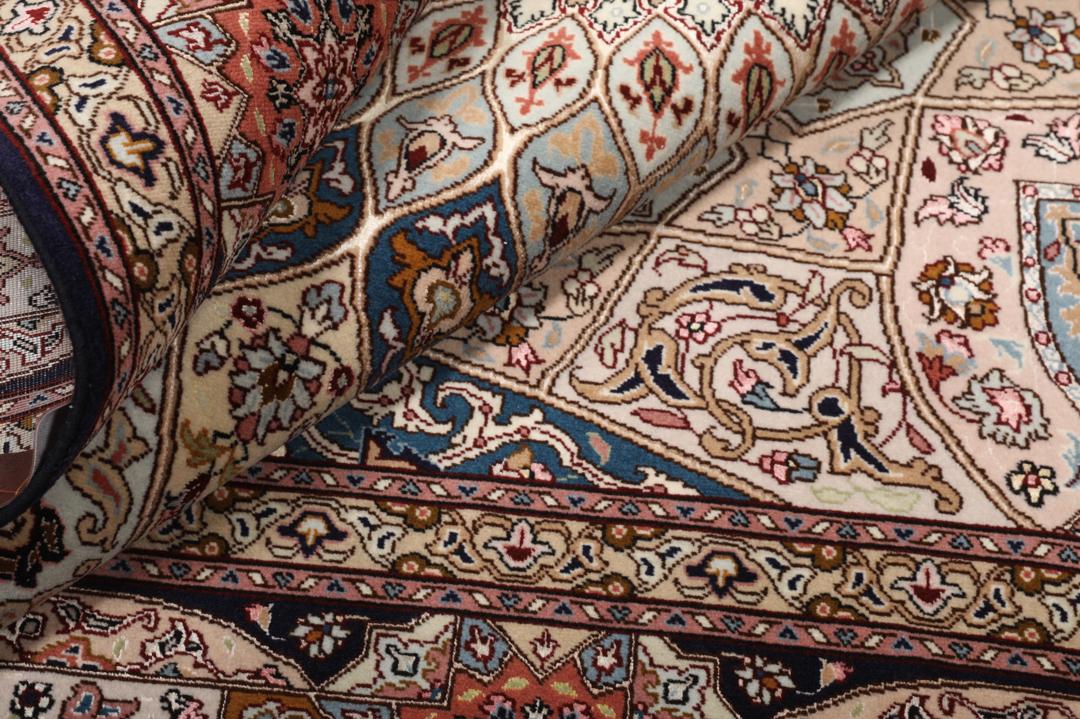
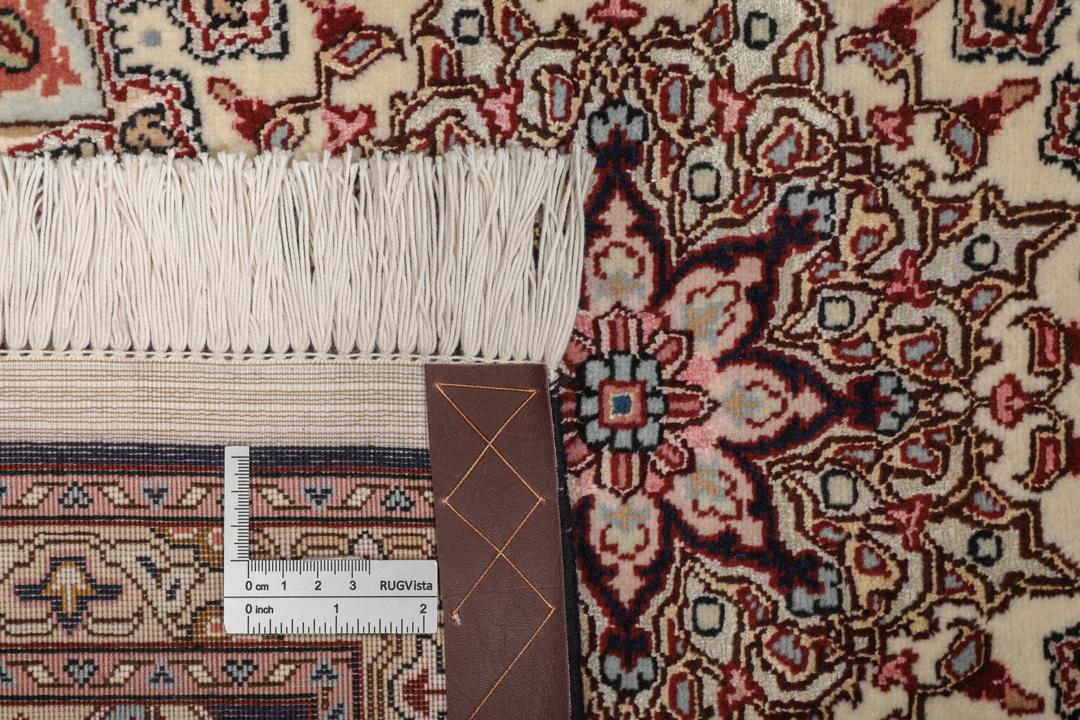
Tabriz rugs originate from one of the oldest and most significant weaving centres in the Middle East. Located in the northwestern part of the region, the city of Tabriz has been a hub of artistic production for centuries, famous for its ability to adapt and refine traditional weaving techniques to suit changing tastes.
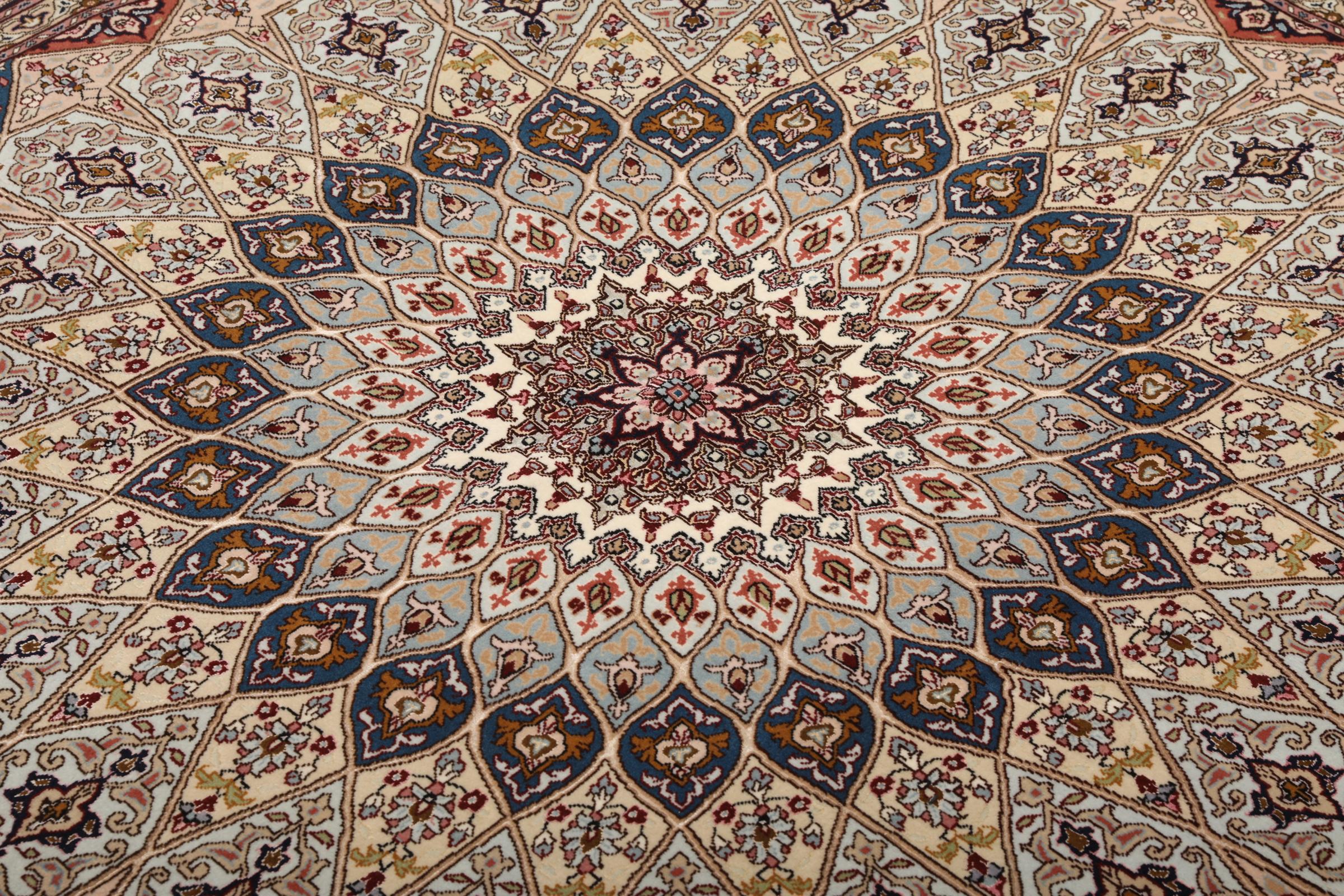
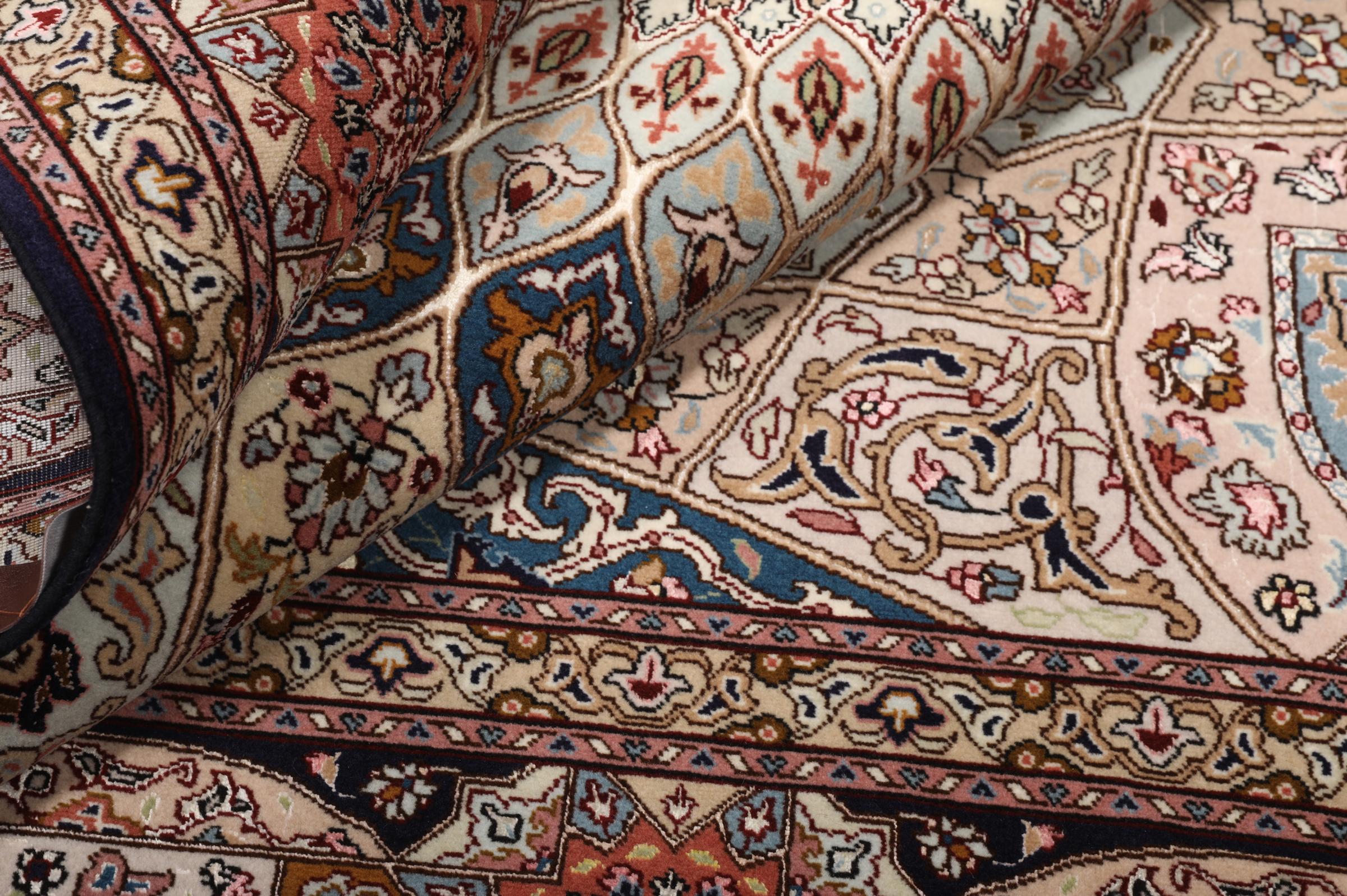
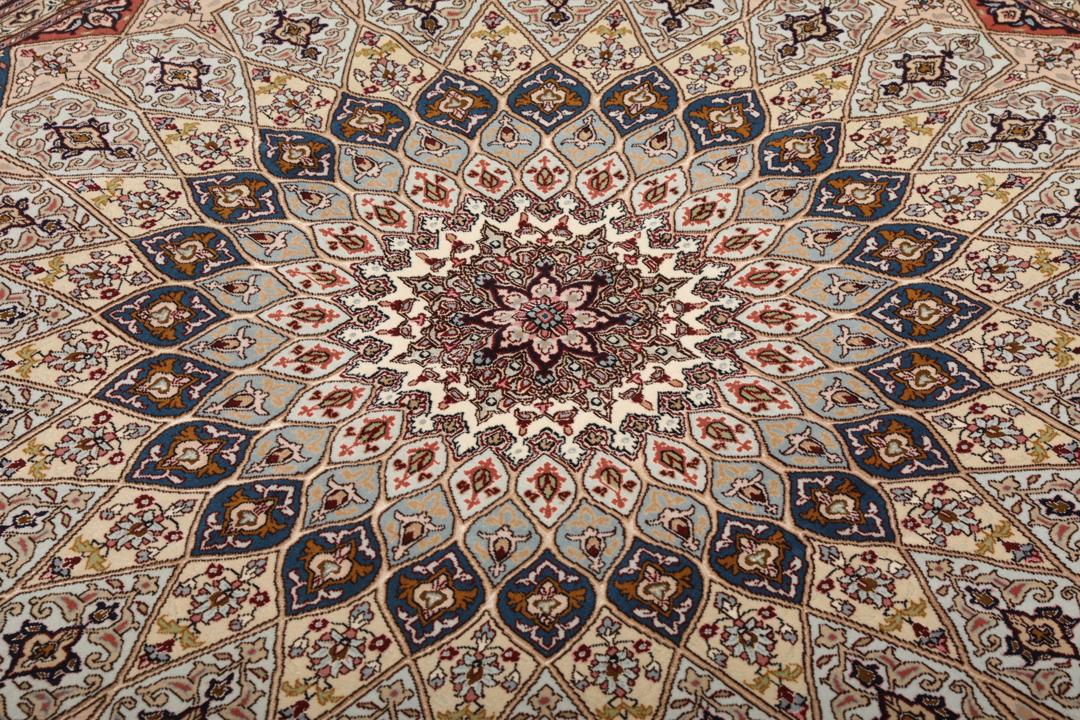
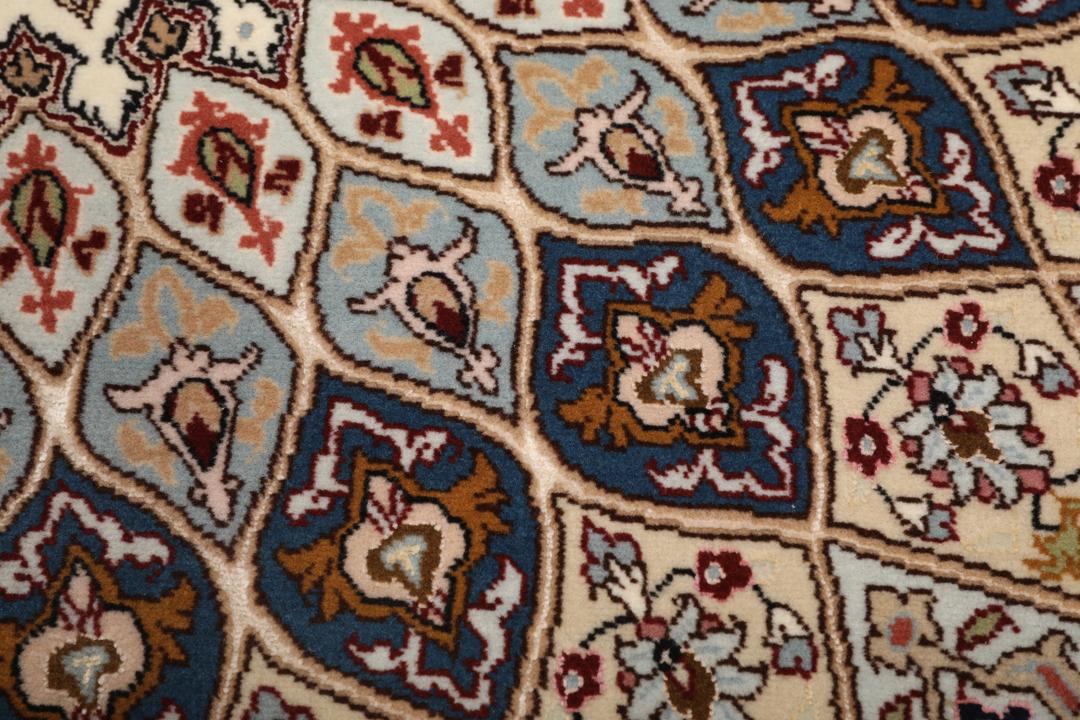
The term '60 Raj' refers to a specific system of measuring knot density, where 'Raj' indicates the number of knots per 7 cm of the rug's width. A 60 Raj designation signifies a very high knot count, which allows weavers to execute incredibly detailed, curved, and complex floral motifs that would be impossible to achieve in lower-density rugs.
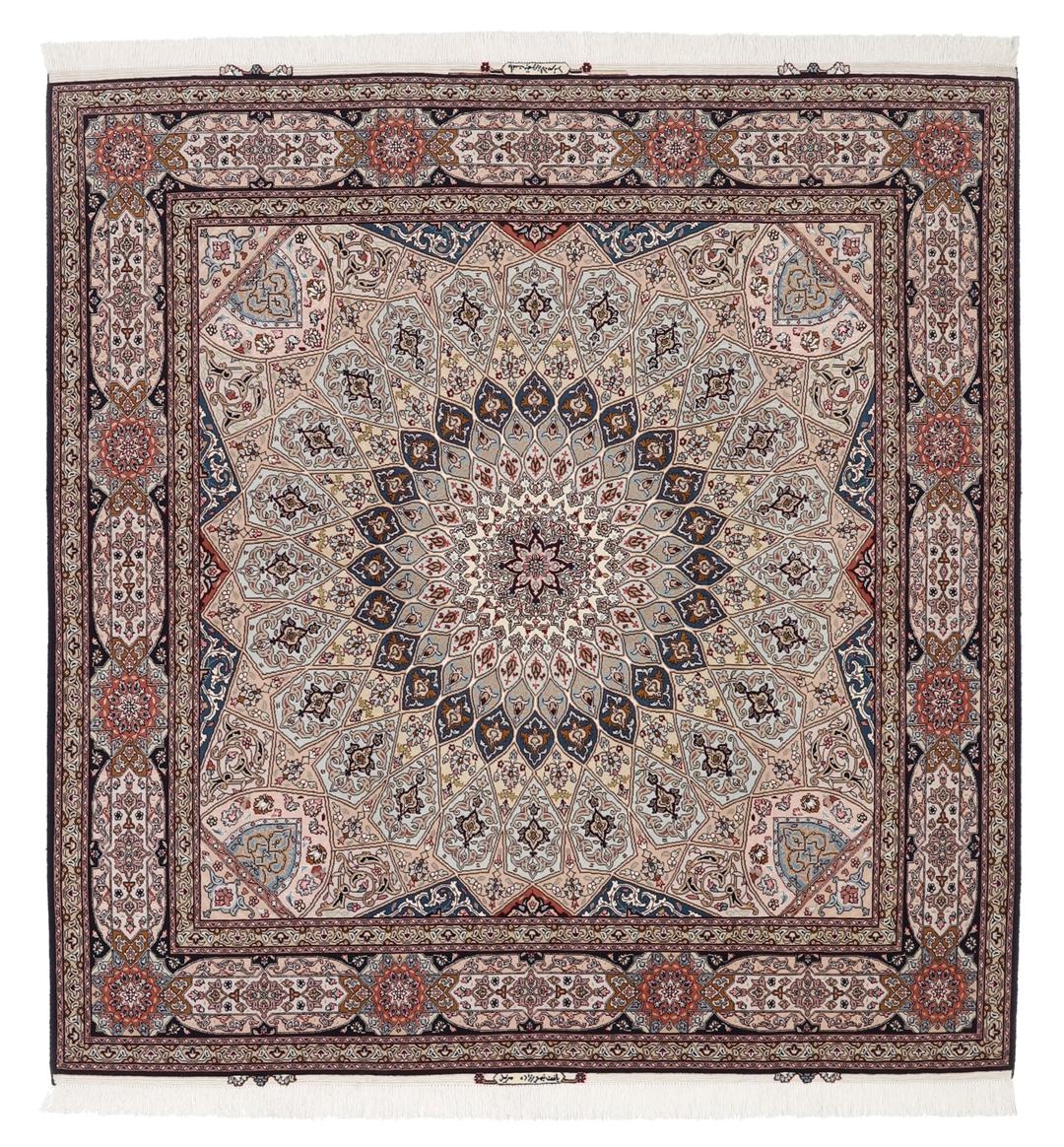
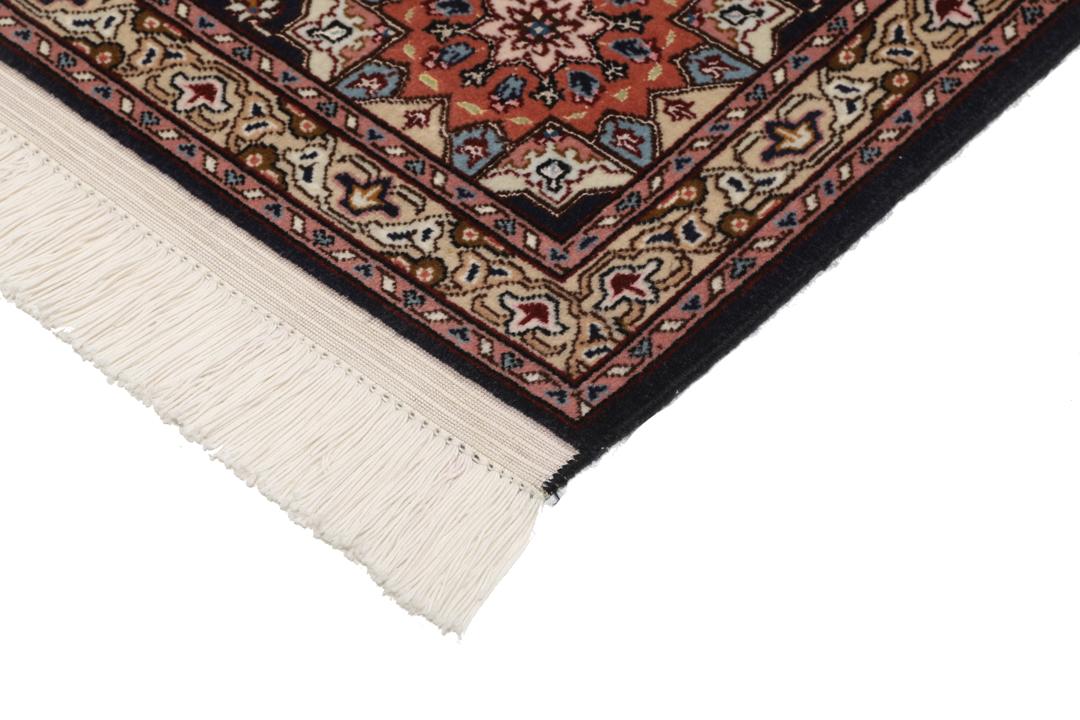
Design-wise, these rugs are celebrated for their sophisticated use of space. They often feature a central medallion surrounded by dense, flowing patterns of palmettes, vines, and floral scrolls. The borders are typically as elaborate as the field, framed by multiple guard stripes that provide a formal structure to the composition.
Collecting a rug from this tradition is a commitment to heritage and skill. These pieces are valued for their exceptional technical standard and their ability to blend historical design languages with modern interior aesthetics. Owning one is a testament to the enduring human effort that turns natural materials into lasting art.