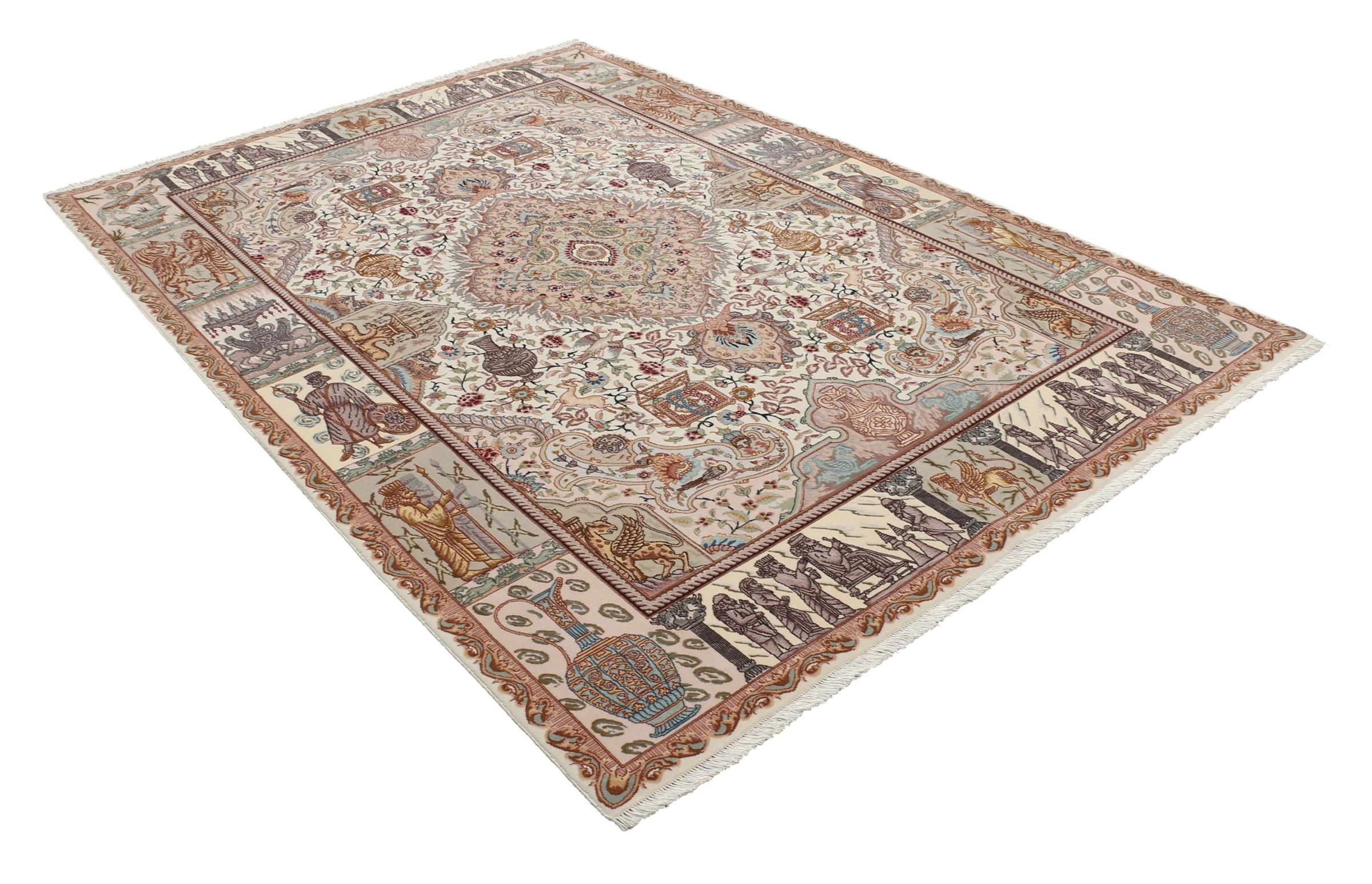
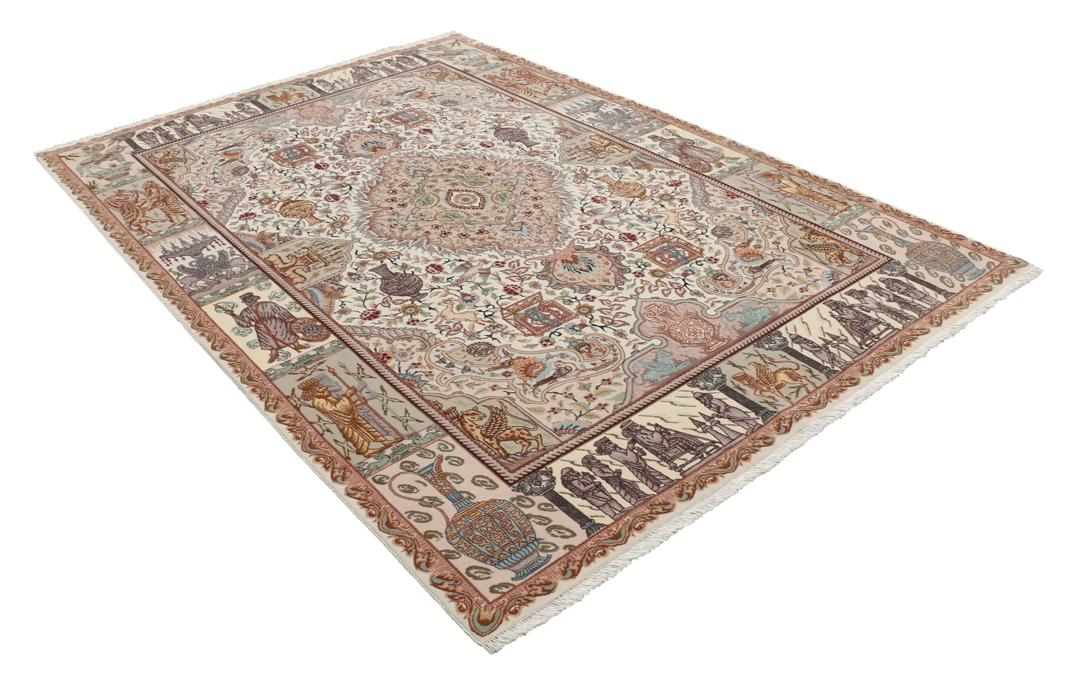
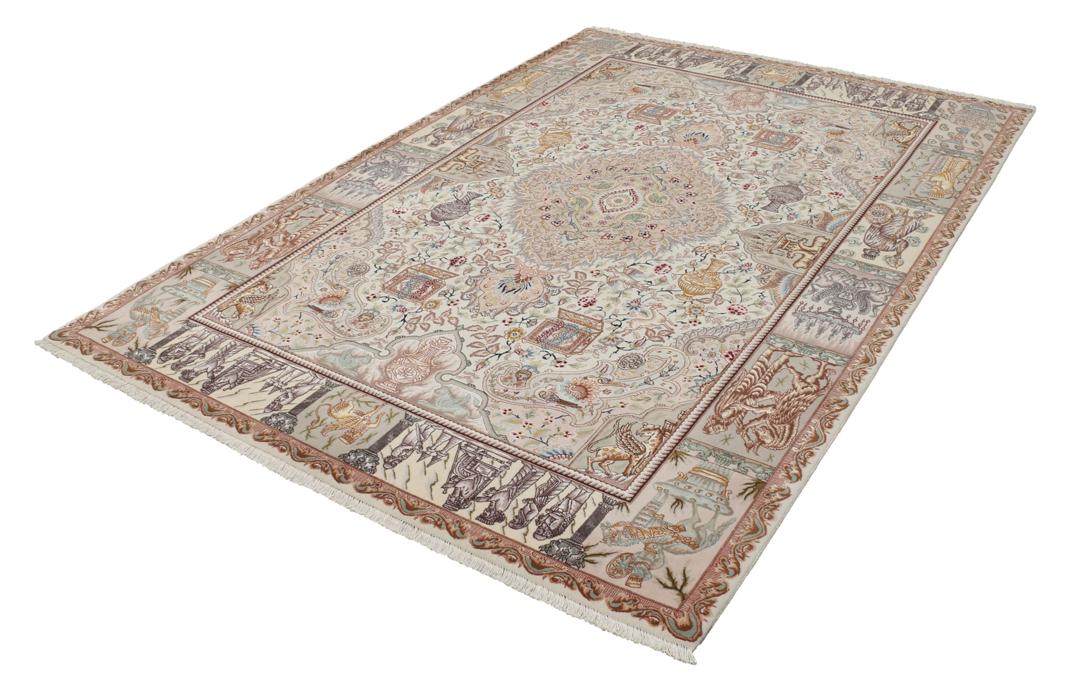
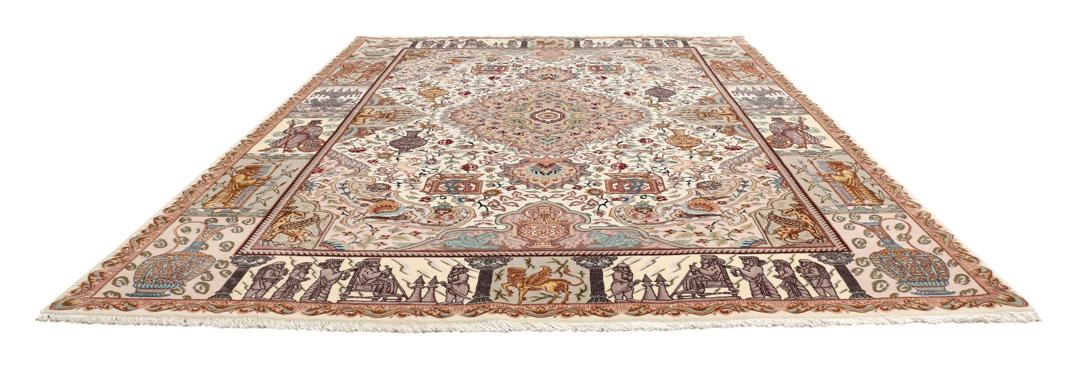
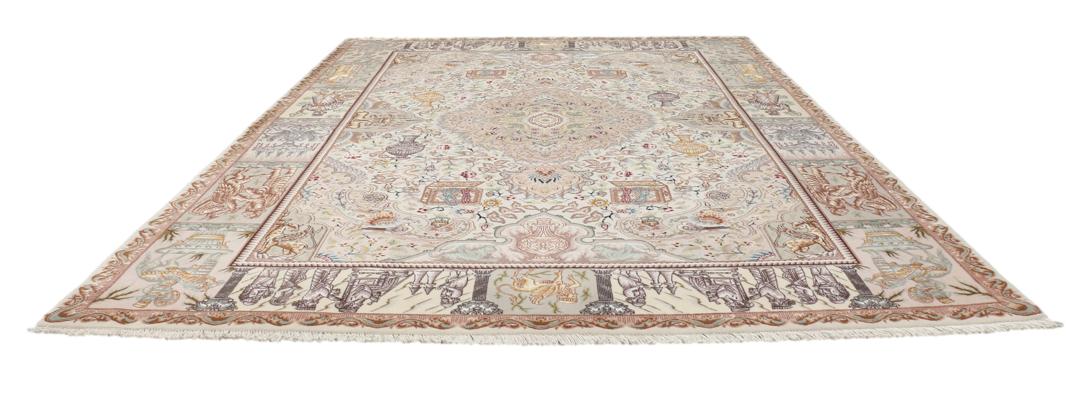
Tabriz rugs hail from the historic city of Tabriz in the Middle East, a centre that has been a crossroads of artistic exchange for centuries. Located on the ancient Silk Road, Tabriz became a melting pot of cultural influences, allowing its weavers to integrate diverse motifs and techniques into their work. This rich heritage is reflected in the rug's ability to tell complex visual stories, drawing from a deep reservoir of regional artistic tradition.
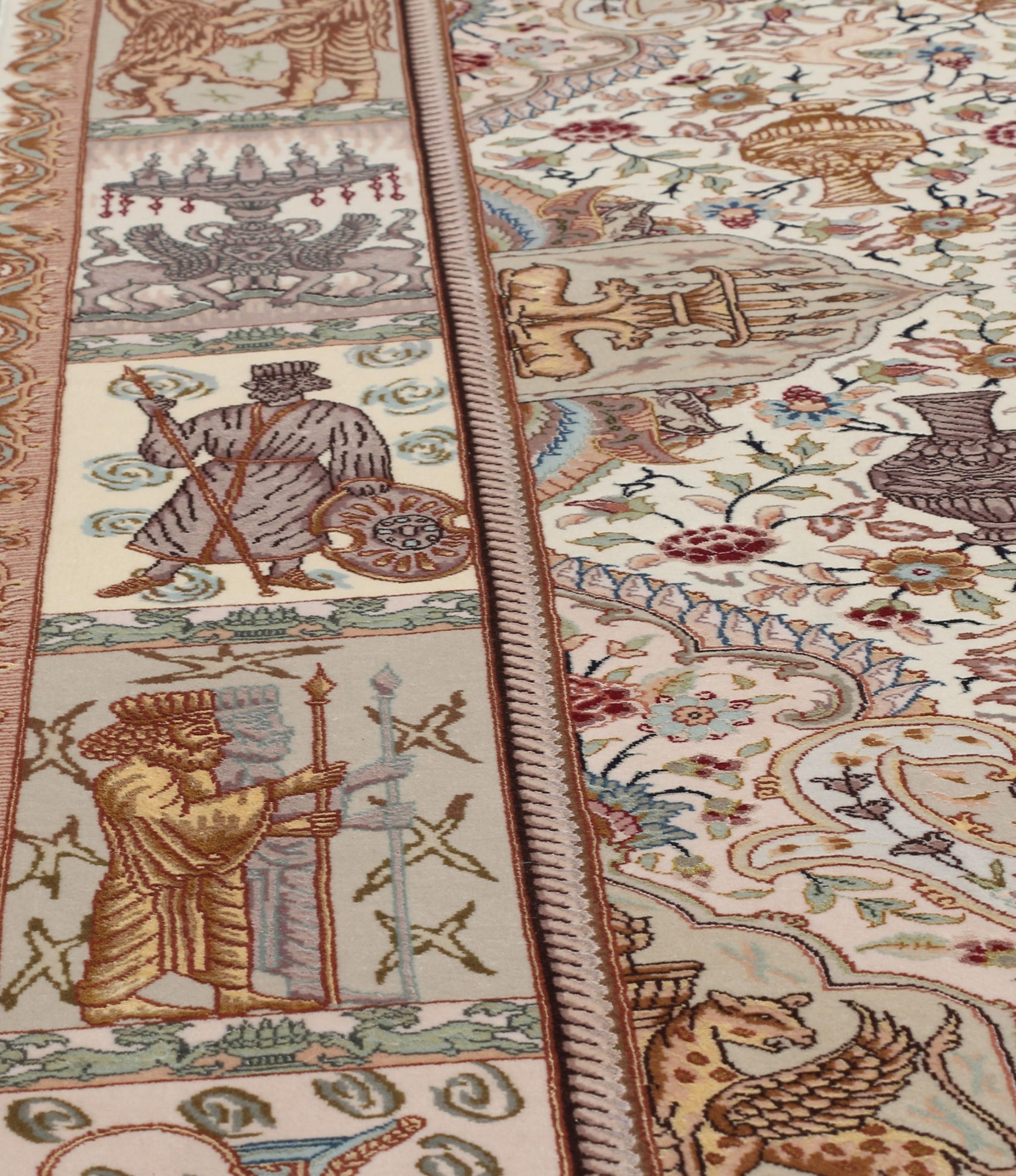
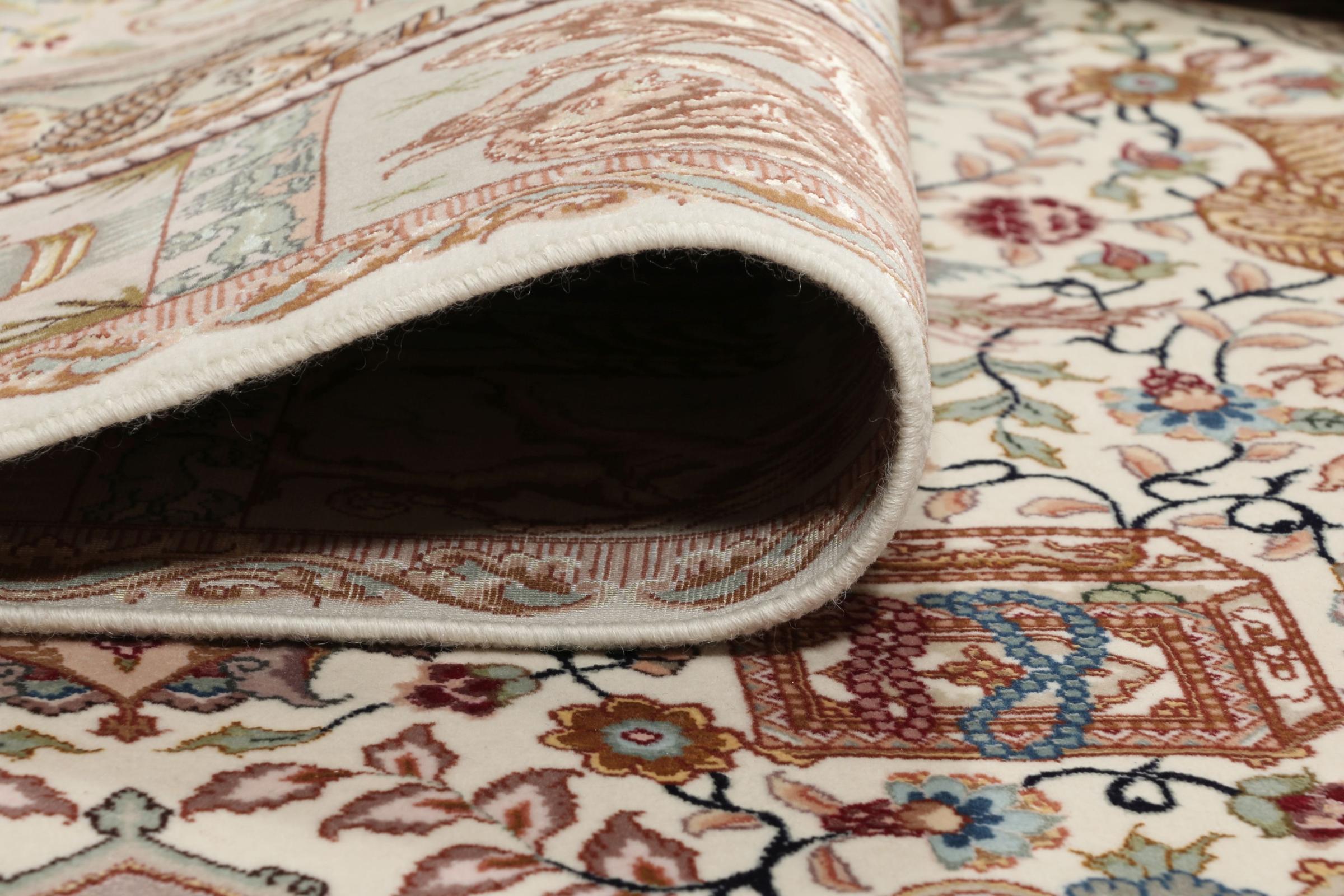
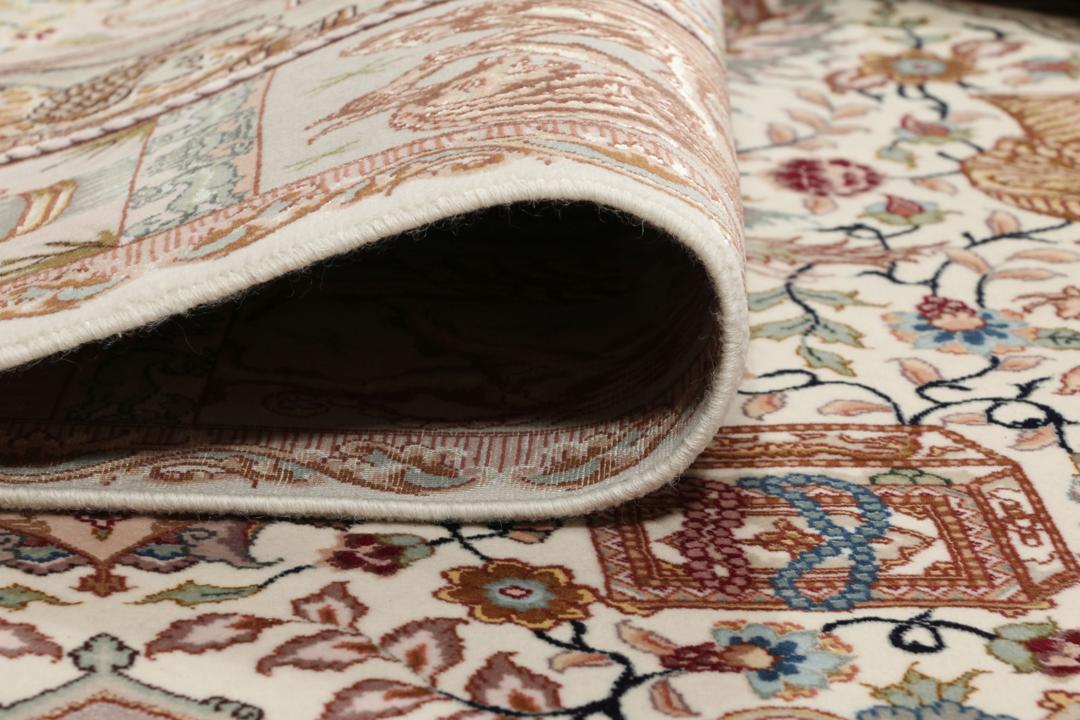
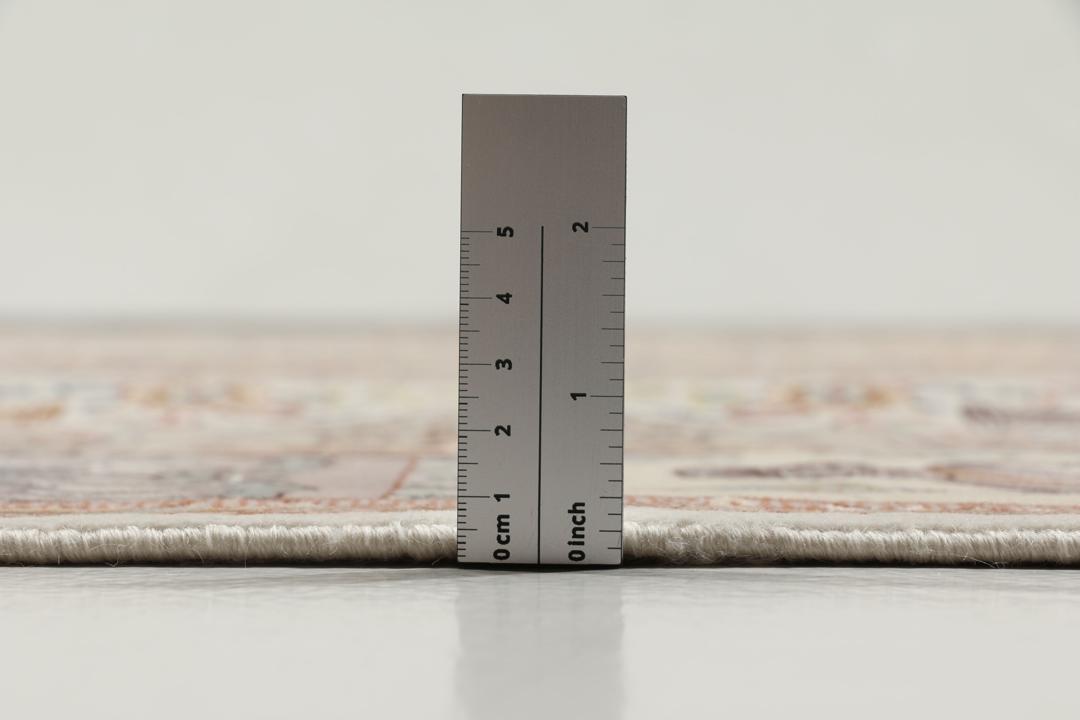
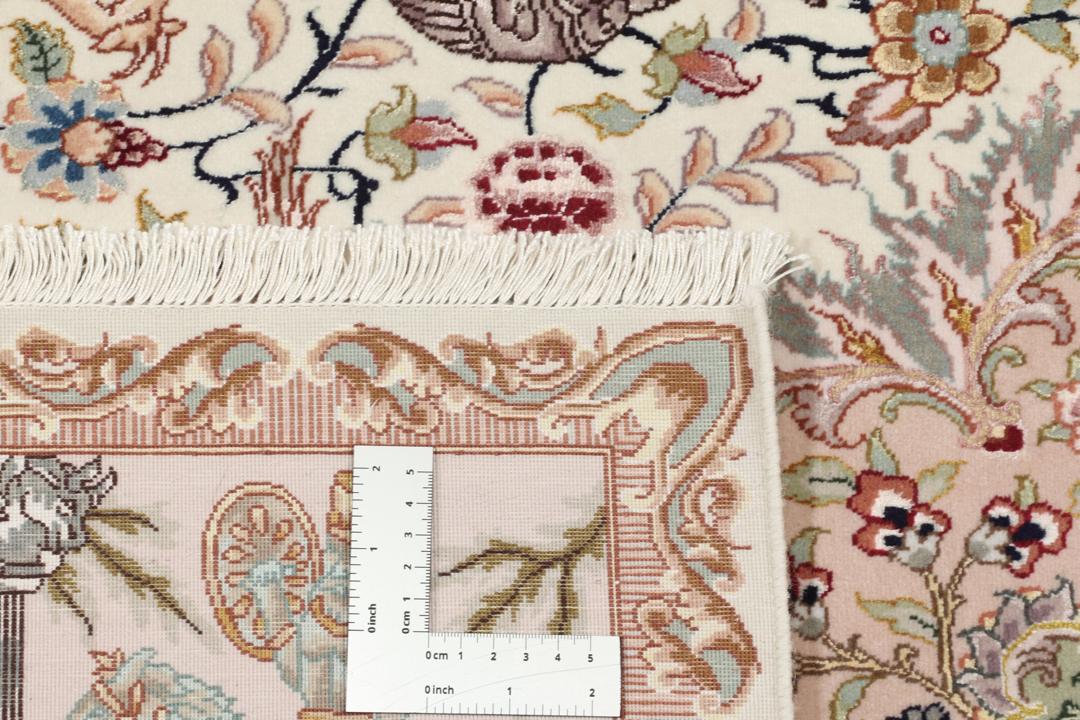
The term '60 Raj' is a specific technical designation that refers to the number of knots within a set measurement, indicating a very high level of fineness. A higher 'Raj' count translates directly to a thinner, more flexible, and more detailed rug. This technical mastery allows the weavers to translate intricate paintings and historical scenes into the medium of textiles with remarkable precision, a hallmark of the finest Tabriz weaving traditions.
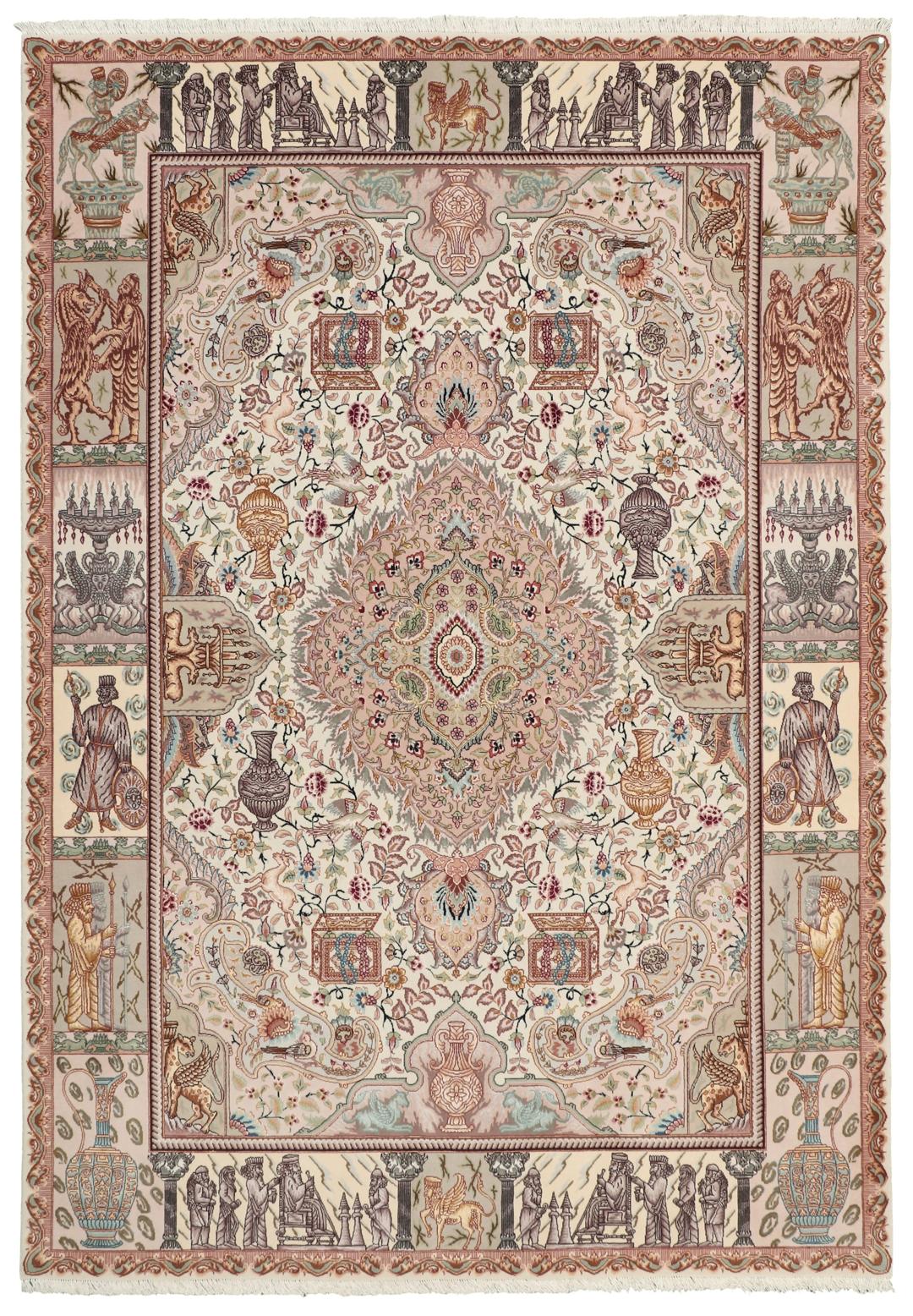
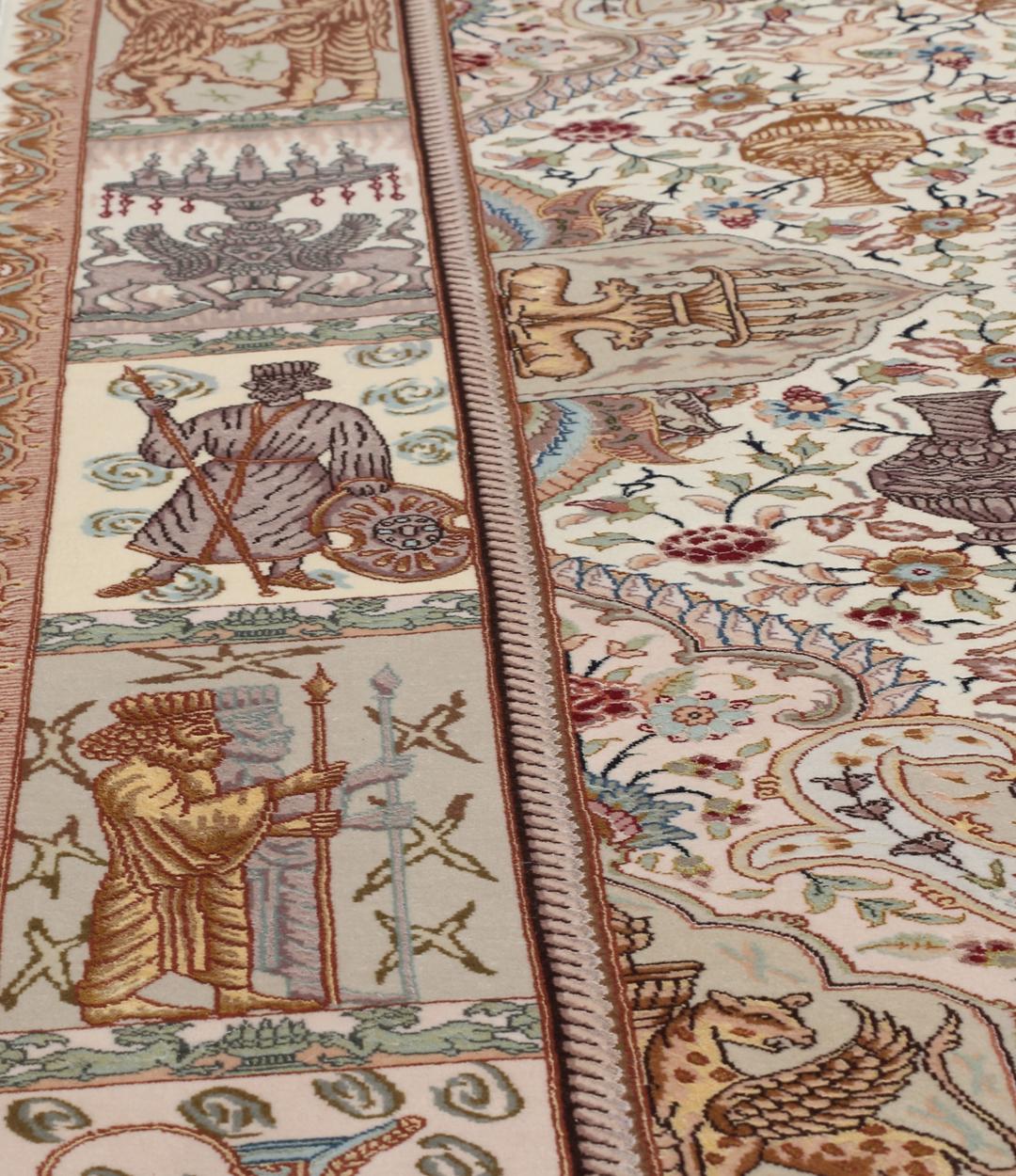
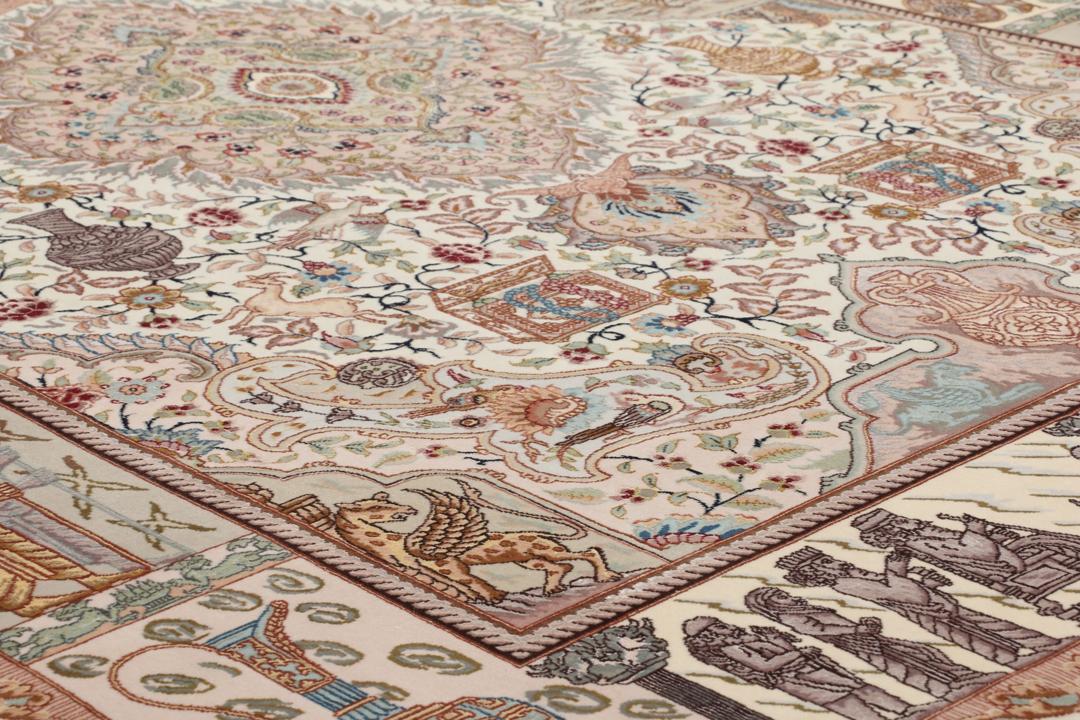
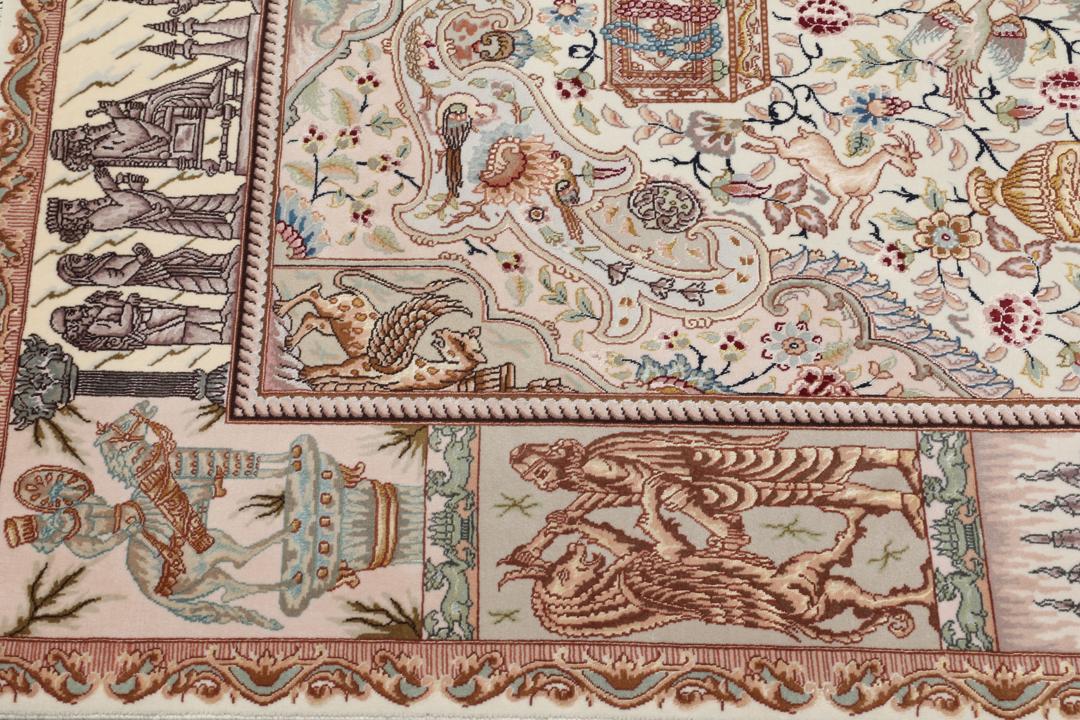
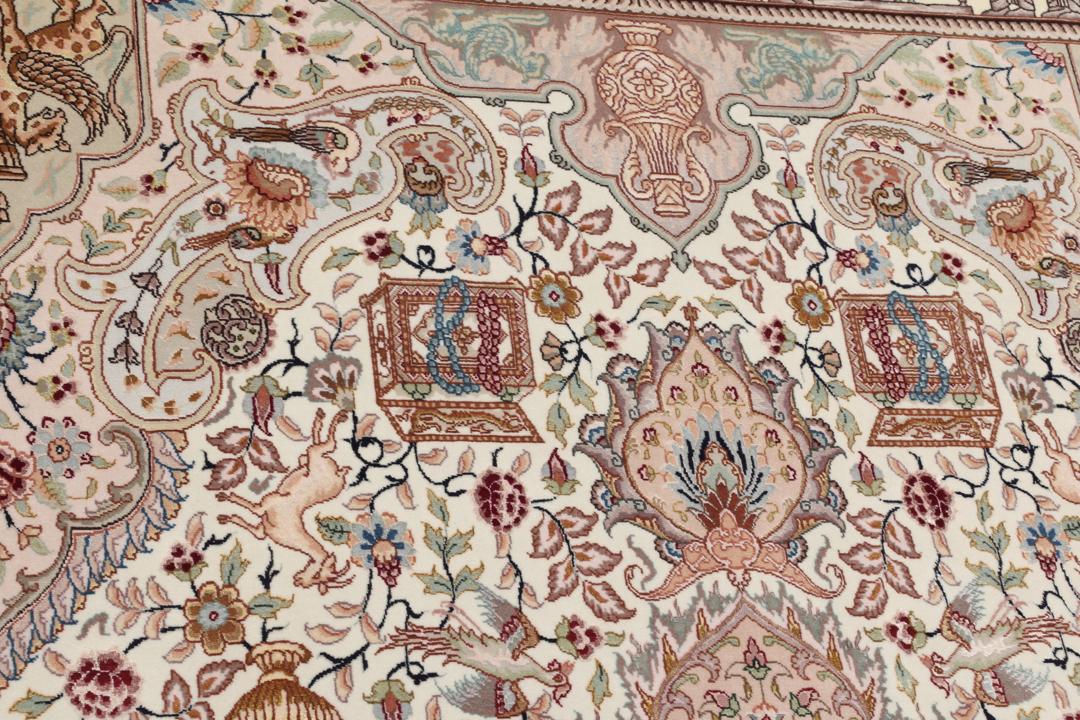
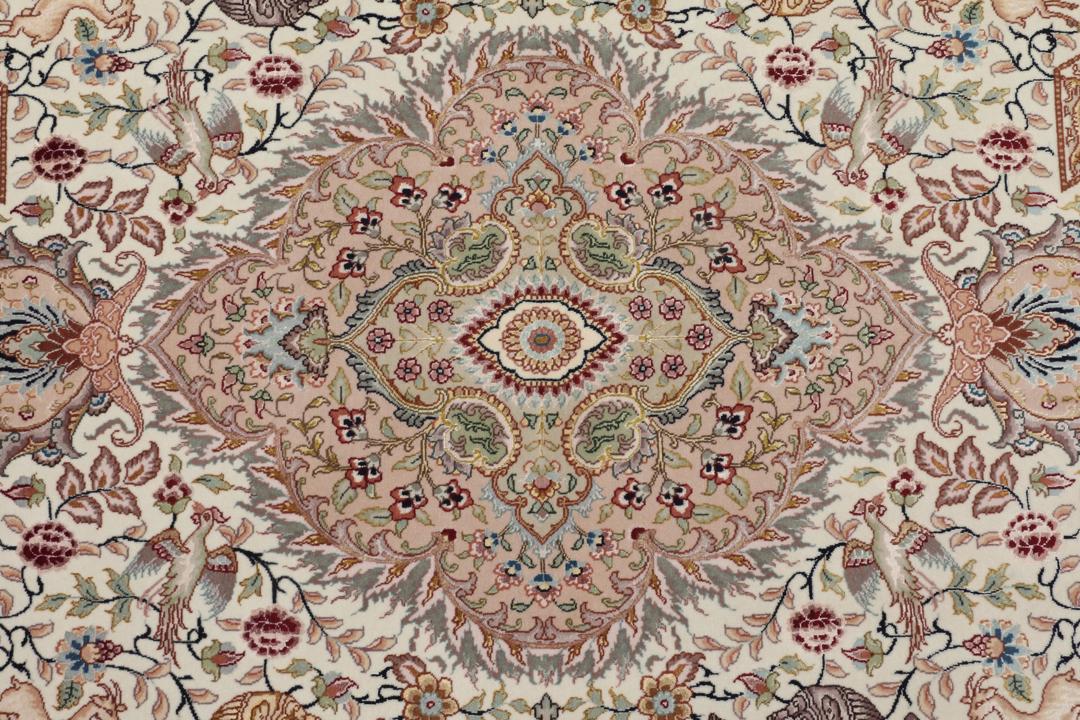
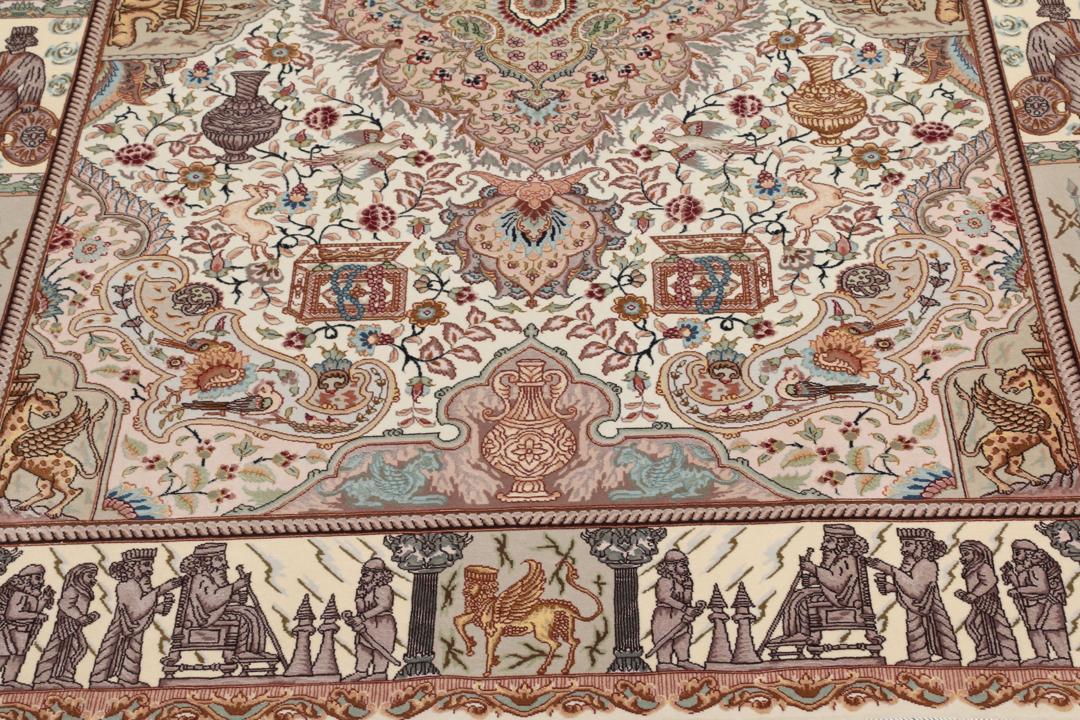
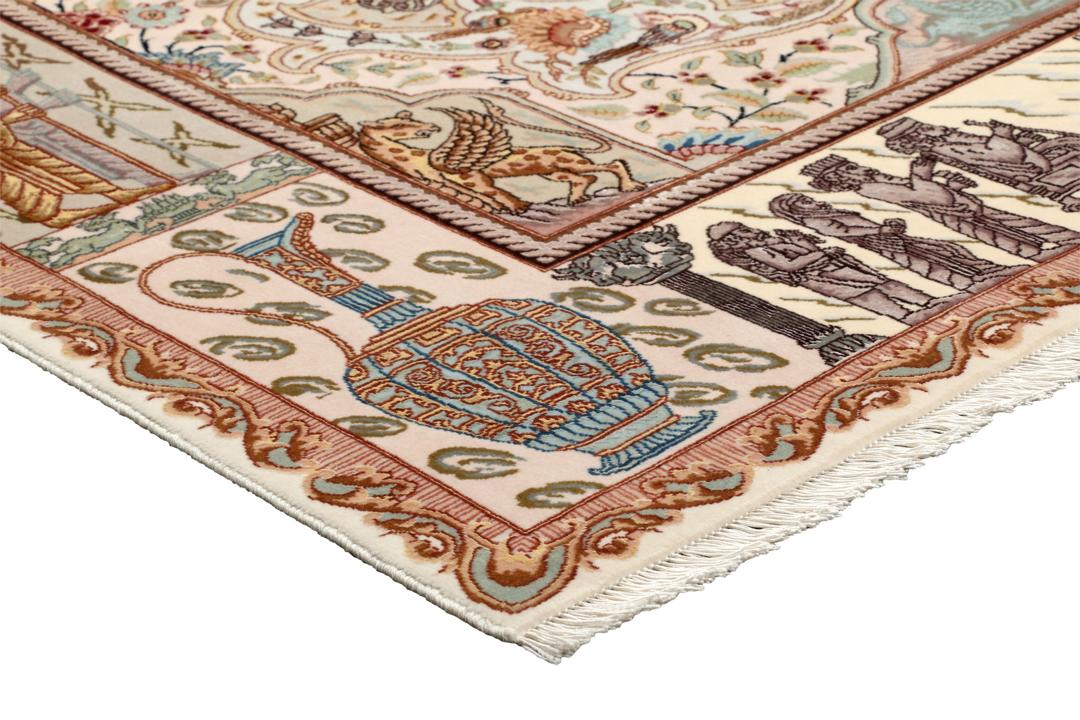
Signature elements of these rugs often include elaborate central medallions, detailed borders, and pictorial scenes that may depict historical figures, animals, or garden landscapes. This particular rug features a narrative border and field that showcase the depth of this design language. The use of balanced, symmetrical compositions is a classic trait, intended to reflect order, harmony, and the sophisticated aesthetic values of the region's artistic history.
Collectors value Tabriz rugs for their ability to blend technical perfection with profound cultural storytelling. Owning one is seen as an investment in human skill and historical legacy. These rugs are not merely decorative but are viewed as keepers of local tradition, representing a standard of craftsmanship that has been refined over generations to ensure that each piece remains a lasting treasure.