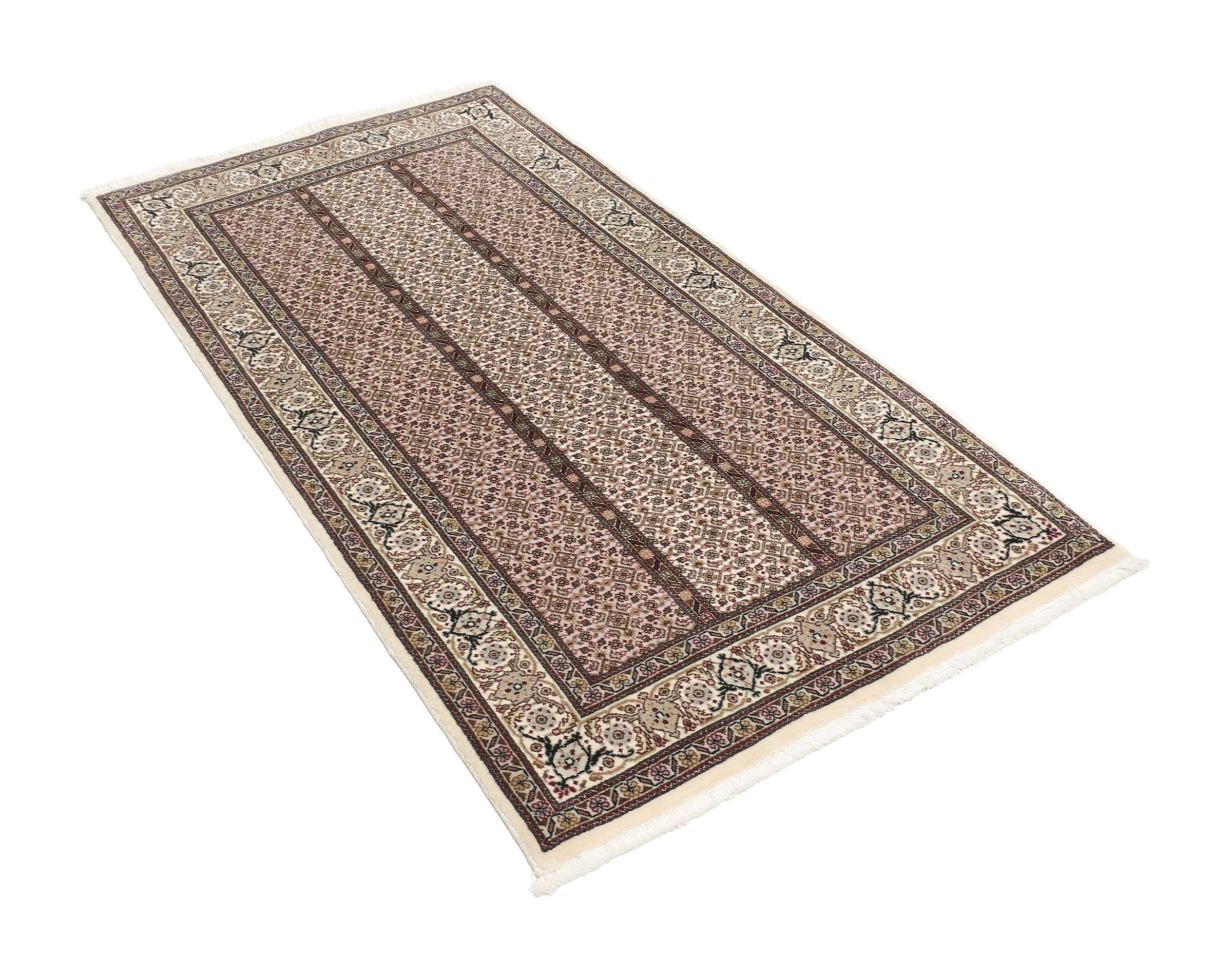
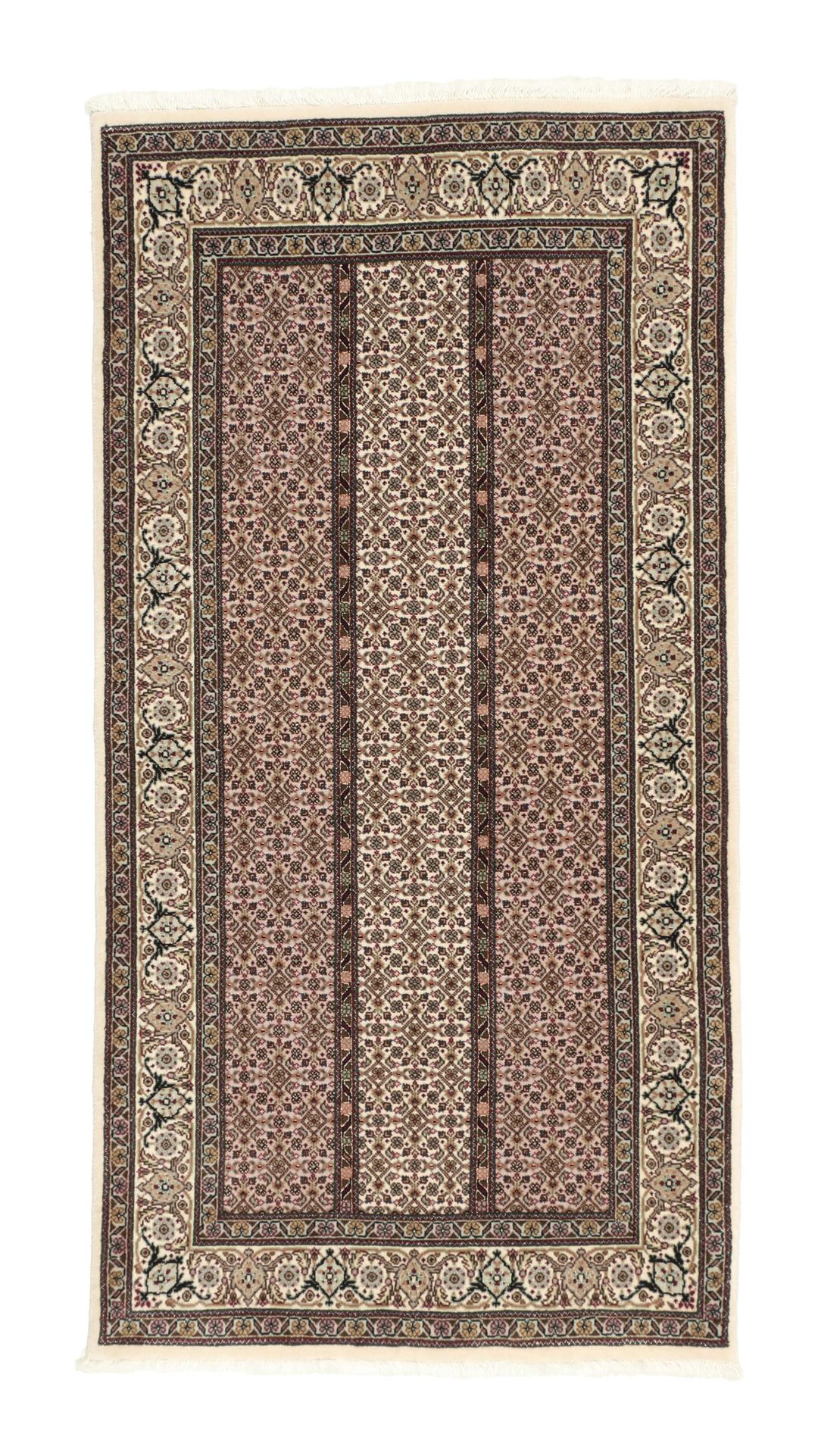
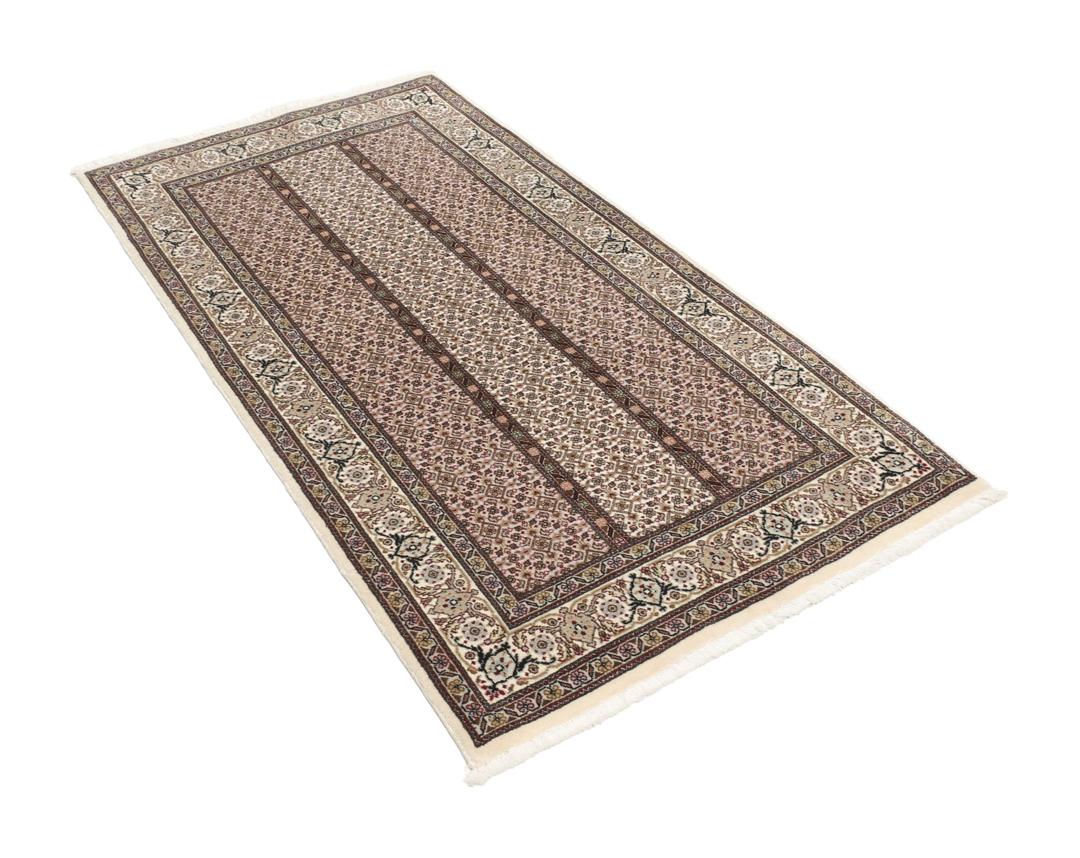
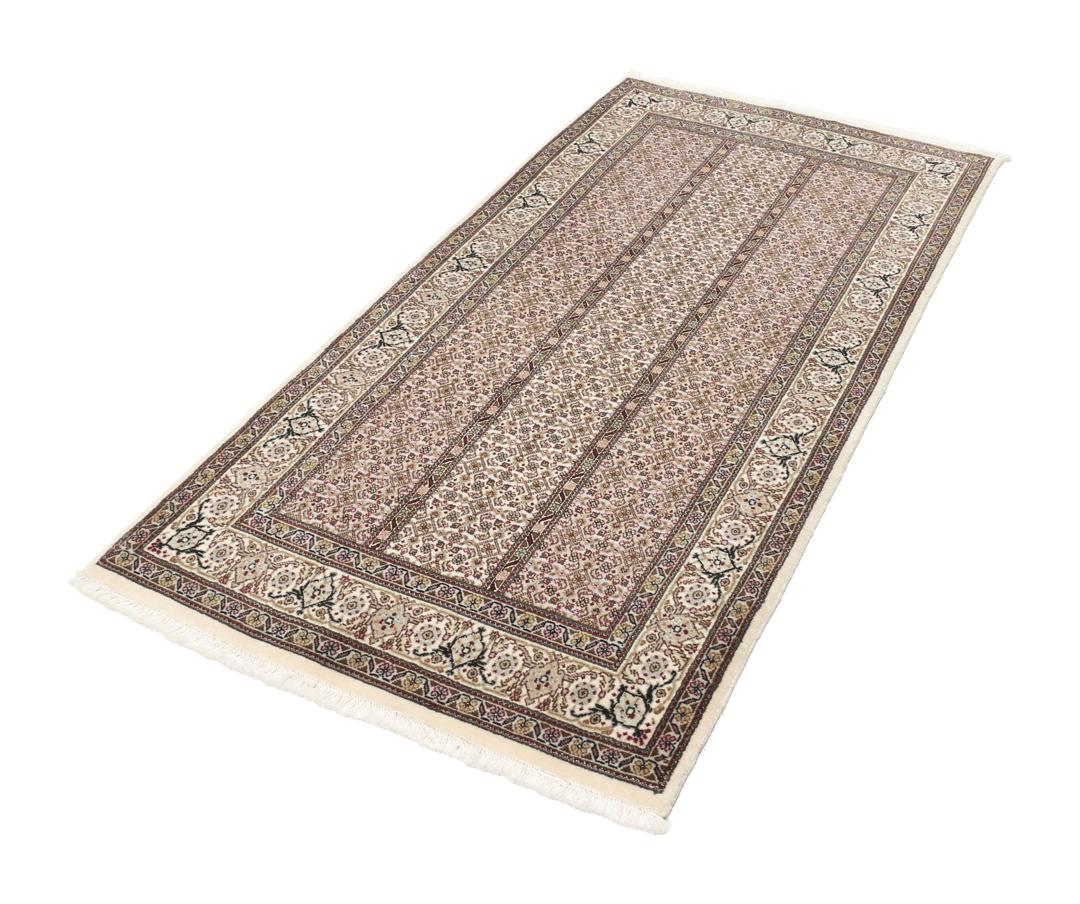
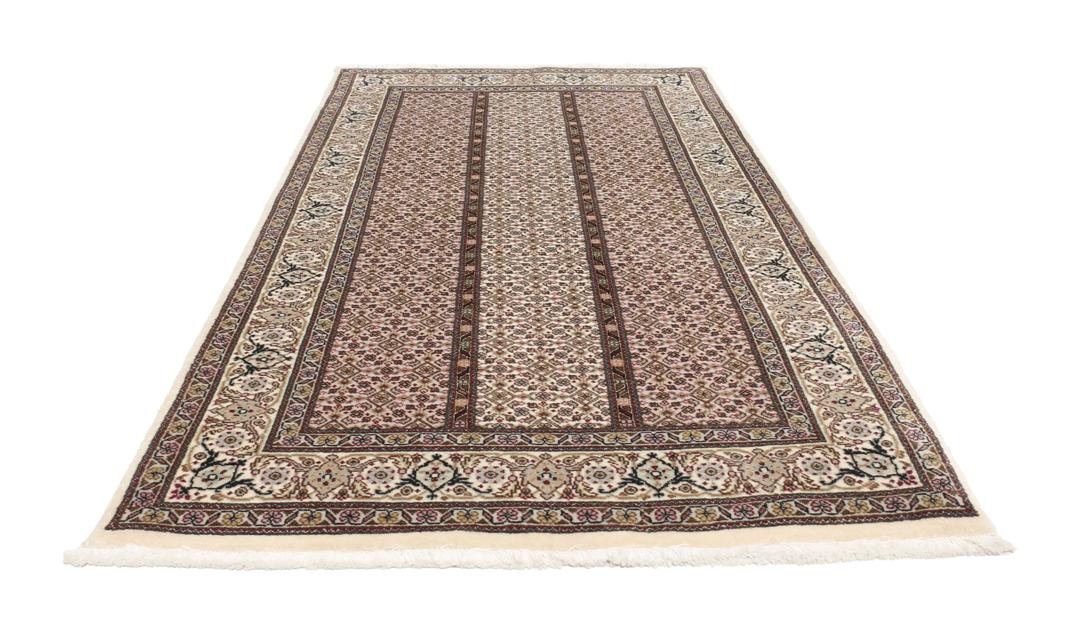
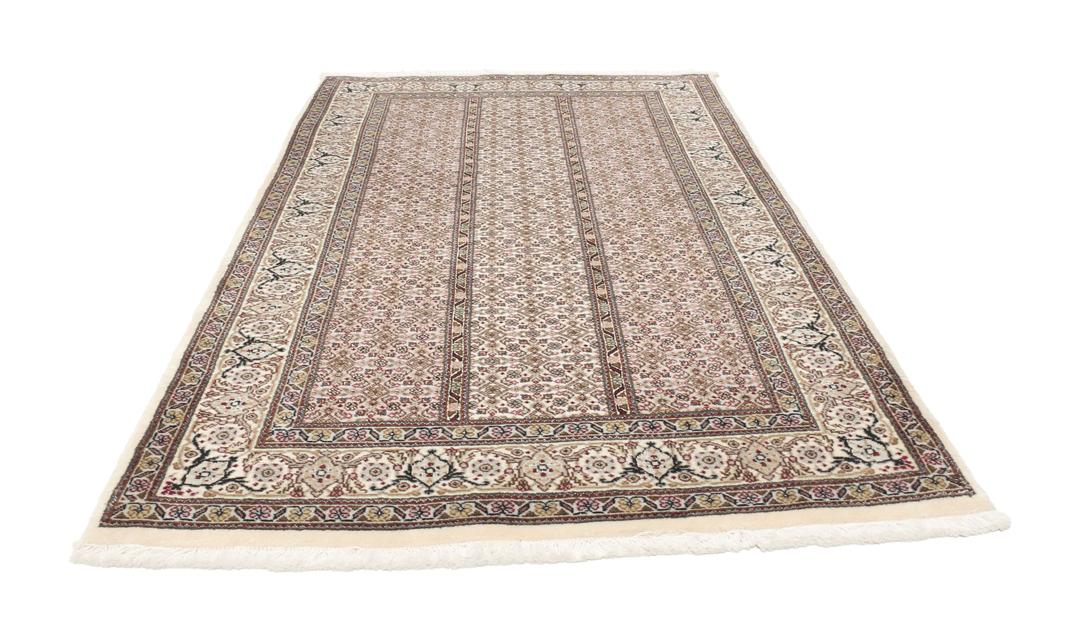
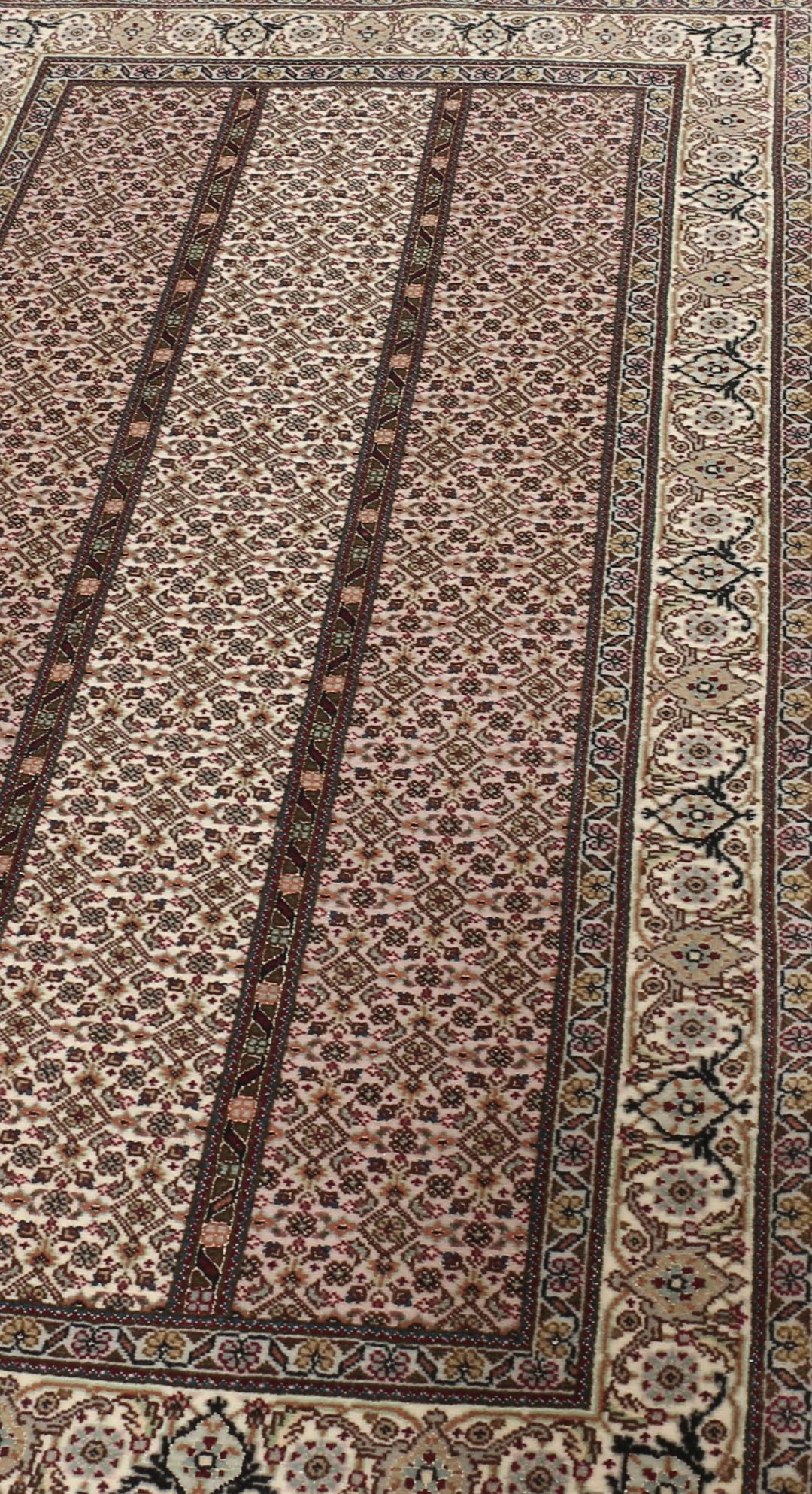
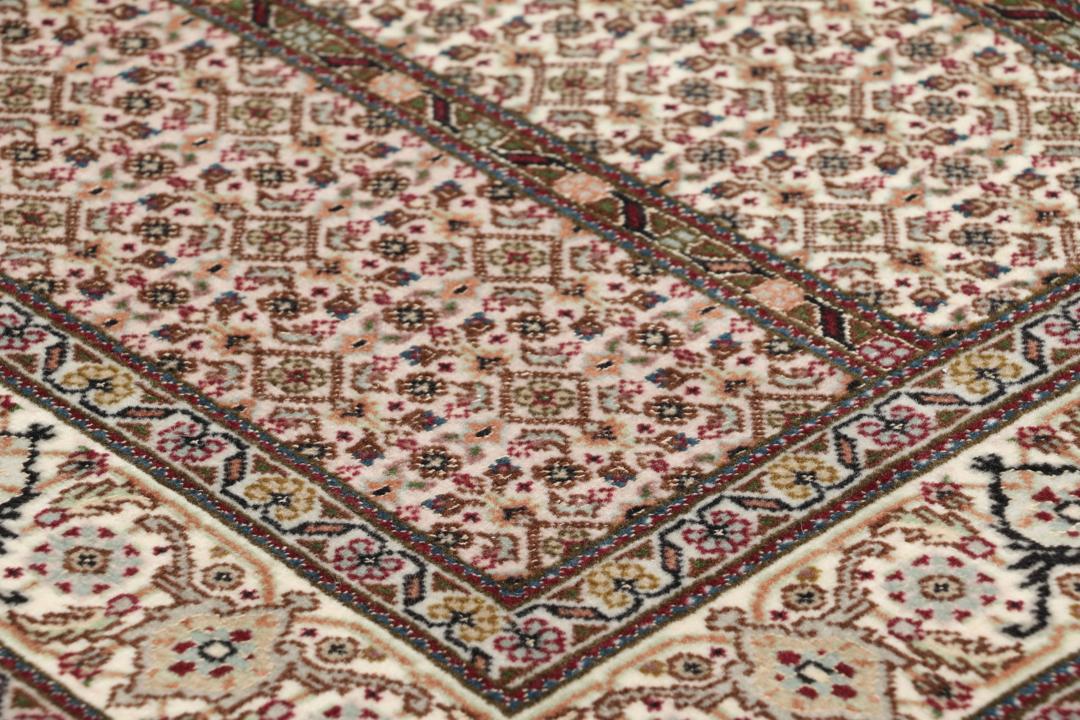
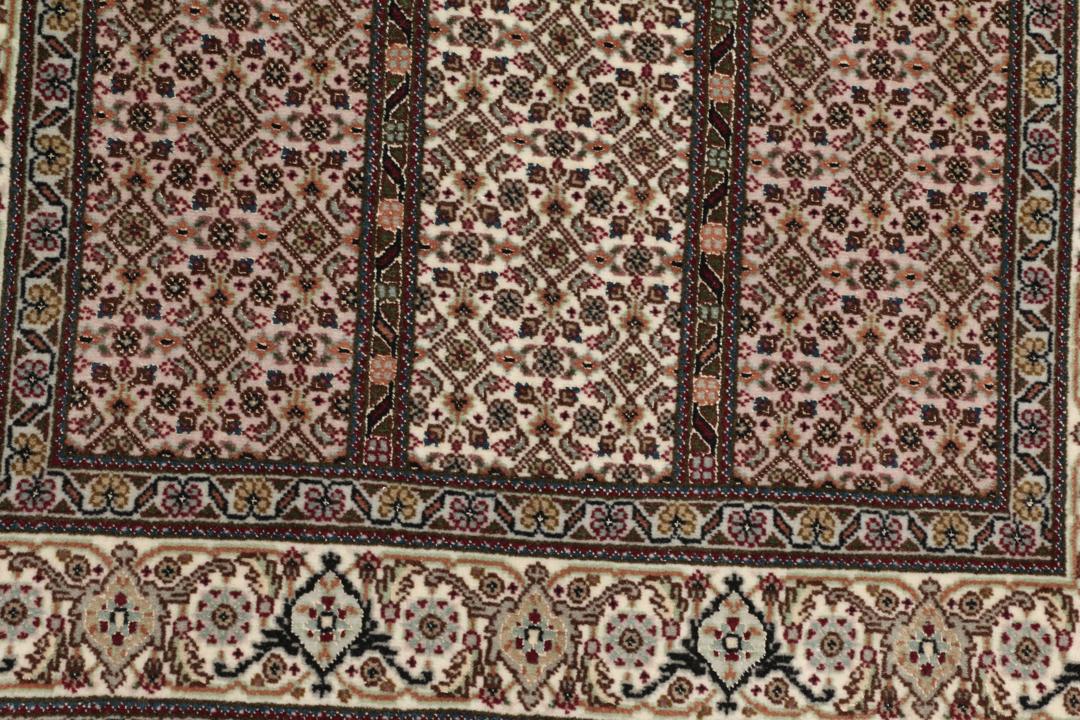
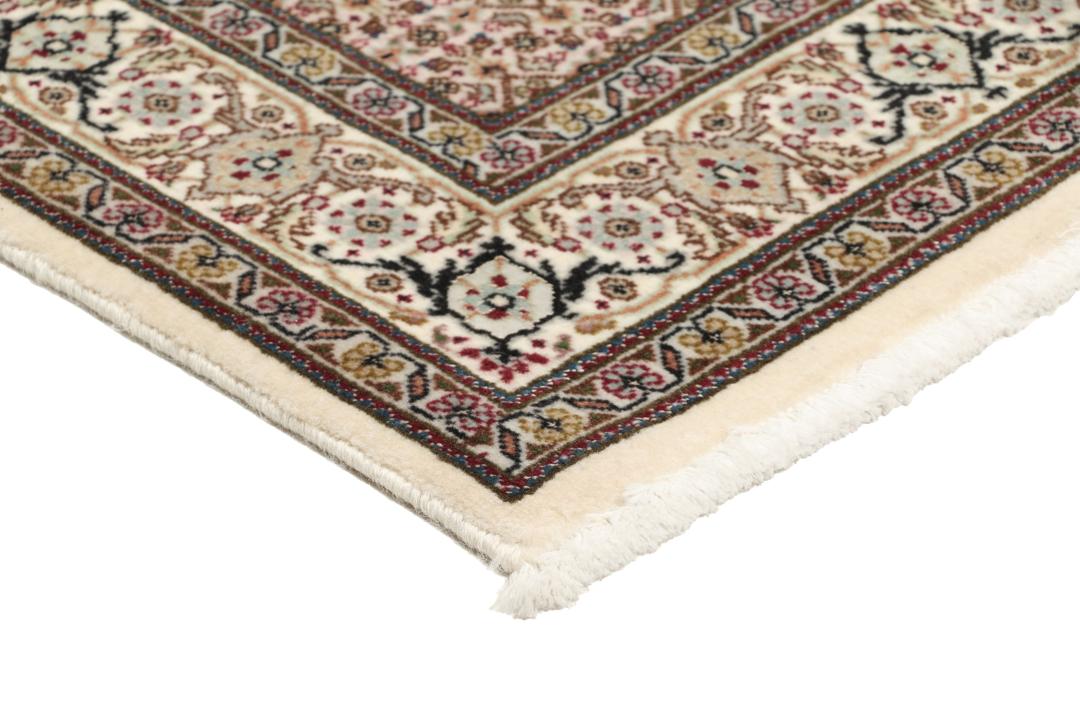
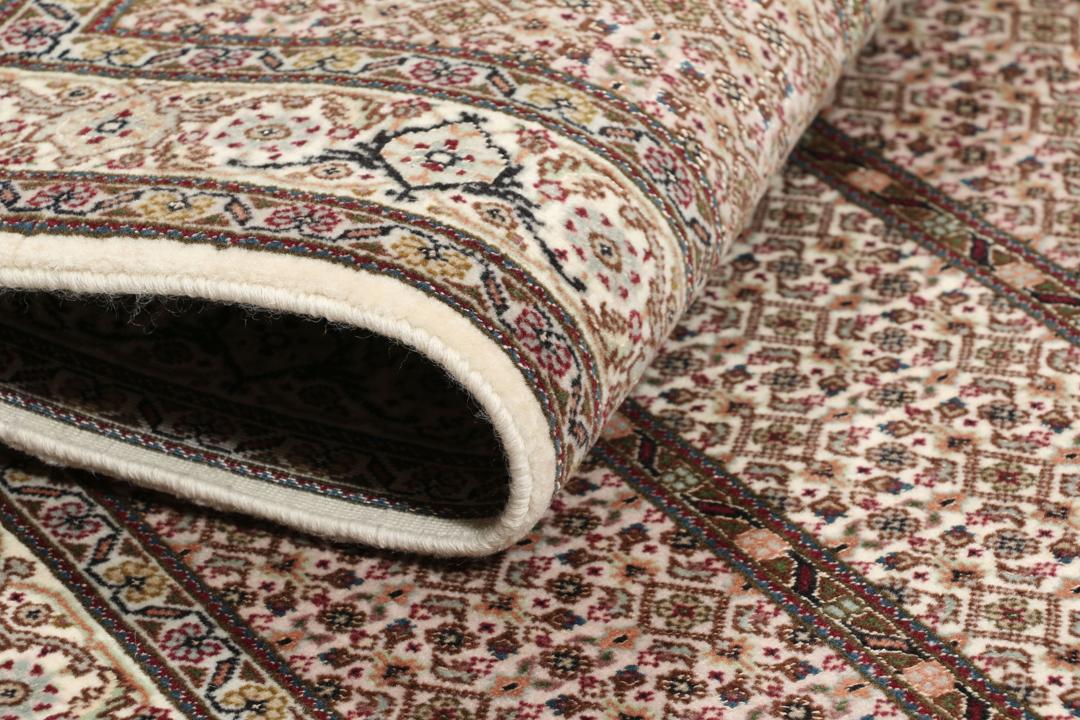
The Tabriz tradition originates from one of the oldest rug-weaving centres in the Middle East, located in a city that has served as a crossroads of culture and trade for centuries. Rugs from this region are celebrated for their technical refinement and their ability to incorporate a wide variety of artistic influences from across the globe.
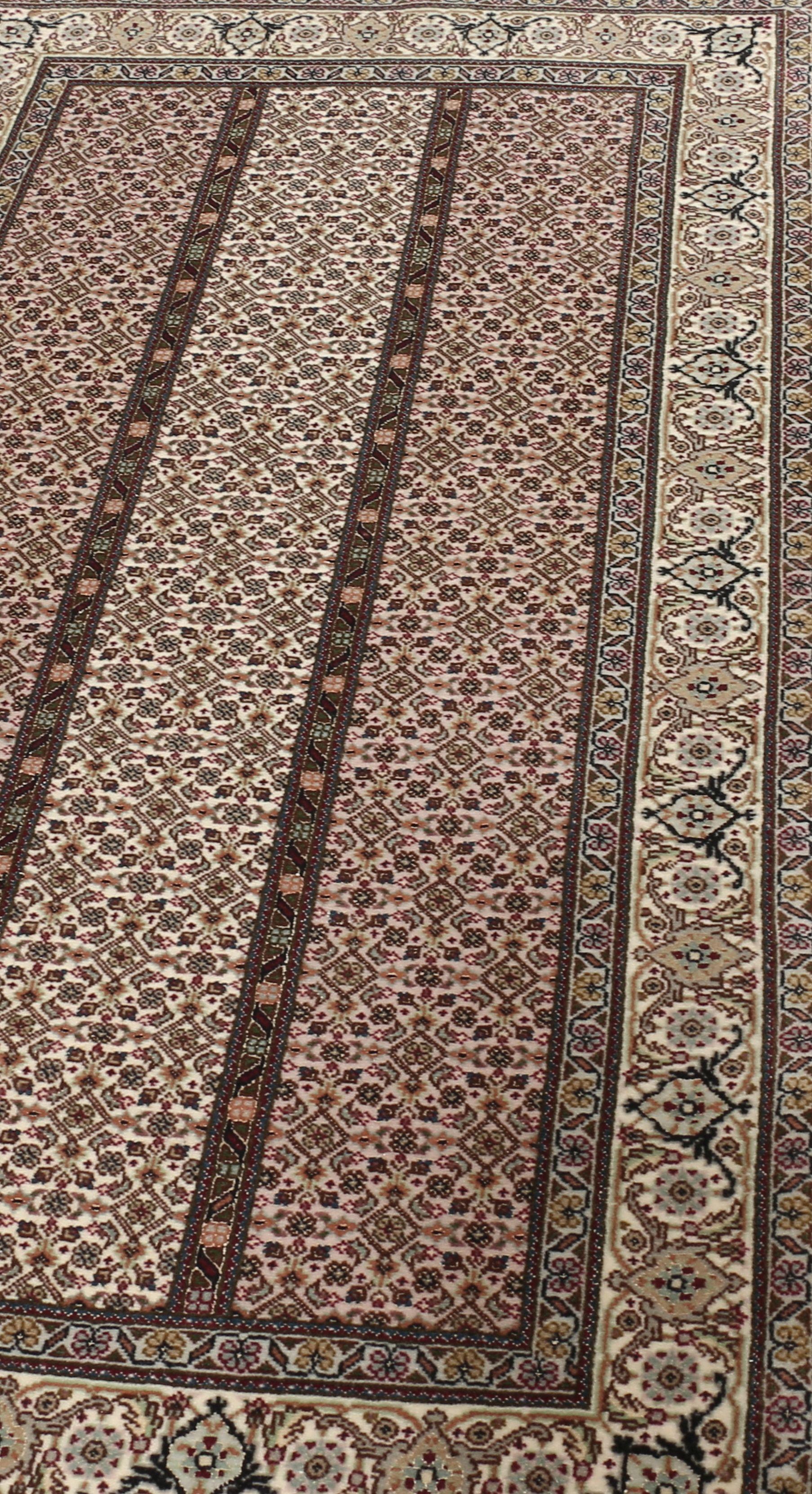
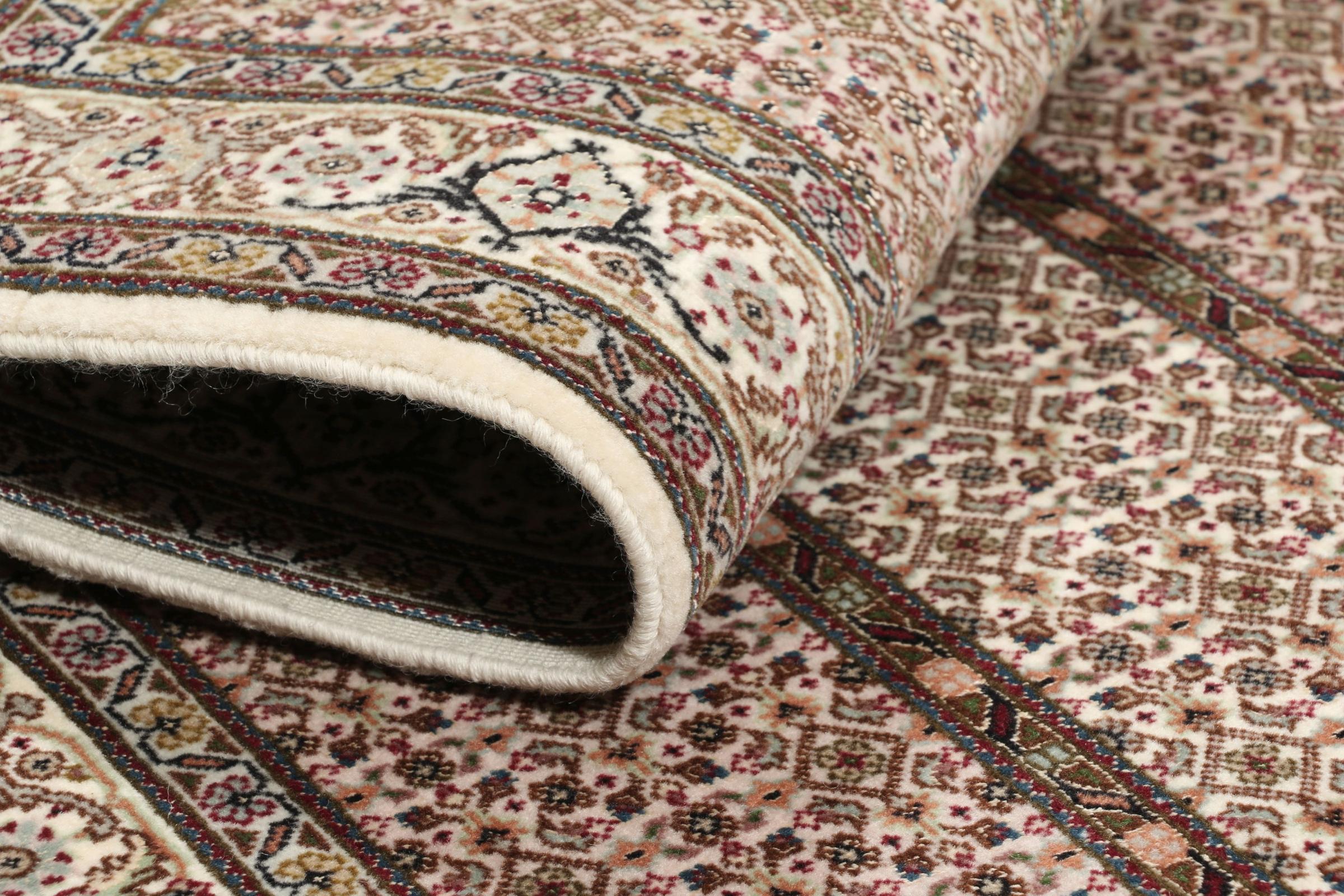
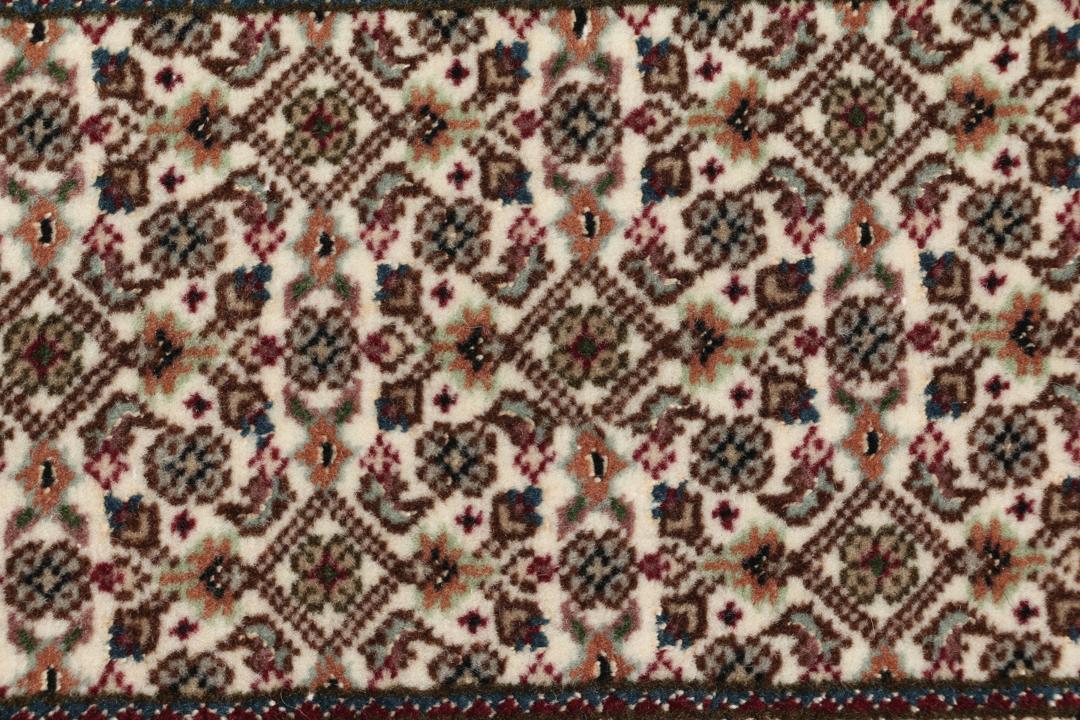
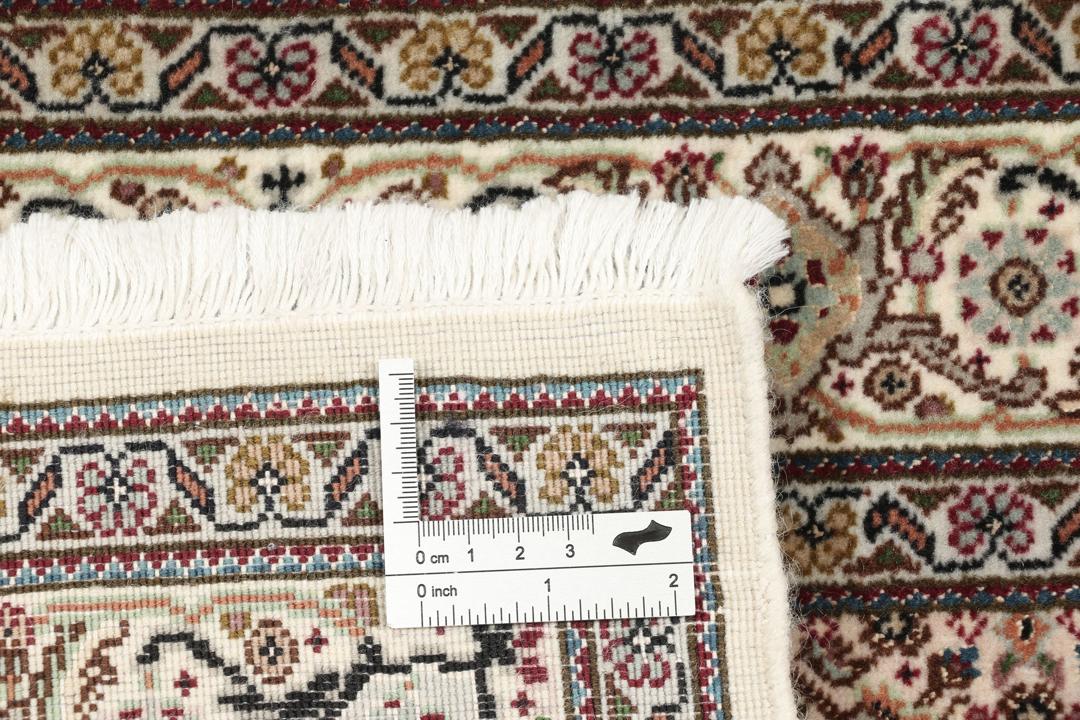
The term 50 Raj is a technical classification referring to the number of knots across a specific width of the rug. A higher Raj count indicates a much finer, more detailed weave. This level of complexity requires a high degree of skill and patience, resulting in a finished product that is thinner, more supple, and capable of displaying much more elaborate motifs than rugs with lower knot counts.
Design-wise, Tabriz rugs are known for their formal compositions, often featuring central medallions or sophisticated all-over patterns. They frequently draw inspiration from classic floral motifs, garden scenes, or hunting themes, all contained within beautifully detailed borders that frame the field perfectly.
Owning a piece from this tradition is an investment in a storied craft. These rugs are highly valued by collectors and enthusiasts who appreciate the human element behind the work, the cultural heritage embedded in every motif, and the enduring quality that allows these pieces to be passed down through generations.