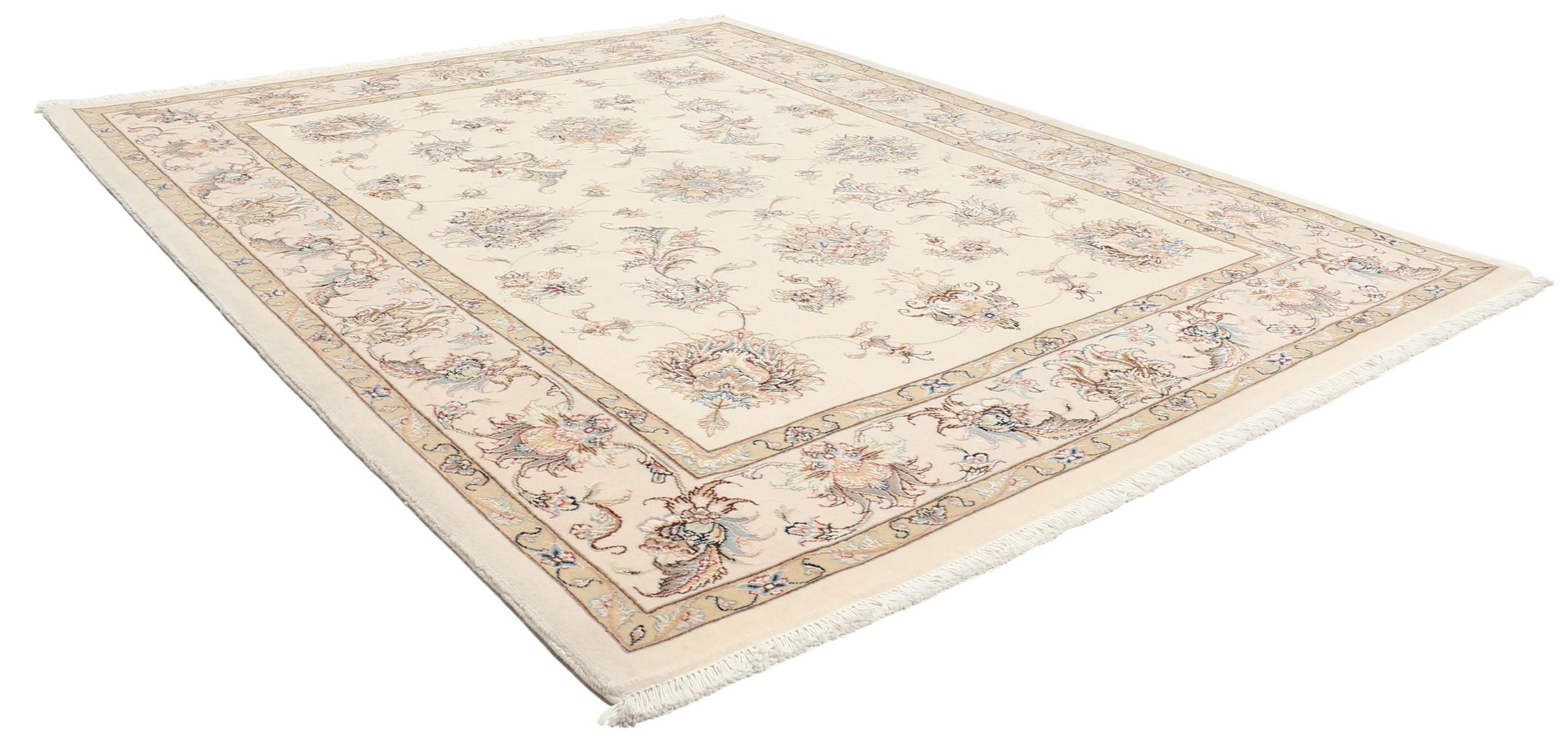
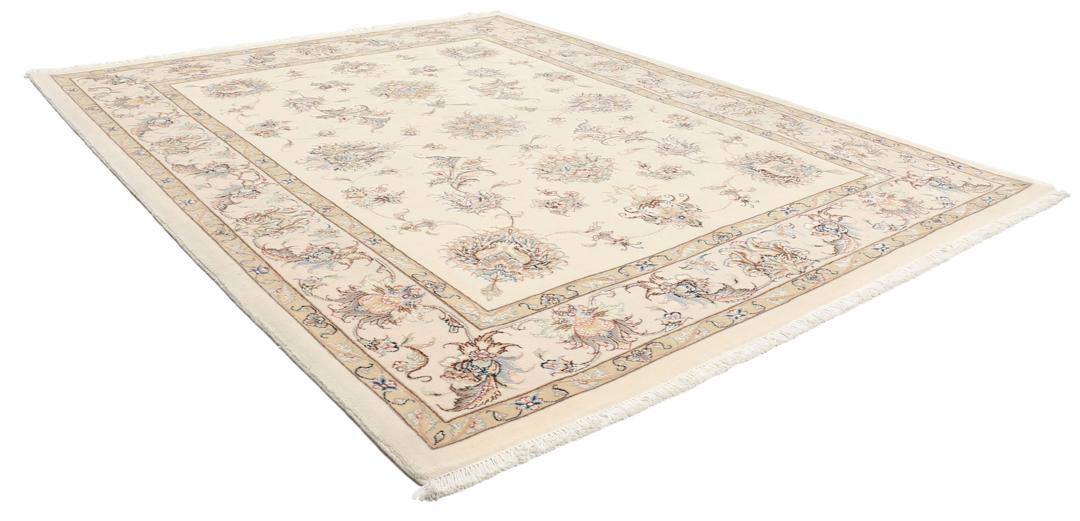
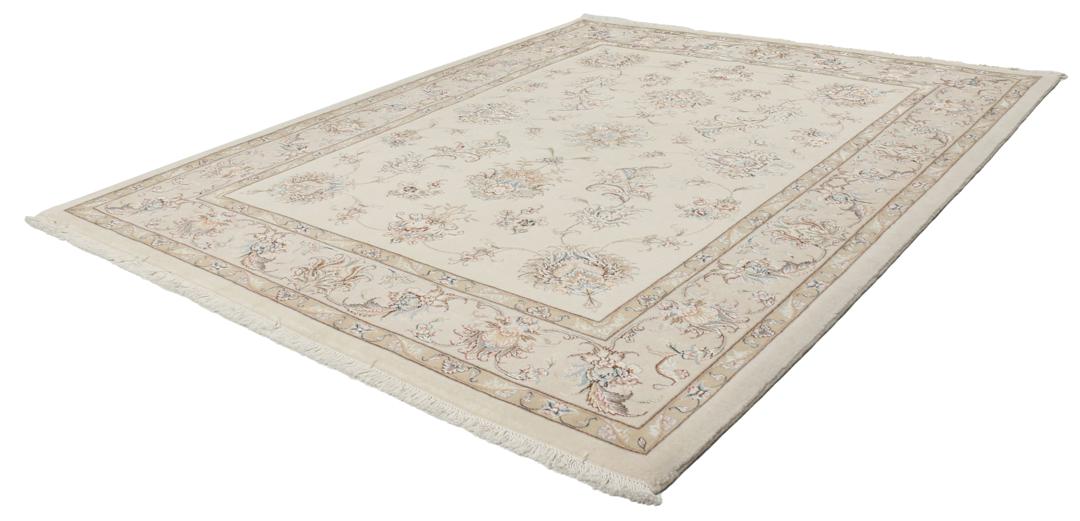
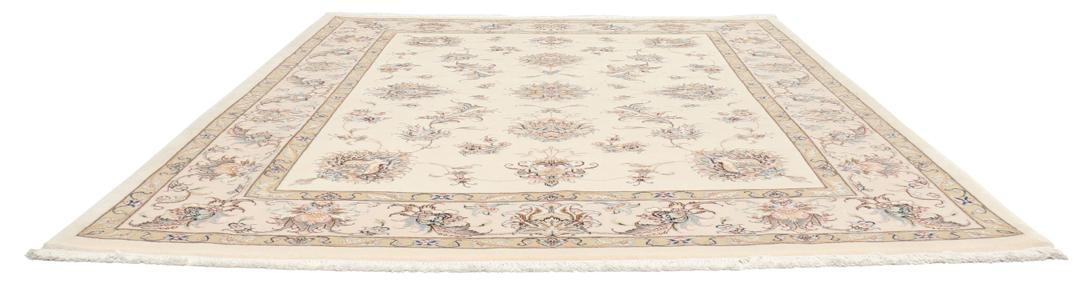
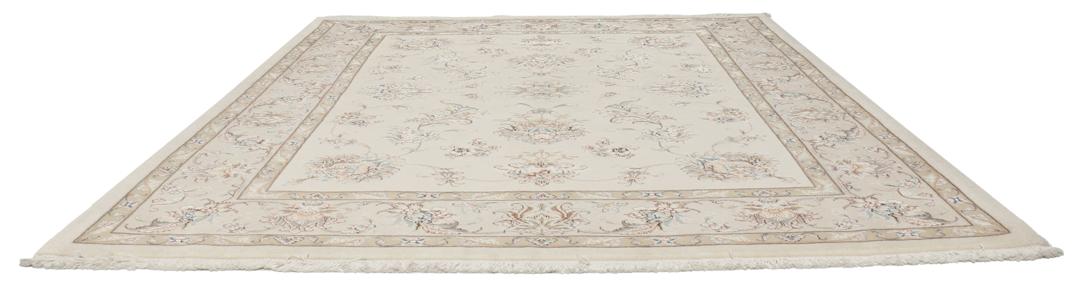
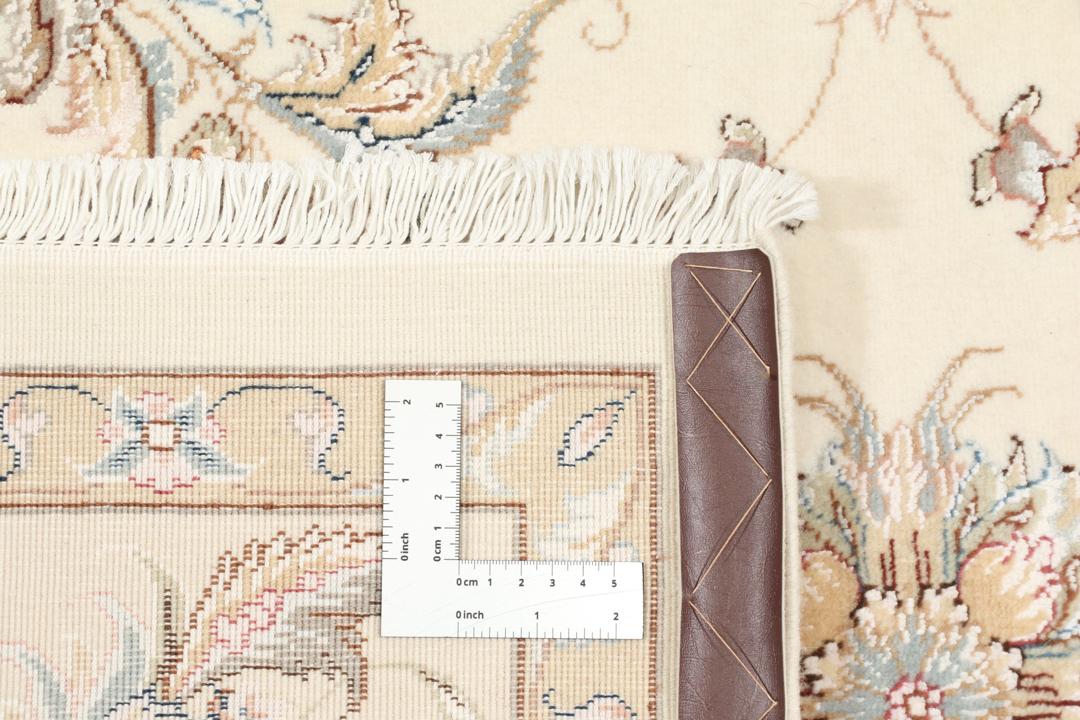
Tabriz rugs originate from the historic city of Tabriz, located in the northwest of the Middle East. As one of the oldest rug-weaving centres in the world, Tabriz has long been a hub for trade and artistic exchange along the ancient Silk Road. This heritage has allowed the region to develop a highly sophisticated design language that blends local traditions with influences from across the globe.
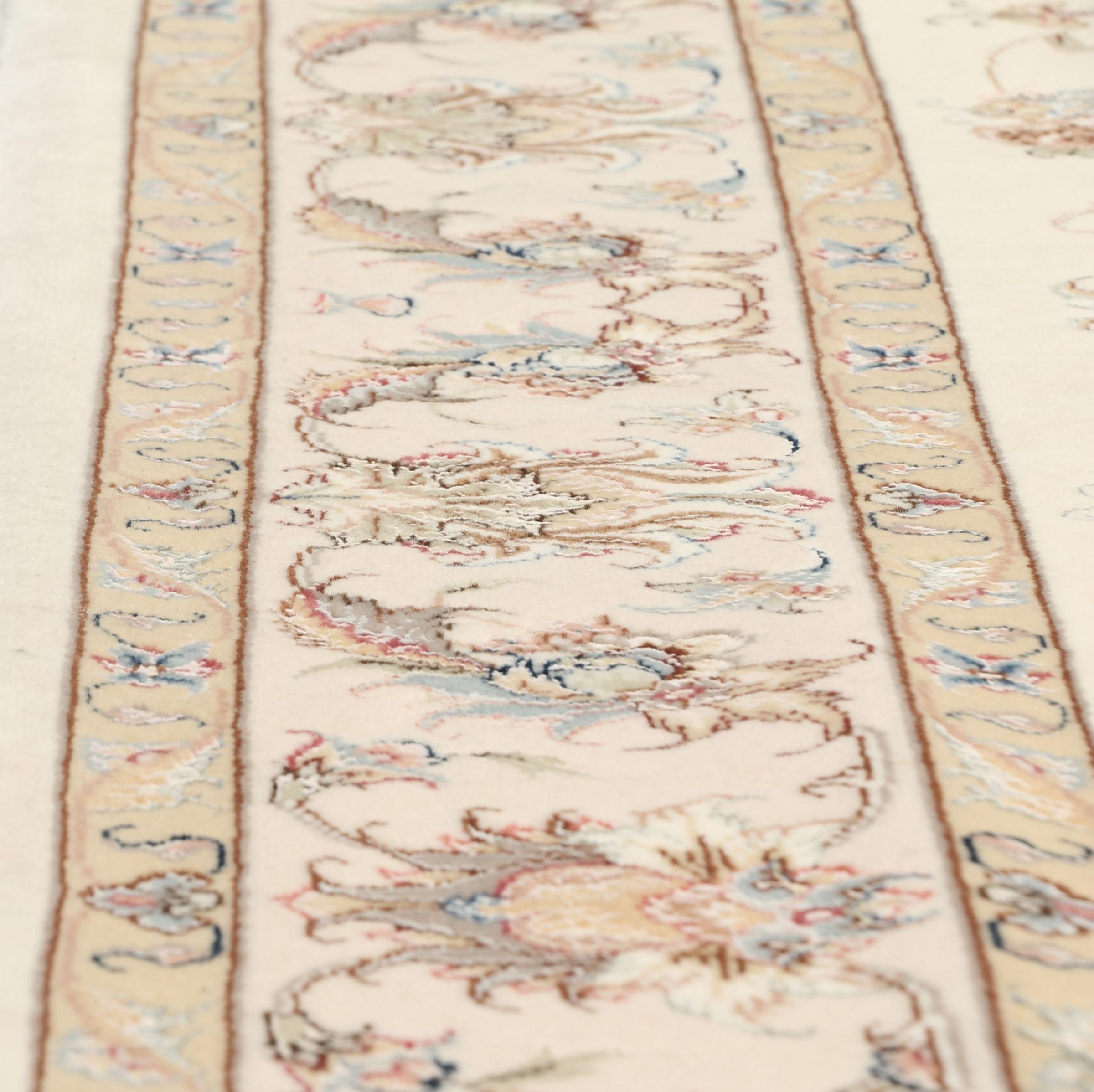
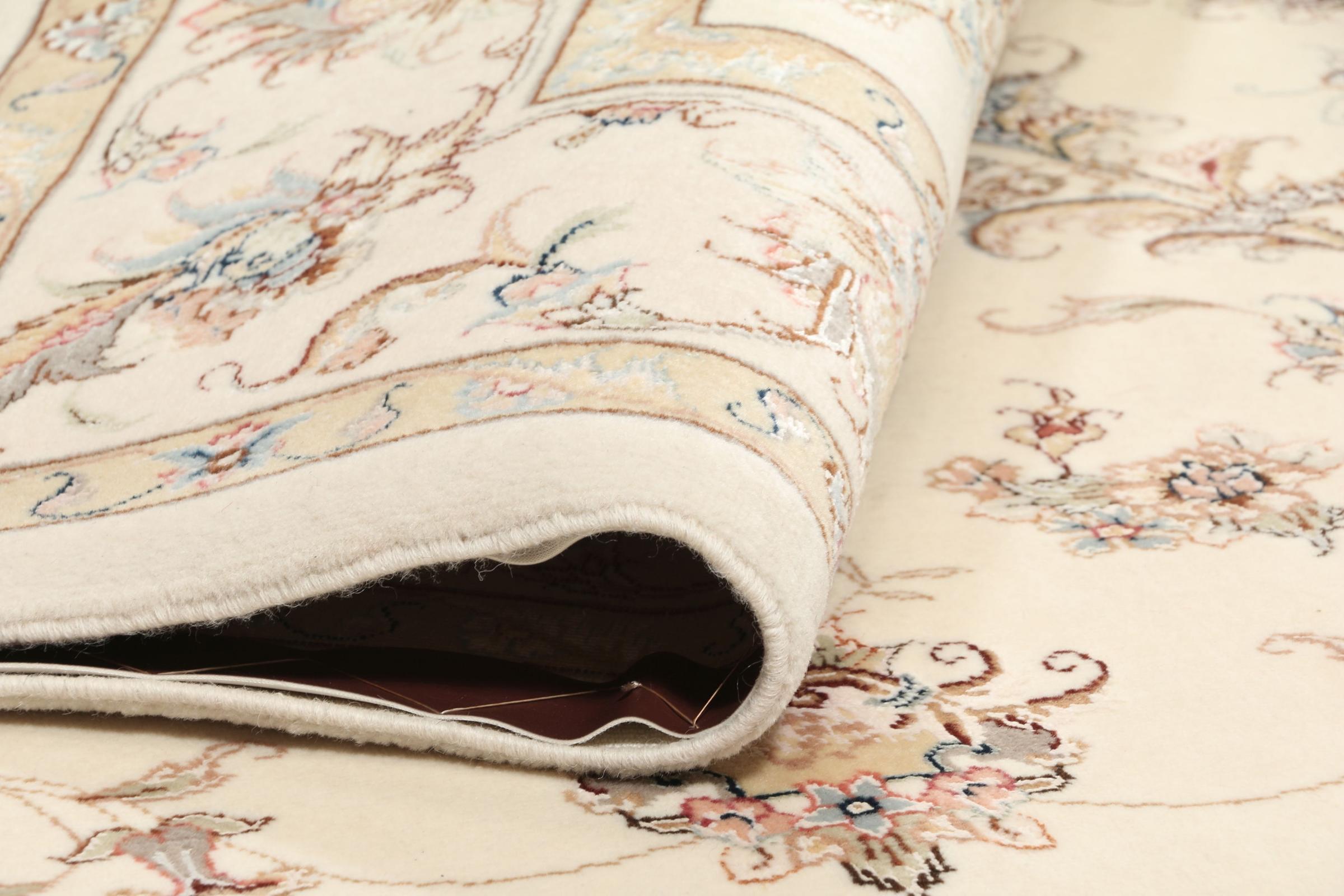
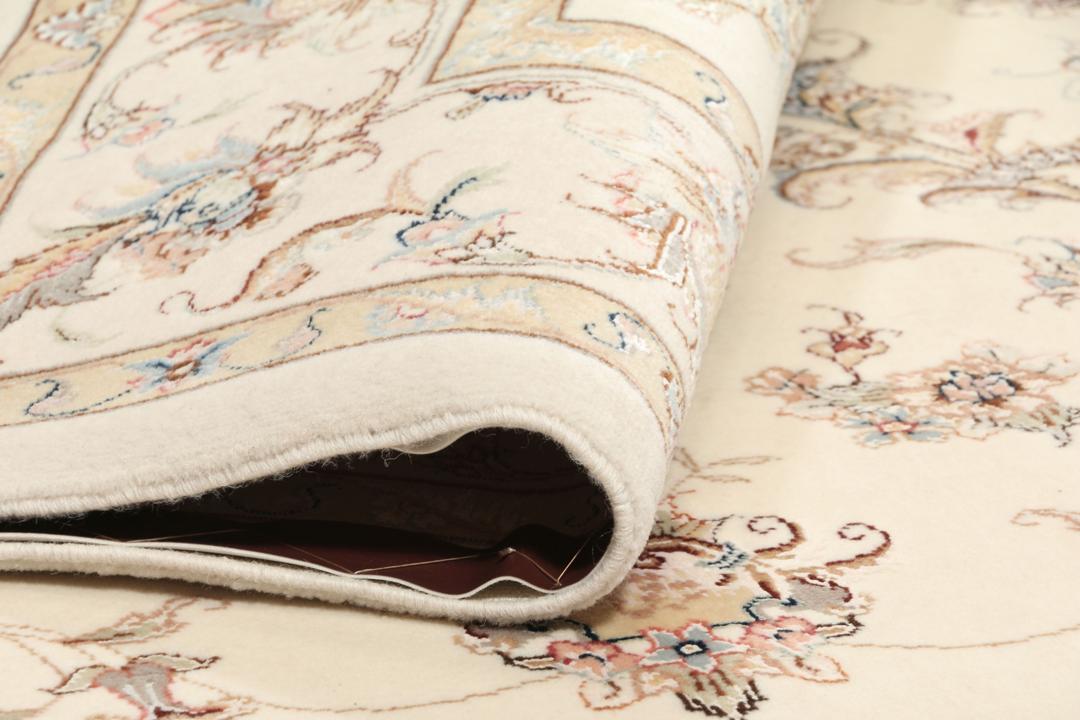
The designation '40 Raj' refers to a specific technical standard of knot density, which is a key indicator of quality in these rugs. The term 'Raj' refers to the number of knots per 7 cm of the rug's width. A 40 Raj construction provides a refined balance, allowing for intricate floral and curvilinear designs that are both durable and visually stunning, making these rugs highly prized for their balance of beauty and strength.
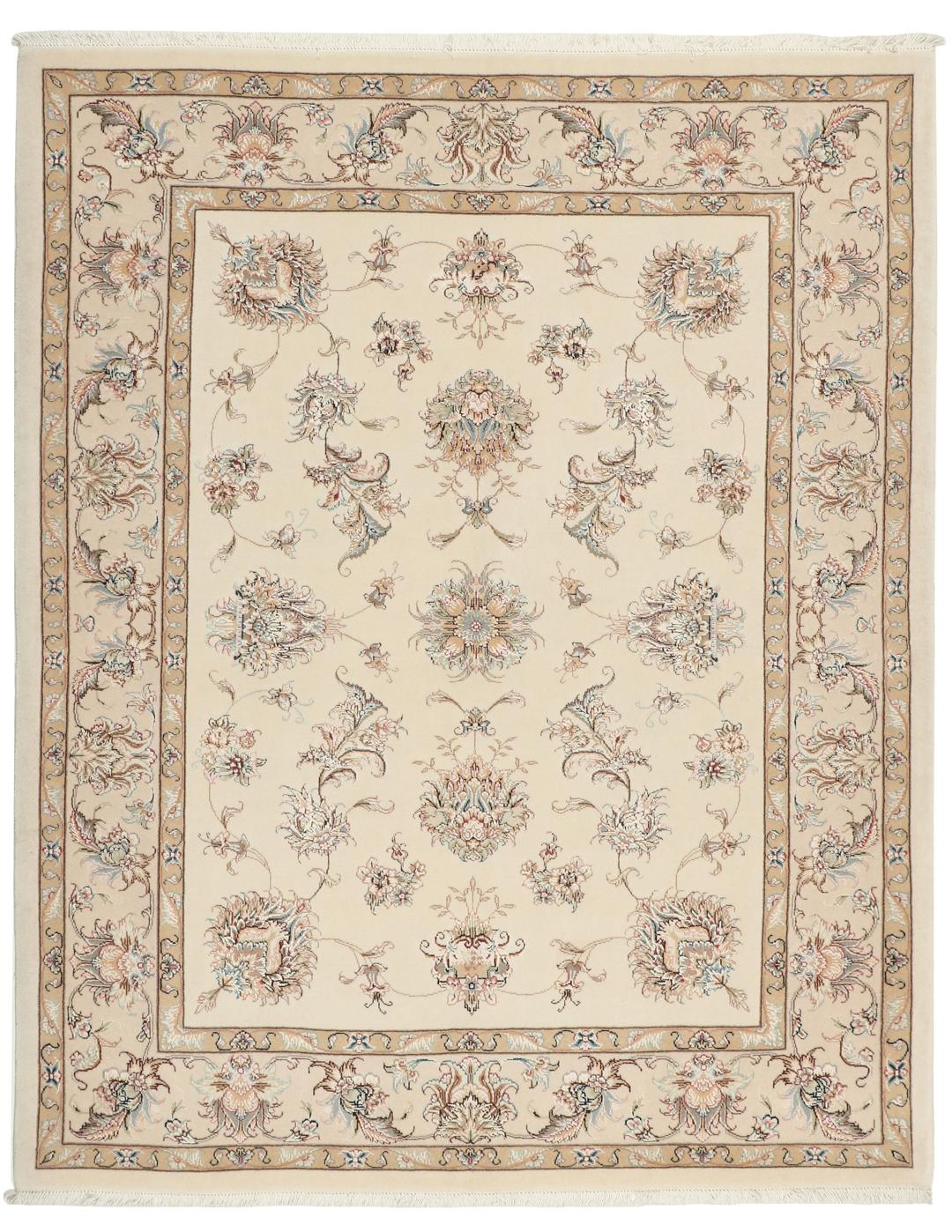
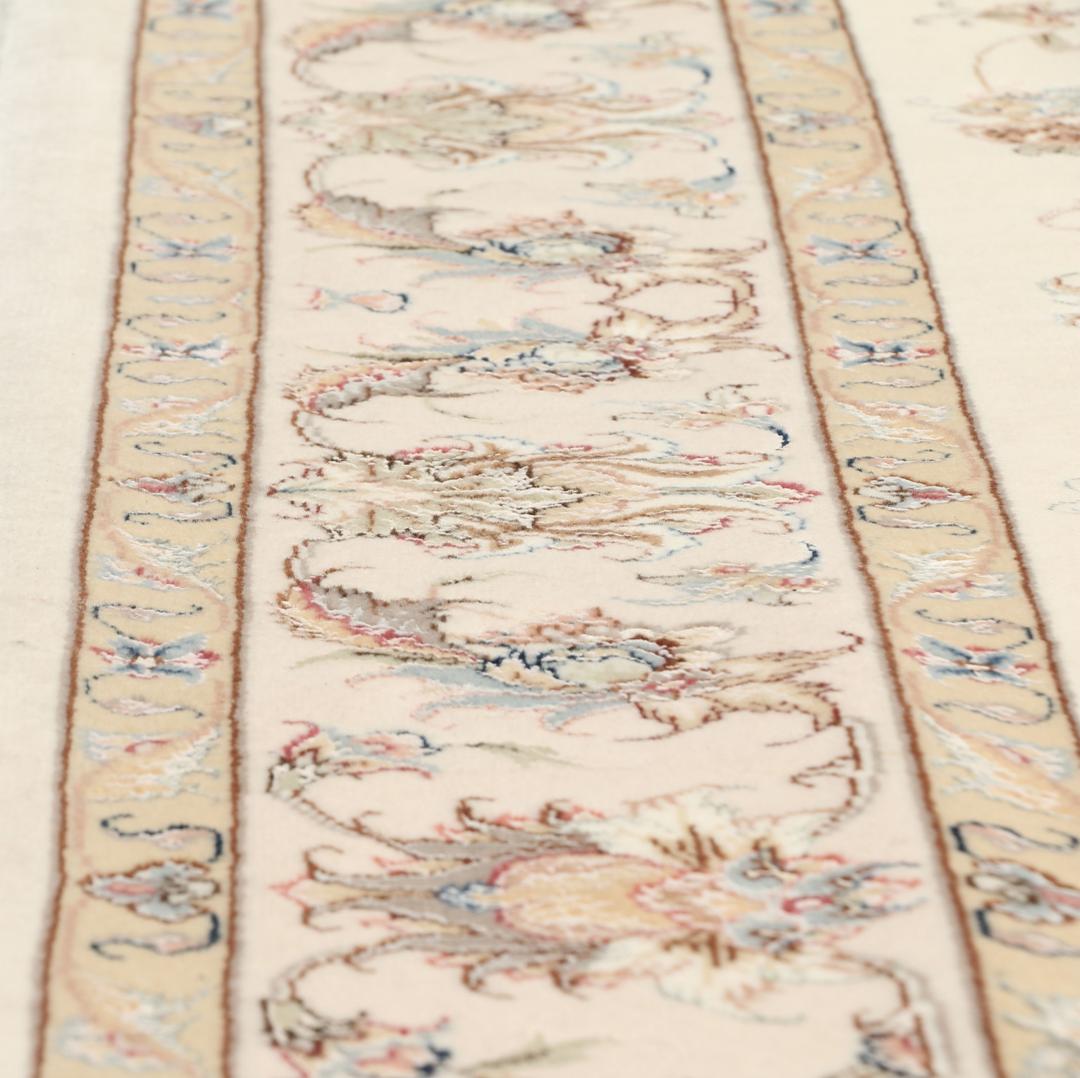
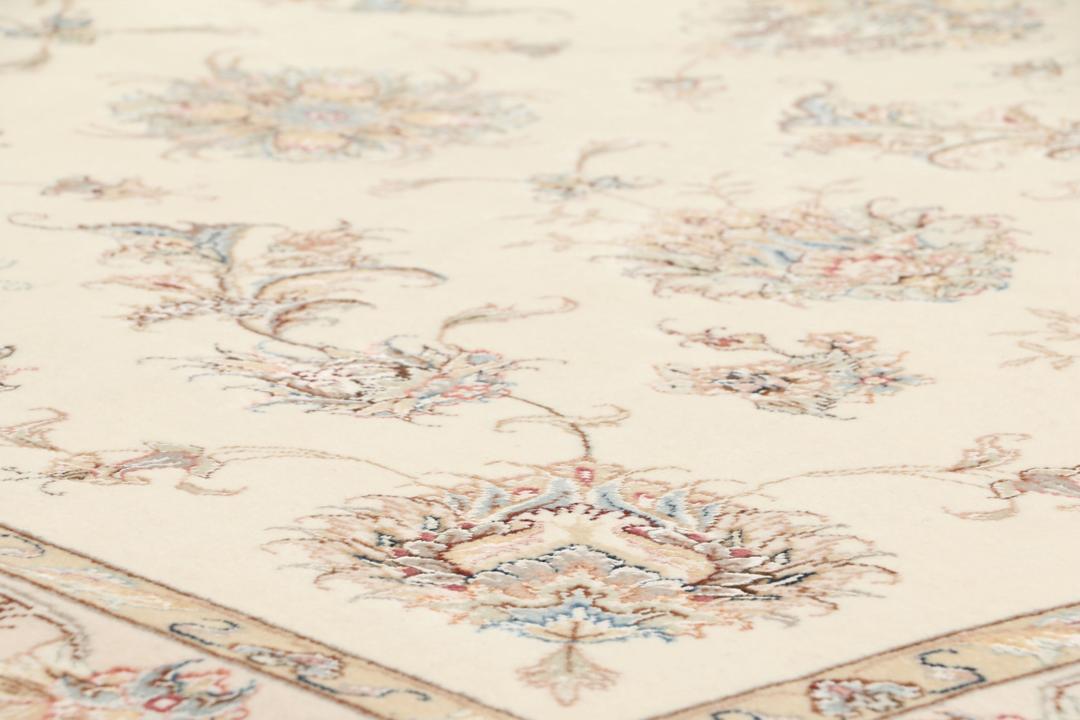
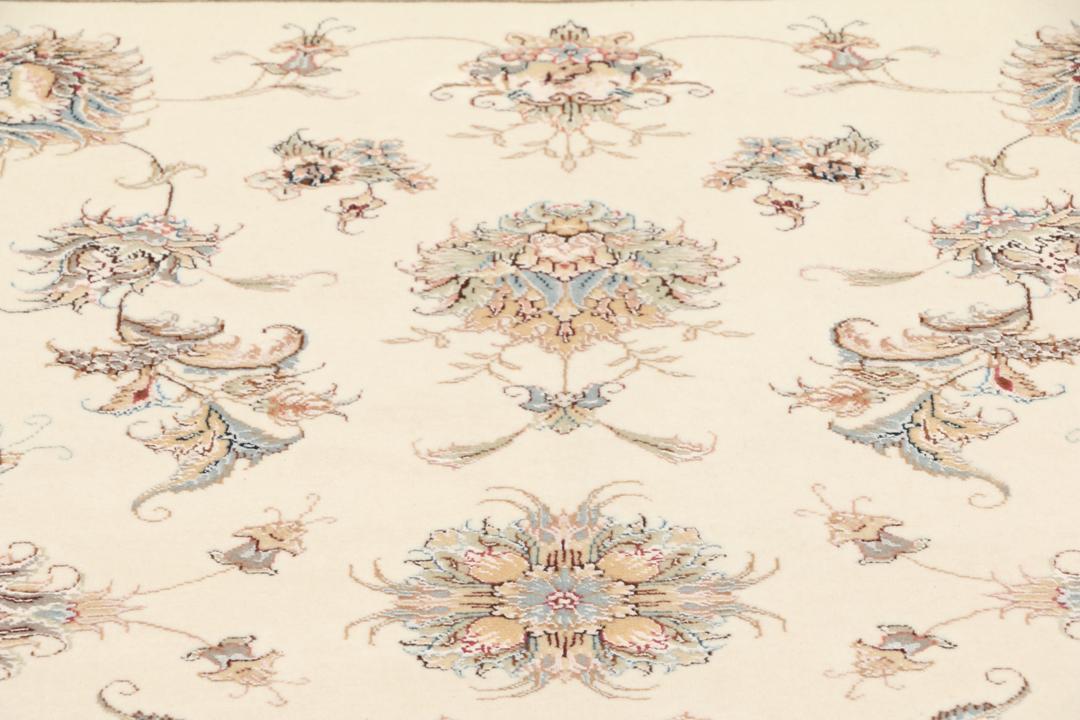
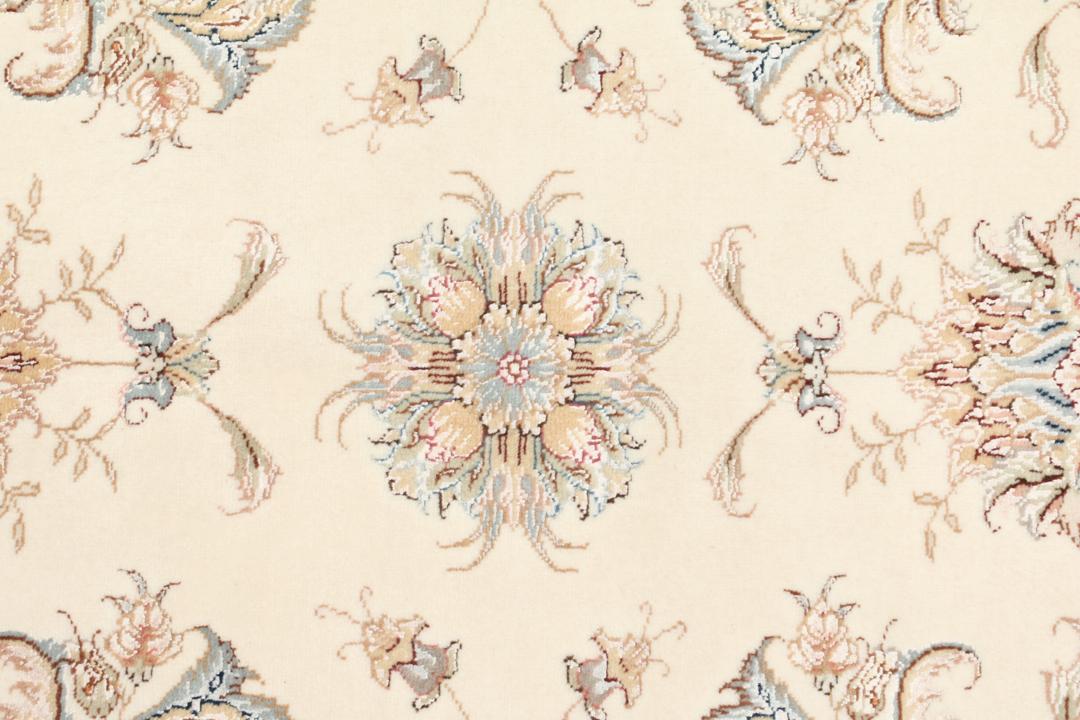
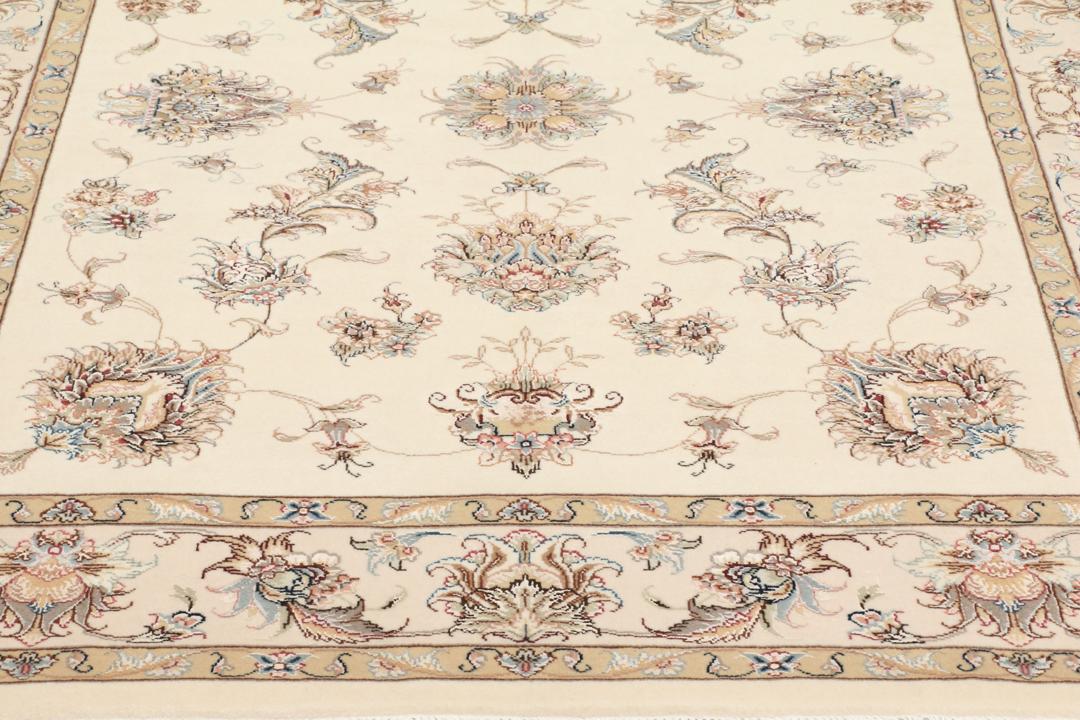
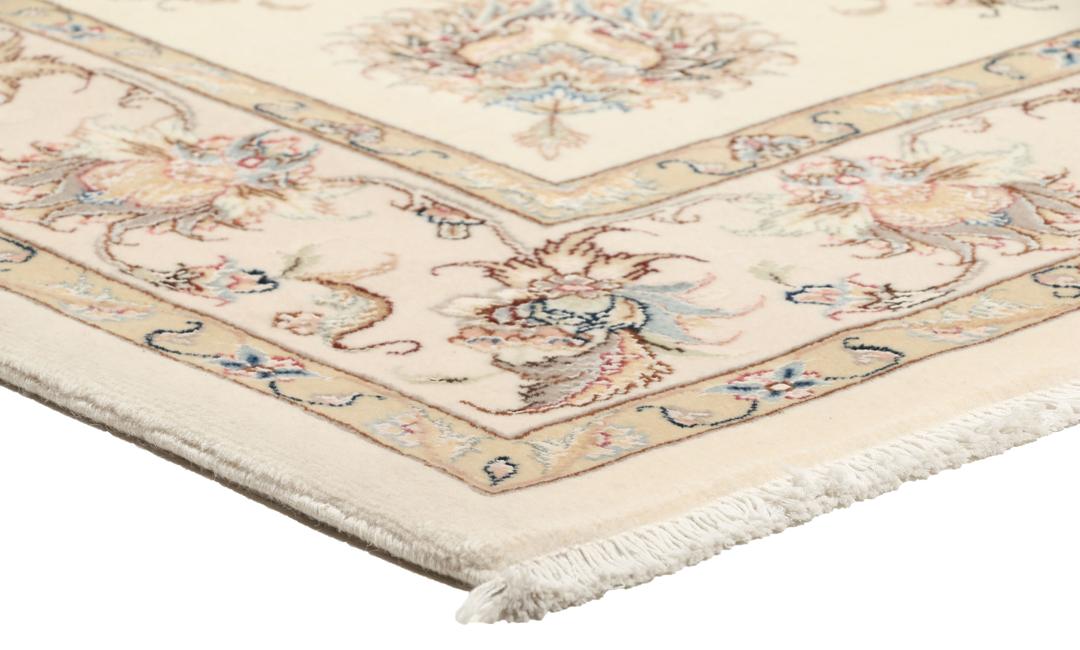
Visually, Tabriz rugs are famous for their masterful use of floral motifs, often featuring a central medallion surrounded by lush, flowing vines and delicate blossoms. While the patterns are formal and highly structured, they are rendered with a grace that feels organic and balanced. This specific rug exemplifies that tradition, using a classic border and field arrangement that draws the eye inward to the centre.
Collectors value Tabriz rugs because they represent the pinnacle of Middle Eastern weaving skill. Owning one is an investment in cultural heritage and long-standing craftsmanship. These rugs are not just objects but stories of regional history, preserved in wool and cotton, offering a level of artistry that is rarely found in modern, mass-produced items.