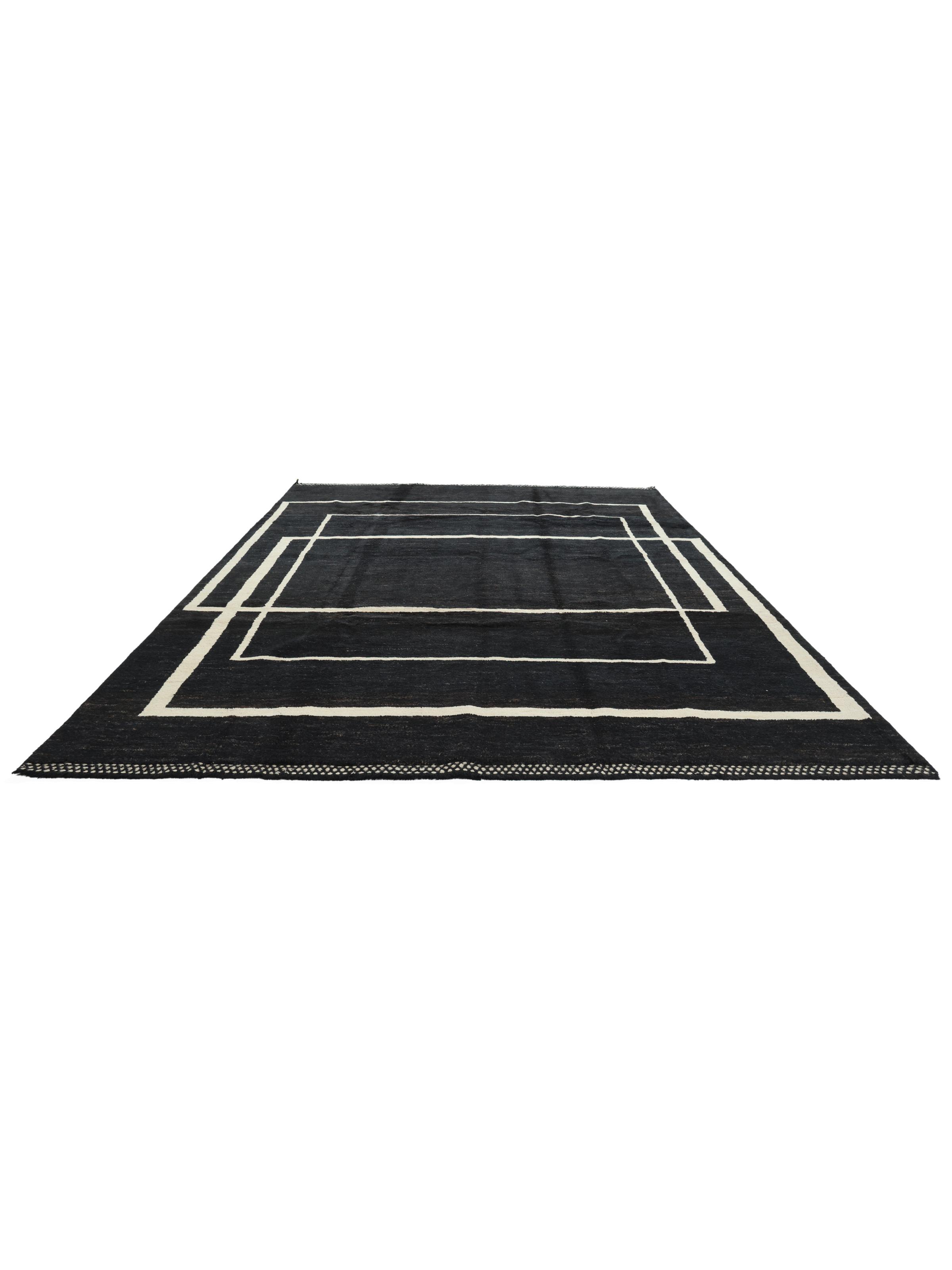
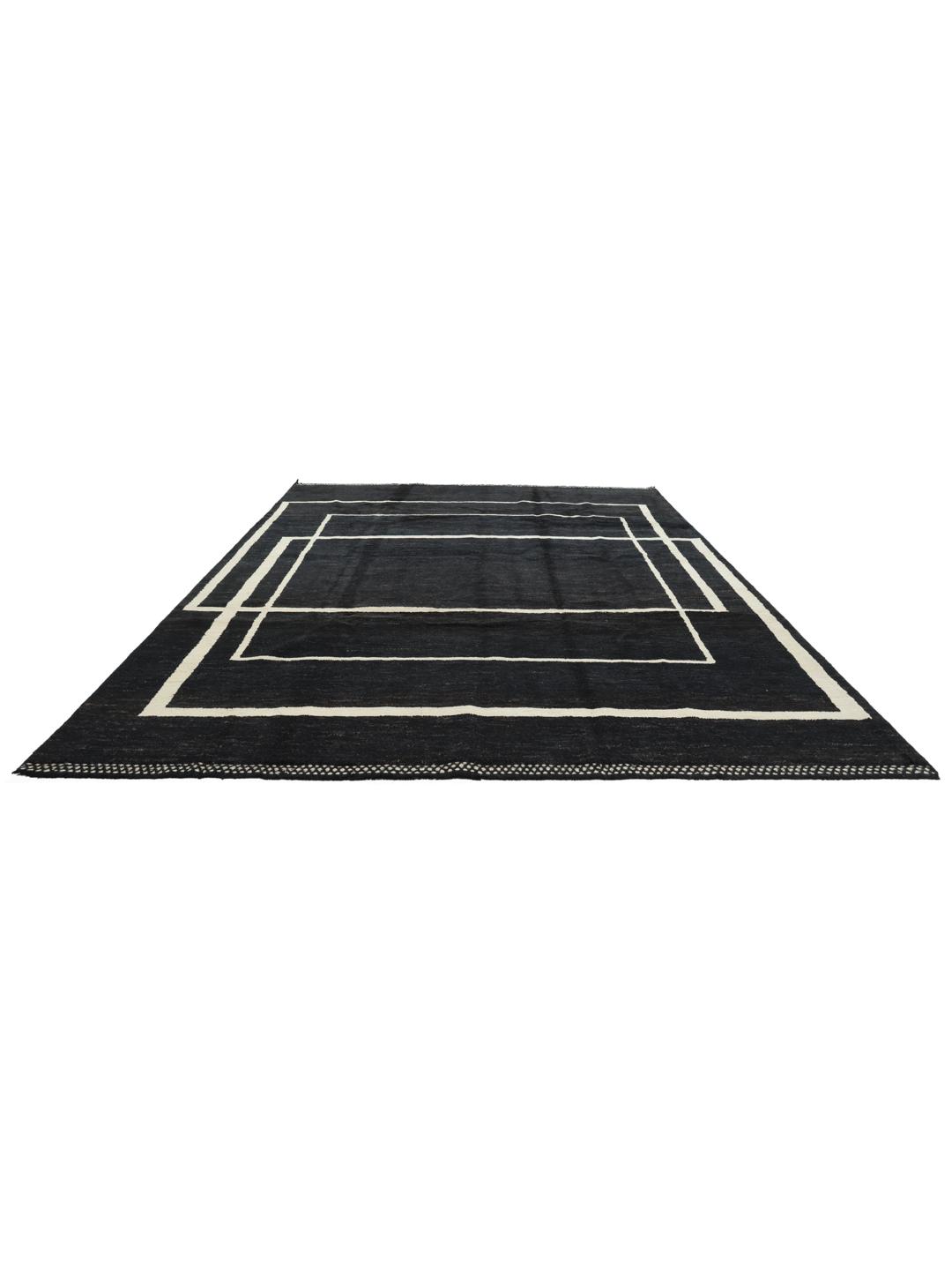
The tradition of rug weaving in Afghanistan is defined by a resilience and artistry that has survived through centuries of changing landscapes. While the region is often celebrated for its traditional tribal designs, the contemporary evolution of Afghan weaving has embraced modern aesthetics, blending ancient techniques with clean, minimalist lines to suit today's homes.
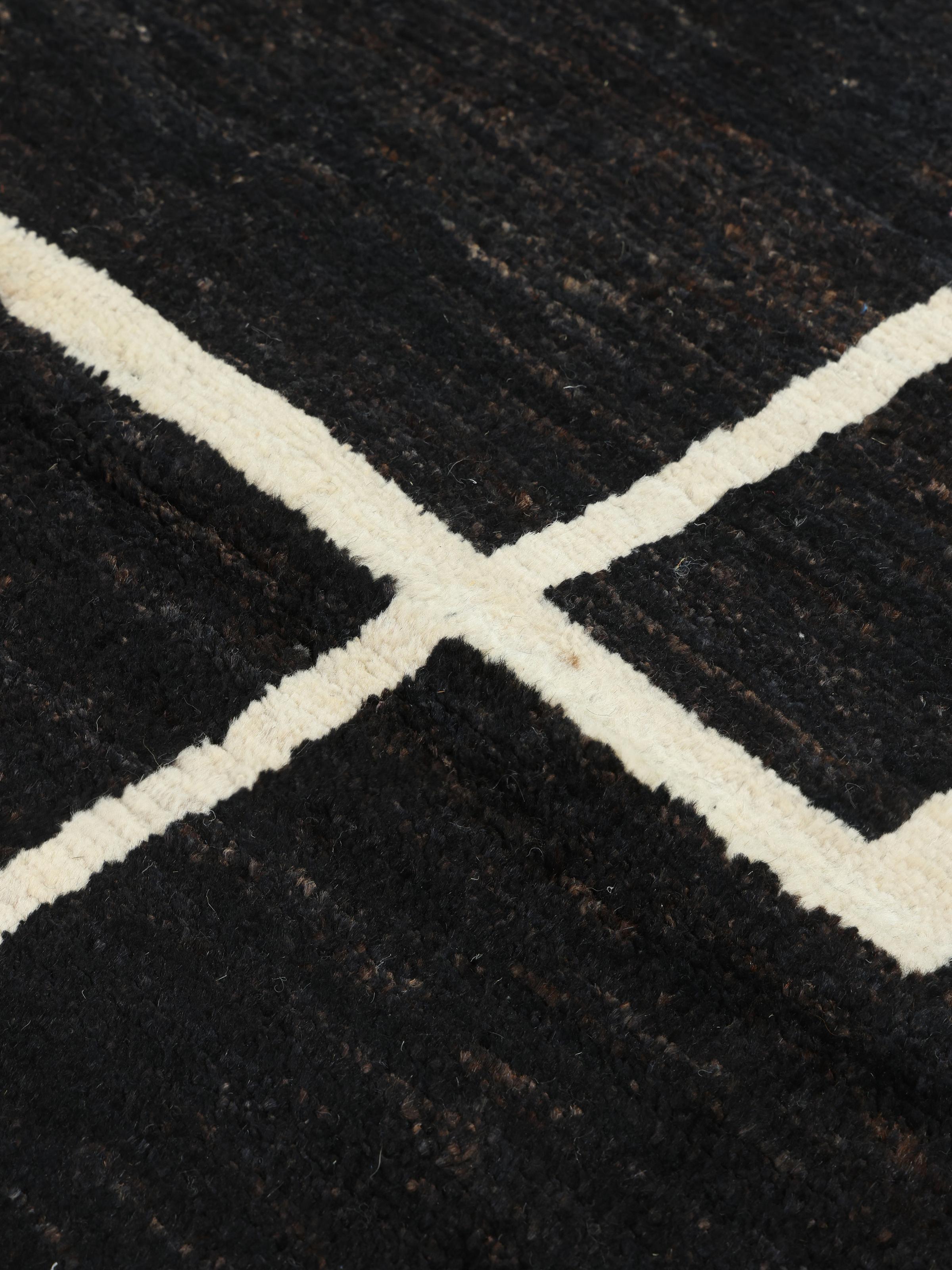
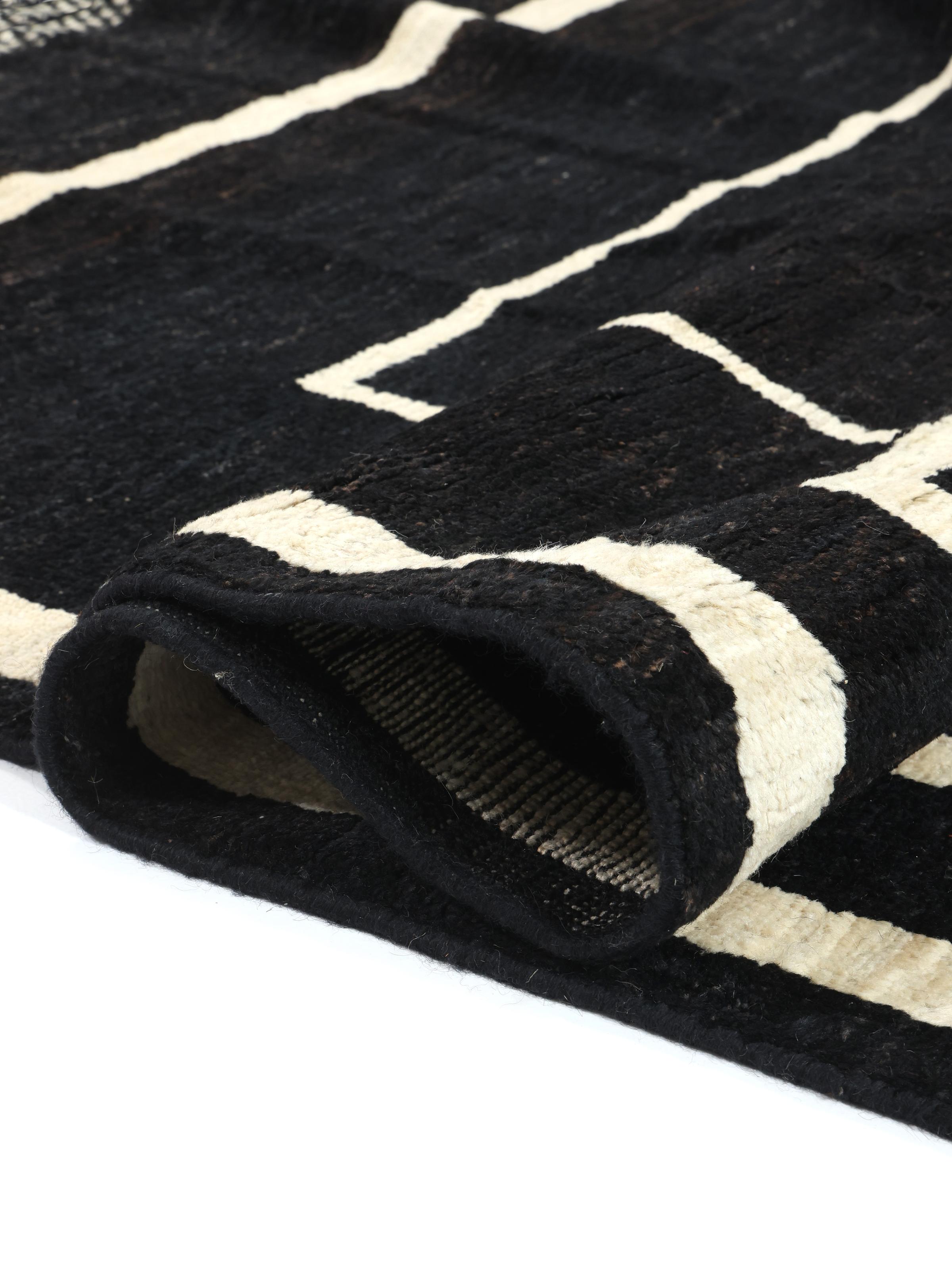
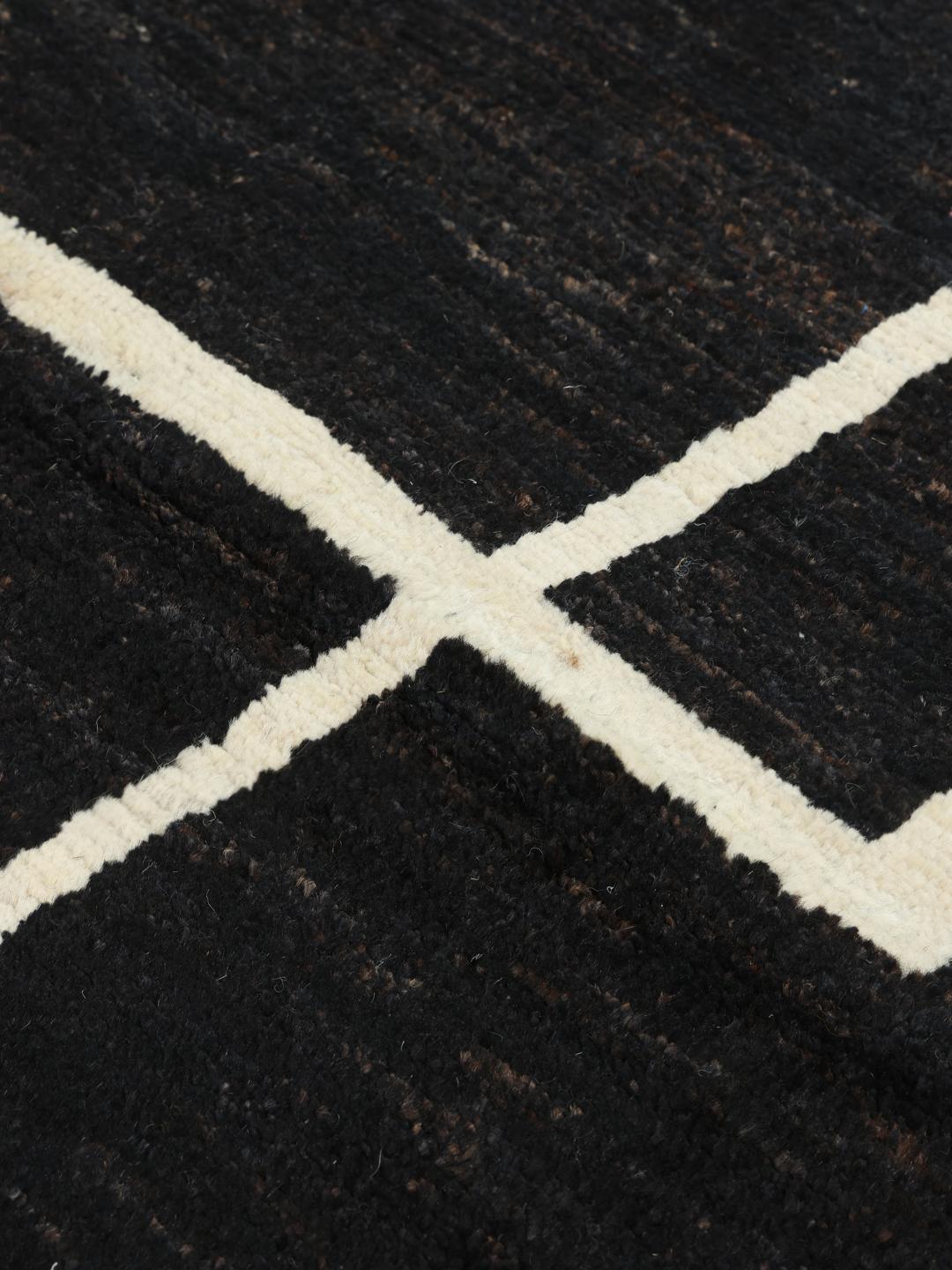
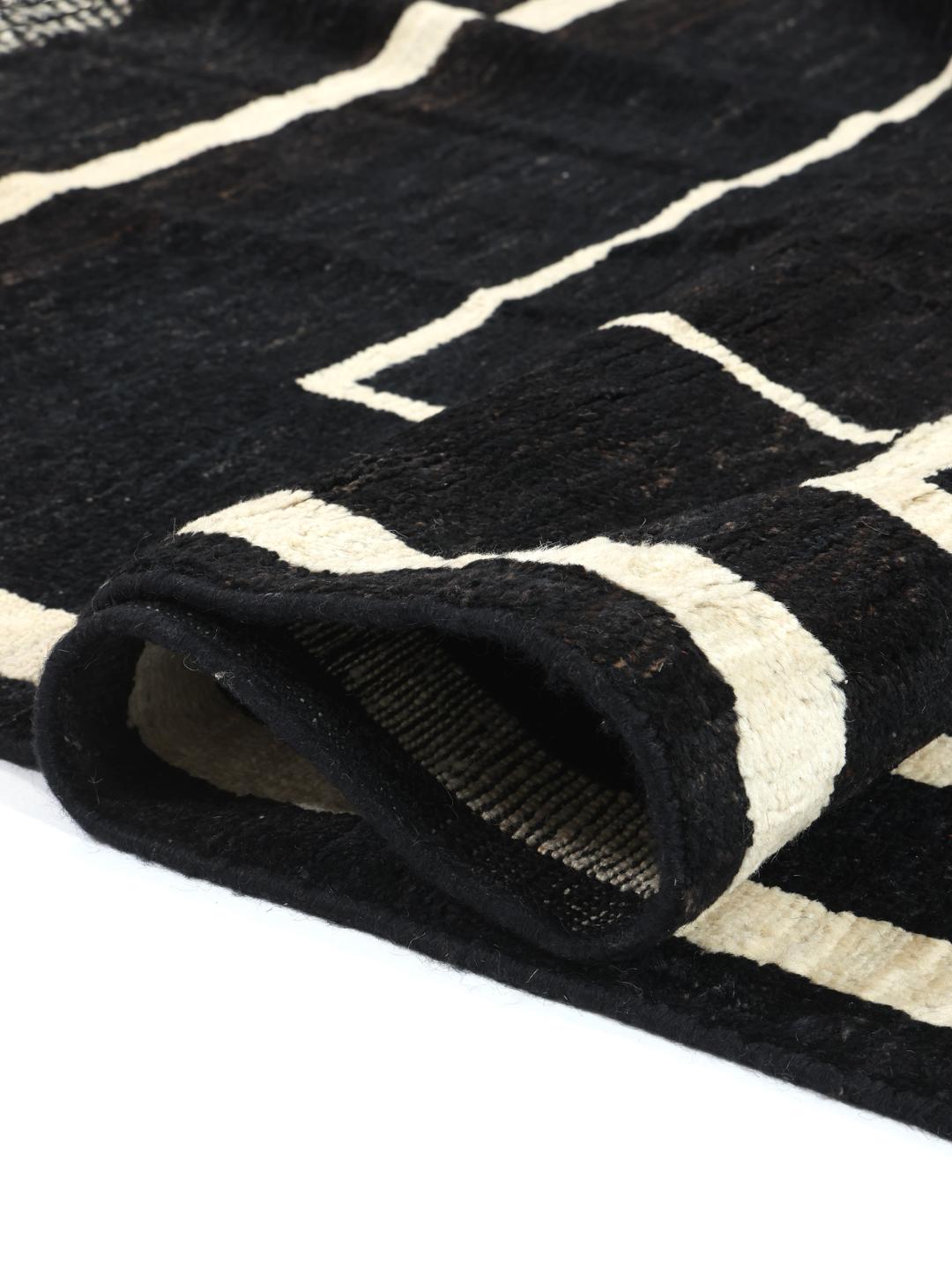
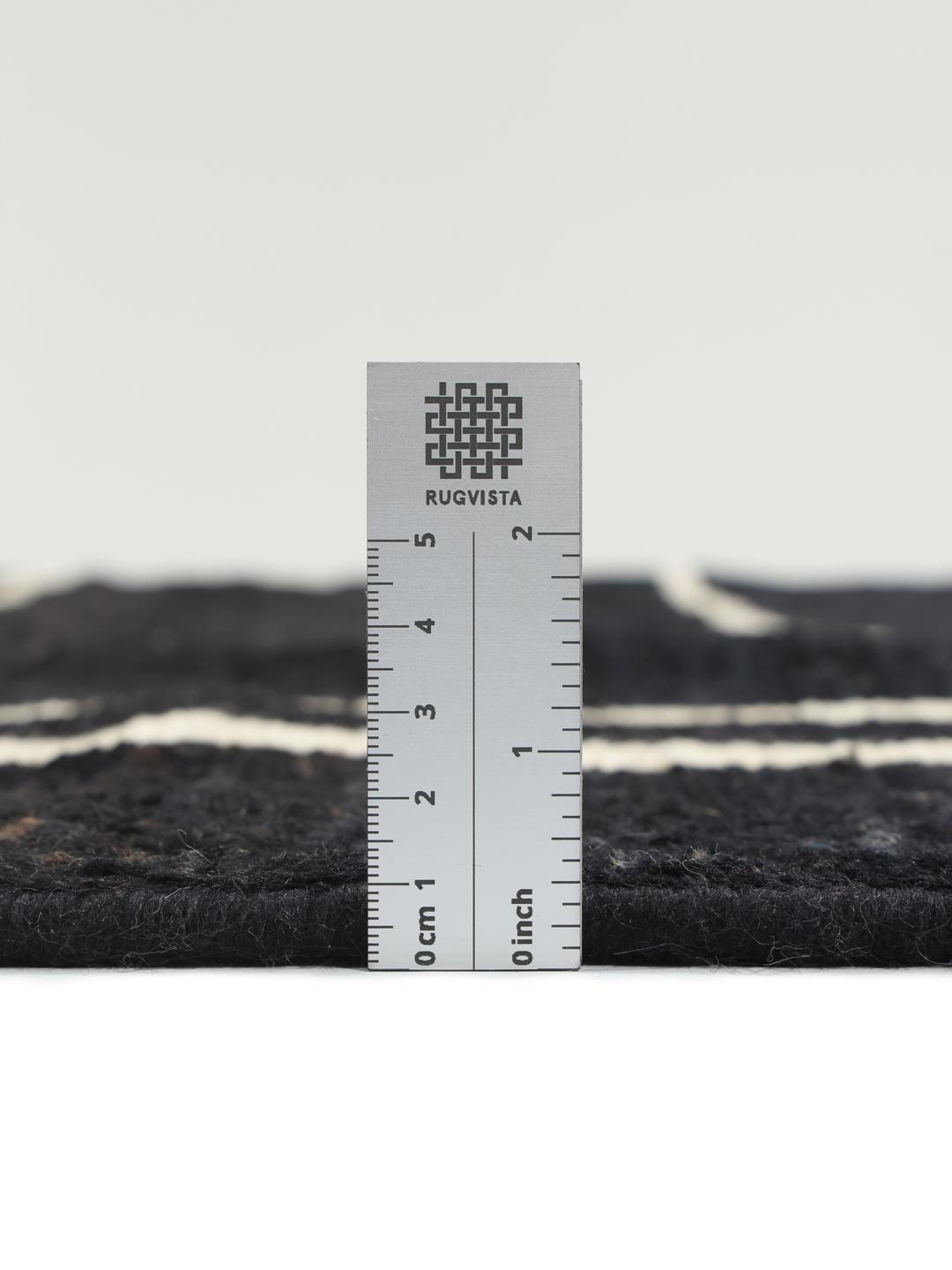
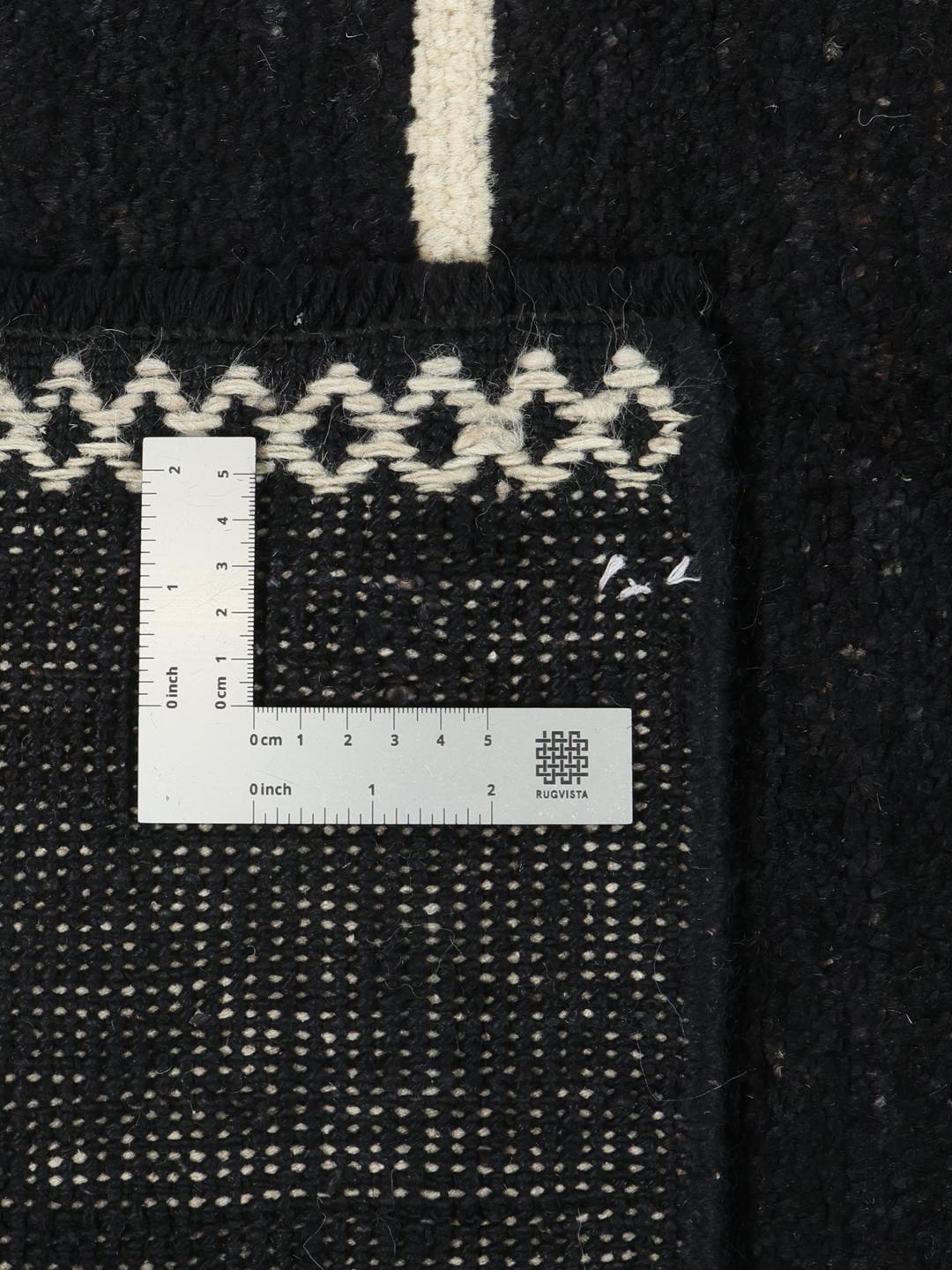
The term 'hand-knotted' refers to the most enduring and prestigious method of rug construction, where every single knot is tied by hand. This practice creates a dense, durable pile that is far more resistant to wear than tufted or machine-made alternatives. The quality of the finish is directly linked to the patience of the weaver, resulting in a rug that feels substantial, luxurious, and built to endure for decades.
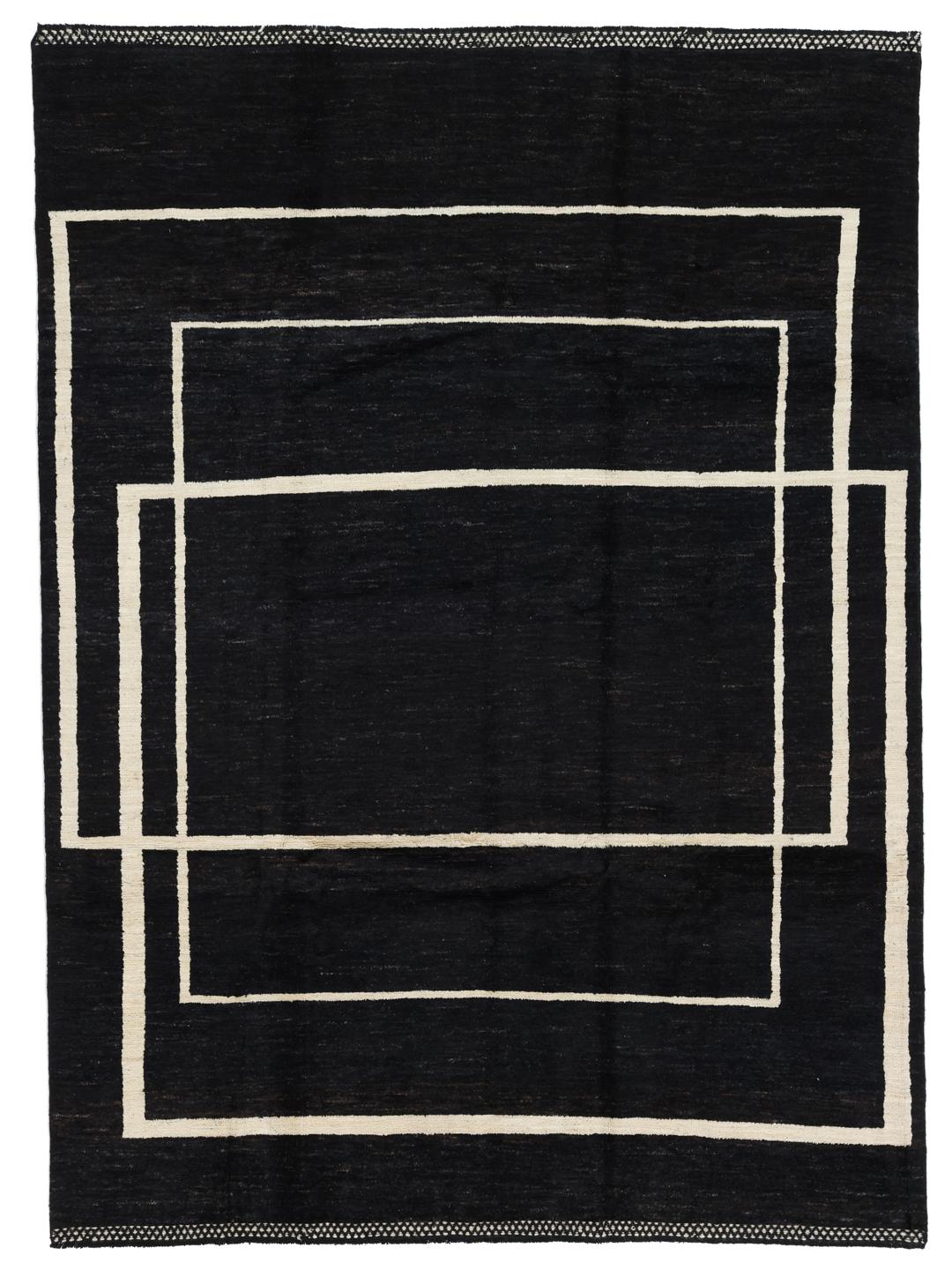
In terms of design, this piece draws from the Gabbeh tradition, which is historically characterised by a more artistic and simplified approach compared to the intricate, floral styles of other regions. The focus here is on the power of negative space and clear, geometric forms. By using bold, angular frames, the rug creates a visual dialogue between the stark black background and the lighter geometric outlines.
Collecting a rug from this heritage means valuing the human story behind the object. These pieces are not just decor; they are records of a specific time, place, and artisan's touch. Owning a hand-knotted rug from Afghanistan connects your home to a deep, global craft tradition, offering a sense of authenticity that mass-produced items cannot replicate.