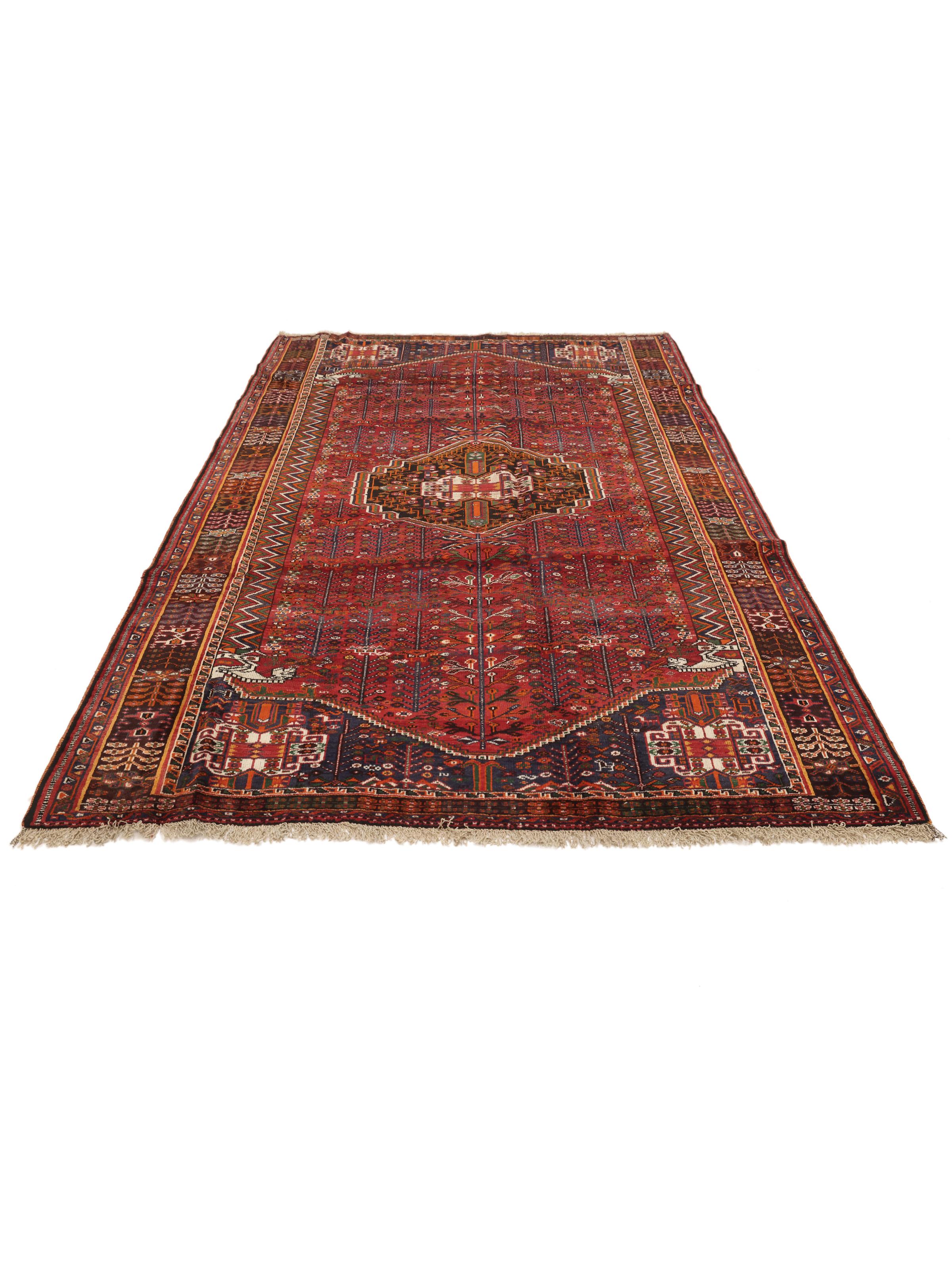
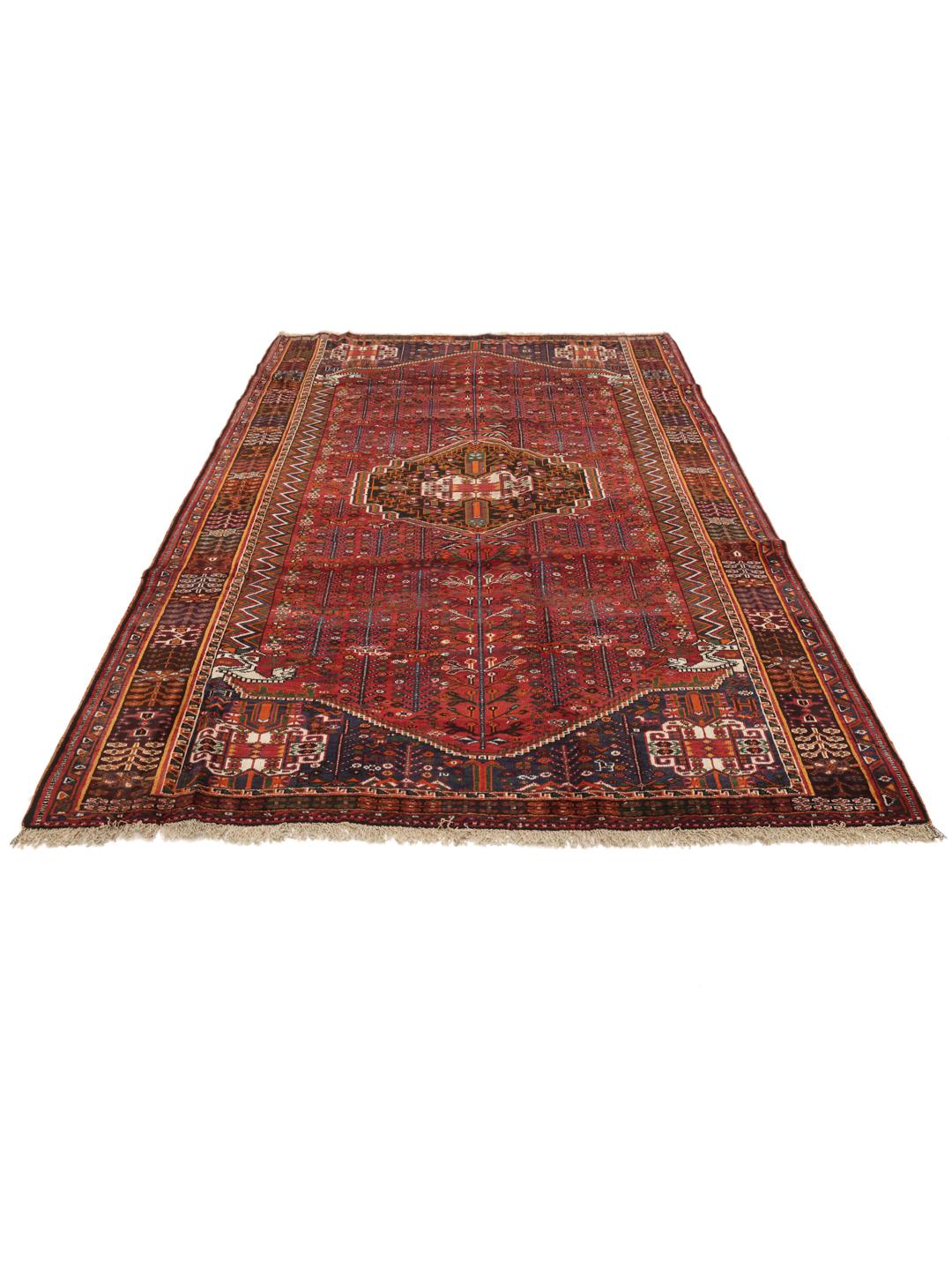
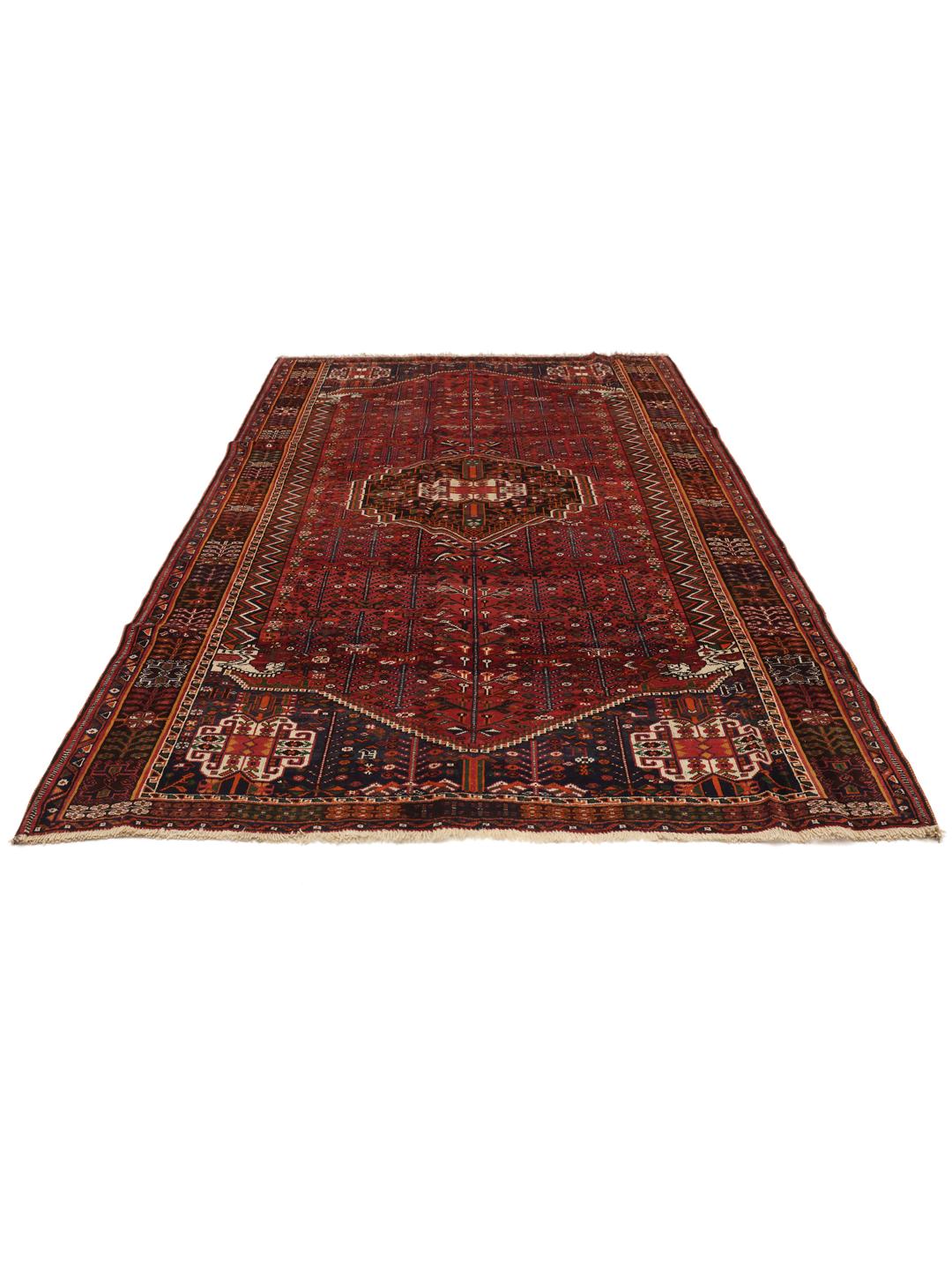
The Shiraz rug tradition finds its roots in the Fars province of the Middle East, a region long celebrated for its nomadic weaving culture. These rugs are traditionally crafted by various tribal groups, including the Qashqai and Khamseh, who have historically travelled through the rugged landscapes of the region. Their designs are not dictated by rigid patterns but are instead deeply reflective of the weavers' memories, surroundings, and cultural identity.
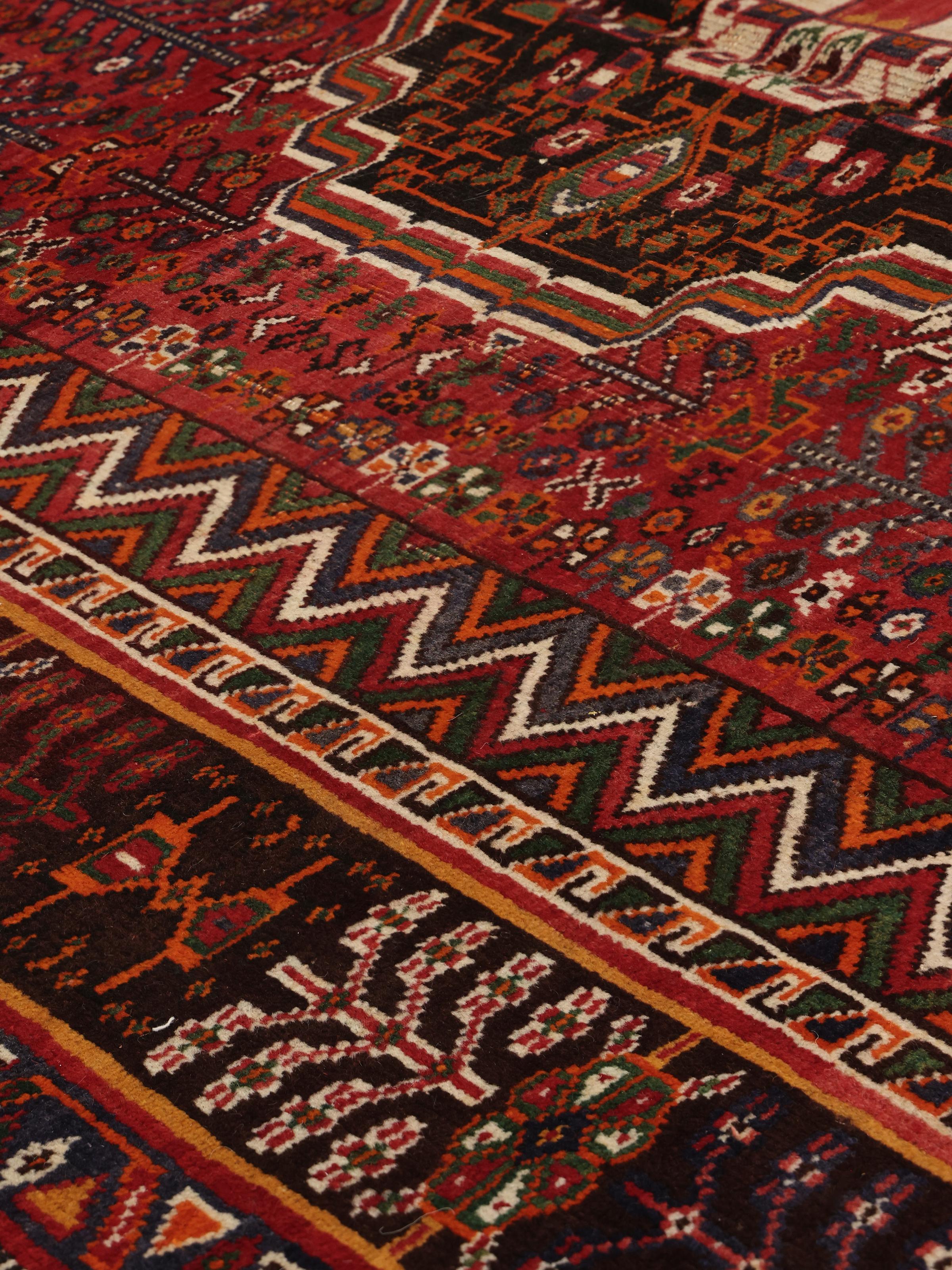
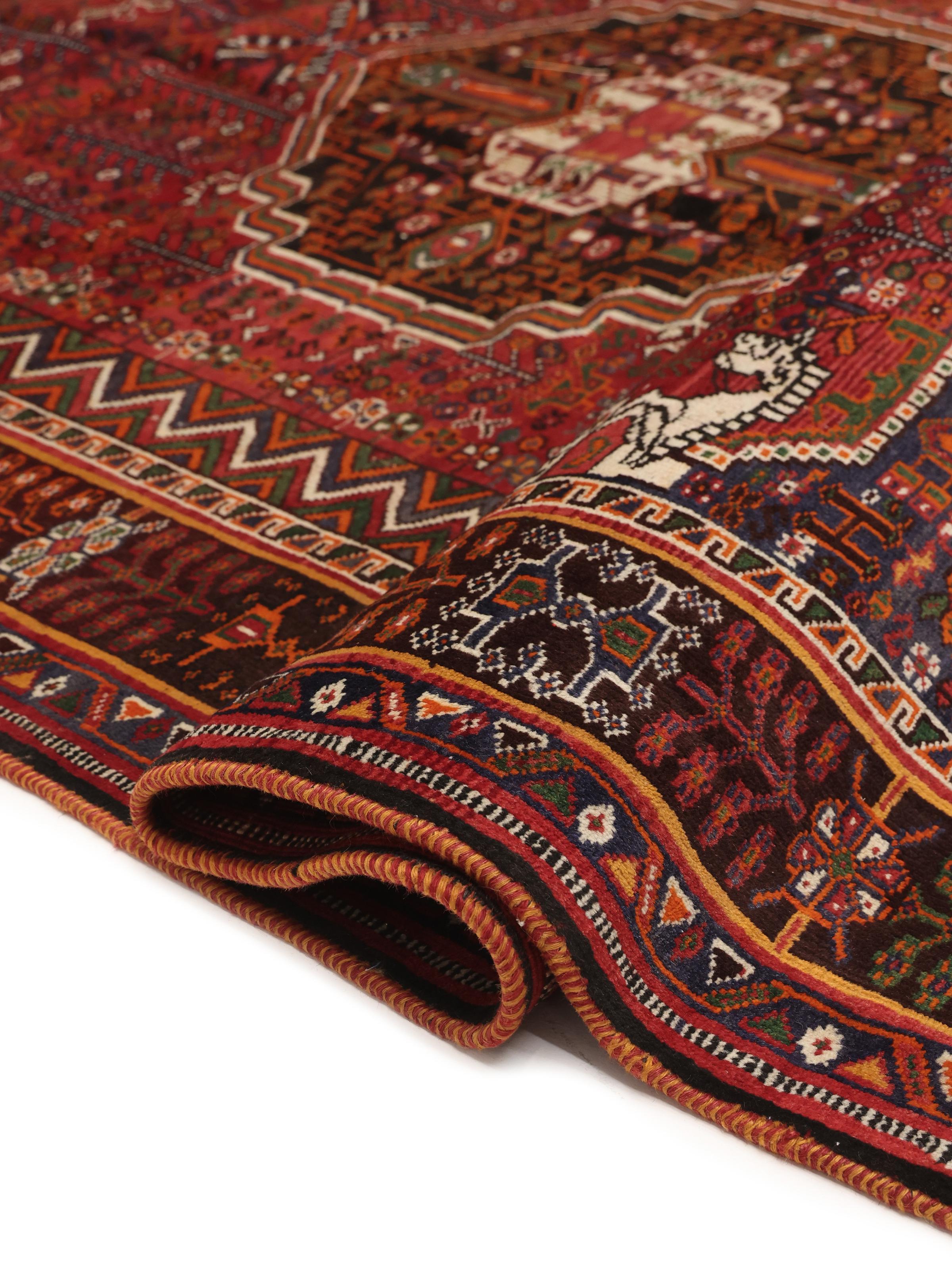
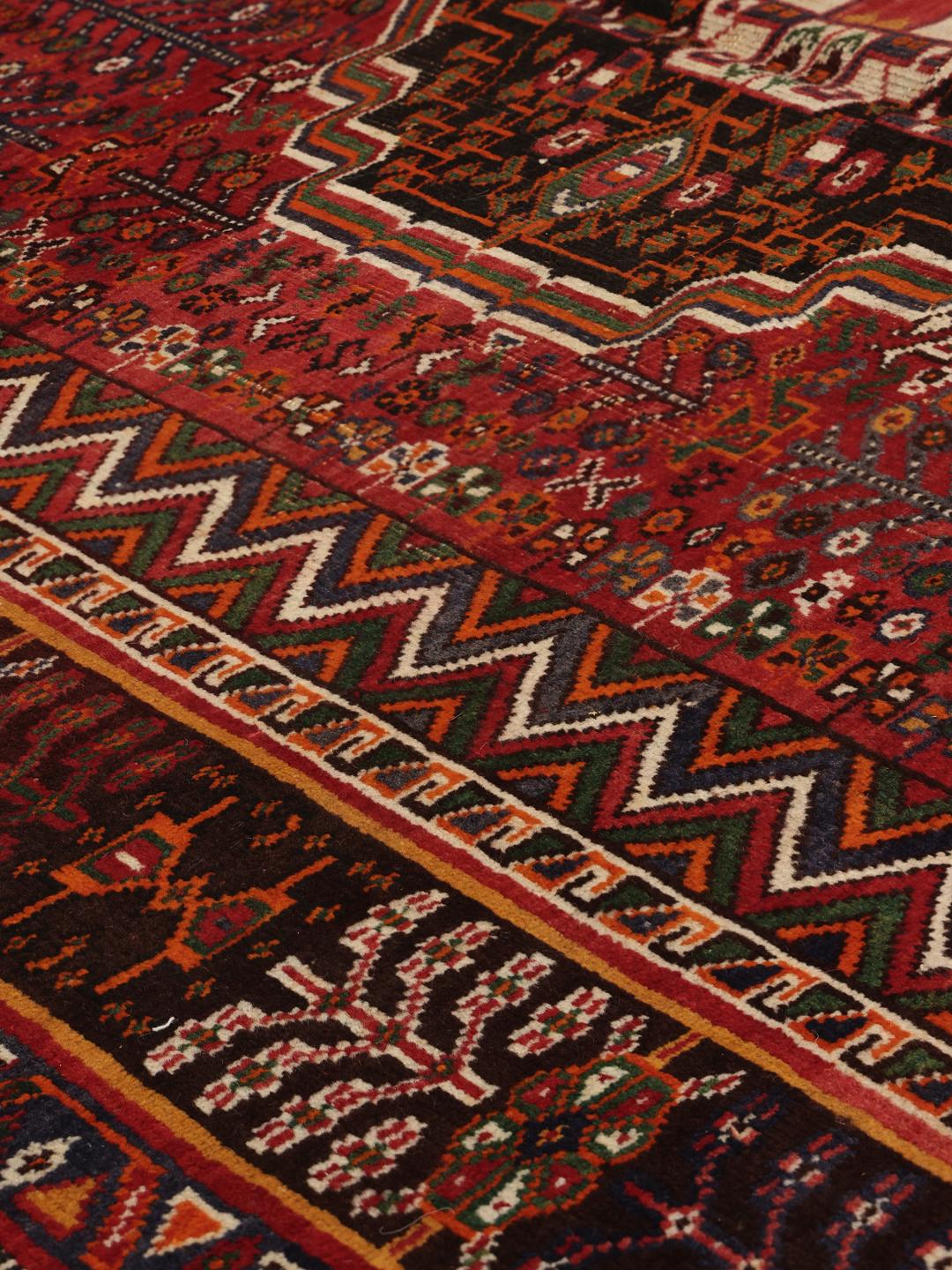
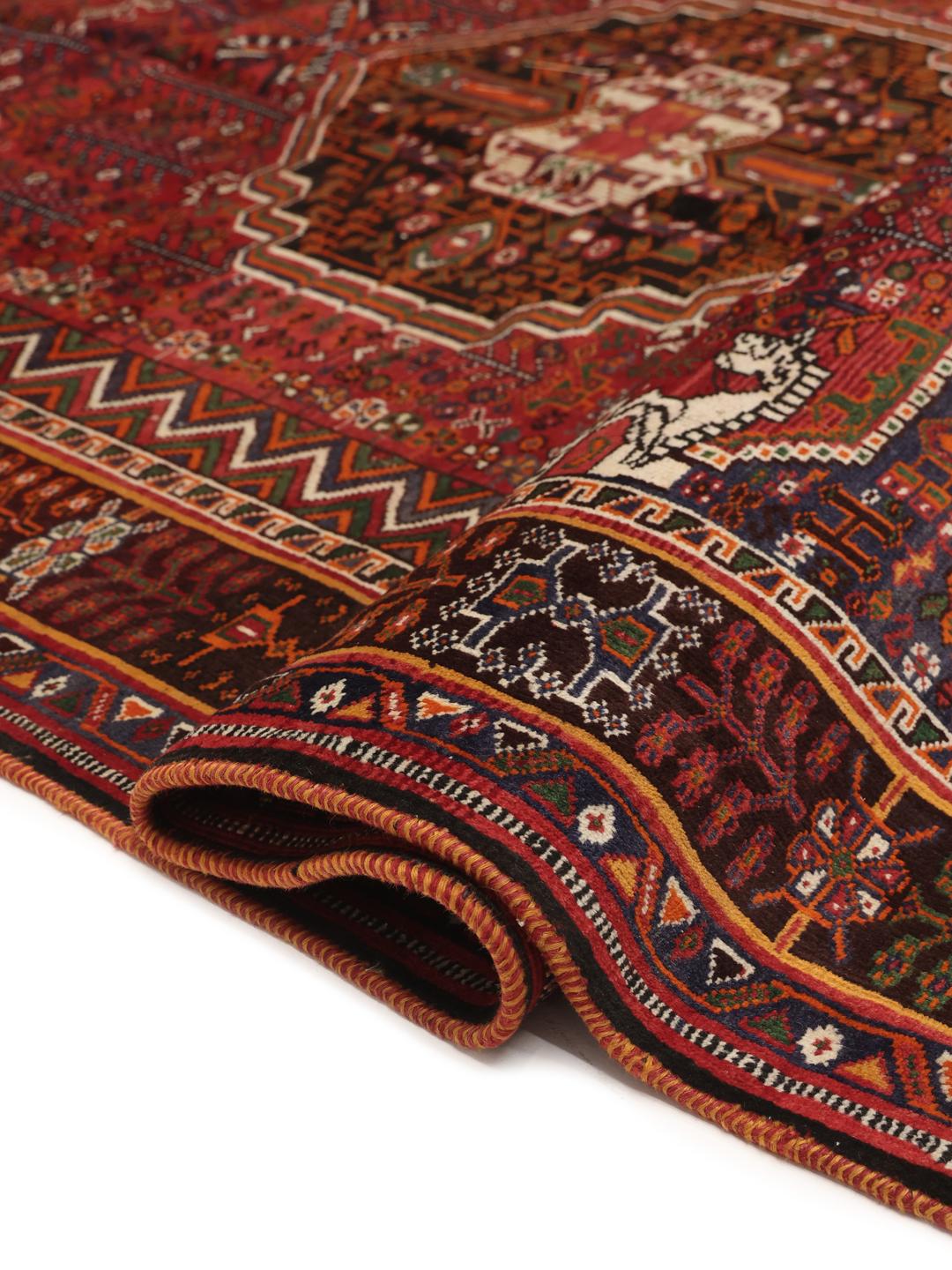
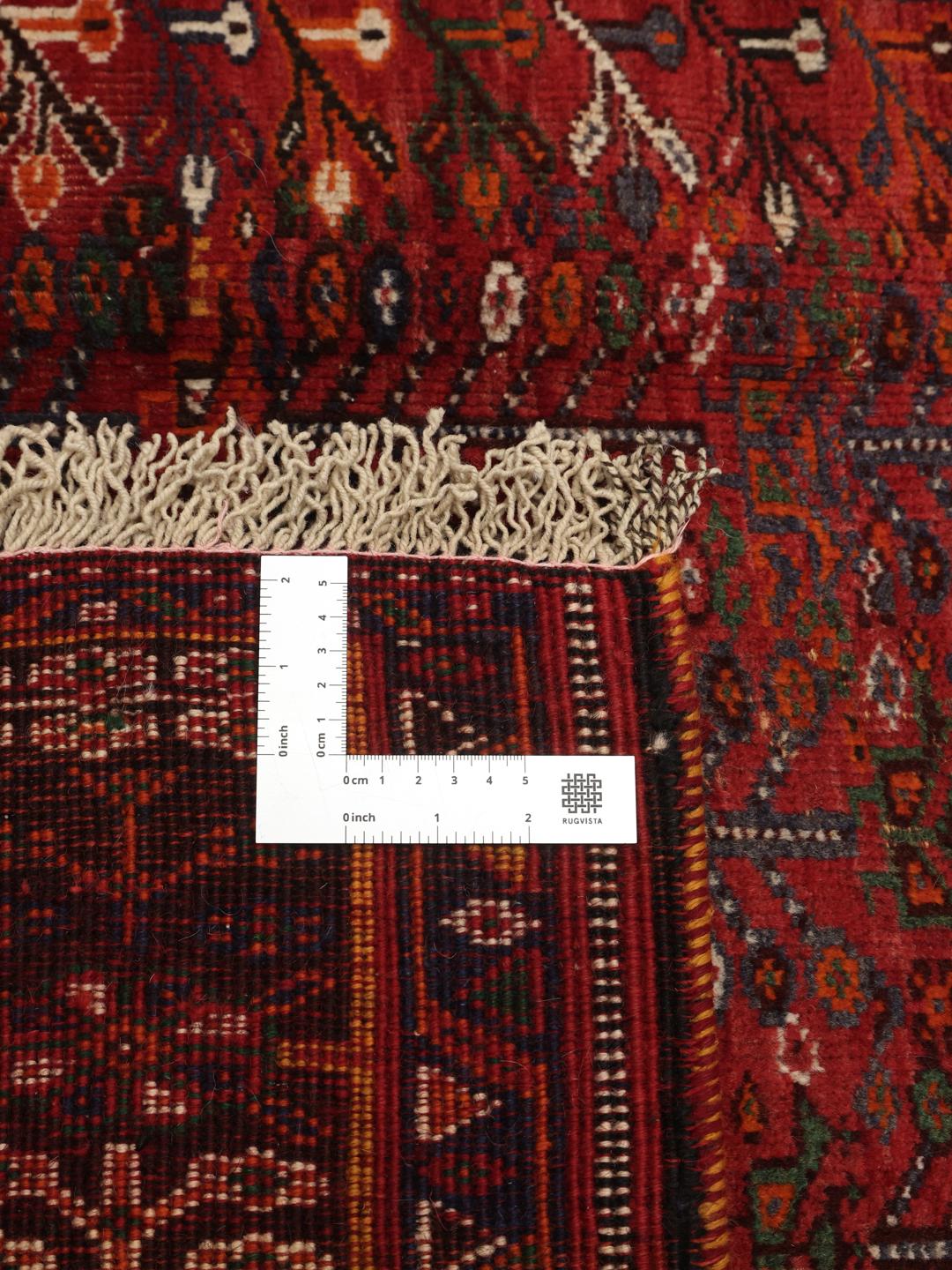
Technically, the Shiraz is defined by its robust construction, typically utilising a wool-on-wool foundation. This specific material choice provides a natural weight and flexibility to the finished piece. The use of hand-spun, locally sourced wool is crucial to the authentic look and feel of these rugs, as it absorbs traditional vegetable and mineral dyes in a way that creates a rich, variegated colour palette—often referred to as abrash—which gives the rug a beautiful, depth-filled appearance.
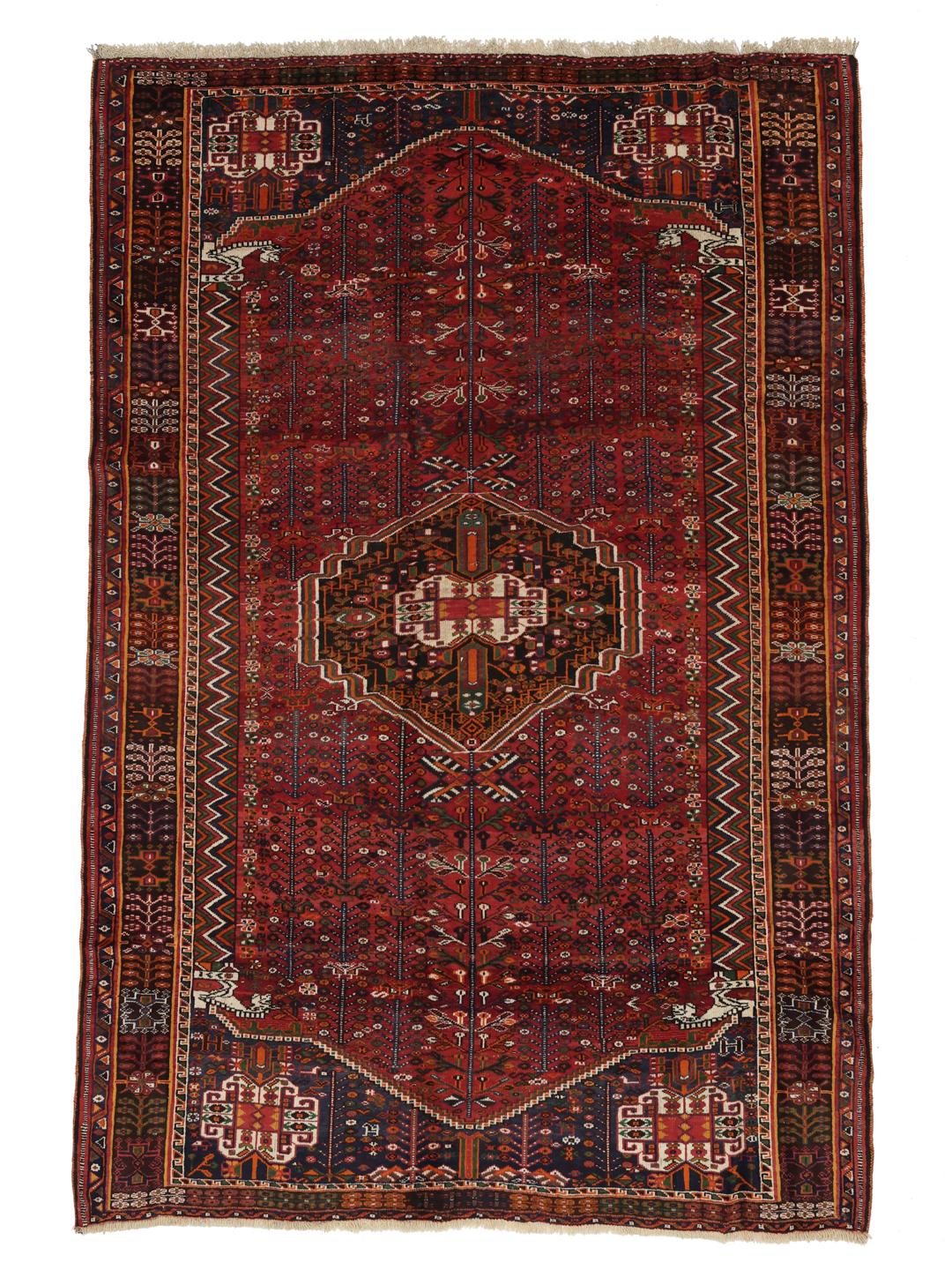
Signature design elements of the Shiraz often include bold geometric medallions, stylised birds, and various tribal motifs such as the boteh or the comb. The borders are frequently decorated with intricate, repeating geometric shapes that frame the central field. What makes this particular rug stand out is its masterful use of colour, balancing the traditional deep reds with contrasting blues and earthy tones, which is a hallmark of the most sought-after tribal weaves.
Owning a Shiraz rug is an exercise in cultural appreciation and a commitment to preserving a dying art form. These pieces are highly valued by collectors for their raw, unrefined energy and the authentic human touch that permeates every knot. By choosing this piece, you are supporting a legacy of nomadic craftsmanship, bringing a sense of history and human connection into your home that mass-produced items simply cannot replicate.