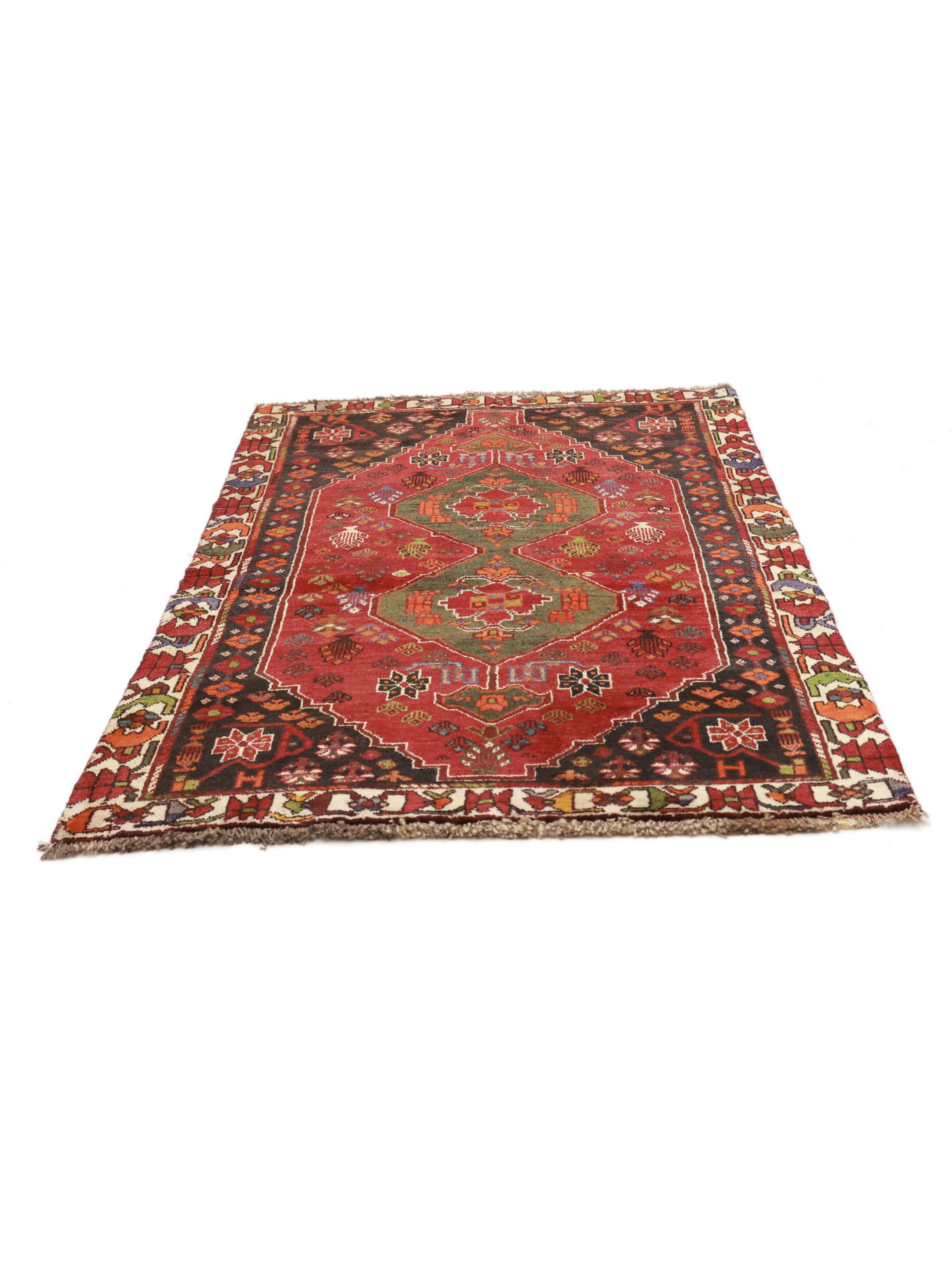
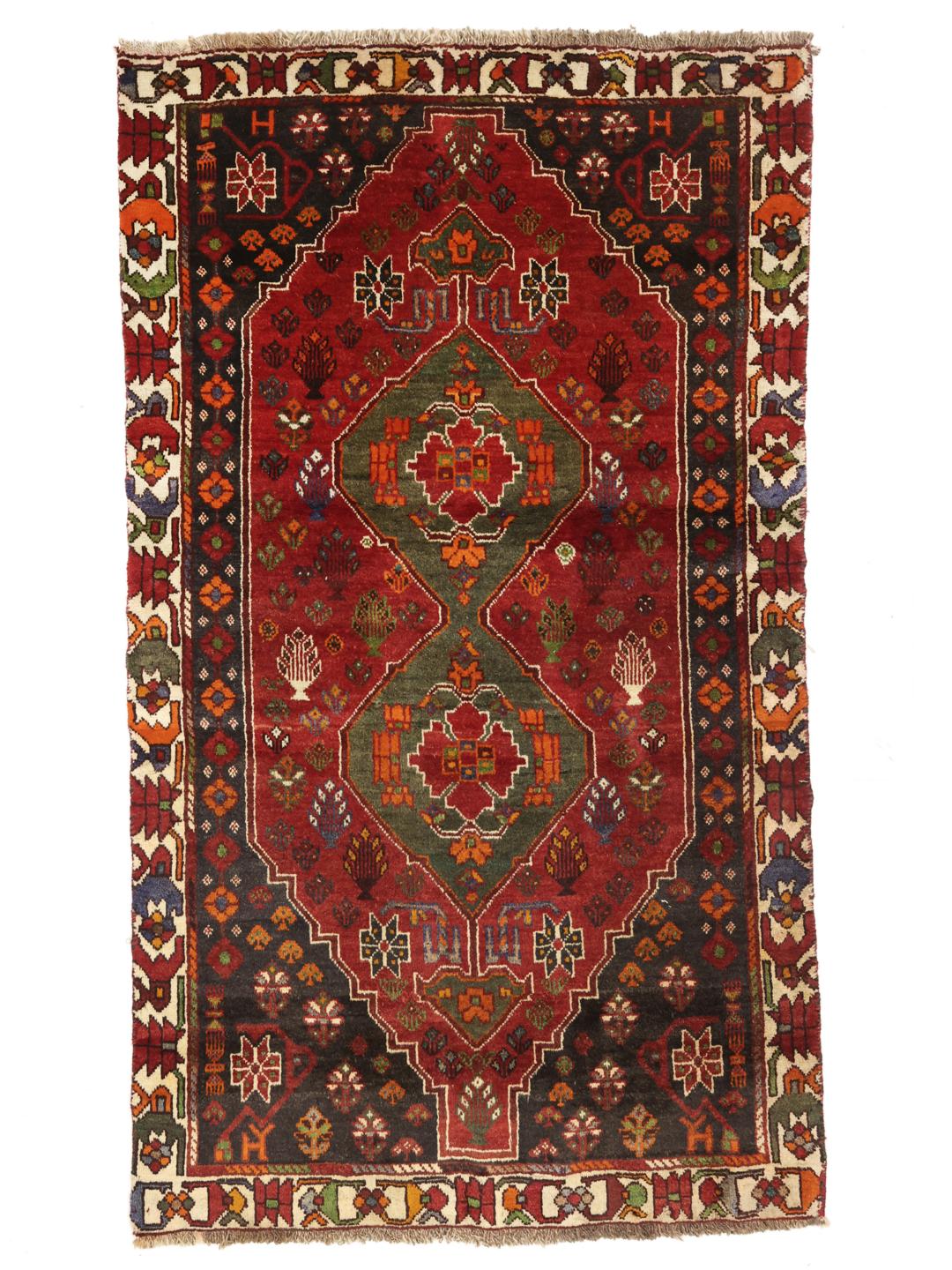
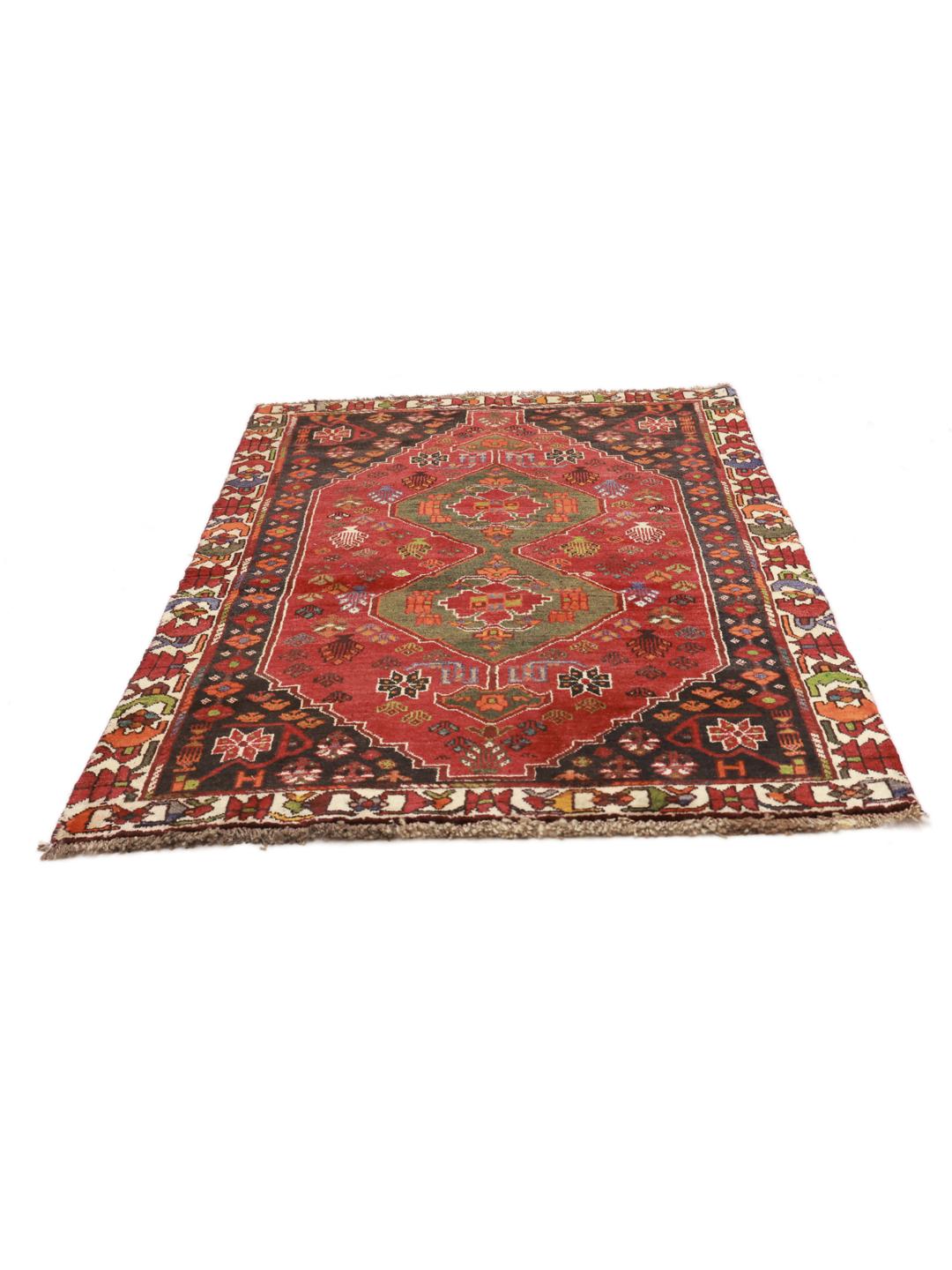
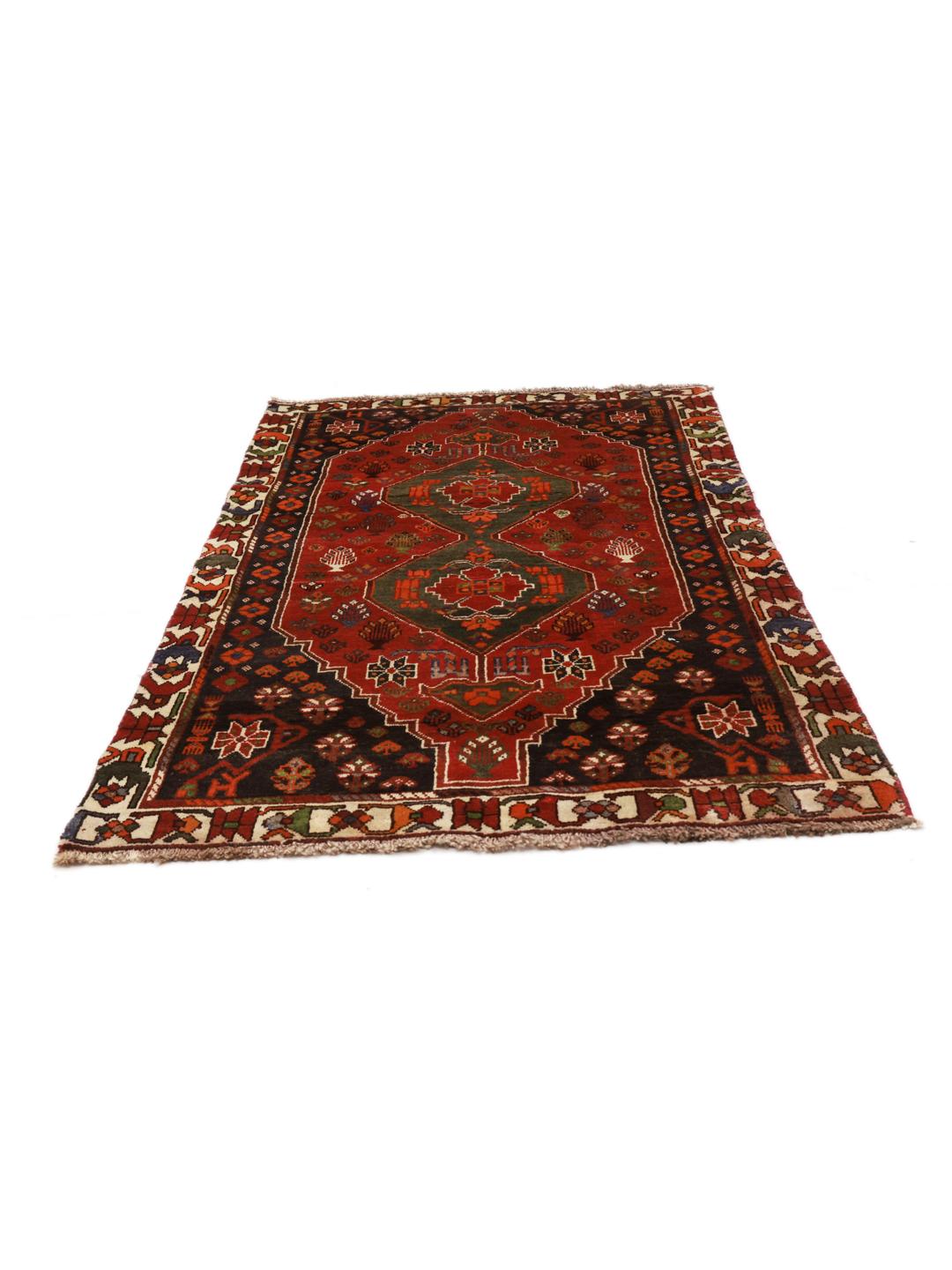
Shiraz rugs are named after the historic city in the Middle East, a centre of culture and trade for centuries. These rugs are traditionally woven by tribal groups in the surrounding Fars province, including the Qashqai and other nomadic peoples. Unlike urban workshops that follow rigid, pre-planned patterns, these tribal weavers often create designs based on memory and tradition, resulting in rugs that feel organic, spontaneous, and deeply connected to their ancestral roots.
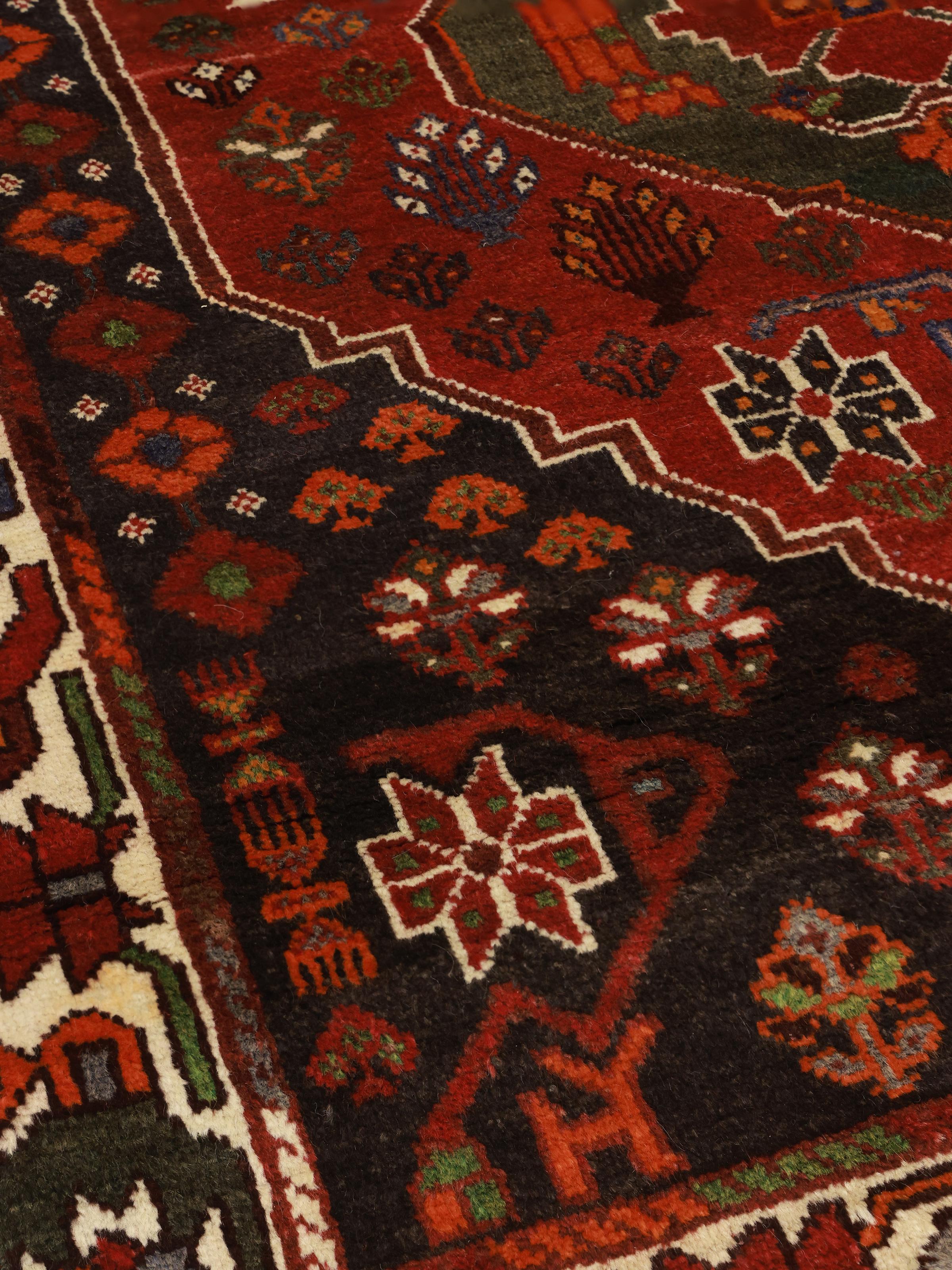
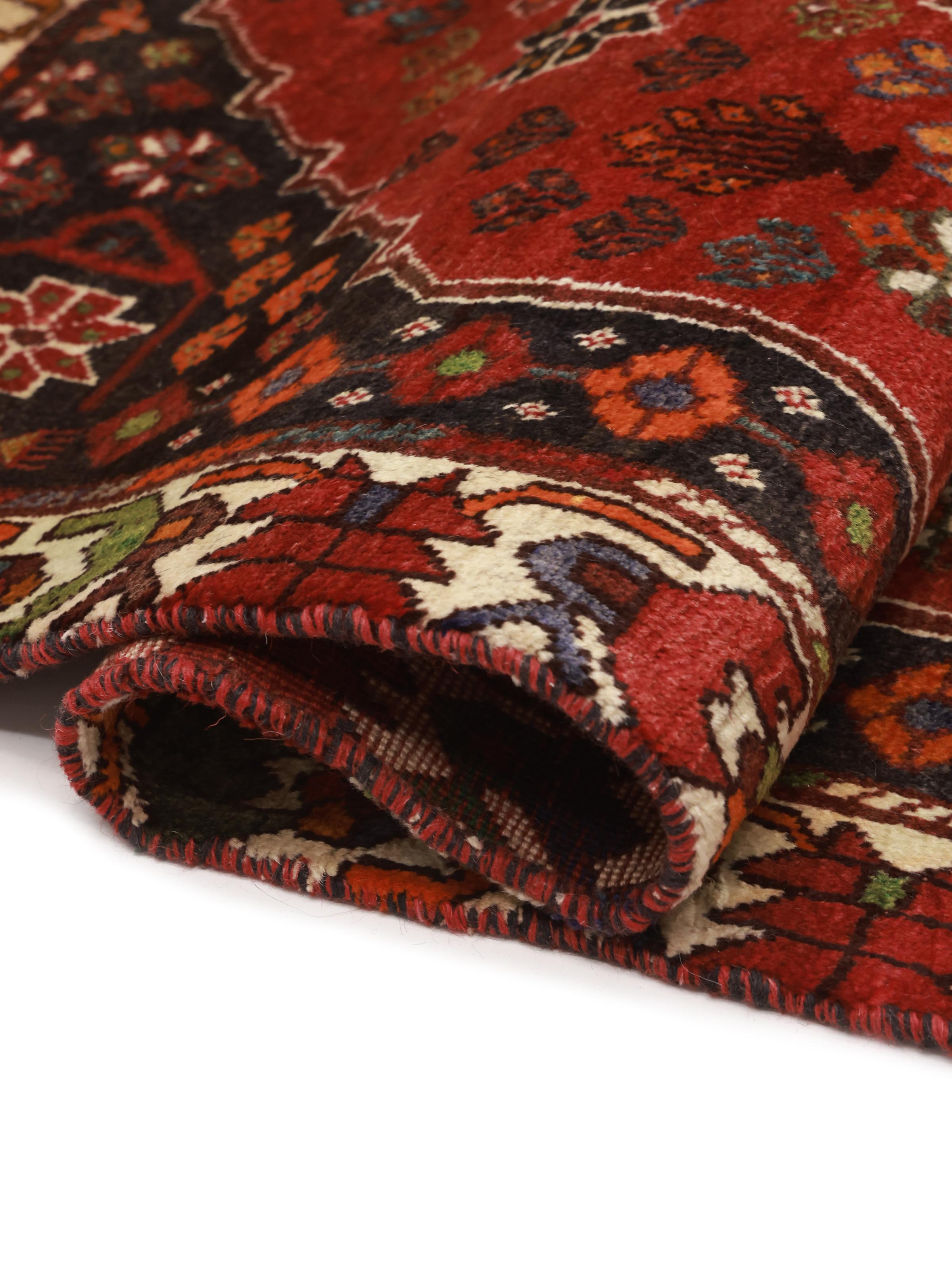
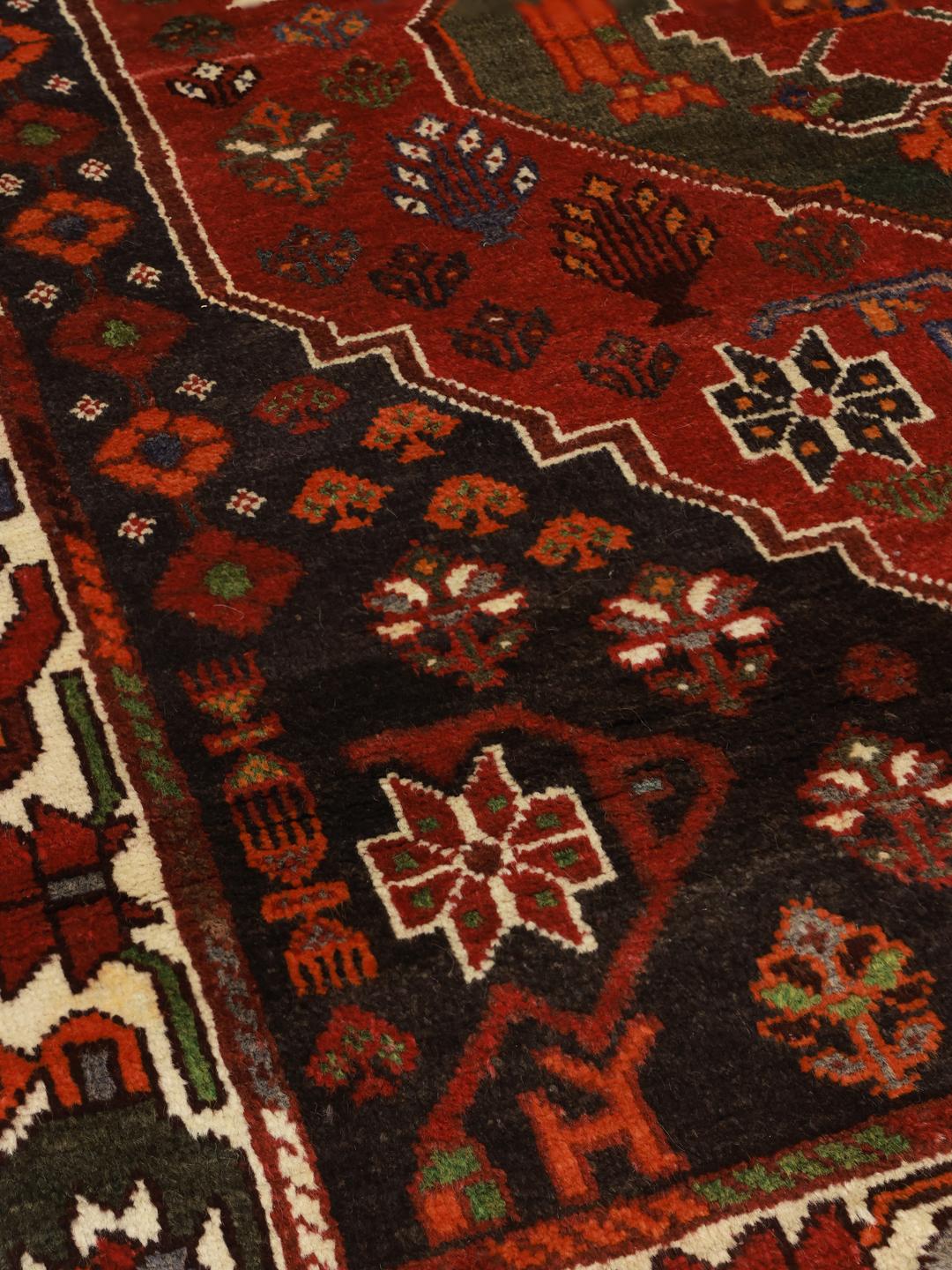
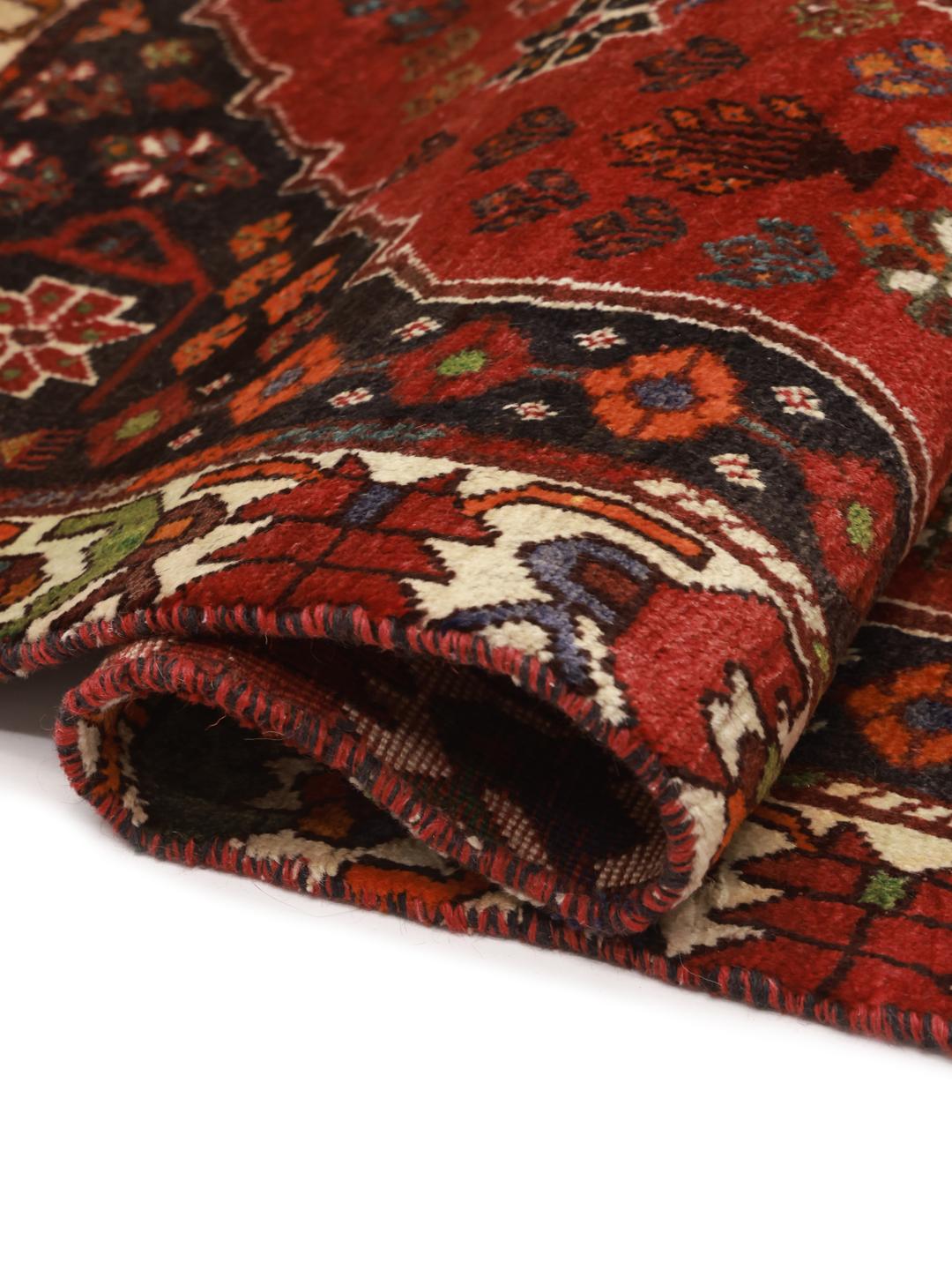
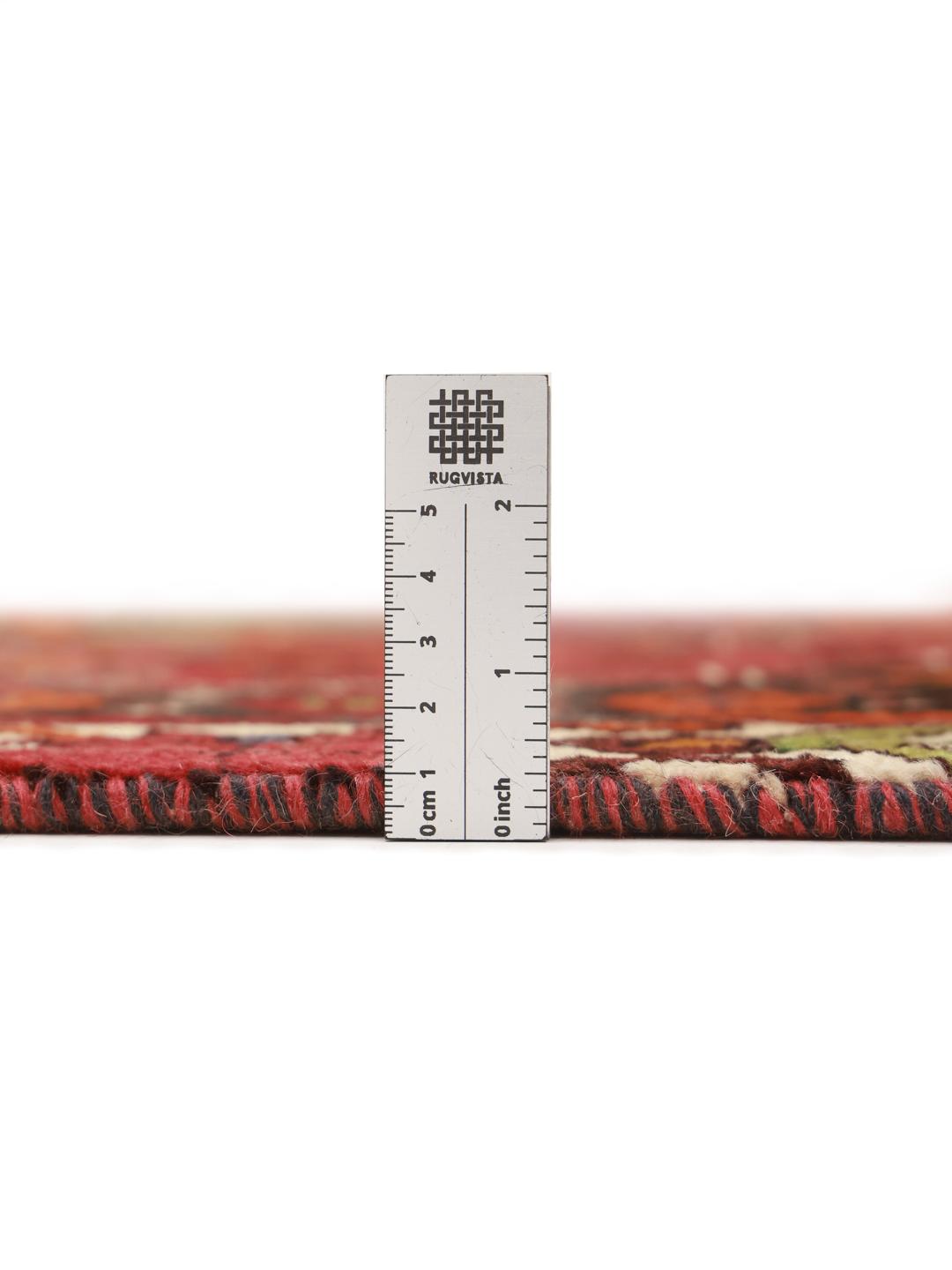
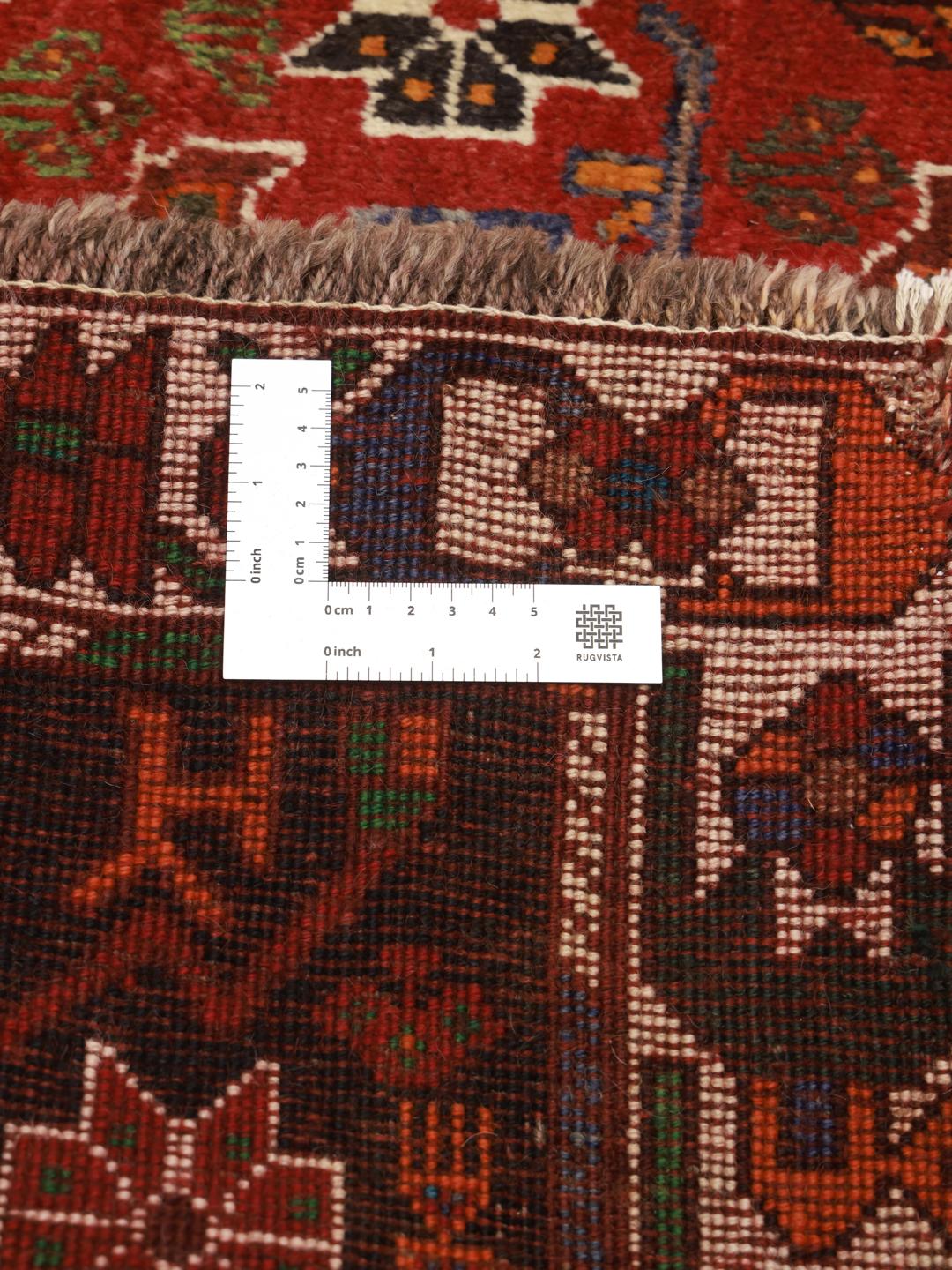
The term hand-knotted refers to the authentic technique of looping Wool around the warp and weft threads to create the pile. This construction method is the hallmark of quality in traditional rug making. By securing each knot individually, the artisan creates a structure that is both flexible and incredibly durable. This density ensures that the rug remains stable and holds its shape over decades of use, proving that these pieces are built to be part of a home for generations.
Signature elements of a Shiraz rug include a preference for bold geometric shapes, especially large, stepped medallions and stylized floral or animal motifs. The colour palette is traditionally derived from natural dyes, which gives the Wool a rich, variegated appearance that mellows beautifully with age. This specific rug showcases a vibrant, high-contrast aesthetic that is typical of the region, featuring deep reds and earthy greens that highlight the weaver's mastery of local aesthetics.
Collecting a Shiraz rug is an investment in cultural history. These pieces are highly valued by collectors because they represent a living tradition, capturing the folklore and artistic expression of nomadic life. Owning one is more than just a decor choice; it is a way to preserve a specific craft lineage. Each rug serves as a testament to the skill, patience, and creative vision of the weaver, offering an authenticity that mass-produced floor coverings simply cannot replicate.