The tradition of rug weaving in Afghanistan is deeply rooted in the nomadic and settled cultures of the region. For centuries, these rugs have served as functional necessities for shelter and comfort, while simultaneously acting as a canvas for cultural identity and storytelling. The craft is passed down through generations, with techniques and patterns often reflecting the specific lineage and environment of the weaving community.
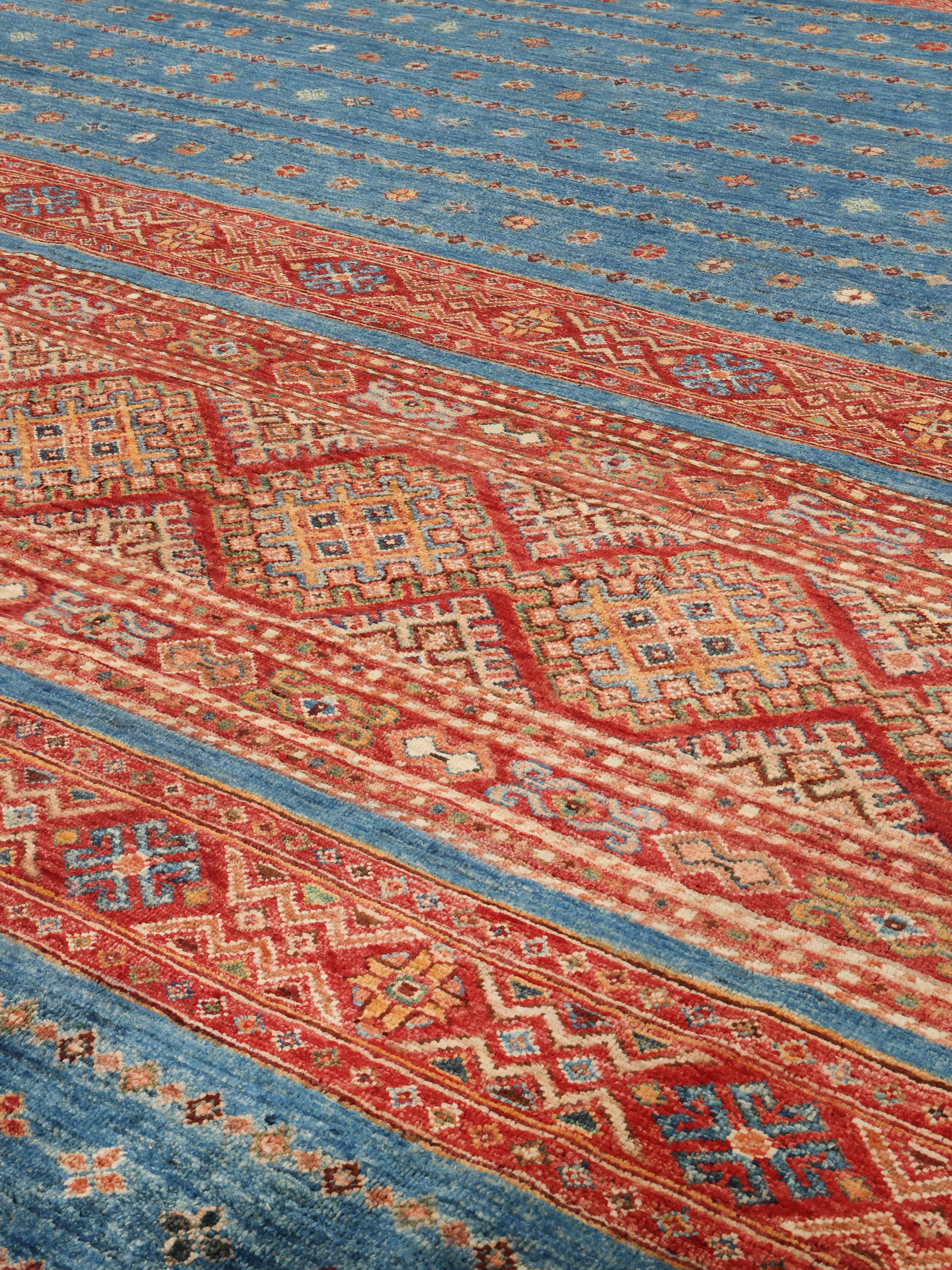
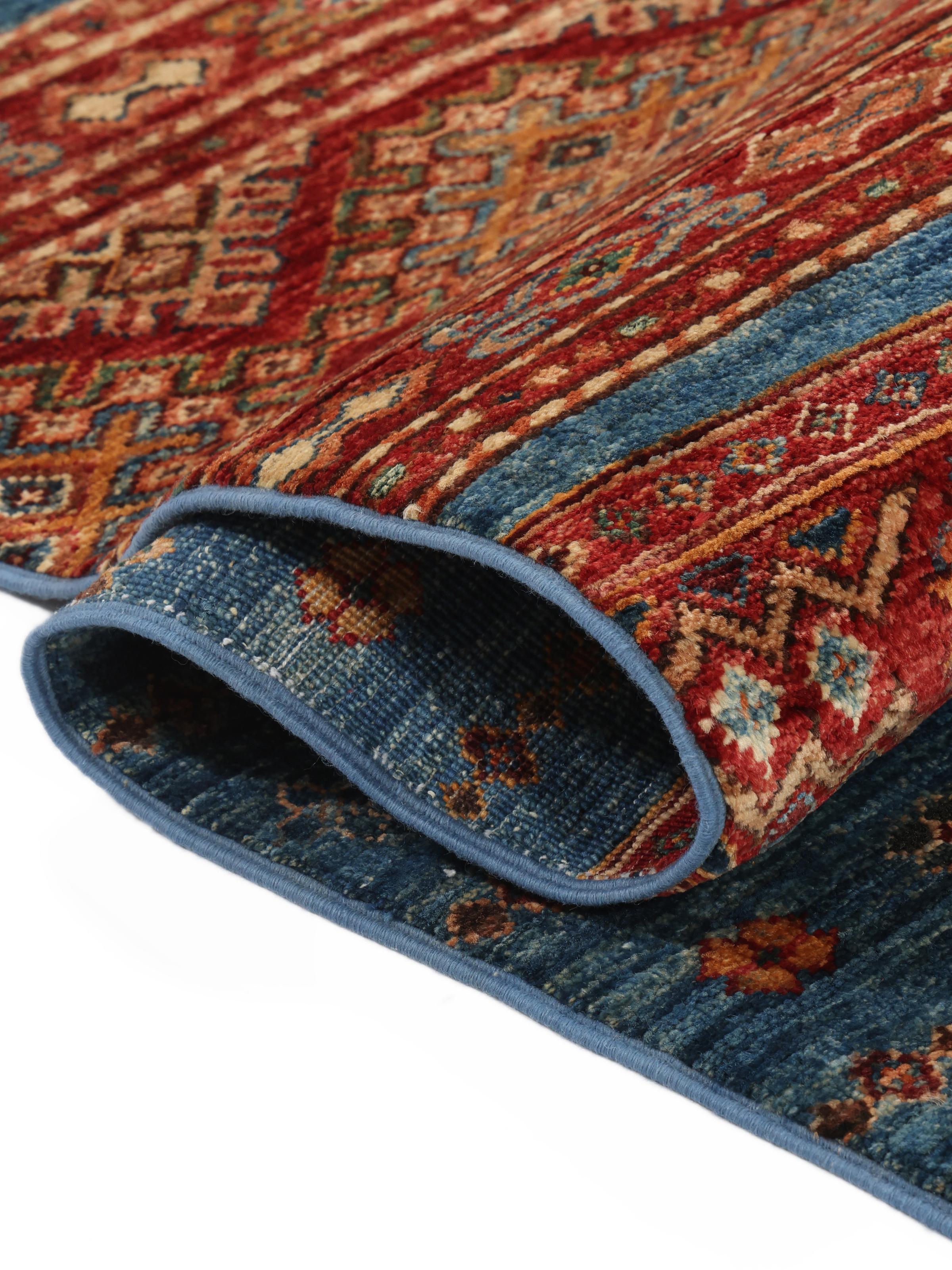
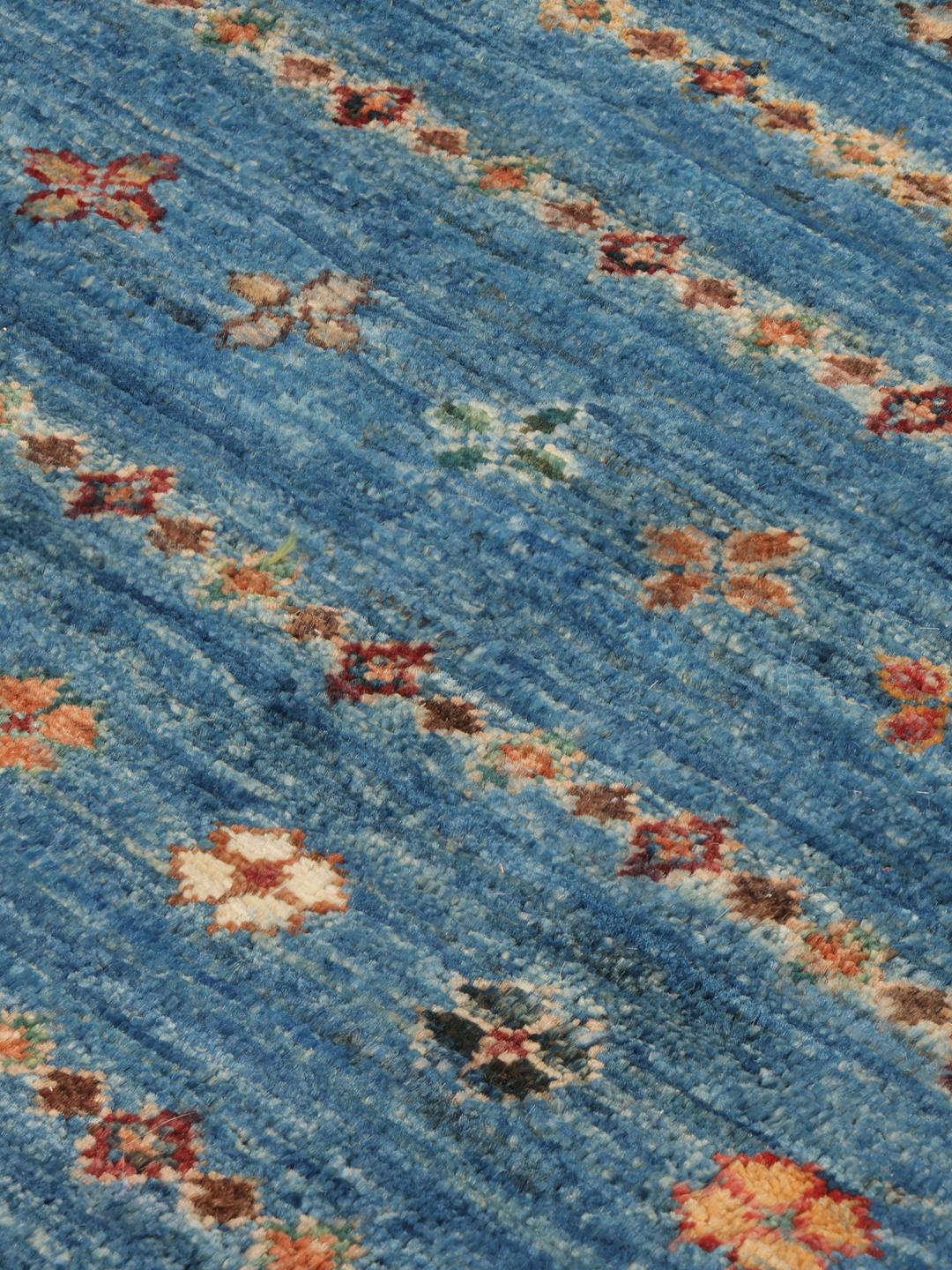
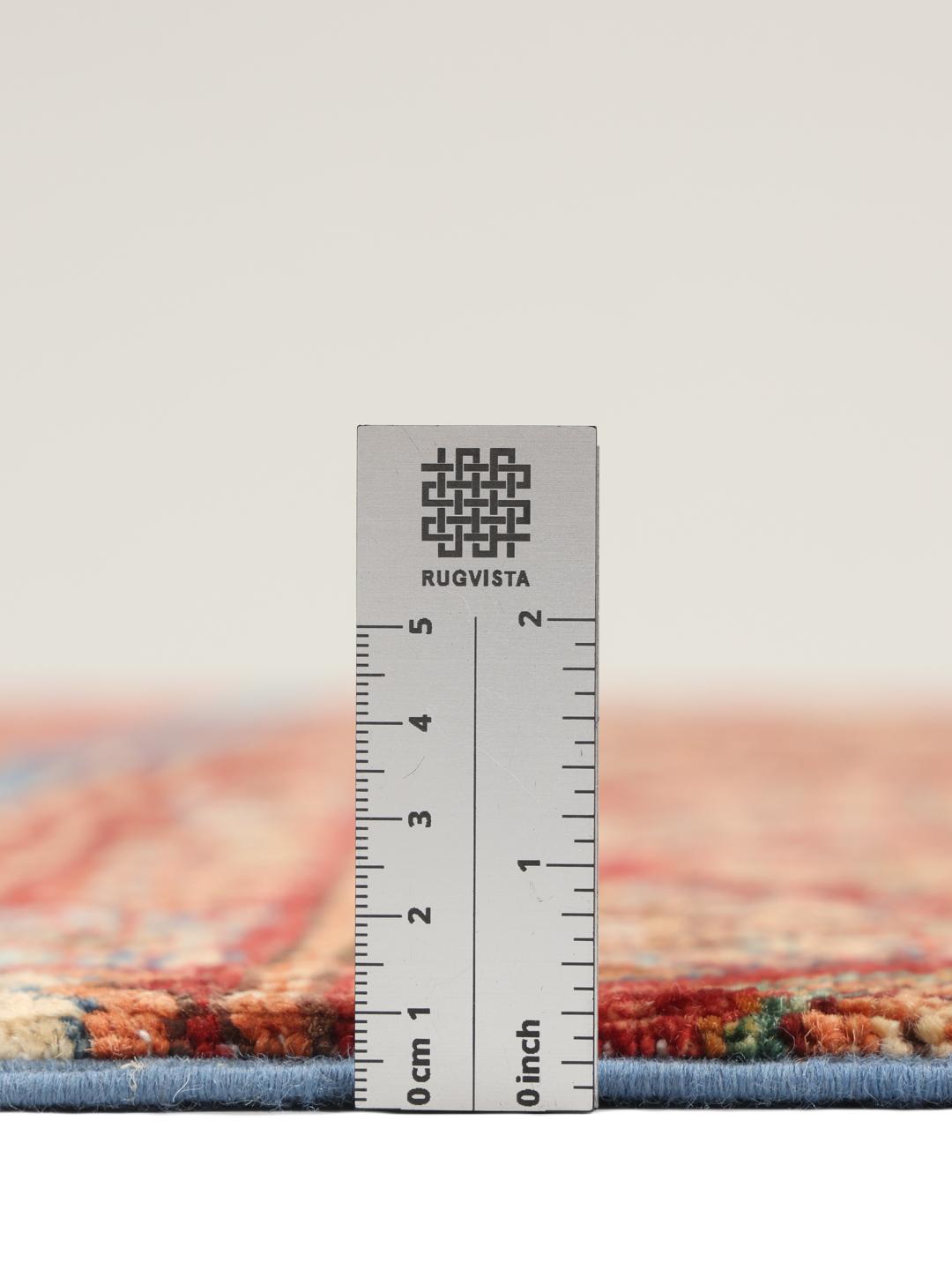
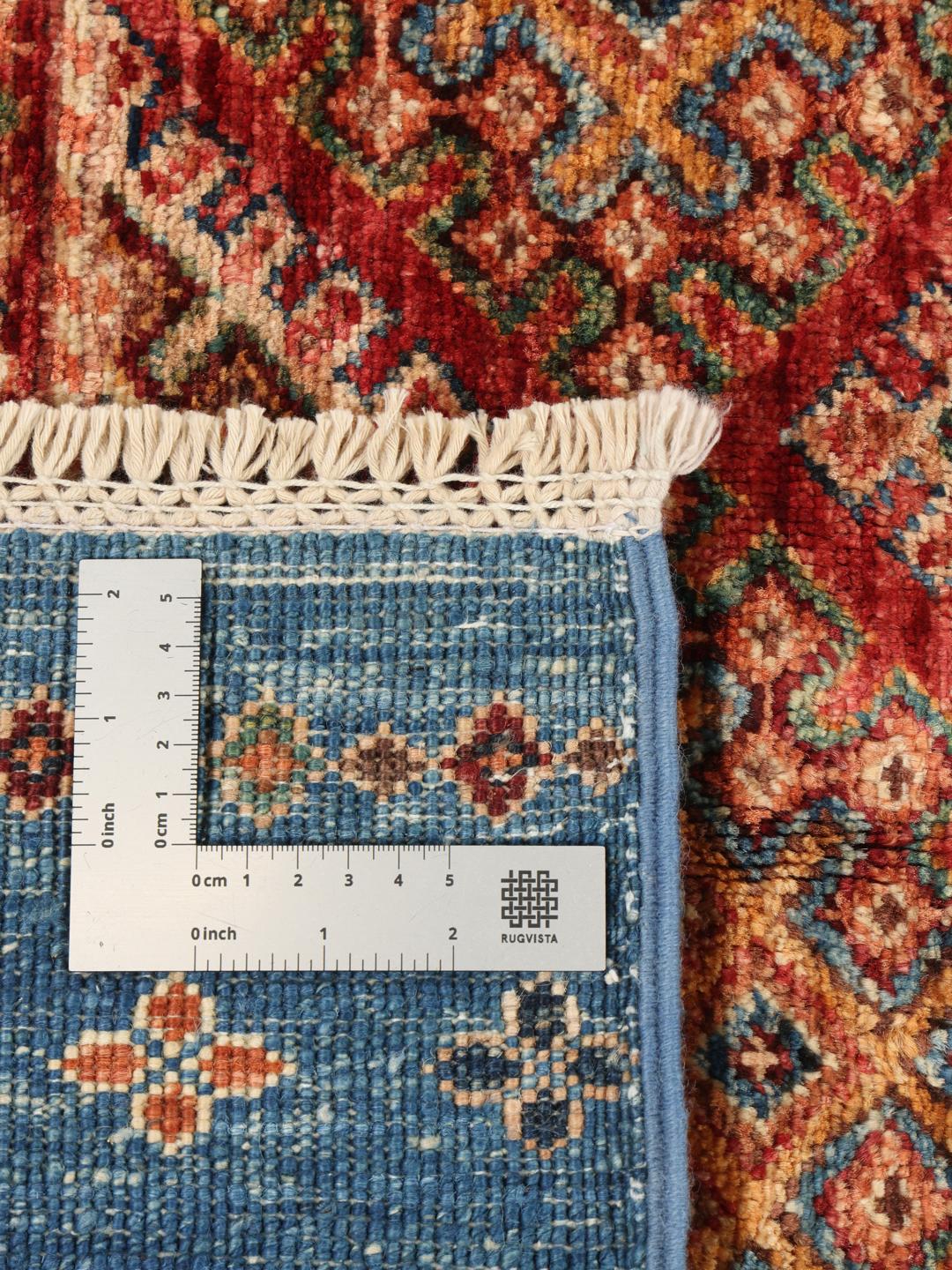
The terminology surrounding these rugs often refers to the specific blend of wool and the density of the weave. In the case of this piece, the hand-knotted technique ensures that each strand of wool is firmly secured into the cotton foundation. This results in a pile that is not only soft to the touch but also highly resilient against the movement and pressure of a busy household, showcasing why these methods are preferred for long-term quality.
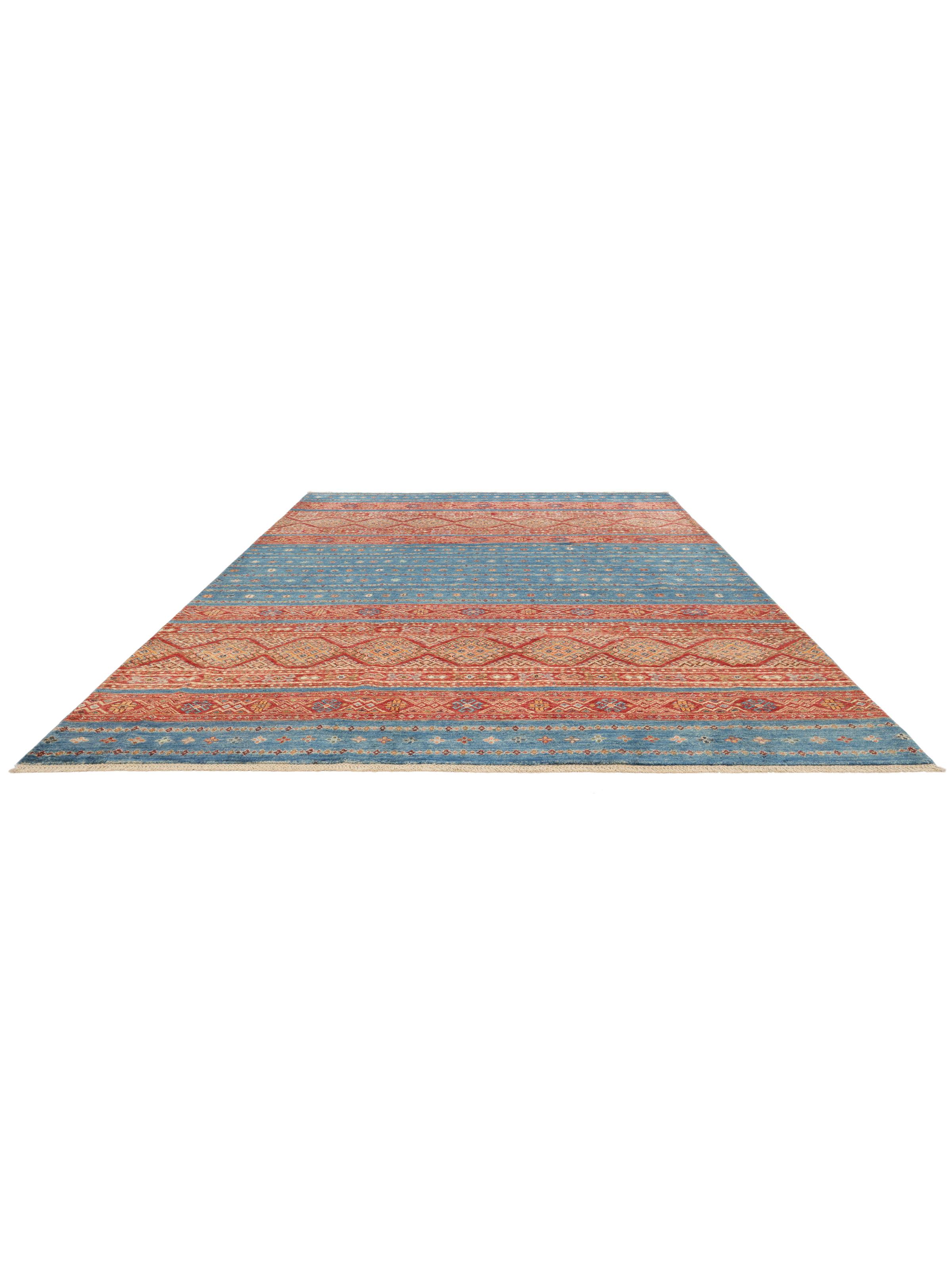
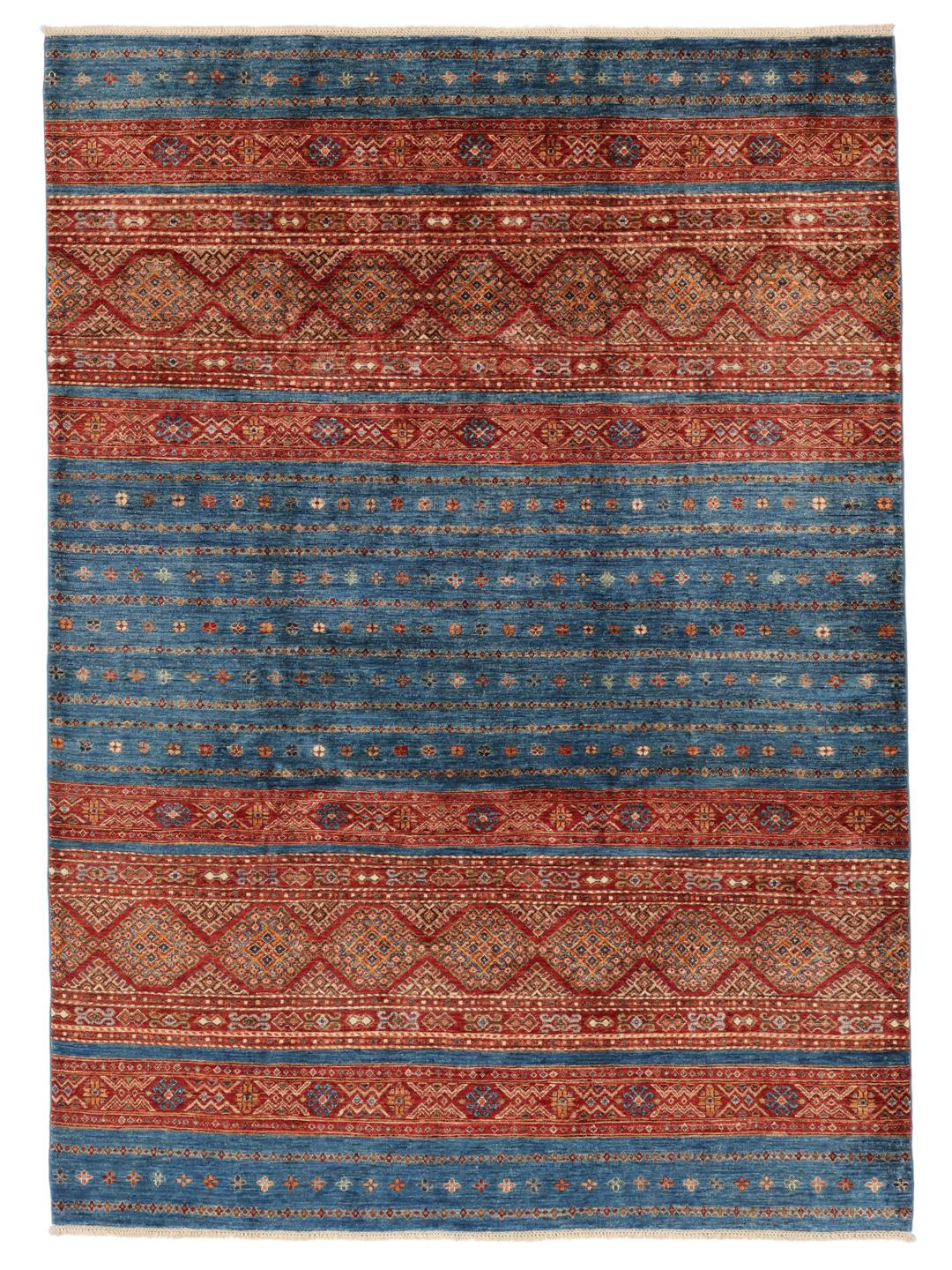
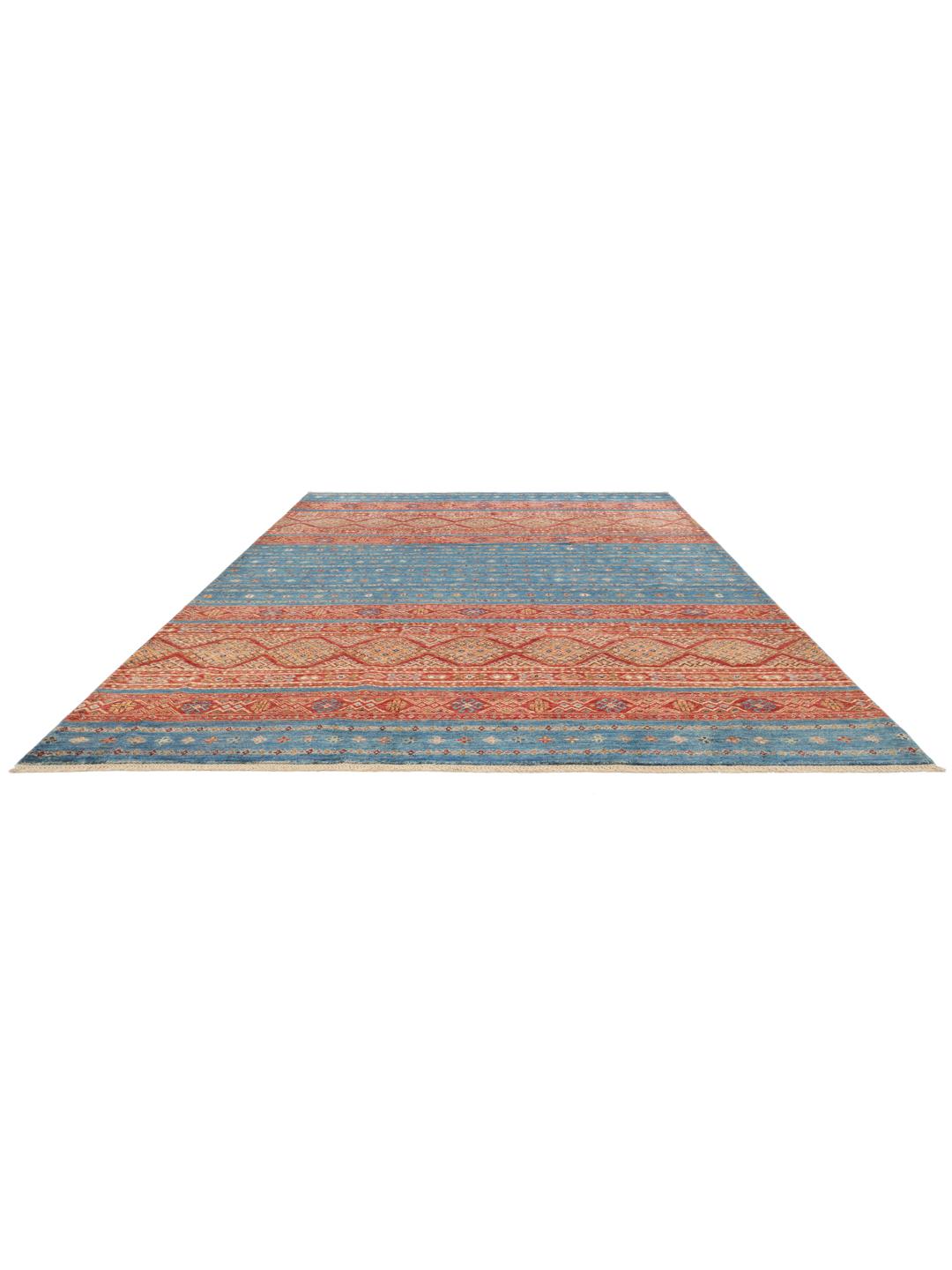
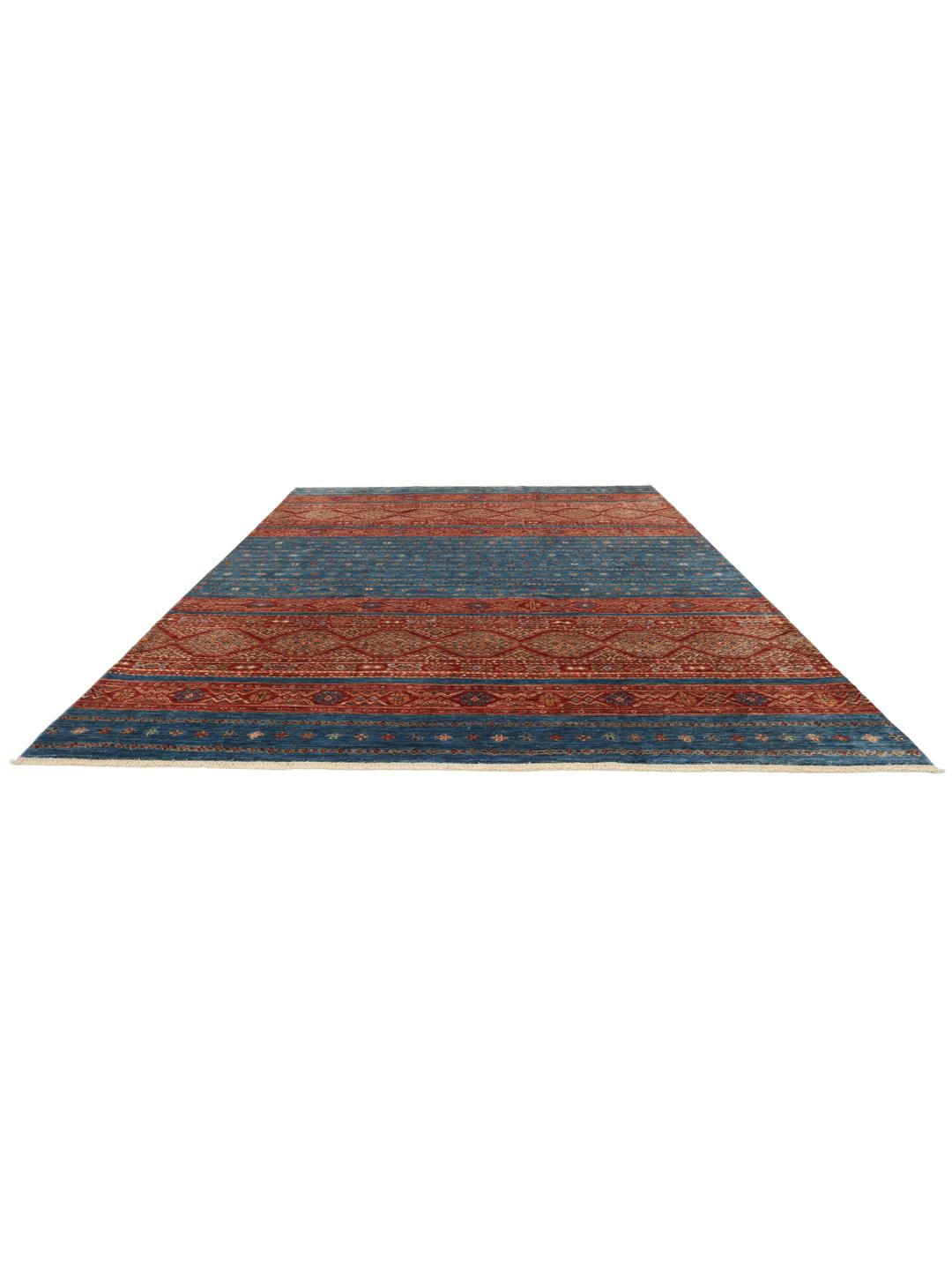
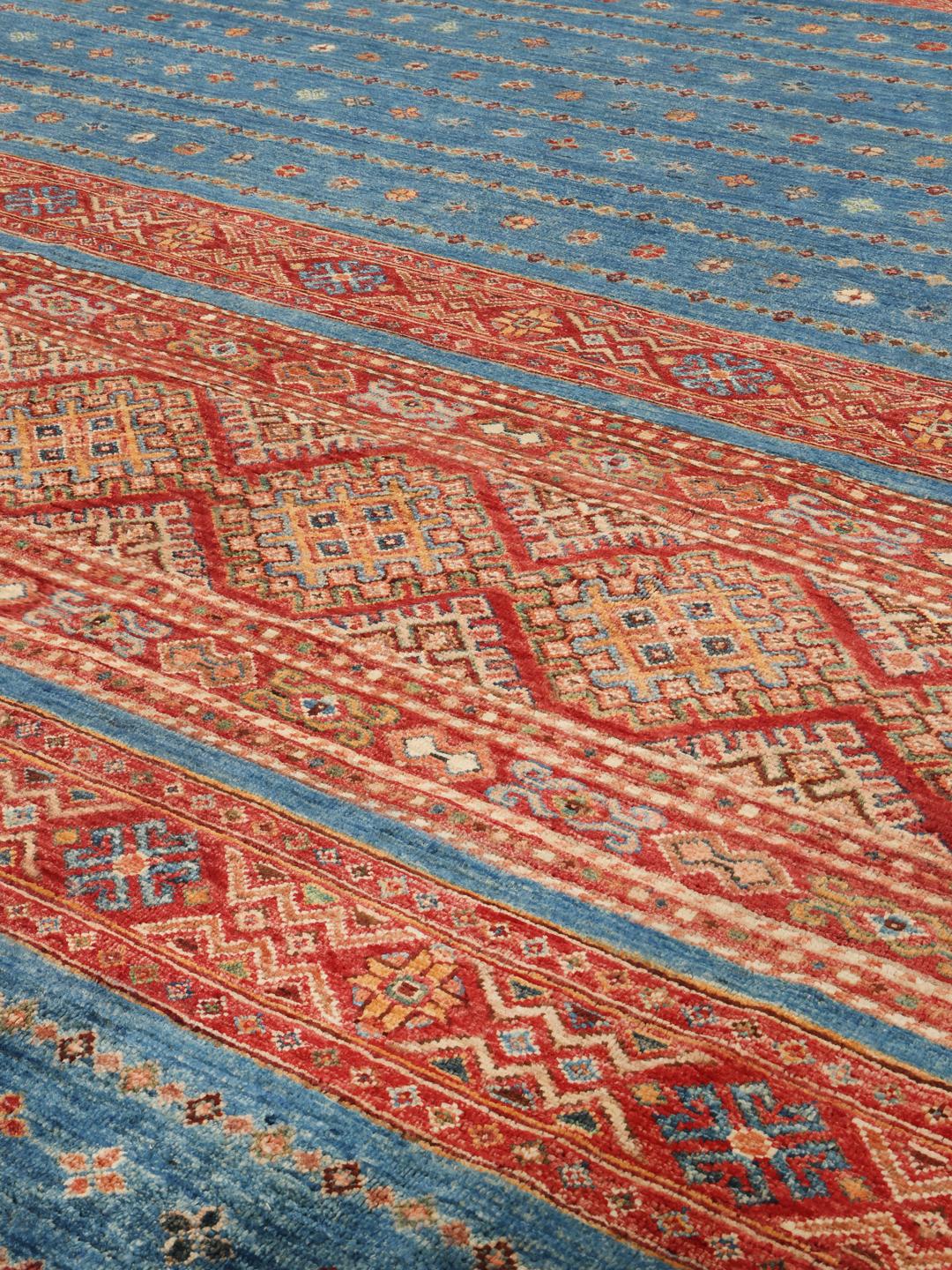
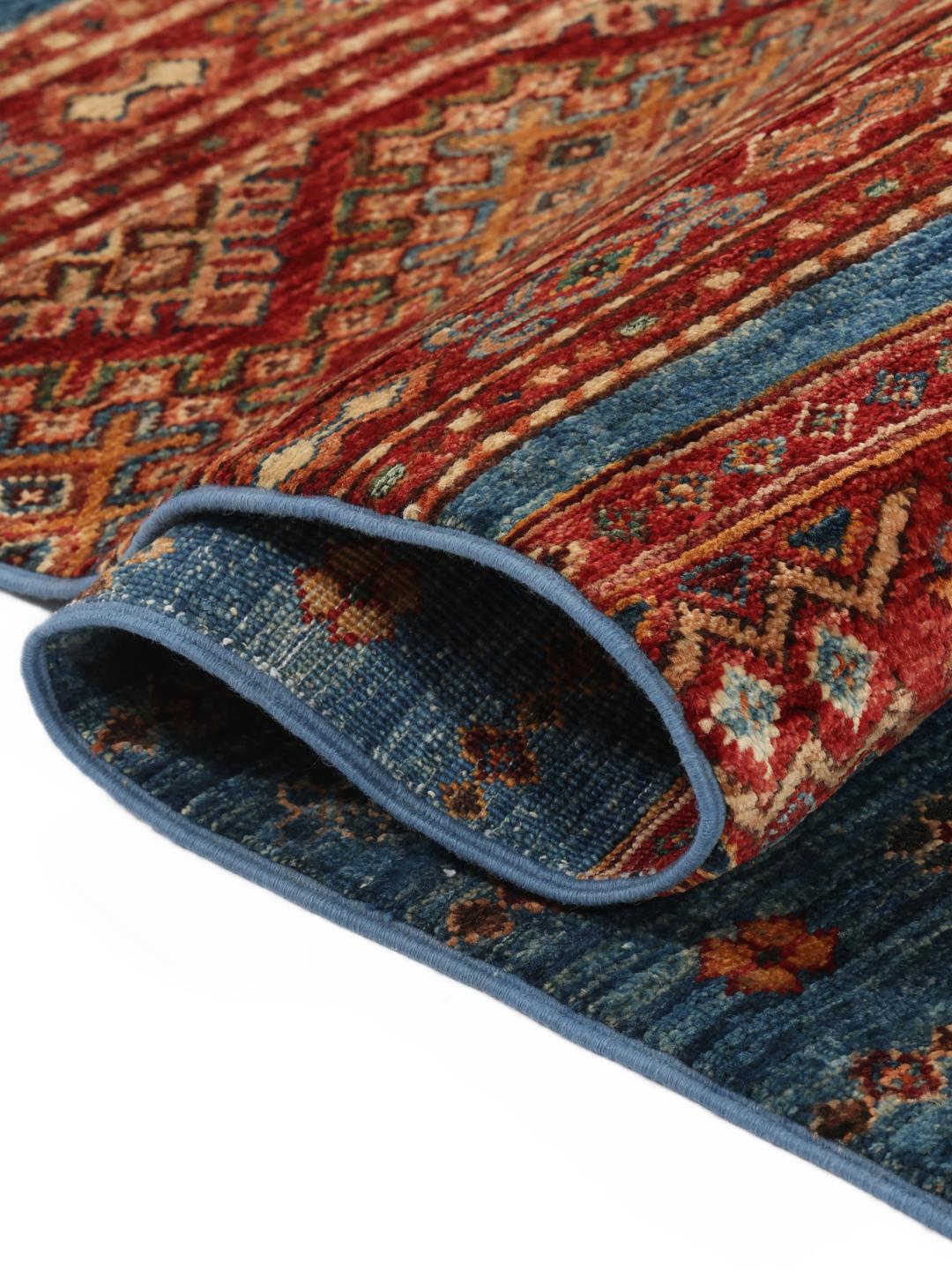
Visually, these rugs are often defined by their geometric rigour and bold, earthy colour palettes. You will frequently find repeating motifs such as diamonds and tribal symbols, which carry historical significance and are often associated with protection or prosperity. The use of deep, natural-toned blues and reds is a signature characteristic of this region, creating a look that is both timeless and instantly recognisable.
Collectors value these rugs for their authenticity and the human story woven into every inch. Owning a piece from this tradition is an acknowledgment of the skill, time, and dedication required to produce such a substantial item. It serves as a reminder of the enduring nature of hand-crafted goods in a world that is increasingly focused on the temporary, offering a sense of heritage that truly anchors a room.