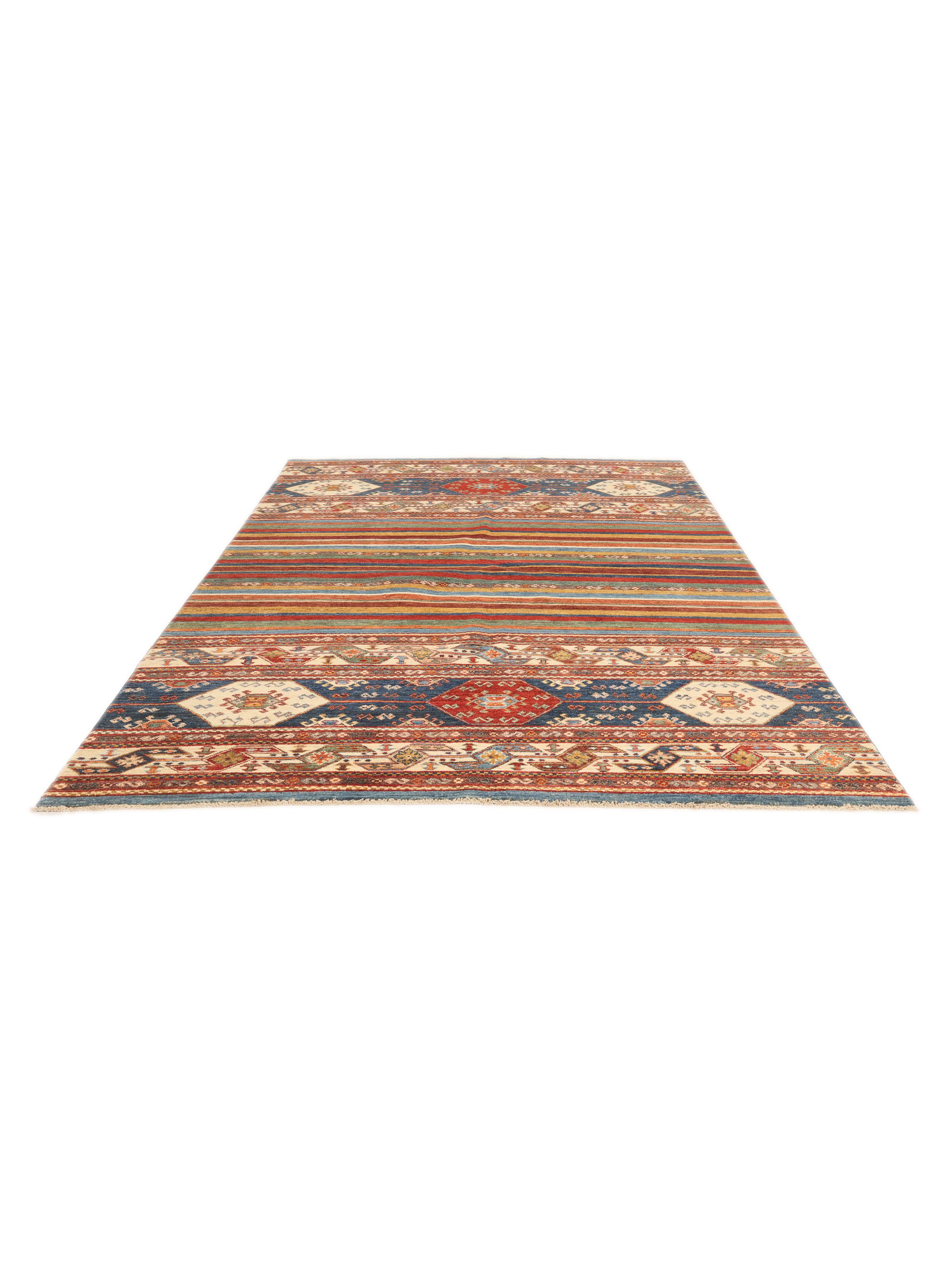
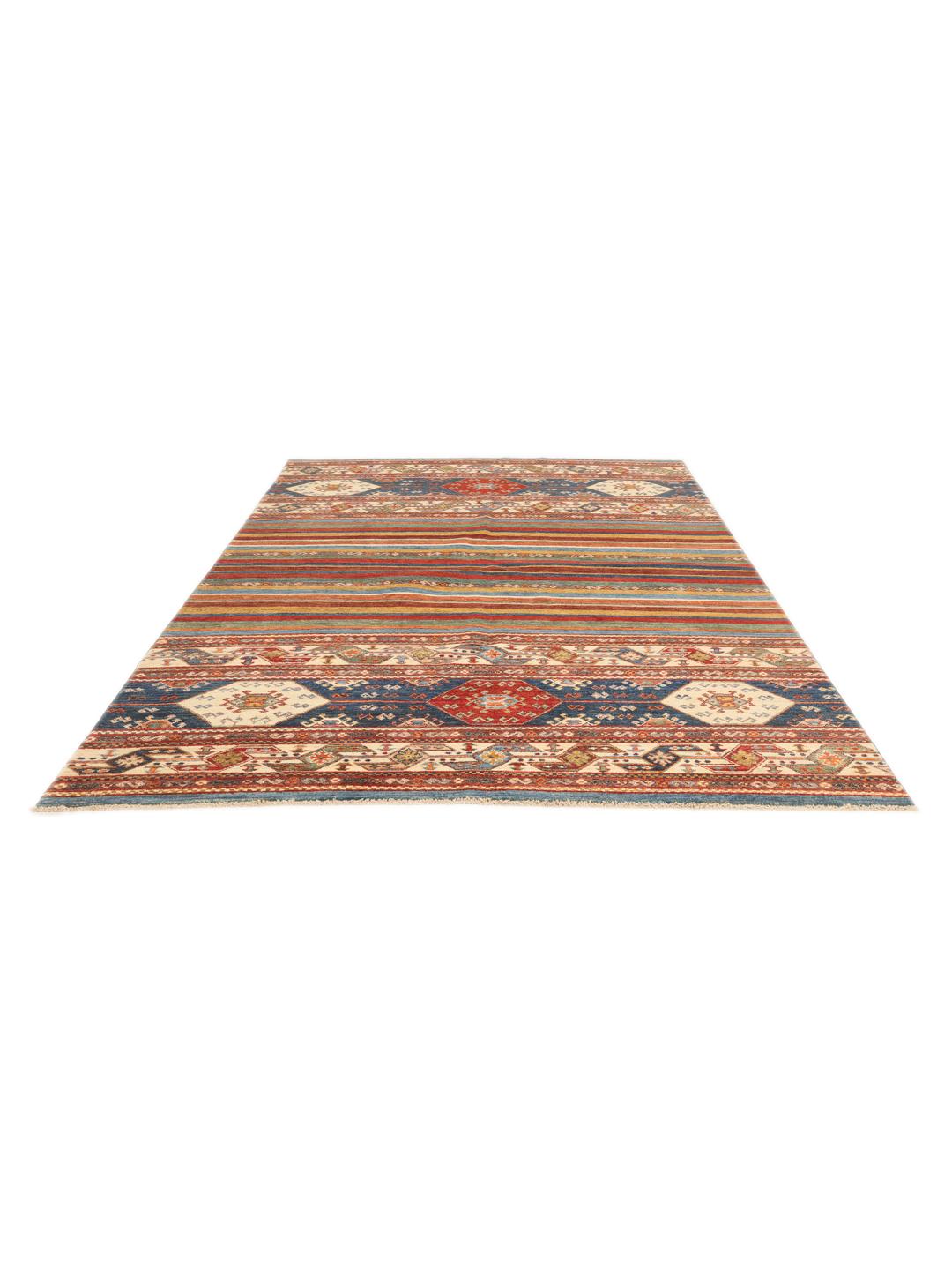
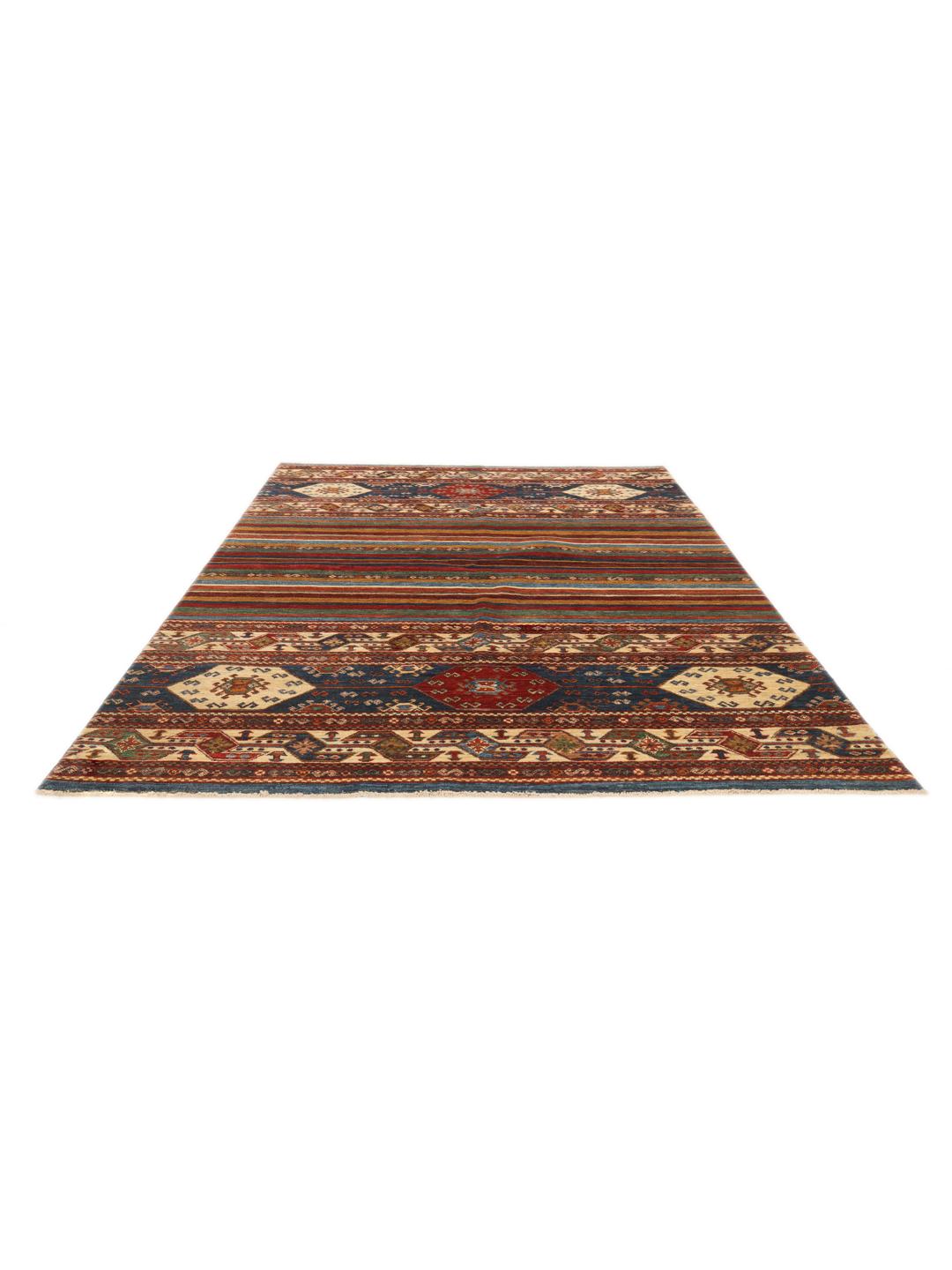
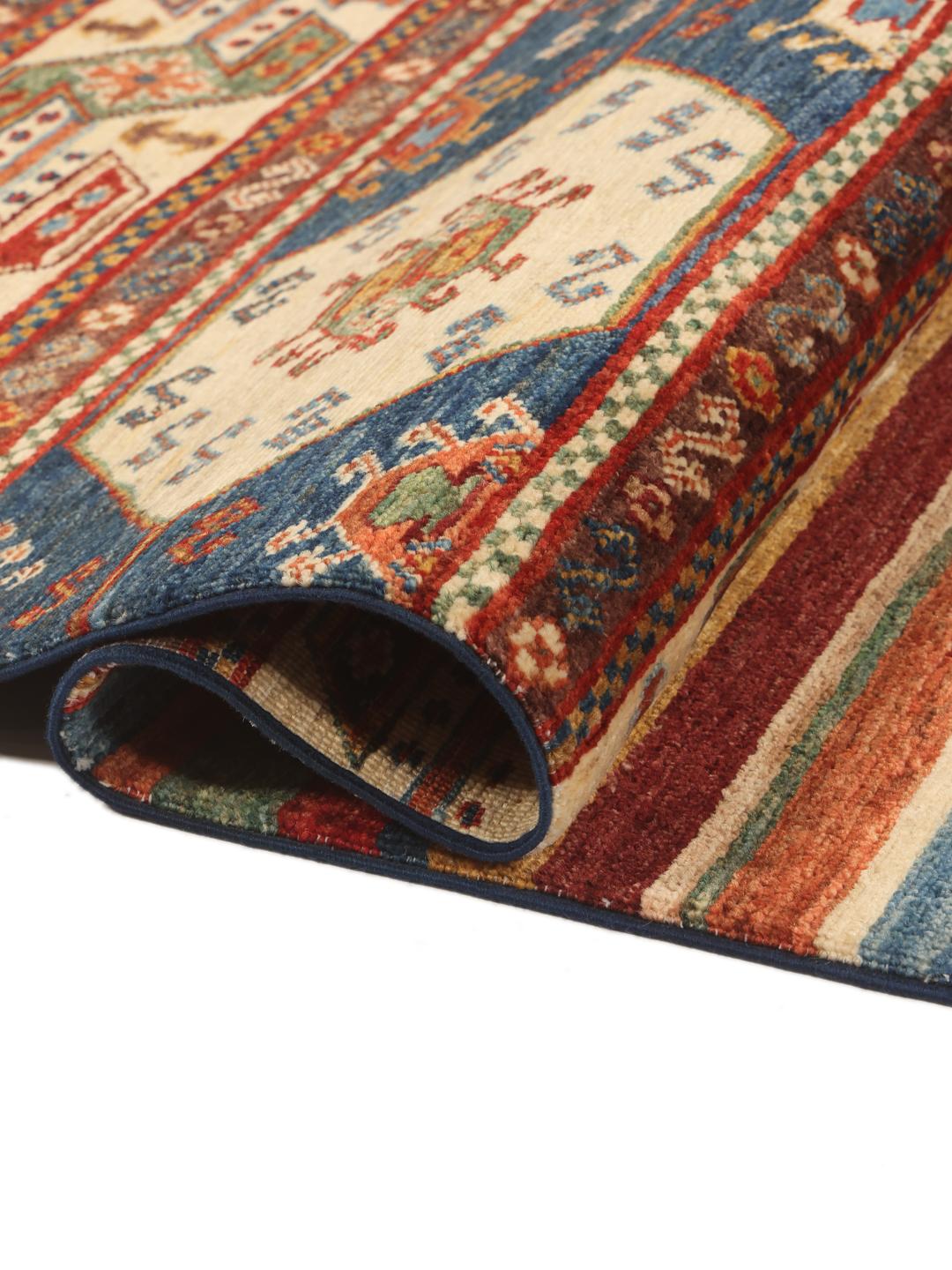
The tradition of rug weaving in Afghanistan is deeply rooted in the nomadic and semi-nomadic cultures of the region. These rugs are often inspired by the rugged landscapes and rich cultural exchanges of Central Asia, reflecting a history of craft that has been passed down through generations of families and tribal communities.
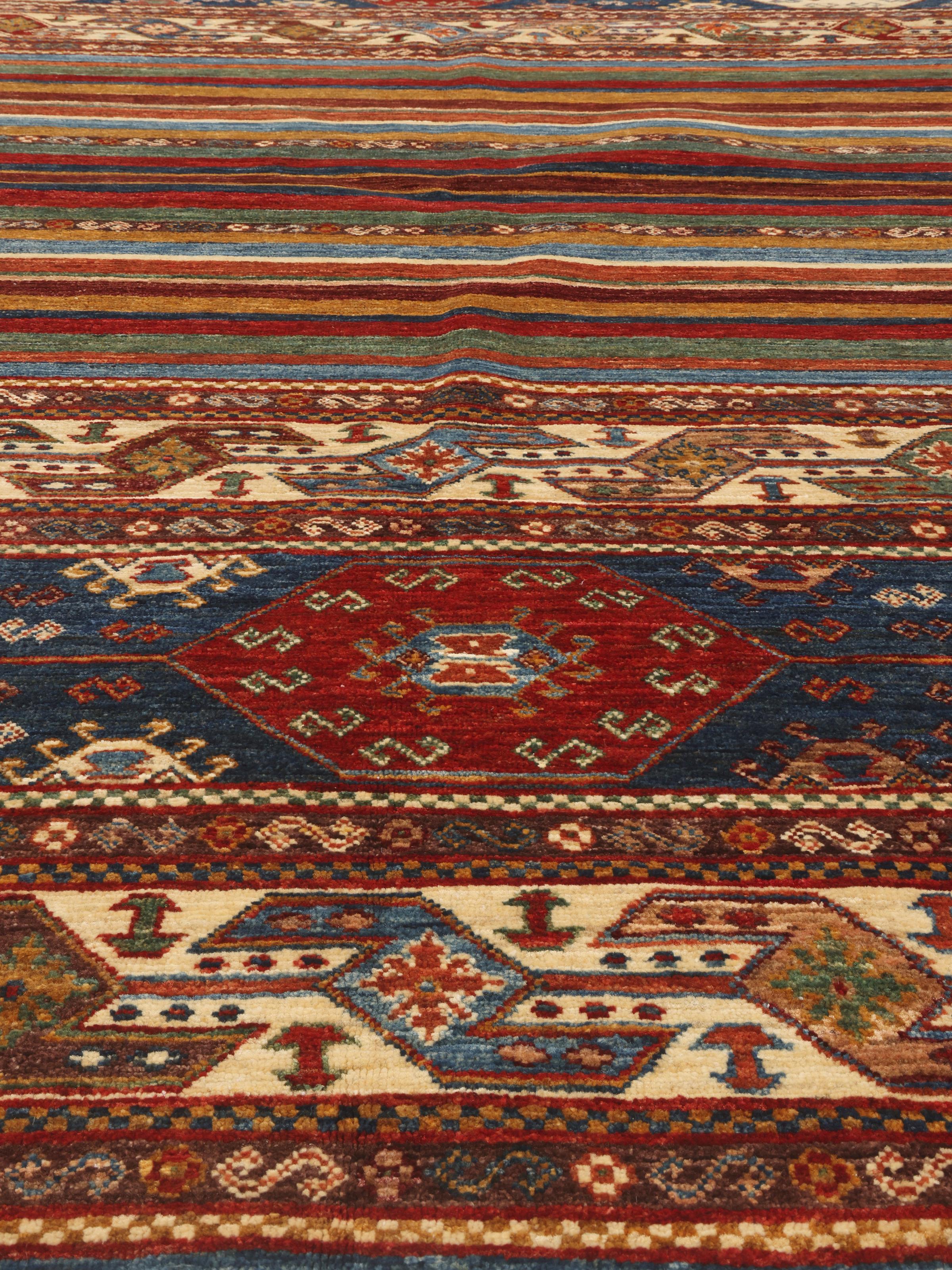
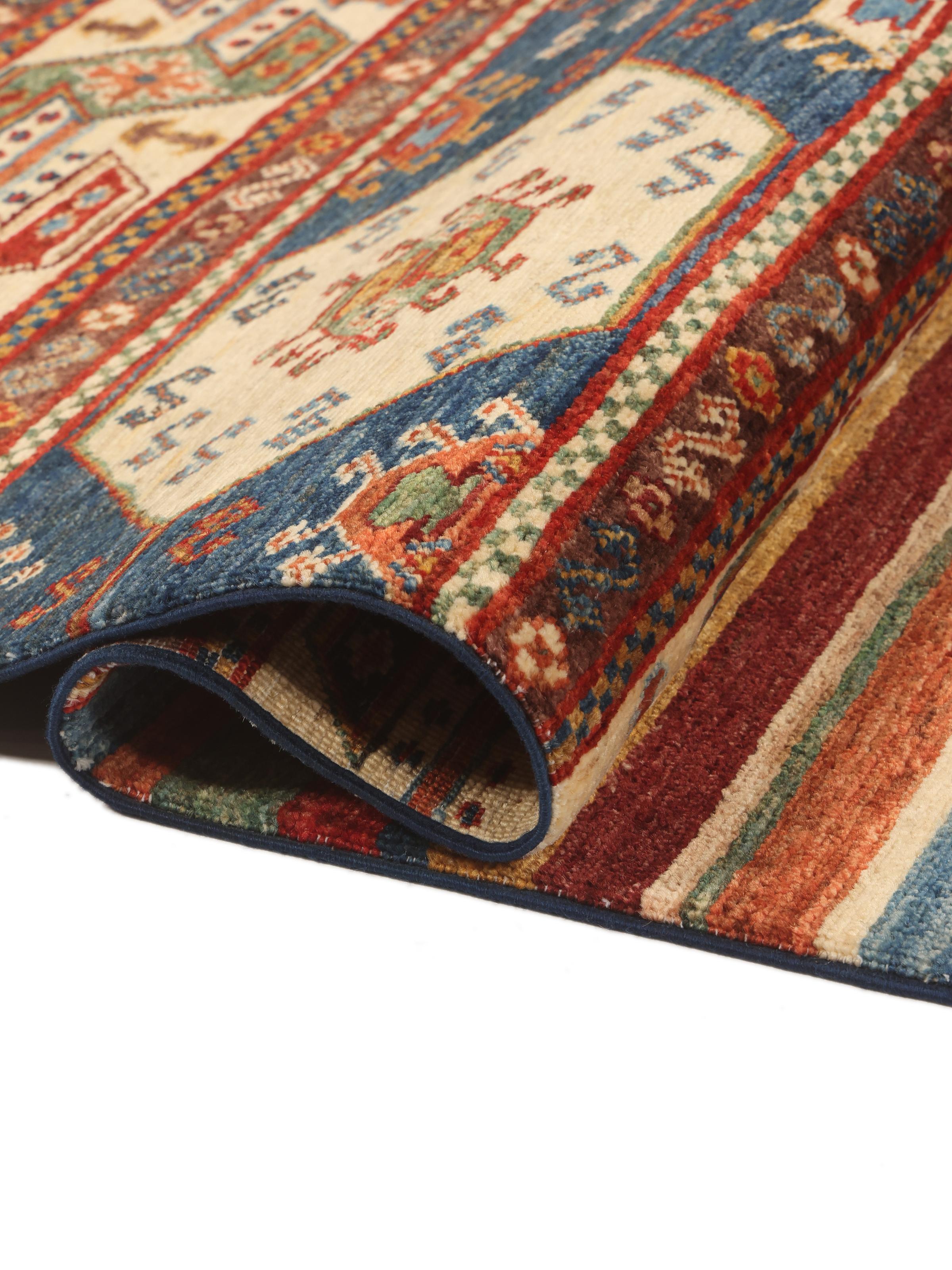
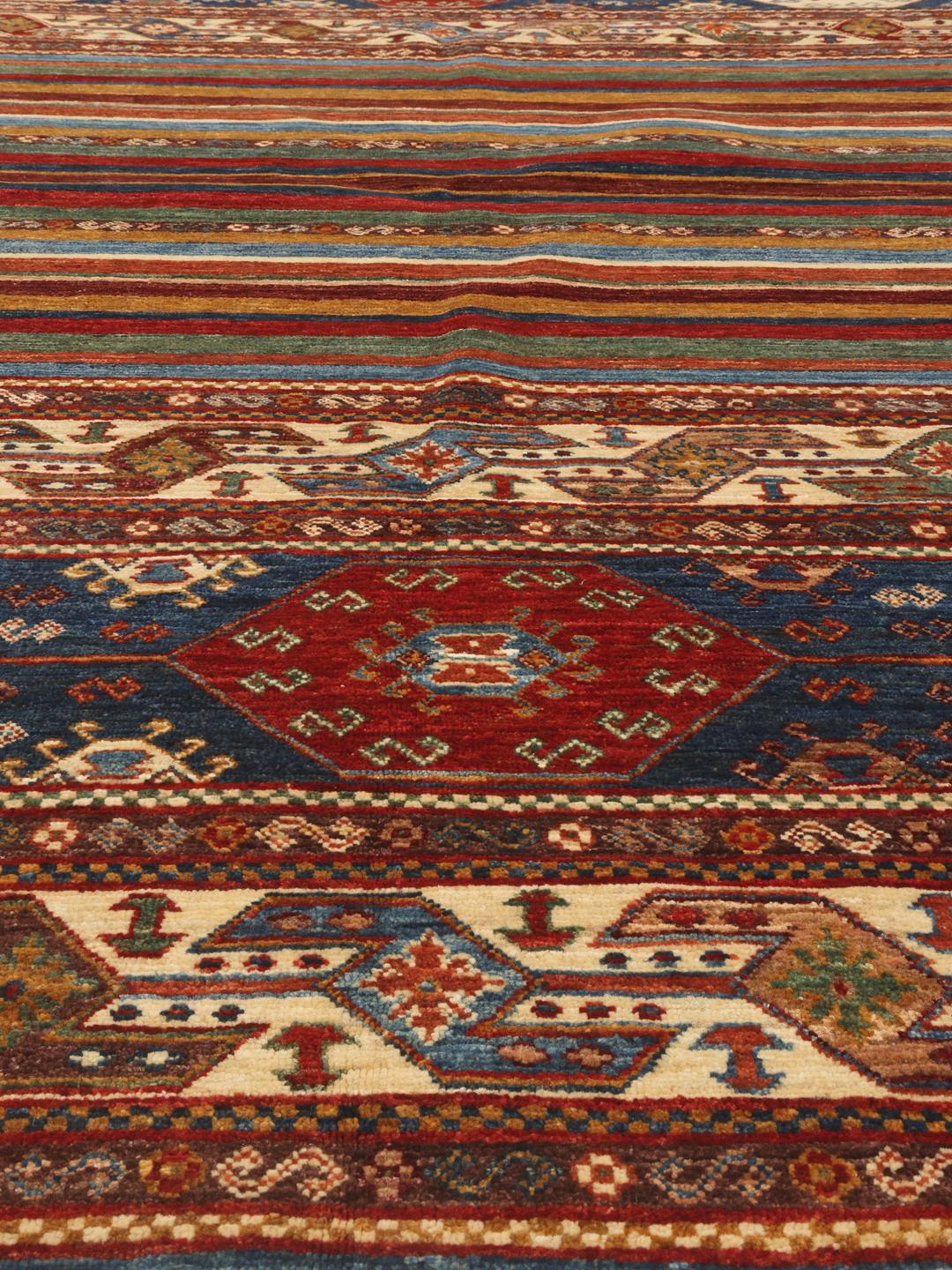
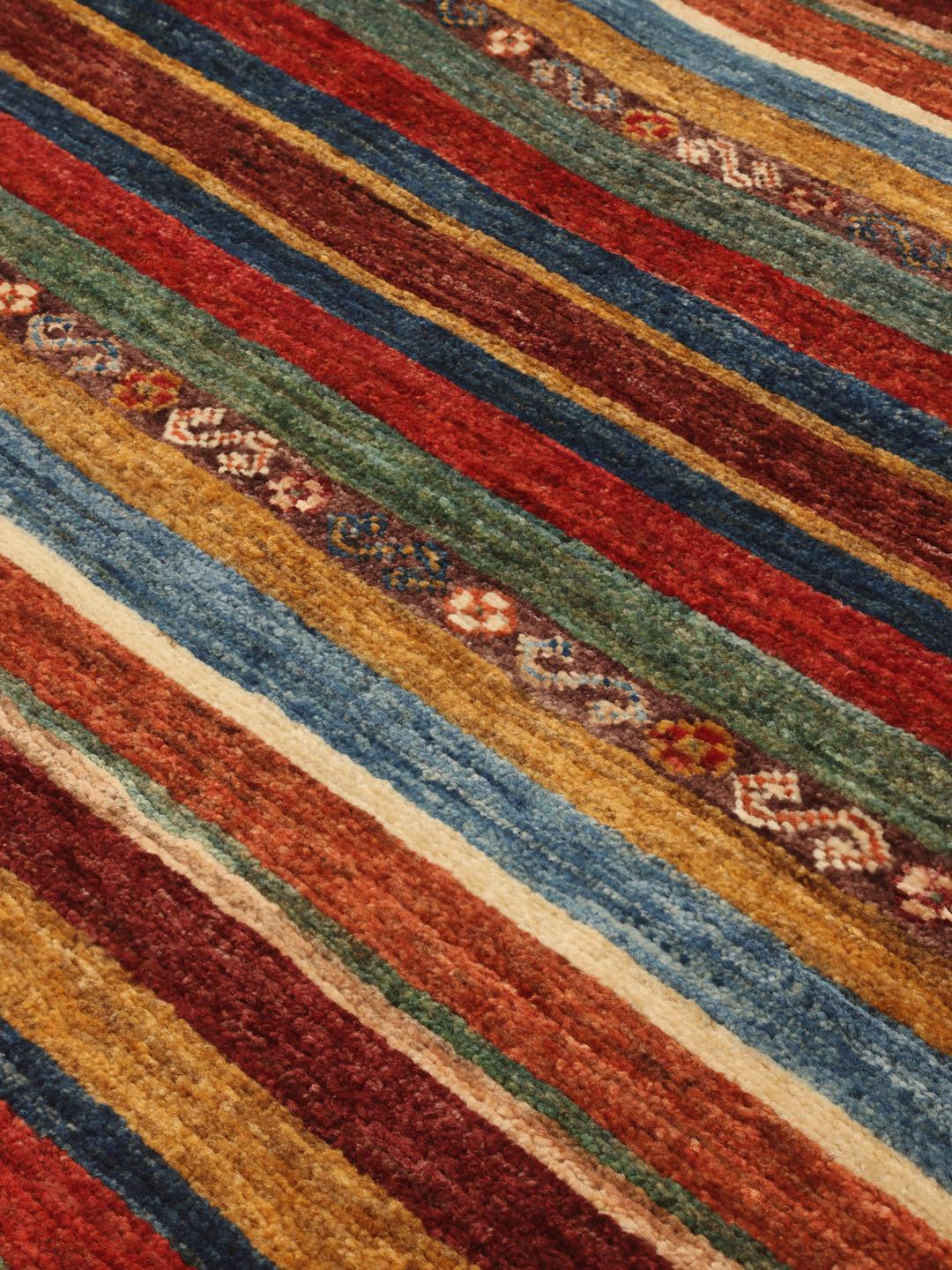
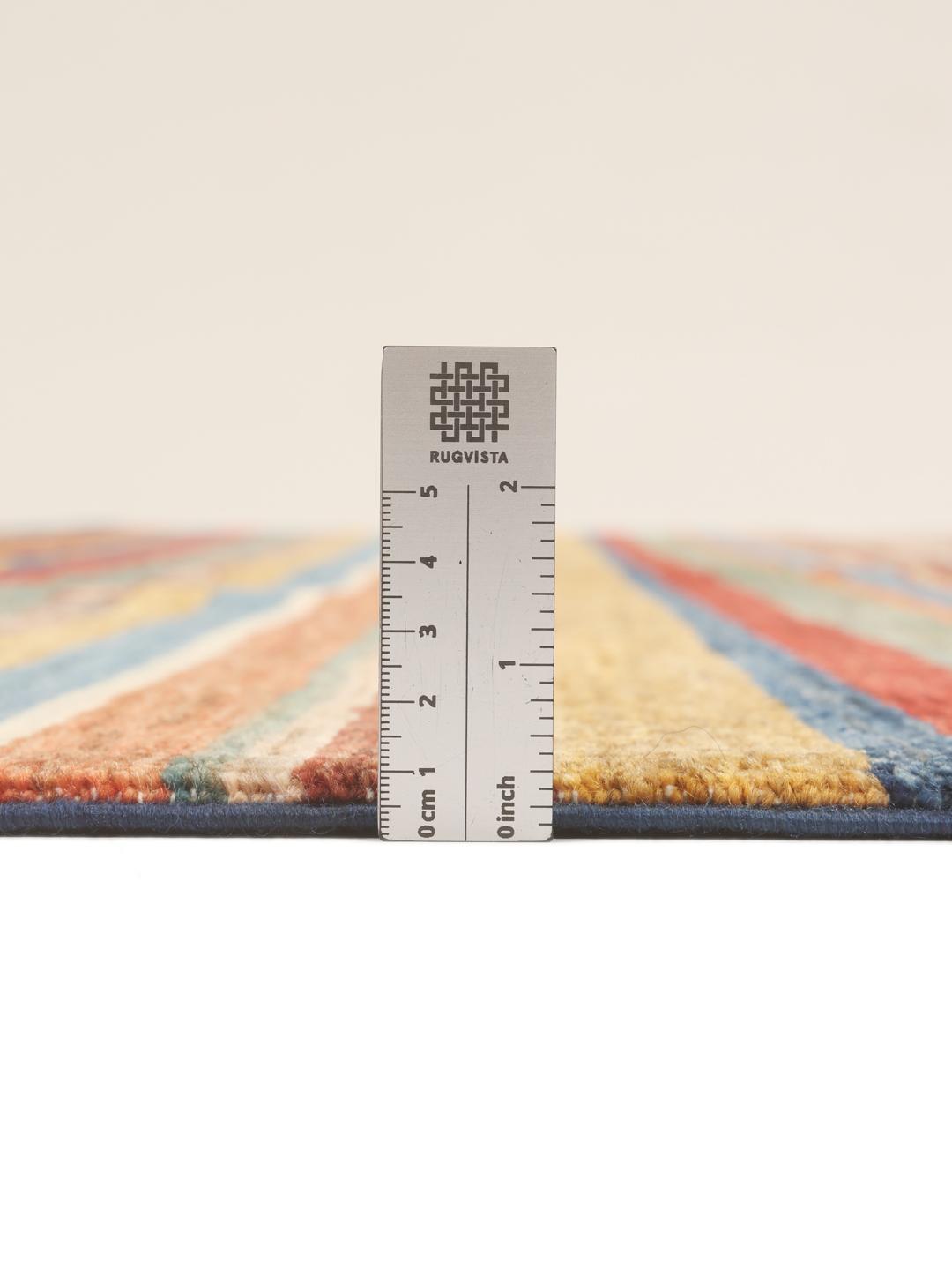
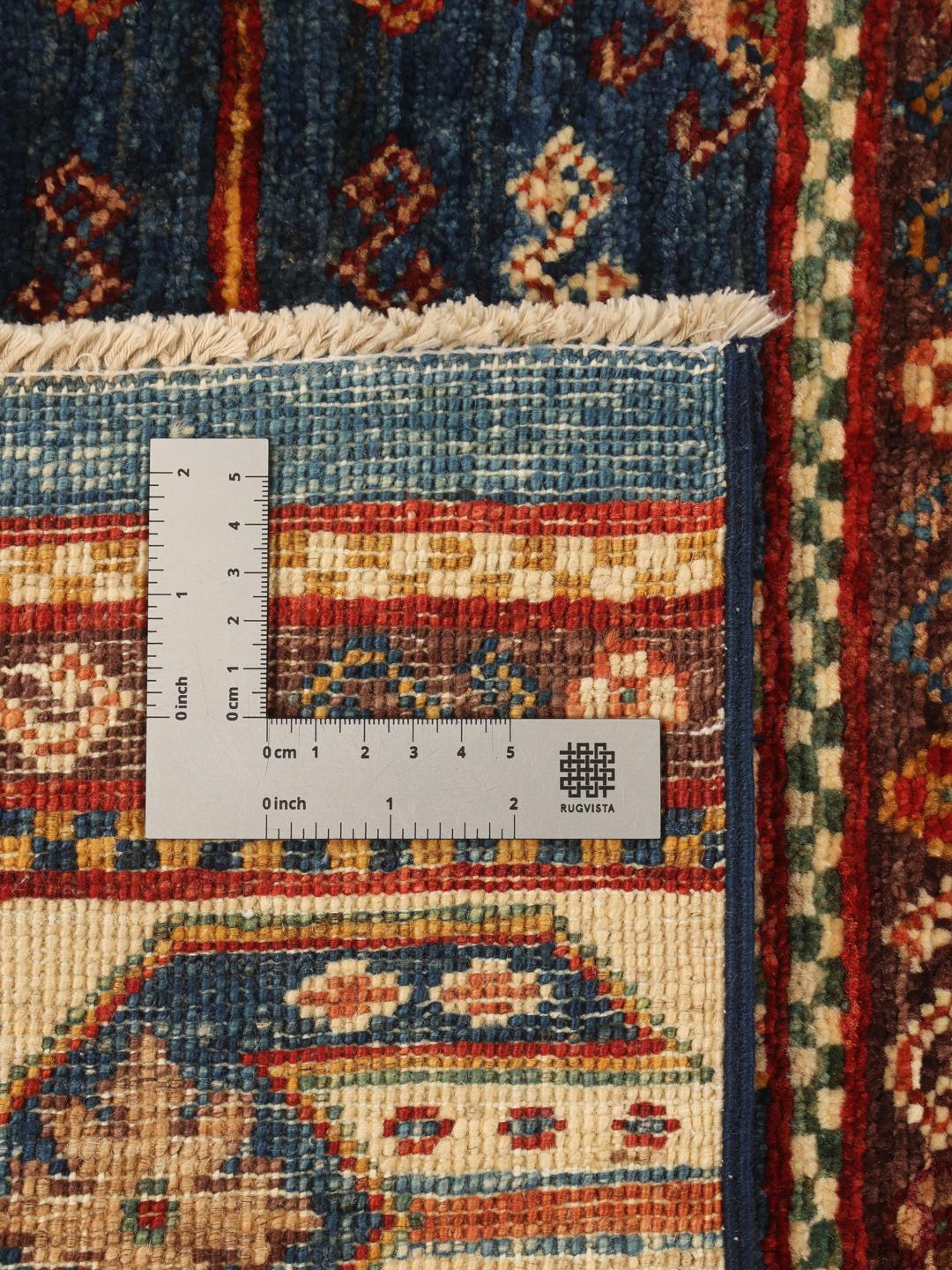
Technical terms such as hand-knotted describe a process where individual strands of wool are tied onto a warp foundation. This method is fundamental to the quality of the rug, as it creates a dense, pile-rich surface that is significantly more durable and lustrous than machine-made alternatives, ensuring the rug keeps its texture and colour depth over time.
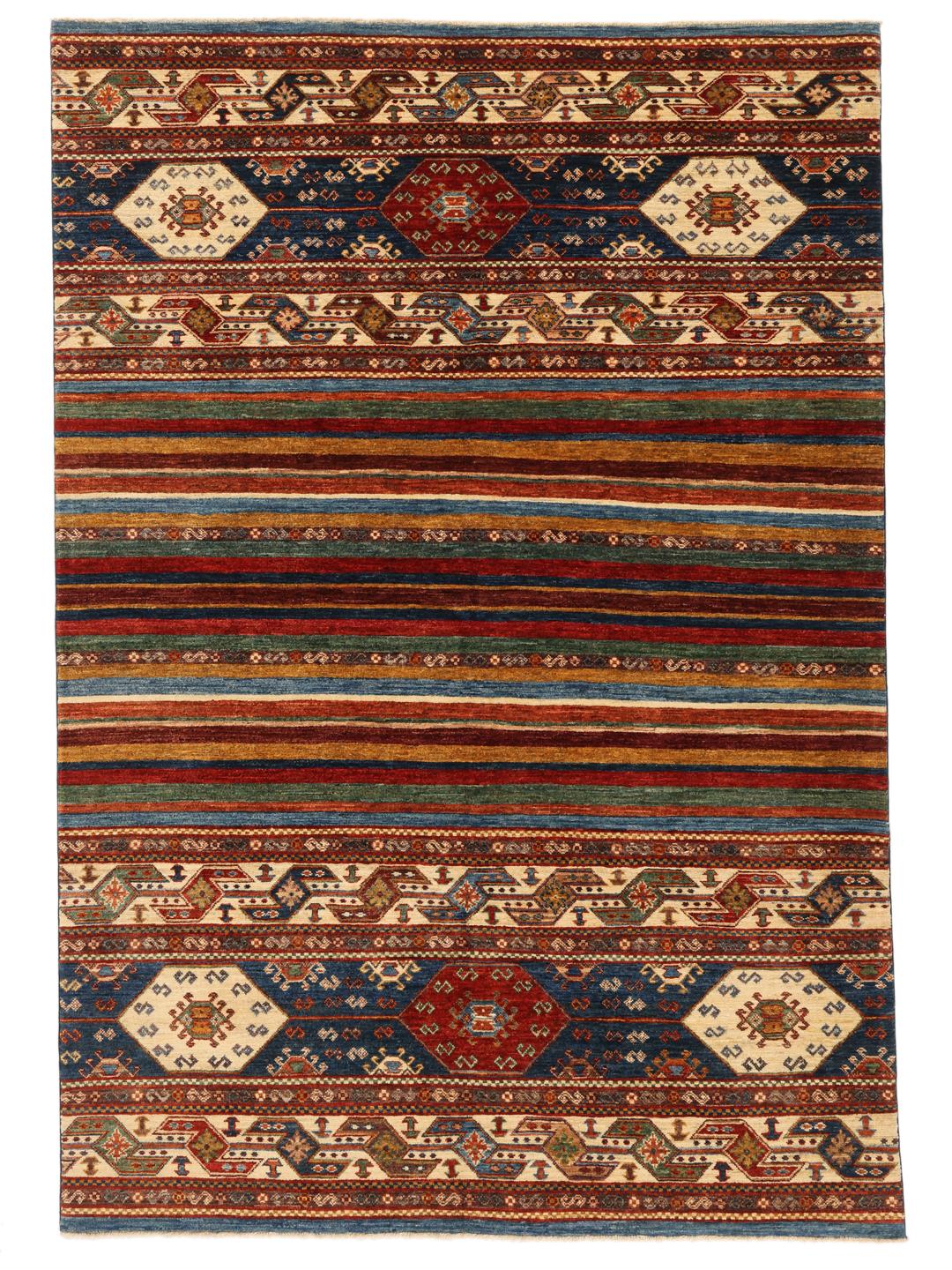
The design language of this piece is defined by its bold, horizontal stripes and repeating geometric medallions. These motifs are characteristic of the region's tribal heritage, often drawing on symbolic shapes that represent local flora, fauna, or ancestral patterns. The use of a vibrant colour palette against these traditional motifs highlights the creative evolution of Afghan weavers.
Owning an Afghan rug is an investment in cultural heritage and human skill. Because each piece is the result of a long, personal journey from raw material to finished textile, it carries a weight and presence that mass-produced goods lack. Collectors and homeowners value these rugs not only for their beauty but for the tangible connection they provide to an ancient, enduring art form.