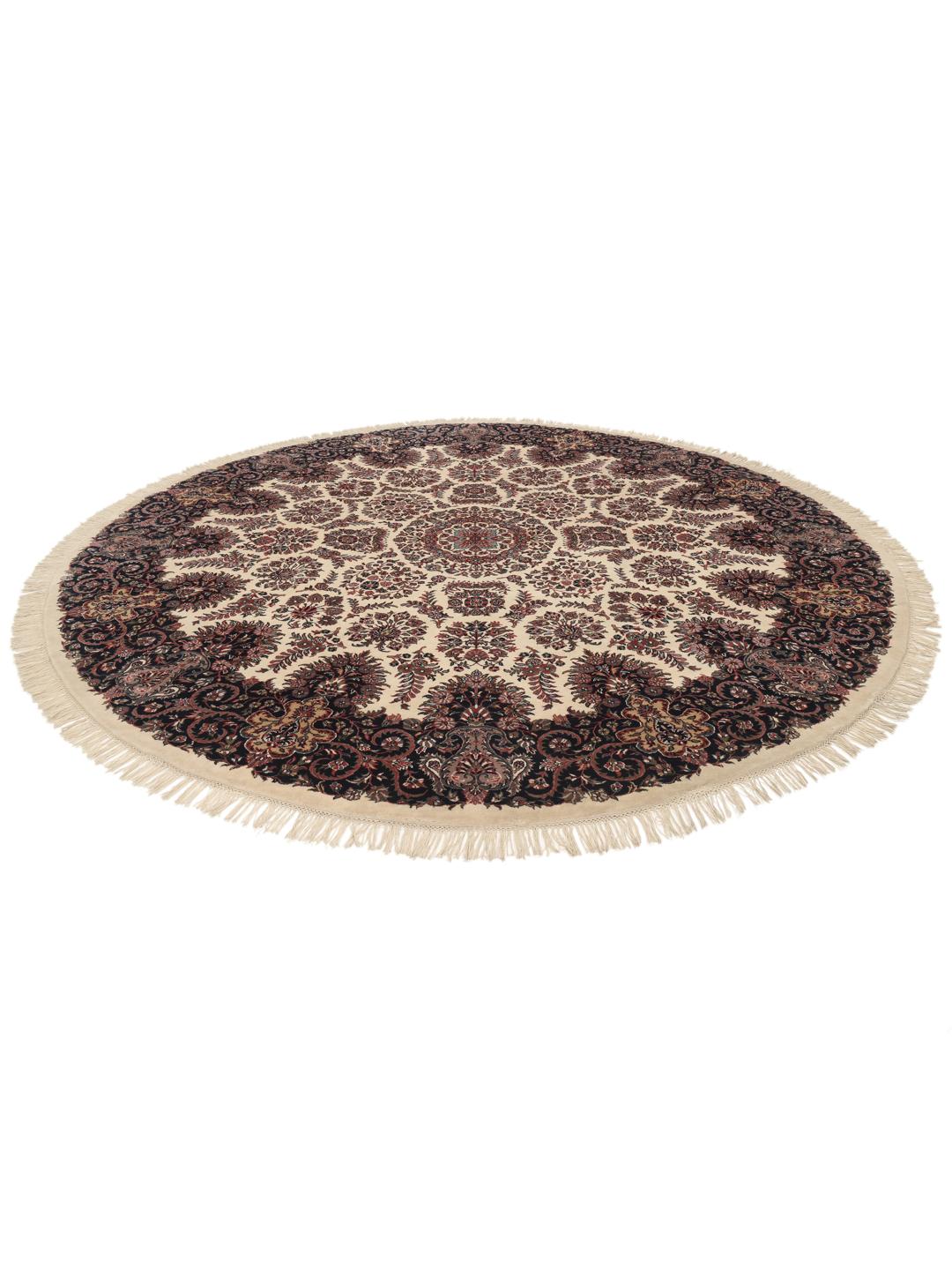
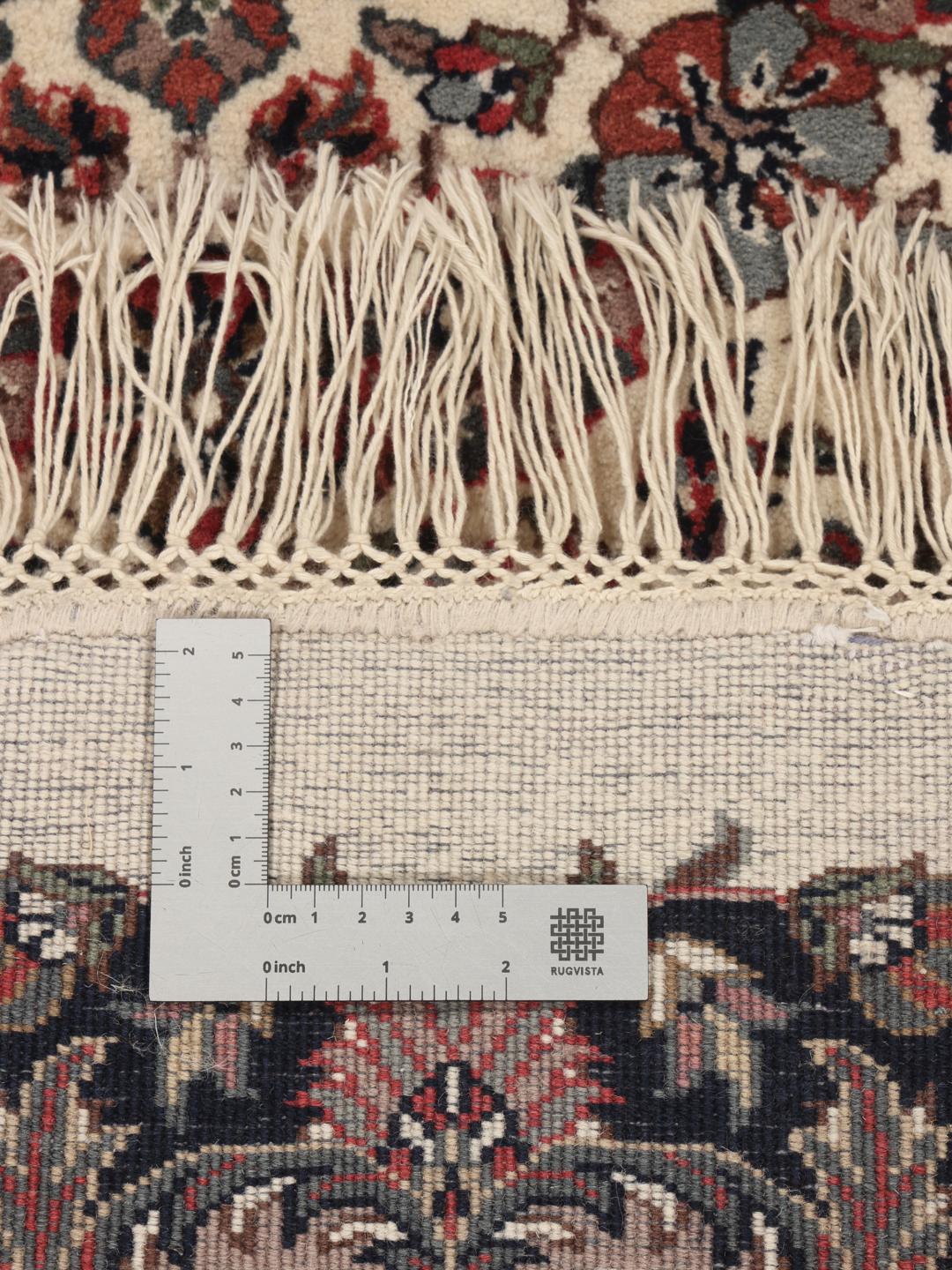
The Sarouk rug tradition originates from the village of Sarouk in the central region of the Middle East. Historically, these rugs gained international fame in the early 20th century for their exceptional durability and heavy, dense pile, which made them a favourite for households seeking long-lasting elegance.
While the style has its roots in Middle Eastern weaving traditions, the art form has been beautifully interpreted by skilled artisans in India. This migration of craft has allowed for the preservation of classic motifs while embracing local expertise, resulting in rugs that honour the legacy of their ancestors while standing as modern examples of fine floor art.
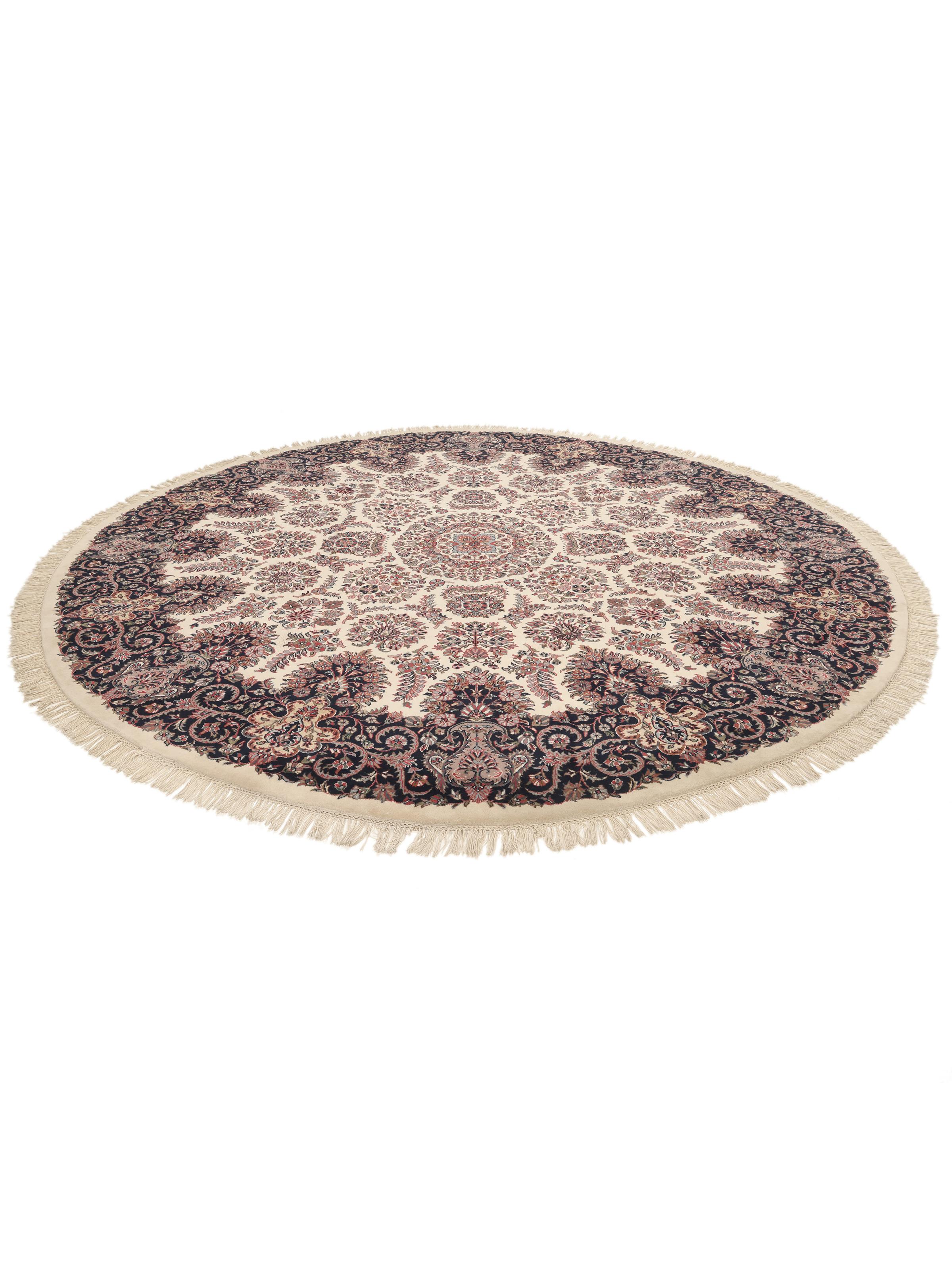
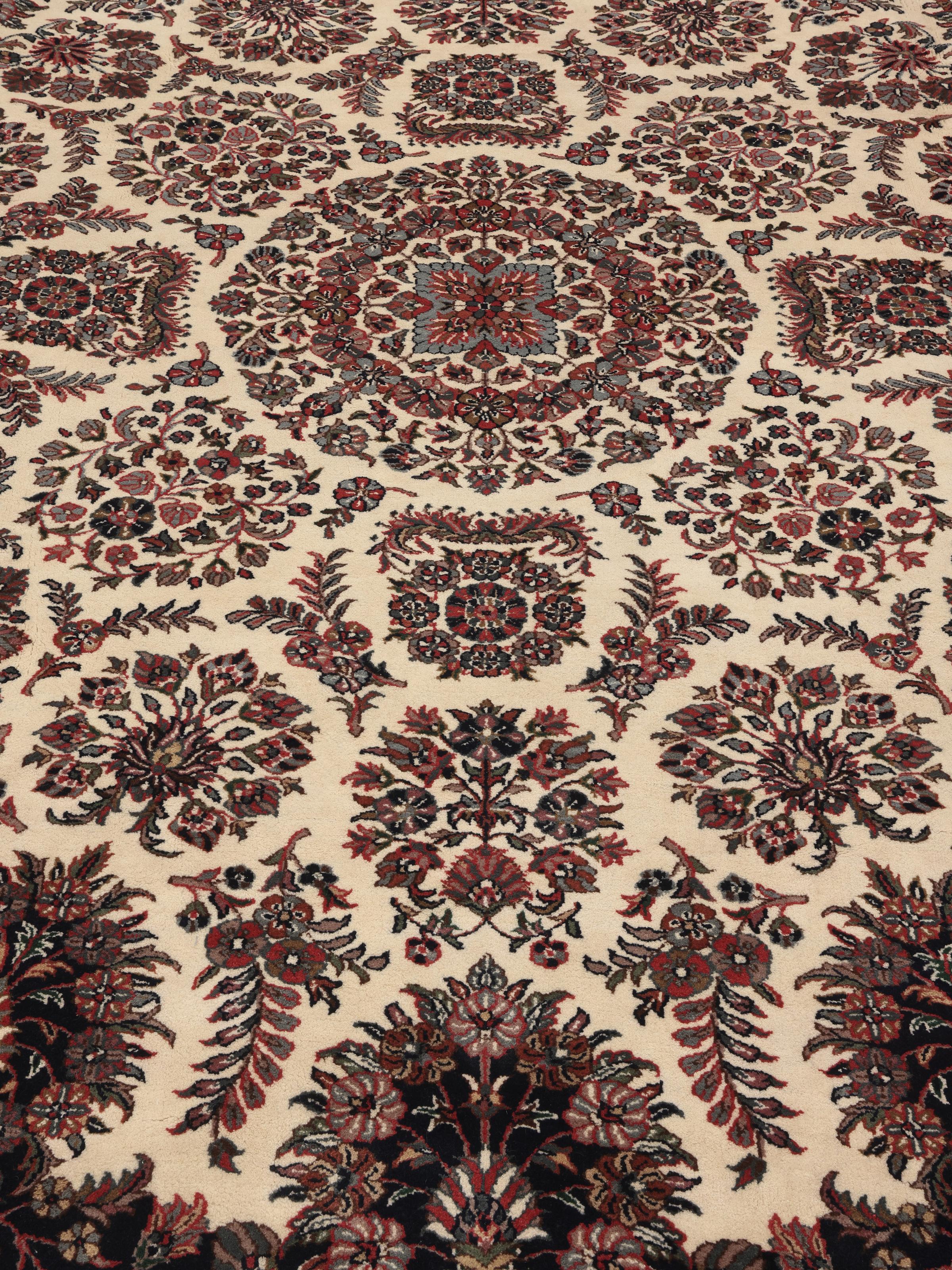
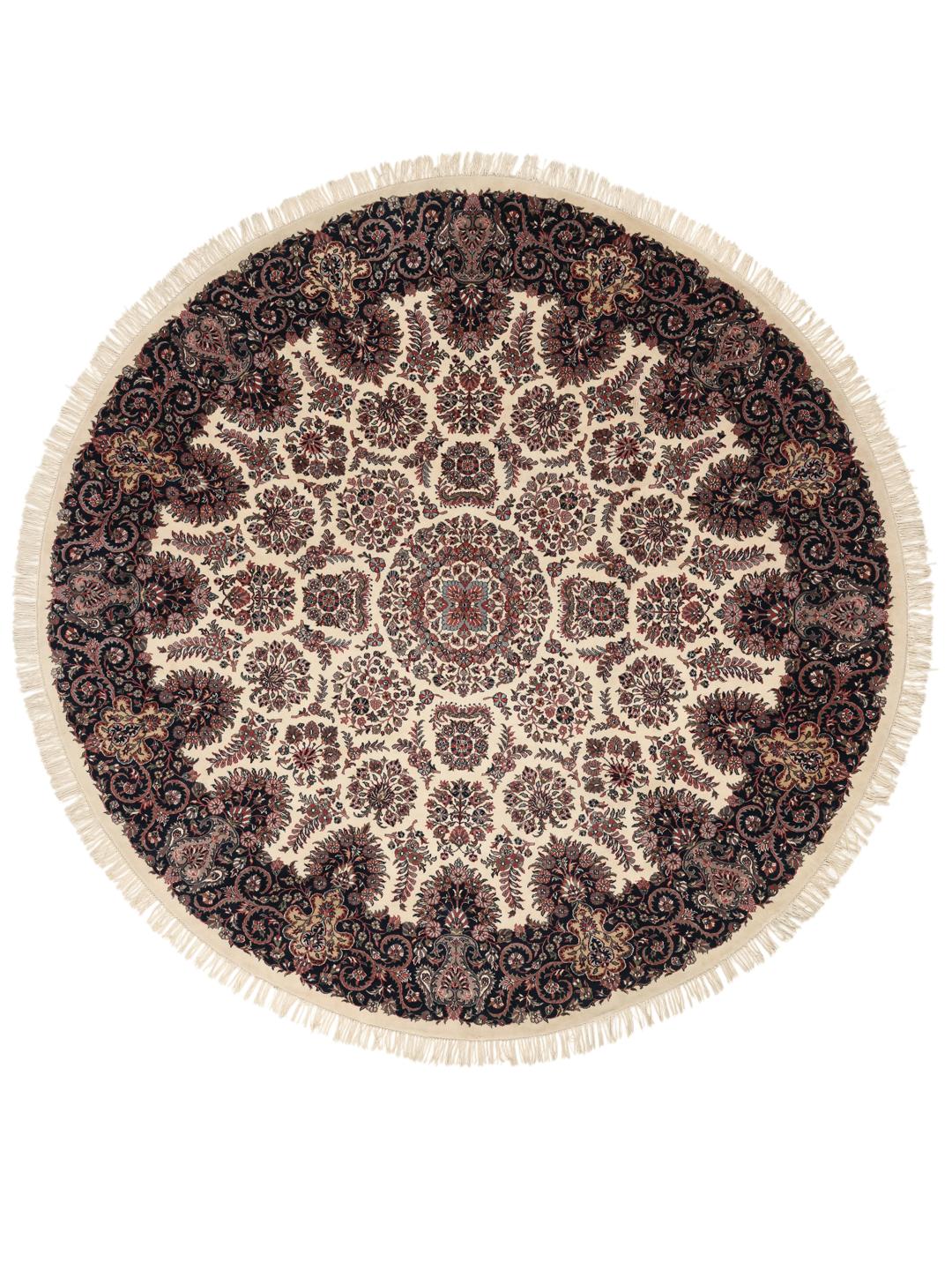
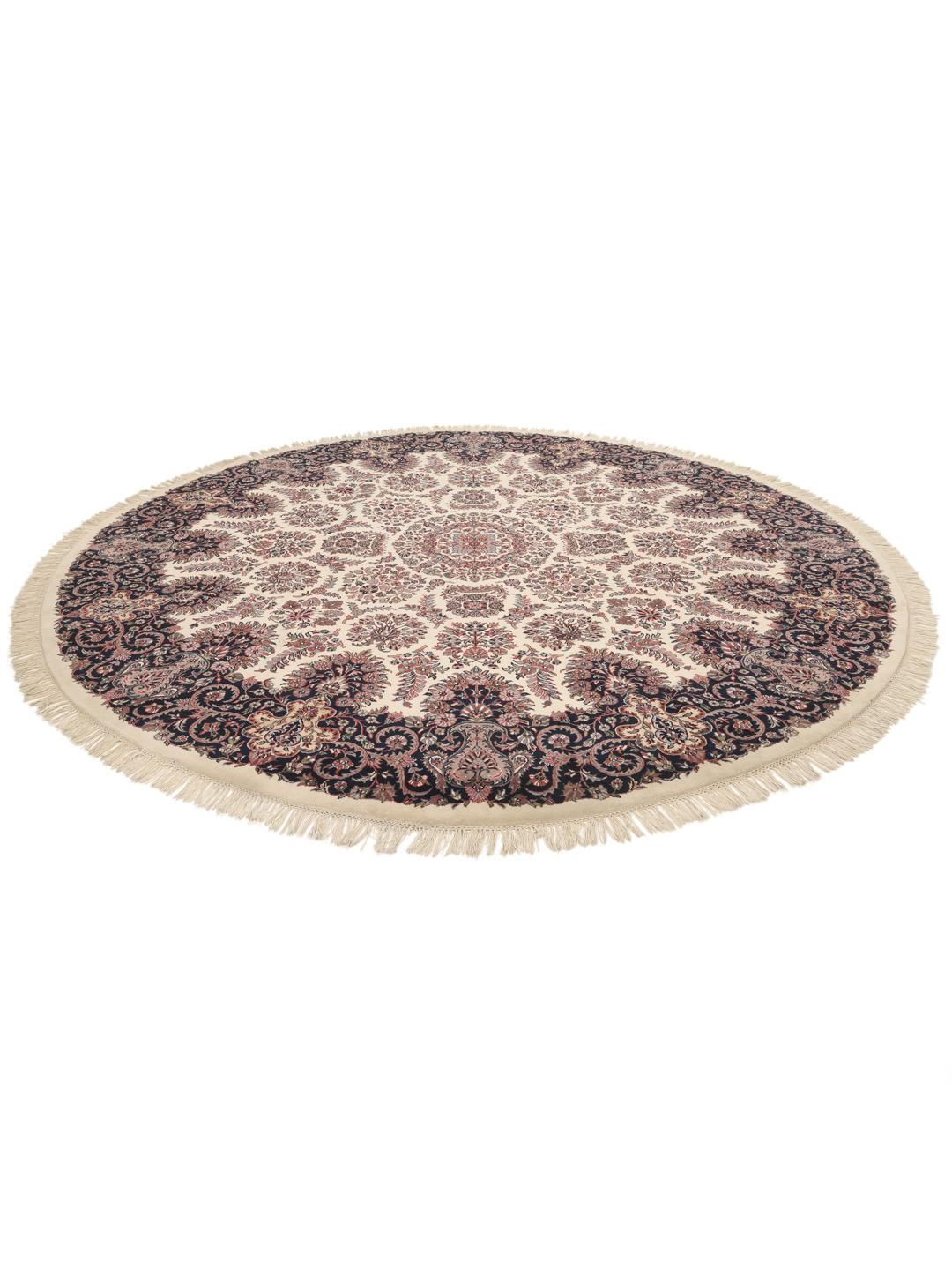
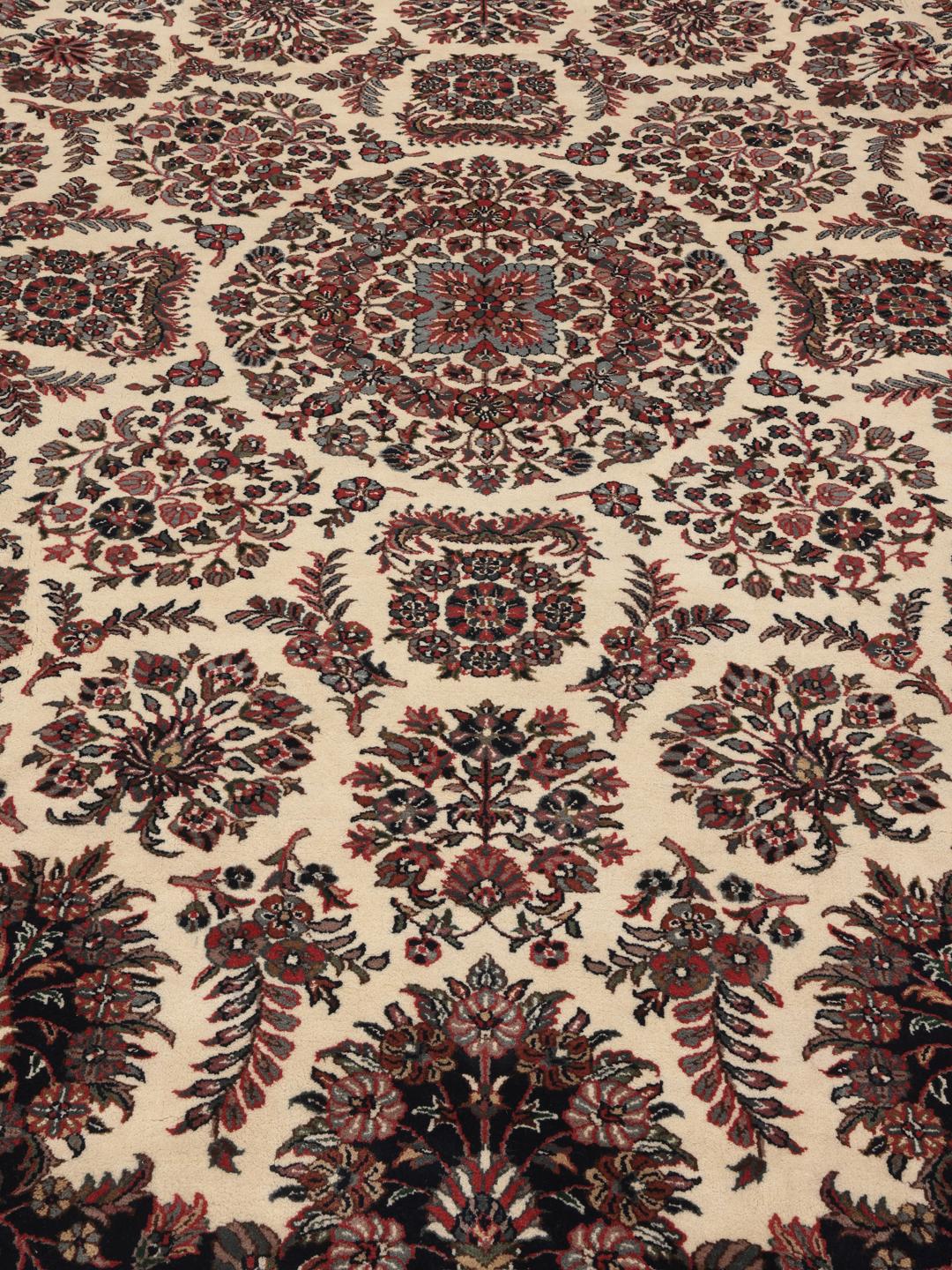
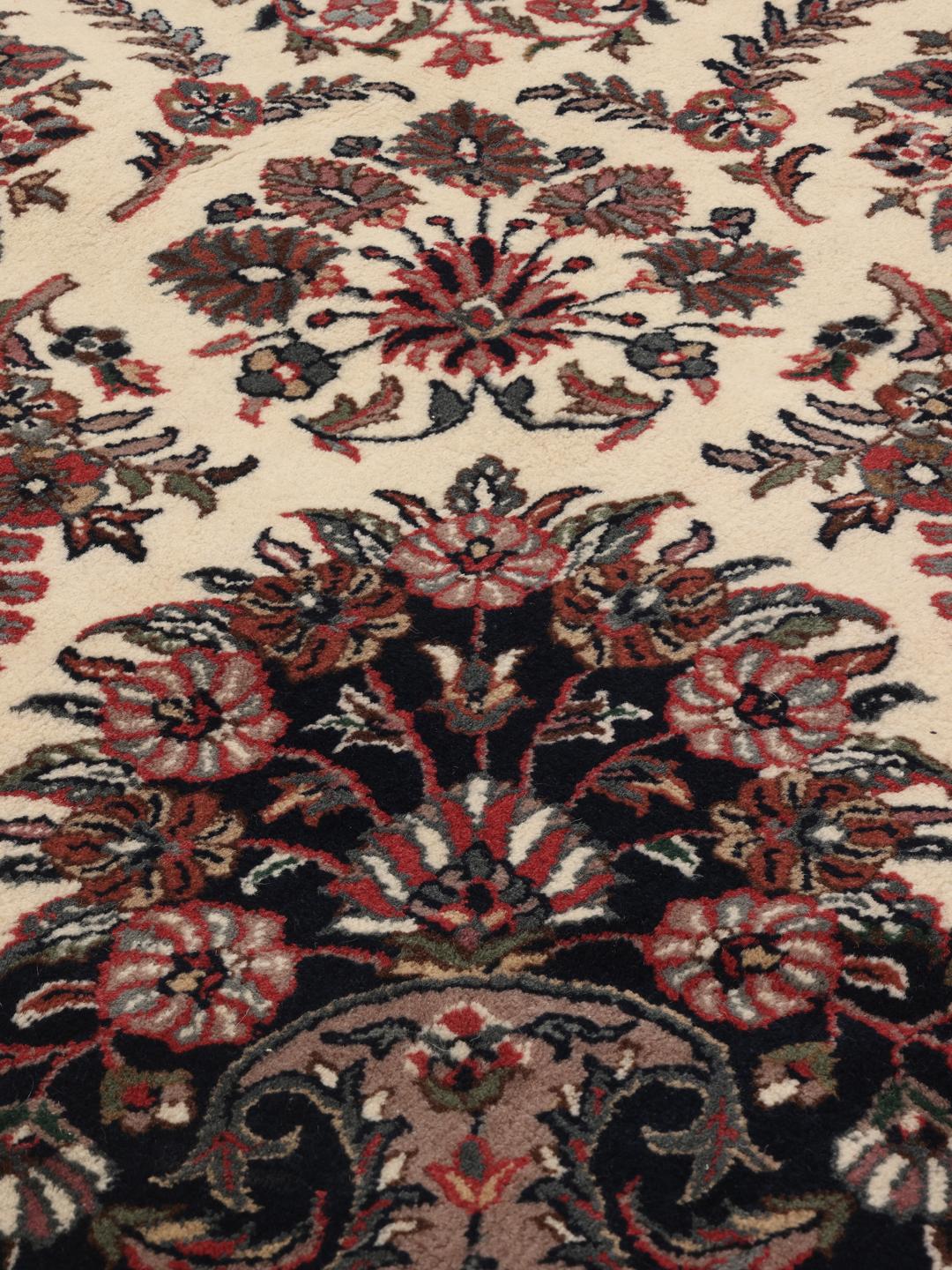
The design of this piece is defined by its elaborate floral language, often featuring central medallions surrounded by flowing vines and blossoms. This traditional aesthetic is celebrated for its balance and complexity, with deep, rich tones creating a dramatic contrast against the softer, neutral field. Such patterns are hallmarks of the style, reflecting a heritage of decorative precision.
Owning a hand-knotted piece from this tradition is about more than just decor. It is an investment in a storied craft that values patience and heritage above all else. Collectors and enthusiasts alike treasure these rugs for their ability to carry the cultural weight of generations, turning a simple floor covering into a meaningful family heirloom.