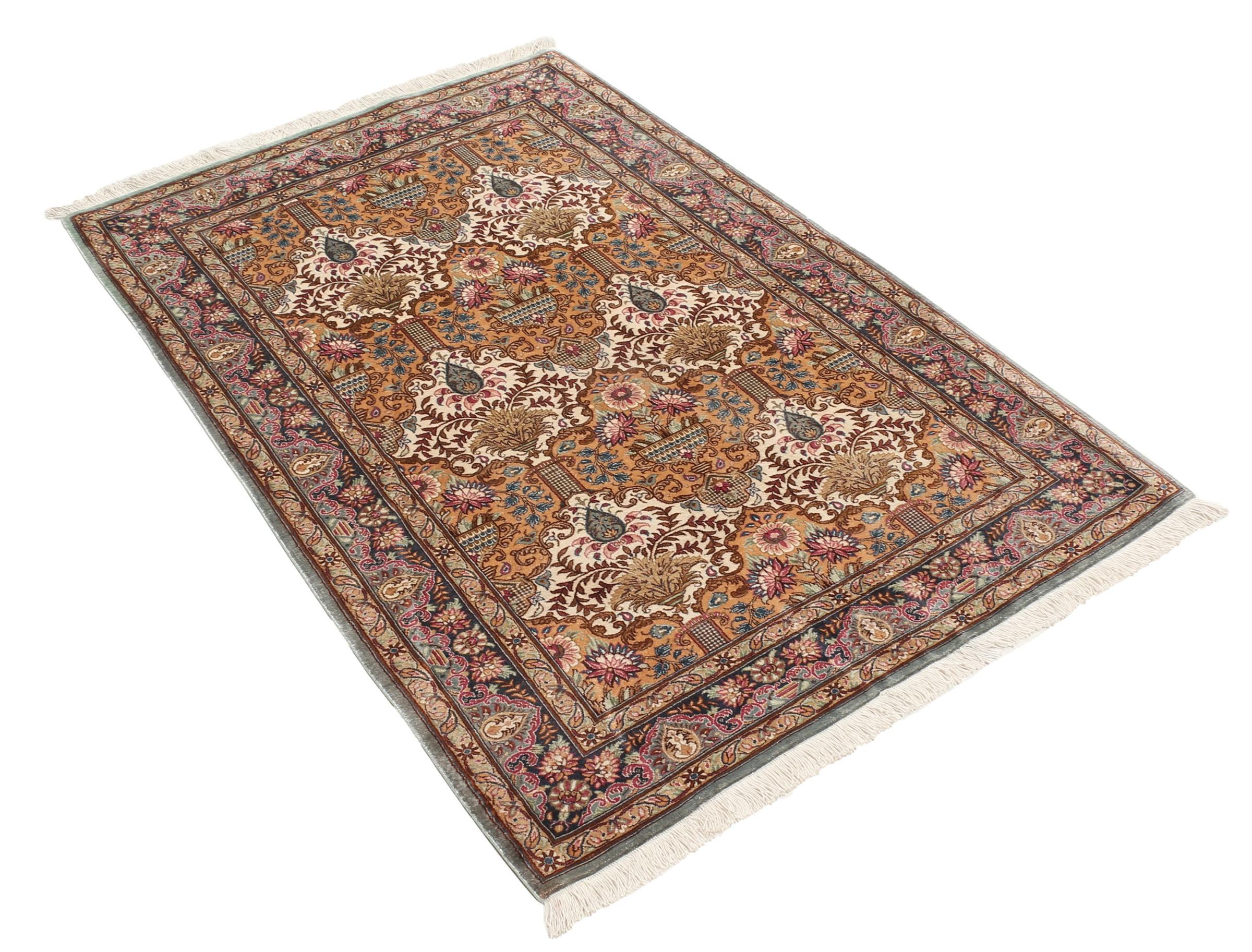
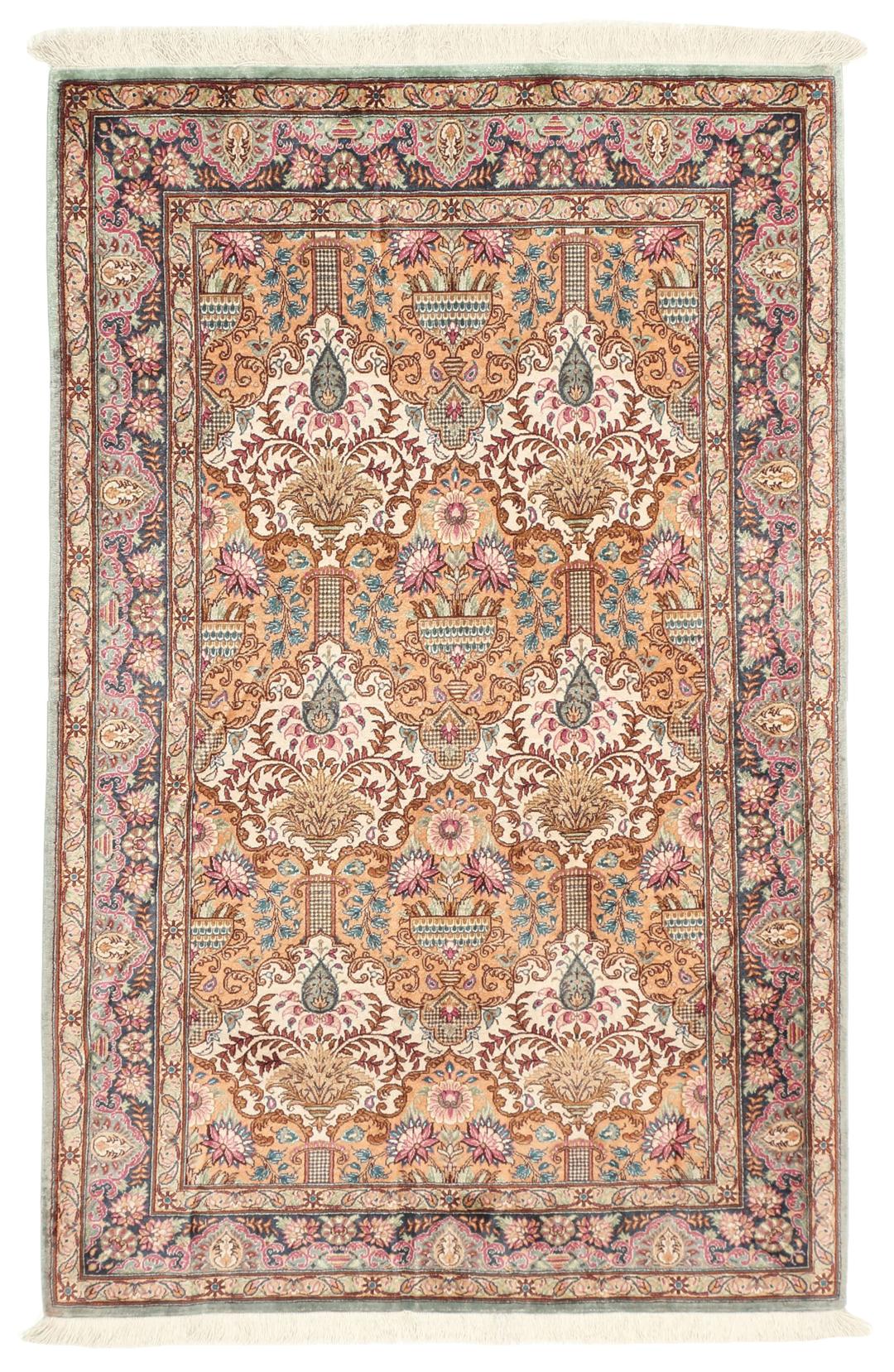
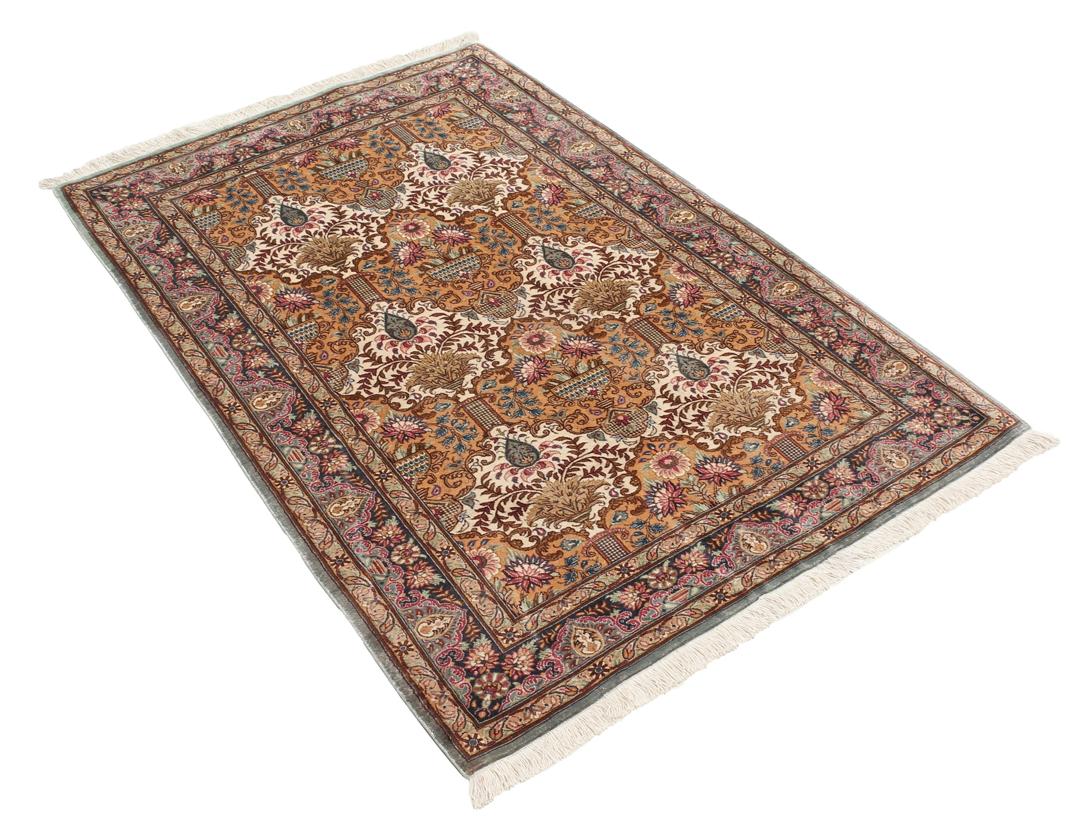
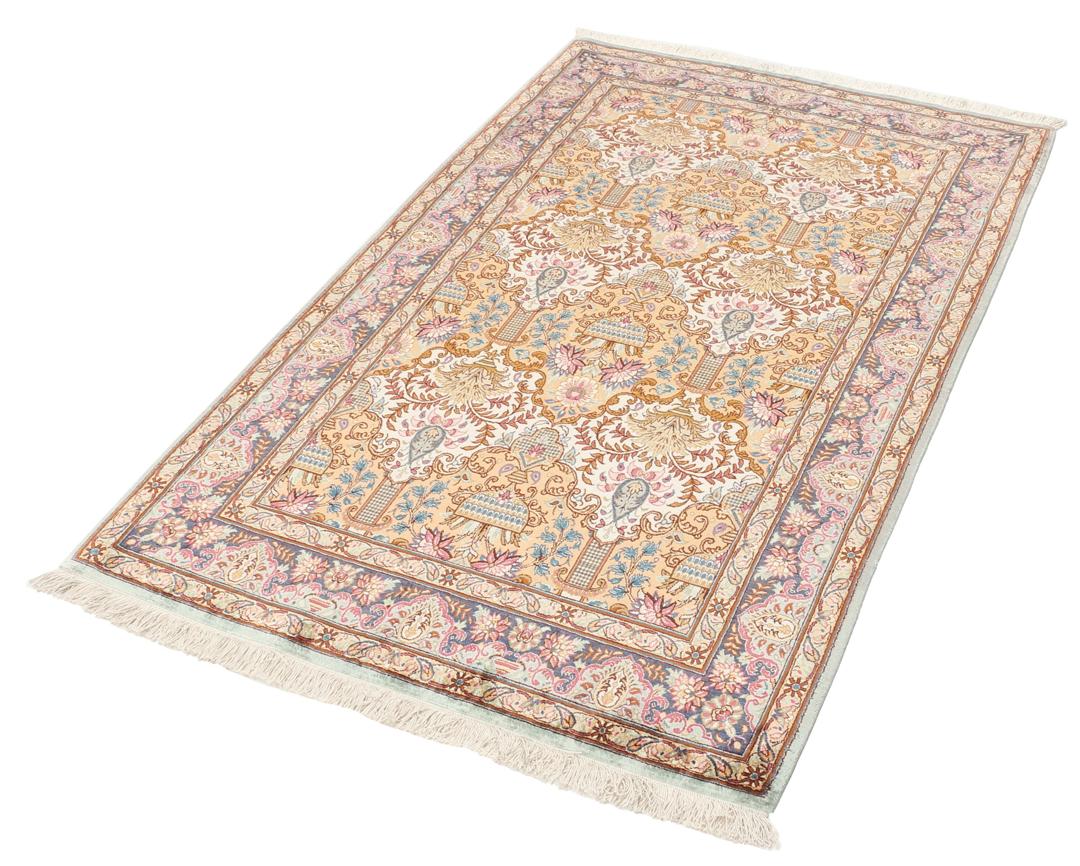
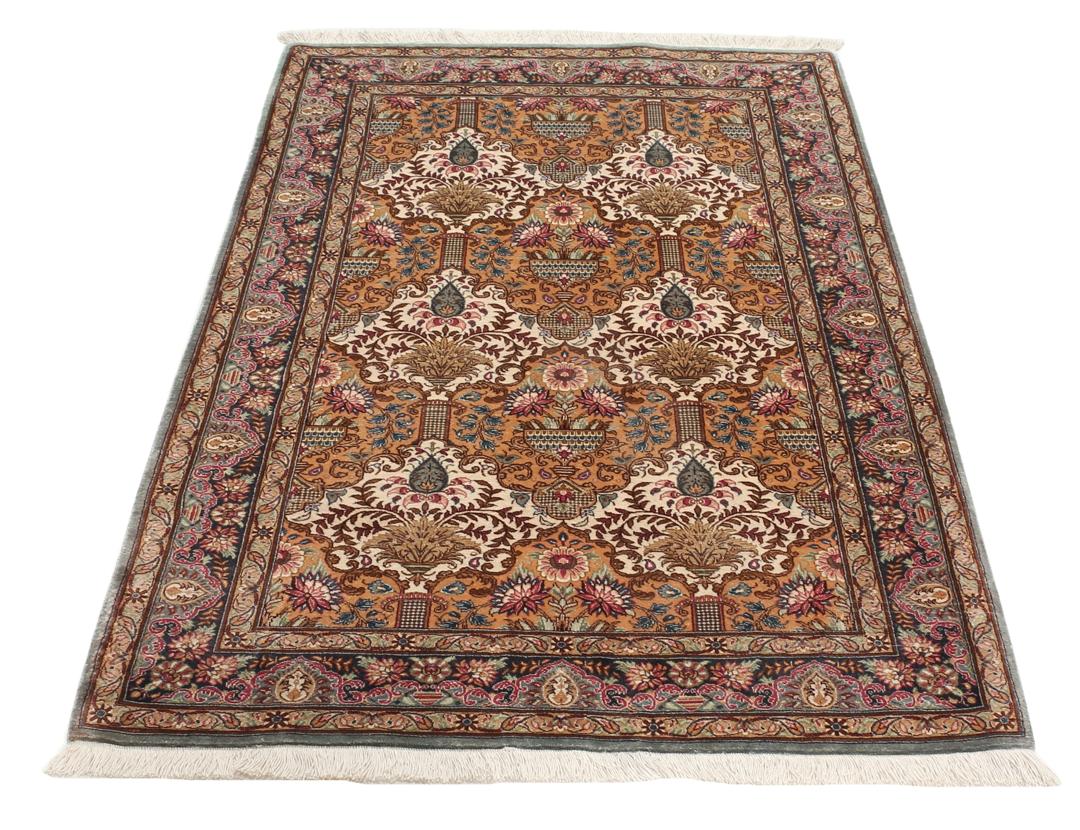
The Qum silk rug tradition originates from the holy city of Qum in the Middle East, a region that only emerged as a major centre for rug weaving in the early 20th century. Despite its relatively recent entry into the world of fine textiles, Qum quickly established a reputation for producing some of the most technically advanced and visually stunning rugs in existence, often drawing inspiration from classical design motifs while introducing a modern, refined colour palette.
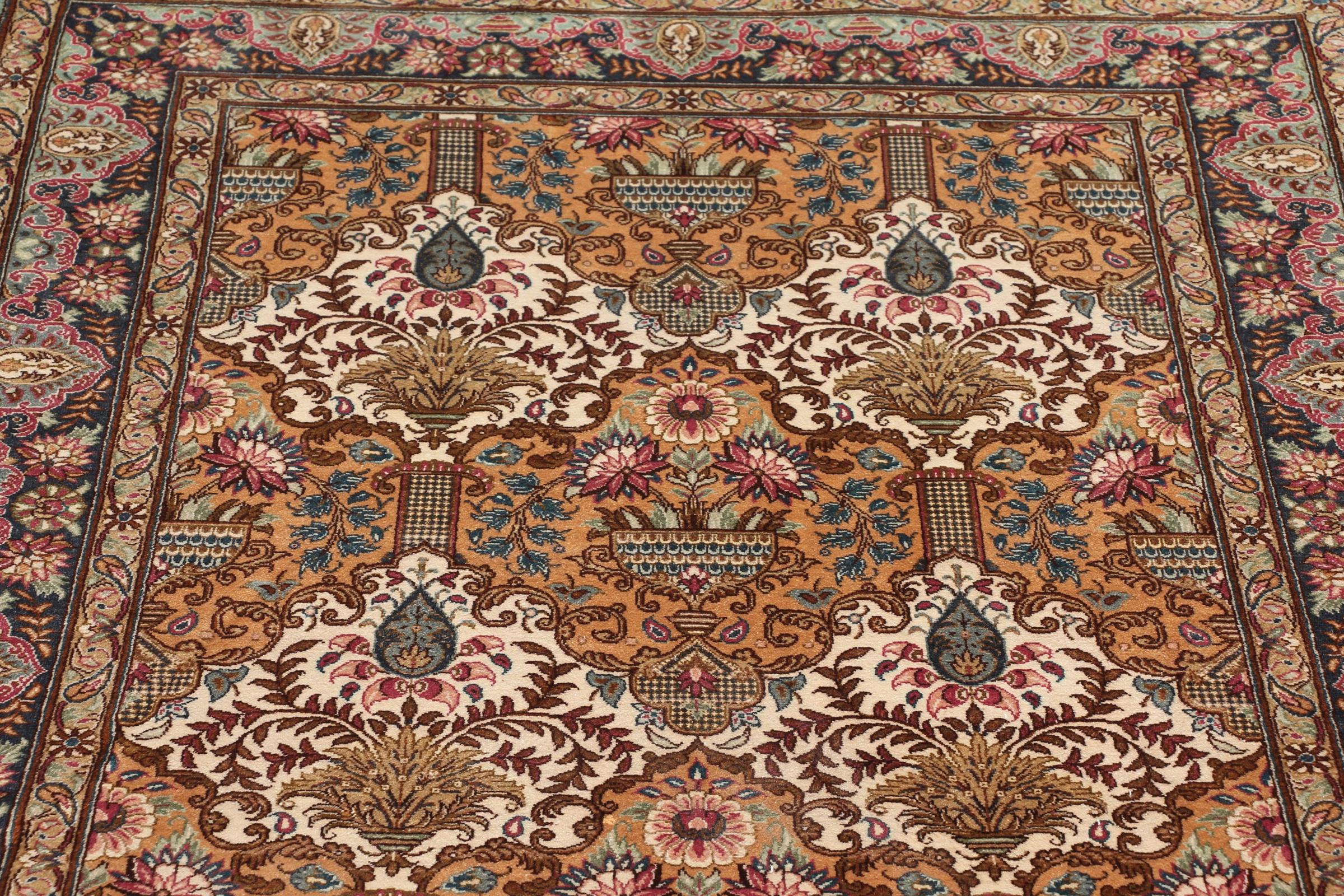
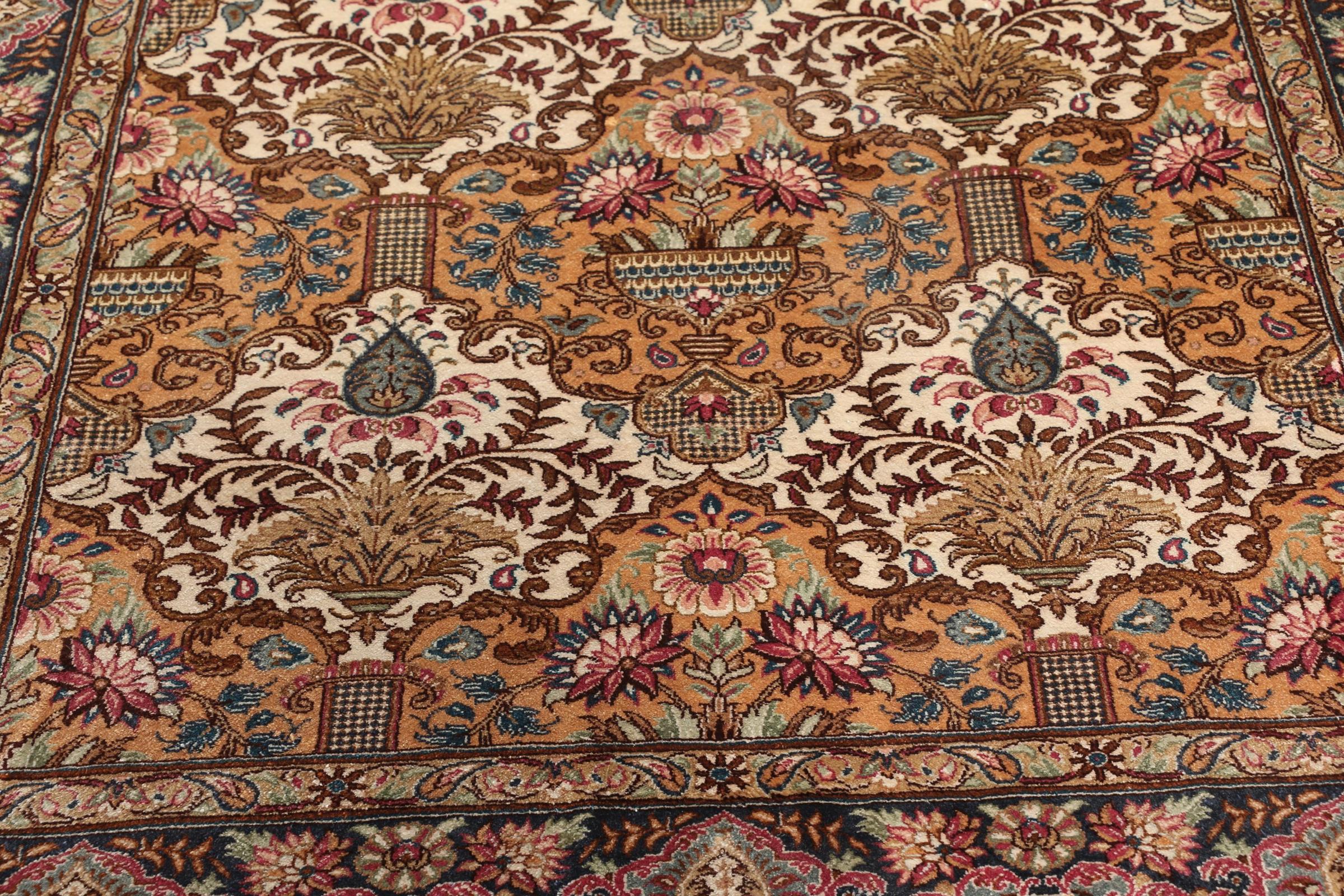
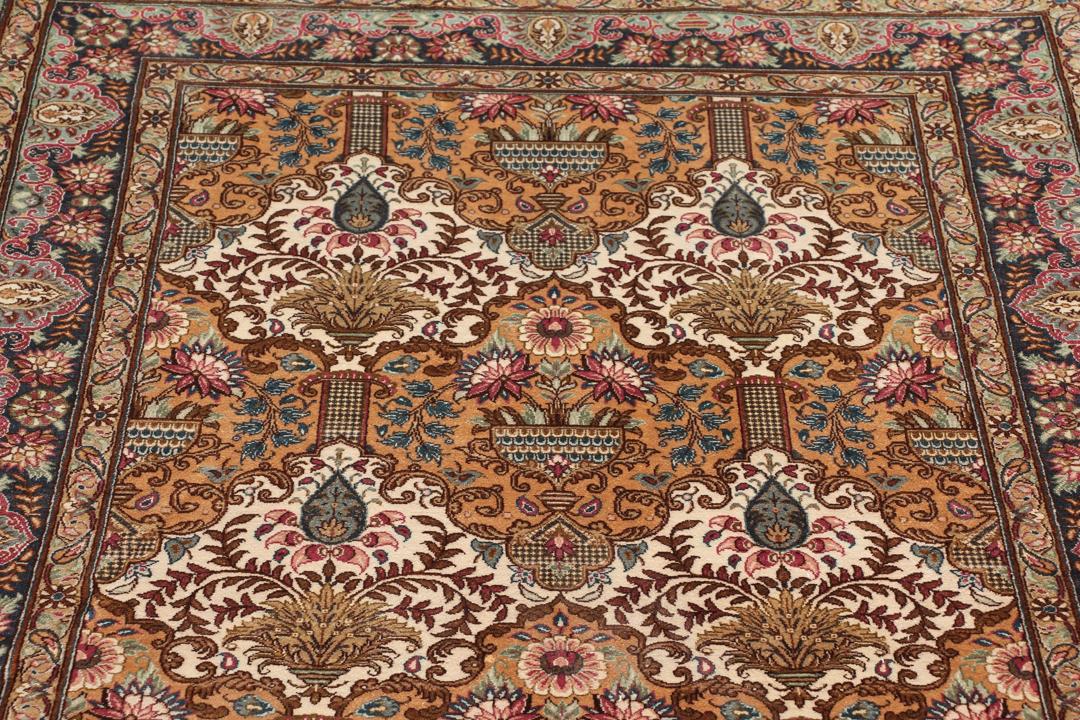
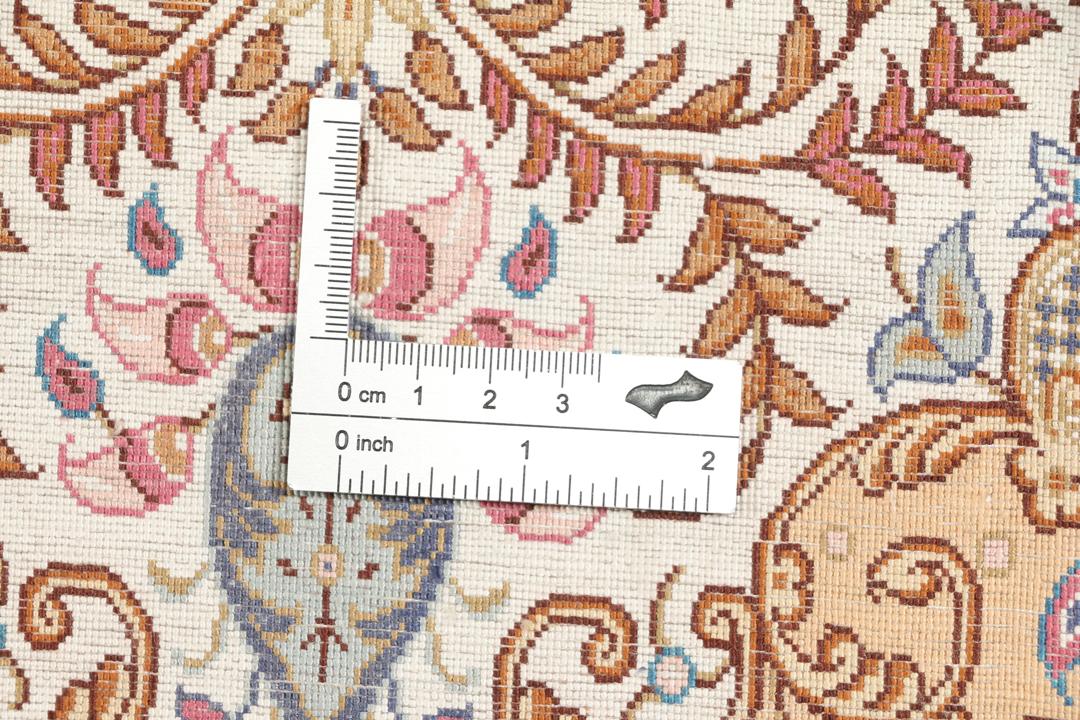
Silk is the defining material for this category, chosen for its incredible strength, natural lustre, and ability to hold vibrant, crisp colours. The use of silk allows artisans to create designs with significantly higher knot density than wool, which in turn permits the inclusion of incredibly small, complex details that would be impossible to render in coarser fibres. This results in a rug that is not only visually striking but also exceptionally smooth to the touch.
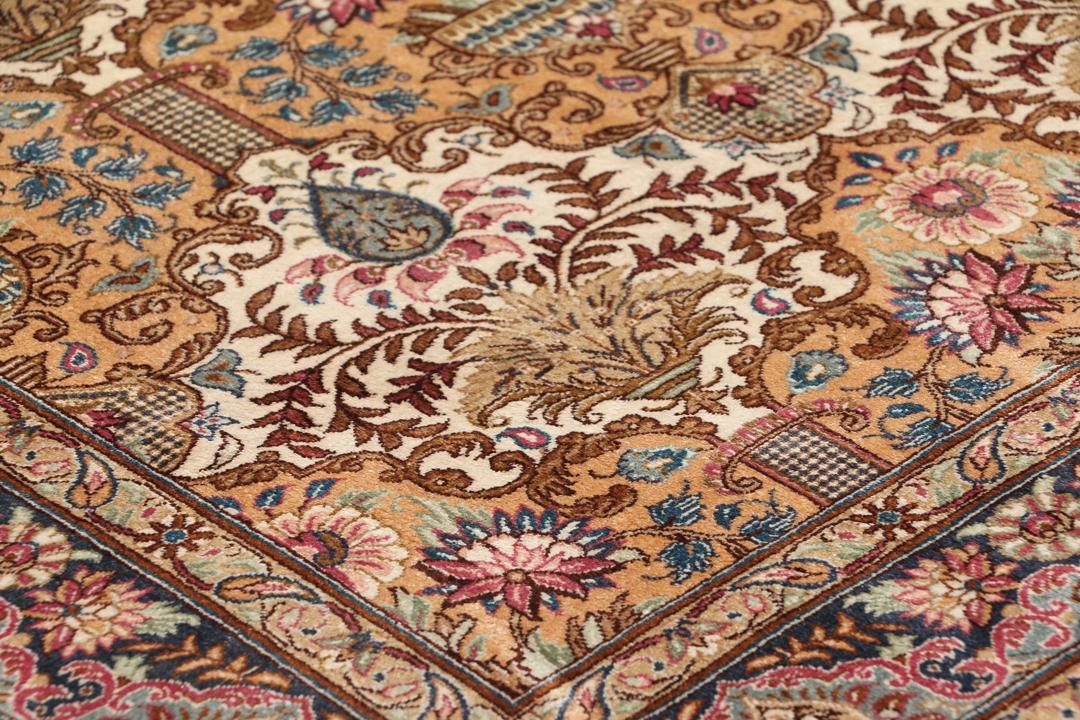
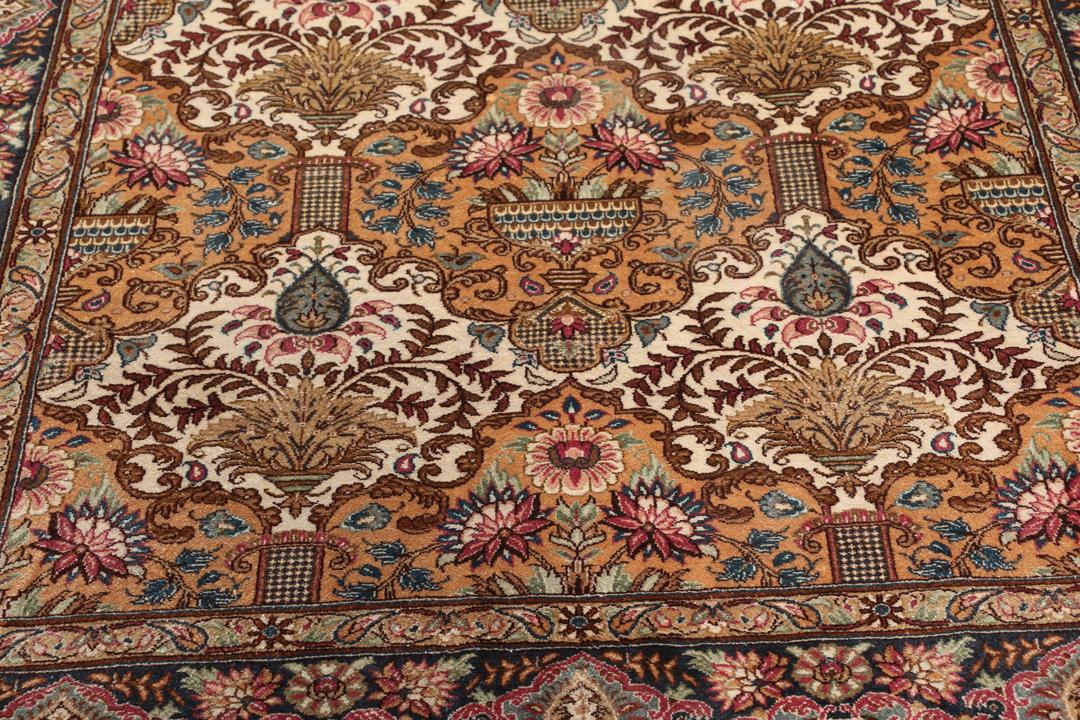
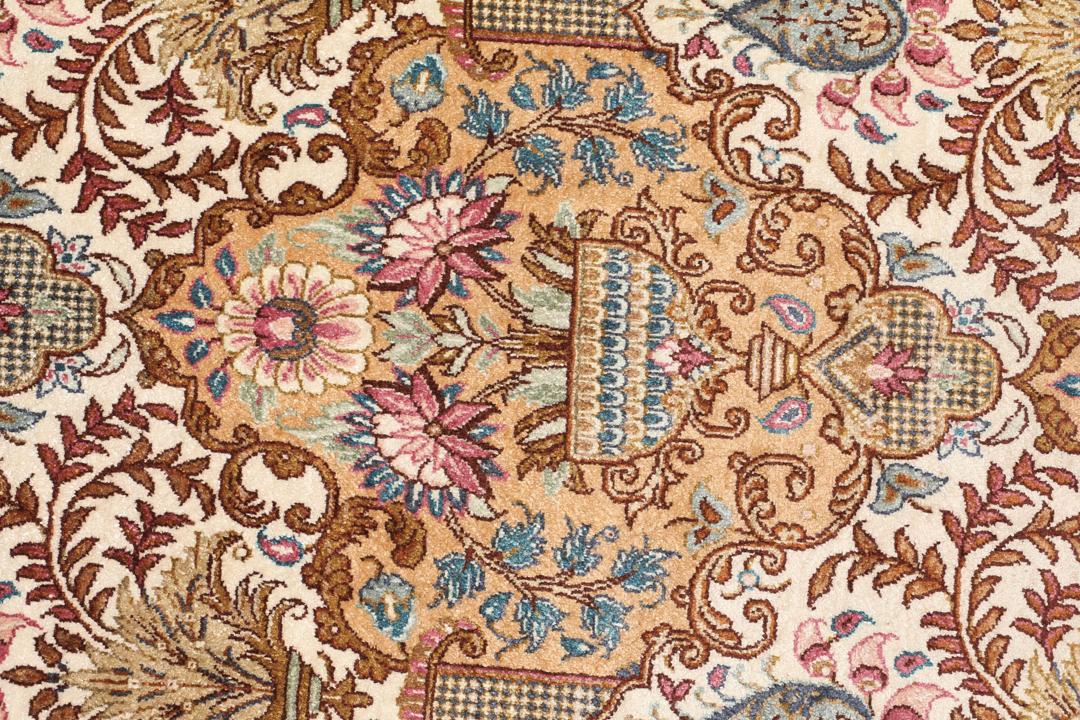
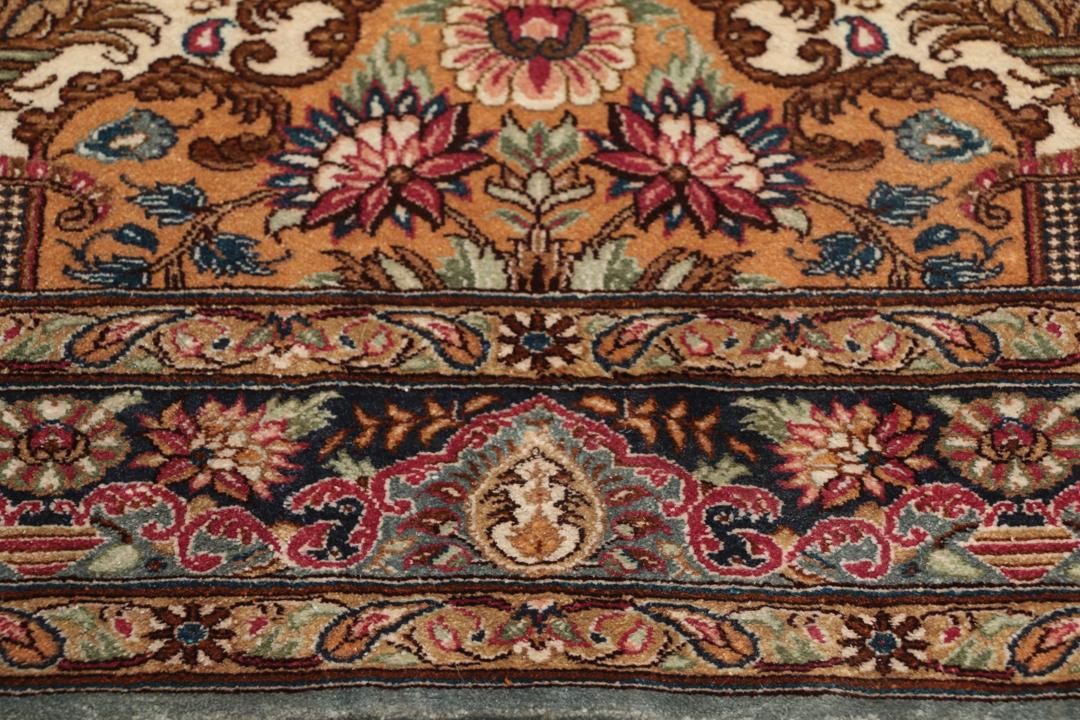
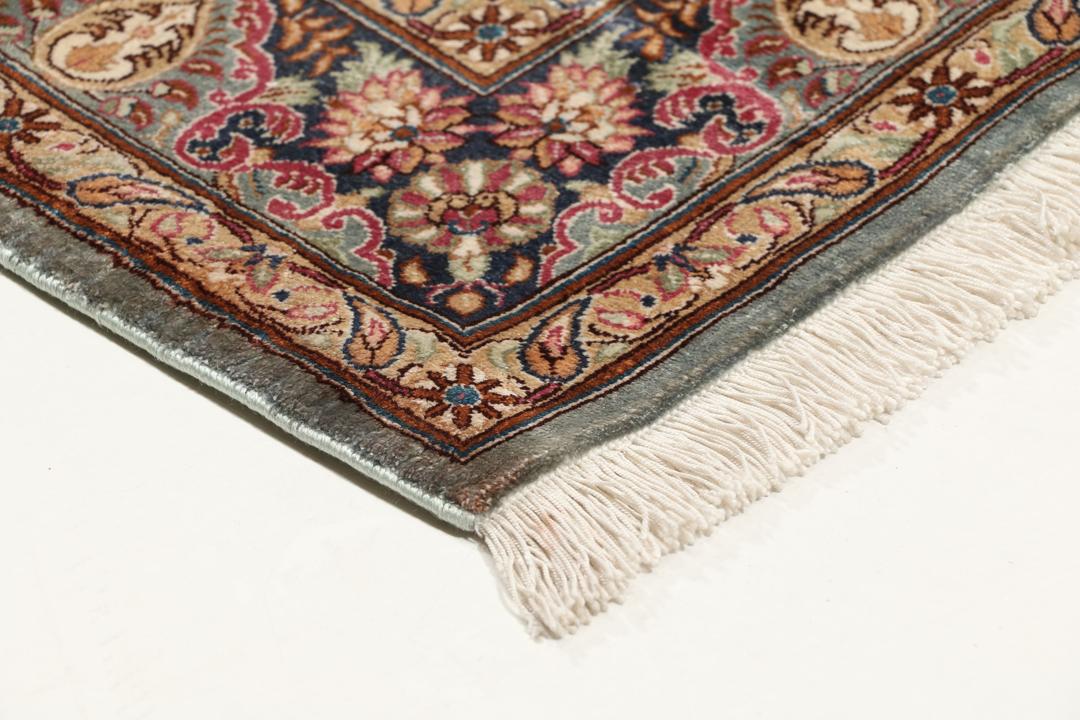
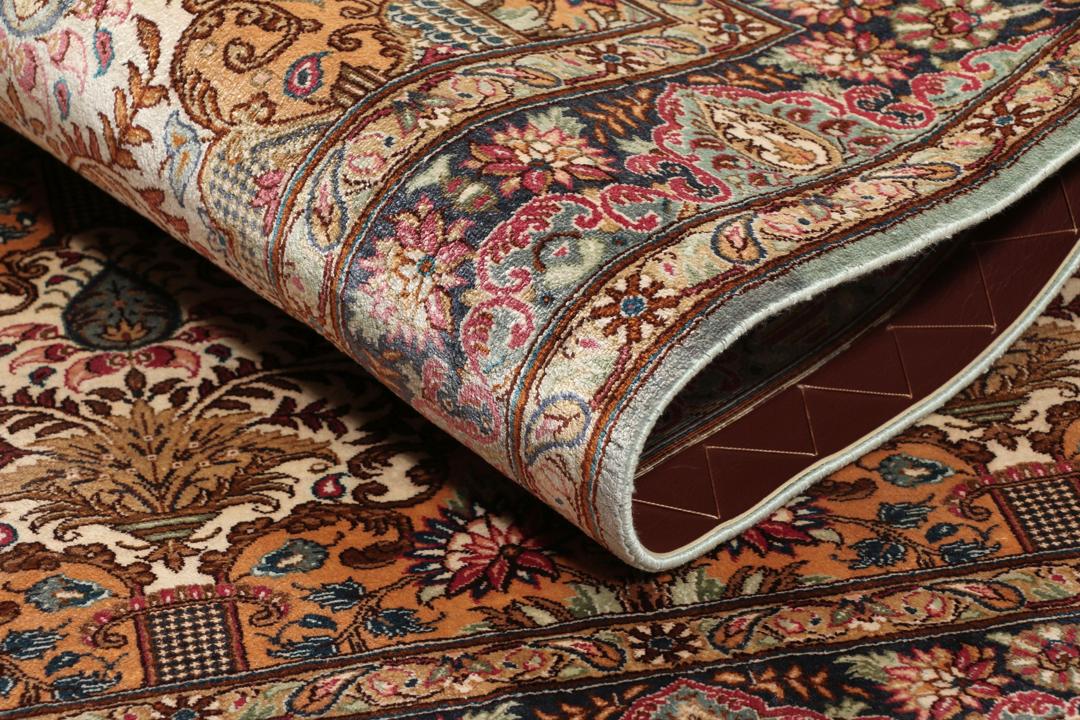
The design language of Qum rugs is famously elaborate, often centred around sophisticated floral displays, intricate medallions, and botanical scenes that draw from traditional garden themes. The borders are typically as detailed as the field, featuring ornate scrolling vines and palmettes that frame the central composition. This specific piece showcases a harmonious balance of these elements, rendered with a level of detail that highlights the weaver's mastery of the loom.
Owning a Qum silk rug is considered a hallmark of a discerning collector. These pieces are valued not only for their high-quality materials but for the cultural weight they carry as examples of elite, artisanal skill. They represent a pinnacle of the weaver's art, serving as a legacy piece that connects the owner to a rich, evolving history of textile excellence.