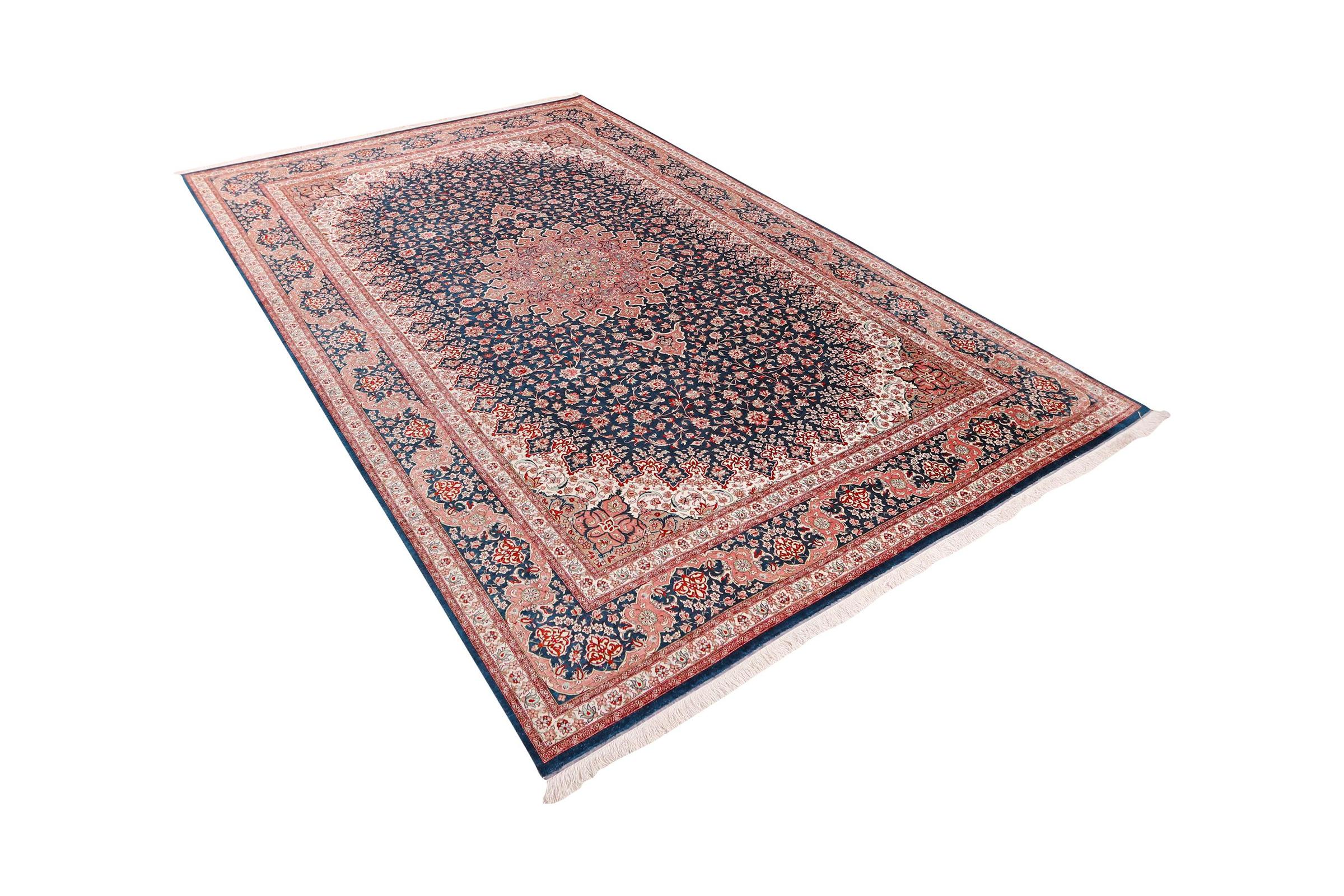
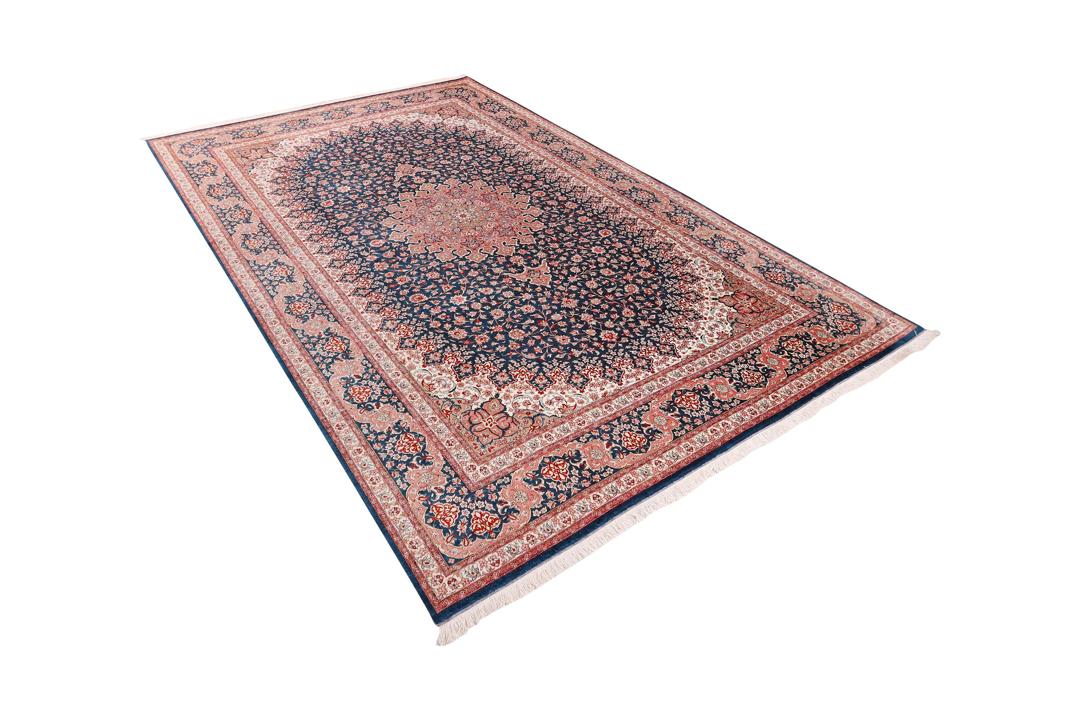
Qum, located south of Tehran, is a relatively modern centre for rug production, having risen to prominence in the mid-20th century. Unlike older traditions that rely on ancient tribal motifs, Qum rugs are known for their sophisticated, city-based designs. They draw on the rich heritage of Middle Eastern weaving, often incorporating elements from classic floral patterns, yet they remain distinctly innovative.
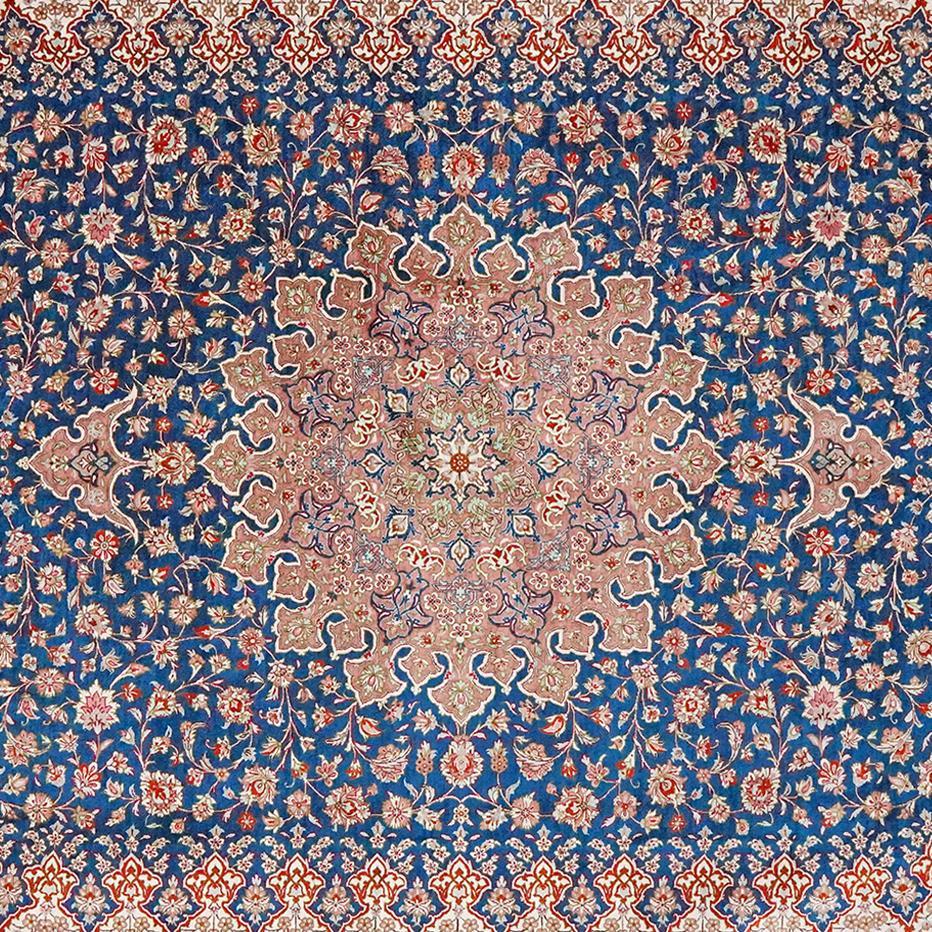
The use of silk as a primary material is a hallmark of the Qum tradition. Silk is prized for its strength and its ability to take dyes with vibrant, jewel-like clarity. This allows weavers to create fine, detailed work that would be difficult to achieve with coarser fibres. The resulting pile is both thin and incredibly strong, offering a tactile experience that is synonymous with luxury.
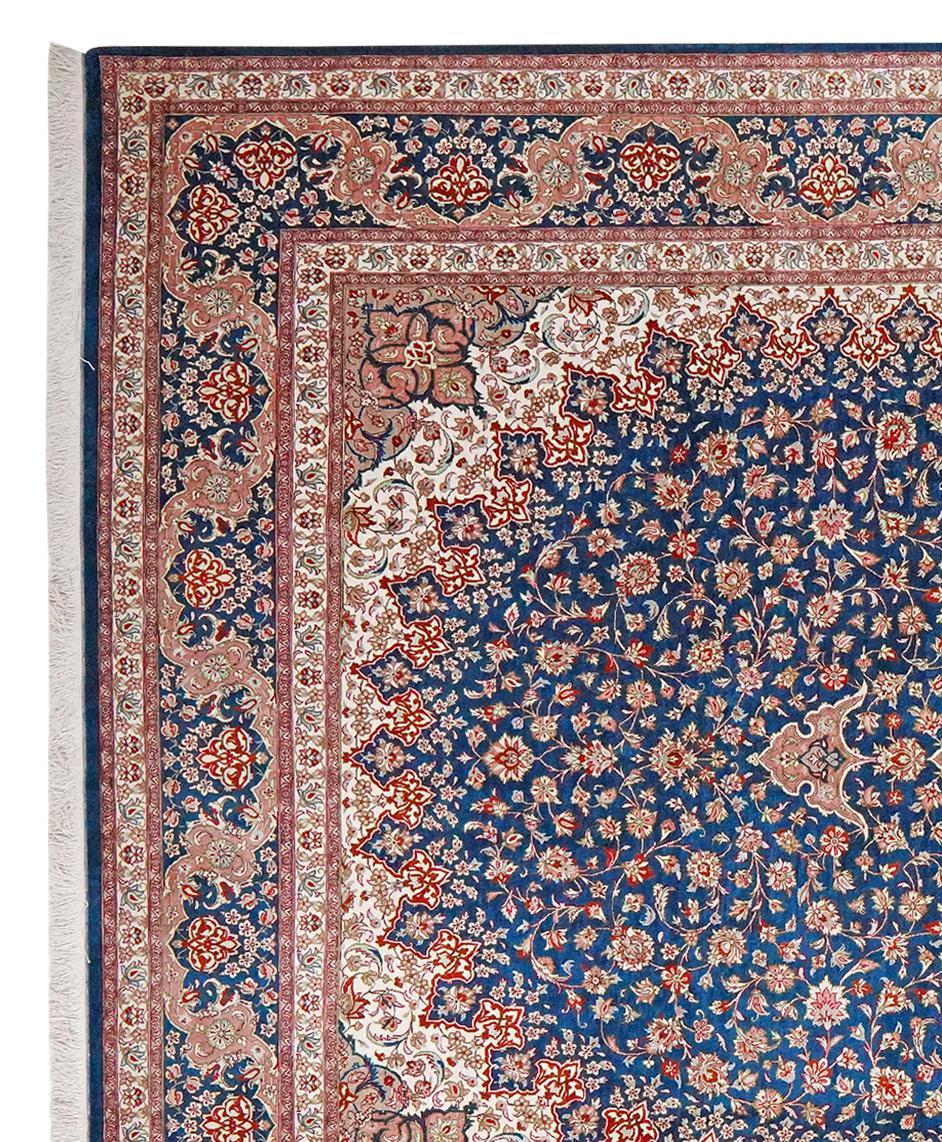
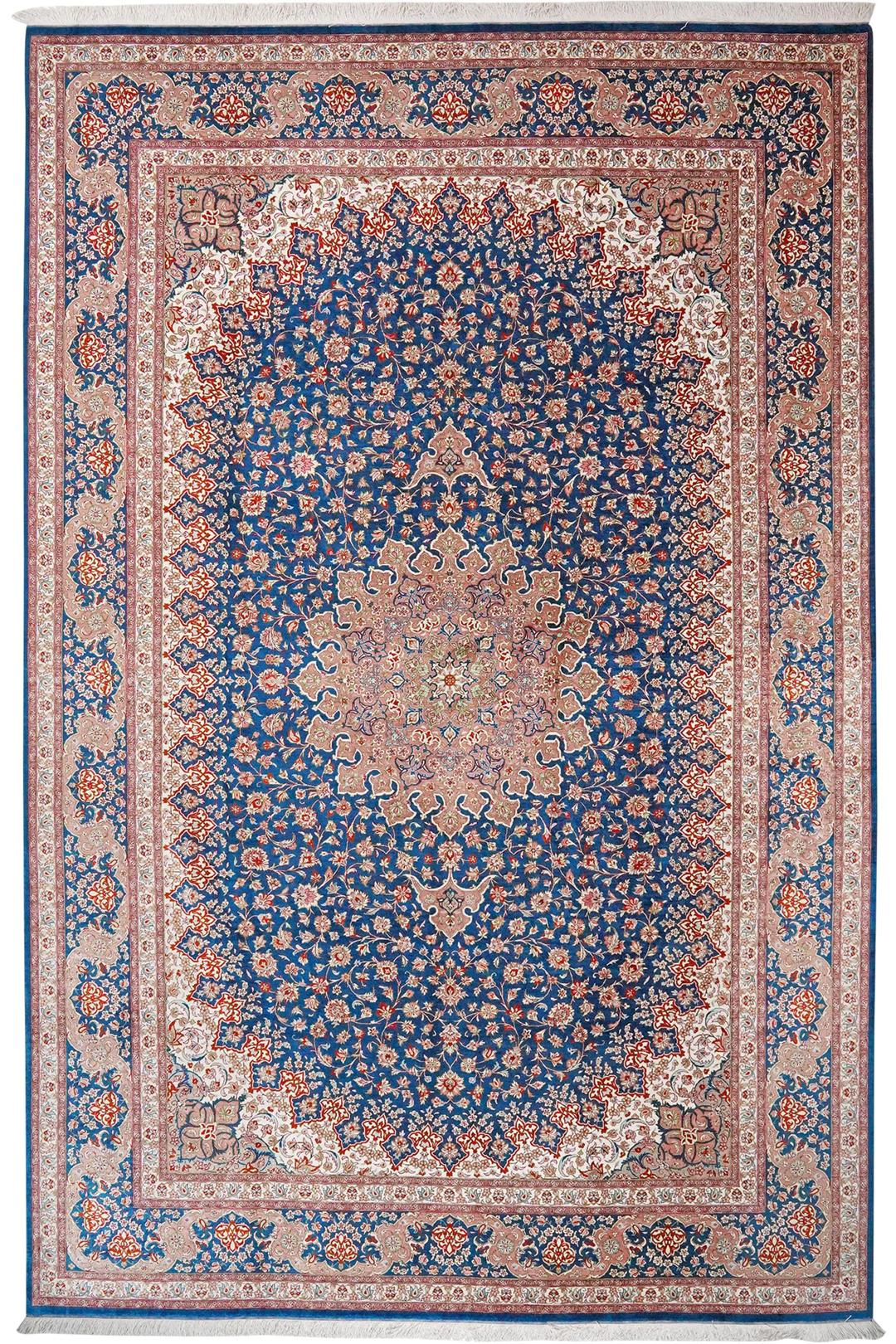
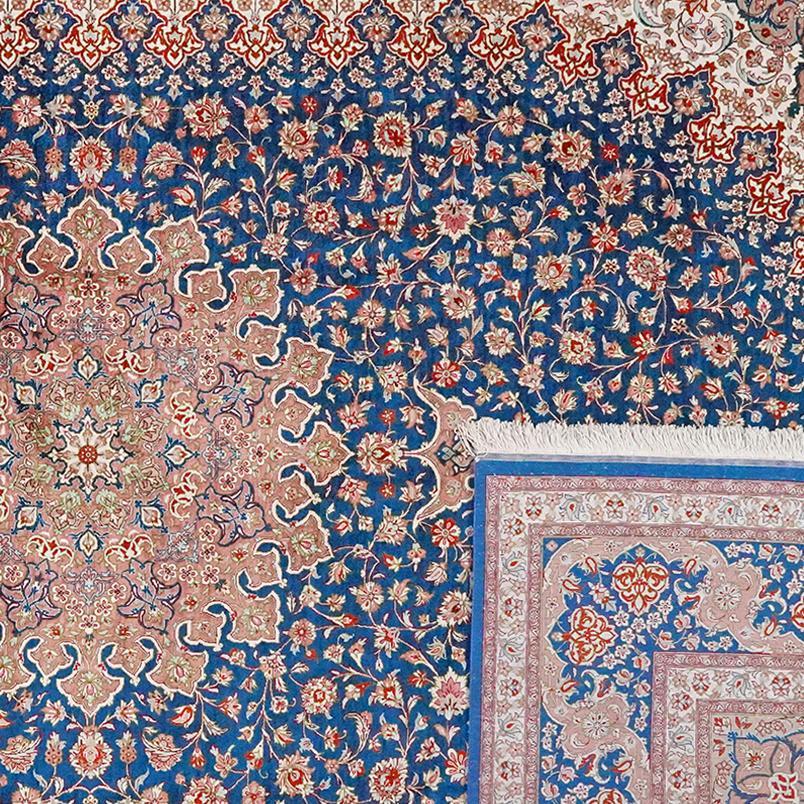
Visually, these rugs are defined by their balanced, formal compositions. You will often find a central medallion surrounded by a field of densely packed floral sprays, vines, and leaves. The borders are typically multi-layered and just as detailed as the centre, creating a frame that draws the eye inward. This specific rug captures that tradition perfectly, utilising a harmonious colour palette that highlights the complexity of the design.
Collectors value Qum rugs for their technical perfection and the sheer artistry required to produce them. Owning a piece from this tradition is a statement of appreciation for fine craft and historical continuity. It represents a bridge between the storied past of Middle Eastern textile arts and the evolving tastes of contemporary interior design.