Chinese rug weaving is an ancient practice that has evolved through centuries of cultural exchange and artistic refinement. Historically, these rugs were often commissioned for temples or imperial palaces, serving as symbols of status and spiritual focus. Over time, the designs evolved to incorporate a unique vocabulary of symbols and patterns that reflect the natural world and philosophical traditions of the region.
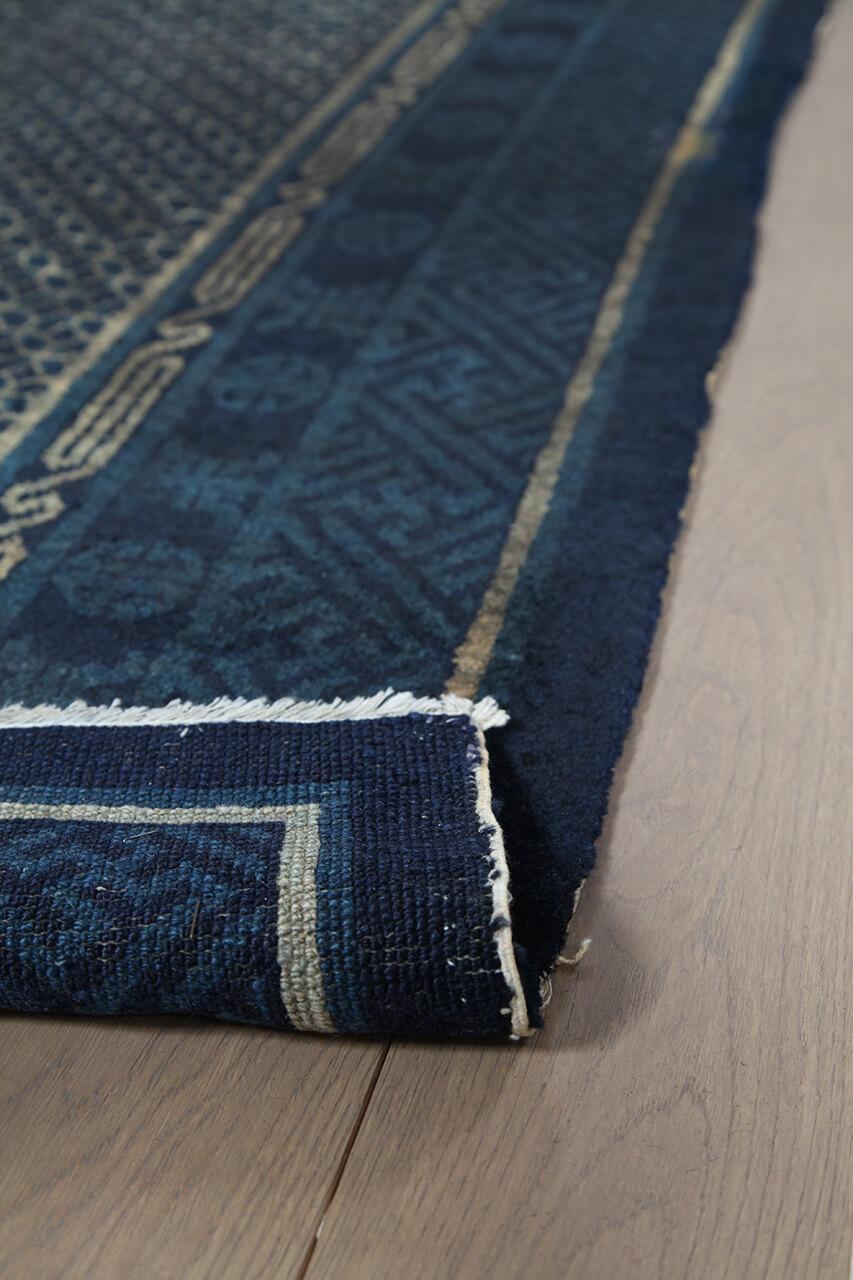
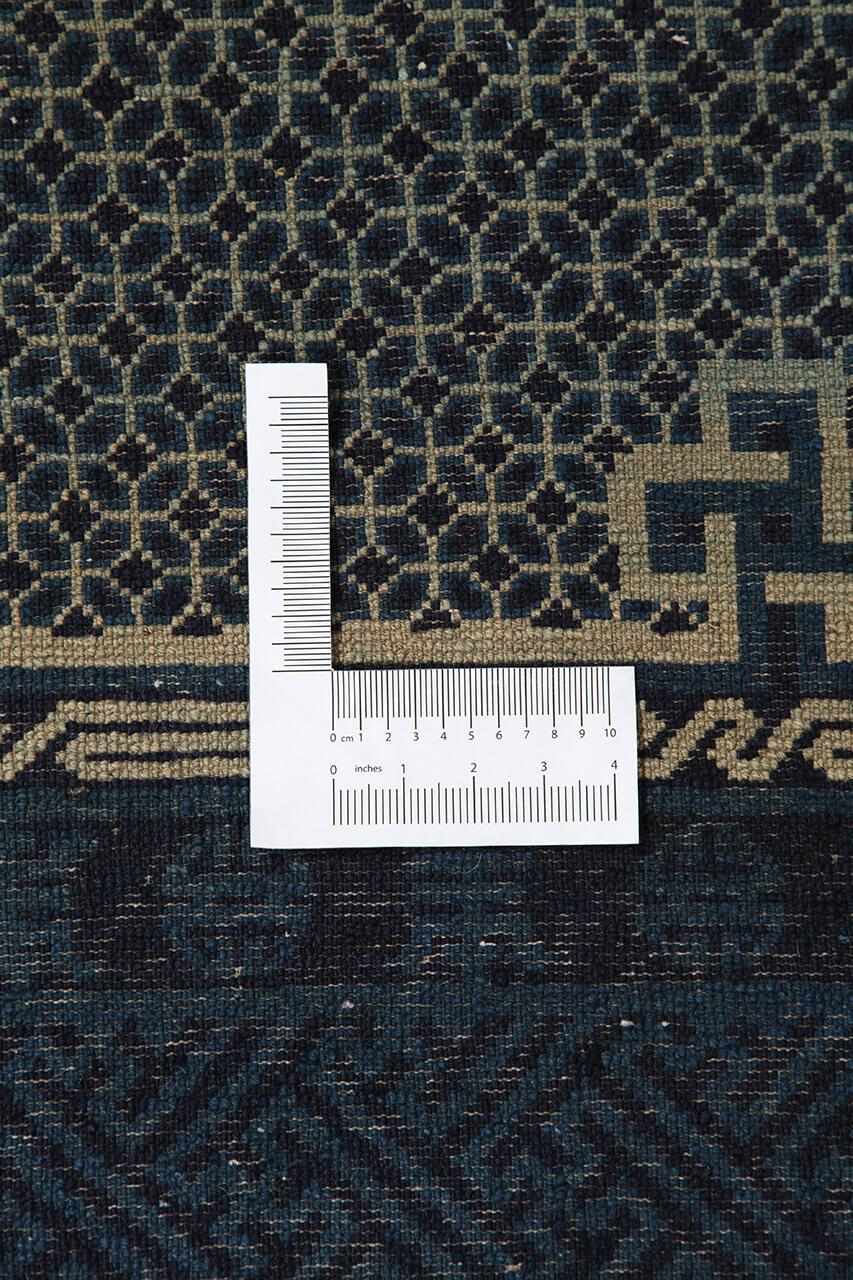
The terminology associated with these rugs, such as the specific knotting techniques, is vital to understanding their quality. The density of the knotting is not just a technical detail but a measure of the artisan's precision. A well-constructed rug features a firm, stable foundation that allows the pile to stand upright, which in turn enhances the lustre of the wool and ensures the rug wears evenly over time.
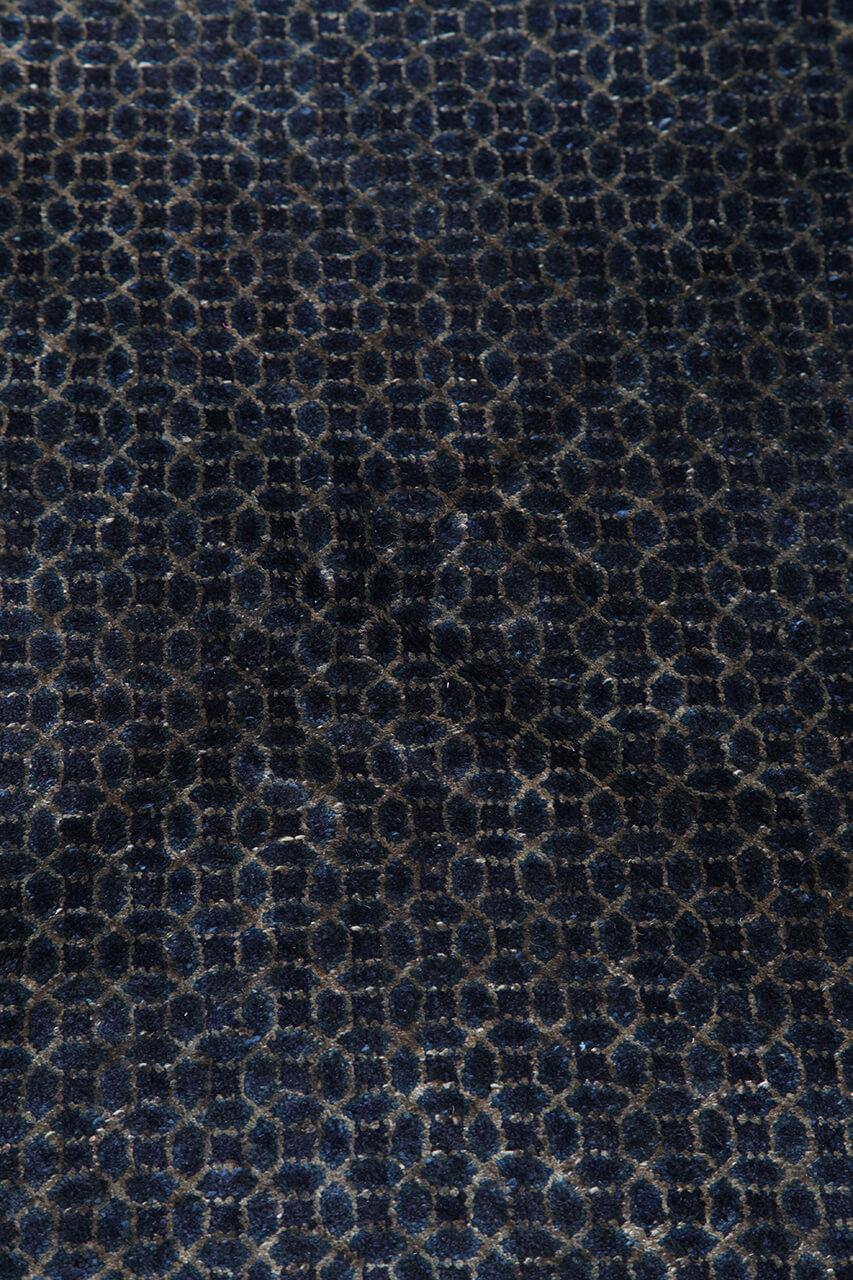
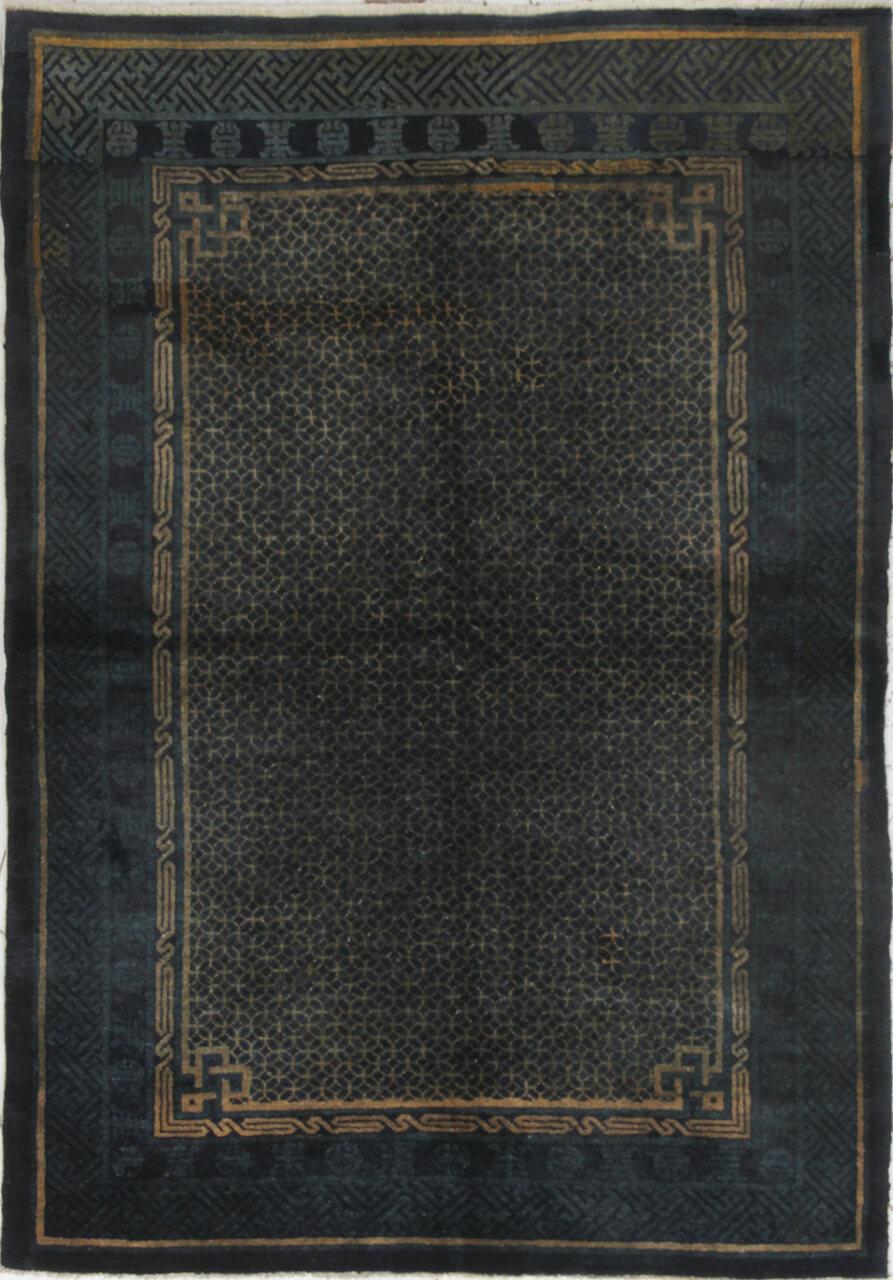
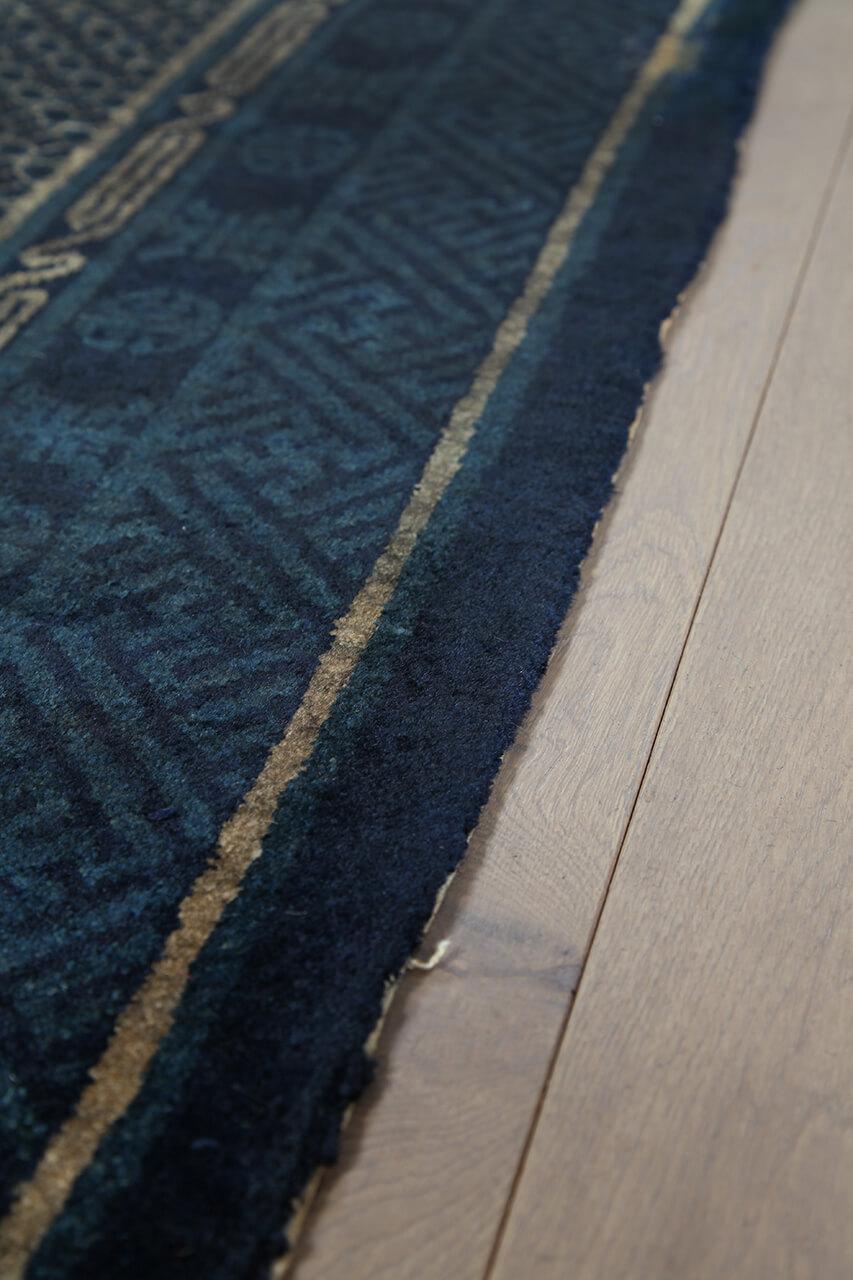
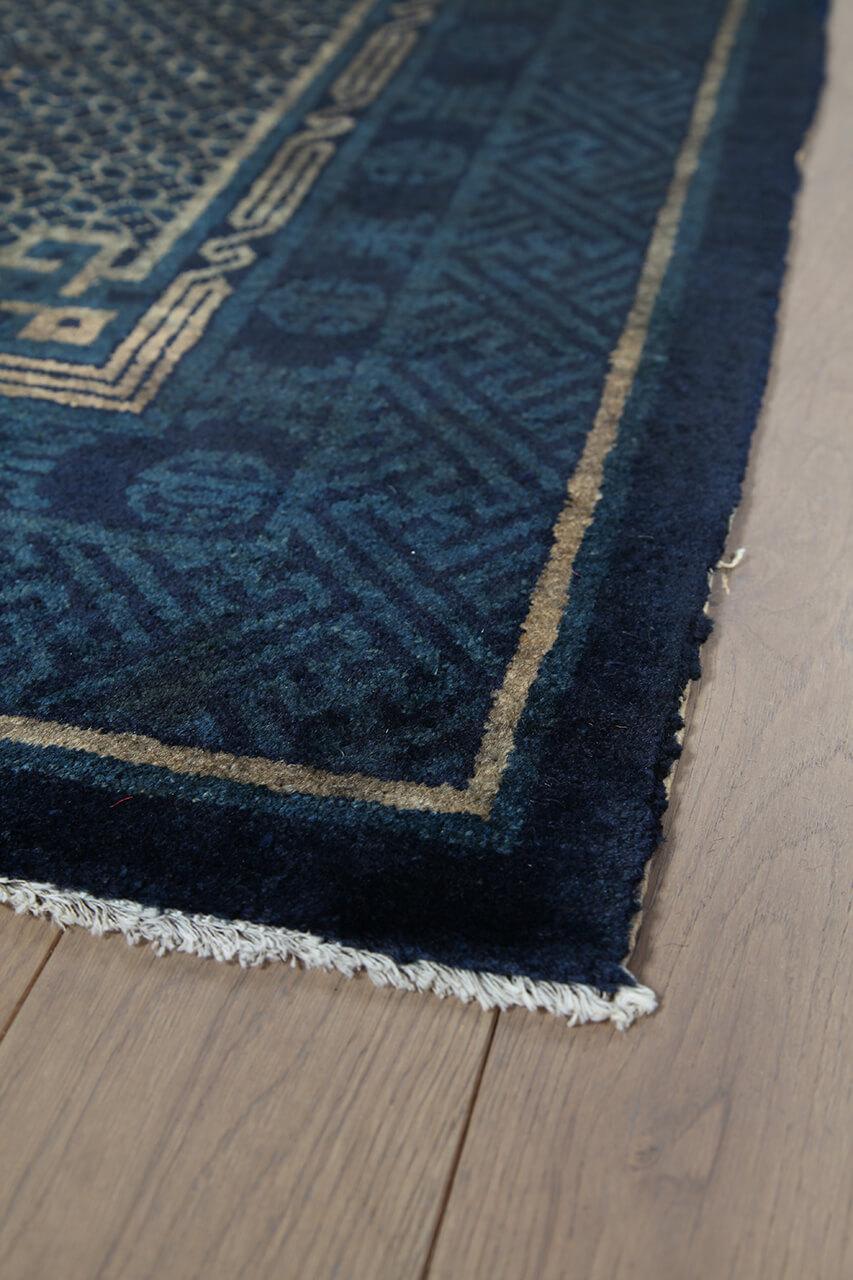
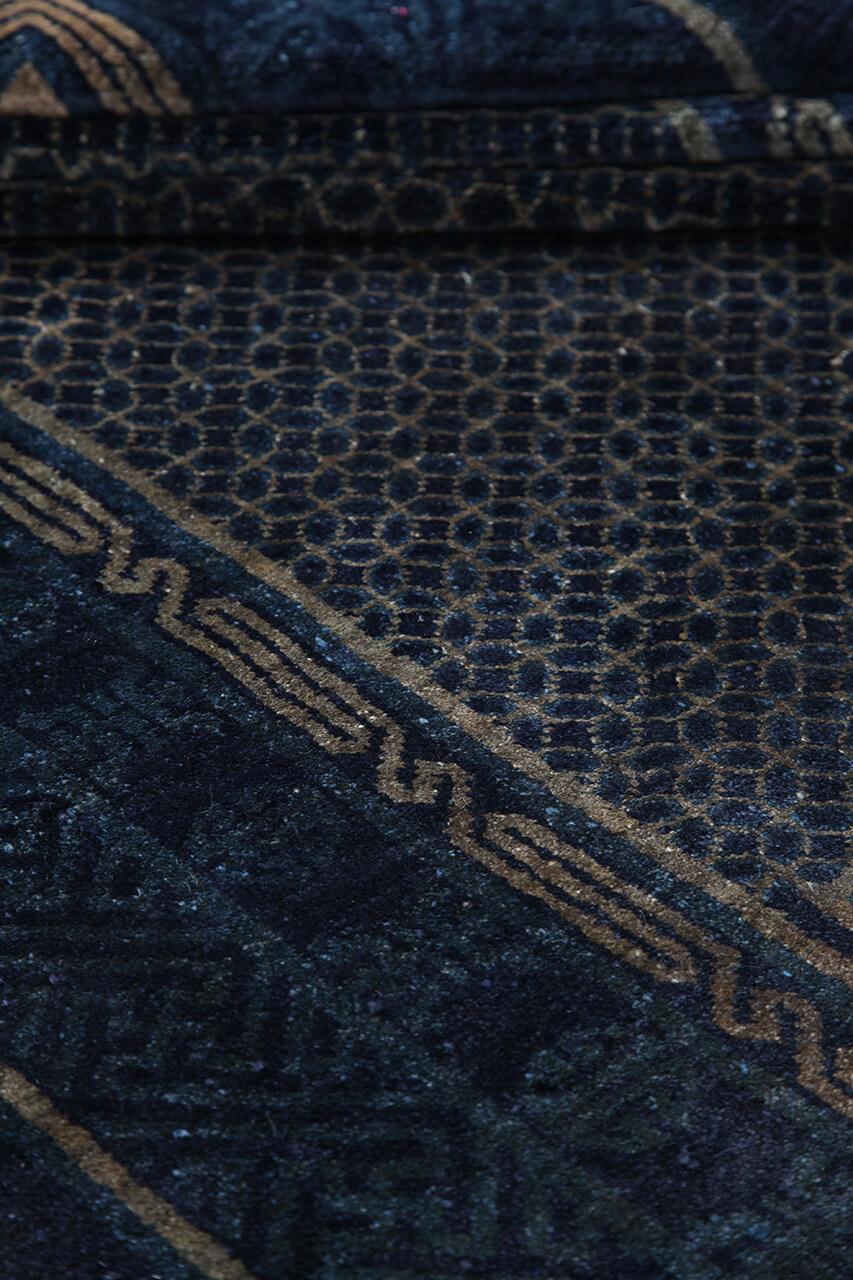
Signature elements of this tradition include the use of sophisticated borders and the clever integration of geometric or floral motifs. Often, these rugs feature a 'recessed' or 'carved' look, where different pile heights create a subtle relief effect that adds depth to the design. In this particular piece, the dark, moody field is contrasted with gold-toned accents, creating a timeless look that is characteristic of the finest Chinese weaving traditions.
Beyond their aesthetic appeal, these rugs are highly valued by collectors for their cultural significance and the skill required to produce them. Owning a piece from this tradition is an investment in heritage. It represents a connection to a long line of artisans whose work has been celebrated for its durability and beauty, making it a significant addition to any space that values authenticity and legacy.