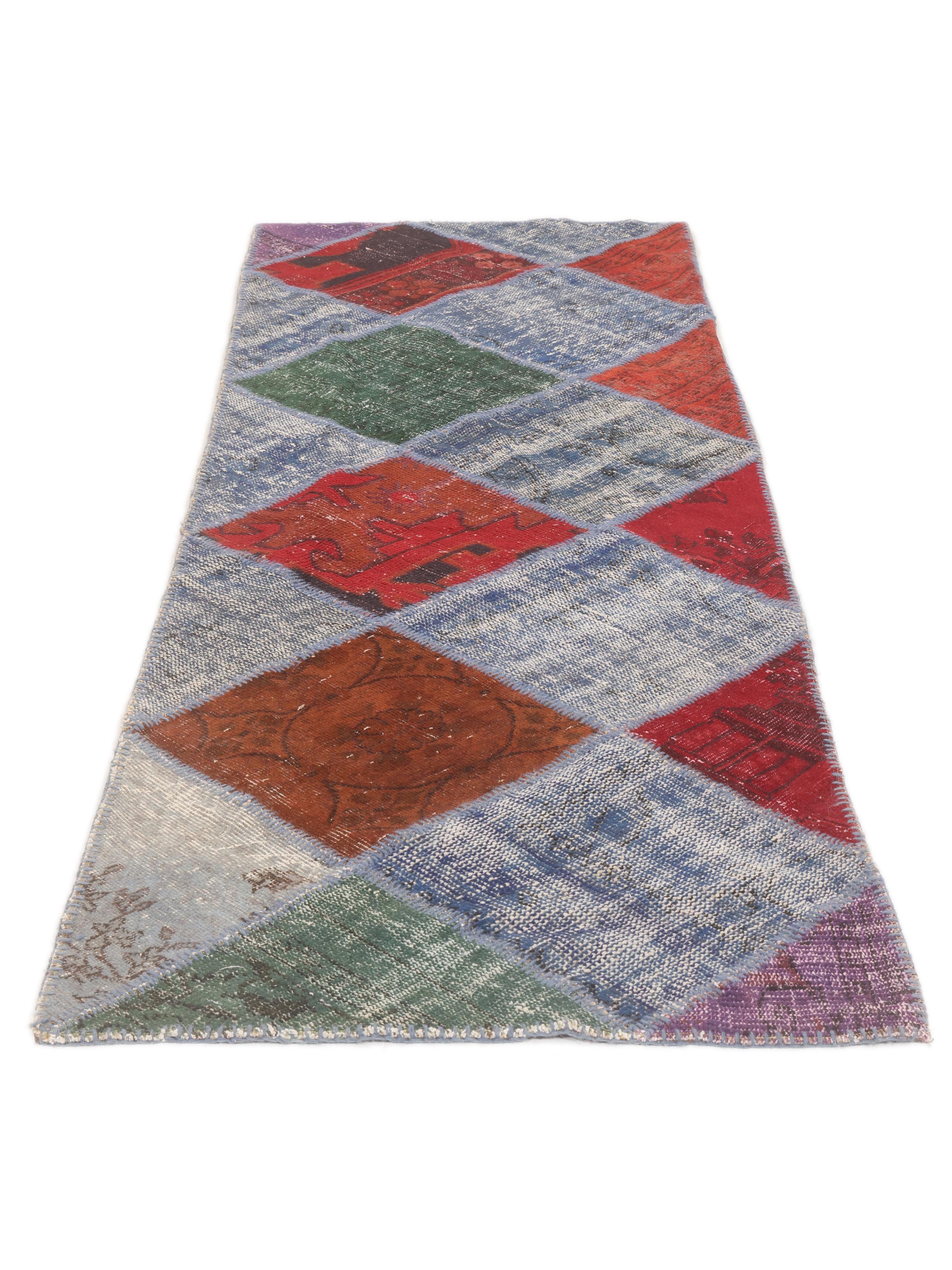
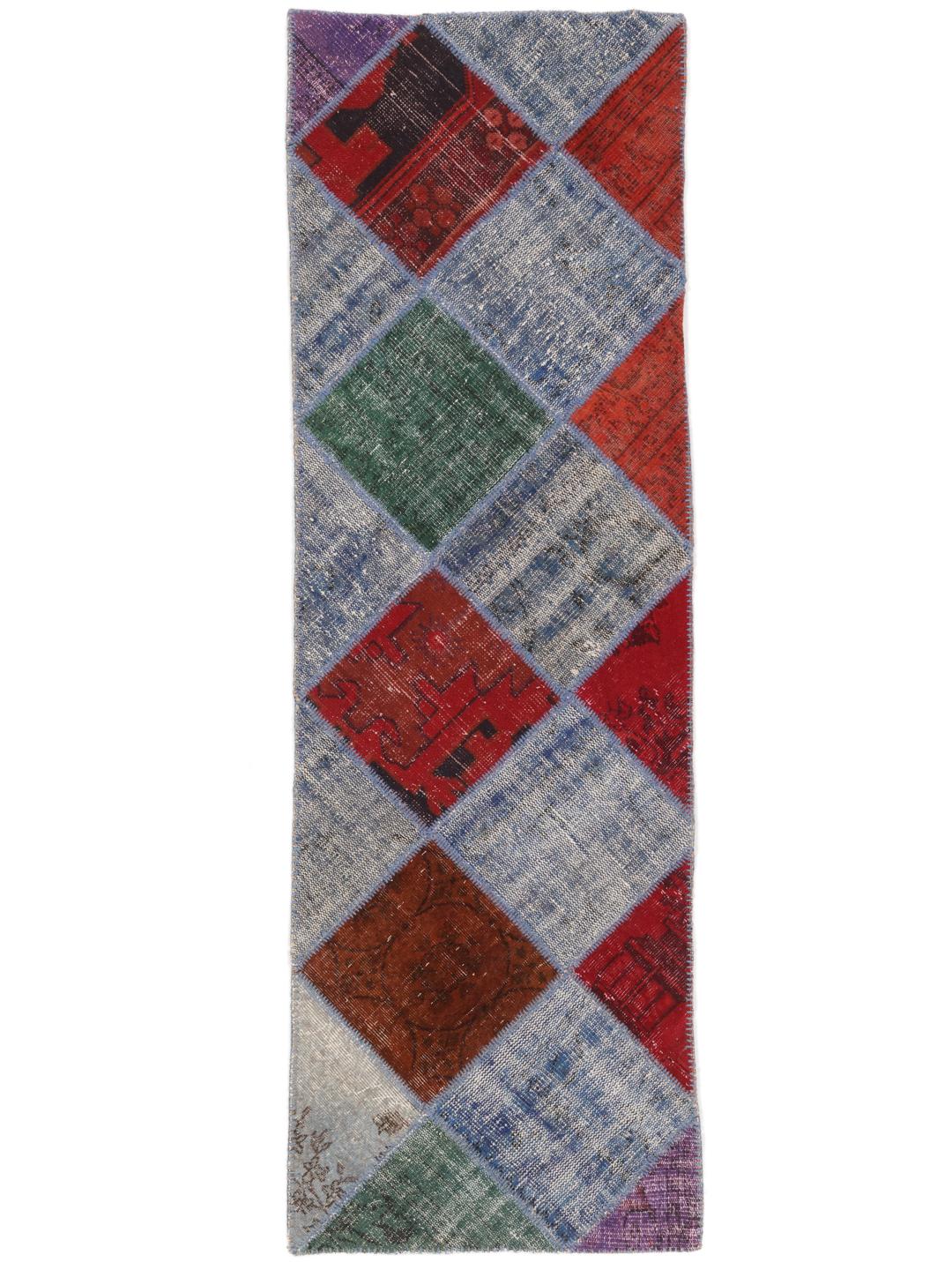
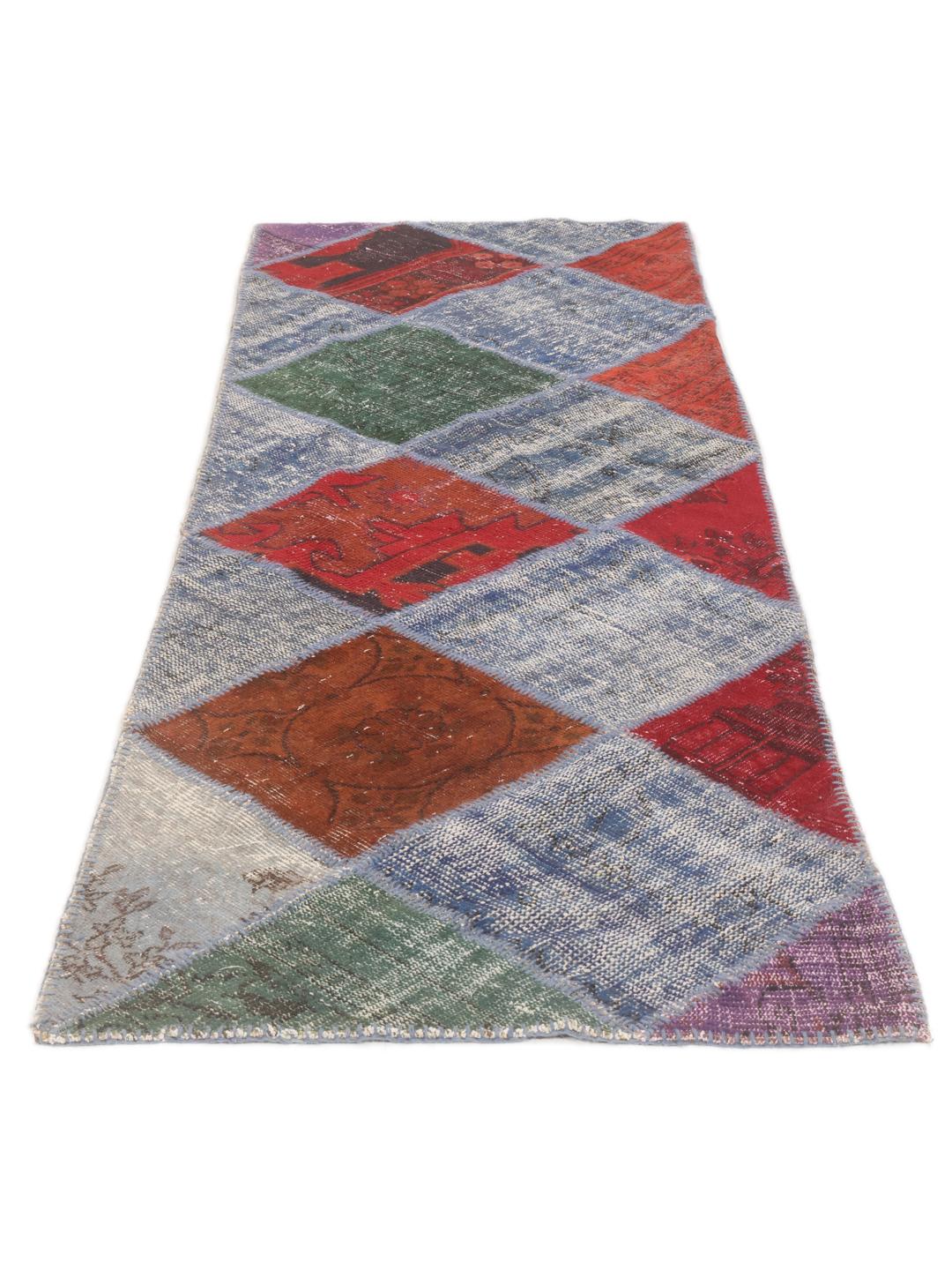
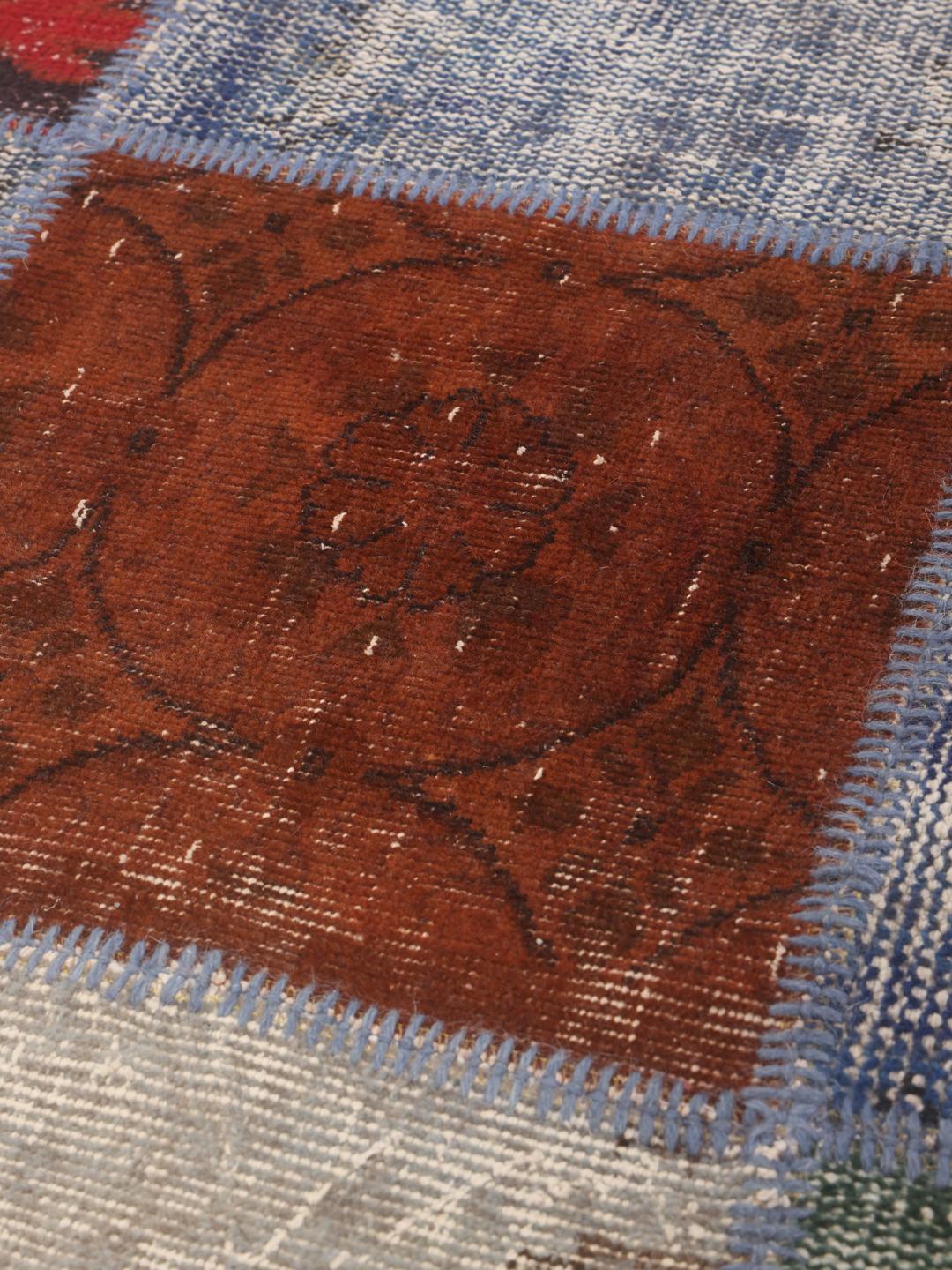
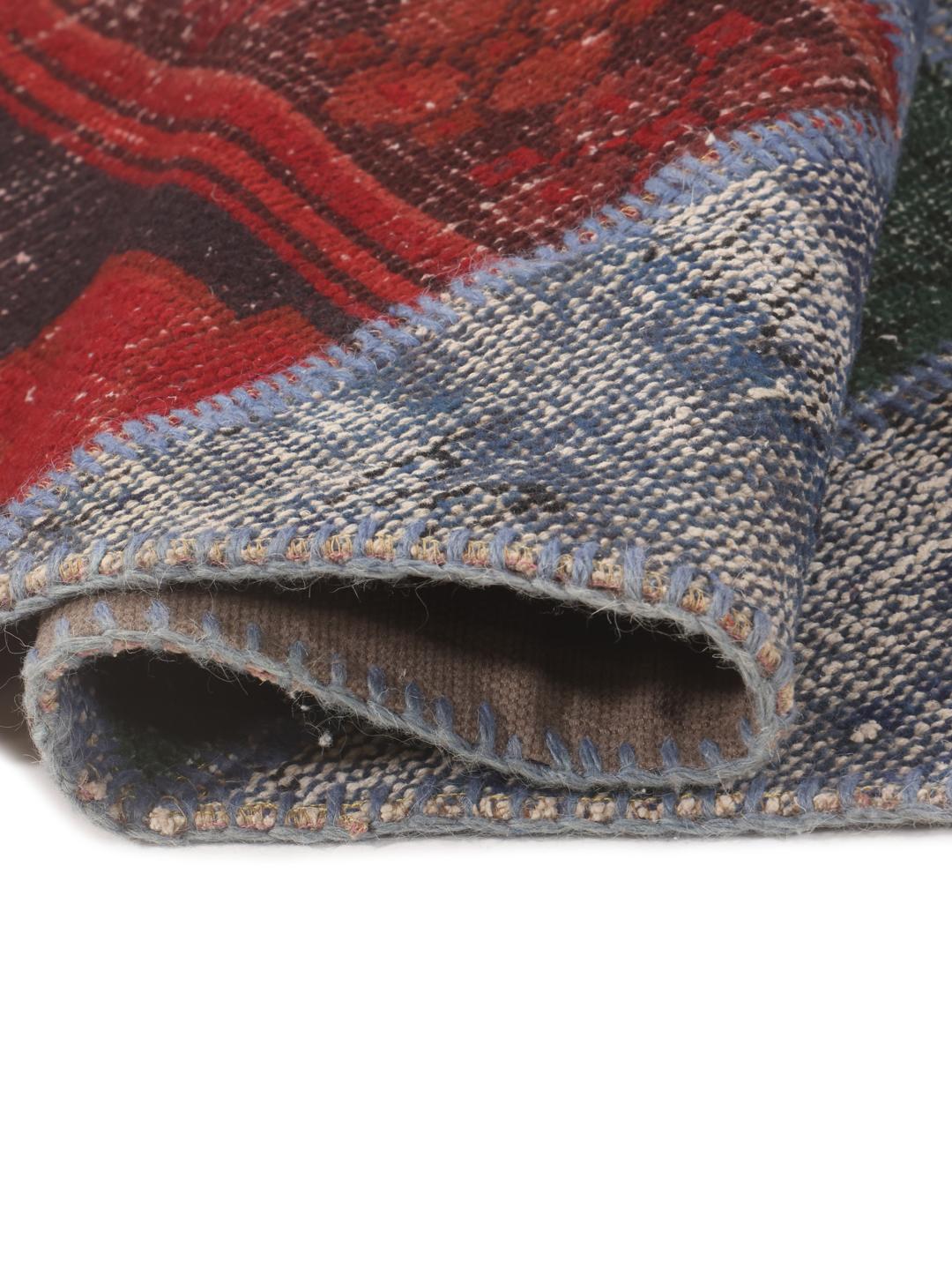
Patchwork rugs represent a fascinating evolution in the history of textile arts in the Middle East and Turkey. Historically, these pieces were born from a desire to preserve the beauty of older, damaged, or worn rugs that were still structurally sound in parts. Rather than letting these beautiful materials go to waste, artisans began to carefully cut away the intact sections to create entirely new, contemporary compositions.
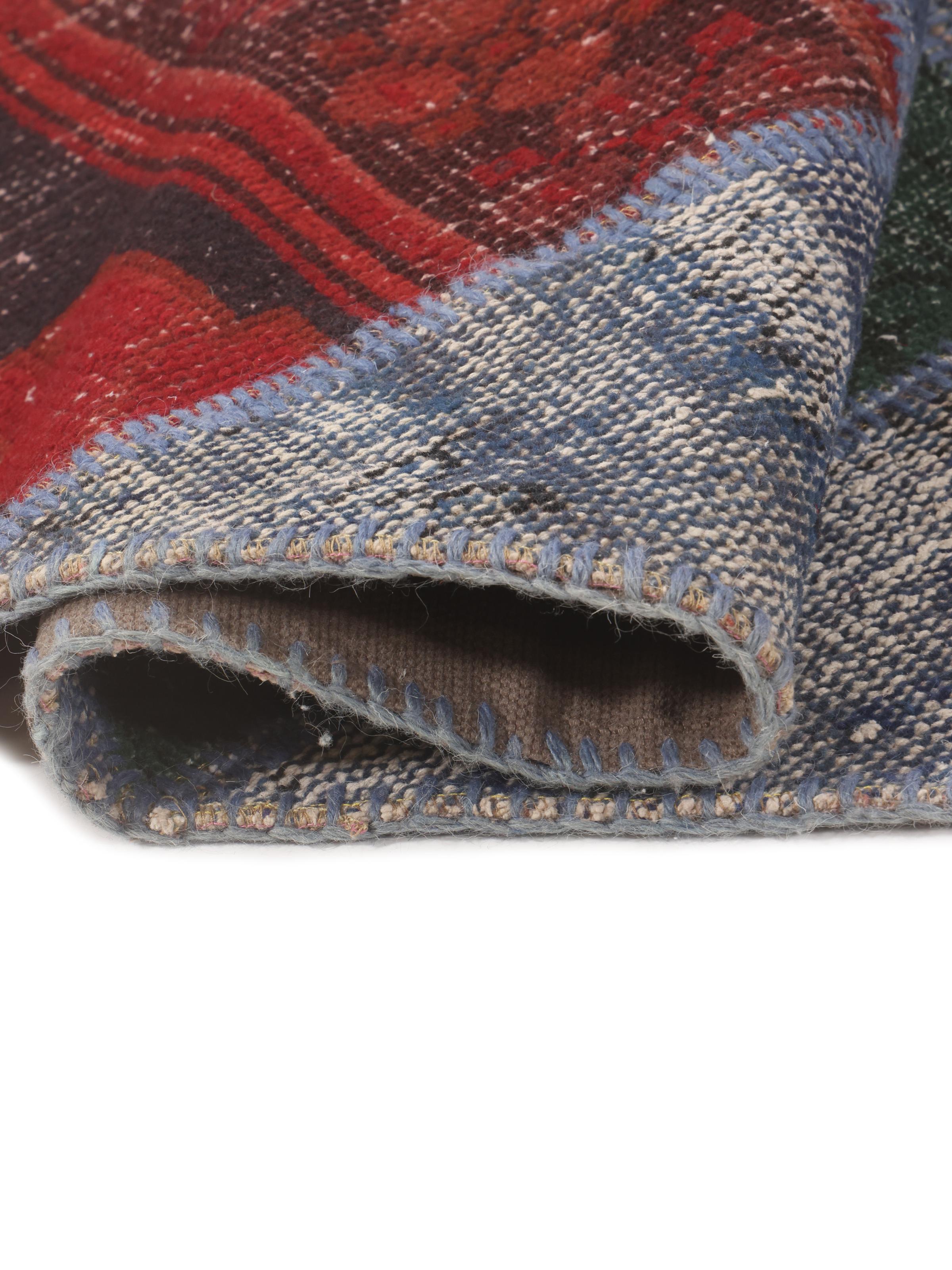
The terminology surrounding these pieces often highlights the careful curation of fragments. By utilising Wool that has already stood the test of time, these rugs benefit from an inherent stability. The fibres have already been washed and used, ensuring that they are colourfast and resistant to the typical shedding seen in brand-new, lower-quality rugs.
Visually, these runners are defined by their geometric, mosaic-like arrangement. The tradition relies on a strong sense of colour theory, as the maker must balance various shades and patterns to create a rhythm across the runner's length. It is common to see a mix of traditional floral motifs, tribal symbols, and solid dyed sections, all joined together by precise, hidden stitching.
Owning a patchwork runner is a way to participate in a circular design culture that values heritage and longevity. These pieces are highly sought after by collectors who appreciate the skill required to transform fragments of history into a functional, modern floor covering. It is not just a rug, but a curated assembly of textile history that brings warmth and character to any space.