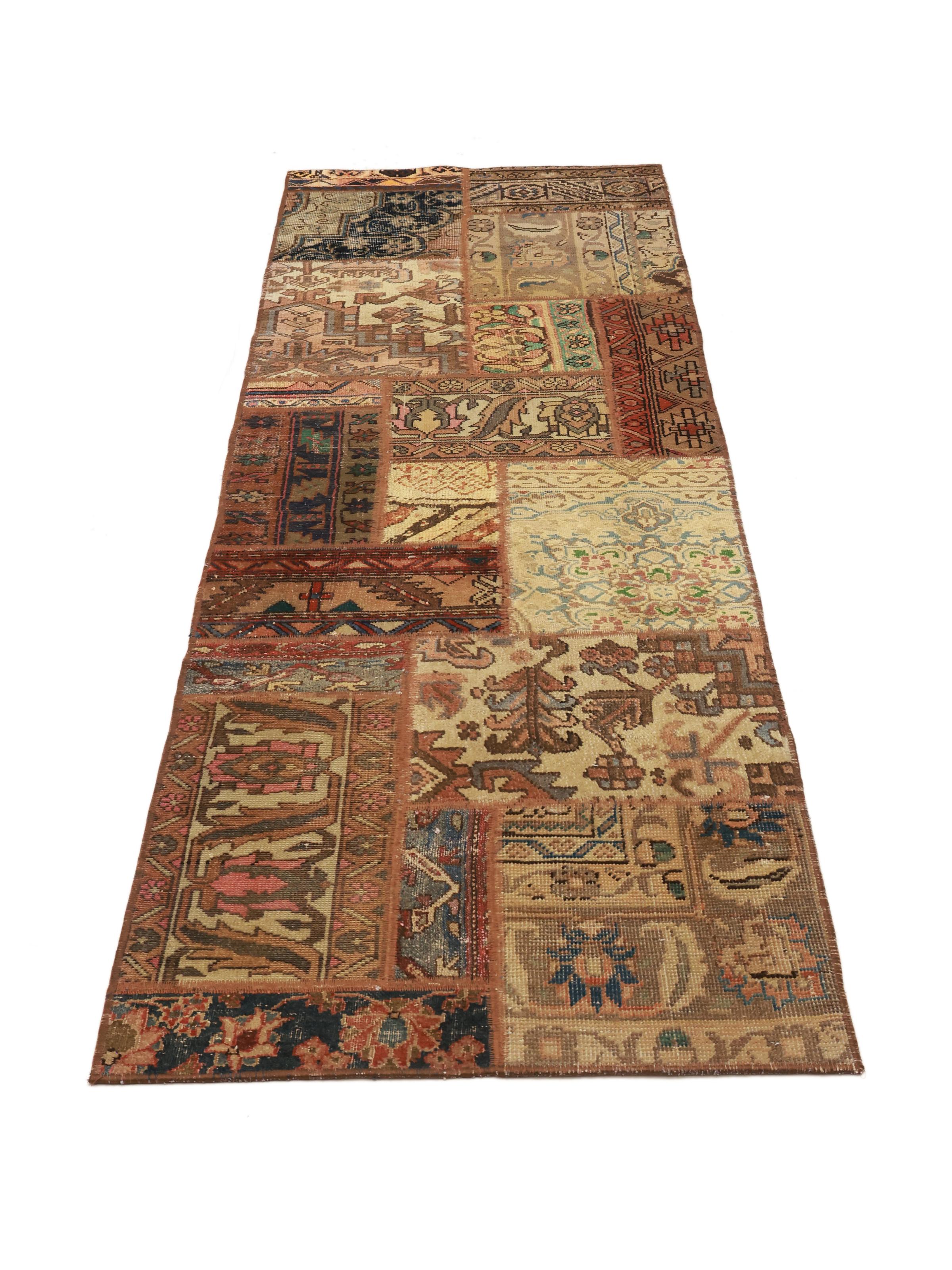
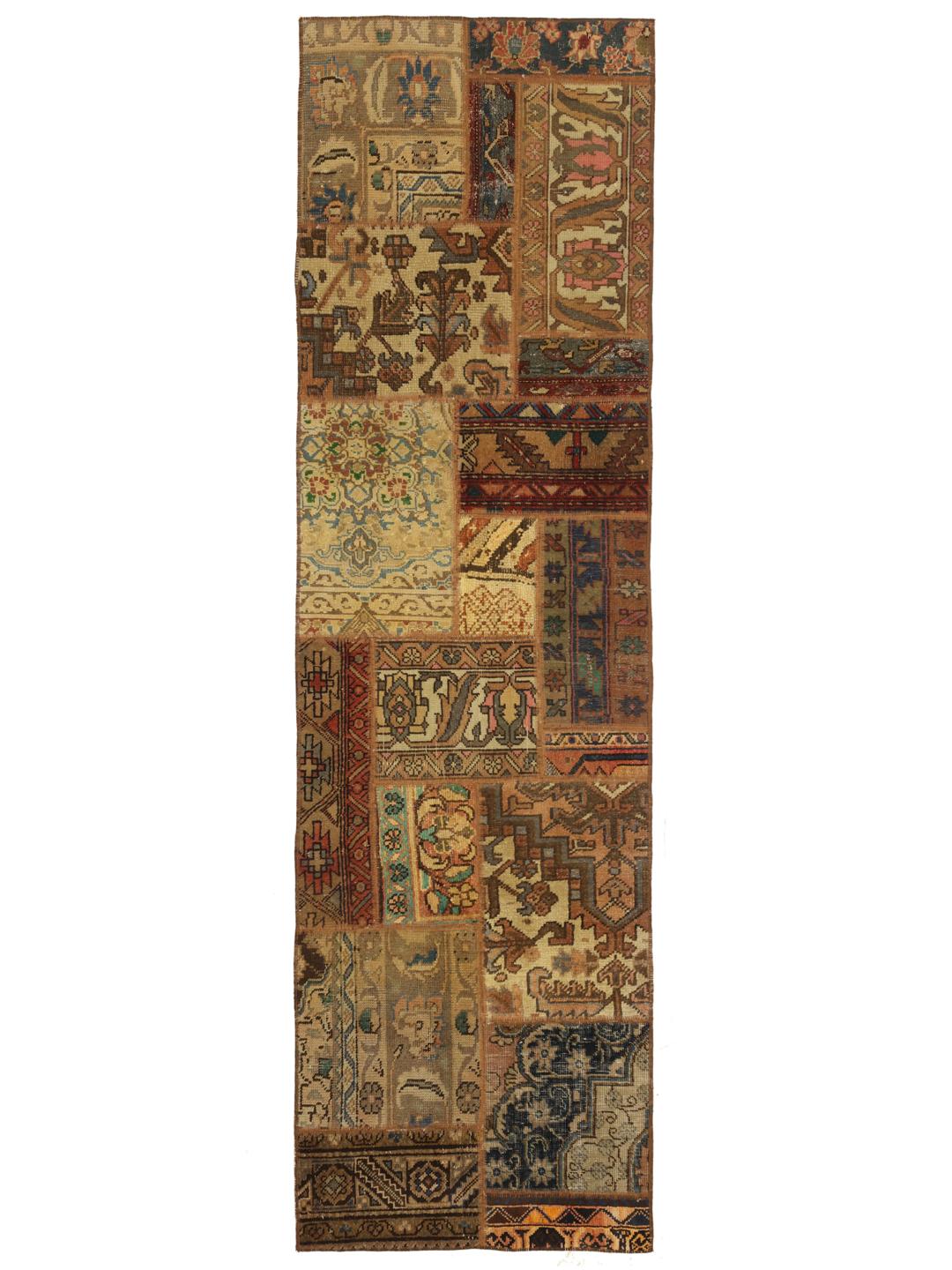
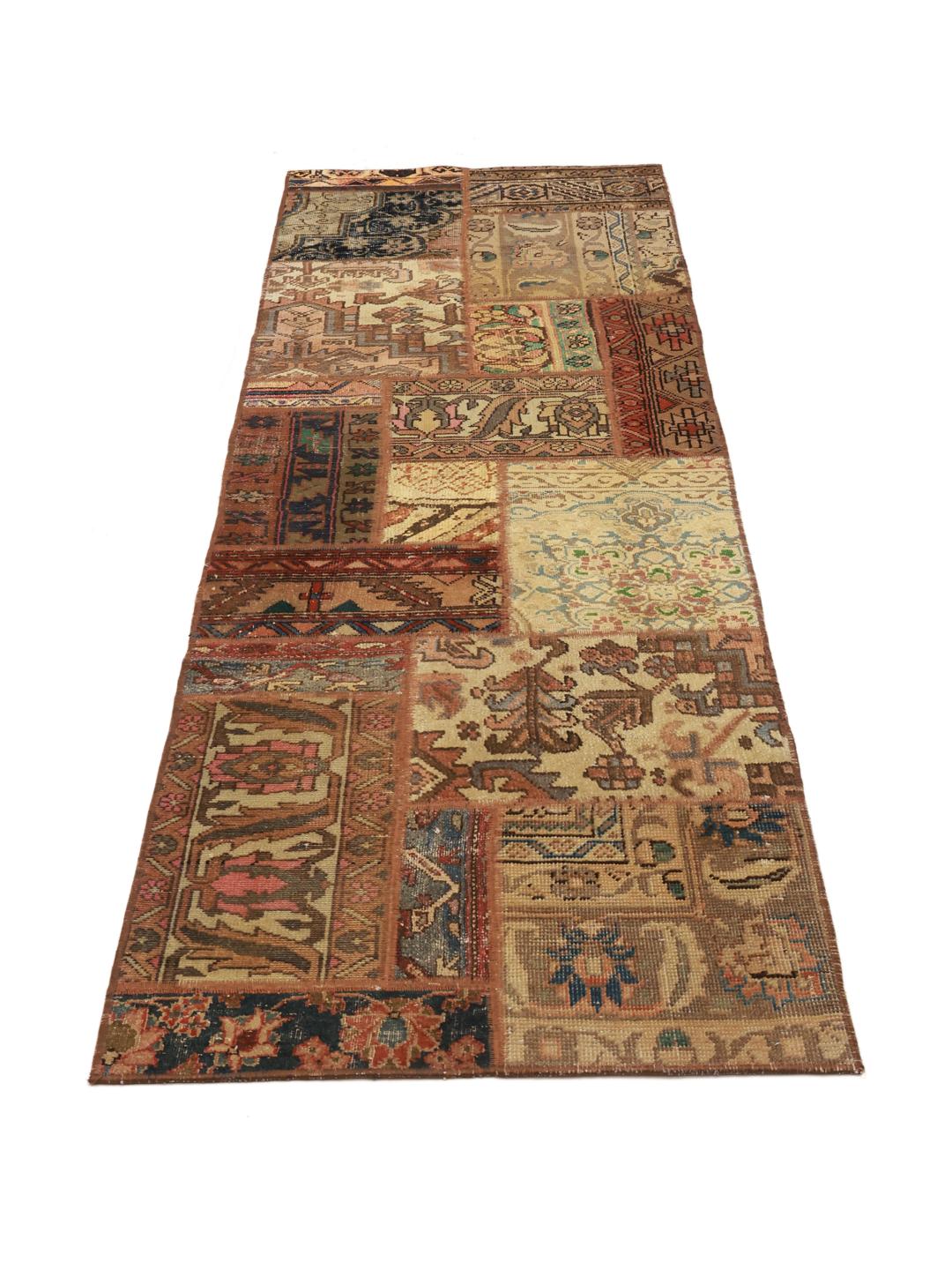
Patchwork rugs originated in modern Turkish craft communities as a creative way to preserve and reinterpret historical hand-knotted textiles. Rather than discarding worn or fragmented vintage pieces, skilled weavers reassembled them into contemporary flat compositions, giving centuries-old weaving cultures a second life.
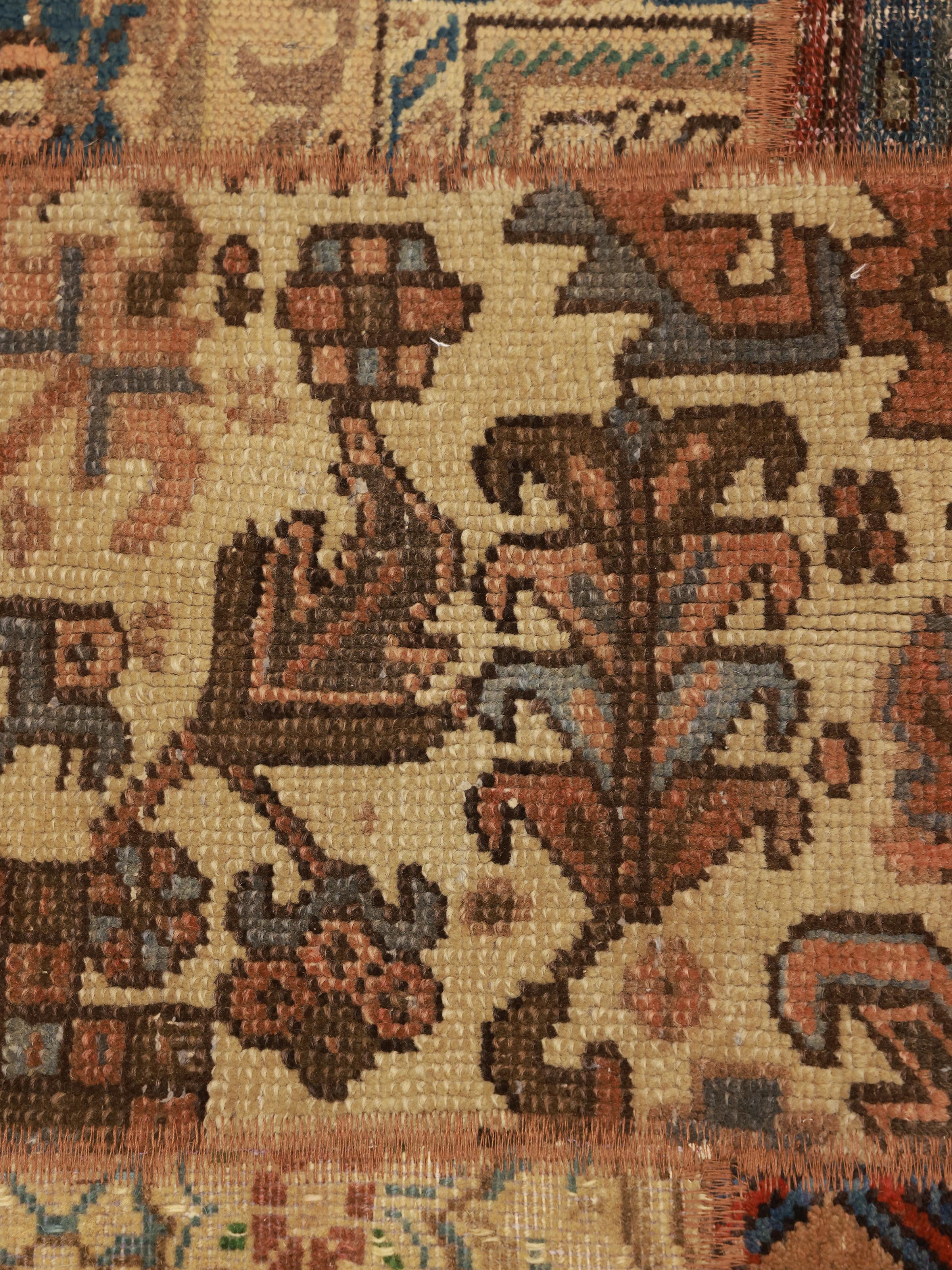
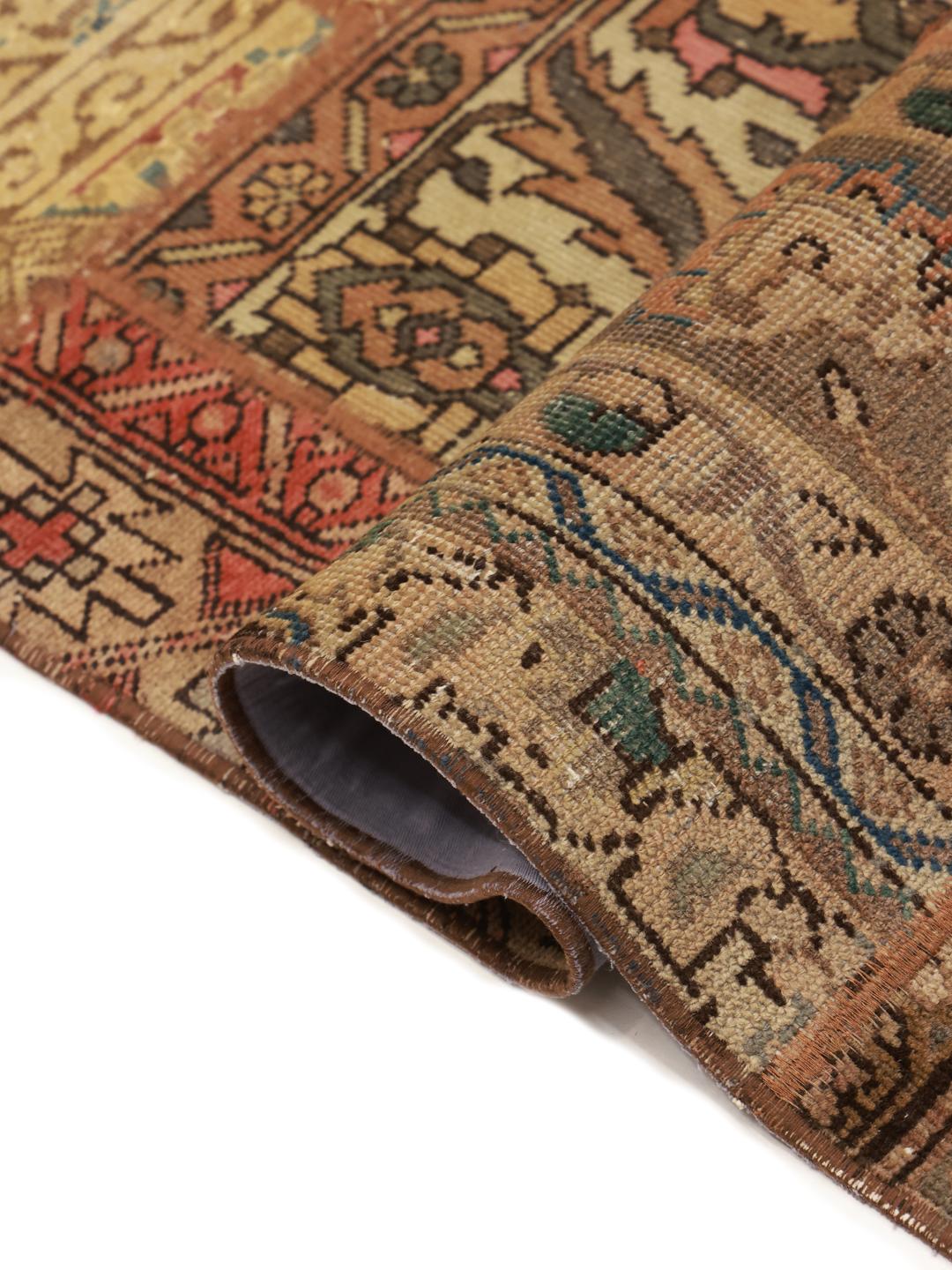
The technique involves sourcing vintage hand-knotted rugs from rural Anatolian regions, cleaning them thoroughly, and trimming individual panels to showcase their finest pattern fragments. Combining sturdy cotton foundations with resilient wool pile sections creates a durable textile that honors traditional hand-knotting art.
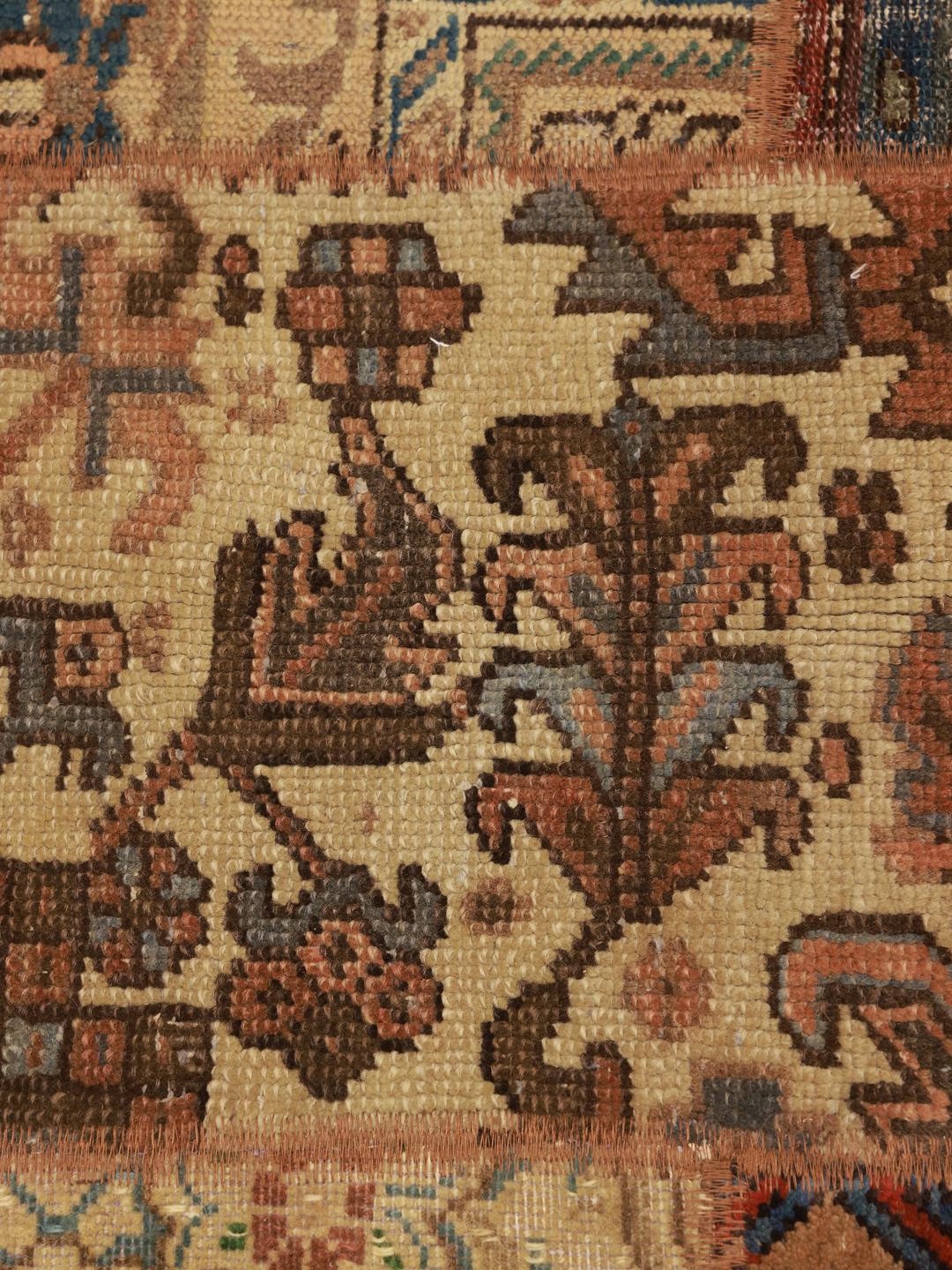
Visual elements across the patches often feature classic Anatolian tribal symbols, geometric borders, and stylised floral medallions. Because the fragments come from different regions and time periods, each finished rug displays a rich tapestry of contrasting textures, faded dyes, and regional motifs.
Owning a vintage Turkish Patchwork rug means bringing a physical archive of weaving history into the modern home. Collectors and homeowners value these pieces for their sustainable nature, cultural resonance, and individual character that cannot be recreated by modern mass manufacturing.