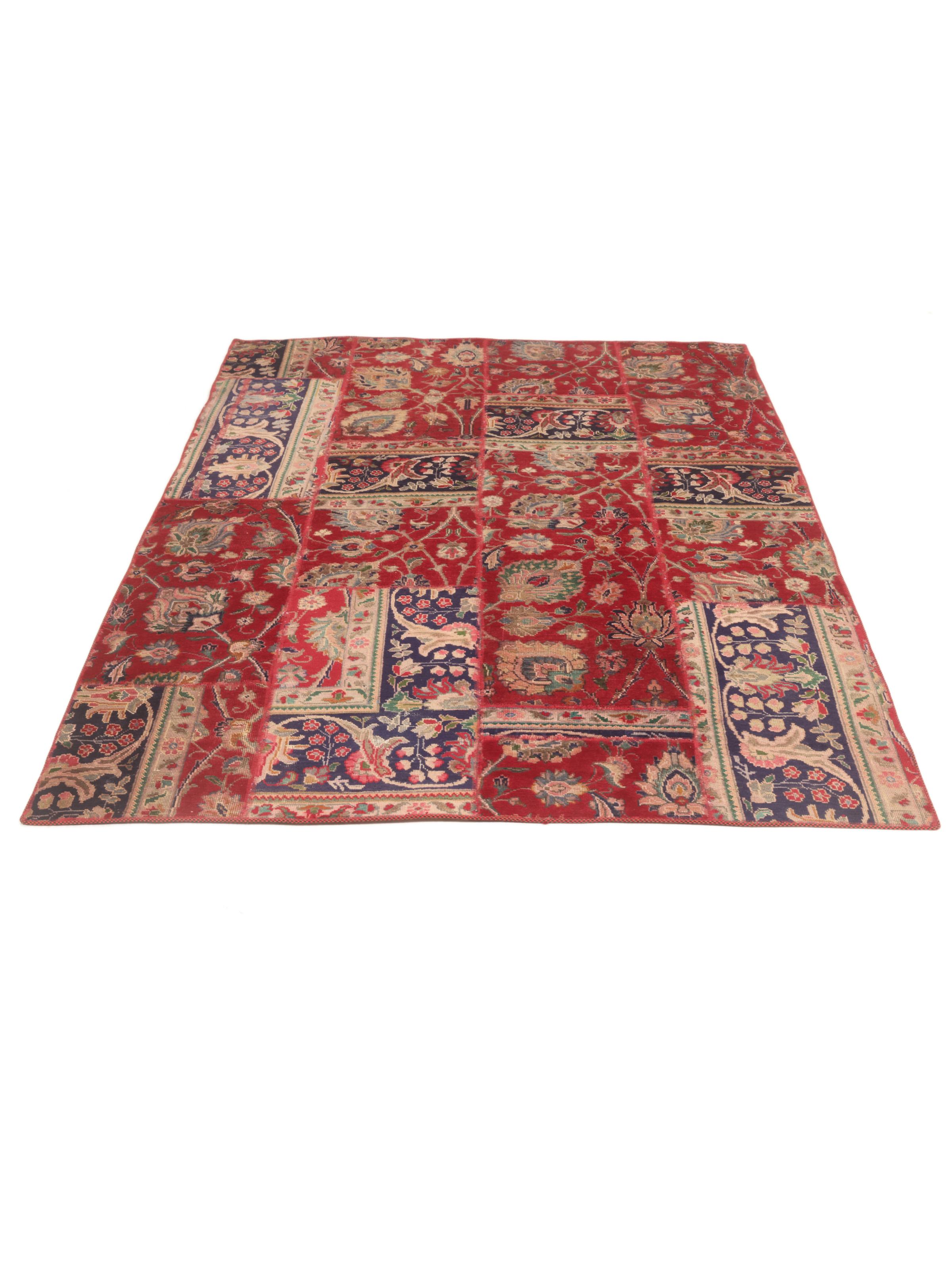
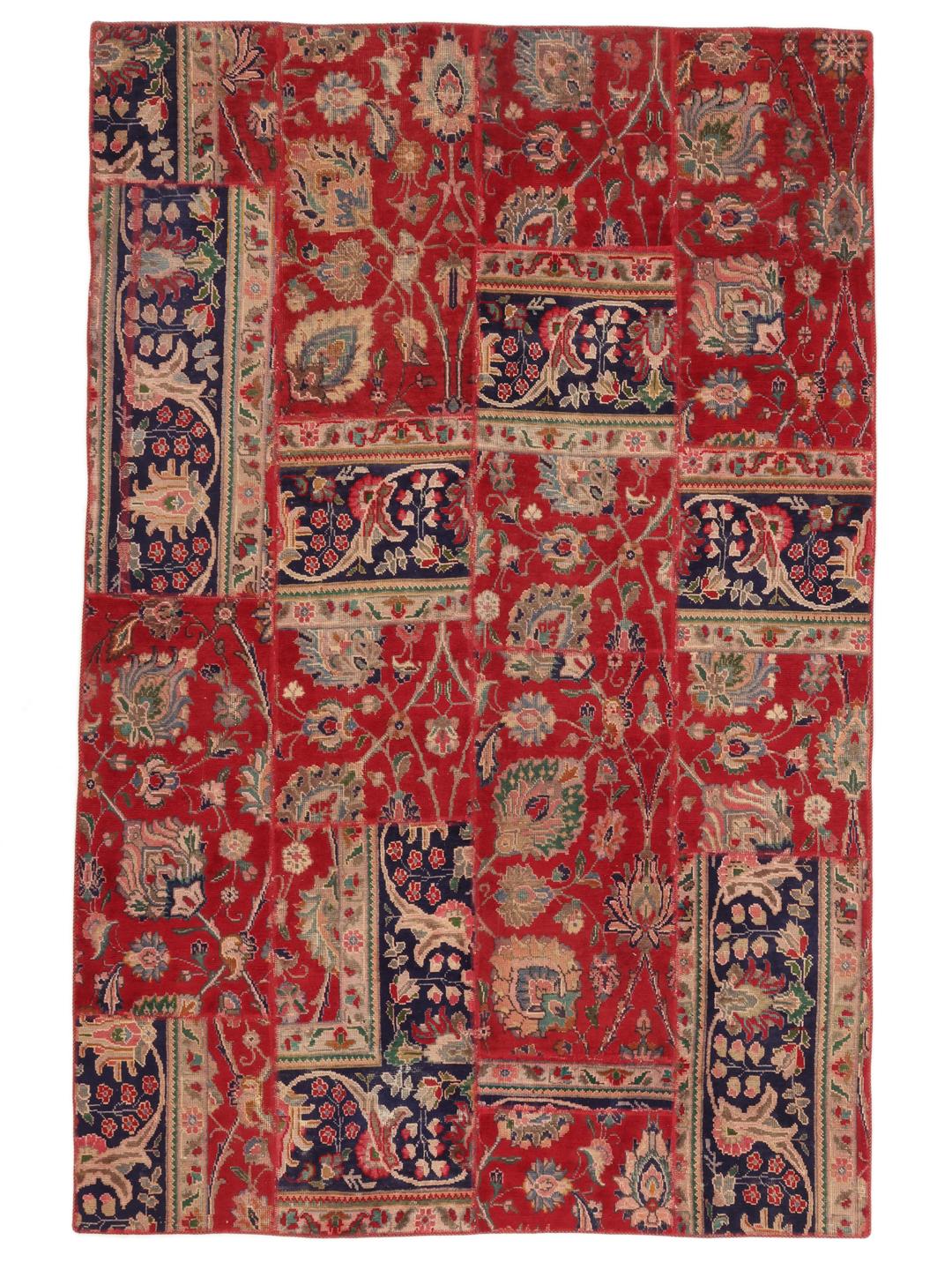
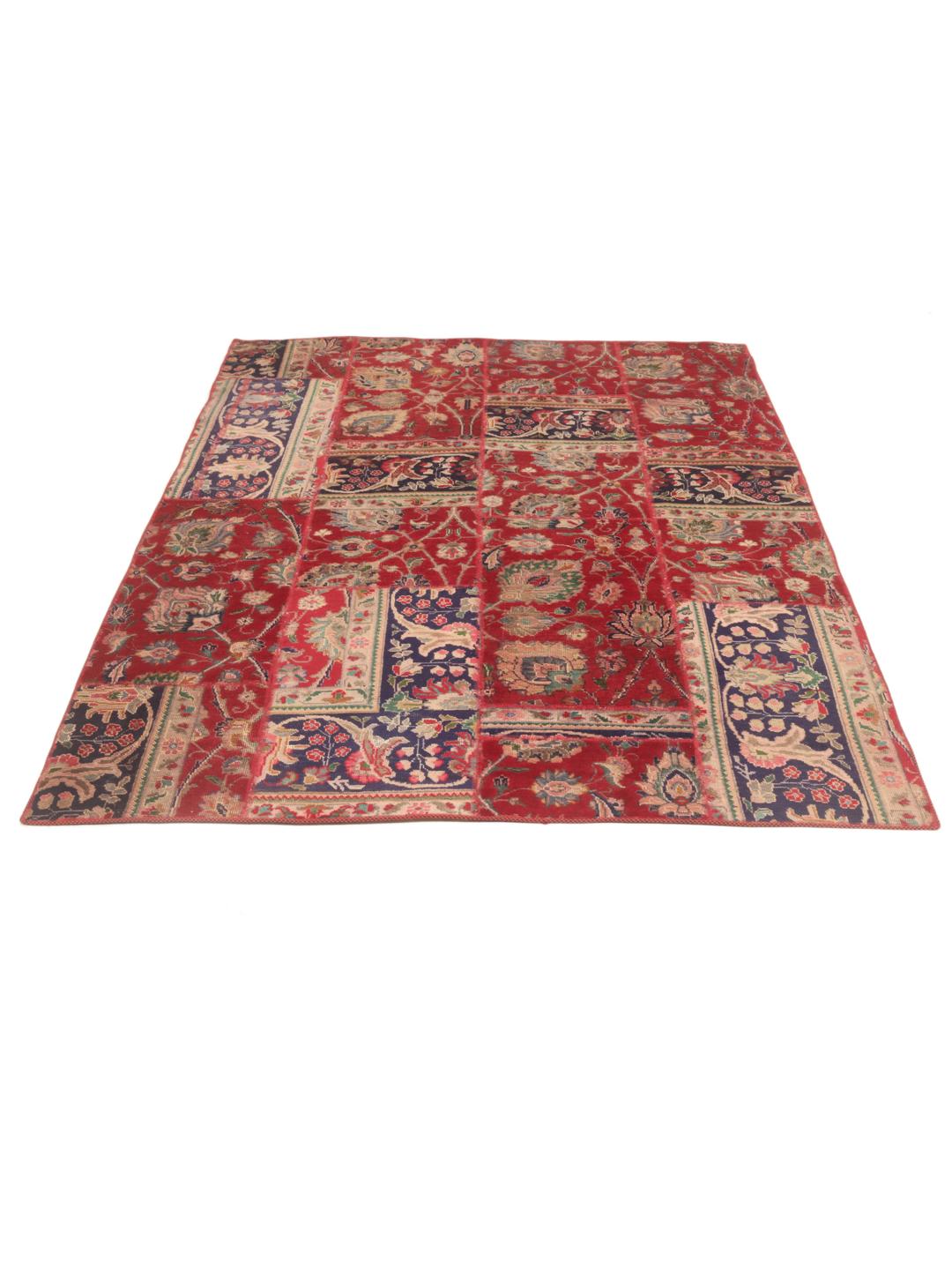
The tradition of patchwork rugs is a fascinating evolution within Middle Eastern textile history. For generations, weavers in the region have valued the longevity of hand-knotted wool, often preserving pieces that have lived long lives in family homes. When these rugs reach a point where they are no longer suitable for their original purpose, they are lovingly repurposed into patchwork designs, ensuring that the skill and history woven into them are never lost.
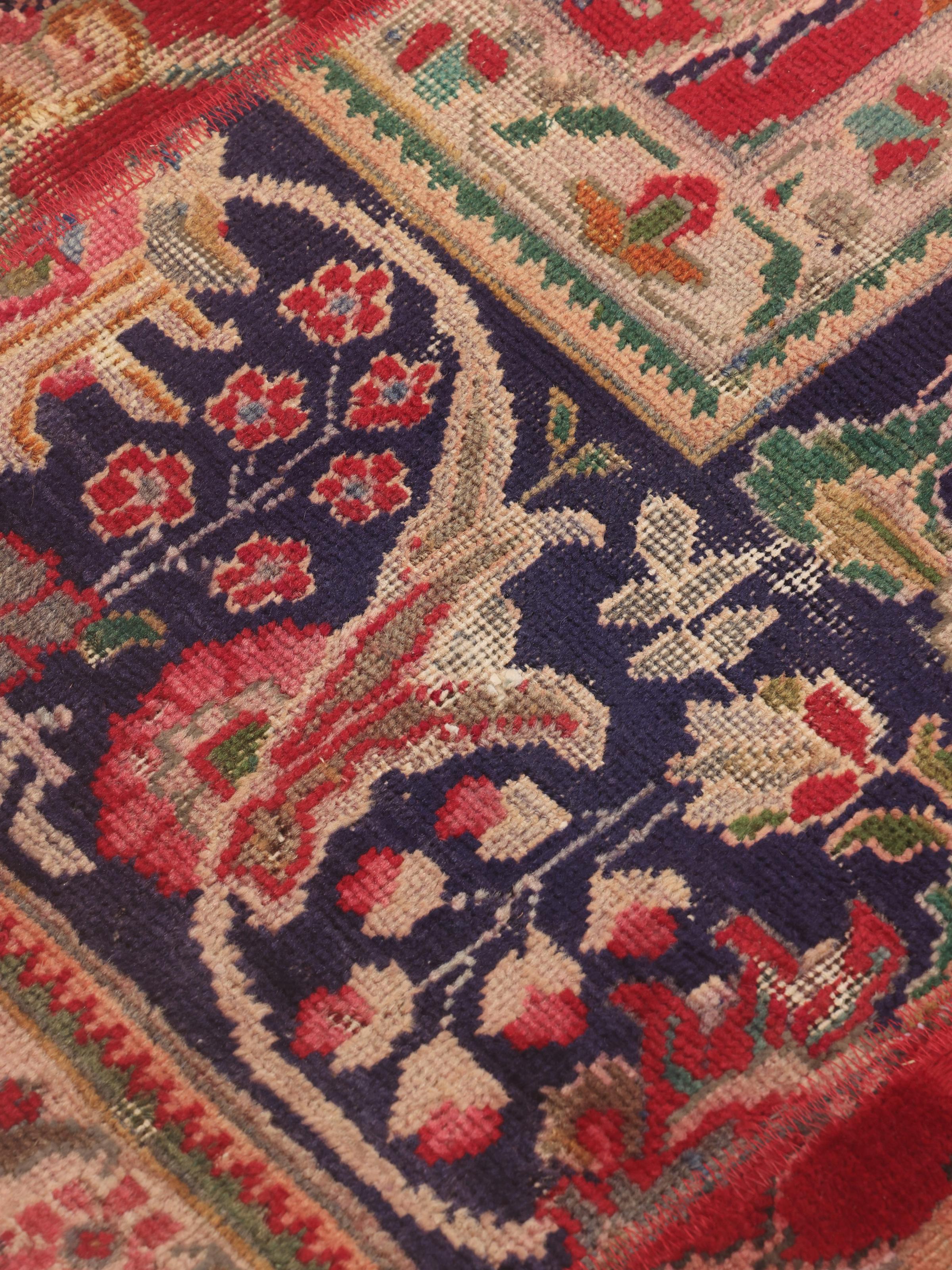
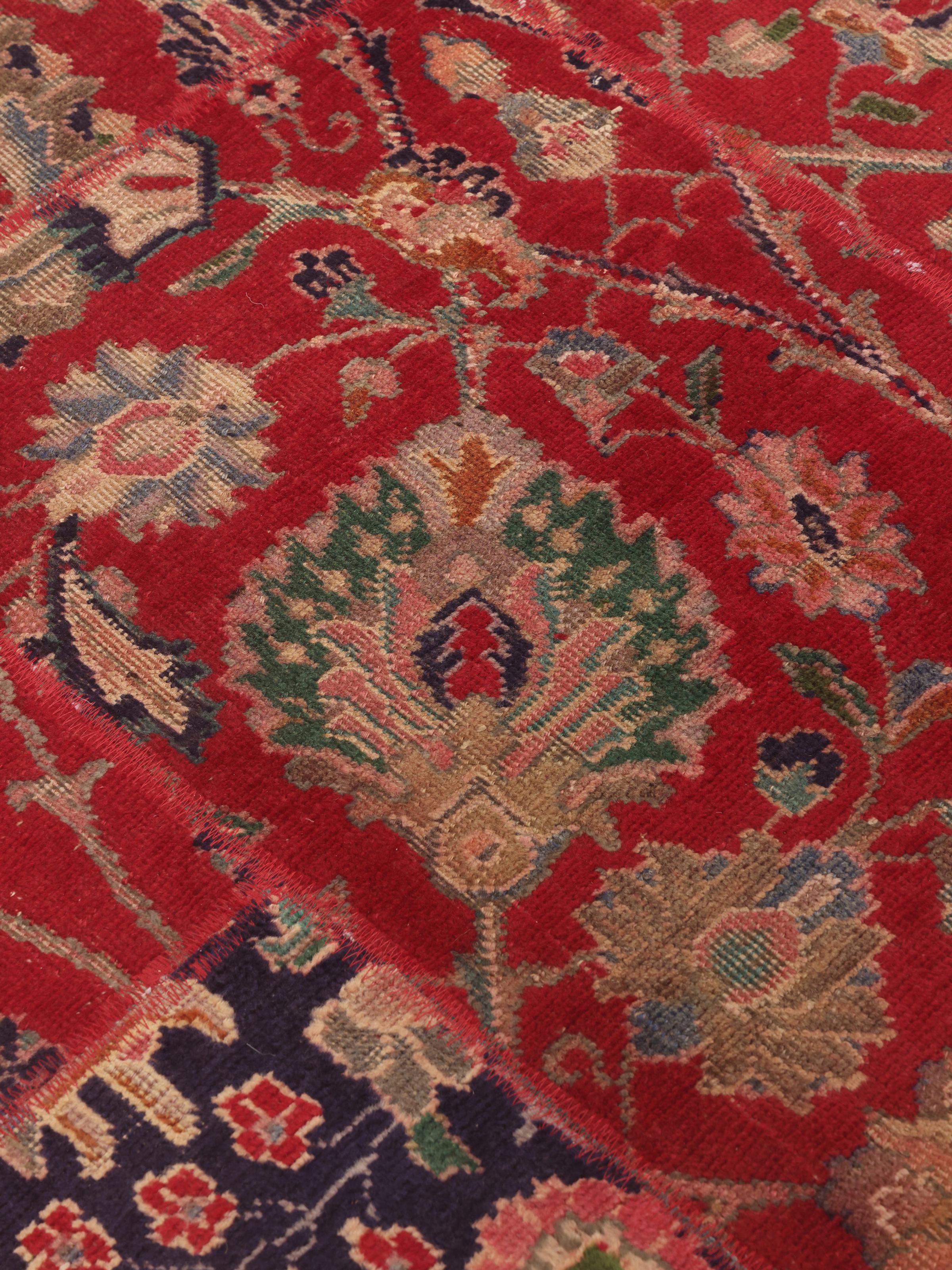
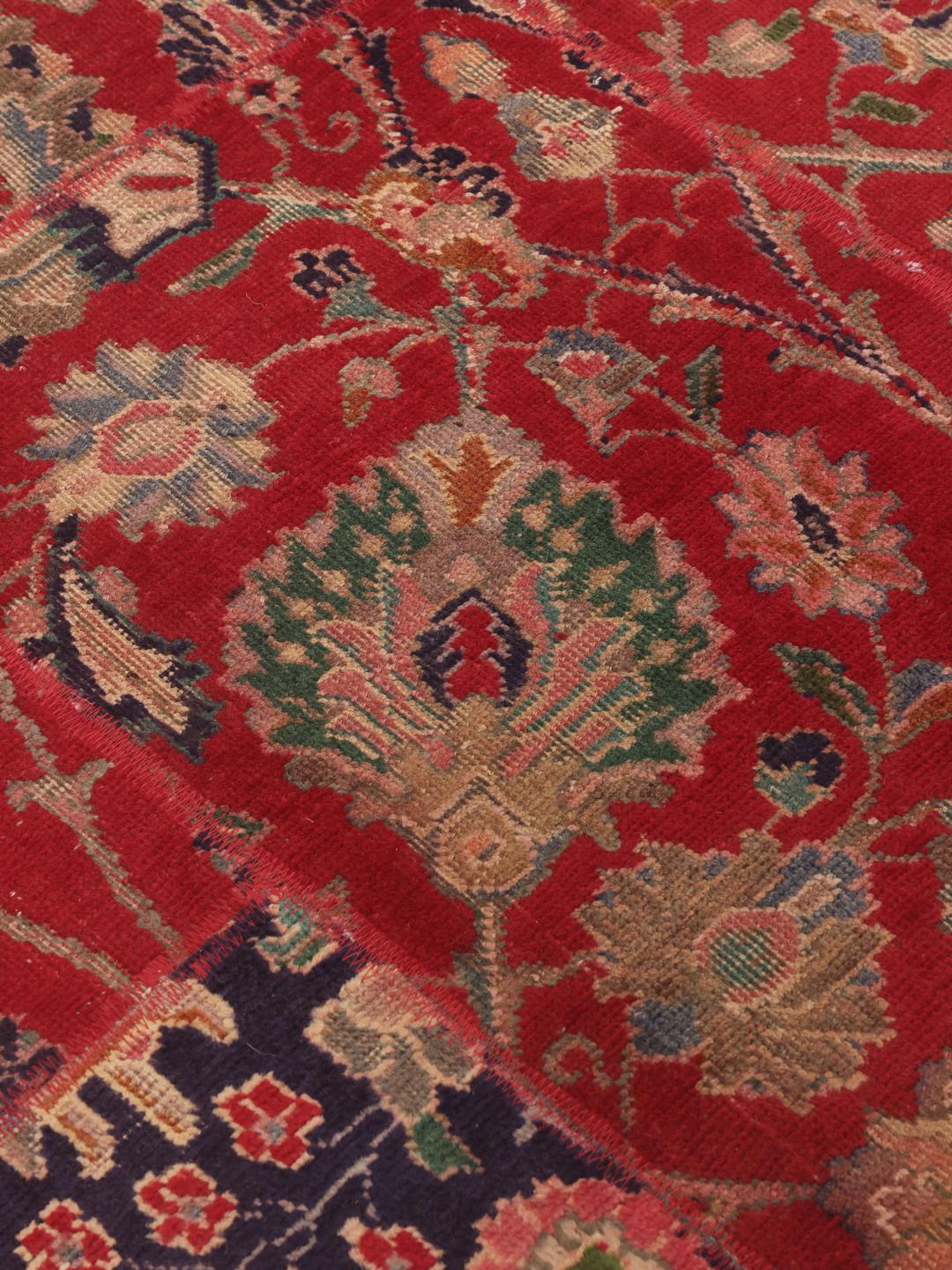
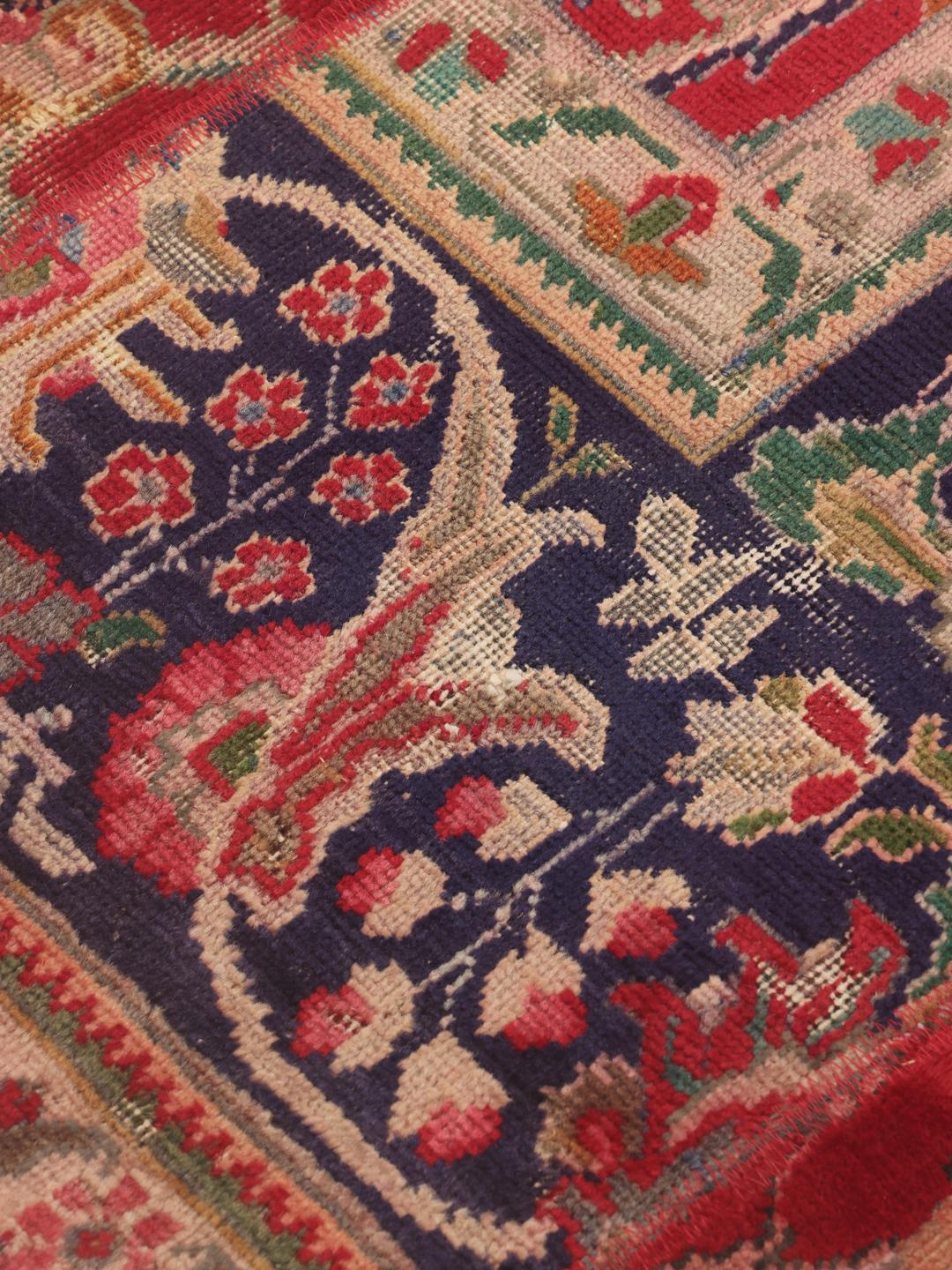
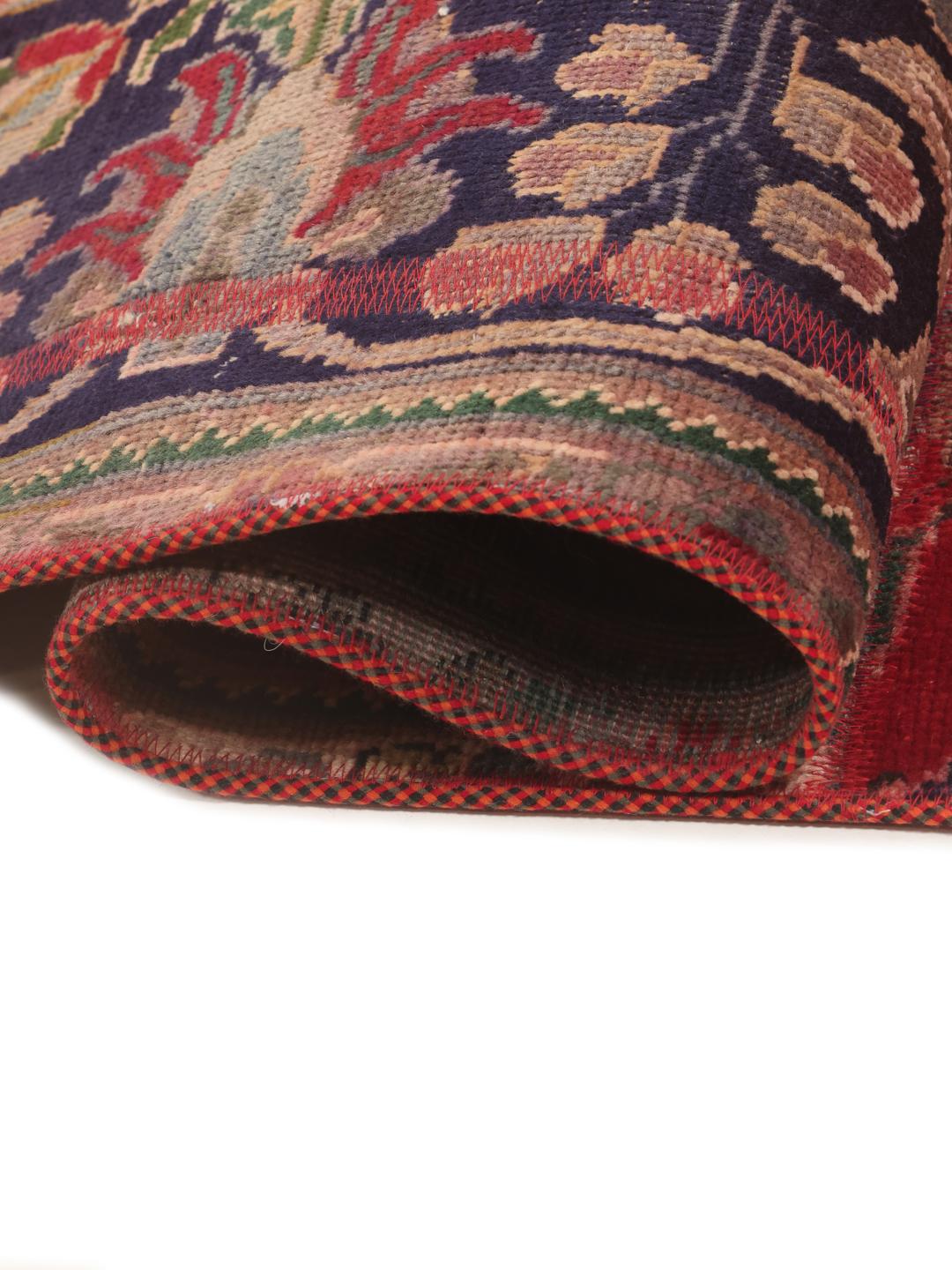
This practice relies on the mastery of traditional knotting techniques, which are essential for creating the dense, durable pile associated with high-quality rugs. By using wool as the primary material, these rugs gain a natural lustre and strength. The careful selection of fragments allows the artisan to showcase various motifs, such as floral or geometric patterns, which were originally intended for larger, more formal pieces, now re-contextualised in a modern, eclectic format.
The visual language of this patchwork rug is defined by the juxtaposition of its varied sections. You will often see a mix of ornate floral medallions, formal borders, and intricate tribal patterns all within a single frame. The colour traditions of the region, particularly the use of deep, rich reds balanced by cooling blues, are preserved here, creating a sense of harmony despite the diversity of the individual patches.
Collecting a patchwork rug is an act of preserving cultural heritage. It represents a bridge between the past and the present, where the immense human effort of the original weavers is honoured through a new, creative vision. Owning this piece is a commitment to quality and a celebration of the enduring value of hand-crafted textiles, offering a narrative of resilience and beauty that is rarely found in modern production.