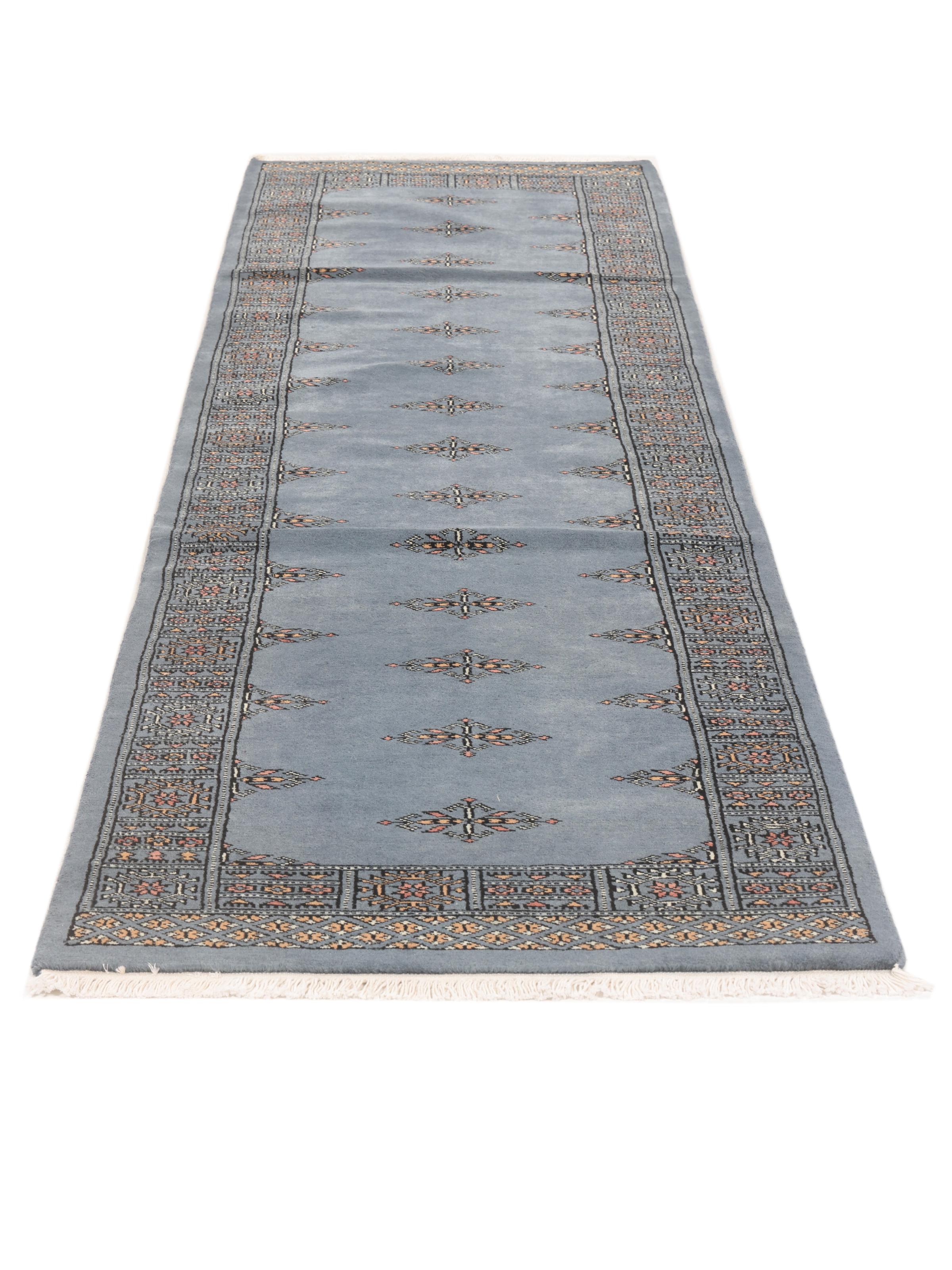
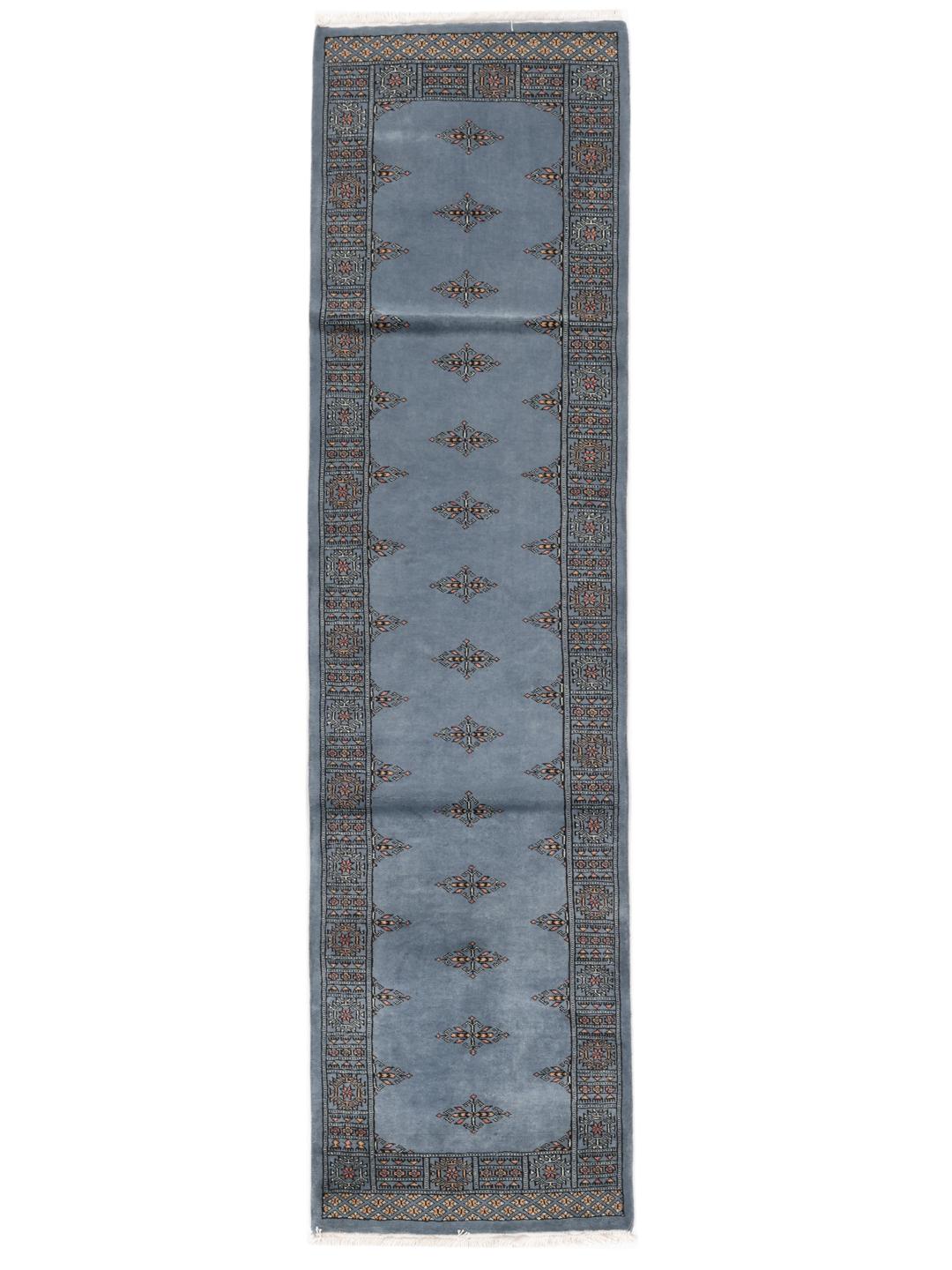
The Bokhara rug tradition is deeply rooted in the history of the Silk Road, taking its name from the ancient city of Bukhara. While these designs have origins in Middle Eastern nomadic tribes, the finest contemporary examples are masterfully woven in Pakistan. This evolution reflects a migration of craft, where time-honoured techniques were refined to meet modern standards of quality and aesthetics.
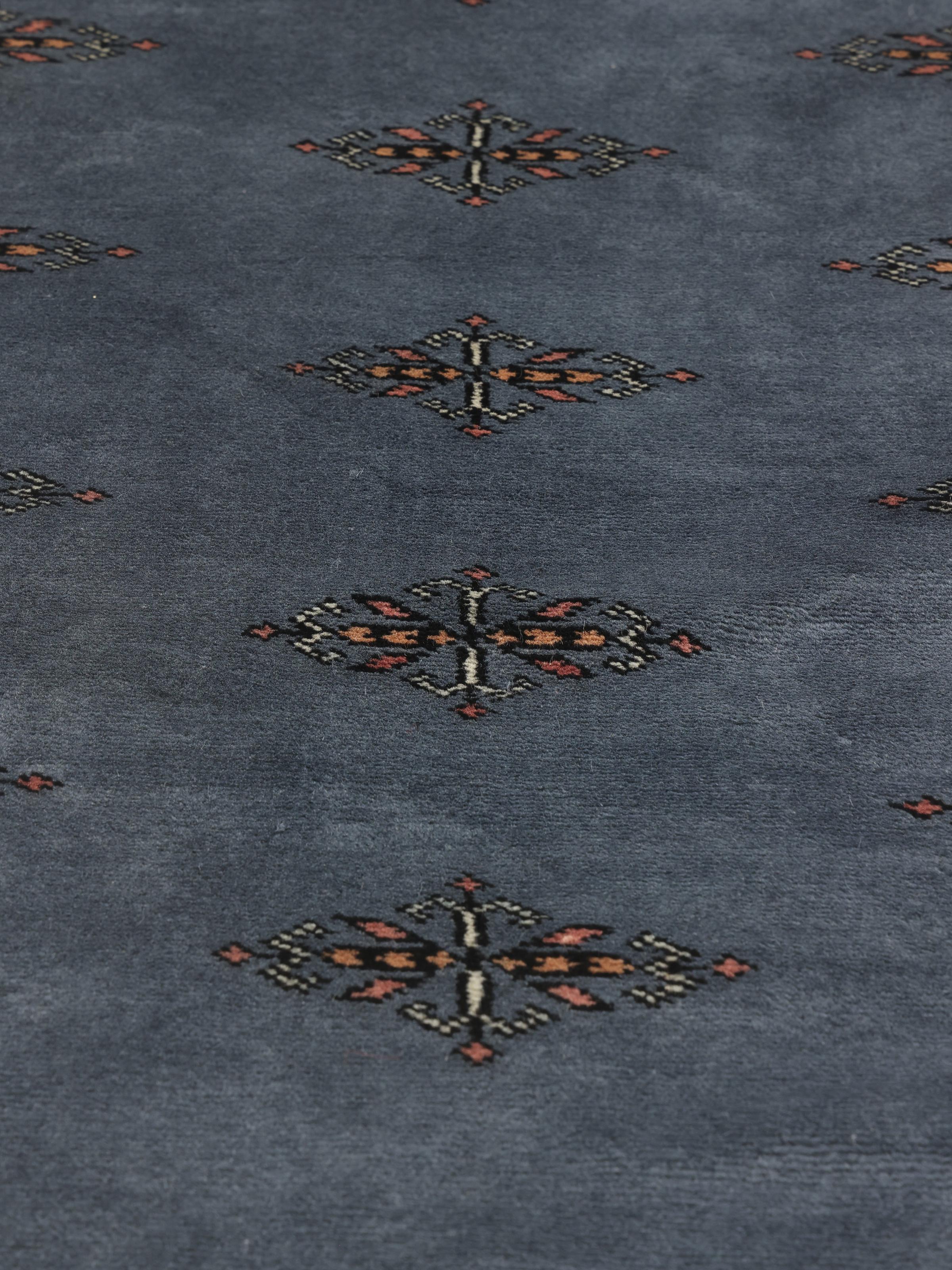
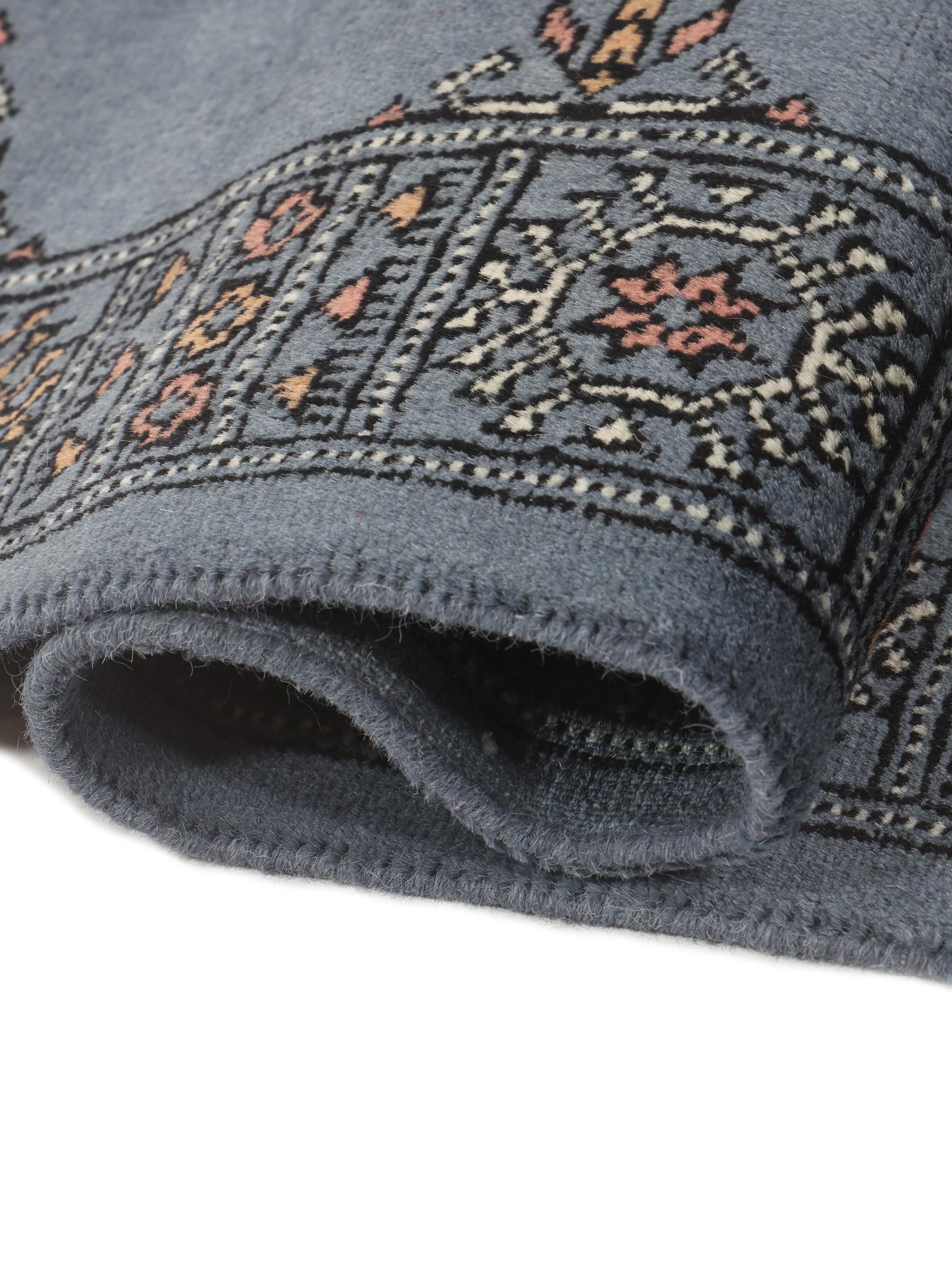
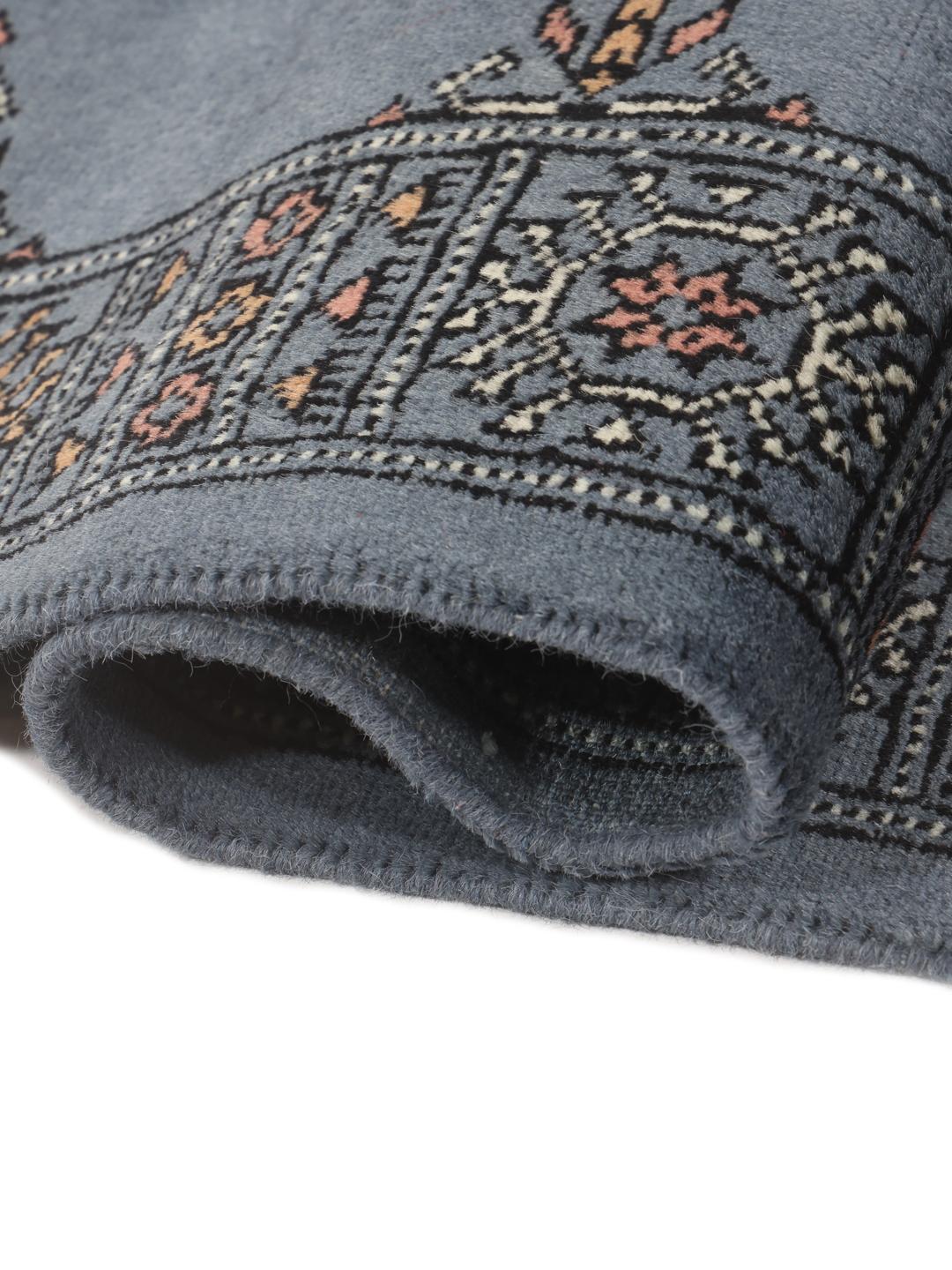
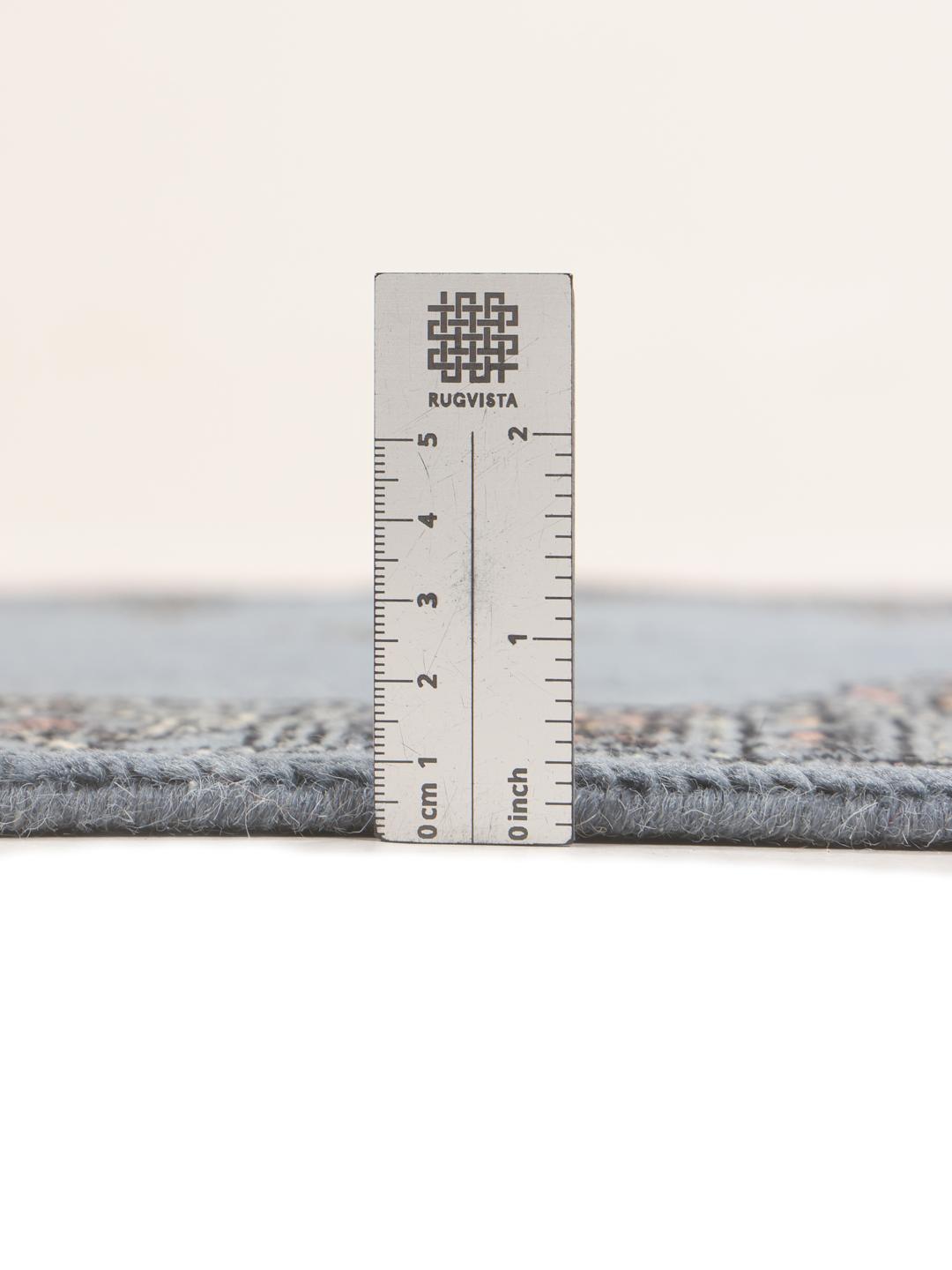
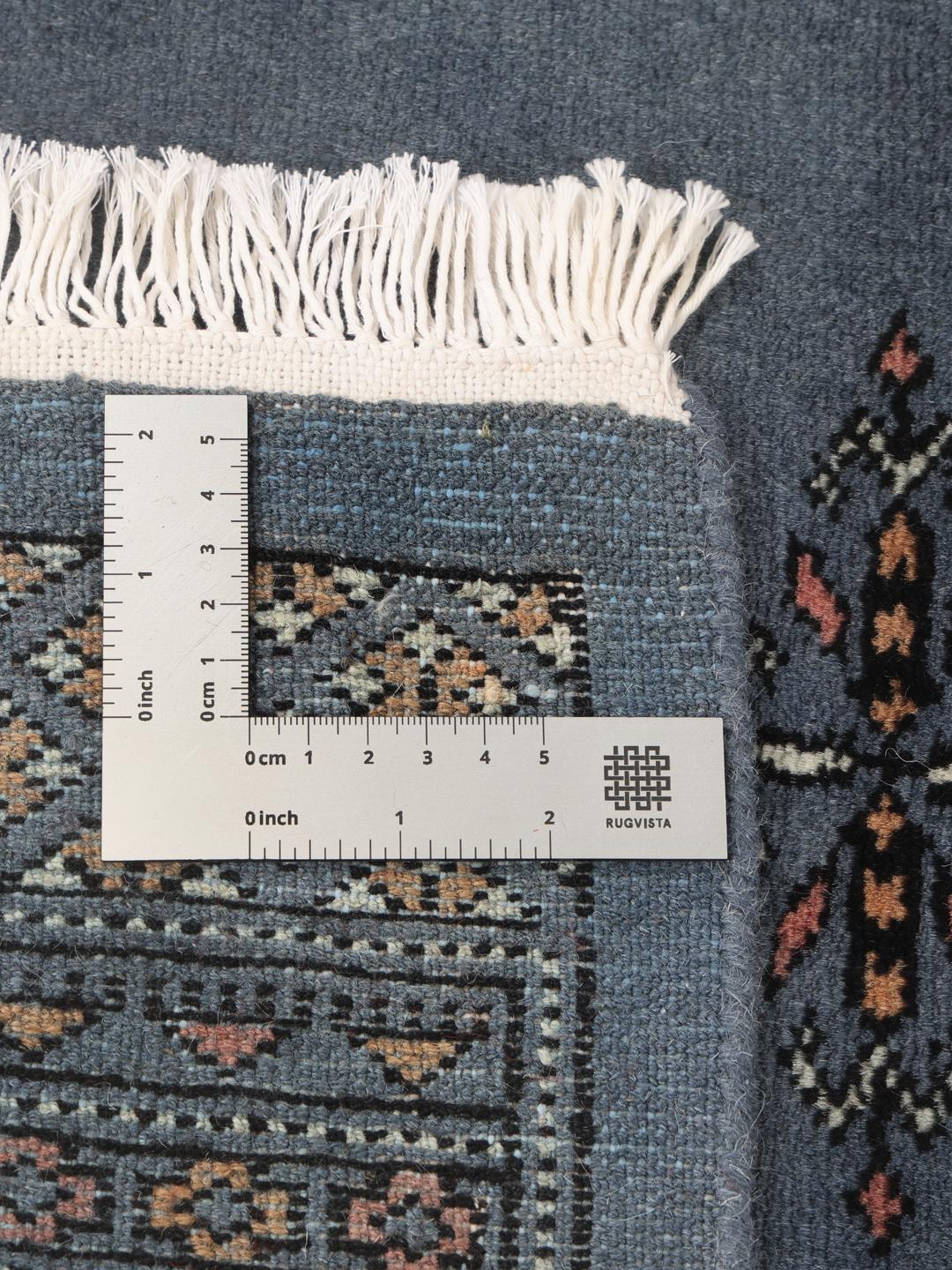
The '3ply' designation refers to the construction of the wool pile, where three individual strands are twisted together before being knotted. This technique is significant because it creates a thicker, more robust, and highly durable pile that feels exceptionally soft and lustrous. This added material makes the rug more resistant to wear, ensuring that the intricate patterns remain vibrant and well-defined over time.
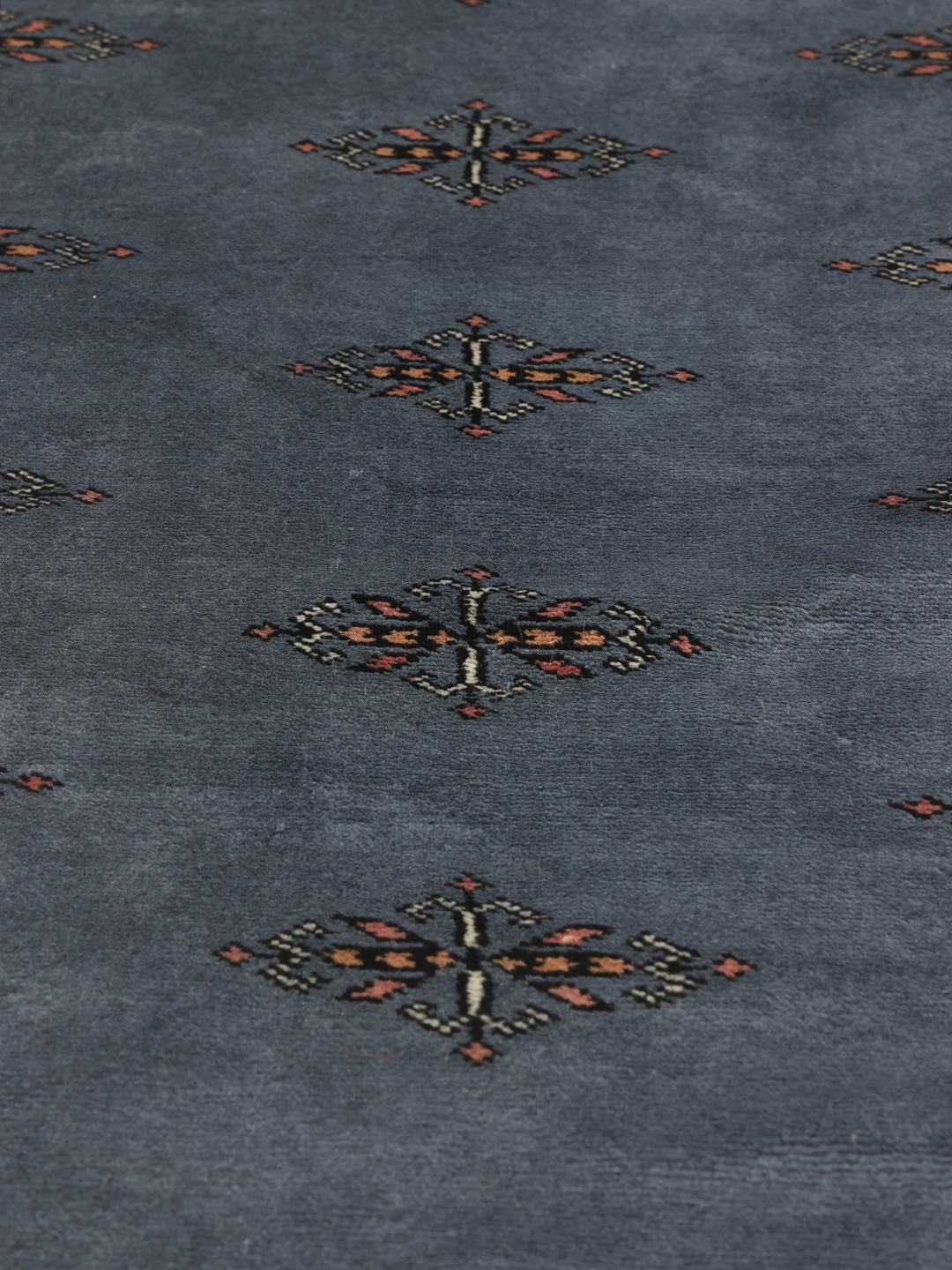
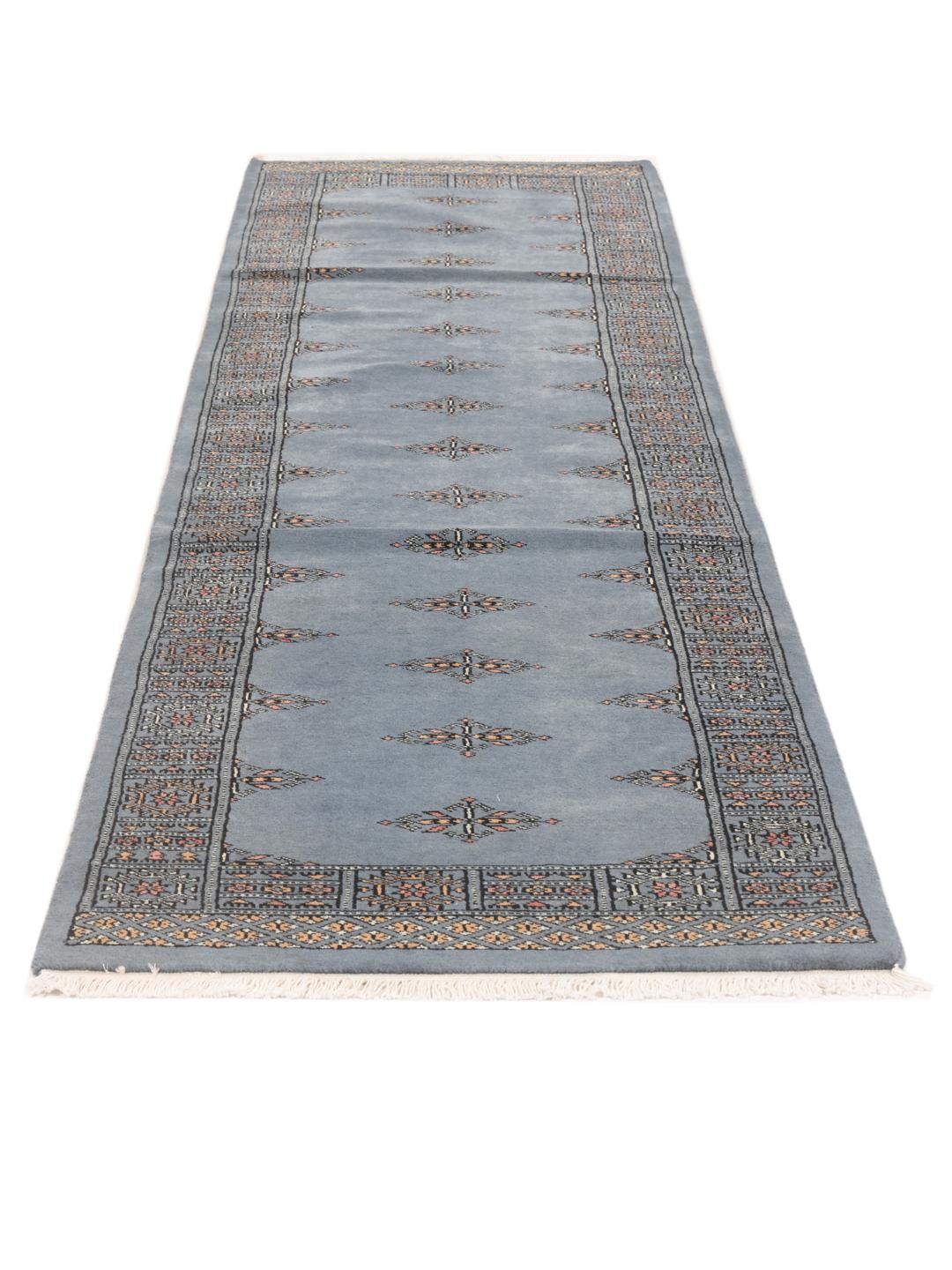
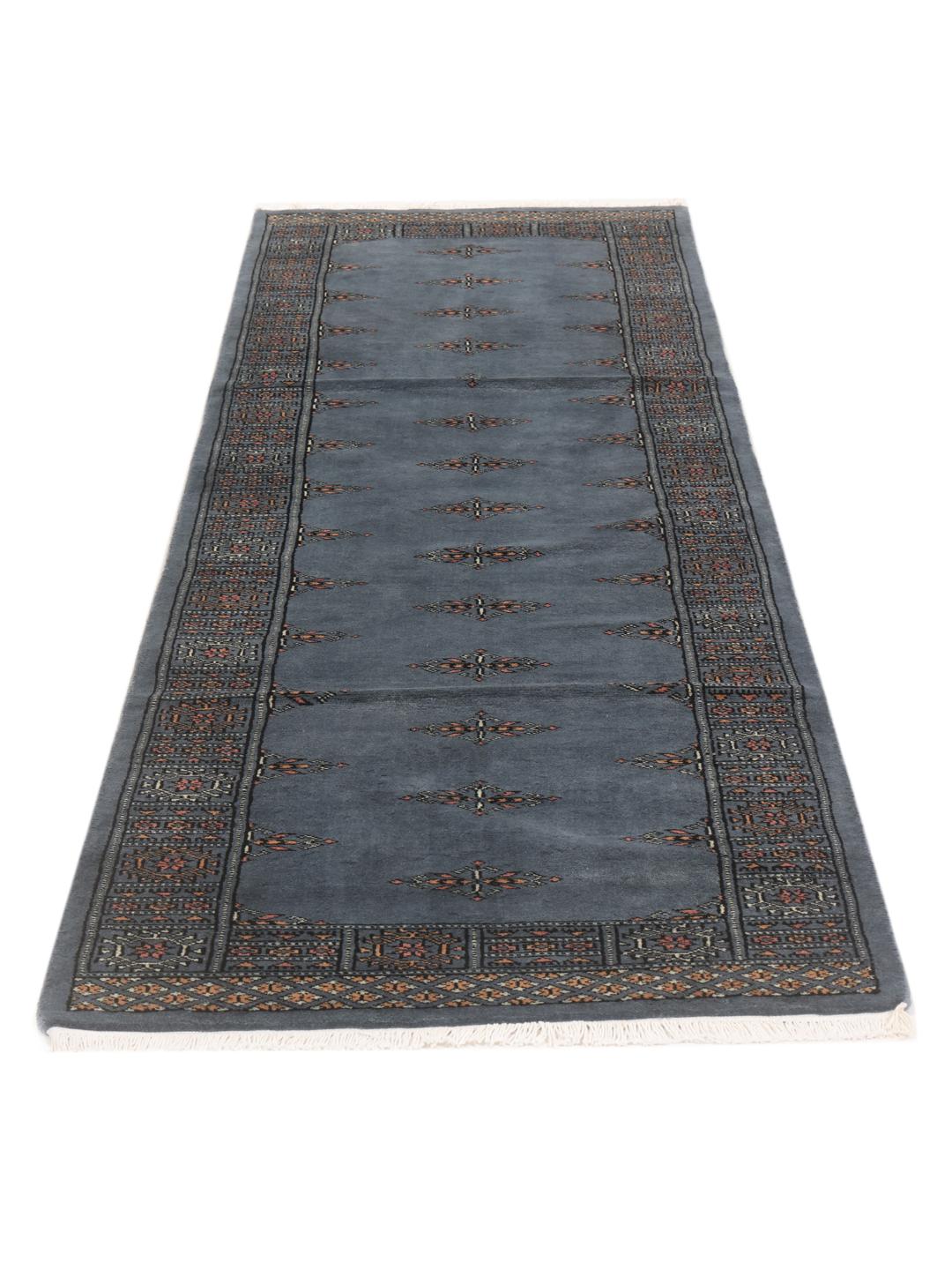
Signature to the Bokhara tradition are the repeating motifs, often referred to as 'gul' or elephant-foot medallions, arranged in elegant rows across the field. These geometric patterns are typically framed by elaborate, multi-layered borders that demonstrate the precision of the weaver. In this particular piece, the choice of a serene blue field offers a refreshing and distinctive departure from the more traditional red palettes often associated with this style.
These rugs are highly valued by collectors and homeowners alike for their cultural heritage and the immense skill required to produce them. Owning a piece from this tradition is an investment in history and human artistry. It represents a connection to a long-standing craft, where the value lies not just in the rug’s beauty, but in the dedication and expertise woven into every single knot.