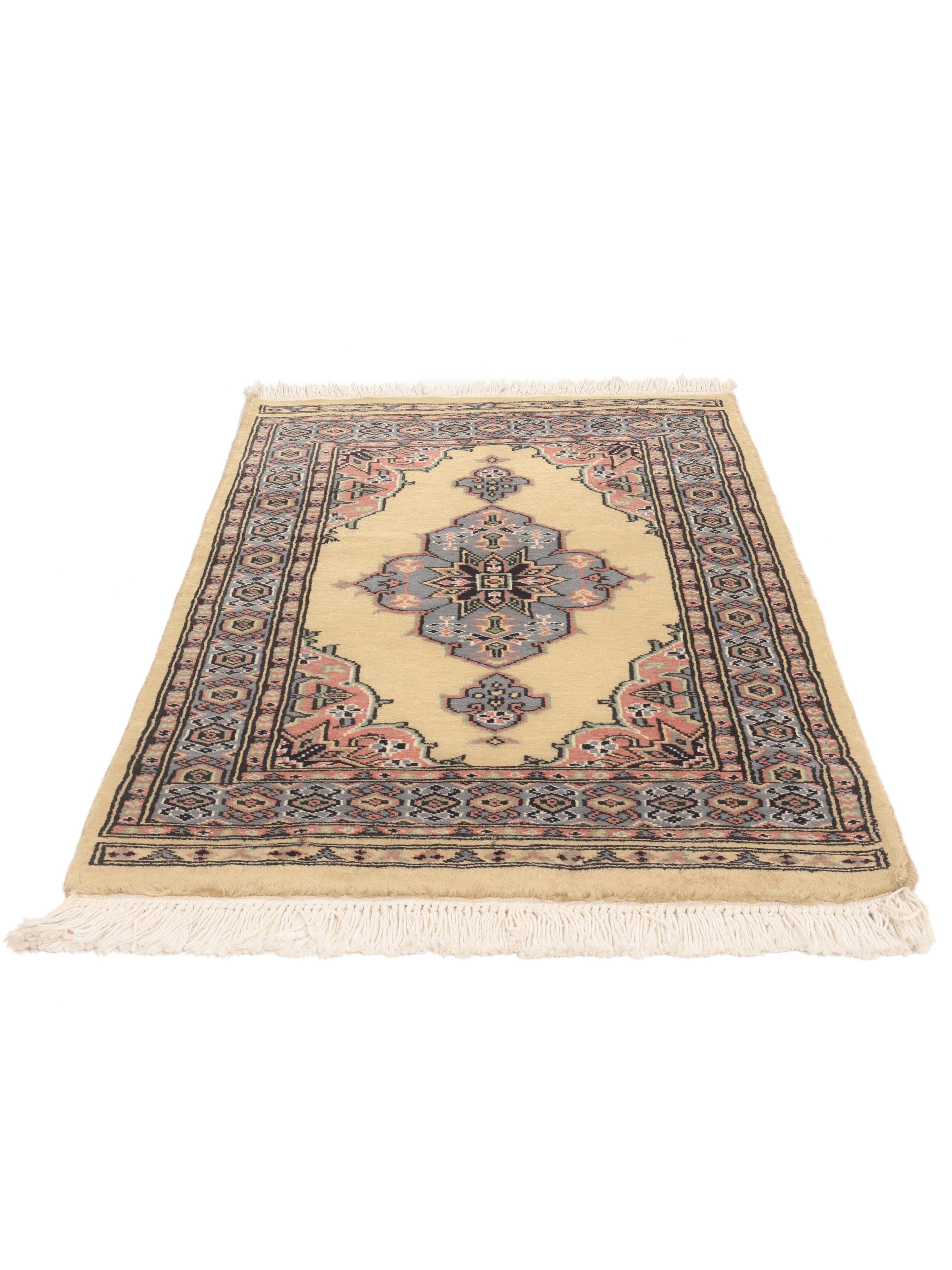
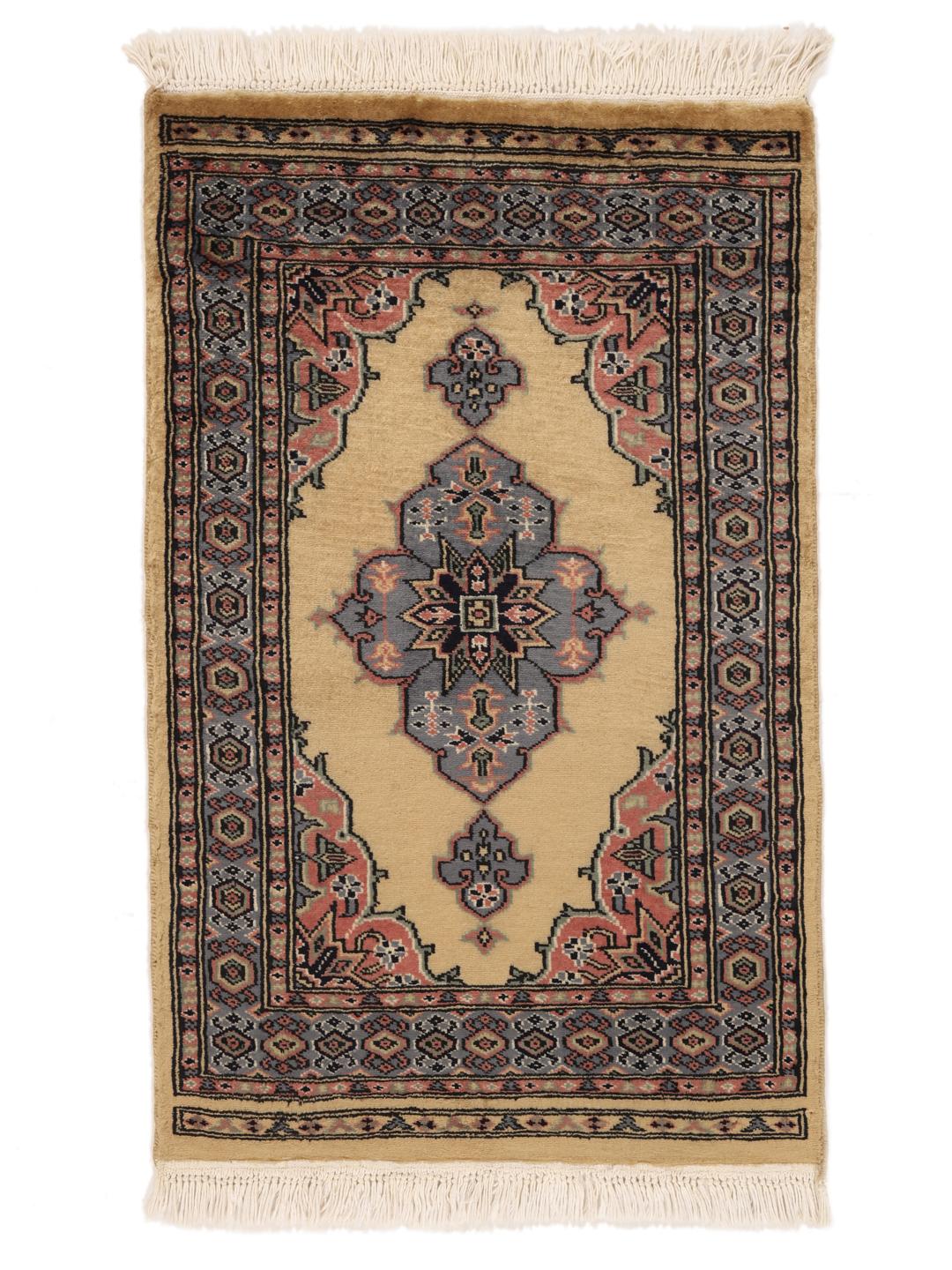
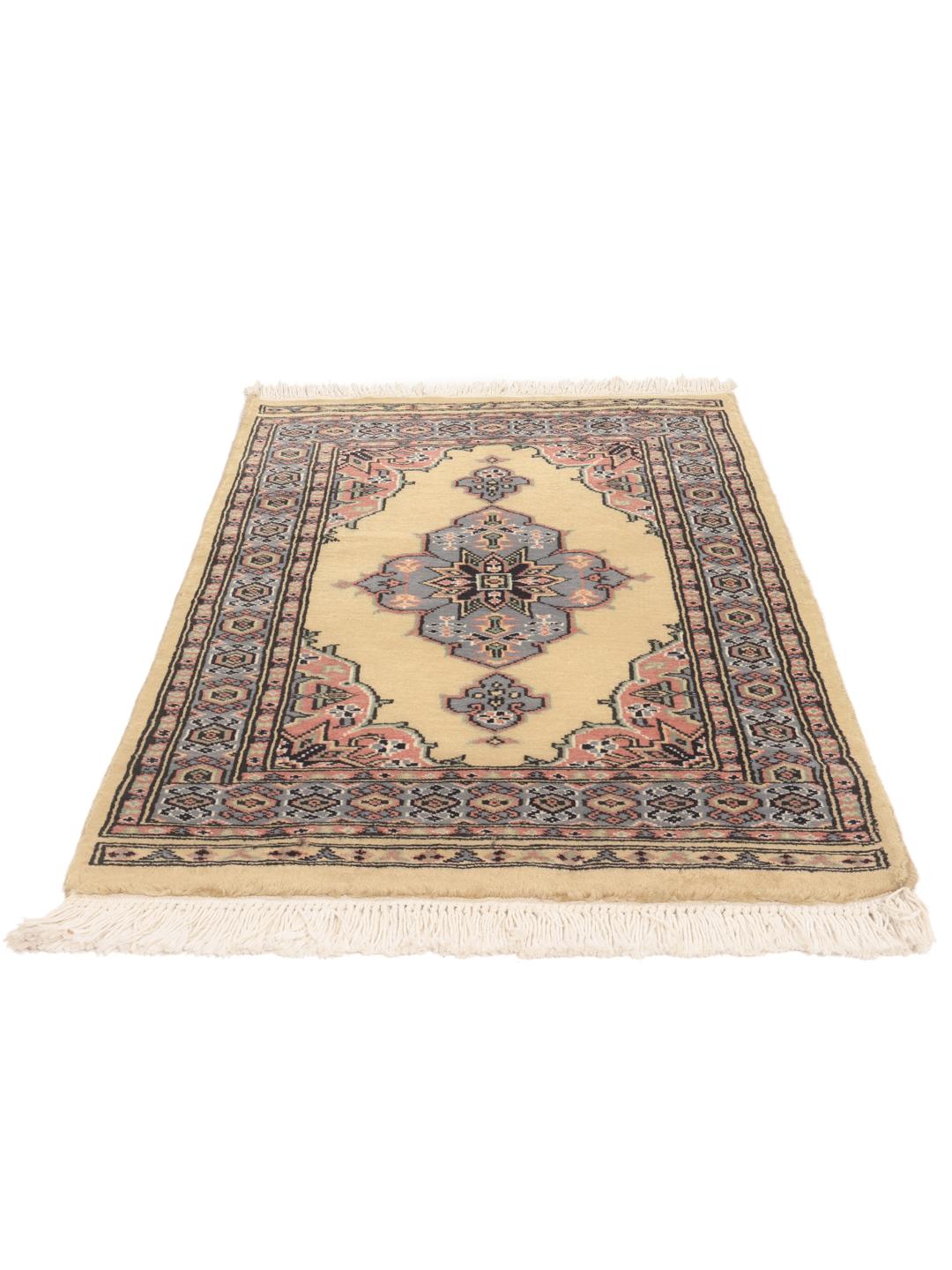
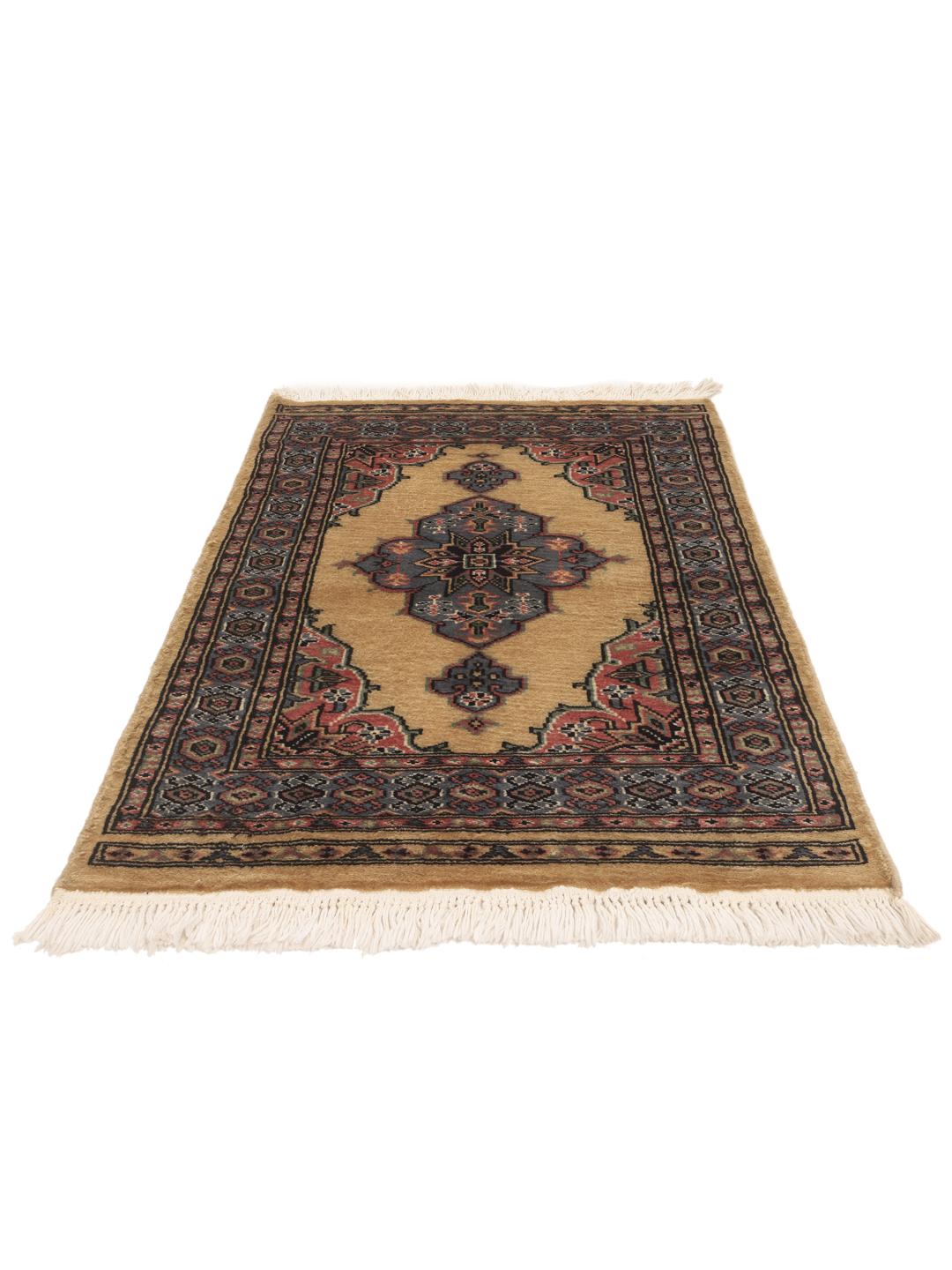
The Bokhara rug tradition is deeply rooted in the history of Central Asia, taking its name from the ancient Silk Road city of Bukhara. While these designs have their origins in nomadic tribal weaving, the finest examples today are crafted in Pakistan, where the tradition has been refined to achieve exceptional levels of precision and quality.
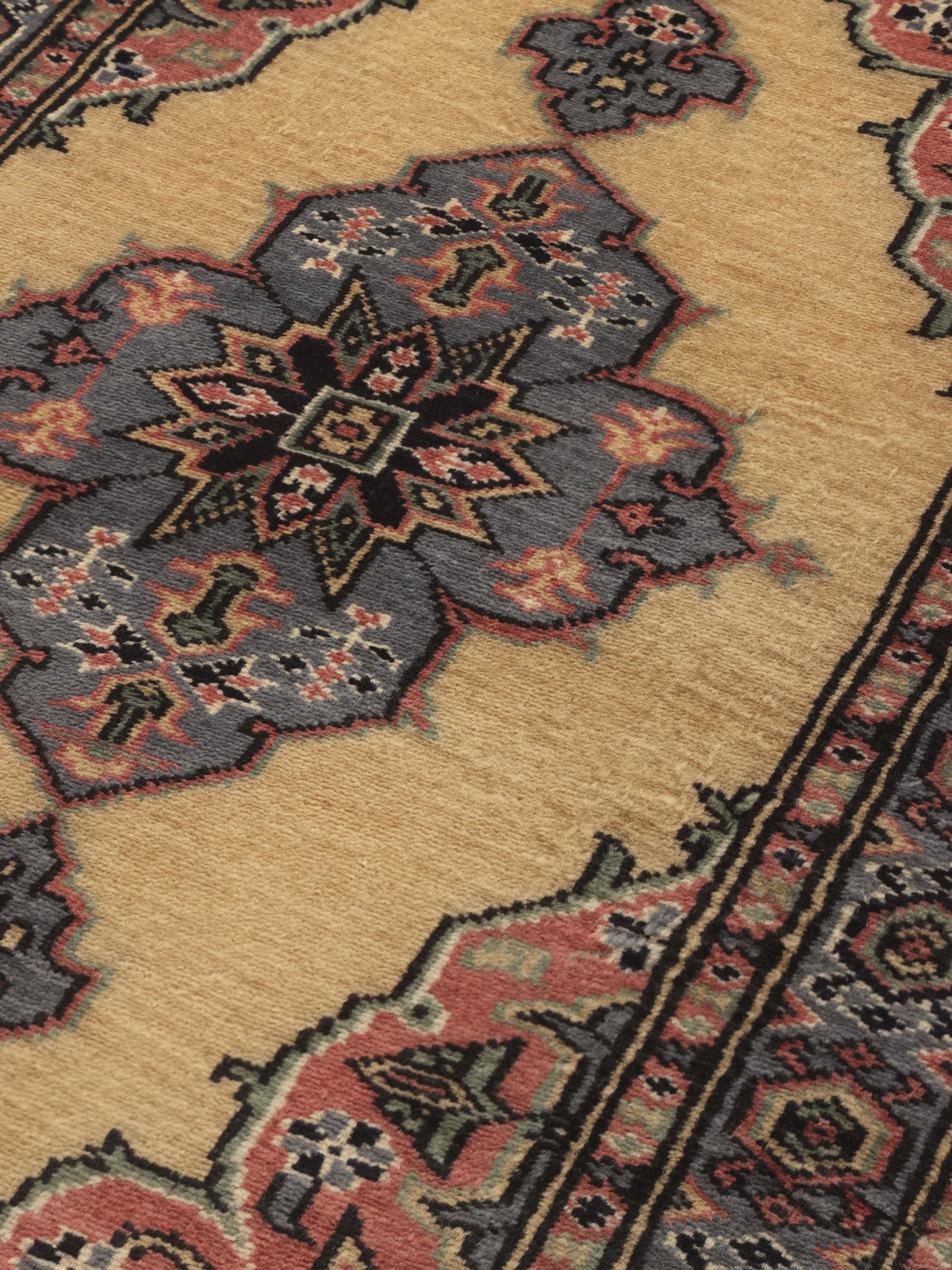
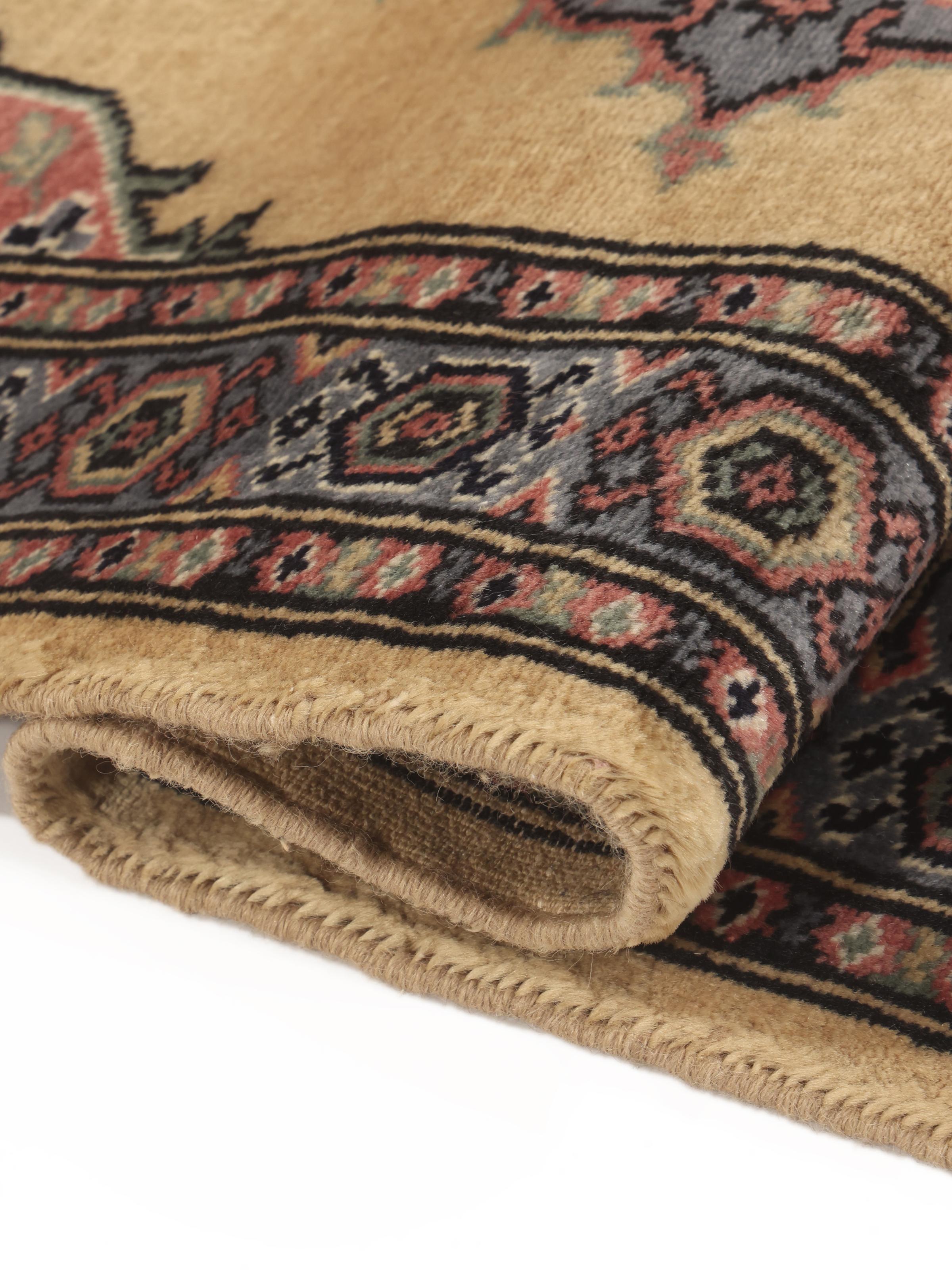
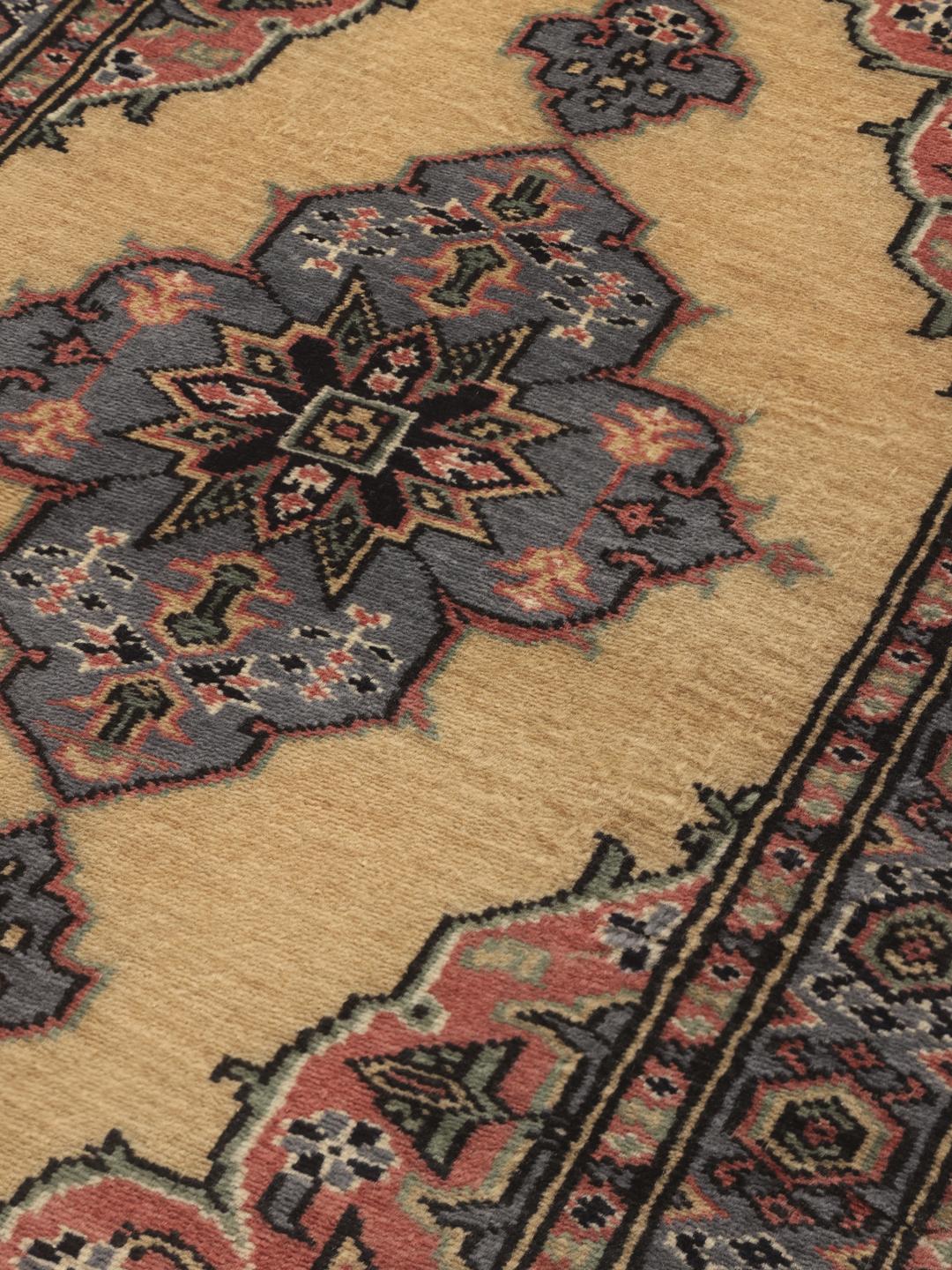
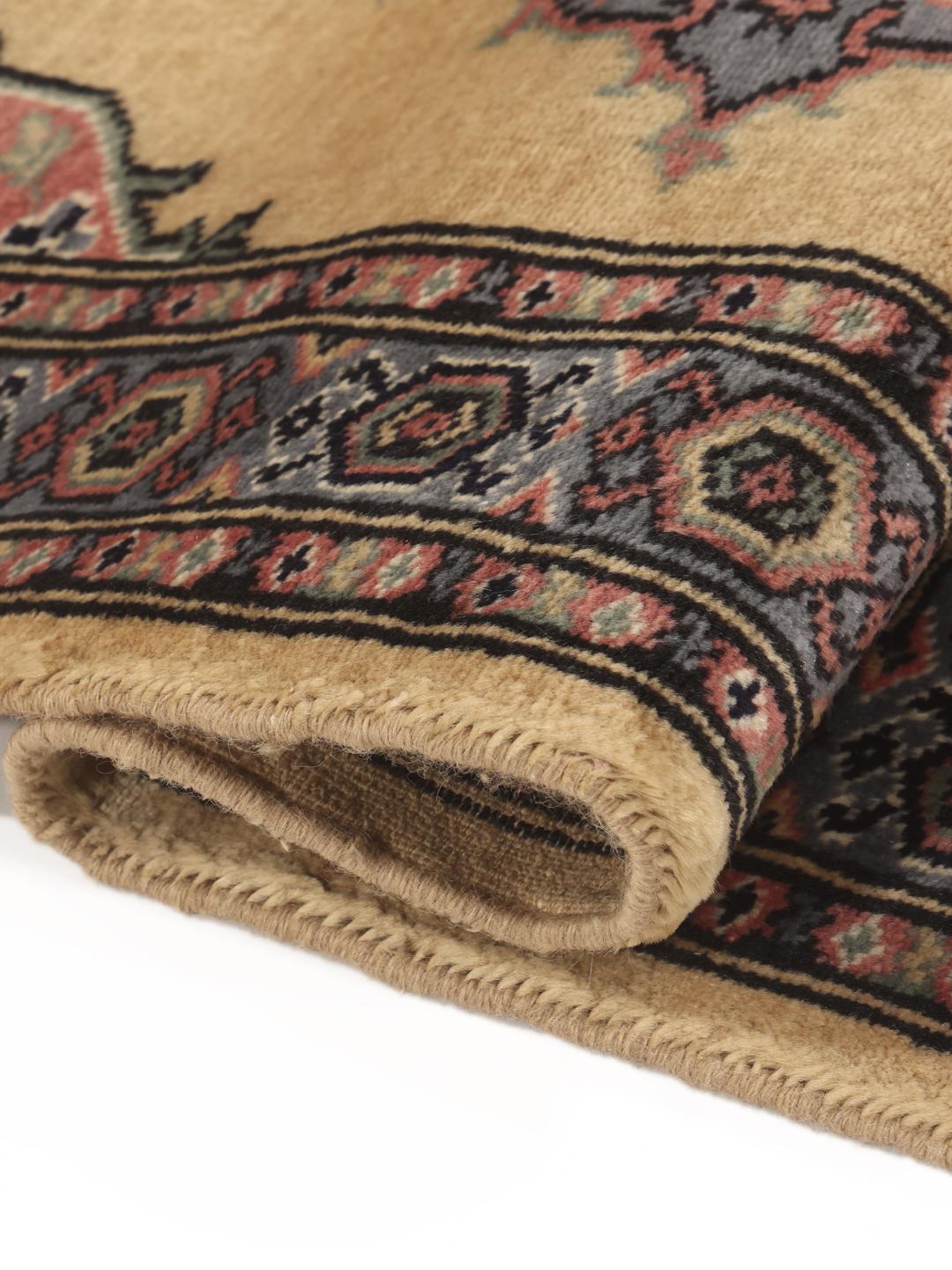
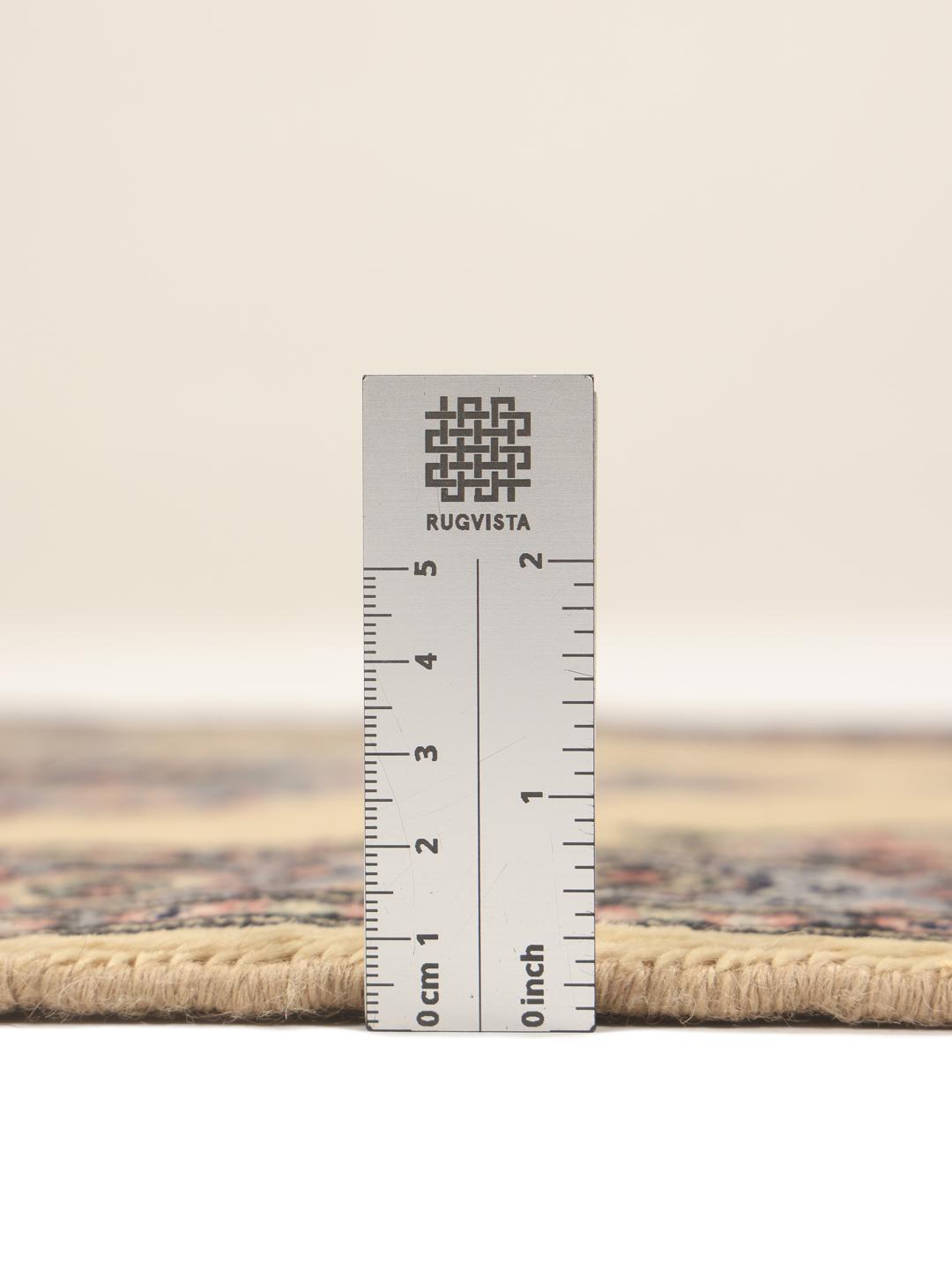
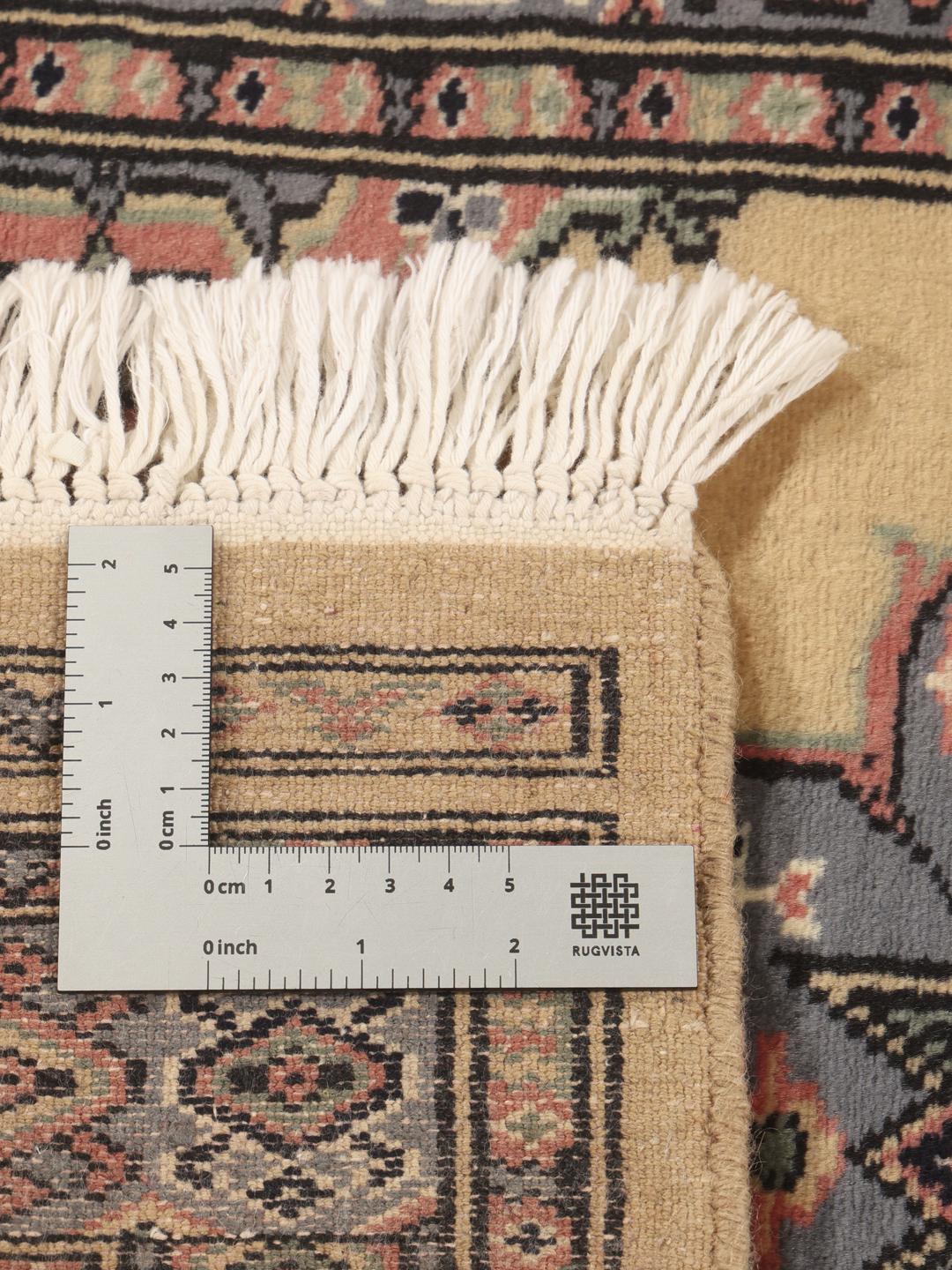
The term 3ply refers to the construction of the wool pile, where three individual strands are twisted together before being knotted. This technique is significant because it results in a much fuller, softer, and more resilient pile that stands up well to daily use while maintaining a beautiful, subtle sheen.
Visually, these rugs are defined by their sophisticated use of space and symmetry. While many associate the style with repeating gul motifs, this particular piece features a refined medallion design that highlights the artistry of the weavers. The use of soft, harmonious colours is a hallmark of this tradition, designed to complement rather than overwhelm an interior space.
Owning a hand-knotted rug from this tradition is an investment in human skill and cultural heritage. These pieces are highly valued by collectors and homeowners alike for their ability to bring a sense of history and warmth into a modern home, bridging the gap between ancient craftsmanship and contemporary living.