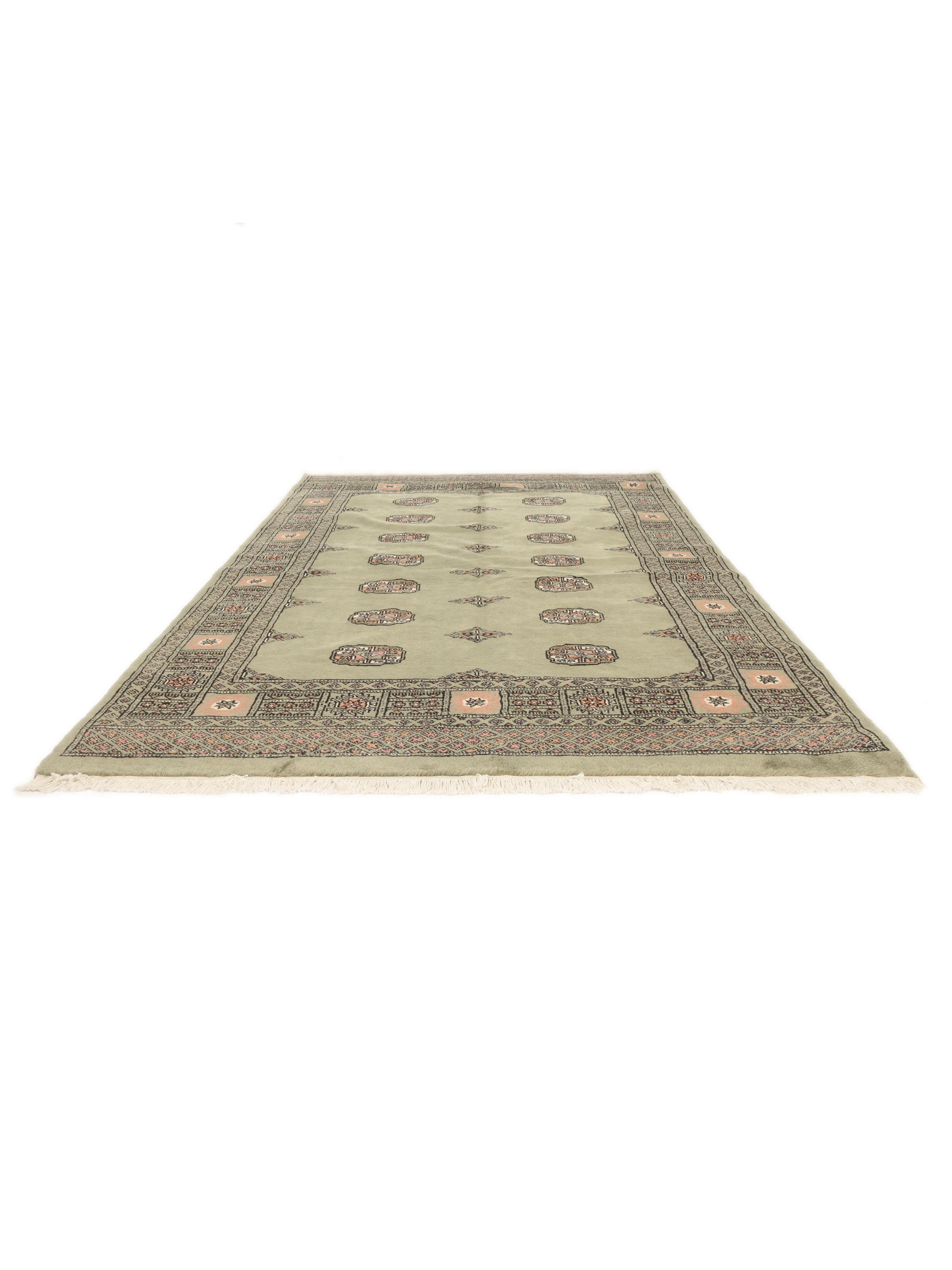
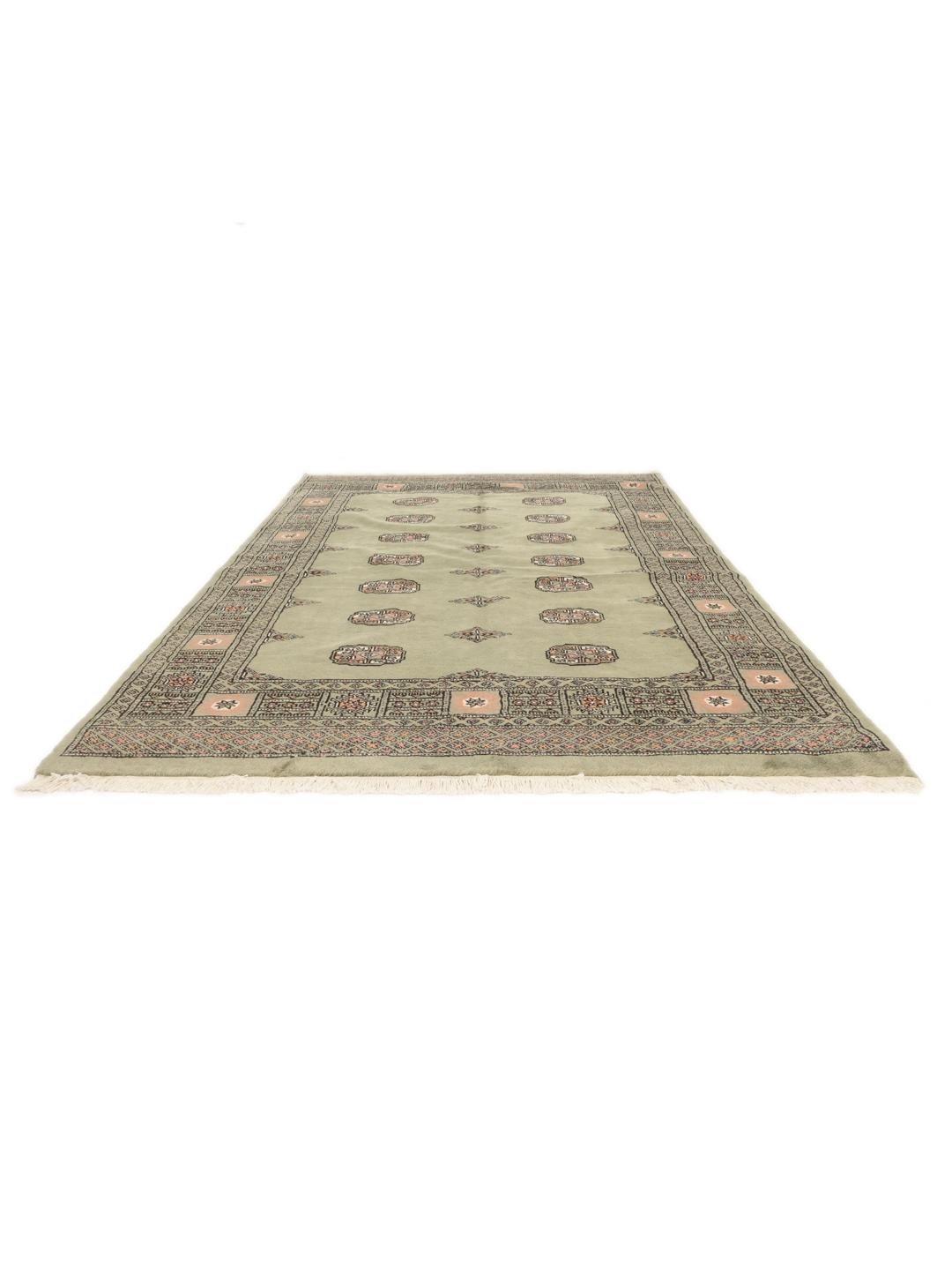
The Bokhara rug tradition finds its roots in the ancient, vibrant markets of the Silk Road. While the name pays homage to the historic city of Bukhara, the finest examples of these rugs have been produced in Pakistan for generations. This migration of craft has allowed the tradition to evolve, blending ancient tribal influences with the high standards of Pakistani weaving.
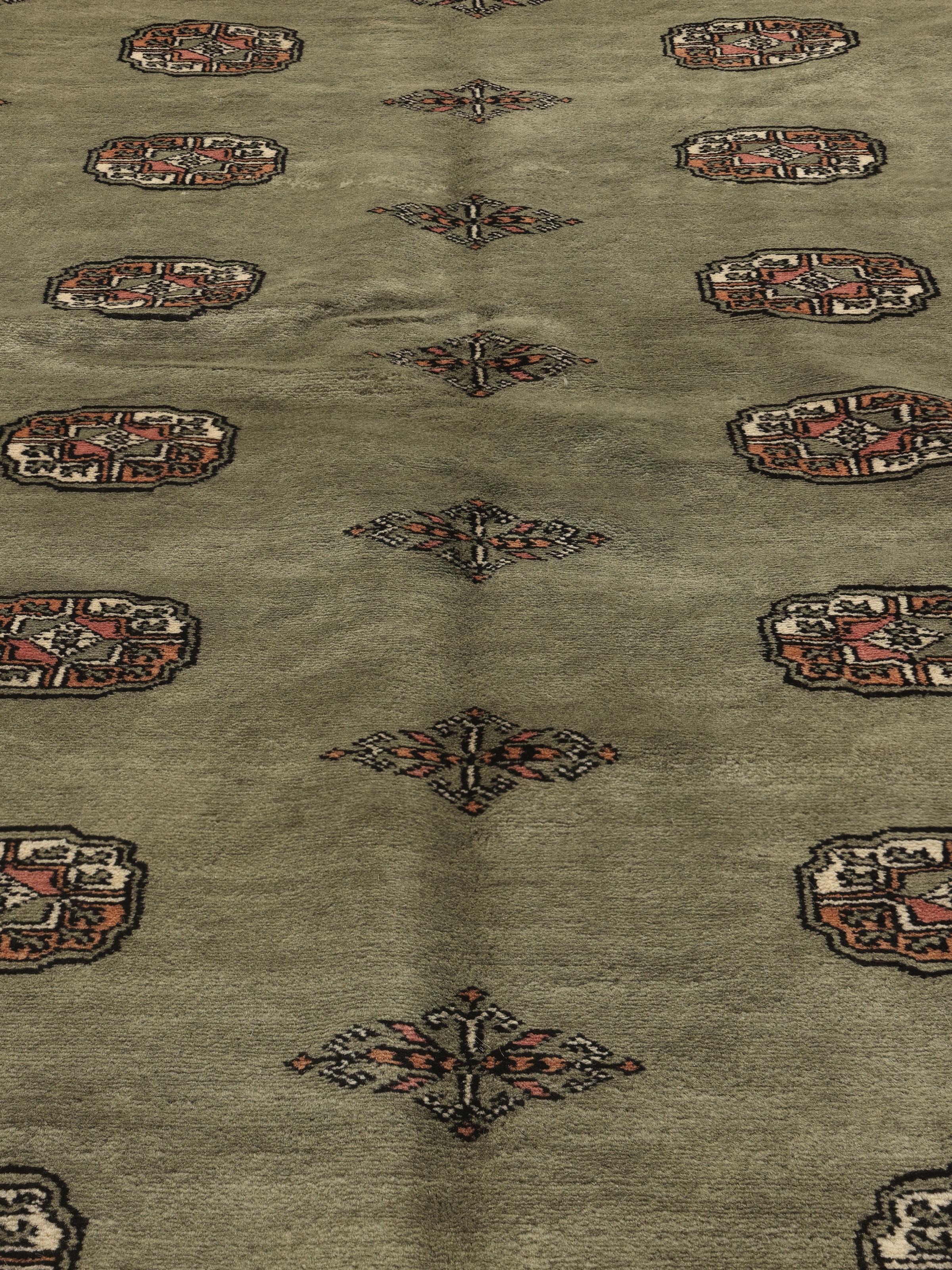
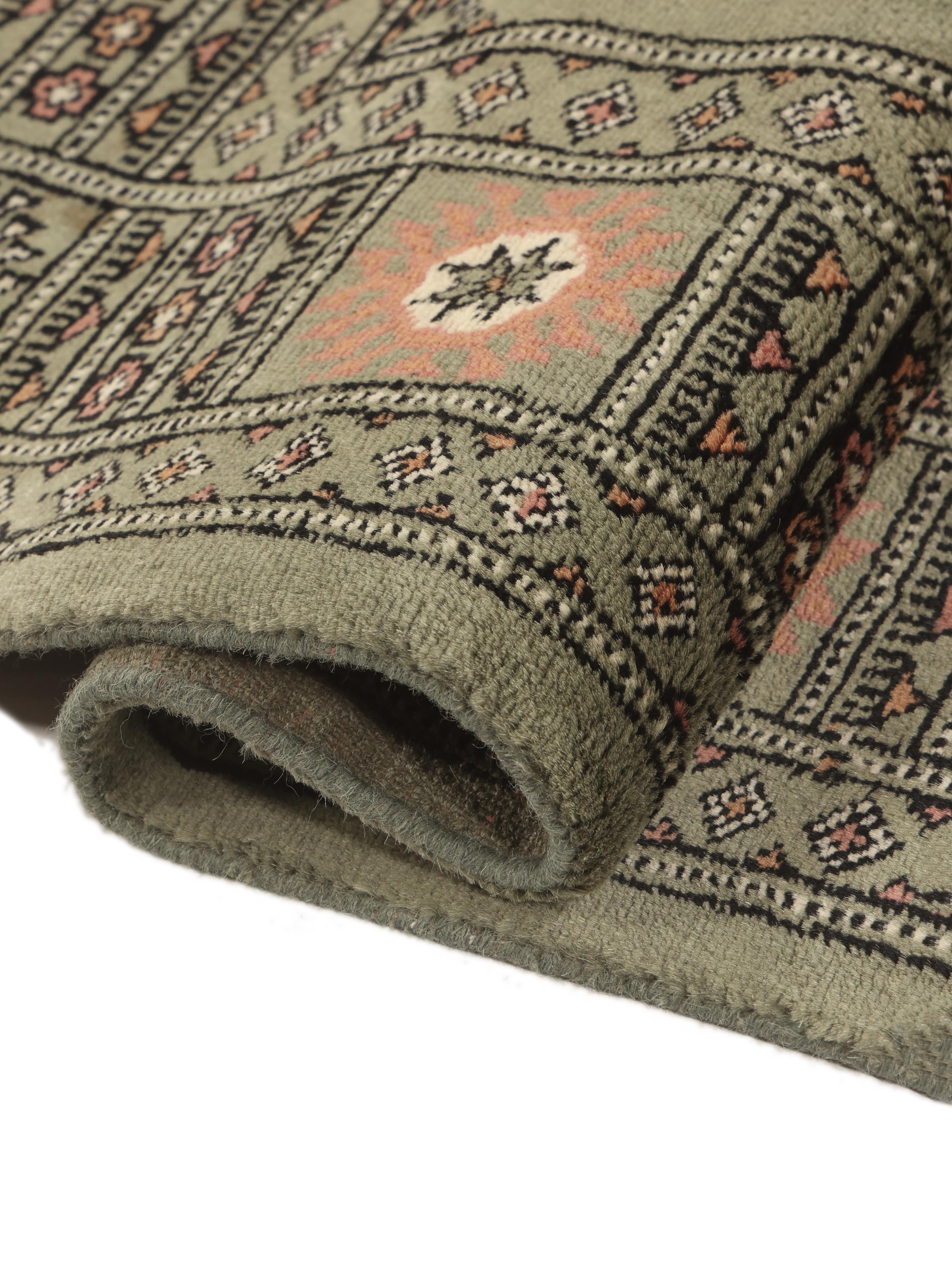
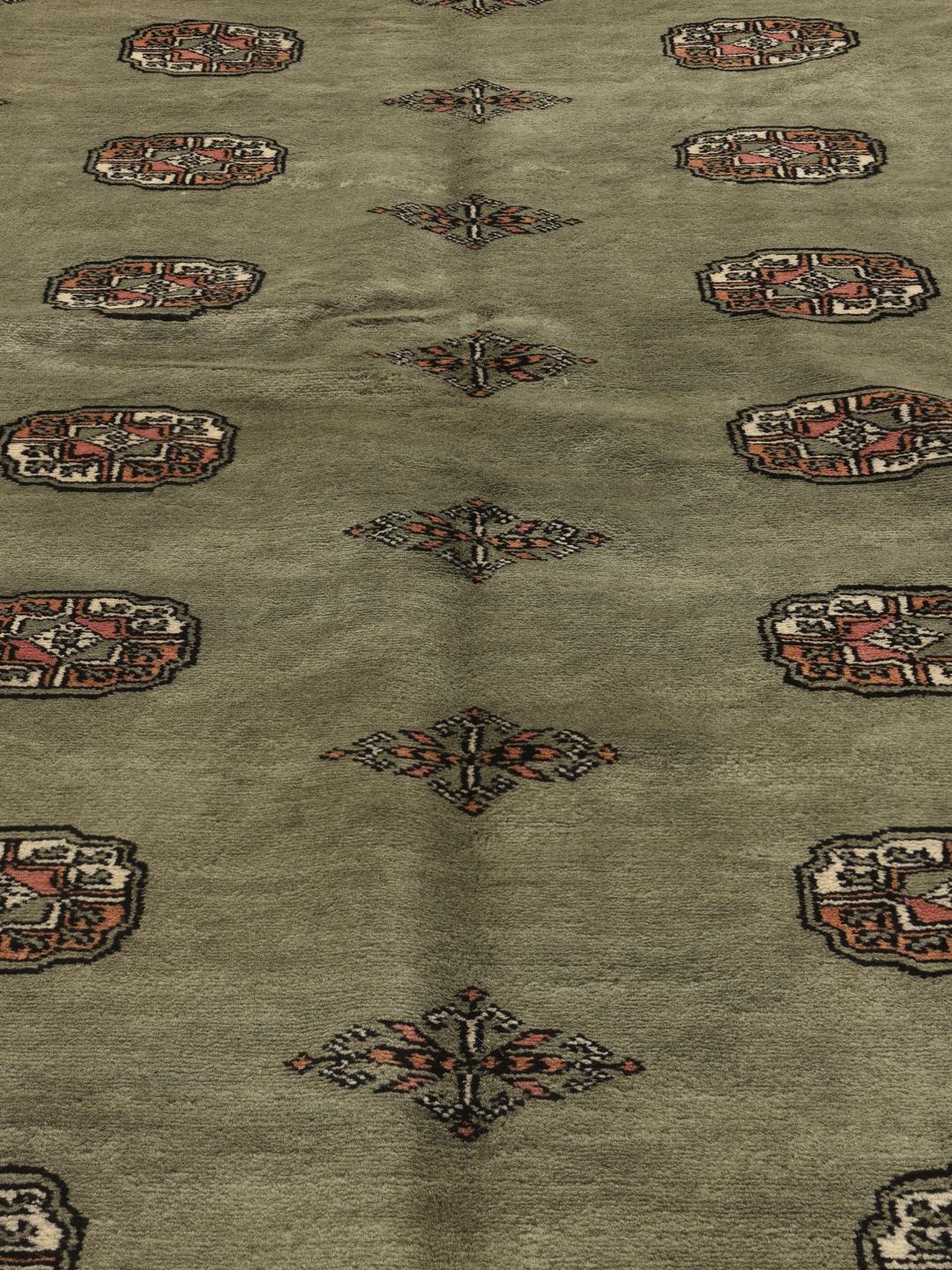
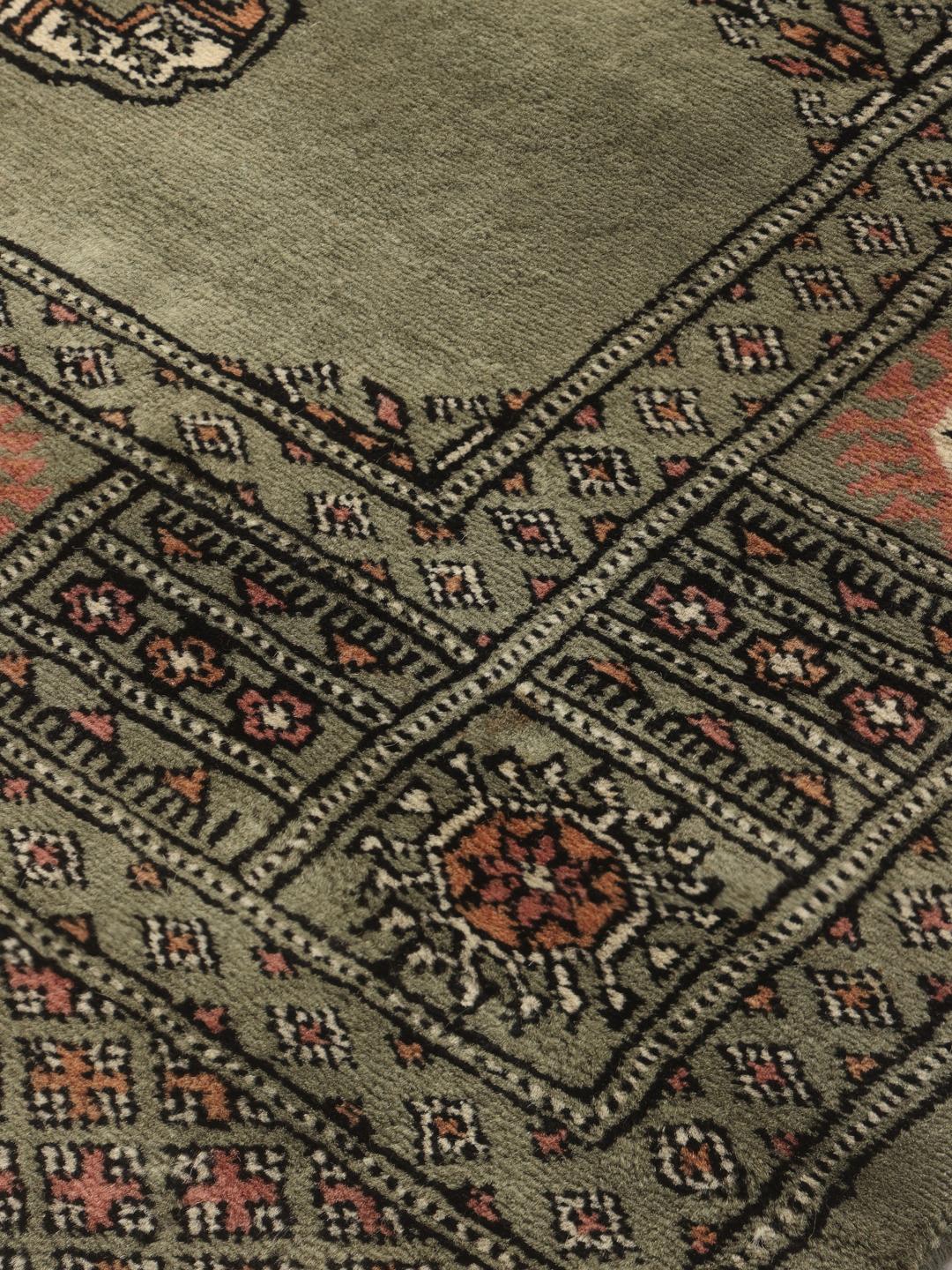
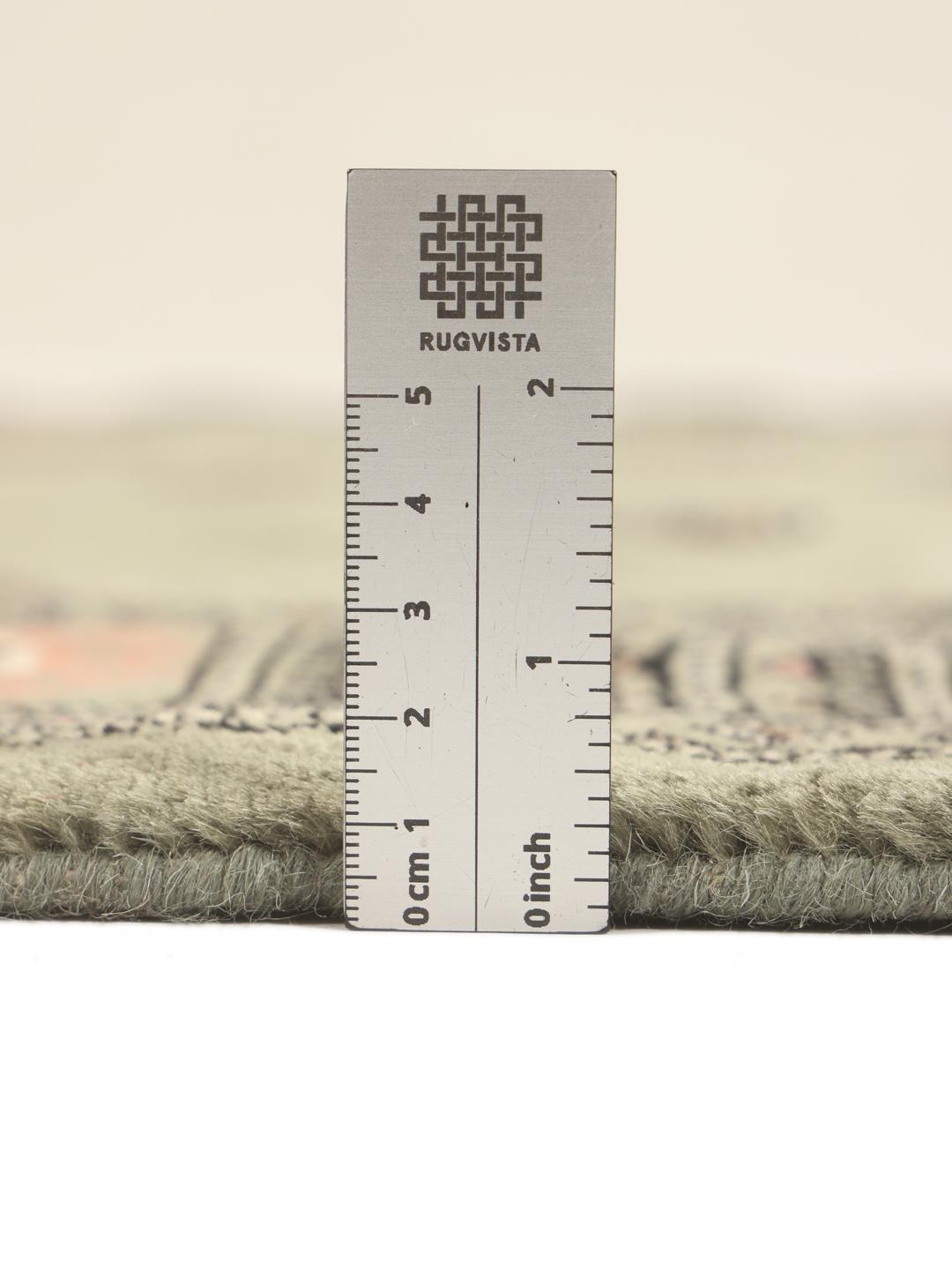
The '3ply' designation refers to the construction of the wool yarn, where three individual strands are twisted together. This technique is essential for creating a pile that is thicker, more lustrous, and significantly more durable than single-ply alternatives. It provides the rug with a fuller body and a richer, more tactile surface that wears beautifully over time.
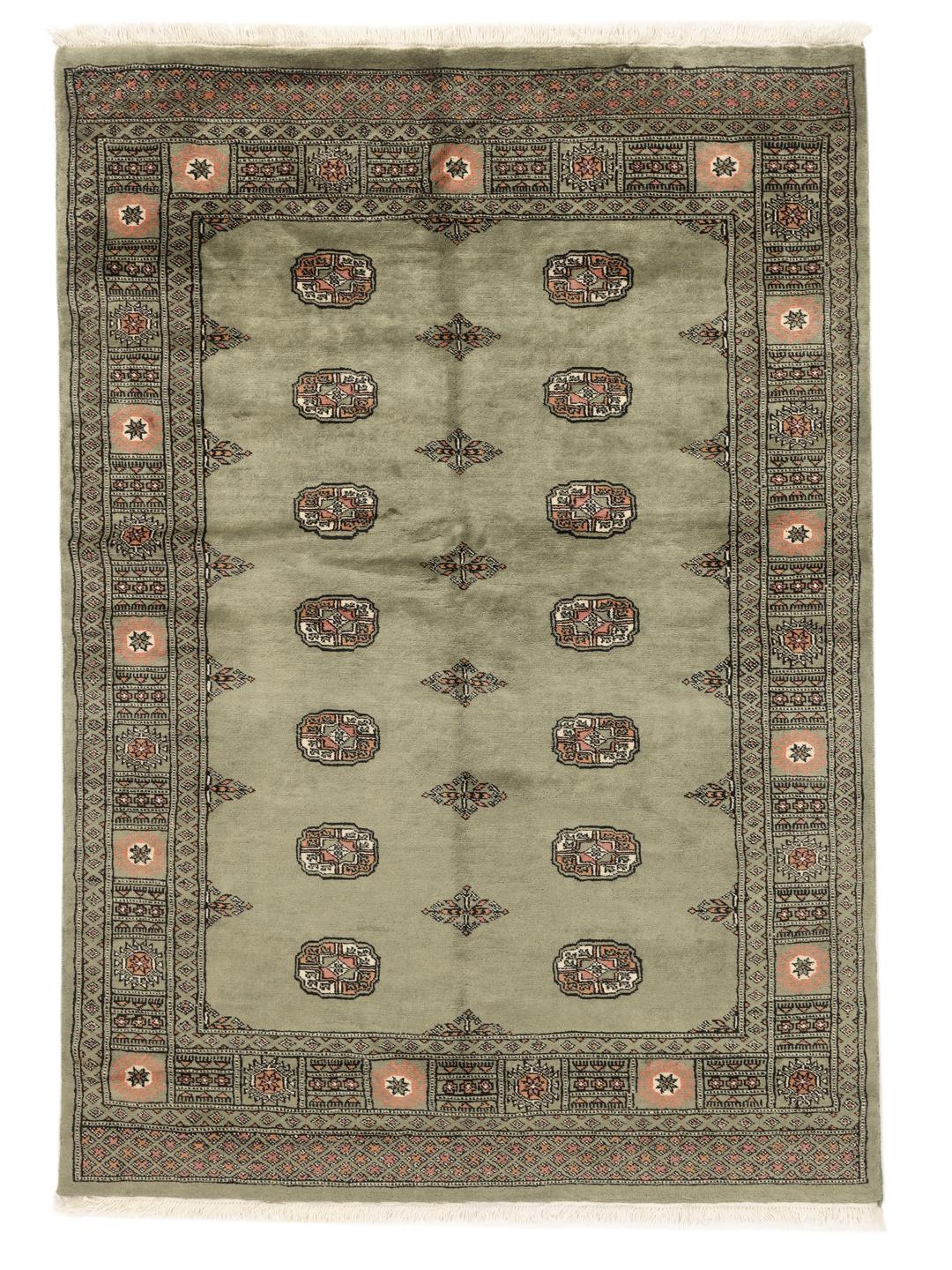
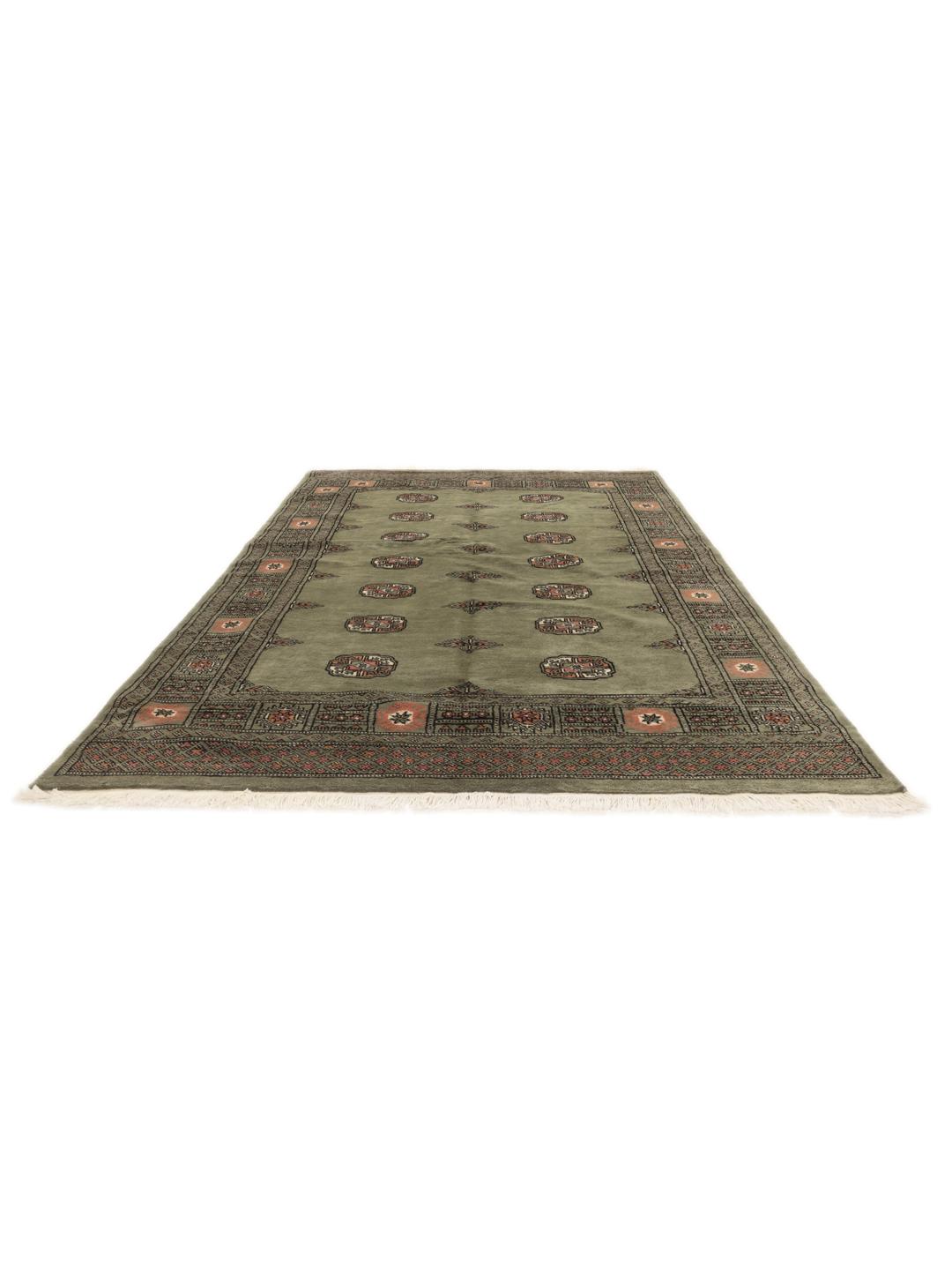
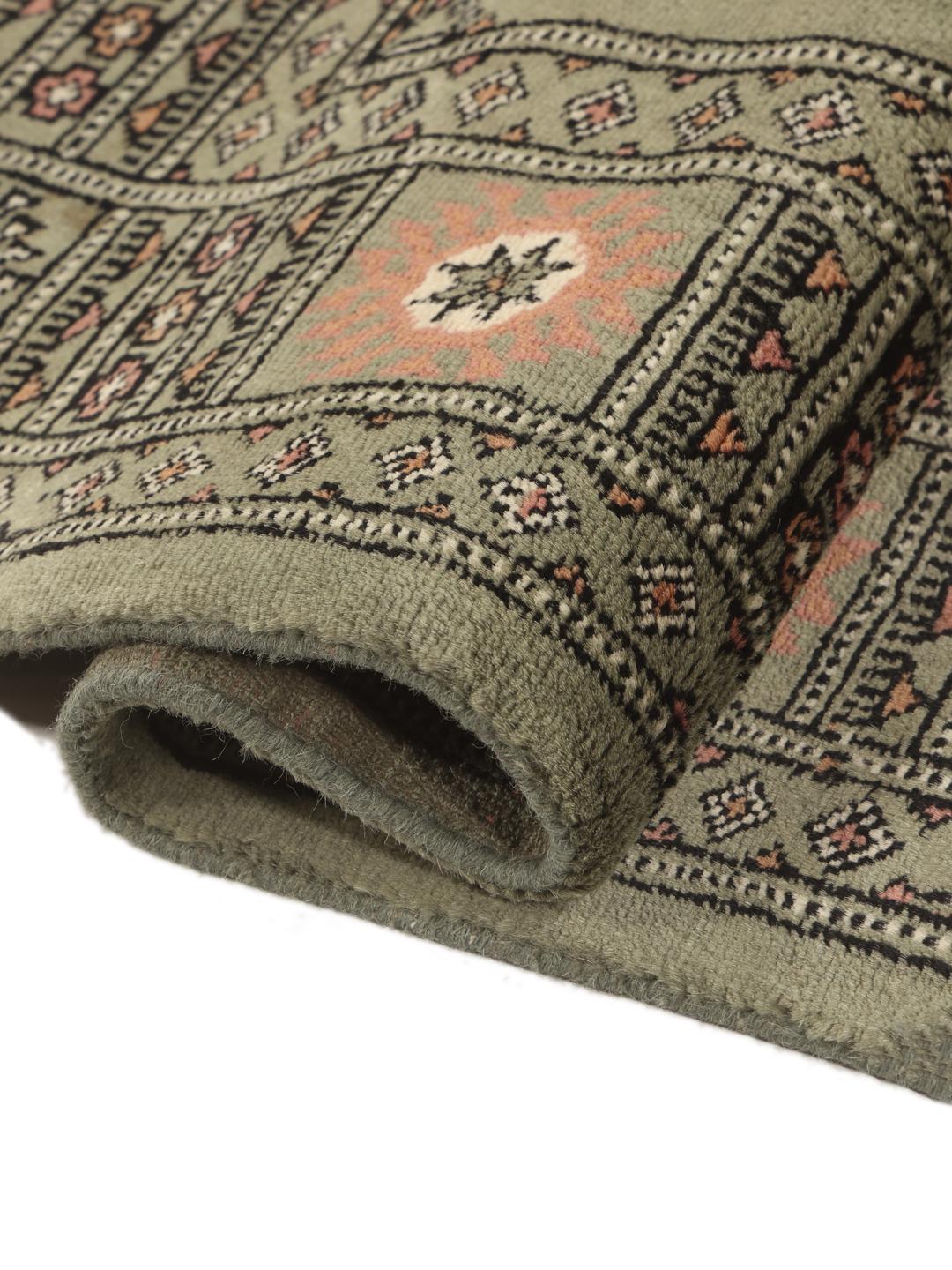
Visually, these rugs are synonymous with the 'gul' motif, which are repeating, stylised medallions that resemble elephant footprints. These are traditionally framed by intricate, geometric borders that demonstrate the precision of the loom. The use of a green field in this specific piece is a sophisticated departure from the more common red, highlighting the artistic range within this tradition.
Collectors value Bokhara rugs not just for their aesthetic symmetry, but for the depth of cultural heritage they represent. Owning one is an investment in a craft that has been passed down through centuries, reflecting a commitment to quality and a respect for the intricate, measured process that brings each rug to life.