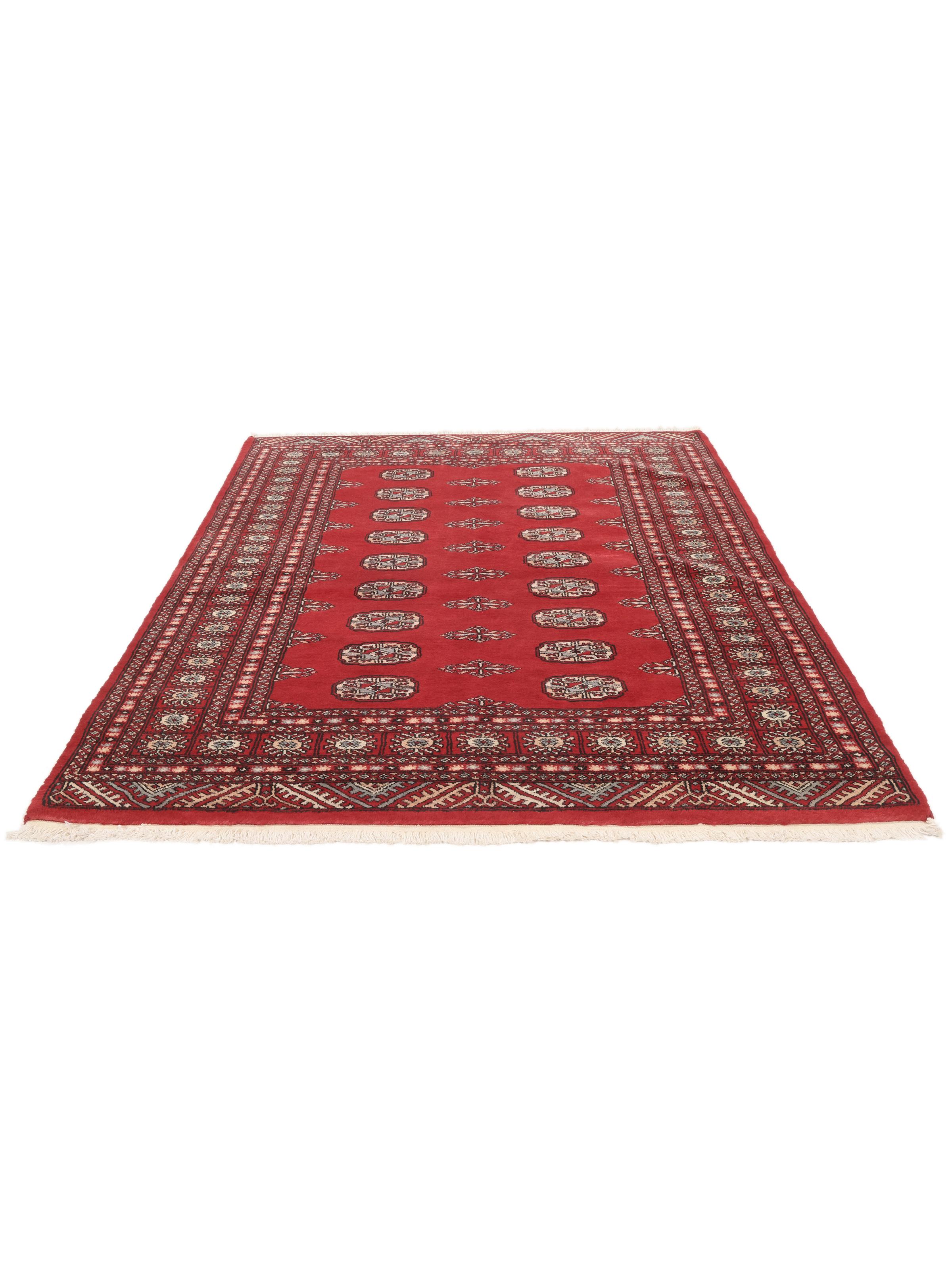
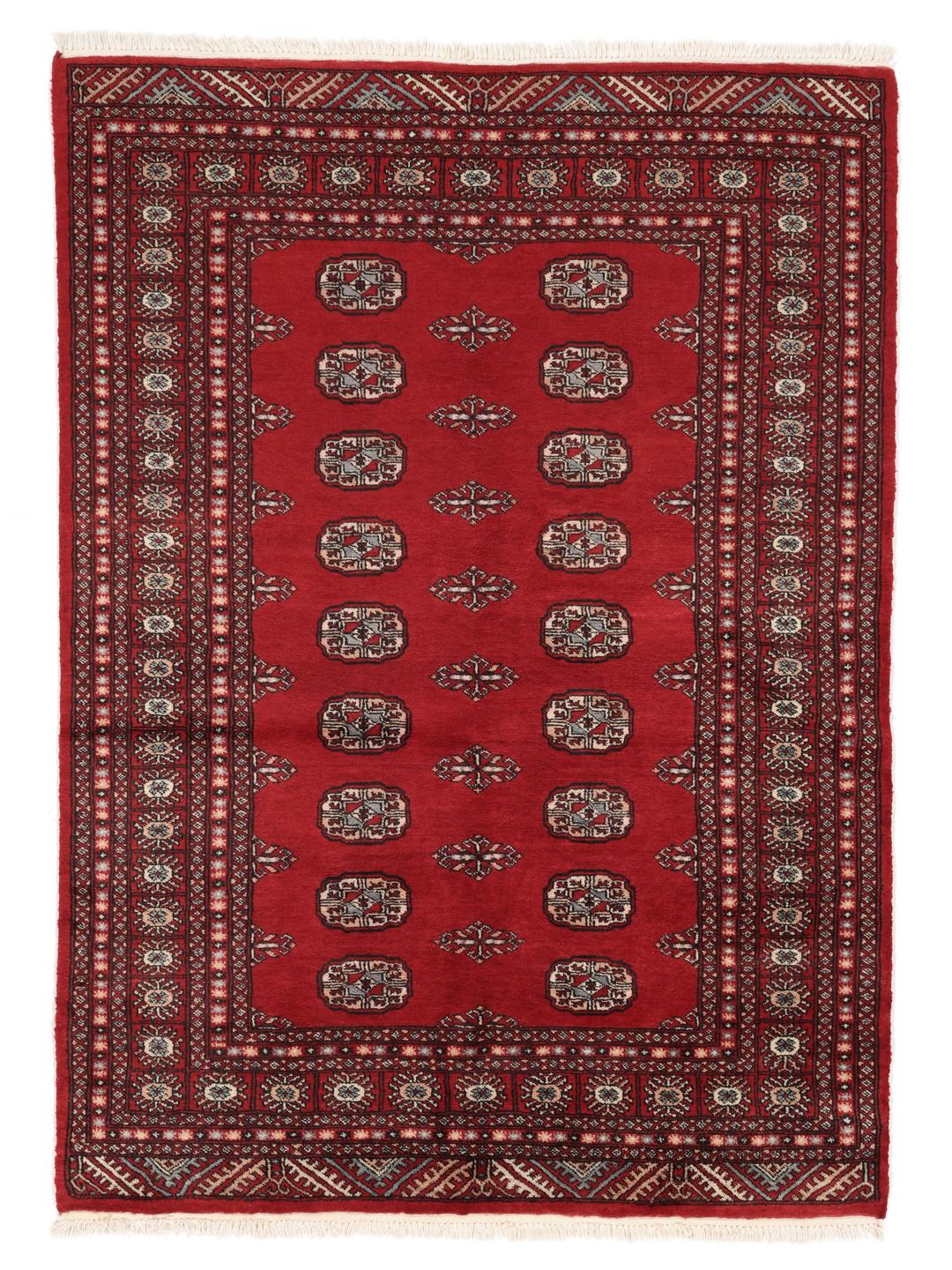
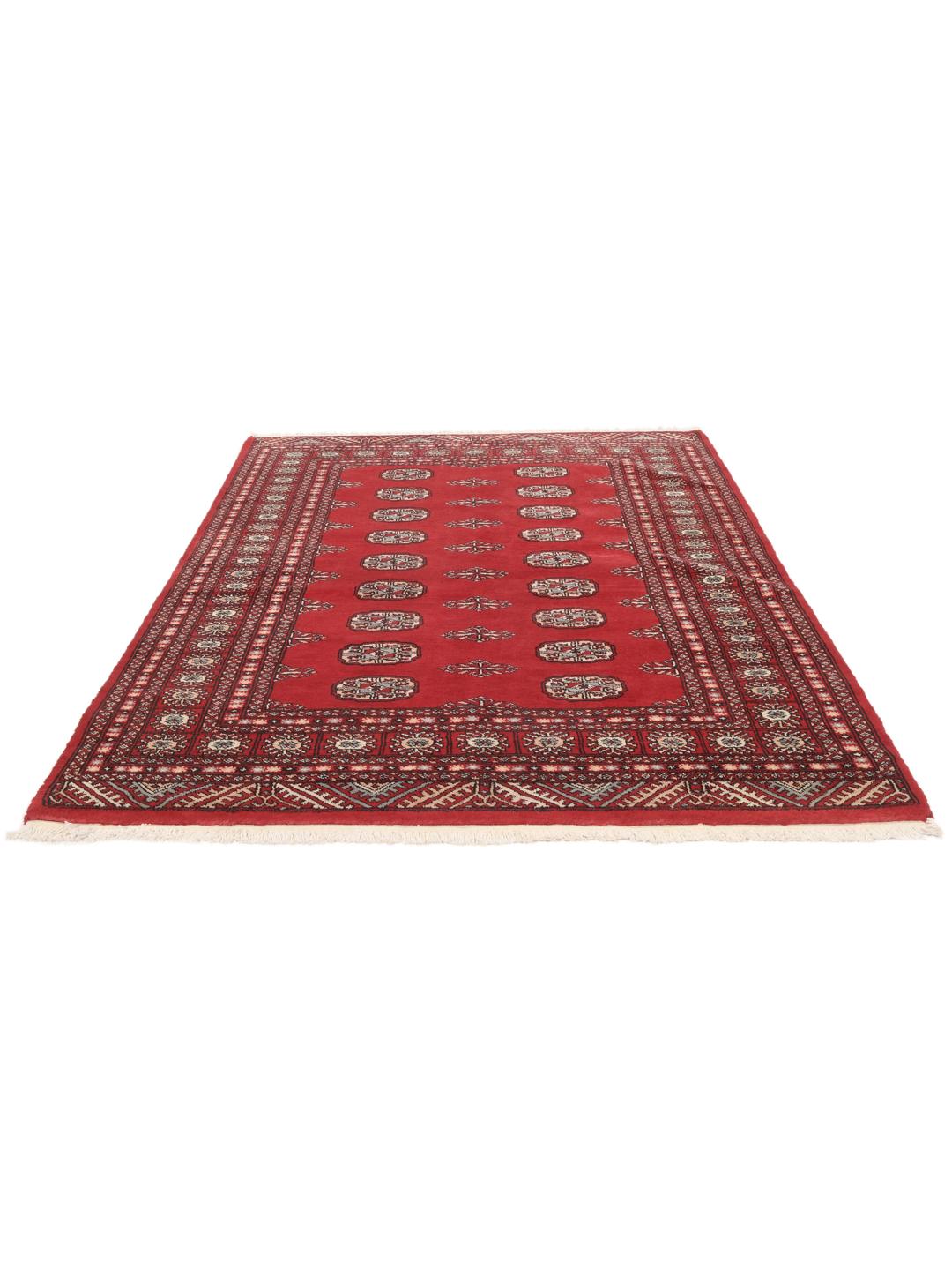
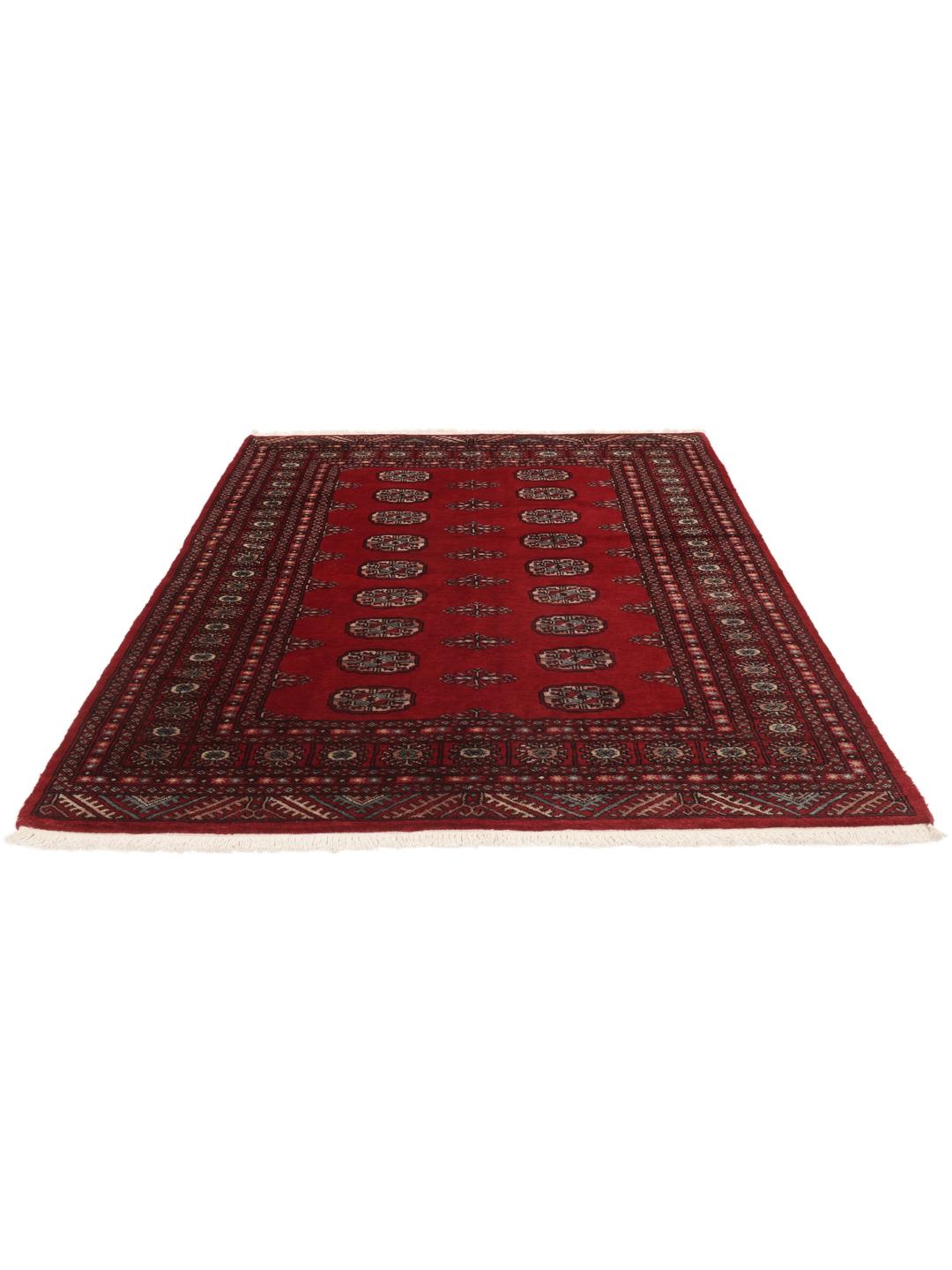
The Bokhara rug tradition is deeply rooted in the historical crossroads of Central Asia. While the name originates from the ancient Silk Road city of Bukhara, the finest examples of these rugs are today expertly crafted in Pakistan. This evolution reflects the migration of weaving techniques and the preservation of ancient design languages across borders, adapting to new environments while maintaining a core identity.
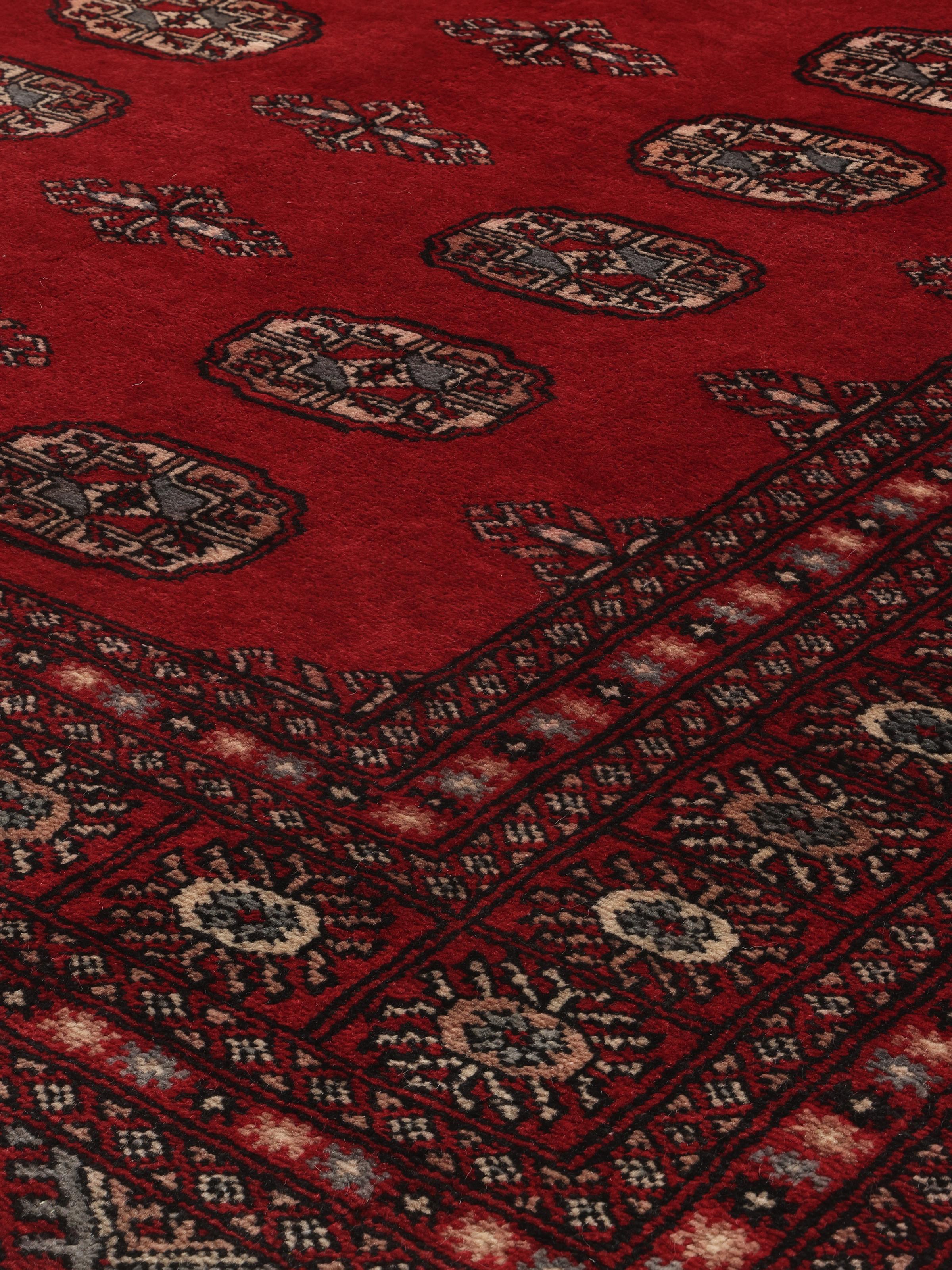
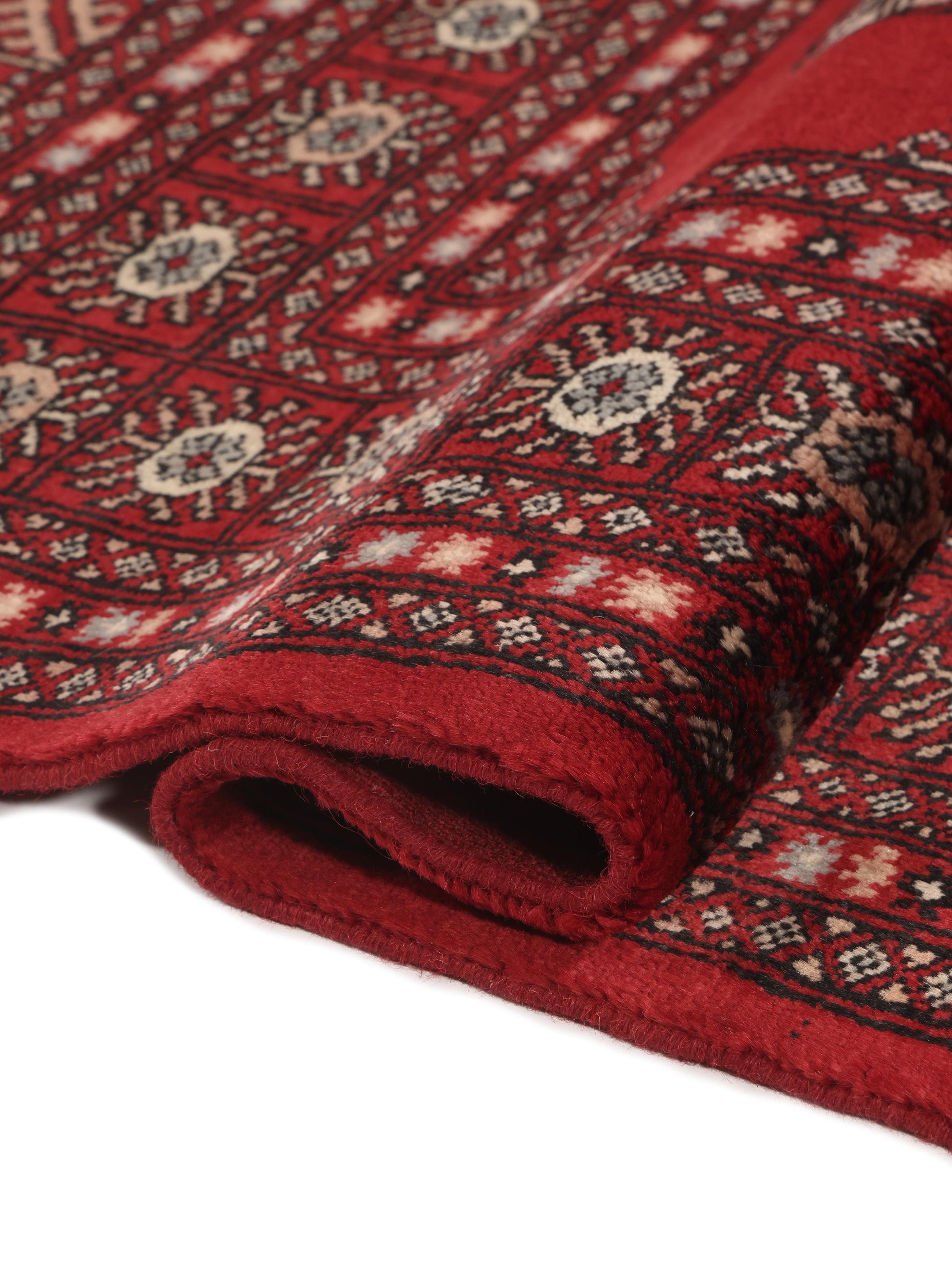
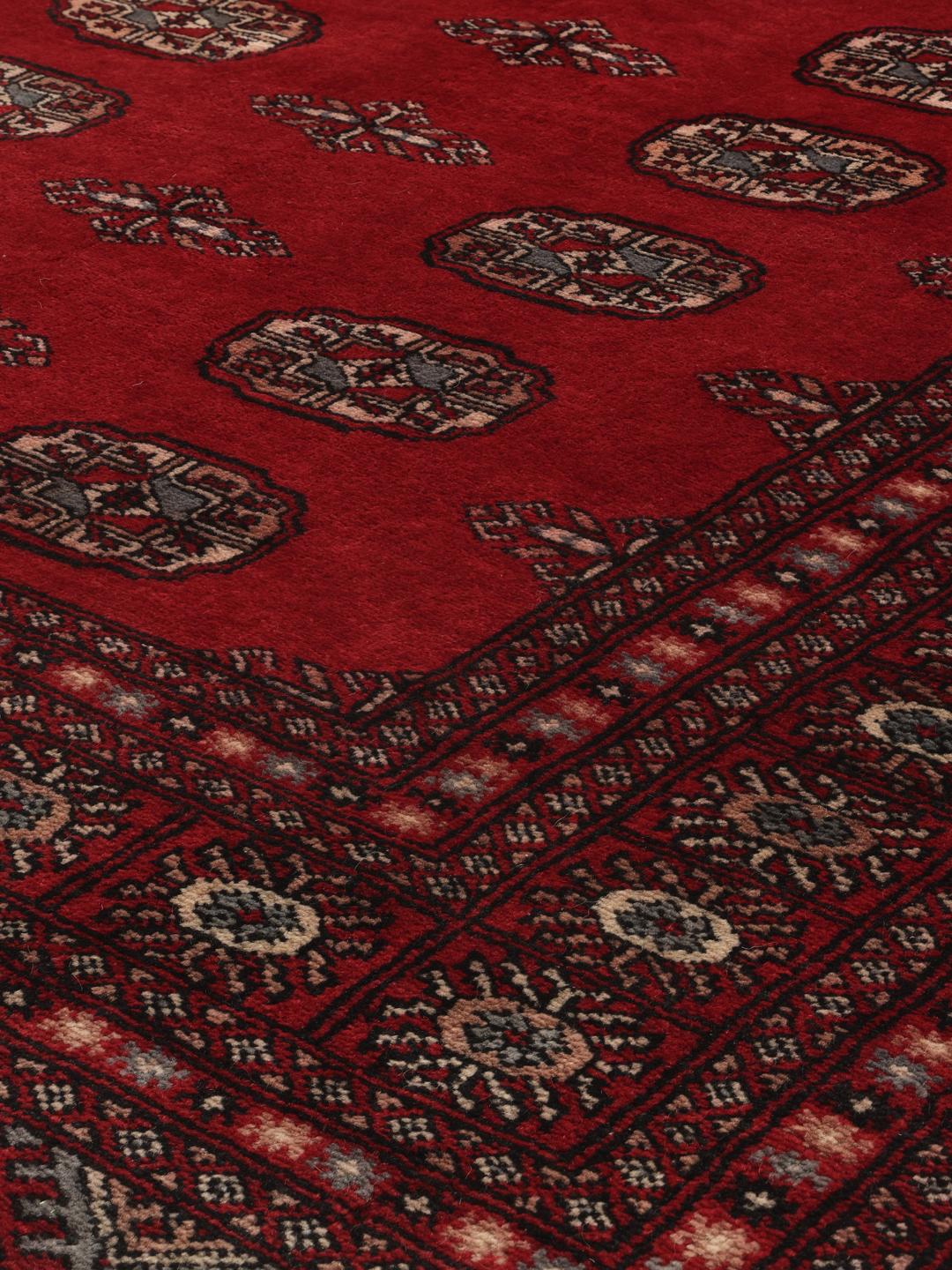
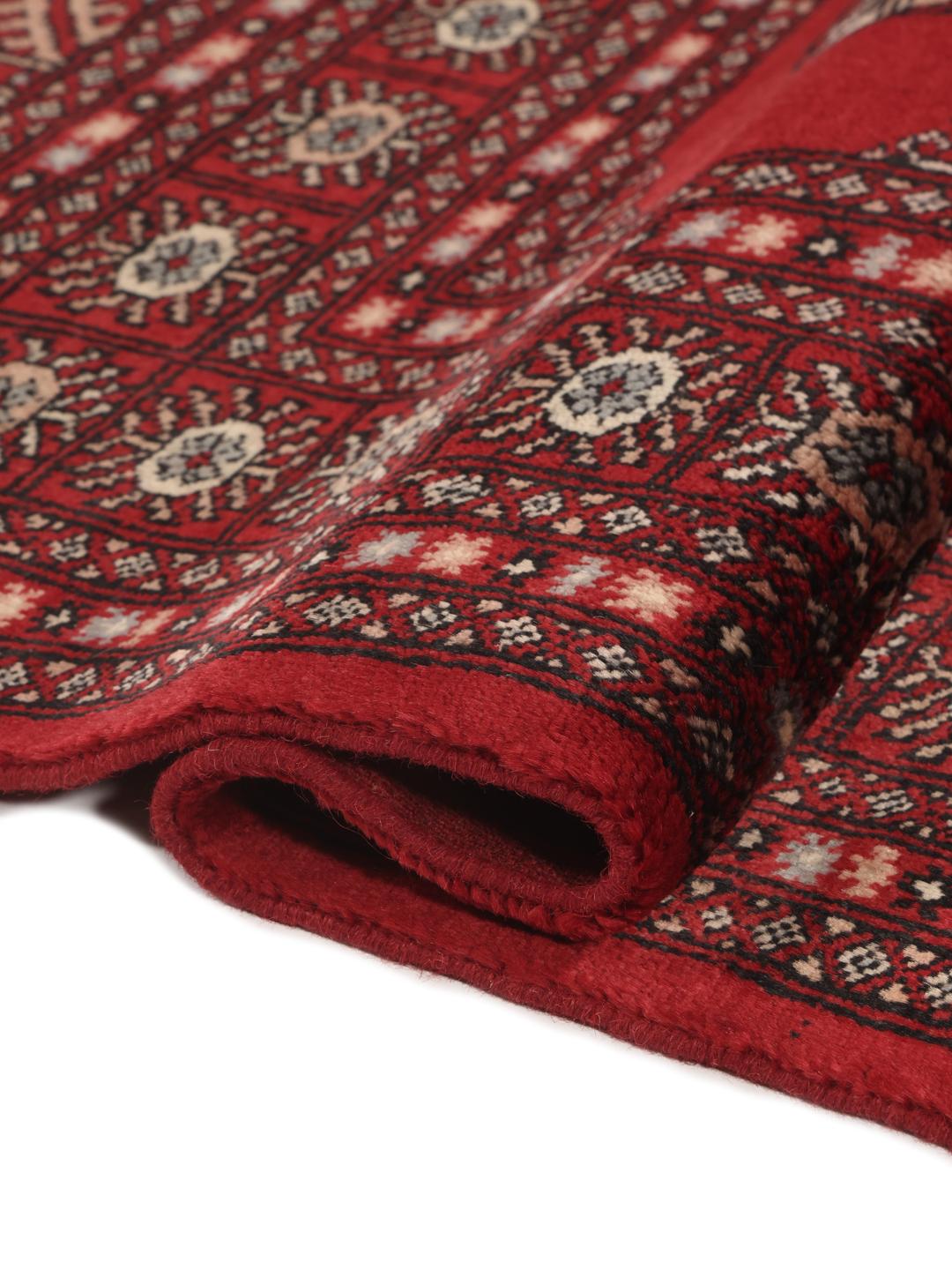
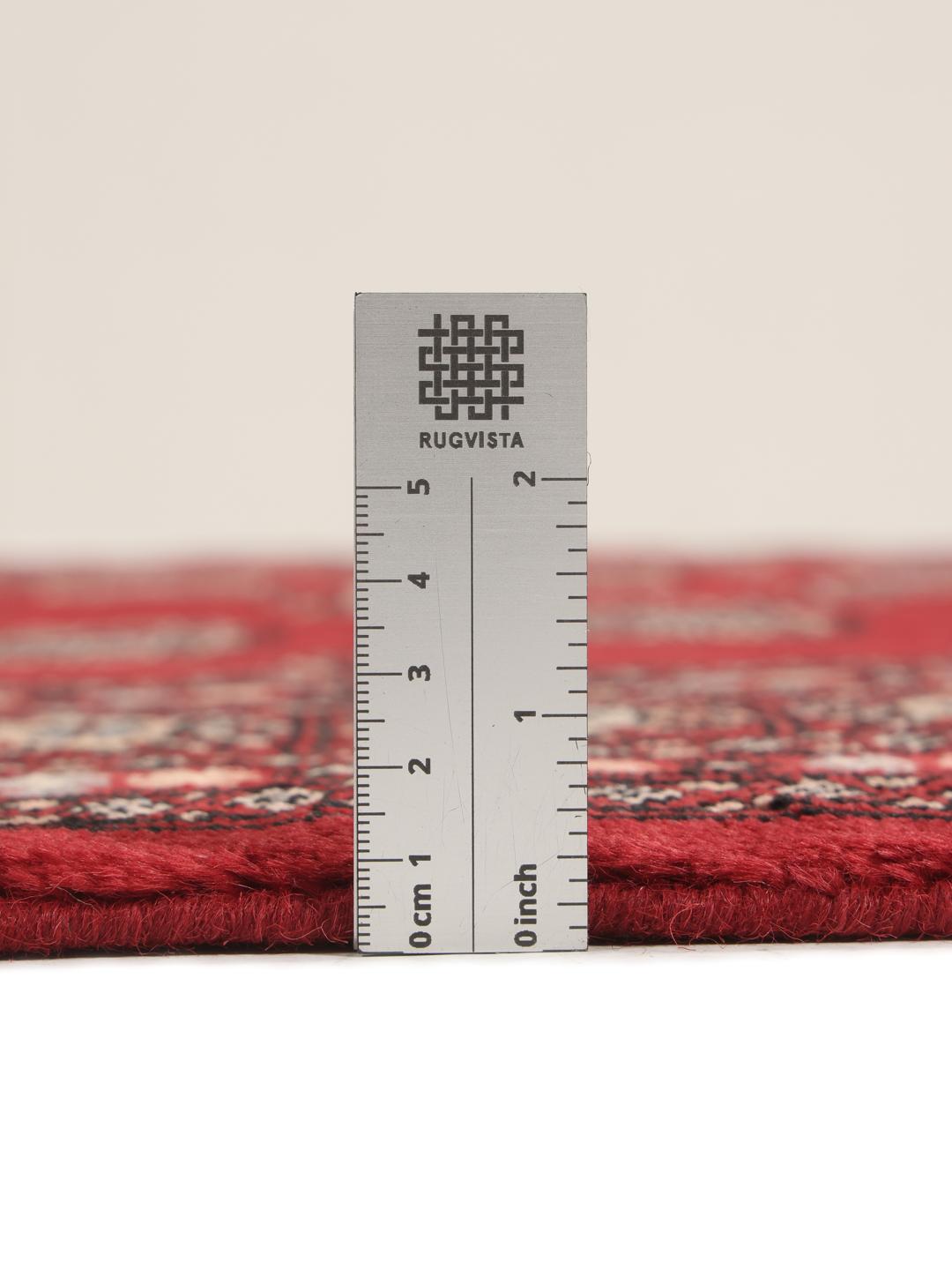
The 3ply construction mentioned in the name refers to the use of three strands of wool twisted together to create each individual knot. This specific technique is highly valued because it creates a thicker, more robust, and exceptionally lustrous pile. The extra ply adds significant volume and resilience to the rug, ensuring it feels more substantial underfoot and retains its pile integrity far longer than standard constructions.
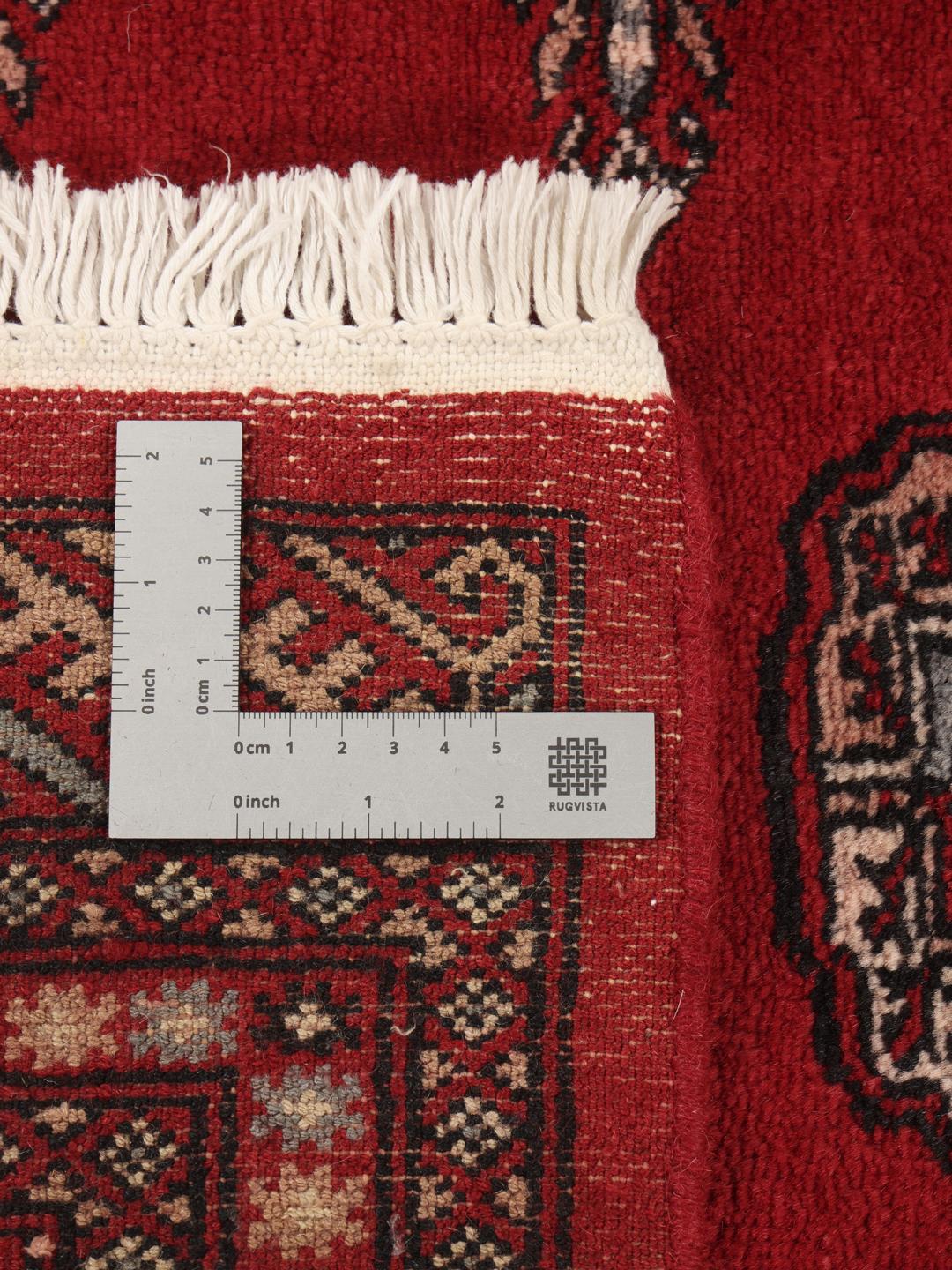
Visually, these rugs are defined by the repeating gul motif, a series of geometric, elephant-foot shaped medallions arranged in orderly rows. These motifs are framed by intricate, formal borders that often mirror the complexity of the main field. The deep red palette is the signature of the tradition, symbolizing warmth and vitality, and is achieved through traditional dyeing methods that provide a depth of color that ages gracefully over time.
Owning a piece from this tradition is an act of preserving a lineage of exceptional skill. These rugs are highly sought after by collectors and homeowners alike, not just for their visual beauty, but because they represent a tangible connection to a storied craft. Each rug is a testament to the weaver's dedication, offering a level of character and cultural depth that mass-produced floor coverings simply cannot replicate.