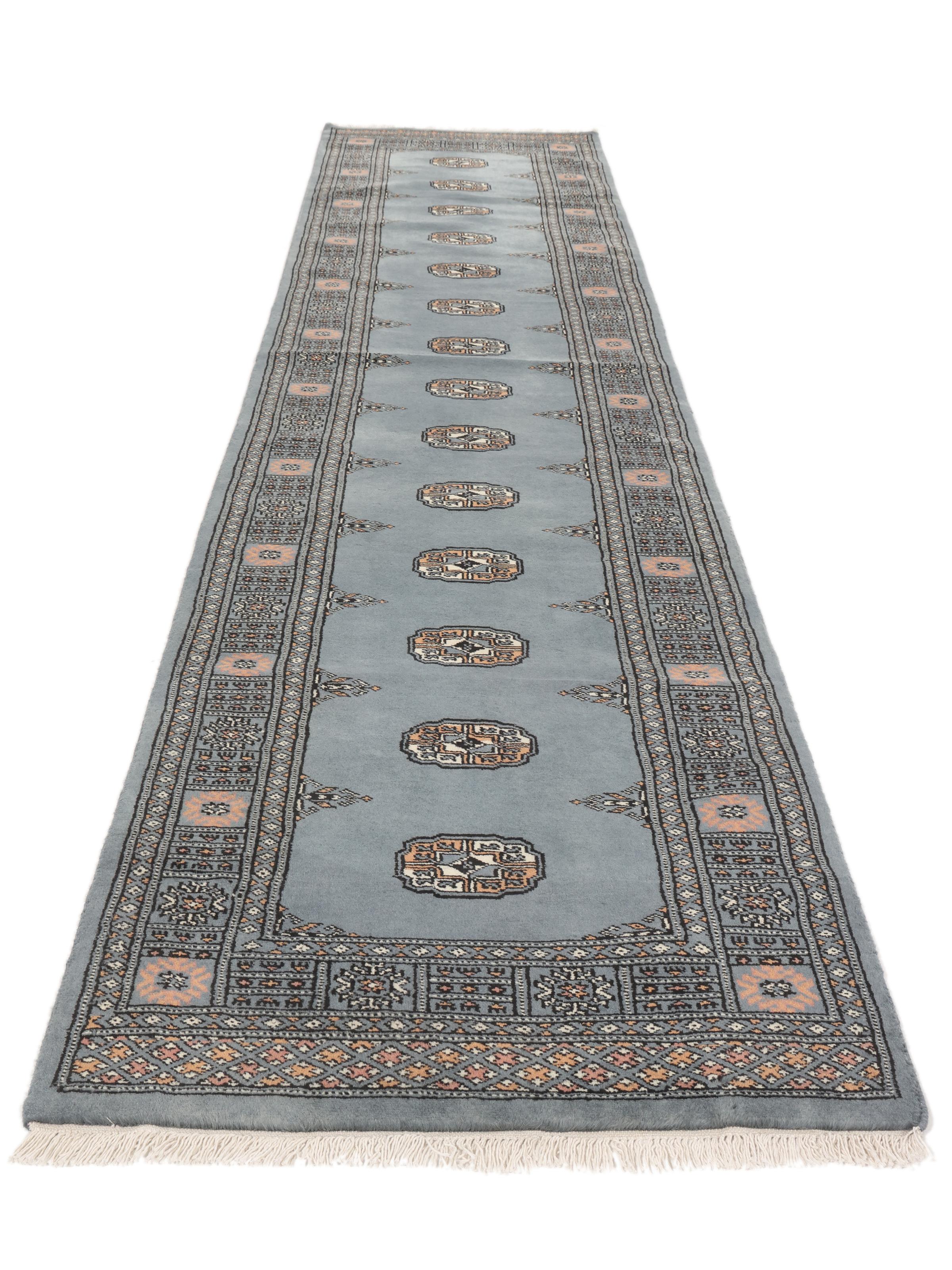
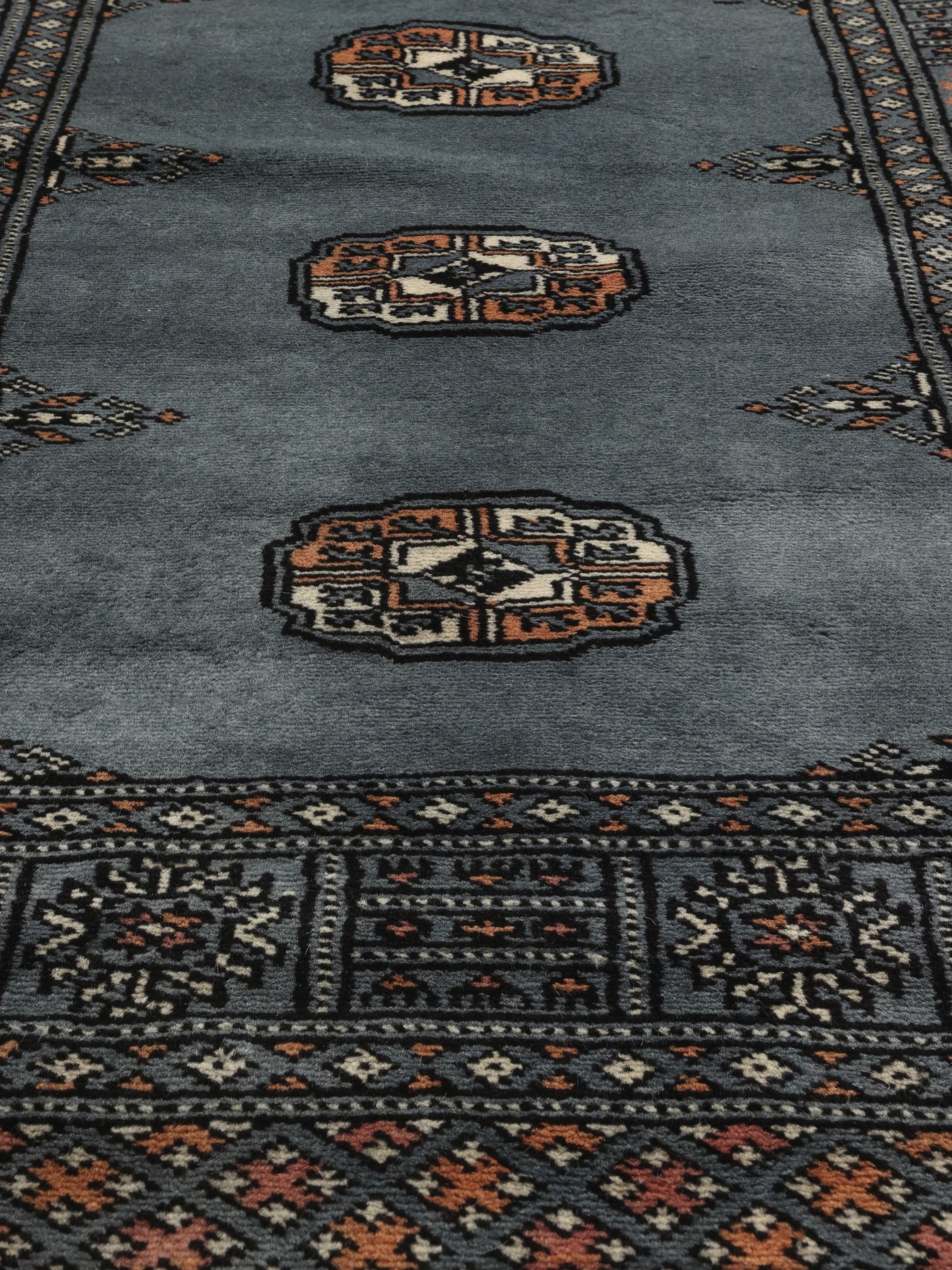
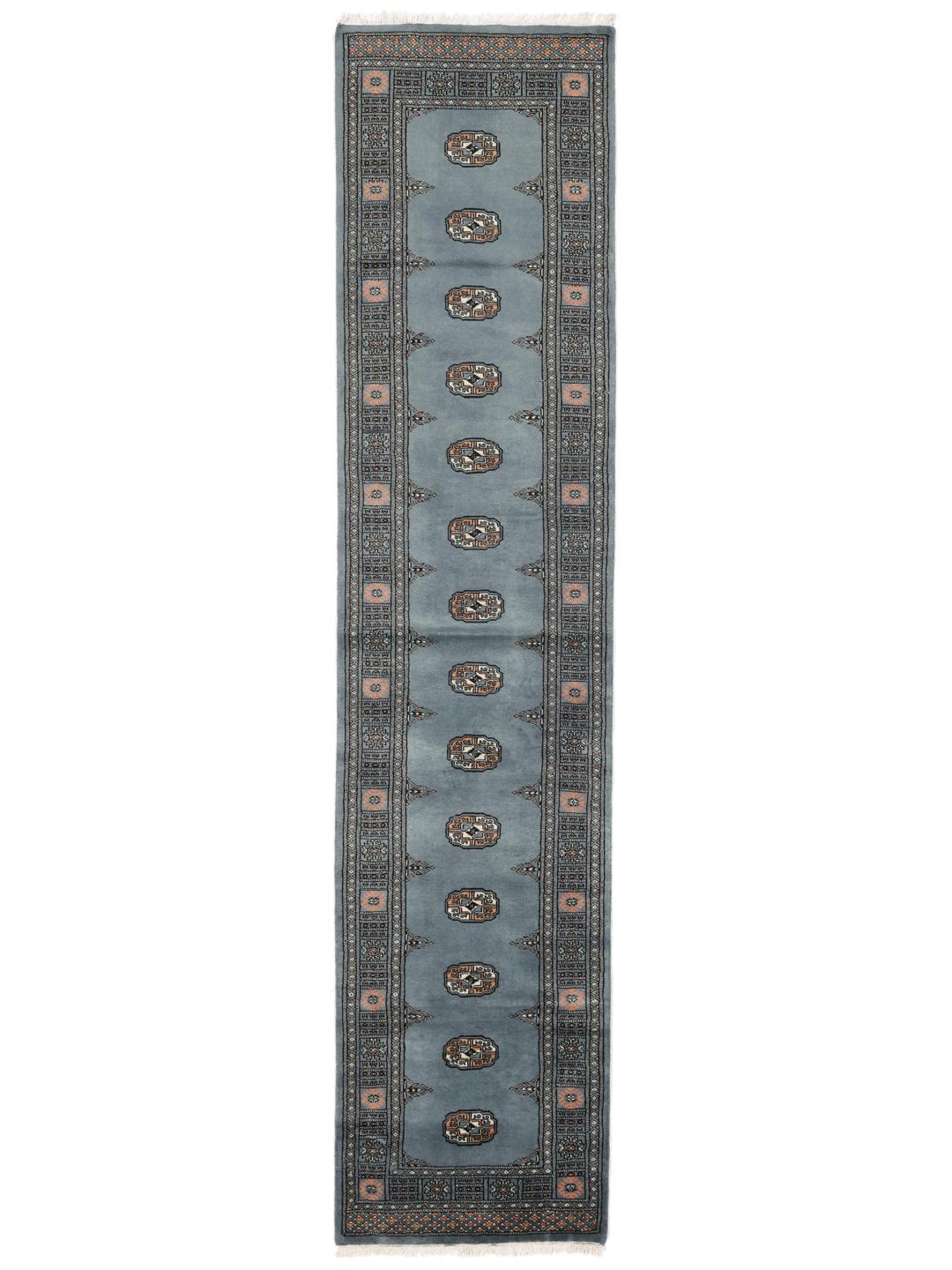
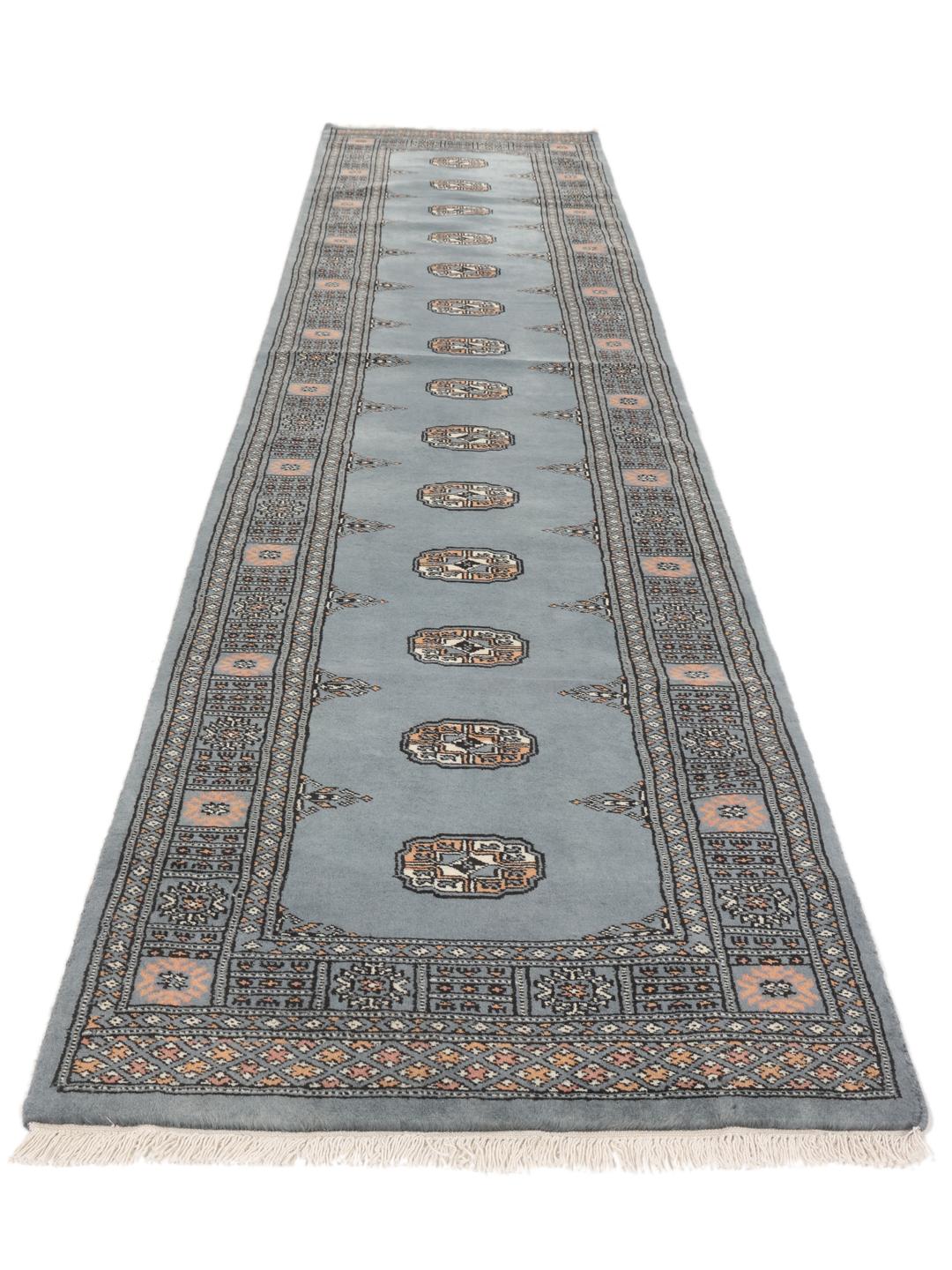
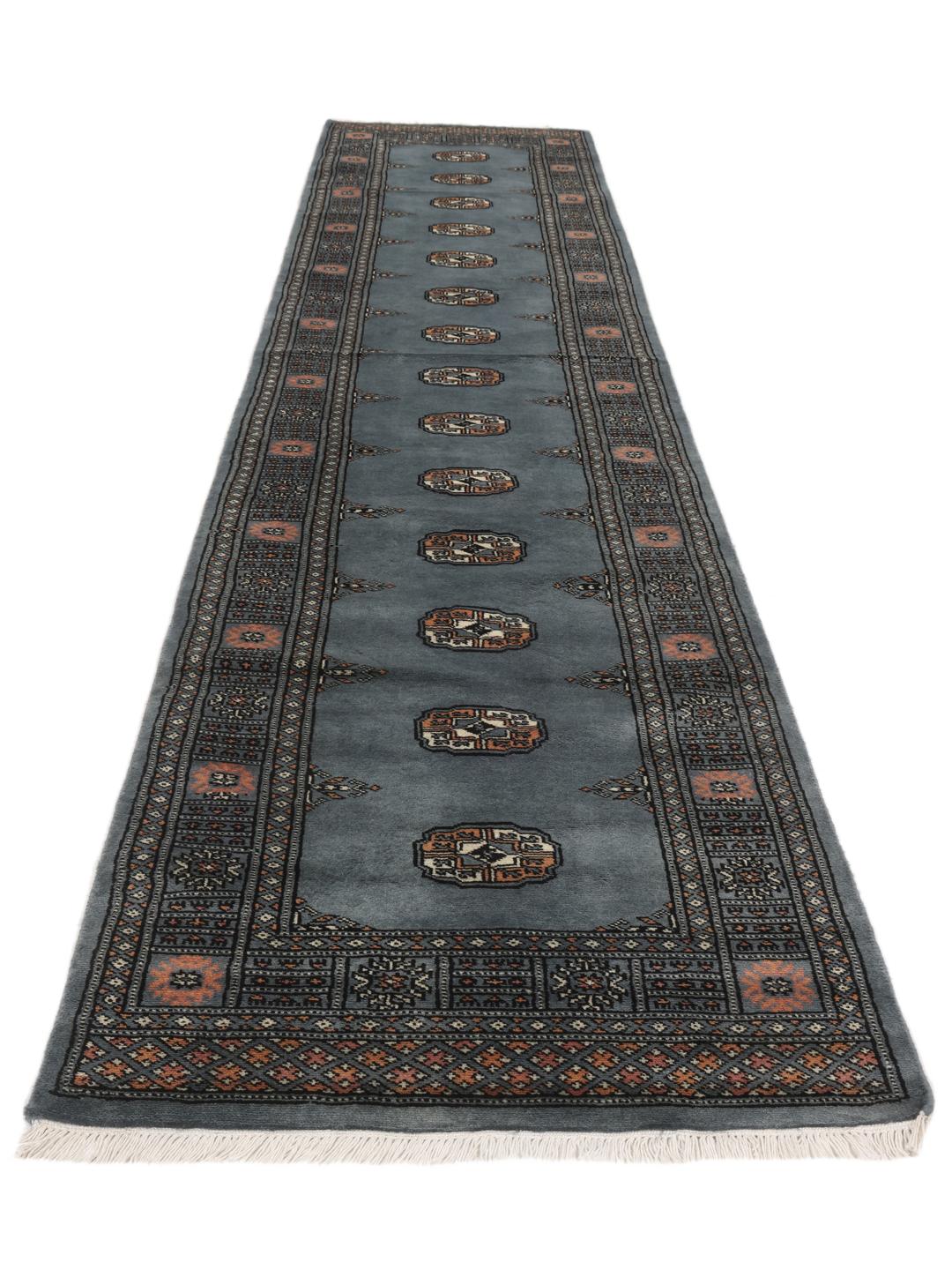
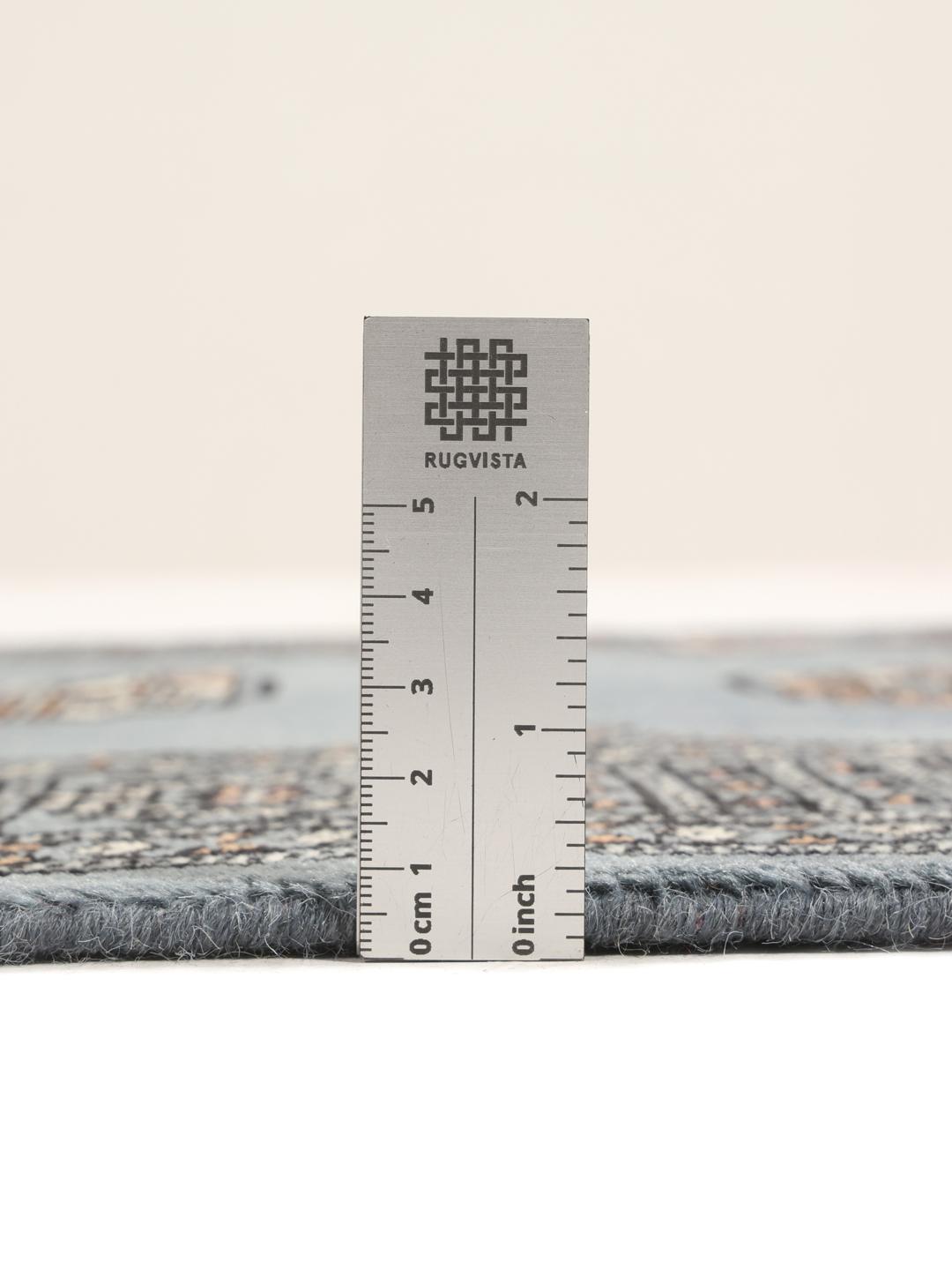
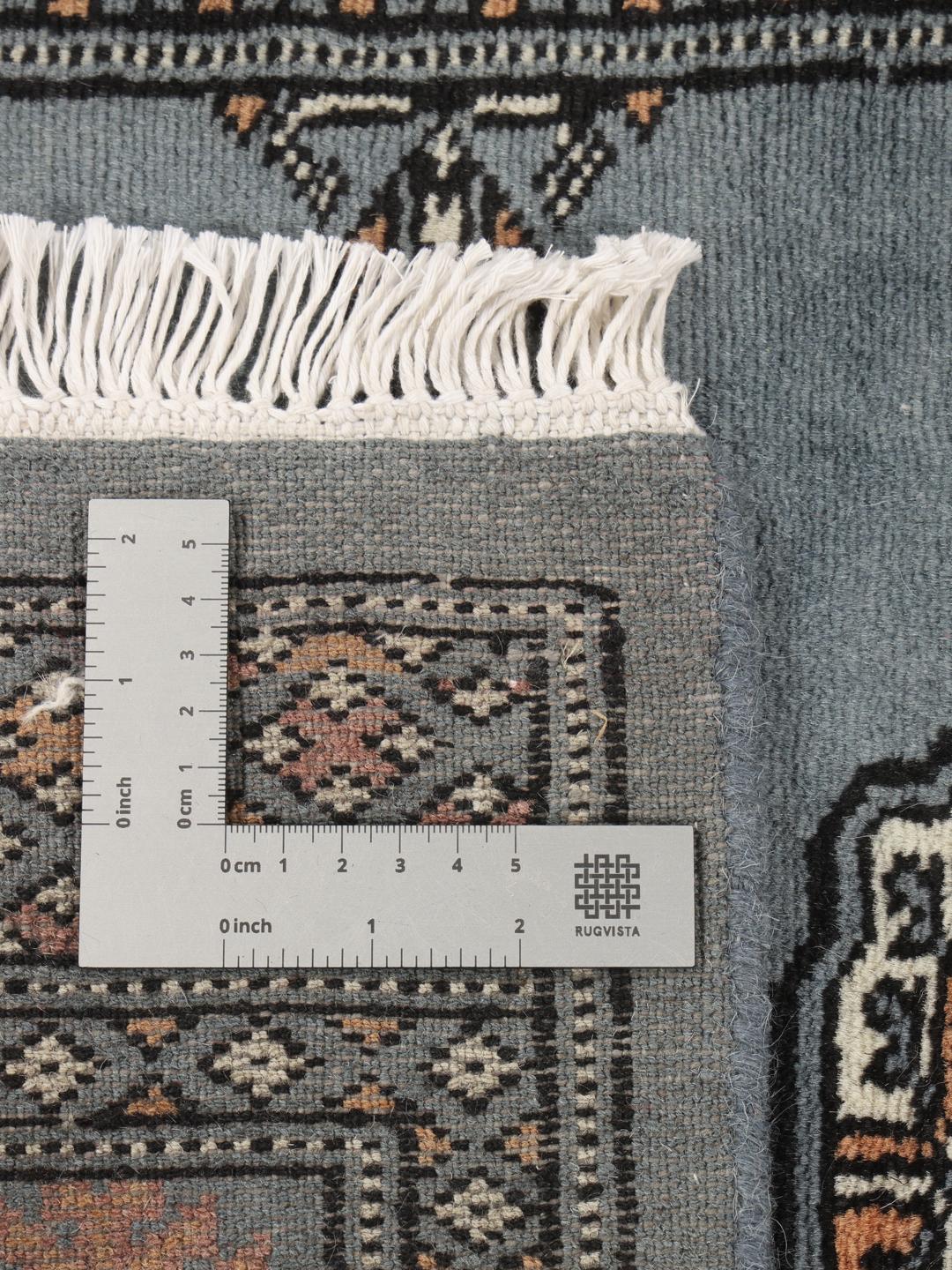
The Bokhara rug tradition is rooted in the ancient Silk Road legacy, taking its name from the historic city of Bukhara in modern-day Uzbekistan. While the style originated in Central Asia, the finest contemporary examples are masterfully crafted in Pakistan. This evolution reflects a long history of weaving techniques migrating across borders, as master weavers brought their ancestral knowledge to new regions, refining the style into the polished, elegant form we see today.
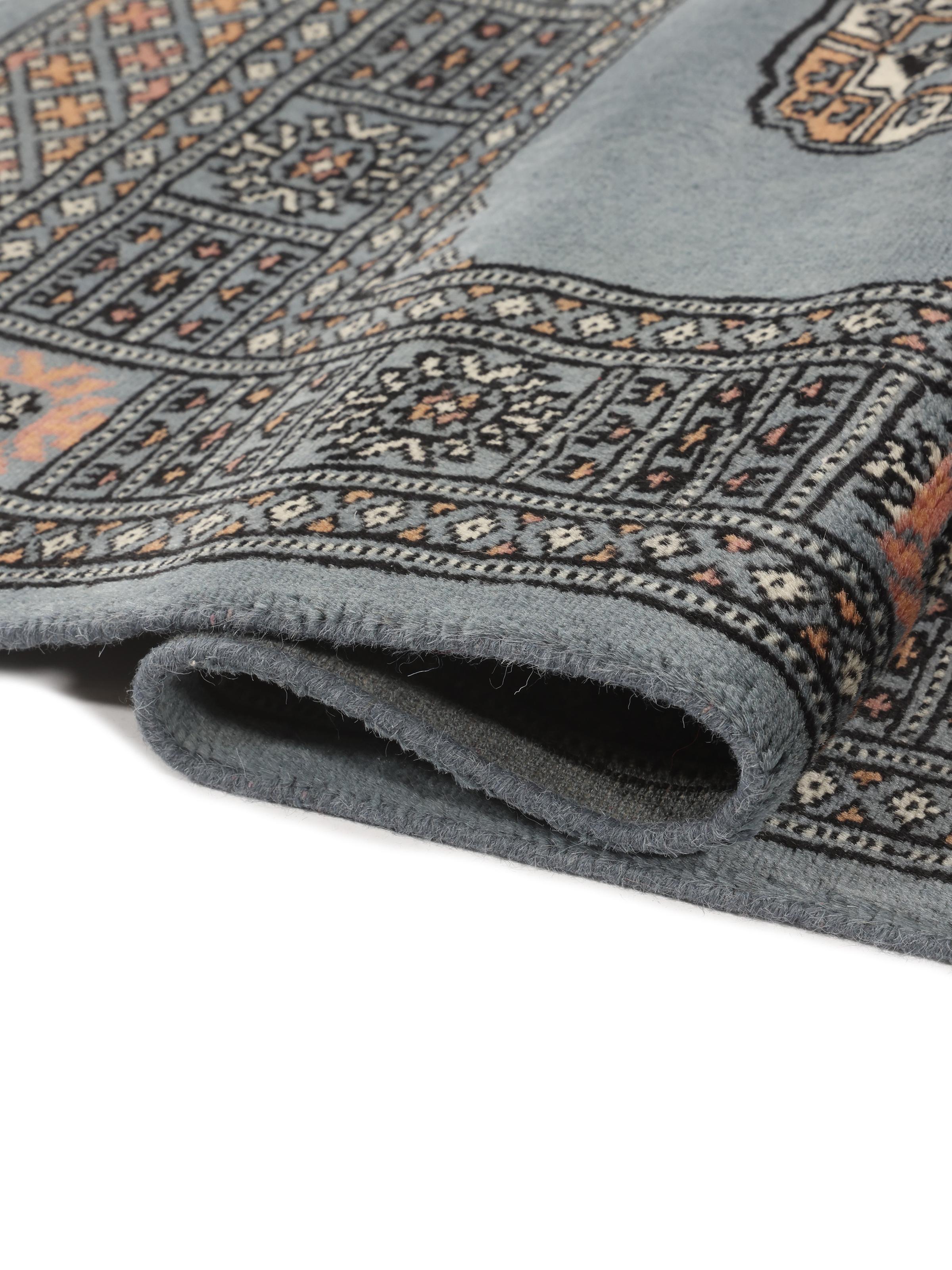
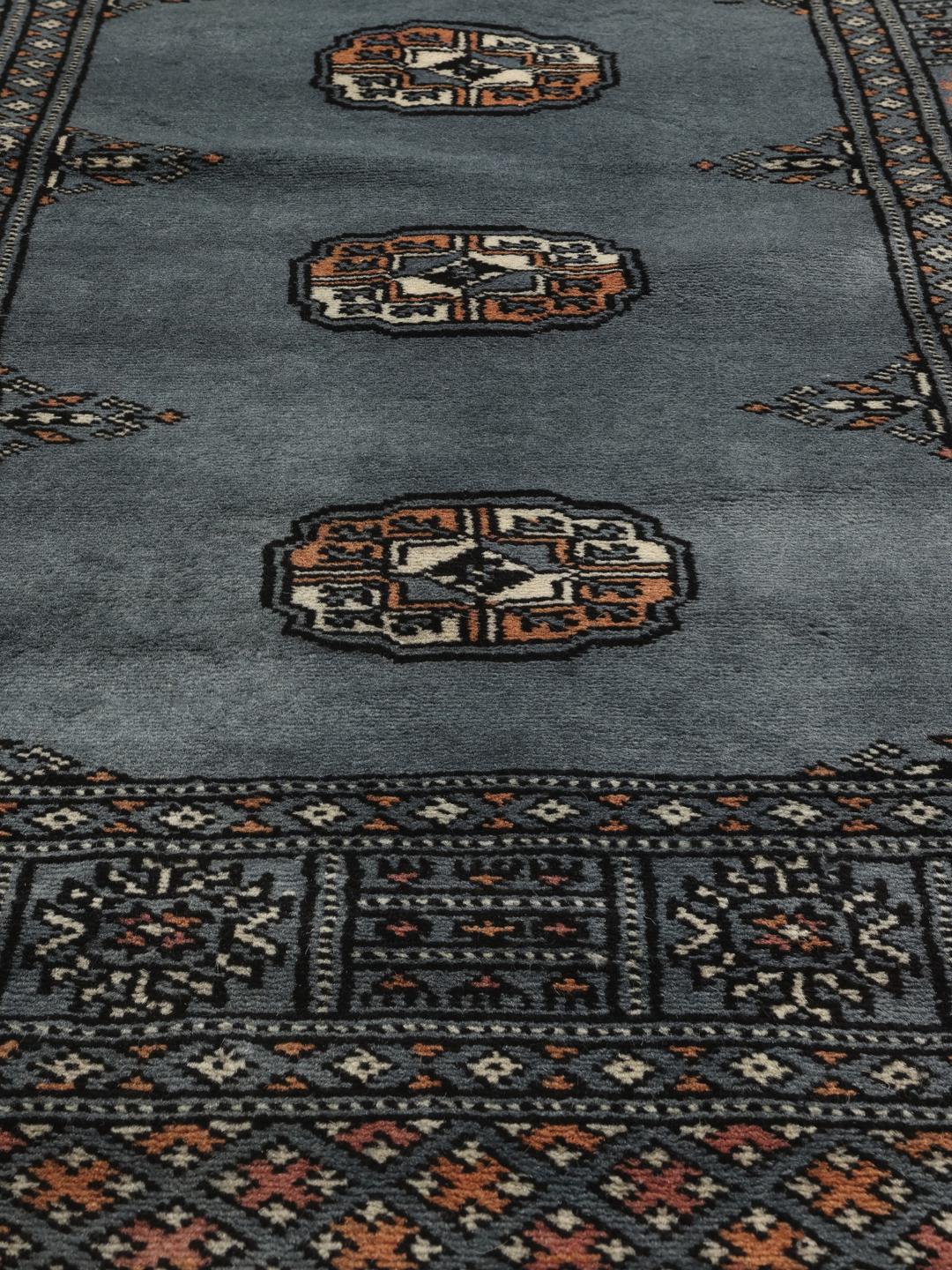
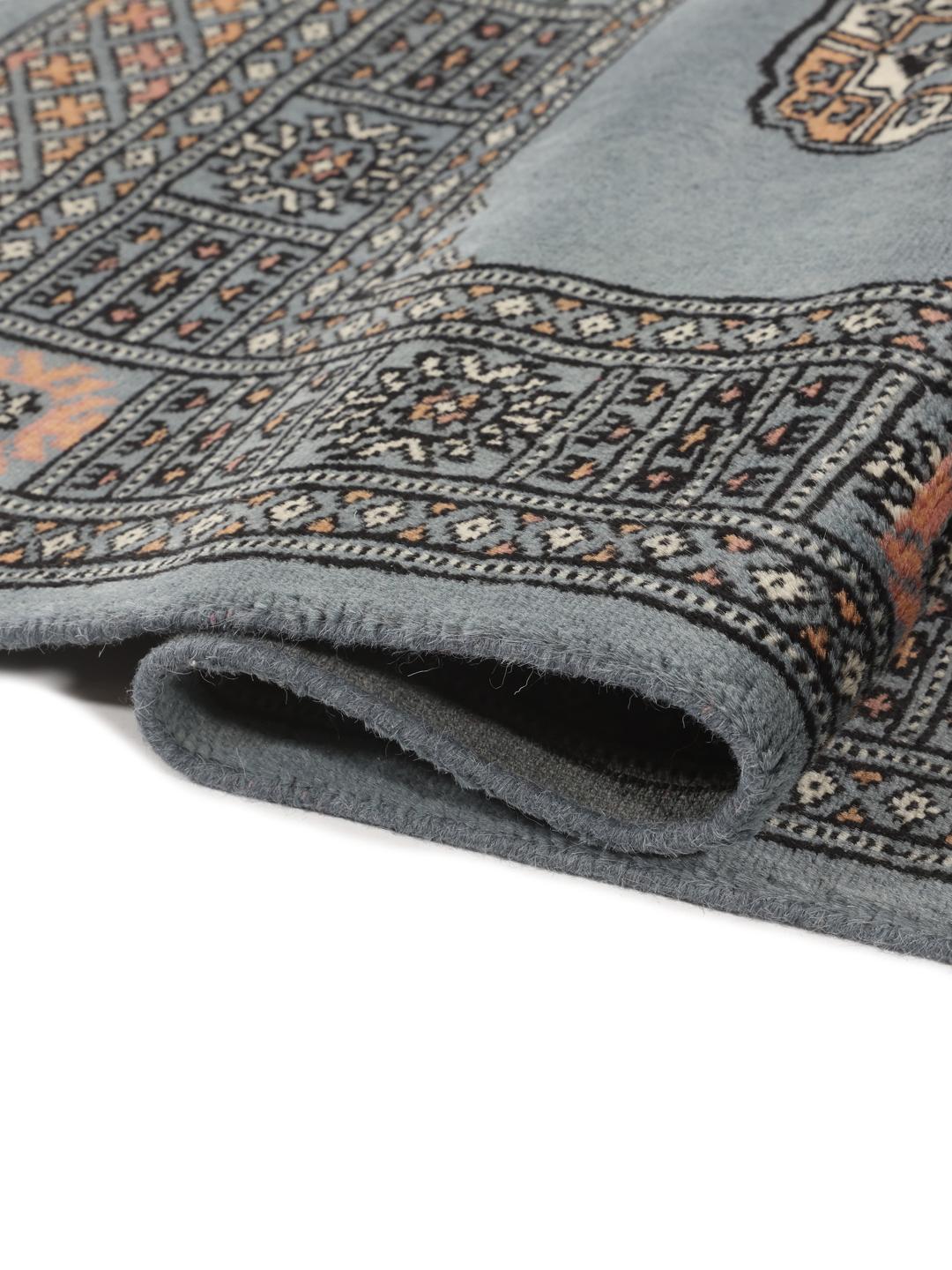
The term 2ply refers to the specific way the wool is prepared before weaving. By twisting two individual strands together, the artisans create a stronger, more lustrous yarn that is far more durable than single-ply alternatives. This technique is essential for achieving the signature plushness and depth that makes these rugs feel so luxurious underfoot, while simultaneously ensuring they can withstand the rigours of a busy home.
Visually, these rugs are defined by the iconic gul motif, which appears as repeating, octagonal medallions arranged in structured rows. These patterns are typically framed by elaborate, multi-layered borders that demonstrate the weaver's command over geometry and symmetry. The choice of a blue field for this piece is a sophisticated departure from the traditional red, offering a calm, contemporary aesthetic while remaining faithful to the historic design language of the region.
Owning a hand-knotted rug of this lineage is an investment in cultural heritage and human skill. These pieces are highly valued by collectors because they represent a living craft that has been passed down through generations. By bringing such a rug into your home, you are not just covering a floor, but continuing a story of artistry and dedication that has travelled across centuries and continents.