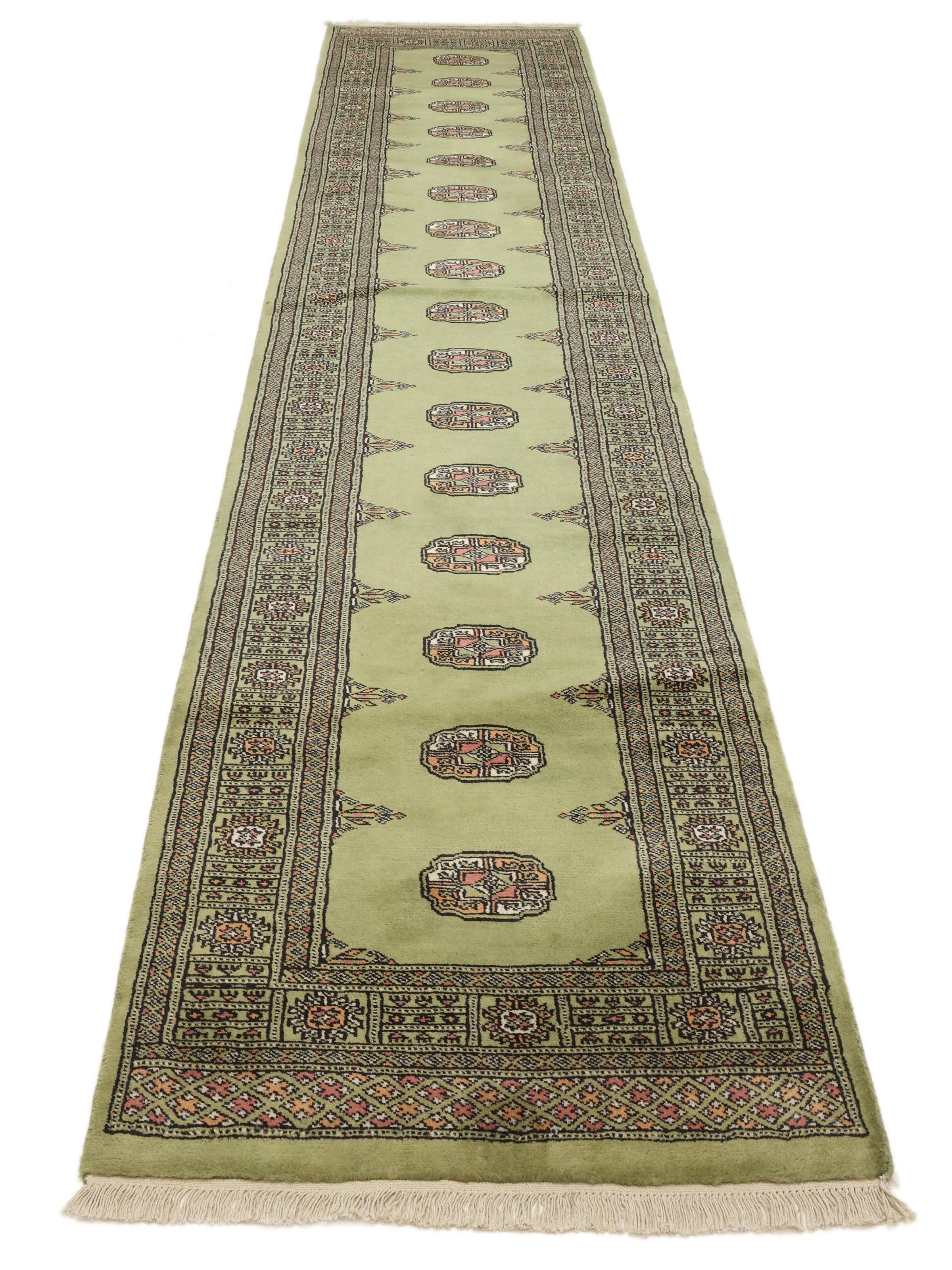
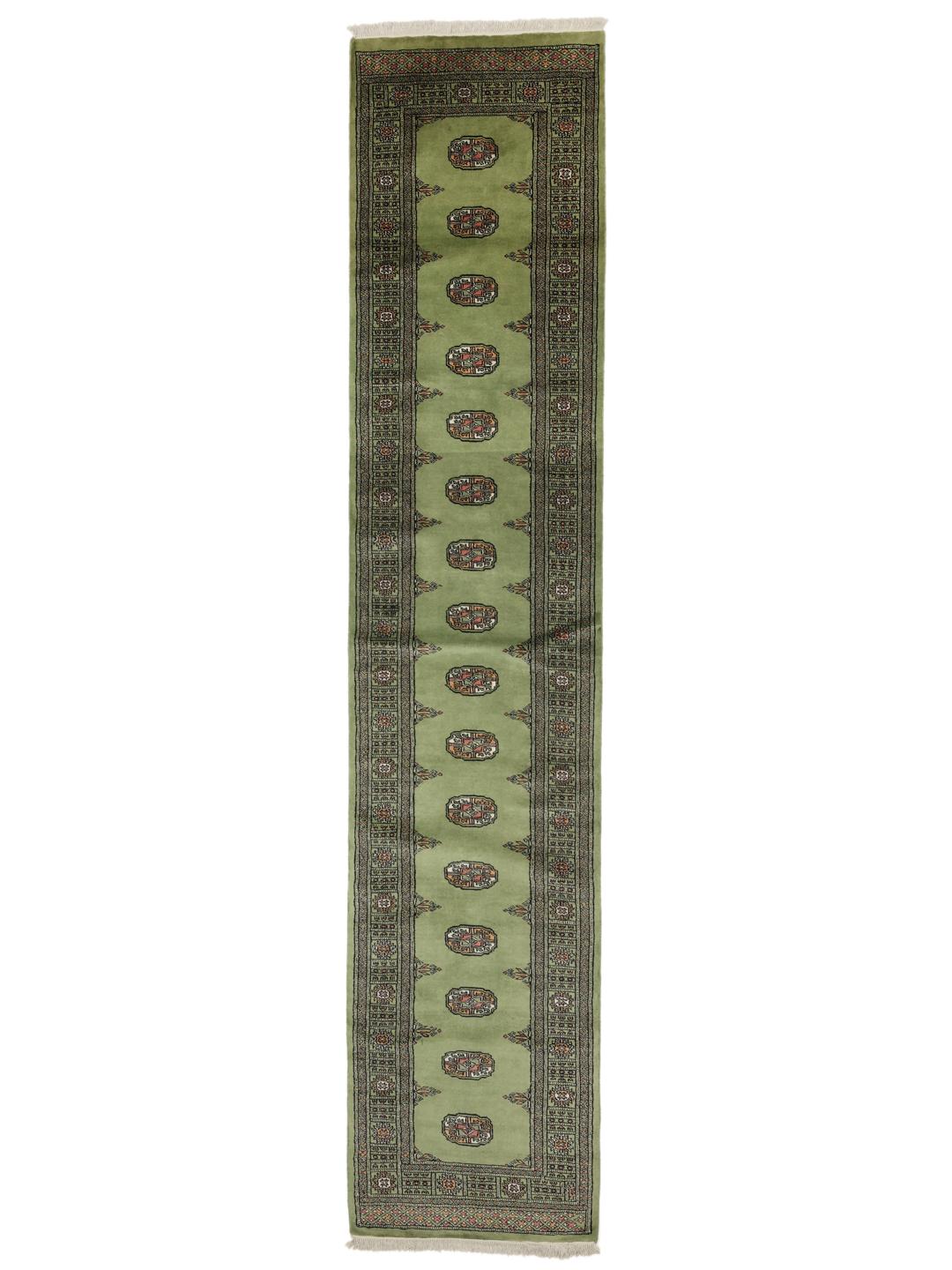
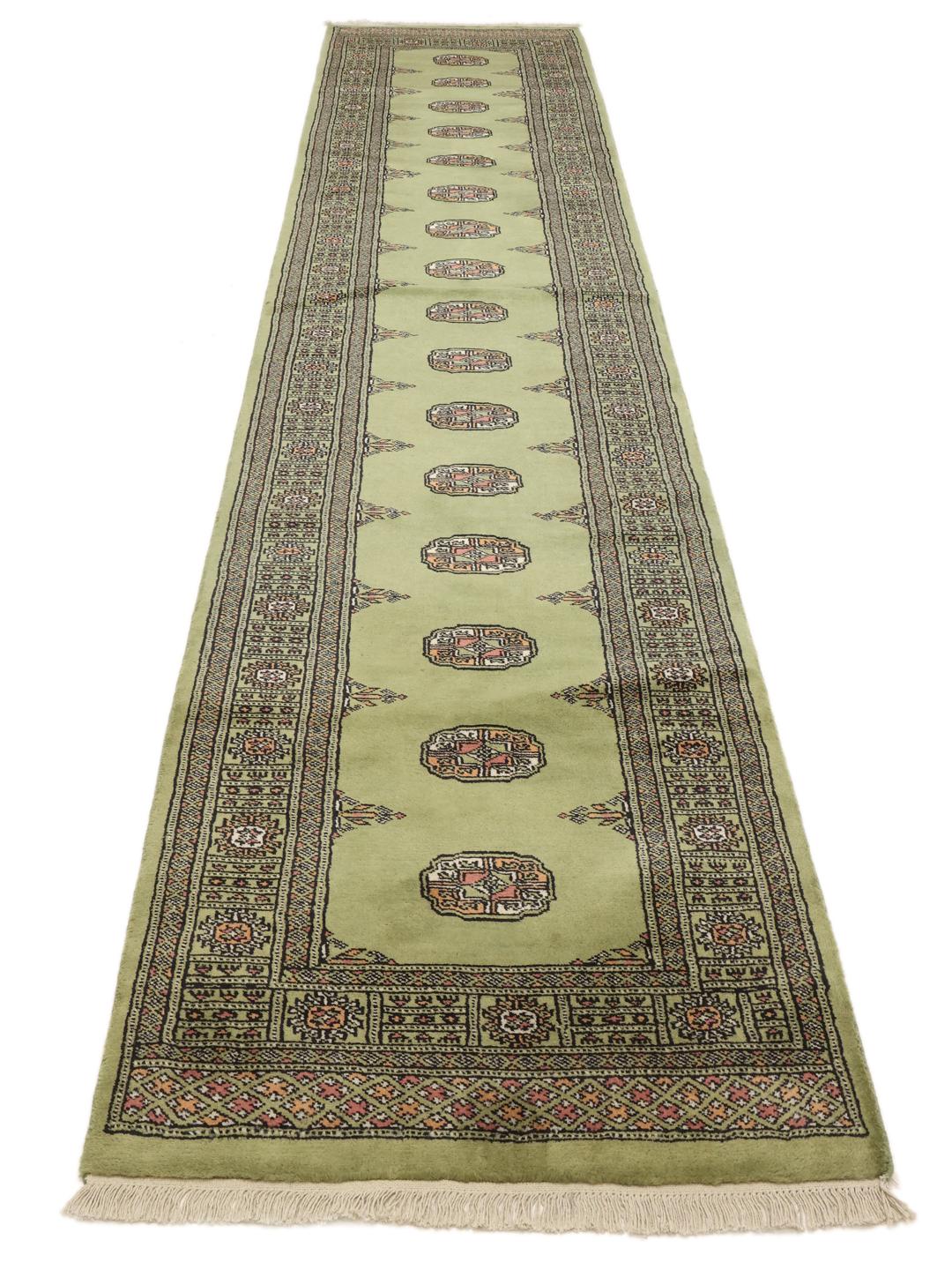
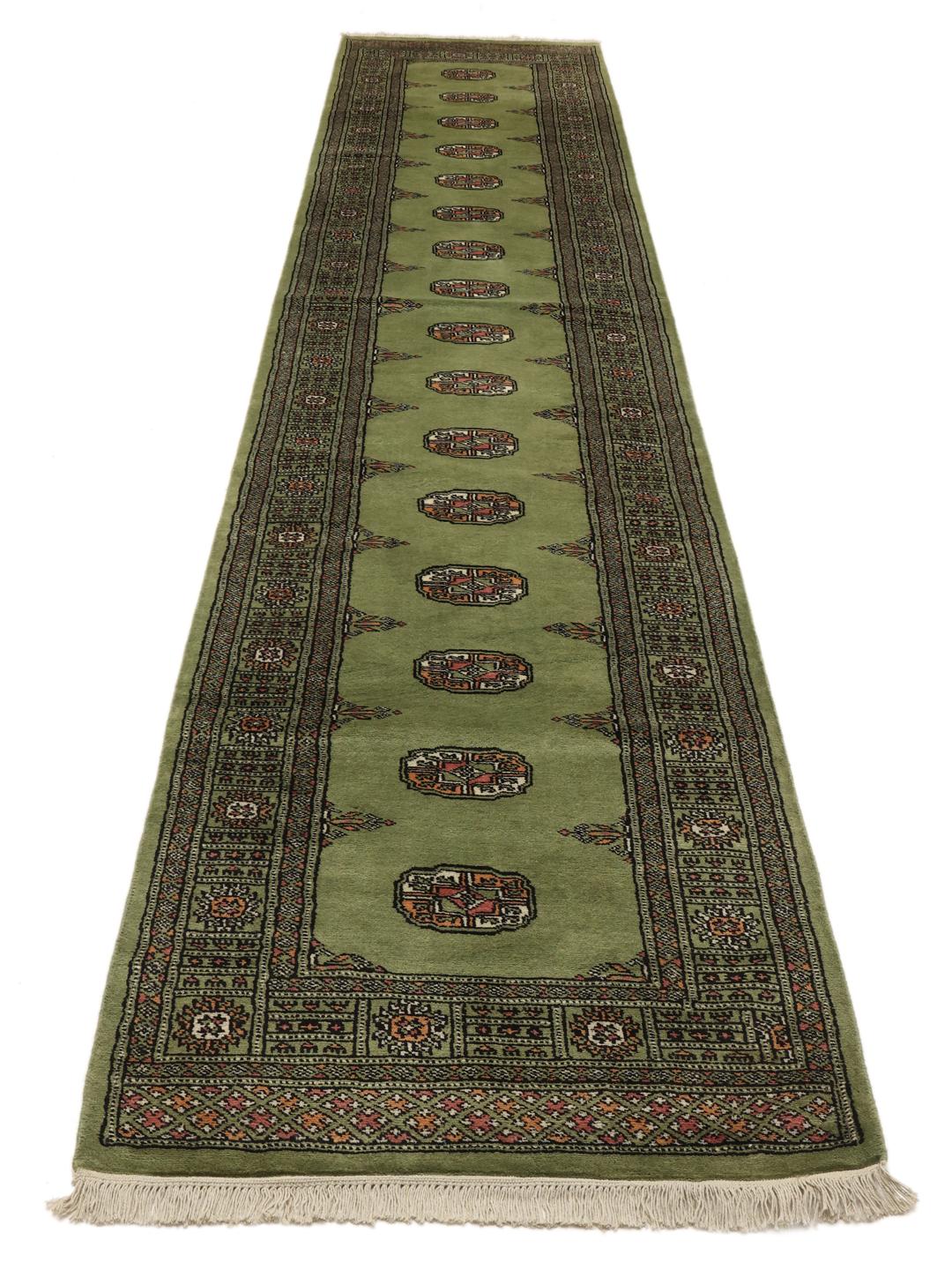
Bokhara rugs are deeply rooted in the rich textile heritage of Central Asia, taking their name from the ancient Silk Road city of Bukhara. While they draw inspiration from centuries-old nomadic traditions, the finest examples today are expertly crafted in Pakistan. This evolution reflects a migration of weaving knowledge, where traditional patterns were preserved and refined by generations of master artisans.
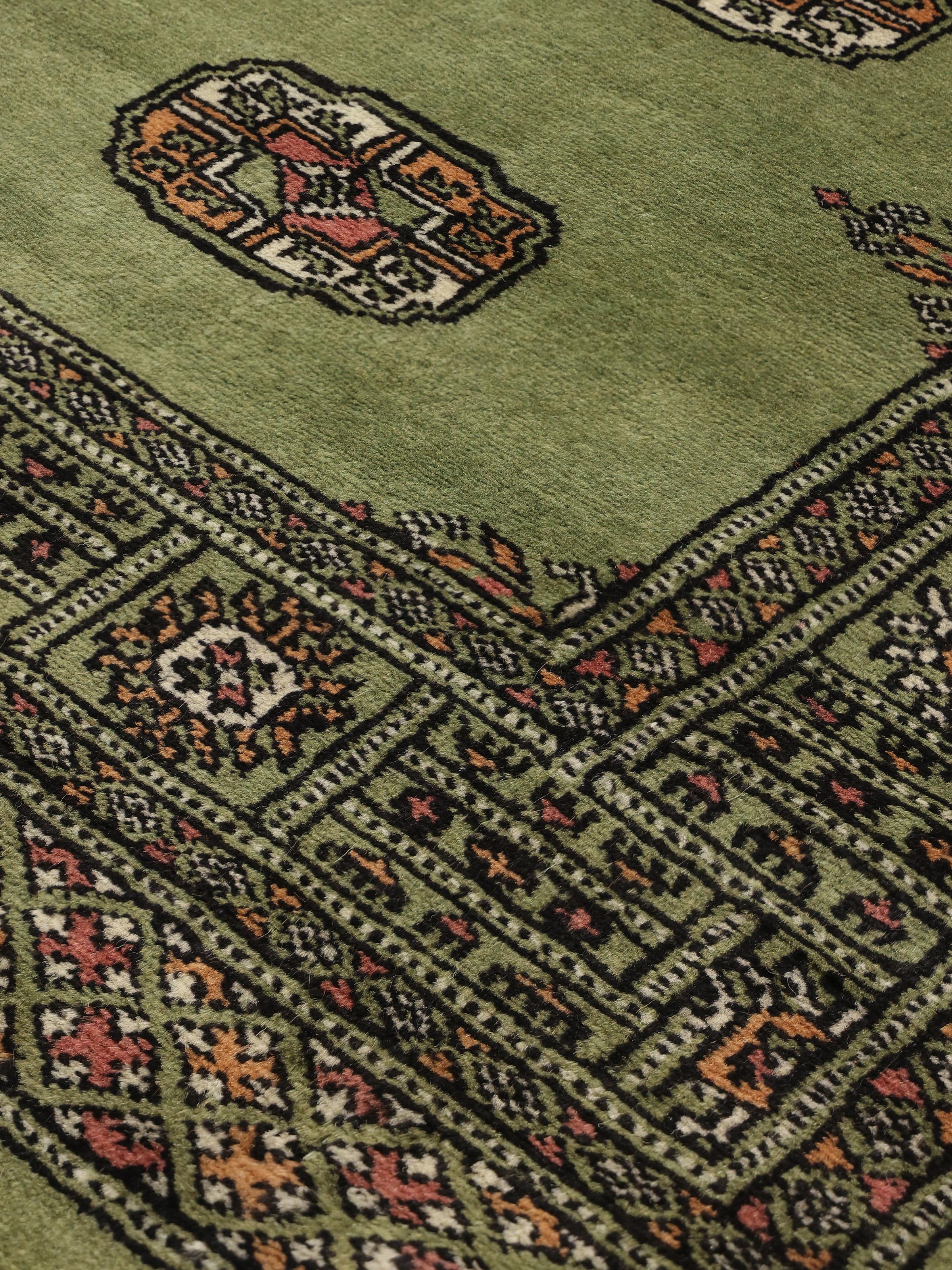
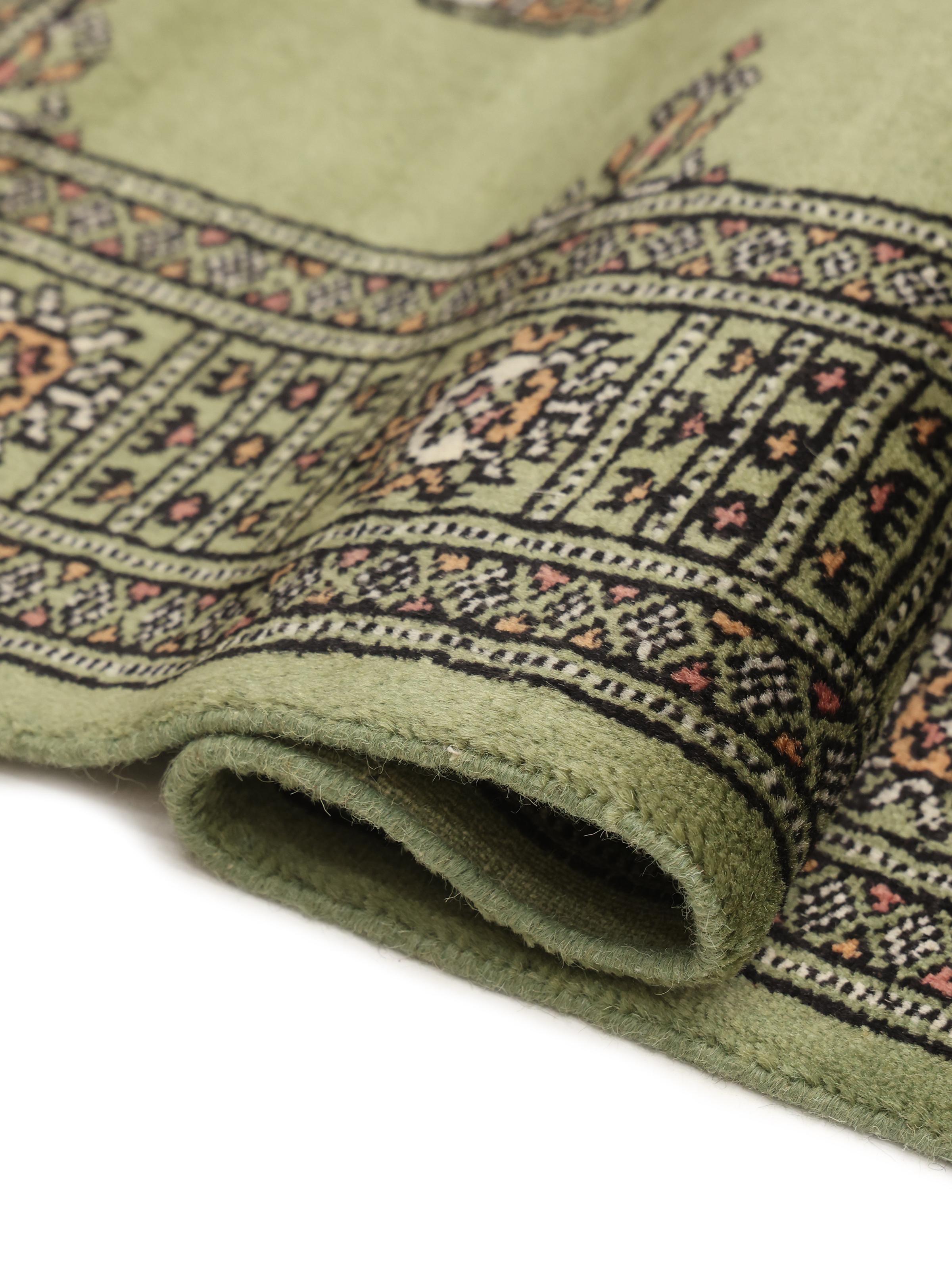
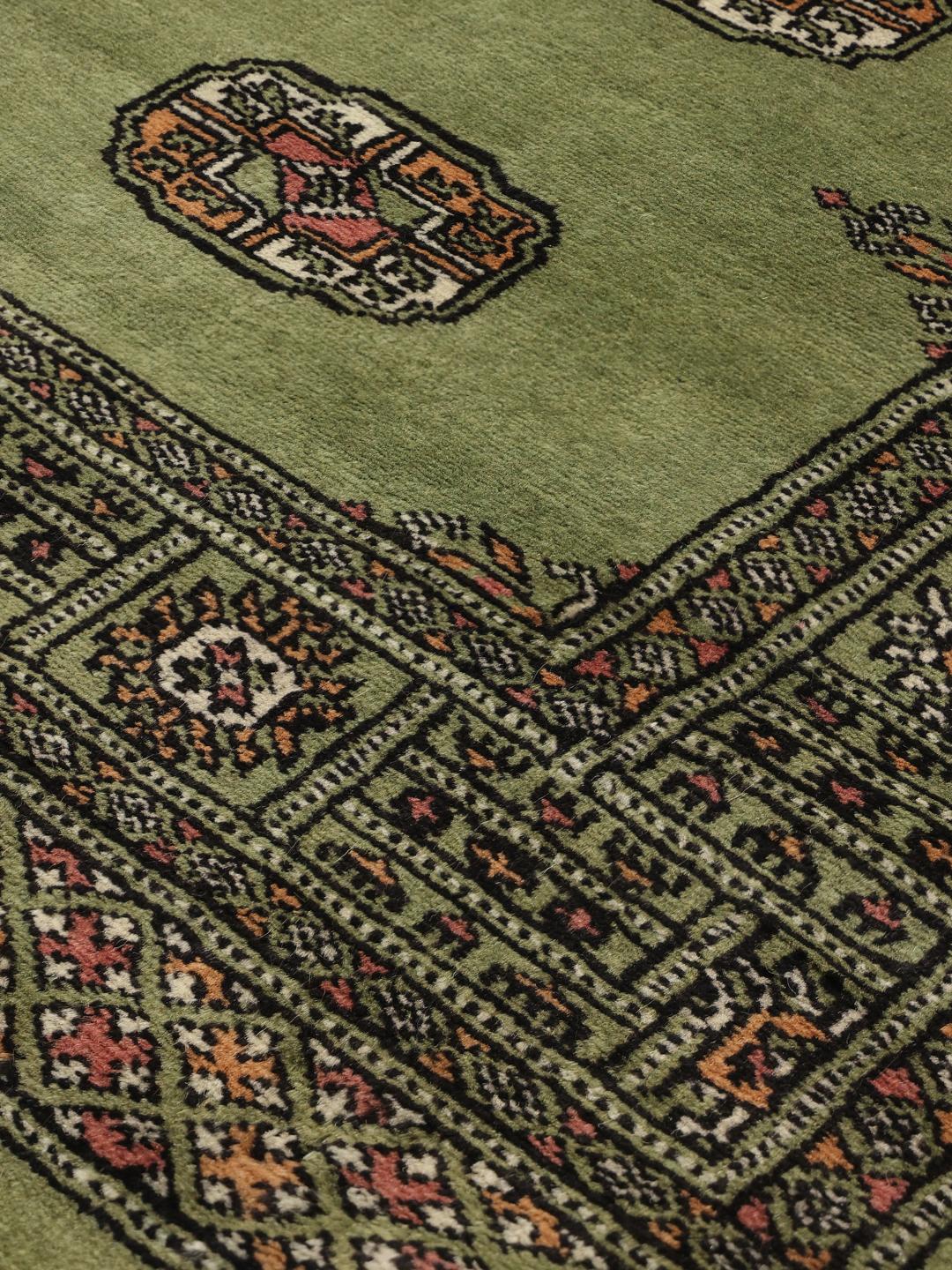
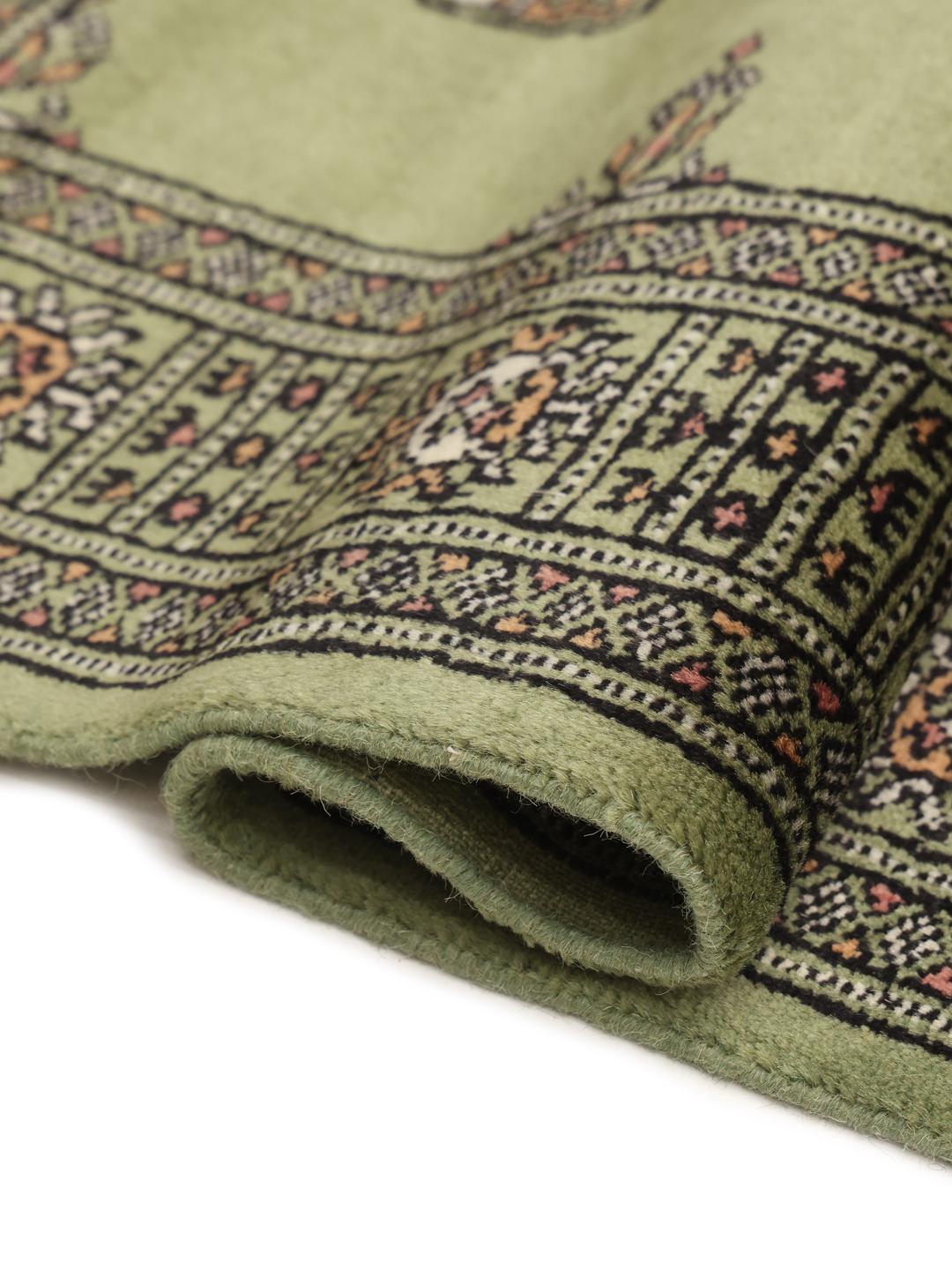
The term 2ply refers to the construction of the wool pile, where two individual strands are twisted together before being knotted. This technique is highly valued because it creates a pile that is significantly more lustrous, durable, and resistant to wear compared to single-ply alternatives. It provides a fuller, more substantial texture that enhances the longevity and visual depth of the rug.
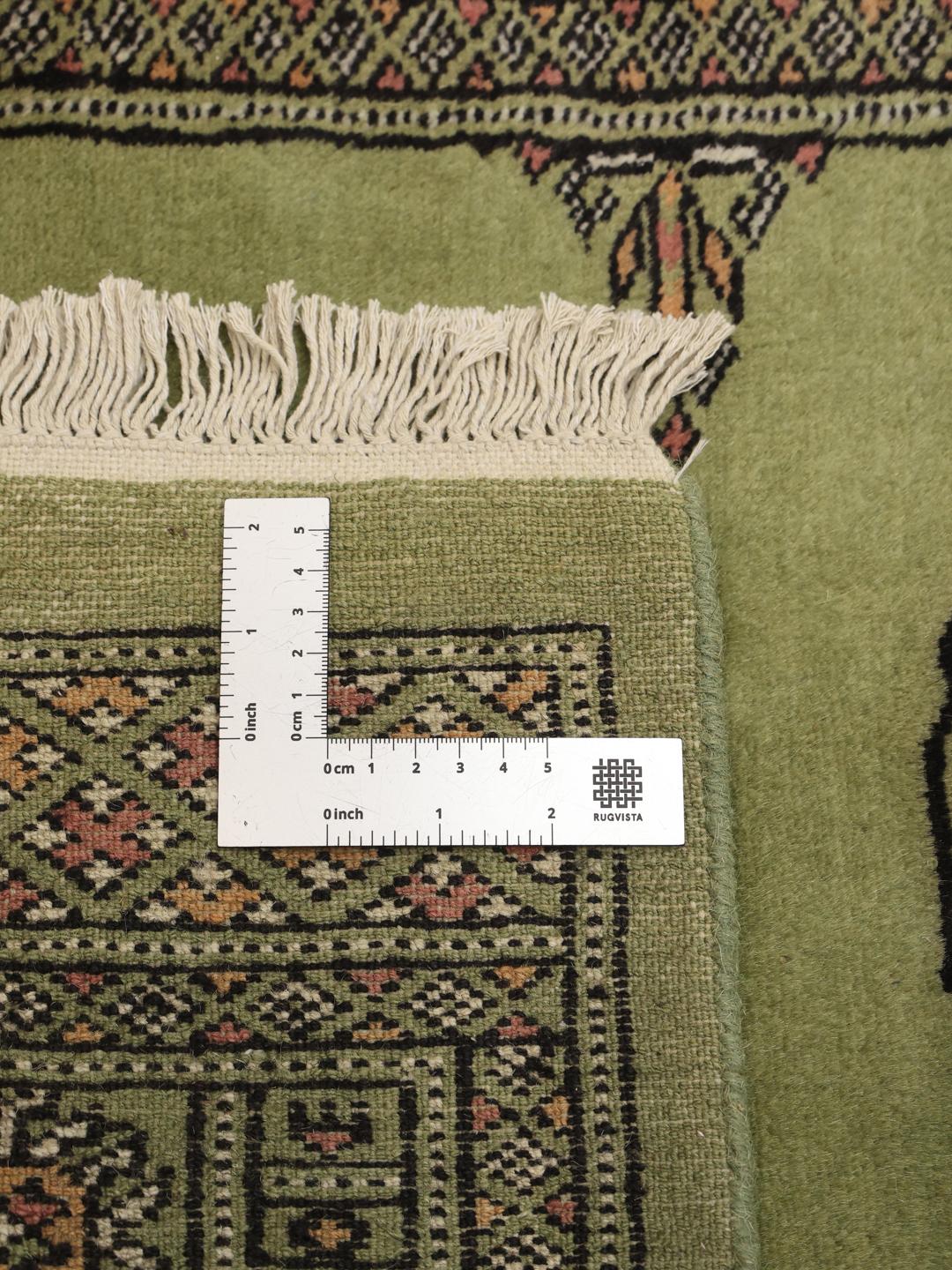
Visually, these rugs are defined by their signature gul motifs—repeating, octagonal medallions that symbolise tribal identity and historical connection. These medallions are typically arranged in clean, horizontal rows and are enclosed by elaborate, multi-layered decorative borders. The use of a green field is a sophisticated departure from more traditional red tones, offering a fresh, versatile look that highlights the intricate details of the central design.
Owning a hand-knotted piece from this tradition is an investment in cultural heritage and human skill. These rugs are highly sought after by collectors for their consistency, artistic depth, and the tangible sense of history they bring to a home. By choosing this runner, you are participating in a long-standing legacy of craft, ensuring that your home is furnished with an item of genuine significance and enduring value.