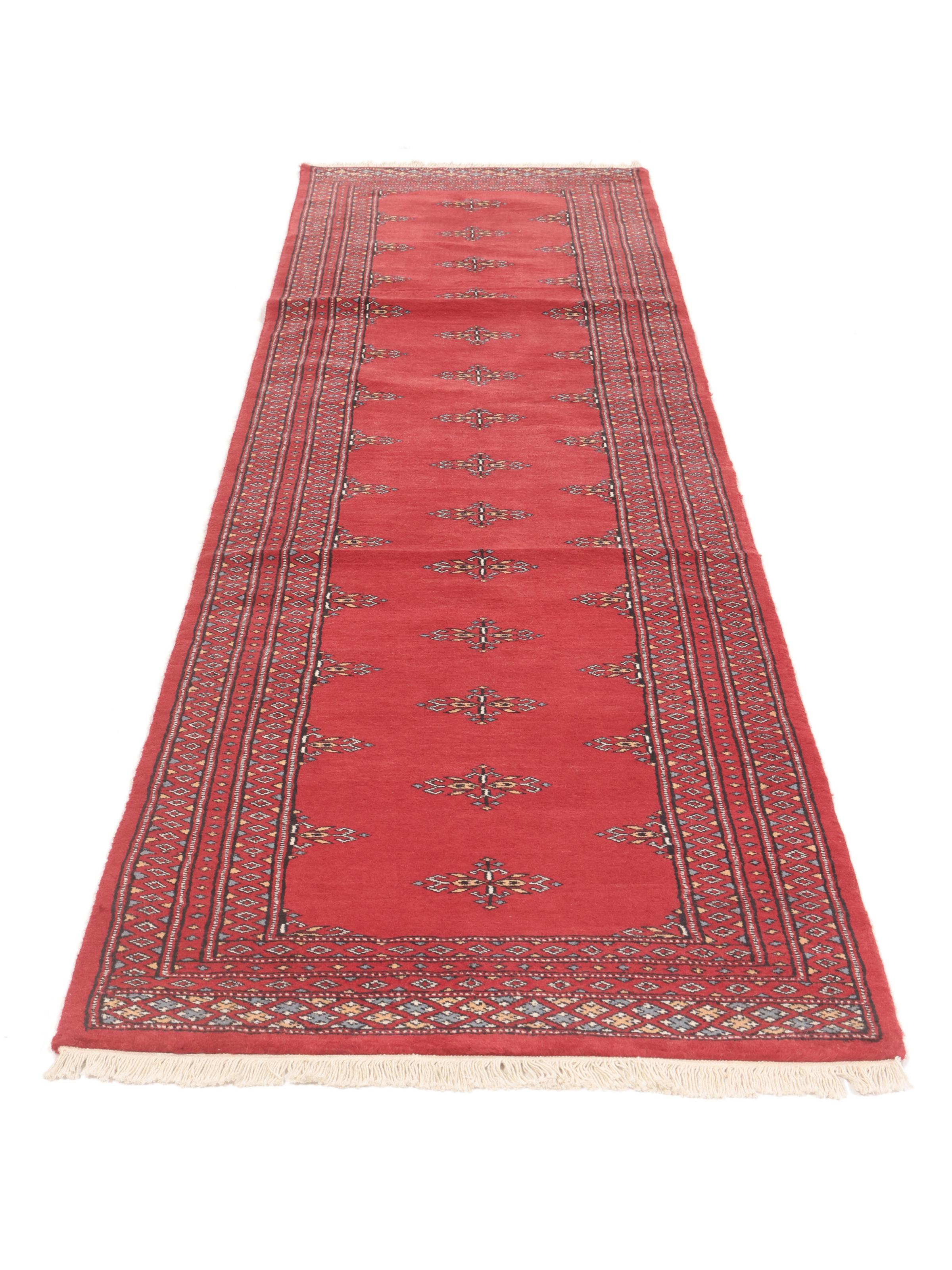
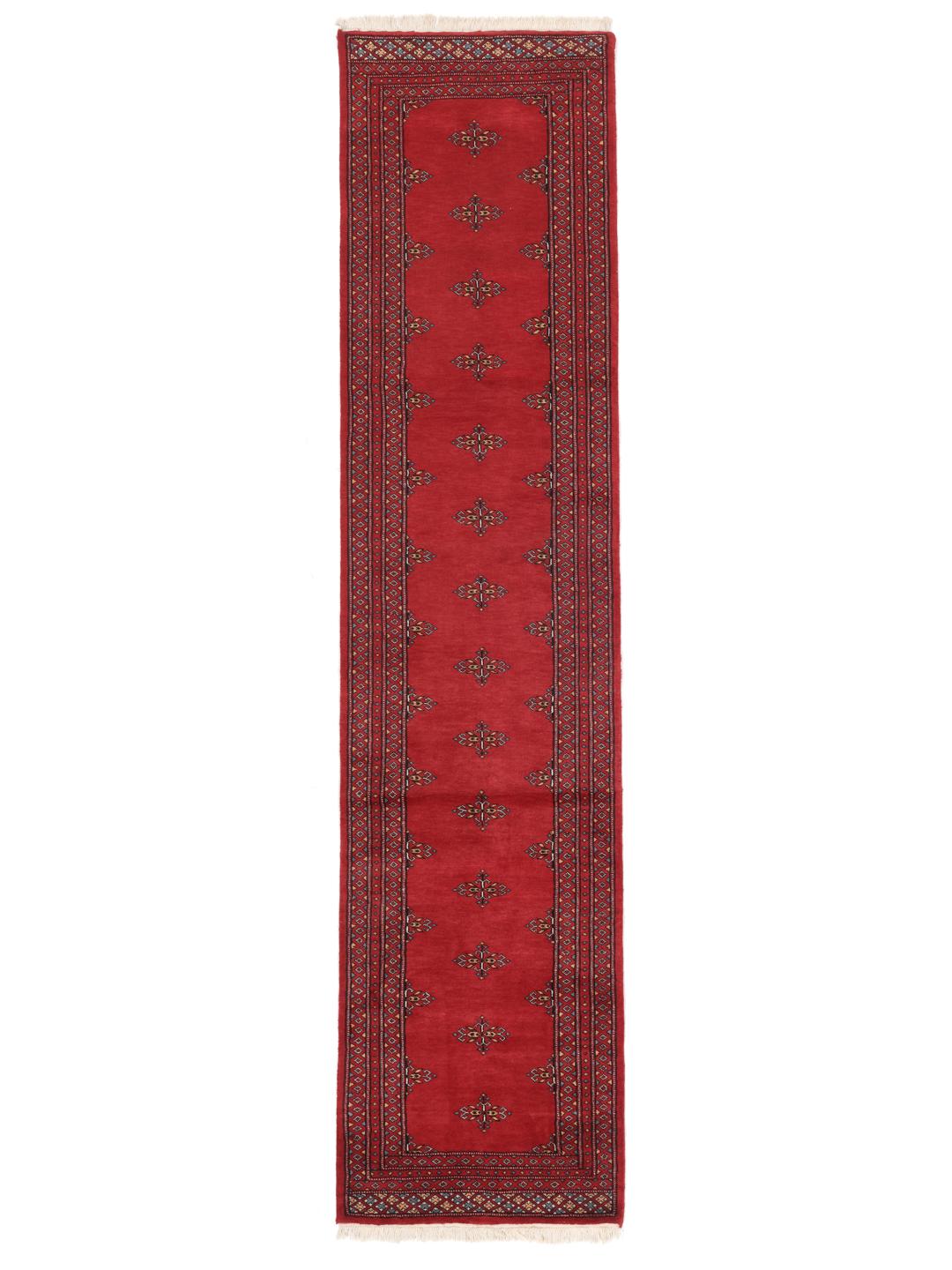
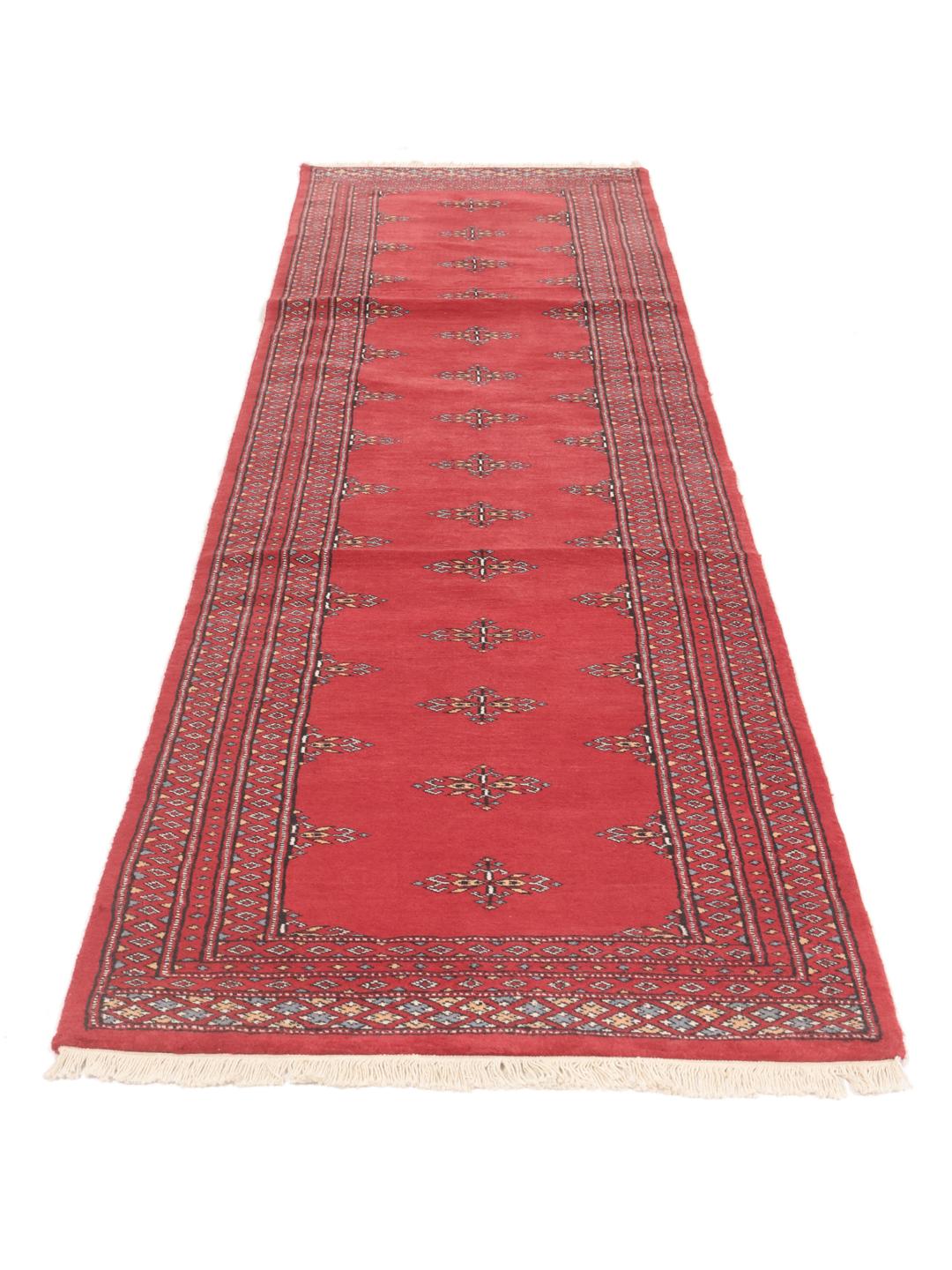
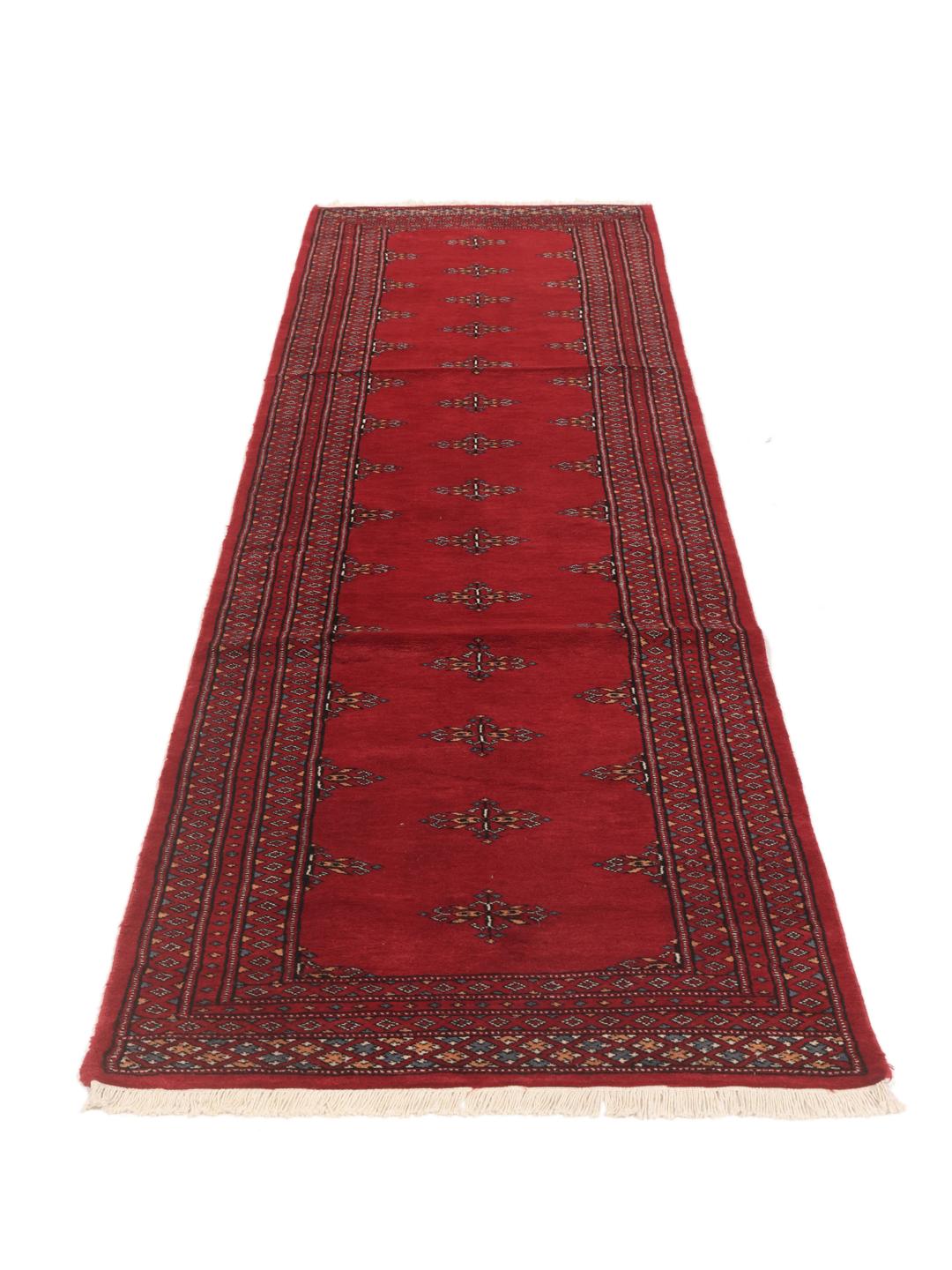
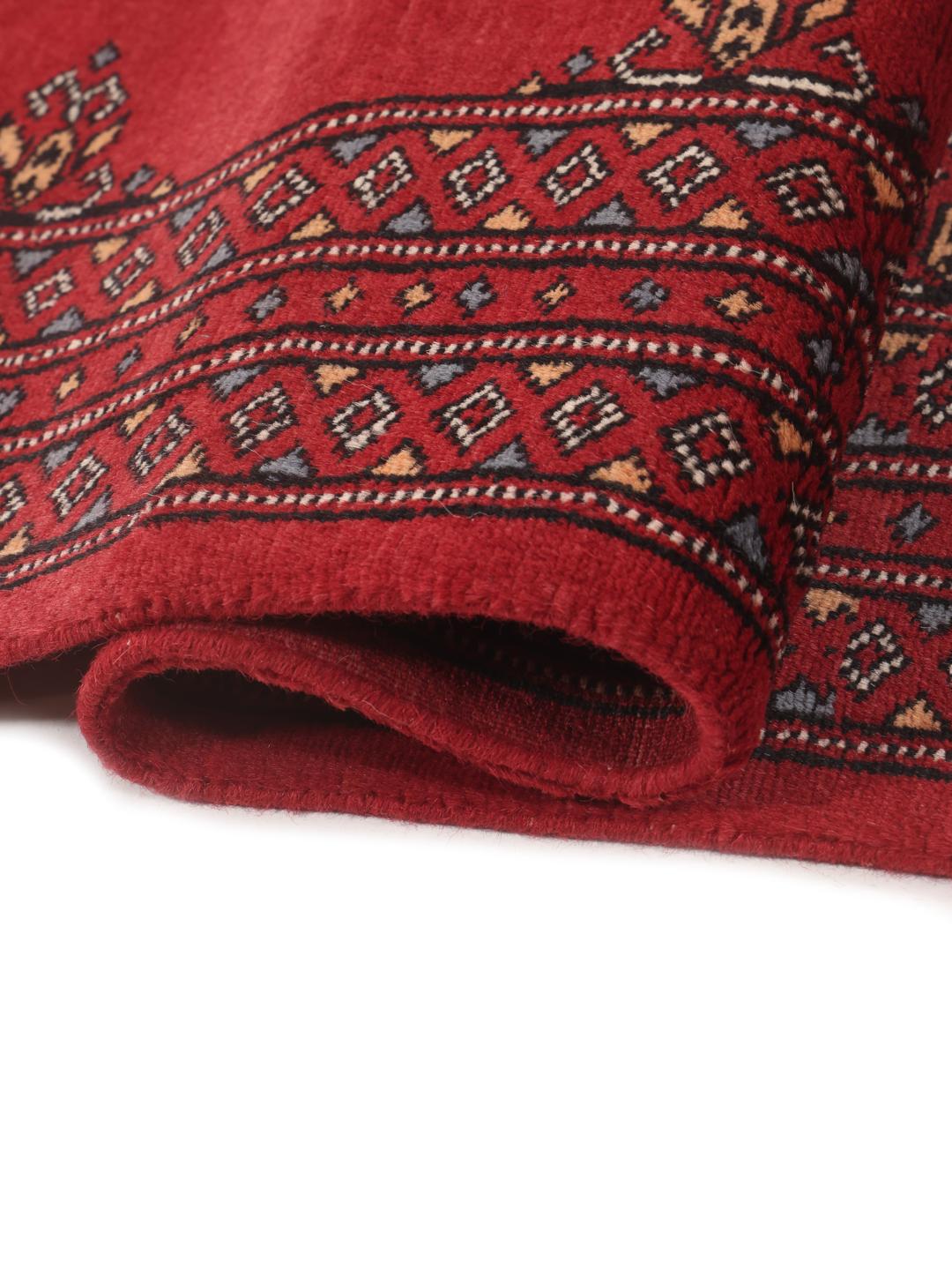
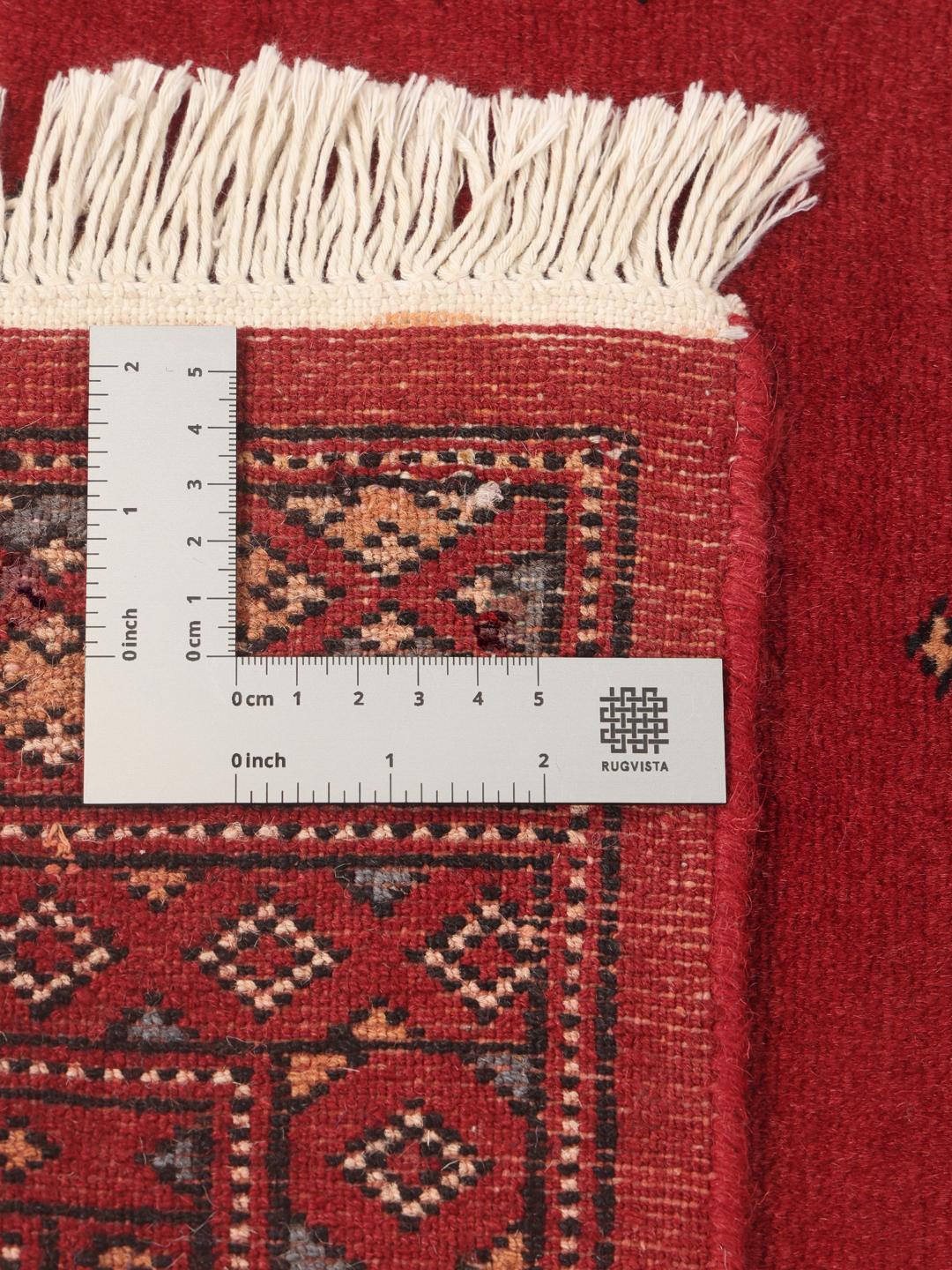
The Bokhara rug tradition is deeply rooted in the history of Central Asian weaving. While the name itself is derived from the ancient Silk Road city of Bukhara, the style has evolved significantly over centuries. Today, the finest expressions of this tradition are masterfully produced in Pakistan, where weavers have refined the techniques to create rugs that are both culturally significant and visually striking.
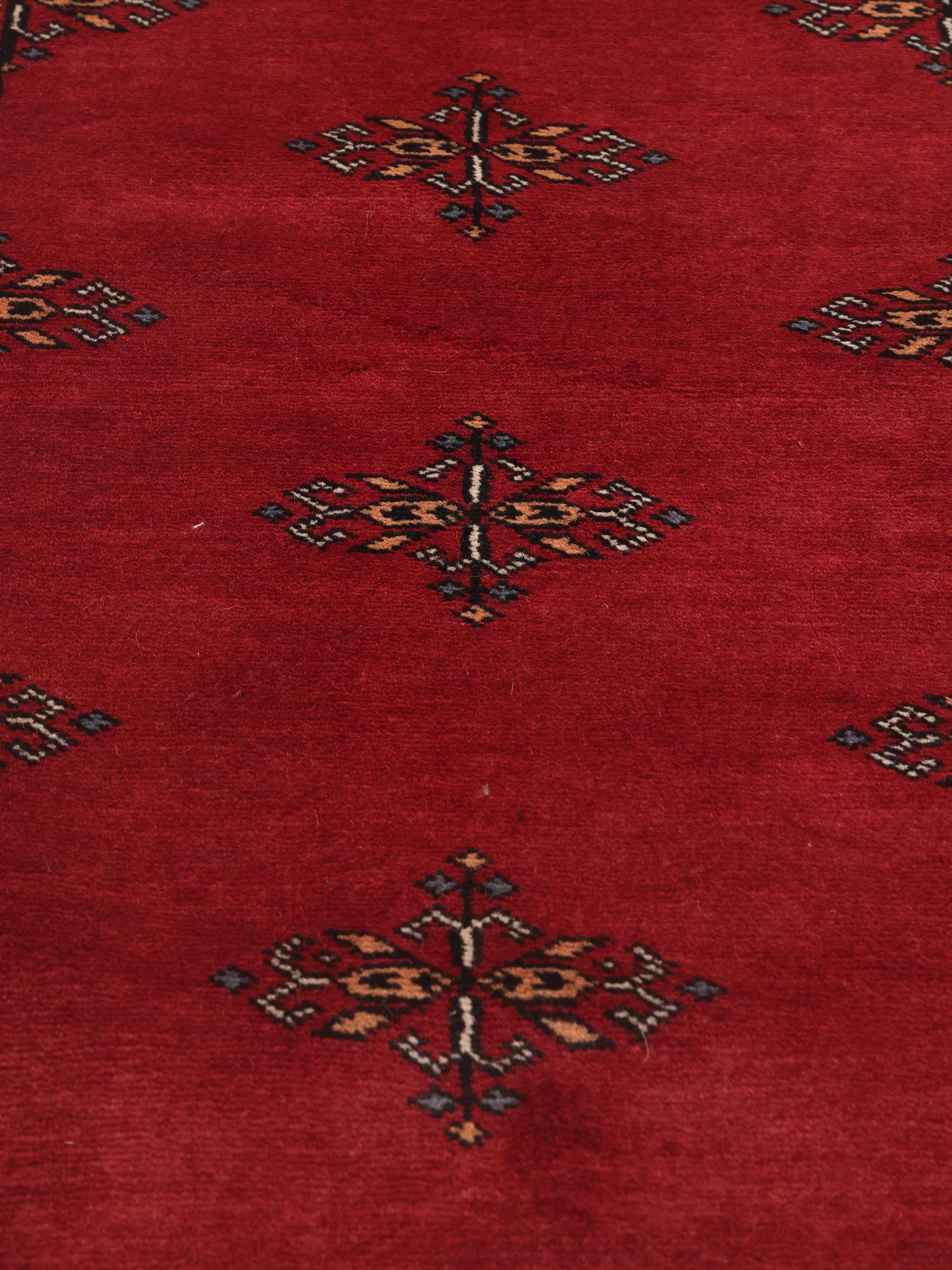
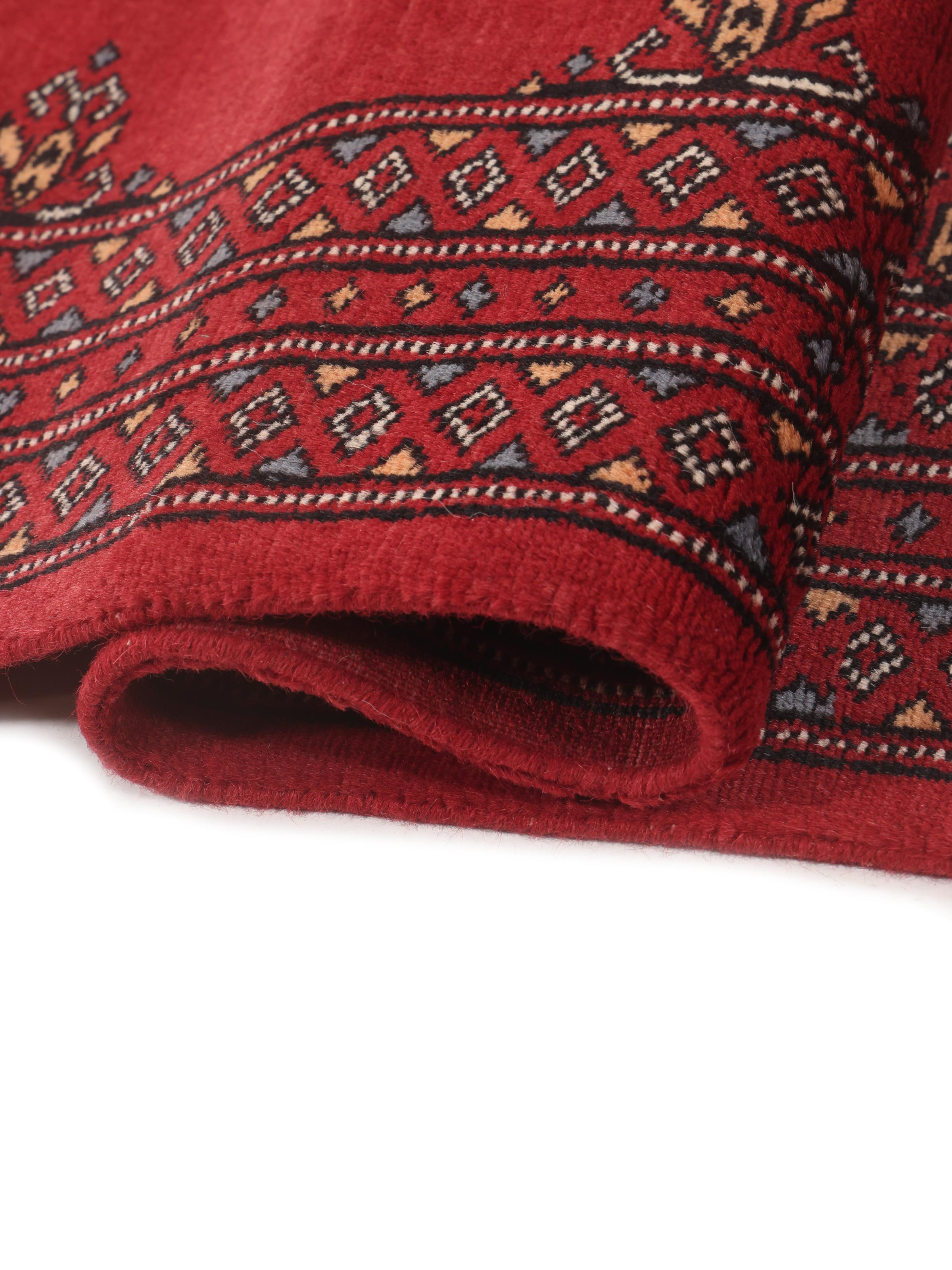
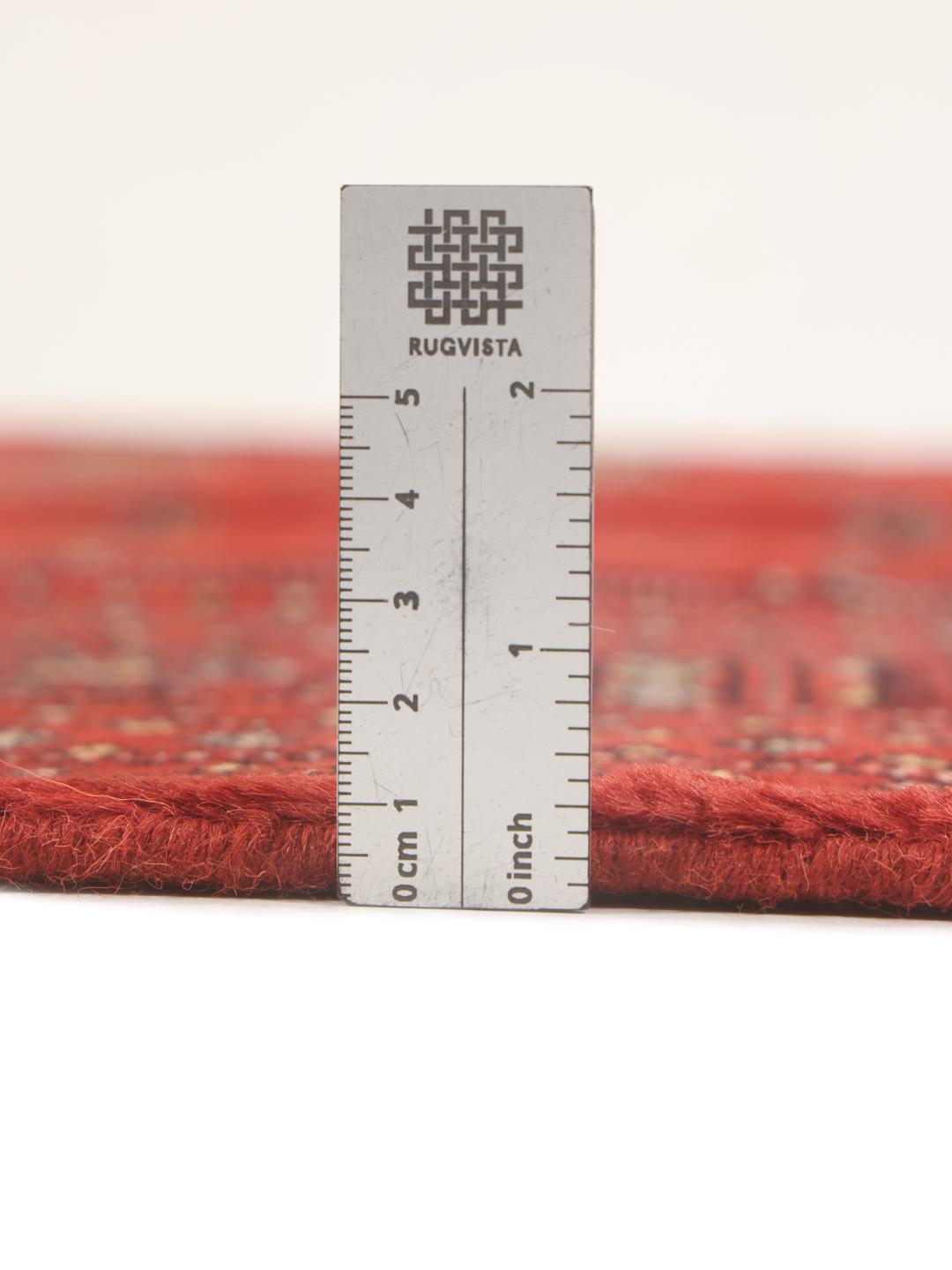
The 2ply construction mentioned in this rug's identity is a hallmark of quality. By twisting two strands of Wool together, the artisan creates a yarn that is stronger and more lustrous than single-ply alternatives. This technical choice is essential for the durability of the runner, ensuring that the pile remains upright and vibrant even with daily use in a busy home.
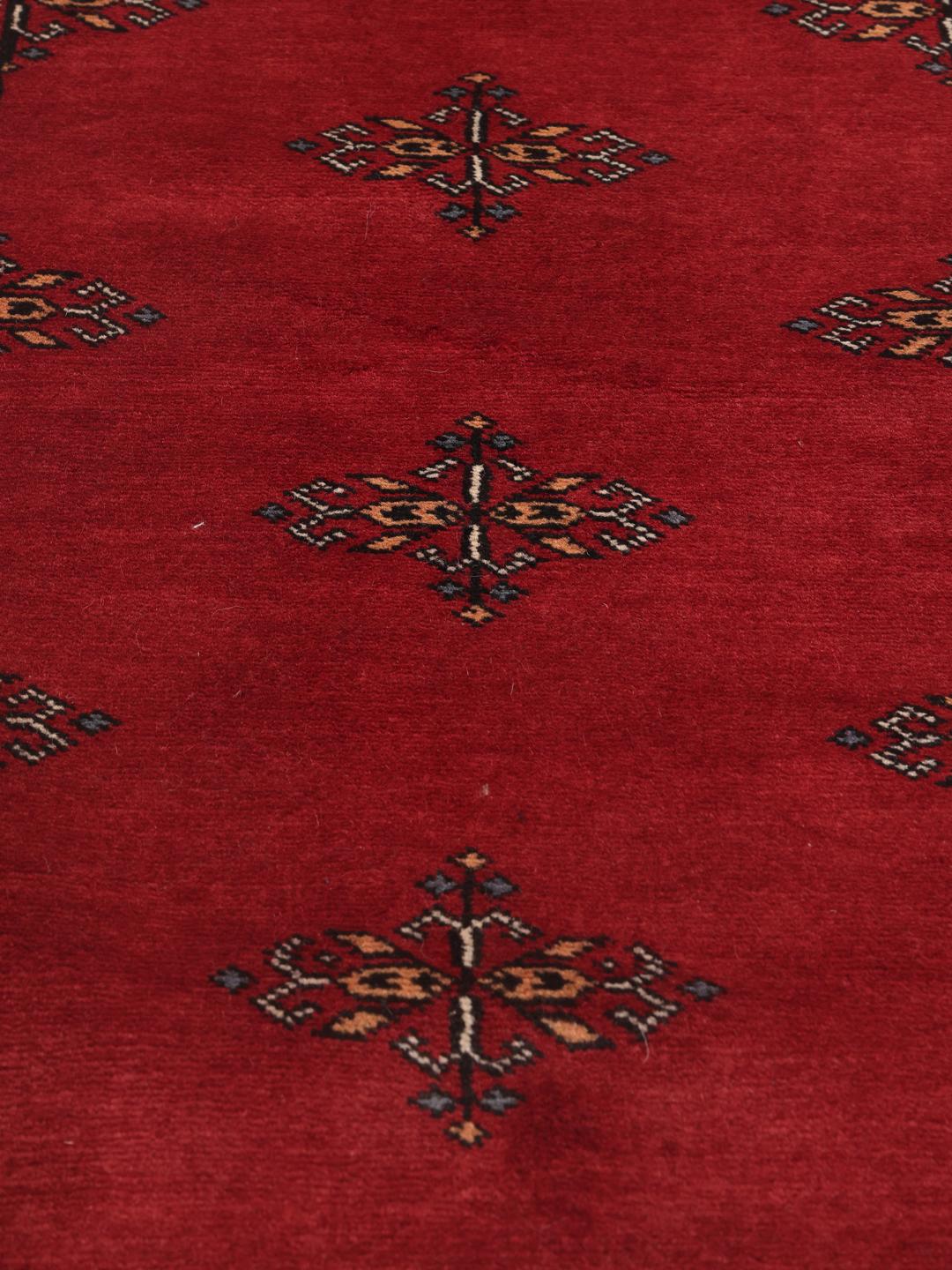
Visually, this tradition is defined by the repeating geometric motifs often referred to as guls. These medallions, arranged in orderly rows, are a signature element that provides a sense of harmony and structure. The deep, saturated red tones are classic to this style, creating a look that is both bold and warm, fitting perfectly into diverse interior settings.
Collecting a hand-knotted runner from this tradition is an act of preserving a long-standing craft. These pieces are valued not only for their aesthetic appeal but for the immense skill required to produce them. Owning one is a connection to a heritage of craftsmanship that prioritises quality and longevity above all else.