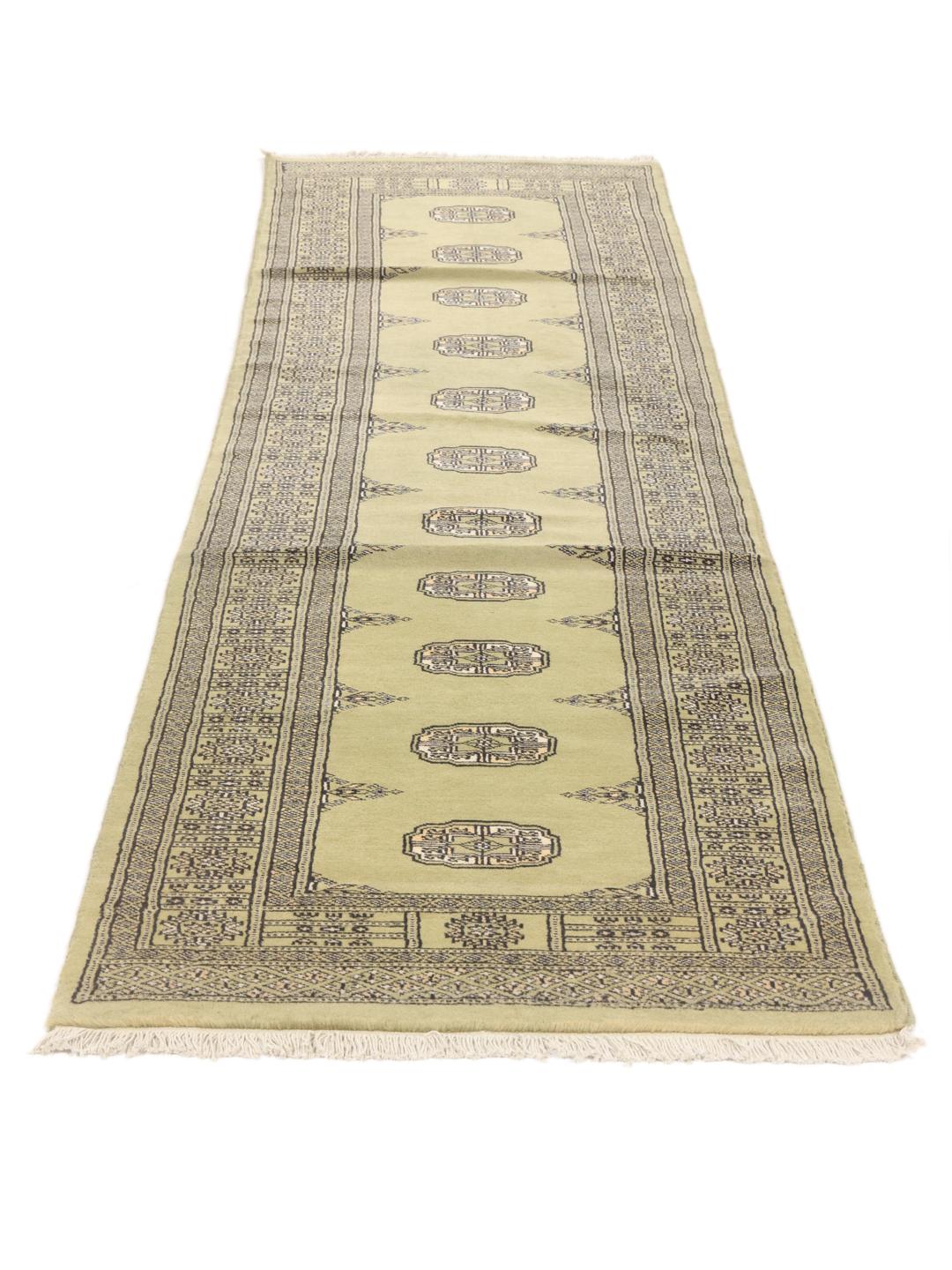
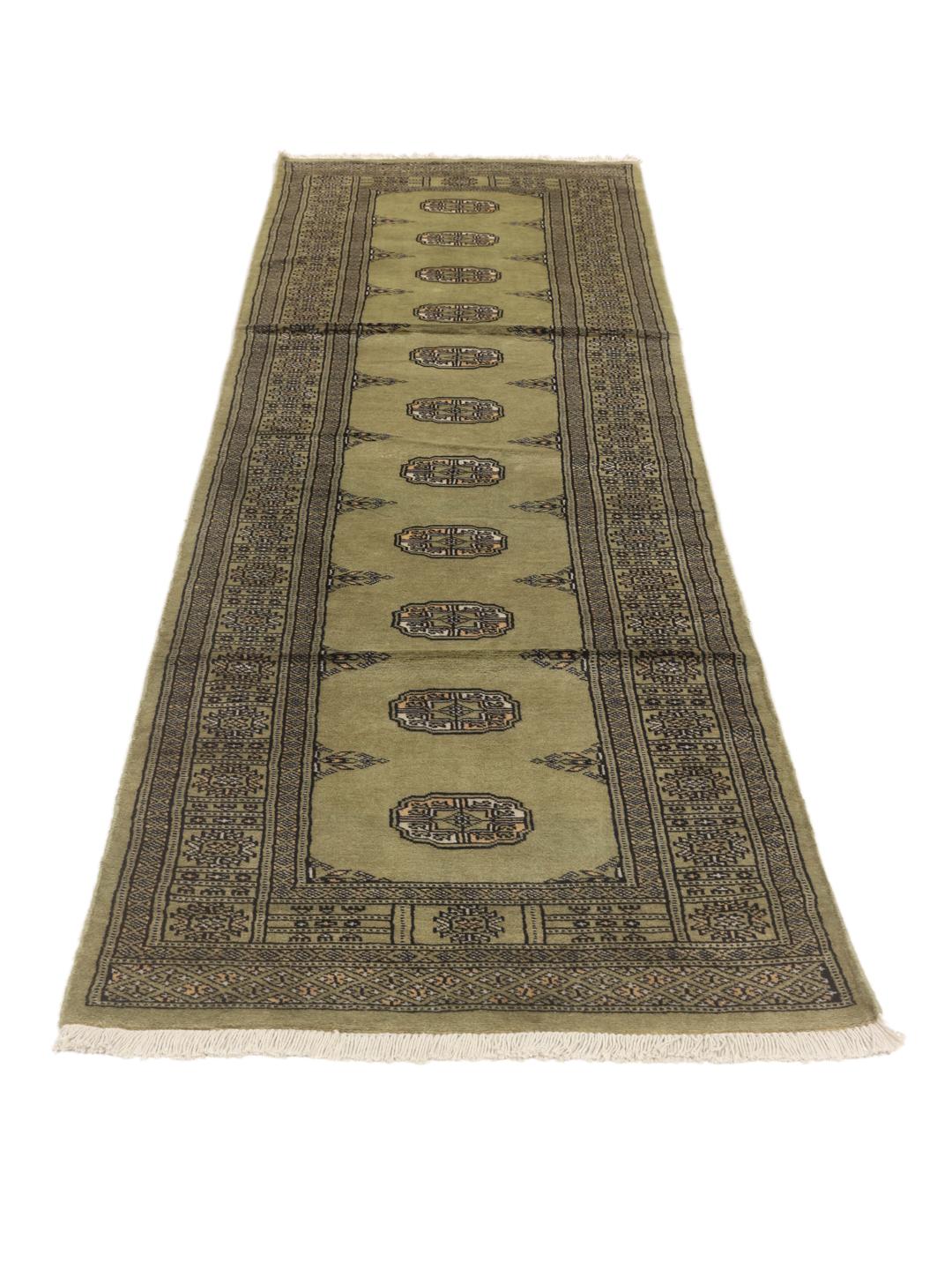
The Bokhara rug tradition is deeply rooted in the history of Central Asian weaving, taking its name from the historic Silk Road city of Bukhara. While its origins lie in the nomadic cultures of the steppes, the finest examples of these rugs have been produced in Pakistan for generations, where artisans have refined the style to reach new heights of technical excellence.
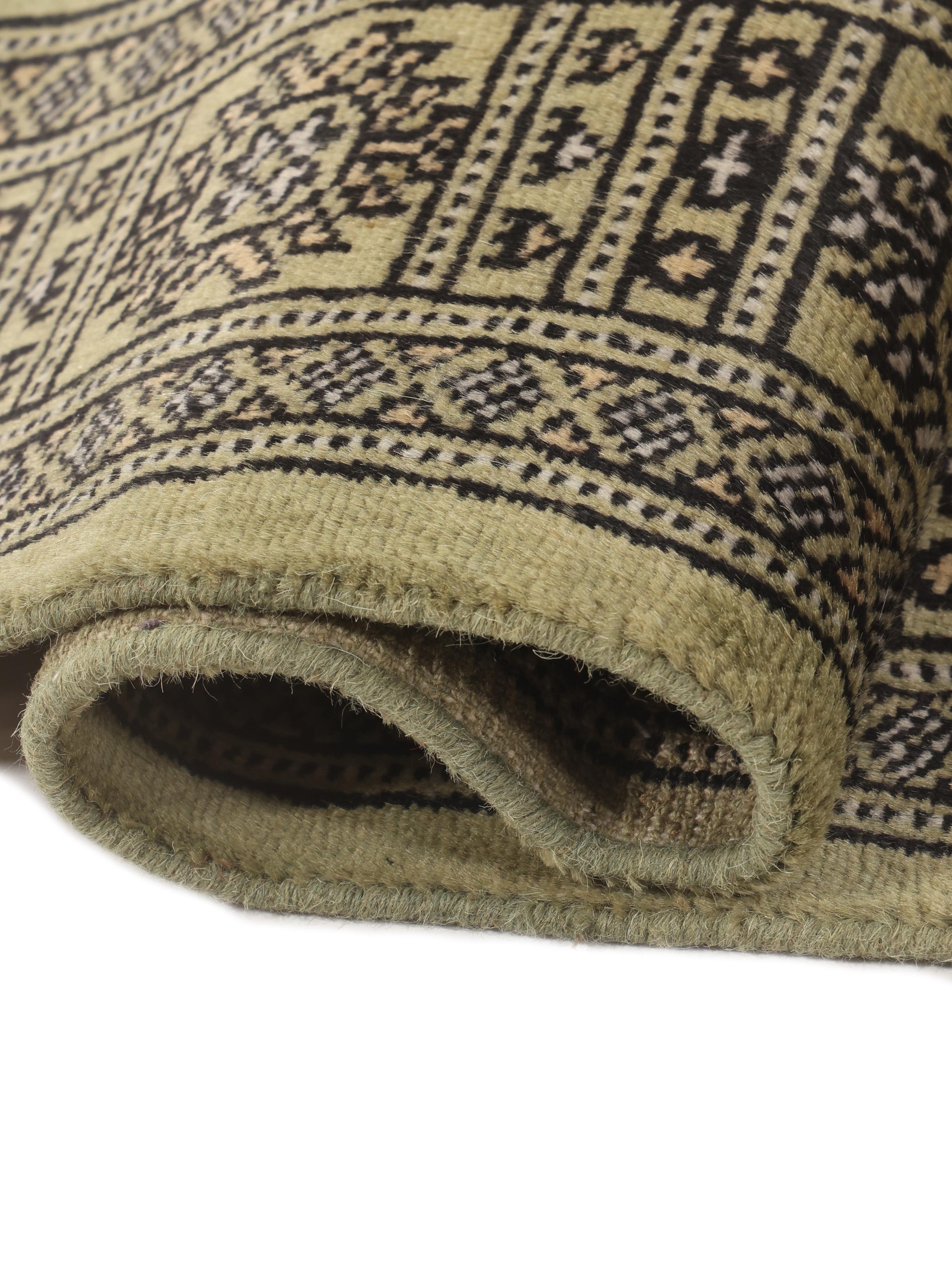
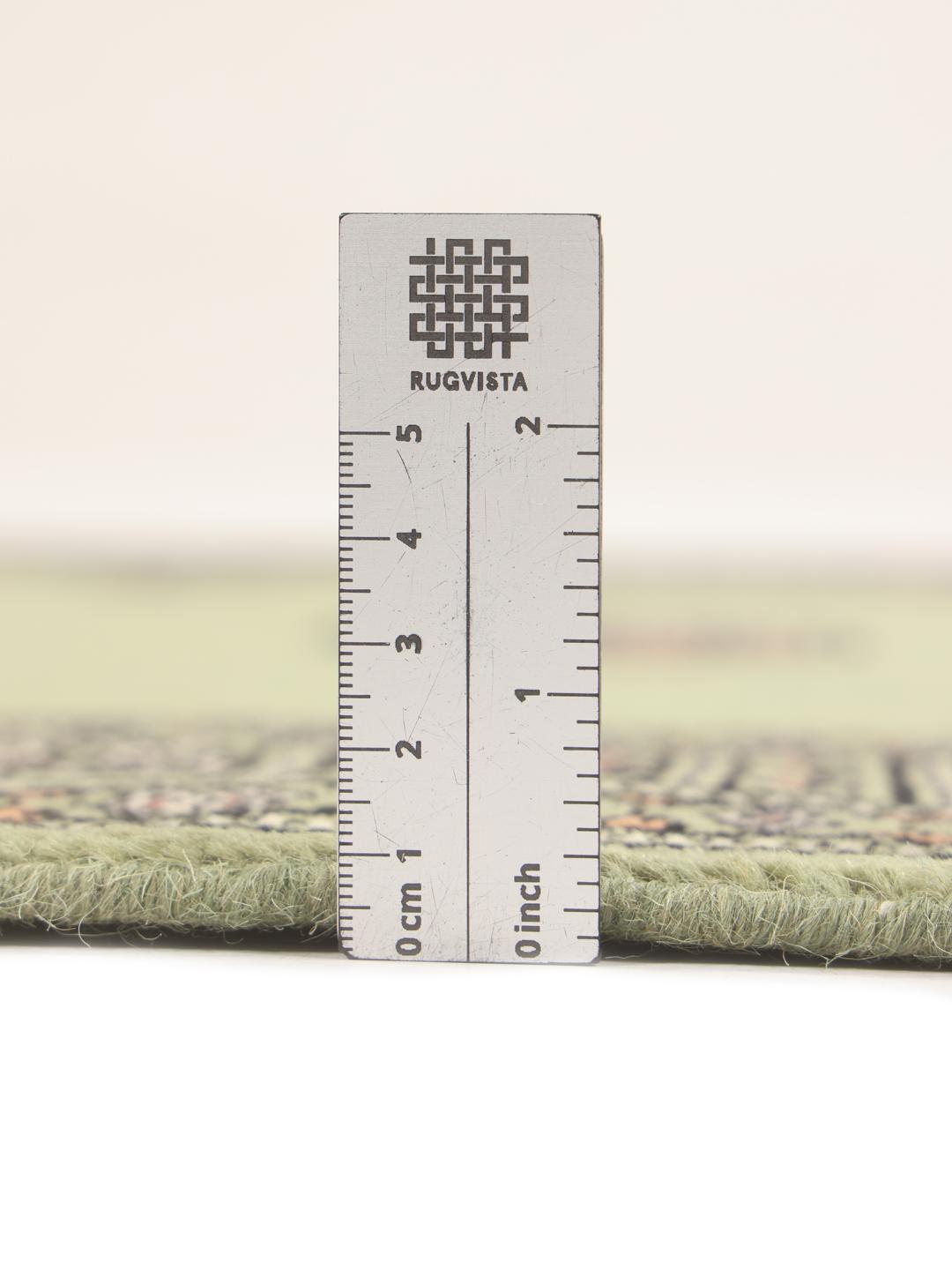
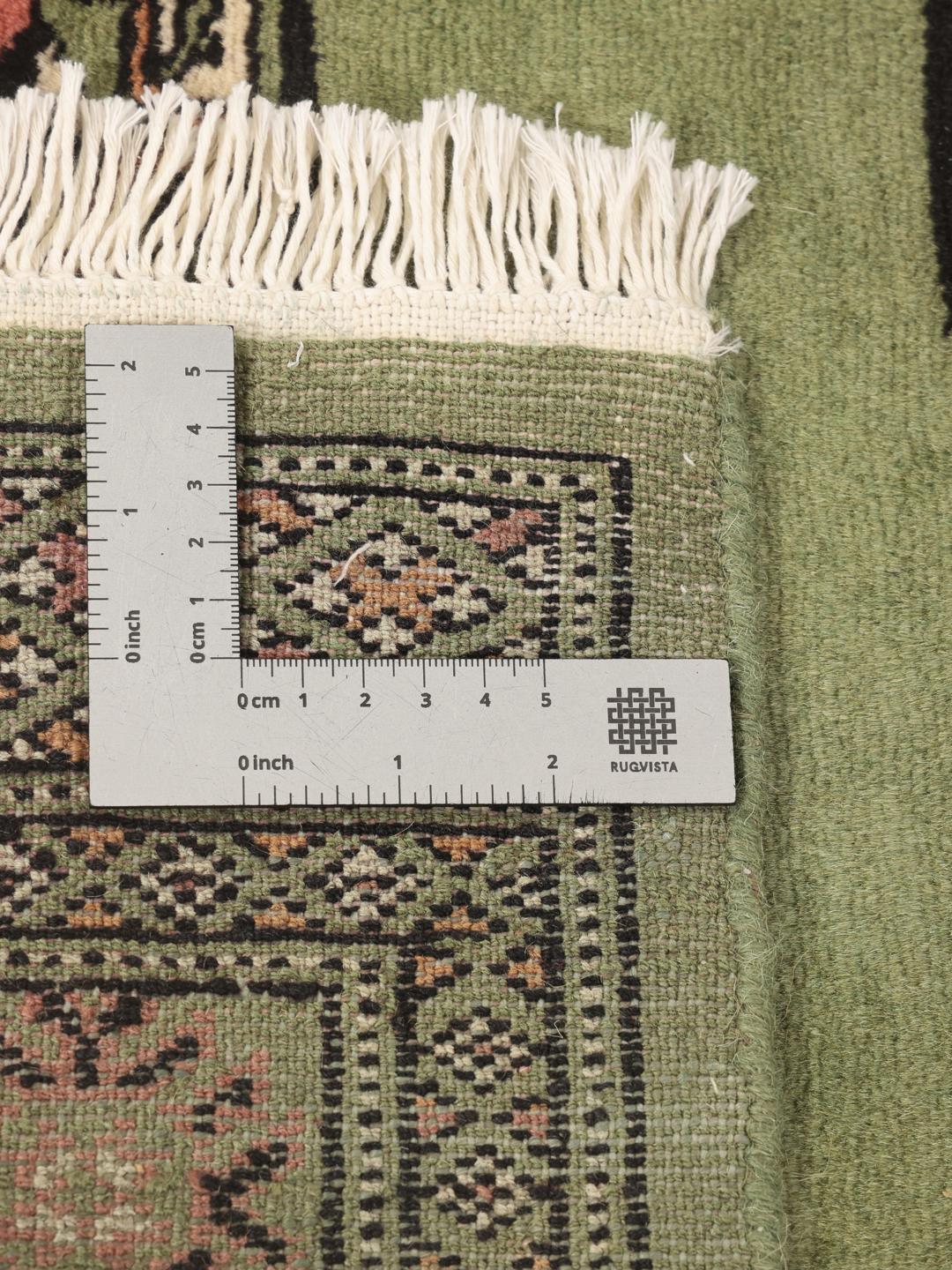
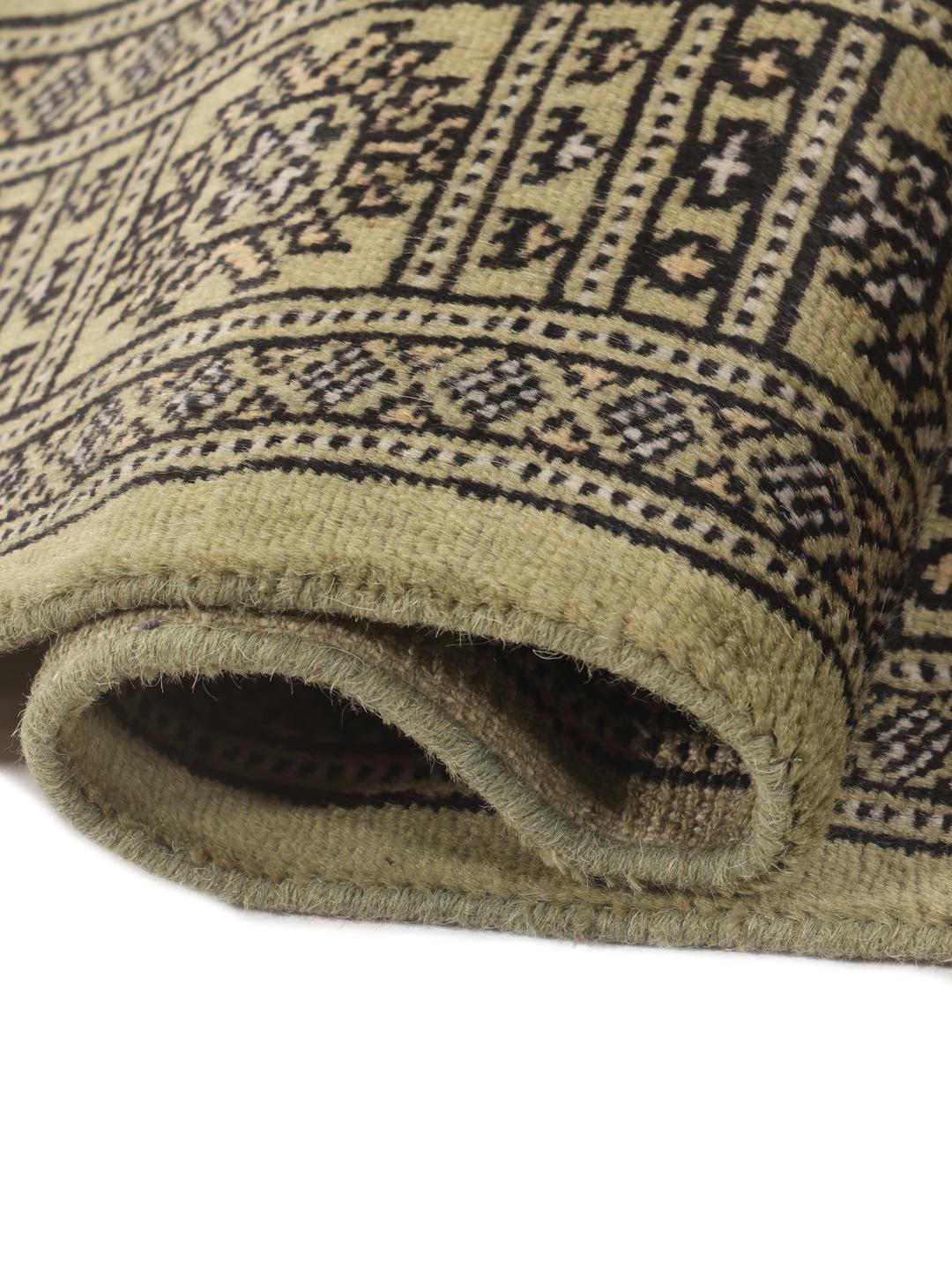
The term 2ply refers to the construction of the wool yarn, where two strands are twisted together before being knotted. This method is vital for creating a pile that is not only denser and more lustrous but also significantly more durable. It ensures that the rug remains resilient over time, standing up to the demands of daily life while retaining its soft, inviting texture.
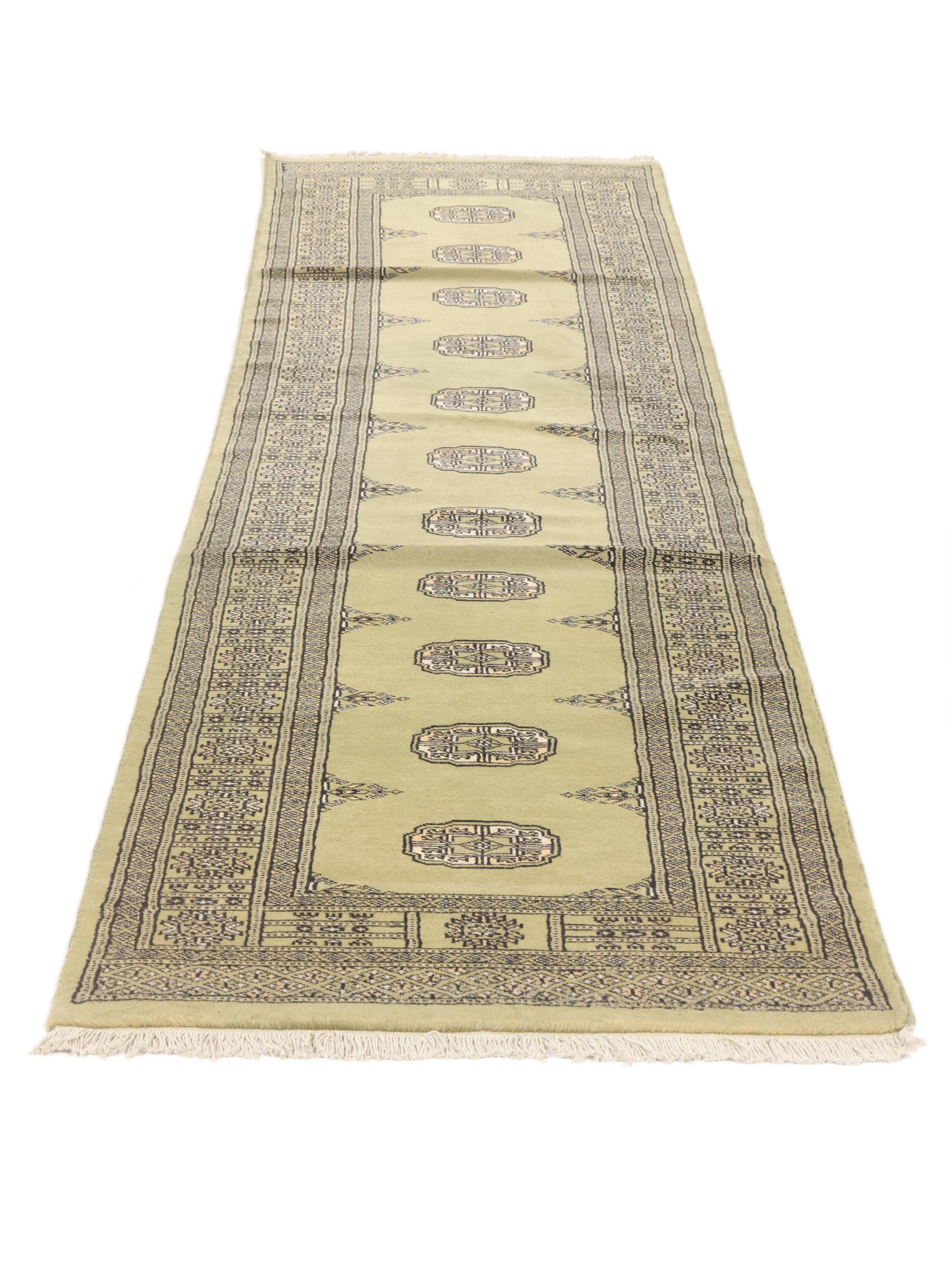
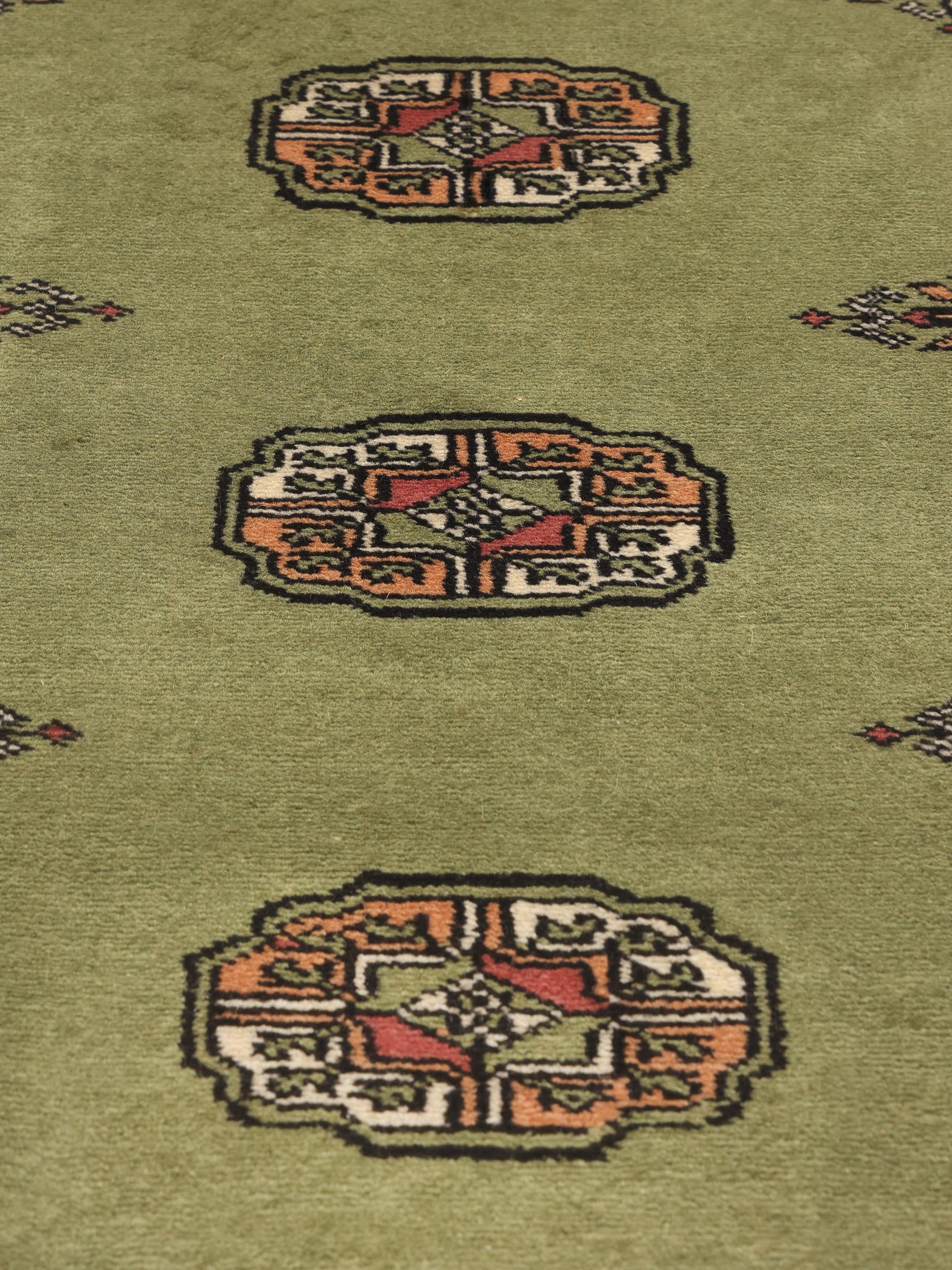
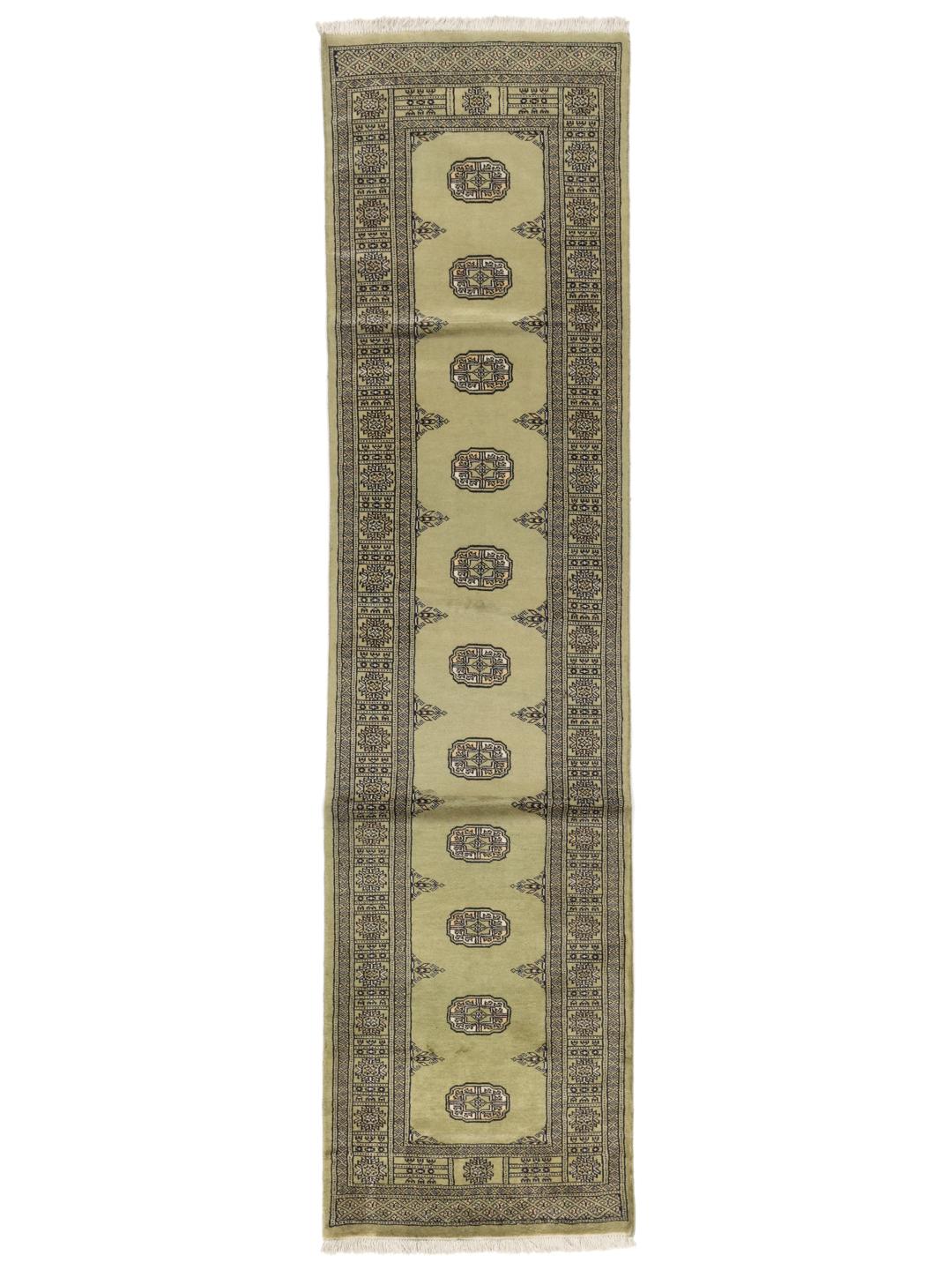
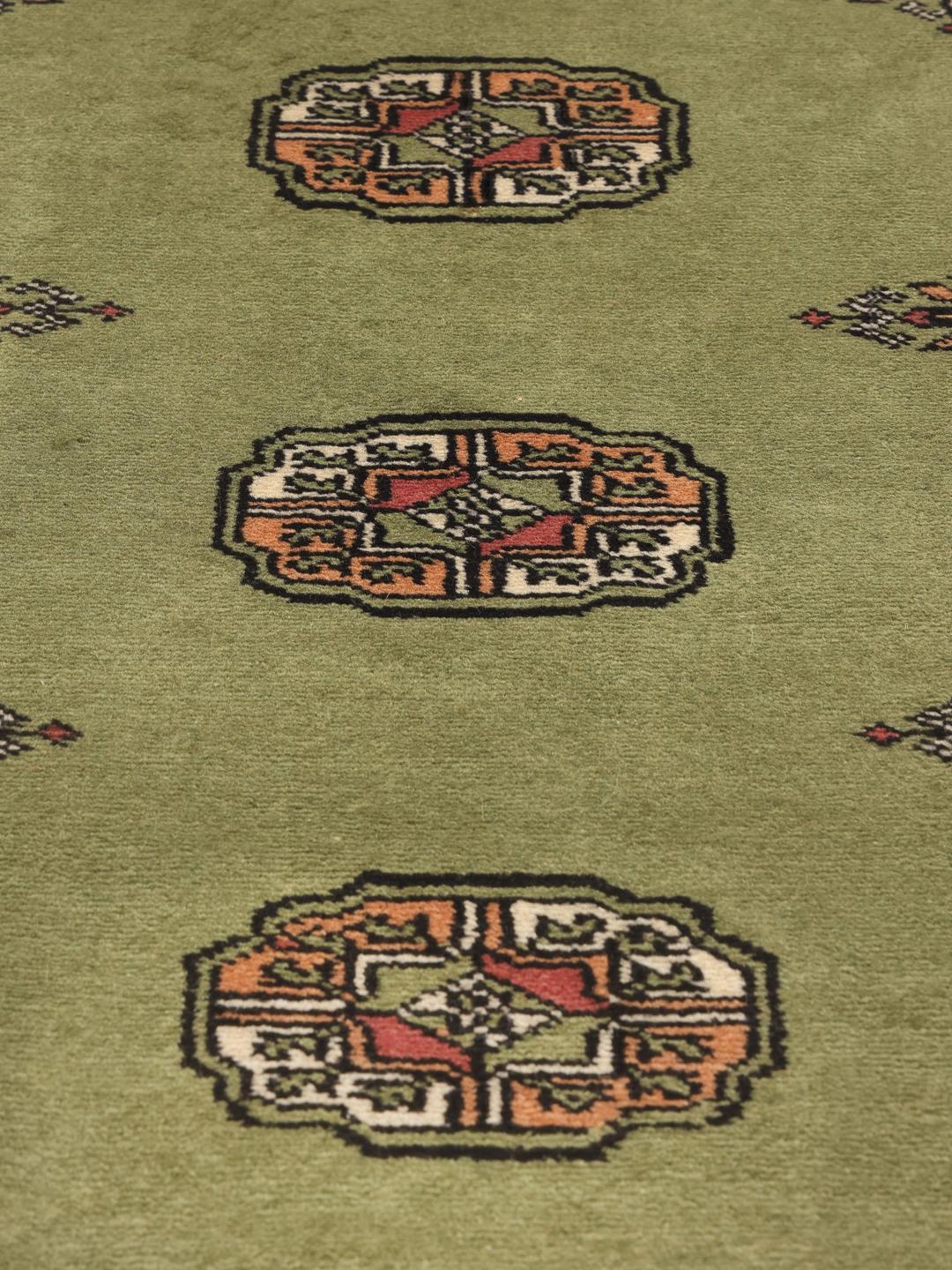
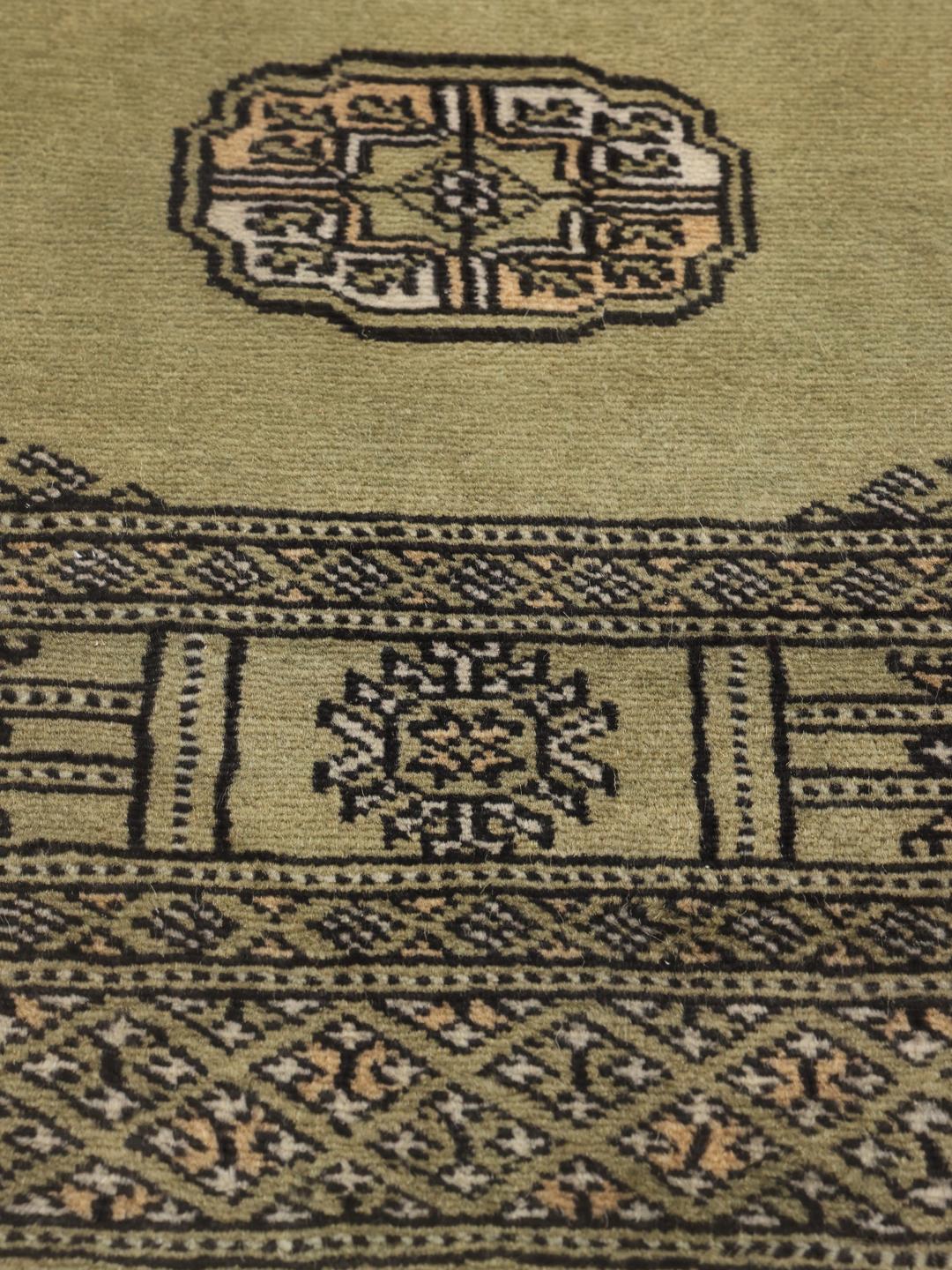
Visually, these rugs are defined by their iconic gul motifs, which are repeating, octagonal medallions that represent traditional tribal symbols. While red is the most famous colour for this style, this particular runner in a soft light green is a beautiful, more contemporary variation that retains the classic, formal symmetry and structured borders that define the Bokhara tradition.
Owning a hand-knotted runner from this tradition connects your home to a long lineage of craft and skill. These rugs are highly valued by collectors and homeowners alike not just for their aesthetic appeal, but because they represent a commitment to slow, intentional production that honours the heritage of the weaver's craft.