Bokhara rugs take their name from the ancient Silk Road city of Bukhara in Central Asia, a historical hub for trade and textile artistry. While the design lineage traces back to nomadic tribes of the region, the finest contemporary examples are expertly crafted in Pakistan. This evolution reflects the migration of weaving traditions across borders, where classic techniques have been preserved and refined over generations.
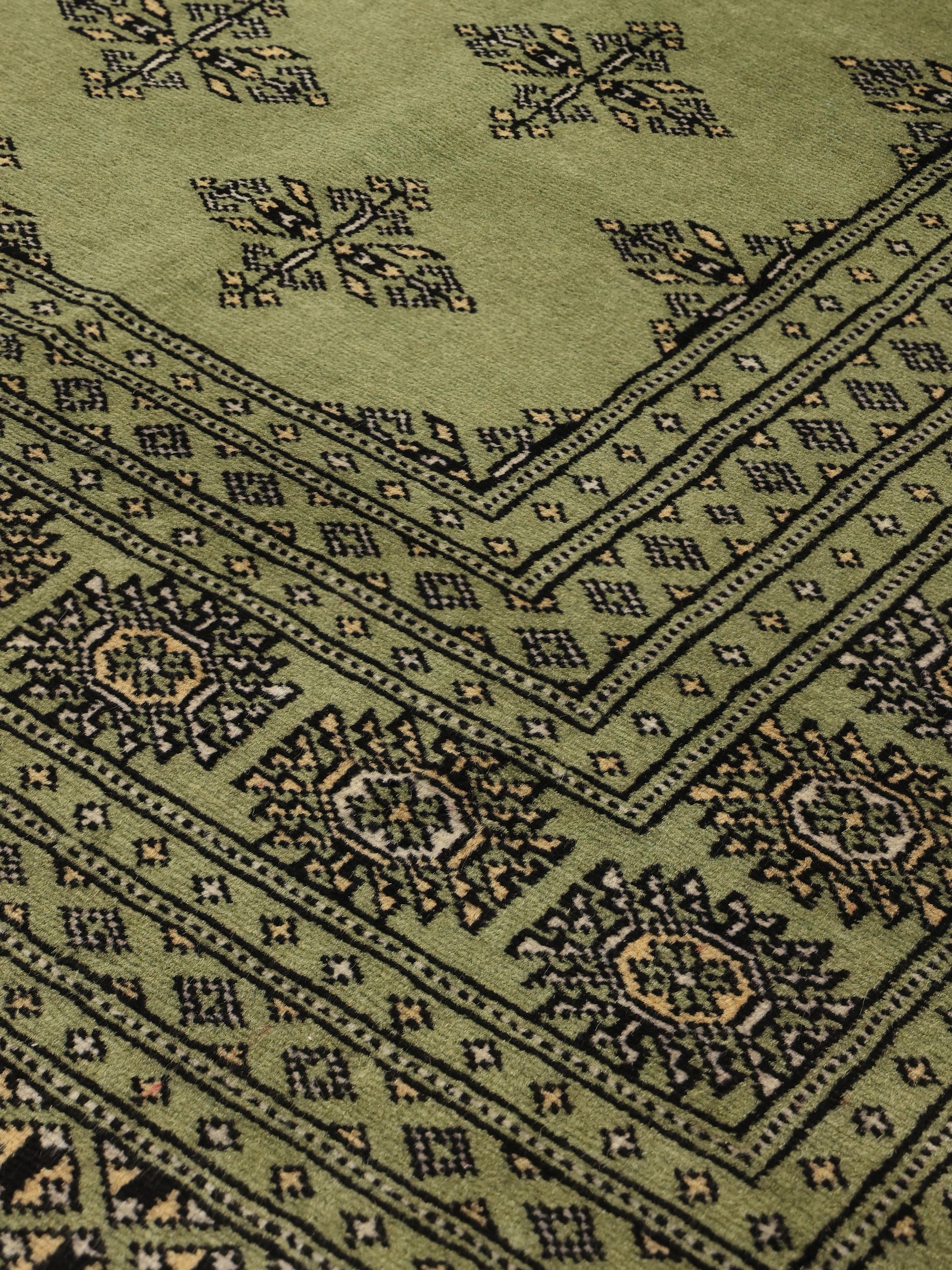
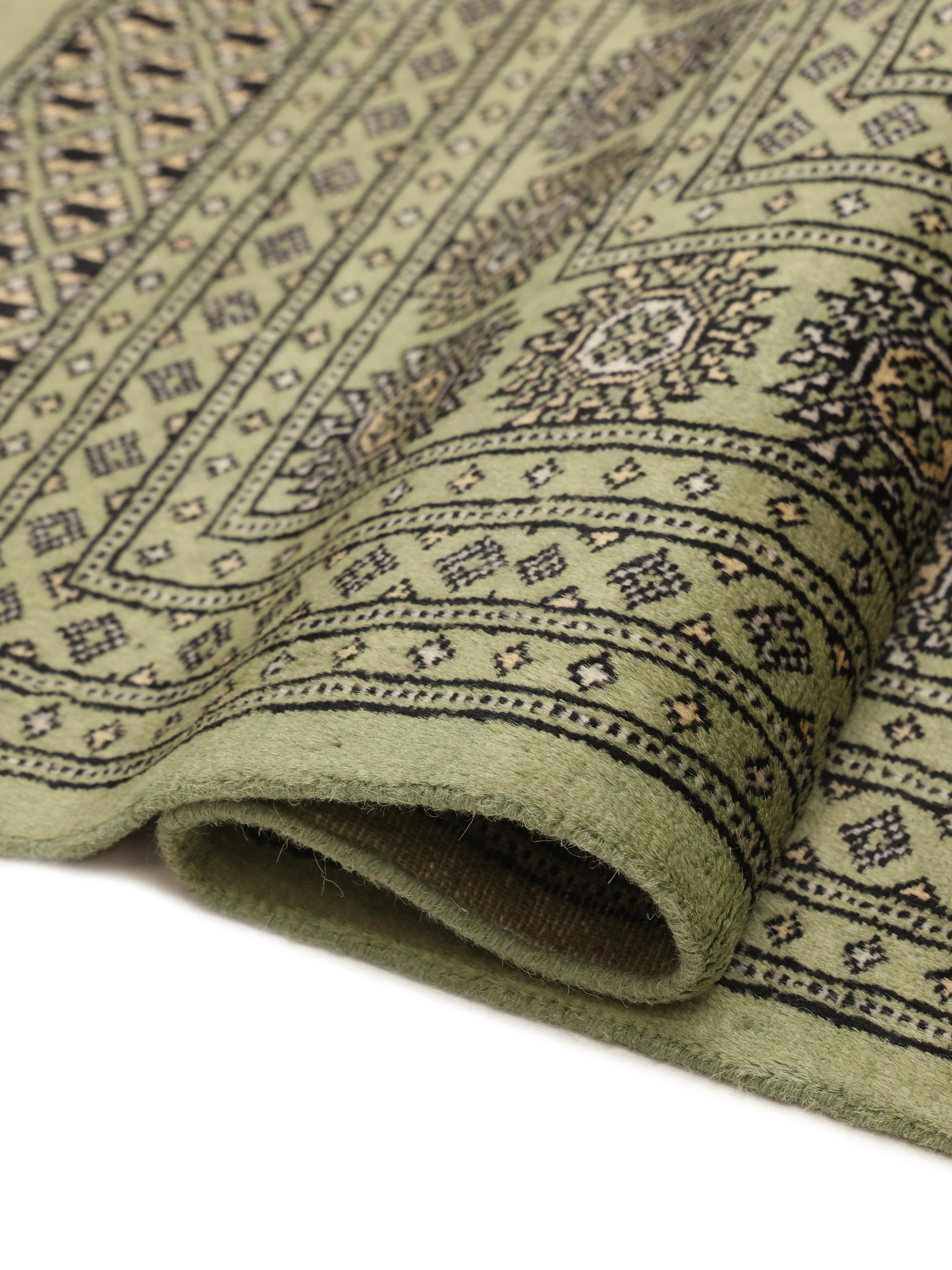
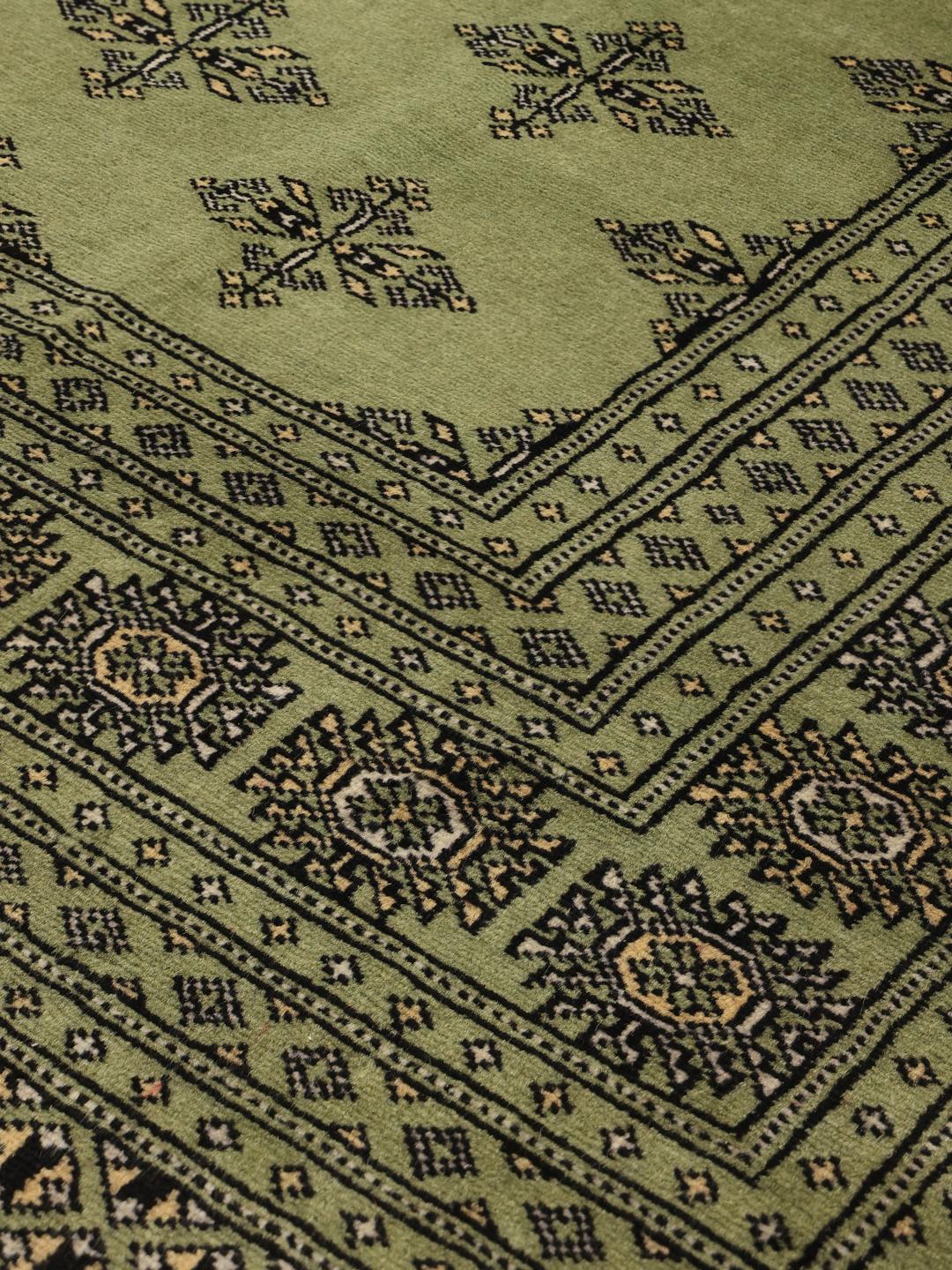
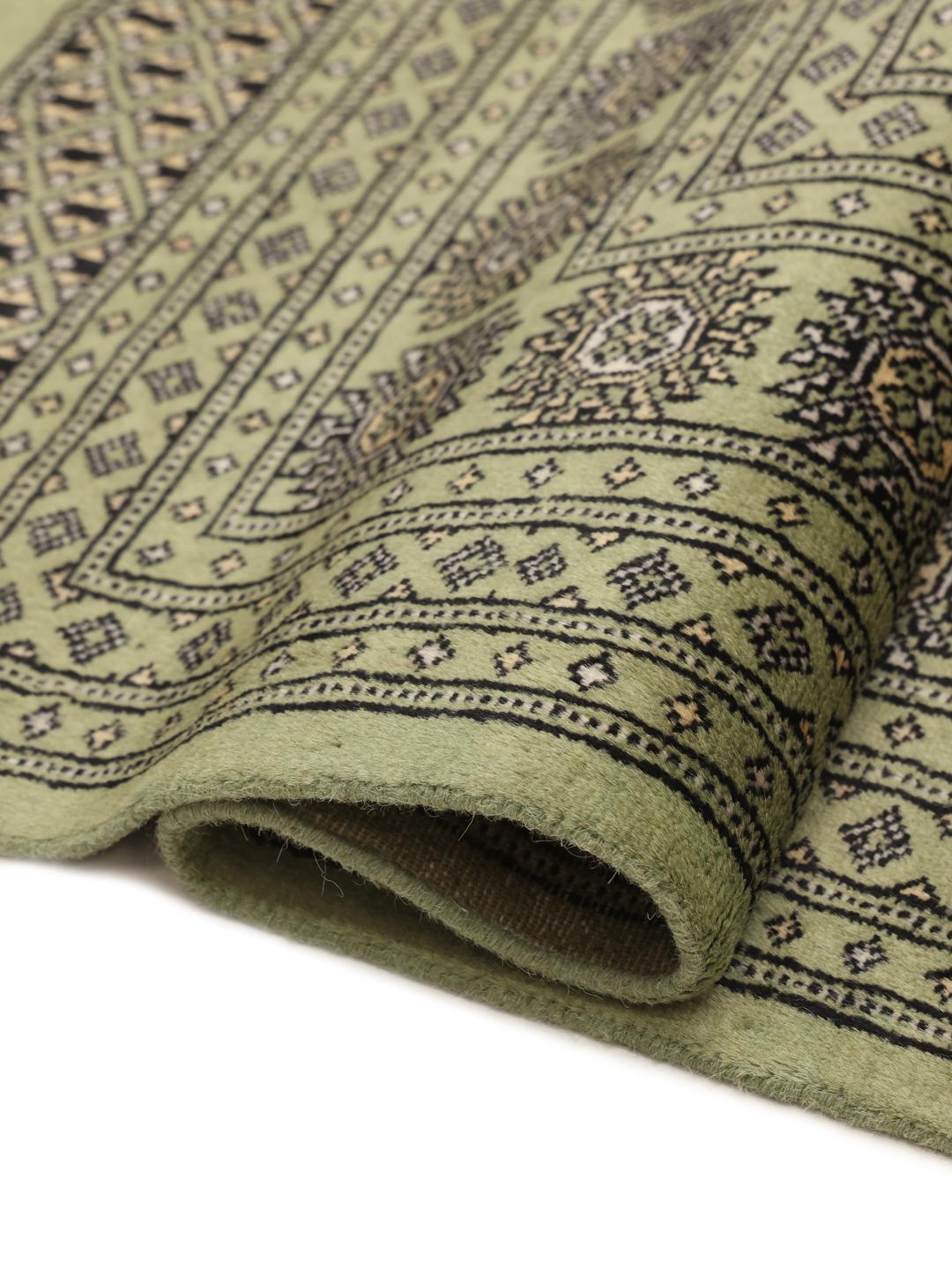
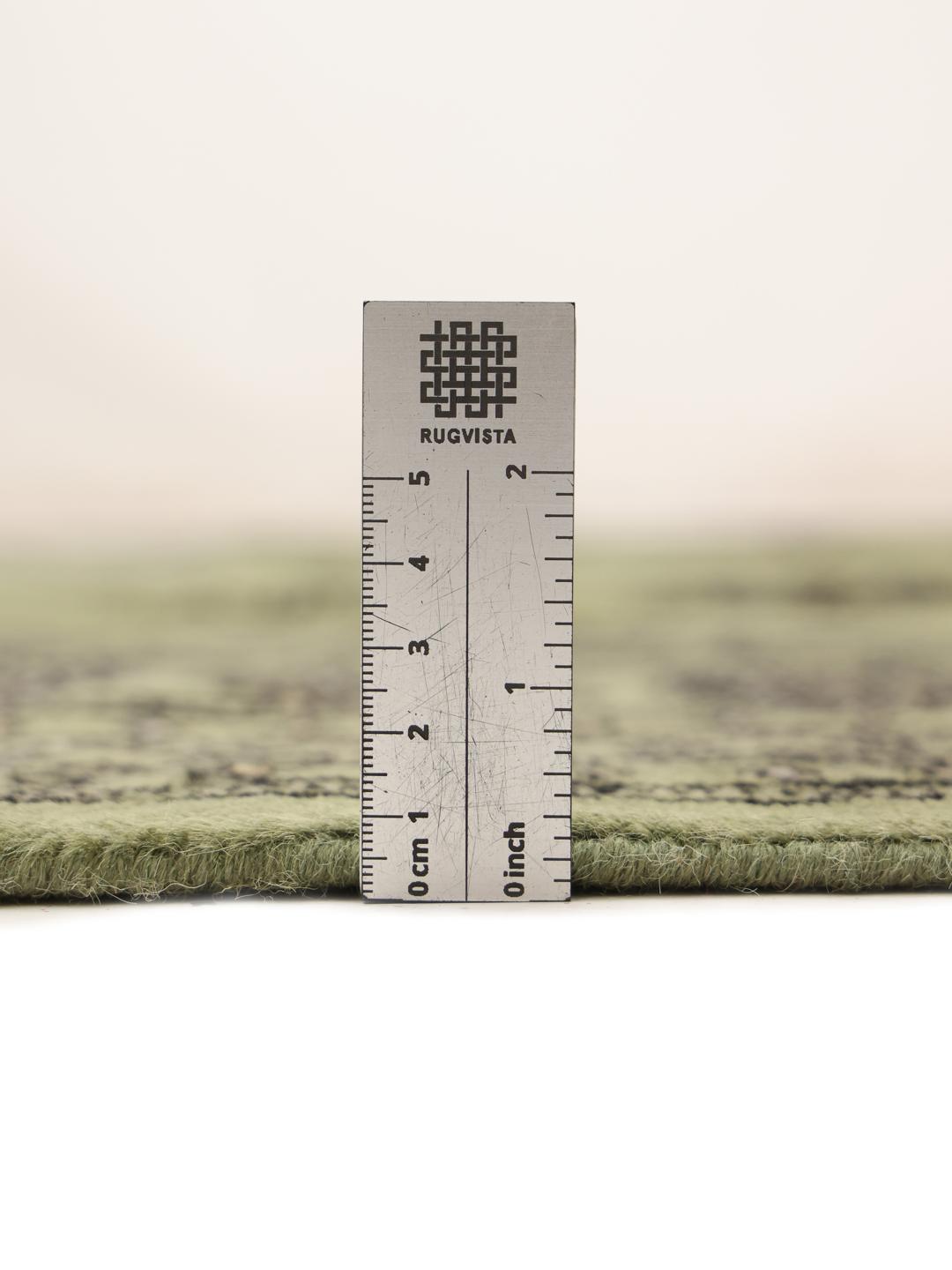
The term 2ply refers to the construction of the pile, where two strands of wool are twisted together before being knotted. This technique is significant because it produces a denser, more lustrous, and longer-lasting pile compared to single-ply construction. It allows the rug to retain its shape and soft texture even in high-traffic areas, making it a practical choice for a busy home.
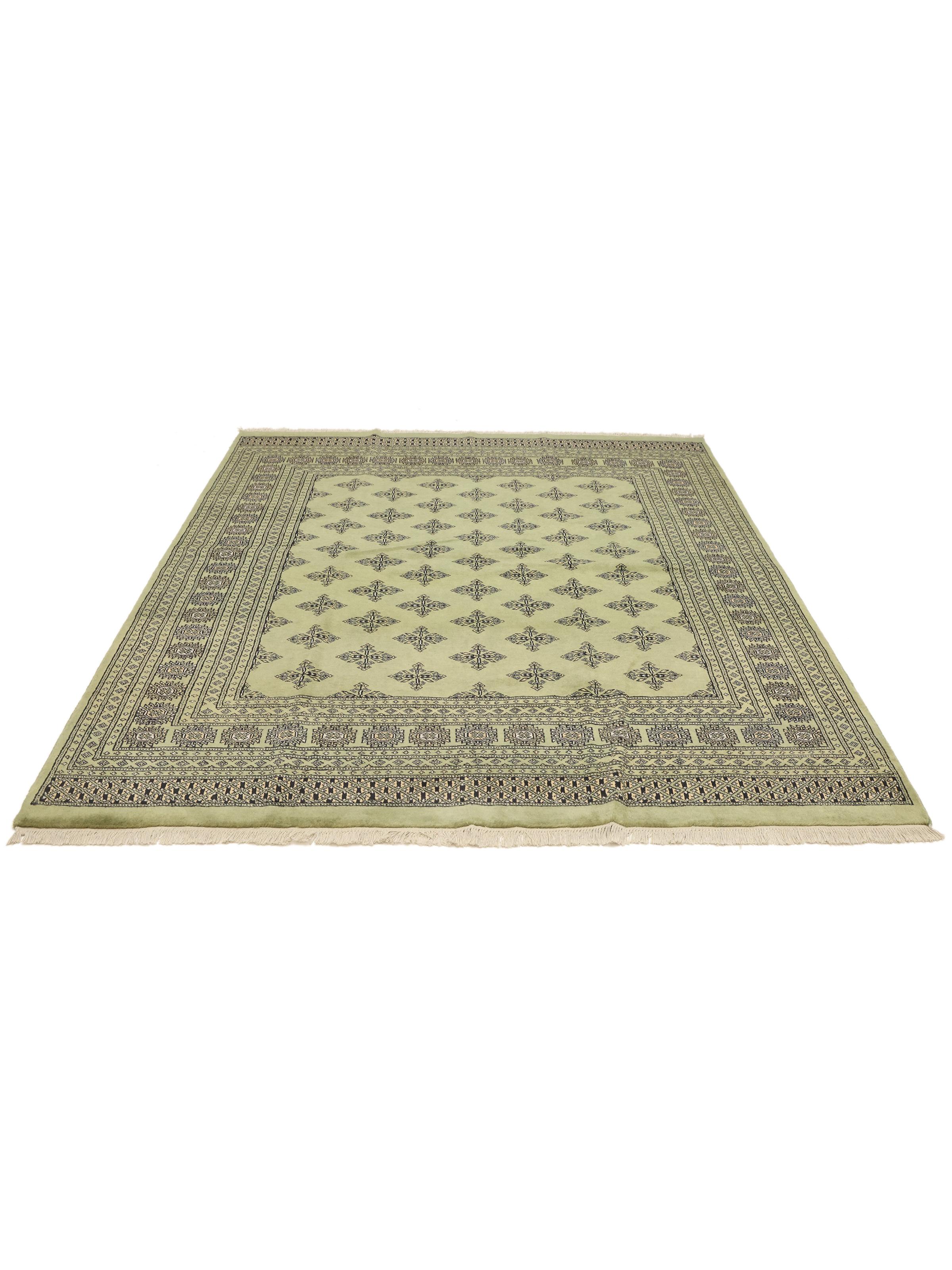
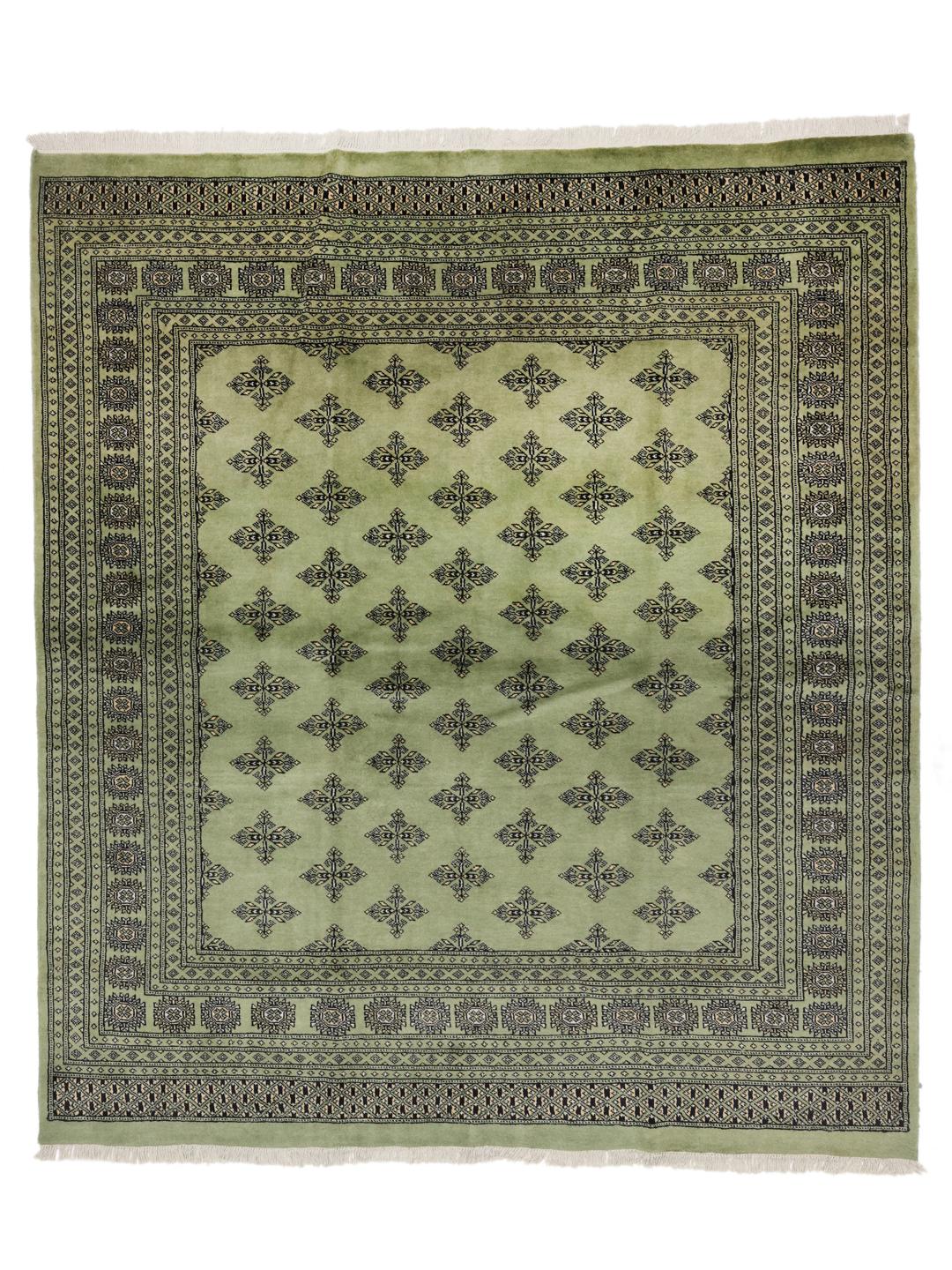
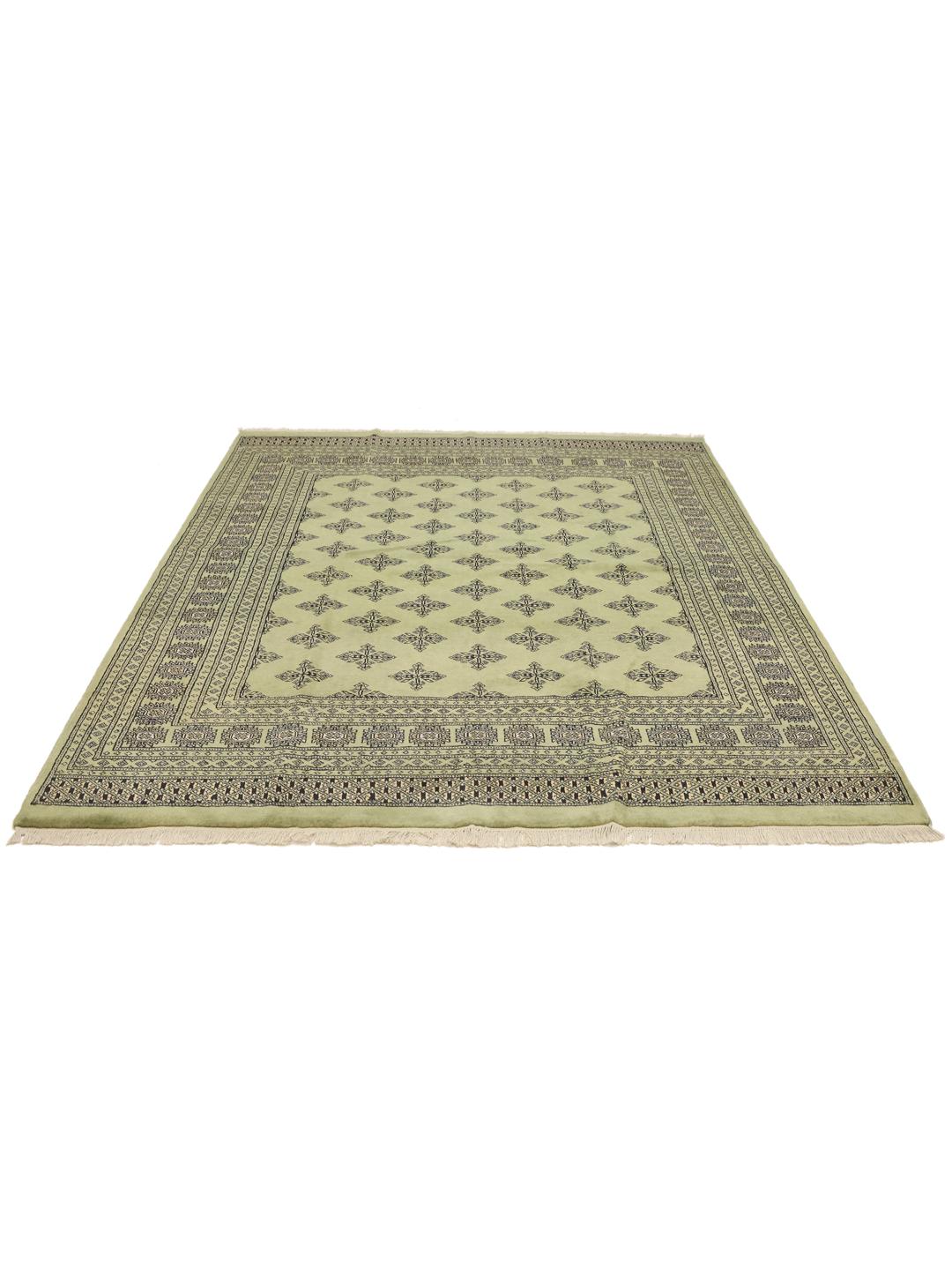
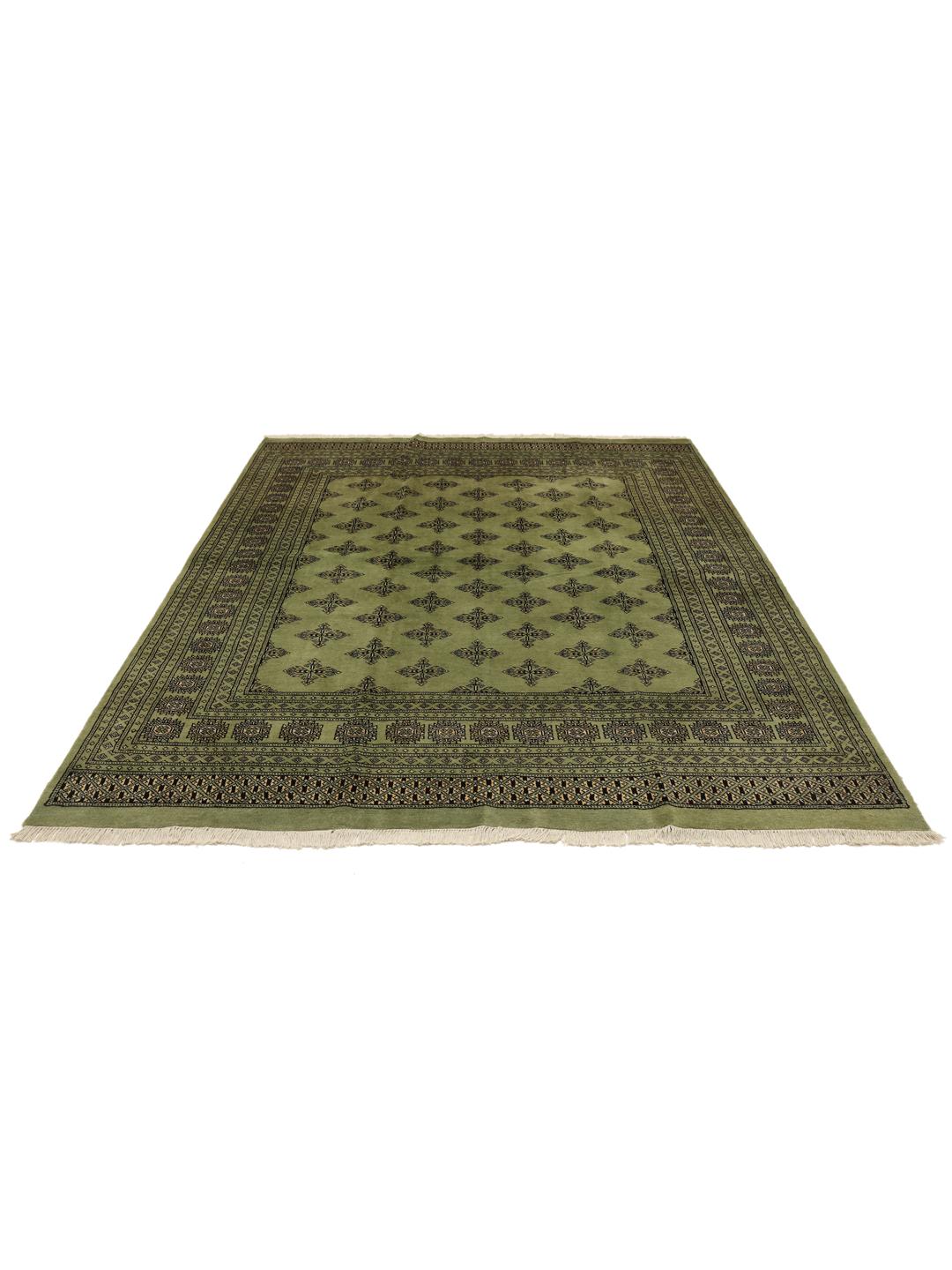
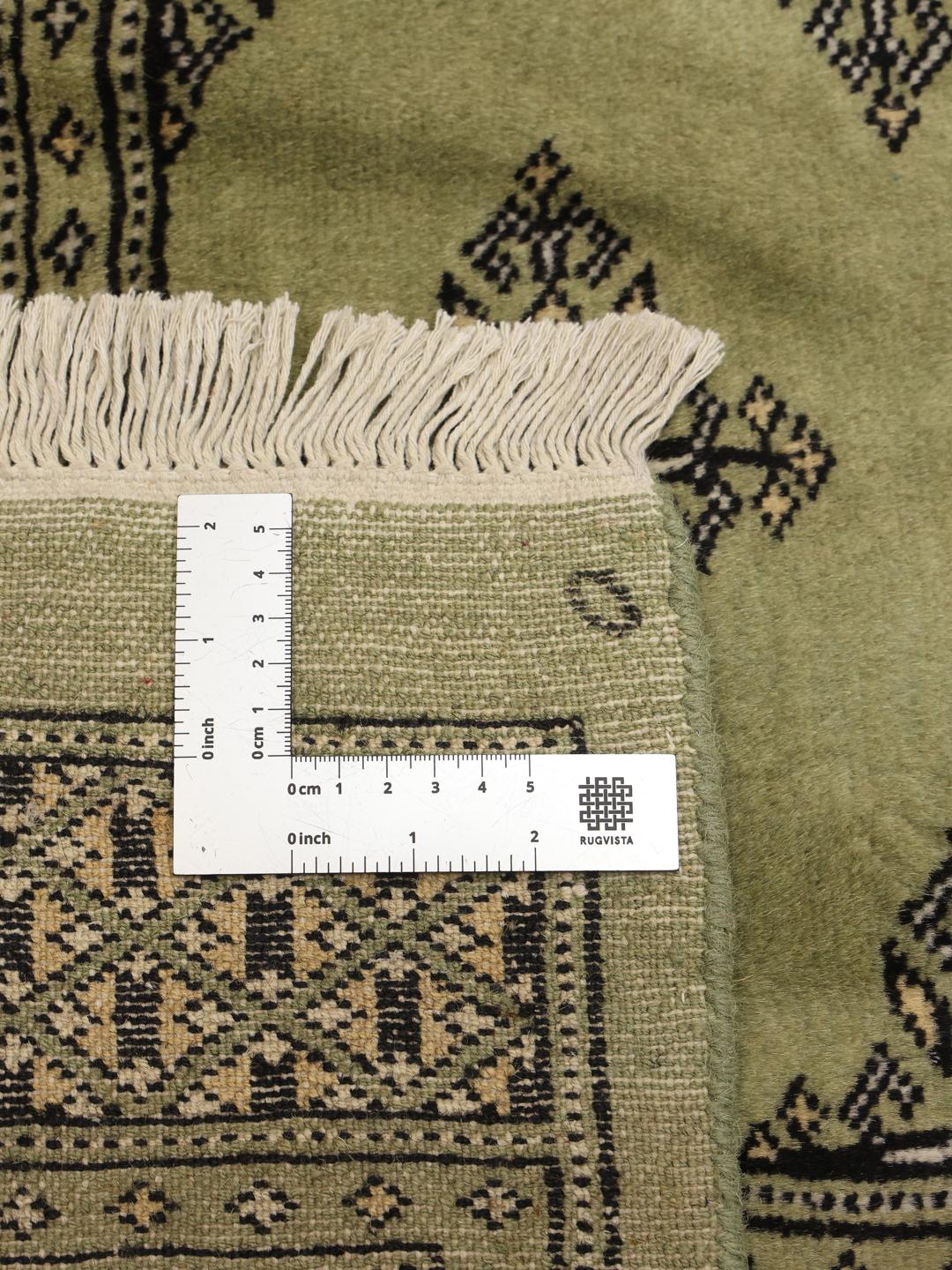
Signature design elements of the Bokhara style include a field filled with repeating gul motifs, which are often octagonal or diamond-shaped medallions arranged in precise rows. These are typically enclosed by a formal, multi-layered border that frames the central design. This particular piece stands out for its serene green field, a departure from the traditional deep reds, which lends the rug a contemporary and airy aesthetic.
Rugs from this tradition are highly valued by collectors for their consistency, skill, and cultural weight. Owning a piece like this means connecting with a long history of human creativity, where every knot tells a story of patience and tradition. It is not merely a floor covering, but a durable investment in heritage that brings a layer of depth and history to any room.