Bokhara rugs take their name from the ancient Silk Road city of Bukhara in Central Asia, a historical hub for trade and textile artistry. While the design roots are deeply embedded in the nomadic traditions of the region, the finest examples of this style today are predominantly woven in Pakistan, where artisans have elevated the craft to new levels of precision and consistency.
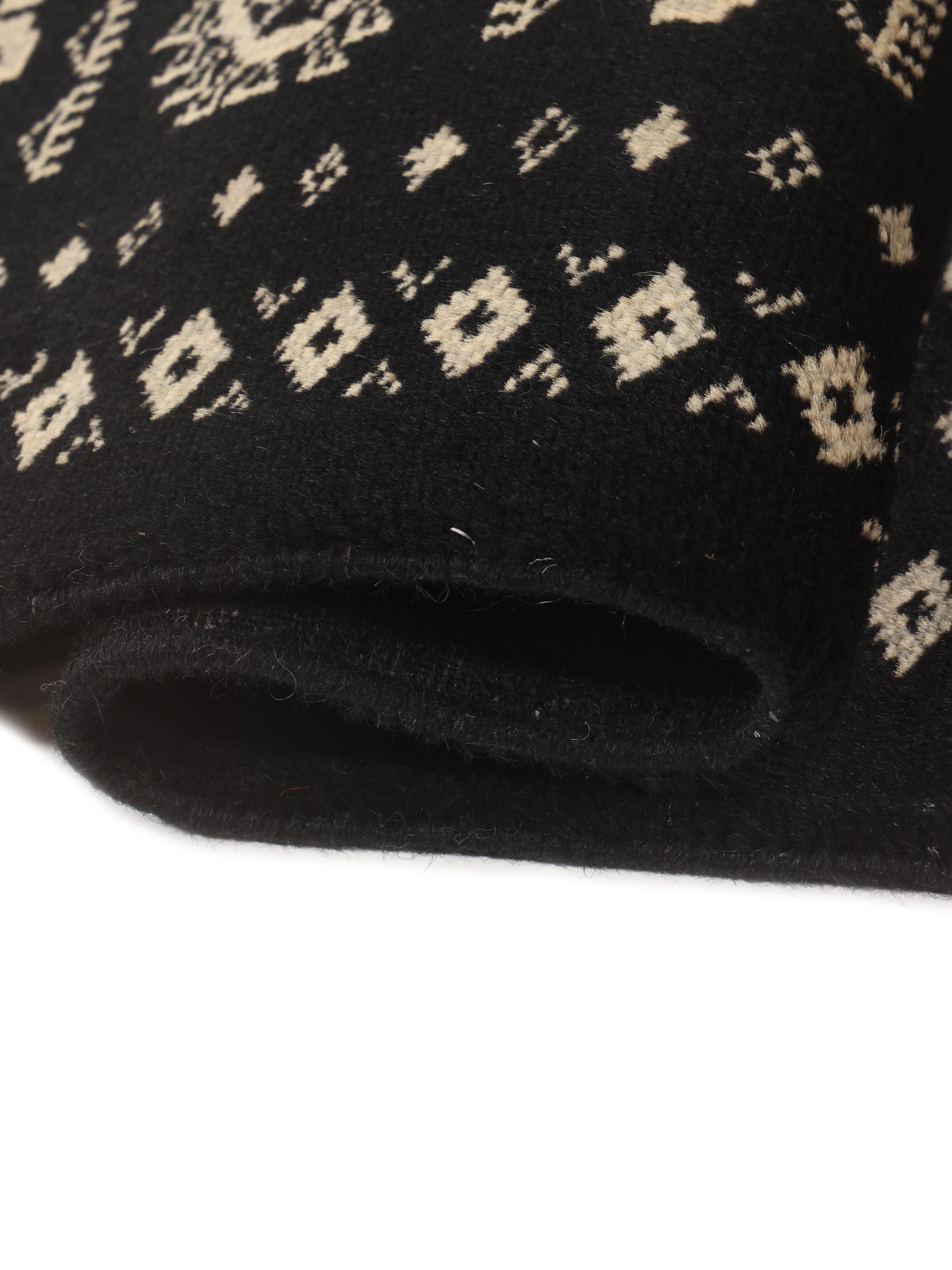
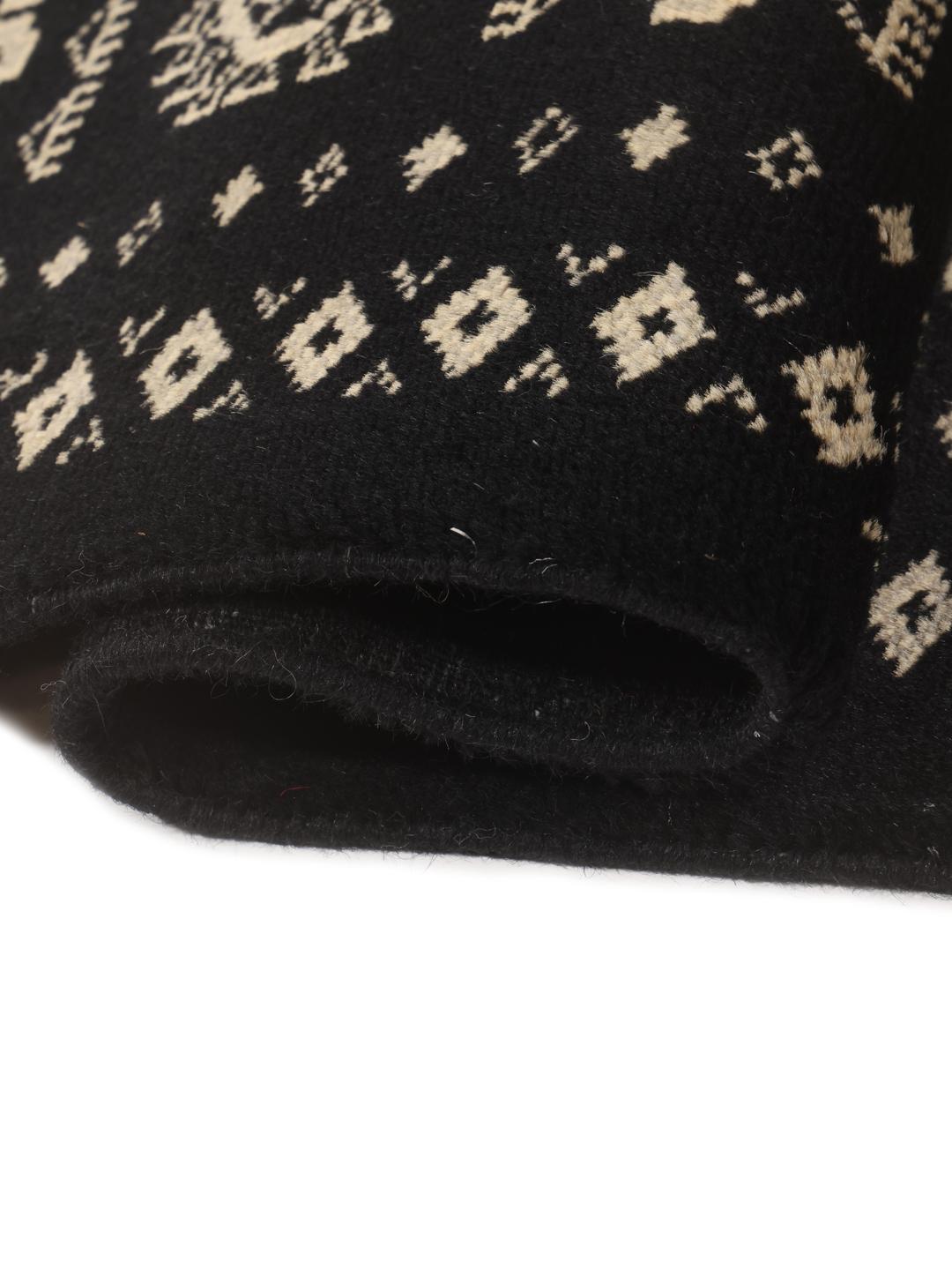
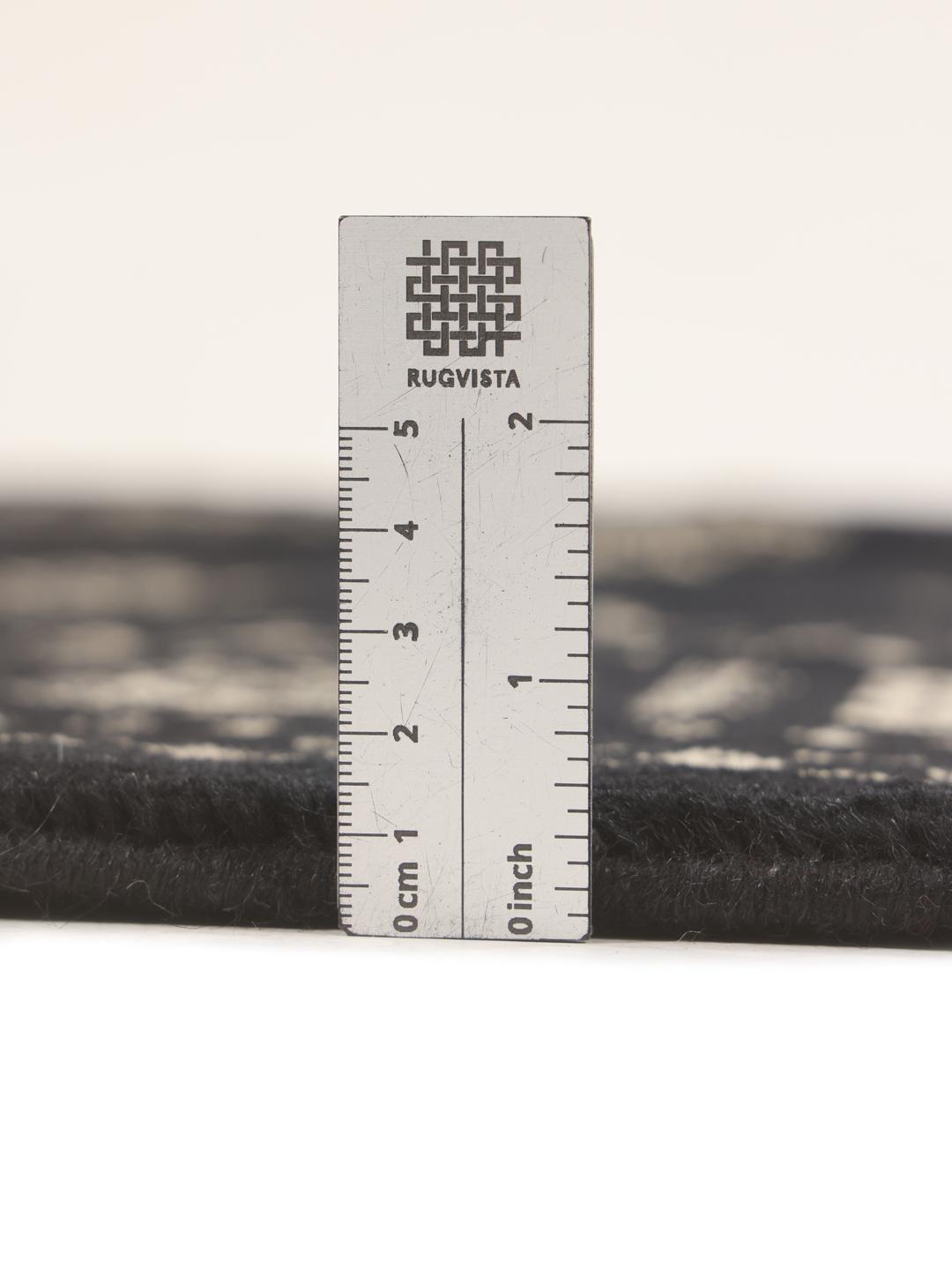
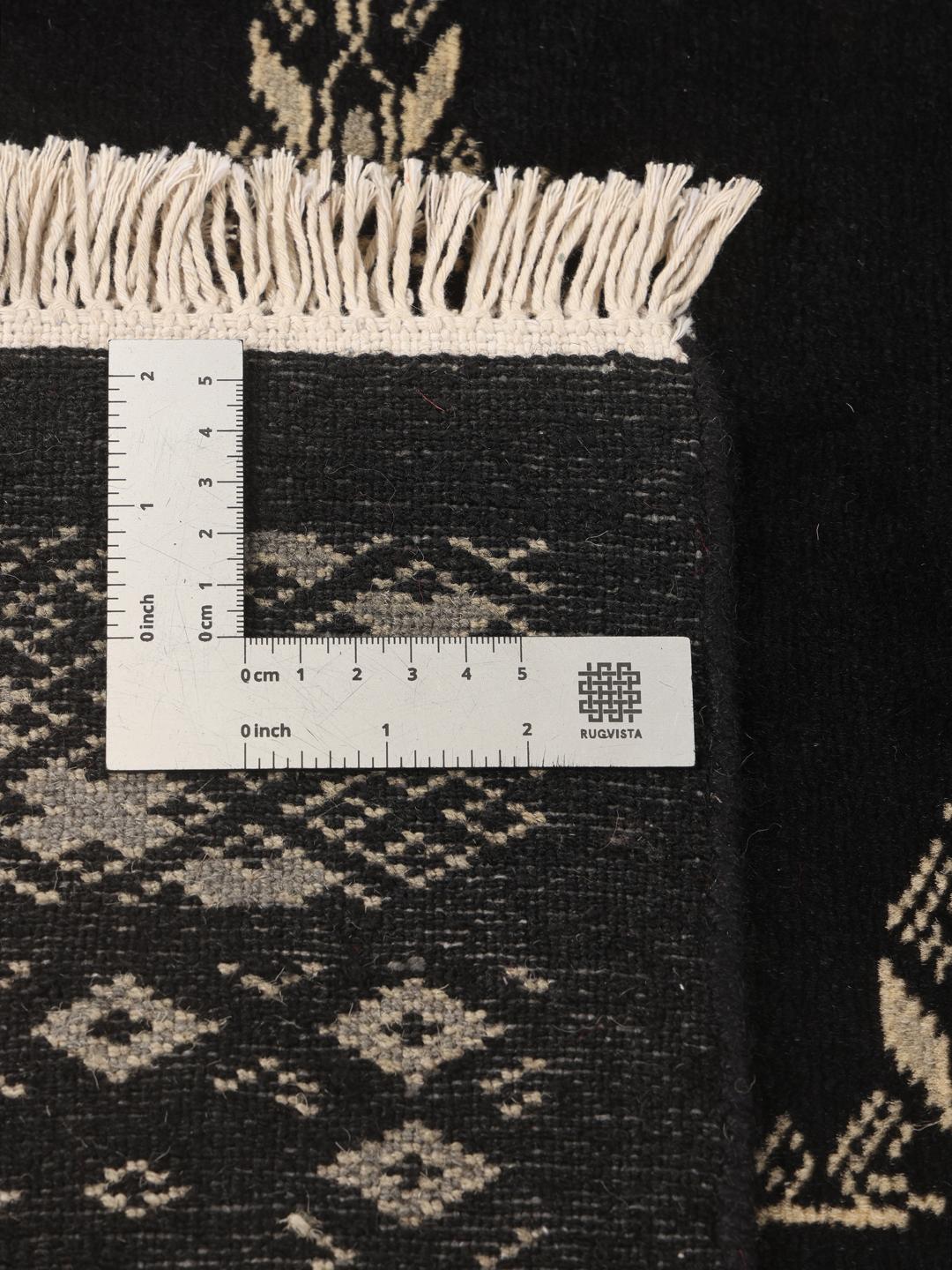
The term 2ply refers to the construction of the wool yarn, where two strands are twisted together before being knotted. This technique is essential for quality, as it produces a more robust, lustrous, and durable pile that resists wear better than single-ply alternatives. It is this specific attention to material preparation that gives these rugs their signature soft, velvety finish.
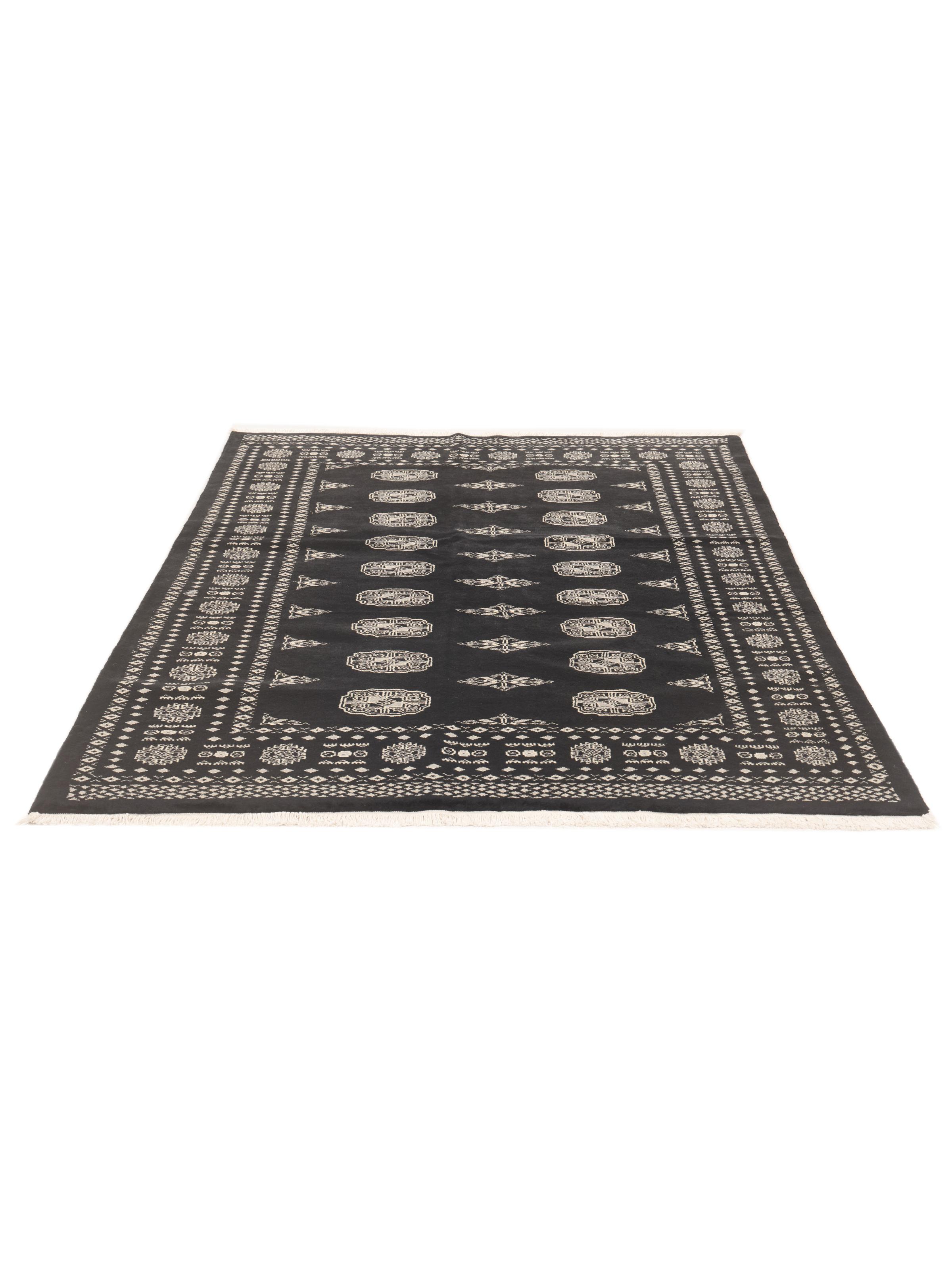
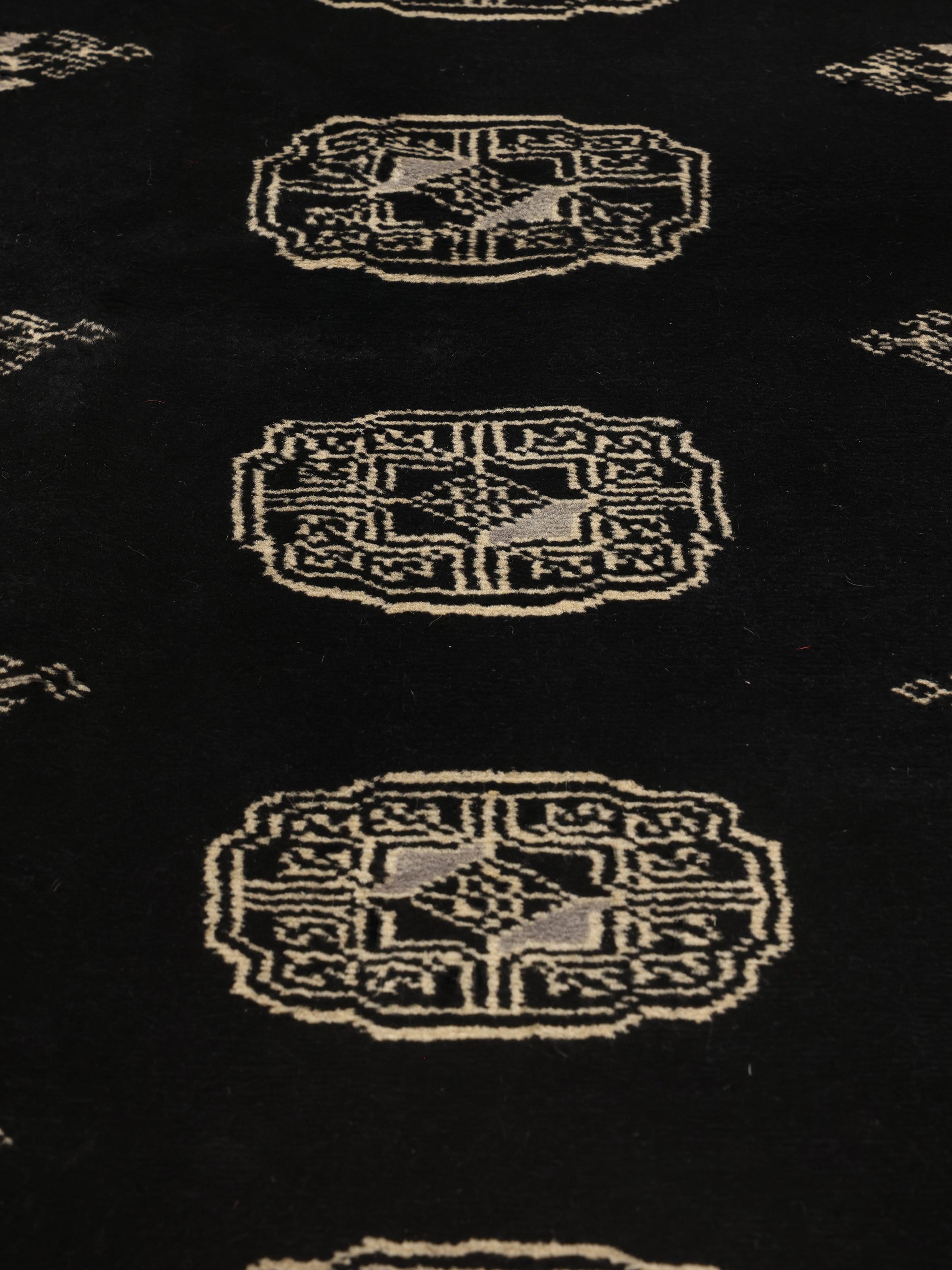
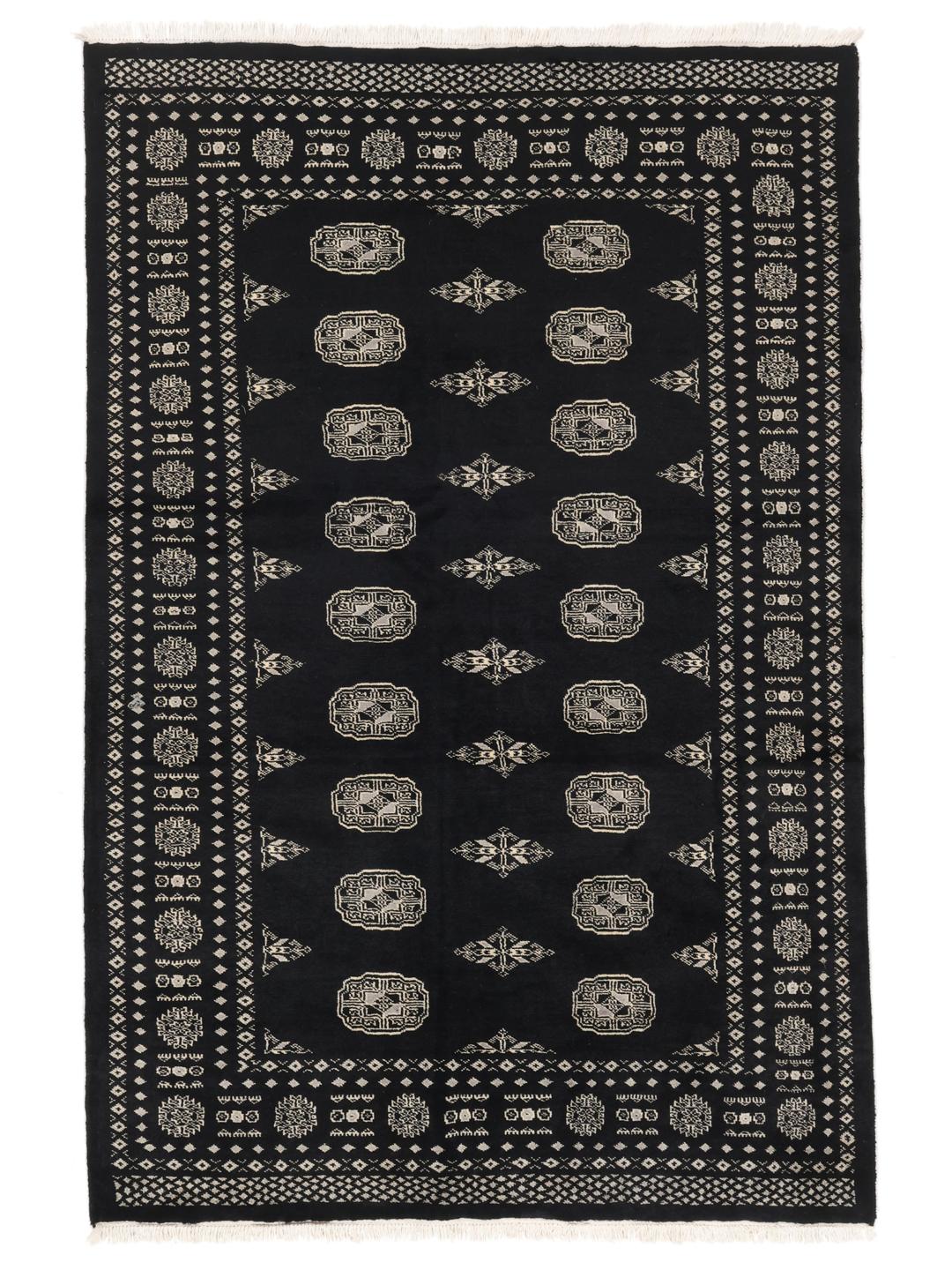
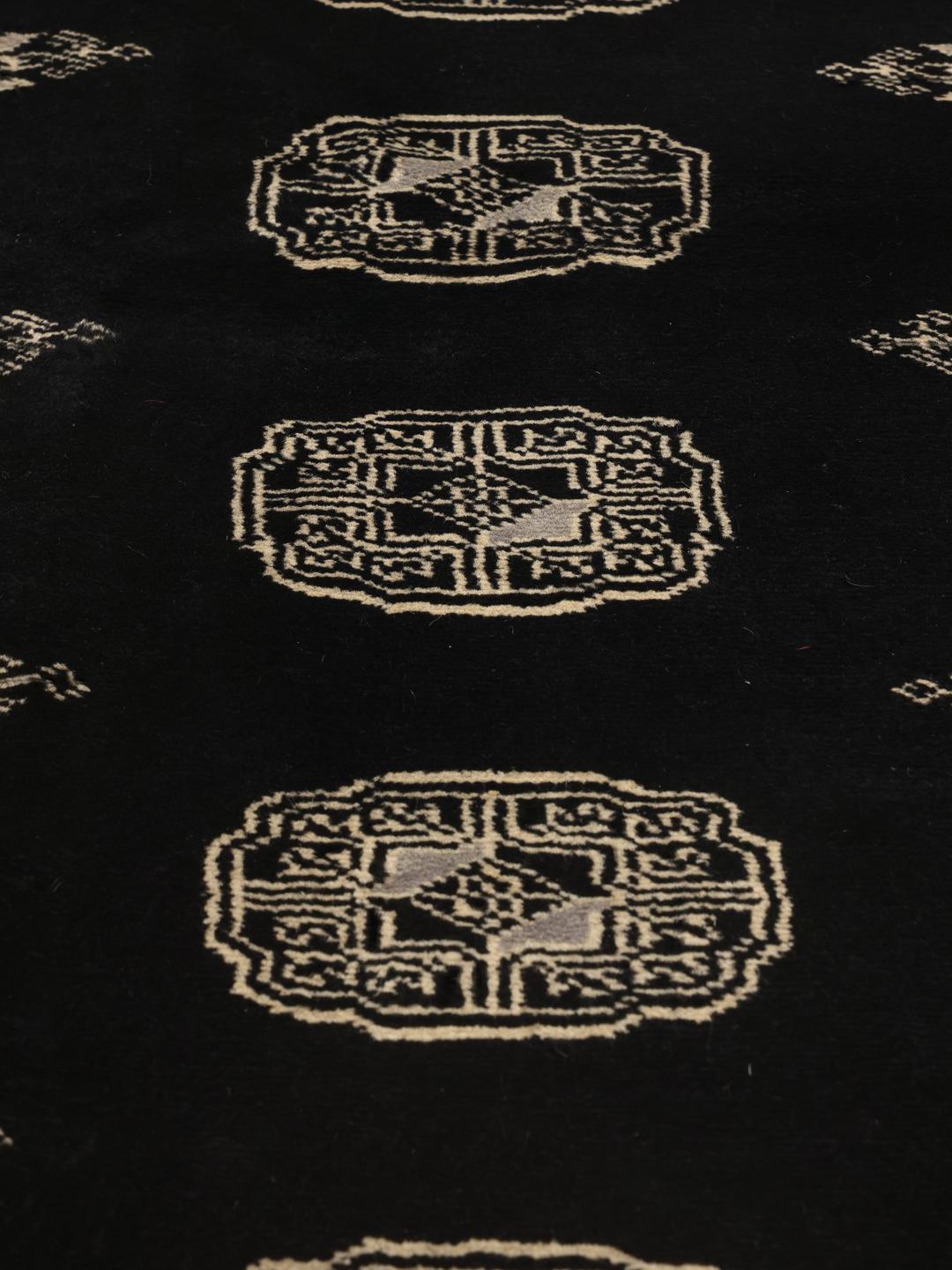
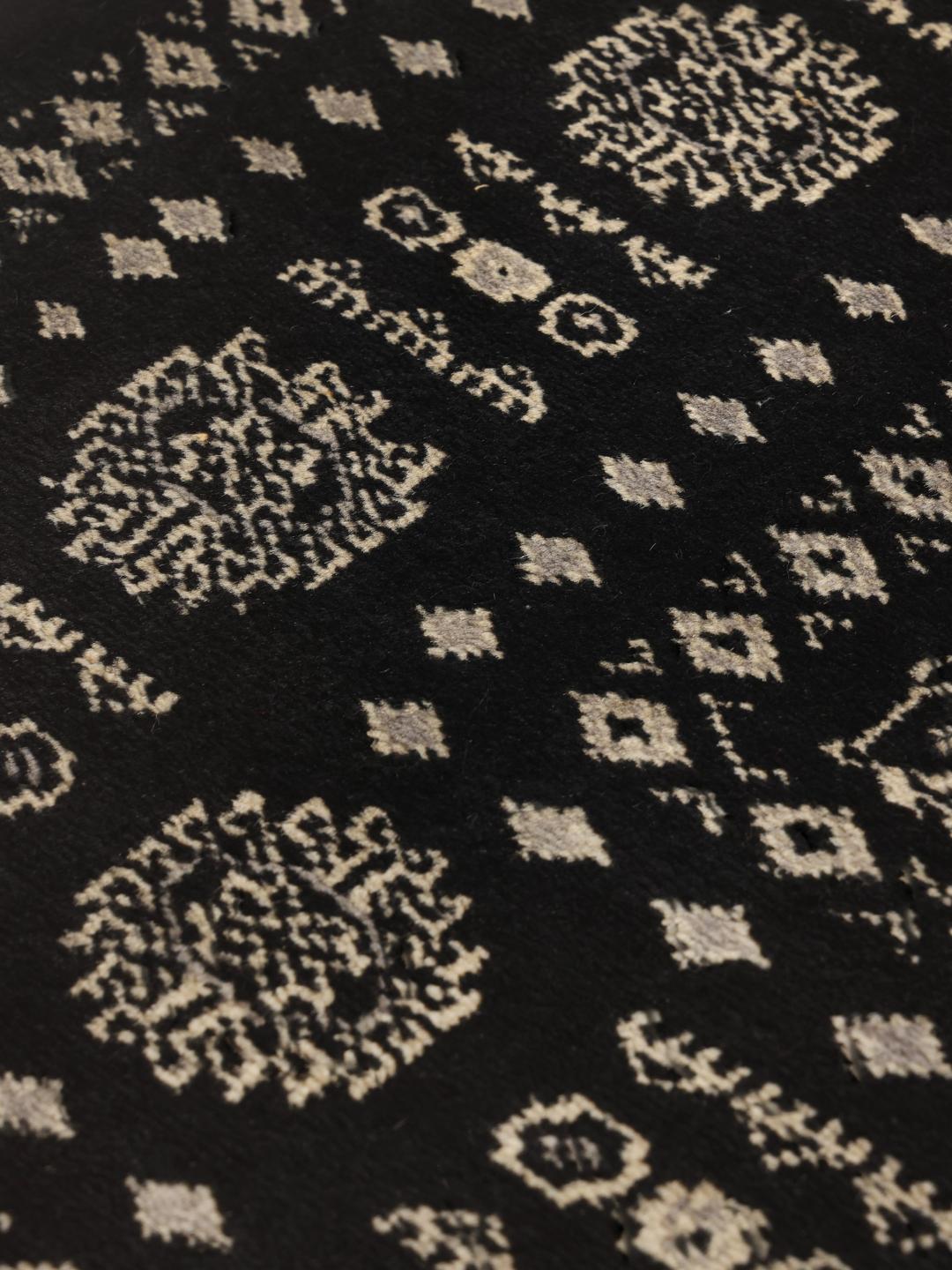
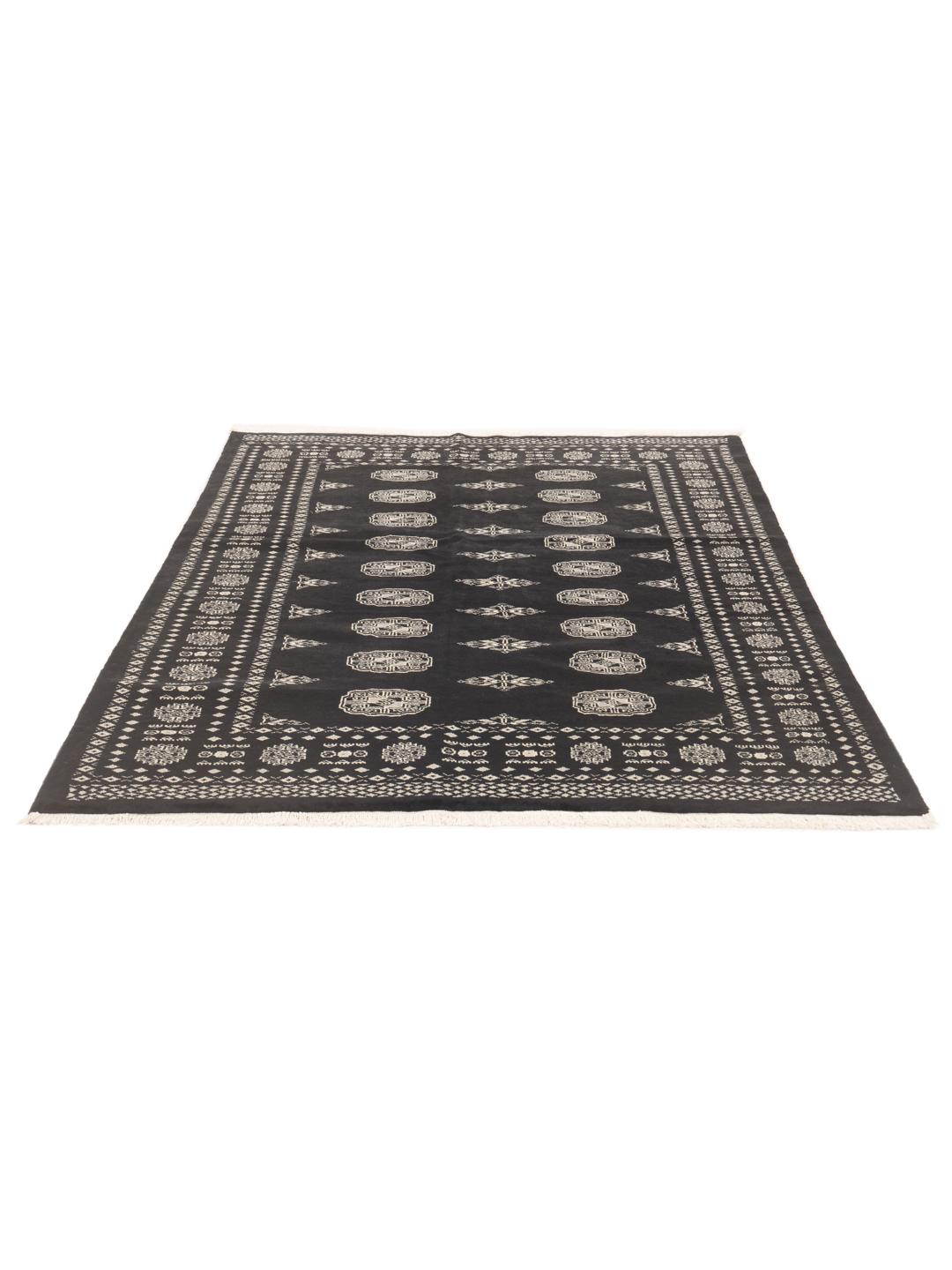
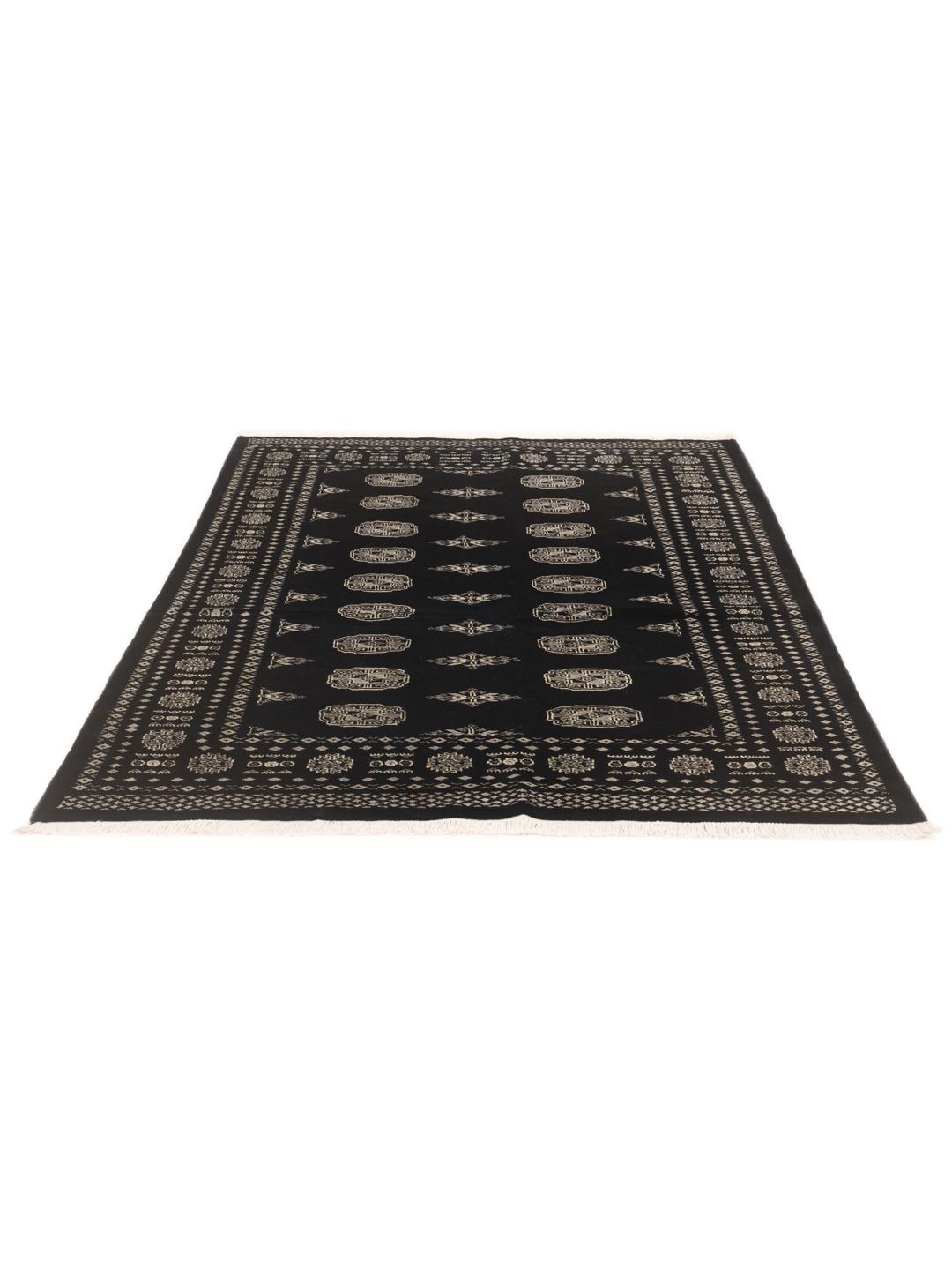
The visual language of the Bokhara is defined by its repetitive, harmonious motifs, most notably the gul—an octagonal or elephant-foot shaped medallion arranged in orderly rows. This rug features a striking black field, a bold departure from traditional red-toned versions, which highlights the crisp, ivory-toned geometric borders and central medallions with modern clarity.
Owning a hand-knotted piece from this tradition is an investment in cultural heritage and human skill. These rugs are collected not only for their aesthetic beauty but for the narrative they carry, representing a bridge between ancient nomadic patterns and contemporary interior aesthetics. Each piece acts as a testament to the artisan's patience and the enduring value of traditional weaving methods.