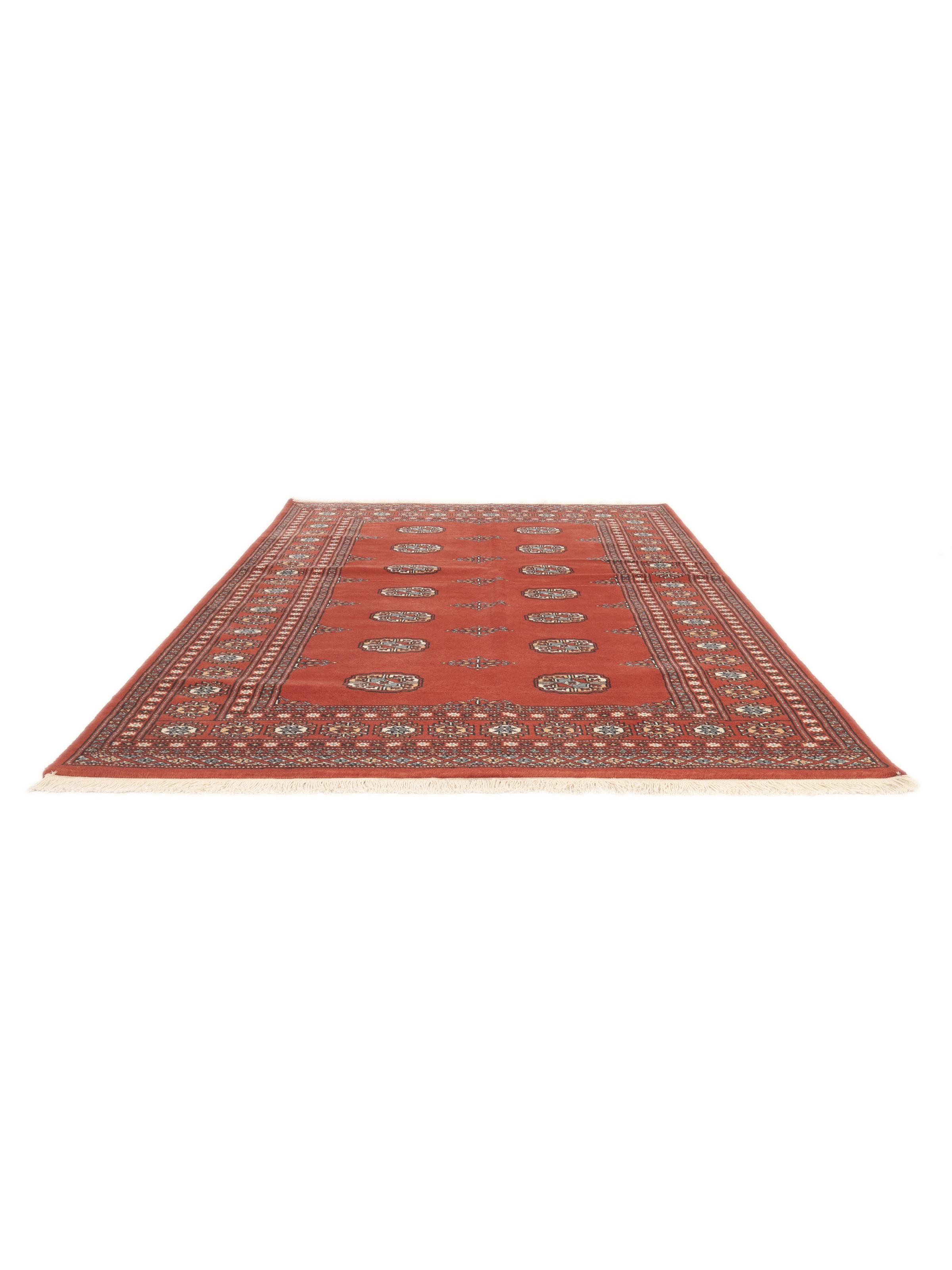
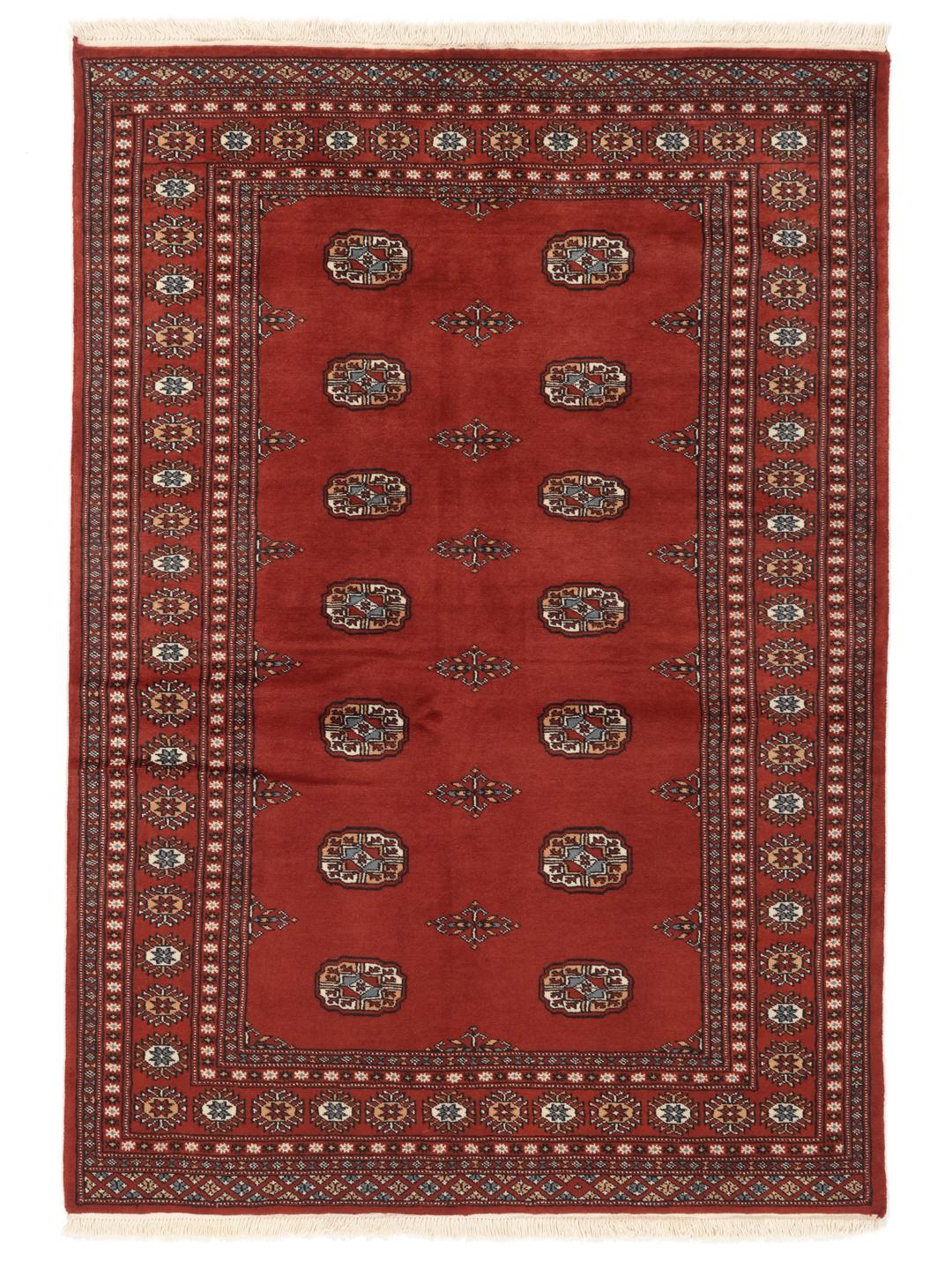
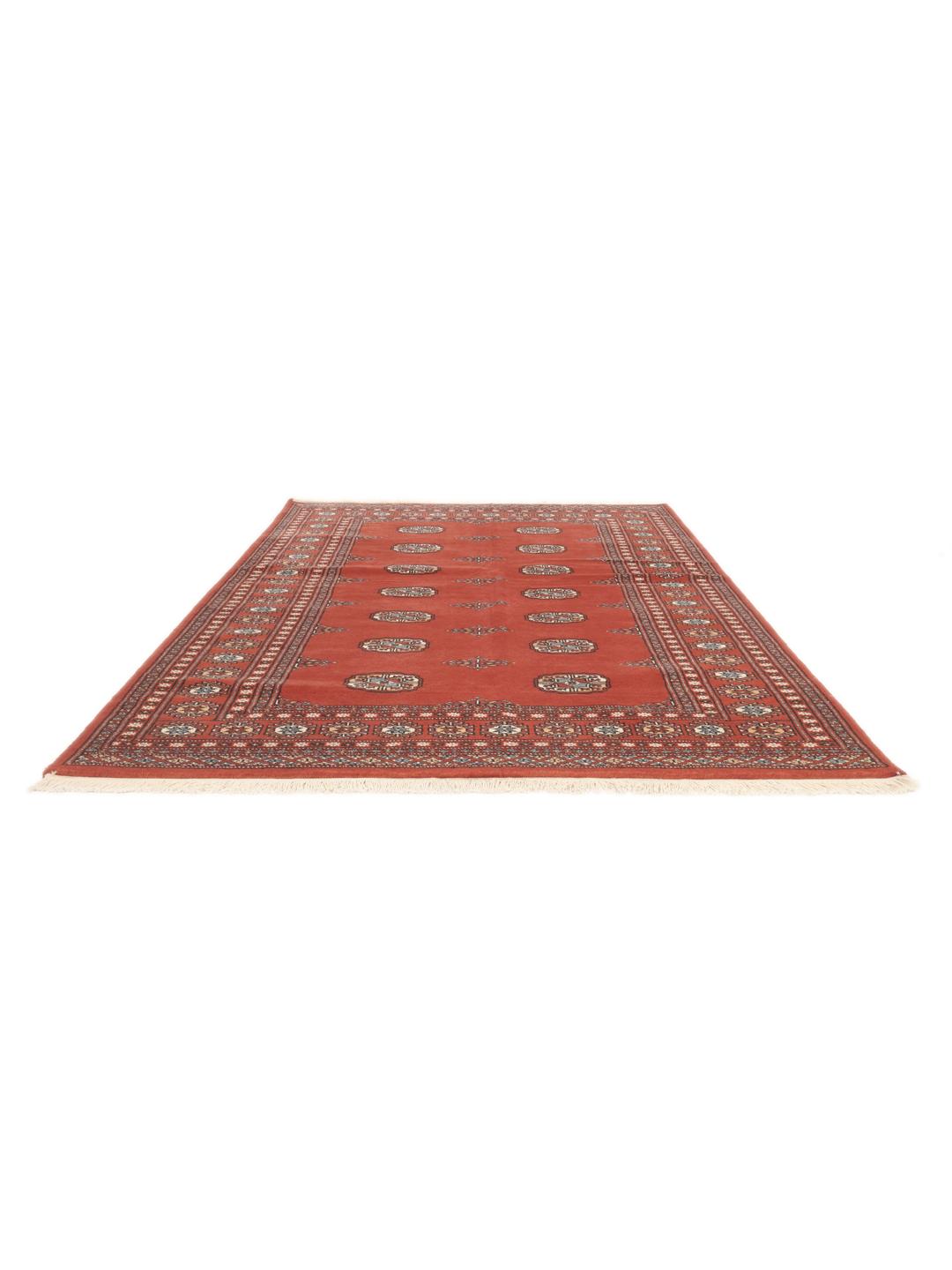
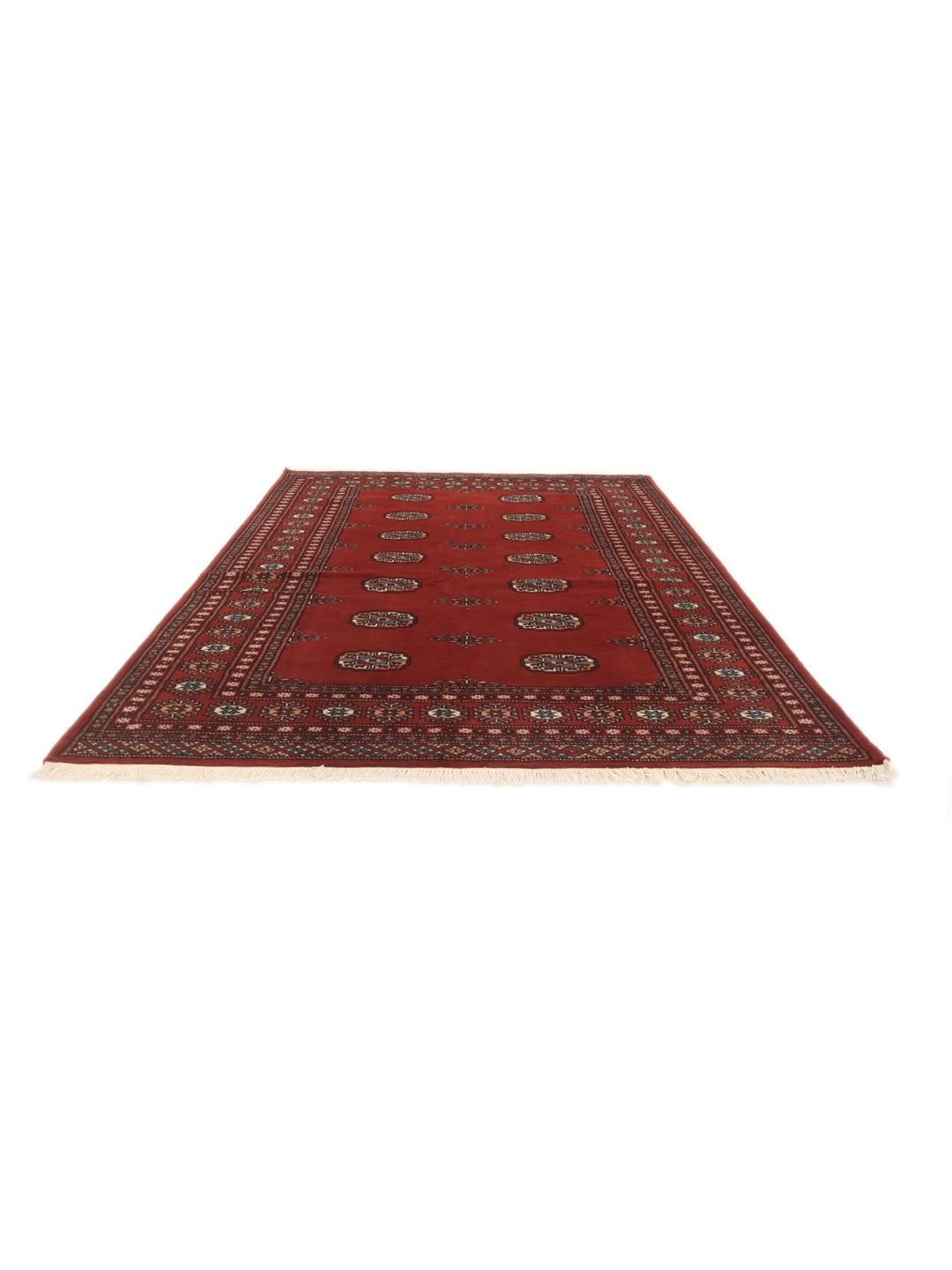
Bokhara rugs take their name from the ancient Silk Road city of Bukhara in Central Asia, a historical hub for trade and textile artistry. While the design traditions originated in these nomadic regions, the finest contemporary examples of this style are now expertly woven in Pakistan, where the tradition has been preserved and refined for generations.
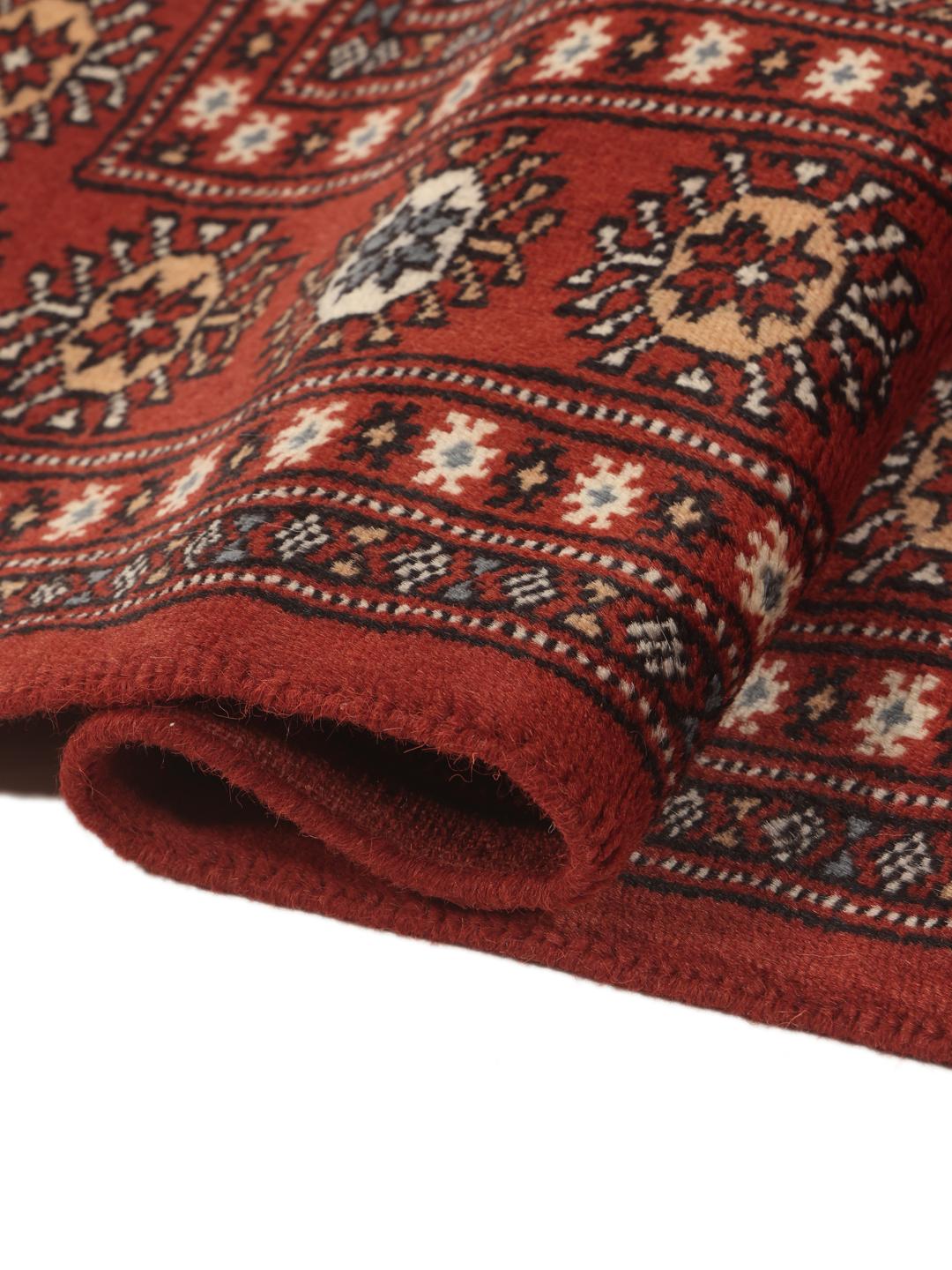
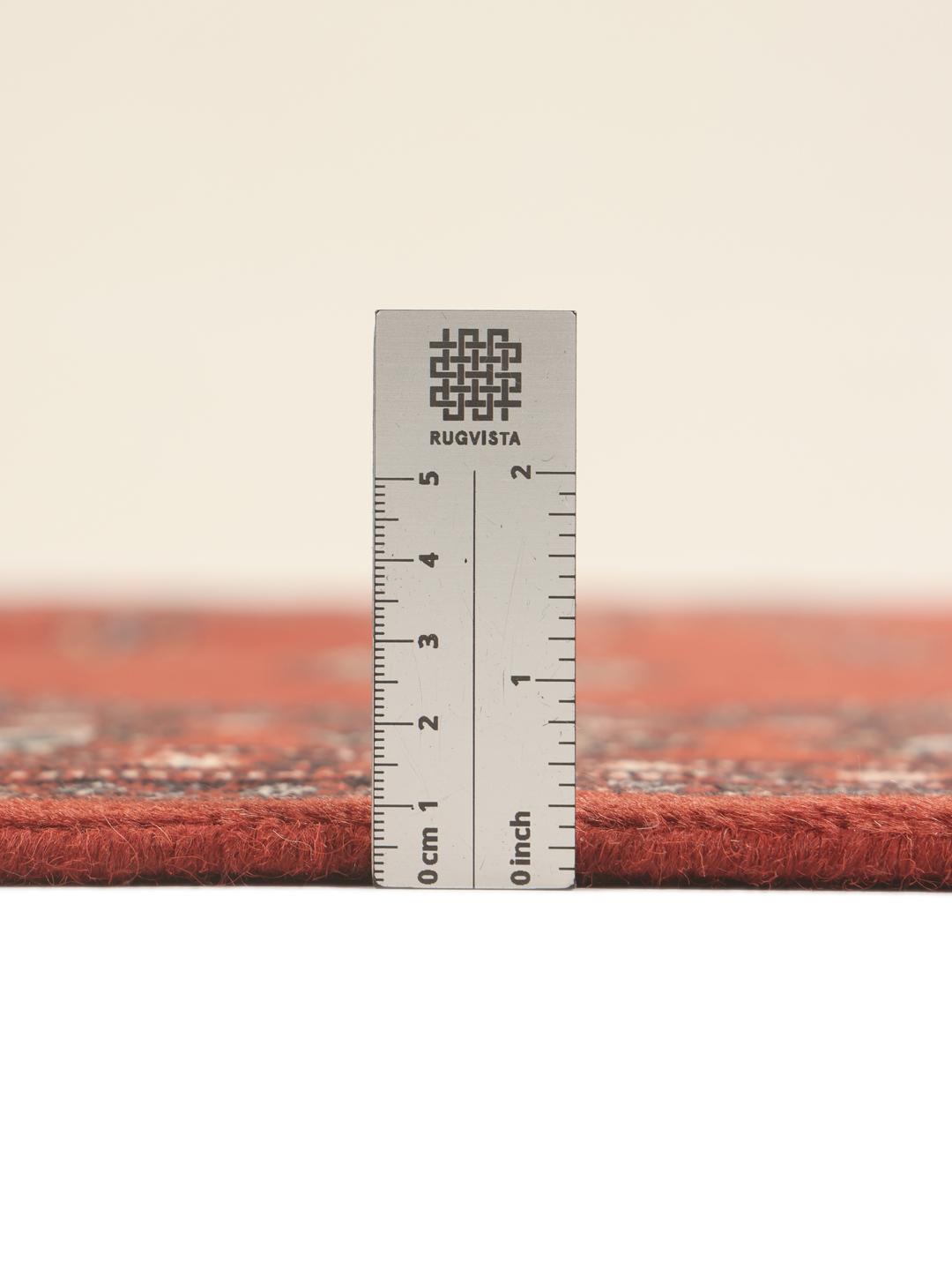
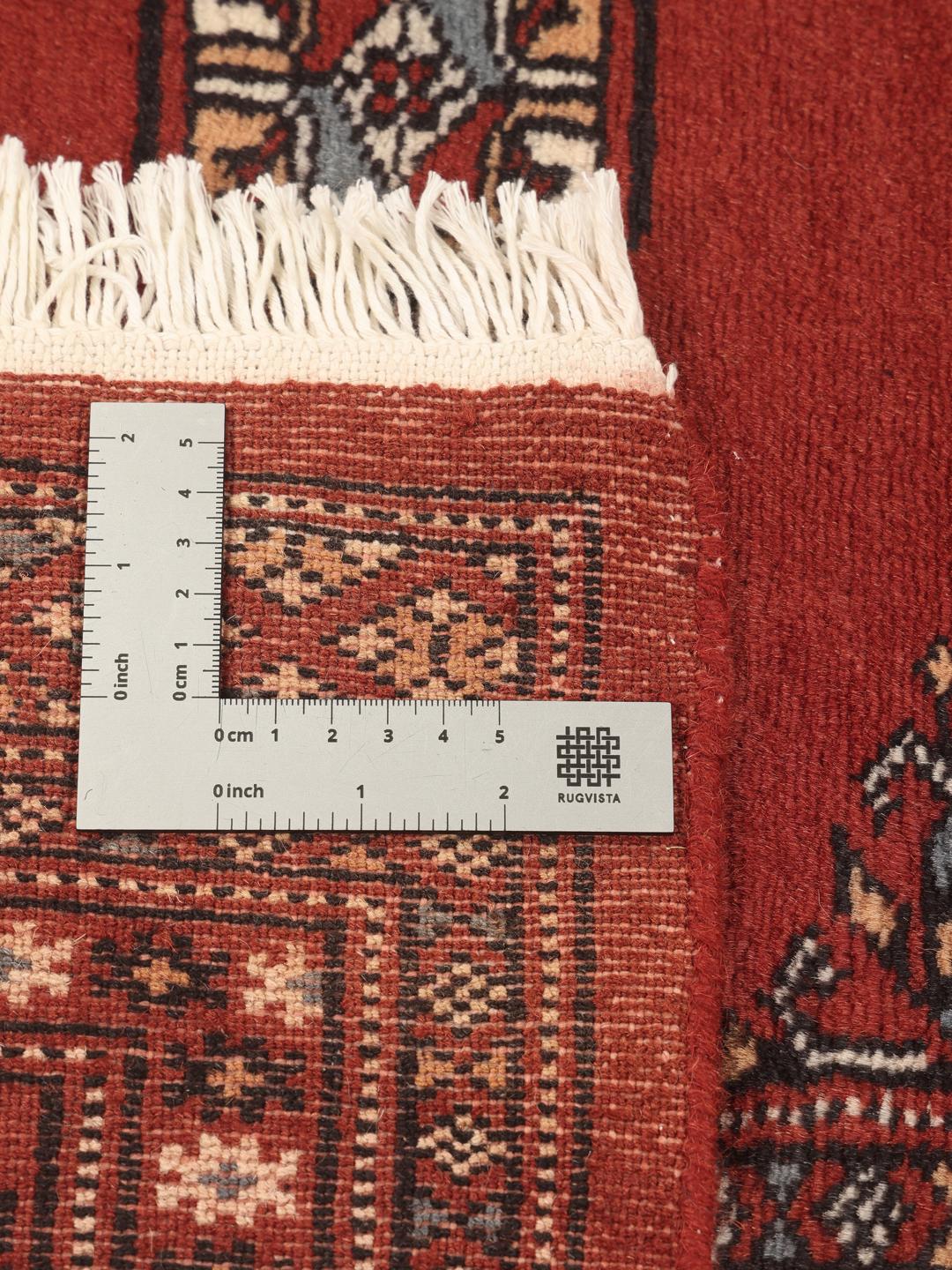
The '2ply' designation refers to a specific technique where the Wool used for the pile is created by twisting two strands together before knotting. This method is essential for quality, as it produces a more lustrous, dense, and durable pile that stands up to daily use while maintaining its soft texture and clear pattern definition.
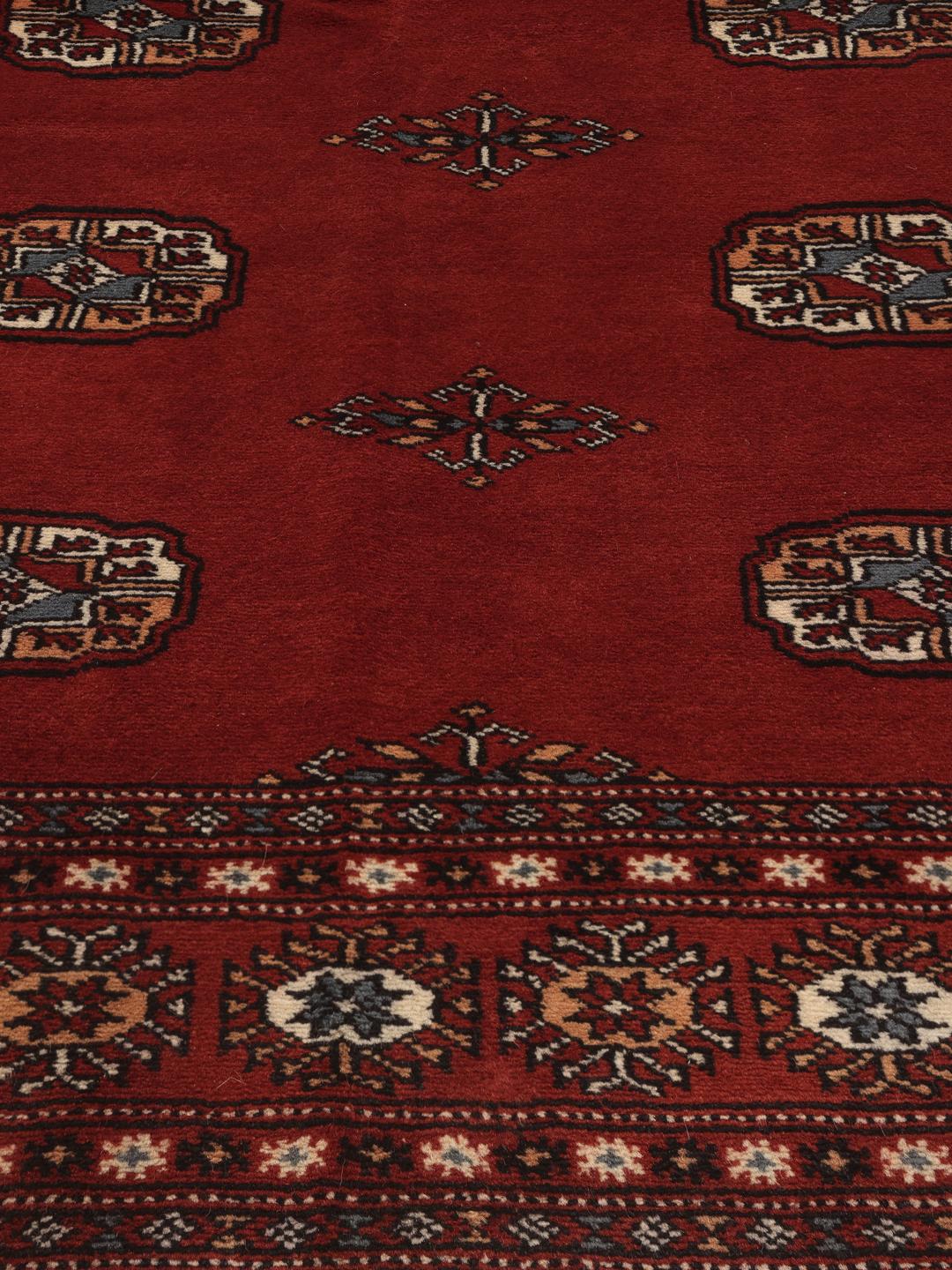
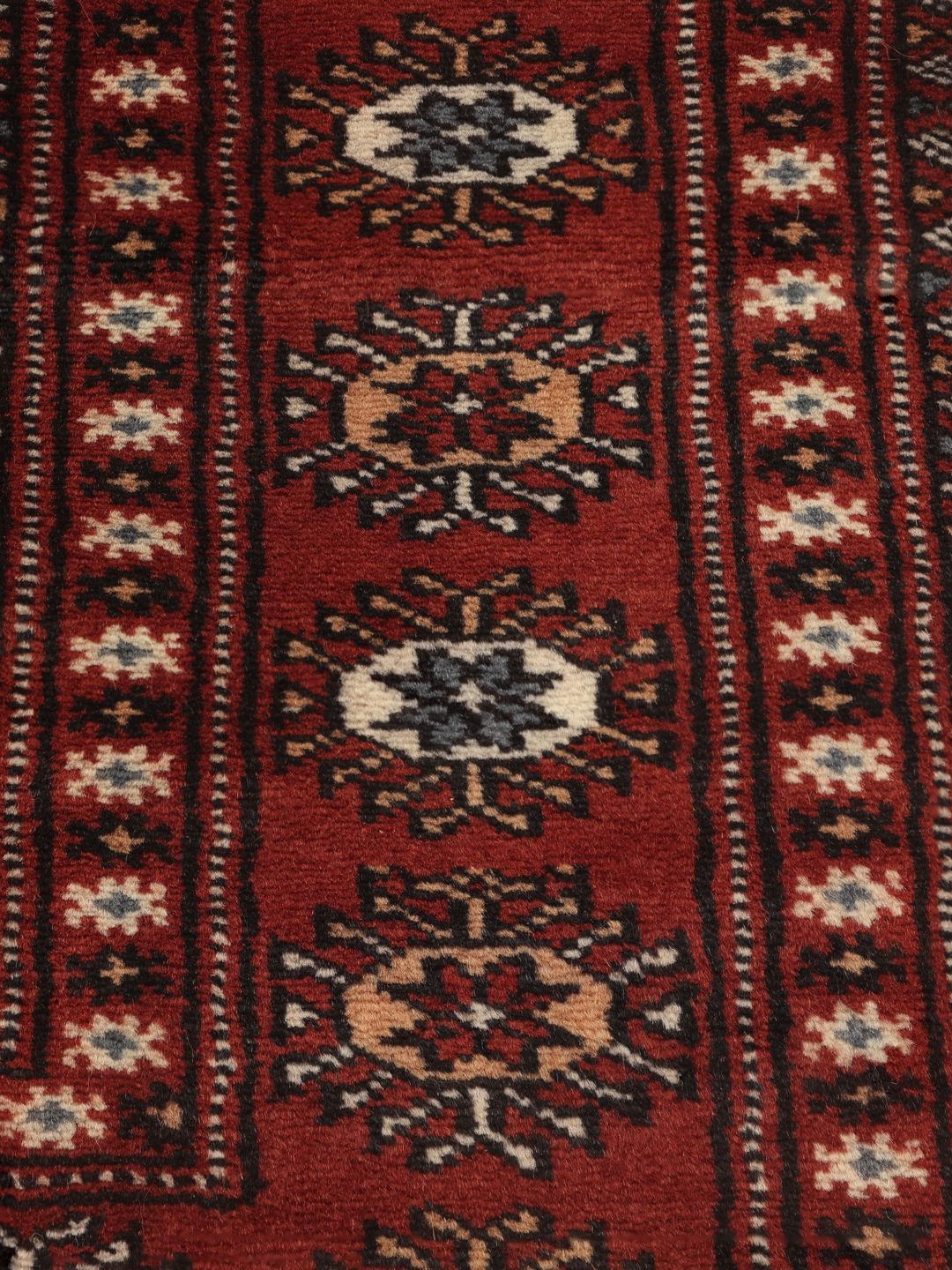
The visual language of the Bokhara is defined by its iconic gul motifs, which are repeating, octagonal medallions often said to represent elephant footprints. These are typically arranged in clean, formal rows across a field of deep, saturated colour, enclosed by intricate, multi-layered borders that demonstrate the precision of the weaver’s craft.
These rugs are highly valued by collectors for their consistency and the deep cultural heritage they represent. Owning a hand-knotted Bokhara is an investment in a long-standing tradition of skill, offering a piece of floor art that connects your modern home to a rich history of textile craftsmanship.