The tradition of Chinese rug weaving is ancient, yet the specific style represented here emerged during the early 20th century when traditional Chinese motifs began to blend with Western Art Deco sensibilities. These rugs, often associated with the Nichols brand, are celebrated for their distinctive use of negative space, sculptural relief, and a unique palette that departed from the more traditional deep reds and blues of the Middle East.
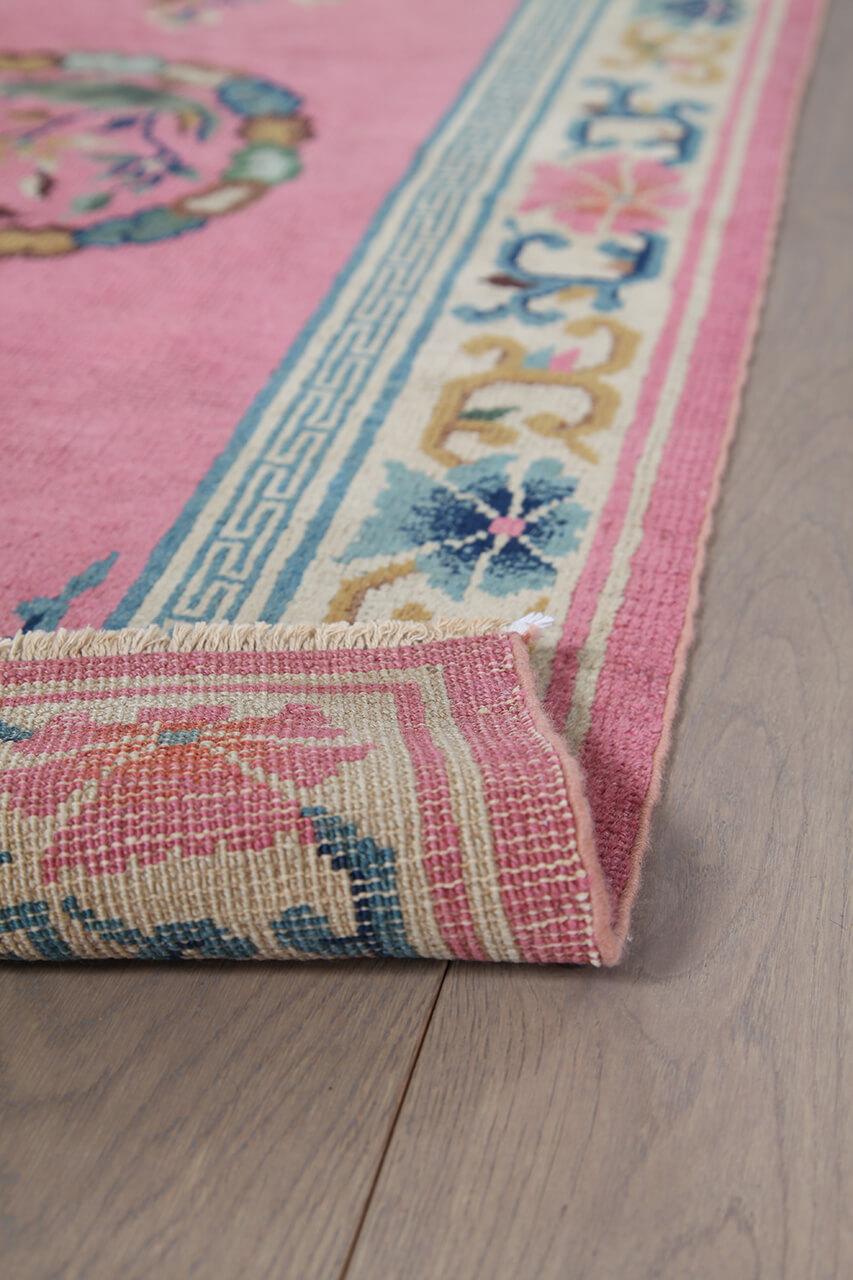
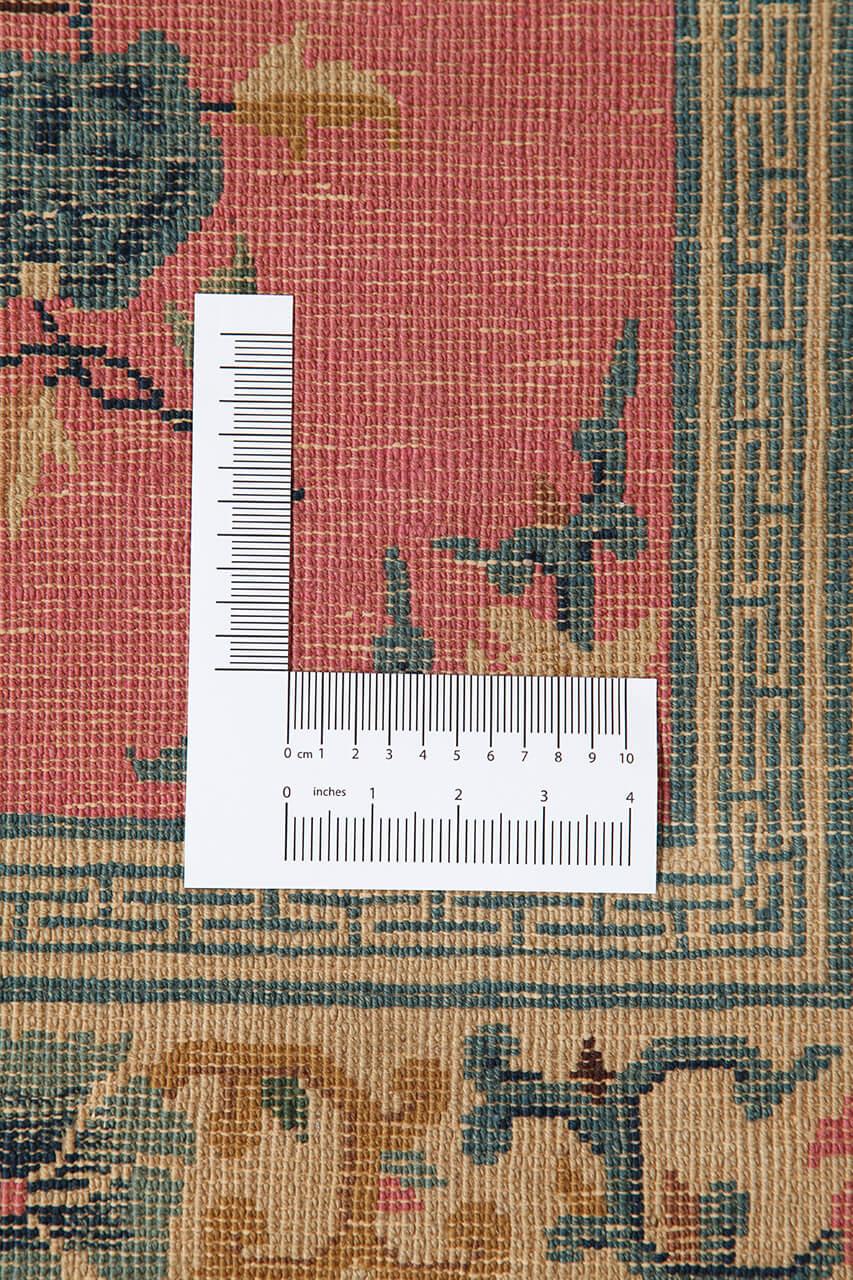
The term hand-knotted refers to the fundamental technique where individual knots of wool are tied to a cotton base. This method is the hallmark of quality in rug making, as it creates a sturdy foundation that allows the rug to lie flat and maintain its shape over many decades. The 16 mm pile height is particularly significant, as it indicates a plush, high-quality construction that provides both comfort and excellent insulation.
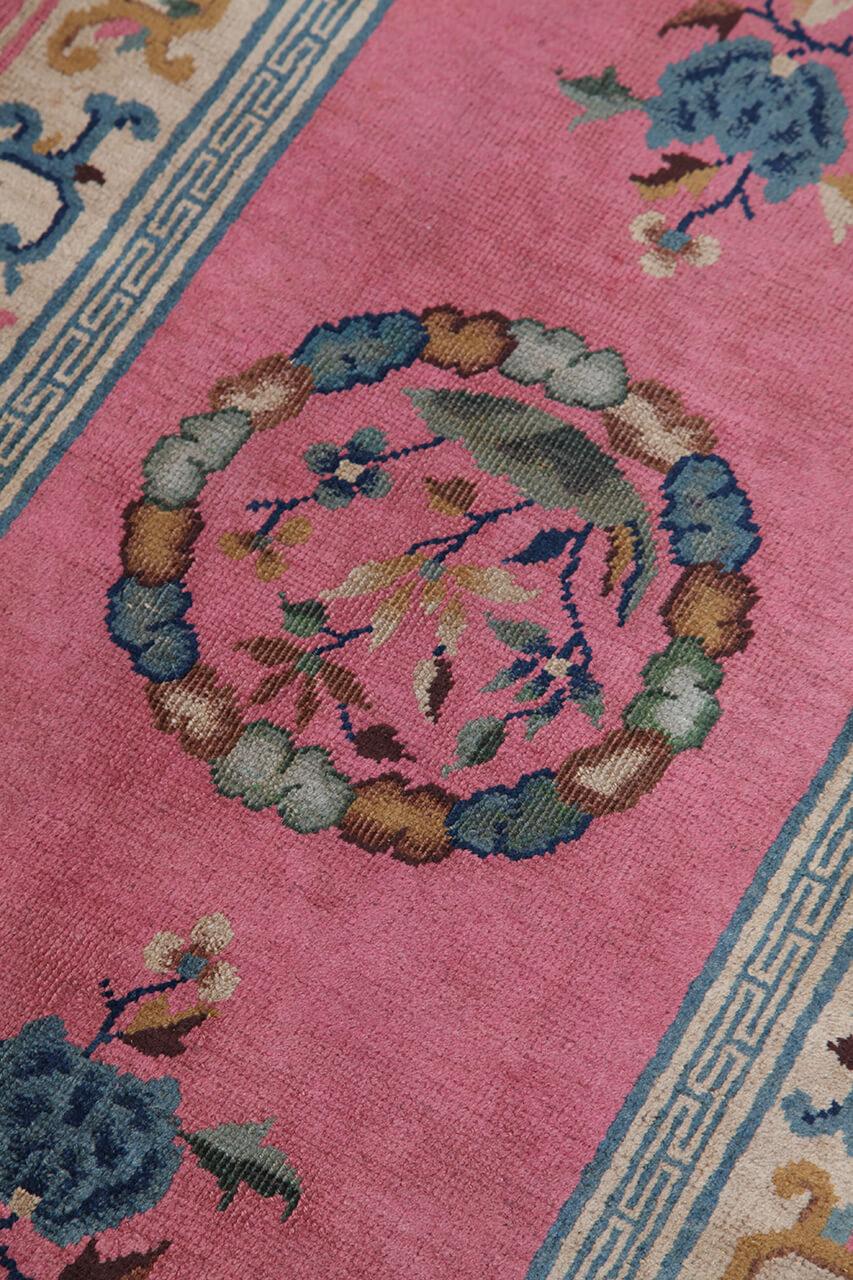
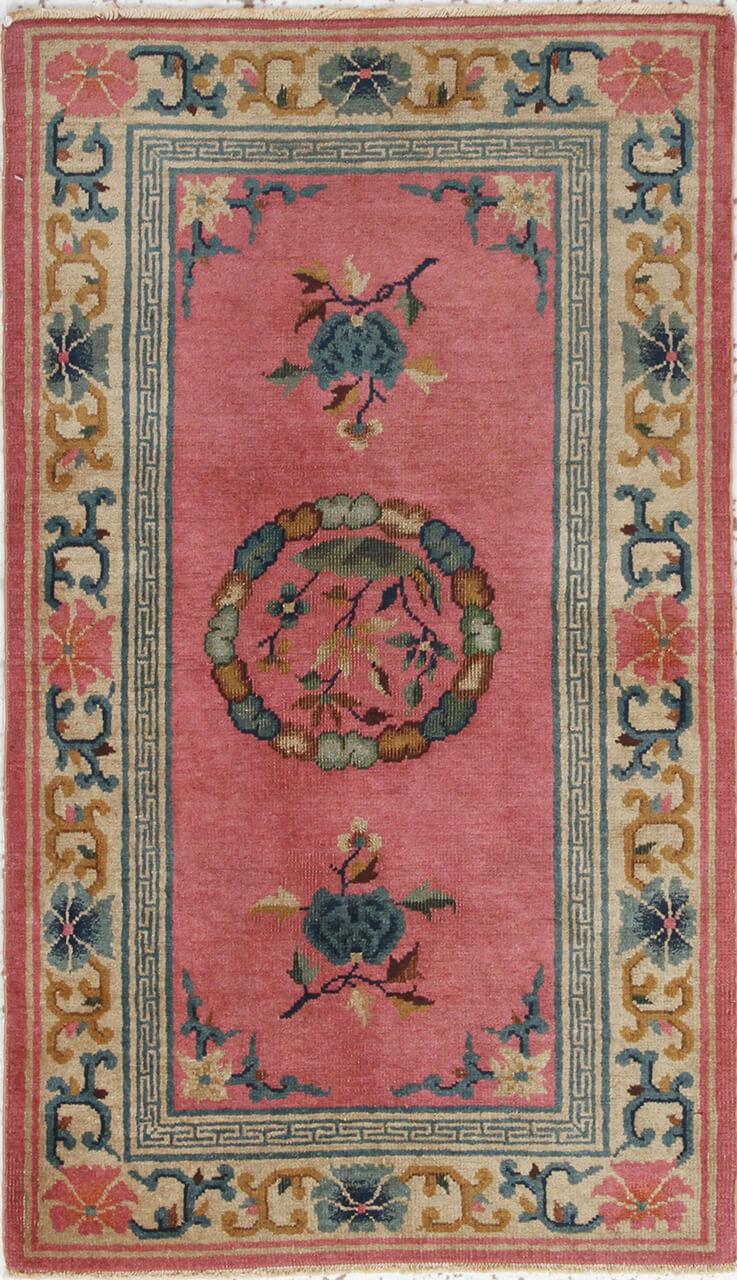
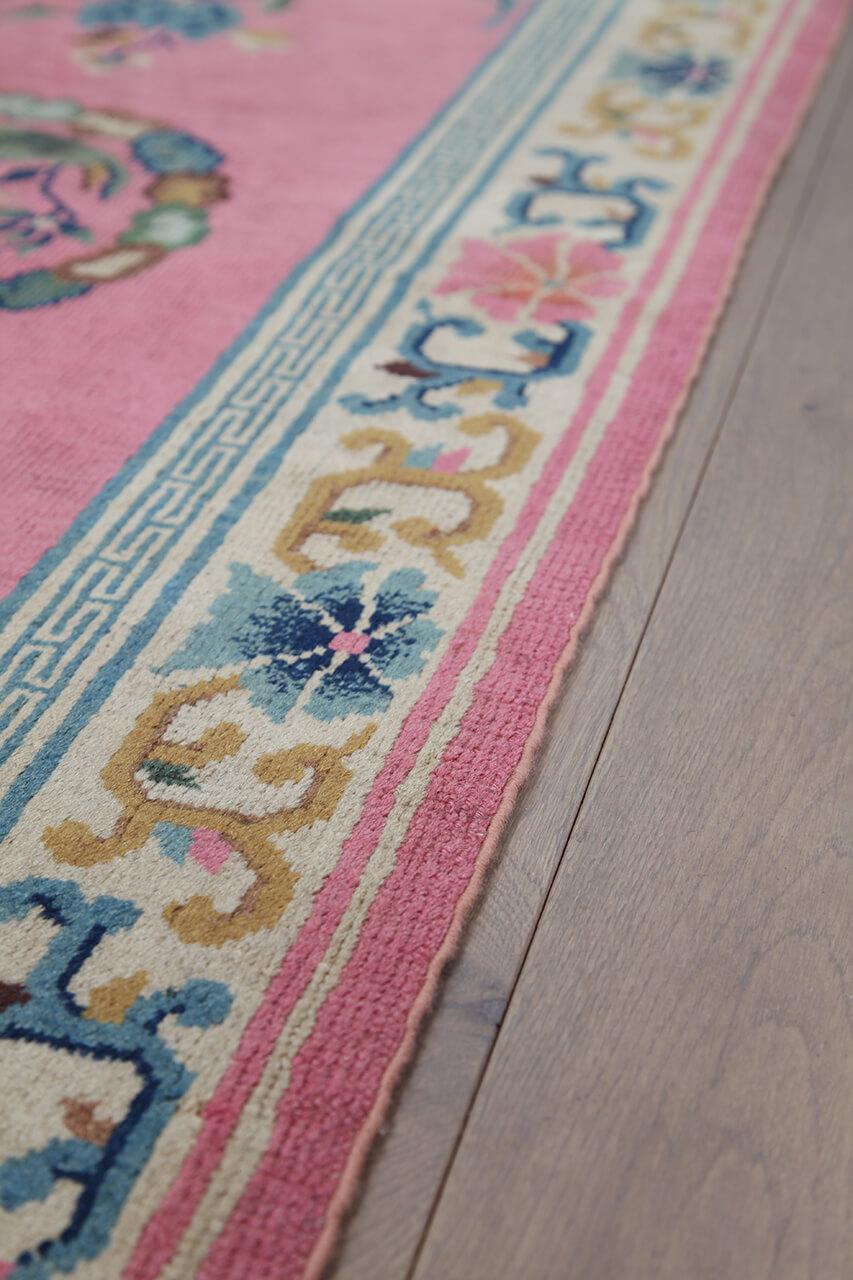
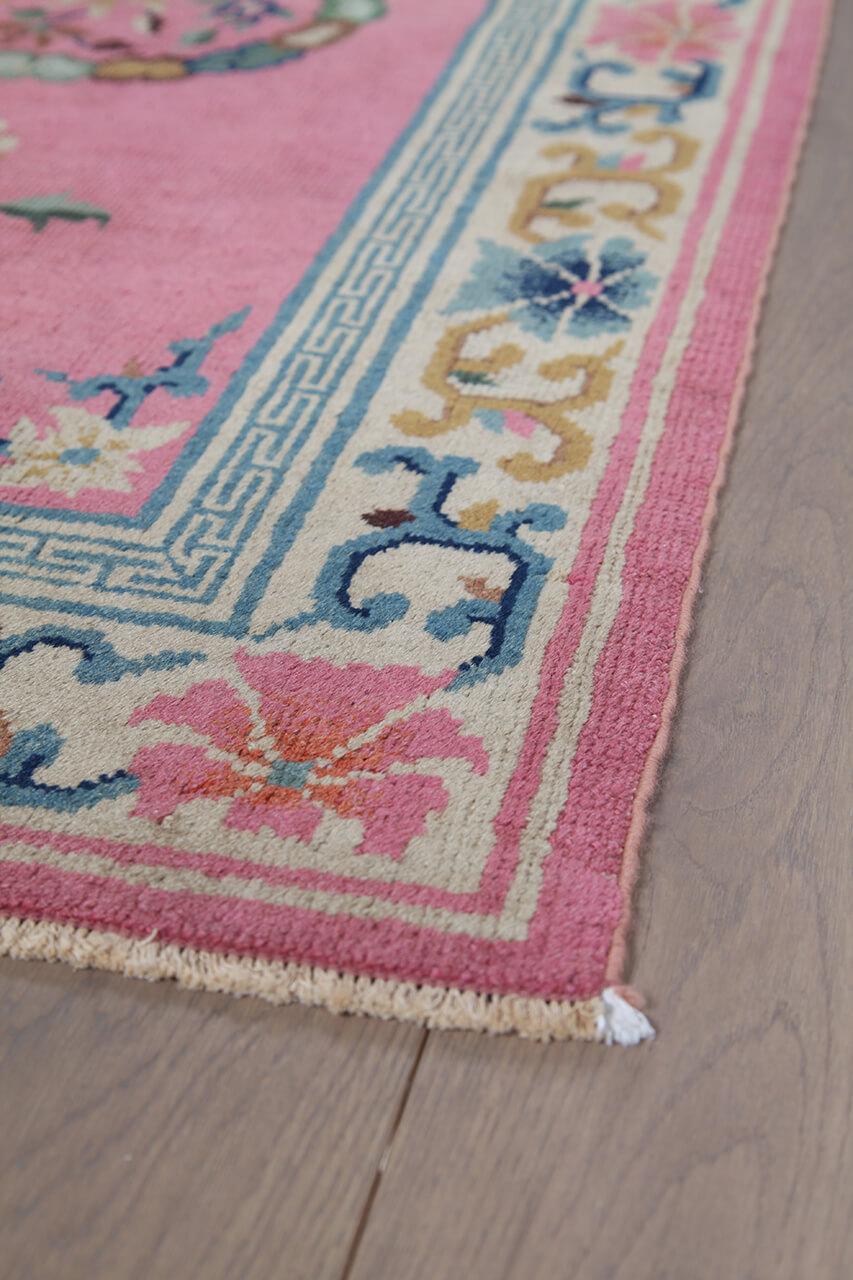
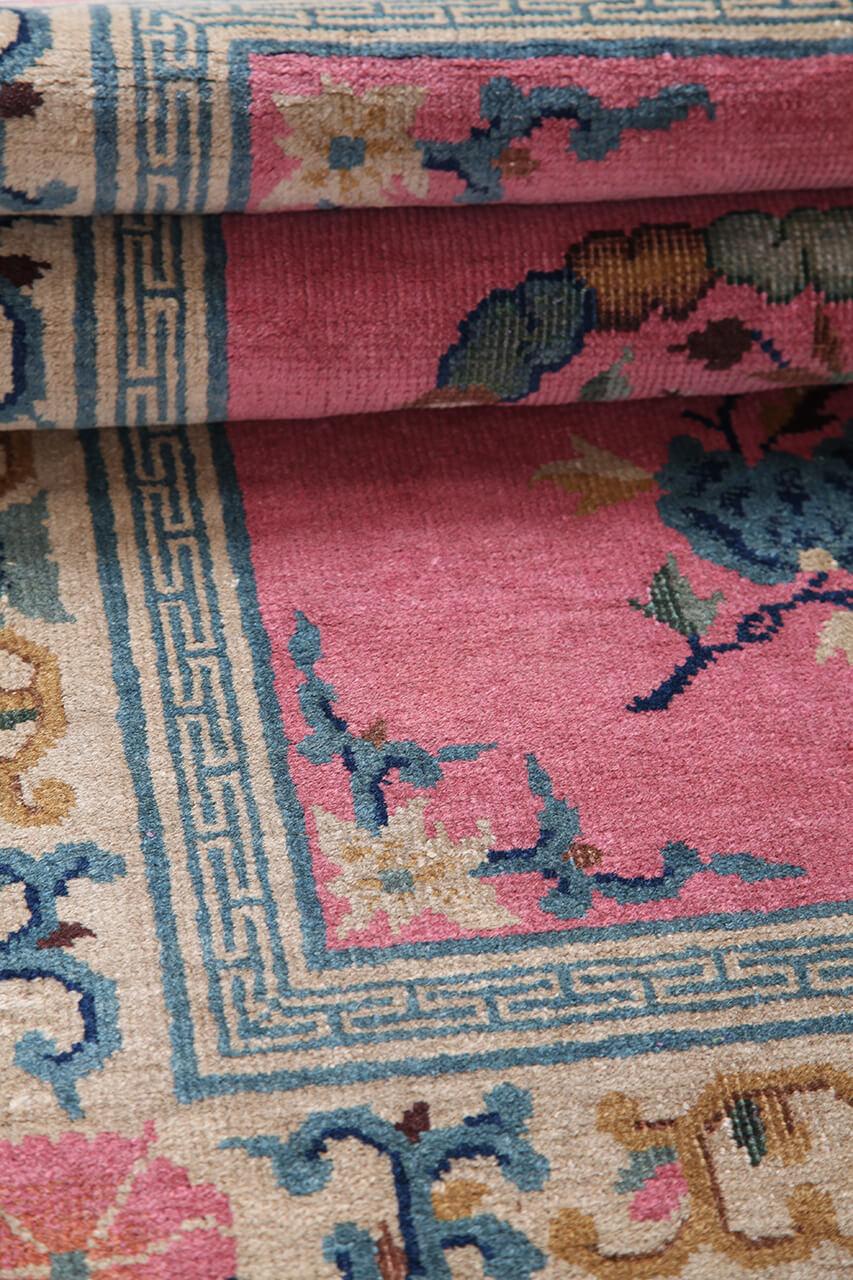
Visually, this rug follows the iconic Art Deco tradition of simplified, stylised floral patterns. Unlike the dense, all-over patterns seen in many other regional rug traditions, these Chinese pieces favour a central focal point, such as the medallion seen here, surrounded by carefully placed sprays of flowers. The borders are often formal and geometric, providing a frame that emphasises the elegant, open field.
Collectors value these antique Chinese rugs for their rarity and the specific cultural moment they represent. They are not merely decorative items but are considered important artefacts of 20th-century design history. Owning one is an investment in cultural heritage, offering a unique opportunity to live with a piece that showcases the evolution of global design and the enduring skill of the artisans who created it.