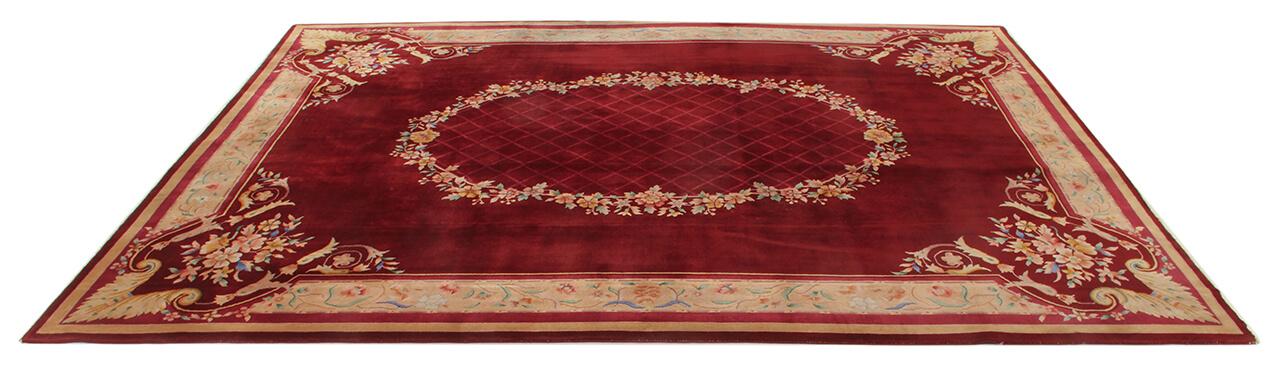
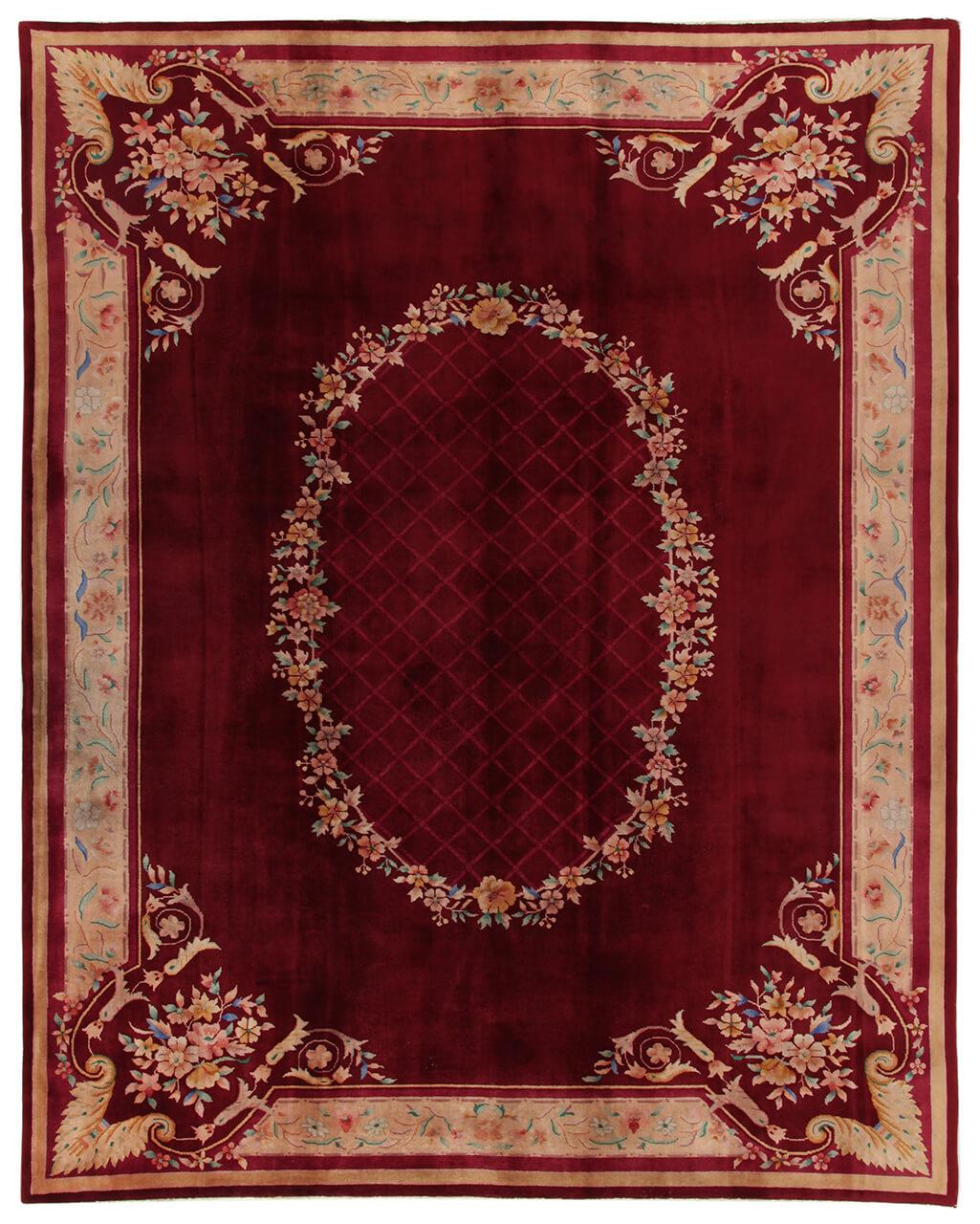
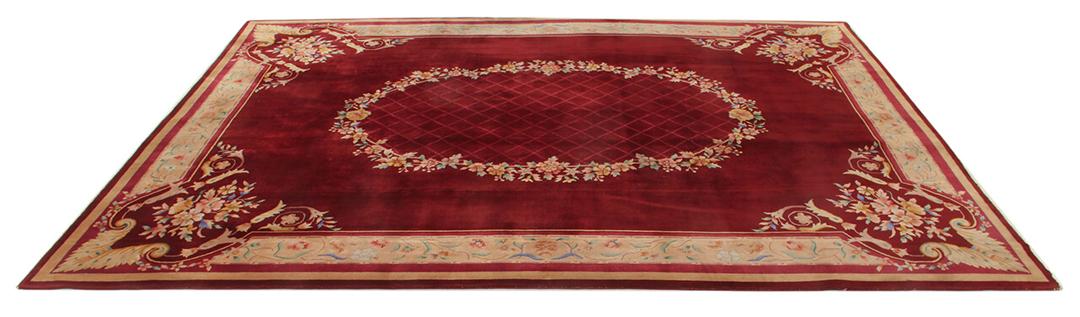
The Nichols Chinese Art Deco movement represents a fascinating chapter in the history of textile art. Emerging in the early 20th century, these rugs were created by the Nichols factory in Tientsin, China, specifically for the Western market. They perfectly captured the spirit of the Art Deco era by blending traditional Middle Eastern iconography with the bold, clean lines favoured by European and American designers of the time.
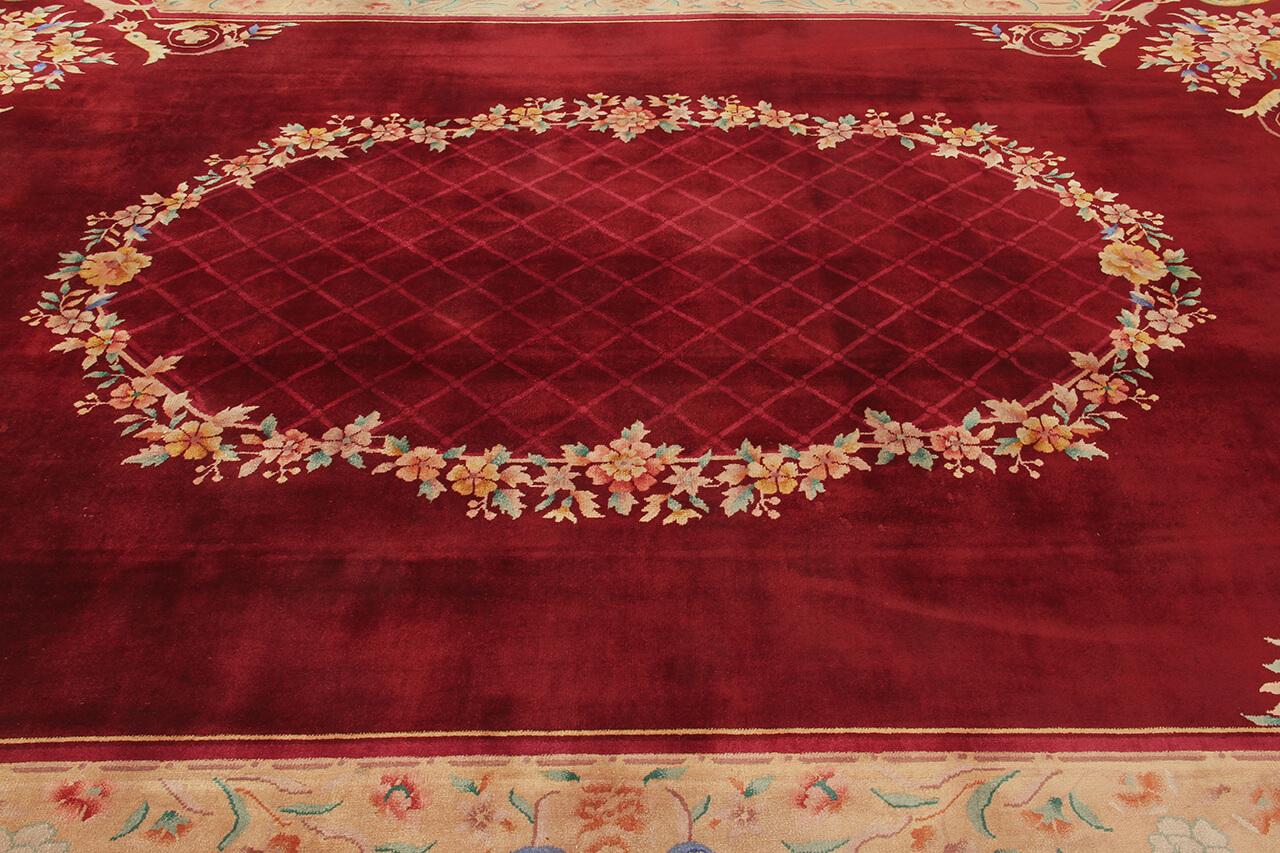
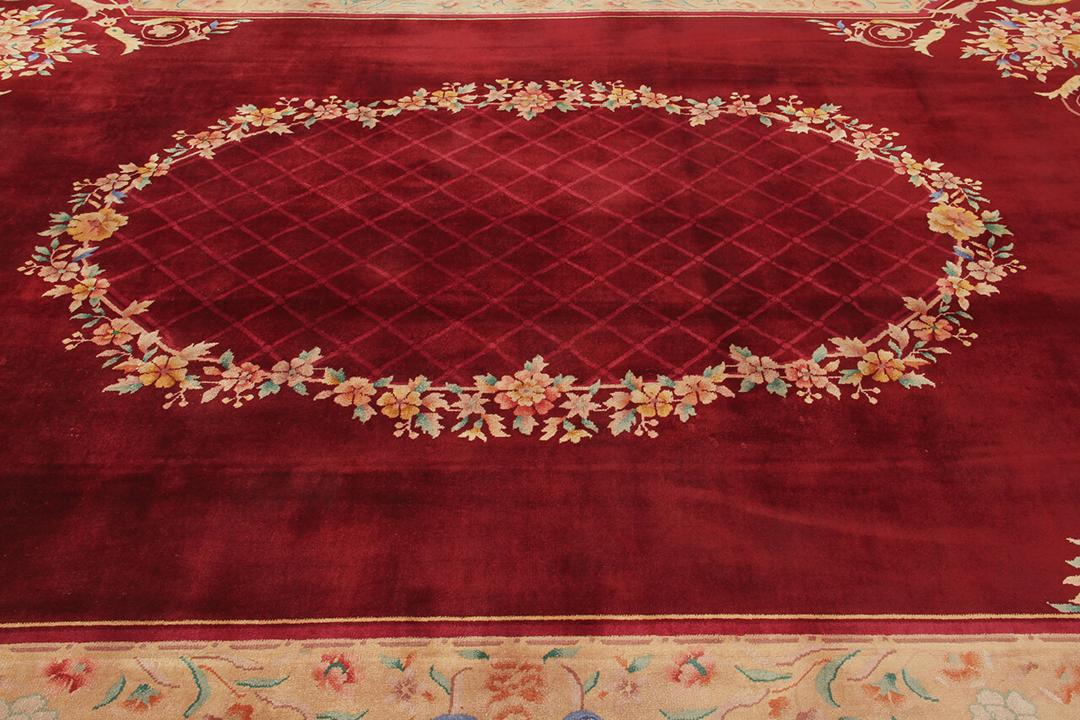
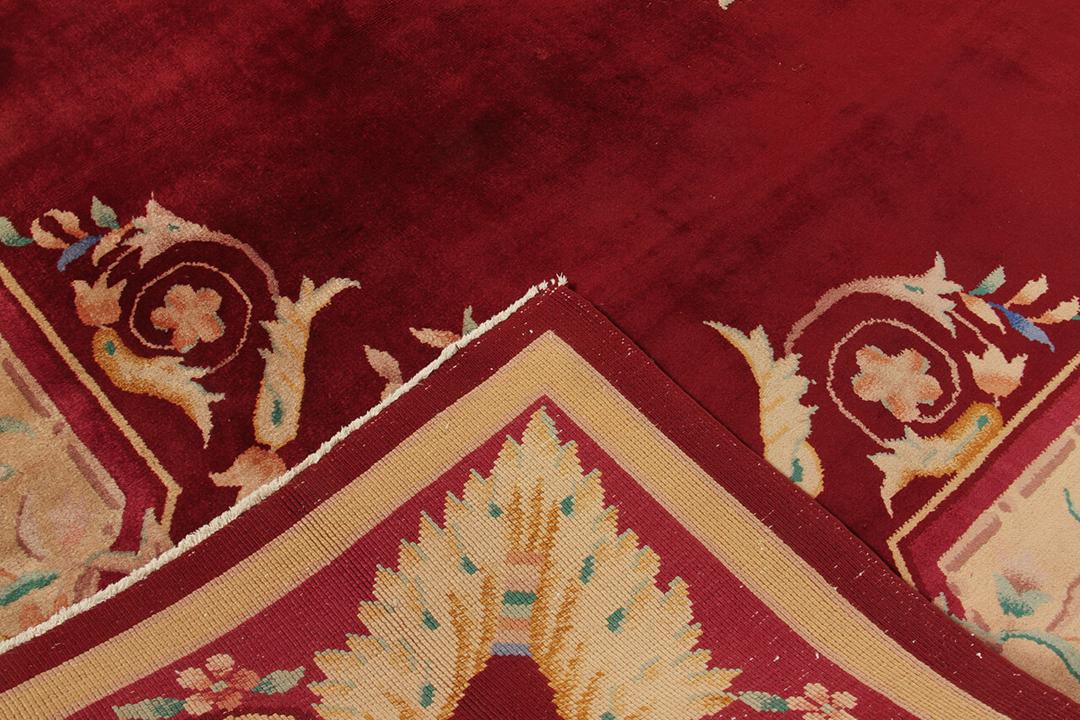
These rugs are celebrated for their distinctive use of carved pile, where the artisans would trim the Wool to create a subtle relief effect around the motifs. This technique adds depth and dimension to the floral elements, making them appear almost three-dimensional. This level of craftsmanship ensures that the patterns remain crisp and visually engaging from every angle.
Visually, Nichols rugs are characterised by their open, uncluttered fields and iconic floral sprays, often placed in the corners or centred as a focal point. While traditional Middle Eastern rugs might feature dense, all-over patterns, the Art Deco style favoured by Nichols often utilises negative space to create a sense of elegance and modernity, often employing rich, saturated colour palettes that were revolutionary for the period.
Owning an antique Nichols piece is highly valued by collectors for its cultural significance and stylistic purity. These rugs represent a bridge between Eastern weaving traditions and global design trends of the 1920s and 1930s. To possess one is to own a tangible piece of design history that signifies both an appreciation for traditional skill and a nod to a sophisticated, bygone era.