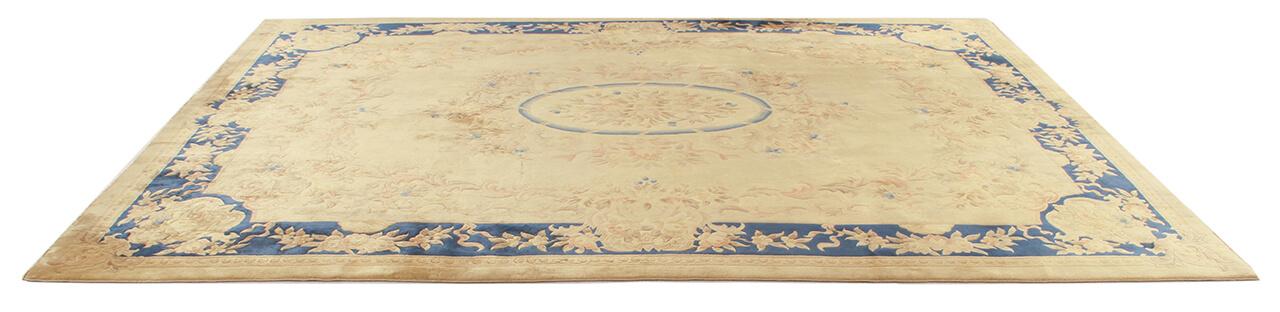
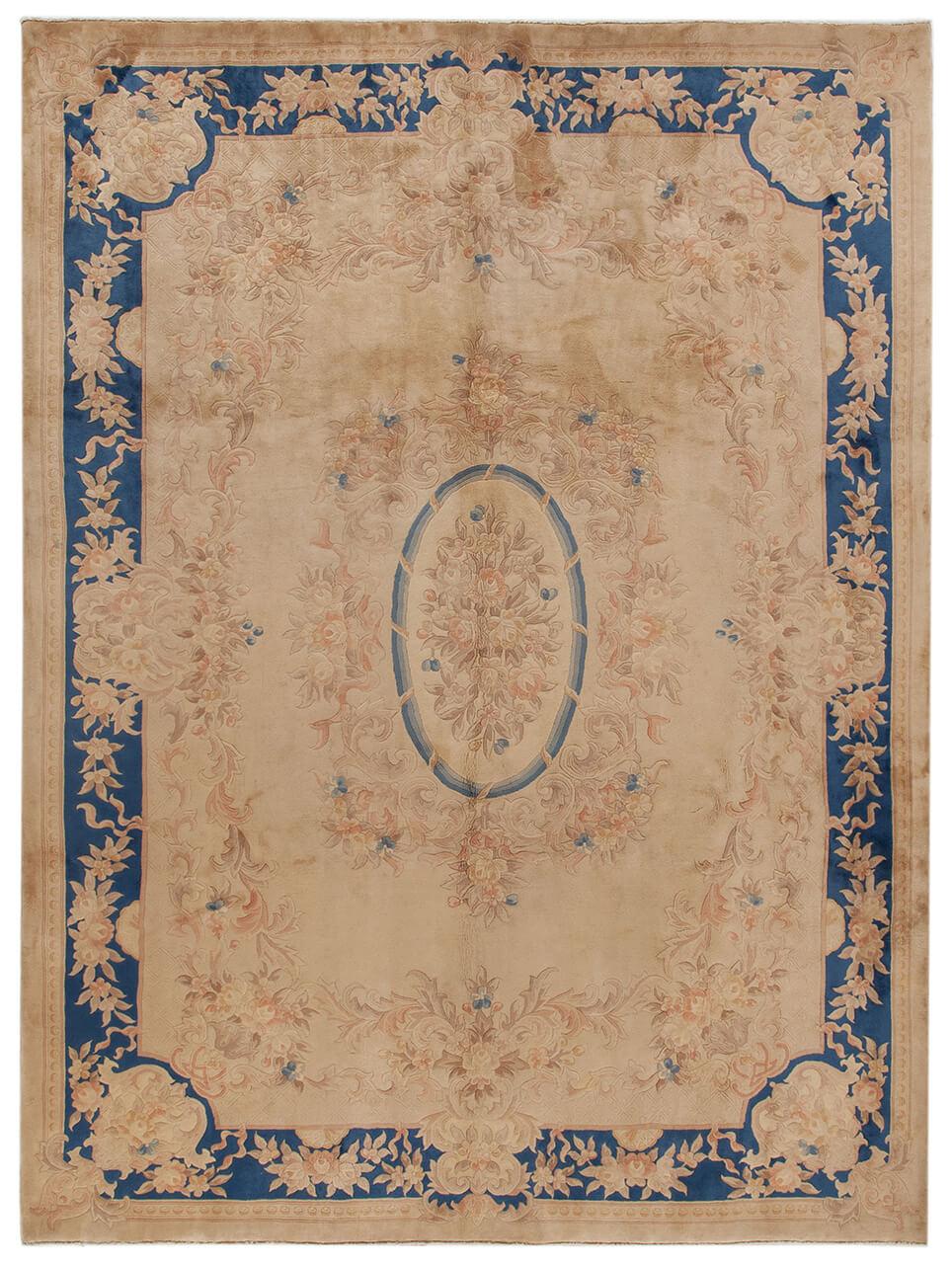
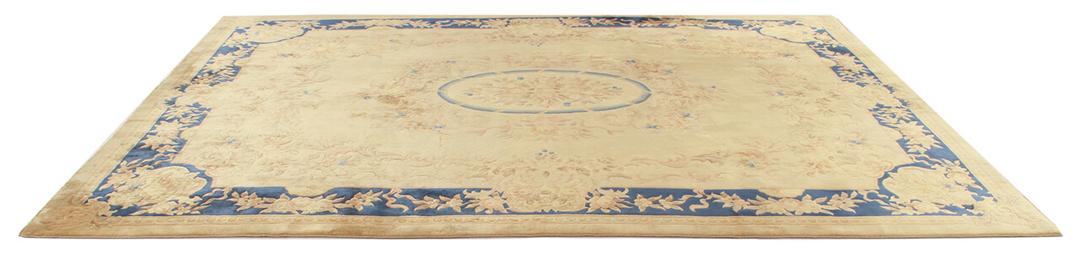
The Nichols rugs represent a fascinating period in Chinese textile history, emerging in the early 20th century as a bridge between traditional Eastern weaving and Western Art Deco sensibilities. Walter Nichols, an American who established a workshop in Tientsin, China, pioneered this fusion by adapting traditional Chinese motifs to suit the tastes of the international market.
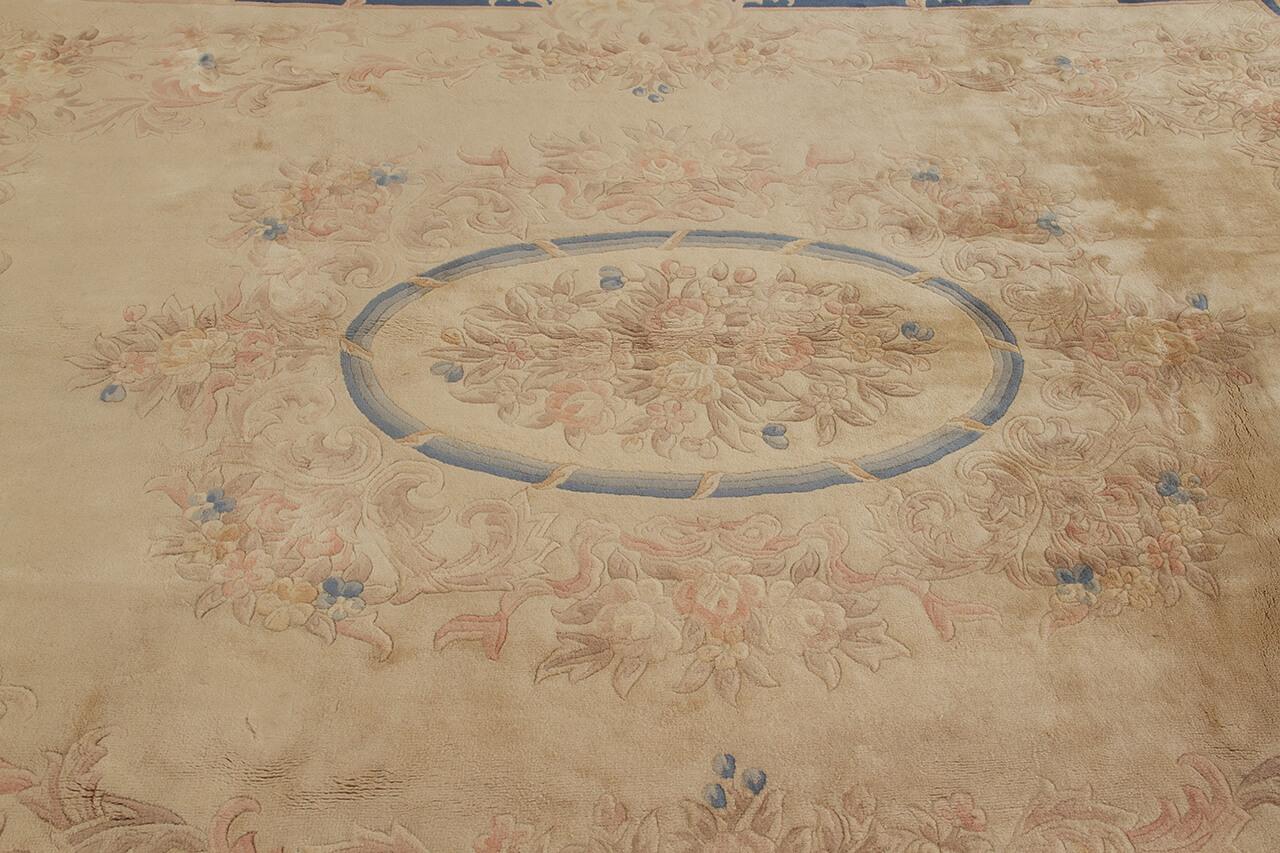
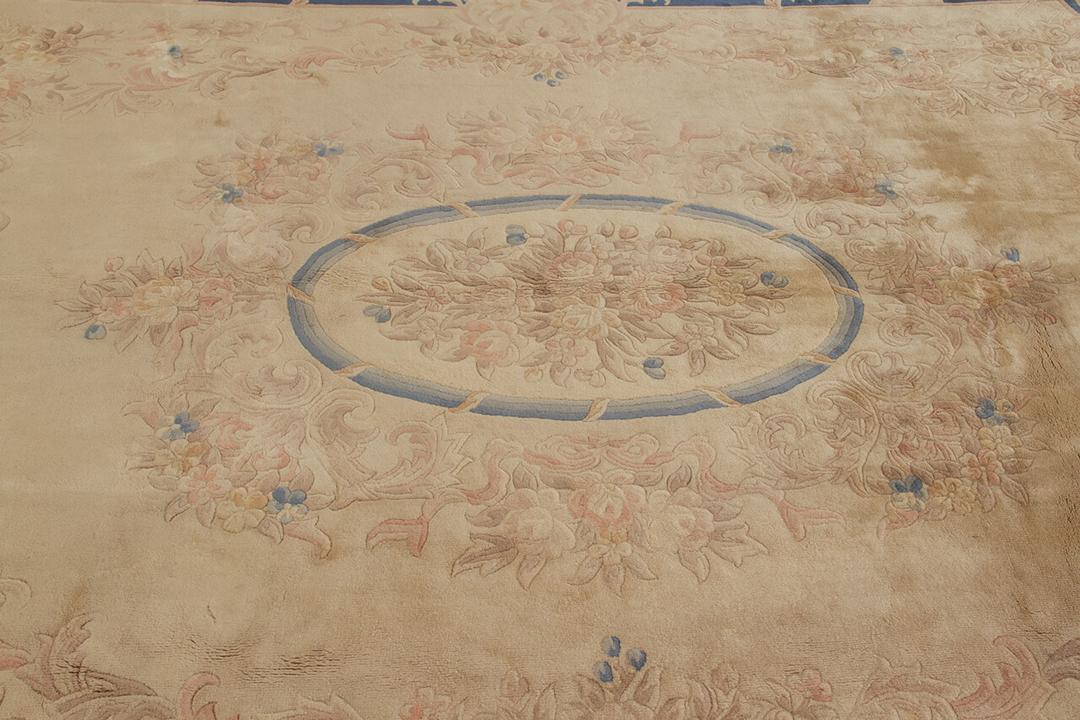
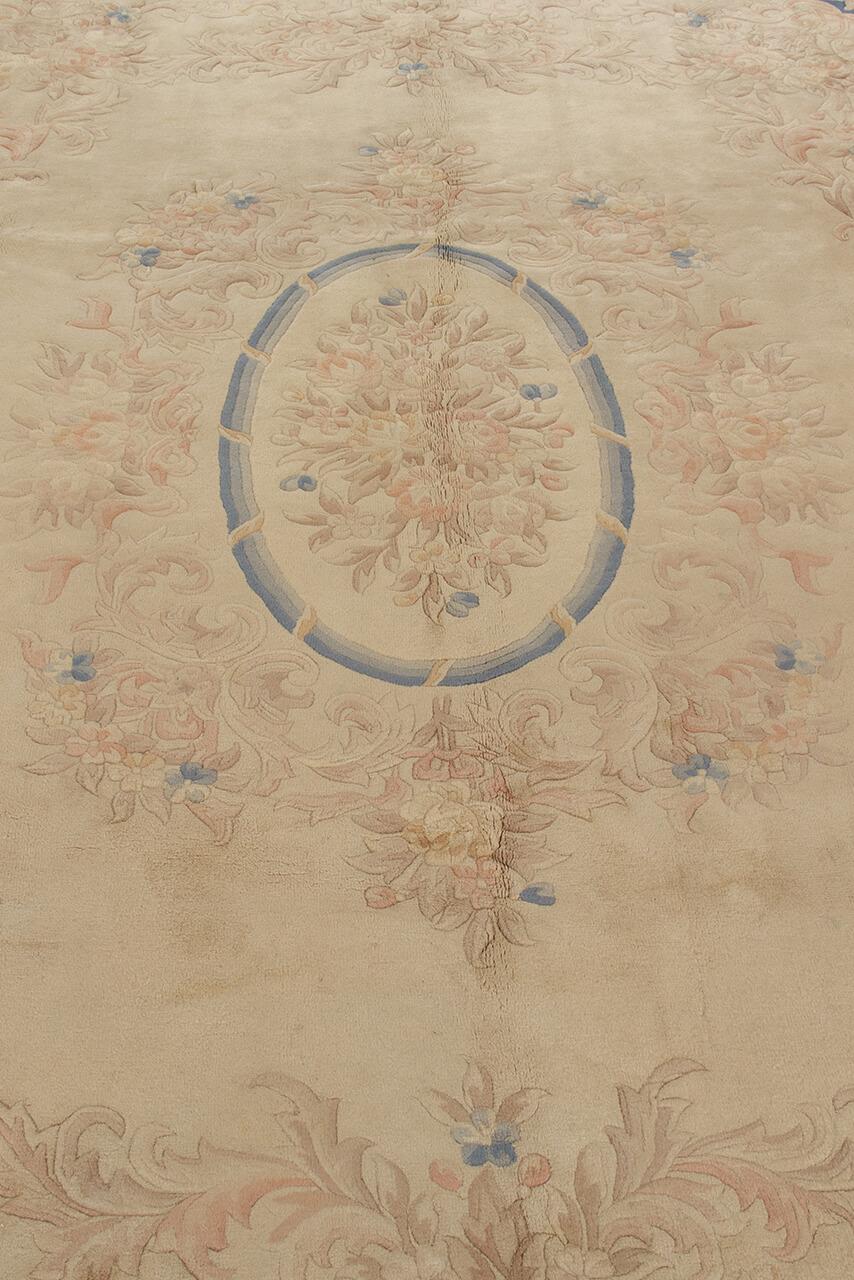
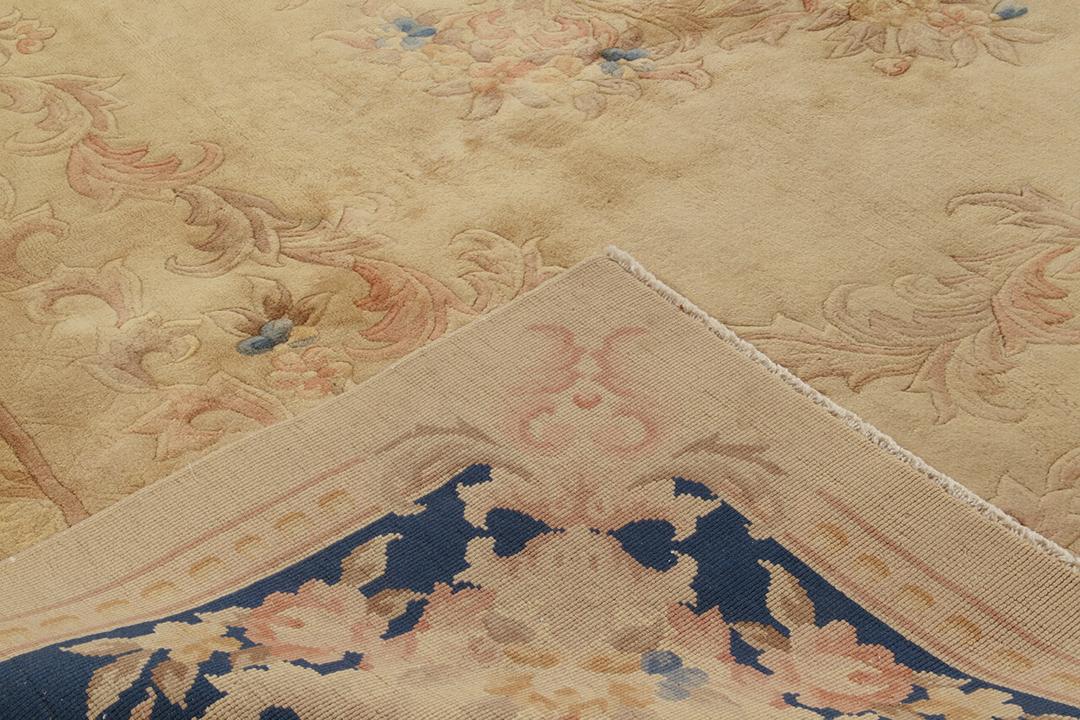
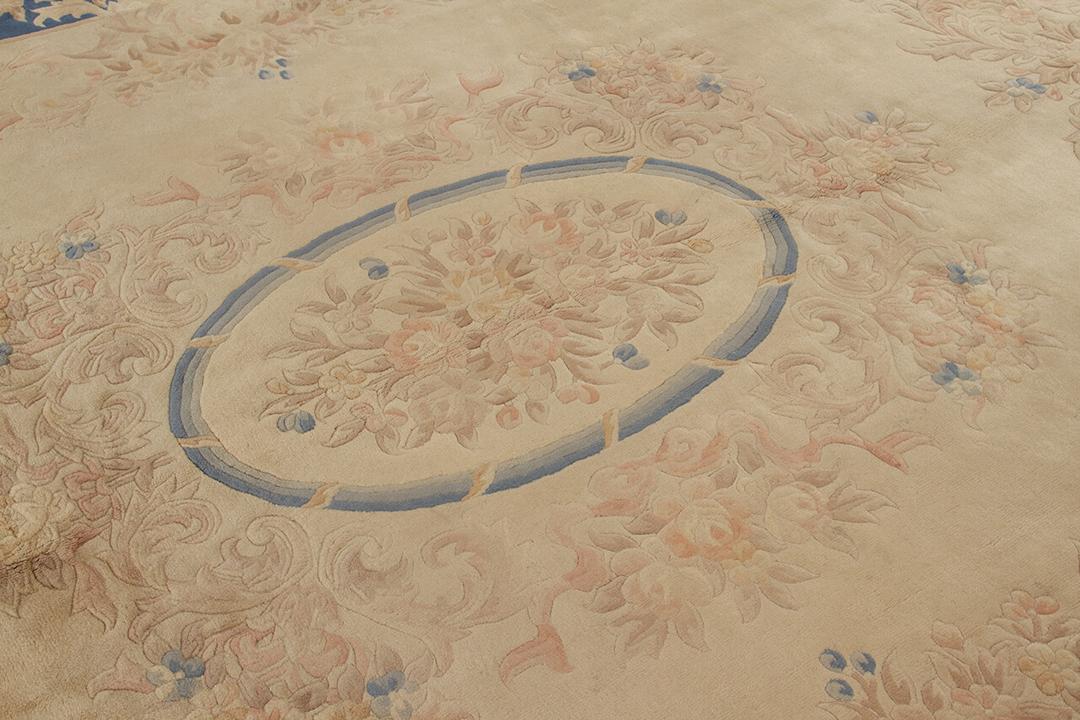
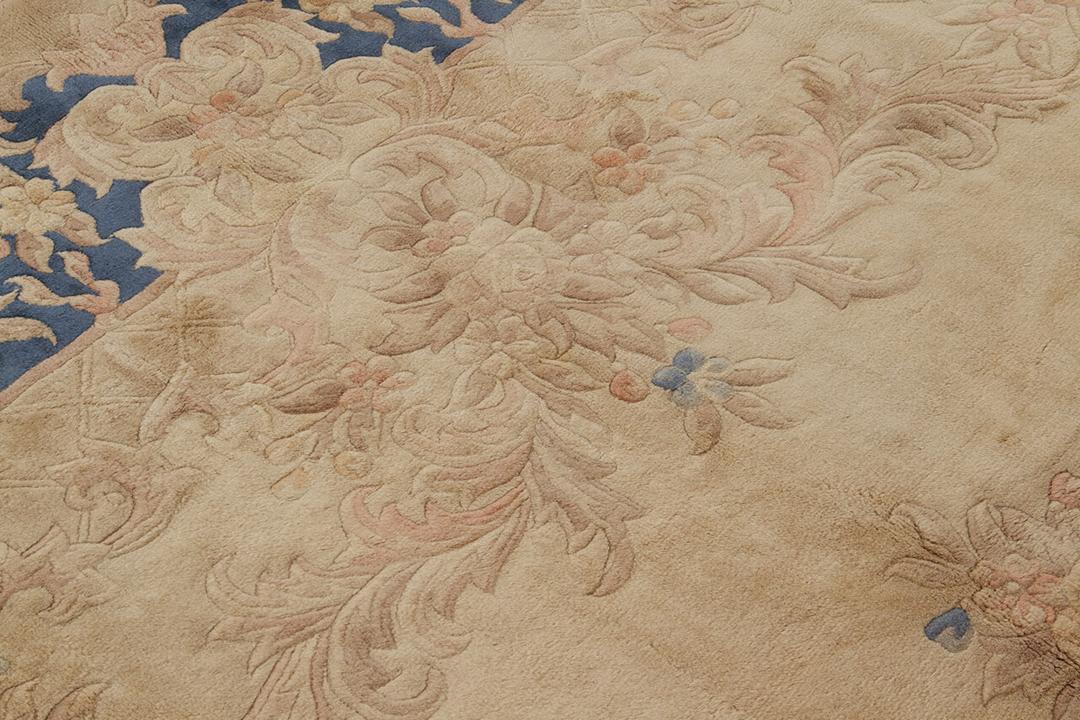
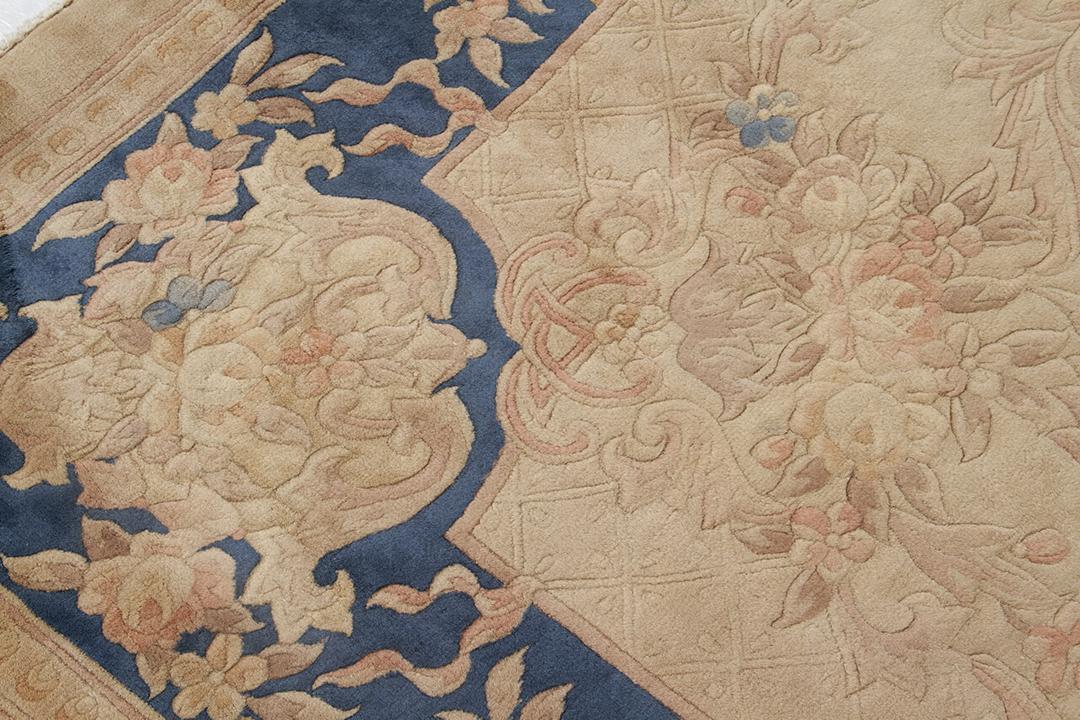
These rugs are celebrated for their use of high-quality wool and a specific, dense knotting technique that allows for sculptural, three-dimensional effects. The pile is often carved or clipped to accentuate the floral patterns, a hallmark of the Nichols style that adds depth and a tactile quality to the finished piece.
Visually, these rugs are distinguished by their use of bold, clear colours—often incorporating deep blues, rich golds, and soft pastels—against a neutral, often monochromatic field. The motifs typically feature stylised lotus blossoms, peonies, and other traditional Chinese symbols rendered with the bold geometry characteristic of the Art Deco era.
Collectors value these pieces for their historical significance and their status as a unique cultural collaboration. Owning a genuine Nichols rug is an investment in a specific moment of craft evolution, representing a legacy of skill that successfully blended two distinct artistic worlds into a singular, lasting aesthetic.