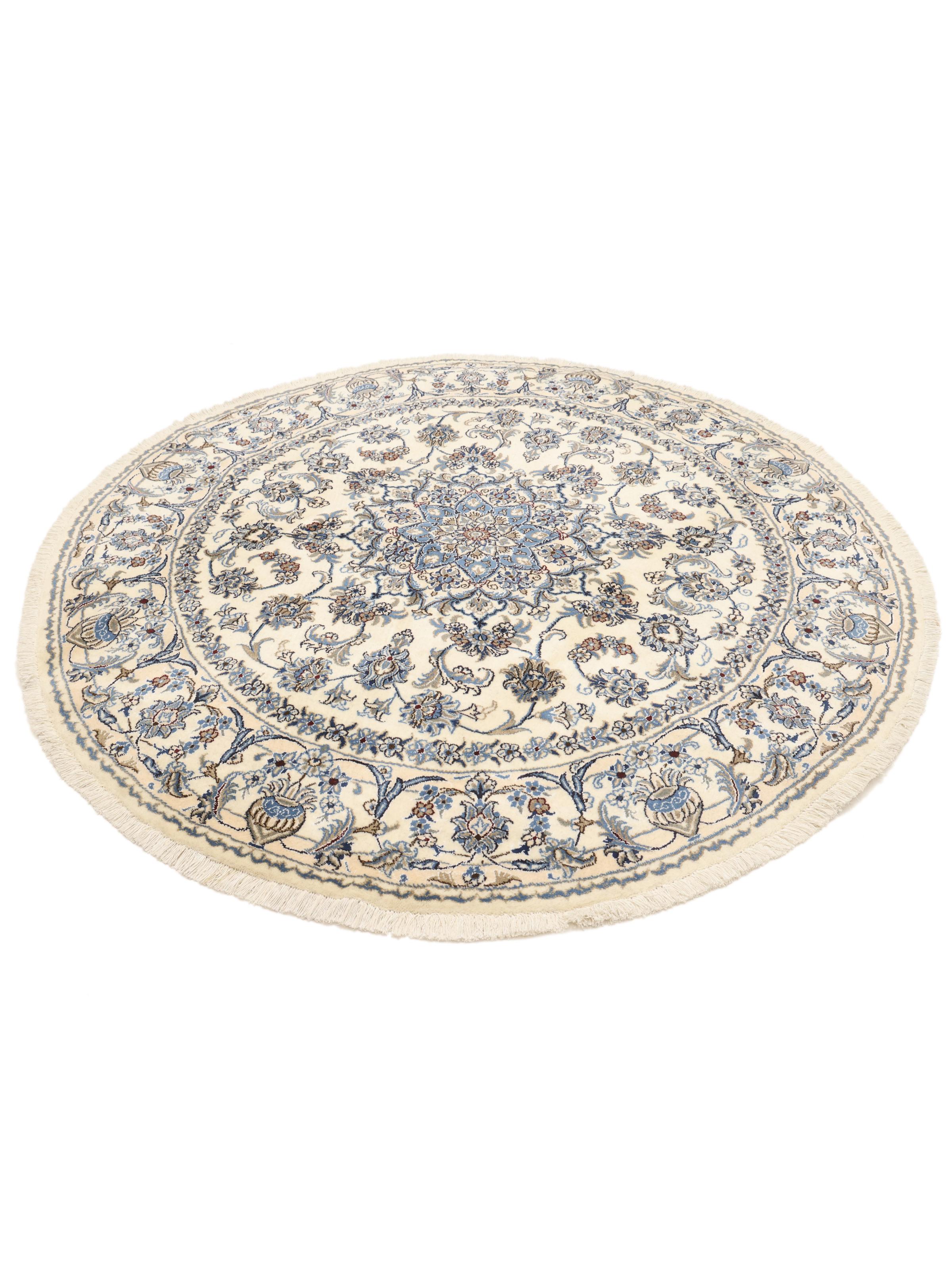
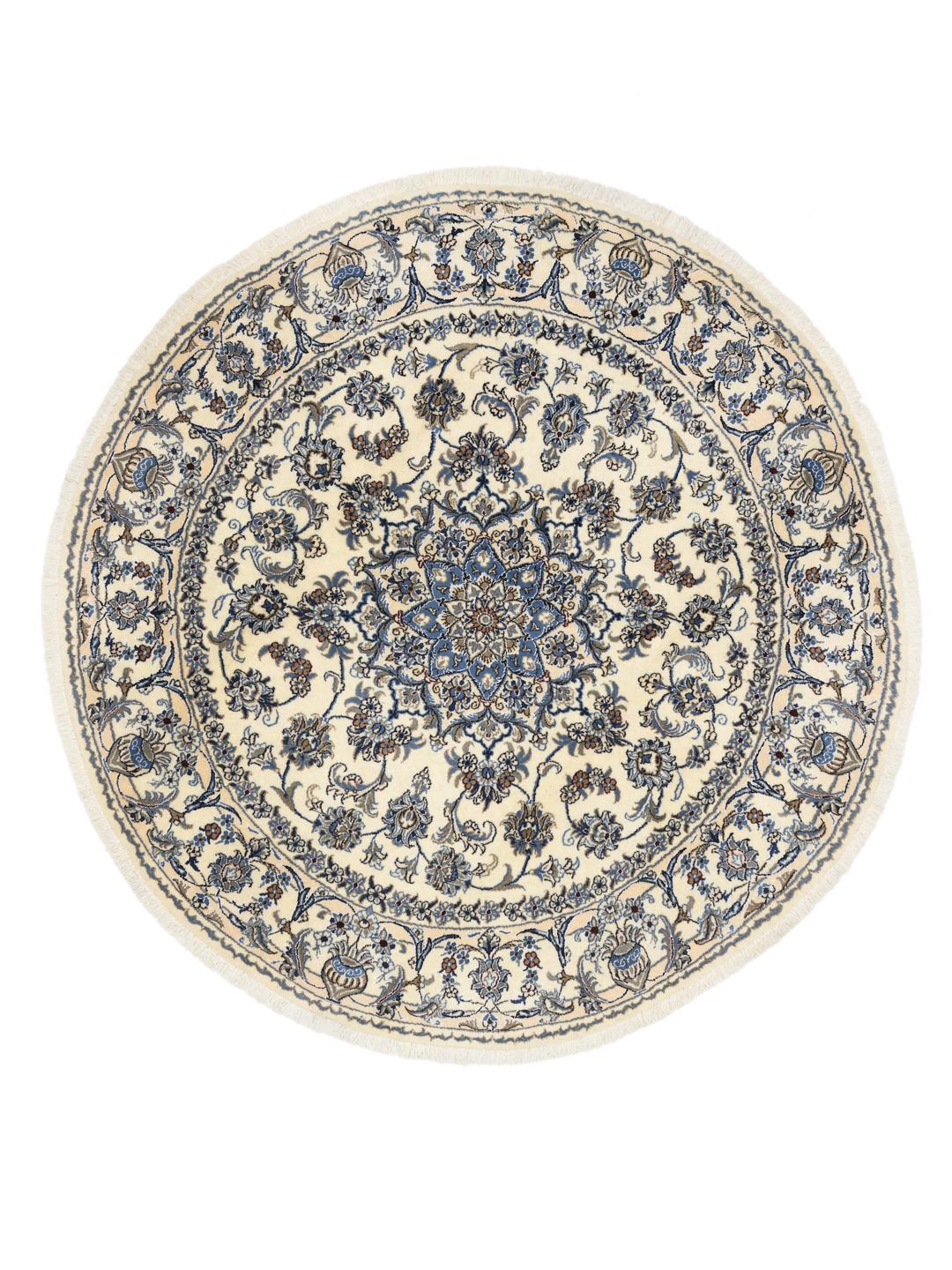
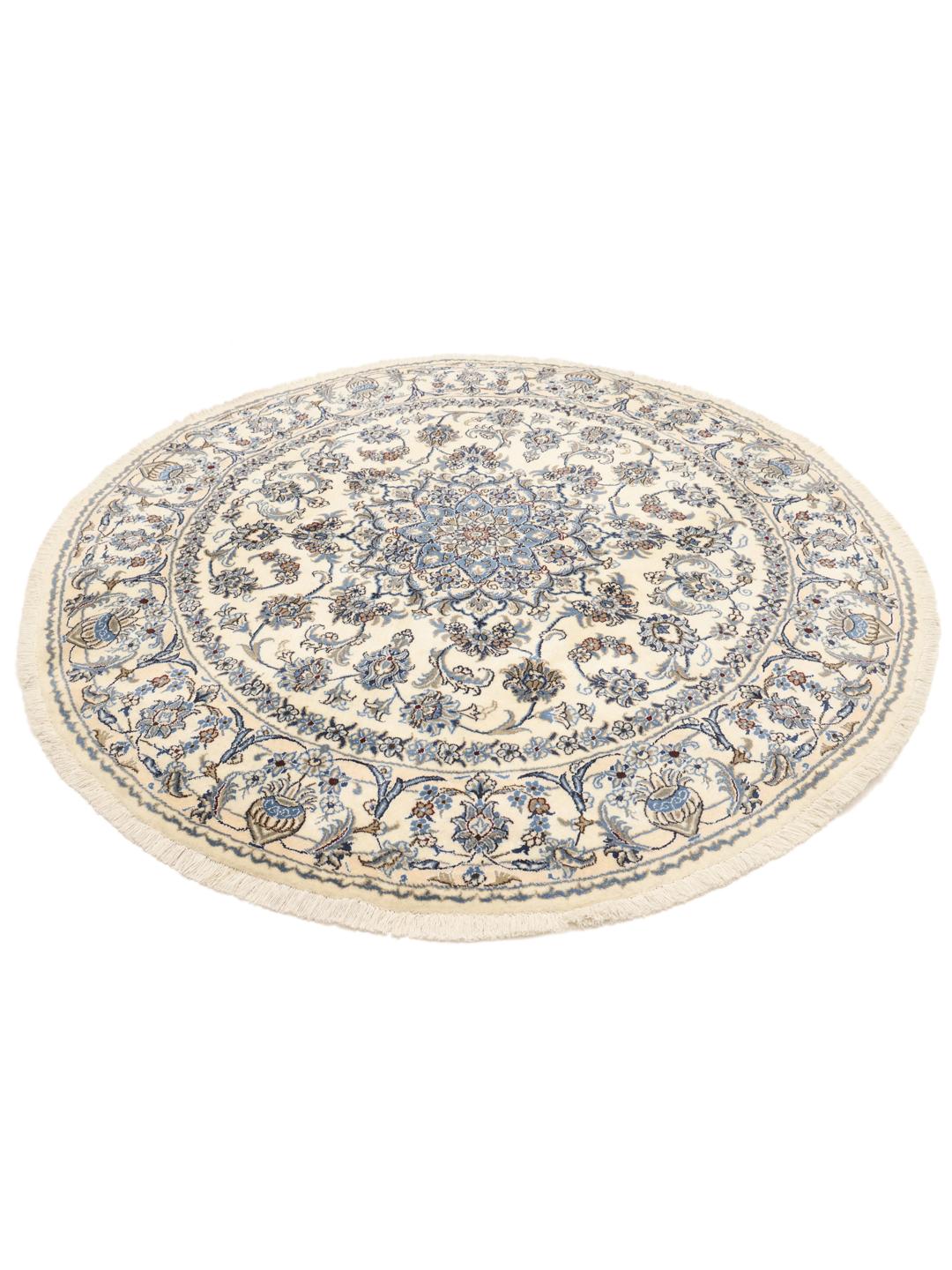
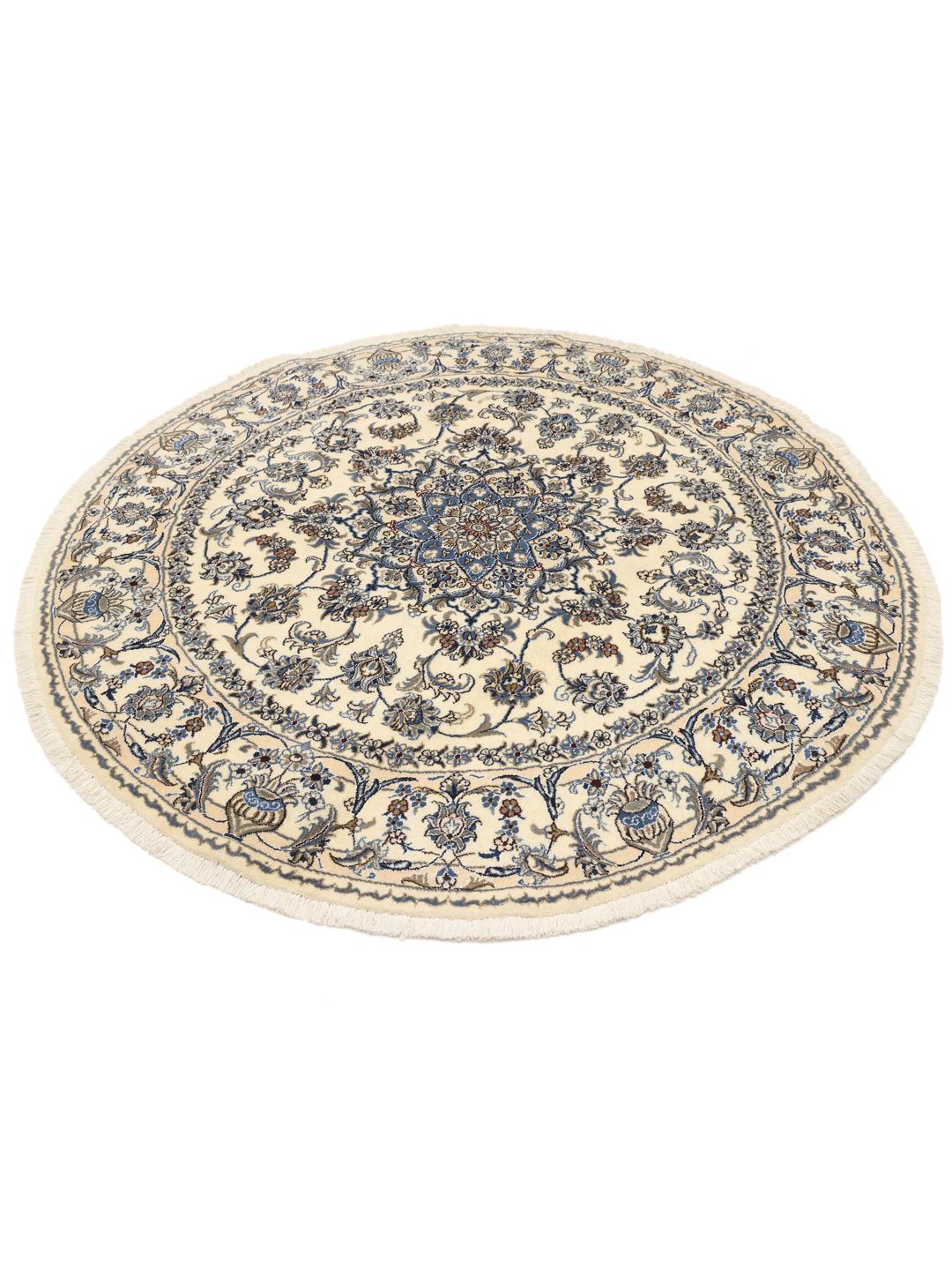
Nain rugs originate from the historic city of Nain, located in the heart of the Middle East. Originally known for producing fine woollen textiles and garments, the region pivoted to high-end rug weaving in the early 20th century. This transition allowed local artisans to apply their existing expertise in precision and detail to the world of hand-knotted rugs, quickly establishing the city as a centre for some of the most refined and sought-after floor coverings in the world.
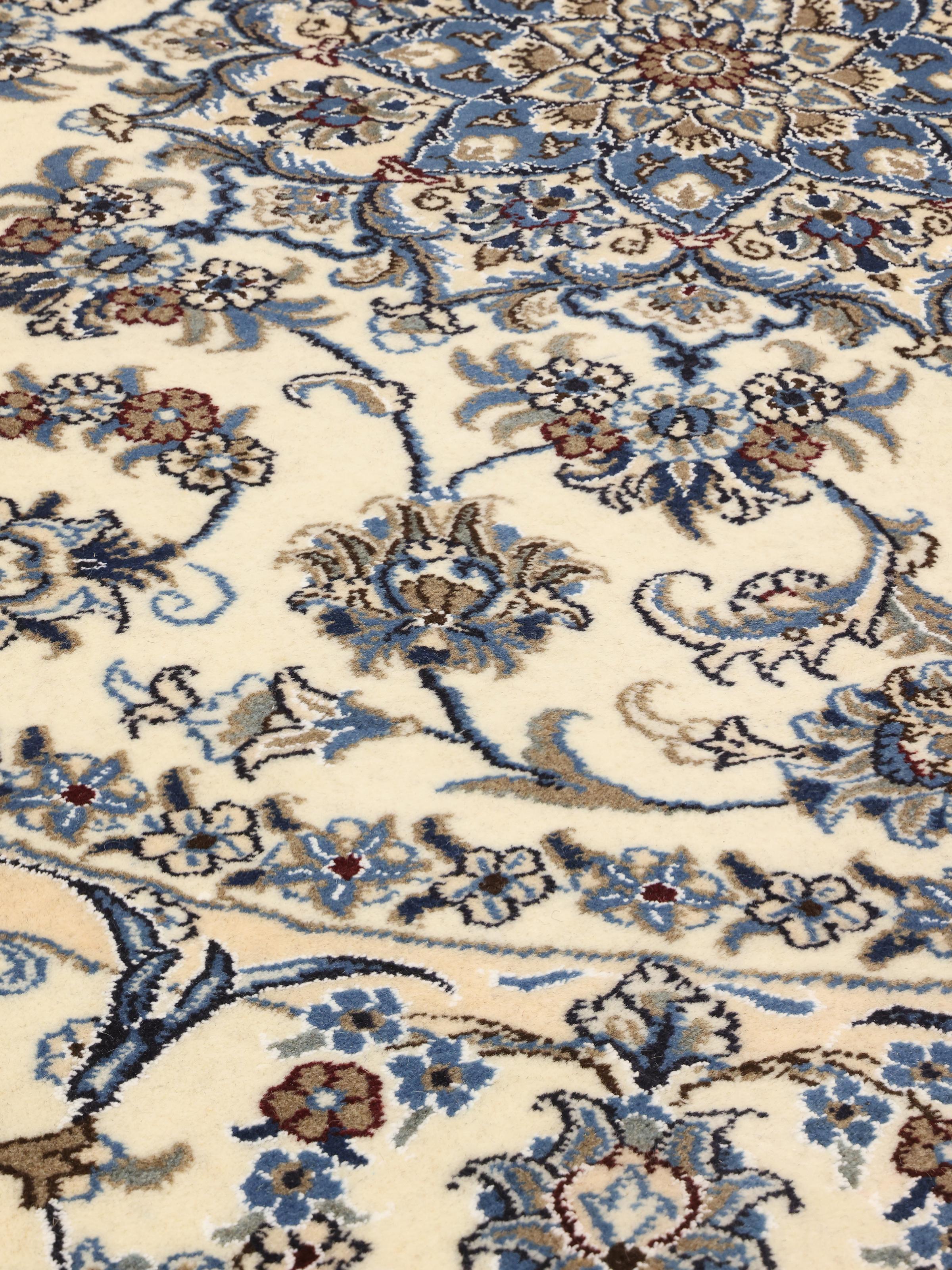
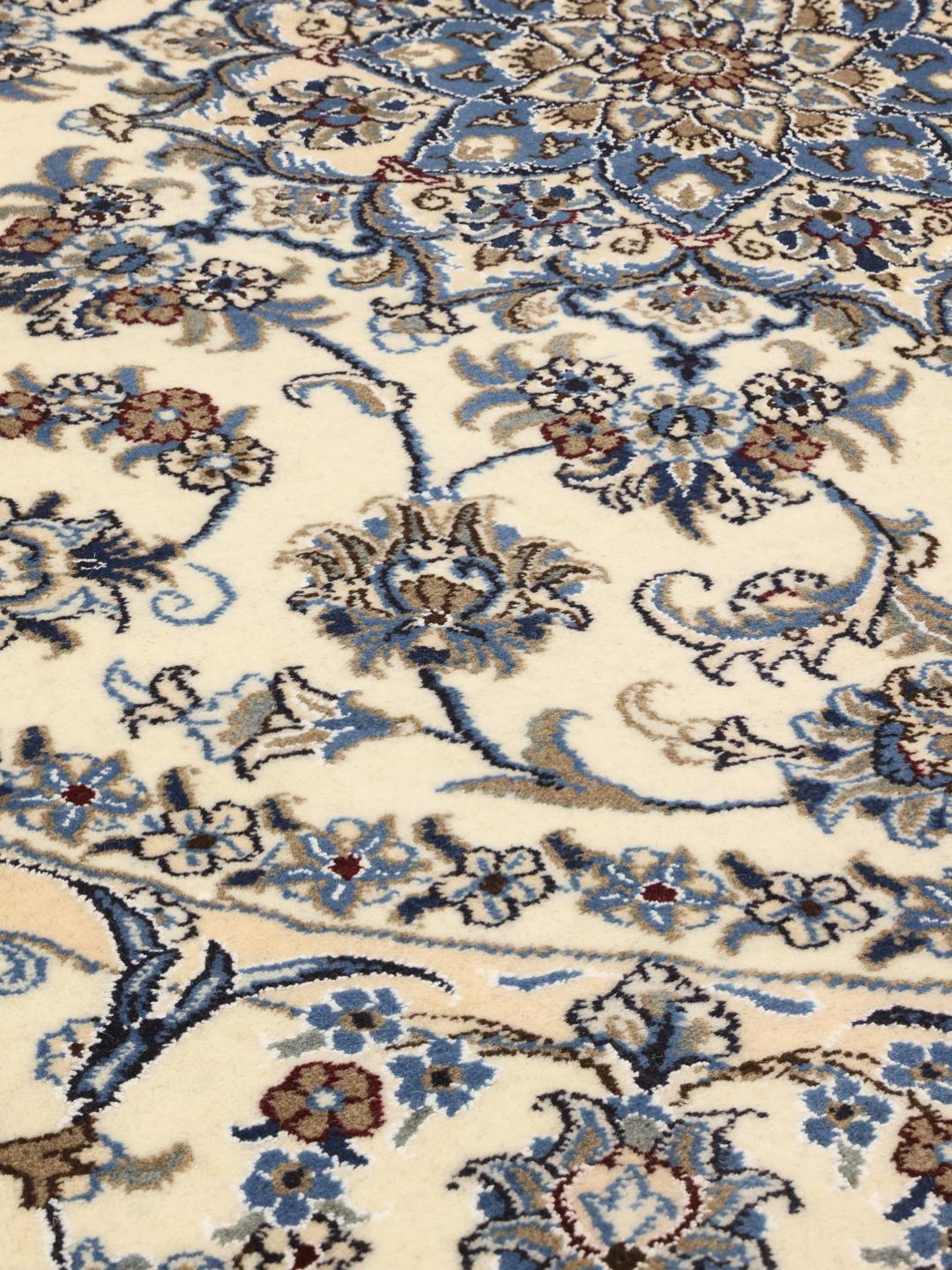
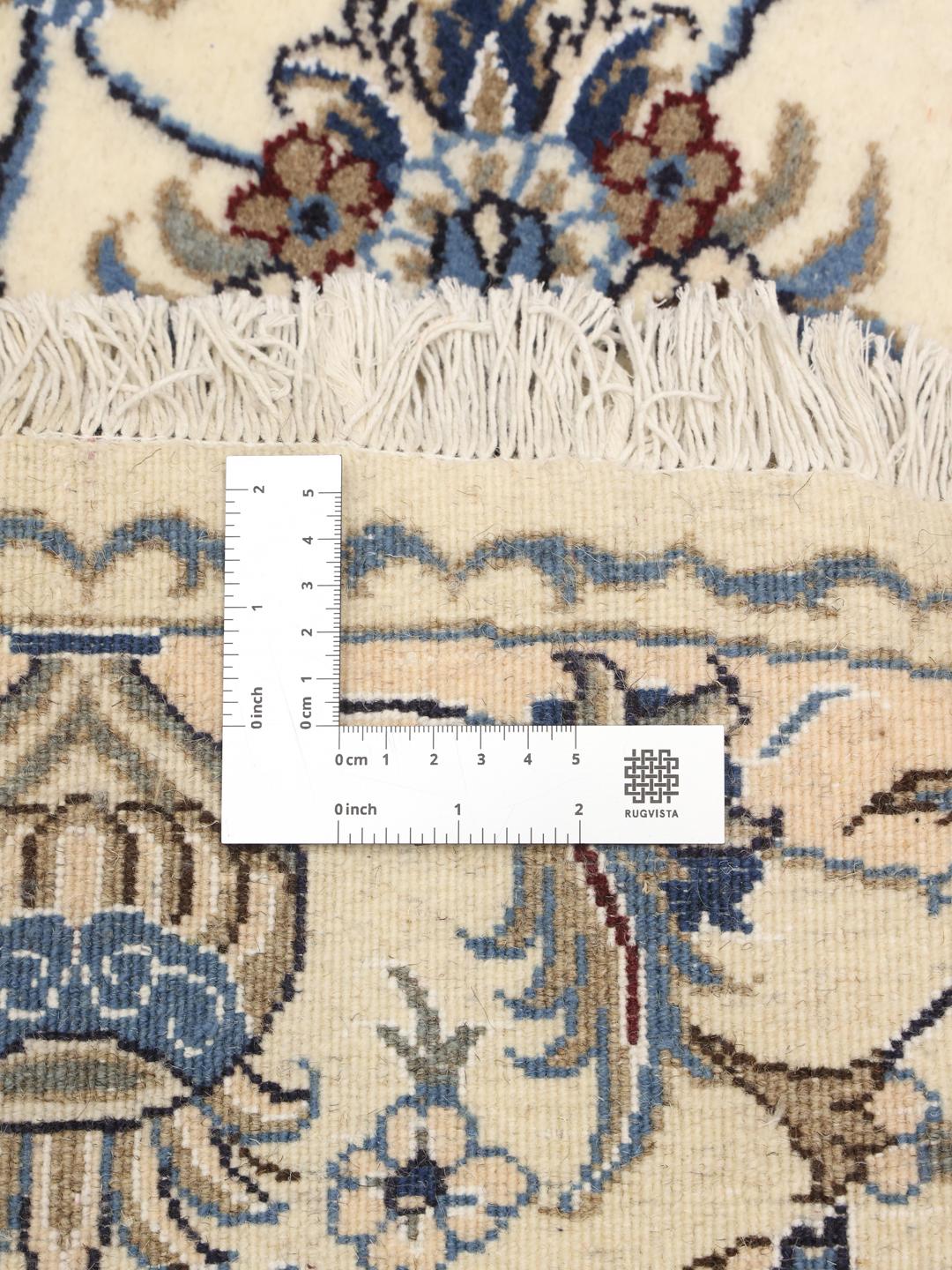
The quality of these rugs is often categorised by the density of the weave, which is a direct reflection of the skill required during production. A higher density allows for more intricate curves and finer details, creating a pattern that appears almost painterly in its execution. This level of craftsmanship is essential to the Nain tradition, requiring the weaver to maintain perfect consistency across thousands of individual knots to achieve the desired aesthetic finish.
Visually, these rugs are celebrated for their balanced and harmonious designs, often featuring a central medallion surrounded by delicate floral scrolls and vines. The colour palette traditionally emphasises soft, neutral tones like beige and cream, accented with sophisticated shades of blue or green. This restrained use of colour highlights the complexity of the patterns, ensuring that the rug remains a graceful, rather than overwhelming, addition to a room.
Owning a piece from this tradition is a significant mark of appreciation for historical craft. These rugs are not merely decorative items but are considered important examples of cultural heritage, valued for the patience and dedication required to produce them. Collectors and interior designers alike seek out these pieces for their ability to bring a sense of permanence and cultivated beauty to a home, standing as a testament to a tradition that prioritises excellence above all else.