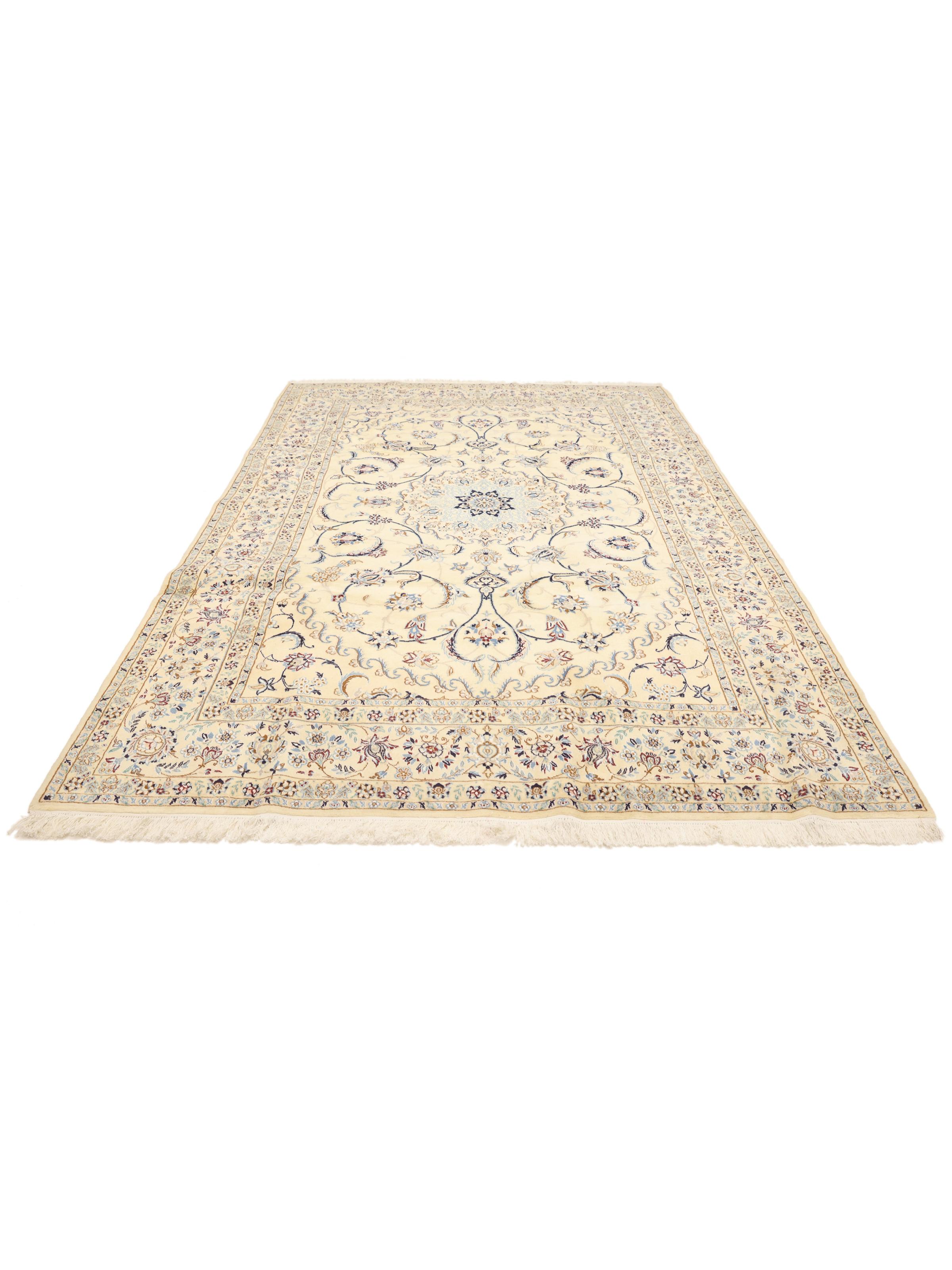
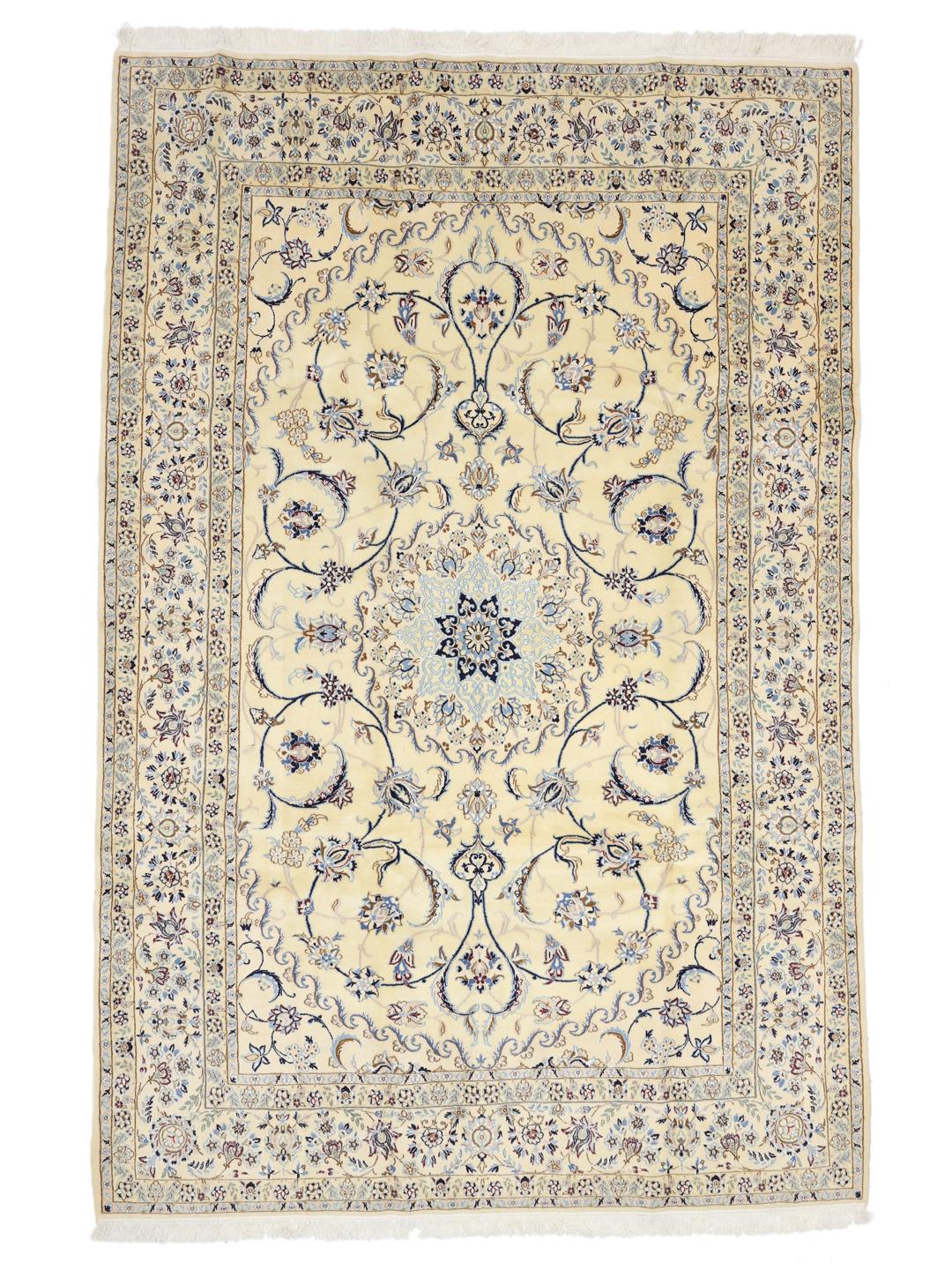
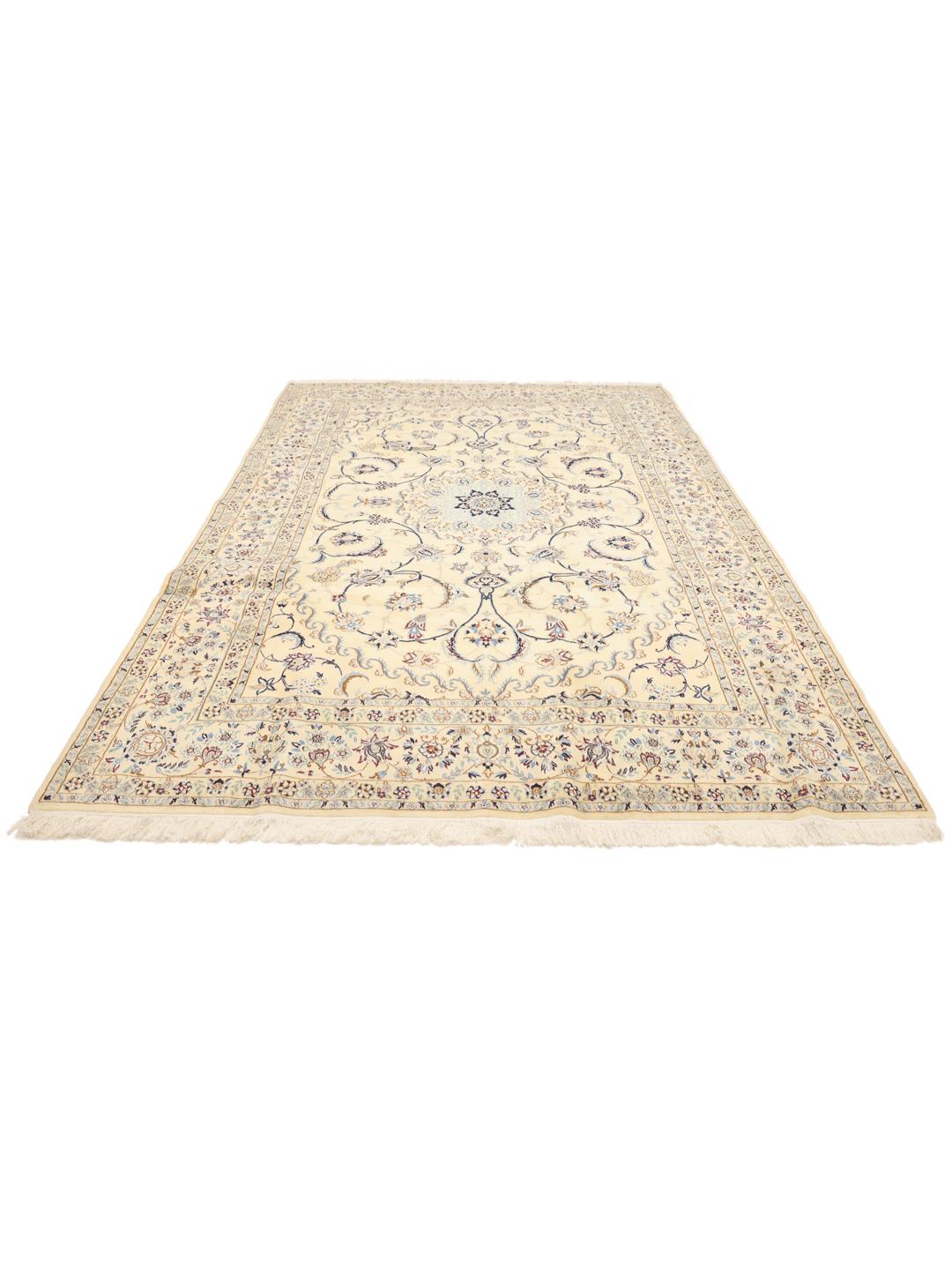
The Nain rug tradition hails from the historic town of Nain, located in the heart of the Middle East. Originally known for producing high-quality wool textiles and religious garments, the region pivoted to rug weaving in the early 20th century. Over time, Nain developed a distinct identity, quickly becoming one of the most respected centres for fine, sophisticated weaving in the world.
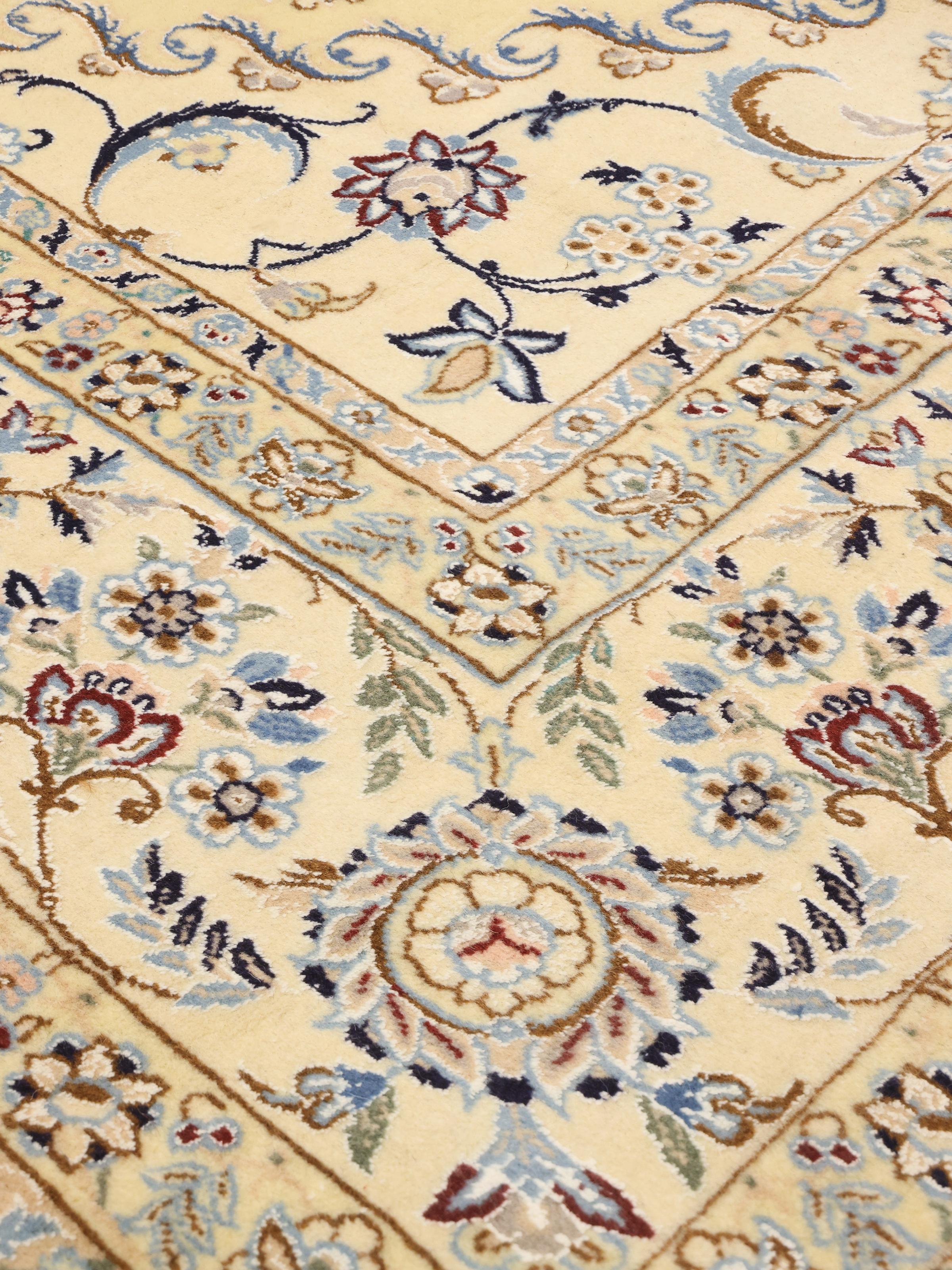
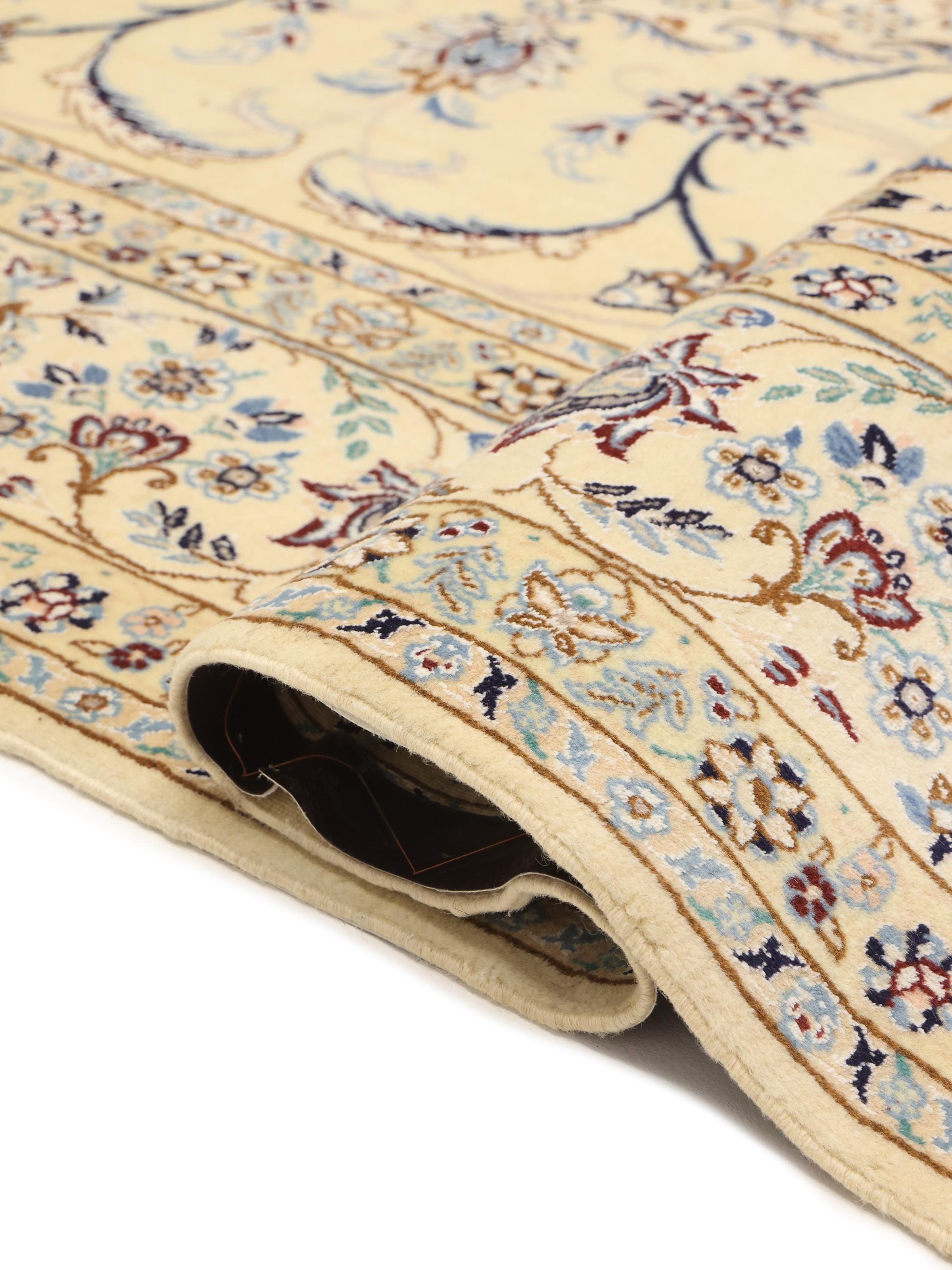
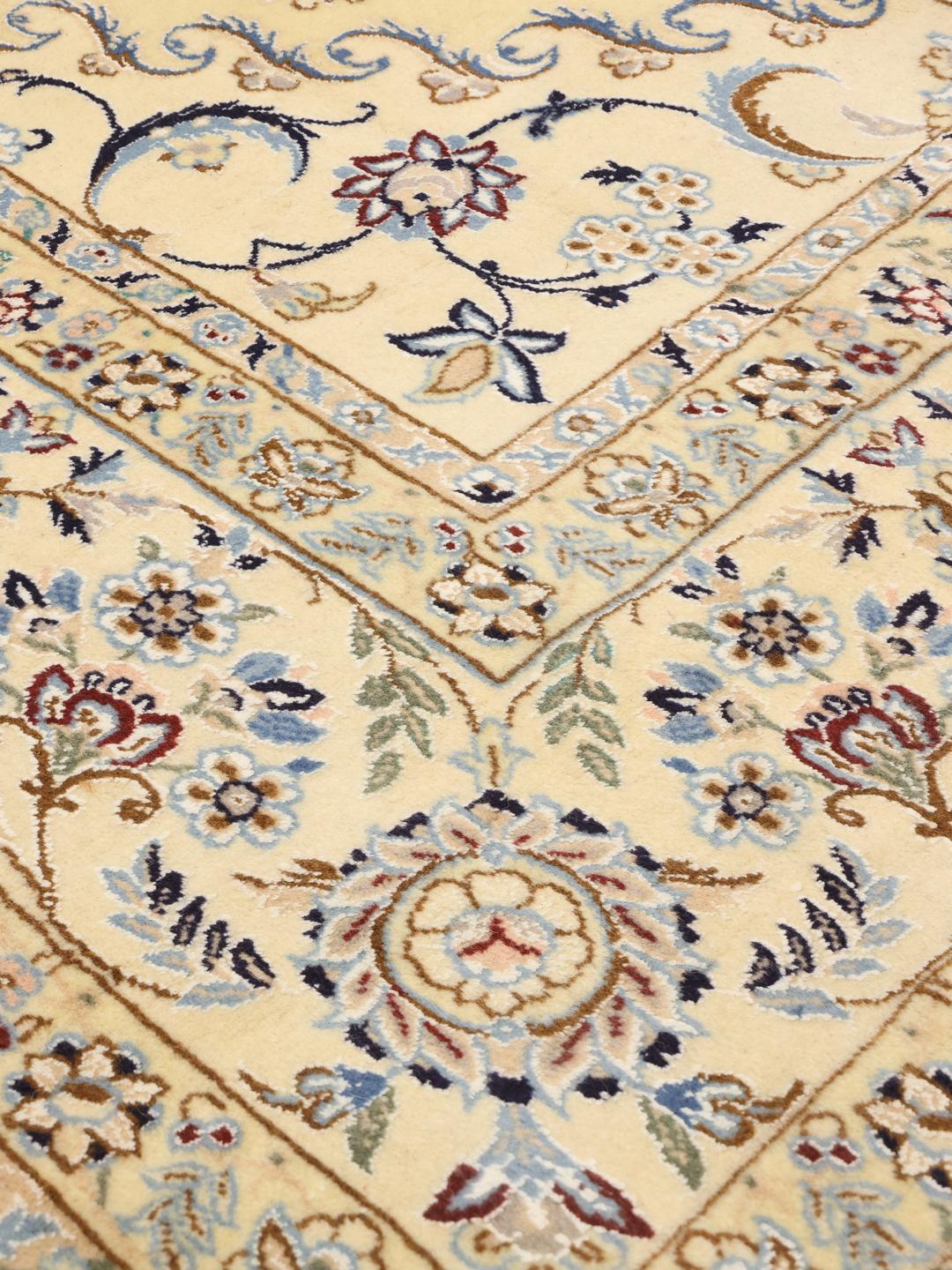
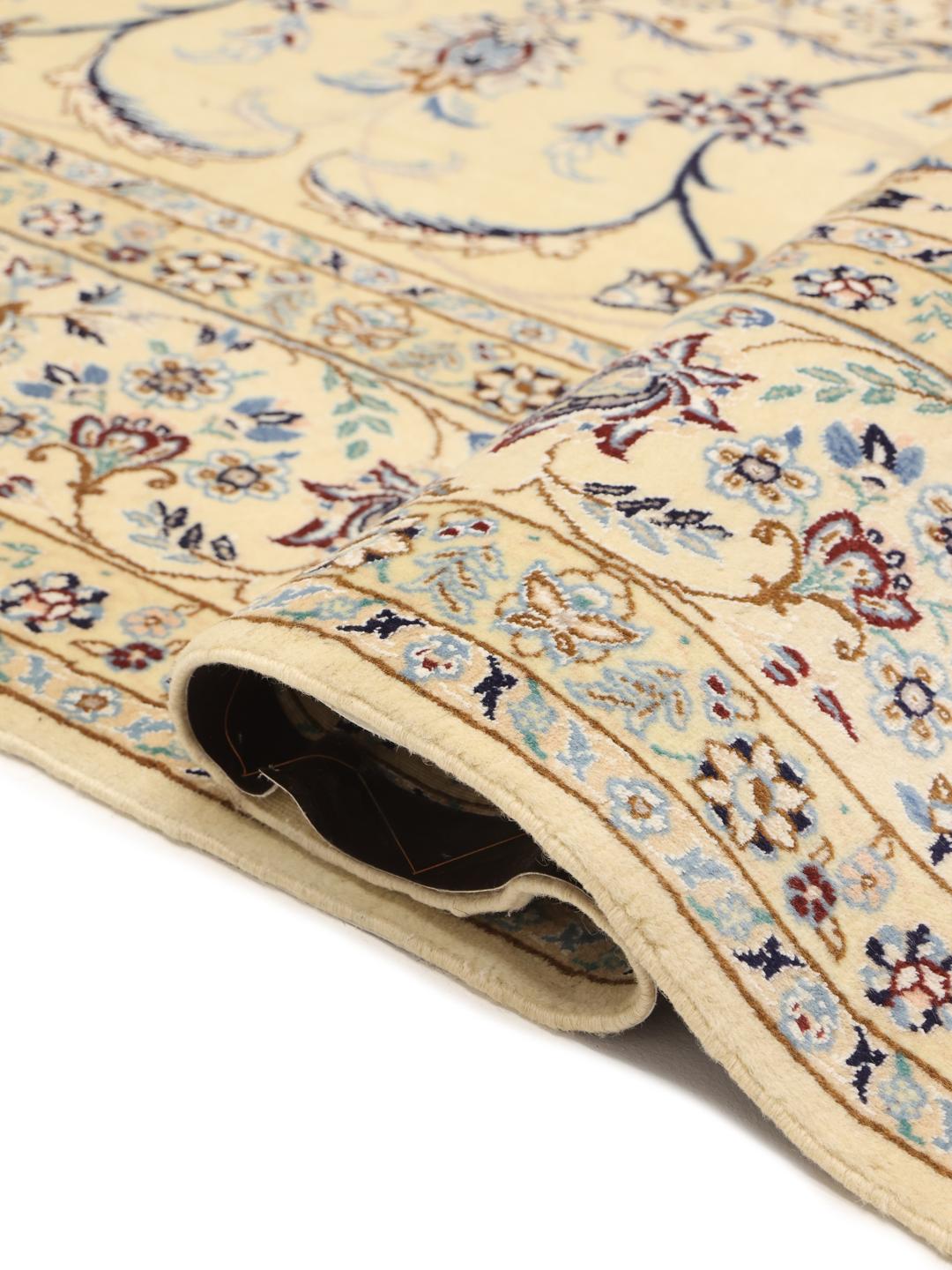
The classification of '9La' refers to the technical structure of the rug, specifically the number of threads used in the warp. In the local dialect, 'La' means layer, and the number indicates the number of strands twisted together to form each warp thread. A 9La rug is renowned for its balance of durability and fine detail, providing a thinner, more elegant pile that allows for the intricate, curvilinear patterns that collectors admire.
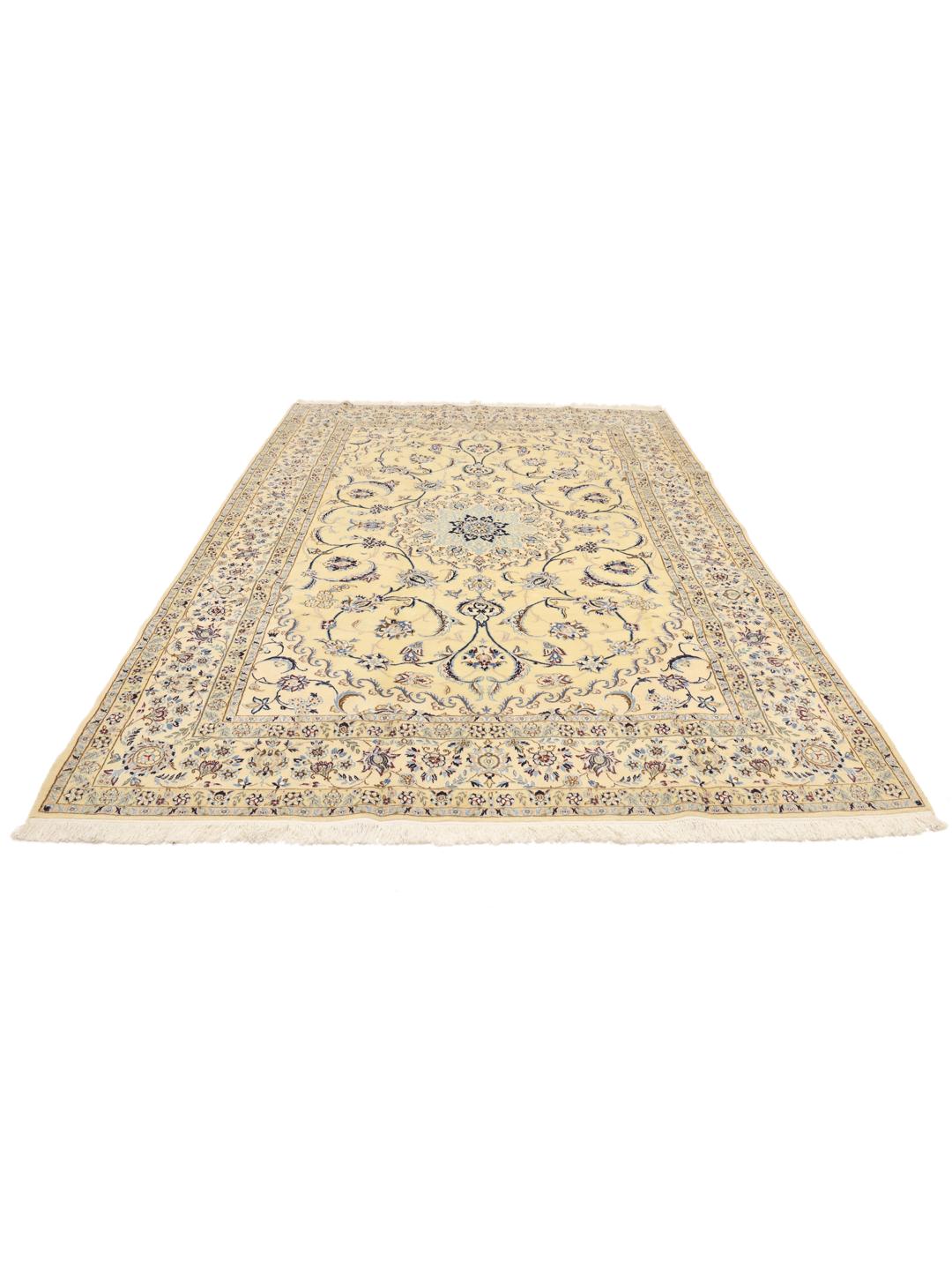
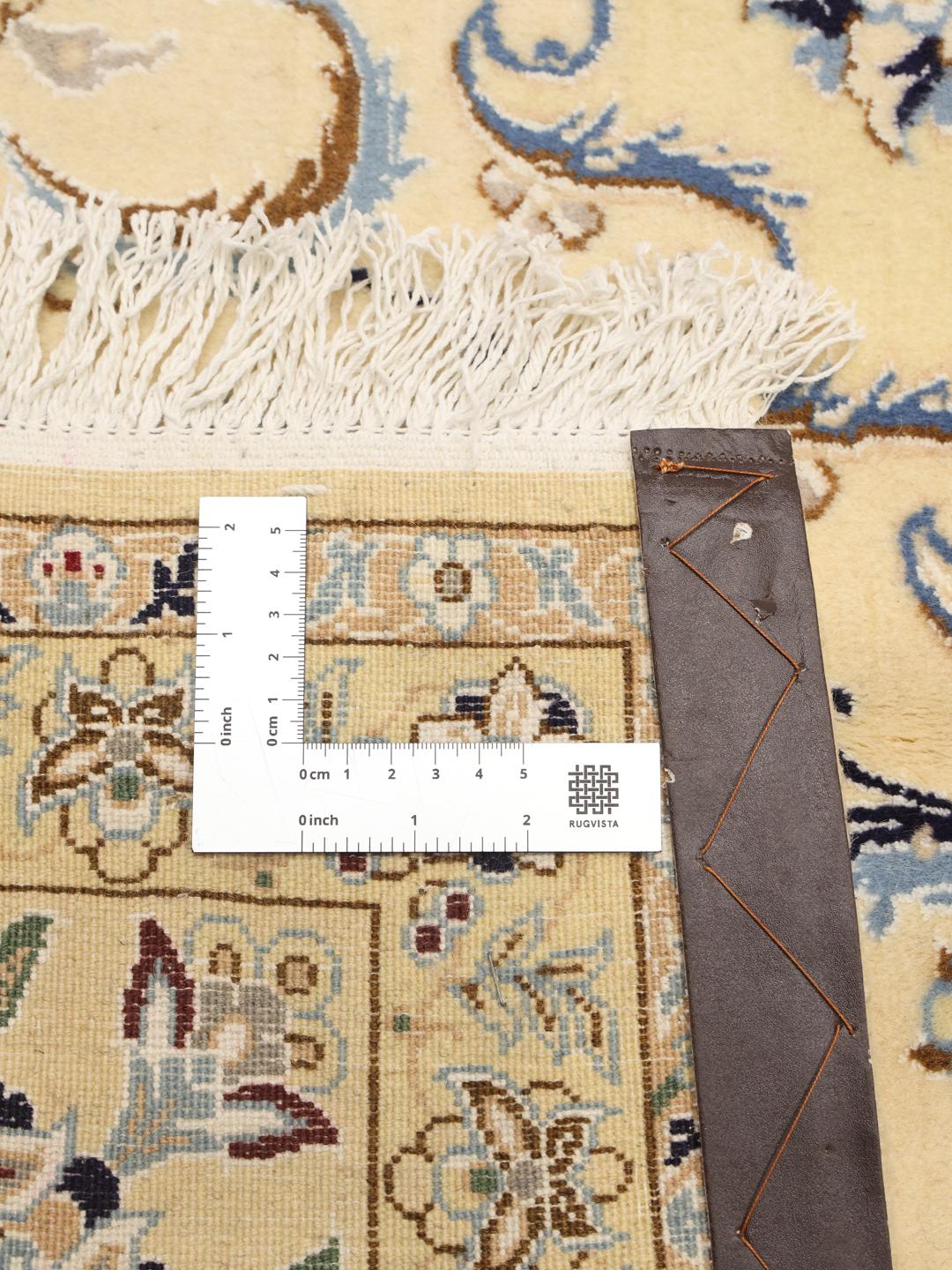
Visually, these rugs are defined by their elegant use of space and colour. They typically feature a central medallion surrounded by a delicate lattice of floral vines, palmettes, and arabesques. The colour palette is almost always restrained, favouring creams, beiges, and soft blues, which highlights the precision of the knotting rather than relying on bold, contrasting shades.
Owning a Nain rug is considered a mark of appreciation for traditional craftsmanship. Because of the immense skill required to produce such fine detail, these rugs have long been highly sought after by collectors. They represent a bridge between historical weaving techniques and a modern desire for beauty, serving as a lasting legacy of the weaver's art.