Nain rugs originate from the desert town of Nain in the Middle East, a region with a deep-rooted history in textile production. Originally known for weaving high-quality wool cloaks, the local artisans shifted their focus to exquisite rugs in the early 20th century. This transition allowed them to apply their exceptional skill to a new medium, quickly earning a reputation for creating some of the most refined and sought-after pieces in the world.
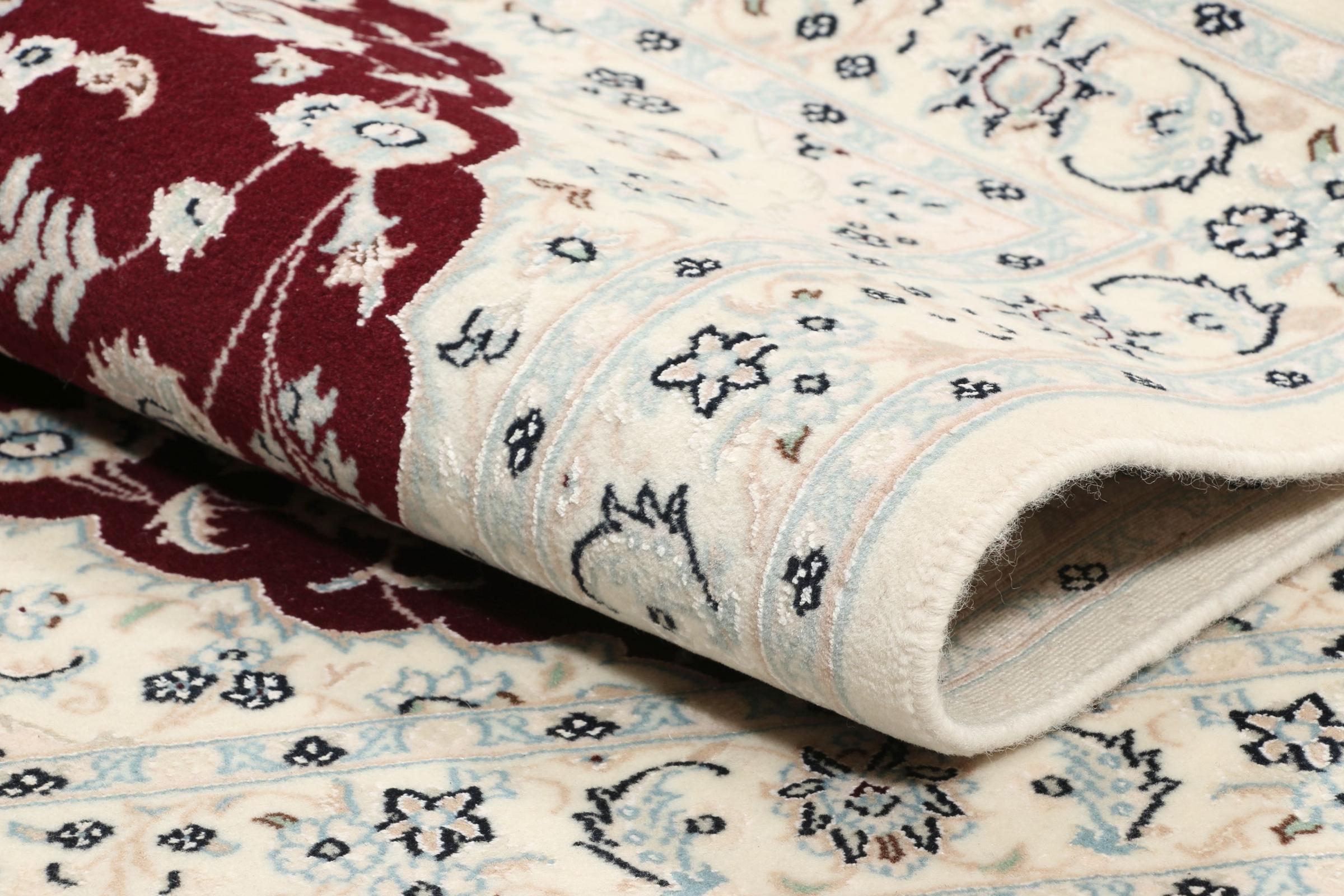
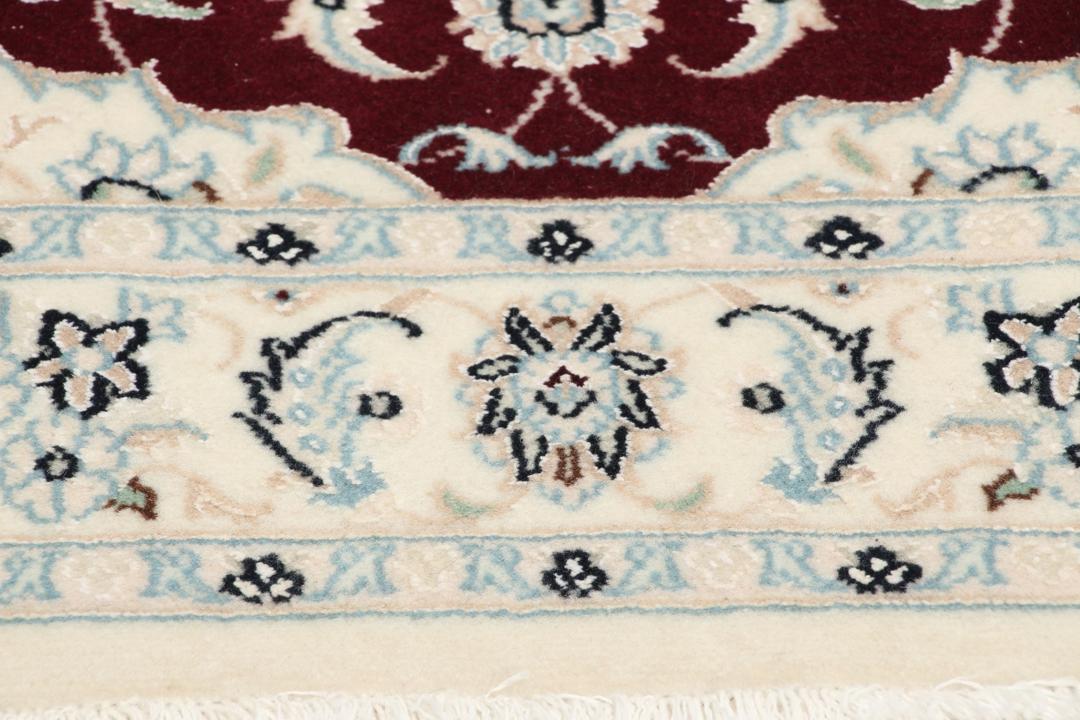
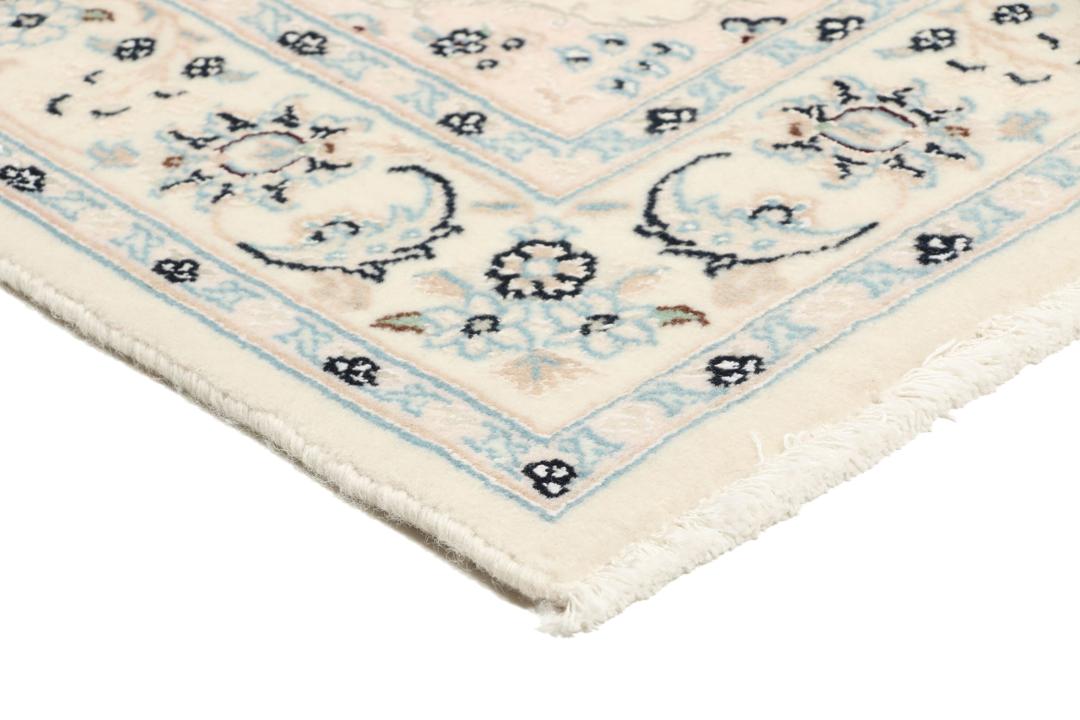
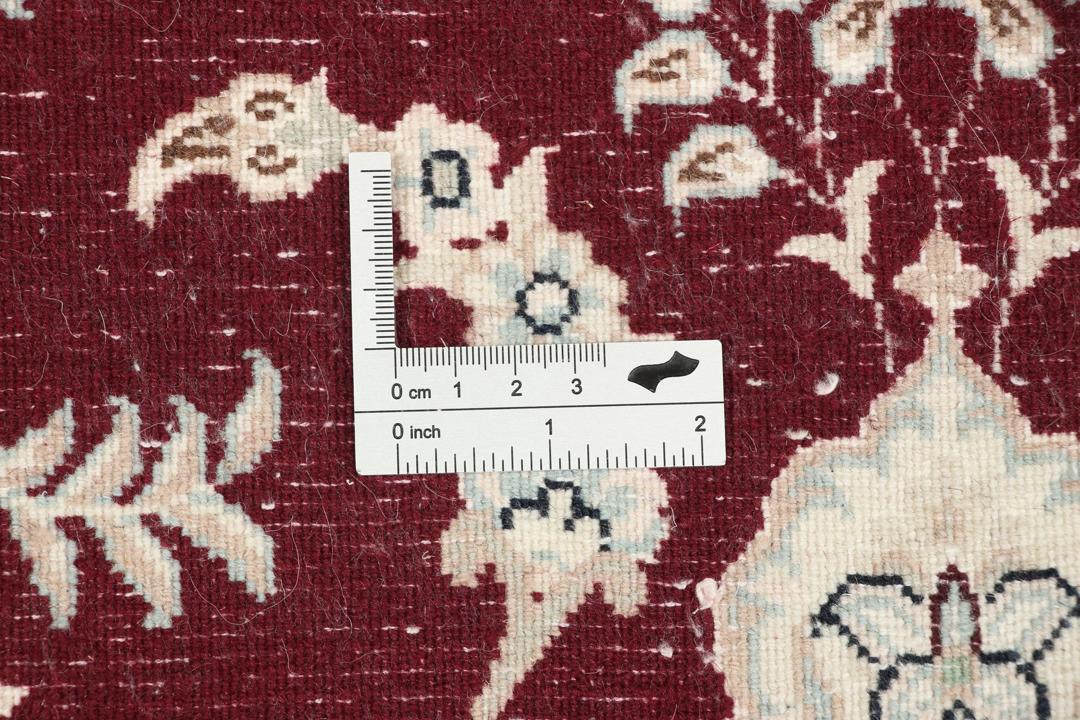
The '9La' designation is a technical term that refers to the number of threads used in the fringe, which serves as a gauge for the rug's fineness. A lower 'La' number indicates a higher knot density and finer, more slender materials. In this rug, the 9La construction provides a delicate balance between fine detail and a soft, durable pile, reflecting the high standards of the Sherkat Farsh workshop, which is renowned for its strict quality control and traditional excellence.
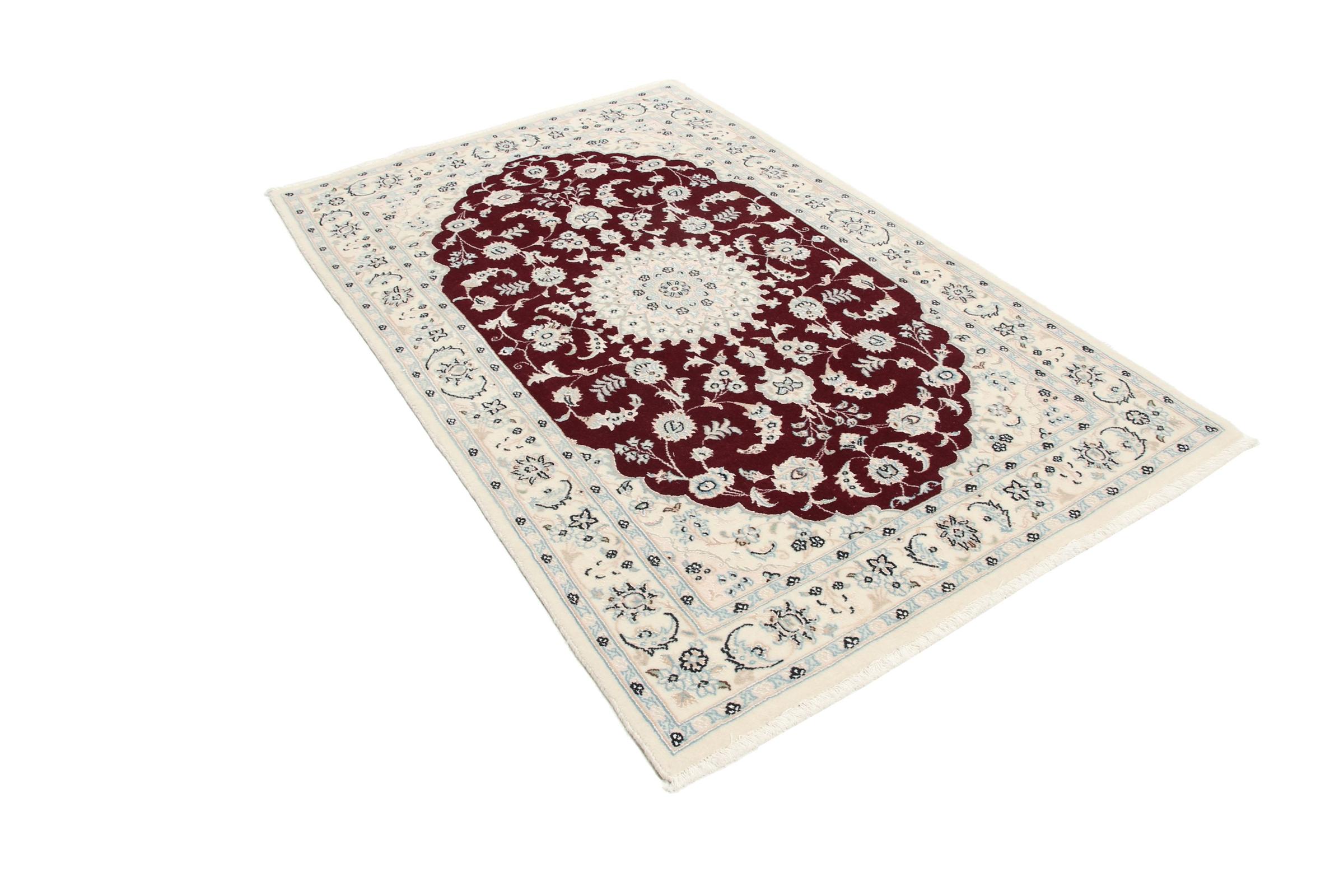
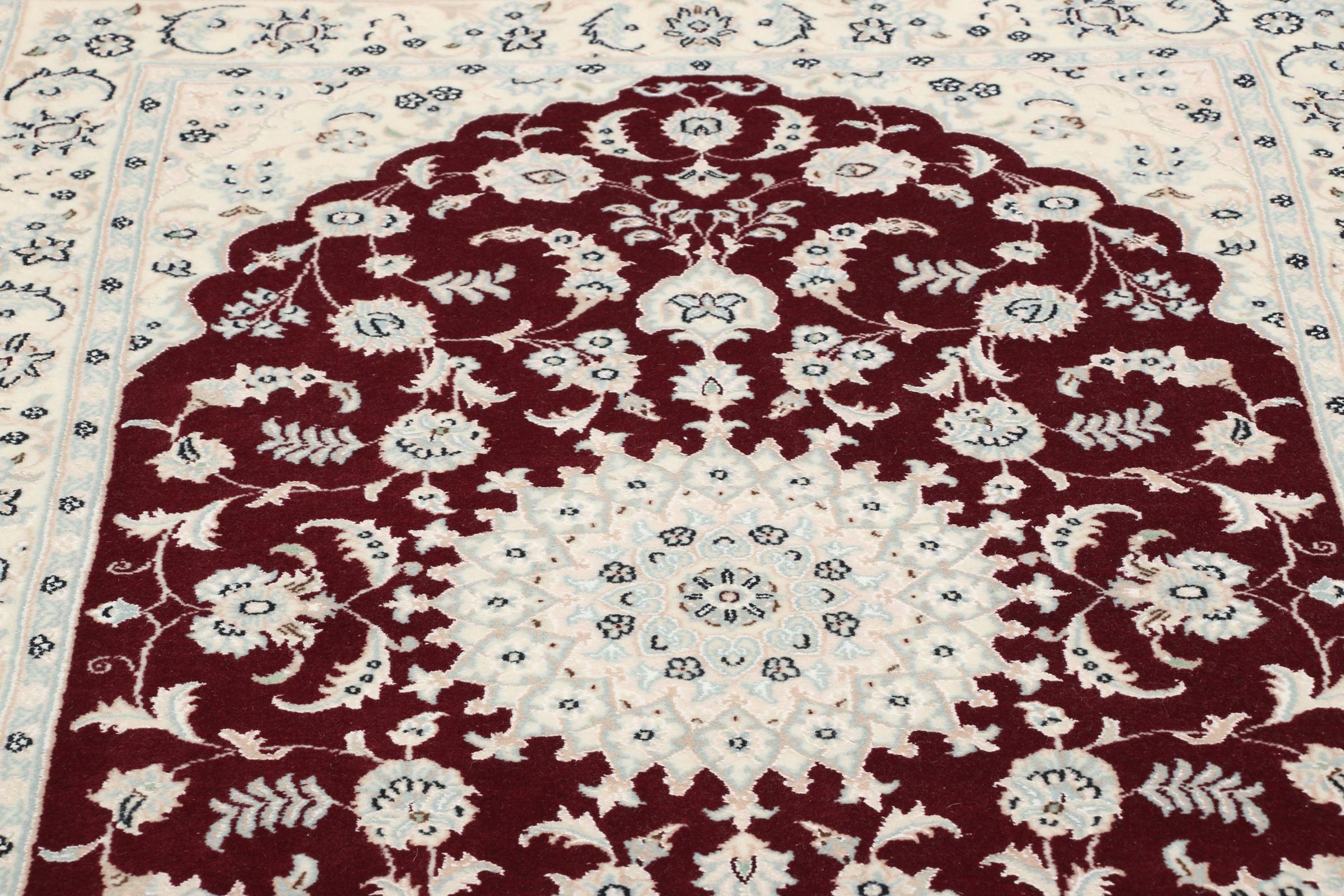
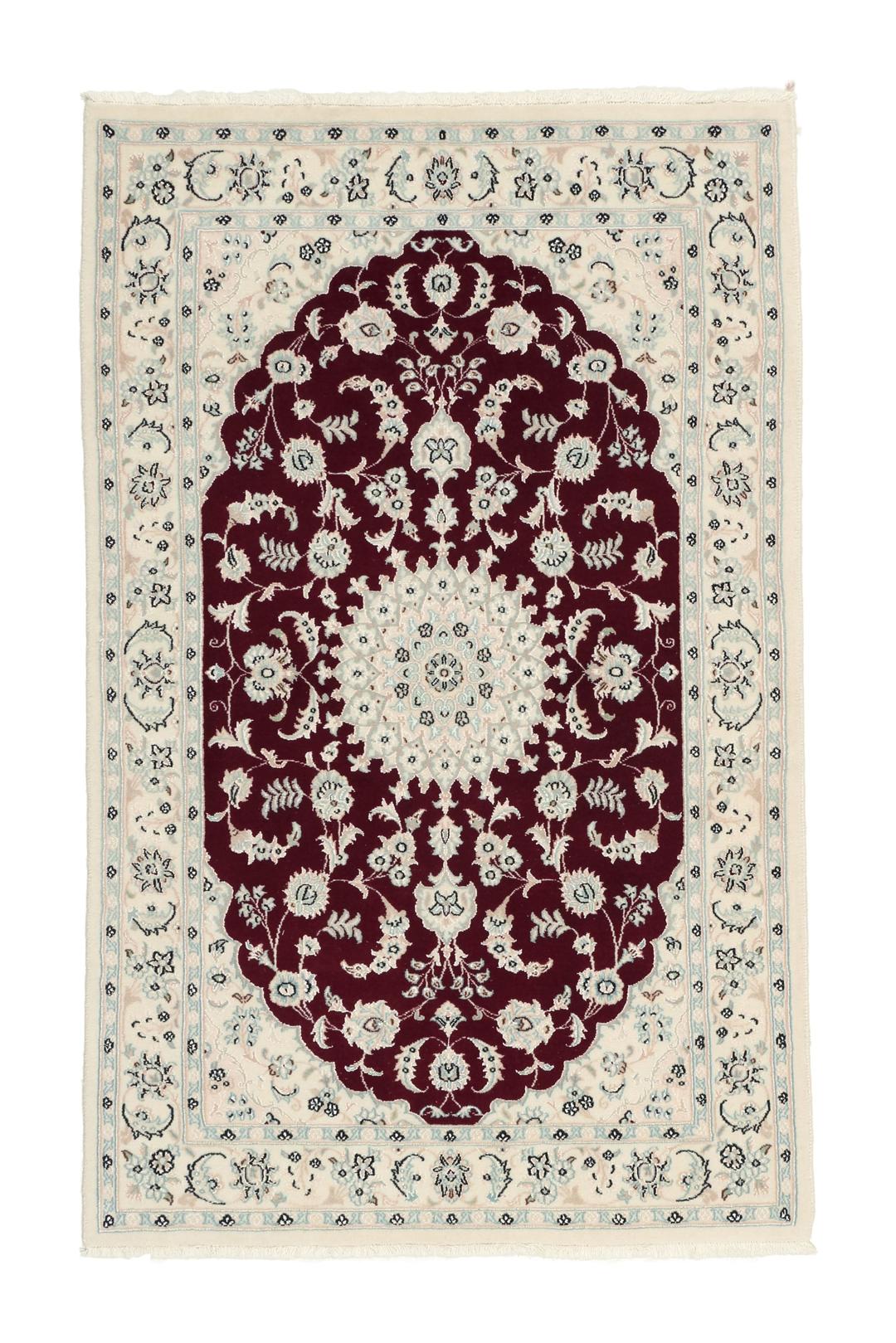
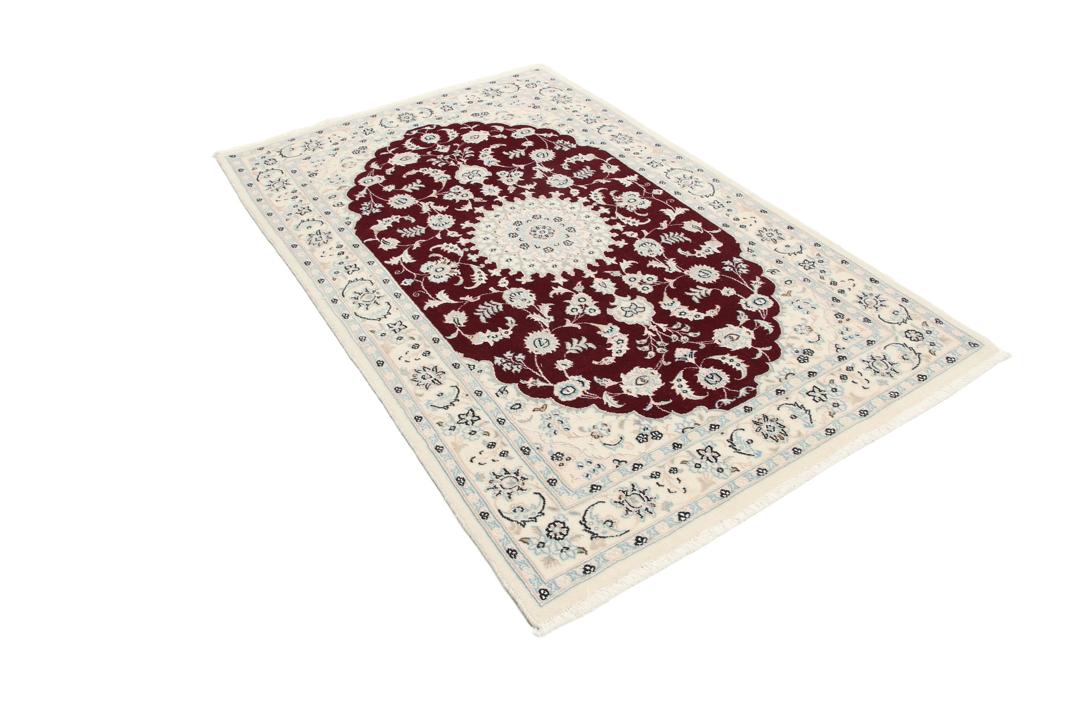
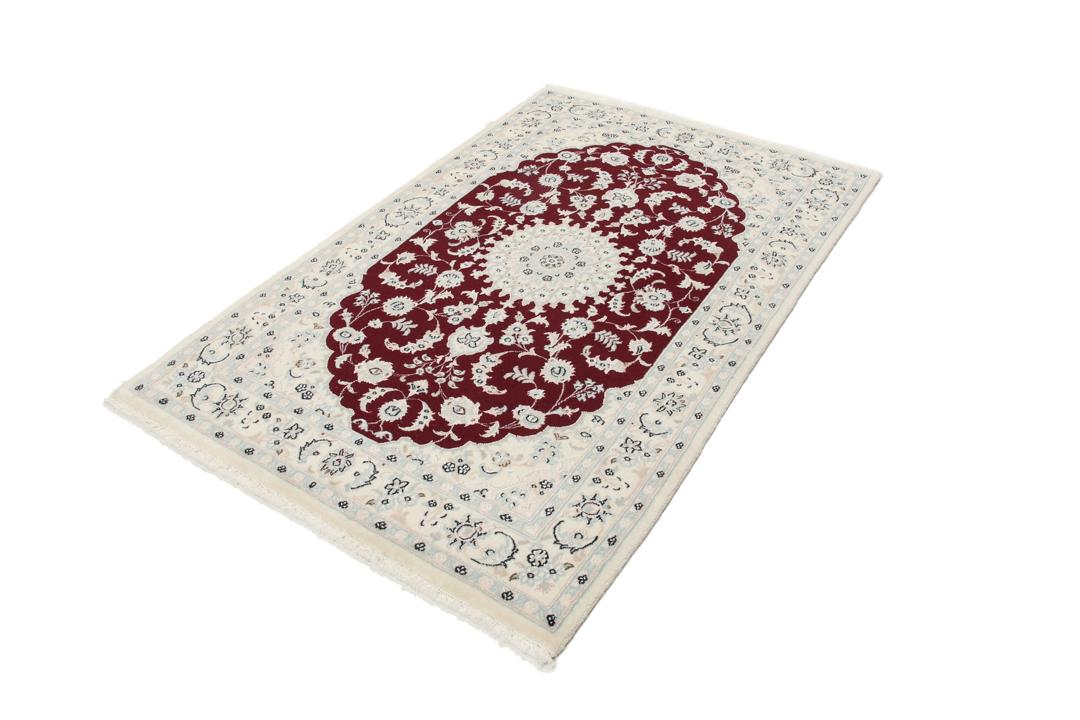
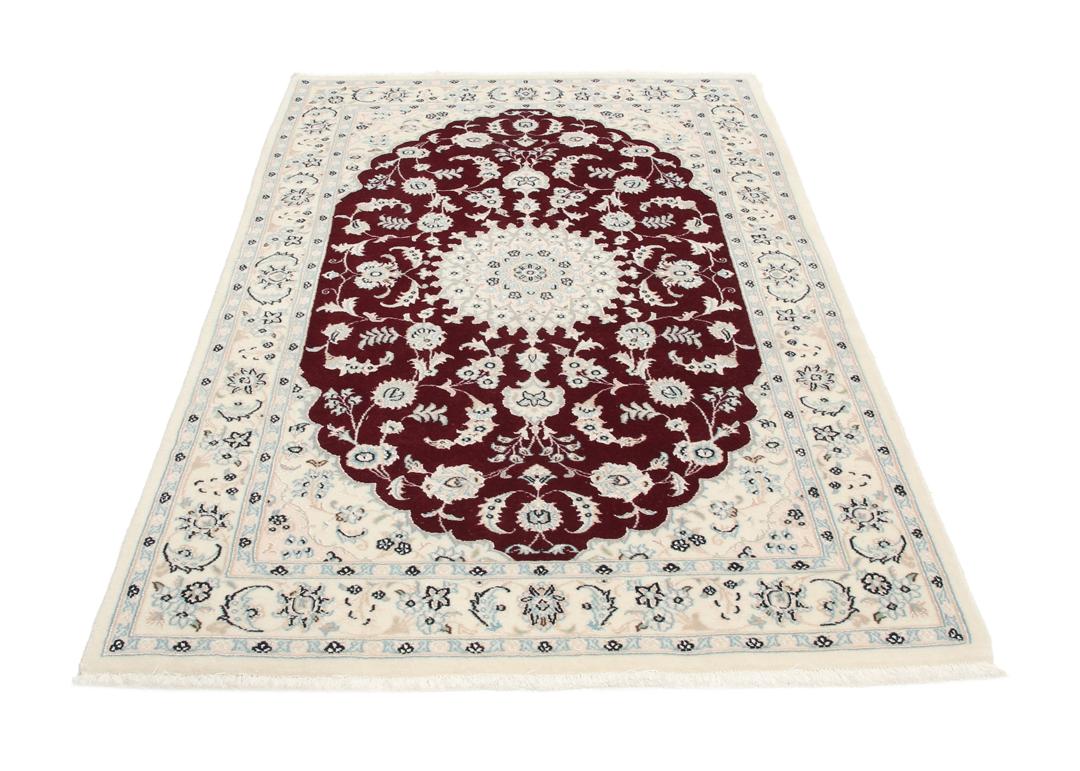
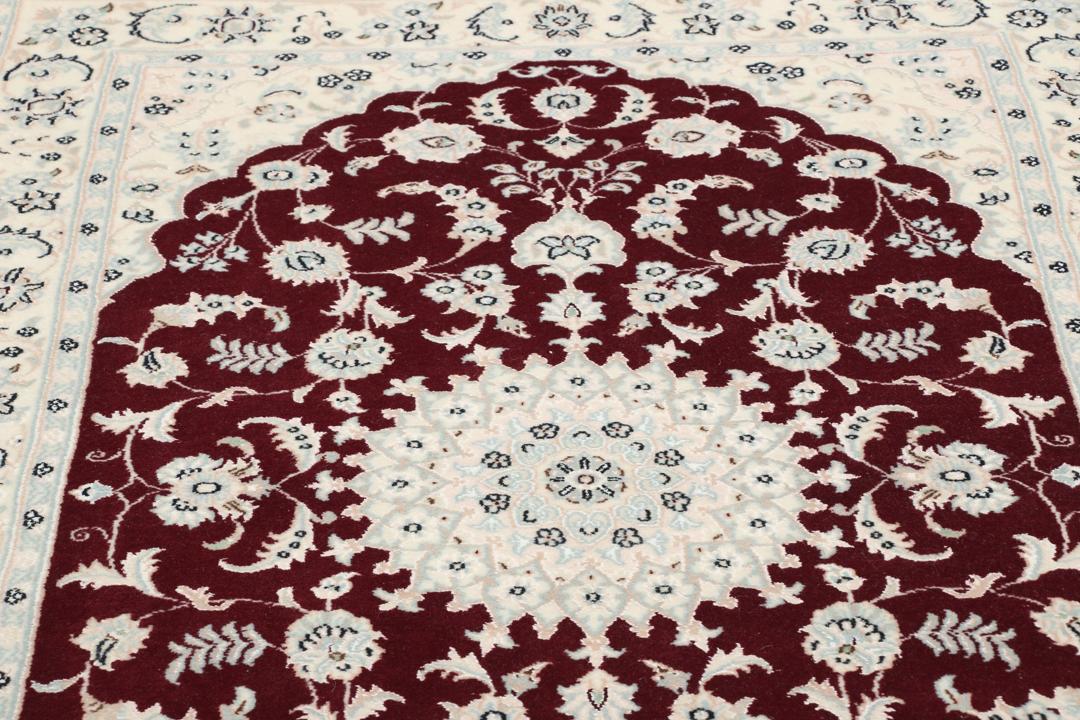
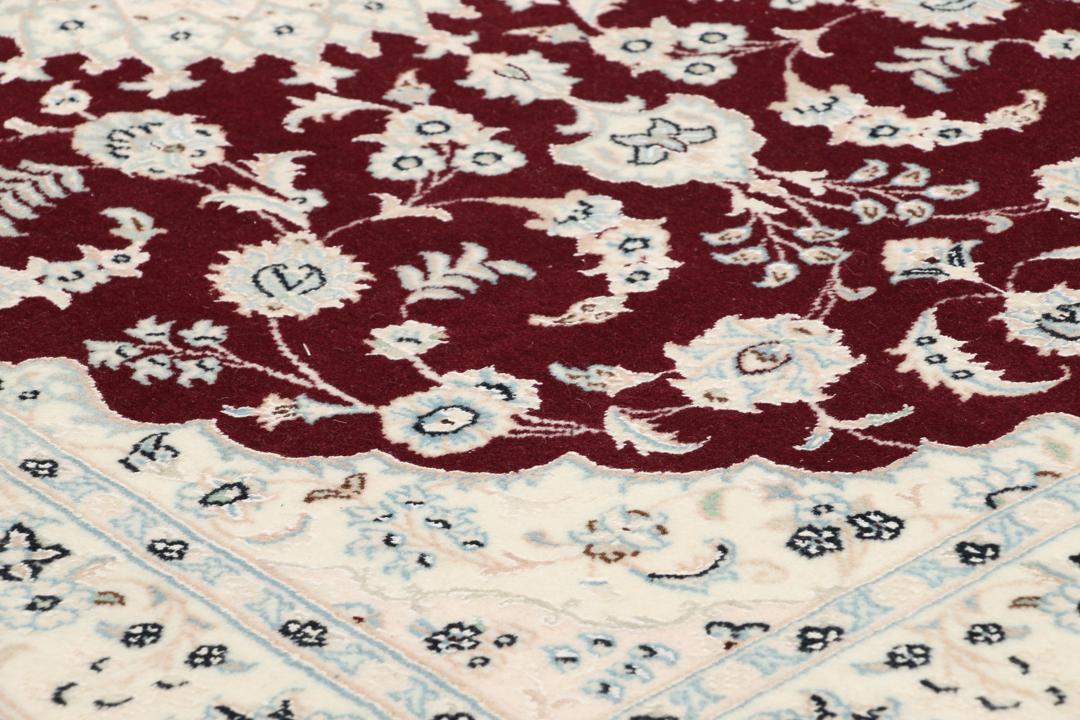
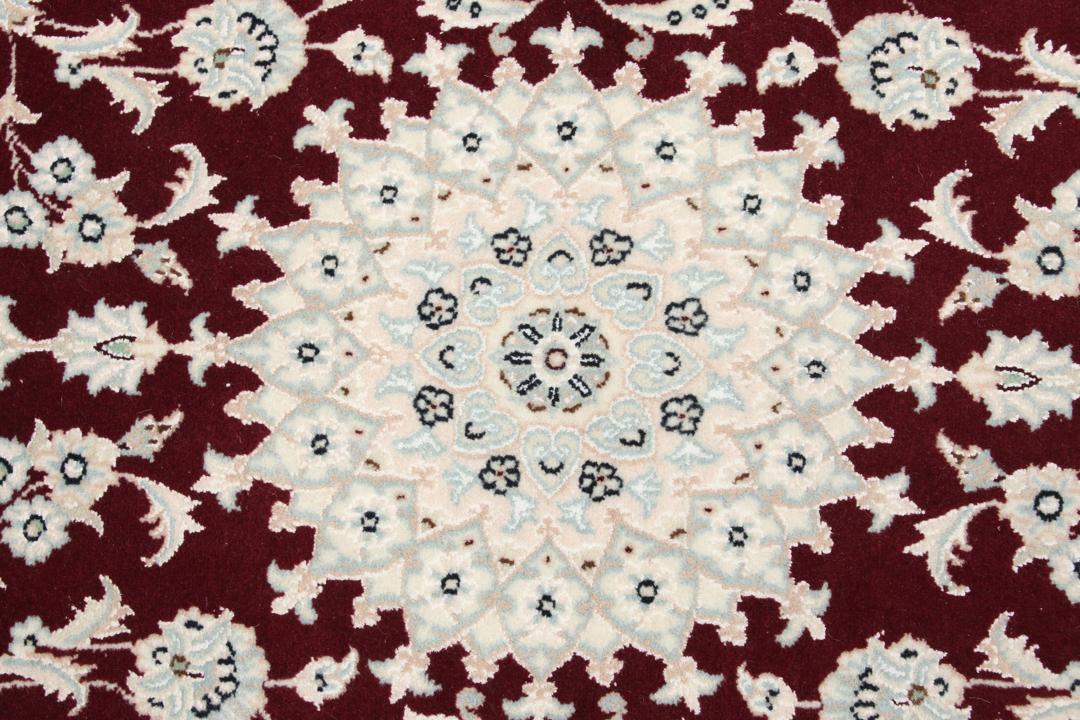
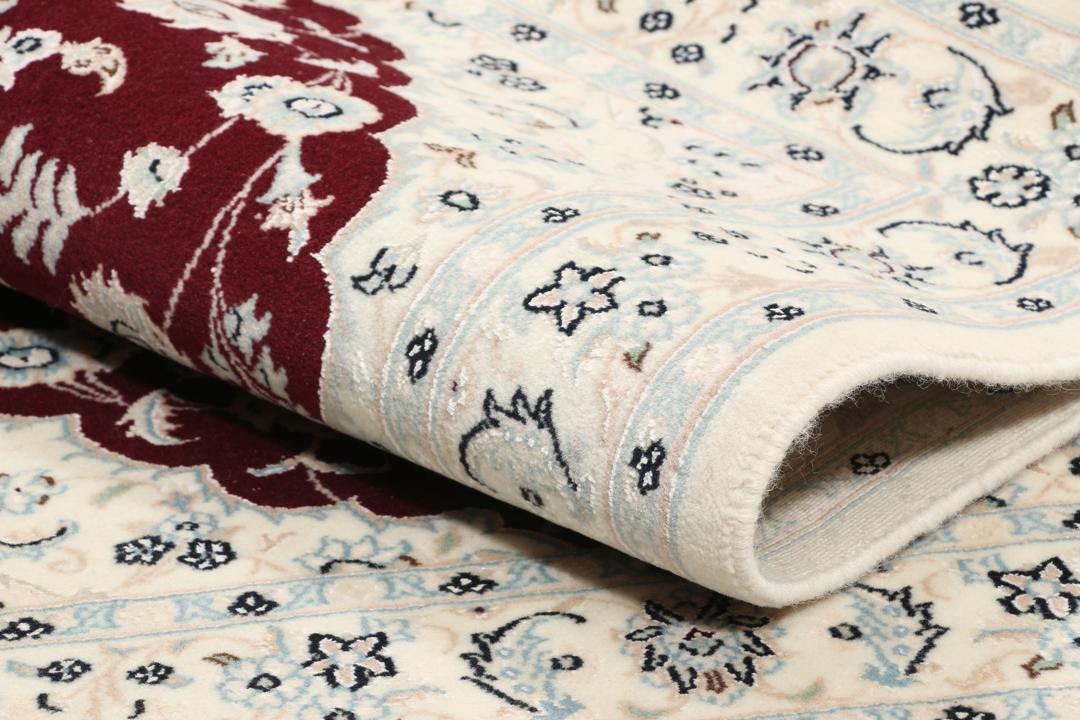
Signature design elements of the Nain tradition often include a central medallion surrounded by a sea of delicate, flowing floral vines, leaves, and intricate arabesques. The colour palette is typically restrained, often favouring soft creams, blues, and rich reds to highlight the complexity of the patterns. This specific rug showcases a beautiful interplay between the bold red center and the lighter field, a contrast that is highly prized for its visual impact and clarity.
Nain rugs are deeply valued by collectors and enthusiasts alike for their cultural weight and the undeniable skill required to produce them. Owning a piece from this tradition is an act of preserving a sophisticated craft history. It represents a commitment to enduring quality and a appreciation for a design language that has been refined by master weavers over many decades.