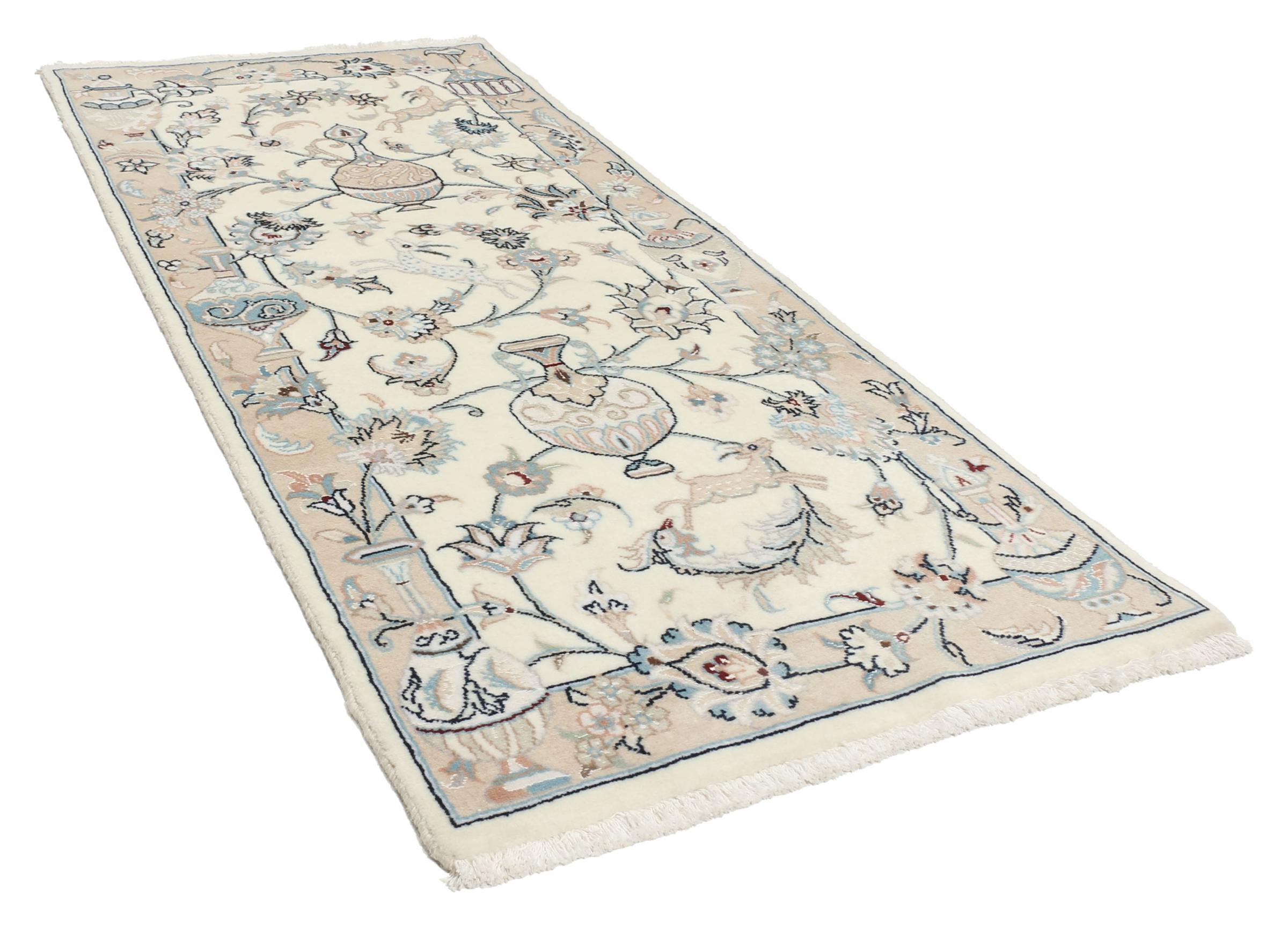
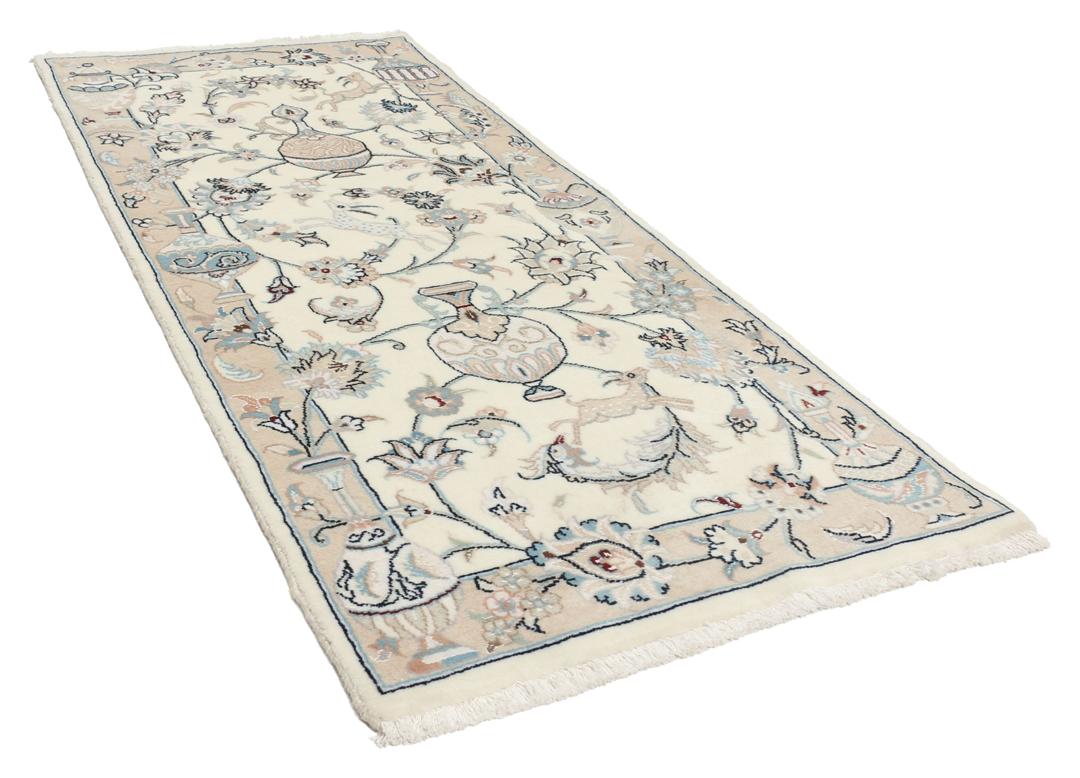
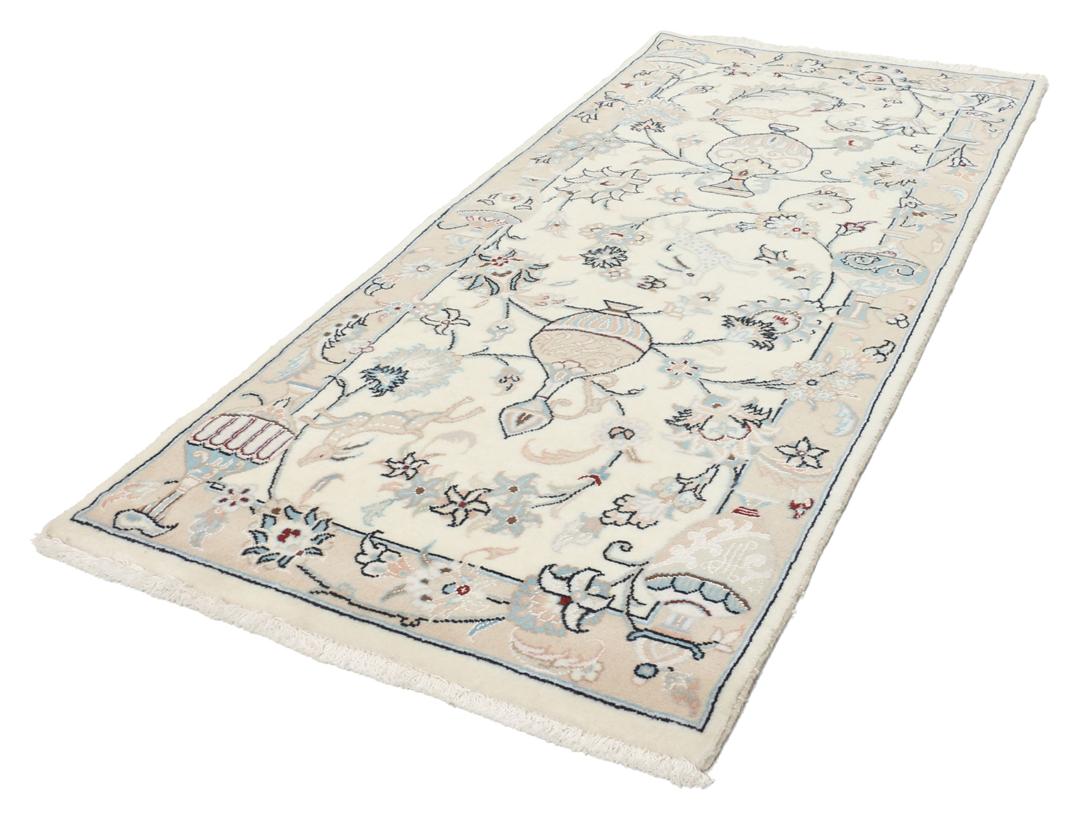
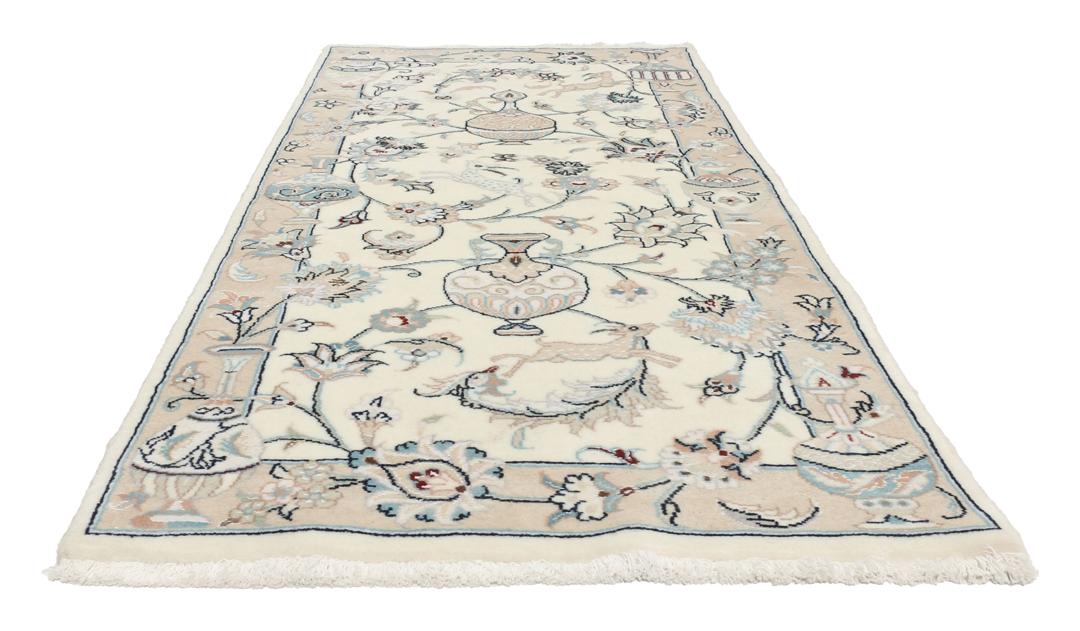
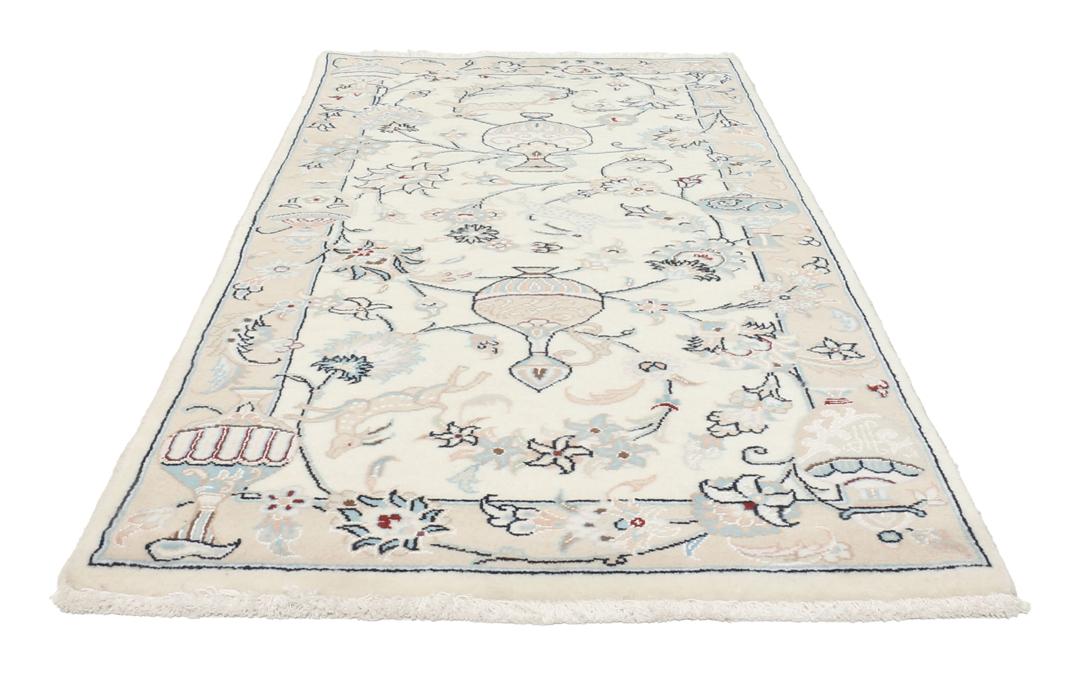
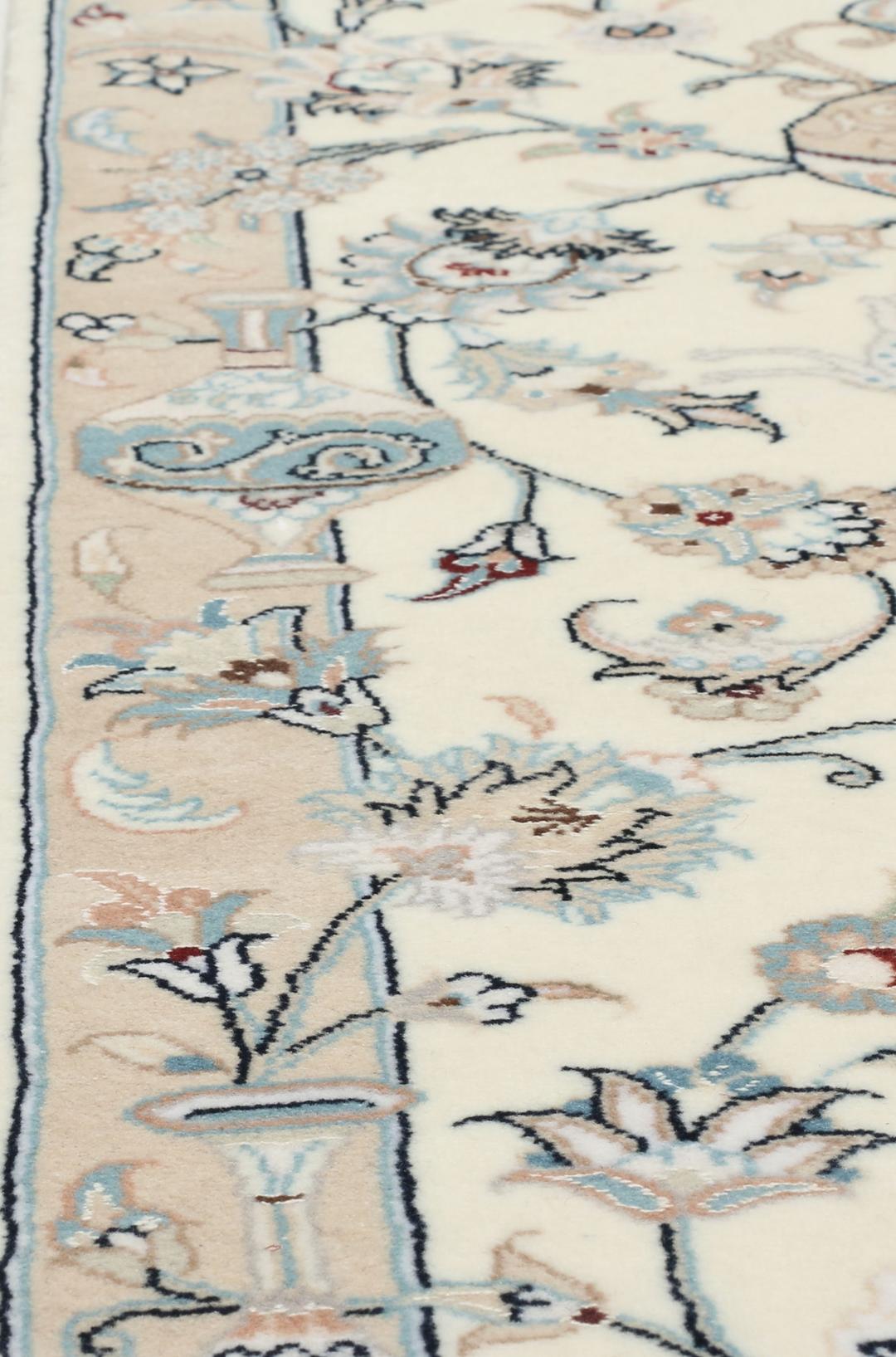
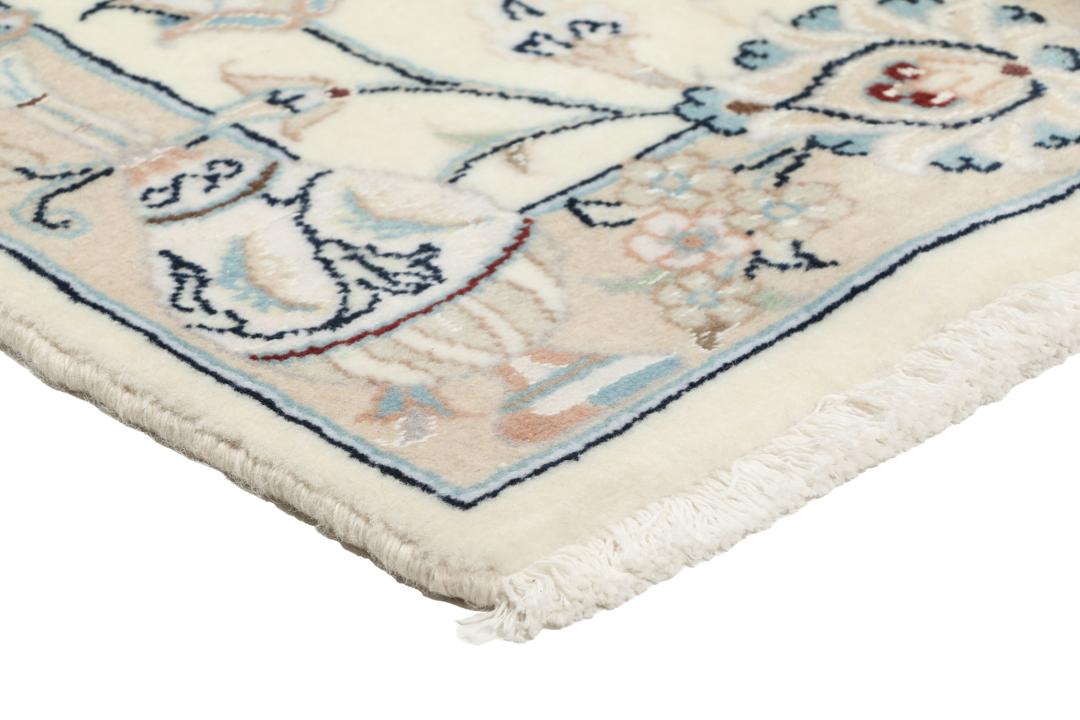
Nain rugs trace their origin to the town of Nain, located in the heart of the Middle Eastern desert. Originally a centre for high-quality wool textiles and religious garments, the town transitioned into world-renowned rug weaving in the early 20th century. Today, these rugs are celebrated for their exceptionally sophisticated designs and the use of a refined, light-toned palette that brightens any interior.
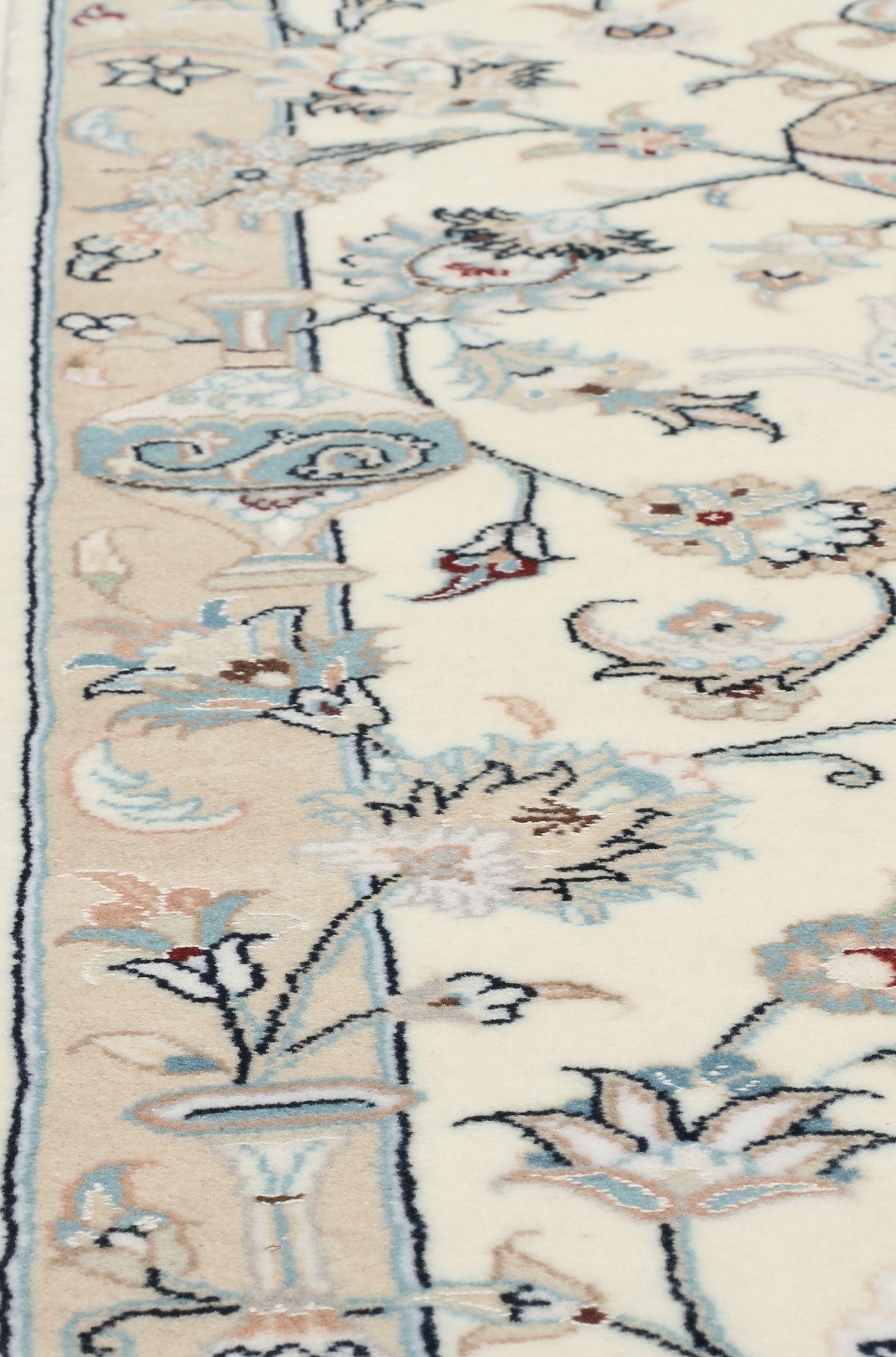
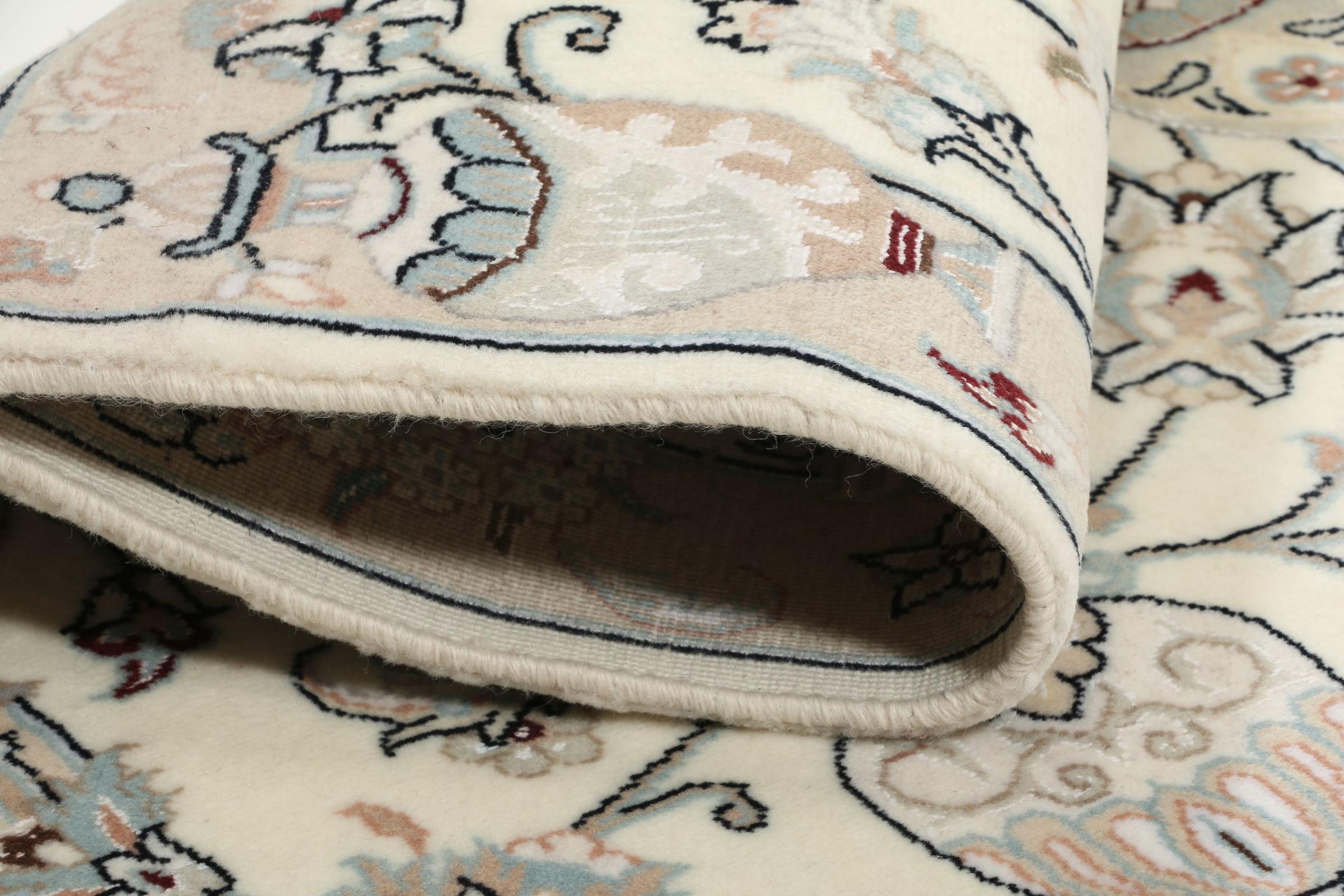
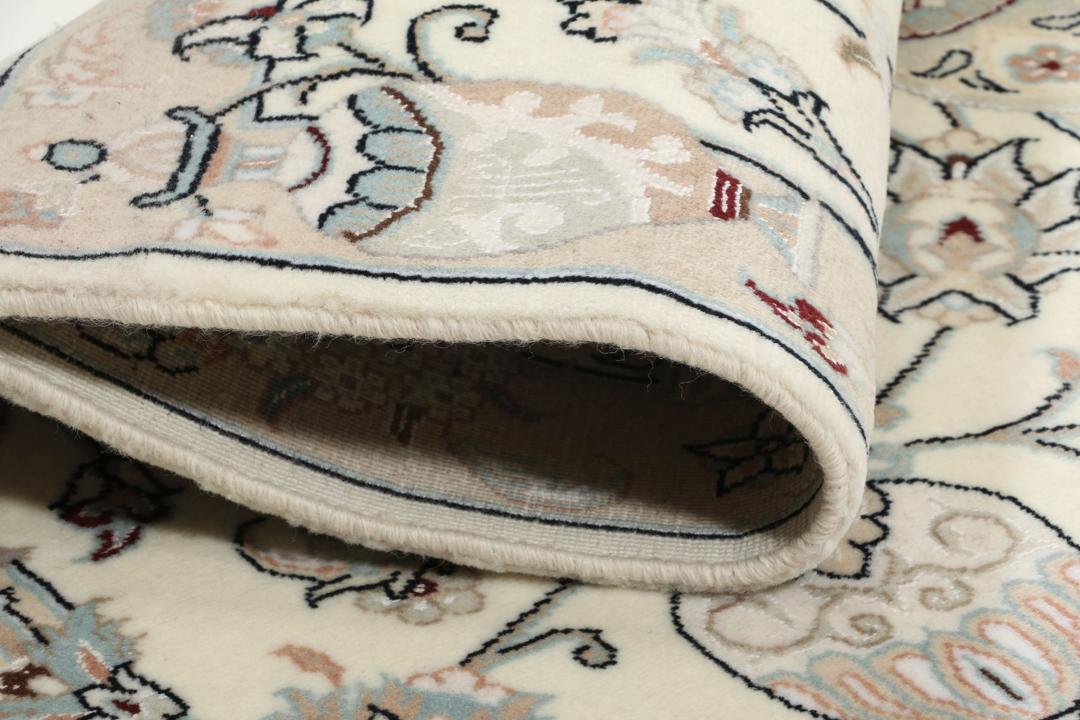
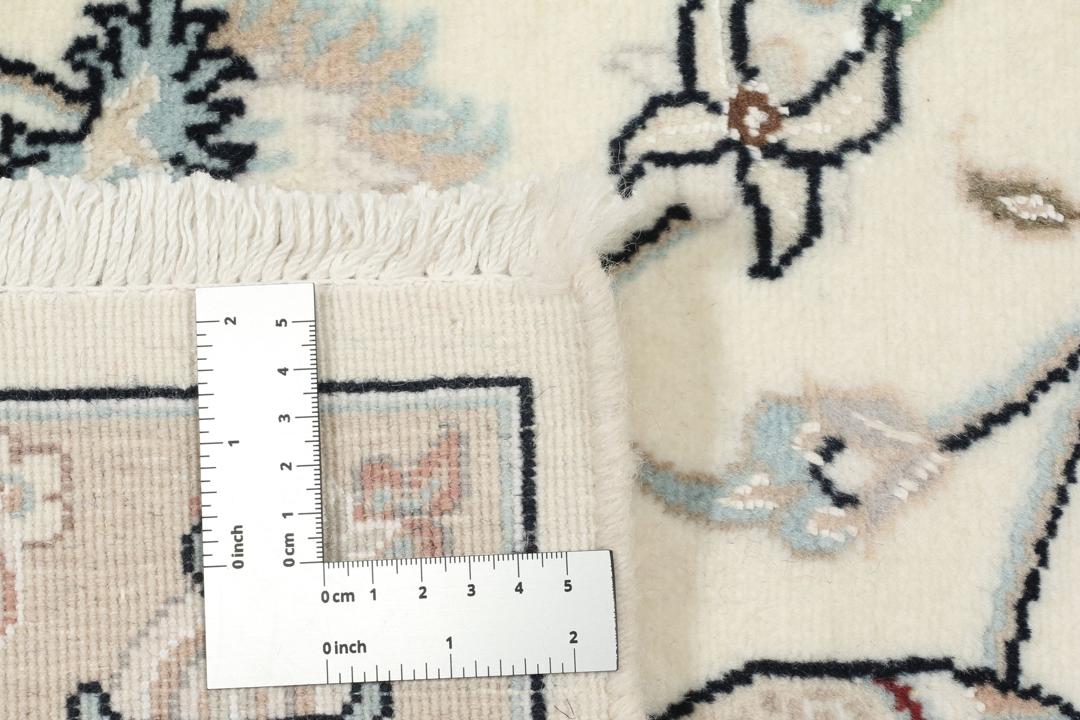
The designation 9La refers to the number of threads used in the construction of the fringe, or warp, which serves as an indicator of the rug's fineness. A lower number generally implies a higher density and a more delicate, intricate appearance. This classification is a hallmark of quality for collectors, as it signifies the high level of detail and the labour-intensive nature of the weaving process required to achieve such a refined finish.
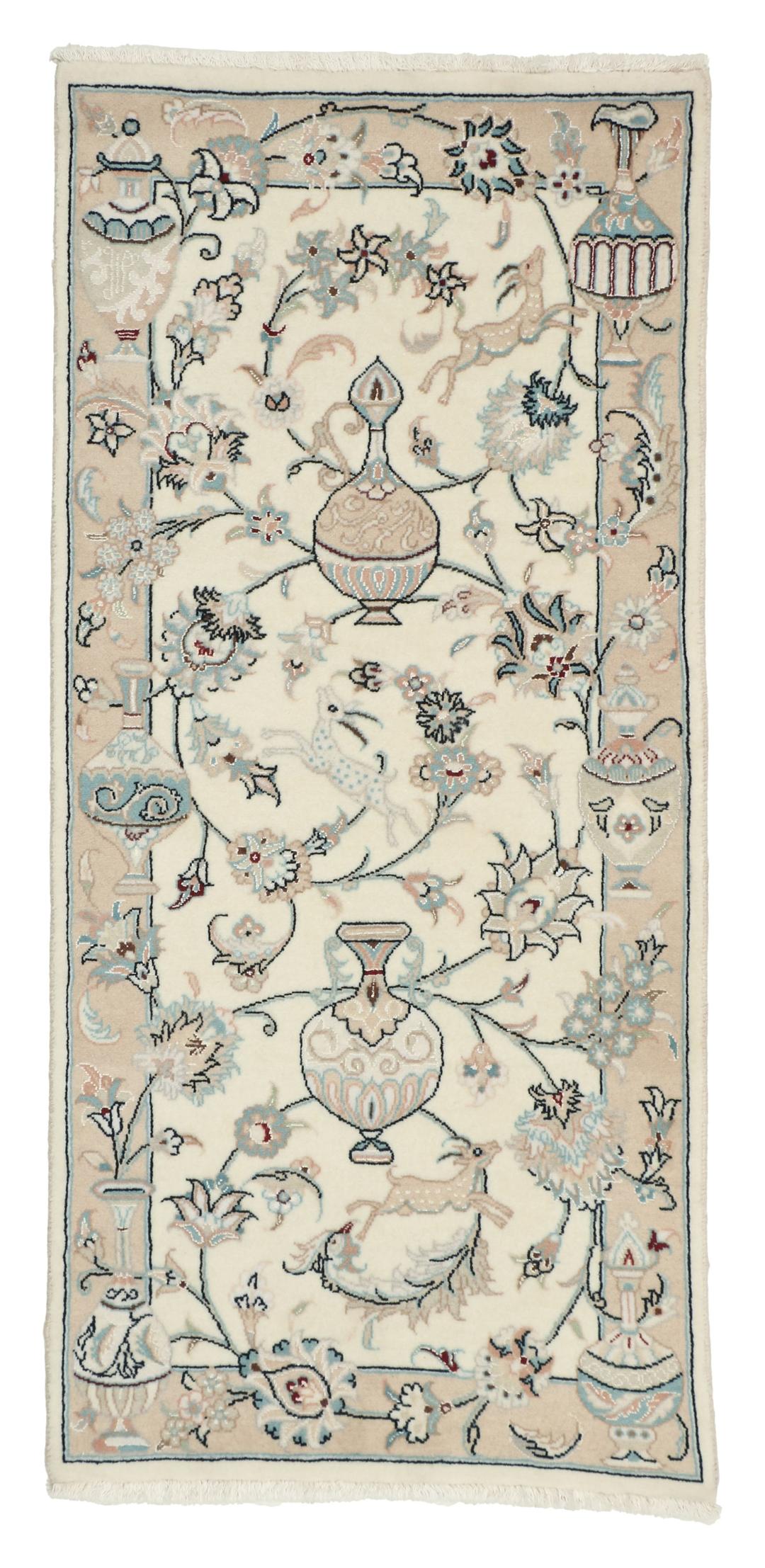
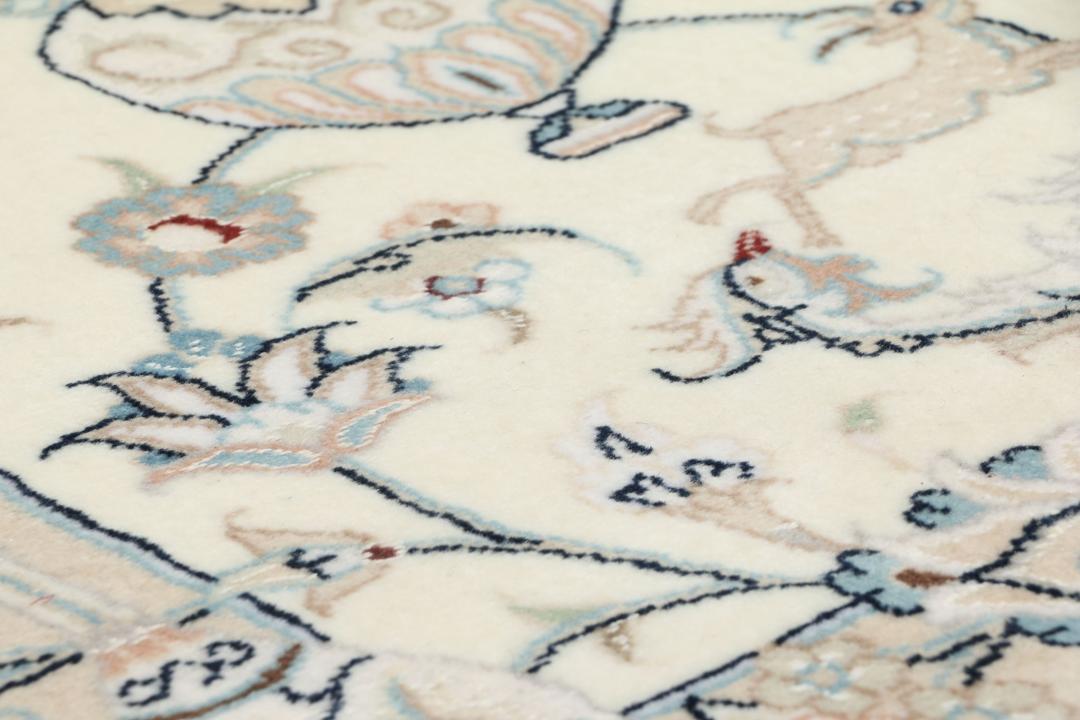
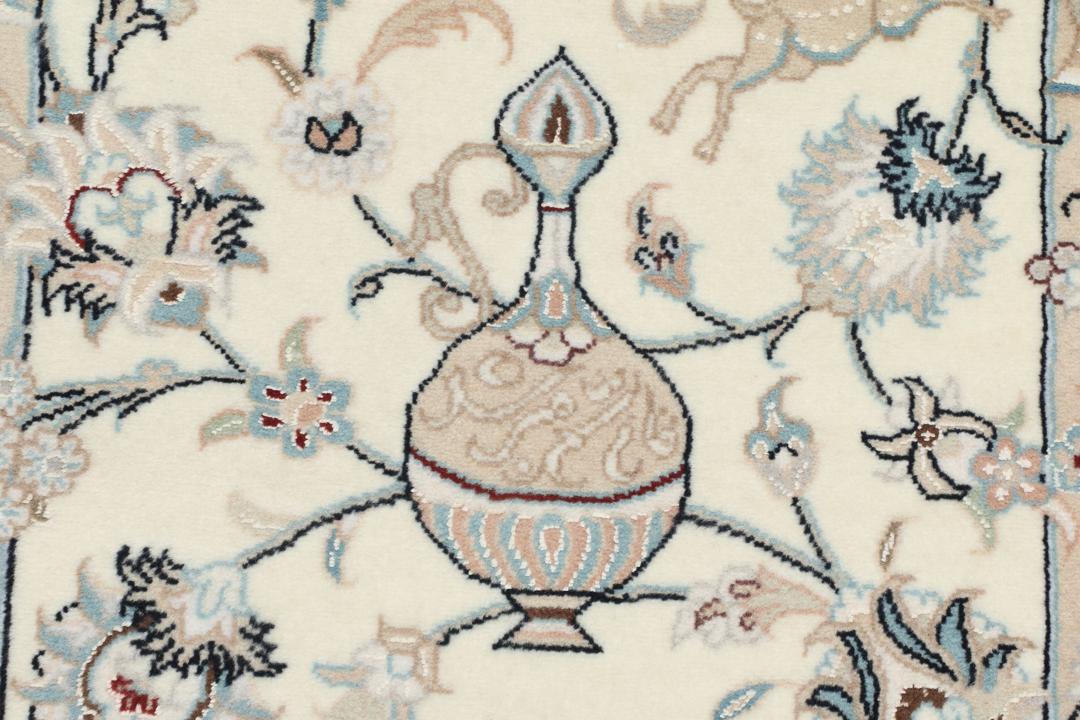
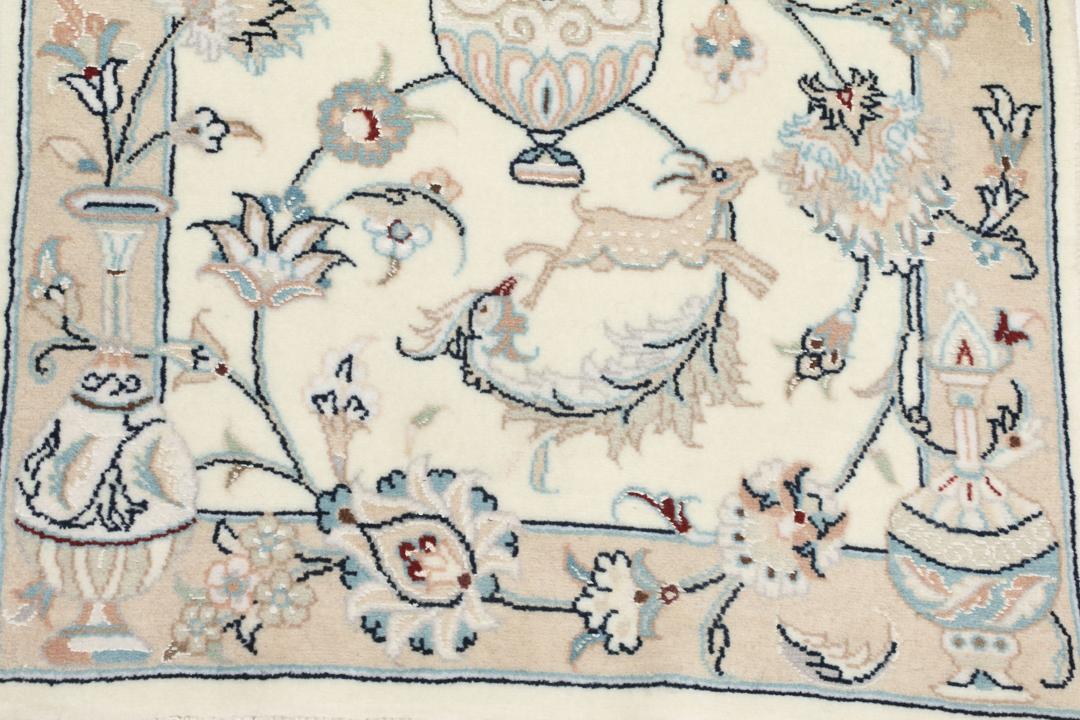
Signature design elements of the Nain tradition often include a central medallion surrounded by flowing floral arabesques, hunting scenes, or intricate vine work. The use of soft, harmonious colours is a defining characteristic, often incorporating shades of cream, beige, and blue to create a sense of balance. This piece features delicate animal motifs woven into the floral field, a classic design choice that adds a sense of movement and life to the rug's structure.
Owning a Nain rug is considered a mark of appreciation for the pinnacle of Middle Eastern weaving traditions. These rugs are highly valued by collectors not only for their aesthetic beauty but for the immense skill required to produce such fine, detailed work. To possess a piece from this tradition is to hold a connection to a long history of artistic excellence, making it a valuable addition to any home that prizes quality, heritage, and timeless design.