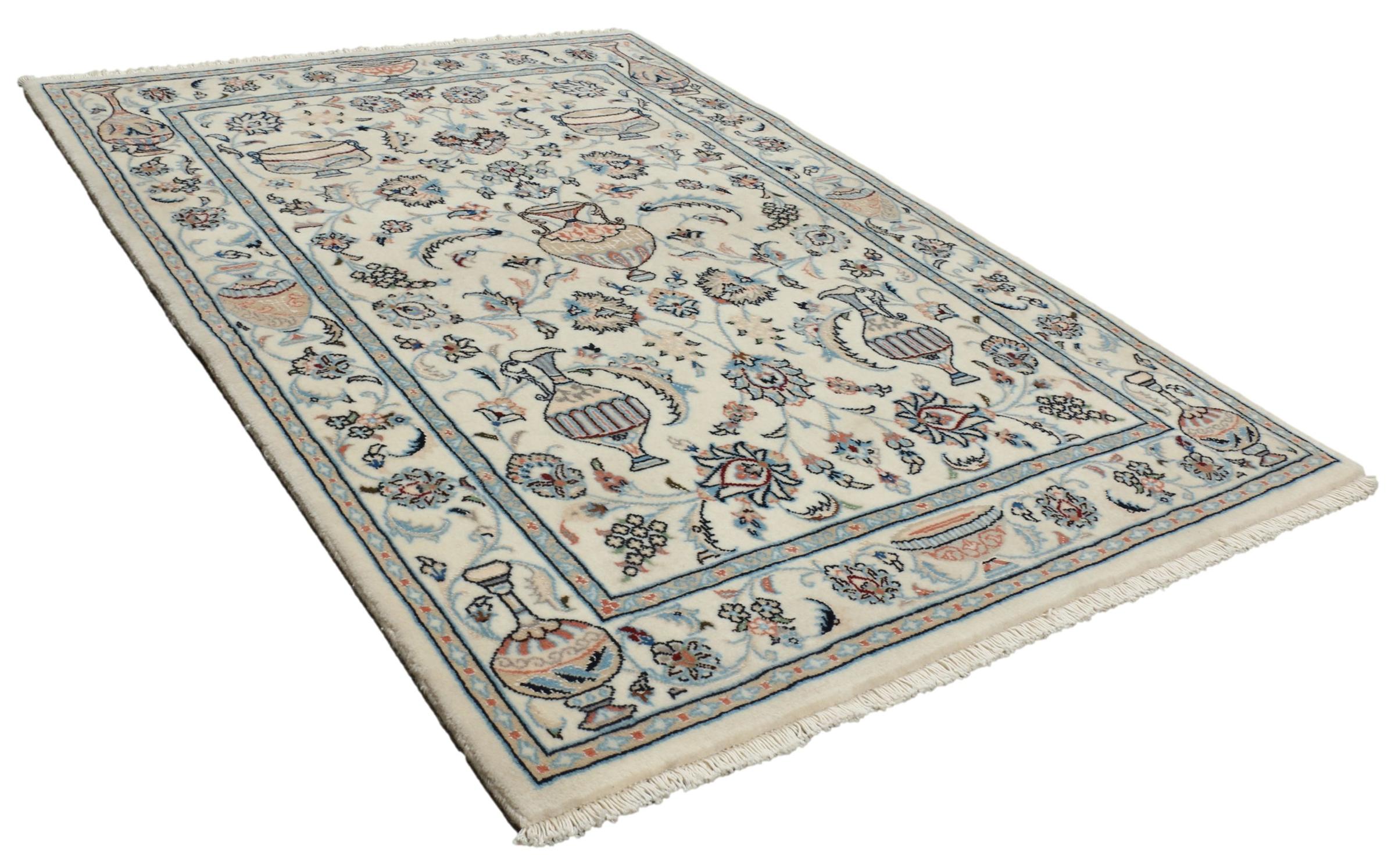
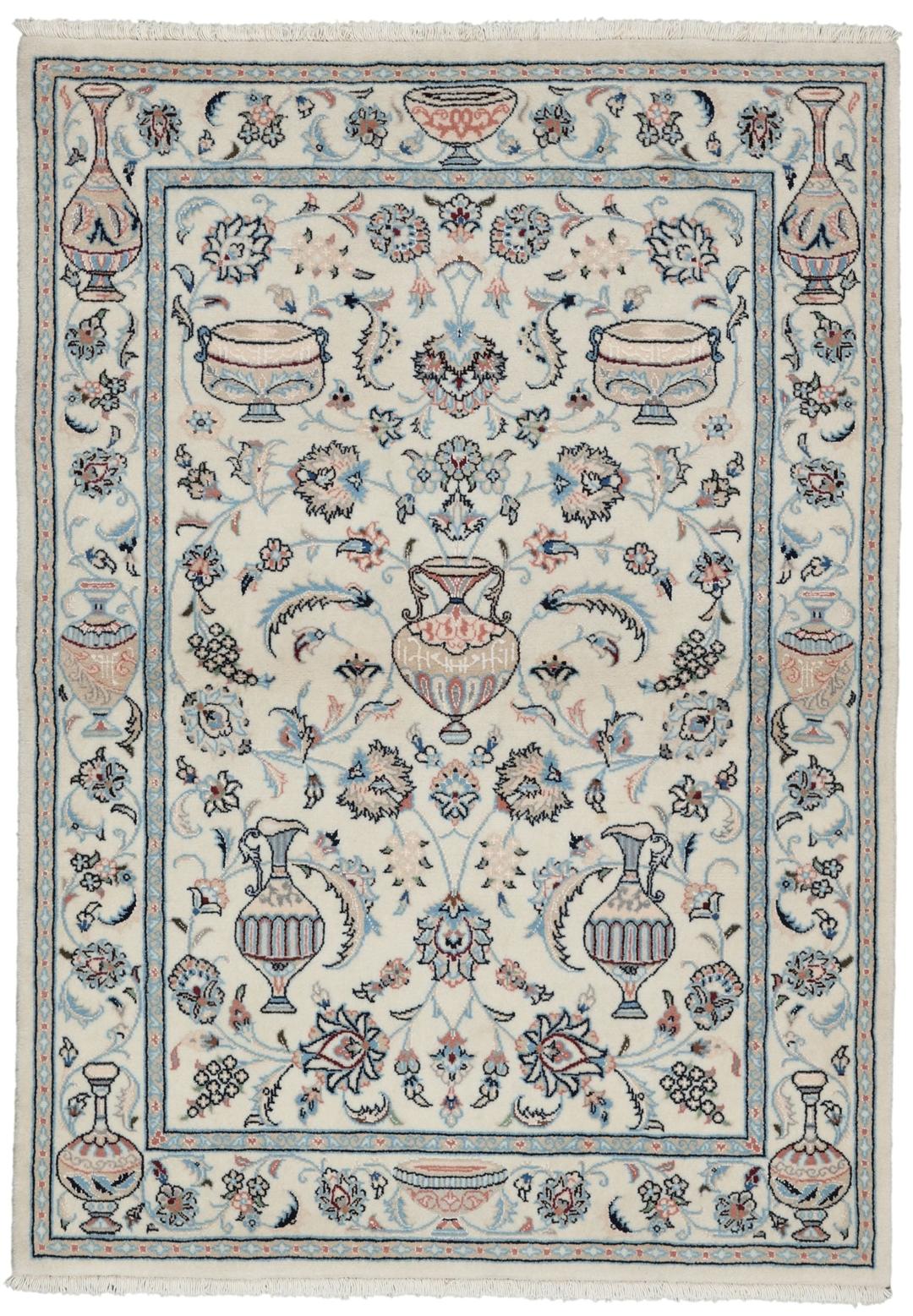
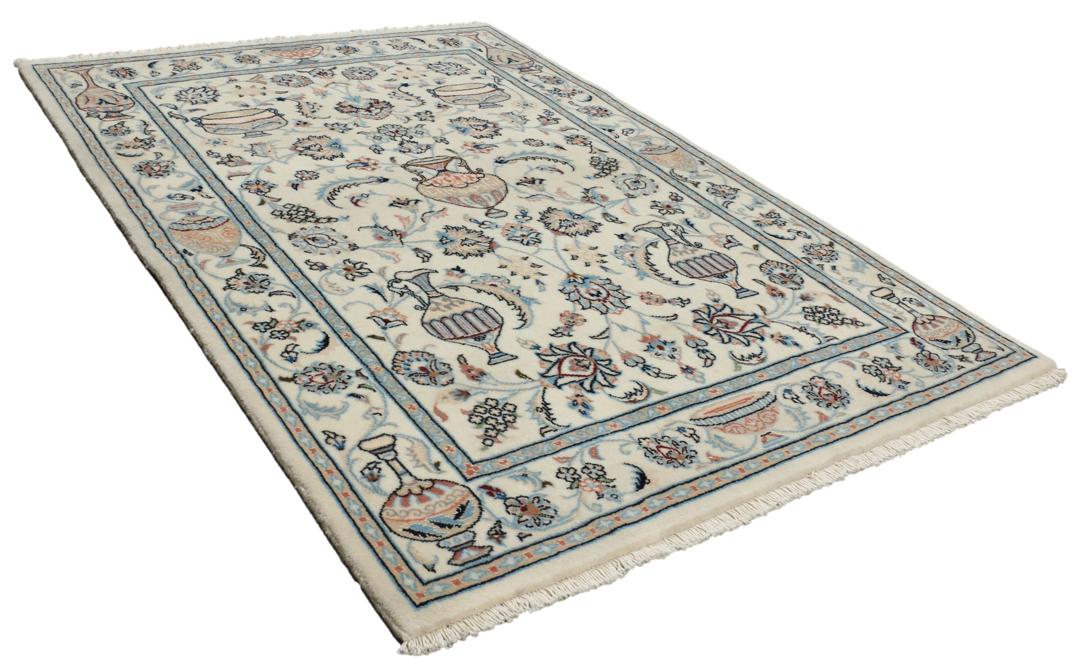
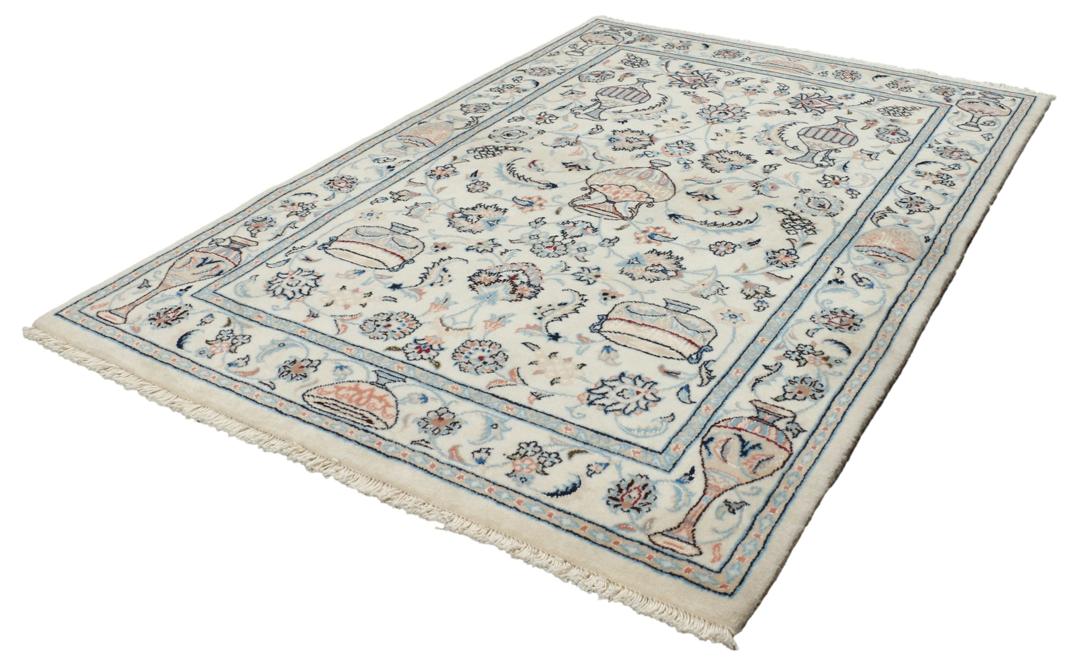
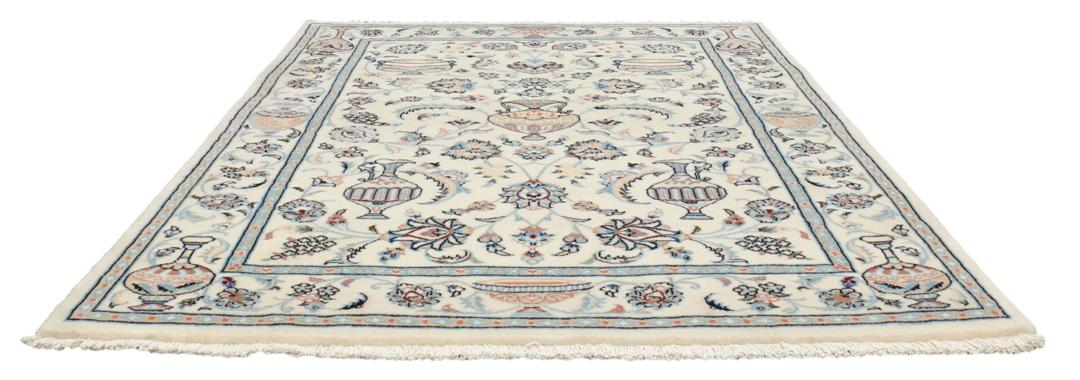
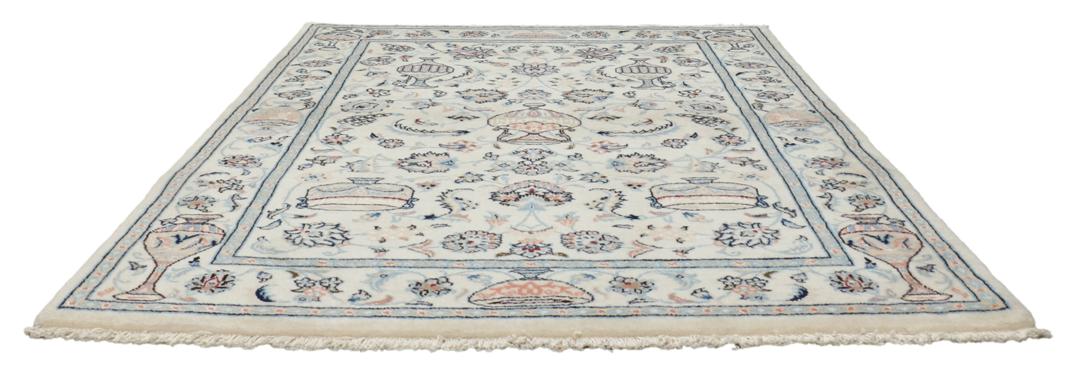
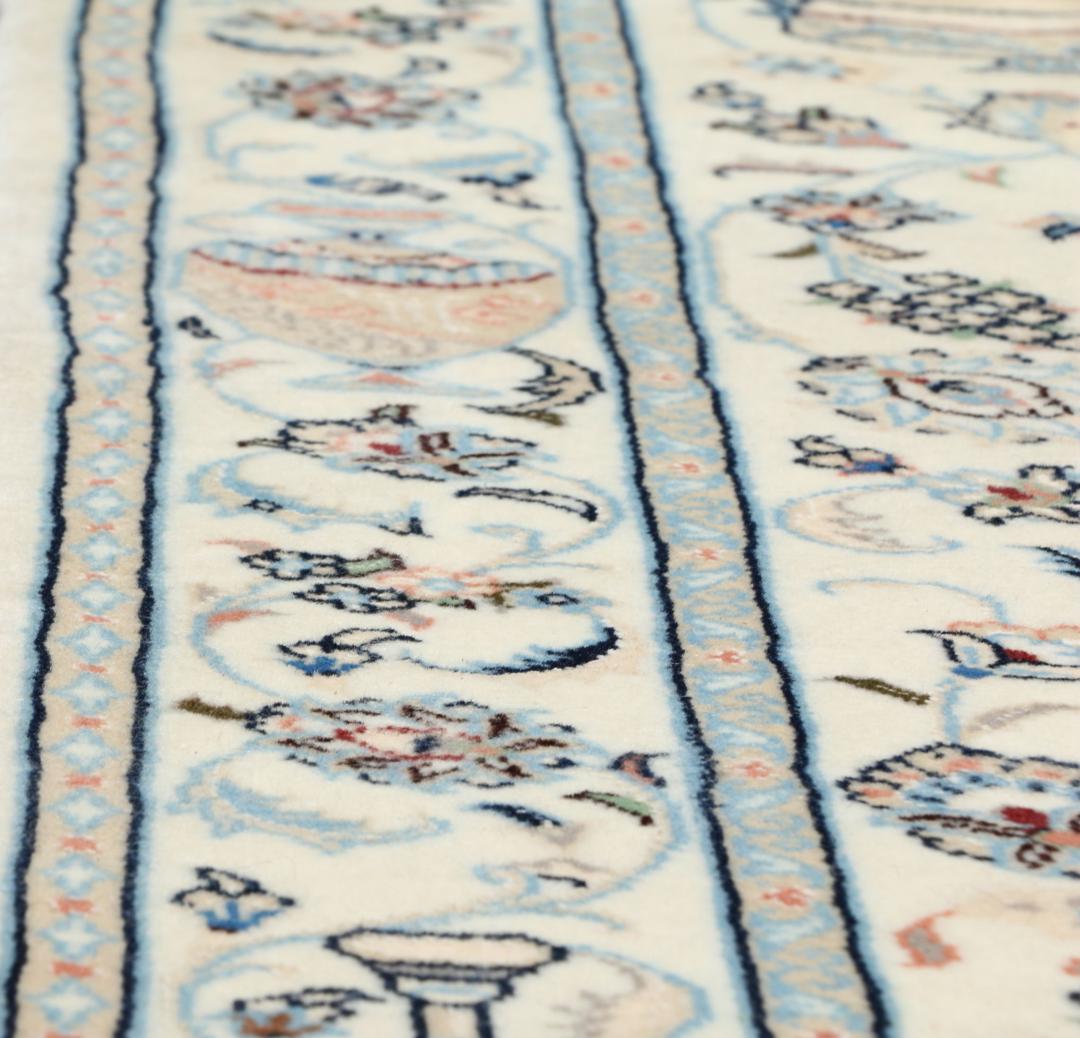
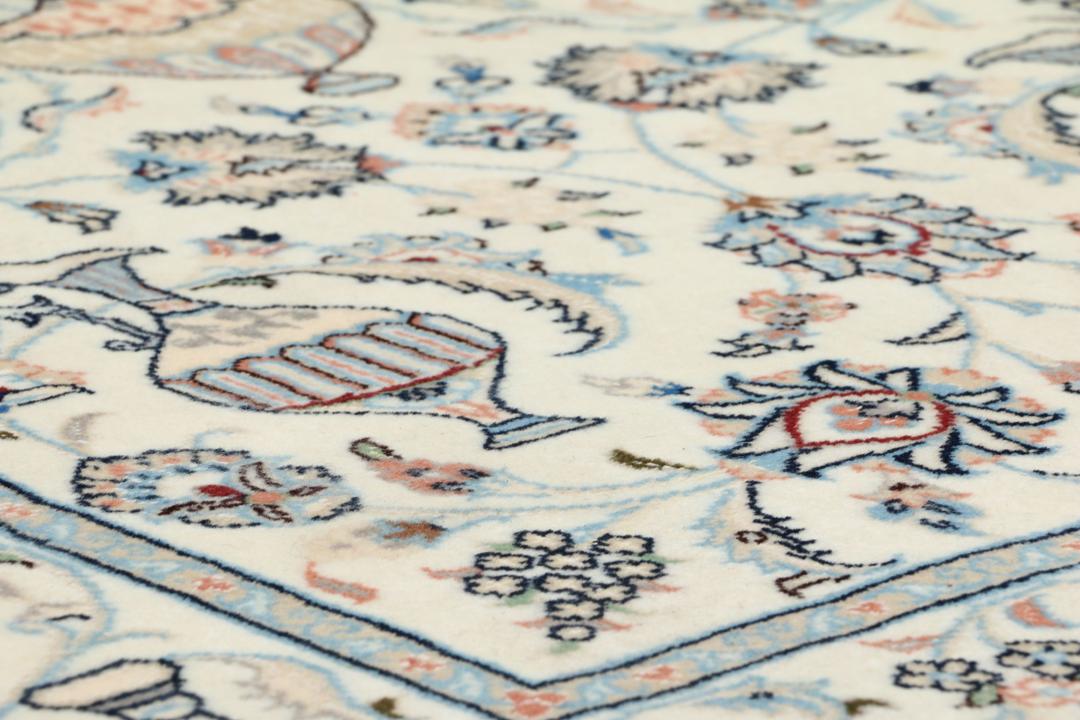
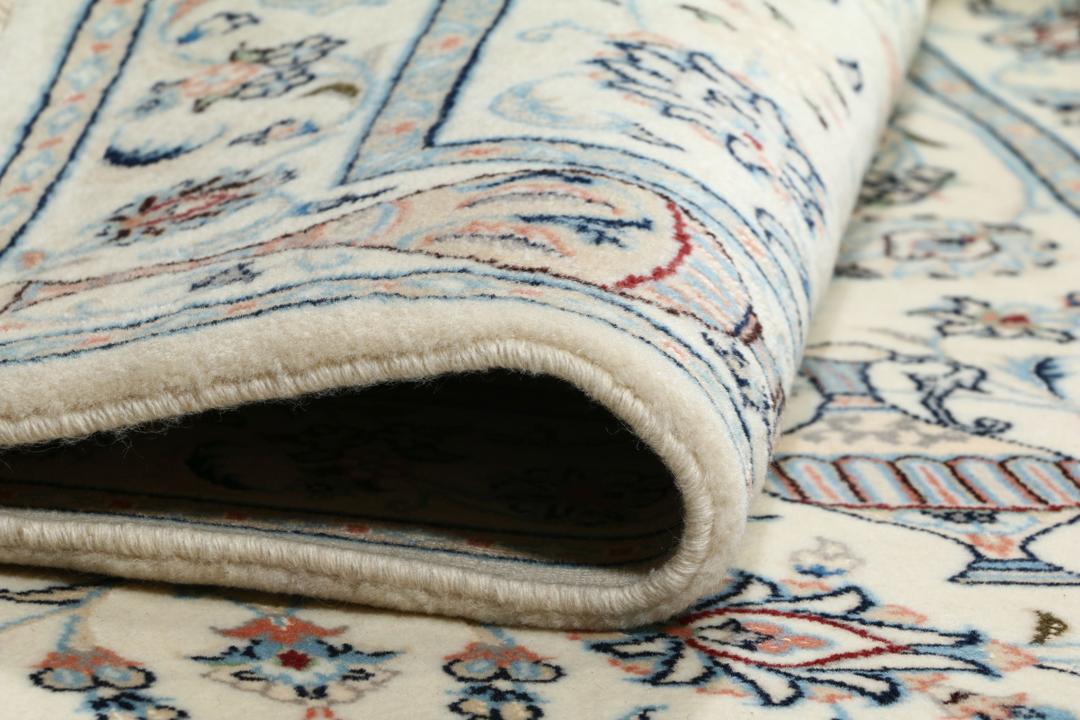
Nain rugs hail from the historic city of Nain, located in the heart of the Middle East. Originally known for producing fine wool textiles and religious garments, the region transitioned into the art of rug weaving in the early 20th century. This evolution quickly established Nain as a centre for some of the most sophisticated and visually refined rugs in the world, often characterised by their light, muted palettes and intricate, harmonious designs.
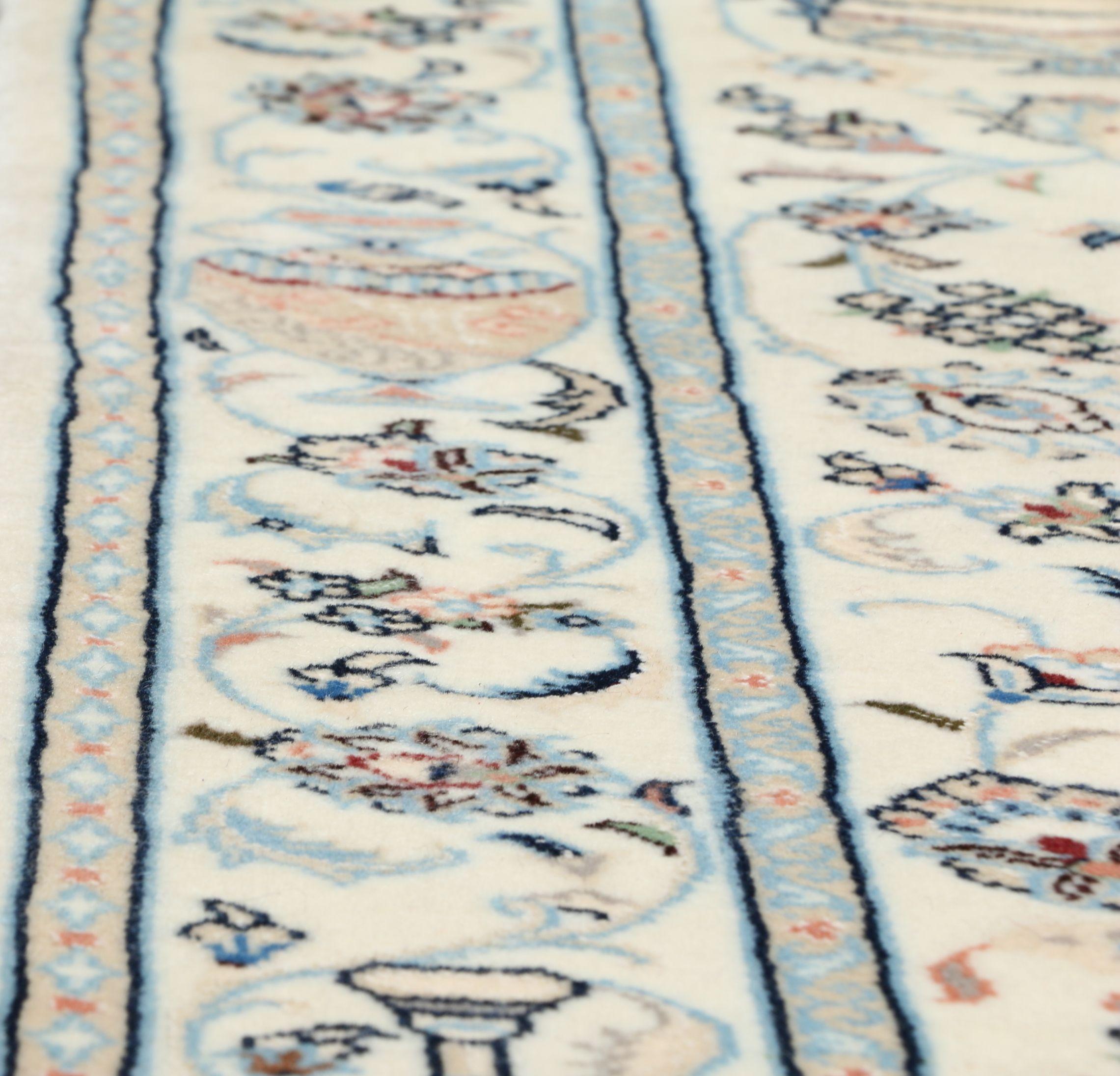
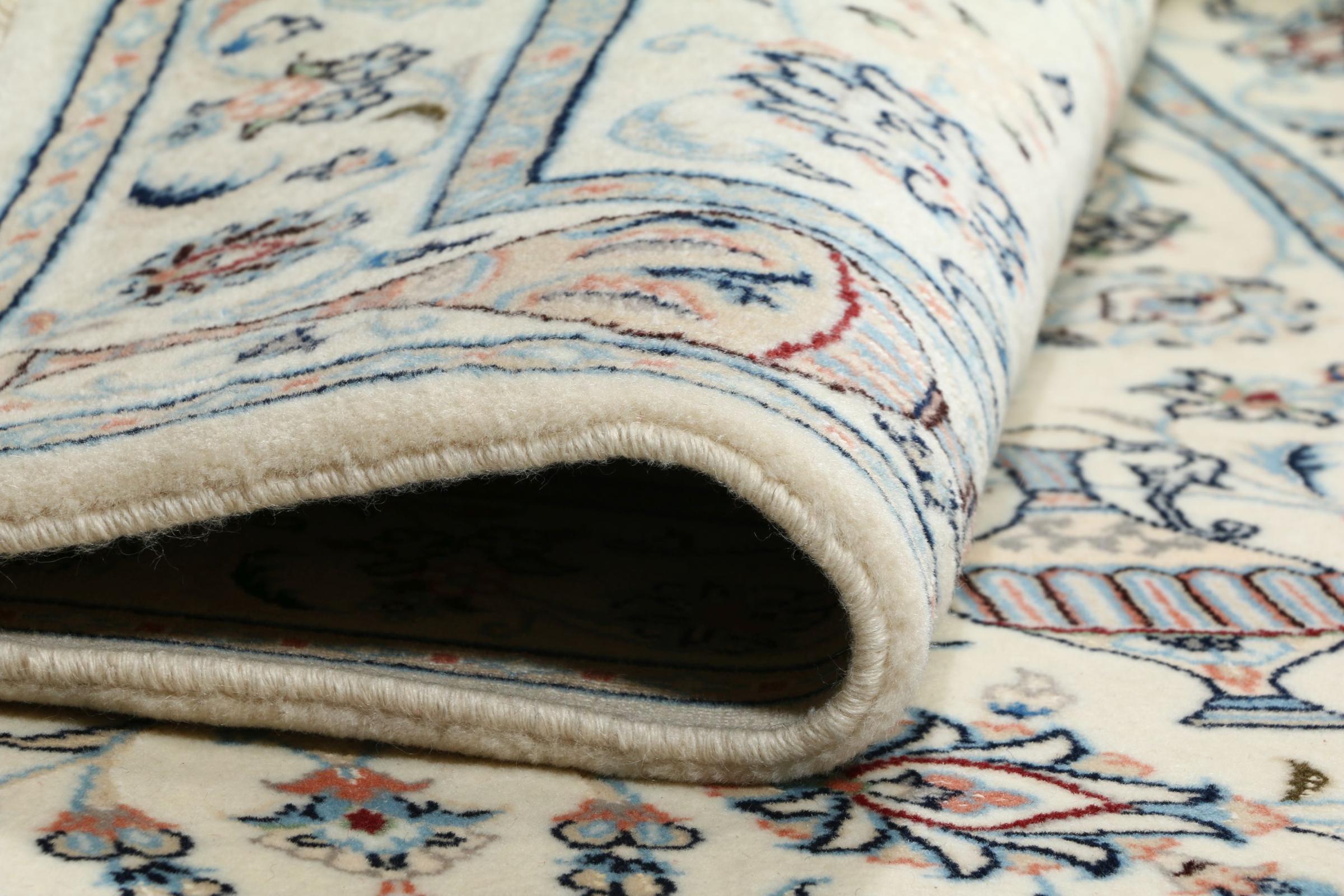
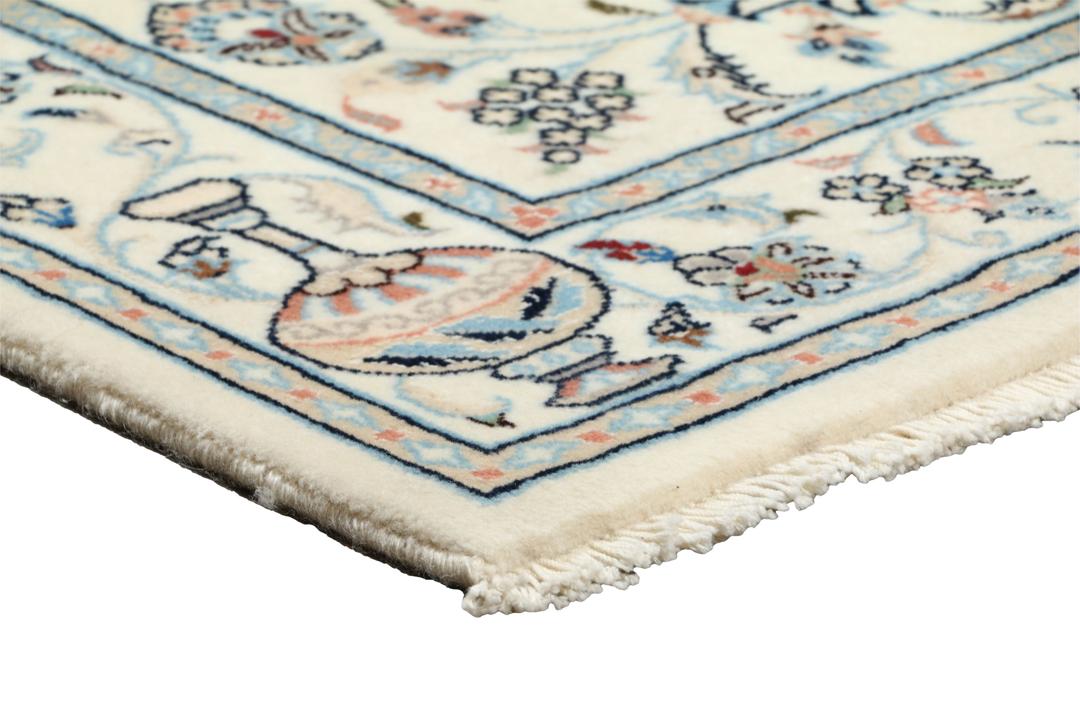
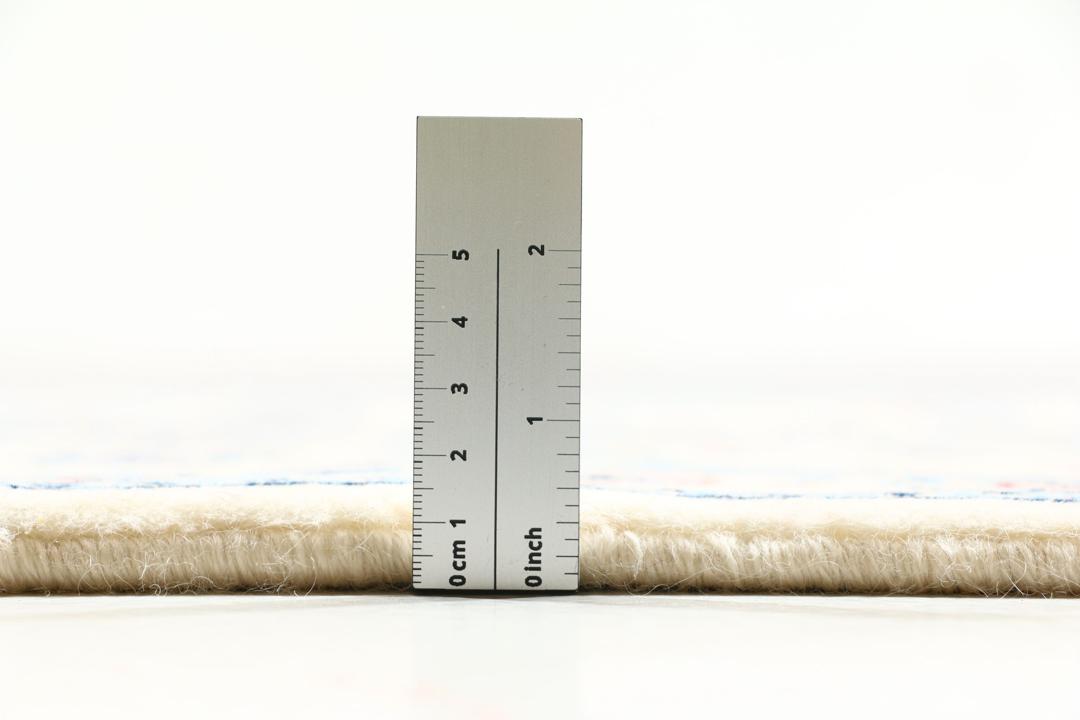
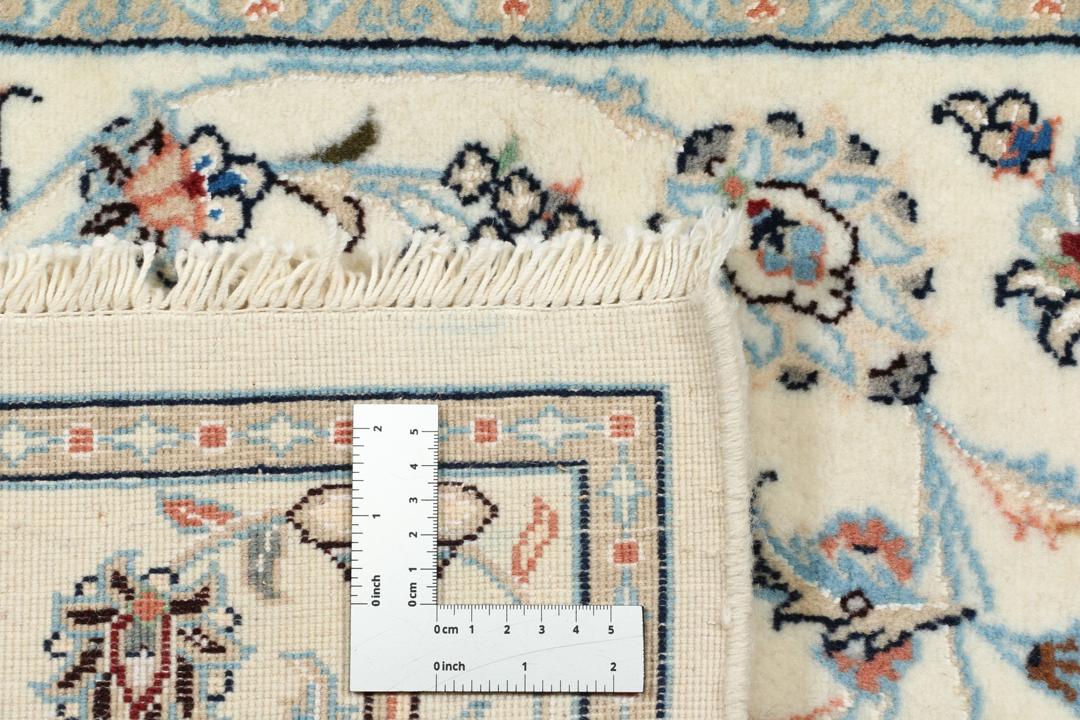
The designation '9La' refers to the technical quality of the rug, specifically the number of threads used in the fringe. A 9La rug is crafted with a specific density that balances a fine, detailed pattern with a substantial, durable pile. This technical precision is what allows the weavers to achieve such delicate floral curves and elaborate borders, ensuring the final product is as resilient as it is beautiful.
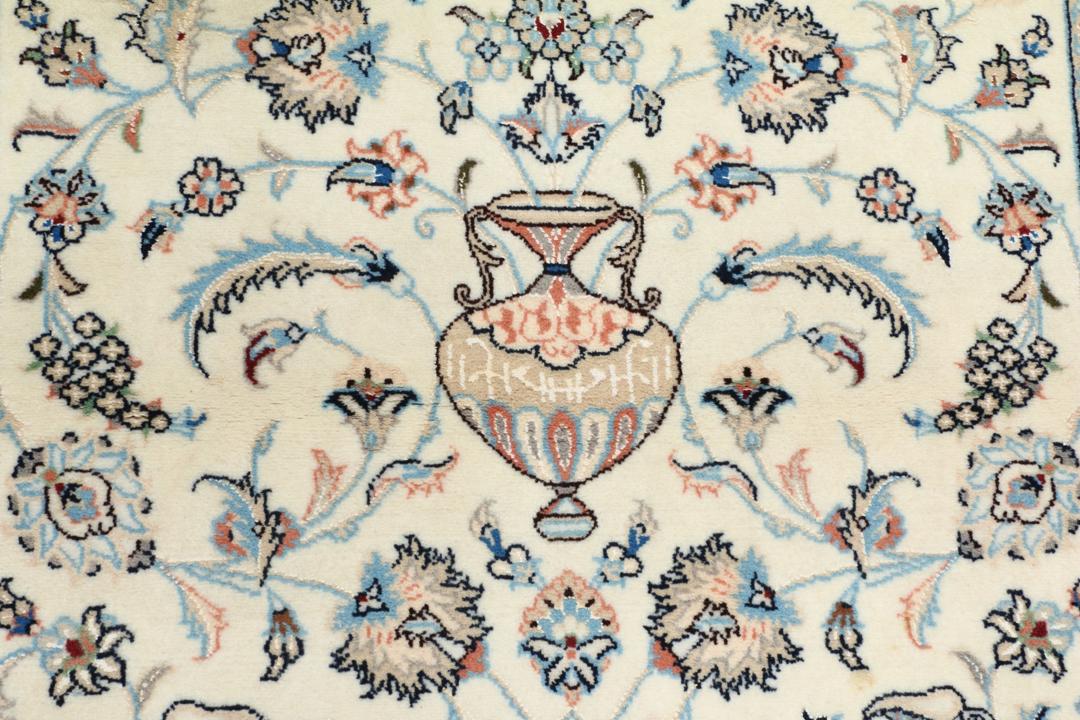
Design-wise, Nain rugs are celebrated for their use of curvilinear floral motifs, often arranged around a central medallion or, as seen here, in an elegant flowing pattern of vases and blossoms. The colour palette is traditionally restrained, favouring shades of cream, beige, and soft blue to highlight the precision of the knotting. This rug’s unique arrangement of decorative urns is a hallmark of the region's artistic flair, showcasing a deep respect for symmetry and natural beauty.
Acquiring a Nain rug is an investment in a storied tradition of skill and artistry. These pieces are highly valued by collectors not only for their aesthetic grace but for the immense human effort required to complete each one. To own a Nain is to hold a piece of cultural history, a floor covering that represents the peak of regional craftsmanship and continues to be a benchmark for quality in the world of fine textiles.