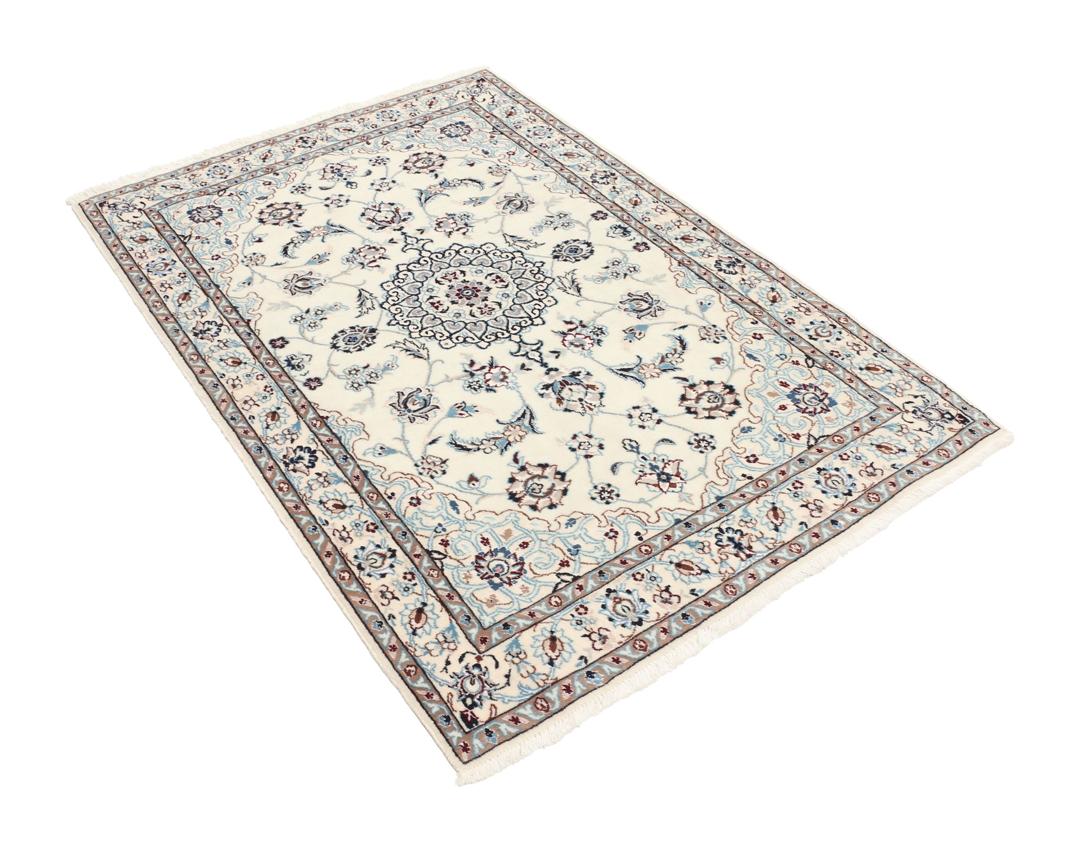
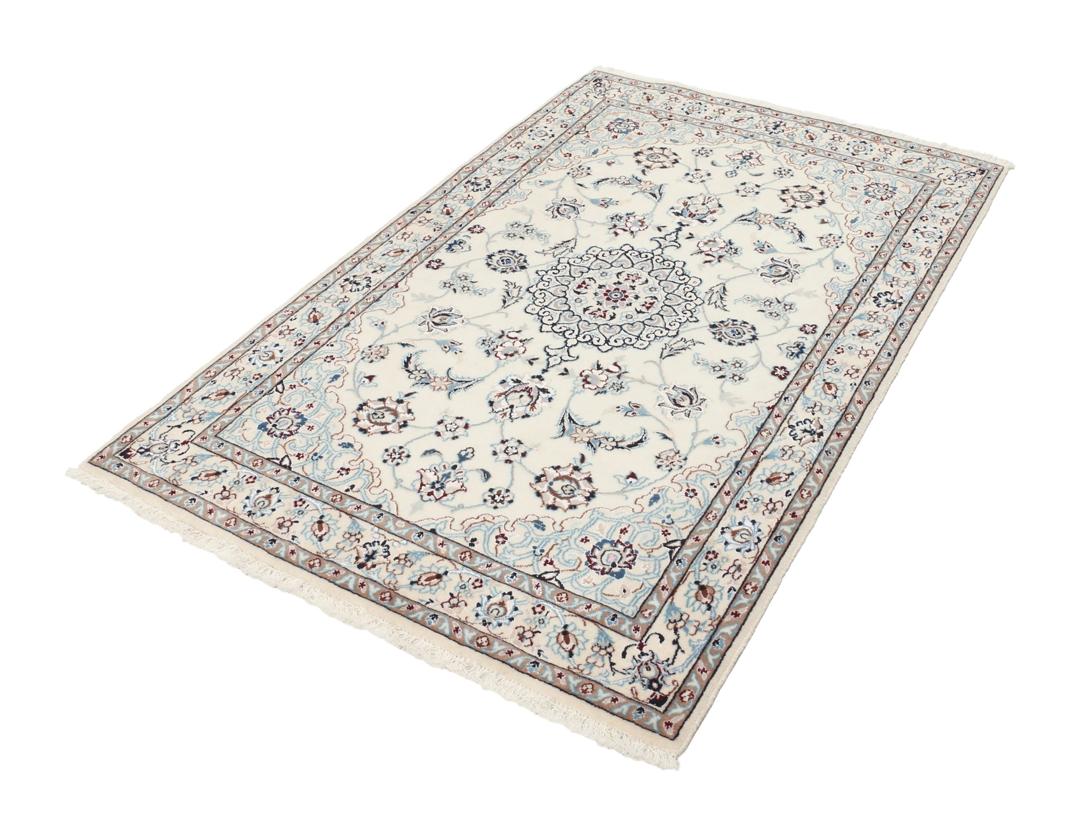
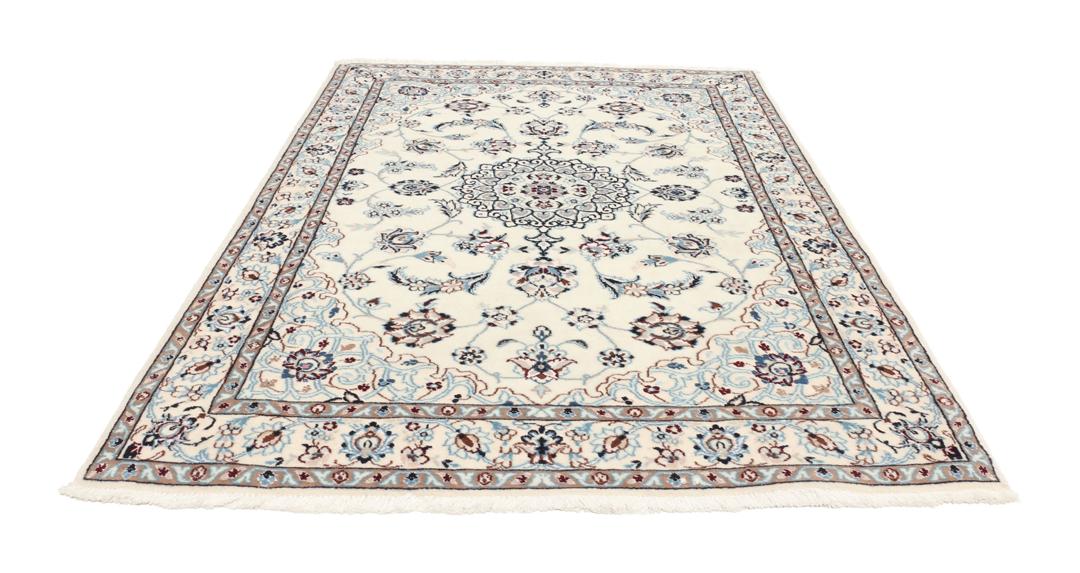
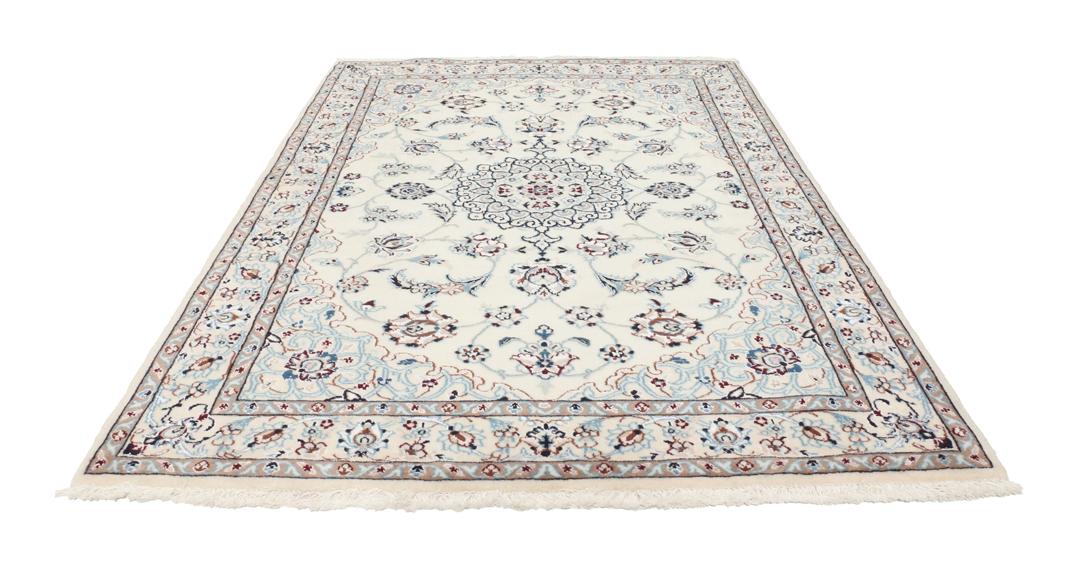
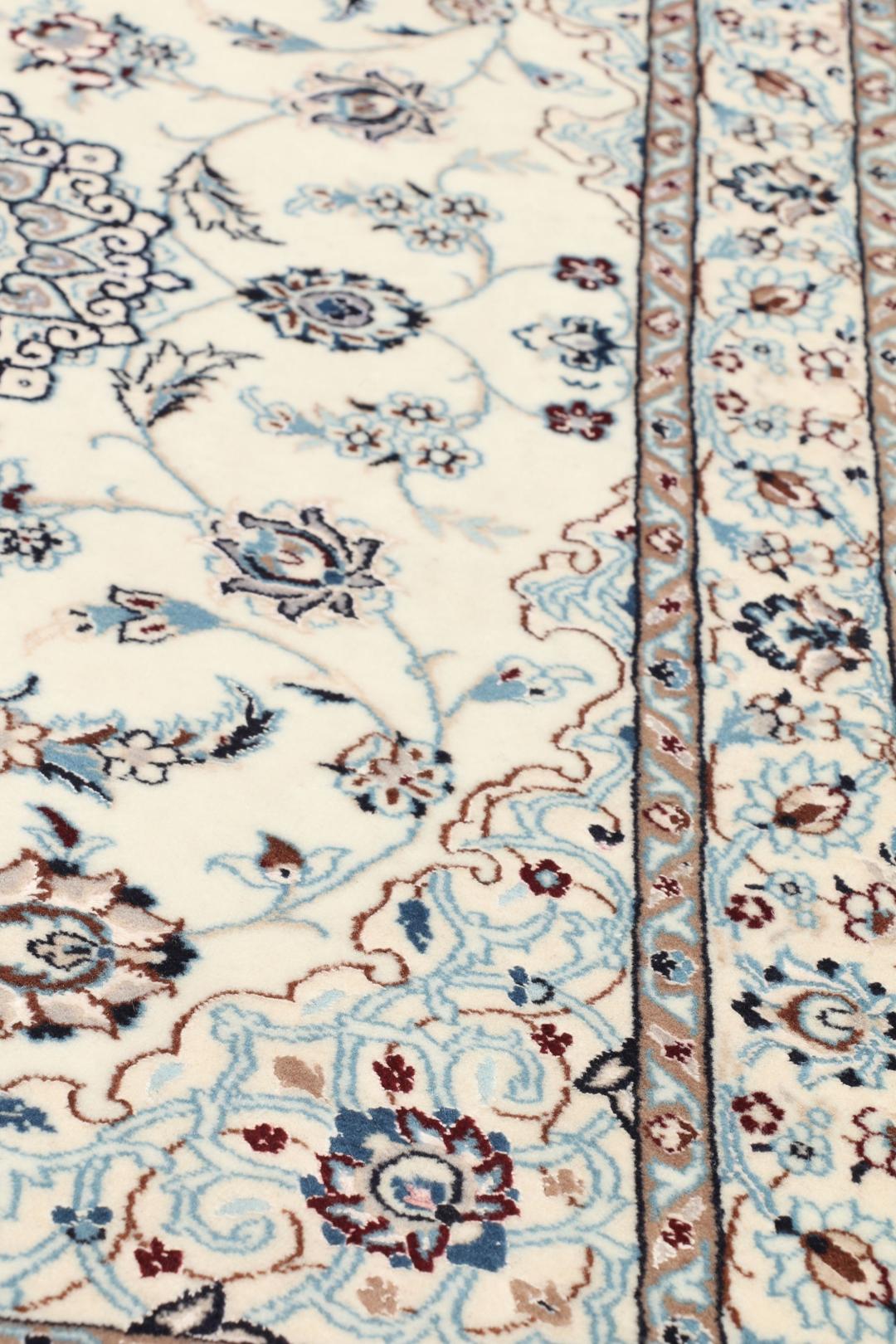
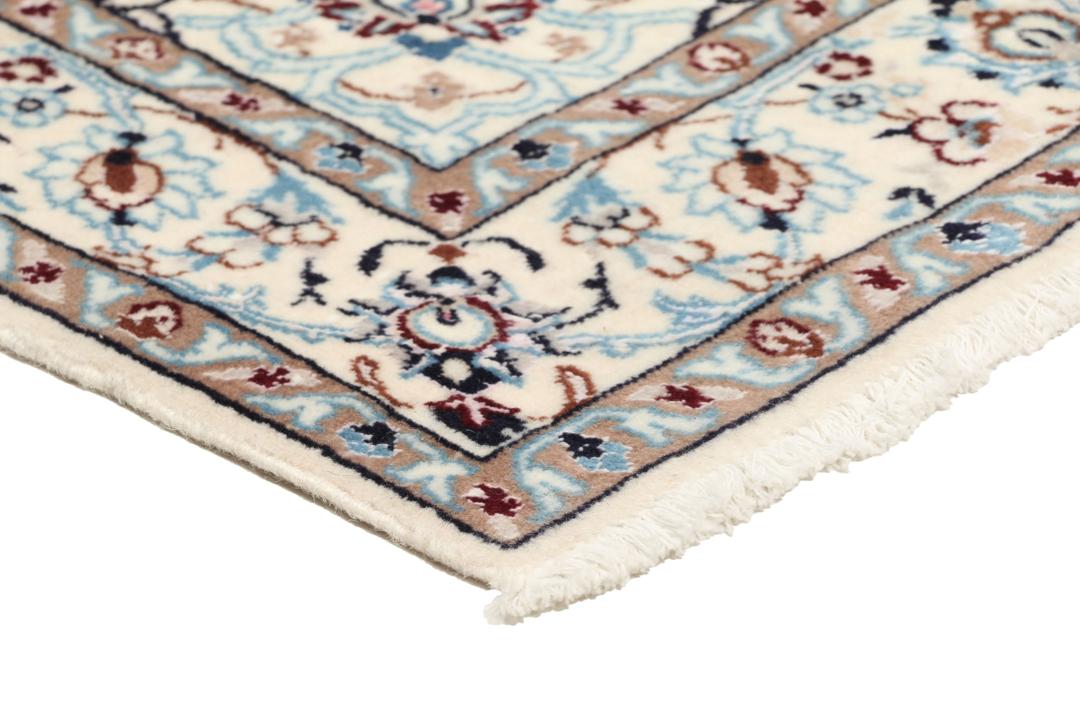
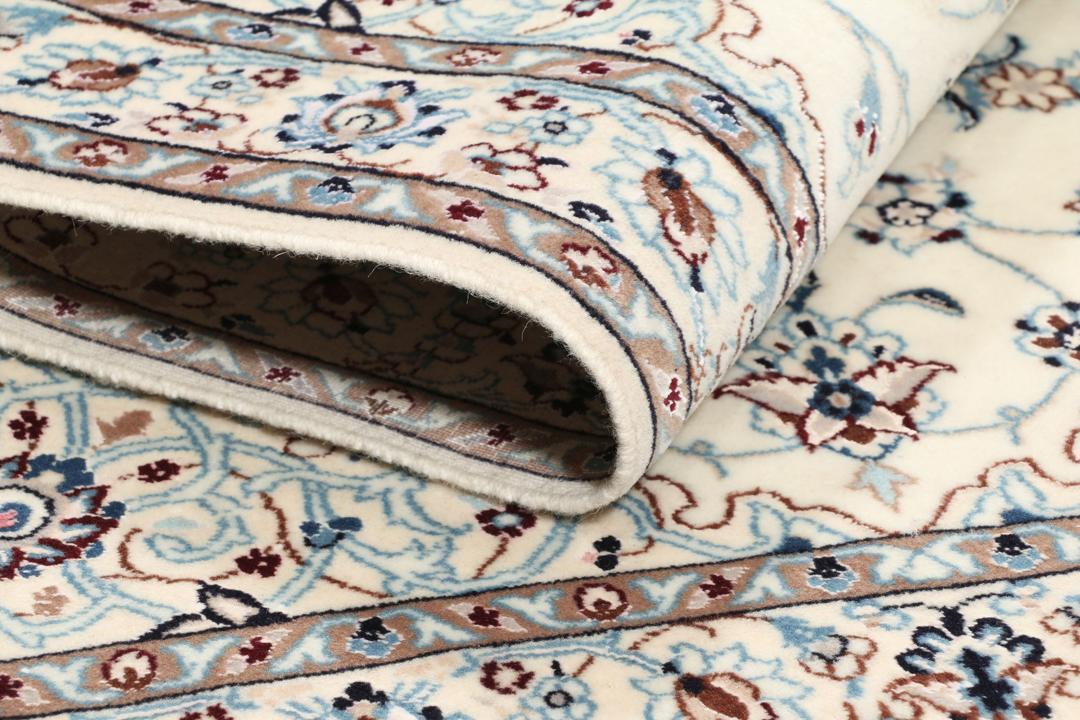
Nain rugs trace their origins to the town of Nain in the Middle East, a centre originally famous for its fine textile and garment production. As the market for traditional woven rugs evolved in the early 20th century, the master weavers of Nain transitioned their skills to rug production, quickly becoming synonymous with some of the finest, most precise craftsmanship in the world.
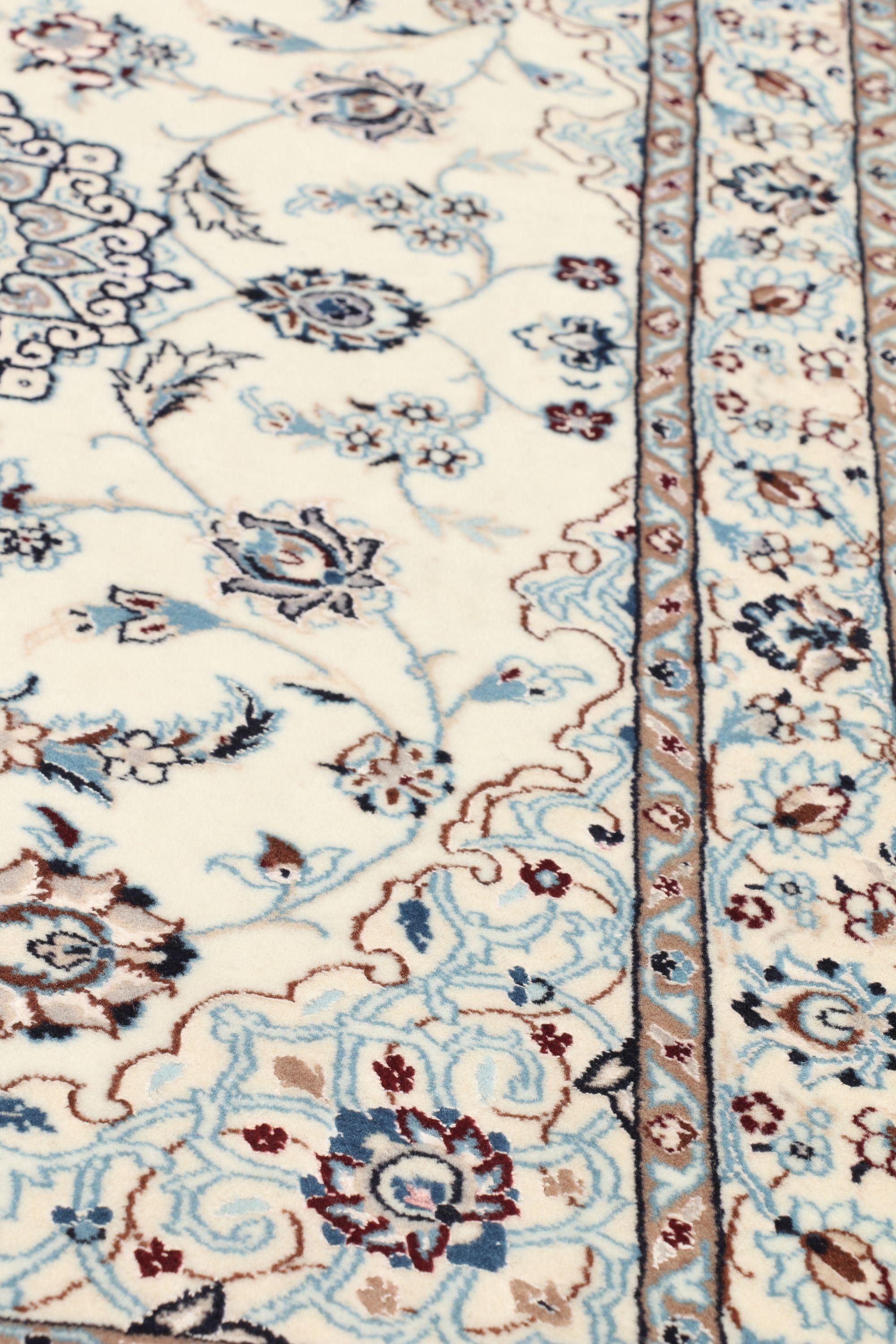
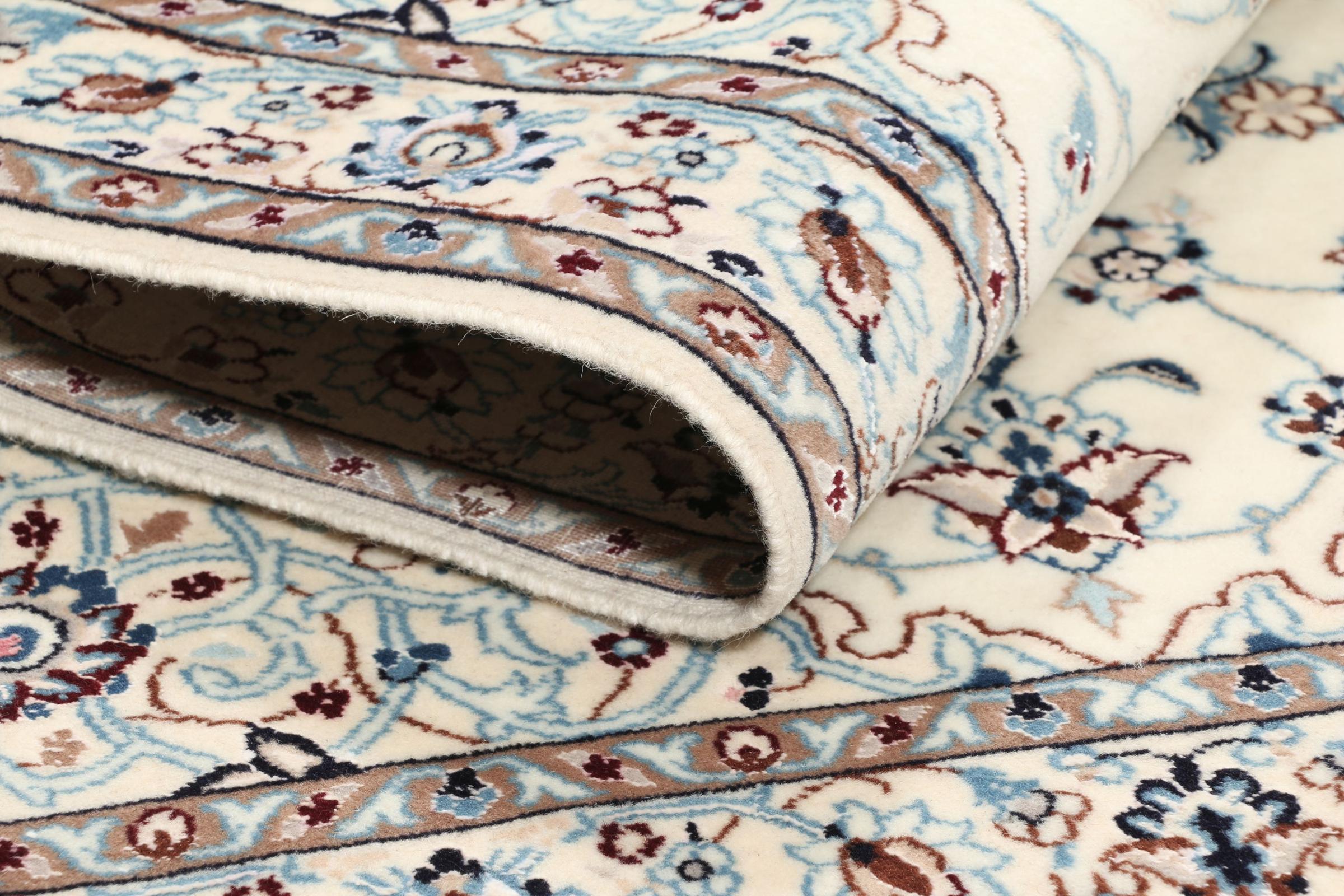
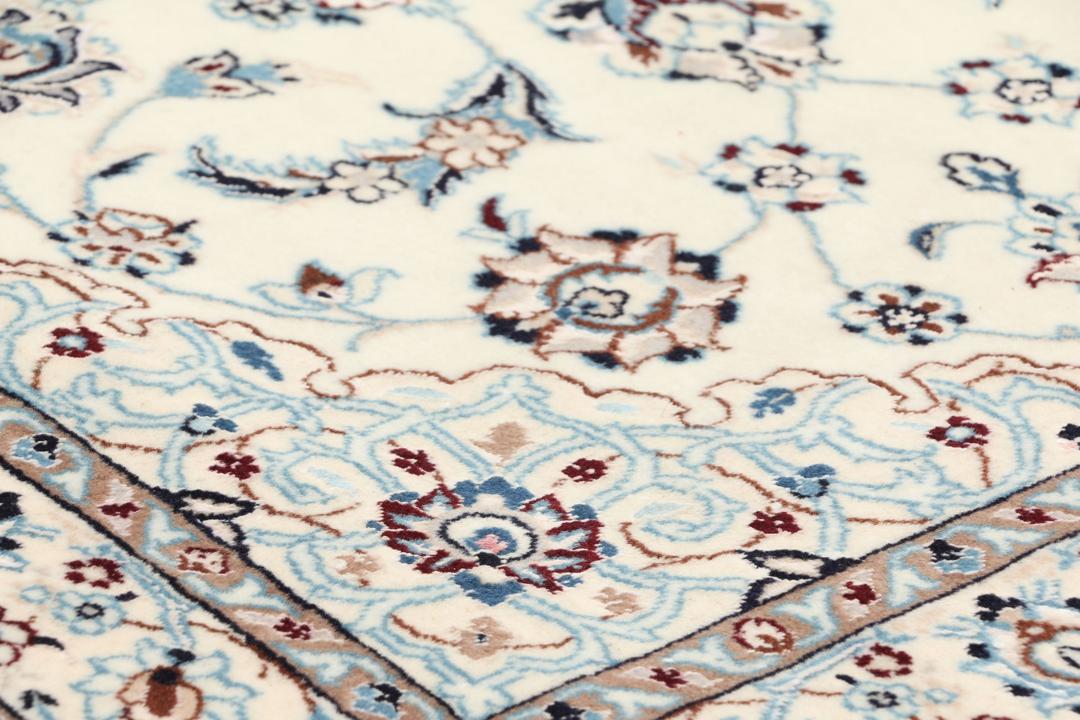
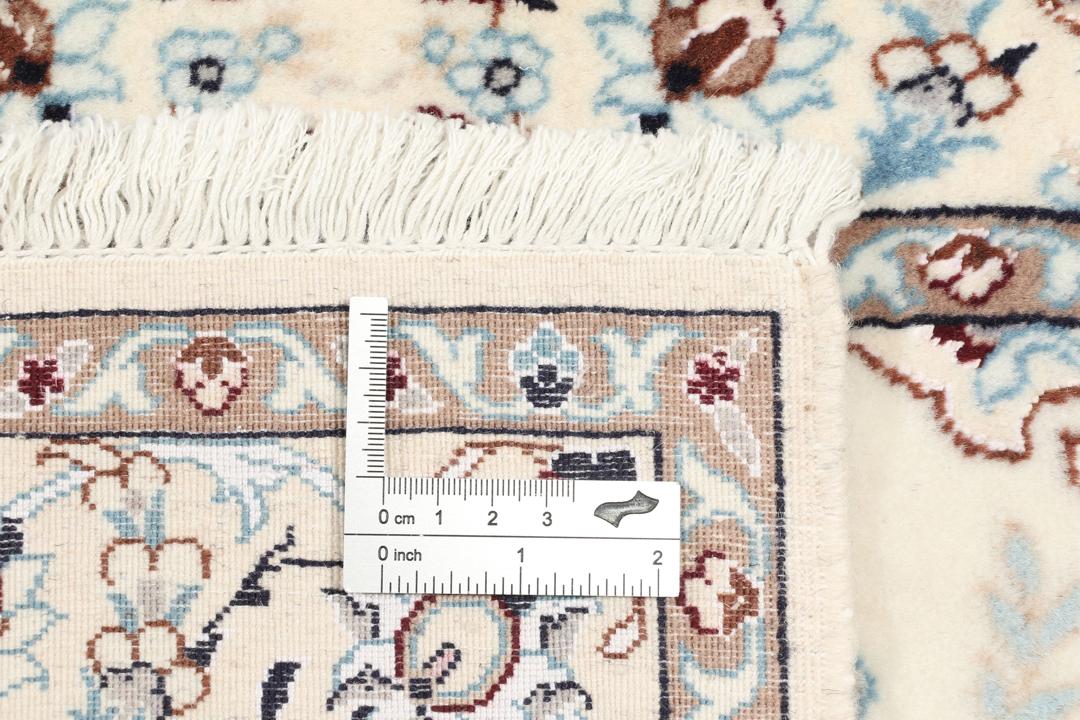
The 'La' designation is a unique classification system used to grade the quality of these rugs based on the number of threads in the fringe. A 6La rug represents a very high standard, indicating an exceptionally fine weave that allows for intricate, detailed patterns that are nearly impossible to achieve with coarser techniques. This level of fineness is what gives the rug its signature crispness and delicate appearance.
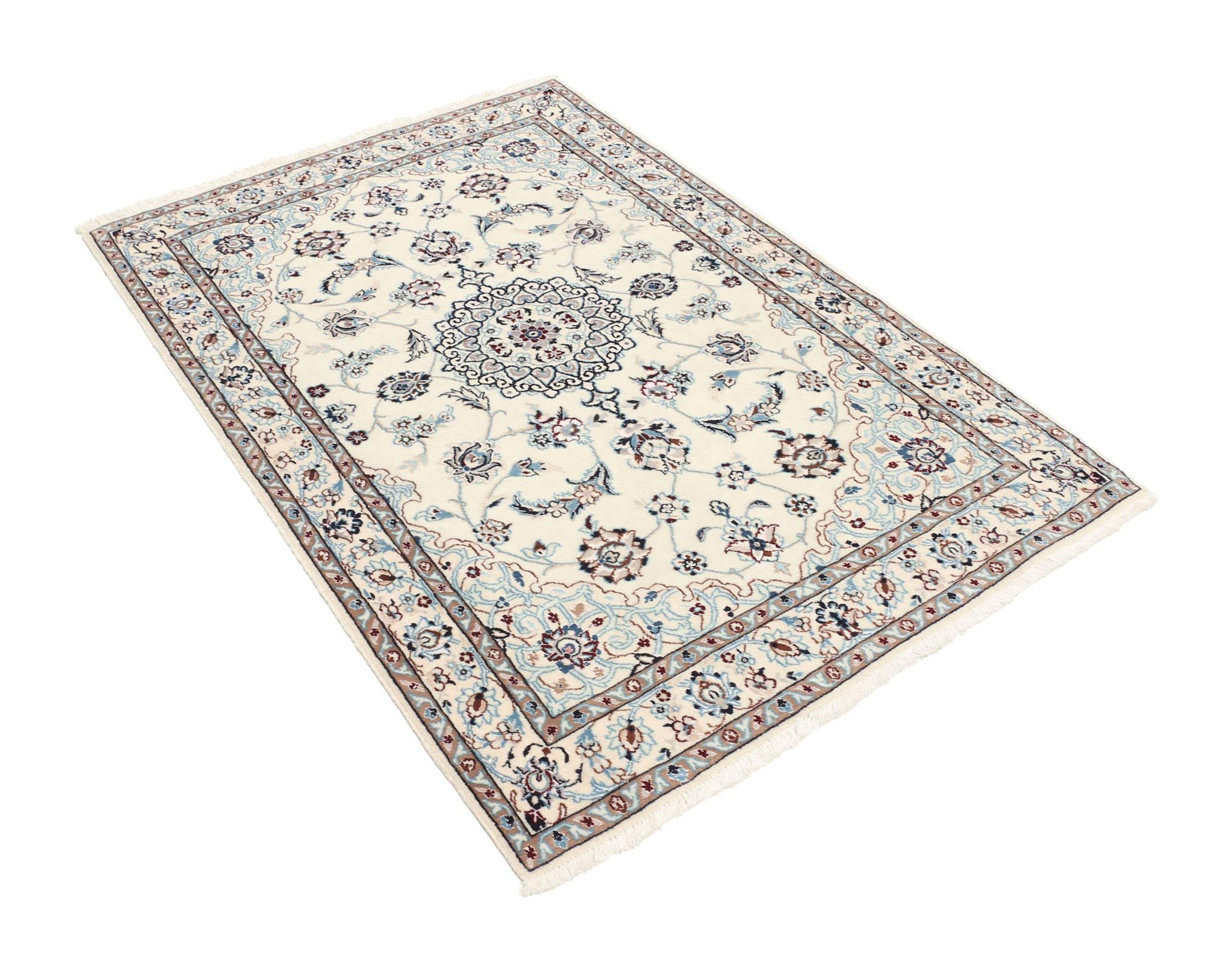
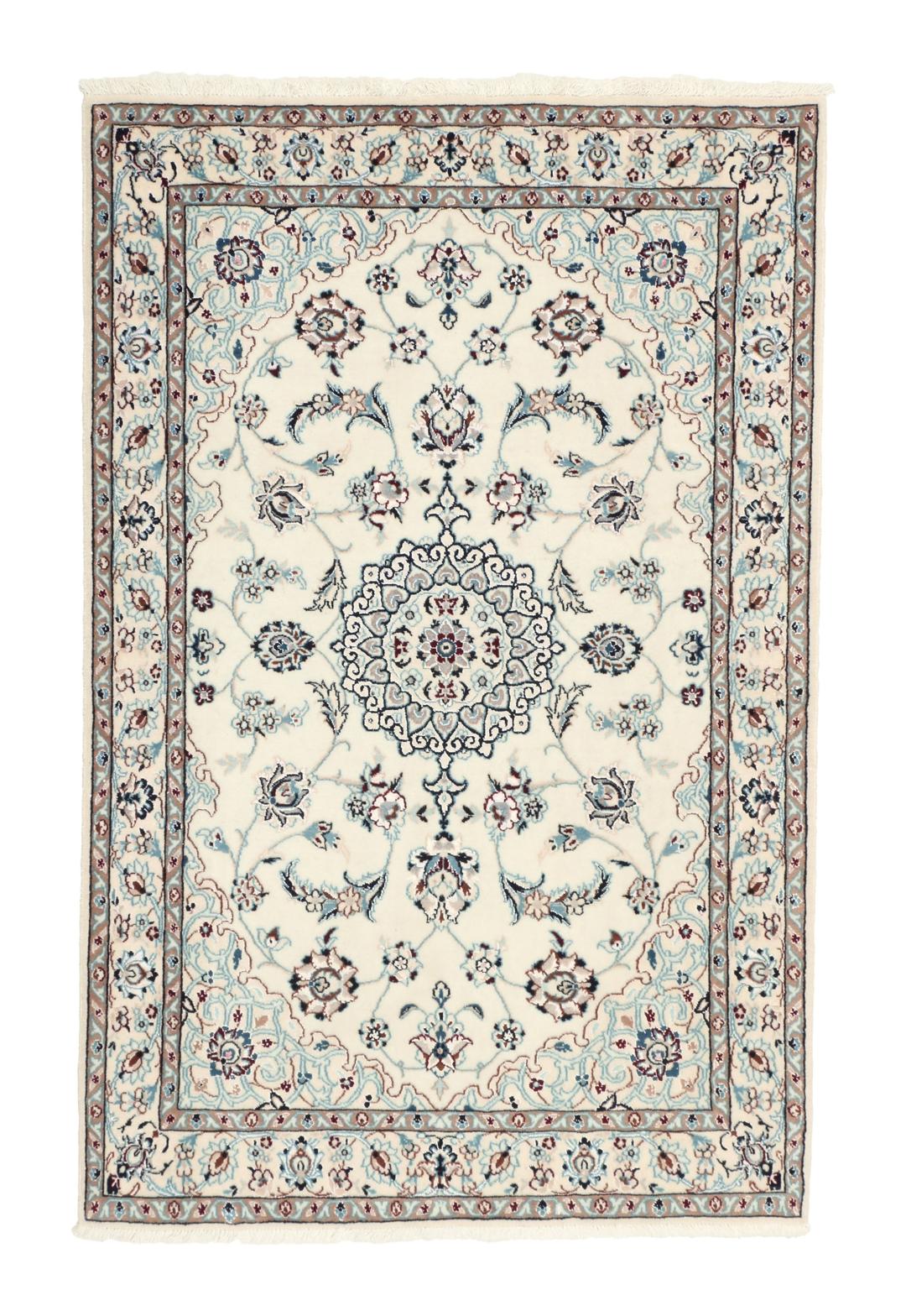
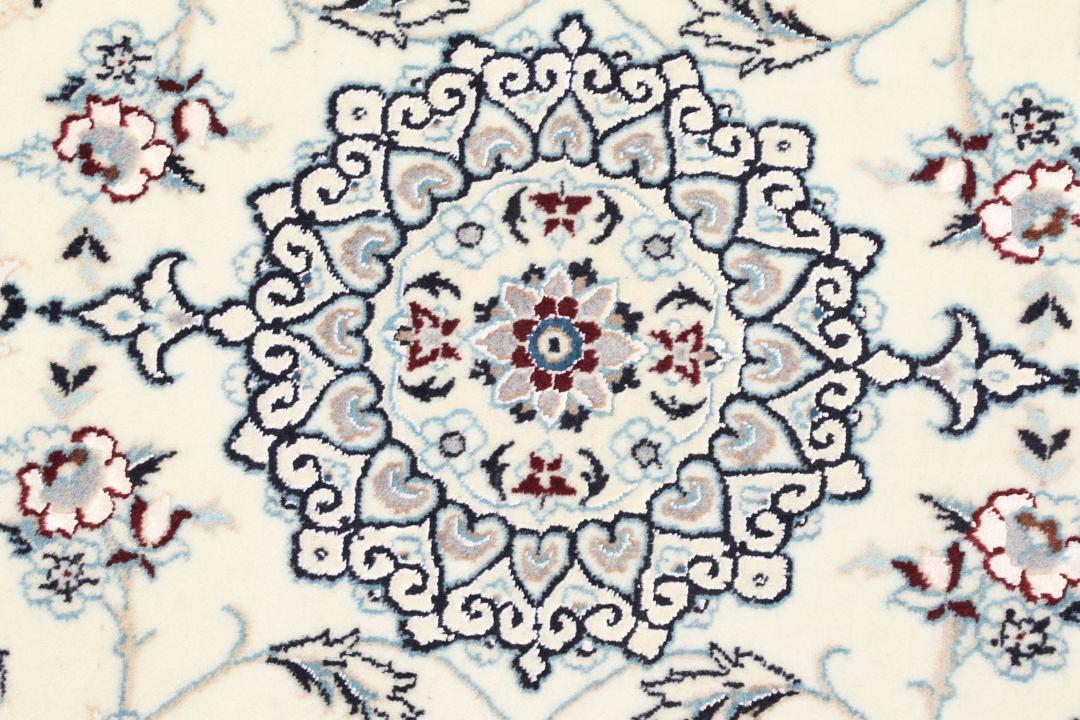
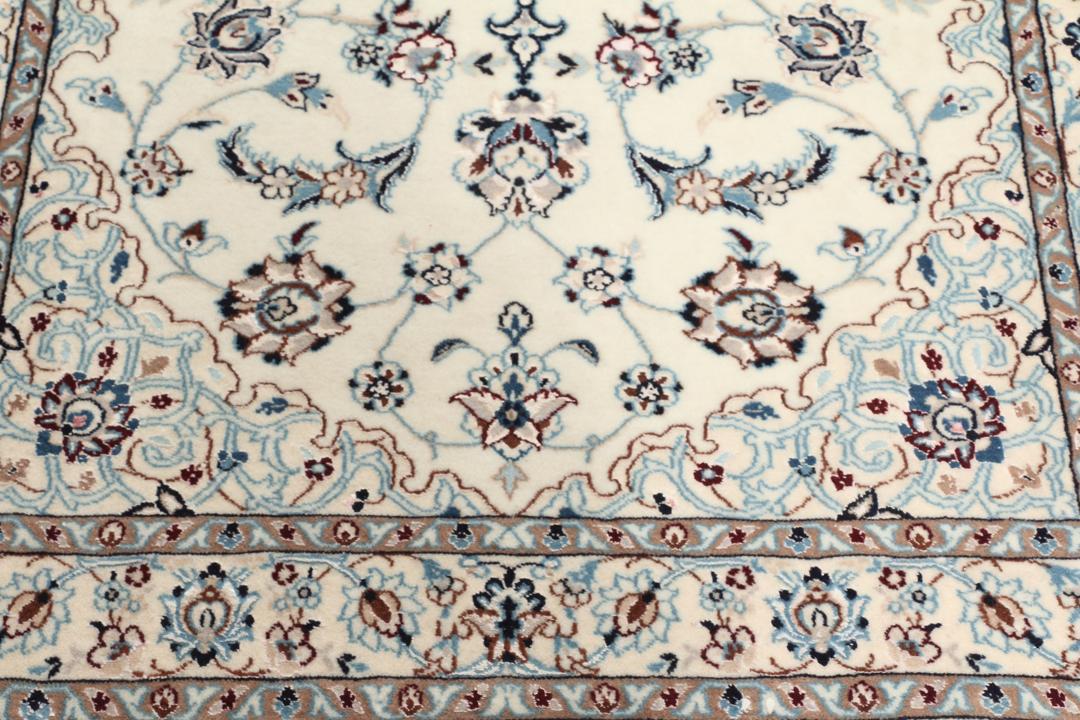
Visually, these rugs are defined by their elegant, balanced compositions. They typically feature a central medallion surrounded by flowing arabesques, floral sprays, and palmettes. While the colour palette often favours soft ivory, cream, and varied shades of blue, the harmony between the field and the border is what truly distinguishes a Nain from other regional styles.
Owning a piece from this tradition is a commitment to heritage and artistry. These rugs are highly sought after by collectors for their ability to combine artistic complexity with functional longevity. To own one is to possess a piece of Middle Eastern history that reflects a standard of skill passed down through generations of master weavers.