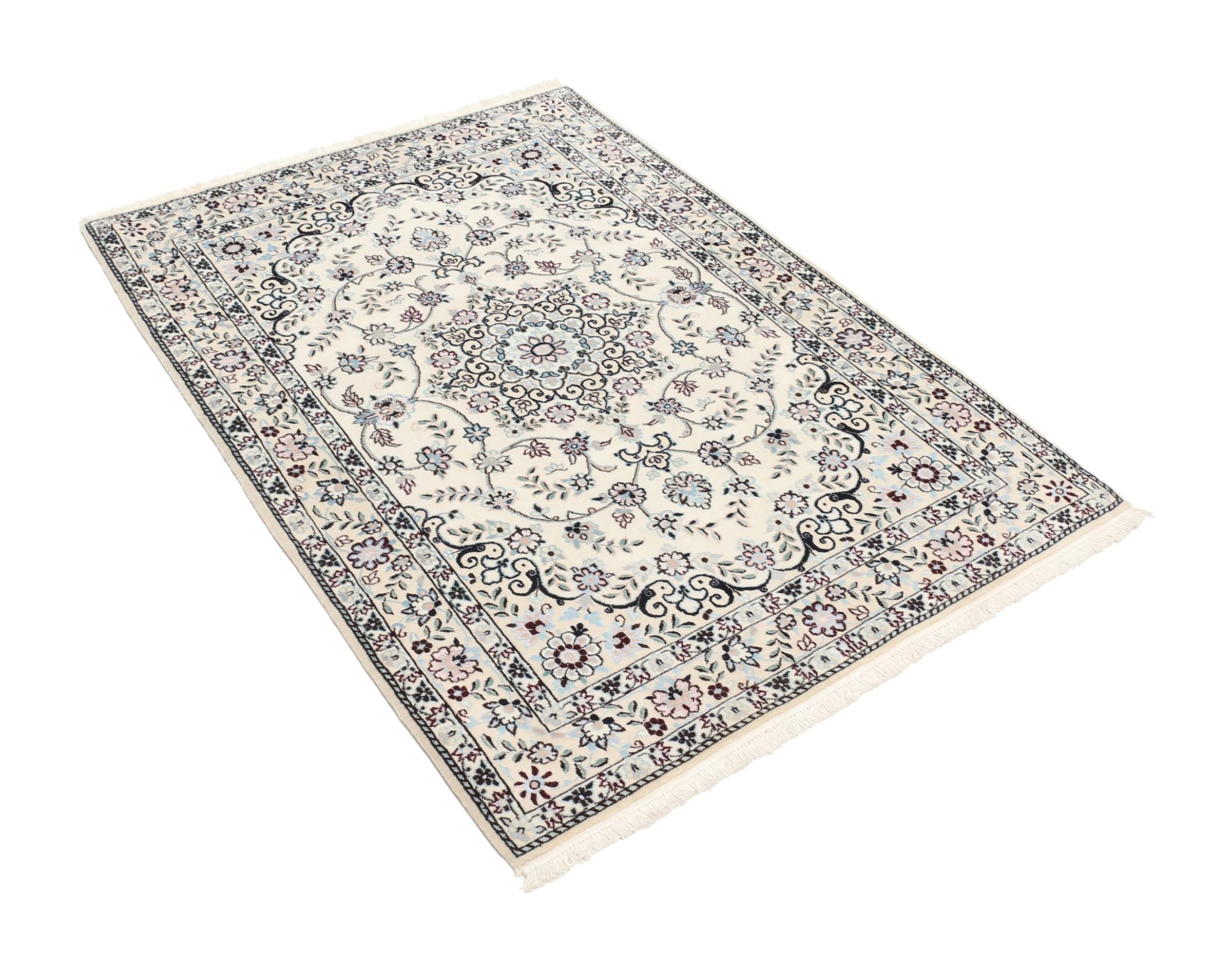
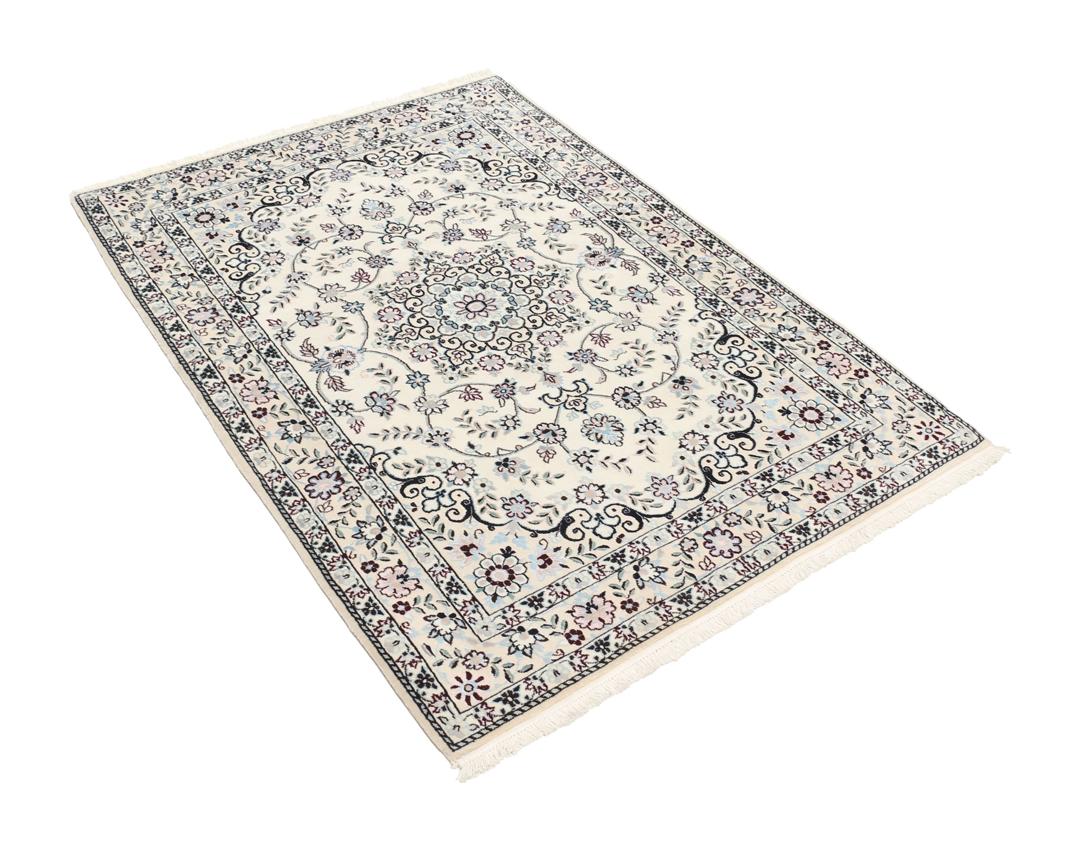
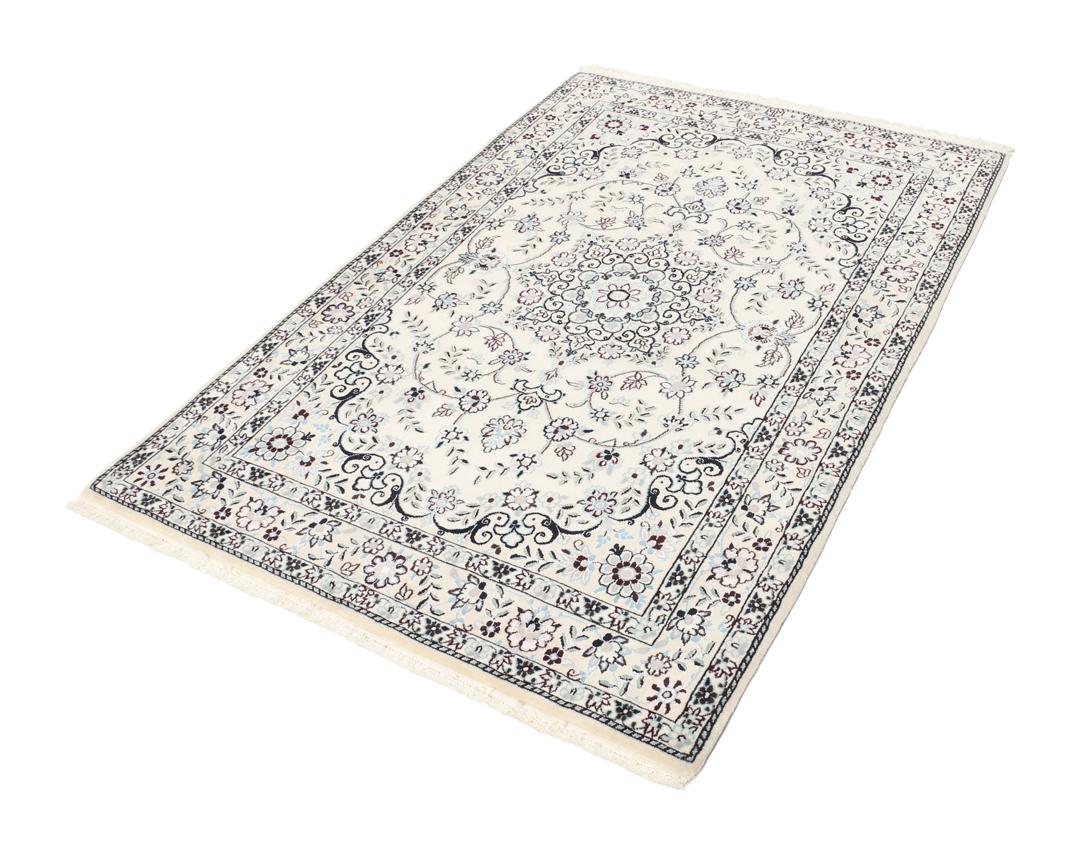
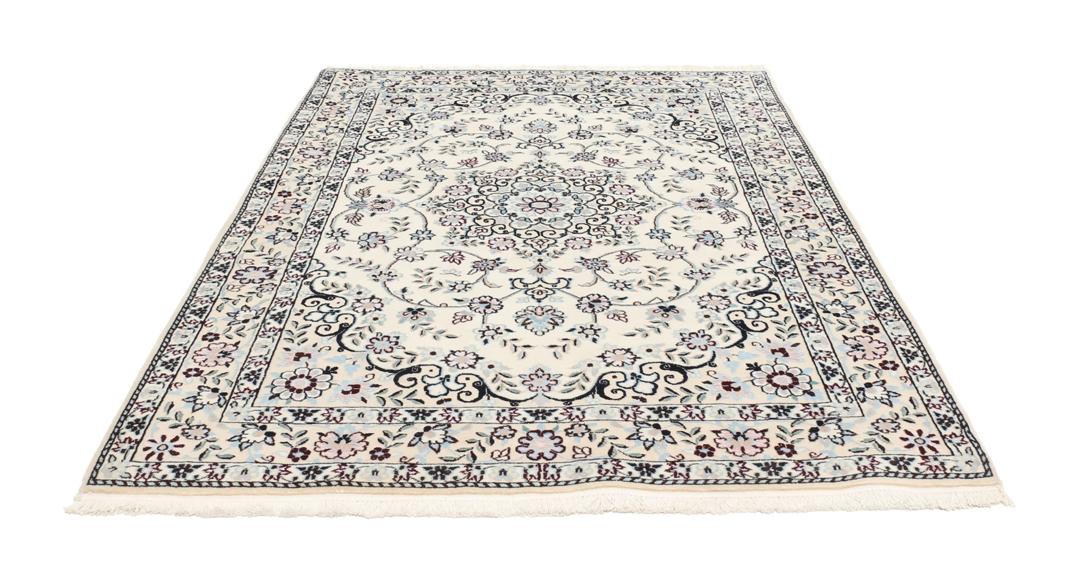
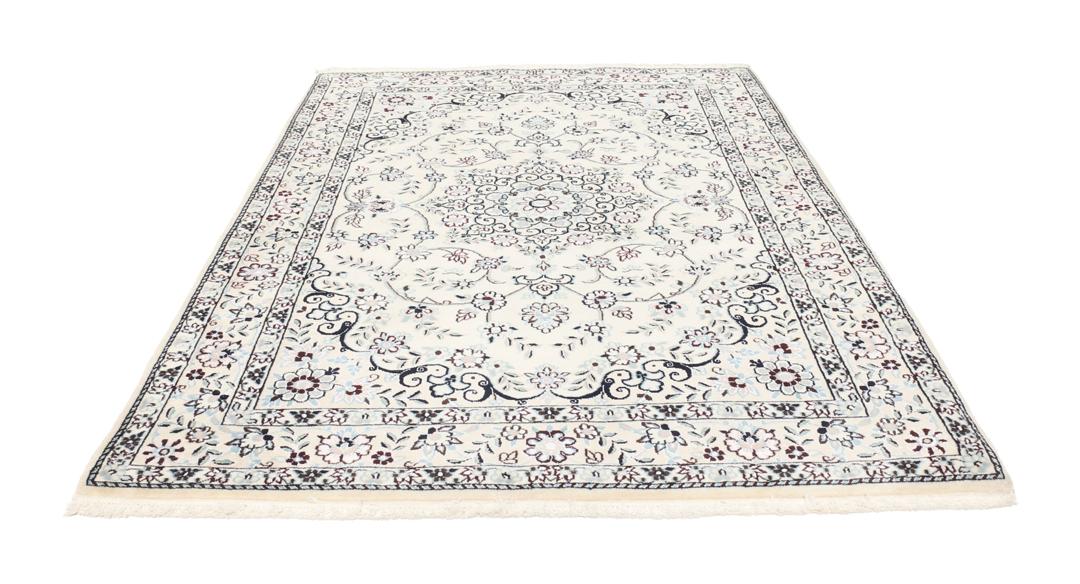
Nain rugs originate from the town of Nain in the Middle East, a region that evolved from a centre of fine textile production into one of the most prestigious sources of hand-knotted rugs. Originally known for high-quality wool cloaks, the local artisans pivoted their exceptional skills toward rug making in the early 20th century. This transition allowed them to integrate their refined aesthetic into a new medium, quickly earning a reputation for producing some of the most elegant rugs in the world.
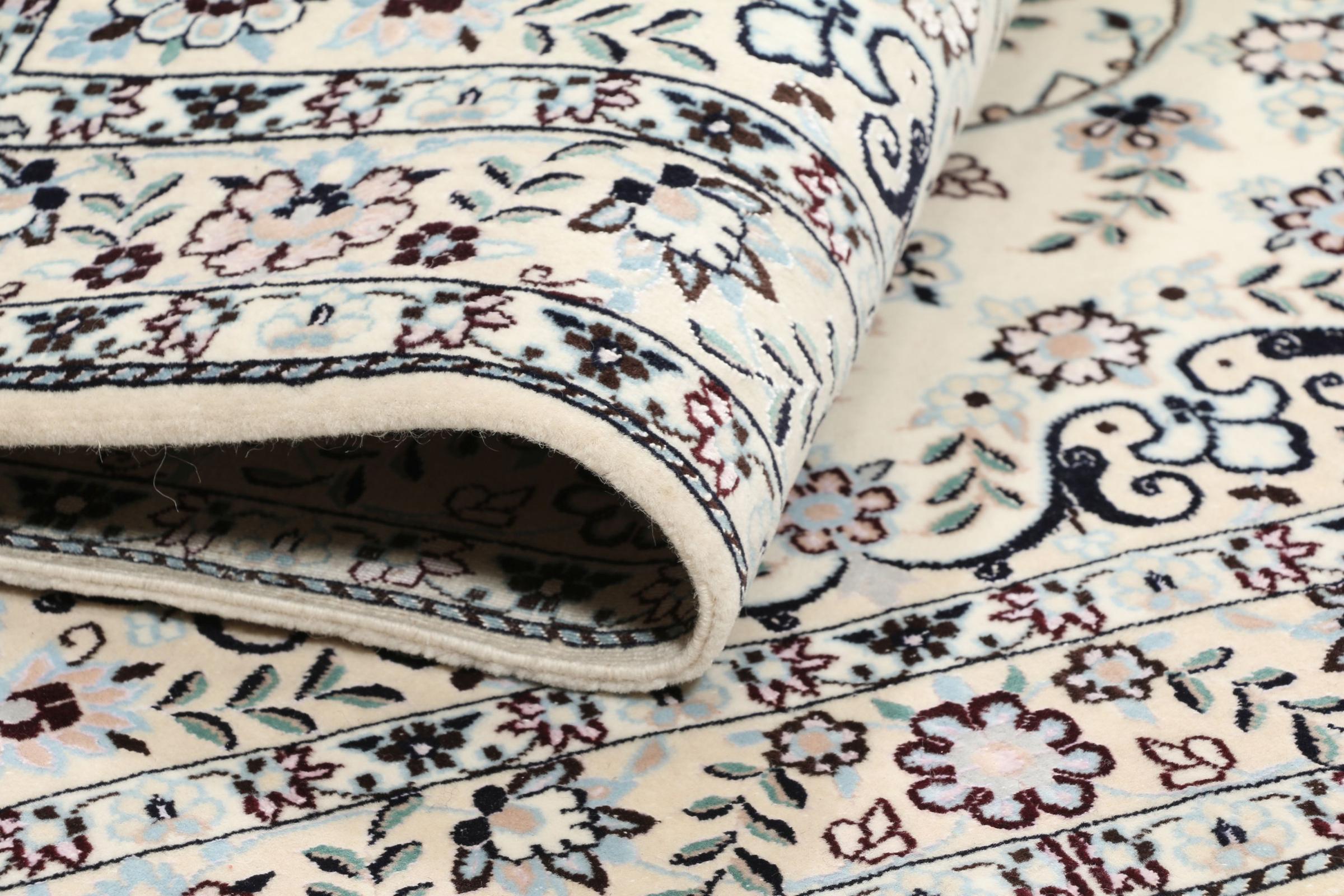
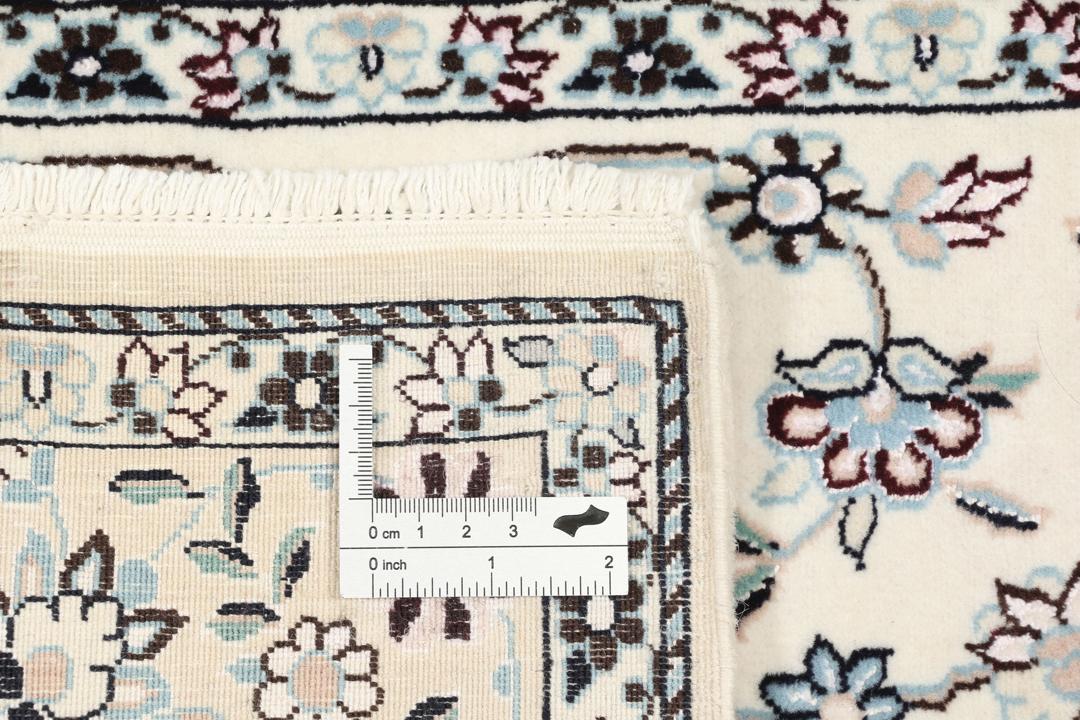
The term 'La' is a technical classification unique to Nain rugs, referring to the number of strands used in the foundation threads. A 6La rug is among the finest grades available, indicating that the foundation is composed of extremely thin, multi-ply threads. This technical sophistication allows for a much higher knot density, which is essential for creating the intricate, curvilinear floral patterns that define the style.
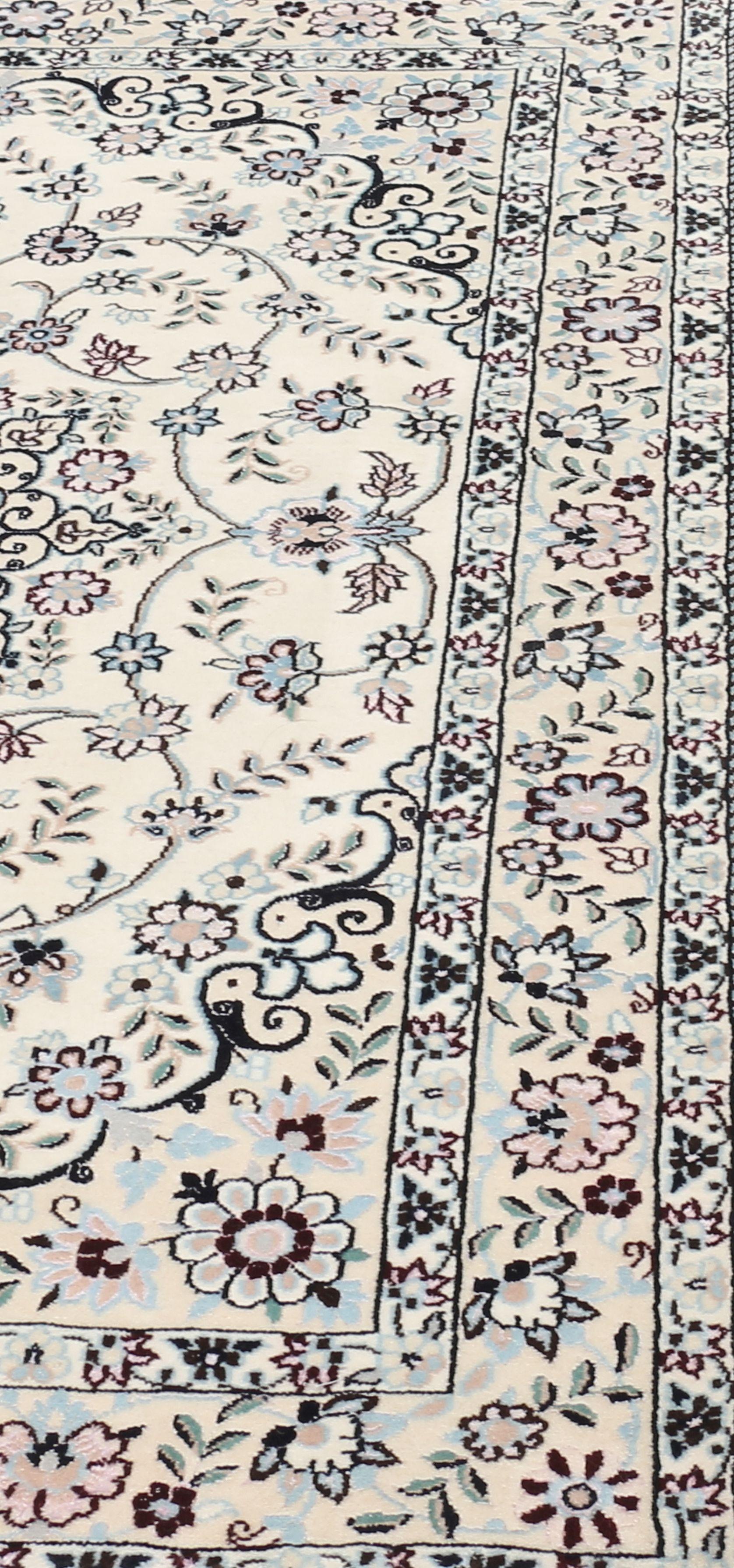
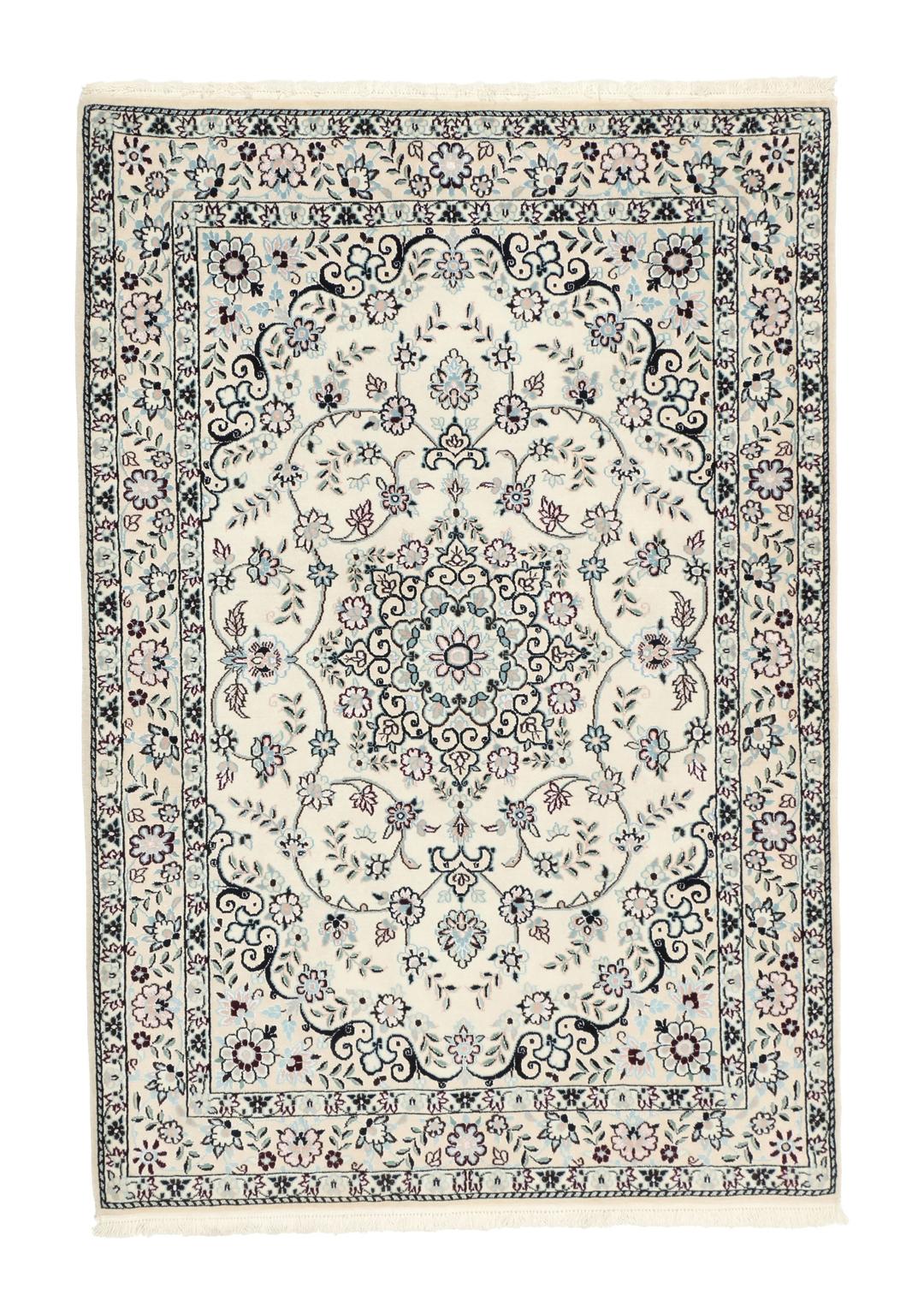
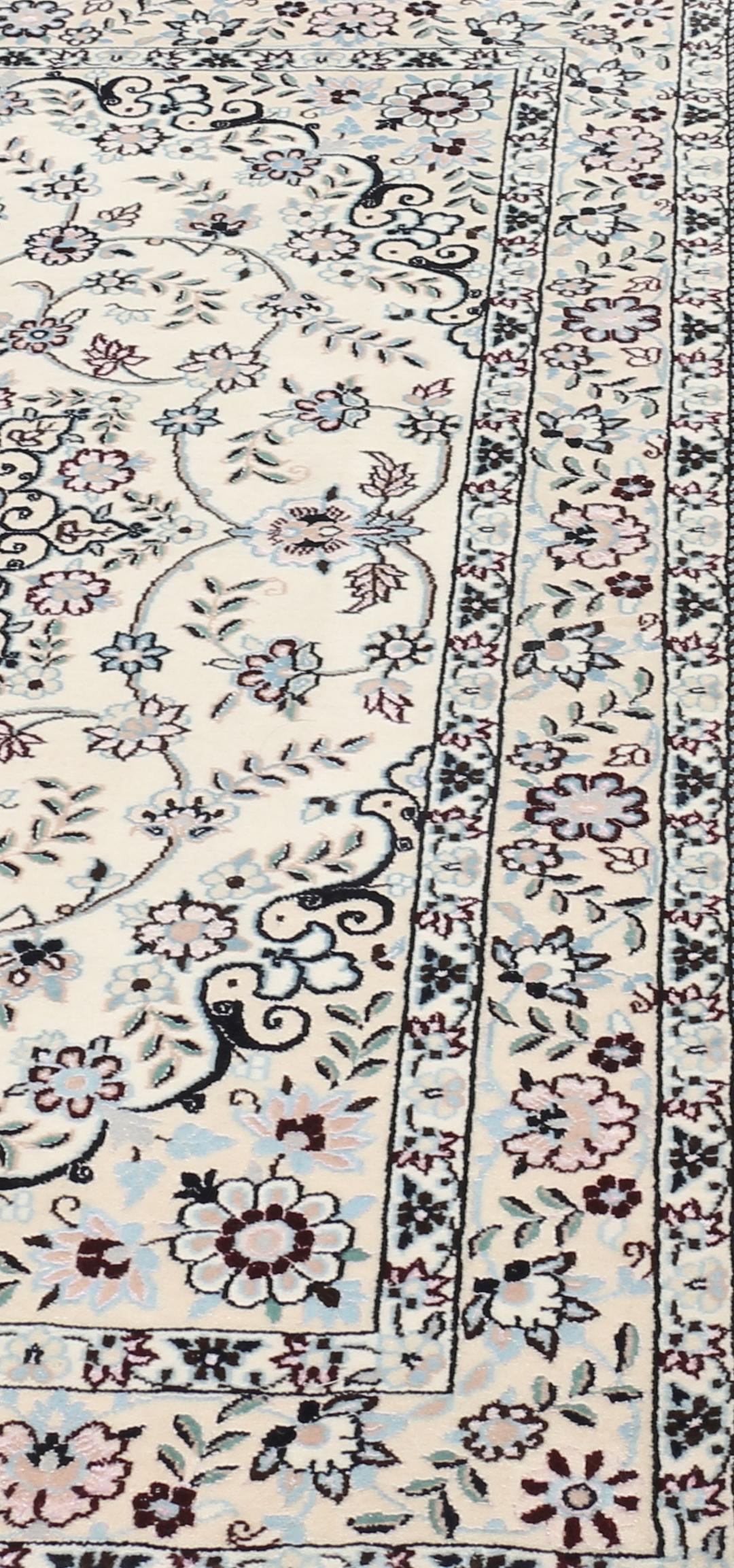
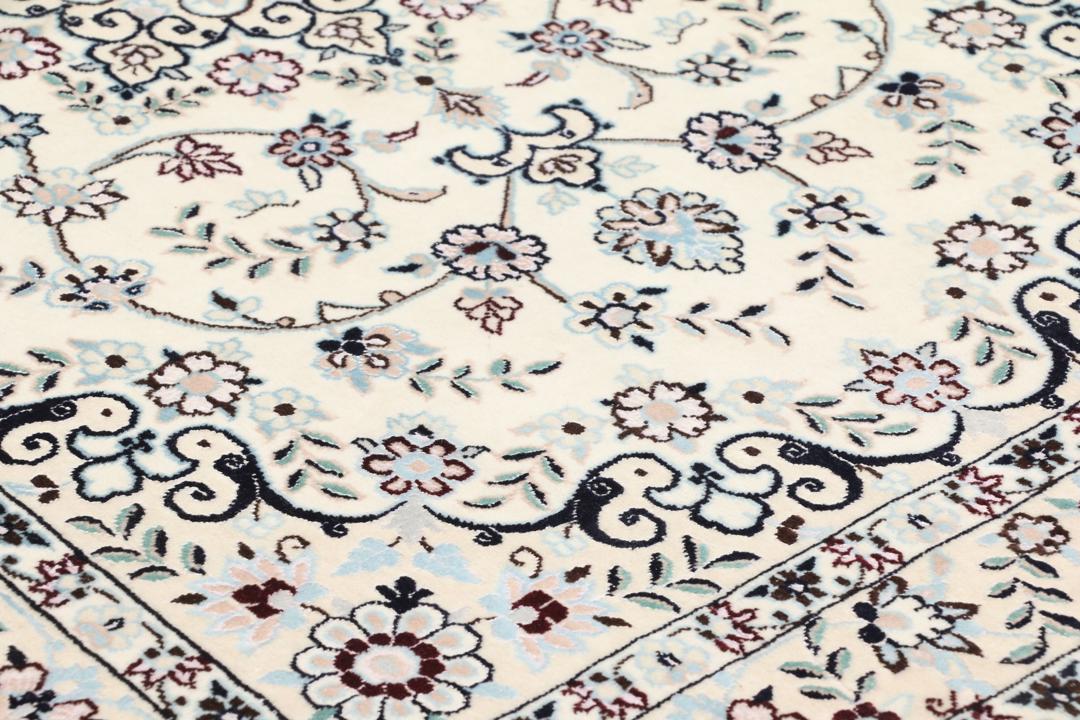
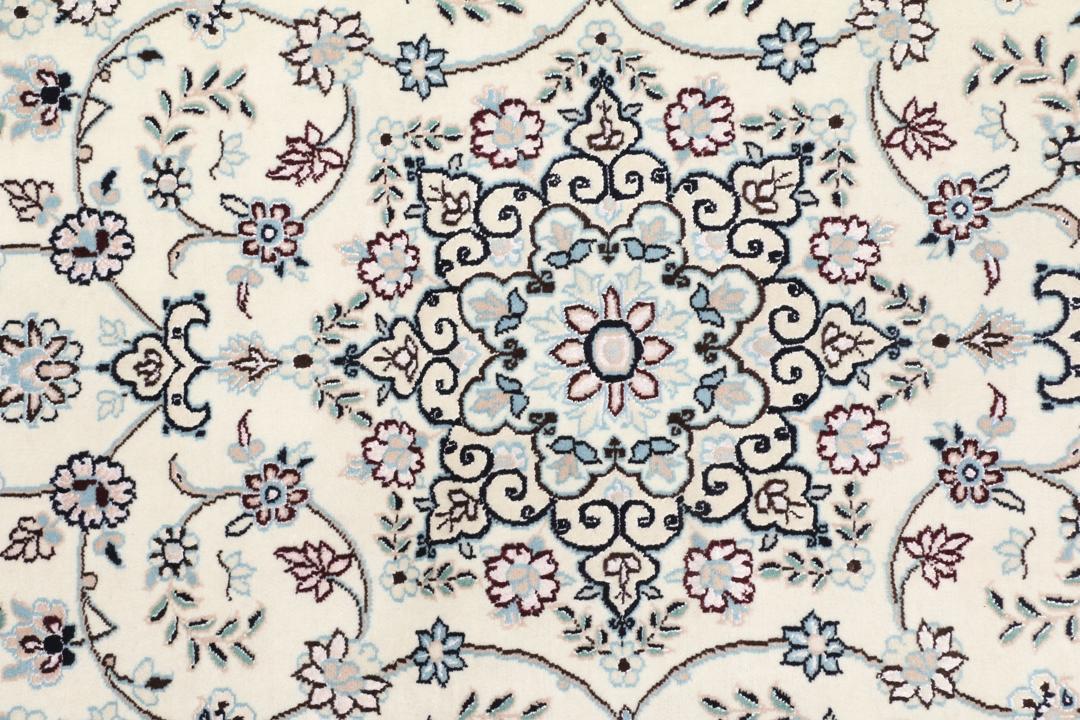
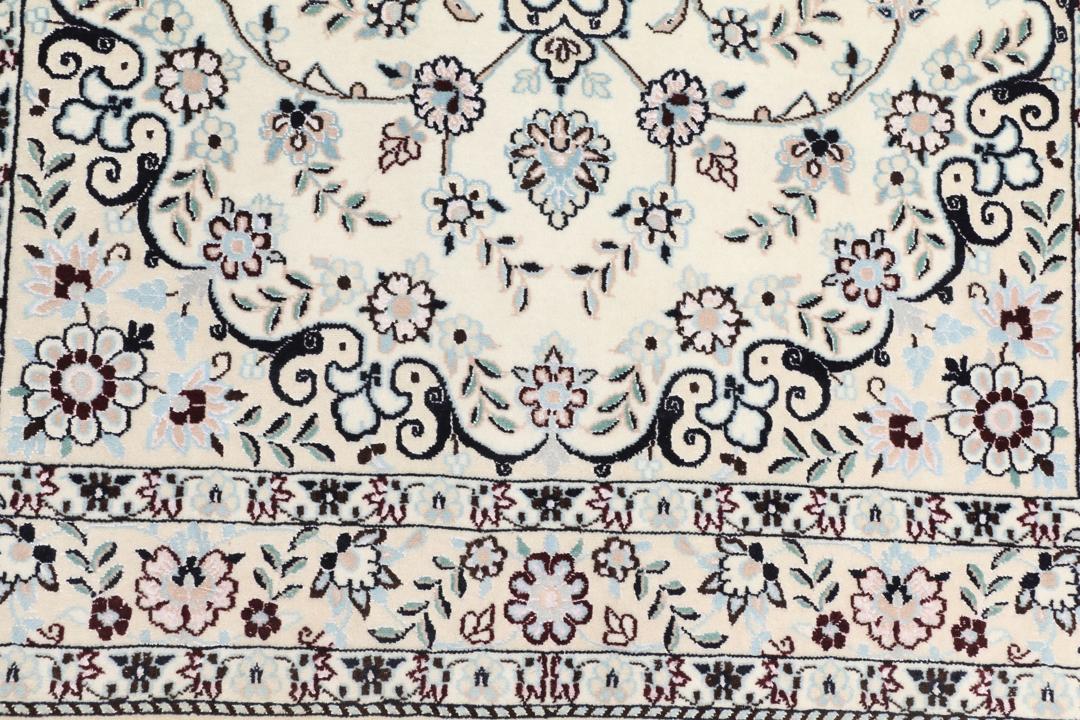
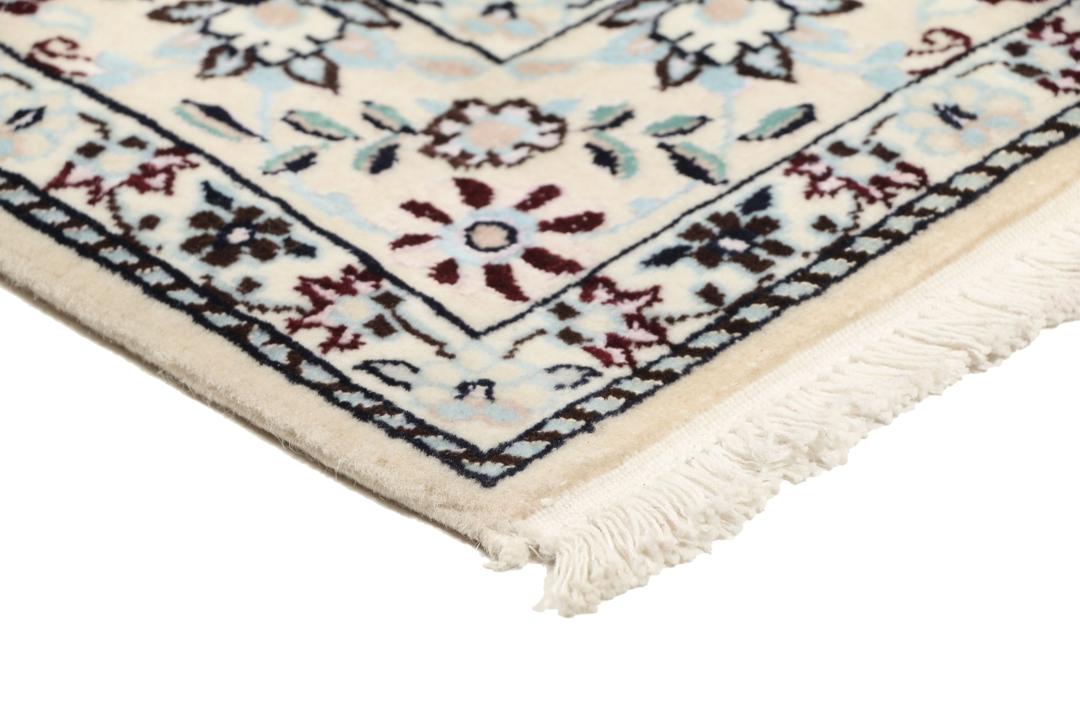
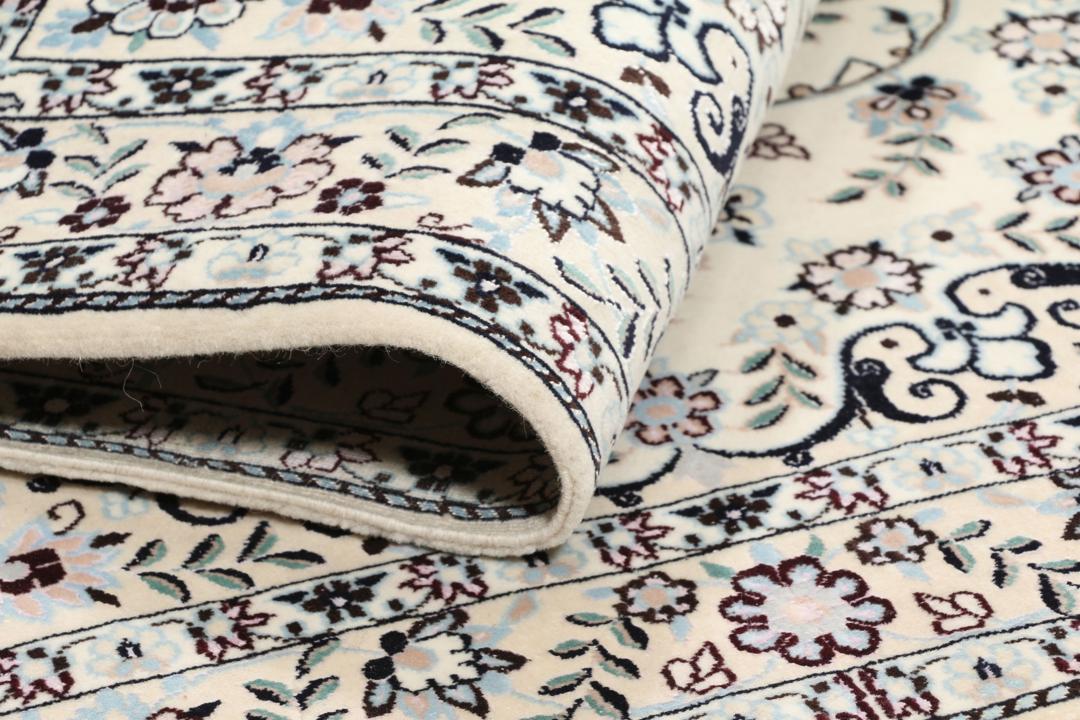
The design language of a Nain is typically characterised by a central medallion surrounded by flowing floral arabesques and vines. These motifs are often rendered with a subtlety that emphasises the elegance of the composition, usually set against an ivory, beige, or light blue background. The borders are equally considered, often featuring balanced floral arrangements that mirror the complexity of the central field.
Collectors value Nain rugs for their combination of technical precision and artistic restraint. They represent a significant investment in cultural heritage, showcasing a level of craft that has been preserved and refined over generations. Owning a piece from this tradition signifies an appreciation for the blend of historic artistry and the demanding standards of quality that define this prestigious regional style.