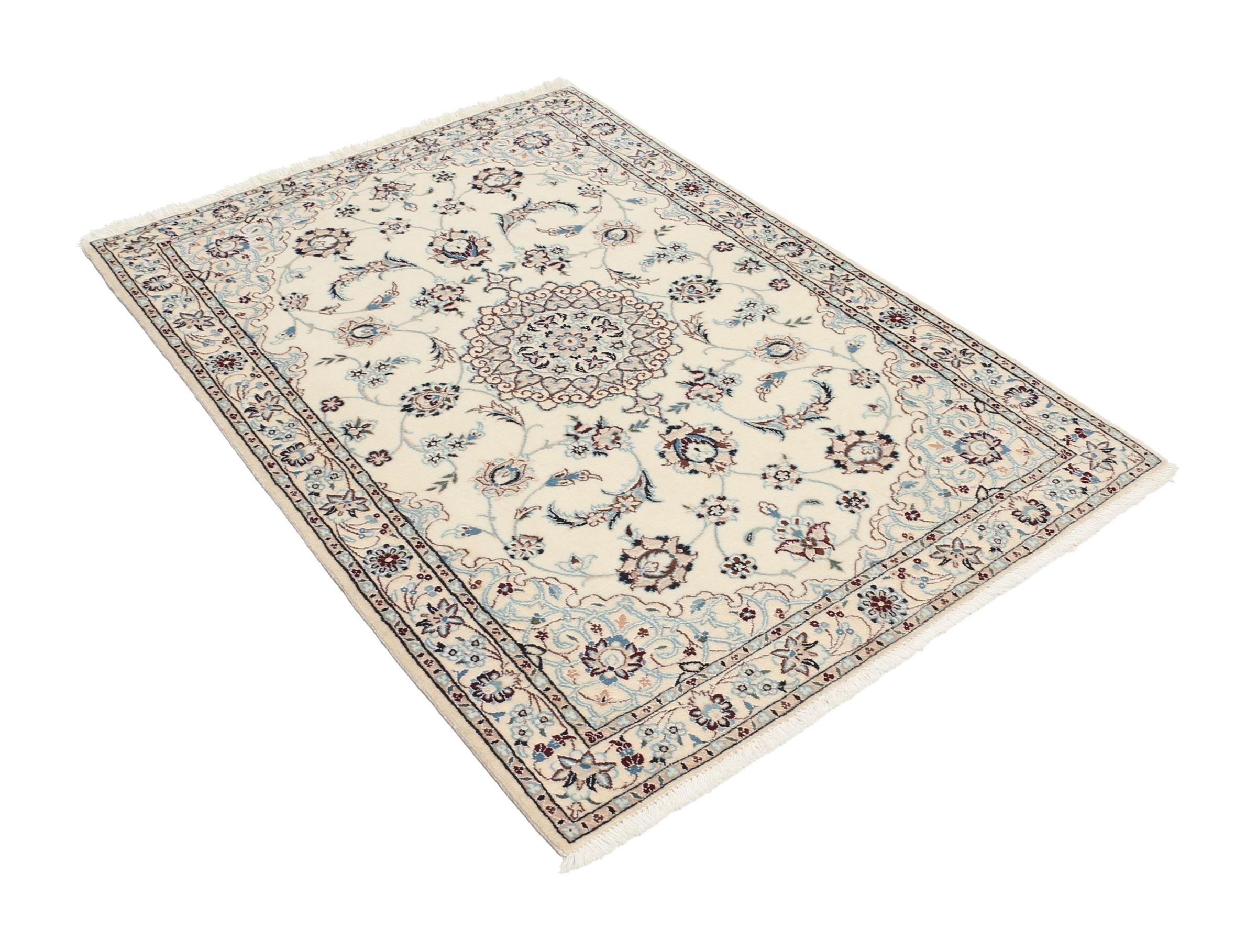
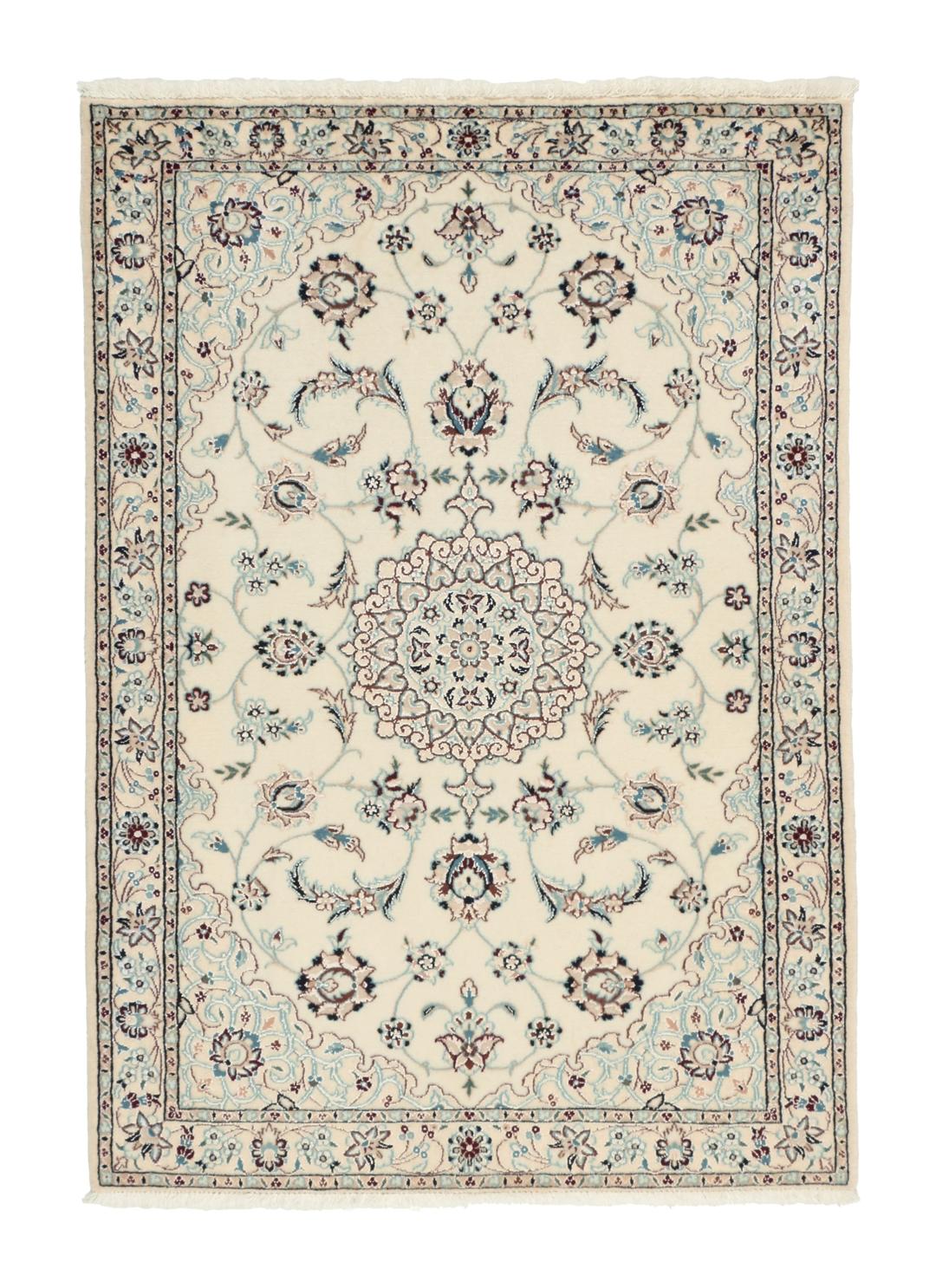
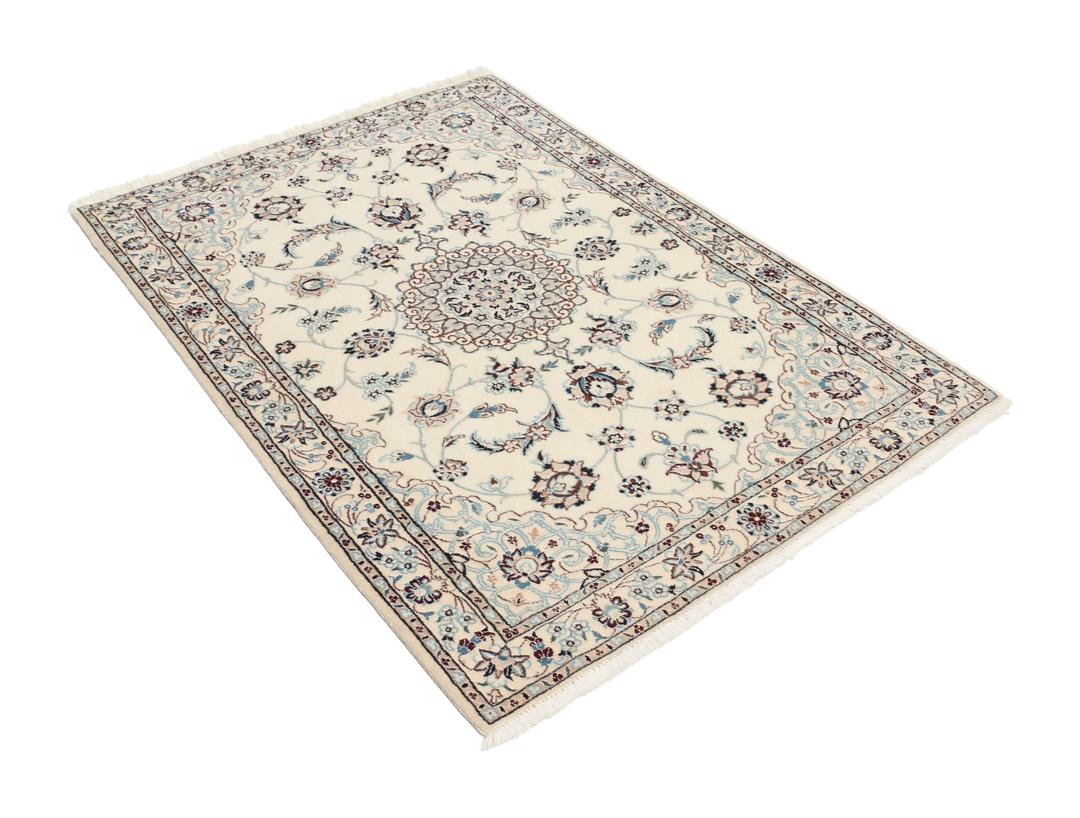
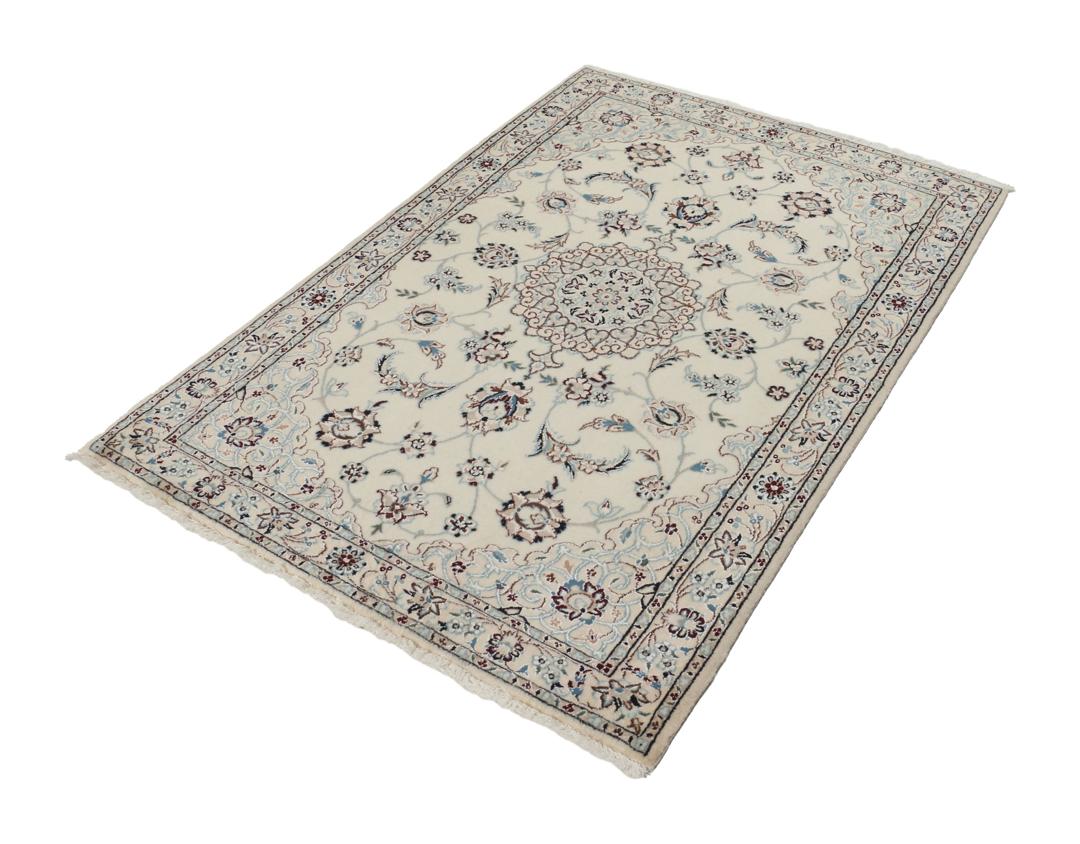
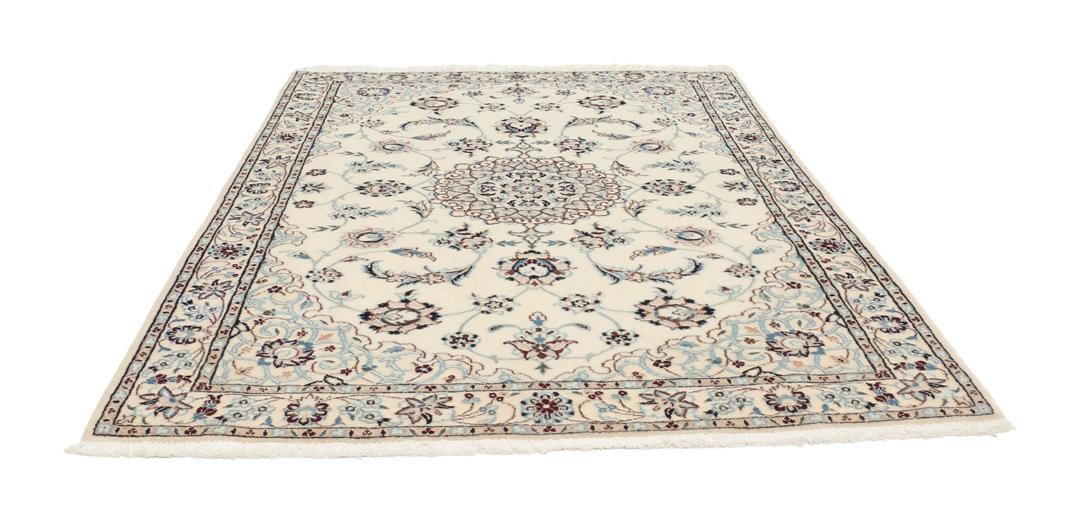
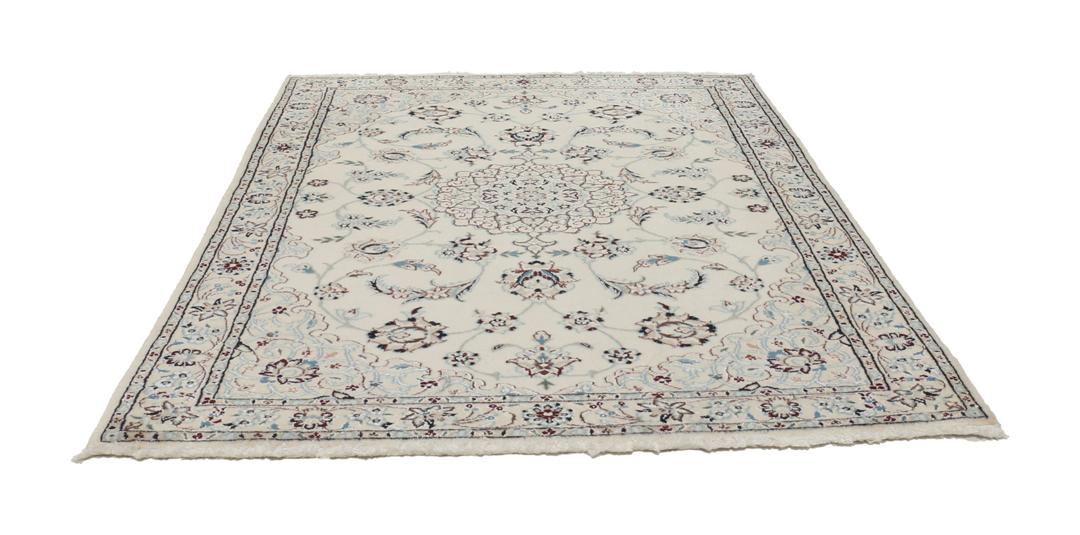
Nain rugs originate from the historic city of Nain, situated on the edge of the central desert in the Middle East. Originally famous for producing high-quality hand-woven garments, the local artisans shifted their focus to rug making in the early 20th century. This transition allowed them to apply their exceptional precision to a new medium, quickly establishing Nain as a hub for some of the most sophisticated and sought-after rugs in the world.
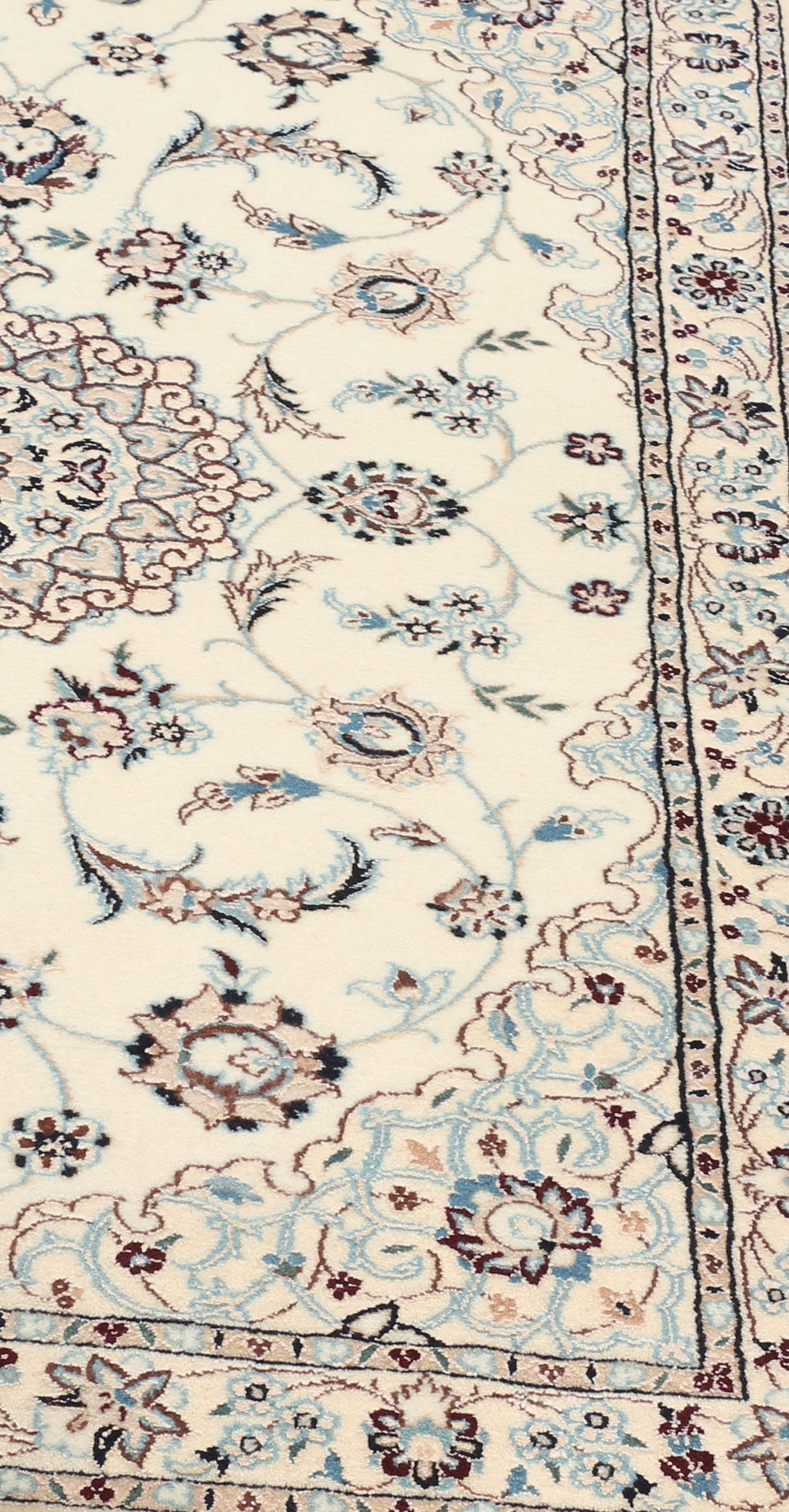
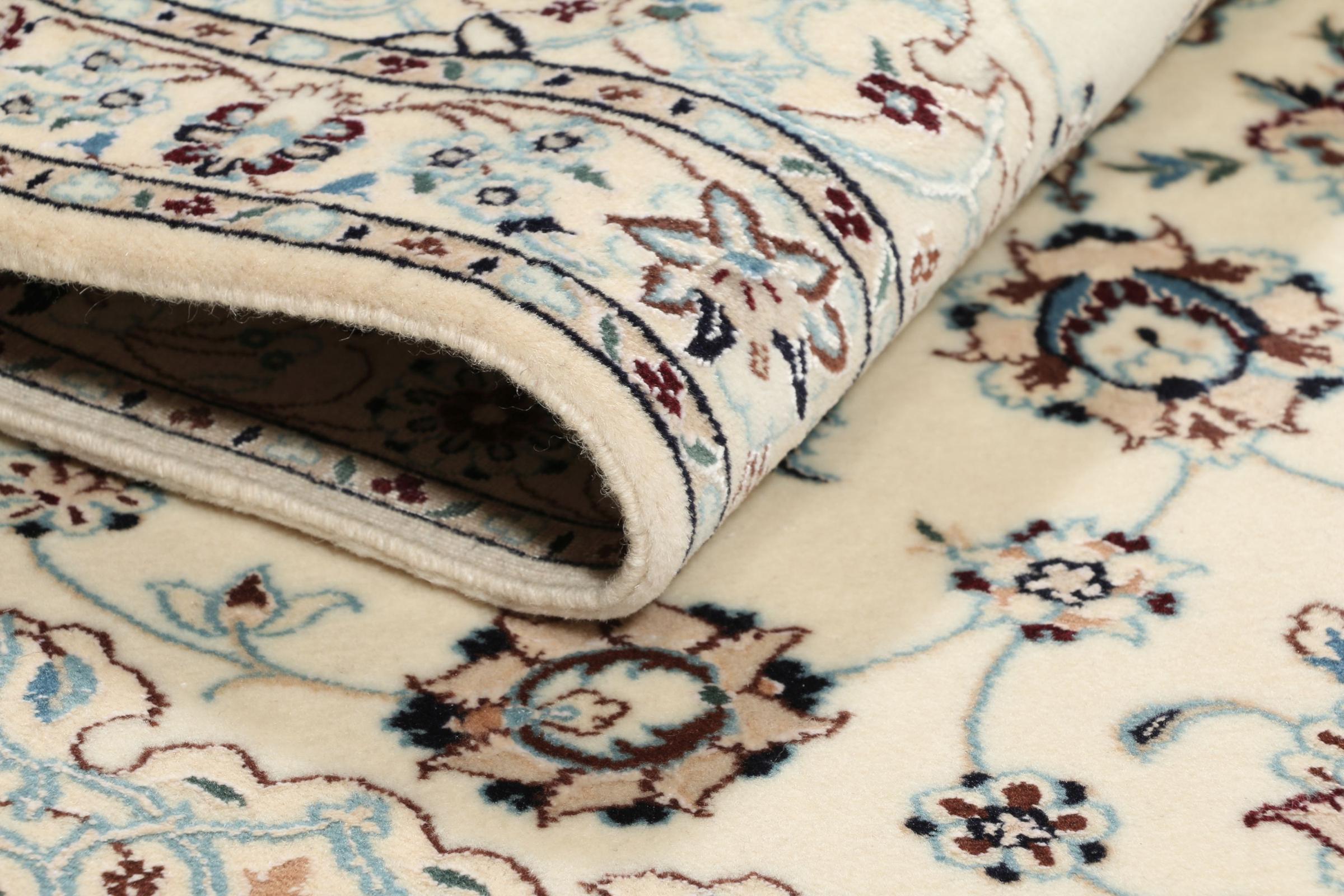
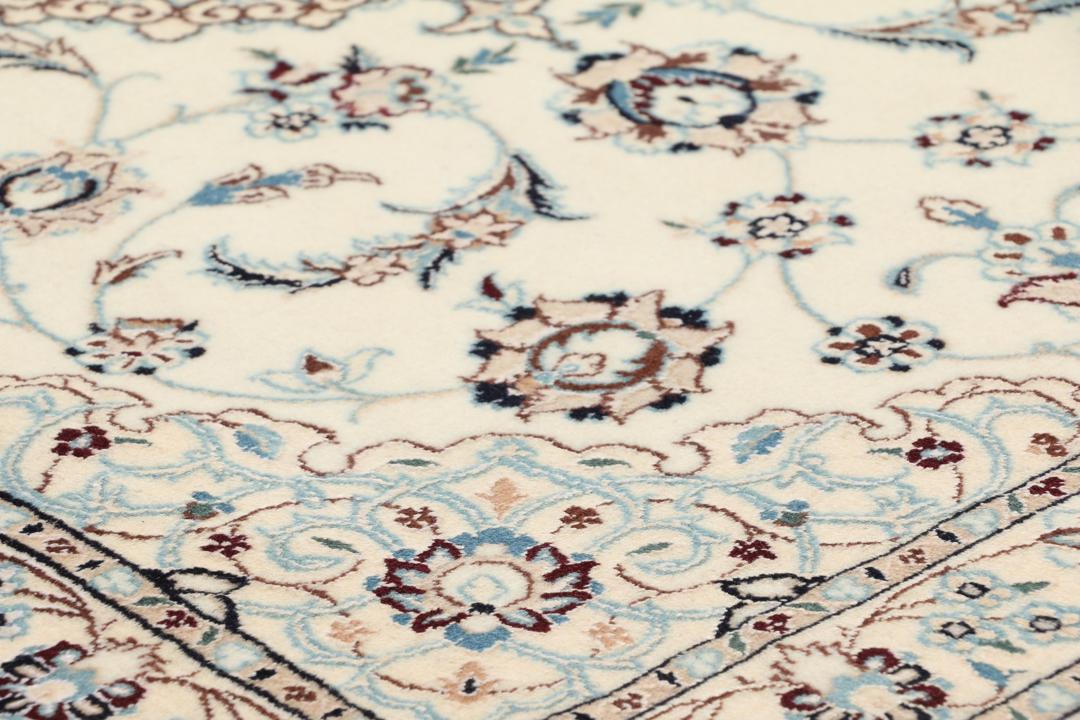
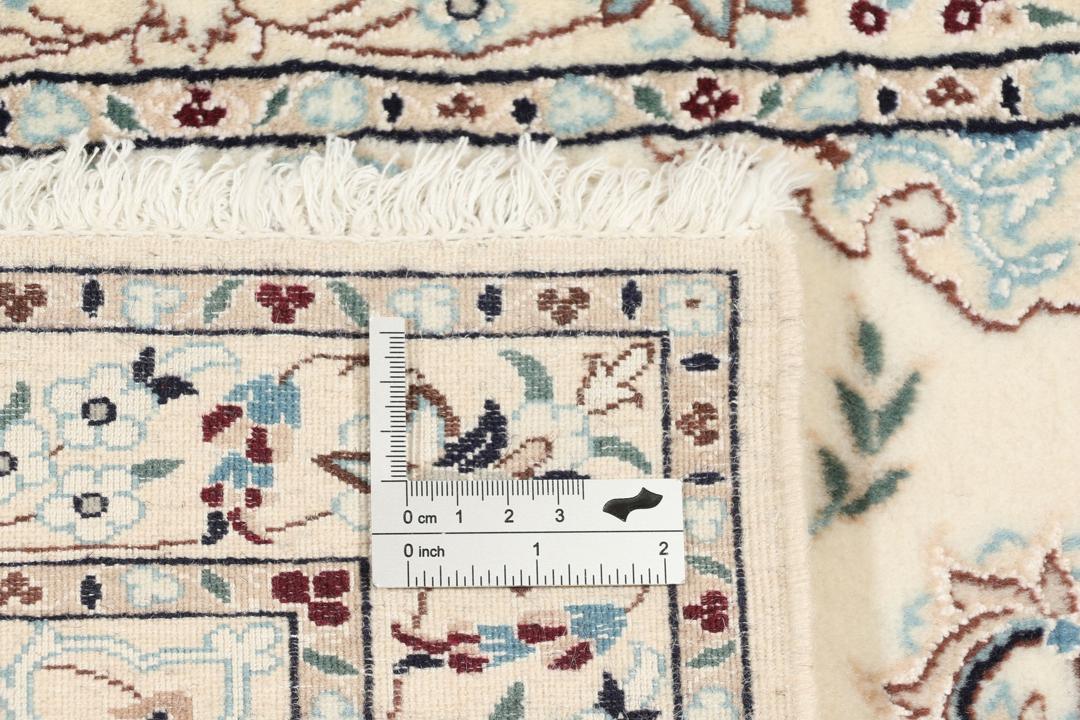
The 'La' designation is a specific term used to grade the quality of these rugs, referring to the number of strands of thread used in the warp. A 6La classification indicates an extremely fine, high-density construction. This technical detail is significant because it allows for an extraordinary level of detail in the design, resulting in patterns that are crisp, intricate, and visually captivating, far exceeding the capabilities of coarser weaves.
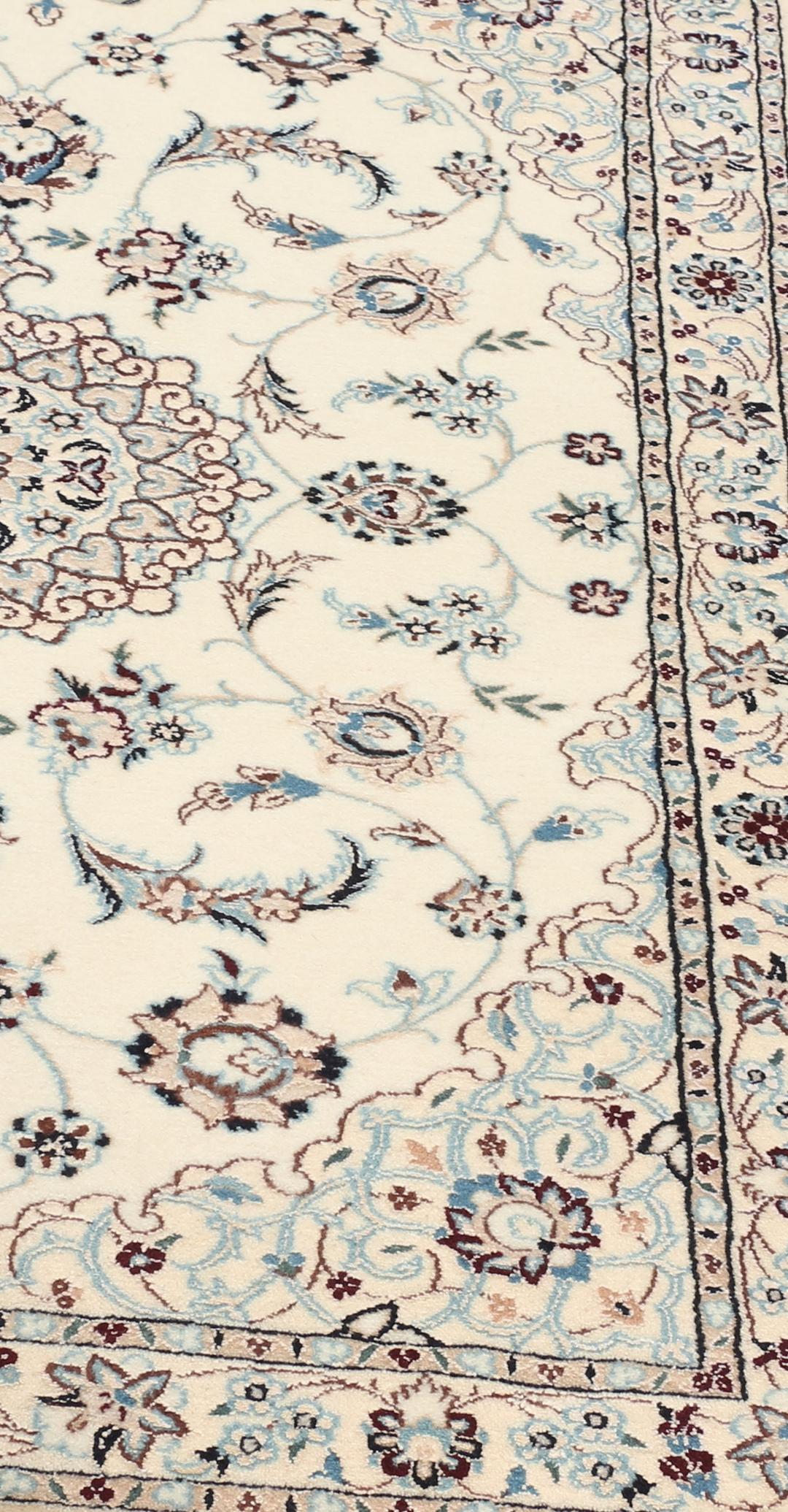
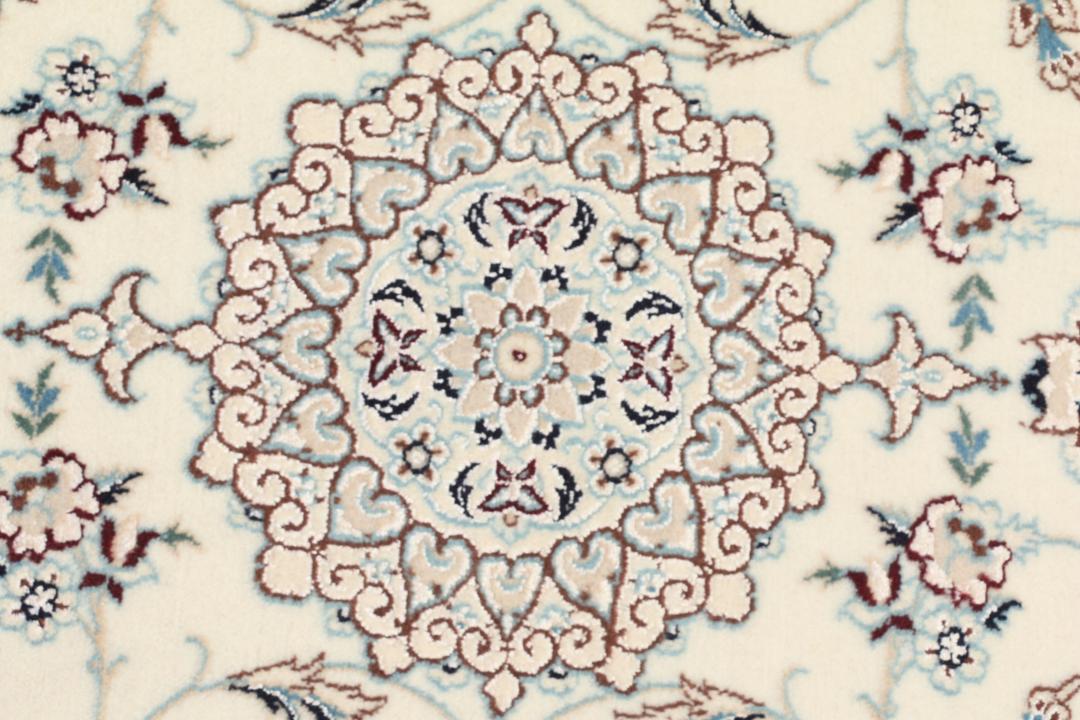
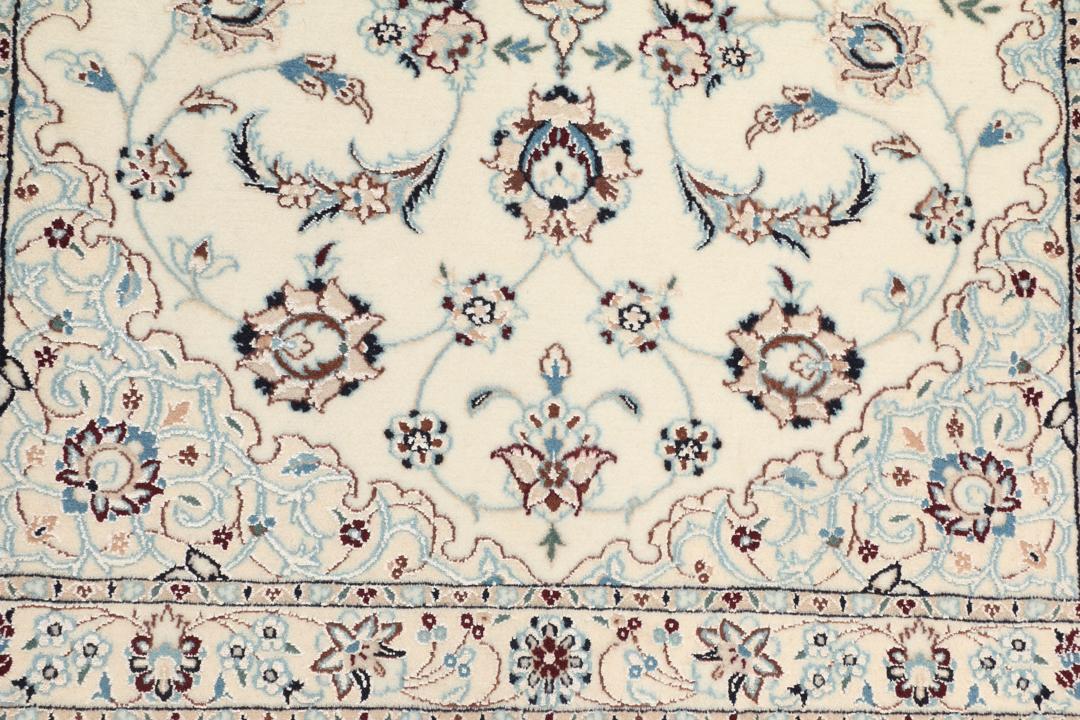
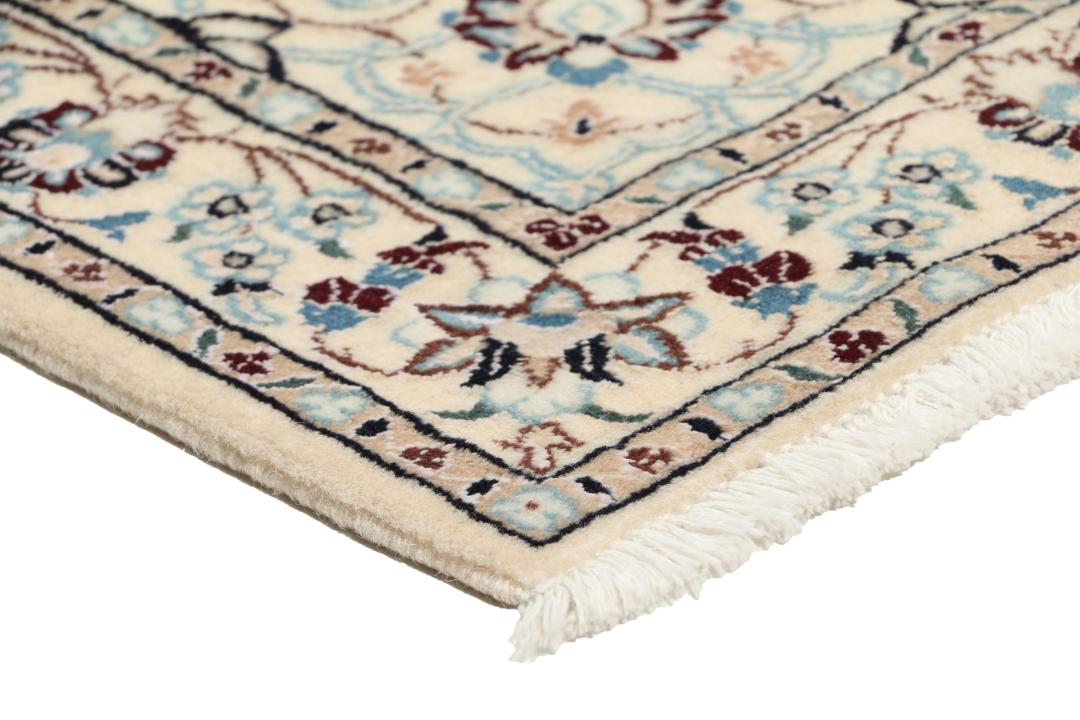
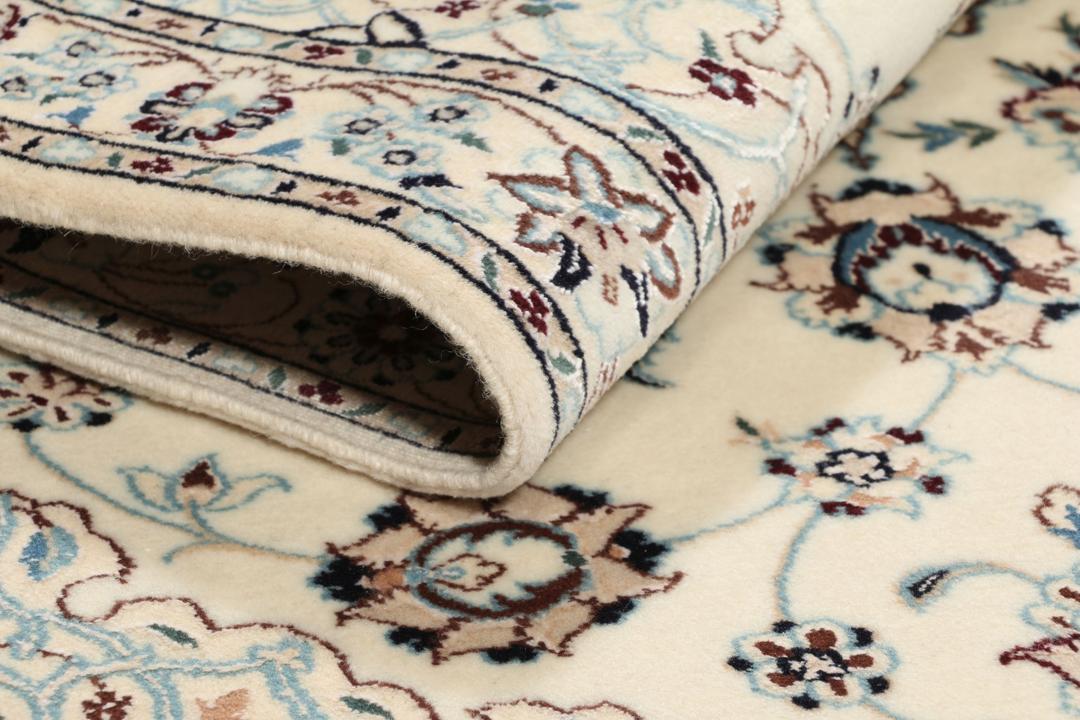
The visual language of a Nain rug is defined by its elegance and restraint. Typically, these rugs showcase a central medallion surrounded by delicate floral arabesques and scrolling vines. While many rugs from the region favour bold, saturated colours, the Nain tradition is celebrated for its use of soft creams, ivory, and subtle blues. This specific piece adheres to that tradition, using a sophisticated colour palette to highlight the complexity of its design.
Collecting a Nain rug is an investment in a storied tradition of excellence. These pieces are highly valued by enthusiasts for their technical perfection and the grace of their composition. Owning one is a mark of appreciation for the skill required to translate complex artistic visions into physical form, representing a legacy of craftsmanship that continues to be admired globally.