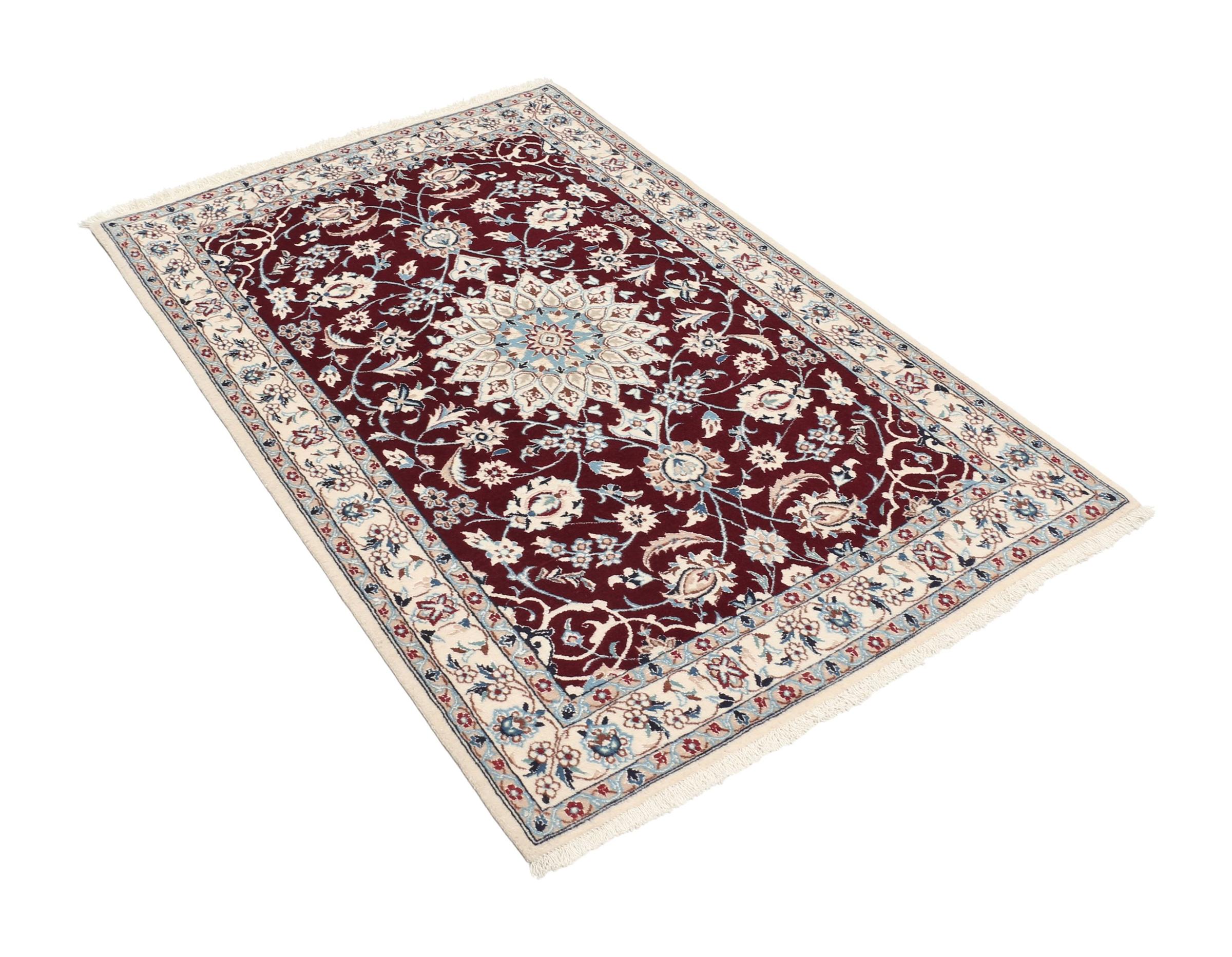
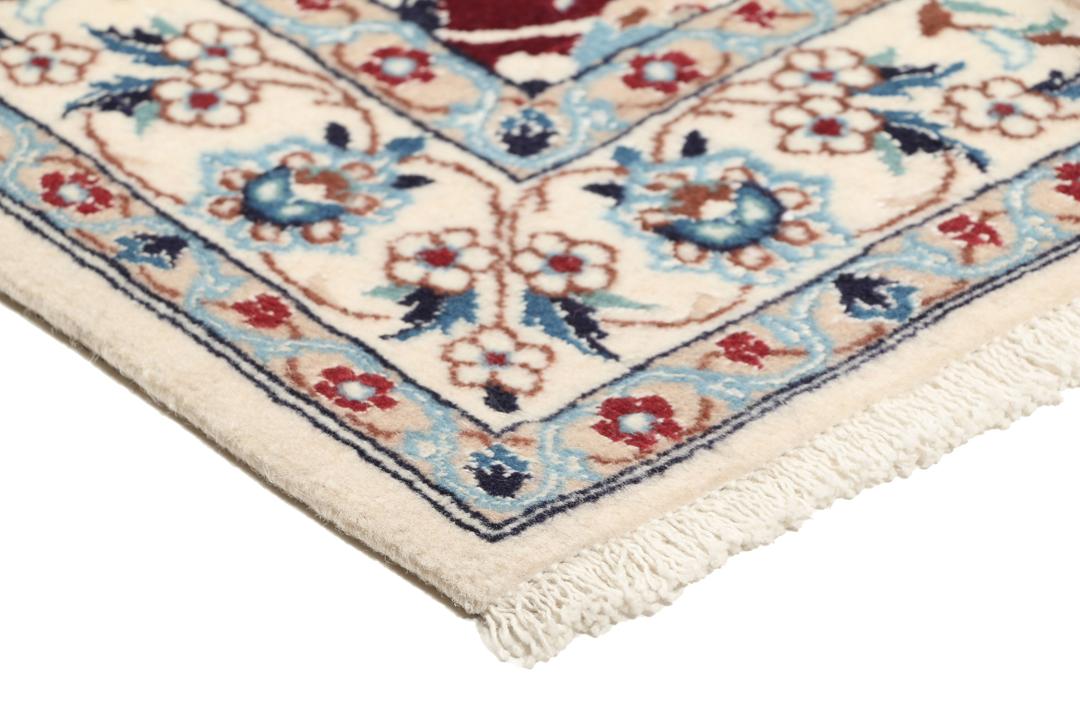
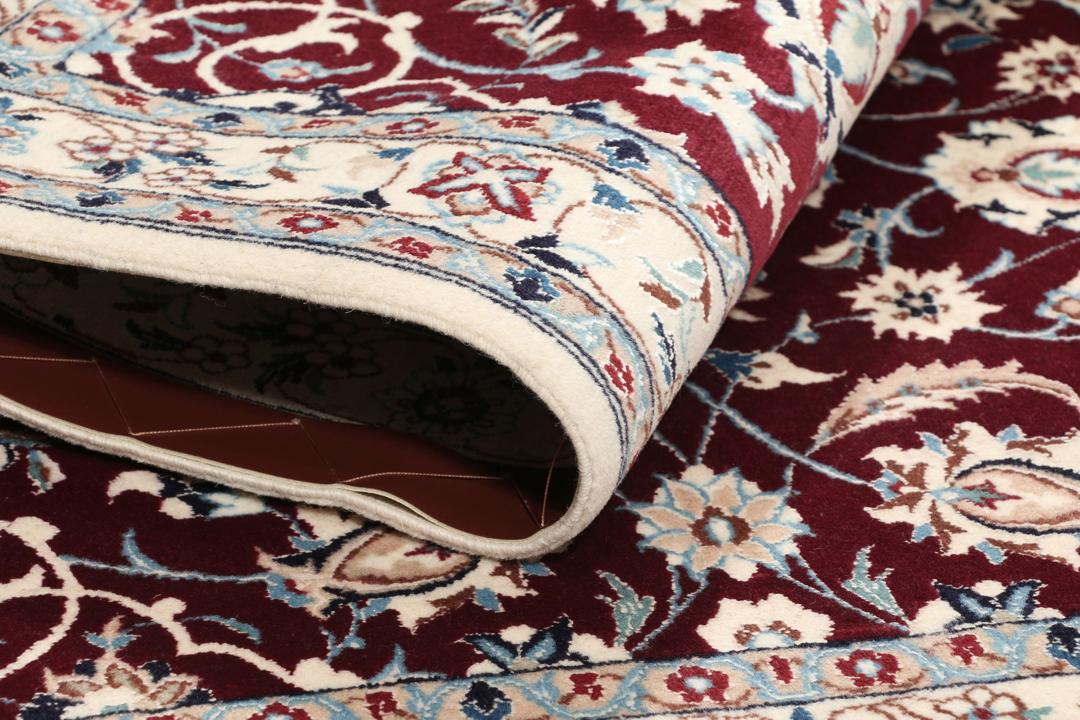
Nain rugs hail from the central region of the Middle East, a city renowned for its historical importance in the production of fine textiles. Originally a centre for high-quality wool clothing, the city transitioned into rug weaving in the early 20th century. By applying the same level of precision and delicate design used in their traditional embroidery, the weavers of Nain quickly became synonymous with some of the finest, most elegant rugs in the world.
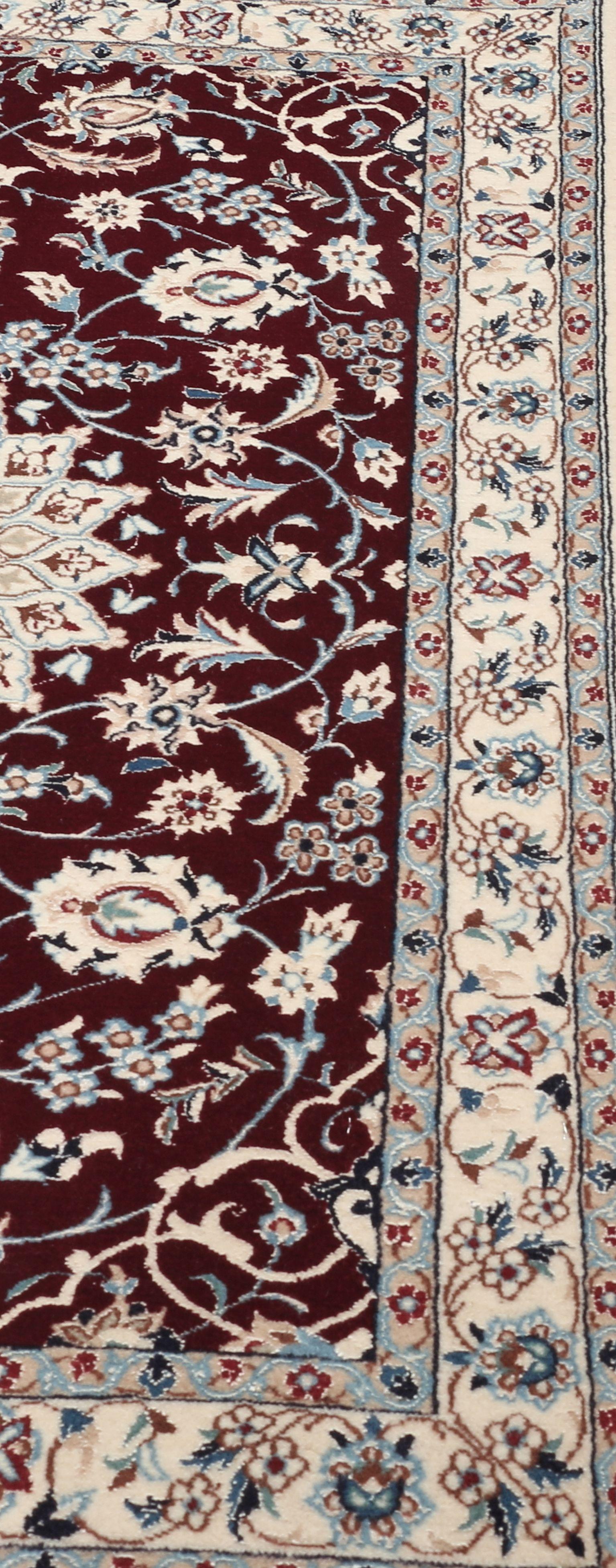
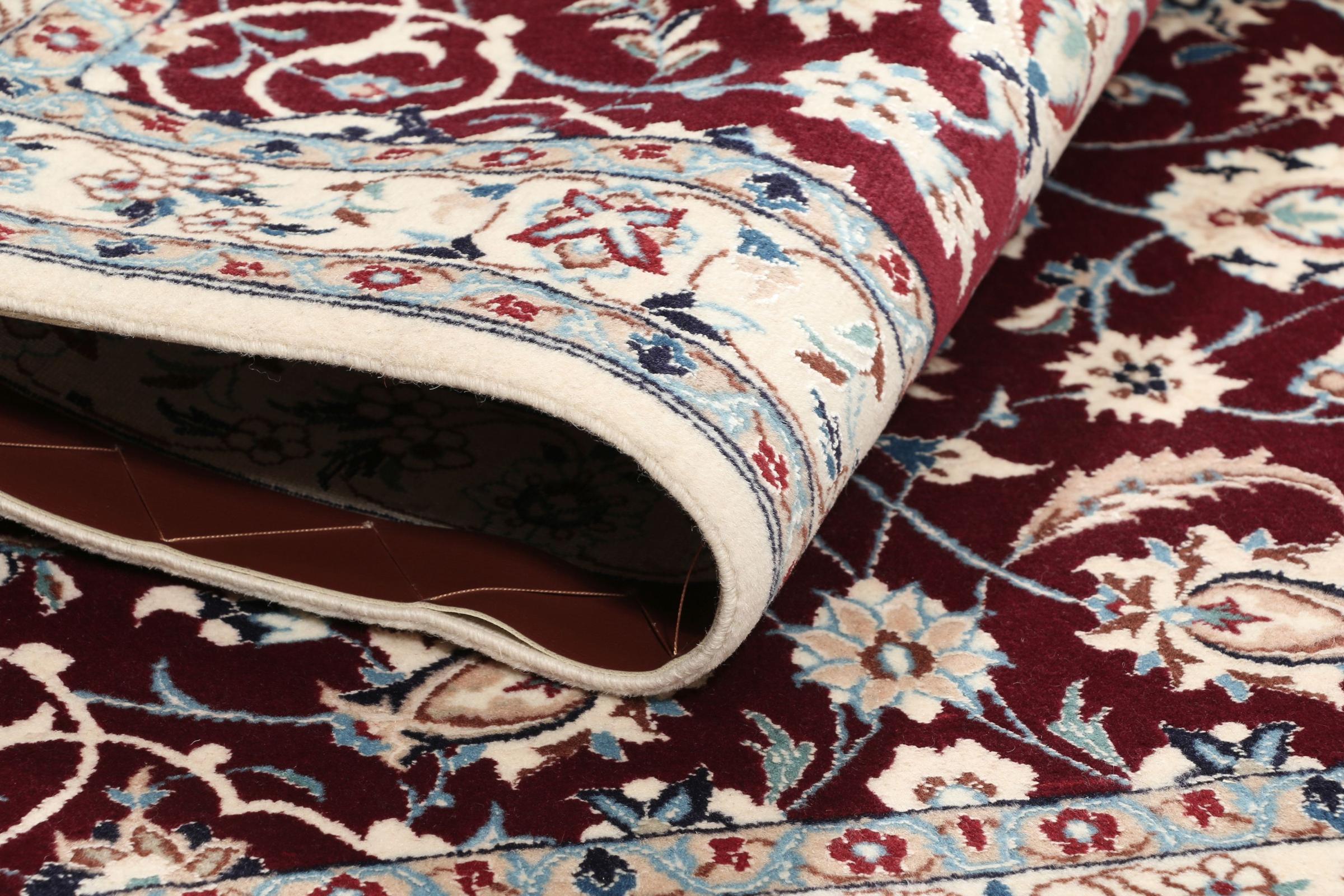
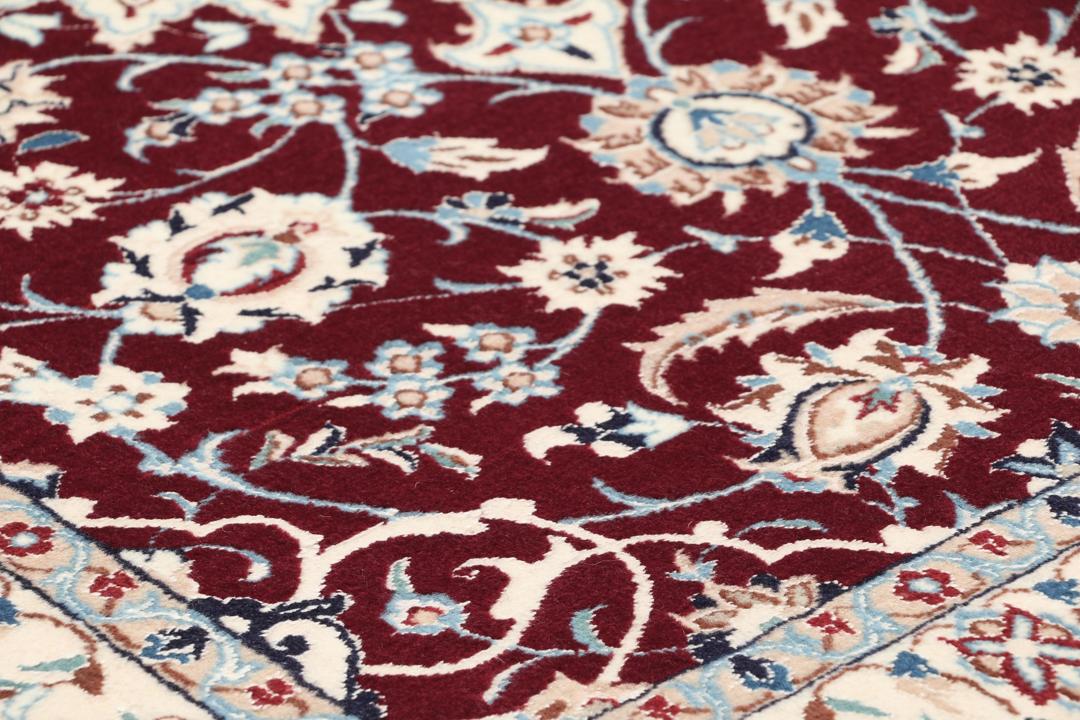
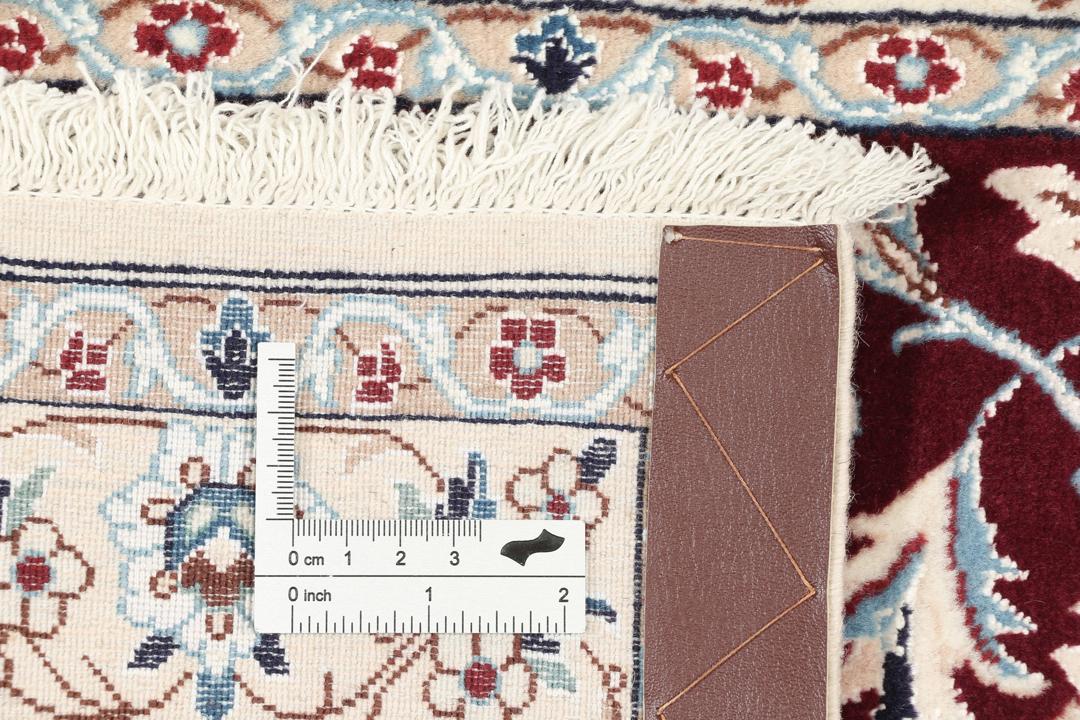
The term 'La' is specific to the Nain tradition and refers to the number of strands of thread used in the foundation of the rug. A 6La classification indicates that the foundation is made using very fine, thin threads, which allows for an extremely high knot density. This technical specification is a hallmark of the highest quality Nain rugs, as it enables the artisans to create intricate, flowing floral patterns that appear almost delicate despite the rug's inherent durability.
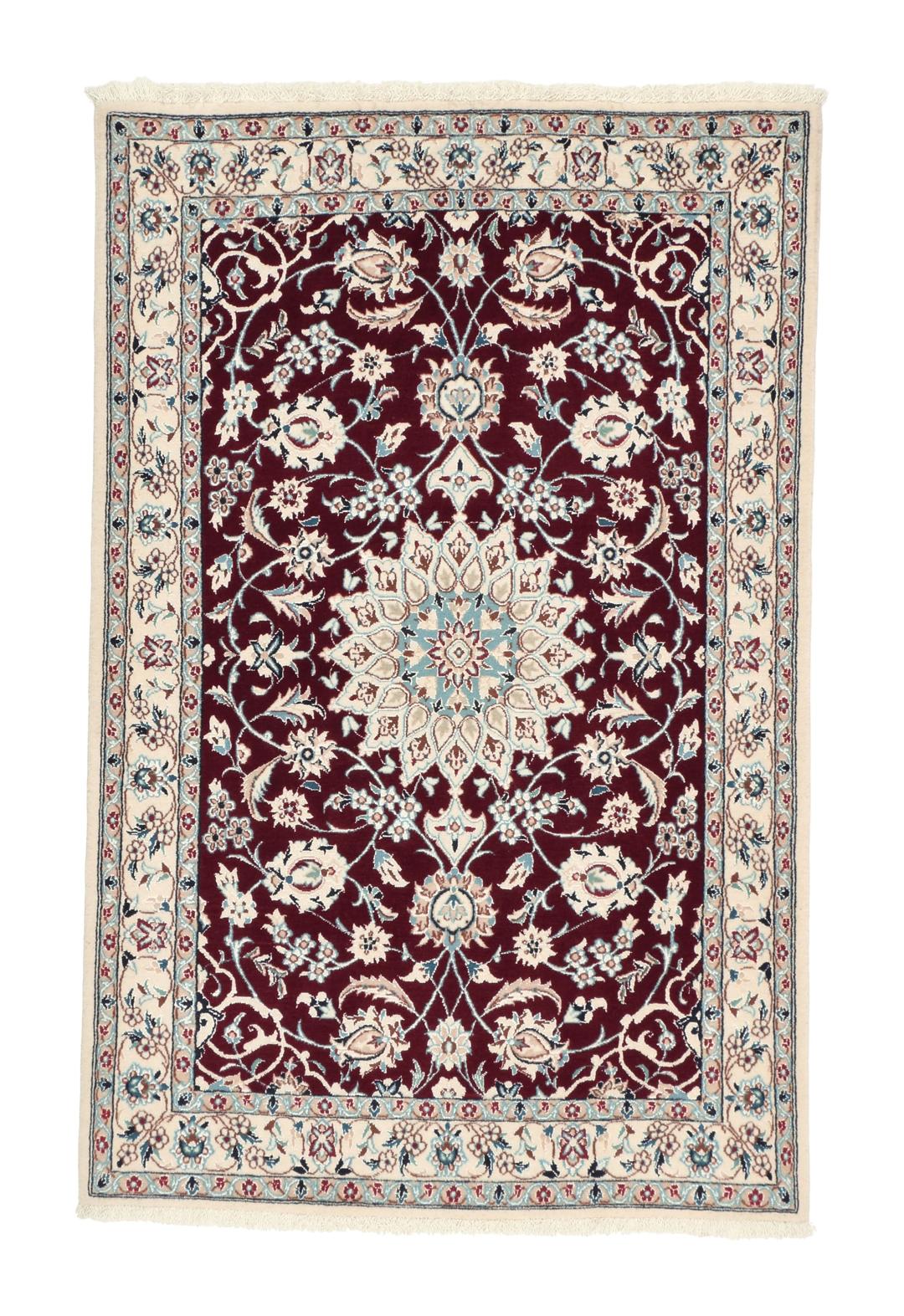
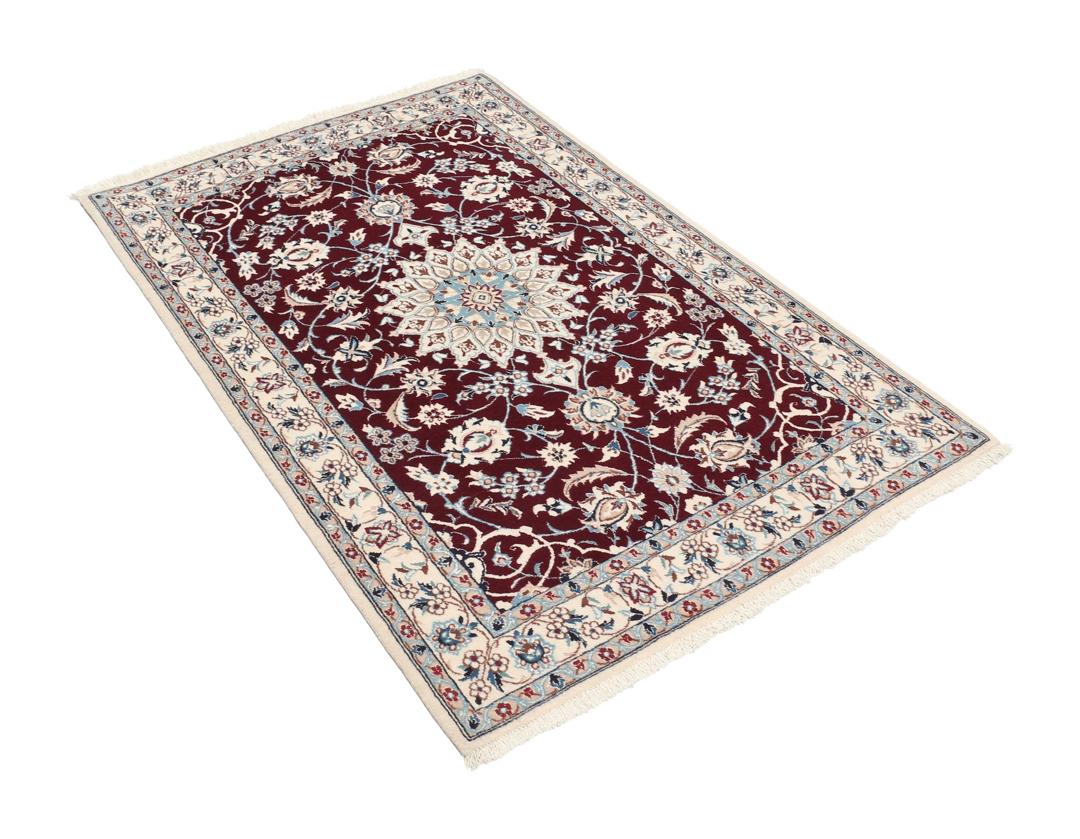
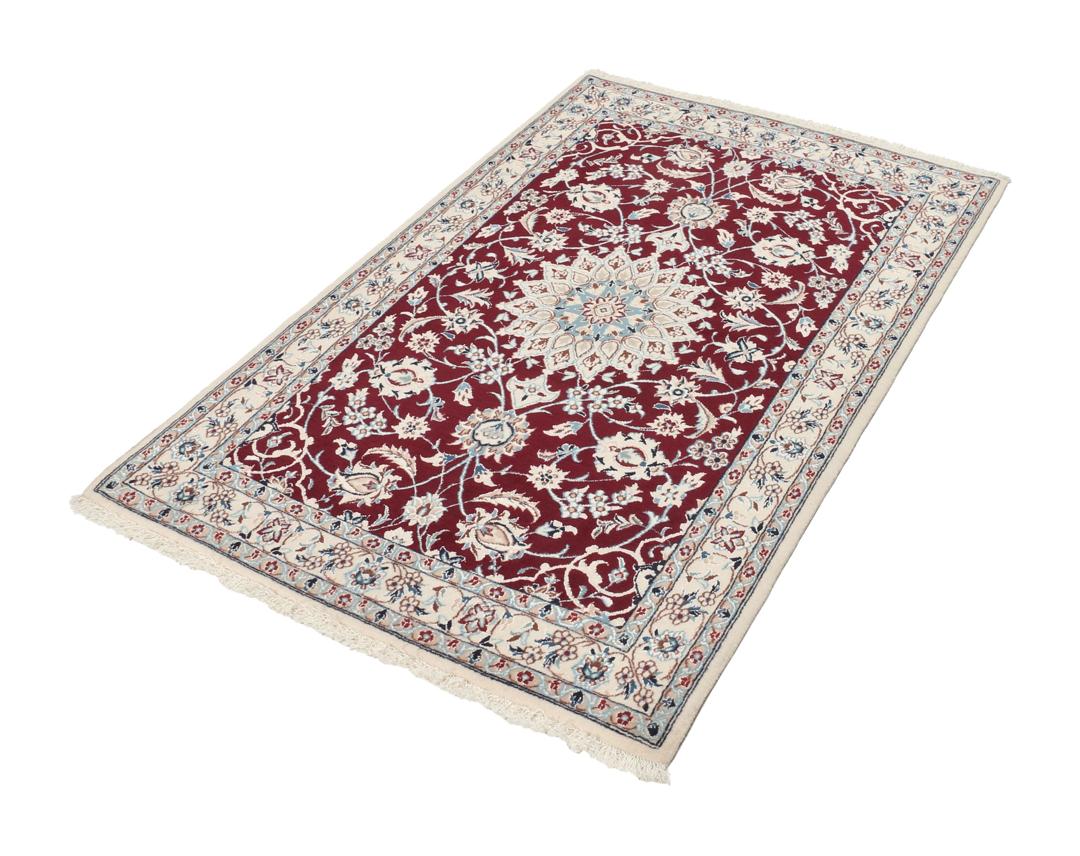
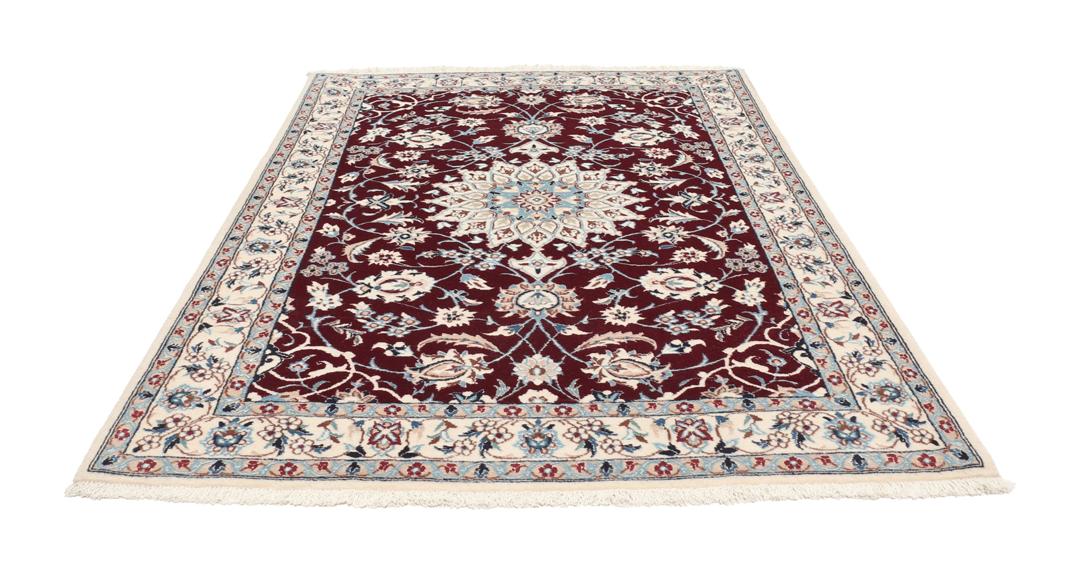
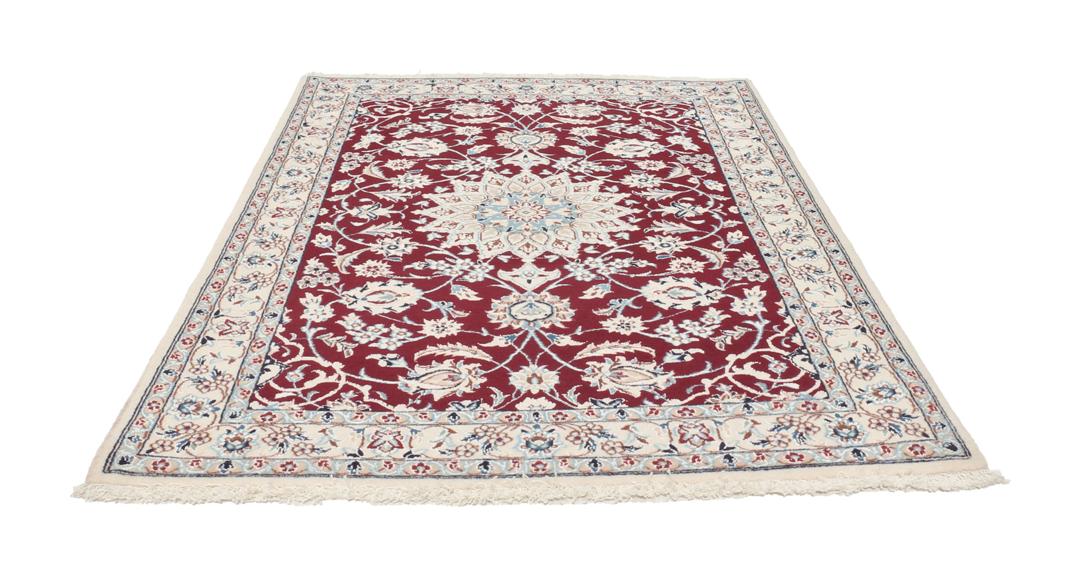
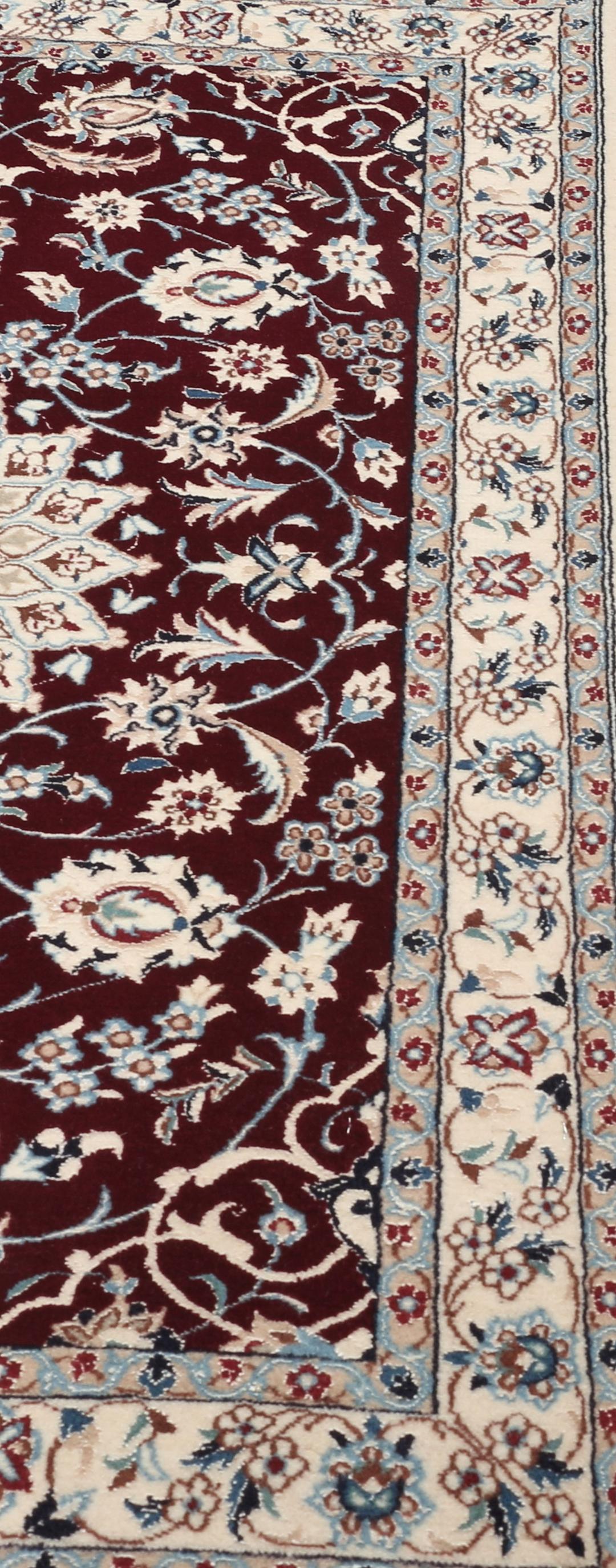
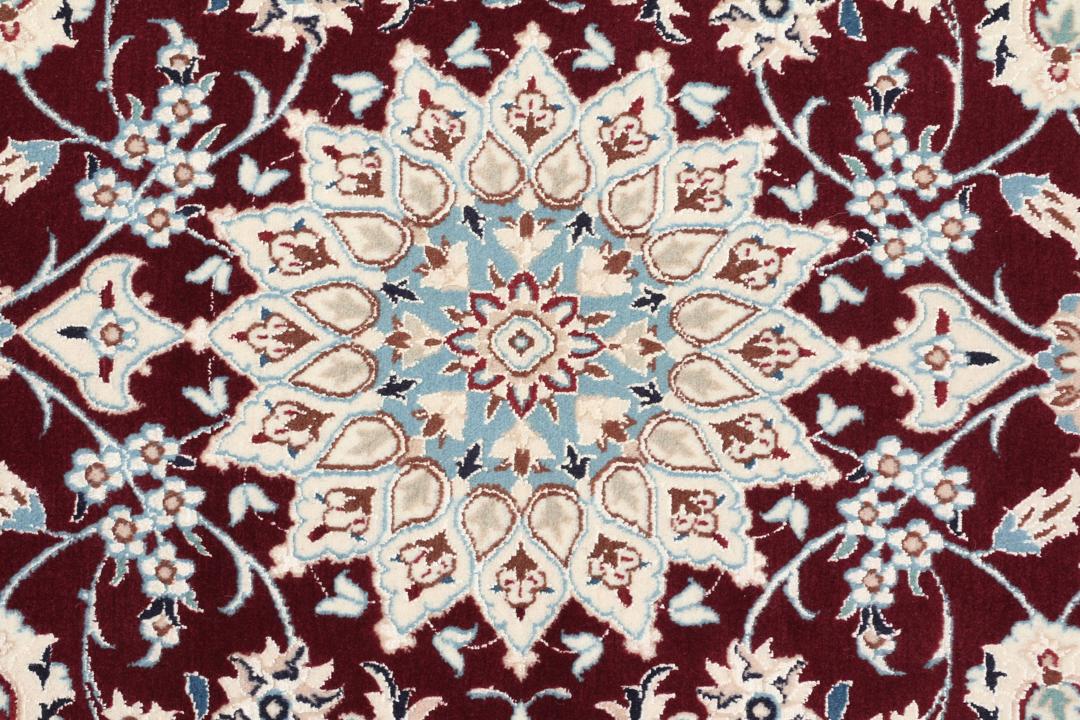
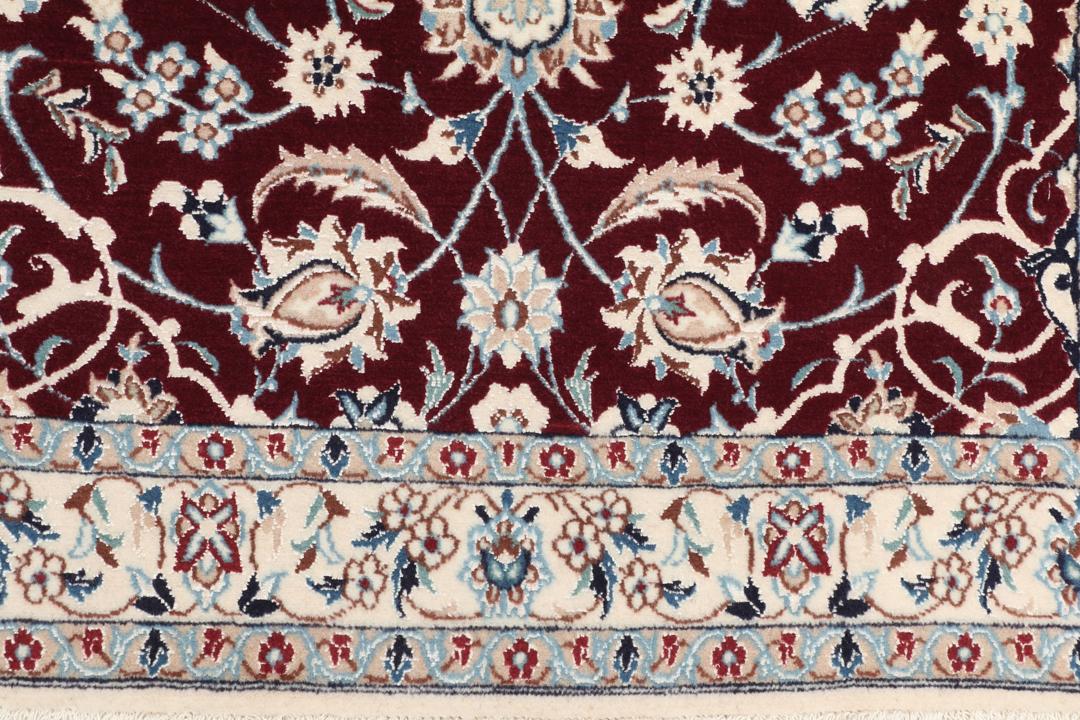
Visually, these rugs are defined by a sophisticated colour palette, typically featuring a field of deep reds or soft blues, contrasted by intricate ivory or cream-coloured floral motifs. The designs often centre around a classic medallion, surrounded by winding arabesques and botanical details that represent the natural beauty of the region. This formal, balanced composition is what makes the Nain style so instantly recognisable and highly sought after by collectors.
Collecting a Nain rug is an entry into a legacy of refined skill and cultural heritage. Because they require such immense time and technical capability to produce, they are viewed as investments in artistic tradition. Owning a piece like this means preserving a craft that has been passed down through generations, ensuring that these beautiful expressions of history continue to be celebrated in homes around the world.