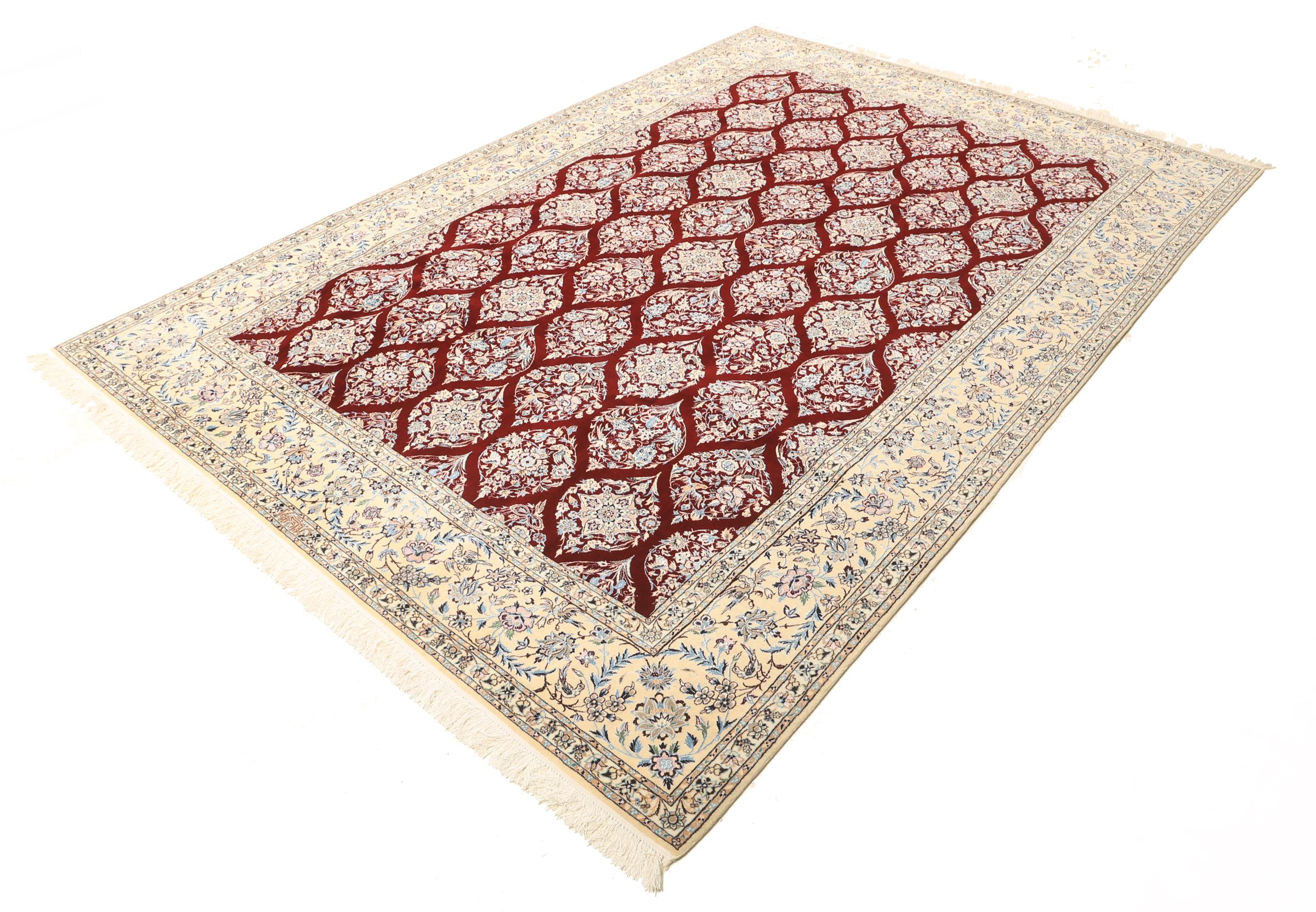
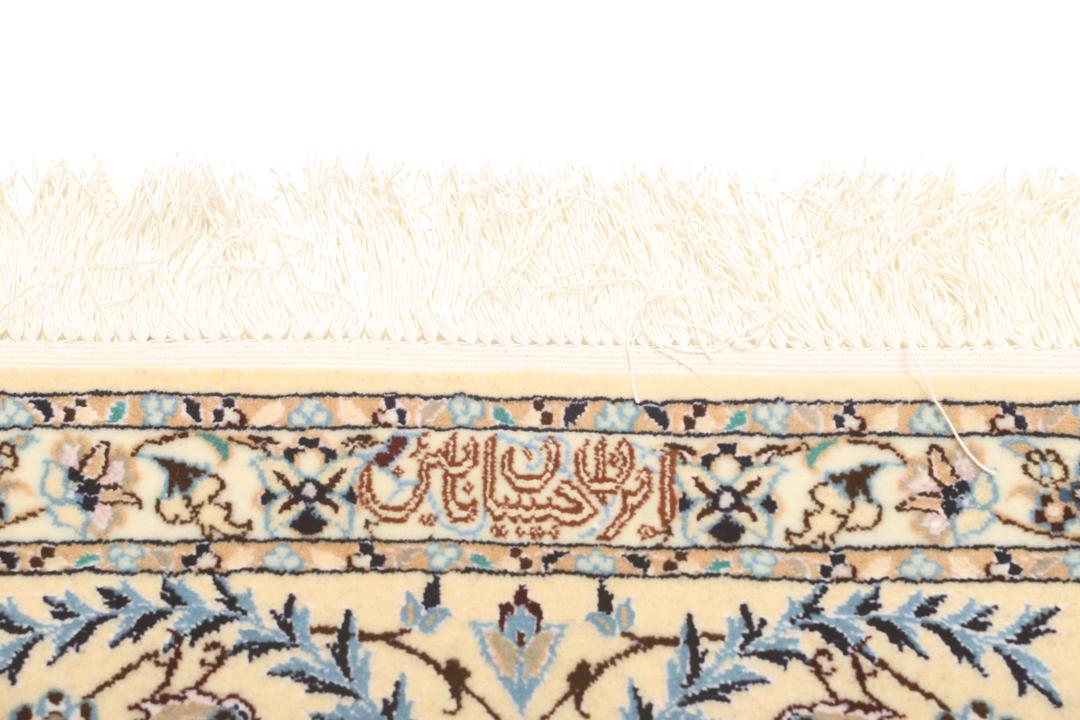
Nain rugs originate from the historic city of Nain in the Middle East, a centre once famous for its high-quality wool textiles and religious garments. In the early 20th century, the city transitioned its master weavers toward the creation of exquisite, fine-knotted rugs, drawing inspiration from the artistic heritage of neighbouring regions while developing a distinct, sophisticated style of their own.
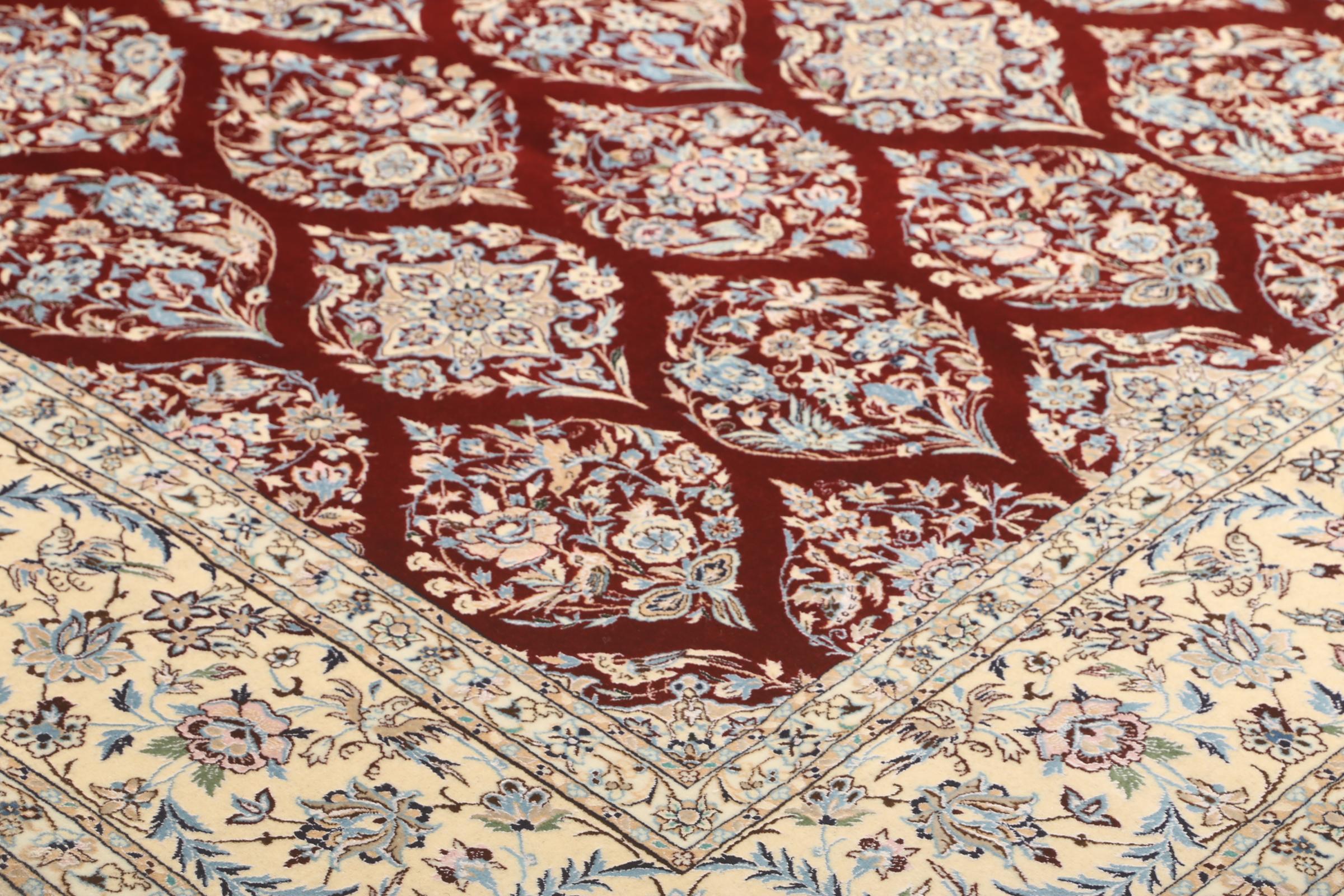
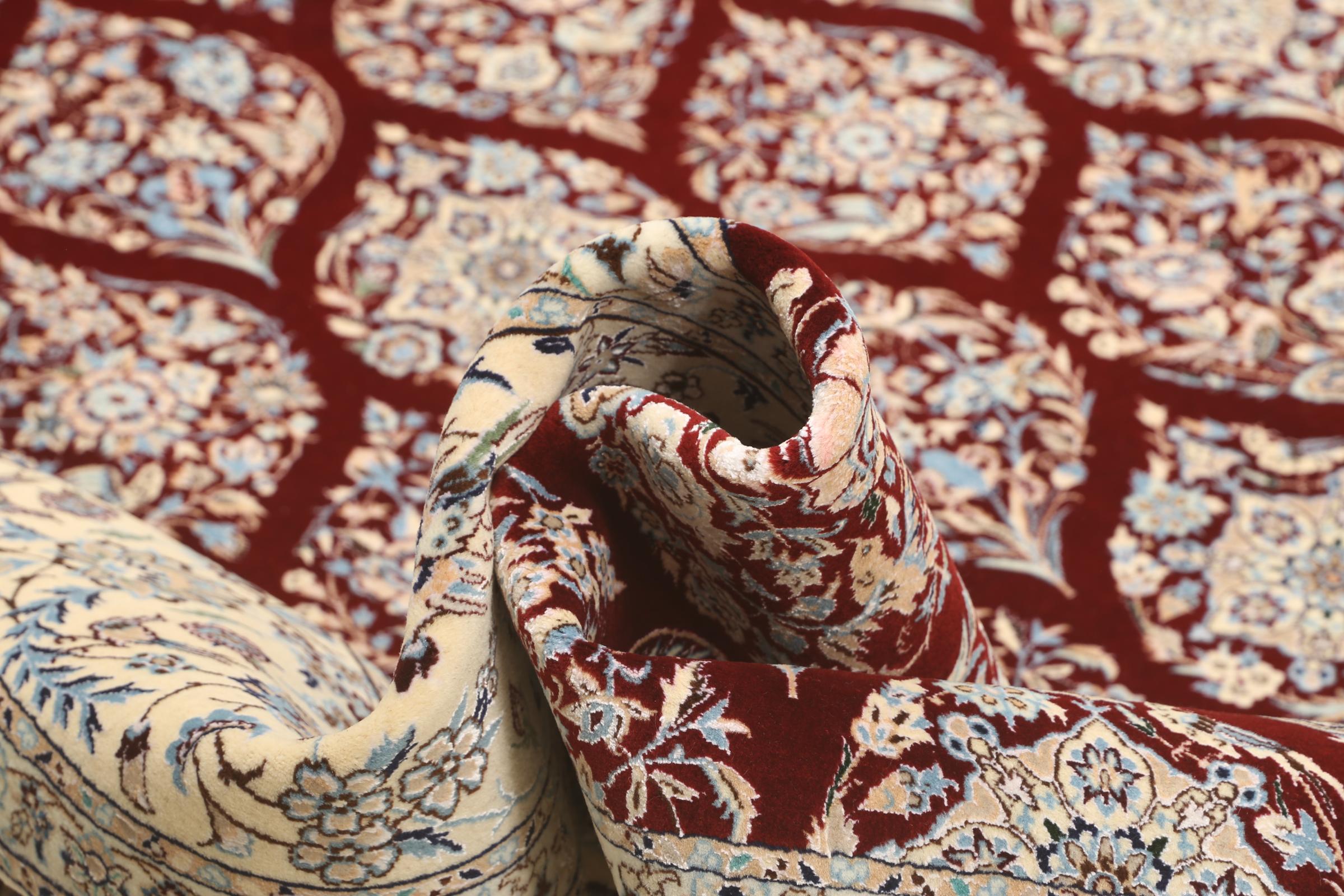
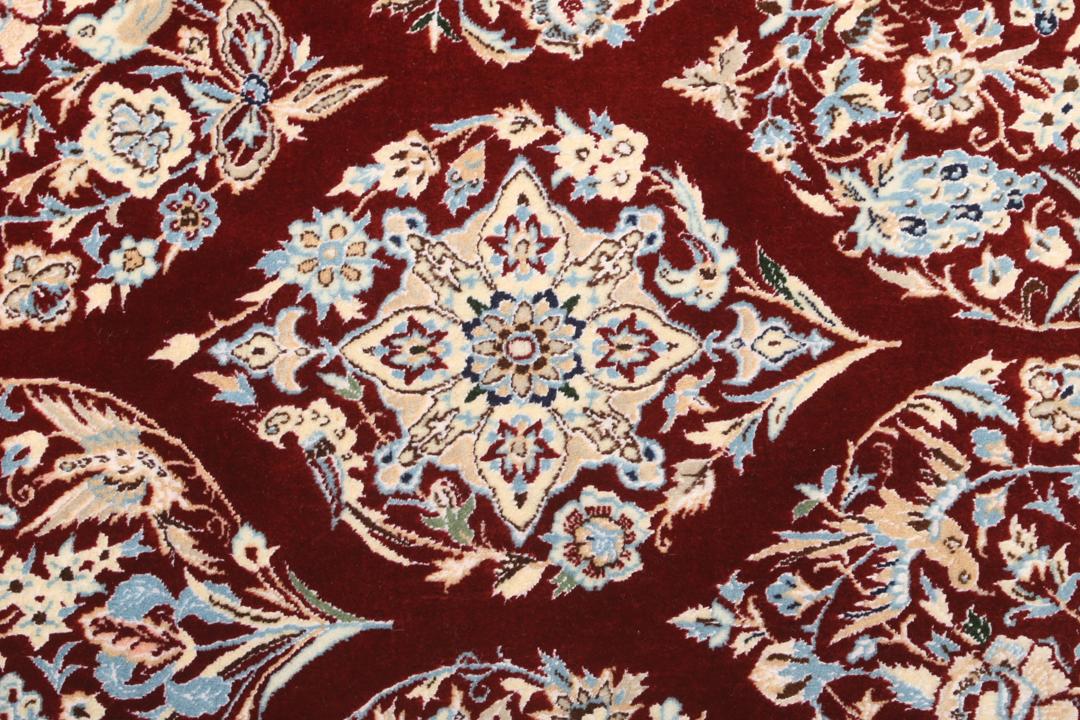
The terminology '6La' refers to the thickness of the thread used in the foundation, which is a critical indicator of the rug's quality. A 6La classification signifies a very fine, thin thread, which allows for a much higher knot density and a more detailed, intricate pattern compared to rugs with a higher 'La' count. This technical precision is what defines the Nain aesthetic, resulting in a thin, elegant, and highly durable rug.
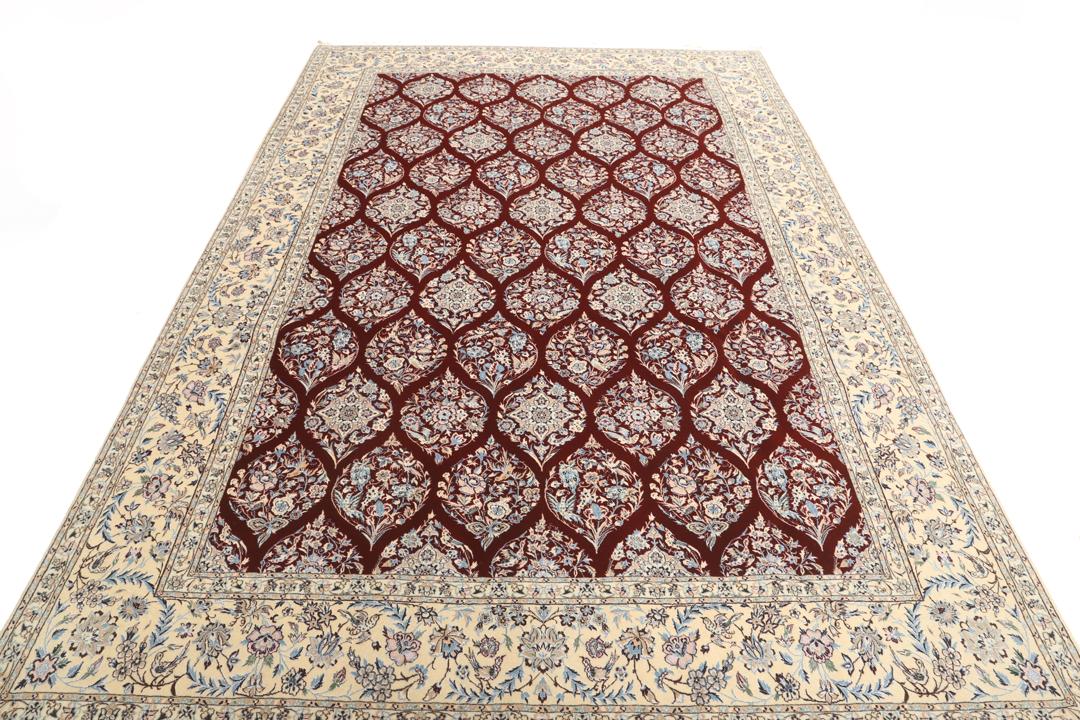
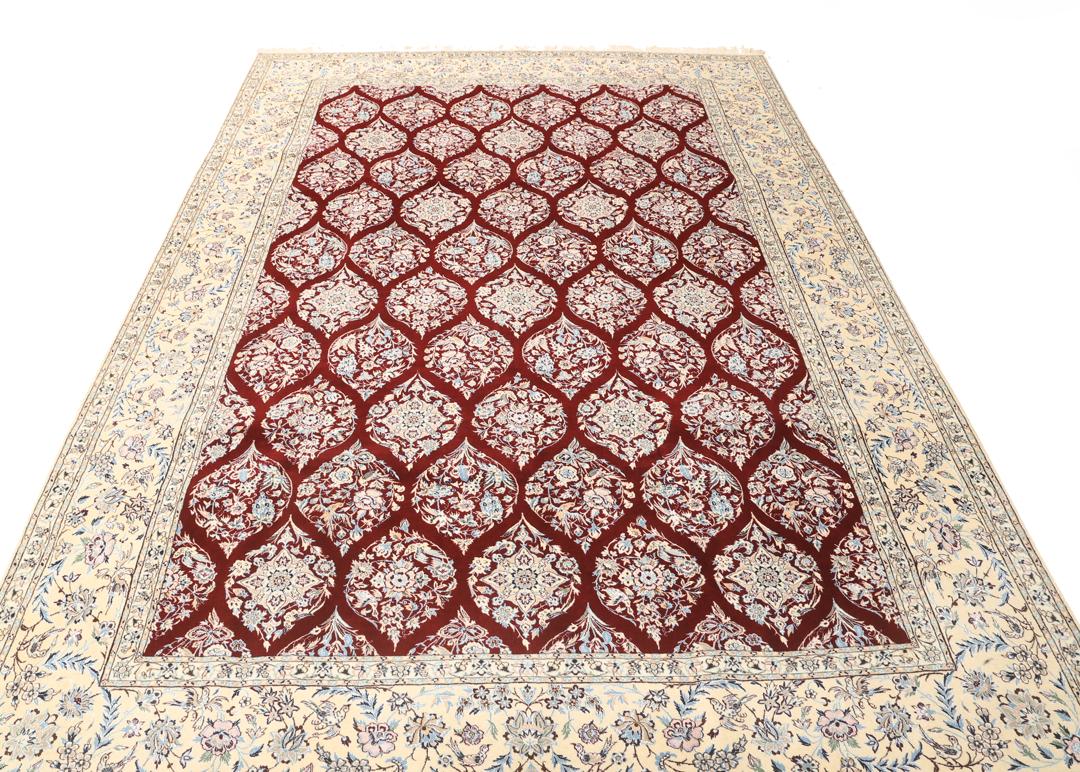
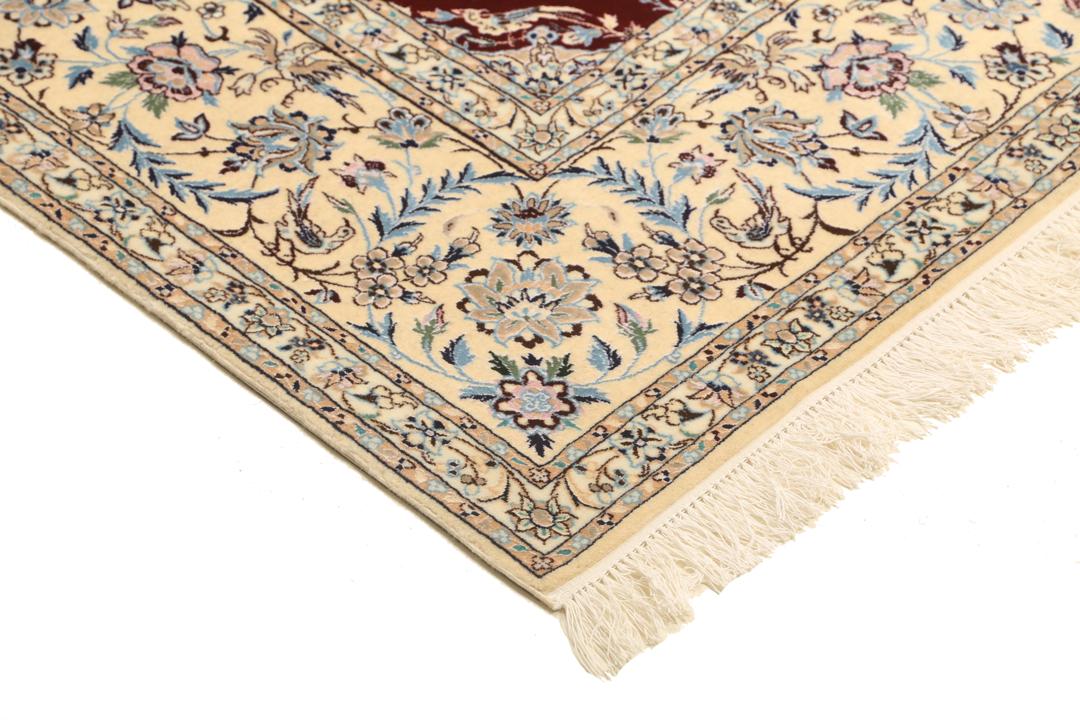
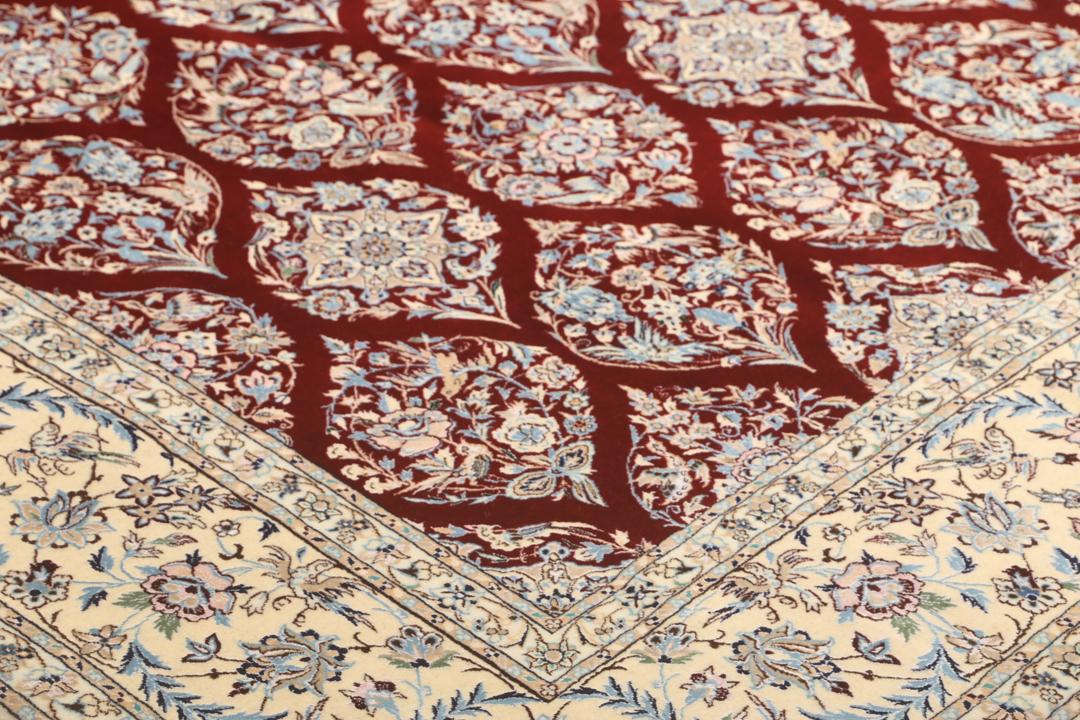
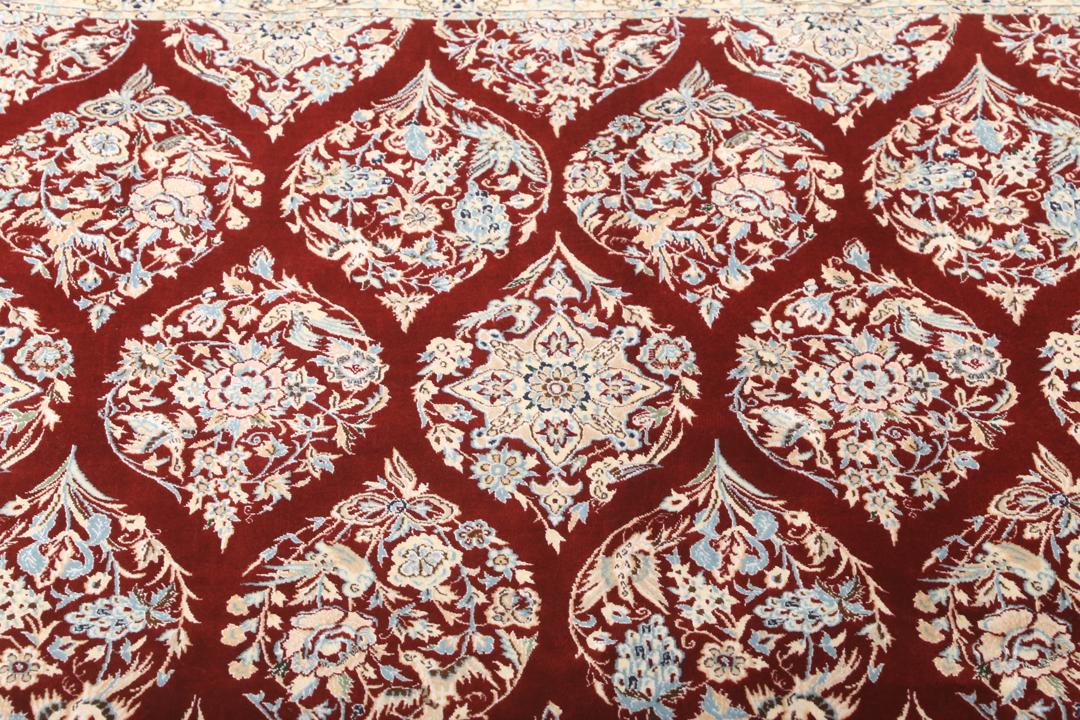
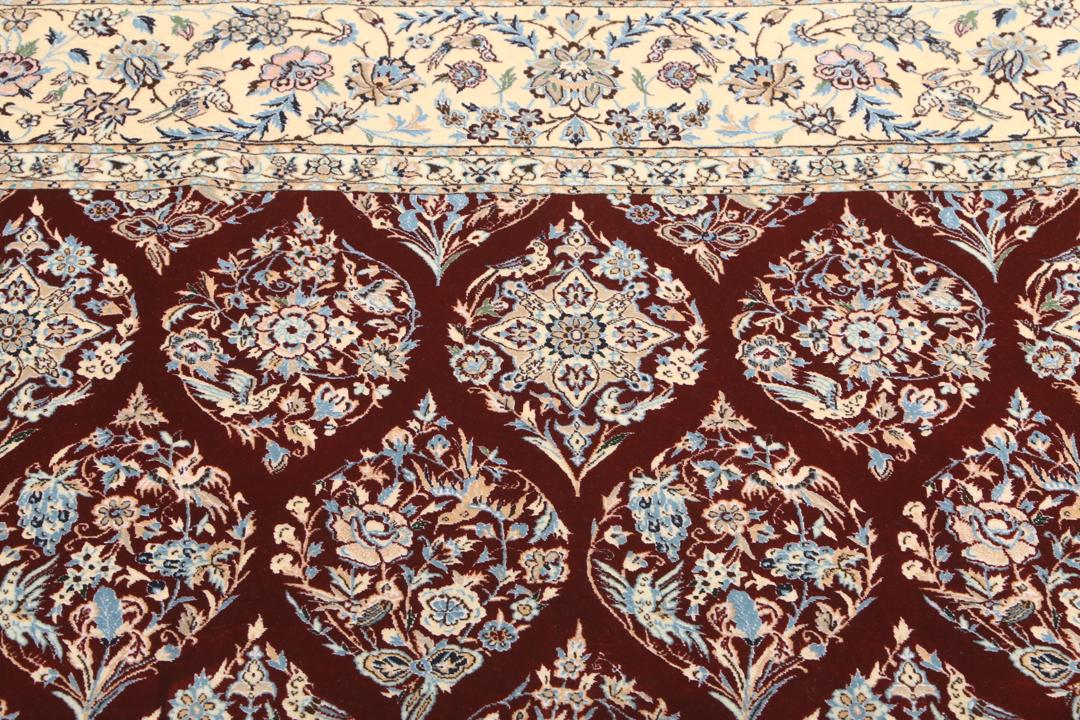
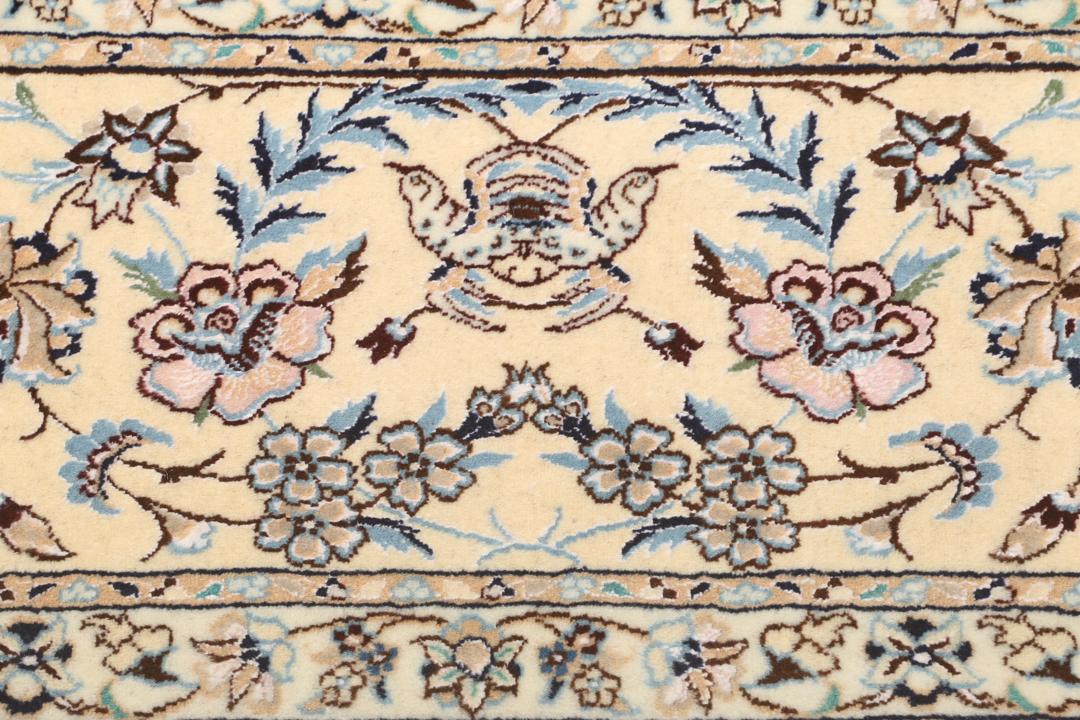
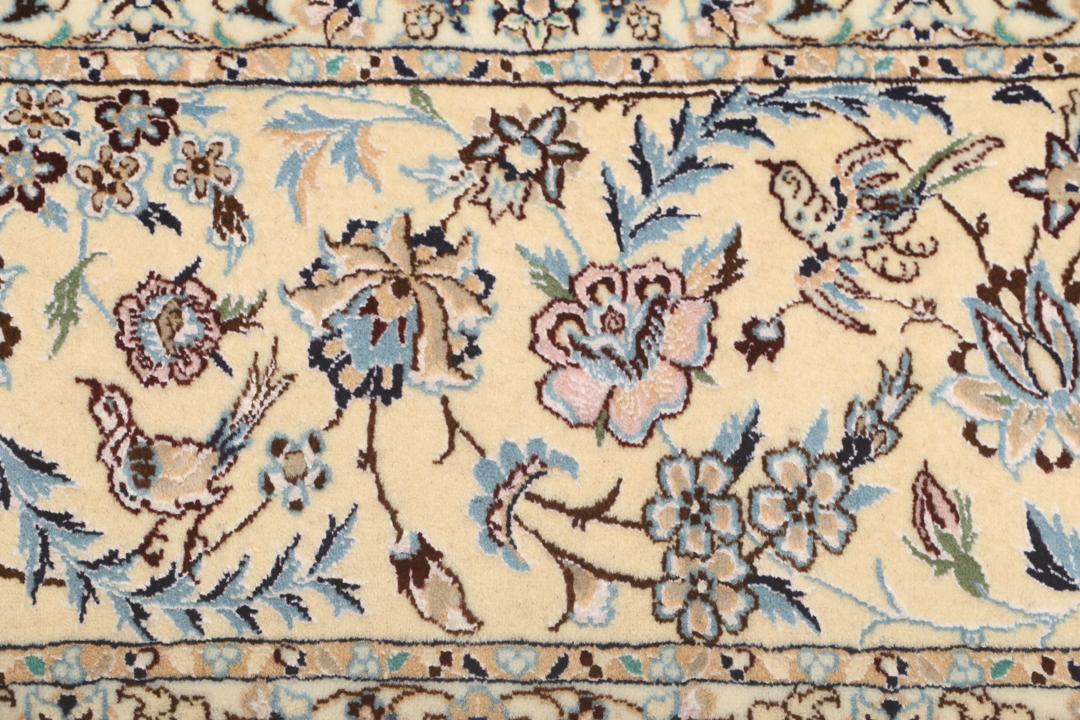
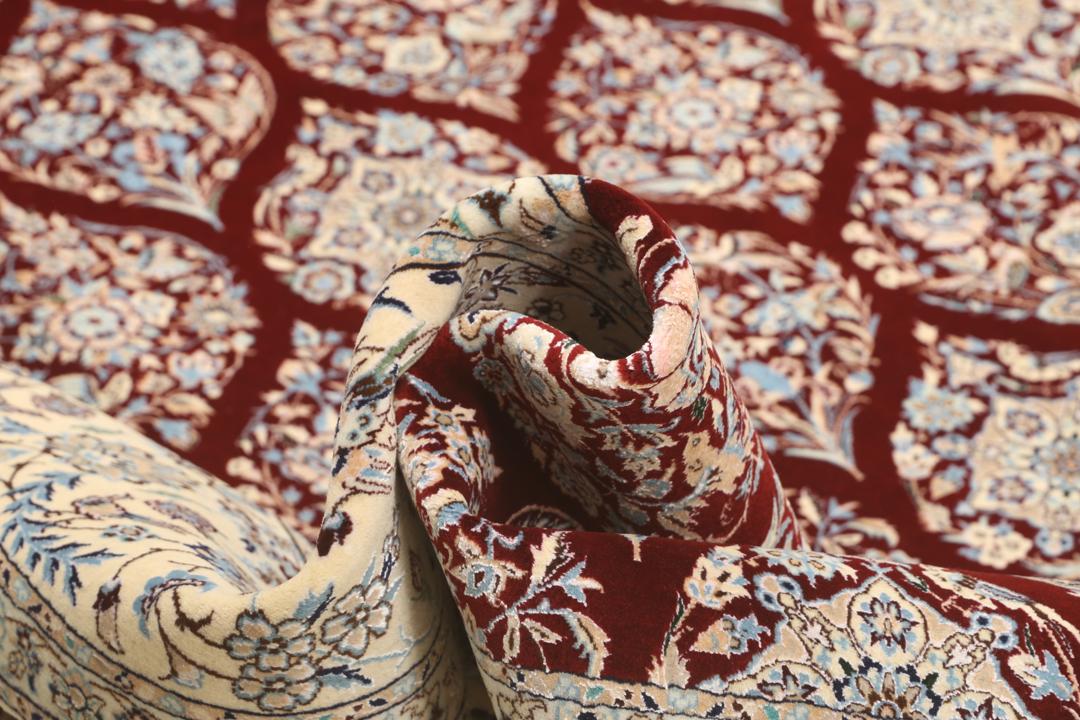
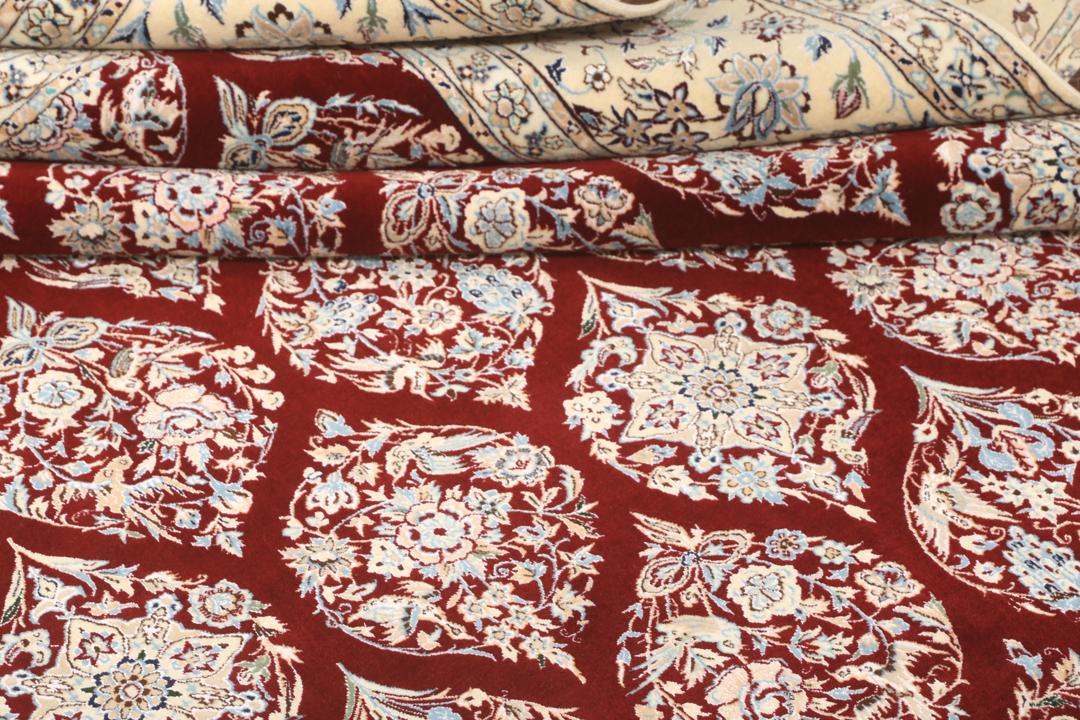
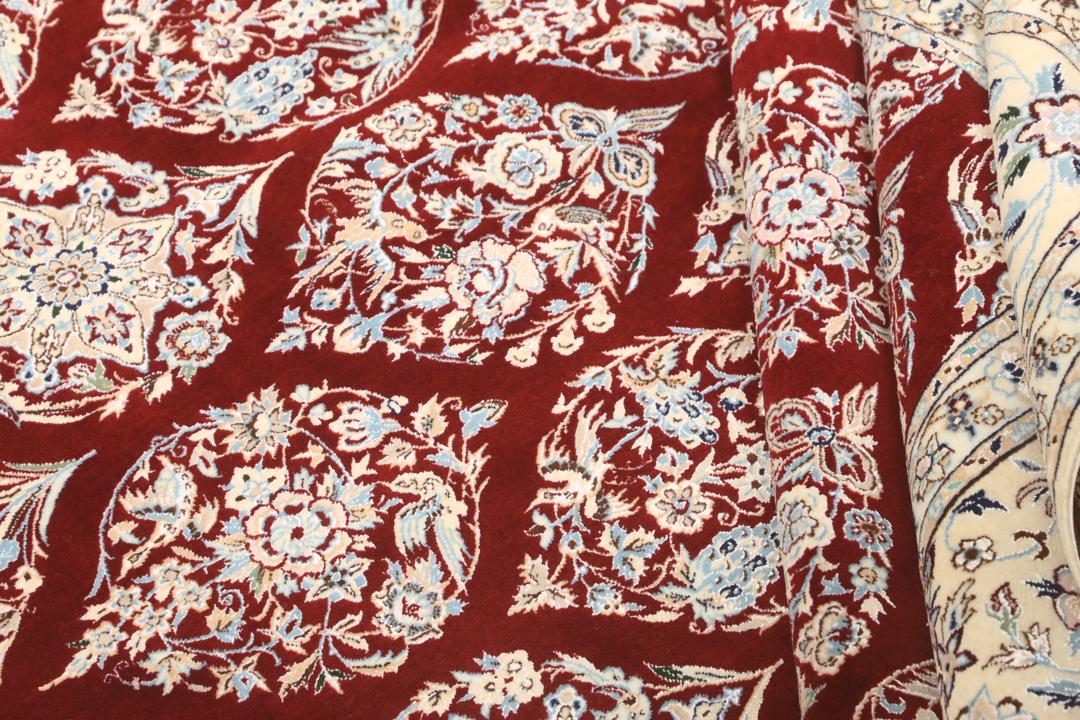
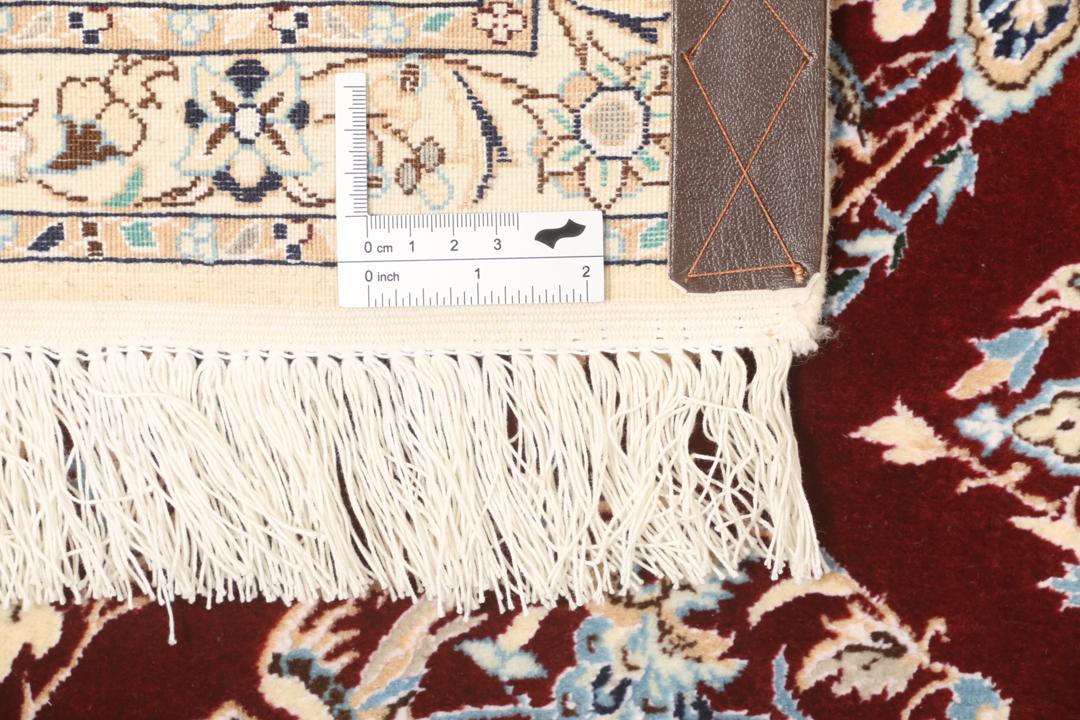
Signature design elements of the Nain tradition include a central medallion surrounded by dense, flowing floral motifs and delicate vine work. The colour palette typically favours cream, beige, and soft blues, often highlighted by a rich, deep red field that provides a striking contrast. The use of curvilinear patterns and balanced symmetry gives these rugs a formal and harmonious appearance that is highly sought after by collectors.
Nain rugs are deeply valued for their cultural significance and the extreme skill required to produce them. Owning a genuine Nain, especially one attributed to a master weaver, is considered a mark of refined taste and a commitment to preserving traditional craft. These rugs are not merely functional items; they are heirloom-quality pieces that represent the zenith of Middle Eastern weaving artistry.