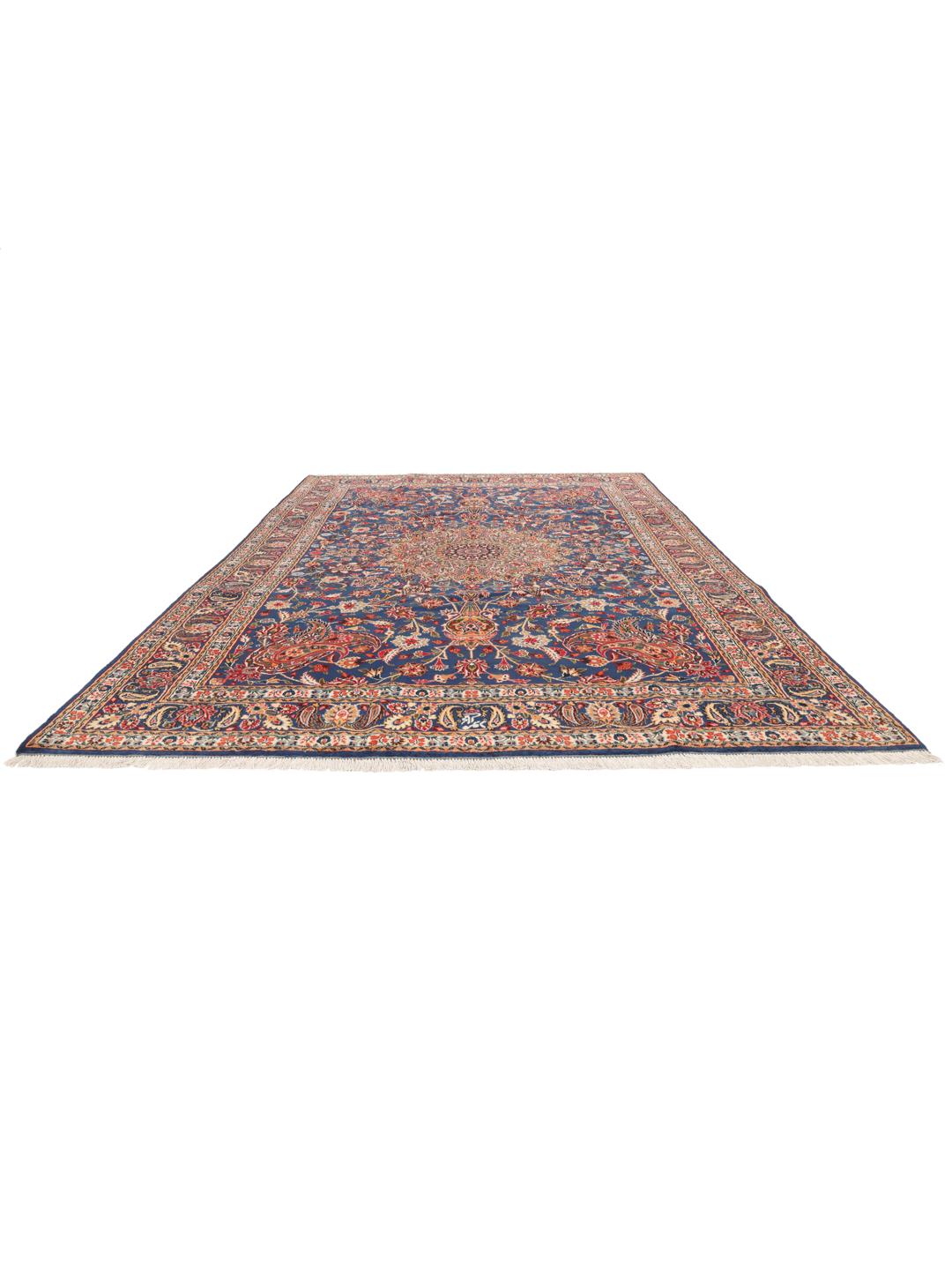
The Moud rug tradition originates from the town of Moud, located in the Khorasan province of the Middle East. This region has a long and storied history of weaving, known for producing pieces that balance technical precision with a unique, painterly approach to floral design. The Sherkat Farsh, or the regional carpet company, has played a significant role in maintaining these high standards of quality, ensuring that the traditional patterns and methods are preserved for future generations.
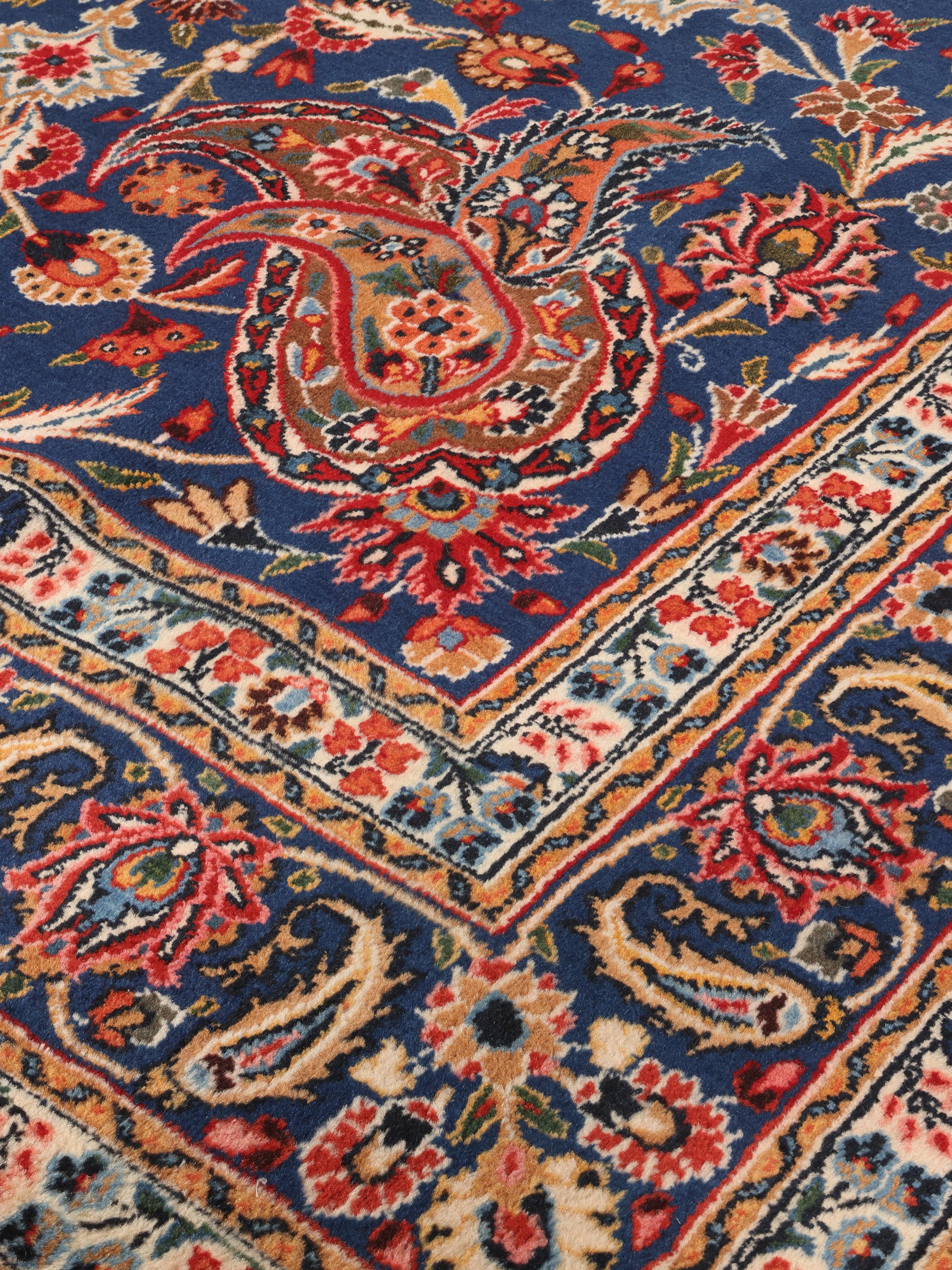
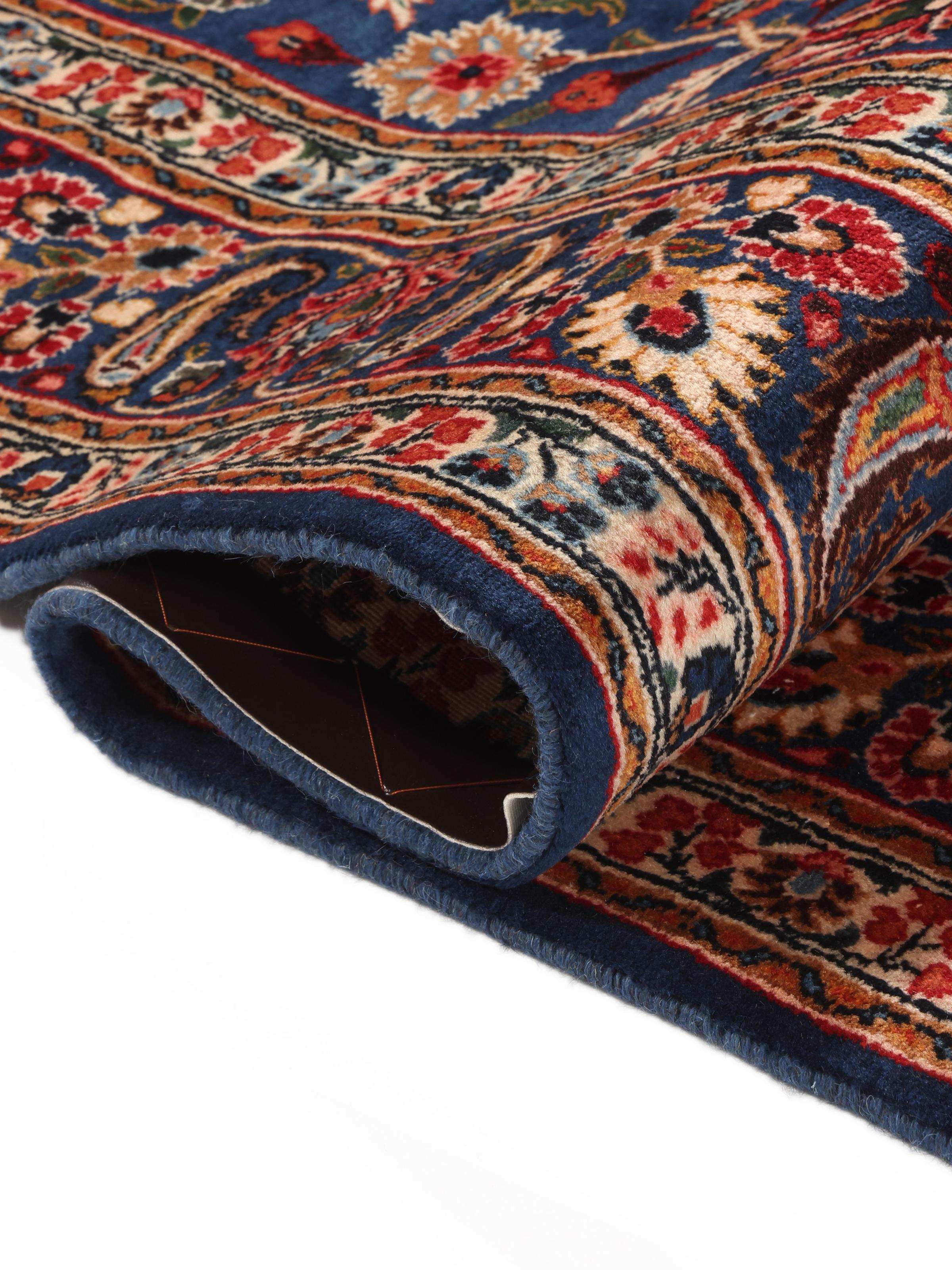
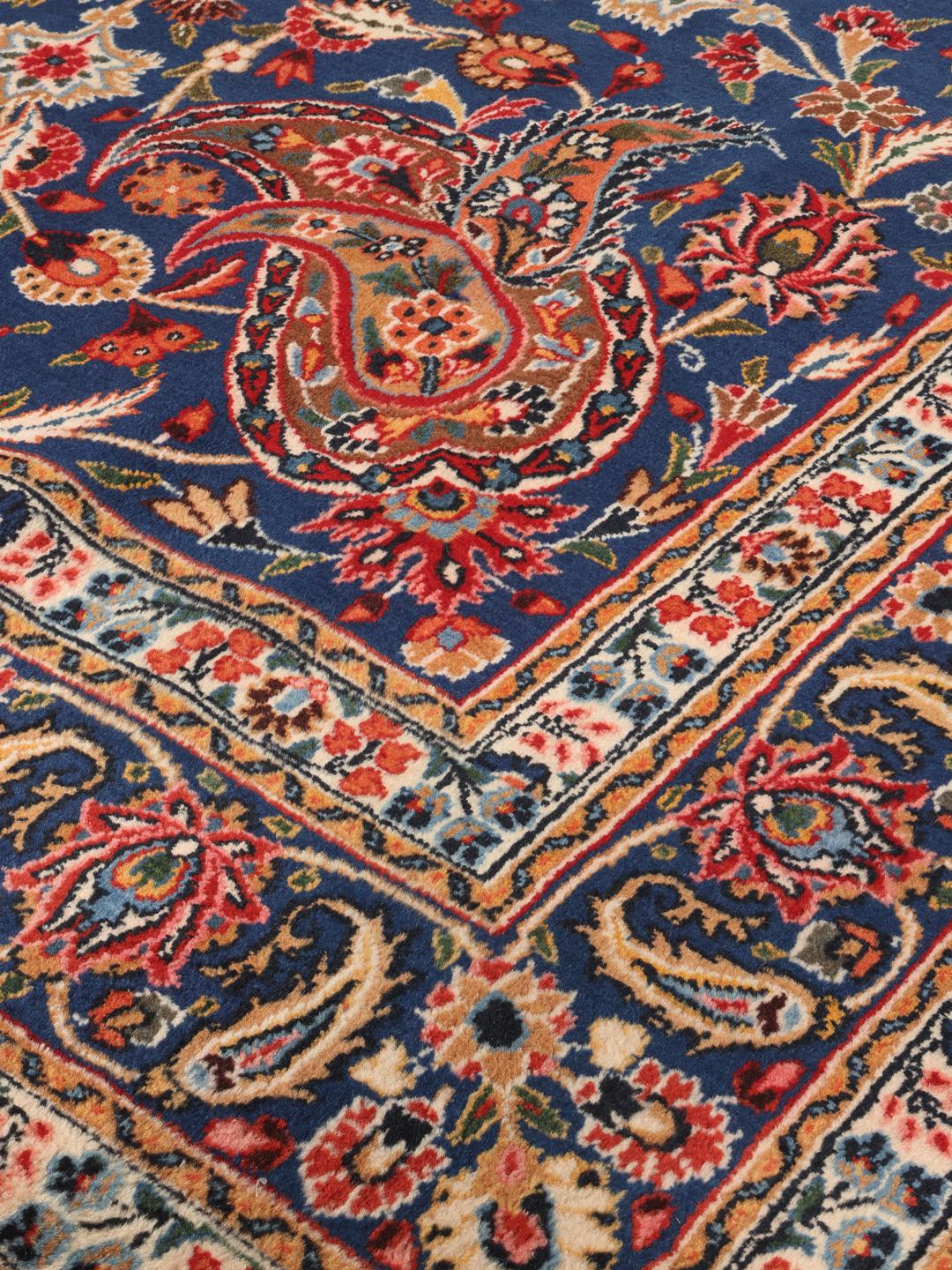
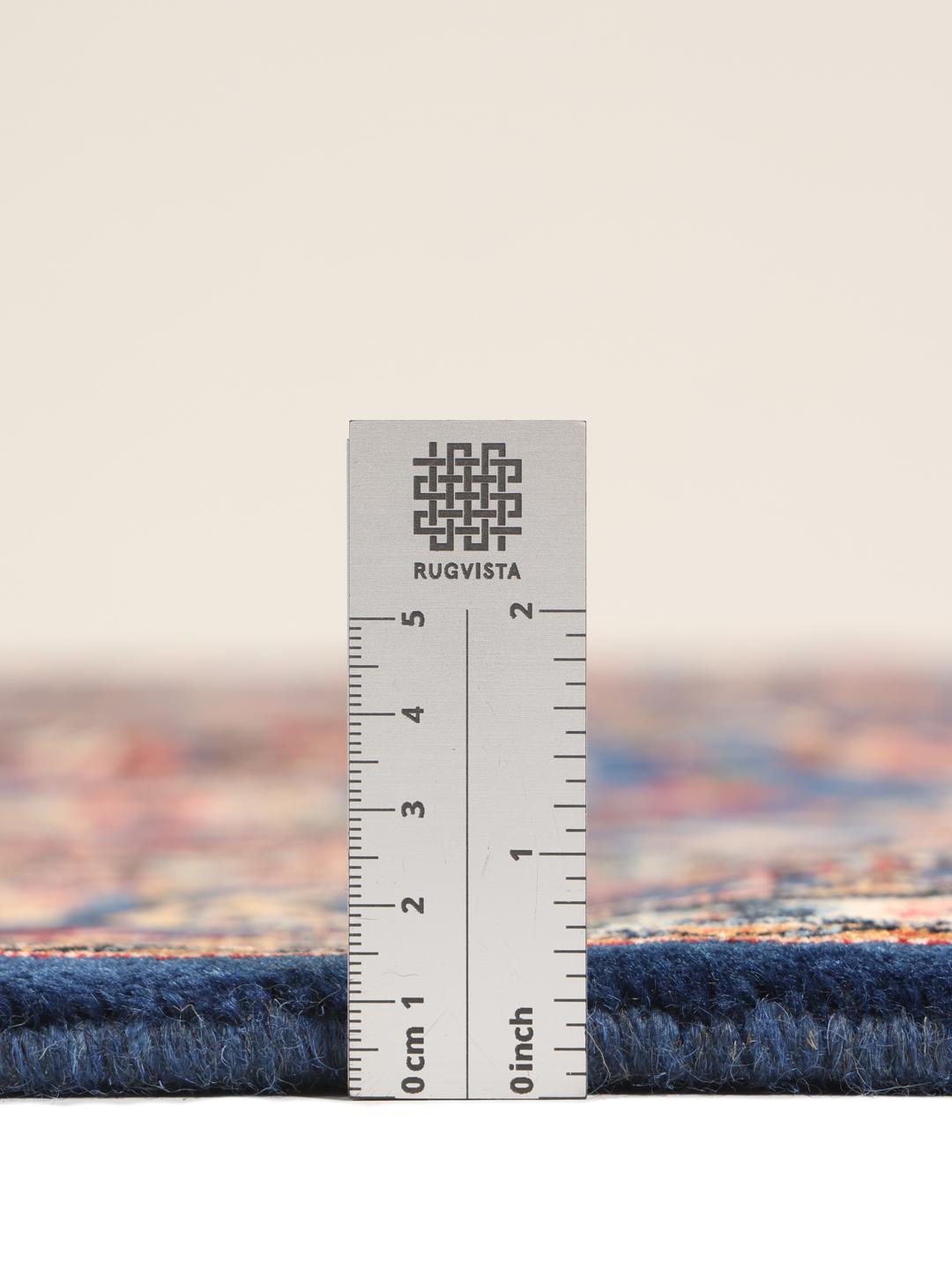
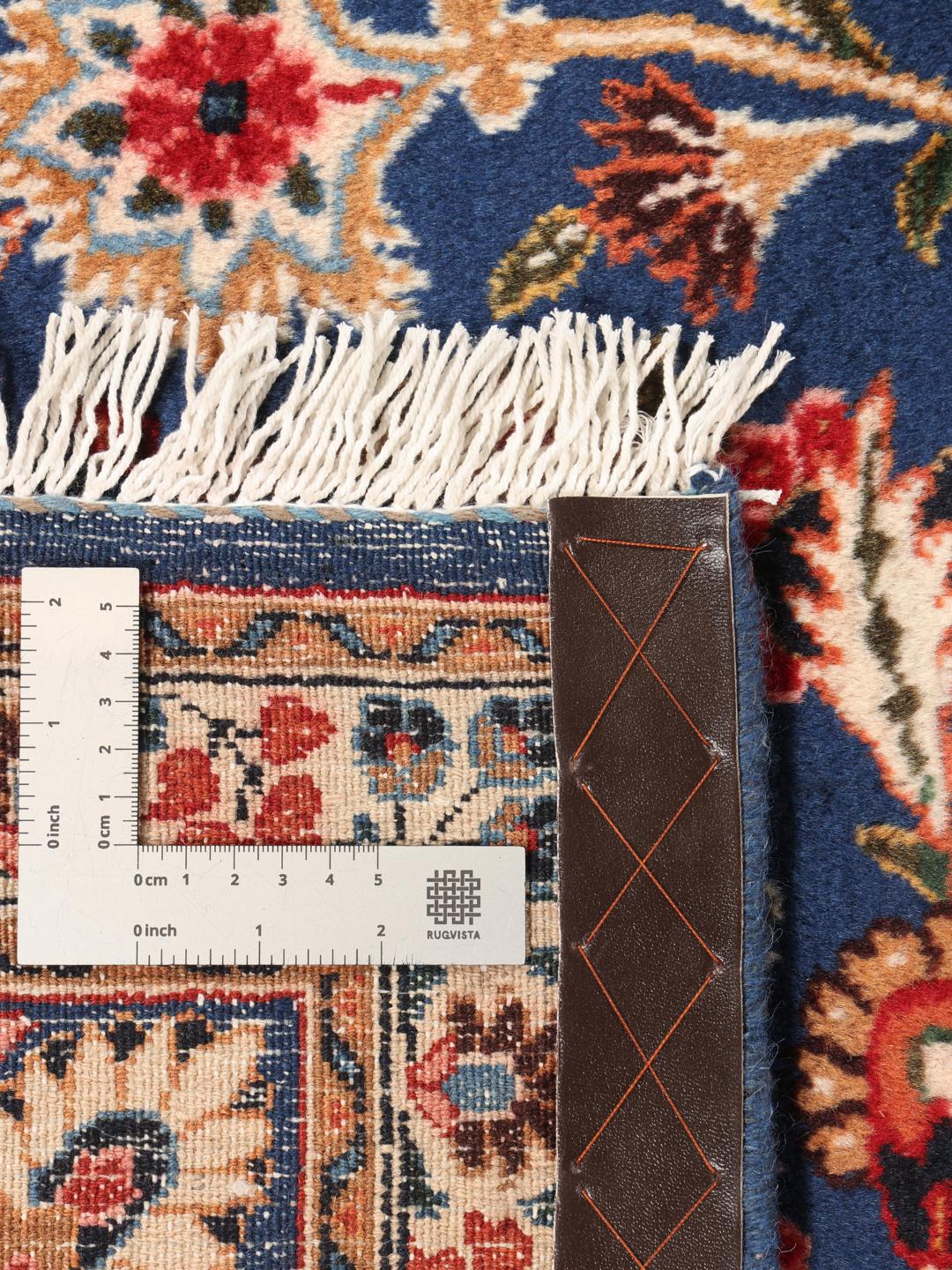
Technical excellence in Moud rugs is often associated with the specific way the pile is secured, creating a sturdy and long-lasting foundation. The use of high-quality wool allows for a dense, lustrous pile that captures light beautifully, which is a key characteristic that sets these rugs apart. Understanding this technical depth helps one appreciate why these pieces feel so substantial and why they maintain their aesthetic appeal over decades of use.
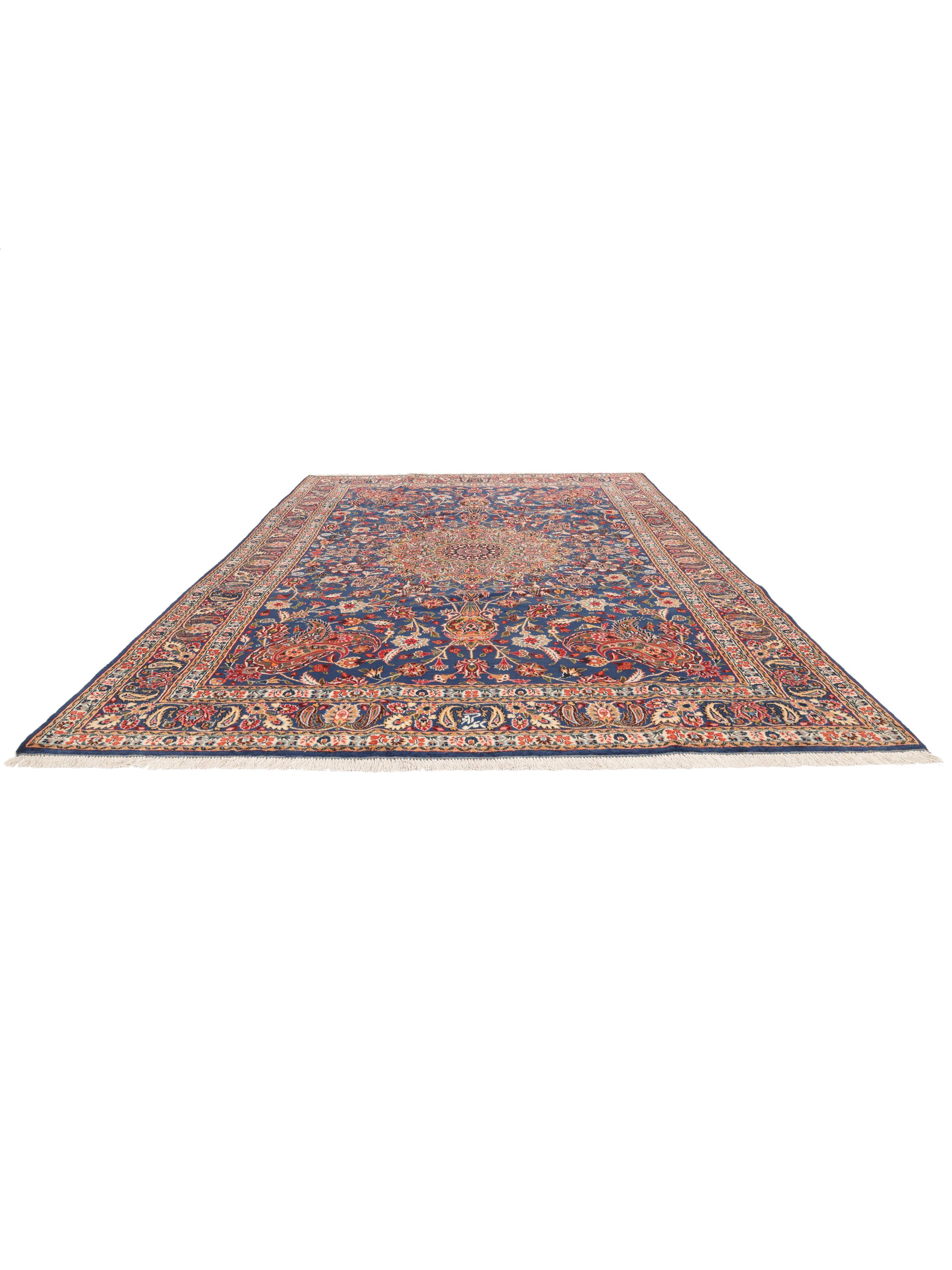
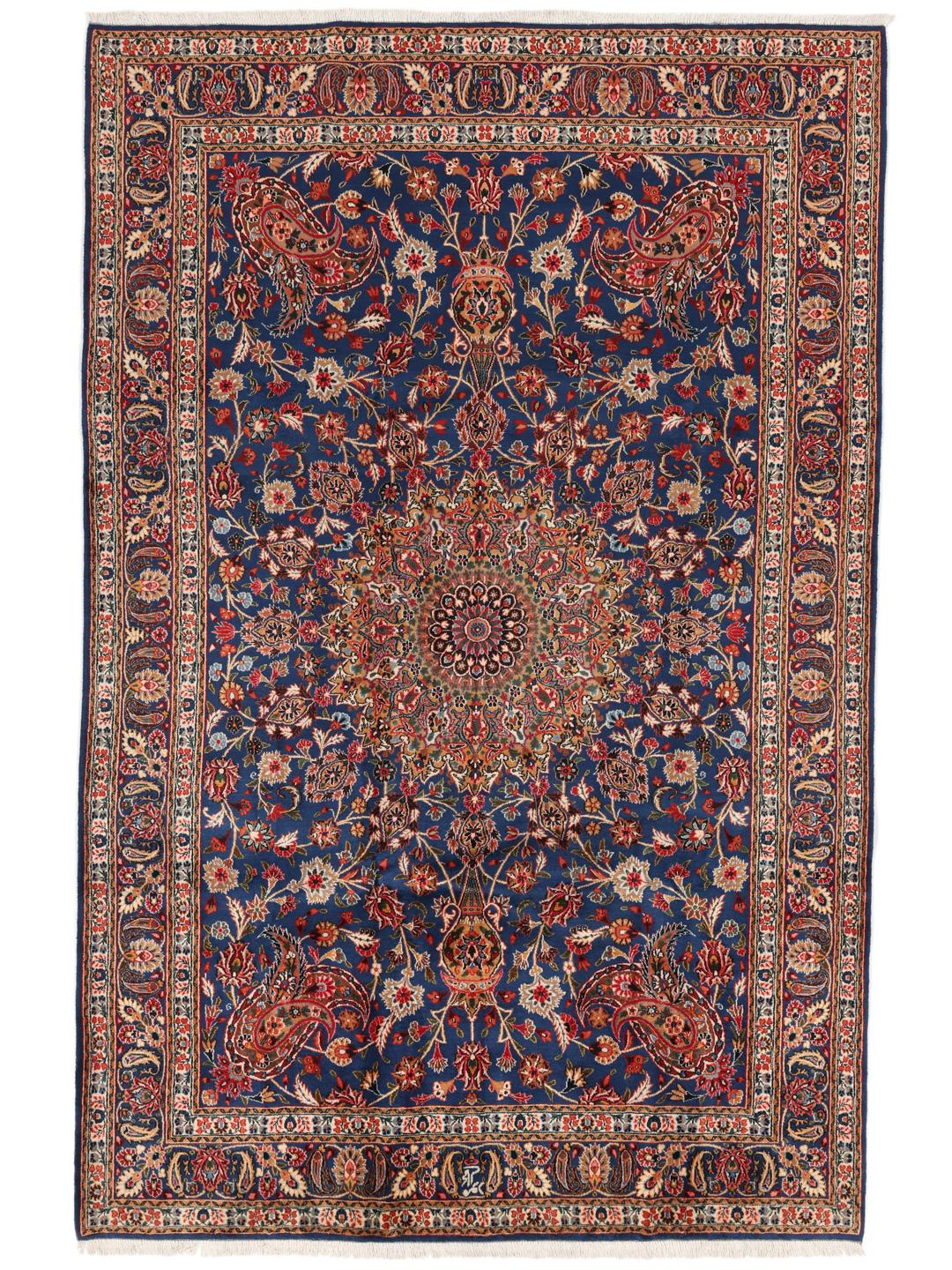
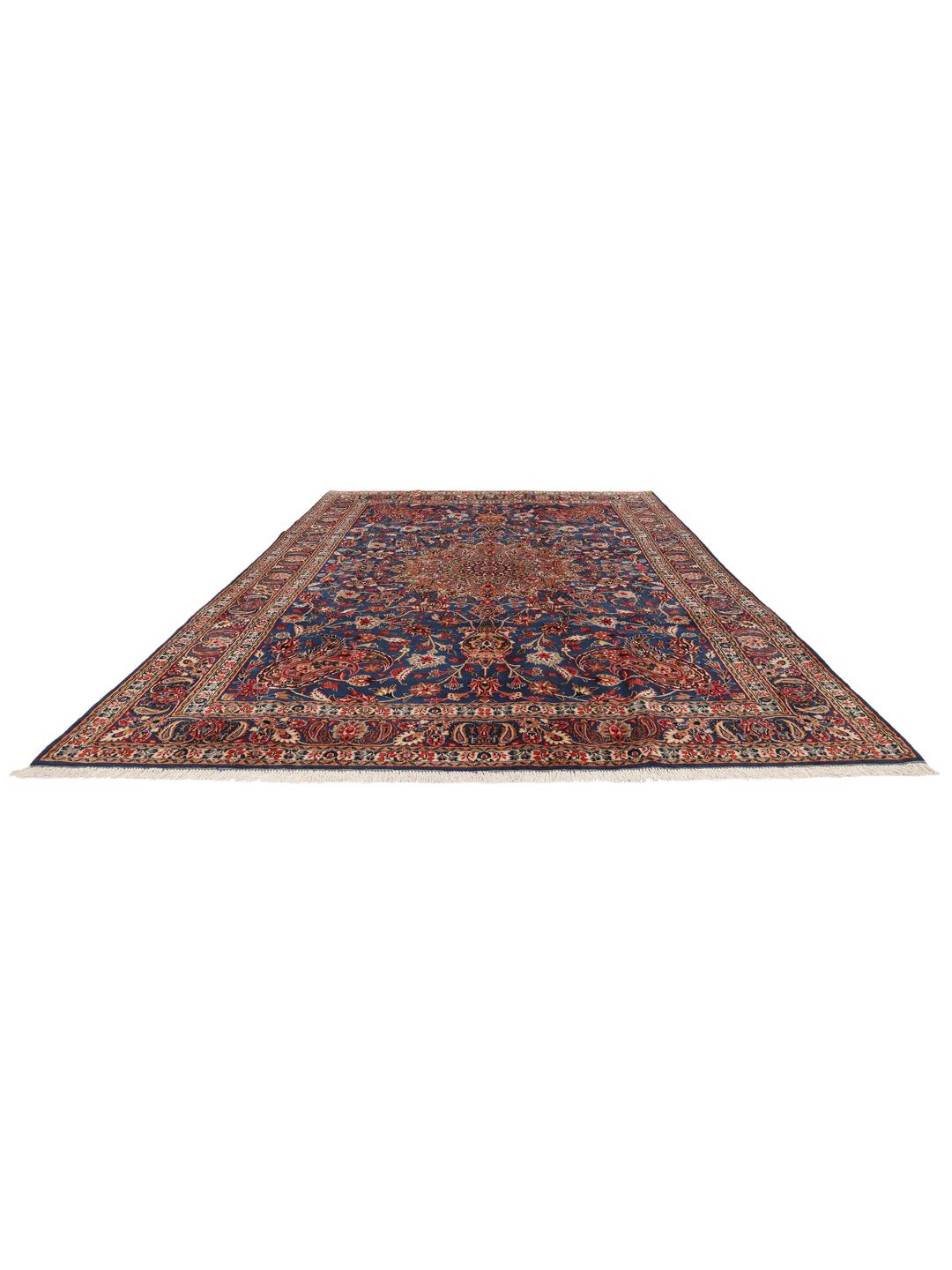
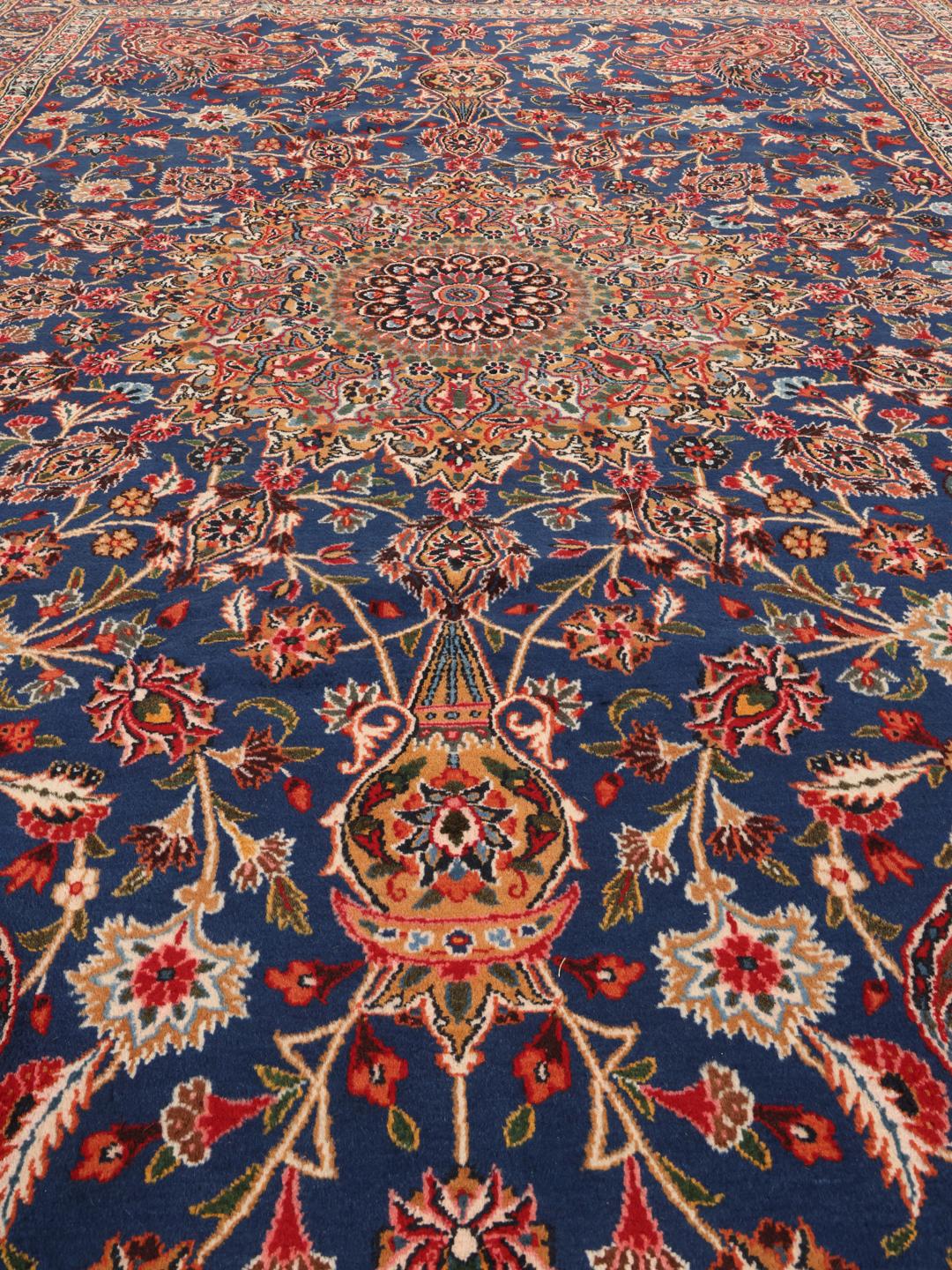
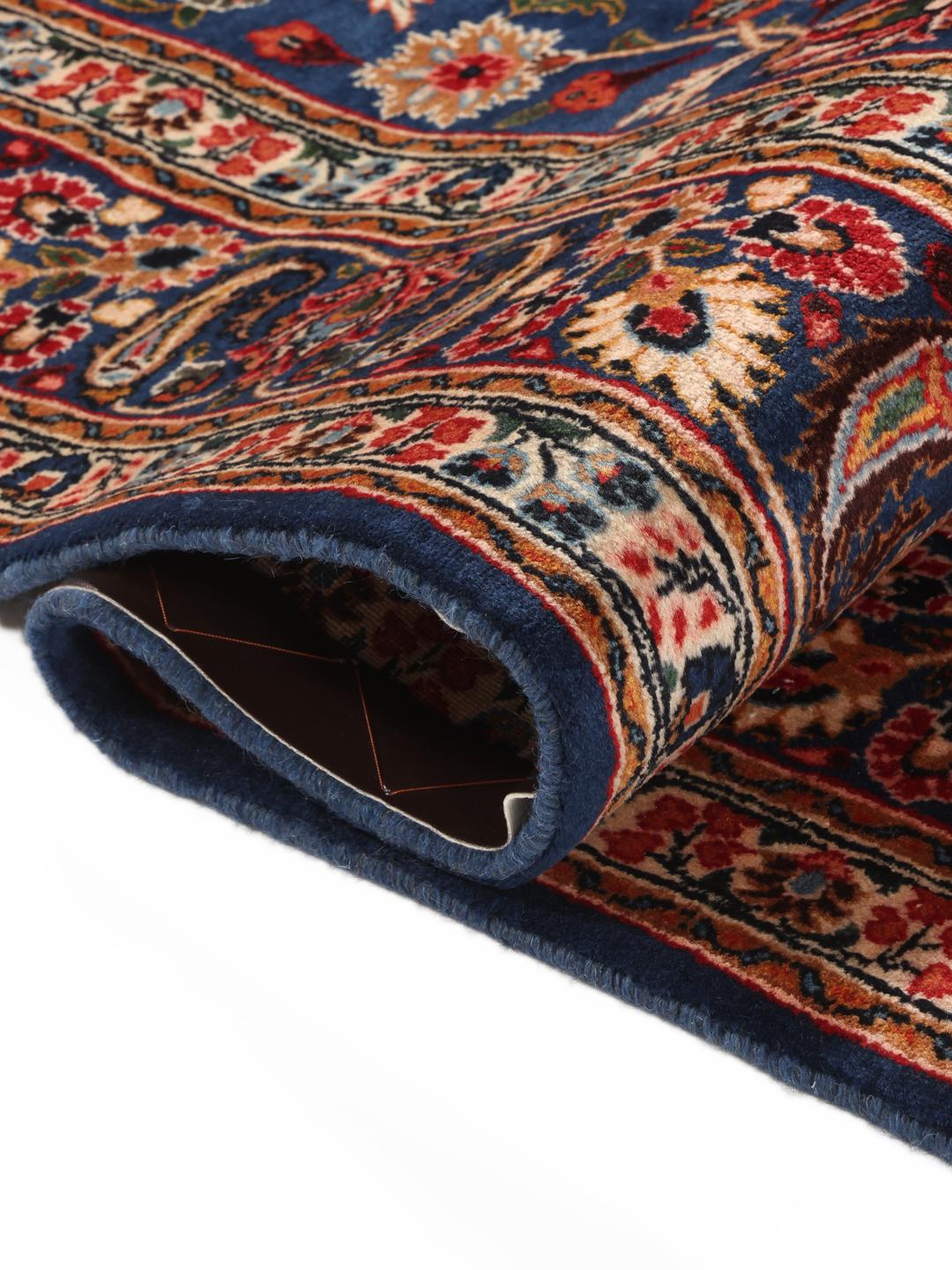
Visually, Moud rugs are celebrated for their Herati or Mahi patterns, often centred around a striking medallion. The field is typically filled with fine, interlocking floral motifs and delicate tendrils, framed by broad, ornate borders. This specific rug features a deep blue field, which serves as a dramatic canvas for the intricate, multi-coloured floral elements, creating a balanced and harmonious composition that is classic to the Moud style.
These rugs are highly valued by collectors and homeowners alike for their cultural weight and the immense skill required to produce them. Owning a piece from this region is not merely about covering a floor, but about acquiring a symbol of heritage and artistic dedication. The combination of historical design motifs and rigorous construction makes each rug a lasting investment that bridges the gap between ancient craft and modern living.