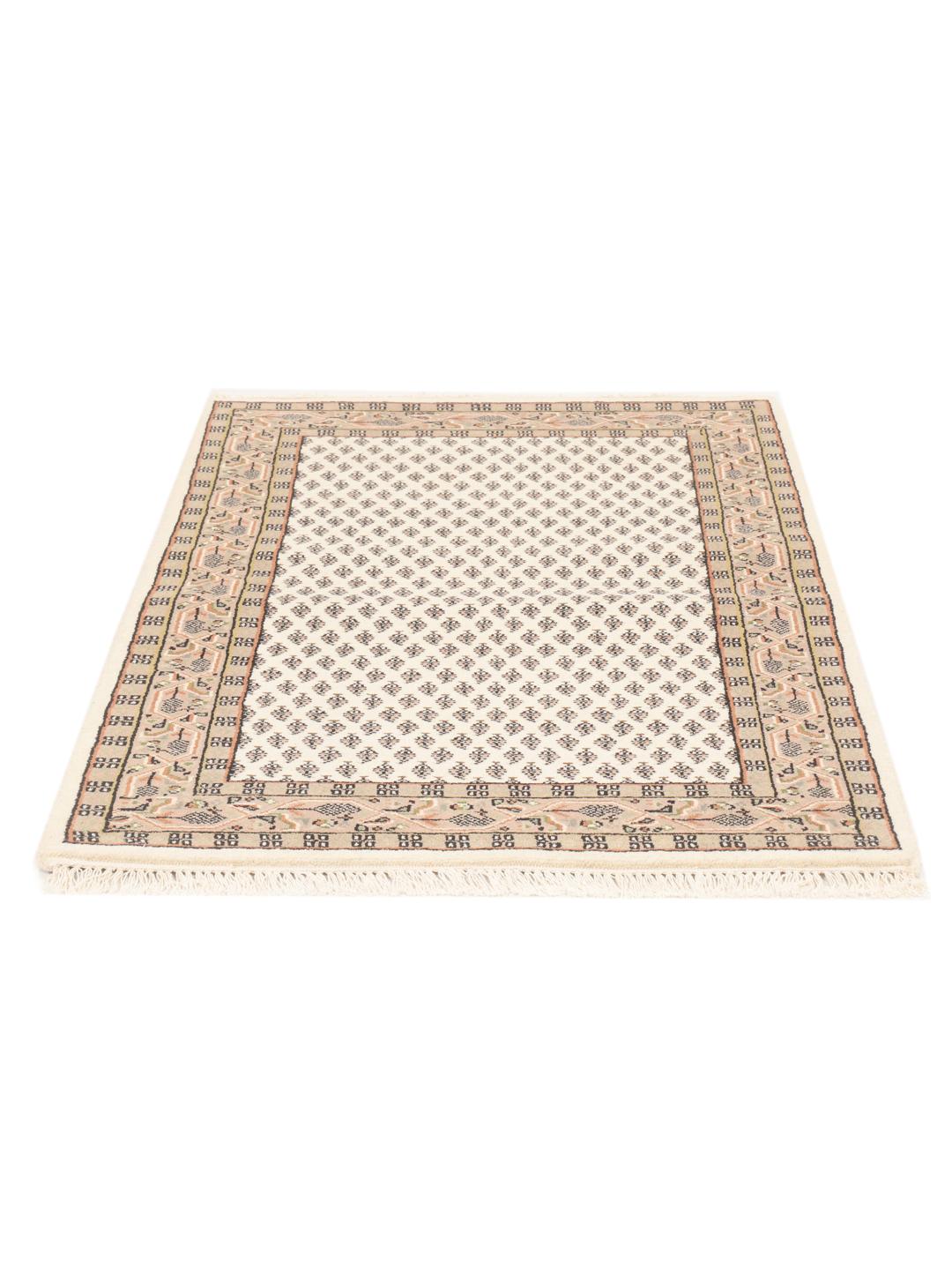
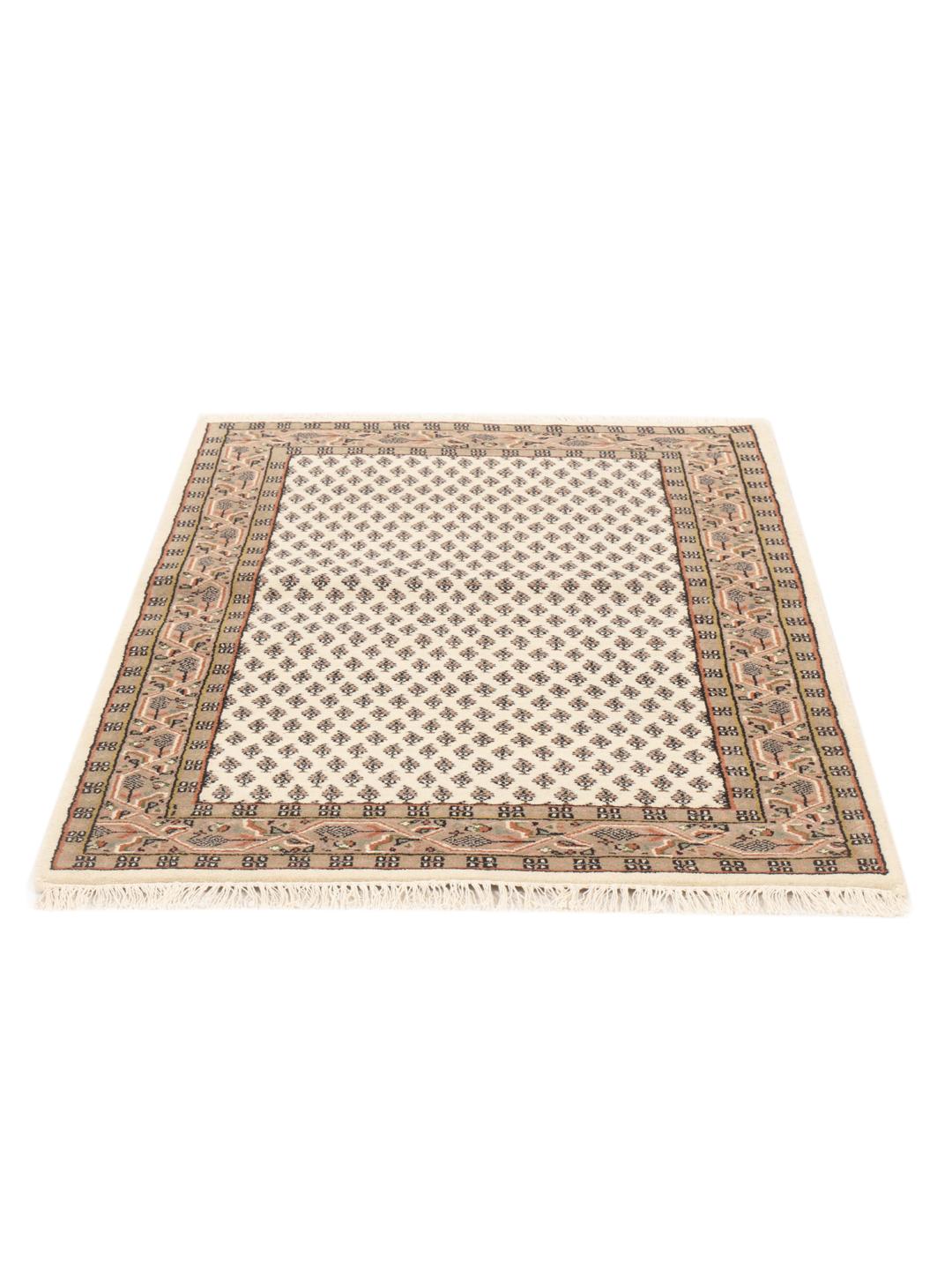
The Mir Indo rug tradition is deeply rooted in the historical weaving practices of the Middle East, which eventually migrated and flourished in India. These rugs are inspired by the classic Sarouk designs, known for their elaborate and precise patterns. Over generations, Indian artisans have refined these techniques, blending historical motifs with local artistic sensibilities to create a distinct style that is highly sought after by collectors.
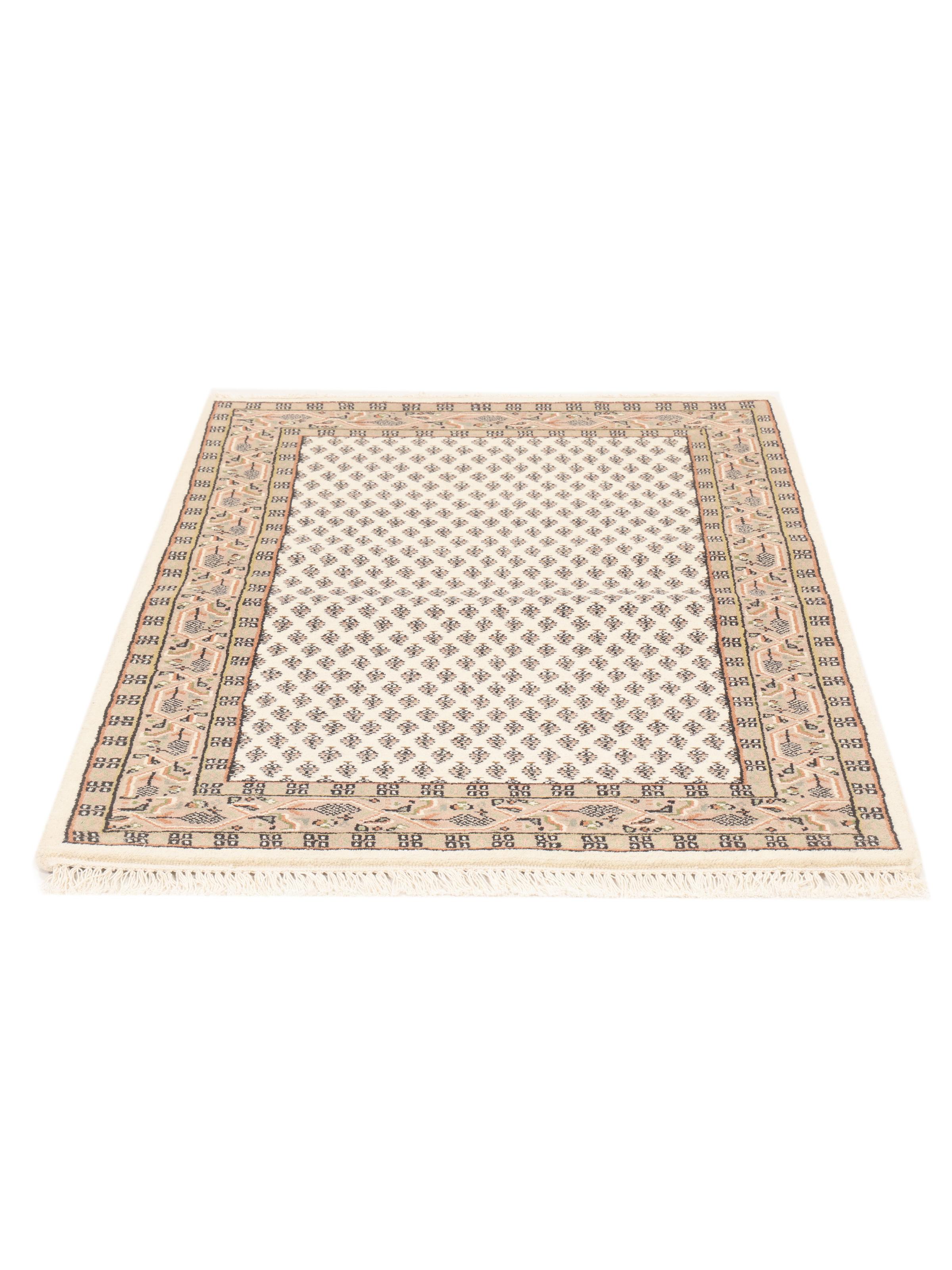
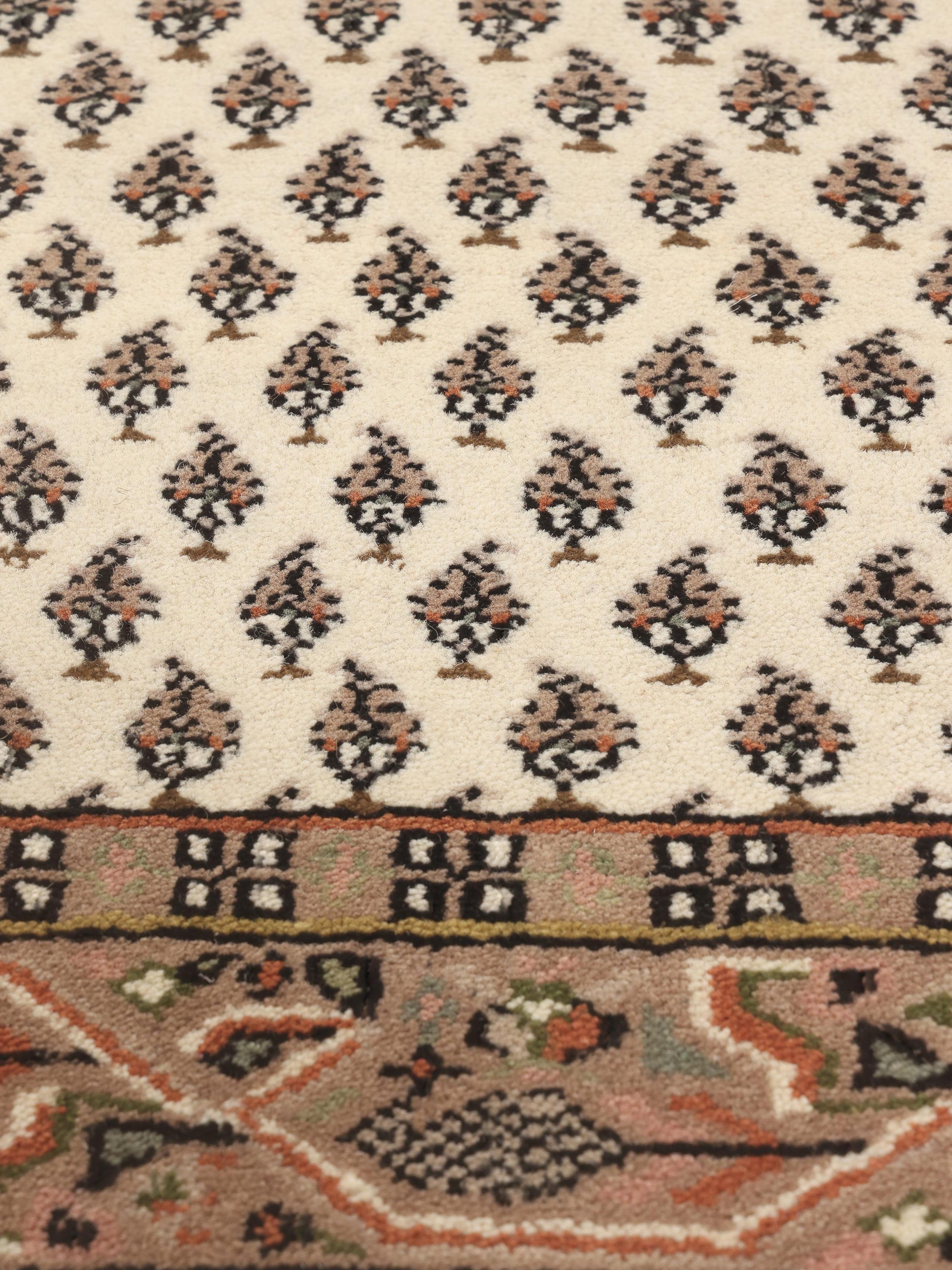
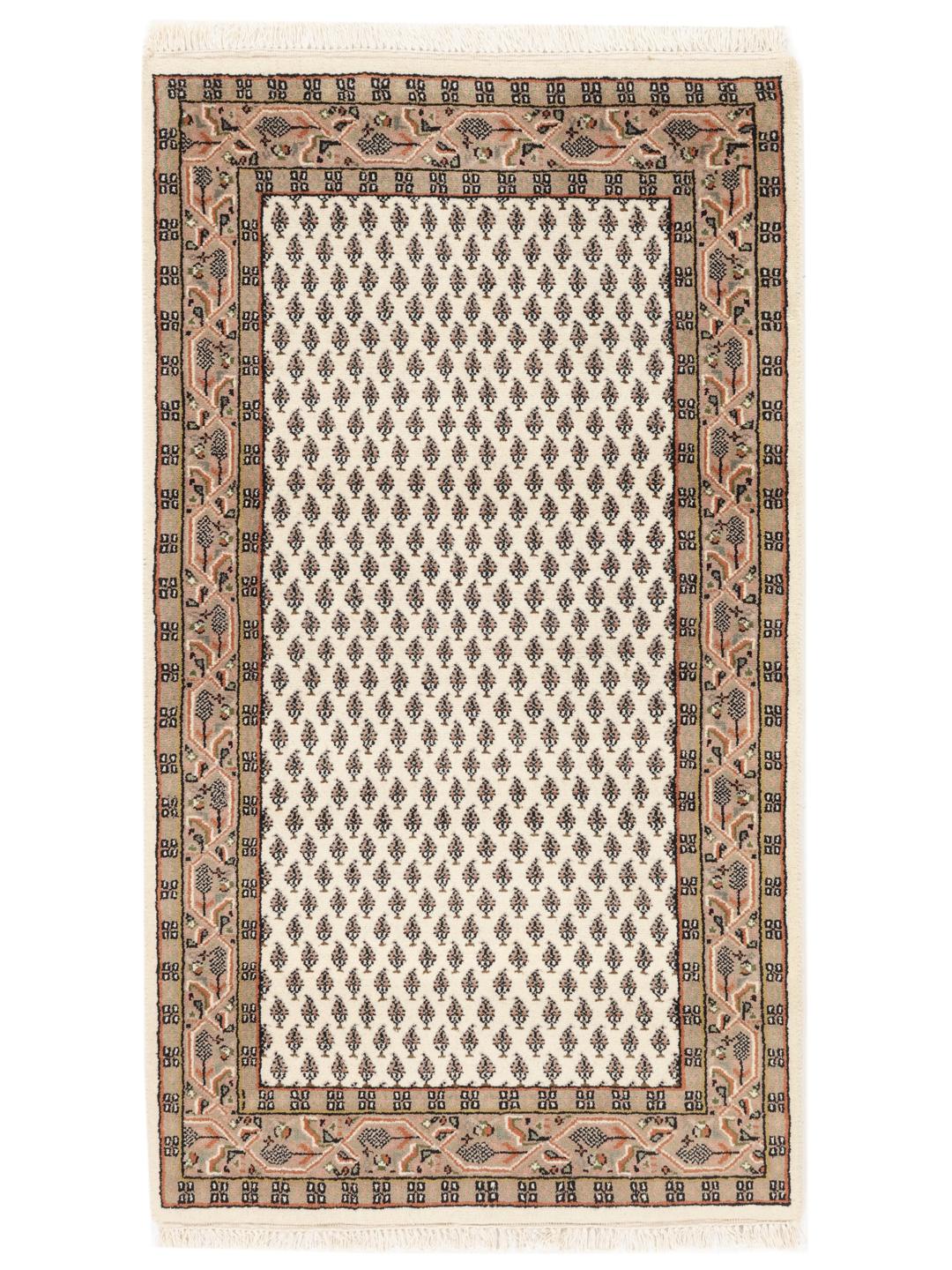
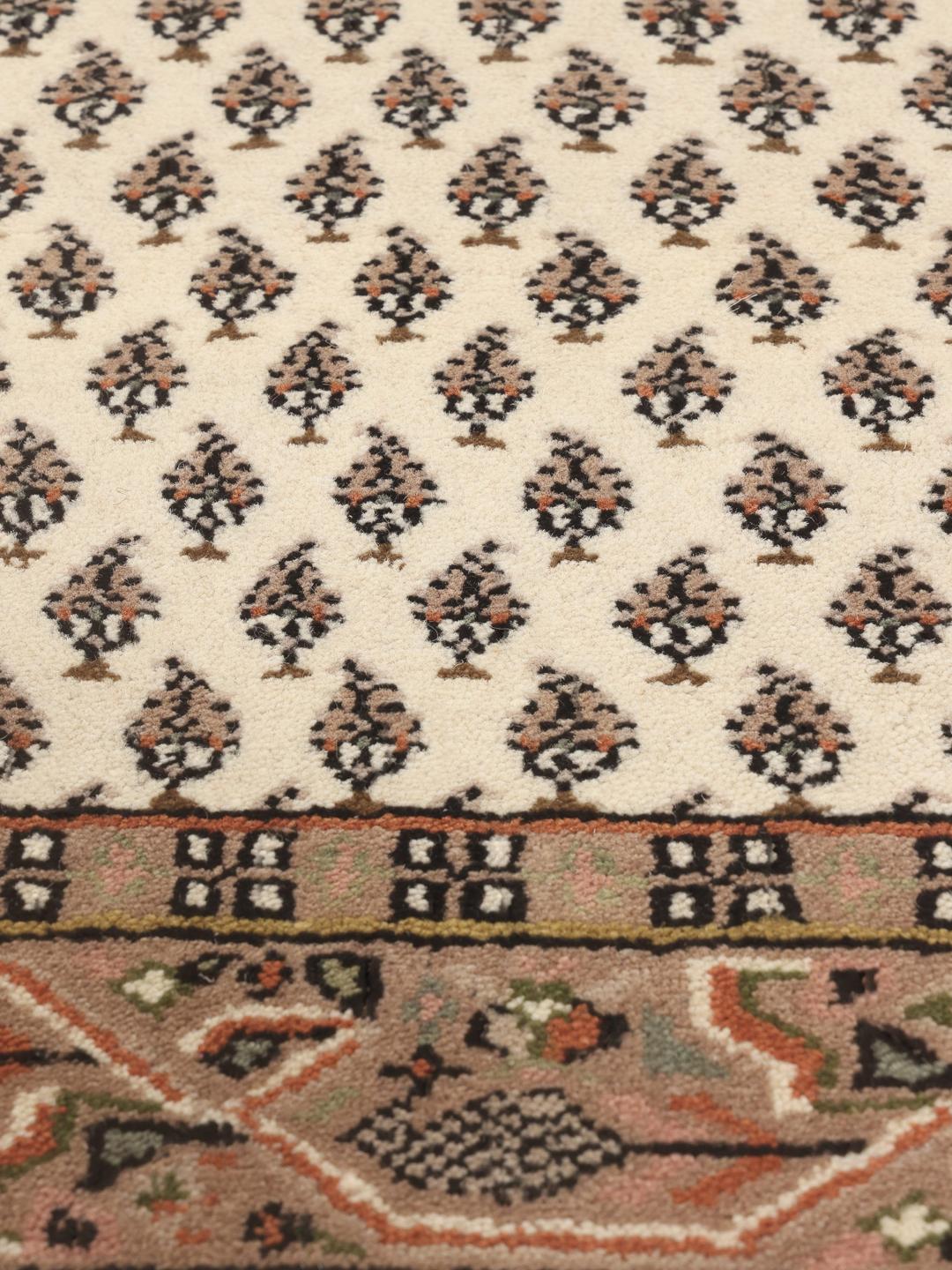
The term 'Mir' refers to a style characterised by the 'Mir-i-Boteh' or paisley motif, which is a stylised teardrop shape. This symbol is often associated with the cypress tree or a floral spray, representing life and eternity. In the context of these rugs, the repeating pattern creates a rhythmic visual flow that has defined the aesthetic of this category for centuries, showcasing the evolution of weaving from a functional necessity to a sophisticated art form.
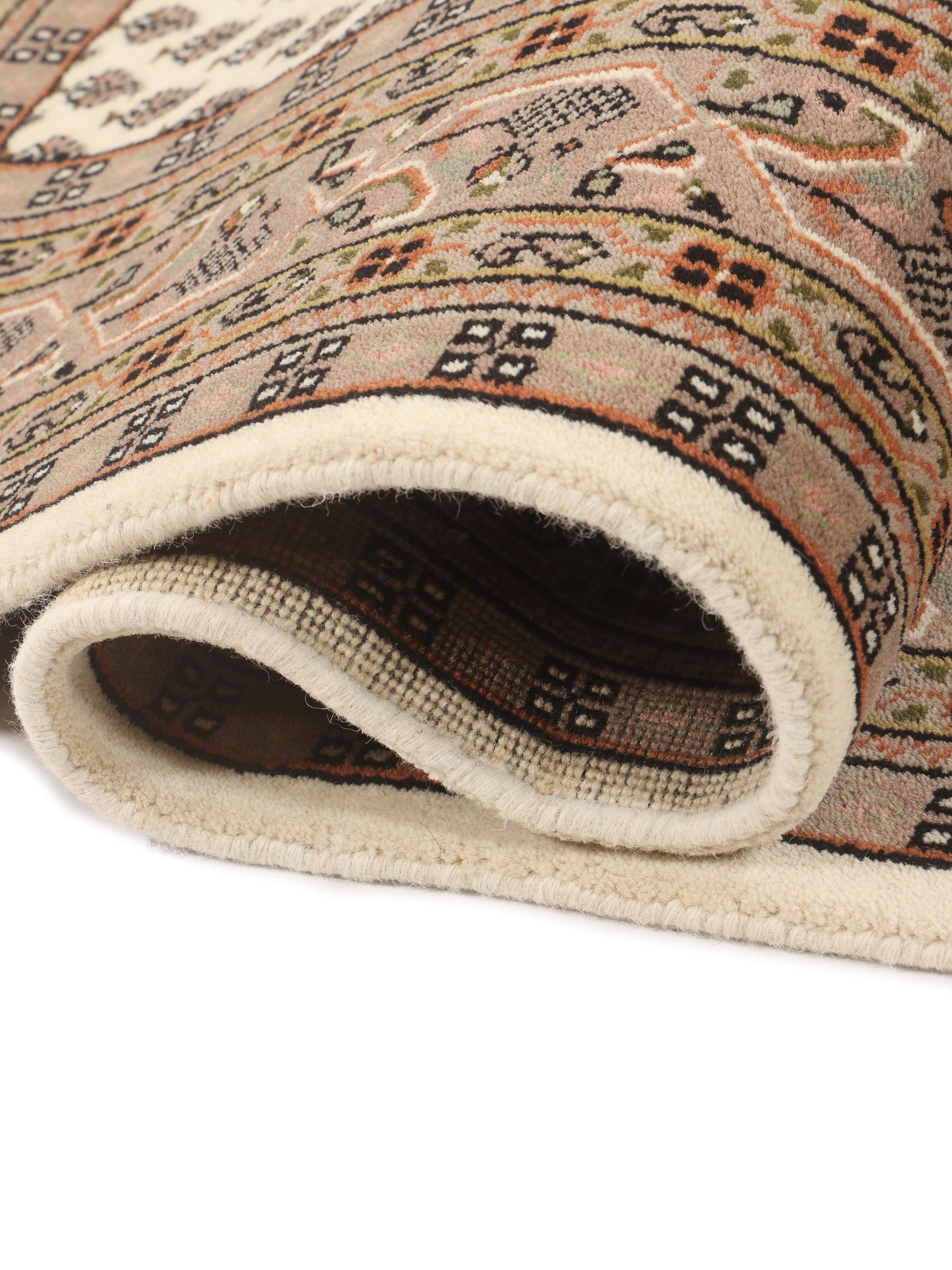
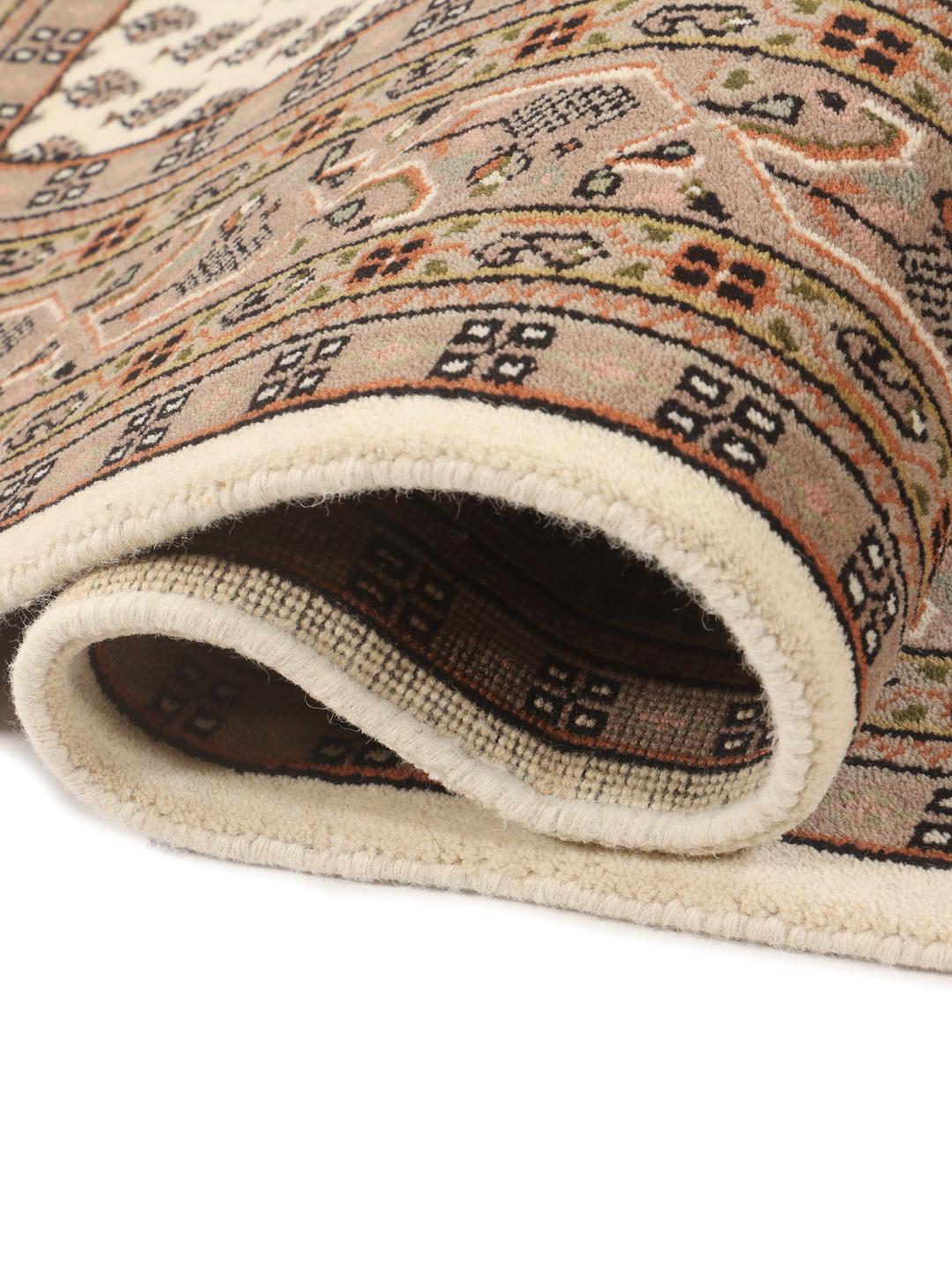
Signature design elements of the Mir Indo include a field covered in a dense, repeating boteh pattern, often enclosed by a formal, decorative border that frames the central motifs. The colour palettes are typically grounded in earthy, natural tones, allowing the intricate detail of the pattern to remain the primary focus. This disciplined approach to design is what gives the rug its balanced, harmonious appearance.
Collectors value these rugs for their ability to bridge the gap between historical heritage and modern living. Owning a Mir Indo rug is an investment in a tradition that prizes skill, patience, and visual storytelling. It is a piece that carries the weight of cultural history, offering not just a beautiful floor covering, but a connection to the artistic legacy of the artisans who crafted it.