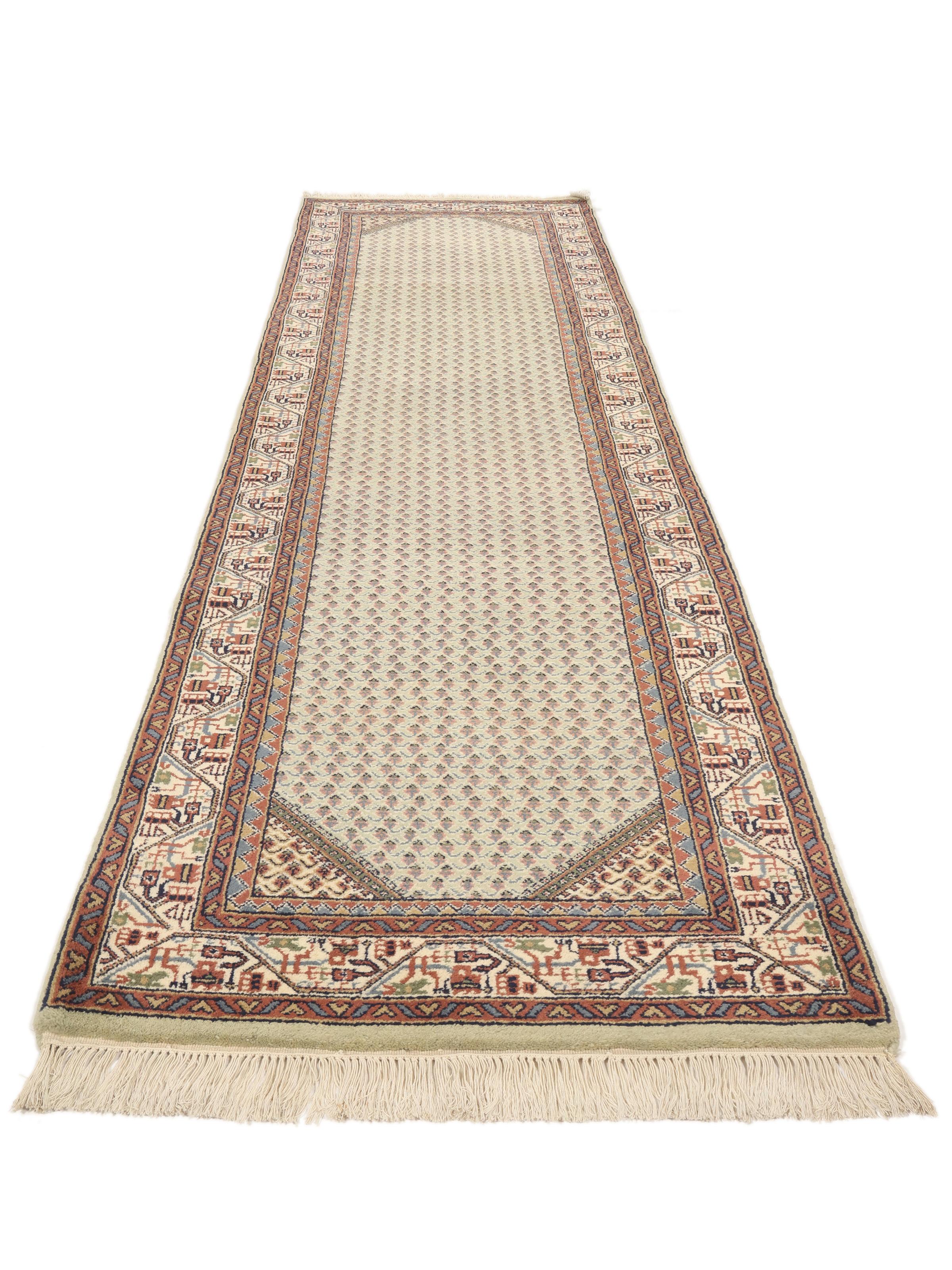
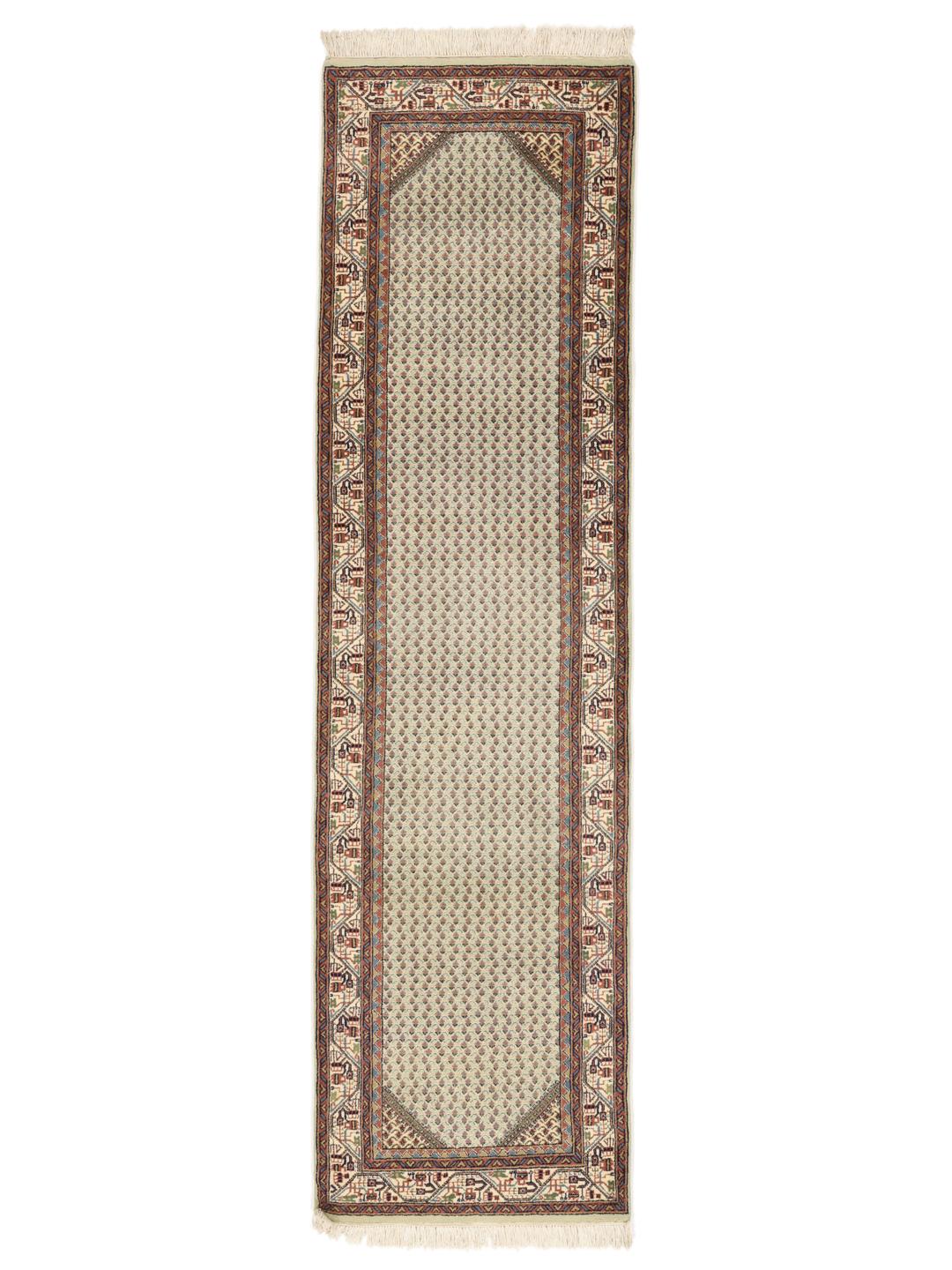
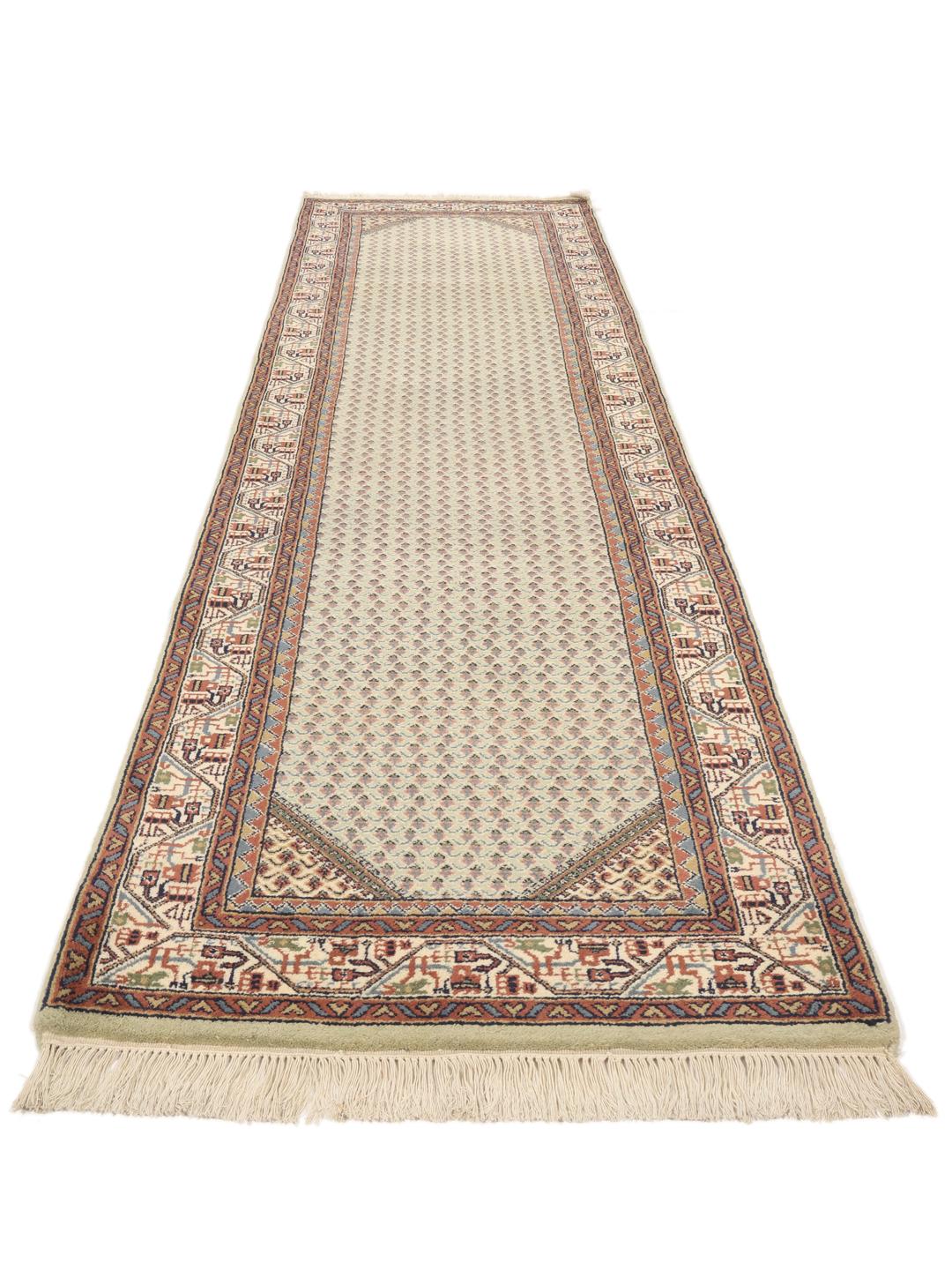
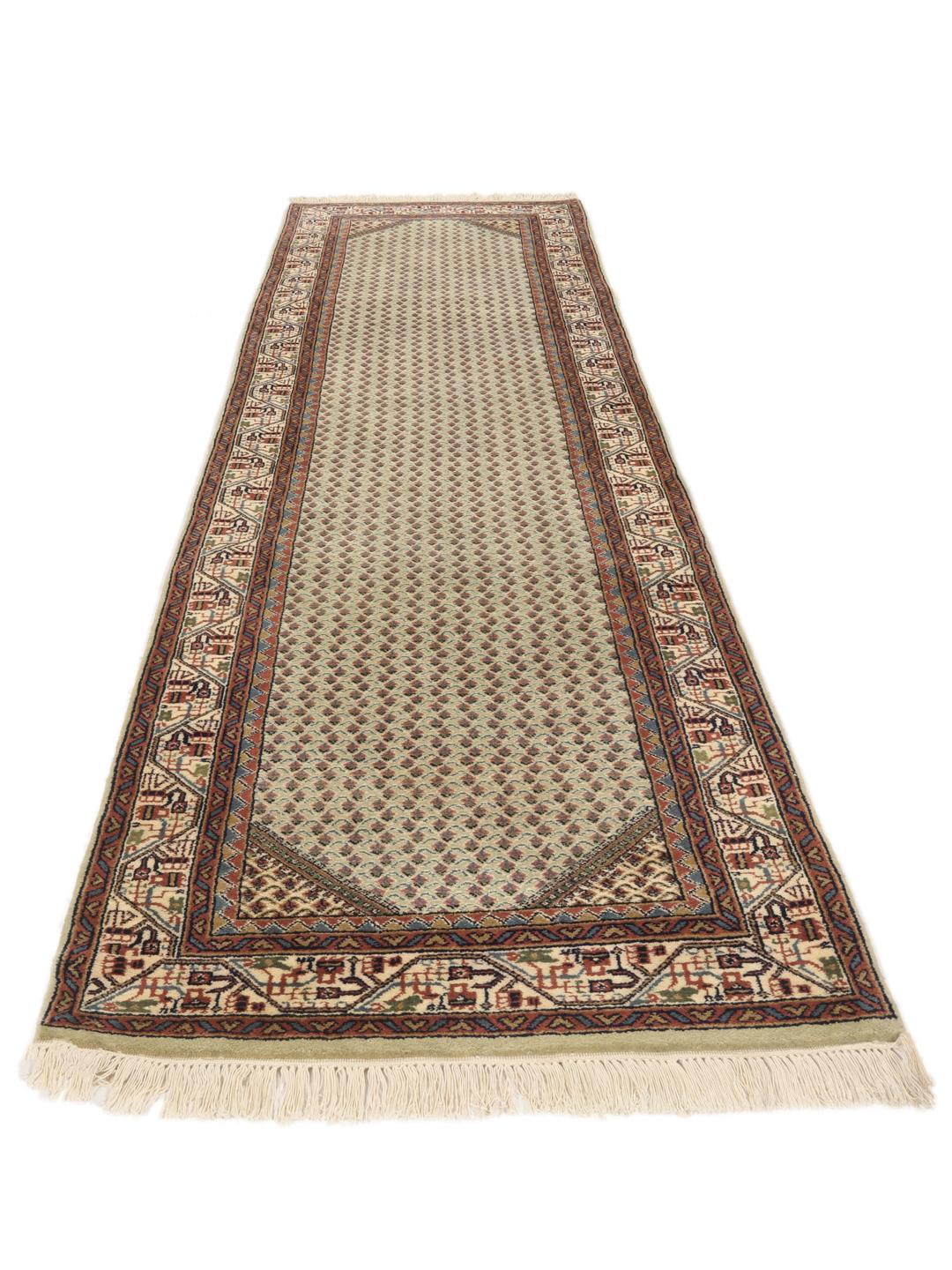
The Mir rug tradition is deeply rooted in the textile heritage of the Middle East, though it has found a flourishing home in the skilled workshops of India. The name Mir is derived from the village of Saraband, where this iconic repeating pattern first gained widespread recognition for its elegance and versatility.
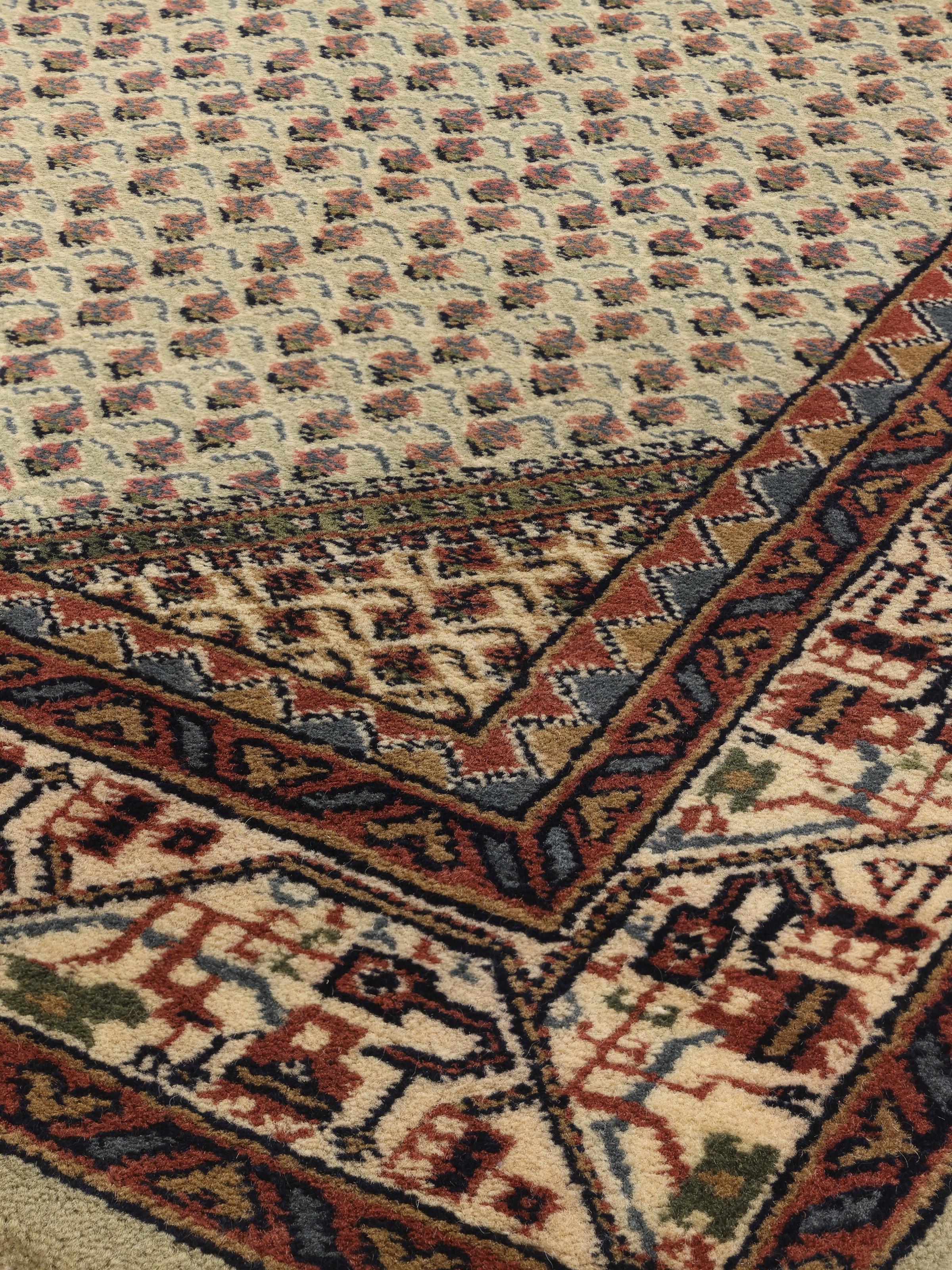
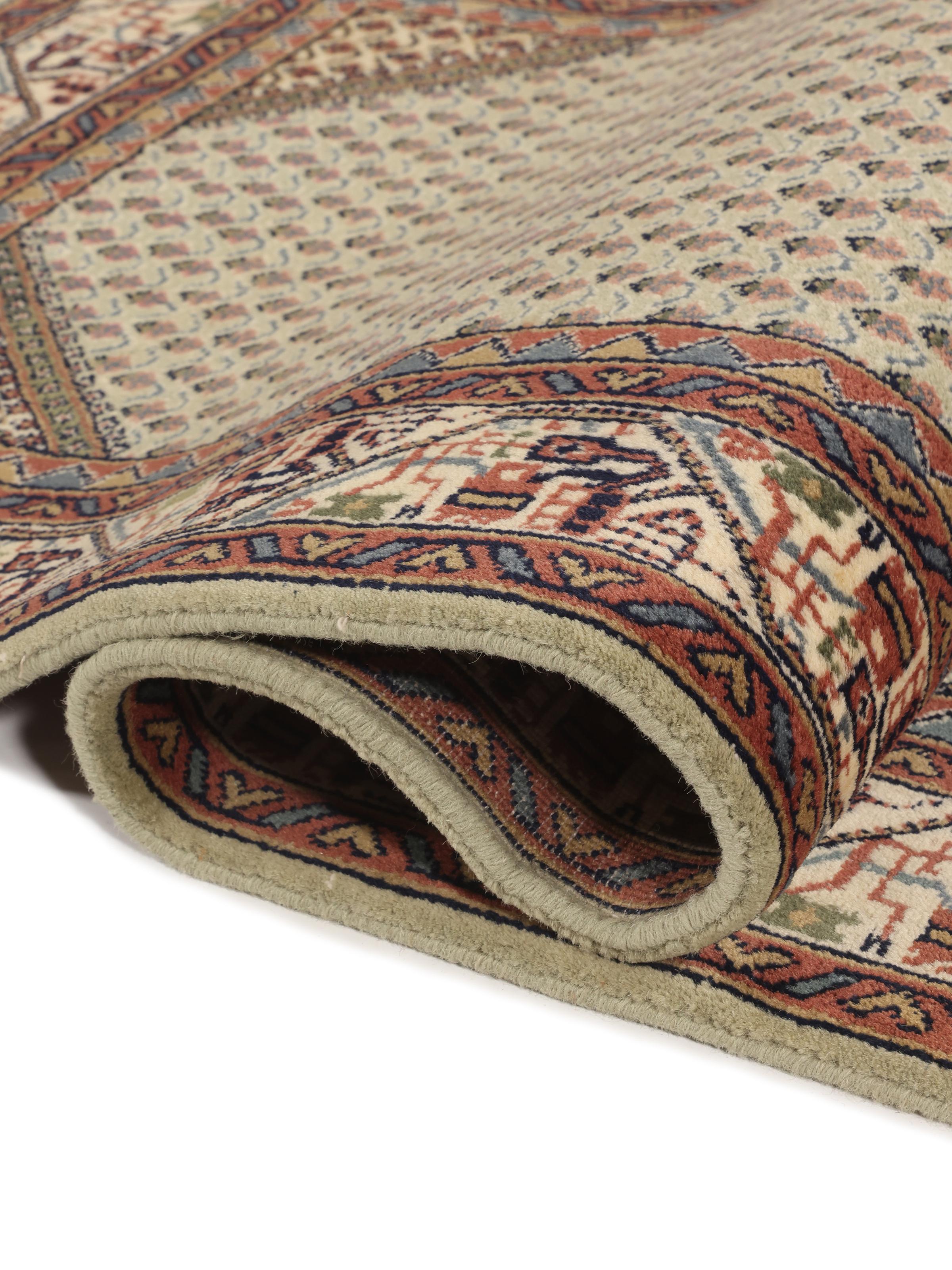
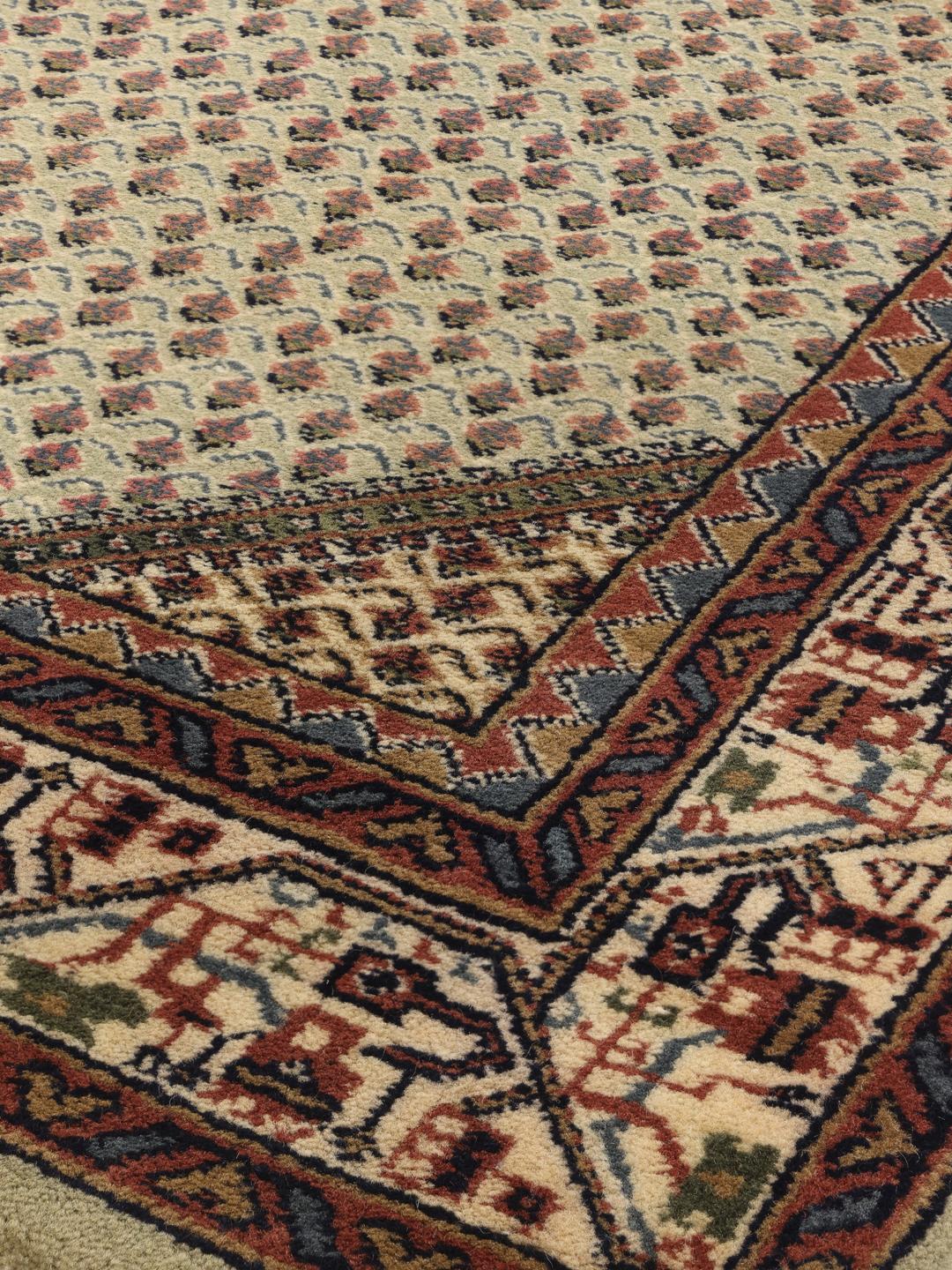
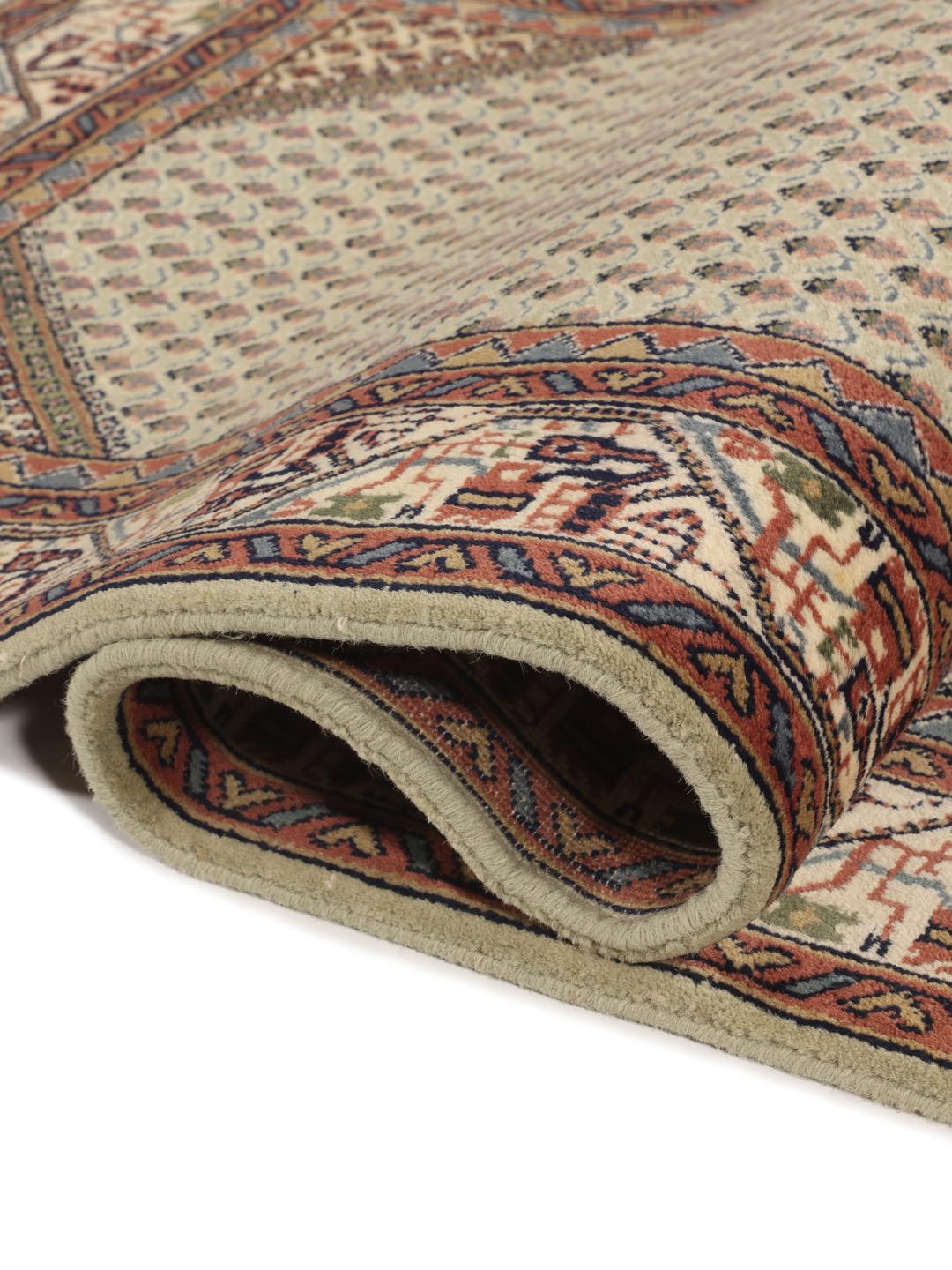
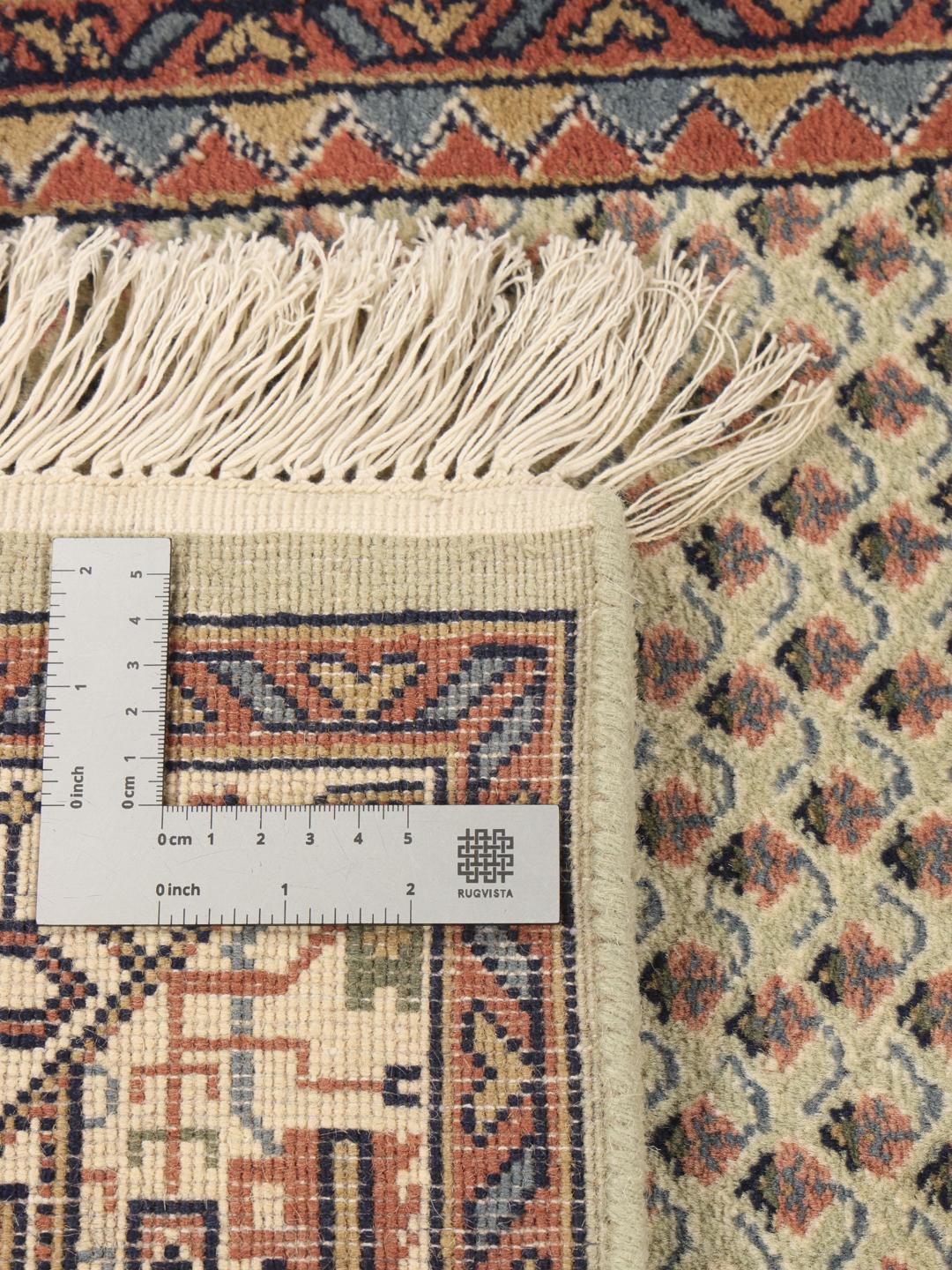
The signature design of a Mir rug features a field covered in a continuous, repeating bota or teardrop motif, often arranged in alternating directions. This pattern is framed by intricate, multi-layered borders that provide a sense of structure and completion. The rhythmic nature of the design is intended to draw the eye along the length of the rug, making it particularly well-suited for runners.
In terms of craftsmanship, the Mir style is prized for its balance and uniformity. The repeating nature of the pattern requires a high level of consistency from the weaver, as any irregularity would be easily spotted across the field. This discipline in execution is what gives these rugs their refined, formal appearance that remains a favourite for interior designers seeking a timeless aesthetic.
Collectors value these rugs not only for their visual harmony but also for the cultural continuity they represent. By preserving traditional motifs and techniques, these pieces serve as a bridge between historical weaving practices and contemporary living. Owning a hand-knotted Mir rug is an investment in a tradition of patience, skill, and enduring artistic value.