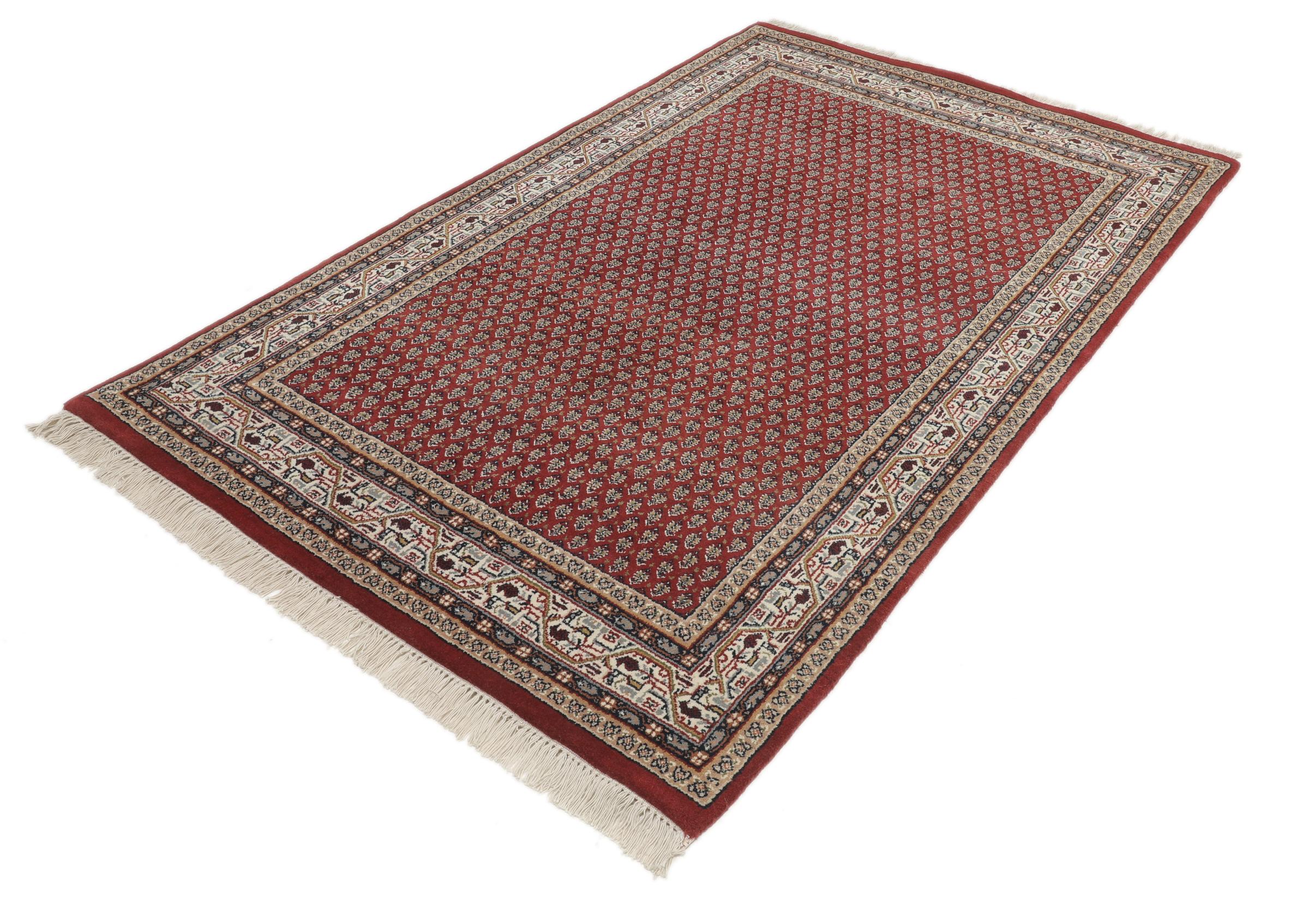
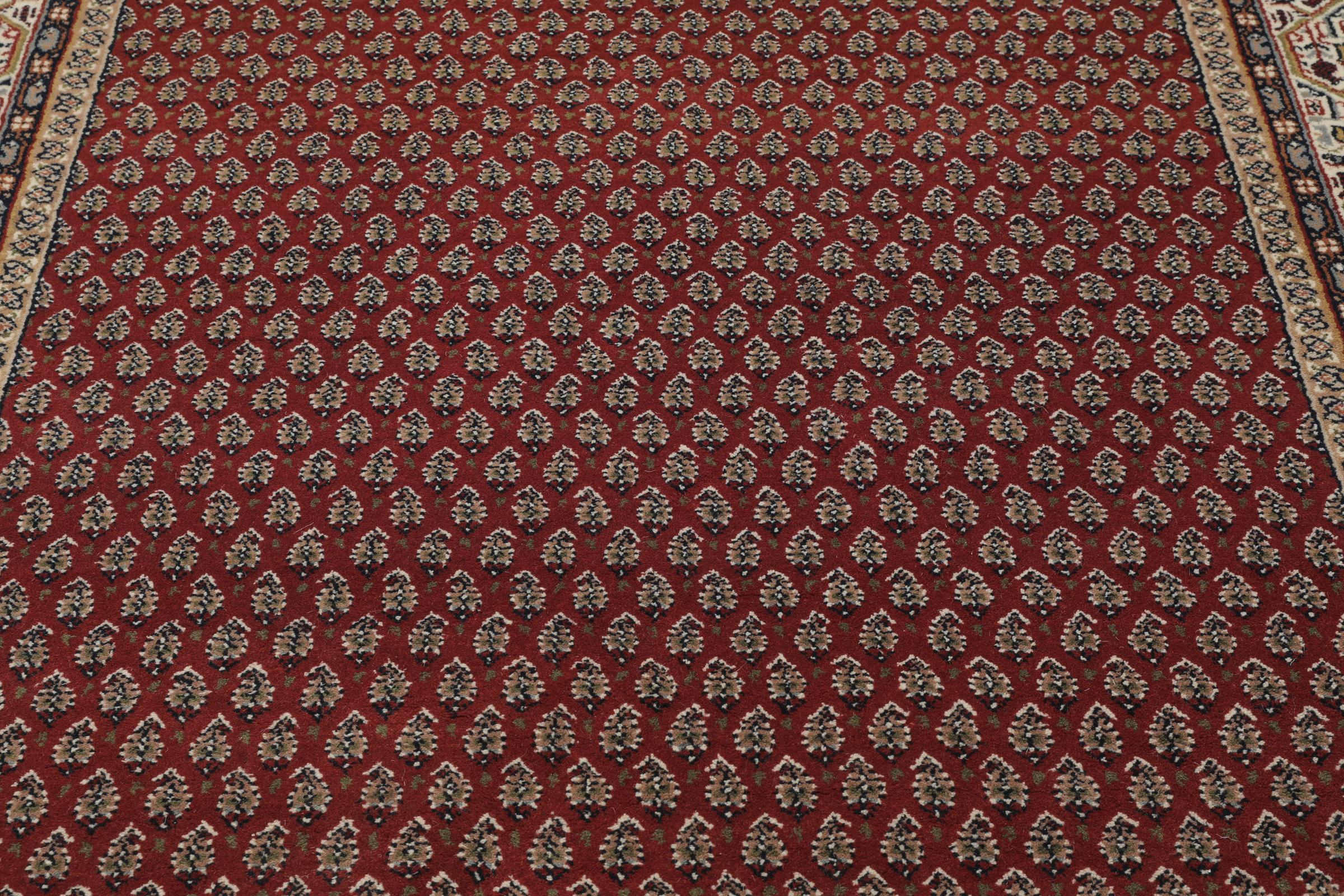
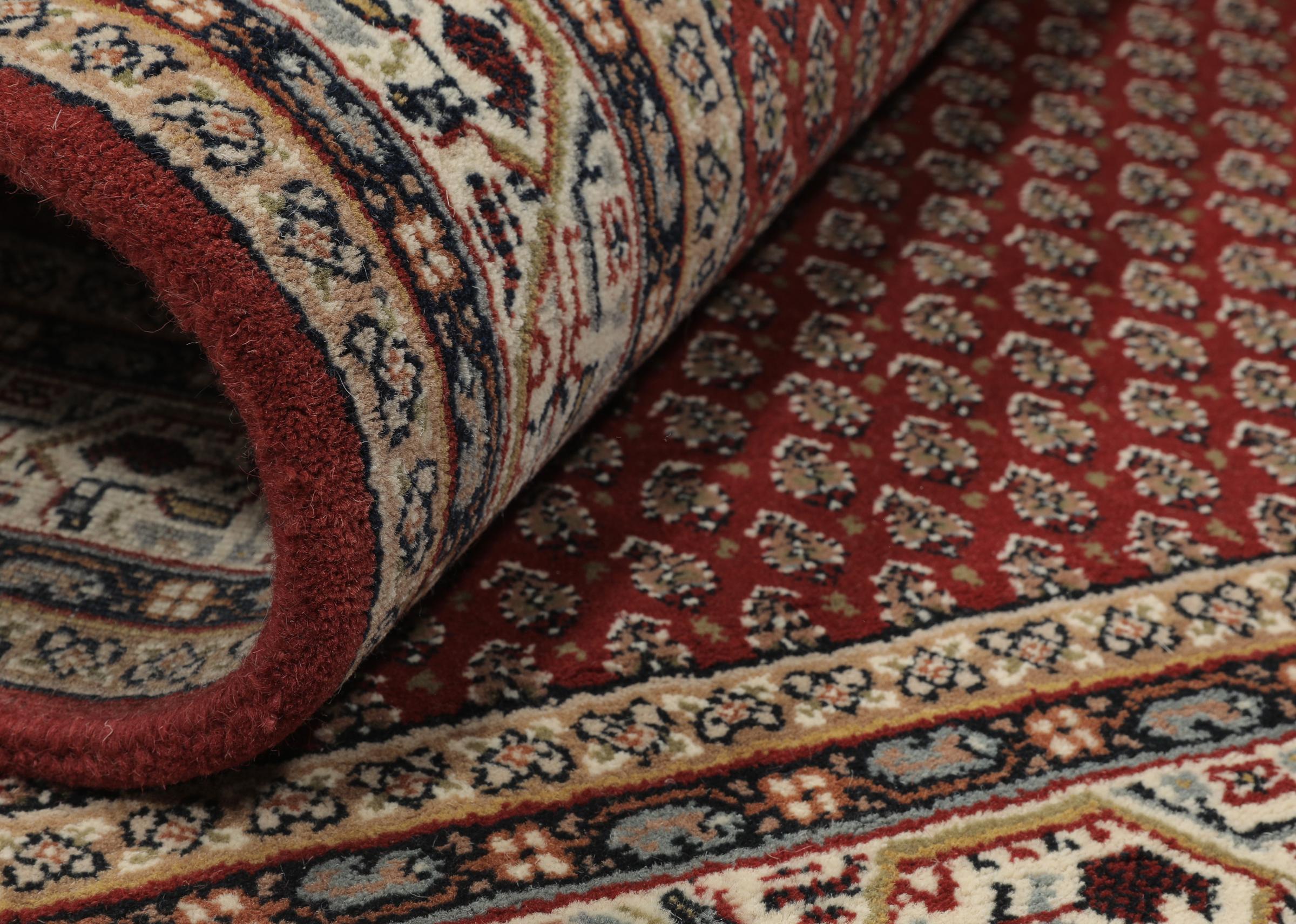
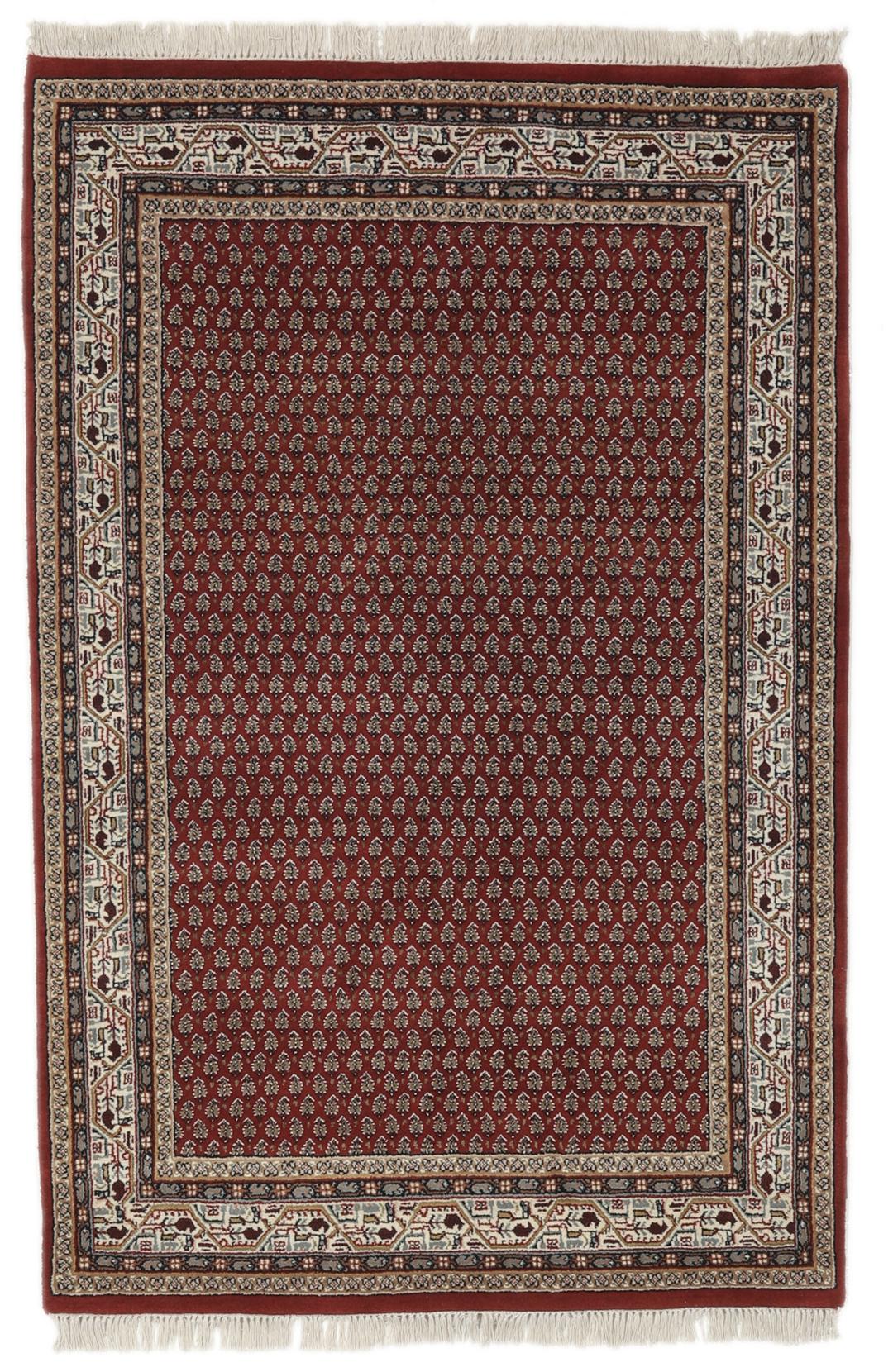
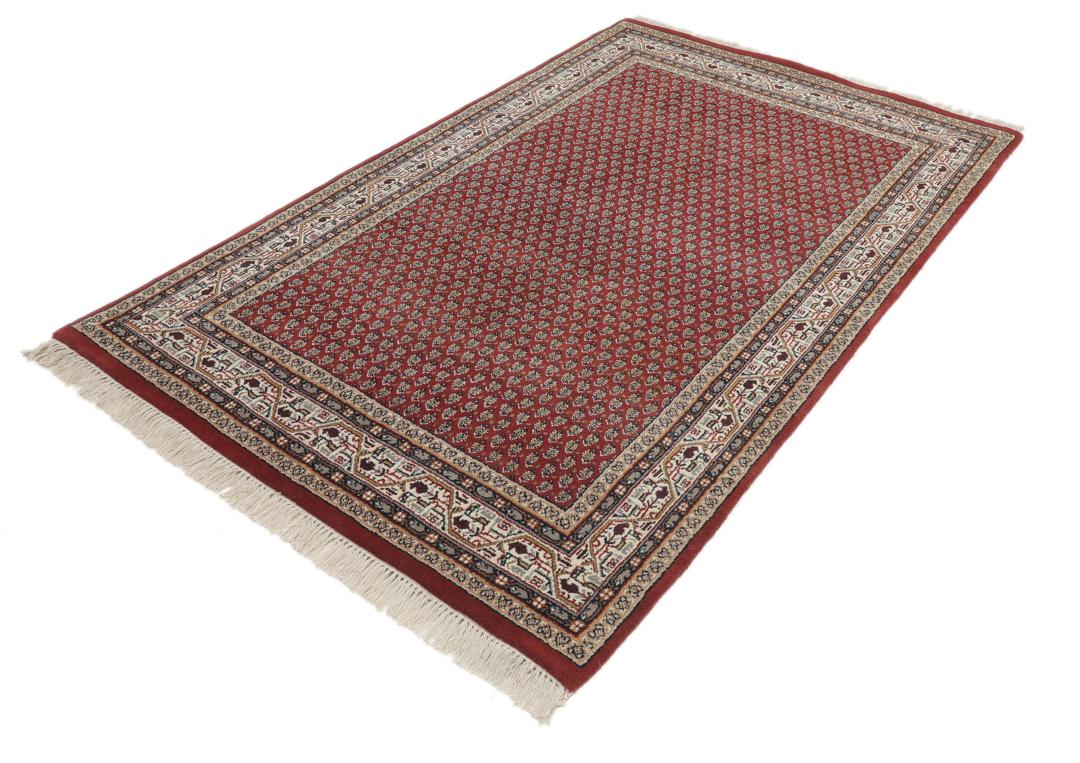
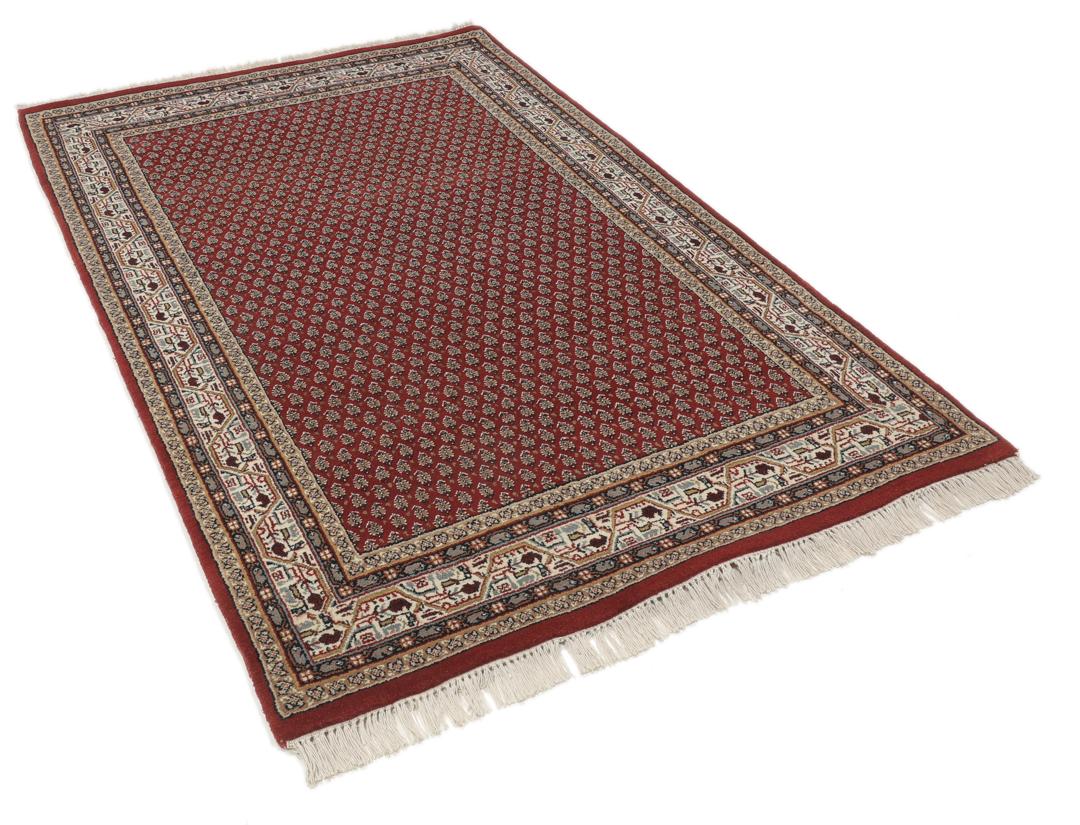
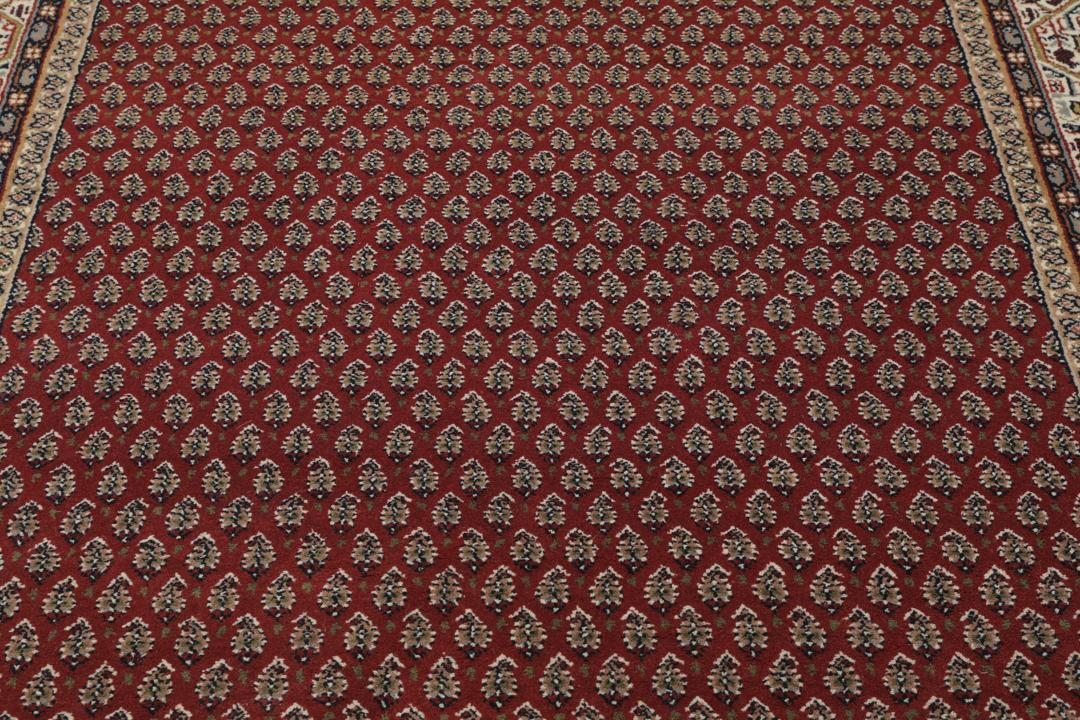
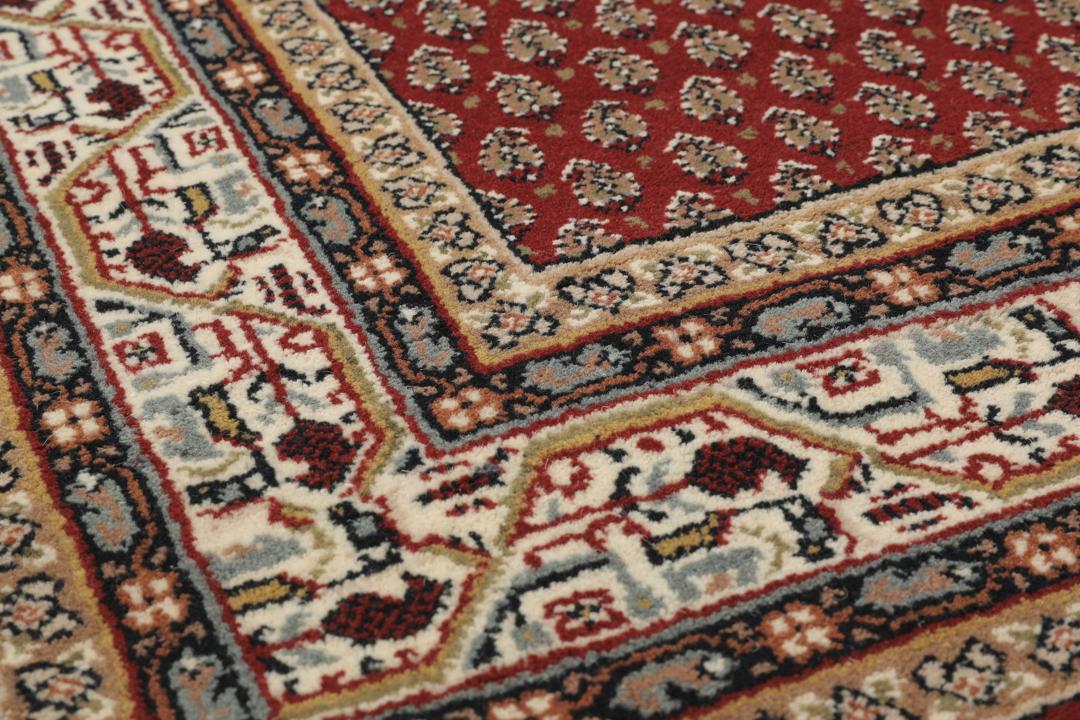
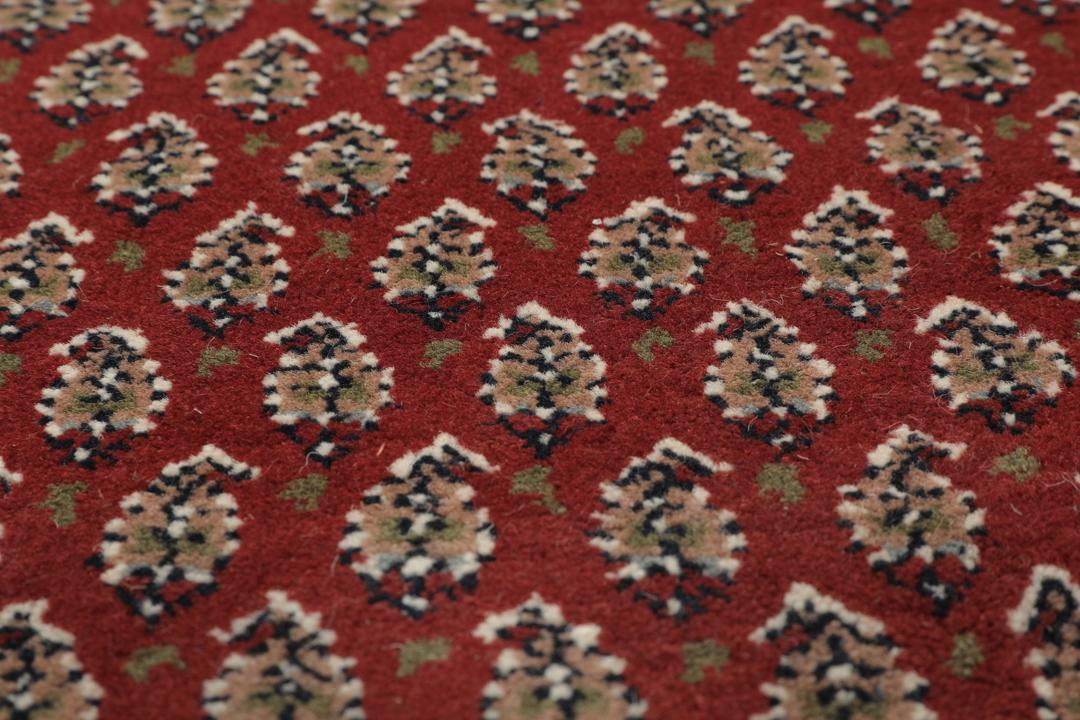
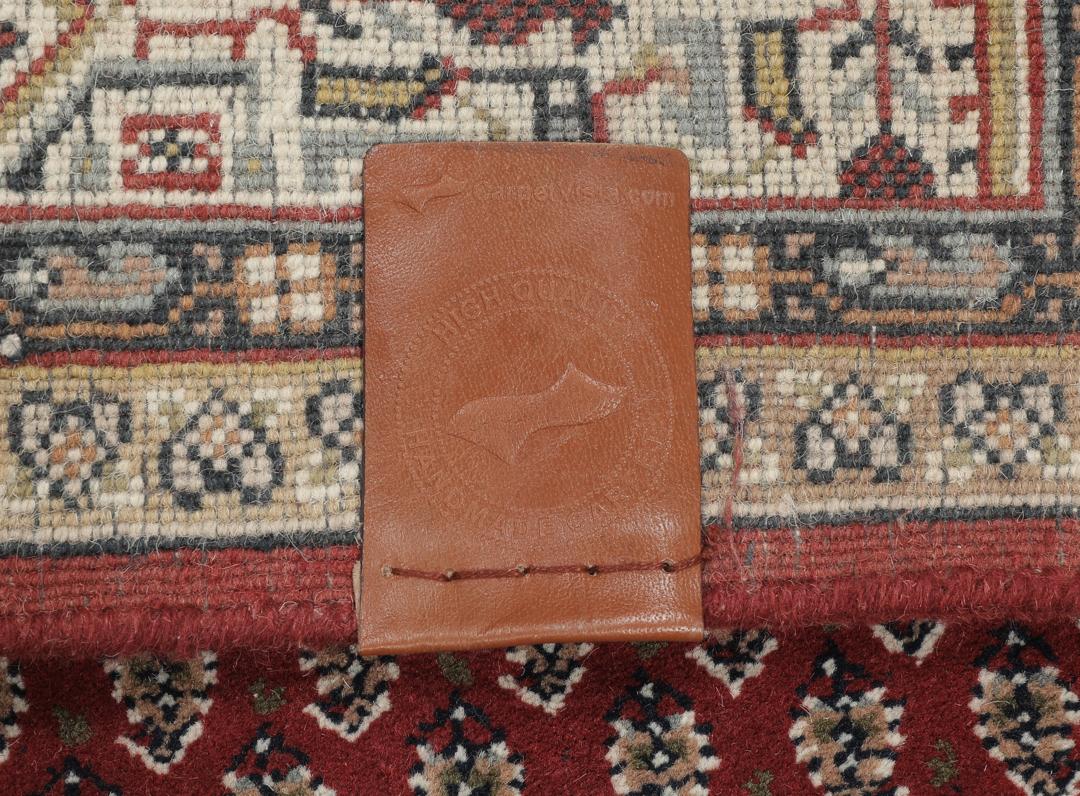
The Mir rug tradition finds its roots in the rich weaving heritage of the Middle East, though it has found a vibrant second home in the skilled workshops of India. These rugs are celebrated for their distinctive 'Mir-i-boteh' or 'Boteh' patterns, which are stylized, repeating floral motifs that look like small, elegant teardrops or flames.
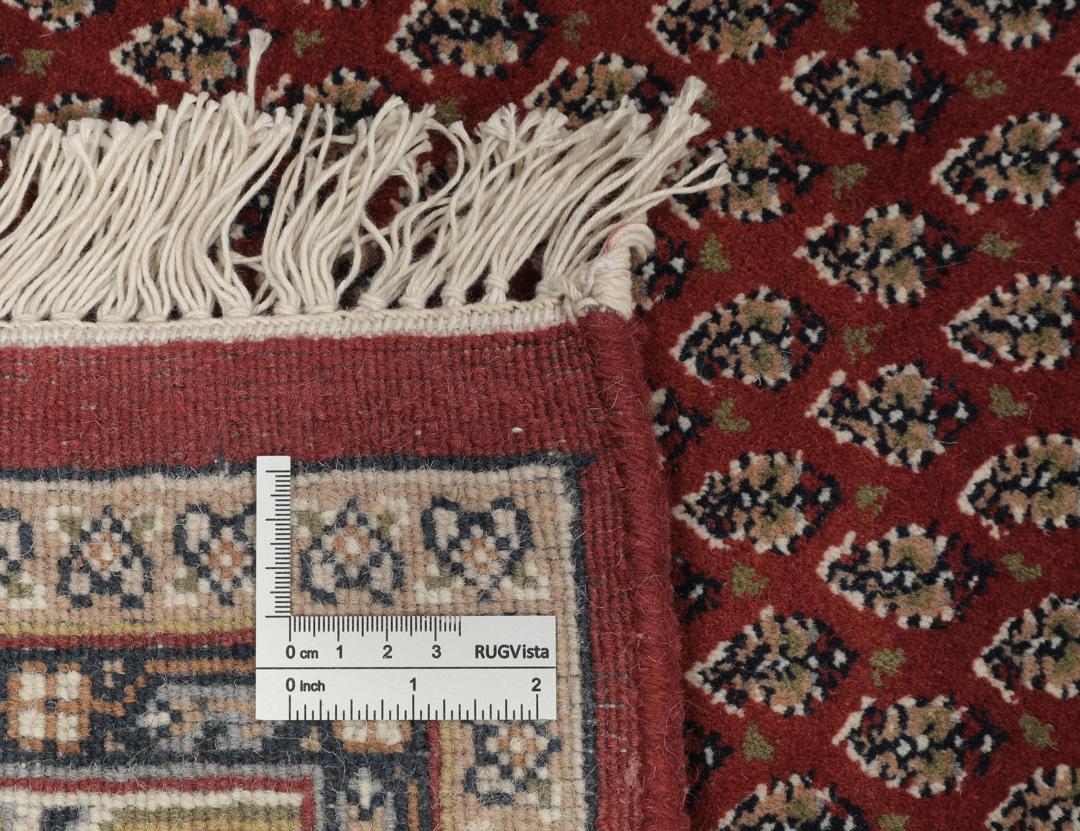
The term 'Mir' itself is often associated with the village of Saraband, where these iconic patterns were first refined. The technical quality of these rugs is defined by their consistent, all-over pattern, which requires a high degree of discipline from the weaver to maintain perfect symmetry across the entire field of the rug.
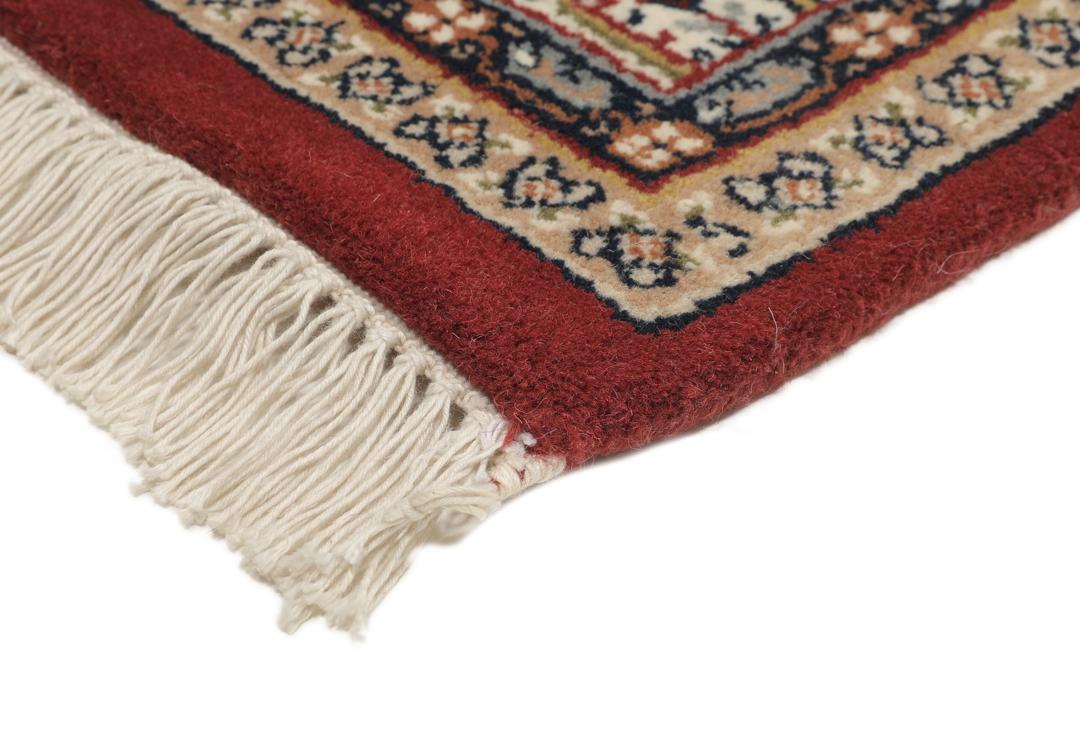
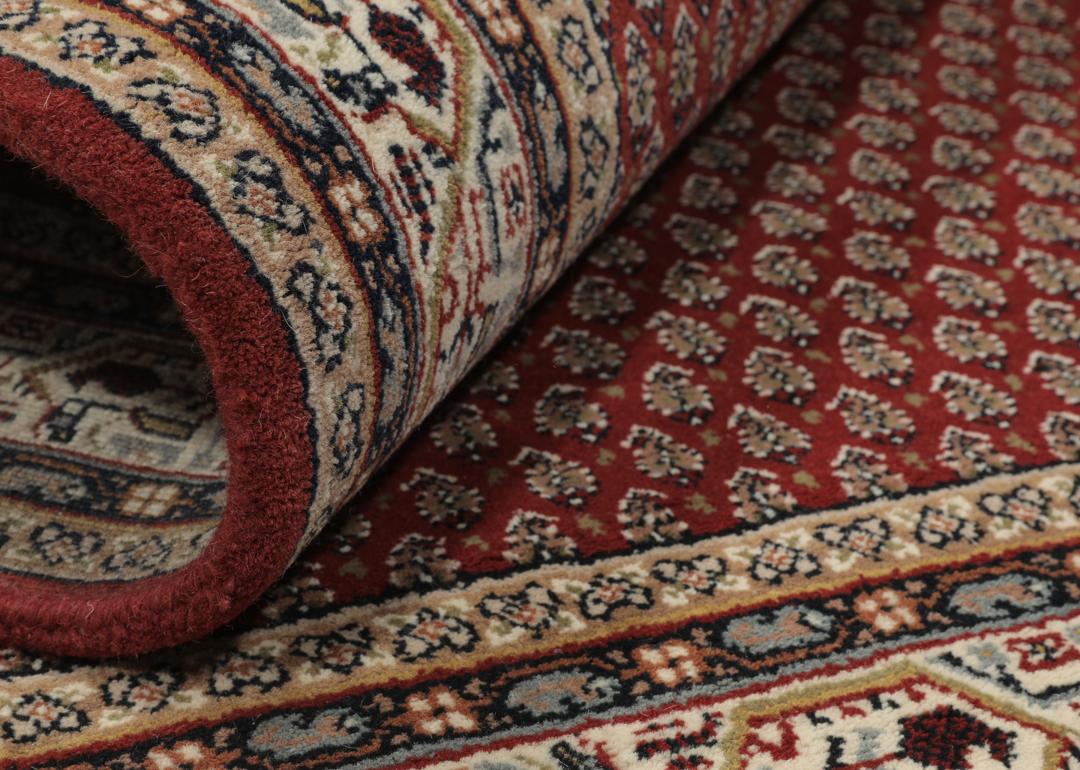
Visually, the Mir Indo style is instantly recognisable by its field of dense, small-scale motifs. These are typically framed by a simple, elegant border that provides a calm contrast to the complexity within. The use of traditional red tones is a hallmark of this style, chosen for its ability to bring a deep, grounded colour to any interior.
Collectors value Mir rugs for their balance of formal design and versatile charm. Owning one is an opportunity to connect with a long-standing tradition of craft that values repetition and precision. It is a piece that represents a bridge between historical weaving techniques and the needs of a modern, comfortable home.